10 Iconic US National Parks That Belong on Your Bucket List
I keep a running list on my phone titled “before I’m too old to hike it,” and almost every line on it is a national park. Some places you read about. These you have to stand inside.
There are 63 national parks now, and I love arguing about the order. But a handful sit above the debate. These are the ones with raw, humbling grandeur, the parks that make a first-timer go quiet at the overlook.
Below, I’ve pulled ten icons everyone should see at least once, spread coast to coast so no single region hogs the list. Geysers, granite cliffs, glaciers, swamp, and the tallest peak on the continent. Here’s where to point the car.
1. Yellowstone National Park, Wyoming
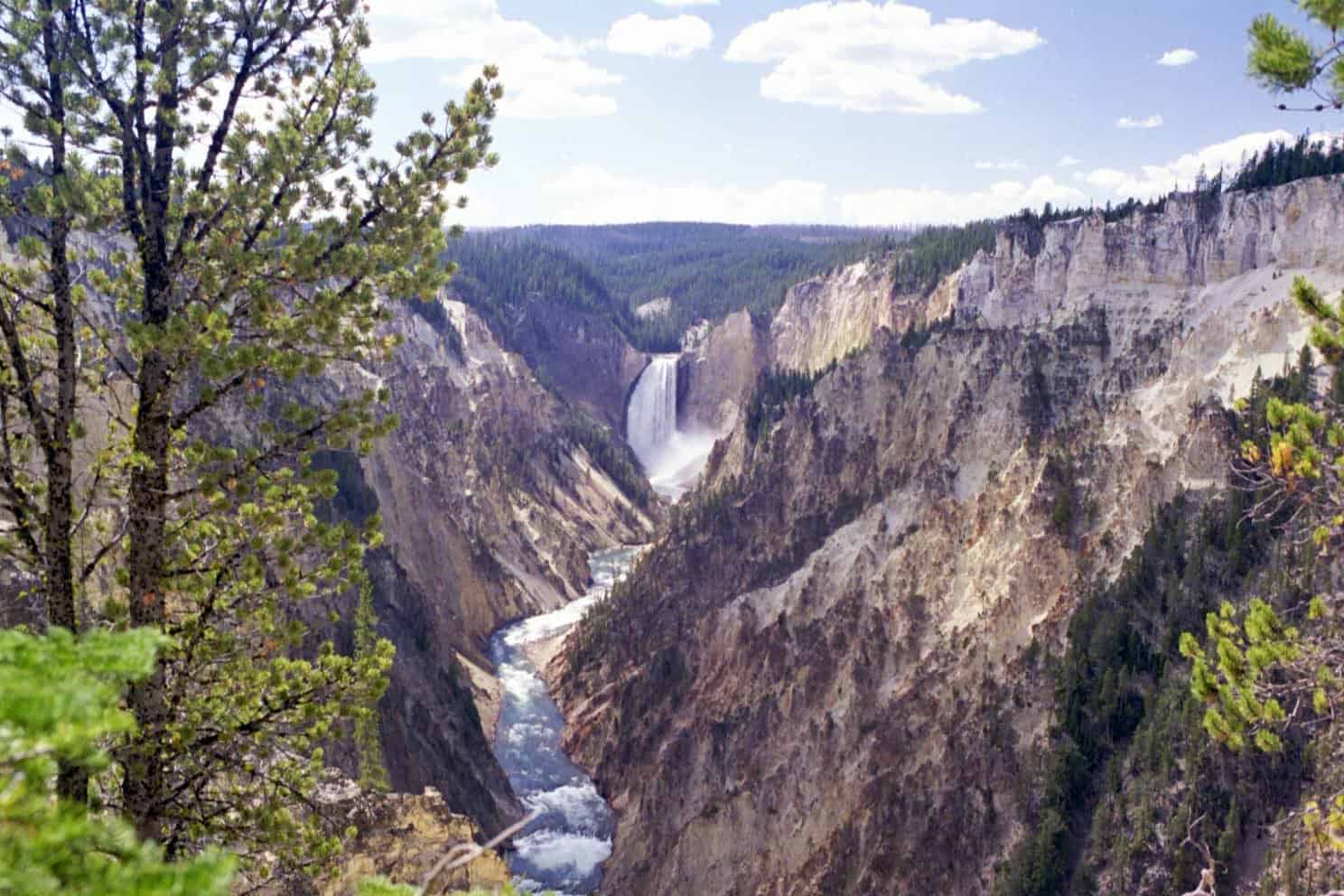
Start where the whole idea started. Yellowstone became the world’s first national park in 1872, when Ulysses S. Grant signed it into being before anyone was sure what a national park even was.
It sits on a supervolcano, which is why it hisses and steams. Old Faithful still erupts roughly every 90 minutes, and Grand Prismatic Spring glows in colors that look edited even when you see them in person.
Come early and drive the Lamar Valley, nicknamed America’s Serengeti. Bison jam the road, and if you are patient with binoculars, you might catch the wolves that were brought back here in 1995.
Pro tip: the park is huge, roughly 2.2 million acres, so give it three days minimum. Book lodging inside the gates months ahead, because the rooms near Old Faithful vanish fast every summer.
Where: Yellowstone National Park, Wyoming. Closest gateways are West Yellowstone and Gardiner, Montana, both about 90 minutes from the airport in Bozeman, Montana.
2. Yosemite National Park, California
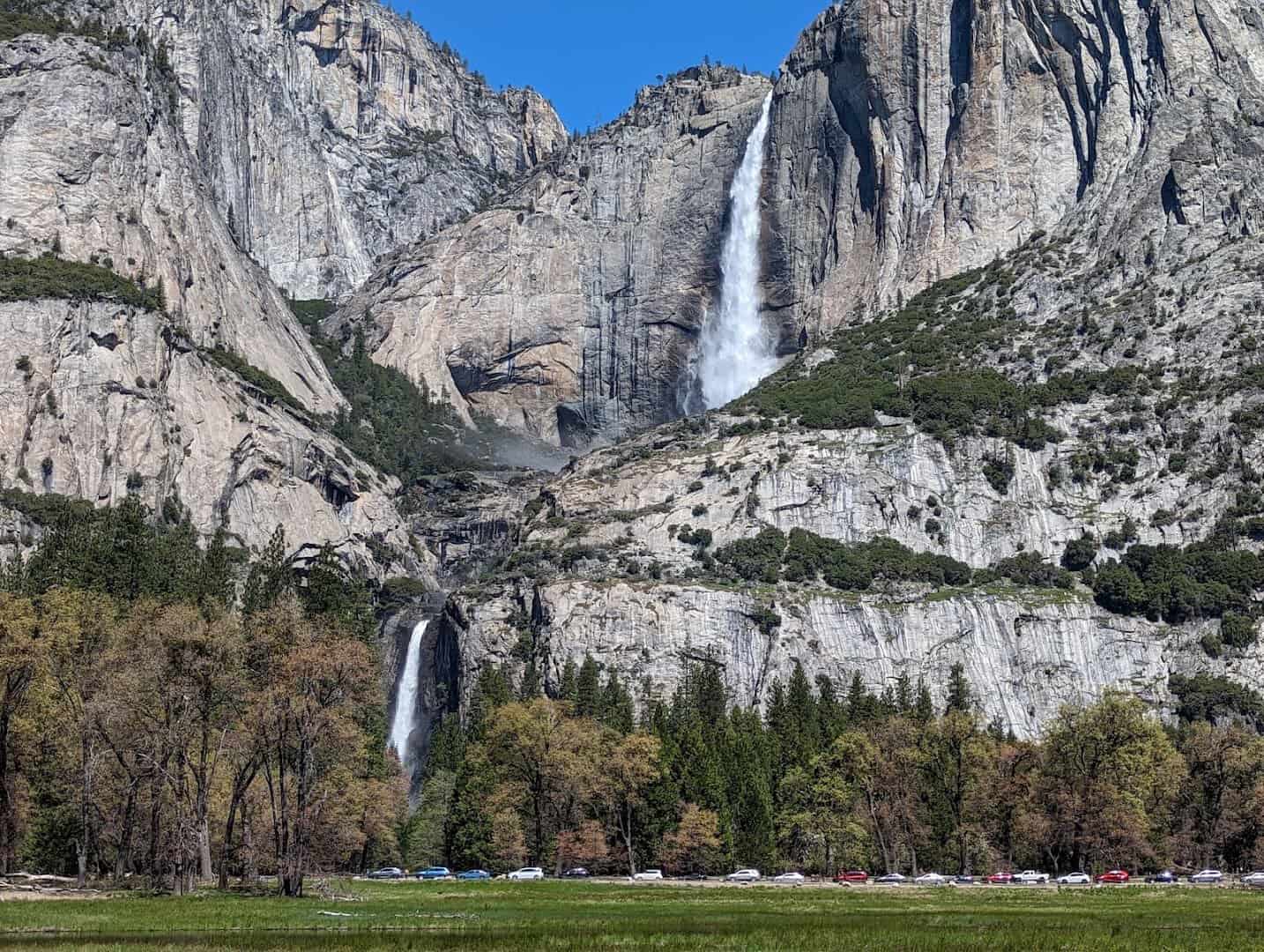
Some places earn their fame. Yosemite is one of them. Abraham Lincoln protected the valley back in 1864, and it became a full national park in 1890, thanks in large part to a stubborn Scot named John Muir.
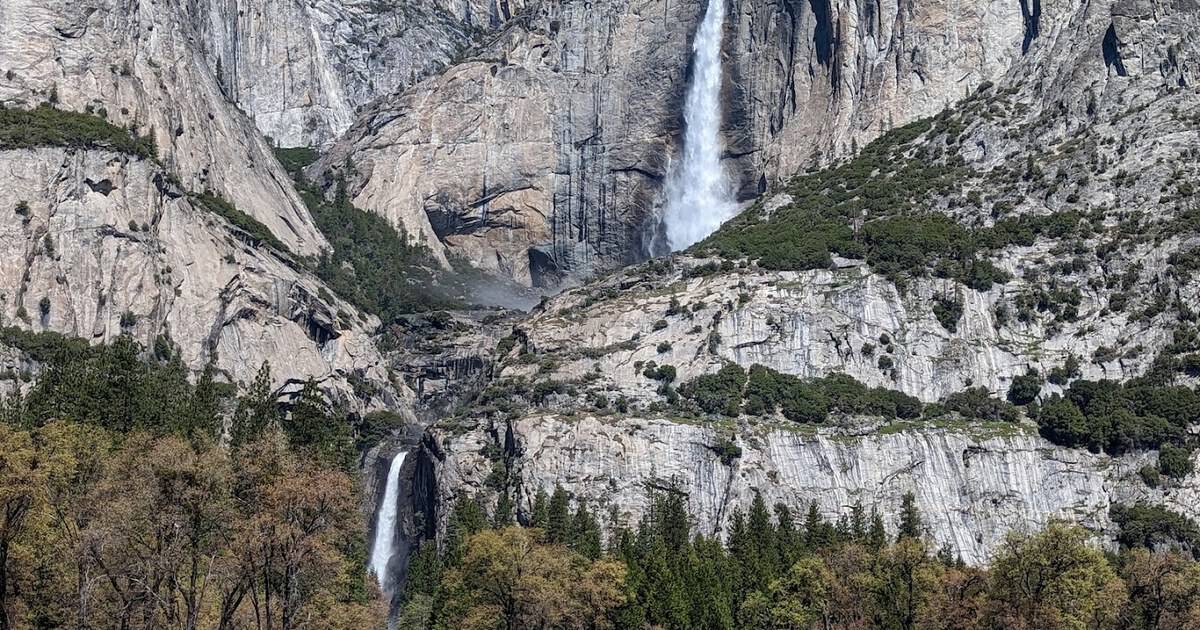
The scale is the thing. El Capitan rises about 3,000 feet of sheer granite, the kind climbers train years to touch. Half Dome watches over the whole valley like it is keeping score.
My advice: go in late spring when the snowmelt is roaring. Yosemite Falls drops 2,425 feet then, the tallest waterfall in North America, and you can hear it long before you round the bend and see it.
Make time for the Mariposa Grove of giant sequoias, some over 2,000 years old. Standing under a tree that was already ancient when Rome fell has a way of rearranging your sense of time.
Where: Yosemite National Park, California. About 3.5 hours east of San Francisco on Highway 120, with Mariposa the handiest gateway town for a night’s rest.
3. Great Smoky Mountains National Park, Tennessee
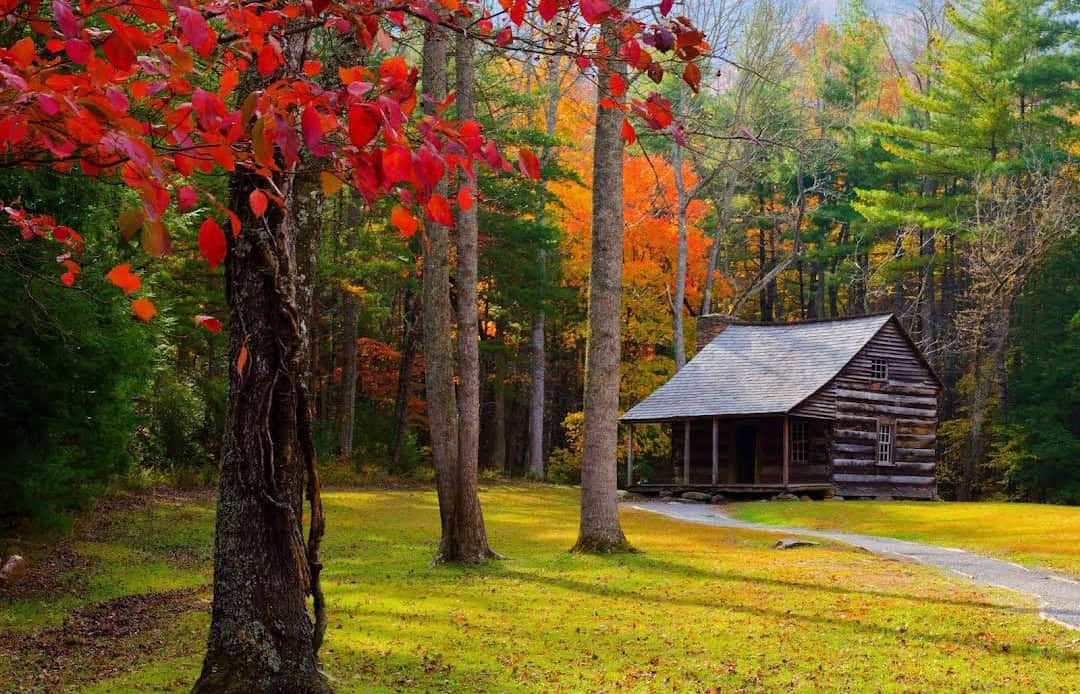
Here is a stat that surprises people. The Smokies pull in more visitors than any other national park, well over 12 million a year, and there is no entrance fee to get in.
The name comes from the blue haze that hangs over the ridges, a natural fog the Cherokee called “place of the blue smoke.” Established in 1934, the park protects more than 19,000 documented species, with thousands more still uncounted.
Loop Cades Cove at dawn for black bears and old homesteads. For a few weeks each June, the synchronous fireflies blink in unison here, a light show that happens in only a handful of places worldwide.
Drive up to Clingmans Dome, the highest point in the park at 6,643 feet, for a view that stretches for miles on a clear day. The observation tower ramp is an easy, paved half-mile climb.
Where: Great Smoky Mountains National Park, straddling Tennessee and North Carolina. The busiest entrance is at Gatlinburg, Tennessee, about an hour from Knoxville.
4. Glacier National Park, Montana
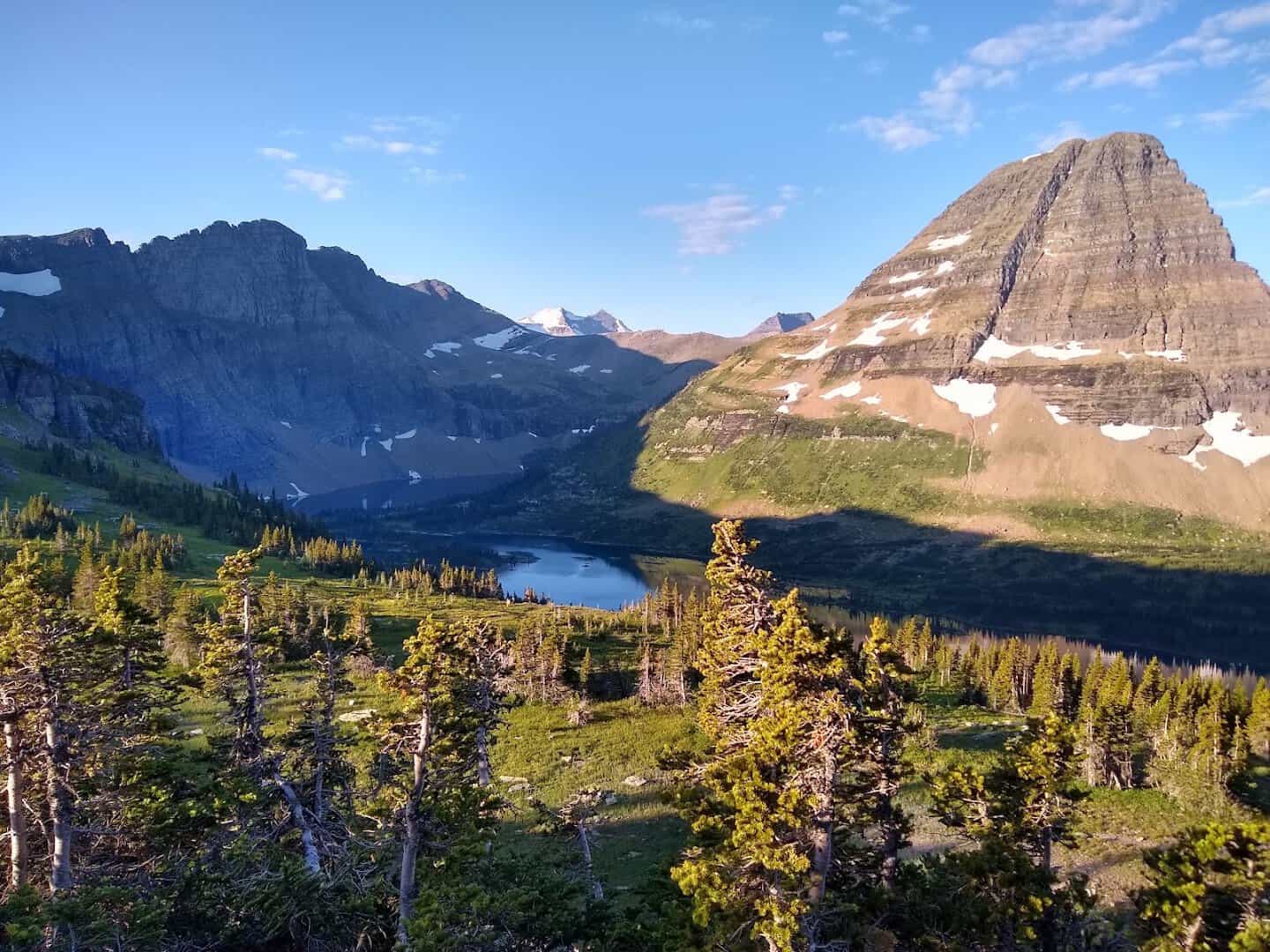
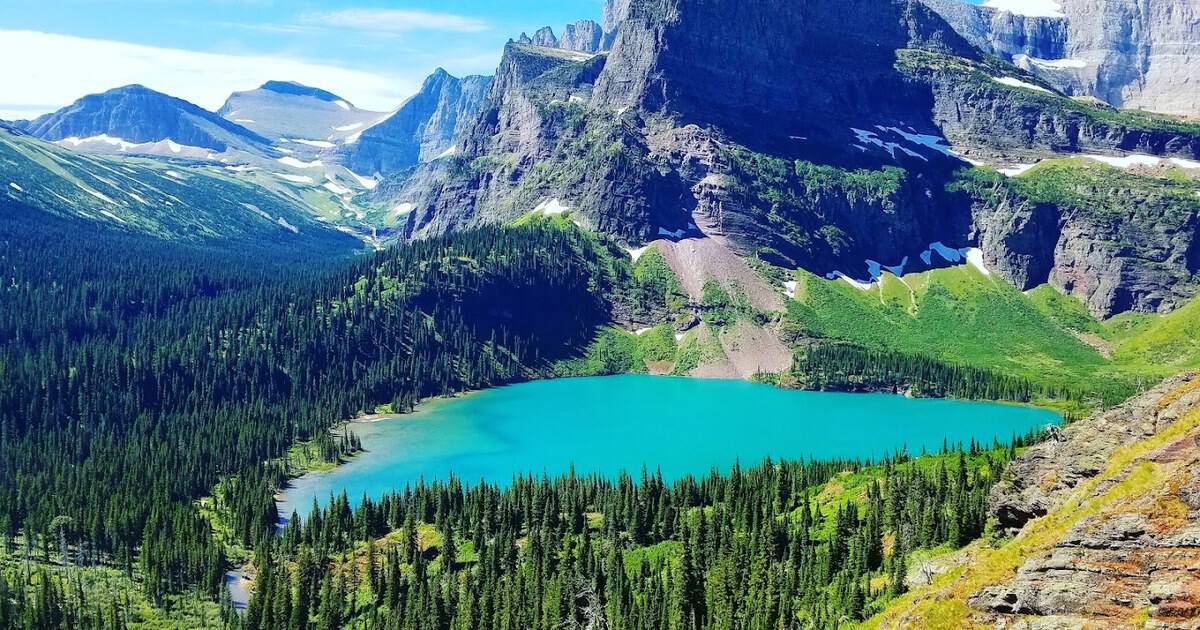
People call Glacier the Crown of the Continent, and once you see it, you stop arguing. Sawtooth peaks, water so clear it looks fake, and meadows that turn into wildflower riots in July.
The showstopper is Going-to-the-Sun Road, a 50-mile engineering marvel finished in 1933 that climbs over Logan Pass. It is narrow, it is jaw-dropping, and mountain goats often stroll the shoulder like they own it.
Do not wait too long. The park was created in 1910 with roughly 150 glaciers, and only about two dozen remain. Grizzlies roam here, so carry spray and make noise on the trails.
Did you know the park now runs a vehicle reservation system in peak season? Grab a Going-to-the-Sun ticket the moment they release, or plan to enter before dawn to slip in without one.
Where: Glacier National Park, Montana. Enter at West Glacier, about 30 minutes from Glacier Park International Airport near Kalispell.
5. Acadia National Park, Maine
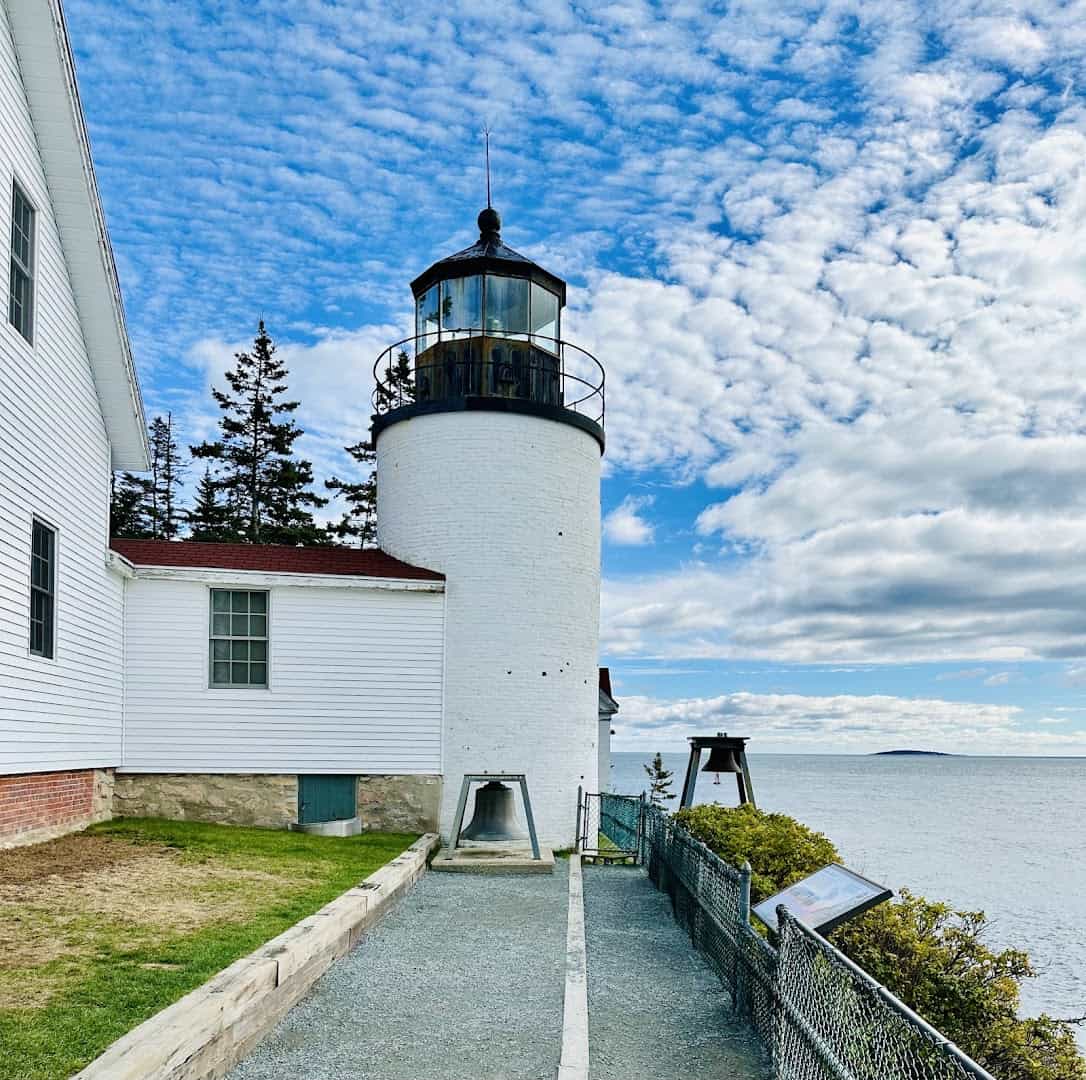
Acadia is proof you do not need the West for a knockout park. It was the first national park east of the Mississippi, protected in 1916 and named Acadia in 1929, gifted largely by families who loved this coast.
Cadillac Mountain is the draw. At 1,530 feet it is the highest point on the Atlantic seaboard, and for part of the year it is the first spot in the country to catch the sunrise.
Rent a bike for the 45 miles of carriage roads John D. Rockefeller Jr. built, all graceful stone bridges. Then finish at Jordan Pond House with tea and warm popovers, a tradition older than the park.
Where: Acadia National Park, Maine, mostly on Mount Desert Island. Base yourself in Bar Harbor, about an hour from the airport in Bangor.
6. Rocky Mountain National Park, Colorado
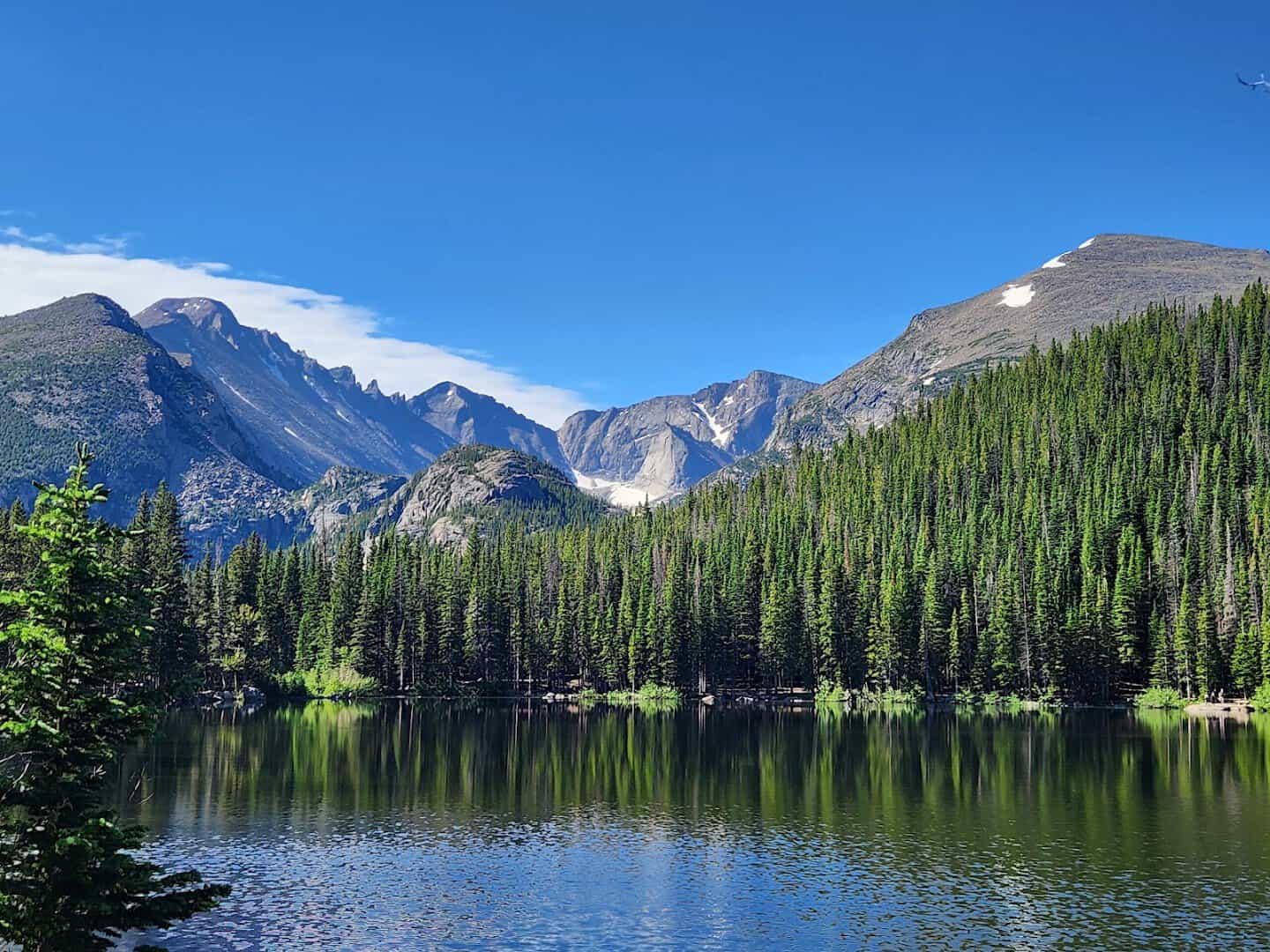
If you want the high country without a mountaineering course, this is your park. Established in 1915, Rocky Mountain packs more than 60 peaks over 12,000 feet into one glorious, oxygen-thin package.
Drive Trail Ridge Road, the highest continuous paved road in the country, cresting above 12,000 feet. You climb from pine forest into alpine tundra in an afternoon, with the whole Front Range unrolling below you.
Autumn is my quiet favorite. The elk bugle across the meadows during the September rut, a sound that carries for miles and reminds you exactly whose living room you are wandering through.
Take the altitude seriously. You go from mile-high Denver to well over 12,000 feet in one drive, so hydrate, slow down, and give your body a day to adjust before any big hike.
Where: Rocky Mountain National Park, Colorado. Estes Park guards the east entrance and Grand Lake the west, both roughly 1.5 hours from Denver.
7. Grand Canyon National Park, Arizona
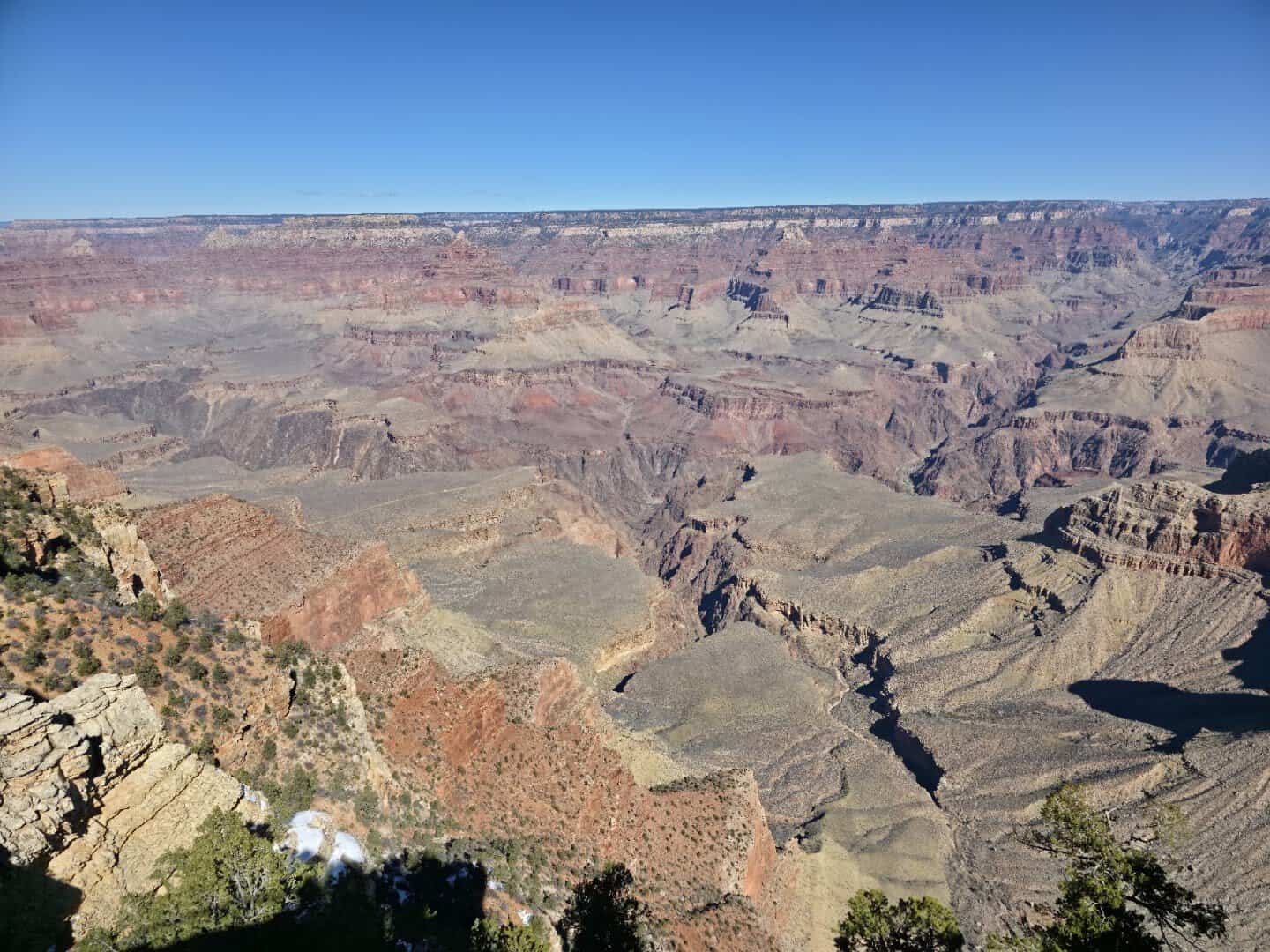
No list of American icons skips this one. Photos undersell it every single time. You walk up to the rim expecting to be prepared, and the sheer size still knocks the words out of you.
The canyon runs 277 river miles long, plunges about a mile deep, and exposes nearly two billion years of rock in its walls. The Colorado River carved all of it, patiently, over millions of years.
It became a national park in 1919. Most visitors stick to the South Rim, open year-round with the classic overlooks. Come for sunrise or sunset, when the light sets the whole gorge on fire.
If your knees are up for it, hike a mile or two down the Bright Angel Trail. Even a short descent changes everything, and you feel the canyon instead of just looking at it.
Where: Grand Canyon National Park, Arizona. The South Rim at Grand Canyon Village is about 1.5 hours from Flagstaff and 3.5 hours from Phoenix.
8. Olympic National Park, Washington
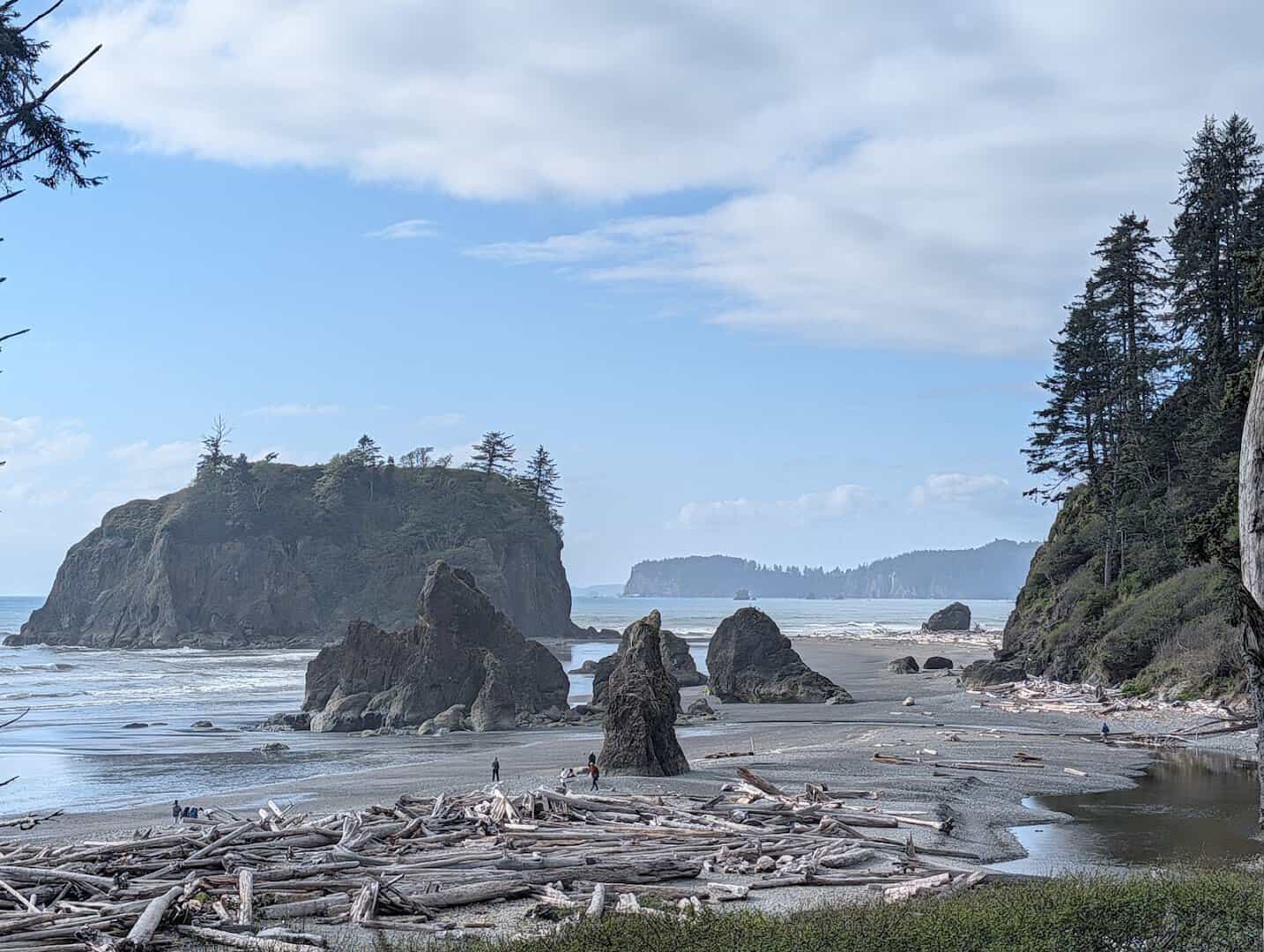
Olympic is really three parks in one, and that is why I never get tired of recommending it. Franklin D. Roosevelt made it official in 1938, protecting nearly a million acres of wildly different worlds.
In one day you can stand on a wild Pacific beach at Ruby Beach, wander the dripping, moss-draped Hoh Rain Forest, and gaze up at glaciers on Mount Olympus. Few places pack that much range together.
The Hoh soaks up around 12 feet of rain a year, so everything there wears green. Roosevelt elk move through the ferns, and the whole forest feels like a set from a fairy tale.
Pack a rain jacket no matter the forecast, and time low tide for the coast. That is when the tide pools open up, full of purple sea stars and anemones tucked among the sea stacks.
Where: Olympic National Park, Washington. Port Angeles is the main hub, about 2.5 hours from Seattle including the ferry ride across Puget Sound.
9. Denali National Park, Alaska
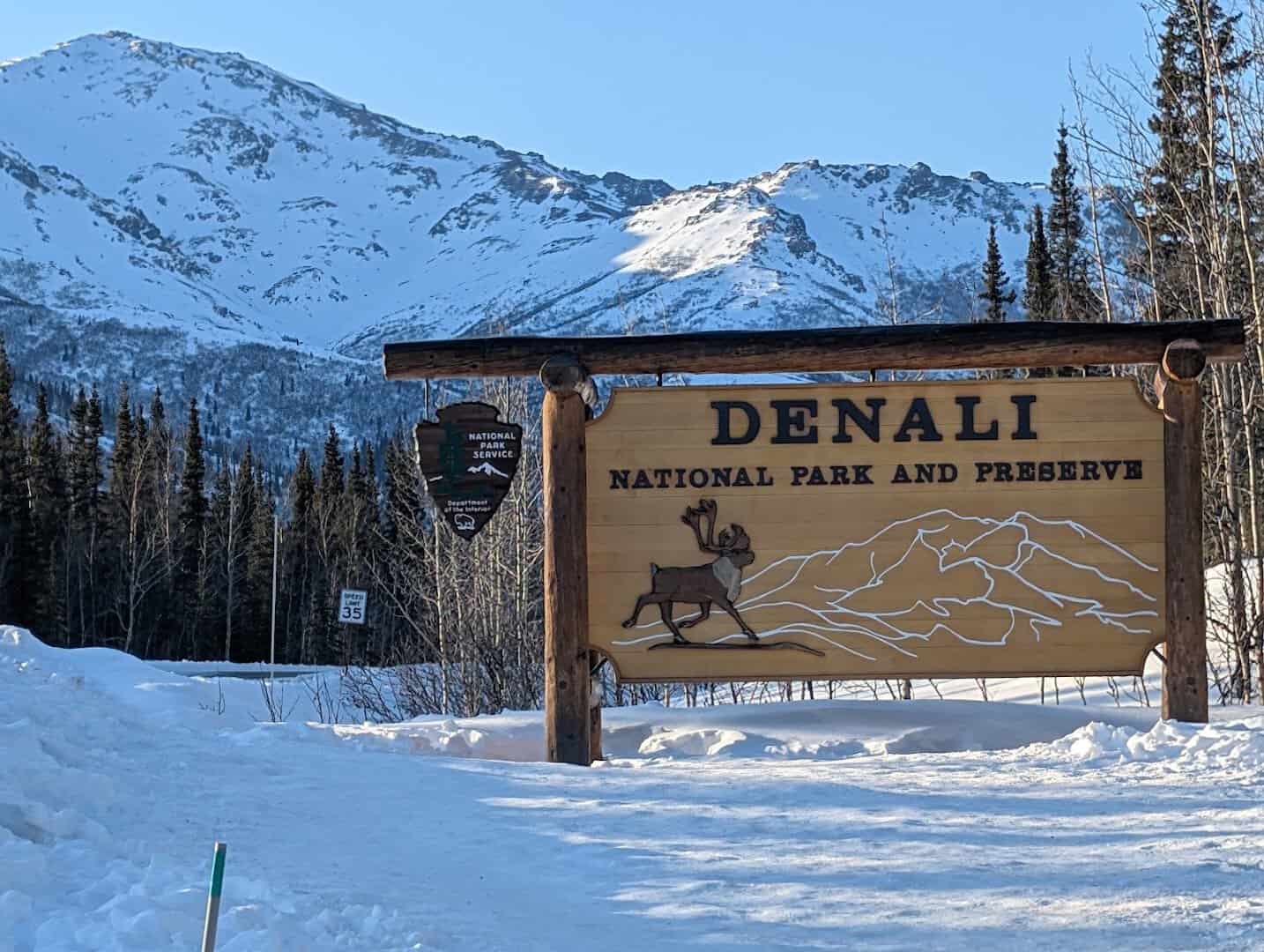
Denali is the big swing, the trip you plan for years. At its heart stands Denali itself, 20,310 feet, the tallest mountain in North America and shy behind clouds more often than not.
The park was established in 1917 and covers six million acres, an area larger than some states. One 92-mile road runs into it, and private cars can only go so far, which keeps the wildness intact.
Take the park bus and watch for the Big Five: grizzly, moose, caribou, Dall sheep, and wolf. On a clear day, when the mountain finally shows itself, the whole bus gasps at once.
Only about 30 percent of visitors ever glimpse the full peak, since it makes its own weather. Give yourself several days here so the odds tip in your favor rather than against it.
Where: Denali National Park, Alaska, along the Parks Highway. Roughly 2 hours south of Fairbanks and 4 hours north of Anchorage.
10. Everglades National Park, Florida
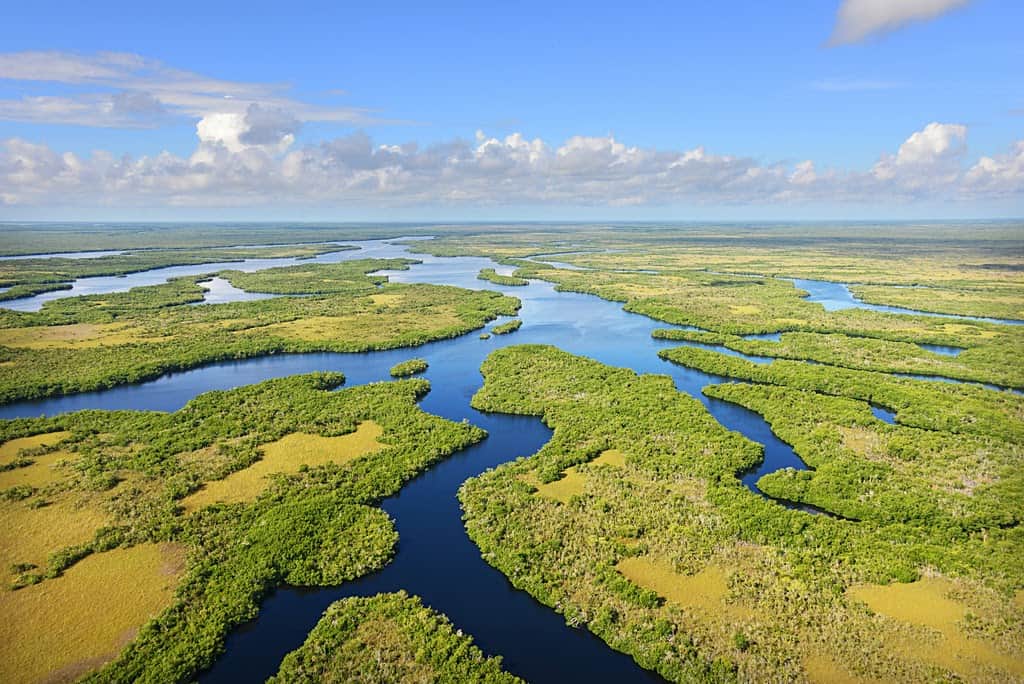
End somewhere completely different. The Everglades is not mountains or granite. It is a slow, shallow river of grass, the largest tropical wilderness in the country, and unlike anything else on this list.
Writer Marjory Stoneman Douglas gave it that “river of grass” name, and the fight to protect it made it a national park in 1934. It is the only place on Earth where alligators and crocodiles share the water.
Walk the short Anhinga Trail and you will see gators, wading birds, and maybe a flash of pink from a roseate spoonbill. It is a UNESCO World Heritage Site, and it feels genuinely prehistoric.
Come in the dry winter season, roughly December through April, when the wildlife crowds the shrinking water and the mosquitoes back off. A slow paddle or a tram ride at Shark Valley is worth the early alarm.
Where: Everglades National Park, Florida. The main entrance sits near Homestead, about an hour from Miami, with the Shark Valley entrance closer still to the city.
Start Planning Your Park Bucket List
You will not knock all ten out in one trip, and honestly you would not want to. Each one deserves its own slow visit, its own bad weather day, its own perfect morning at the overlook.
So pick one for this year. Buy the annual pass, pack layers, get your permits early for the popular hikes, and go stand somewhere that makes you feel small in the best possible way.
Featured image: Josh Kettelkamp via Glacier National Park

Stella Raines
Editor-in-Chief
Stella brings over a decade of storytelling experience to TX Headlines. With roots in West Texas and a love for road trips, she leads the editorial team with an eye for the hidden stories that make Texas unforgettable.