12 Charming East Coast Towns That Feel Frozen in a Simpler Time
Give me a walkable main street, a working harbor, and a bakery older than my grandparents, and I will happily tear up the rest of the weekend plan. Some towns just make you want to slow the car down and stay a while.
The East Coast is packed with them. Old fishing villages, Gilded Age resorts, and Spanish colonial ports, all trading in the same salt-worn charm: clapboard houses, cobblestones, and the feeling that you have stepped somewhere older and kinder than the highway you left behind.
Below are twelve of my favorites, strung north to south from Maine down to Florida, so the whole coast gets a turn. Any one is worth a trip; together they make one glorious drive.
1. Bar Harbor, Maine
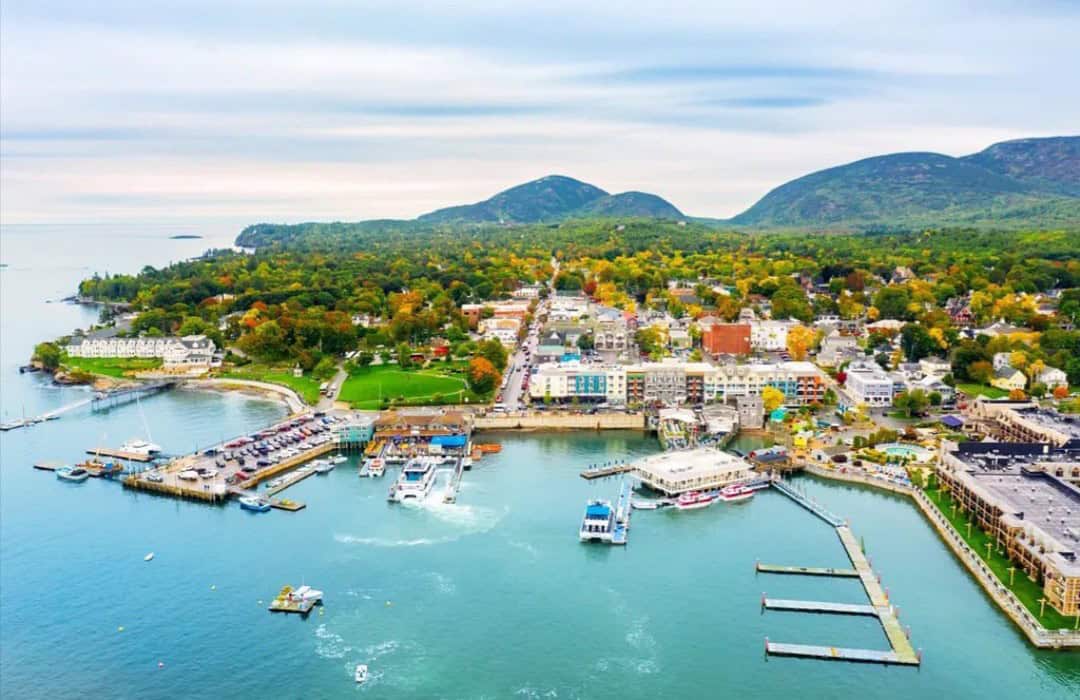
Perched on Mount Desert Island, Bar Harbor is the front porch of Acadia National Park, and it wears the job well. Granite headlands, spruce forest, and a harbor full of lobster boats all sit minutes from downtown.
In the late 1800s this was a summer colony for the Rockefellers and Vanderbilts, who built shingled cottages the size of hotels. Order a popover at the Jordan Pond House, then drive up Cadillac Mountain for one of the country’s first sunrises.
Where: Bar Harbor sits on Mount Desert Island, about 47 miles southeast of Bangor by Route 3, at the gateway to Acadia. Worth a stop:
- Shore Path, along the waterfront off Main Street, a level walk past the old shingled cottages
- Jordan Pond House, 2928 Park Loop Road, for popovers with strawberry jam
- Cadillac Mountain, up Cadillac Summit Road in Acadia, for the sunrise
- Agamont Park and the town pier, at the foot of Main Street, where whale-watch boats leave
2. Rockport, Massachusetts
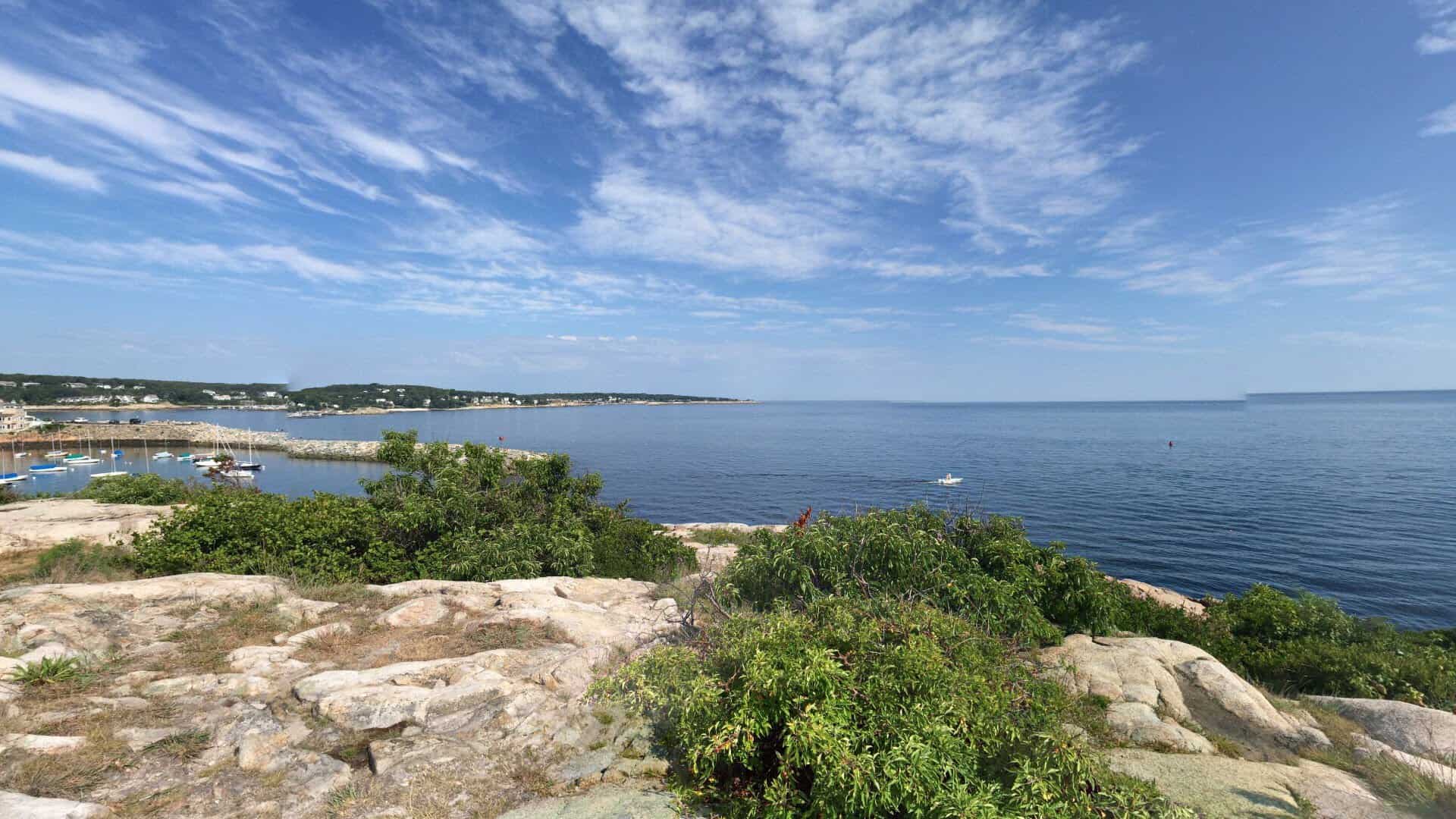
On the rocky tip of Cape Ann, an hour north of Boston, Rockport has drawn painters for over a century. At the end of Bearskin Neck stands Motif No. 1, a red fishing shack so often painted it is called the most painted building in America.
Bearskin Neck is a skinny finger of granite packed with galleries, candy shops, and lobster shacks. Sunset over the harbor, with the boats swinging on their moorings, is the exact view painters keep coming back to catch.
Where: Rockport sits on Cape Ann, roughly 40 miles north of Boston by Route 128. Worth a stop:
- Motif No. 1, on Bradley Wharf off Bearskin Neck, the famous red fishing shack
- Bearskin Neck, off Main Street, galleries and lobster shacks on a granite spit
- Front Beach, along Beach Street, a calm crescent right in town
- Halibut Point State Park, 4 Gott Avenue, a former granite quarry above the sea
3. Newport, Rhode Island
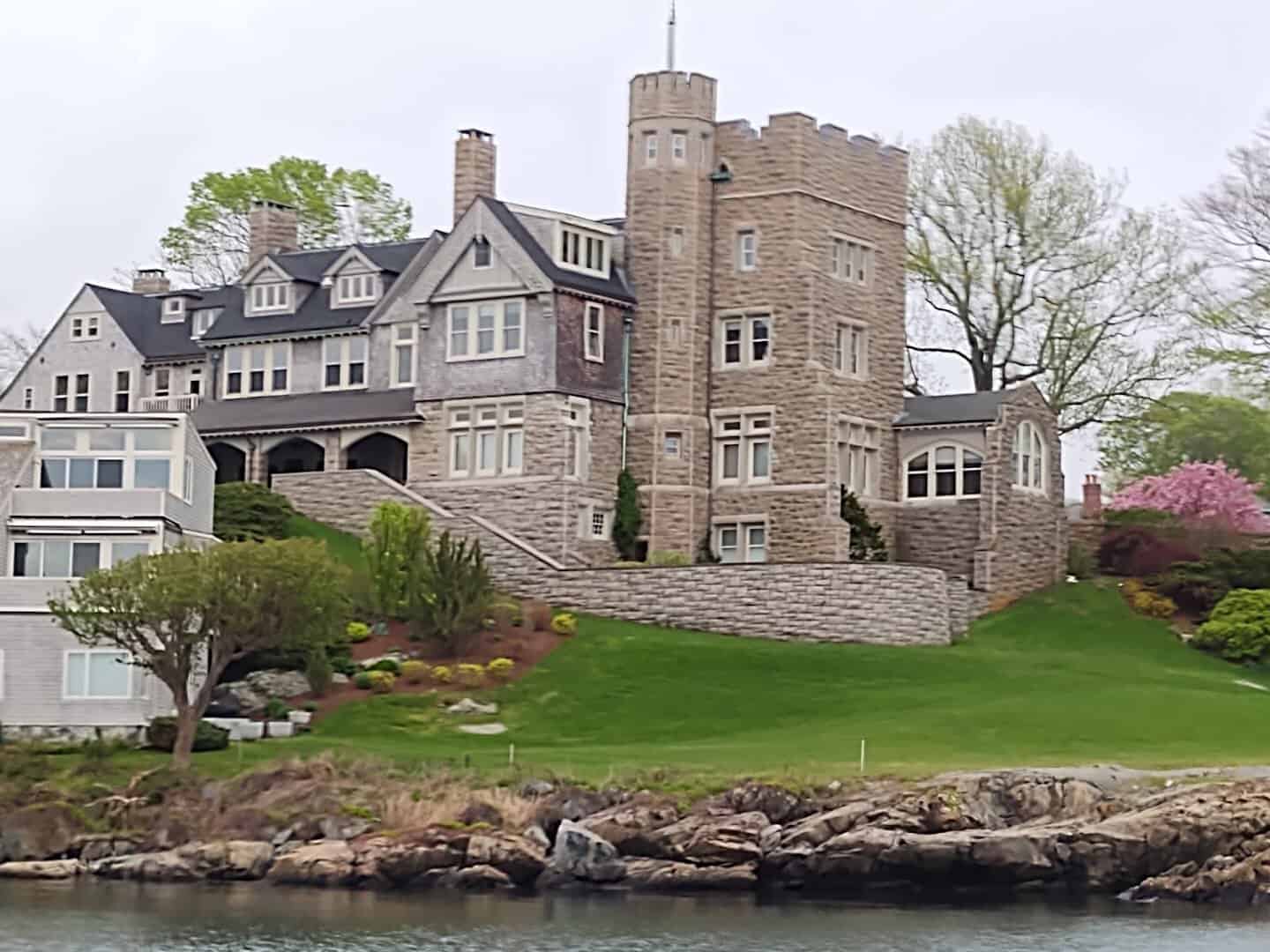
Newport is where America’s richest families came to show off. Along the Cliff Walk, a path between manicured lawns and crashing surf, sit the Gilded Age mansions, none grander than The Breakers, the Vanderbilts’ seventy-room summer palace finished in 1895.
But the town runs deeper than money. Founded in 1639, it holds Touro Synagogue, the oldest surviving synagogue in the country, and a busy waterfront along cobblestone Thames Street.
Where: Newport sits on Aquidneck Island, reached across the Claiborne Pell Bridge off Route 138. Worth a stop:
- The Breakers, 44 Ochre Point Avenue, the Vanderbilts’ seventy-room mansion
- Cliff Walk, entrances off Memorial Boulevard, 3.5 miles between lawns and surf
- Thames Street, downtown, cobblestones and the working harbor
- Touro Synagogue, 85 Touro Street, the oldest synagogue in the country
4. Mystic, Connecticut
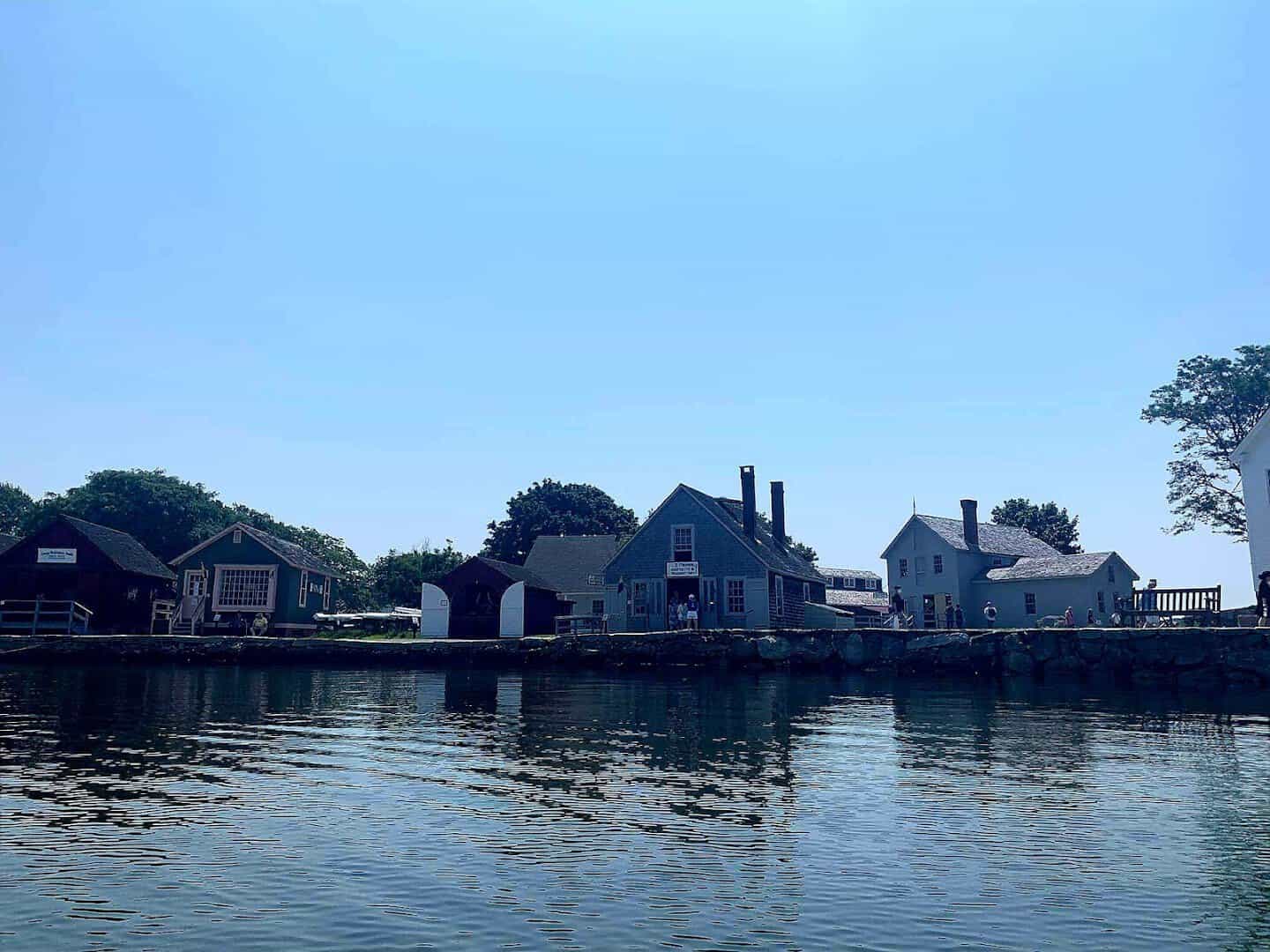
Yes, the pizza place is real, and the 1988 Julia Roberts movie put this seaport on the map. But Mystic was charming long before Hollywood called. The Mystic Seaport Museum is the largest maritime museum in the country, home to the last wooden whaling ship on Earth.
Downtown, a rare bascule drawbridge lifts over the Mystic River on the hour, halting traffic while sailboats glide through. Grab a lobster roll and watch it rise.
Where: Mystic sits about 10 miles east of New London, just off Interstate 95 at exit 90. Worth a stop:
- Mystic Seaport Museum, 75 Greenmanville Avenue, and the whaling ship Charles W. Morgan
- Mystic River Bascule Bridge, on Main Street, lifting on the hour
- Mystic Aquarium, 55 Coogan Boulevard, good for little ones
- Mystic Pizza, 56 West Main Street, the shop behind the movie
5. Sag Harbor, New York

Out on the eastern end of Long Island, past the Hamptons crowds, Sag Harbor keeps the salty soul of an old whaling port. Nineteenth-century captains’ houses line the streets, and a windmill still stands guard on the wharf.
Main Street runs down to the water, its 1930s cinema sign glowing over bookshops and cafes. The whaling museum fills a columned mansion with harpoons and scrimshaw.
Where: Sag Harbor sits on Long Island’s South Fork, about two hours east of New York City off Route 114. Worth a stop:
- Main Street, from the lit movie theater sign down to Long Wharf
- Long Wharf, at the foot of Main Street, with the windmill and harbor views
- Sag Harbor Whaling Museum, 200 Main Street, in a columned 1845 mansion
- Old Whalers’ Church, 44 Union Street, a striking 1844 landmark
6. Cape May, New Jersey
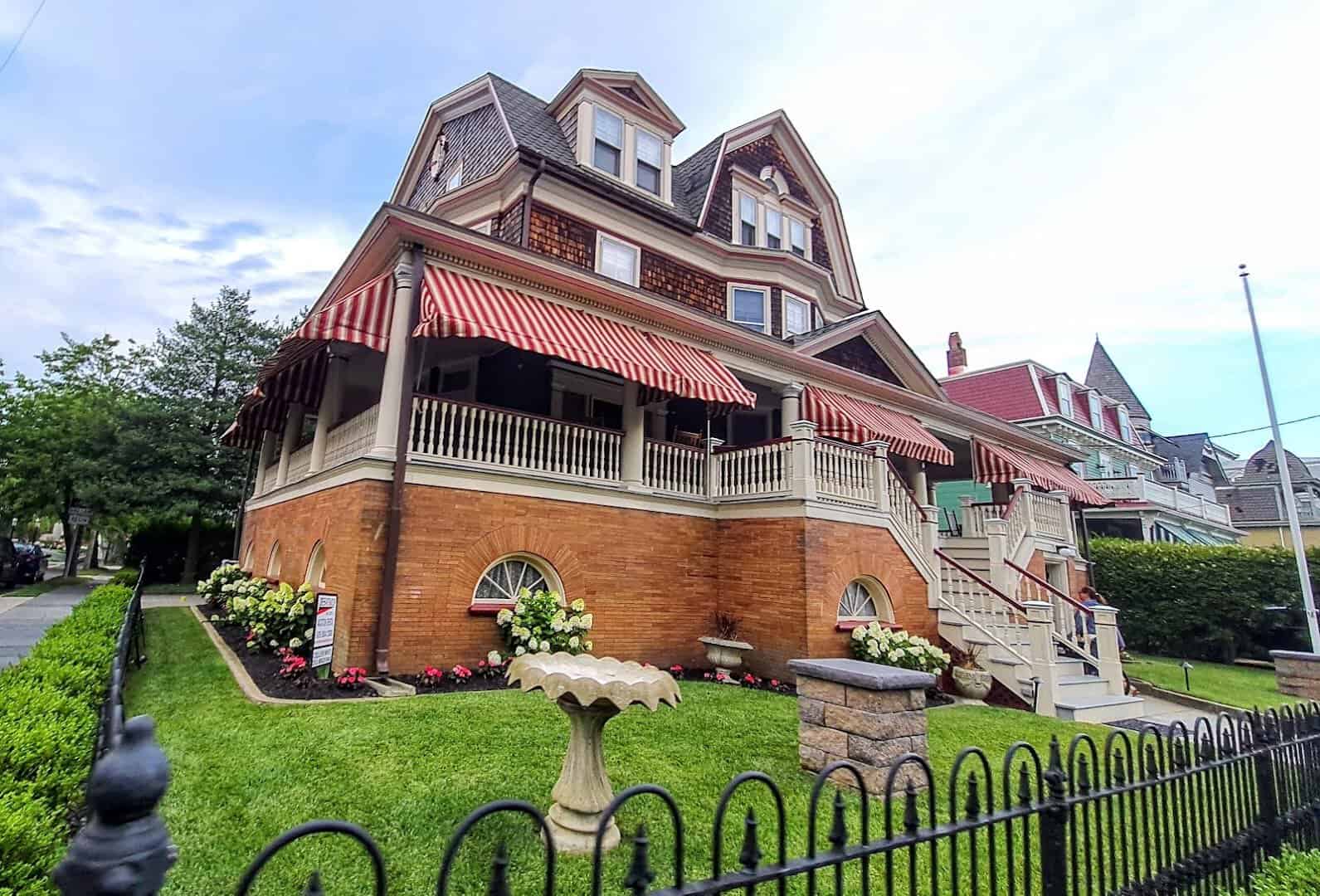
At the very bottom of New Jersey, where the Garden State Parkway runs out of road, Cape May looks like a wedding cake that learned to hold a beach. It holds around six hundred Victorian houses, the largest collection in the country.
The whole town is a National Historic Landmark, its gingerbread porches painted in butter yellow and sea-foam green. Come fall, it becomes one of the best birdwatching spots on the whole Atlantic flyway.
Where: Cape May sits at the southern tip of Cape May County, at the end of the Garden State Parkway. Worth a stop:
- Washington Street Mall, downtown, a pedestrian stretch of shops and taffy
- Cape May Lighthouse, 215 Lighthouse Avenue, 199 steps to the view
- Emlen Physick Estate, 1048 Washington Street, an 1879 Victorian house museum
- Cape May Point State Park, at the cape’s tip, prime fall birdwatching
7. St. Michaels, Maryland
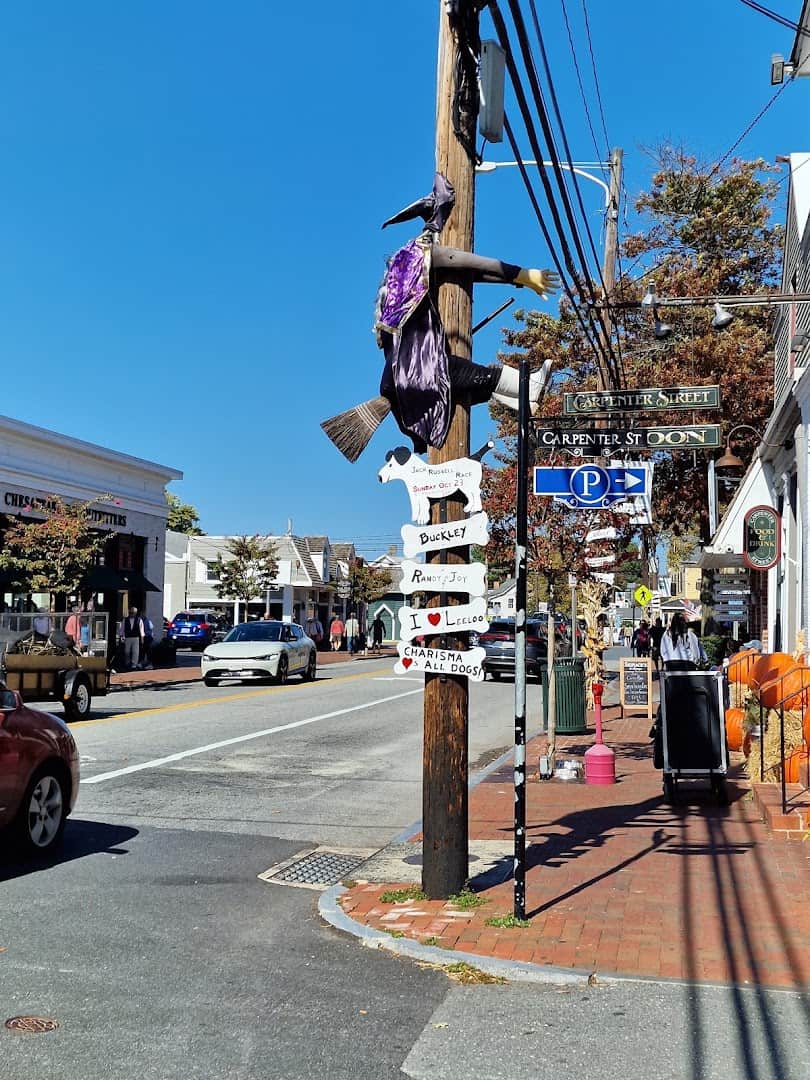
On Maryland’s Eastern Shore, St. Michaels earned the nickname the town that fooled the British by hanging lanterns in the trees during the War of 1812, sending the cannon fire sailing over the rooftops. Today it is all Chesapeake Bay calm.
Talbot Street lines up boutiques and crab houses, and skipjacks still sail the harbor. The maritime museum’s screwpile lighthouse is the postcard everyone takes home.
Where: St. Michaels sits on the Miles River off Route 33, about 15 miles west of Easton. Worth a stop:
- Talbot Street, downtown, shops, galleries, and crab houses
- Chesapeake Bay Maritime Museum, 213 North Talbot Street, and the Hooper Strait Lighthouse
- St. Michaels Harbor, at the foot of Mulberry Street, for skipjack views
- The Crab Claw, 304 Burns Street, steamed blue crabs on the water
8. Chincoteague, Virginia
If you grew up reading “Misty of Chincoteague,” you already know this island. Just off Virginia’s Eastern Shore, it is famous for the wild ponies that roam neighboring Assateague, hardy horses said to have swum ashore from a shipwreck.
Every July since 1925, the local fire company herds them across the channel in the Pony Swim. The rest of the year it is a quiet fishing town wrapped around a wildlife refuge of salt marsh and pine.
Where: Chincoteague Island sits on Virginia’s Eastern Shore, reached by Route 175 east of US Route 13. Worth a stop:
- Chincoteague National Wildlife Refuge, 8231 Beach Road, salt marsh and the wildlife loop
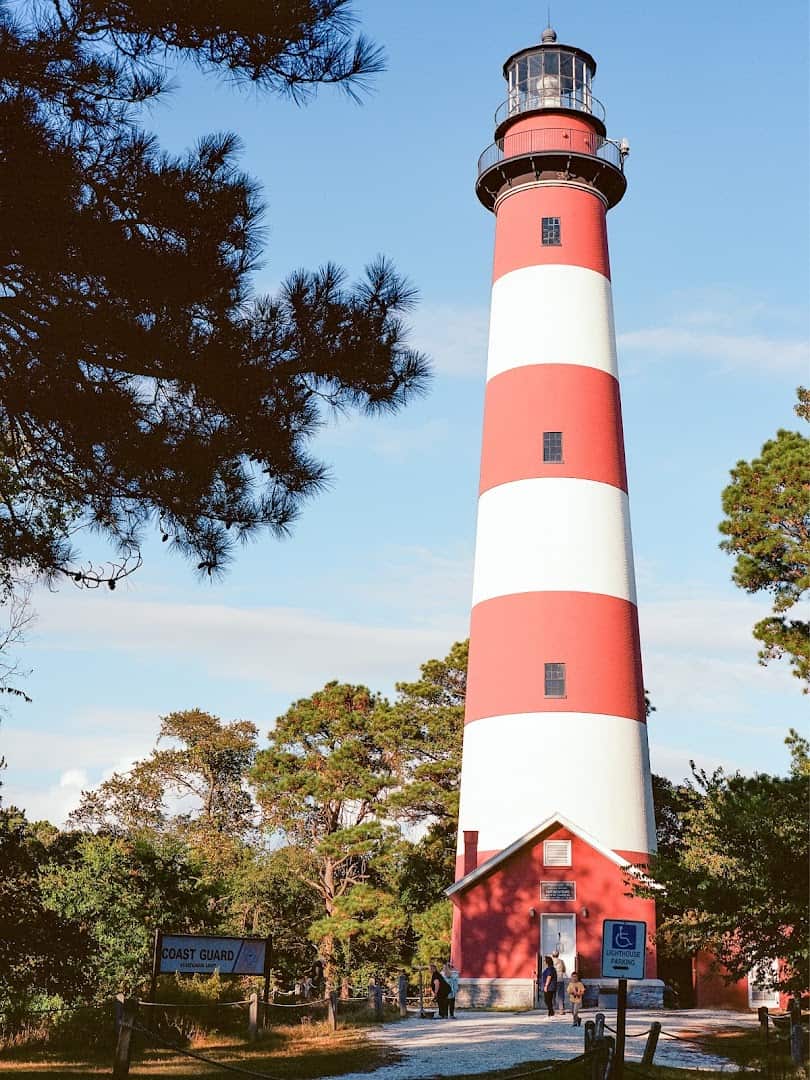
- Assateague Lighthouse, off Beach Road, the candy-striped 1867 tower
- Main Street, along the waterfront, for oysters and marsh sunsets
- Robert Reed Waterfront Park, 6479 Maddox Boulevard, sunset over the channel
9. Beaufort, North Carolina

Do not confuse it with its cousin down in South Carolina. North Carolina’s Beaufort is pronounced BOW-fort, and it is the state’s third oldest town, laid out in 1709. The real thrill here is pirates.
Blackbeard sailed these waters, and the wreck of his flagship, Queen Anne’s Revenge, was found just offshore in 1996. From the boardwalk you can often spot wild horses grazing on Carrot Island across the creek.
Where: Beaufort sits on North Carolina’s Crystal Coast, reached by US Route 70 just east of Morehead City. Worth a stop:
- Front Street boardwalk, downtown, along Taylor’s Creek and the sailboats
- North Carolina Maritime Museum, 315 Front Street, Blackbeard’s recovered cannons
- Carrot Island, across the creek, where wild horses graze
- Beaufort Historic Site, 130 Turner Street, restored 18th-century buildings
10. Charleston, South Carolina
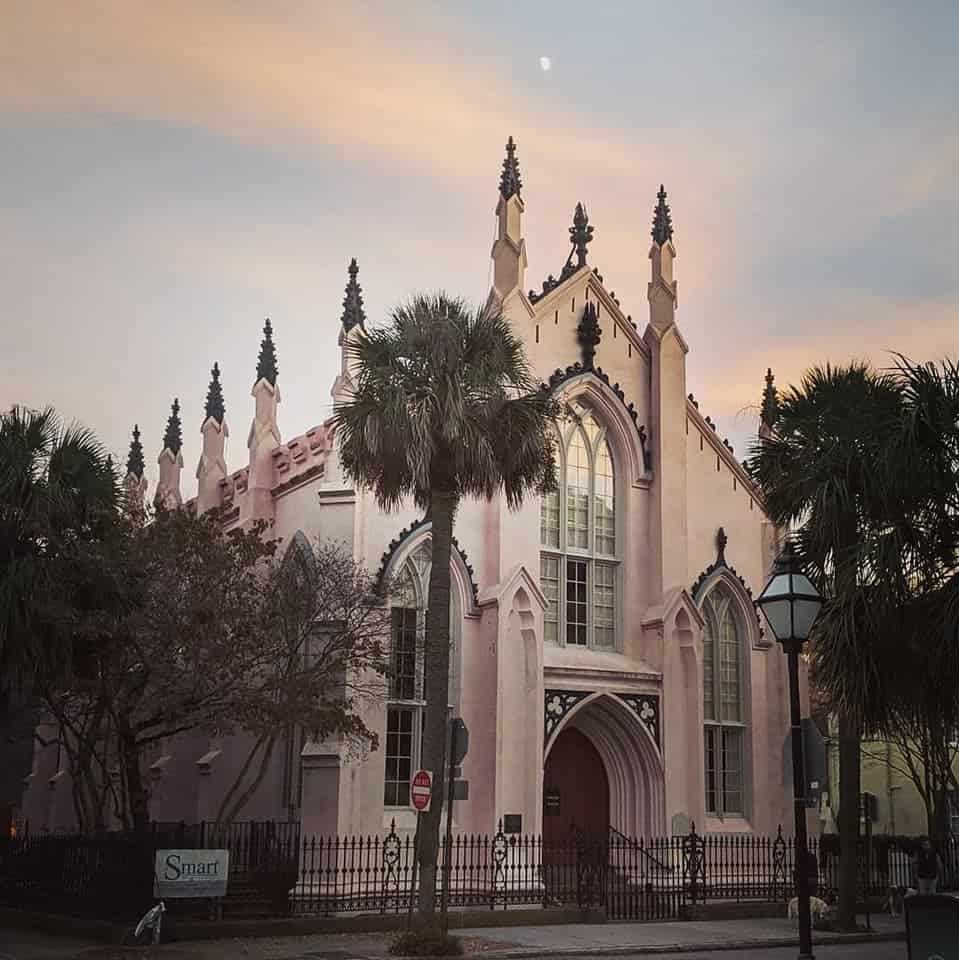
Some towns you admire. Charleston you fall for. Founded in 1670, this is a city of cobblestone lanes, palm-shaded gardens, and church steeples so numerous that locals call it the Holy City.
Stroll Rainbow Row, thirteen Georgian townhouses in sherbet pastels, then wander to The Battery to watch the harbor. Order a bowl of she-crab soup and let the slow, gracious pace work on you.
Where: Charleston sits on the peninsula where the Ashley and Cooper Rivers meet, off Interstate 26. Worth a stop:
- Rainbow Row, along East Bay Street, the block of pastel Georgian townhouses
- The Battery and White Point Garden, at the peninsula’s tip, harbor views to Fort Sumter
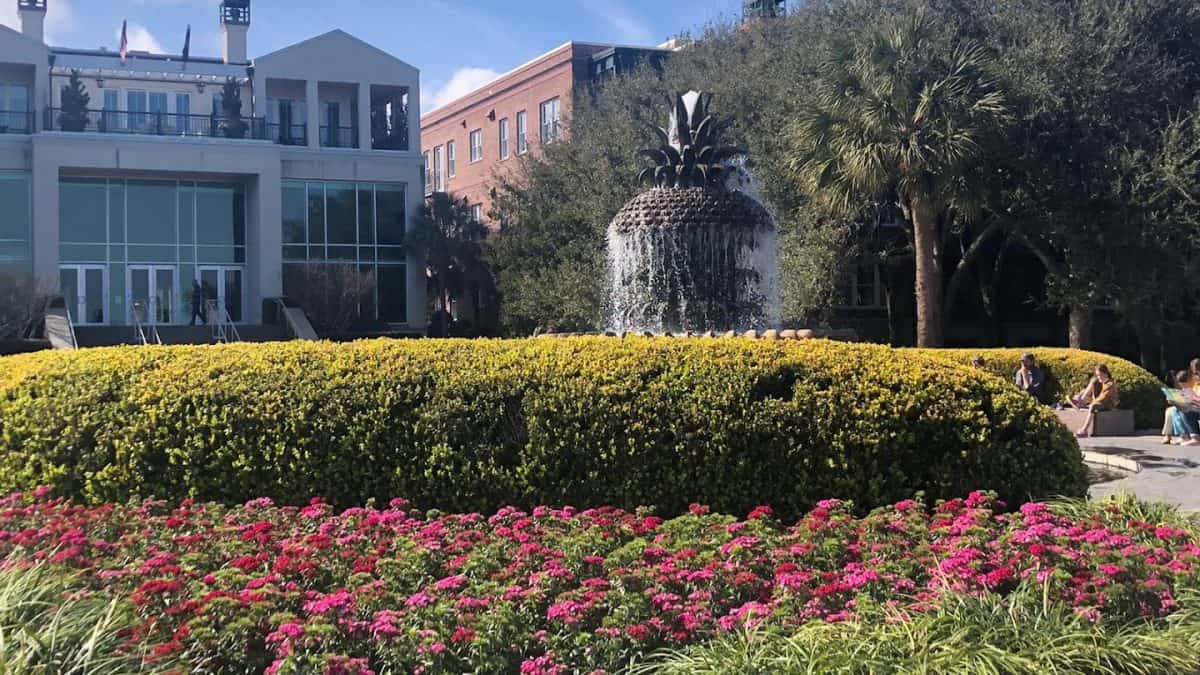
- Waterfront Park, along Concord Street, home of the Pineapple Fountain
- City Market, 188 Meeting Street, a covered market four blocks long
11. Savannah, Georgia
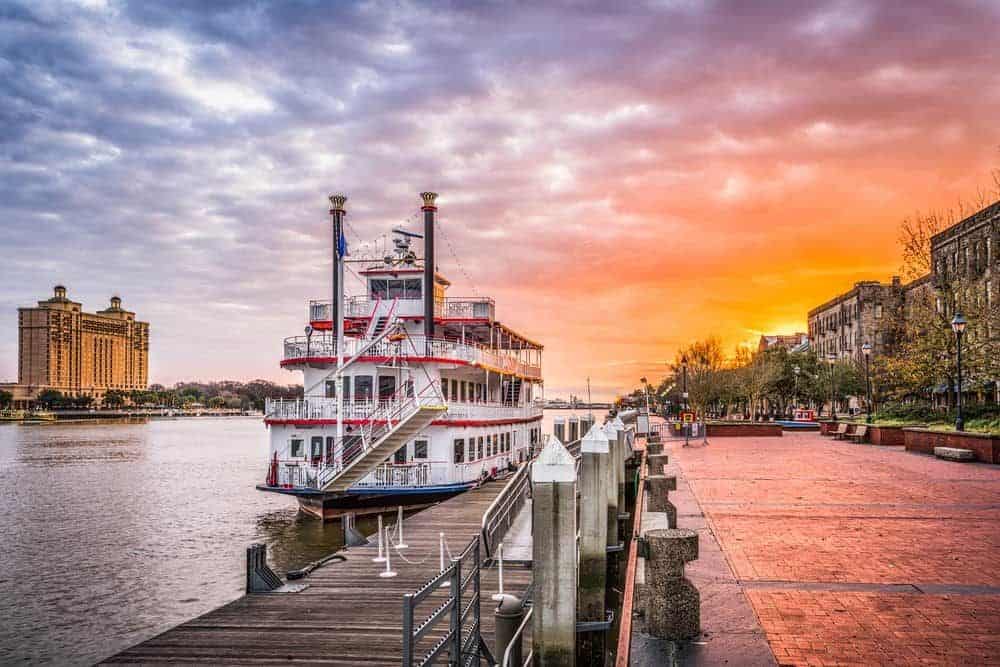
Savannah was built as a puzzle box of green. When James Oglethorpe founded Georgia’s oldest city in 1733, he laid it out around public squares, and 22 survive, each a shady room of live oaks dripping Spanish moss.
Forsyth Park anchors the south end with its white fountain, and cobblestone River Street runs along the water, once cotton warehouses, now praline shops. Grab a to-go cup and drift from square to square.
Where: Savannah sits on the Savannah River near the coast, off Interstate 95 in the state’s southeast corner. Worth a stop:
- Forsyth Park, at Drayton and Gaston Streets, and its famous white fountain
- River Street, along the waterfront, cobblestones and praline shops
- Bonaventure Cemetery, 330 Bonaventure Road, marble angels under the oaks
- Jones Street, downtown, often called the prettiest street in America
12. St. Augustine, Florida
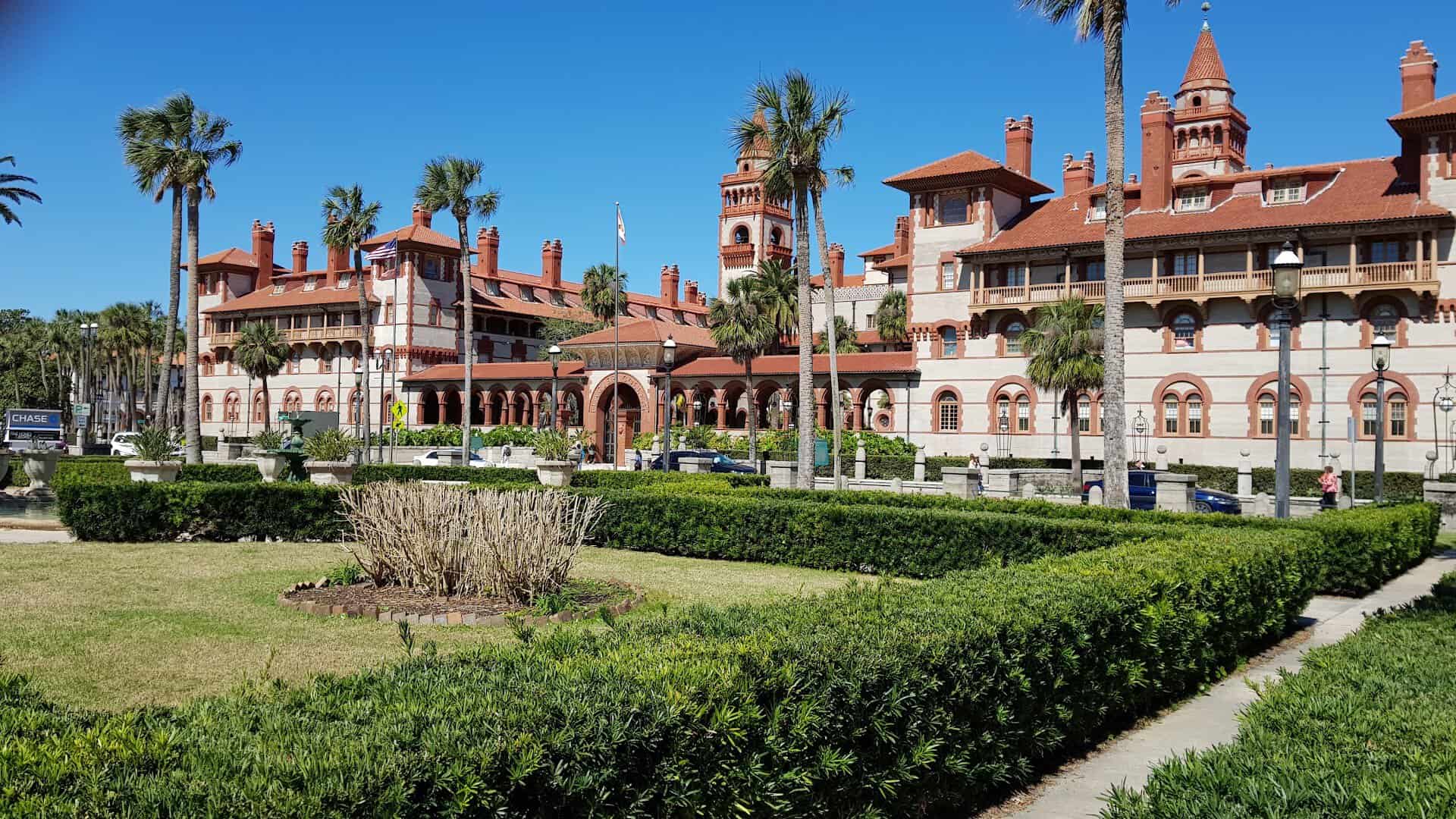
The oldest continuously lived-in European-founded city in the country, St. Augustine was settled by the Spanish in 1565, more than fifty years before the Pilgrims reached Plymouth. That deep history shows on every block.
The Castillo de San Marcos, a fort of coquina shell stone, has guarded the inlet since the 1600s and never once fell to an enemy. Down St. George Street, colonial buildings house cafes and gelato stands.
Where: St. Augustine sits on Florida’s Atlantic coast about 40 miles south of Jacksonville, off Interstate 95. Worth a stop:
- Castillo de San Marcos, 1 South Castillo Drive, the 17th-century coquina fort
- St. George Street, downtown, a pedestrian lane of colonial shops and cafes
- Flagler College, 74 King Street, the lavish former Ponce de Leon Hotel from 1888
- St. Augustine Lighthouse, 100 Red Cox Drive, 219 steps to the coastal view
Point the Car Toward the Coast
Here is the beautiful thing about the East Coast: you can chain these towns into one long, salty ribbon of a road trip, or savor just one over a slow weekend. Either way, you win.
So pick your season. Go north for lobster and lighthouses in the crisp Maine summer, or drift south for pastel porches and Spanish forts when the weather turns cool. Pack comfortable shoes, a real appetite, and a camera you do not mind filling up.
The map is waiting, the harbors are open, and every one of these little towns is ready to remind you how good it feels to slow down.
Featured image: Dolores Reixach Jimenez via Charleston

Stella Raines
Editor-in-Chief
Stella brings over a decade of storytelling experience to TX Headlines. With roots in West Texas and a love for road trips, she leads the editorial team with an eye for the hidden stories that make Texas unforgettable.