This Unassuming Texas Church Hides One of the Most Beautiful Painted Interiors in the State
I have a habit of slowing down for little country churches. You know the kind: a white or red-brick box off a farm road, a modest steeple, a gravel lot with room for maybe twenty trucks.
Most of the time you drive on. Every so often, one of them turns out to be hiding something you were not ready for.
There is a tiny community in Fayette County, a few miles outside Schulenburg, where one of those plain little churches opens its doors onto a hand-painted wonderland. Locals call it the Queen of the Painted Churches, and once you step inside, the nickname stops sounding like an exaggeration.
Below, I will walk you through why this one is worth a detour, who painted it, and how to see it for yourself.
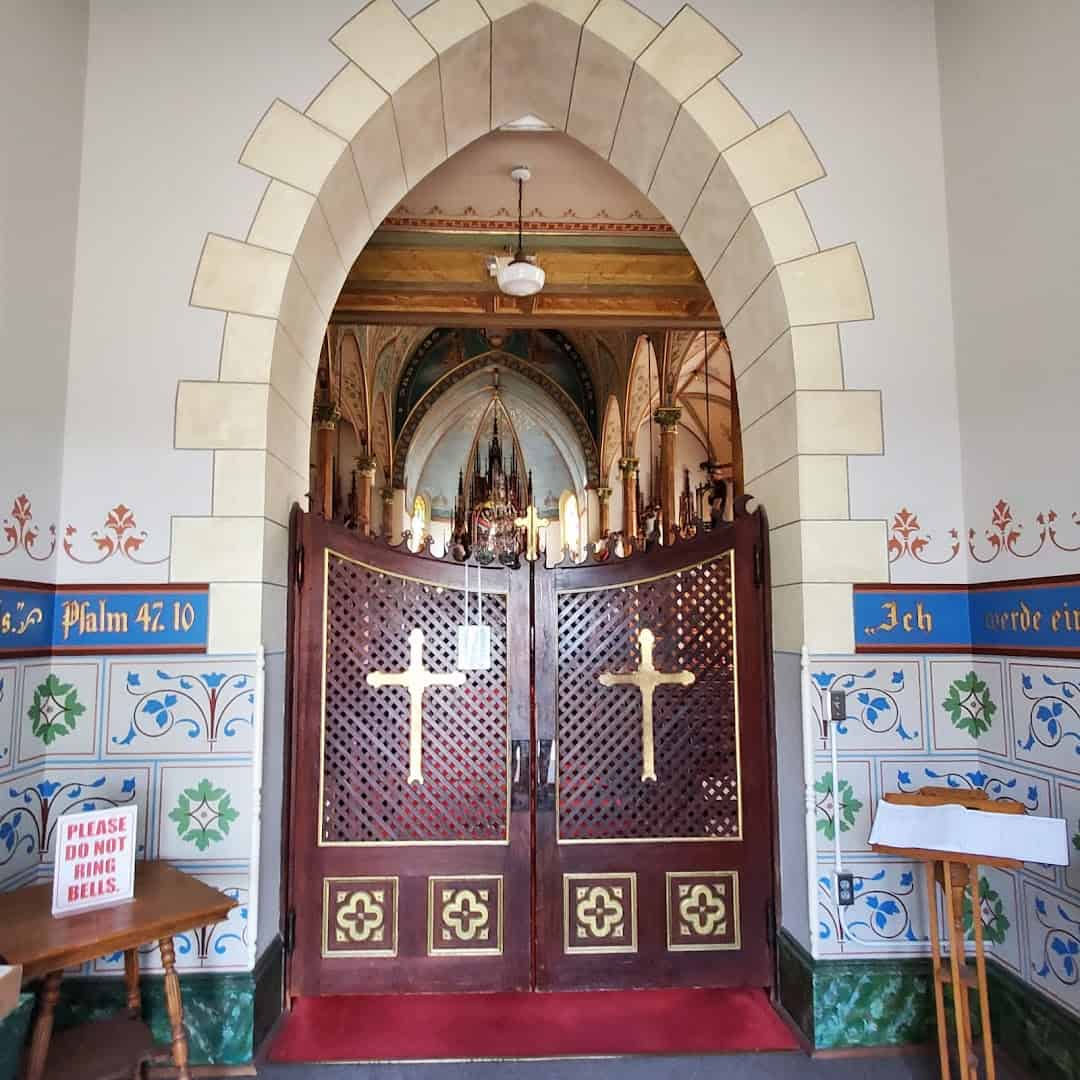
The Plain Door and the Jaw-Drop Behind It
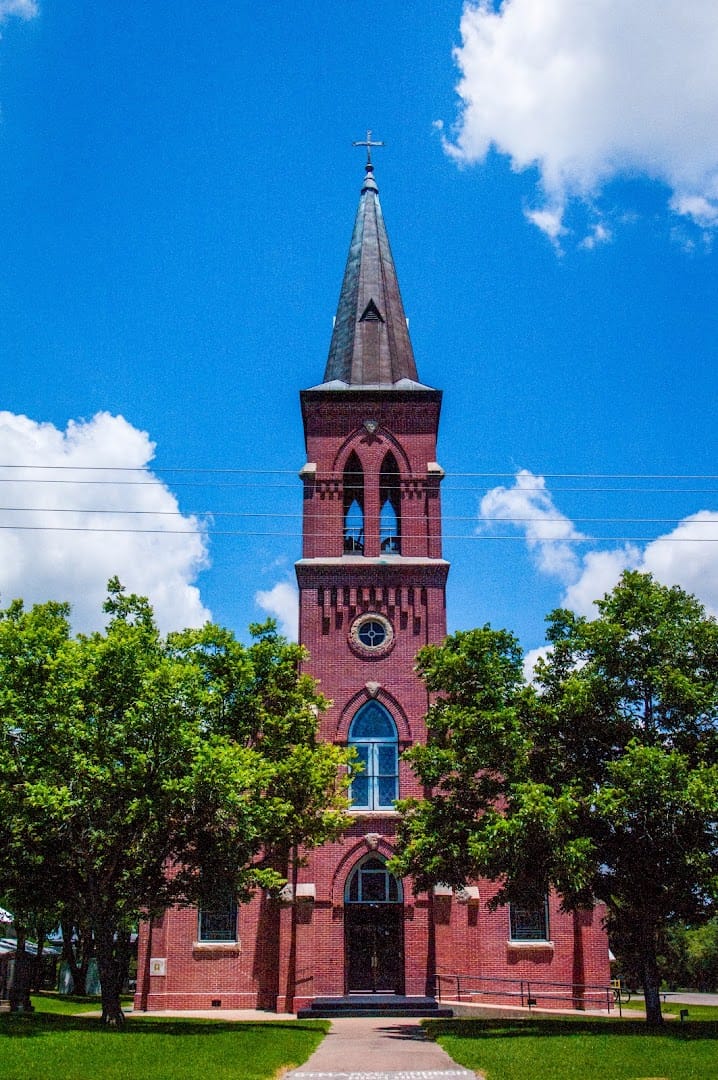
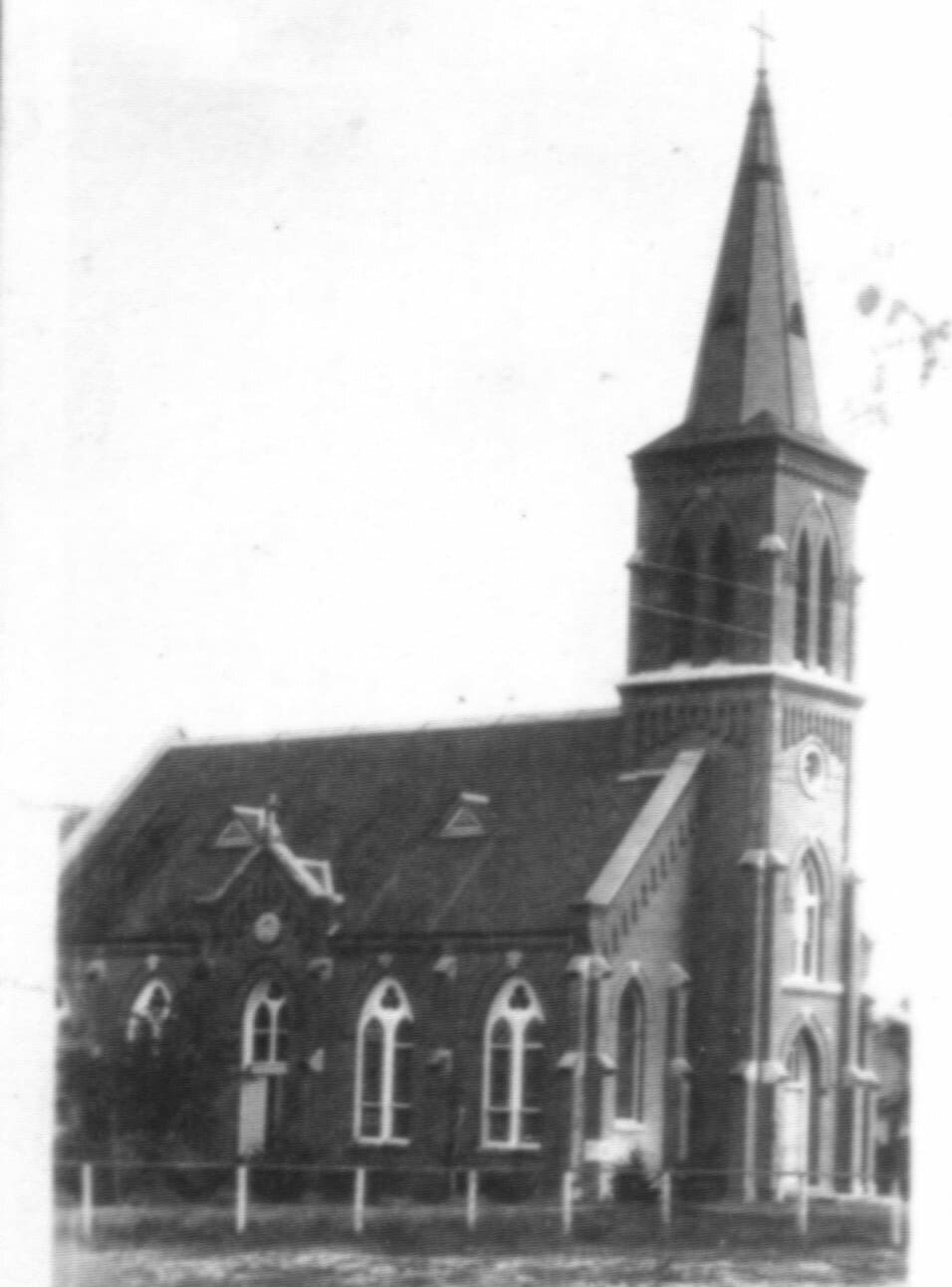
From the road, the church plays it cool. You see a Gothic Revival shape in warm red brick, a bell tower, a cross against the sky, and not much of a hint about what waits inside. It looks like a hundred other rural Texas churches.
Then you open the door.
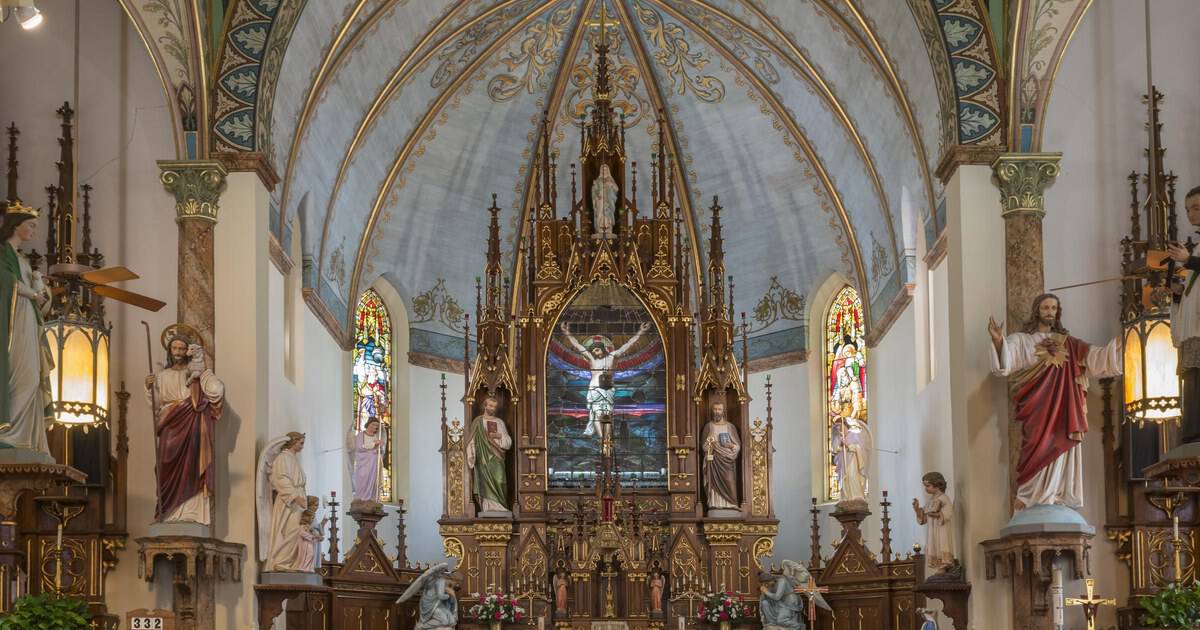
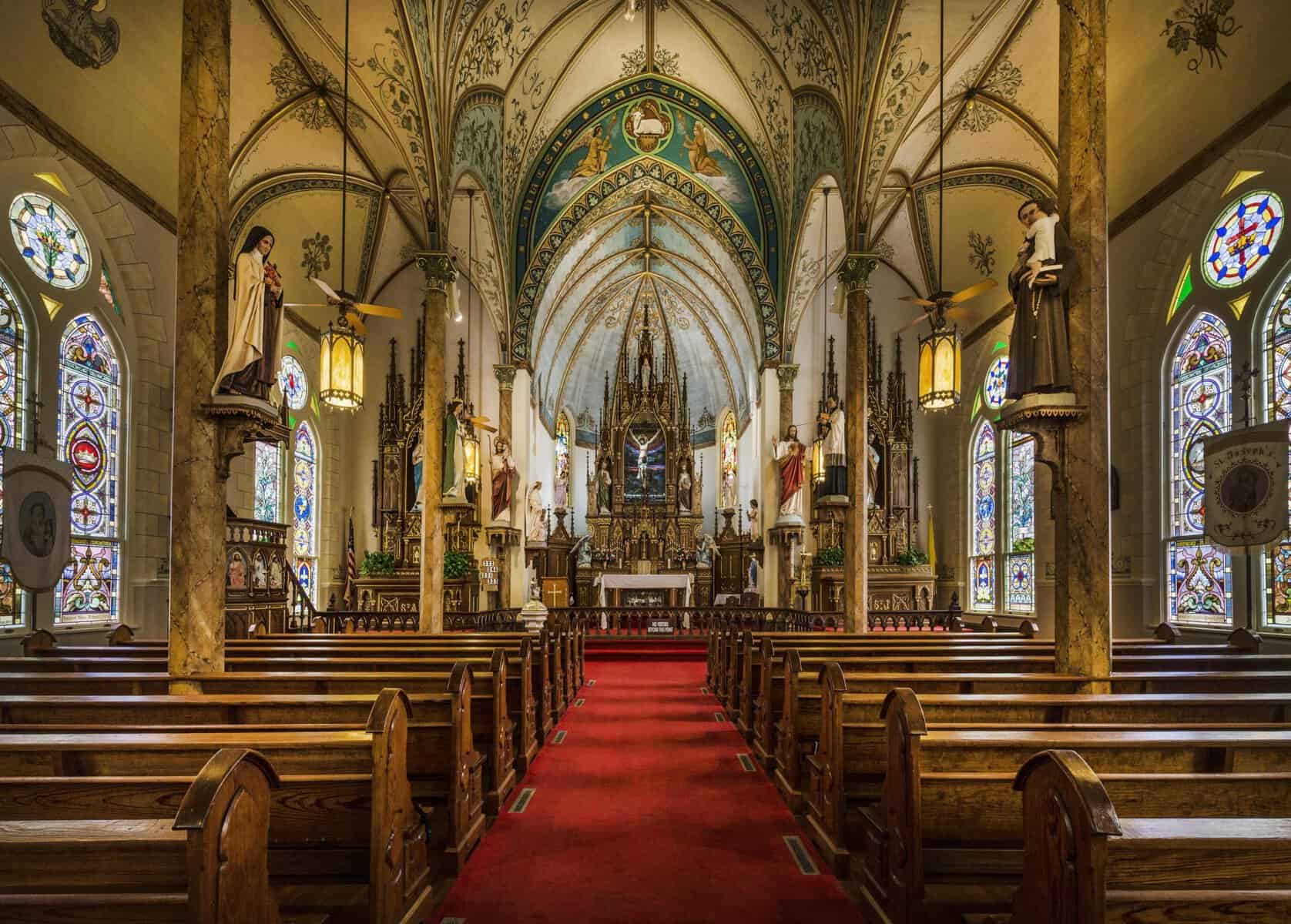
The ceiling above you unfolds into a canopy of color: soft sky blues, warm ochres, greens, and gold, laid down in stencils and freehand flourishes that run the whole length of the nave.
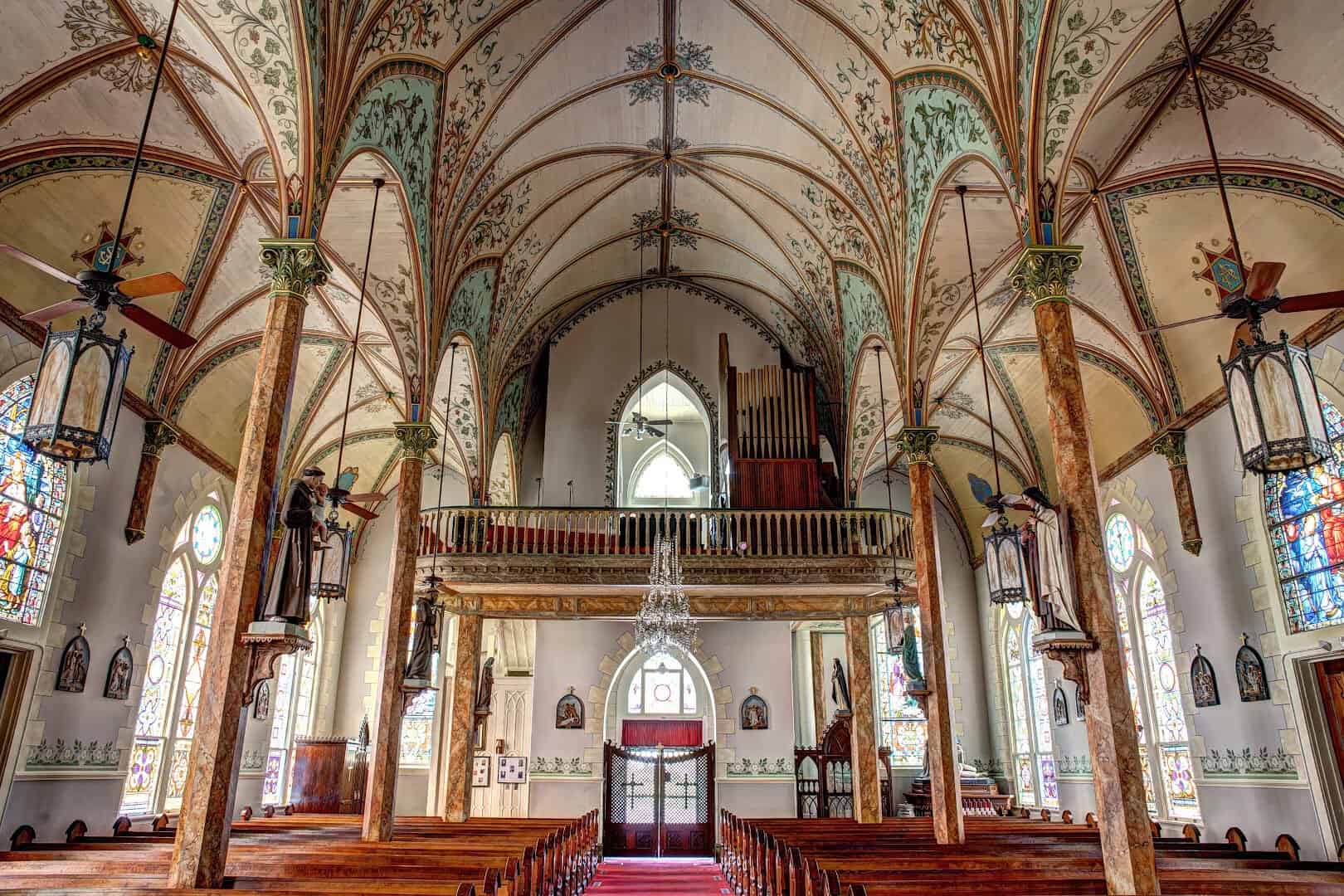
Slender columns march down both sides, painted to look like polished marble. Biblical scenes glow in the windows. It is the kind of room that makes people stop talking.
That contrast is the whole point. These are places built by hardworking farm families who did not have much, yet they filled a small country sanctuary with the artistry you would expect in a European cathedral.
Nothing about the outside prepares you for it, which is exactly why the reveal lands so hard.
People who have toured every one of the Texas painted churches tend to save this one for last, or come back to it first. It is the showpiece, the one that makes newcomers understand what all the fuss is about.
If you only have time for a single stop on the trail, this is the one to make it.
A Ceiling Painted to Fool the Eye
Look up and you will notice the arches overhead seem to curve into stone vaults, the way a grand old cathedral does. They do not. They are flat wood and plaster, painted so convincingly that your eye reads depth and shadow that are not there.
The architect leaned on paint to do what the budget could not. Real stone groin vaults cost a fortune, so he had them painted in instead, complete with fake joints and shading. It is a trick as old as churches themselves, and here it is done beautifully.
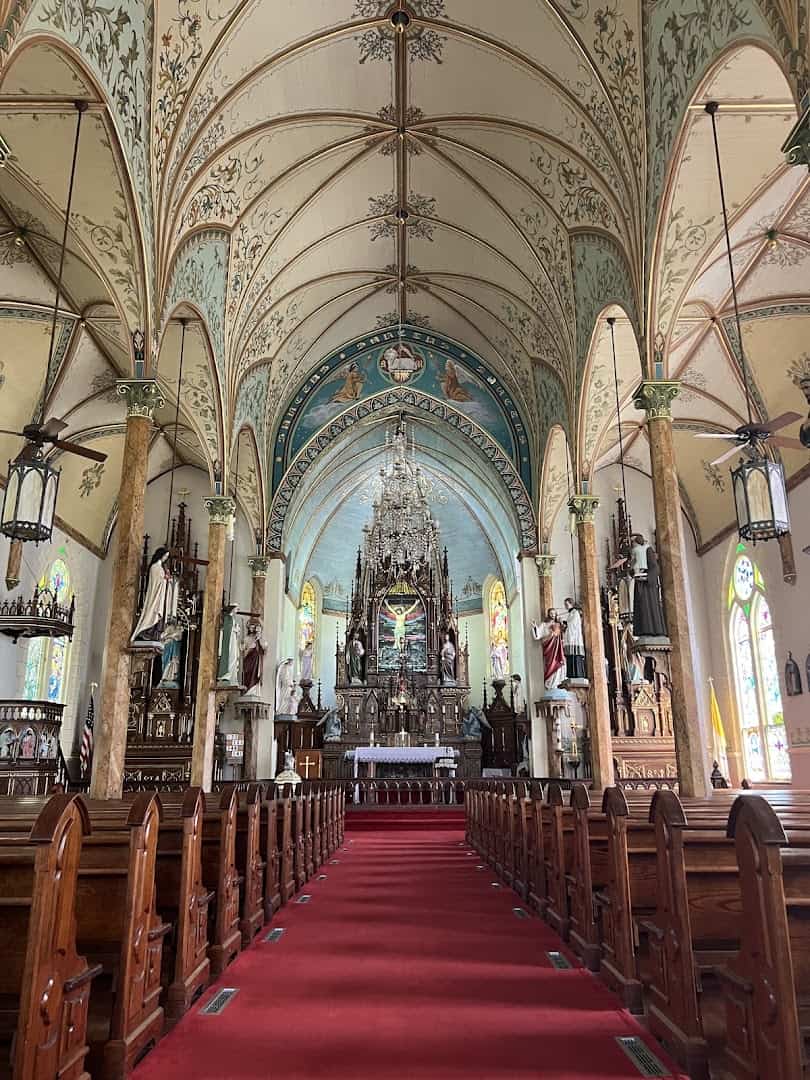
The columns get the same treatment. Eight of them line the aisles, plain wooden posts turned into faux marble through layer after layer of careful brushwork.
Sky blue, off-white, green, and ochre swirl together until the wood looks quarried rather than carpentered. Reach out and you half expect cool stone, then feel warm painted timber instead.
Every surface carries something. Angels, crosses topped with crowns, stars, and heavy bunches of grapes repeat across the walls, all drawn freehand rather than traced.
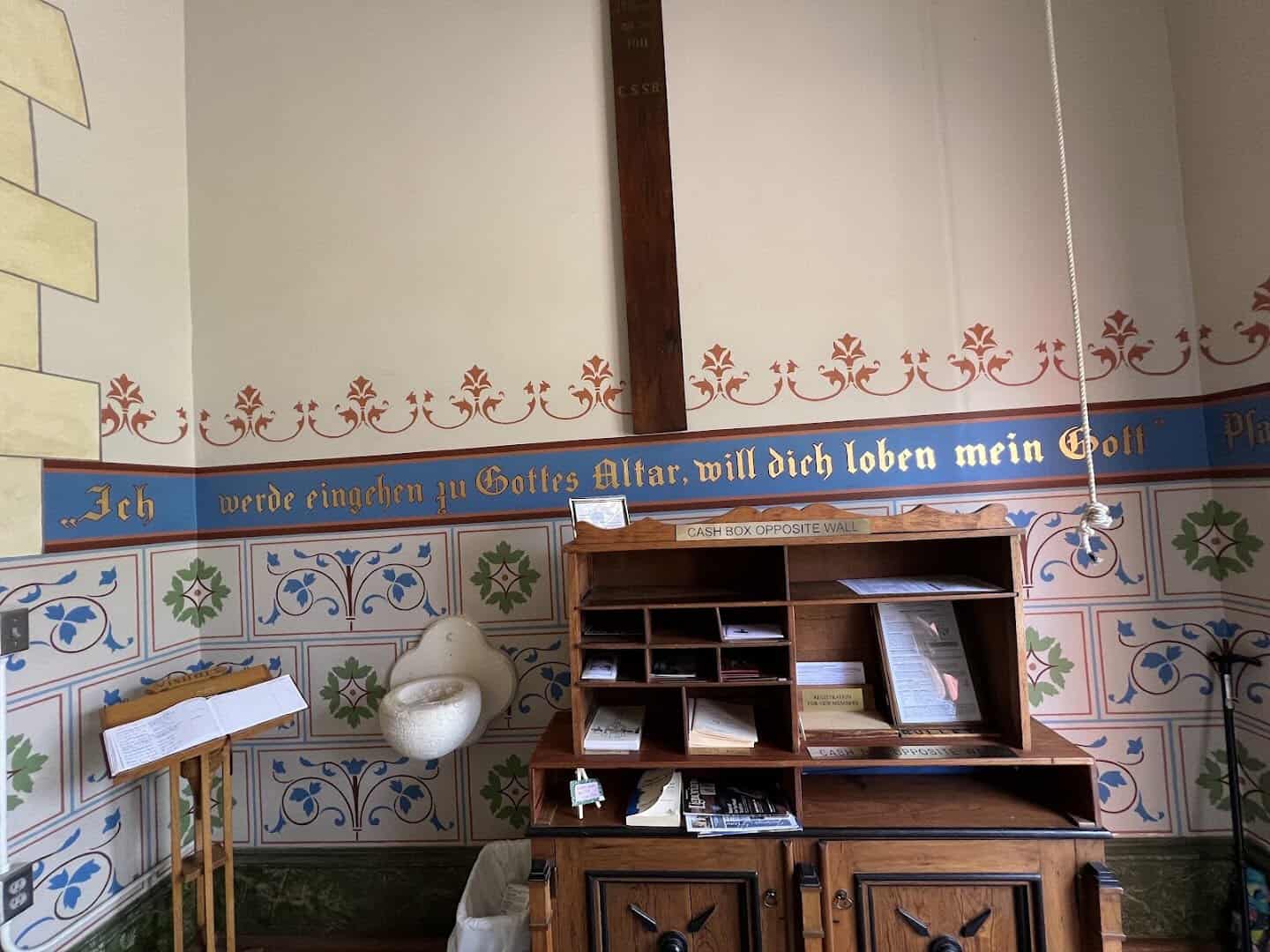
Some of the patterns were painted onto canvas first, then glued to the walls like wallpaper, which is why the decoration wraps the room so seamlessly.
Did you know? The colors were meant to be seen in low light. Gothic design loves shadow, and the dim glow inside is deliberate. Images in the glass and along the walls feel more mysterious, more transcendent, when the room is not flooded with daylight.
Windows That Crossed an Ocean
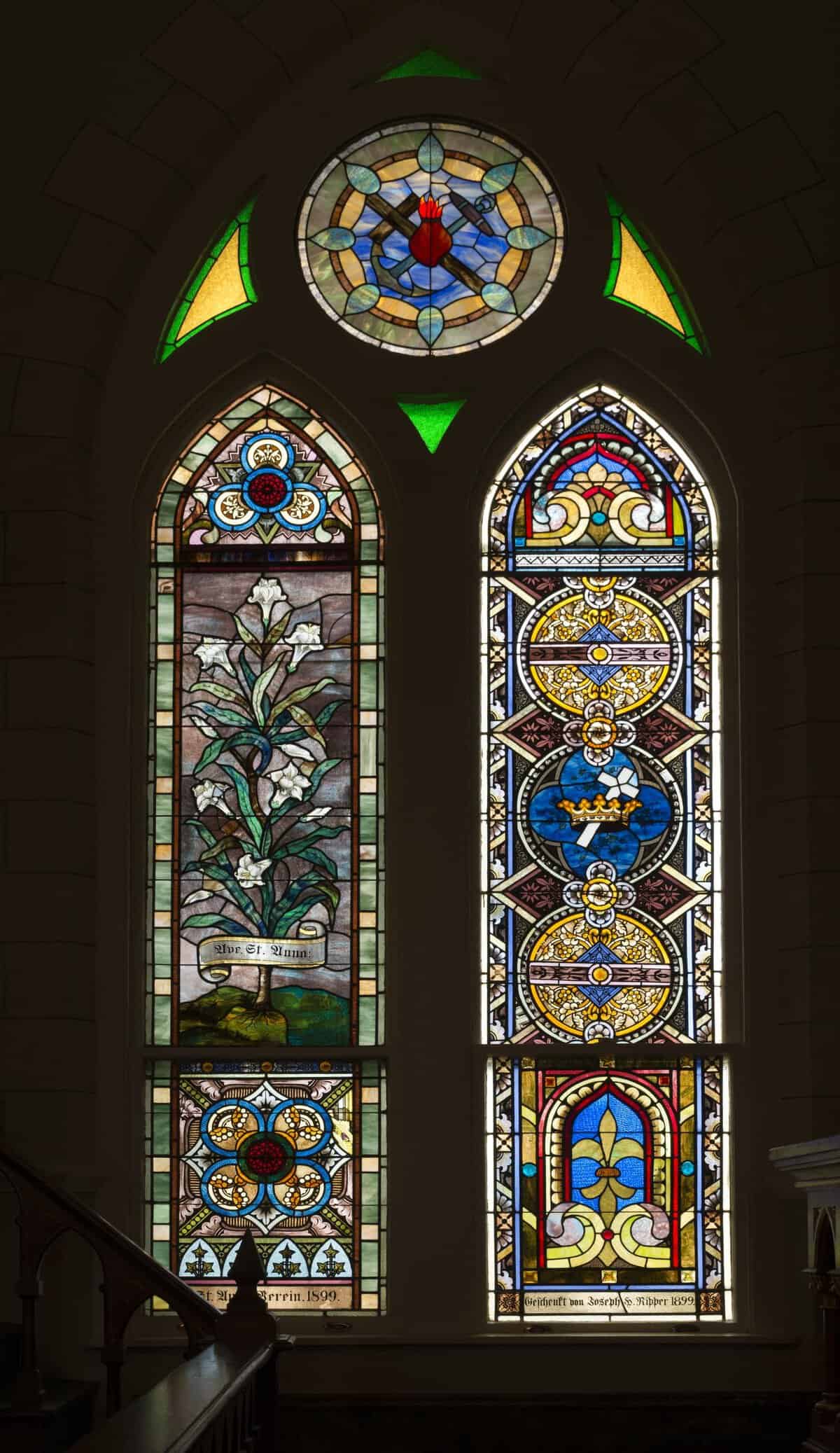
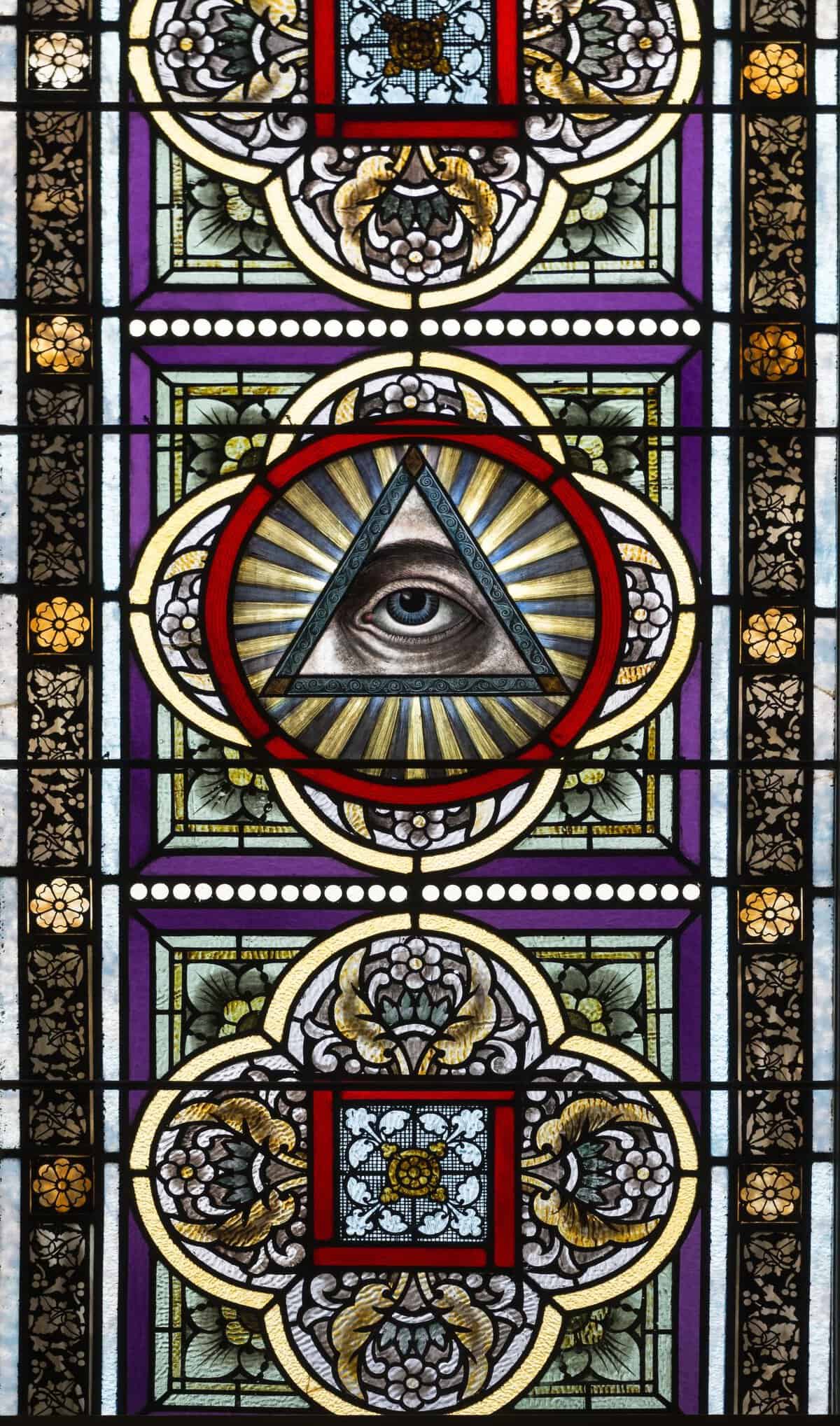
The stained glass deserves its own moment. Rows of tall windows line the sanctuary, each one telling a biblical scene in jewel tones that throw color across the painted walls when the sun hits them right.
These windows were made in Germany and shipped across the Atlantic, then hauled inland to this speck of a Texas community. That was no small feat in an era when everything moved by rail and wagon.
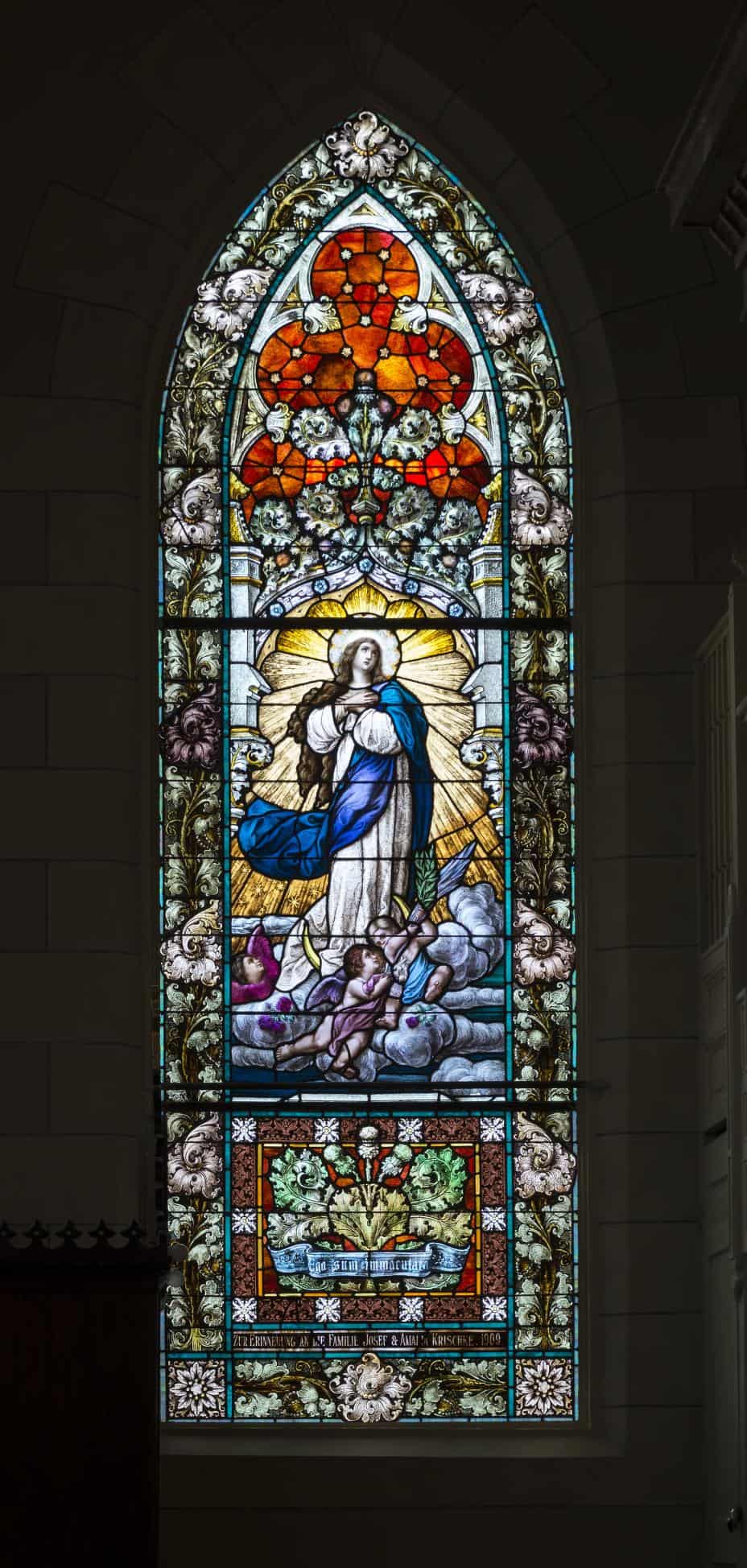
The congregation wanted the best, and they were willing to send halfway around the world for it.
What makes them even more remarkable is their age. Eighteen of the windows are older than the church itself, saved from an earlier building on the same ground and reset into the 1906 sanctuary.
The light falling through them onto those painted columns has been coloring worship here for well over a century. Not many small towns can say their stained glass outlived the walls it started in.
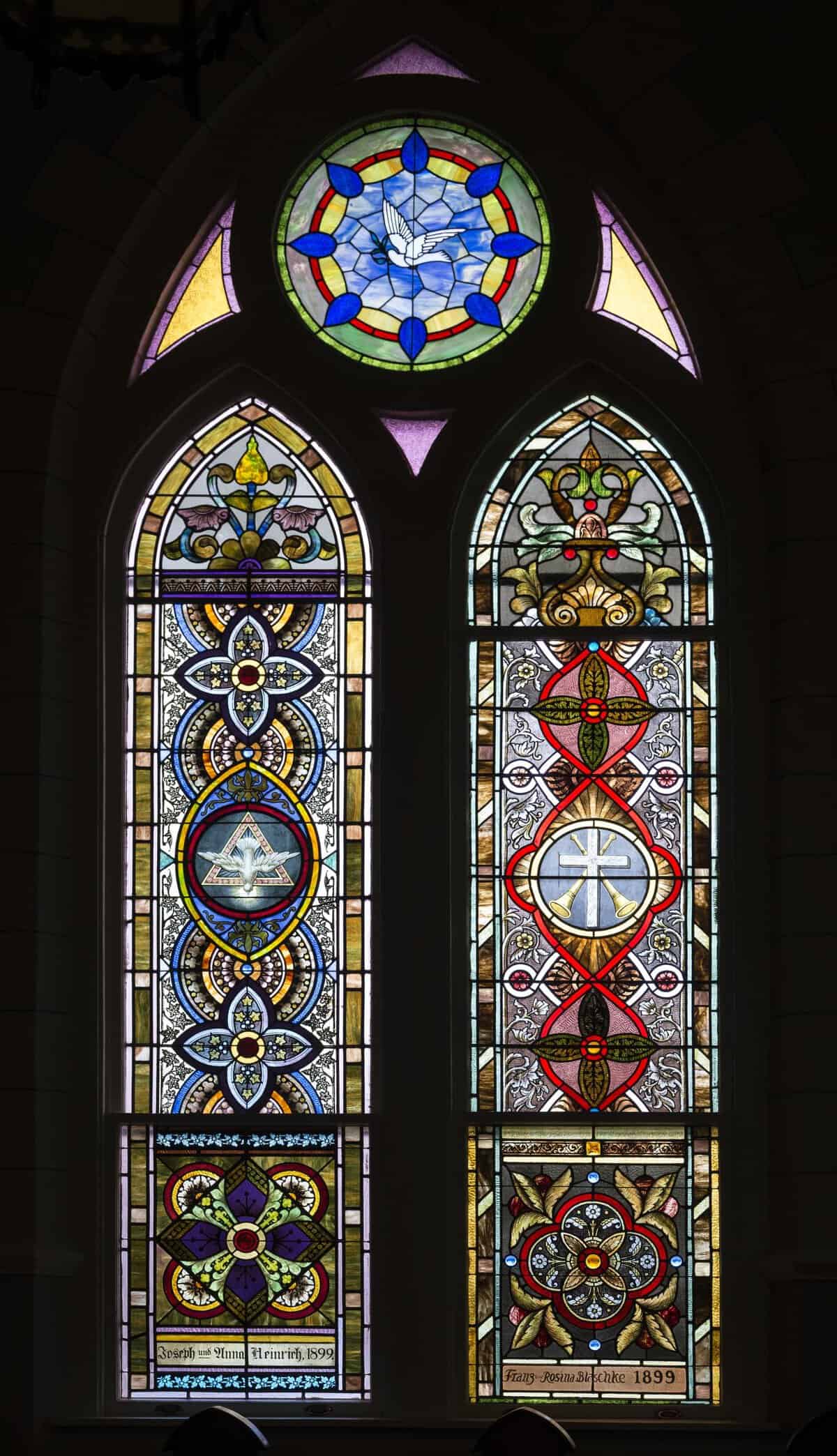
Stand in the middle of the aisle on a bright morning and the whole room turns kaleidoscopic. Blue light on an ochre column, red on a gold star, green washing over the pews. It is the sort of thing you want to just sit with for a while.
Roots Run Deep in High Hill
The church sits in High Hill, a community settled largely by German immigrants who came to Fayette County in the mid-1800s looking for land and a fresh start. They brought their faith, their language, and a love of the ornate churches they had left behind in the old country.
The building you see today went up in 1906, the third church to serve this parish as the congregation kept outgrowing its walls. It was designed by Leo M. J. Dielmann, a young architect fresh from his studies in Germany, and it was one of the first churches he built.
Dielmann went on to become the most sought-after church architect in the region, so admired that rival towns were said to suffer a bad case of steeple envy. This little sanctuary was where a lot of that reputation started. Frank Bohlmann handled the construction.
The paint came a few years later. In 1912, two San Antonio artists, Ferdinand Stockert and Hermann Kern, arrived to decorate the interior. Both were German-trained, and they had formed their partnership only the year before.
What they pulled off in a matter of months still amazes people who study these things. Two men, brushes, canvas, and a small country church, transformed into the most elaborately decorated of all the Texas painted churches. That is why it wears the crown.
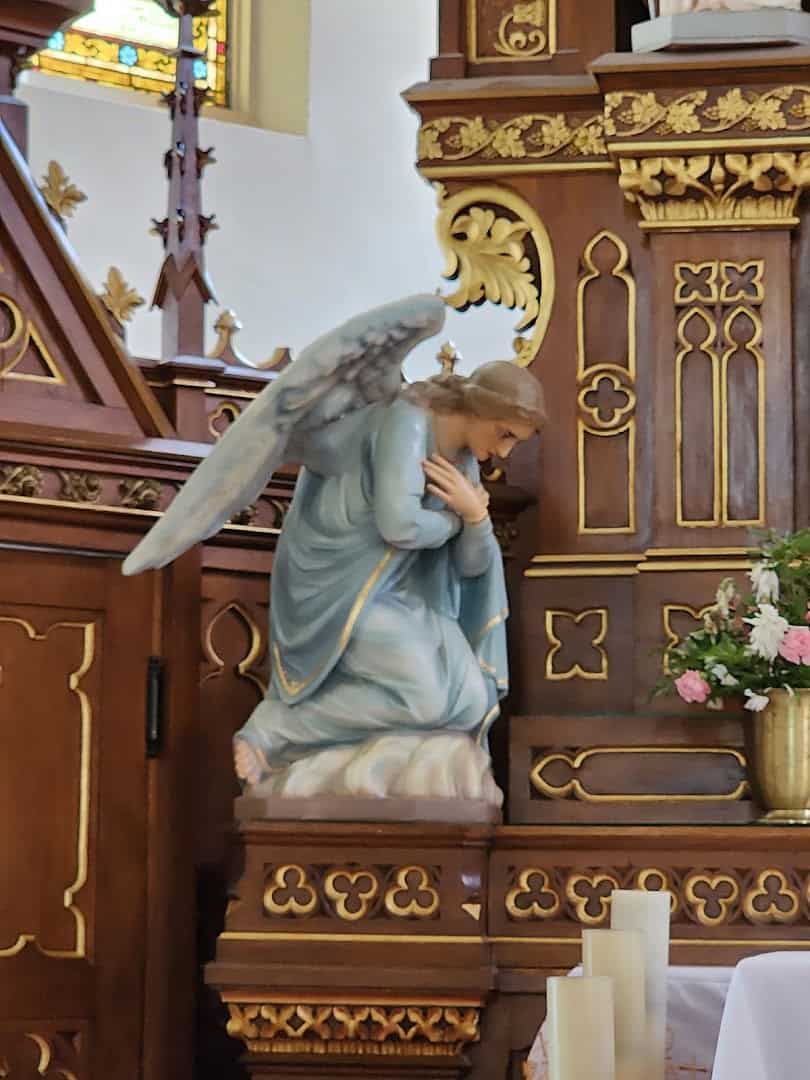
The whole thing was a community effort in the truest sense. Farmers who spent their weeks in the fields gave money, labor, and materials to raise a church far grander than their own homes. The paint, the glass, the carved statues all came from people who chose beauty over comfort.
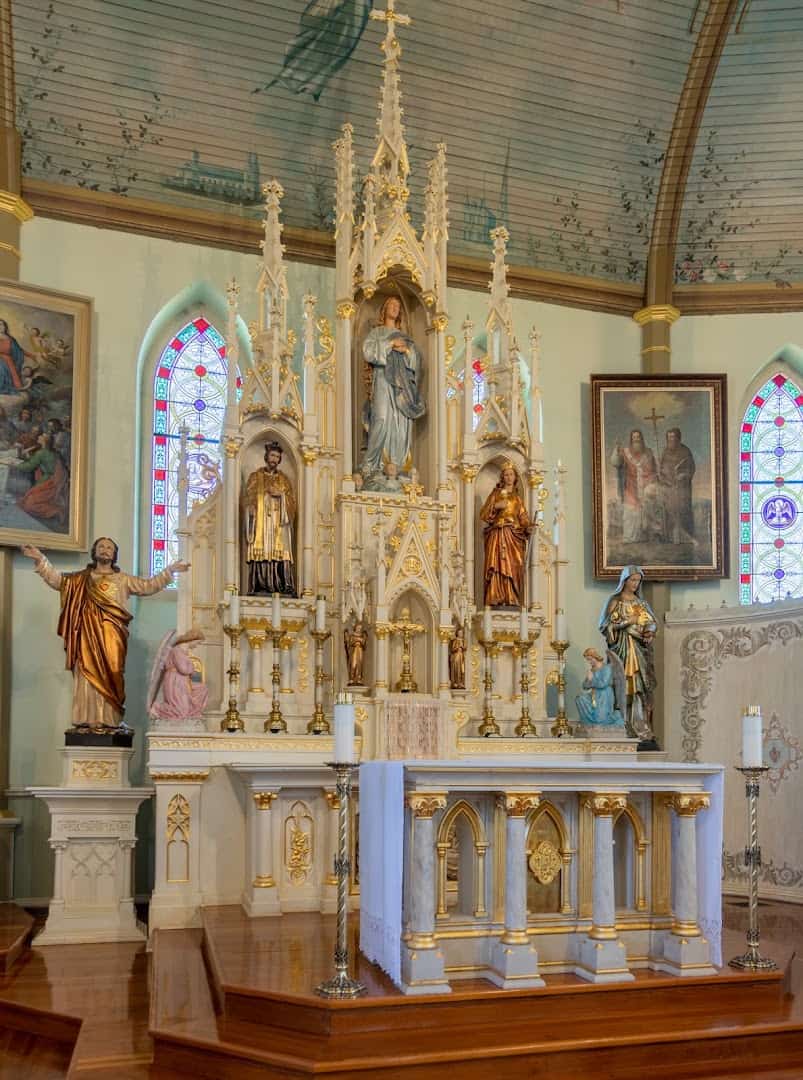
High Hill itself never grew into much of a town, and that is part of the charm. The community stayed small while its church became famous, drawing more visitors in a year than the surrounding countryside holds people.
Why They Call It the Queen
Texas has a scattering of these painted churches, most of them clustered in the rolling farmland between Houston and San Antonio. Each one has its own personality and its own devoted fans. But when people rank them, this is the one that tends to land at the top.
Visitors do not hold back about it. Travelers on TripAdvisor call the altar, woodwork, and statues “breathtakingly magnificent,” and more than a few describe walking in and simply losing their breath for a second. The word that comes up again and again is queen.
It earned a spot on the National Register of Historic Places back in 1983, filed under a wonderful category: churches with decorative interior painting. That is a small, specific club, and this one is its brightest star.
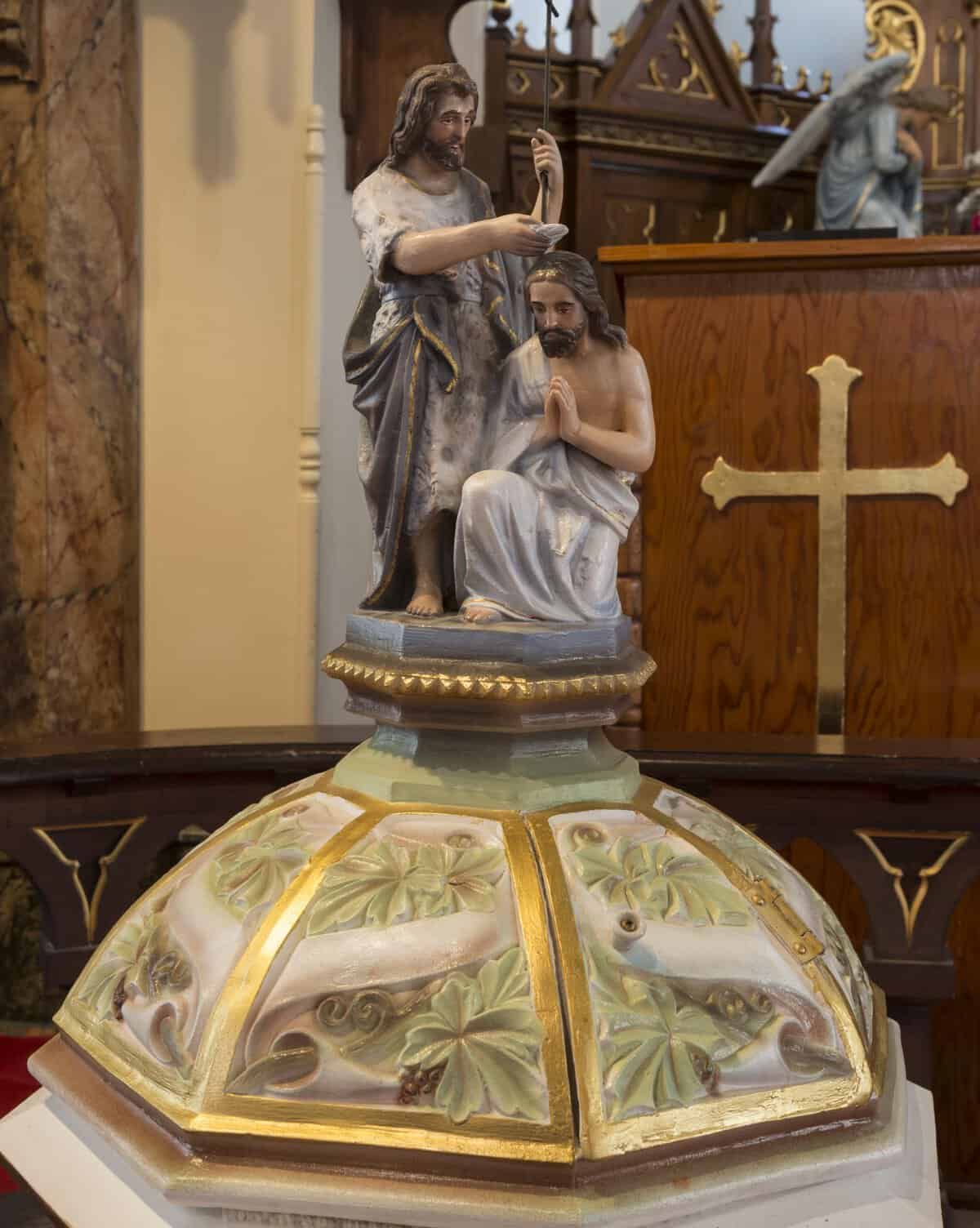
What gets me is that it was never built to impress tourists. It was built by farmers, for farmers, as a place to pray. The beauty was an offering, not a marketing plan. You feel that when you are standing in it.
Make a Day of the Whole Trail
One painted church is a wonderful stop. Several of them in an afternoon is a genuinely memorable day trip, and this corner of Texas makes that easy.
Four of the area churches, in High Hill, Praha, Ammannsville, and Dubina, are set up for self-guided visits. You can drive the loop at your own pace and step inside each one.
Each interior has its own palette and mood, so no two feel the same. Let the surprises stack up as you go.
If you want the stories behind the paint, the Schulenburg Chamber of Commerce runs guided tours that go deeper and open up churches you cannot see on your own. A guide fills in the history, points out details you would breeze past, and answers the questions the walls raise.
Pro tip: these are active parishes, not museums. Weekday and Saturday mornings are your window, so it is worth building the visit around a service schedule and exploring during the quiet hours.
Before You Go
The churches are usually open to visitors from around 9 a.m. to 4 p.m., Monday through Saturday. Sundays are reserved for worship, so plan your loop for another day.
Guided tours run year-round and need a phone call to arrange. The Schulenburg Chamber of Commerce takes the bookings, and group pricing depends on how many churches you want to see and how many people are in your party.
There is no admission charge to step inside on your own, but every church keeps a donation box near the door. These small parishes carry the cost of maintaining priceless, century-old artwork, so a few dollars left behind goes a long way.
Come respectful and come curious. Speak softly, mind any service in progress, and give yourself permission to just look up for a while. This is a place that rewards slowing down.
How to Get There
The church sits just off the farm road outside Schulenburg, an easy detour if you are cruising Interstate 10 between Houston and San Antonio. It is well signed once you are close, and the cross-topped roofline is easy to spot above the fields.
Where: Nativity of the Blessed Virgin Mary (St. Mary’s Catholic Church), 2833 FM 2672, Schulenburg, TX 78956. Guided tours through the Schulenburg Chamber of Commerce, 618 N. Main Street, Schulenburg, at (979) 743-4514.
Plan the Detour
Some of the best things in Texas are the ones that do not announce themselves. A plain brick church on a country road, a donation box by the door, and a ceiling overhead that took two immigrant artists a single summer to paint.
It has been stopping visitors cold for more than a century, and it is not done yet.
So point the car toward Schulenburg, take the farm road slow, and push open that unassuming door. Look up, let it hit you, and try not to whisper “wow” too loudly in the quiet.
Featured image: Carol M. Highsmith, Library of Congress

Stella Raines
Editor-in-Chief
Stella brings over a decade of storytelling experience to TX Headlines. With roots in West Texas and a love for road trips, she leads the editorial team with an eye for the hidden stories that make Texas unforgettable.
More Stories

These 5 Surreal Texas Places Are So Stunning You Won’t Believe They’re in Texas
5 Abandoned Texas Places That Are Eerie, Empty, and Still Open to Explore
8 Hidden Texas Bookstores That Book Lovers Will Want to Get Lost In
This Abandoned Texas Zoo Closed Nearly 90 Years Ago, and You Can Still Walk Through Its Ruins
Tags