This Historic Texas Town Is Full of Brick Streets and Surprisingly Great Shops
Most “cute downtown” promises fall apart in two blocks. One candle shop, one coffee place, a mural for the photo, and you are back in the car wondering why you drove an hour. I now judge a small town by its shops, not its murals.
Nacogdoches passes that test with room to spare. The oldest town in Texas has red brick underfoot, a whole downtown on the National Register of Historic Places, and a run of locally owned stores that would hold their own on any big city street.
Below, I will walk you down those bricks: the general store that rings up sales on an 1890s cash register, the Victorian mansion stuffed with fourteen rooms of antiques, the popcorn cafe, the pottery studio, and the barbecue between them.
Plus the history that makes every one of those storefronts feel earned.
Brick Streets Older Than Your Grandparents
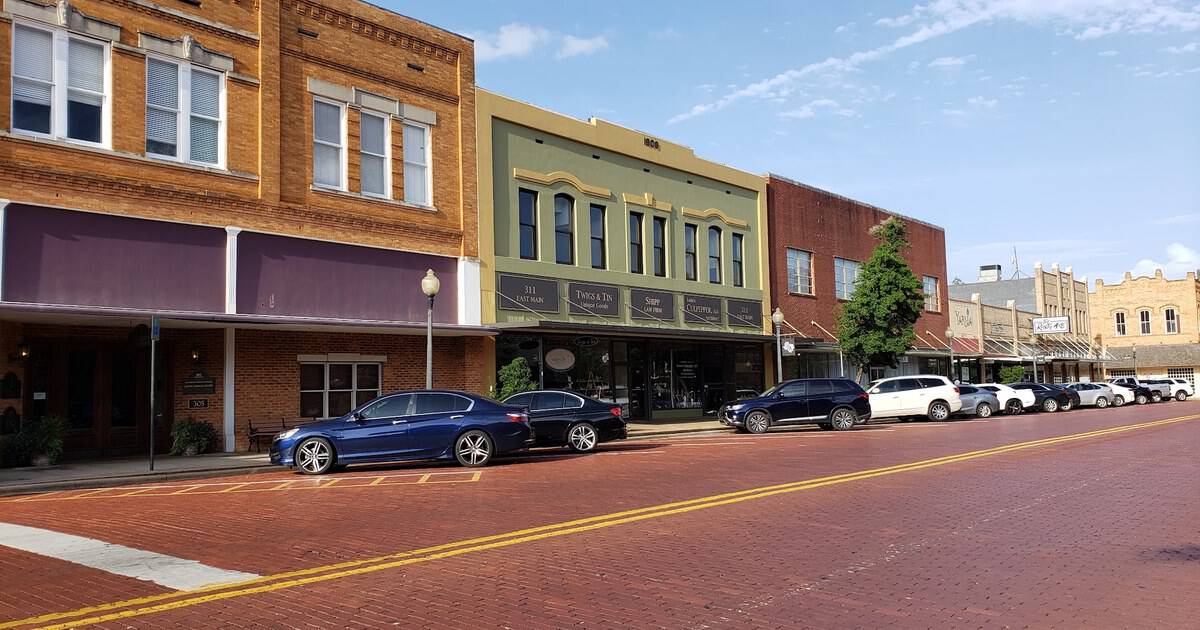
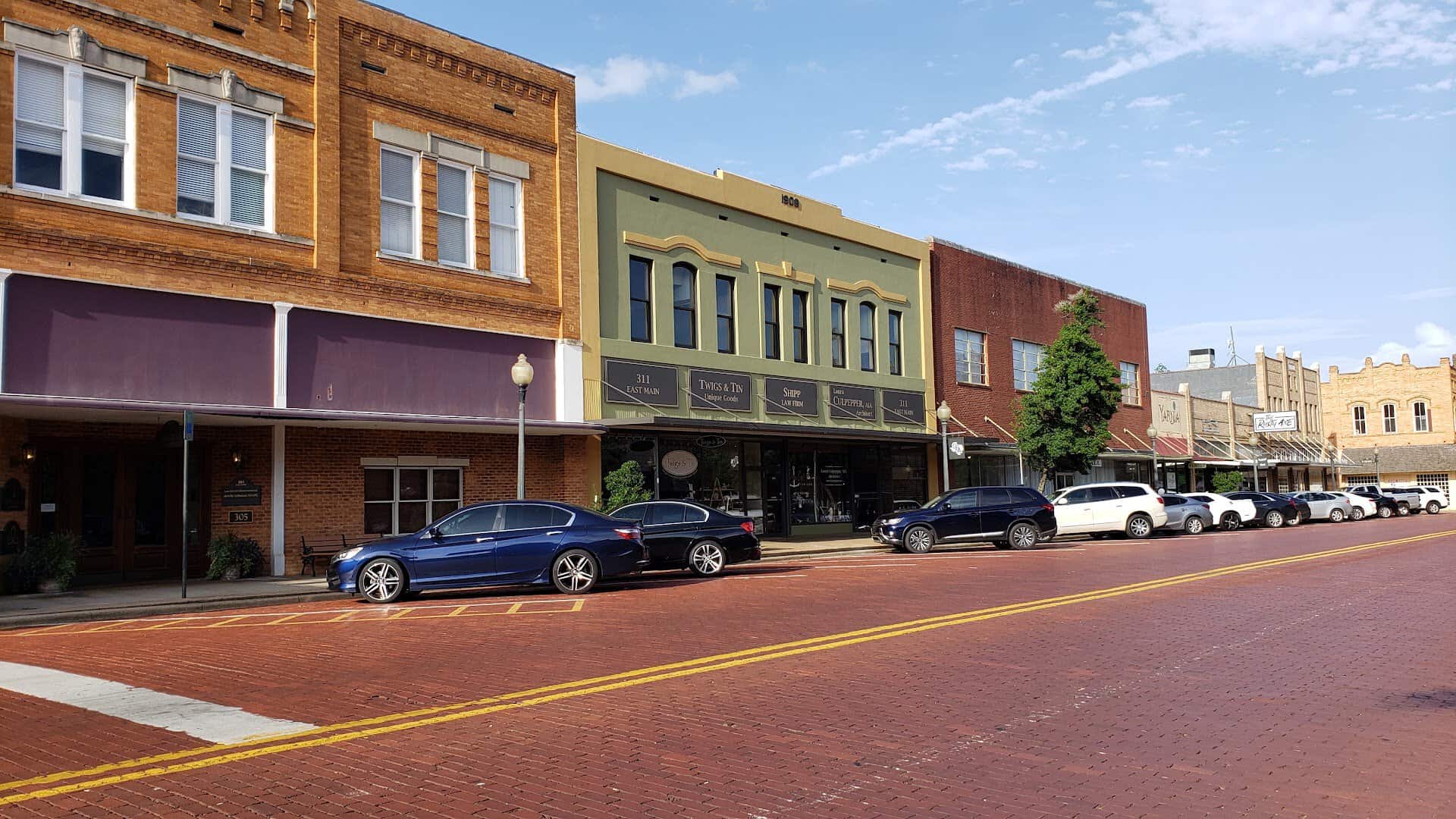
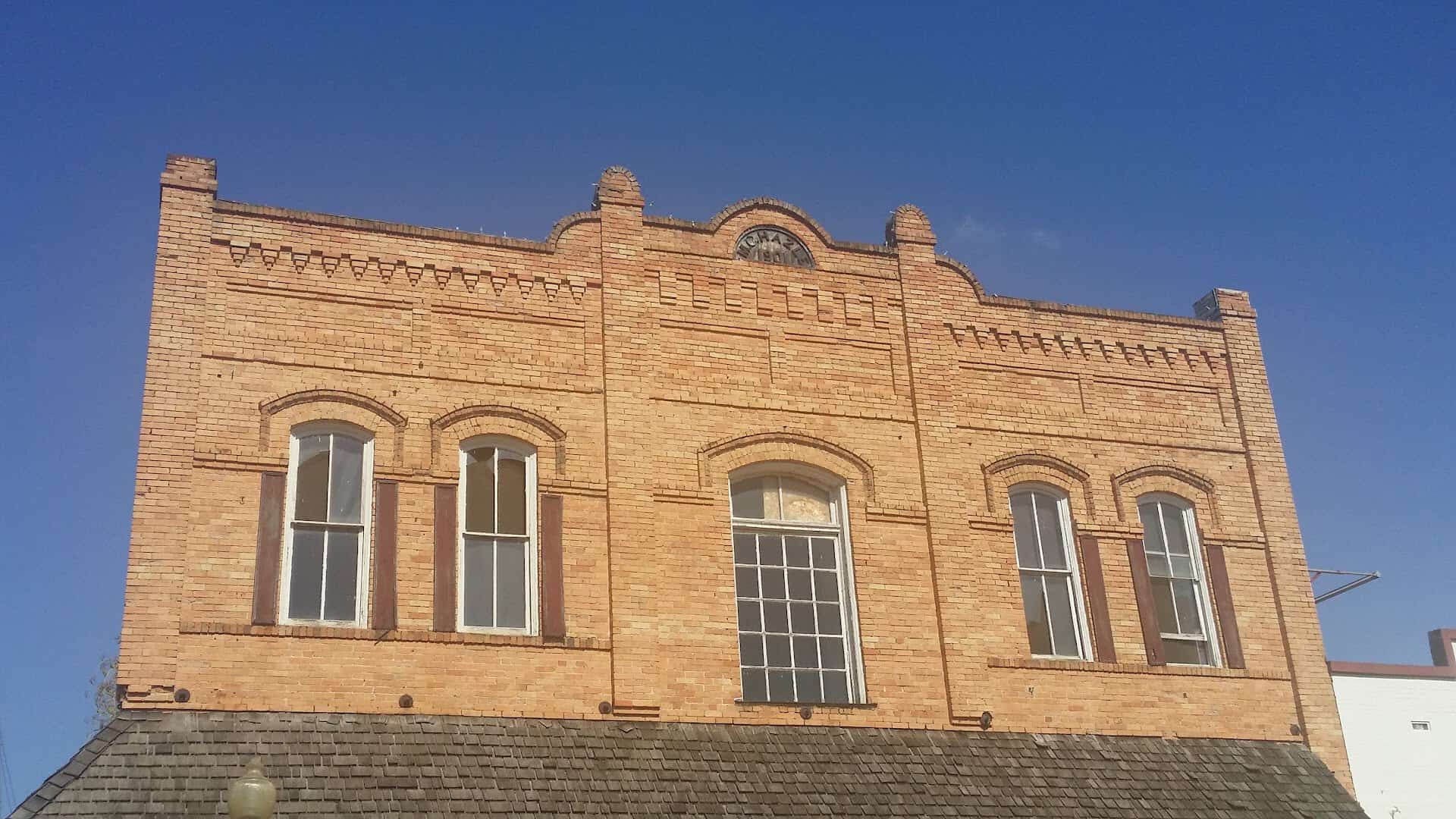
The bricks are the first thing you notice and the last thing you forget. Downtown Nacogdoches is paved in real red brick, laid in the 1920s, and the town has kept it that way while nearly every other Texas main street went to asphalt.
Most accounts date the paving to 1923, the same year Stephen F. Austin State University opened its doors on the north side of town. A century of tires and boot heels has polished the surface to a soft, uneven glow that photographs beautifully at golden hour.
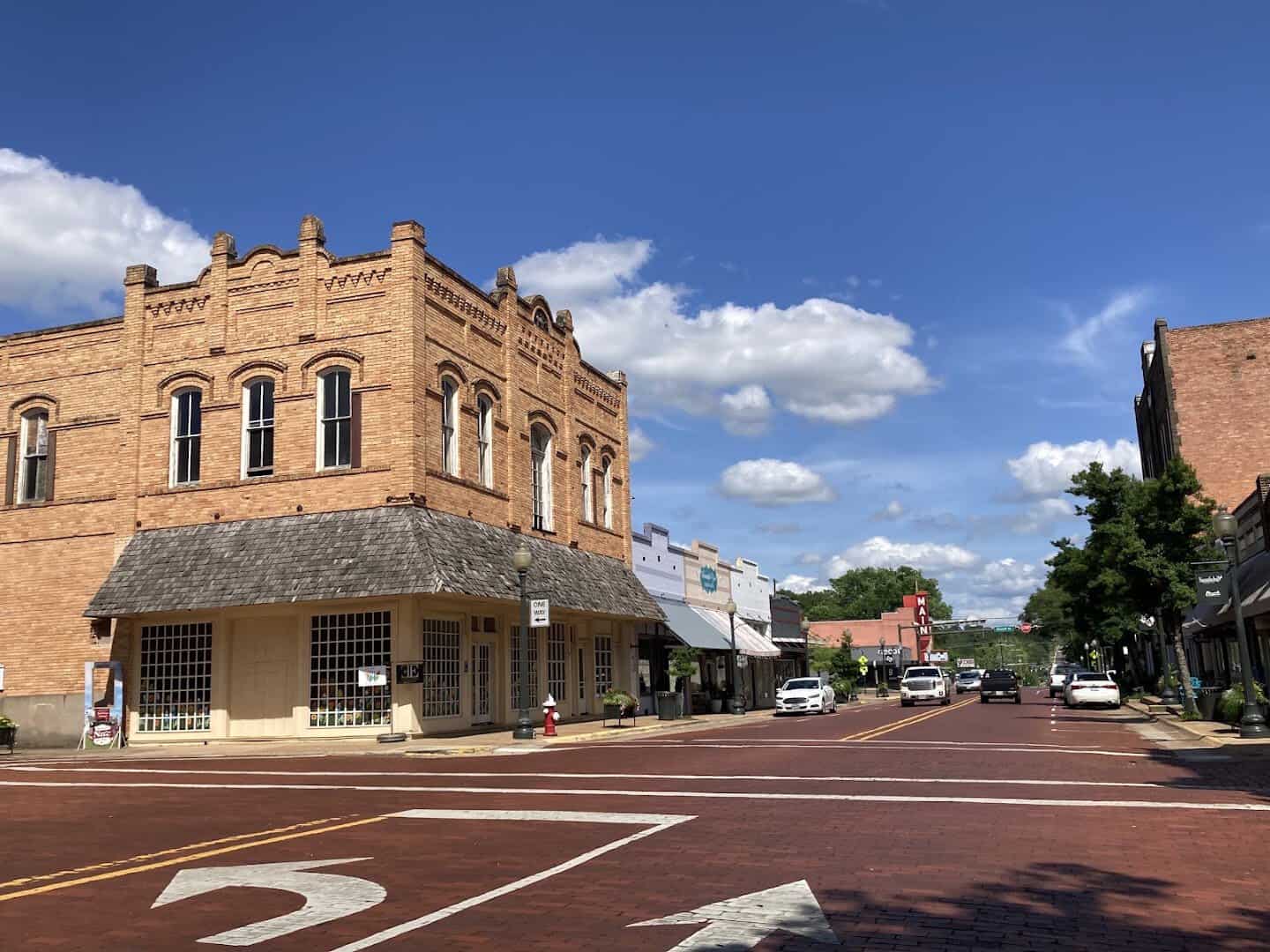
Main Street itself follows the old route of El Camino Real de los Tejas, the Spanish royal road that tied East Texas to Mexico City. You are shopping on a road that carried traders and soldiers long before the United States existed.
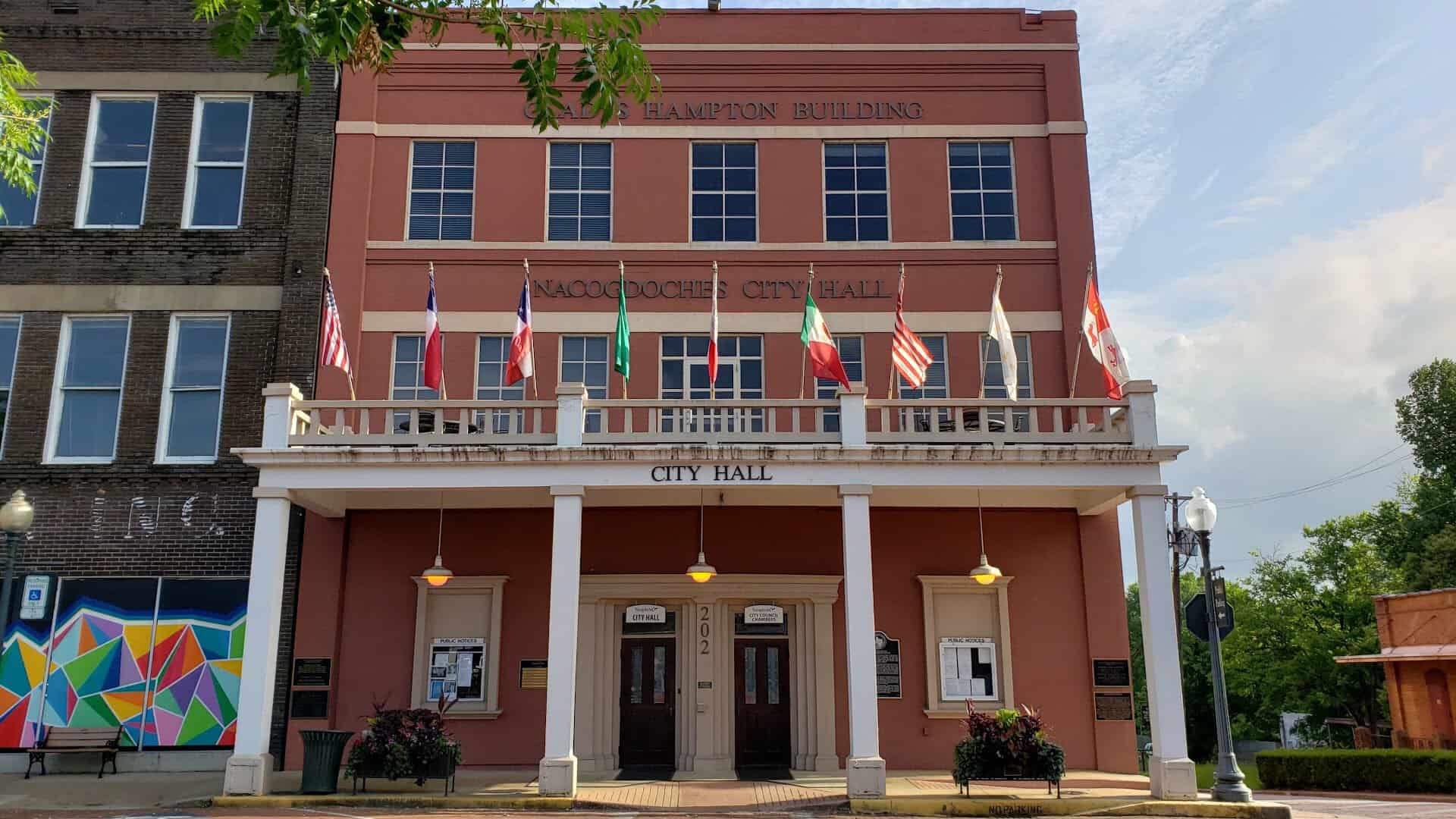
Did you know? The whole downtown district is on the National Register of Historic Places.
The heart of it is Plaza Principal, the old town square, where the Charles Bright Visitor Center sits in a 1918 building that started life as the U.S. Post Office. Start there. Grab a map, ask the staff what is open, and you will have your bearings in five minutes.
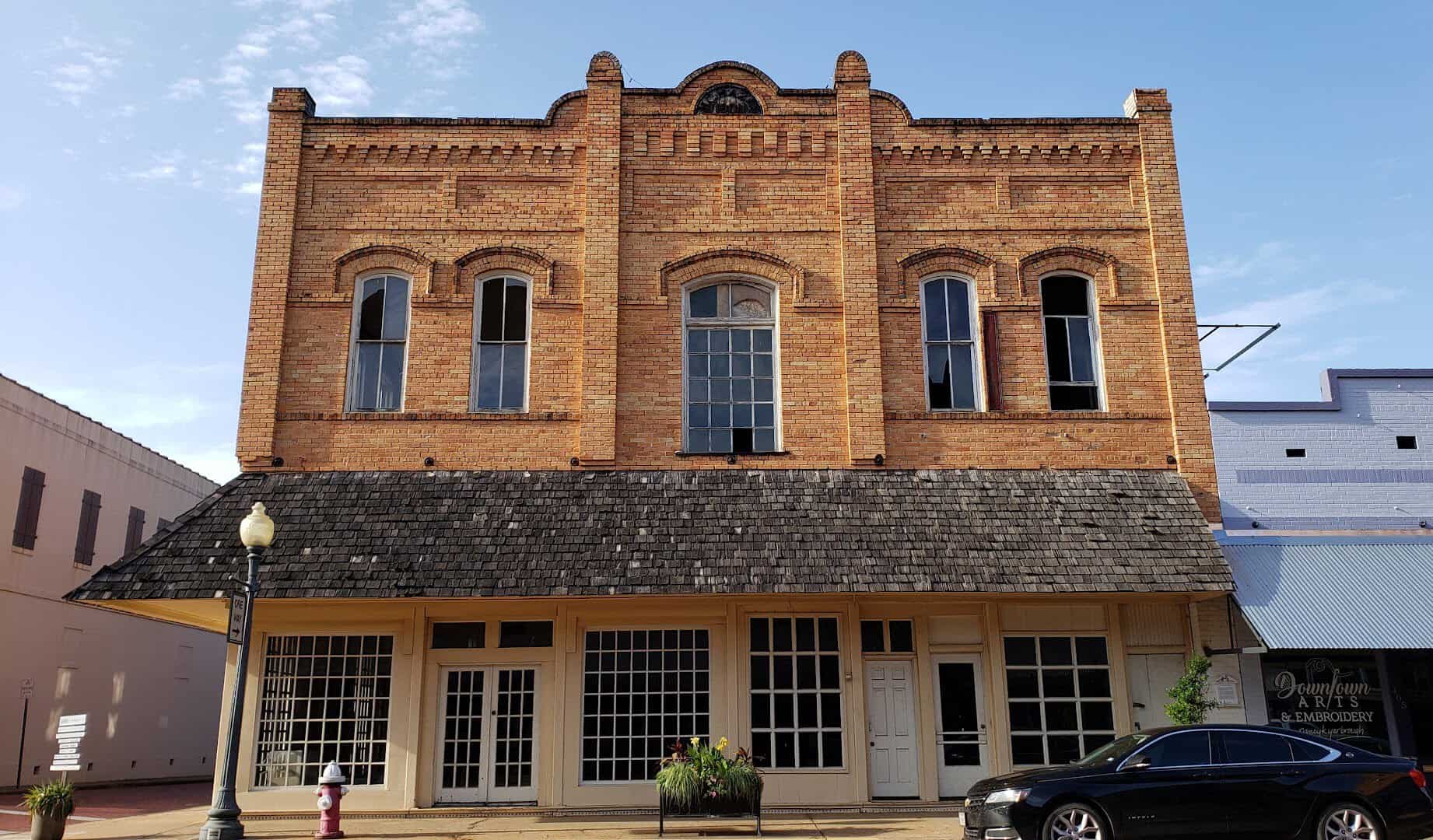
Then just walk. Main Street, Pilar Street, Fredonia Street, Church Street. Two-story brick fronts with painted signs and tall windows, most of them a century old, most of them holding a shop with an owner behind the counter who actually wants to talk to you.
The Shop That Runs on an 1890s Cash Register
If you only make one stop, make it the General Mercantile and Oldtime String Shop on East Pilar Street. It is the kind of store I assumed had gone extinct: wooden shelves, a pot-bellied stove, no air conditioning, and a hand-cranked wooden telephone on the wall that still rings.
It is run by Steve and Sheryl Hartz. Steve bought the building, which went up between 1904 and 1907, and started restoring it in 1978. When he learned it had once housed a general mercantile, he turned it back into one around 1990.
The 1890s brass cash register is not a prop. They use it.
The stock is a scavenger hunt. Cane fishing poles. Tin wind-up toys. Washboards and oil lamps. Wooden spoons, pocket knives, and jars of mayhaw jelly, the East Texas jam you need to try.
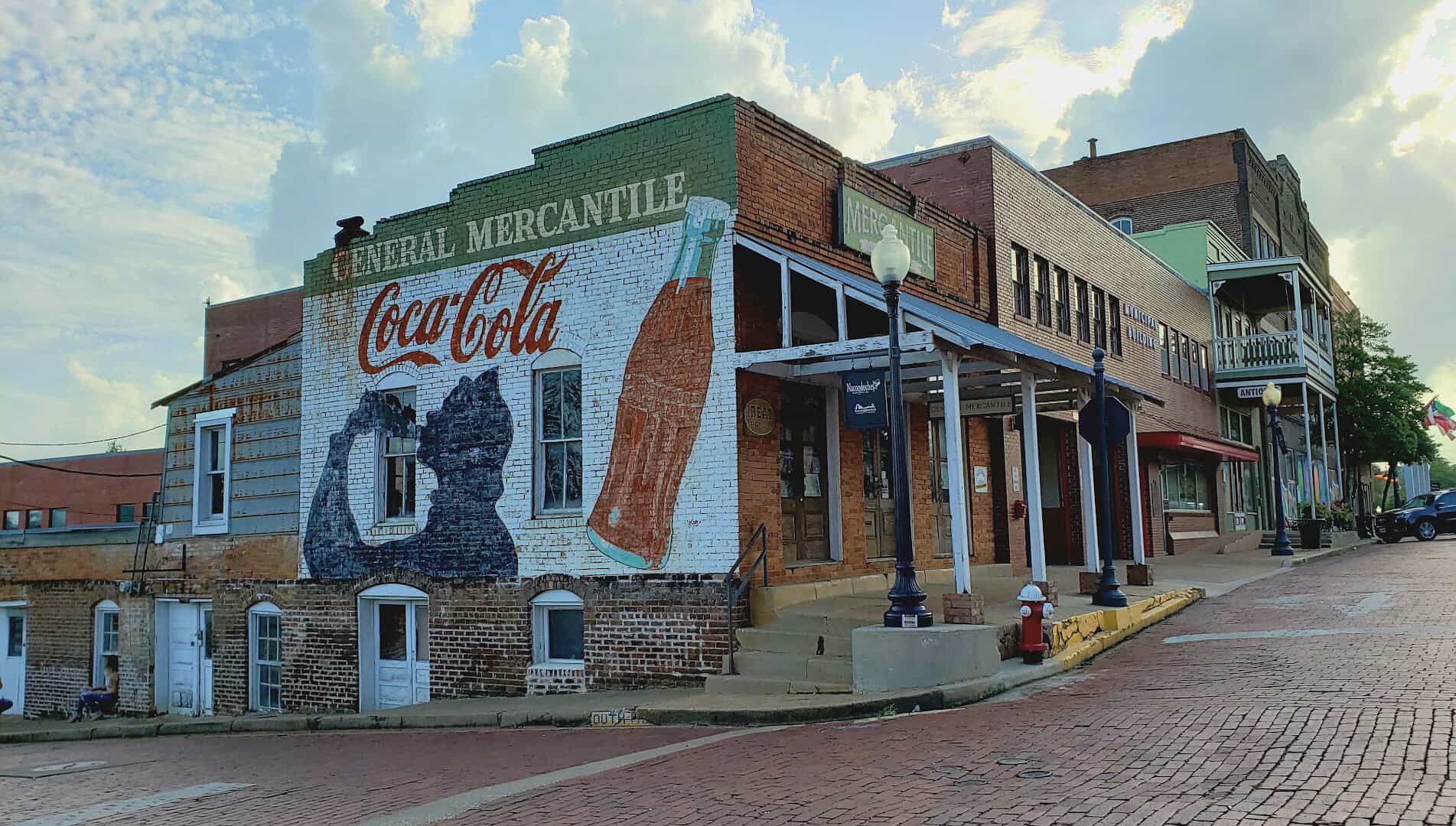
Sheryl makes the brooms by hand, and they are the best-looking brooms I have ever seen in a store.
Then there are the instruments. Steve builds and repairs fiddles and banjos in the back, and the shop sells flutes carved from sugar cane. On Saturday afternoons the porch turns into an old-time acoustic jam, open to anyone who brings a fiddle or a guitar or just a chair.
One more bit of lore worth mentioning: the building once held Stone’s Cafe, and local tellings have it that a young Bonnie Parker waited tables there before she ever met Clyde Barrow. Take that one as you find it, but it makes the creaky floorboards feel a little more alive.
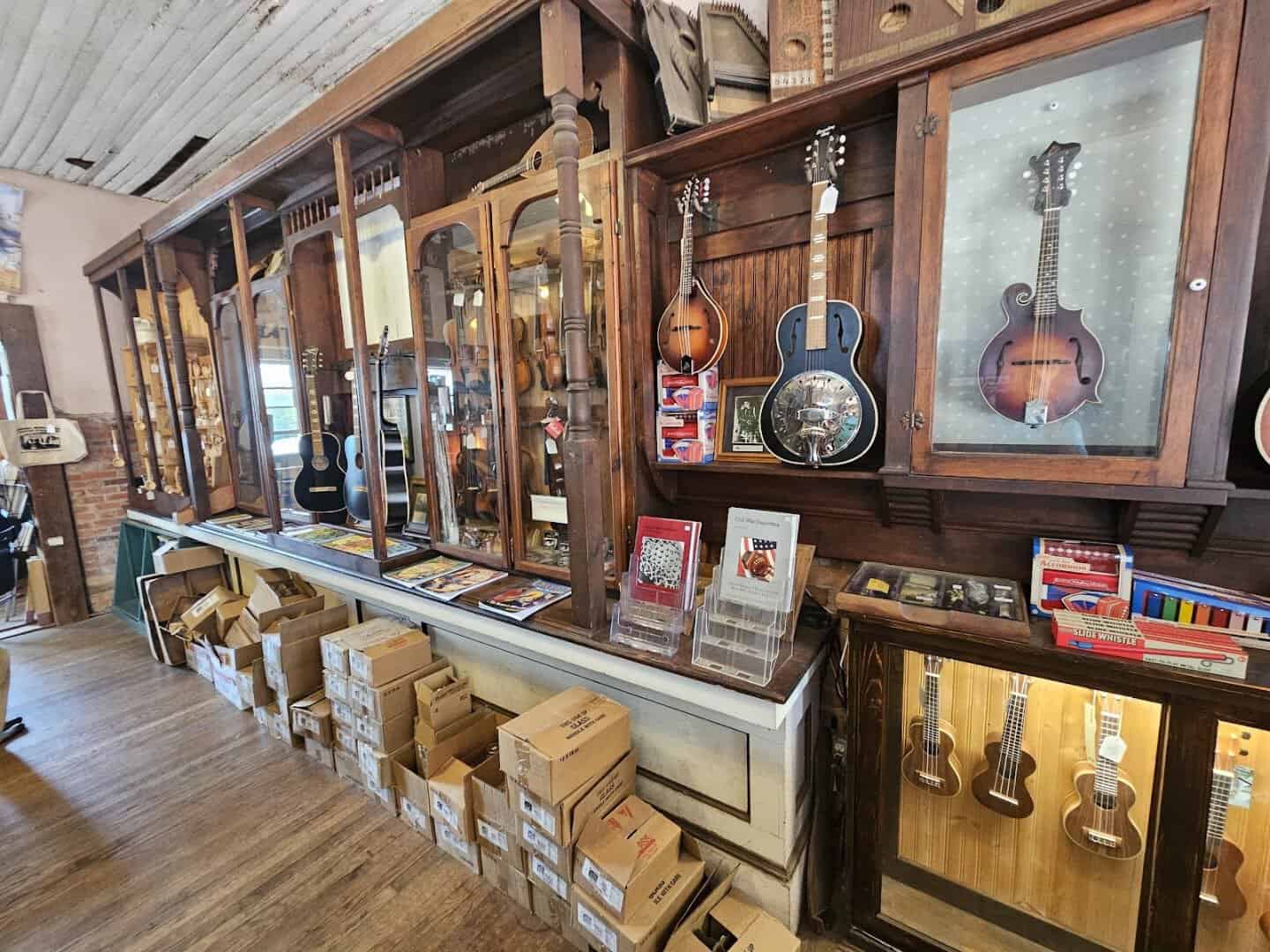
Pro tip: the mercantile keeps short hours, Wednesday through Saturday, 10 in the morning to 5 in the afternoon, so plan your shopping day around it rather than hoping to catch it on a Sunday.
Fourteen Rooms of Beautiful Weirdness
A few blocks from the square, on North Mound Street, an 1897 Victorian mansion has been turned into one of the strangest and best antique shops in Texas. It is called Fortney Home, and it is the reason to bring a car with a big trunk.
Brad Fortney ran a famous furnishings store on West Sixth Street in Austin for 22 years, the one with a life-size Elvis and a gorilla out front. At the end of 2018 he packed up and moved home to Nacogdoches, where he had studied art at SFA.
The mansion has fourteen rooms and every one has a theme. There is a safari room, a Wild West room, an ocean room, a game room, and a bar room, each piled with real wood furniture, compasses, airplane propellers, hats, lamps, taxidermy, and art from all over the world.
Fortney summed up his adopted hometown in a way I keep thinking about. “Nacogdoches is like a warm blanket on a cold night,” he told the Austin Chronicle. “It’s comfortable and cozy.” Spend an hour wandering his creaking hallways and you will understand exactly what he means.
It is open seven days a week, which makes it the perfect anchor for a Sunday visit when some of the smaller shops are closed.
Antiques, Popcorn and Pottery on the Brick
Back on Main Street, Brick Street Antiques sits at 316 East Main, named for the pavement outside its door. It is a classic browse-for-an-hour antique store: glassware, furniture, signs, and the kind of odd little finds that end up on your kitchen windowsill for the next decade.
Nac Uniques is smaller and sweeter, a vintage and collectibles shop that also carries handmade gifts at prices that will surprise you. Reviewers keep using the word “affordable,” which is not a word you hear often in an antique district. Souvenirs here beat the airport variety by a mile.
Now the sugar. SuSu’s Popcorn and Candy Cafe is a downtown favorite, with flavored popcorns by the bag, old-fashioned candies, and bottled sodas. The smell of caramel corn drifting onto the sidewalk is a better advertisement than any sign, and it works on me every time.
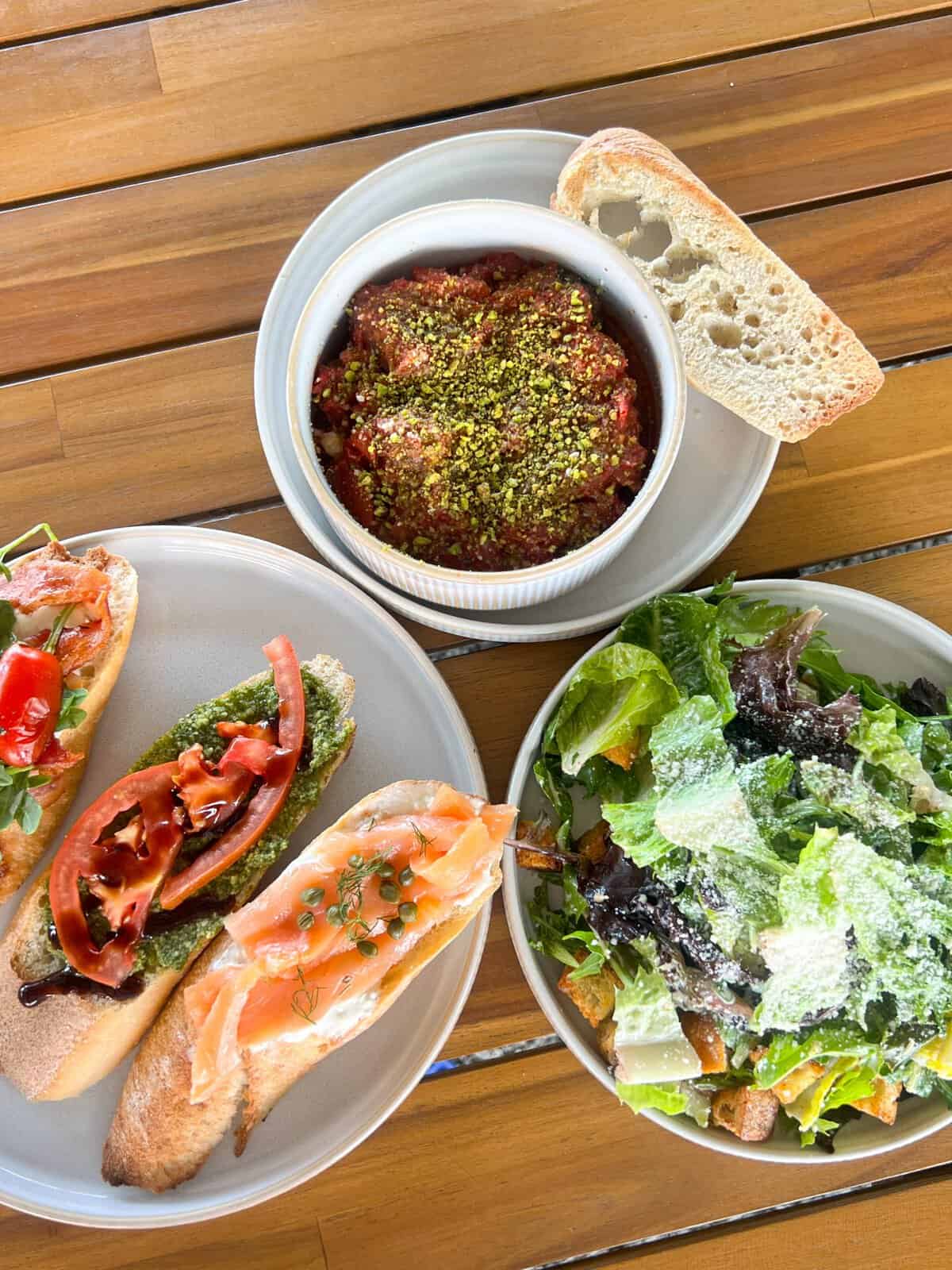
Aperitivo Cafe and Gelato does the Italian side of things: pastries, coffee, gelato, and a proper cafe menu. It is where I would land mid-afternoon, when the shopping bags are getting heavy and a scoop of pistachio sounds like the only sensible plan.
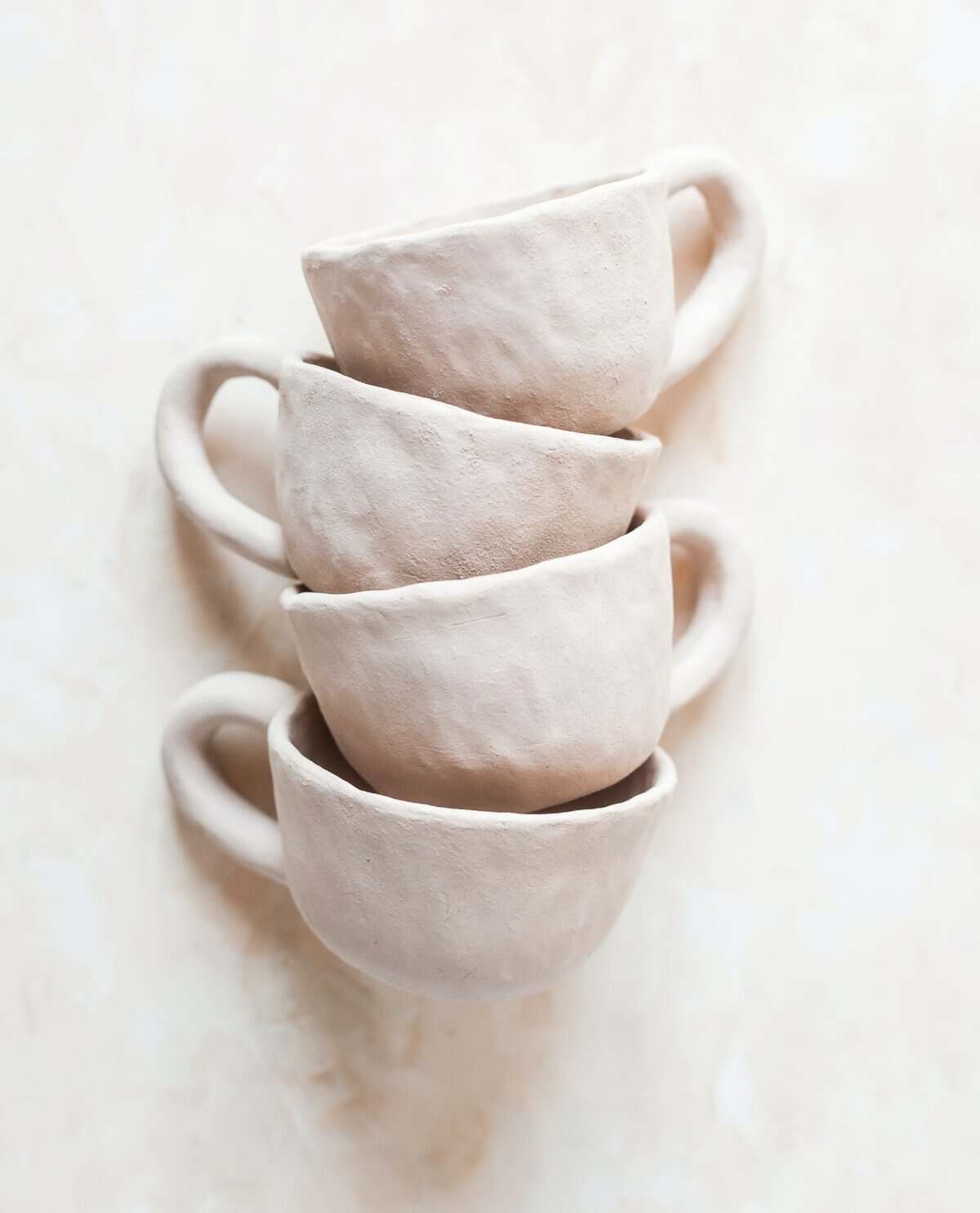
Want to make something instead of buying it? Muddy Pants Pottery is a working studio downtown that runs creative classes, so you can throw a bowl on the wheel and take home a souvenir nobody else has. Check the class calendar before you go.
Refuel Stops When the Bags Get Heavy
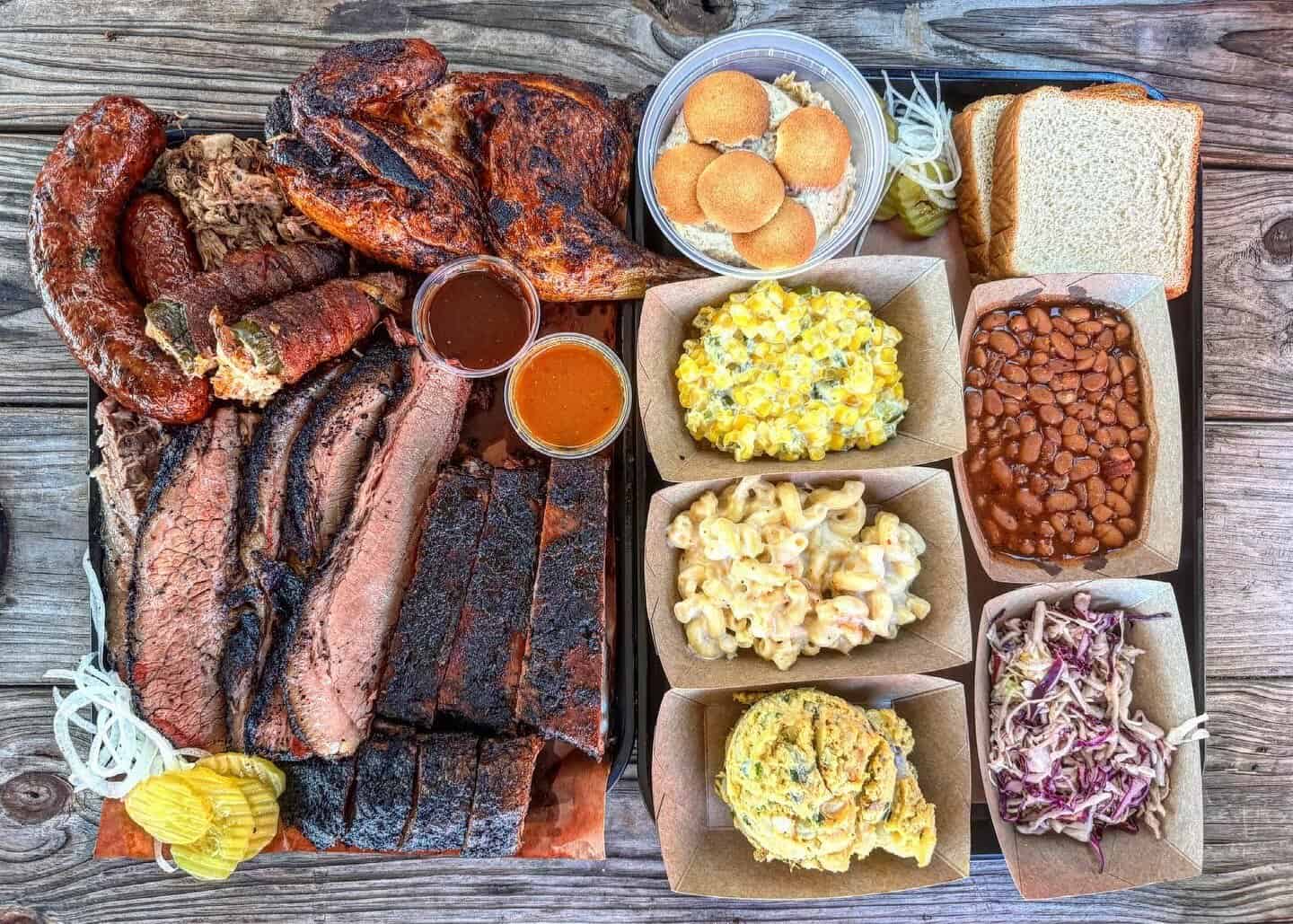
Brendyn’s BBQ on Main Street is the meal I would build the day around. It smokes Central Texas-style craft barbecue, peppery brisket and big sausage links sliced in front of you, and Texas Monthly put it on its list of the top 50 barbecue joints in the state.
A barbecue joint of that caliber in a town of about 32,000 is a gift. Get there early, because the good stuff runs out, and eat on the bricks if the weather is kind.
For dinner, the Fredonia Hotel is a short walk from the square. It is a mid-century modern landmark that has anchored downtown for decades, and it holds Republic Steakhouse, the Nine Flags Bar, and 1st City Cafe for burgers.
Stay the night and you can walk to every shop in this article.
If you would rather sleep in a historic home, the Jones House Bed and Breakfast and Hardeman House are both downtown, both old, and both within strolling distance of the bricks.
A Brief History of the Oldest Town in Texas
Nacogdoches takes its name from the Caddo people, who lived here for centuries before any European showed up. The Spanish planted a mission nearby in 1716.
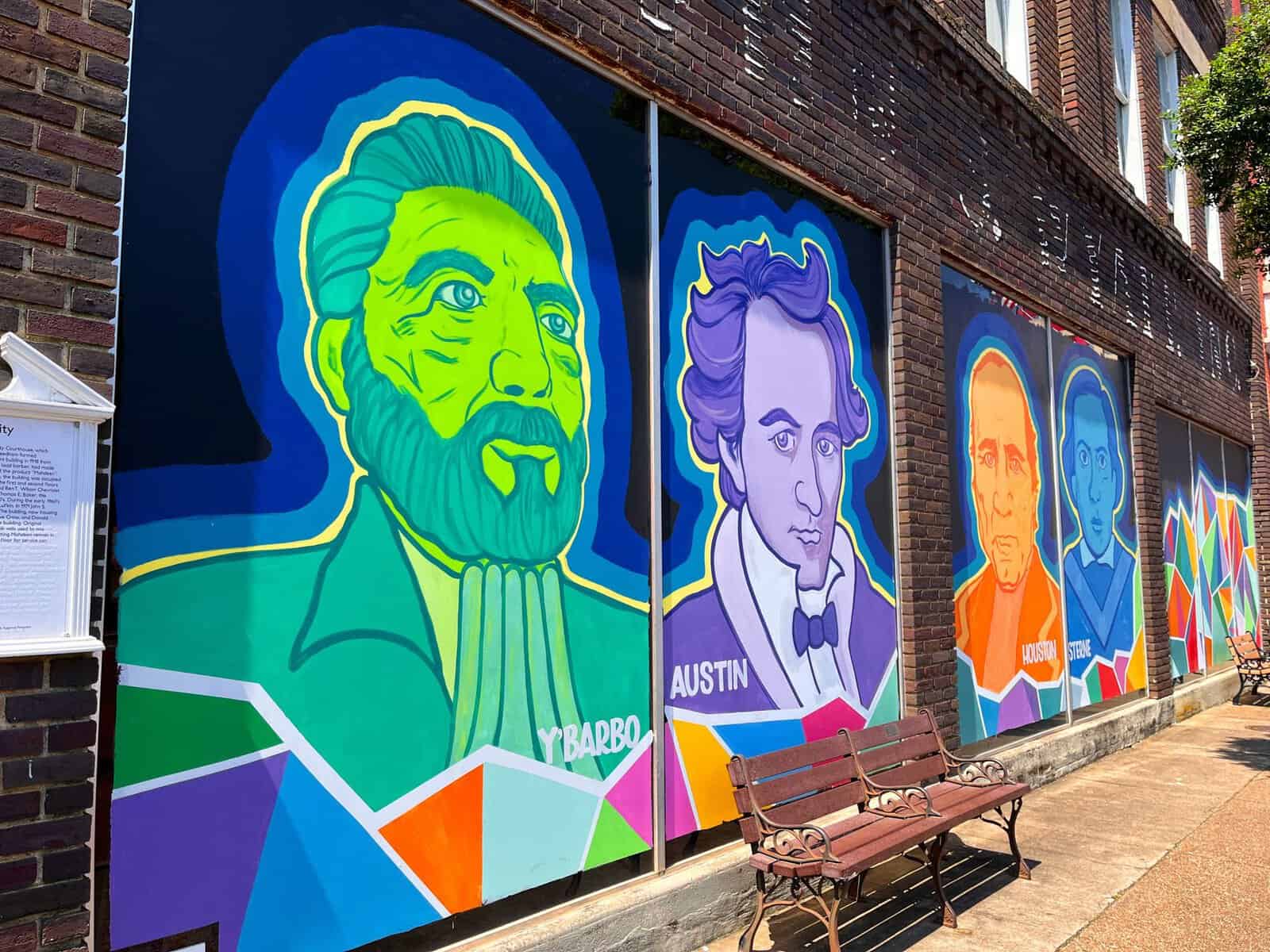
In 1779 Antonio Gil Y’Barbo led a group of settlers back to the site and won it the official status of a pueblo. That year is why the town calls itself the oldest in Texas.
Y’Barbo built a stone house on the square that became the Old Stone Fort. Over the next century it served as a trading post, courthouse, jail, saloon, and military barracks, and Sam Houston opened his first Texas law office inside it in 1833.
The original was torn down in 1902. In 1936, for the Texas Centennial, it was rebuilt stone by stone on the SFA campus, where it now houses the Stone Fort Museum. Admission is free, as in $0, and it is a ten-minute drive from the shops.
Downtown’s oldest surviving homes are just as old. The Sterne-Hoya House dates to 1830, the Durst-Taylor House to about 1835, and the 1911 Nacogdoches Railroad Depot still stands a few blocks off Main.
Millard’s Crossing Historic Village, on the north edge of town, gathers a church, a dogtrot cabin, and a doctor’s office from the 1800s.
The town joined the Texas Main Street Program to protect all of this, and in 2010 it won a First Lady’s Texas Treasures Award for the effort. In 2025 it was named an Accredited Main Street City by Main Street America. That is the machinery behind the storefronts.
Pro Tips for a Day on the Bricks
Come on a Saturday if you can. The mercantile jam session happens Saturday afternoons, the shops are all open, and the downtown farmers market brings meat pies, pretzels, and local honey to the square in the morning.
Time it with a festival and the town doubles in energy. The Texas Blueberry Festival takes over downtown on the second Saturday in June with live music and fresh pickings.
The Wine Swirl pours Texas wineries along the bricks each spring, Old Town Rig Down parks custom trucks and big rigs downtown in the fall, and the Nine Flags Christmas Festival lights up the square in December.
Spring visitors should add the Ruby M. Mize Azalea Garden on the SFA campus, which is one of the biggest azalea gardens in Texas and peaks in March and April. It is a lovely counterweight to a morning of antiquing.
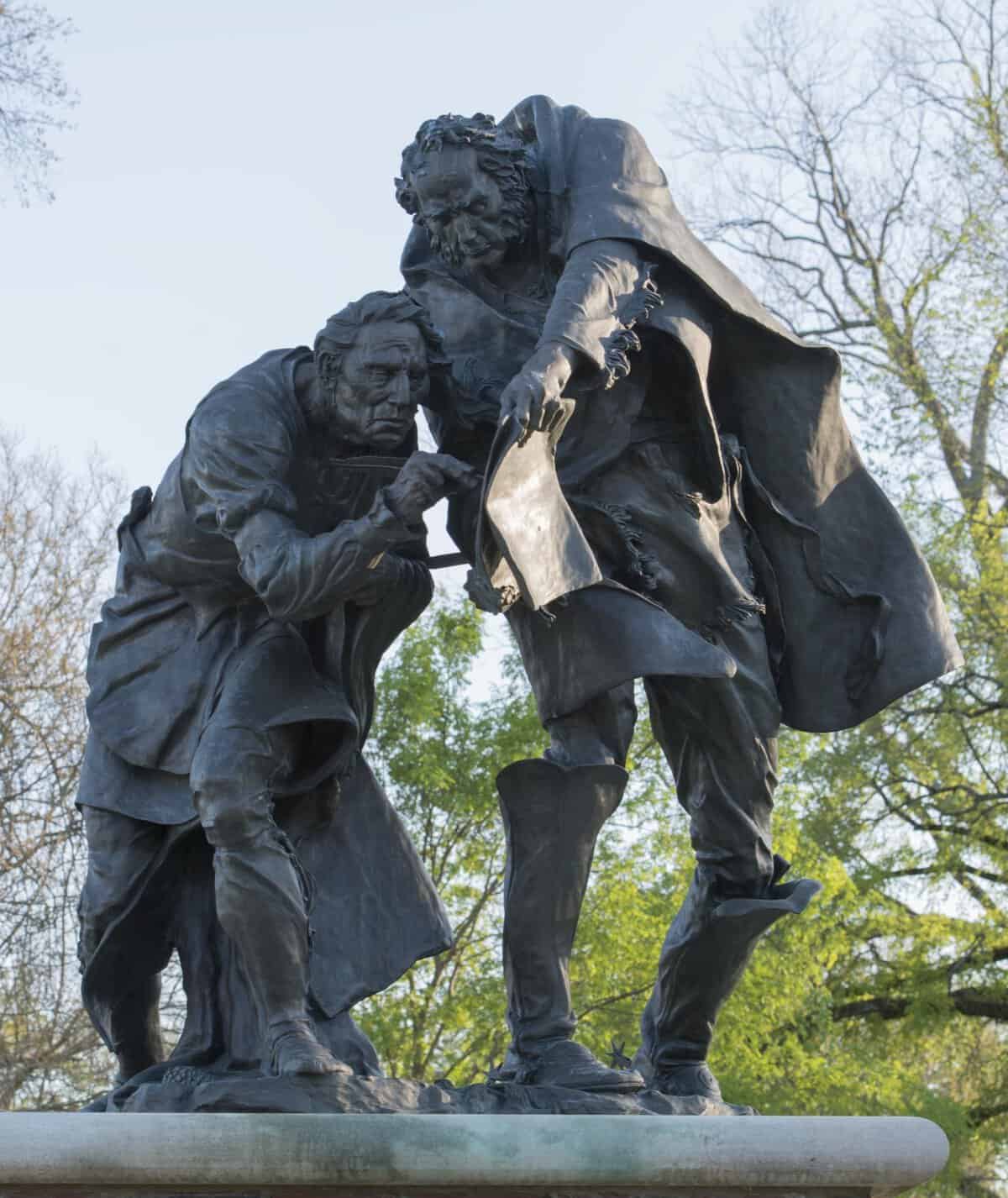
Ask the visitor center for the self-guided downtown tour. It strings together the murals and bronze statues that sit between the shops, including The Treaty, a two-figure bronze by sculptor Michael Boyett, and a pop-art mural of Y’Barbo, Austin, Houston and Sterne painted across a downtown storefront.
Bring cash for the smaller shops, comfortable shoes for the brick (it is uneven in the charming way, not the twisted-ankle way), and a cooler if you plan to carry mayhaw jelly and barbecue home.
One TripAdvisor visitor put the whole appeal in a single line: they “love all the downtown shops and museums within a very short walk.” That is the point. You park once and the entire town comes to you on foot.
How to Get There
Where: Charles Bright Visitor Center, 200 E Main St, Nacogdoches, TX 75961. General Mercantile and Oldtime String Shop, 216 E Pilar St. Fortney Home, 310 N Mound St. Brick Street Antiques, 316 E Main St.
Nacogdoches sits in the Piney Woods of East Texas, about two and a half hours northeast of Houston on U.S. 59 and roughly three hours from Dallas. Park near Plaza Principal and everything here is a few blocks on foot, with Fortney Home the longest walk at about ten minutes.
Go Wear Out Some Shoe Leather
Plenty of Texas towns have a pretty main street. Very few have a main street that was a royal road, a downtown entirely on the National Register, and shopkeepers who build fiddles, tie brooms, and fill Victorian mansions with airplane propellers.
So pick a Saturday, point the car toward the pines, and give yourself a full day on the bricks. Start at the square, follow the smell of caramel corn, and do not leave without mayhaw jelly and brisket. Your kitchen windowsill is about to get more interesting.
Featured image: Jason Smith via Nacogdoches

Stella Raines
Editor-in-Chief
Stella brings over a decade of storytelling experience to TX Headlines. With roots in West Texas and a love for road trips, she leads the editorial team with an eye for the hidden stories that make Texas unforgettable.
More Stories
This Small North Texas Town Is Quietly Becoming the State’s Next Big Thing
This Quiet Texas Town Is Home to One of the Most Beautifully Preserved Main Streets in the State
This Tiny Texas Town Feels Like Somebody Hit Pause in the 1950s
This Overlooked Texas Town Has All the Charm of Fredericksburg Without the Crowds
Tags