Small Town vs. Big City: Which Type of Texan Are You?
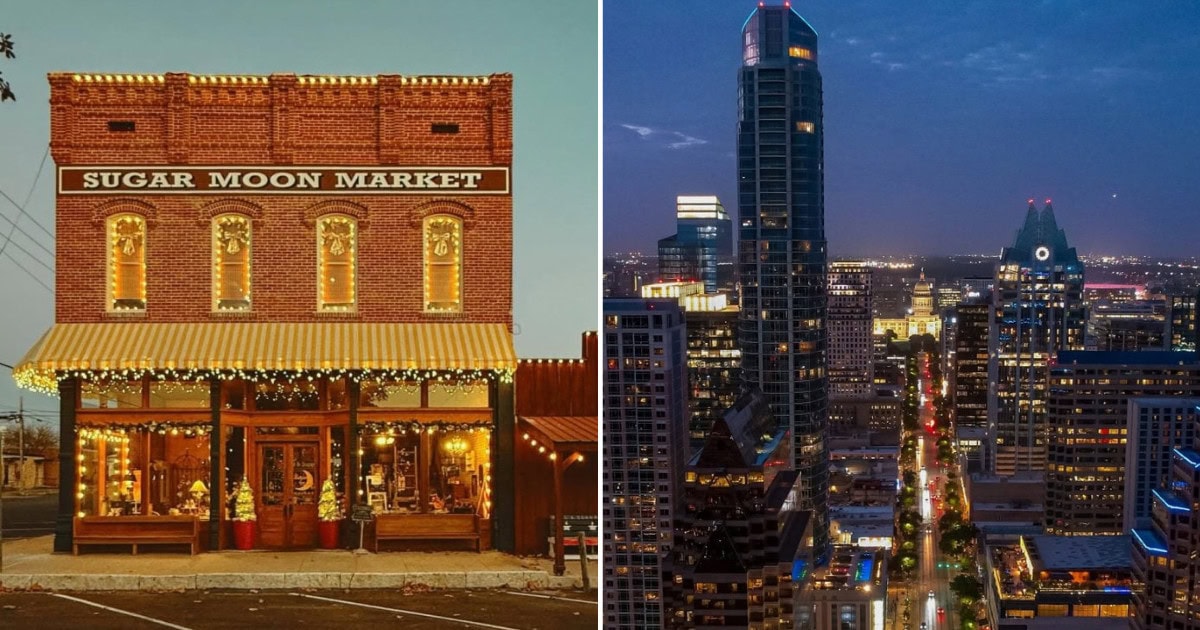
Texas identity looks very different depending on where you live, don’t you agree?
A morning in Marfa doesn’t feel anything like a morning in Houston, and the way people move through their day in a Hill Country town of 800 is worlds apart from life in Austin or Dallas.
Small towns and major metros shape daily life, habits, and values in distinct ways, and most Texans strongly identify with one or find themselves moving between both throughout their lives.
There’s no wrong answer here.
Both versions of Texas are authentic, and both come with trade-offs.
But if you’ve ever wondered whether you’re more suited to wide-open spaces or urban energy, let’s break it down.
Pace of Life
Small Town Texas

In small-town Texas, life moves at a slower, more deliberate rhythm. Businesses close early — sometimes as early as 5 or 6 p.m. — and weekend hours can be unpredictable.
If you need something on a Sunday evening, you’d better hope you already have it at home. Personal errands rarely stay strictly business.
A quick trip to the feed store or the bank often turns into a 20-minute conversation about the weather, local high school football, or whose cousin just moved back to town.
You can’t just run in and out — people notice, and they’ll ask if everything’s okay if you seem rushed.
This slower pace isn’t laziness. It’s intentional. There’s space to breathe, to think, and to actually be present in the moment. Time feels less scarce because there’s less competition for it.
Big City Texas
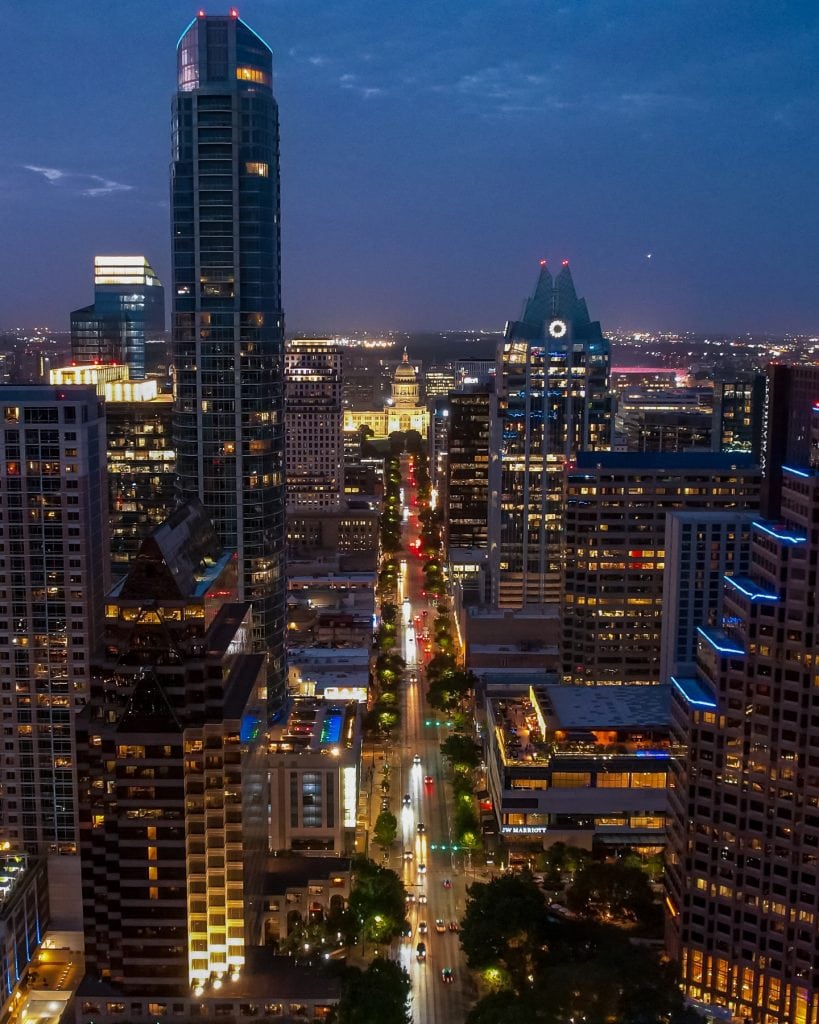
Big city Texas runs on a completely different clock. Schedules are tighter, days are longer, and there’s a constant hum of activity.
You can grab tacos at 2 a.m., hit the gym before sunrise, and still make it to work on time because the city never really sleeps.
Time is treated as a limited resource. Efficiency matters. You don’t linger in line at the coffee shop — you mobile order and pick it up on the way.
Meetings are back-to-back, and your calendar is color-coded because it has to be.
But that pace also means access. Need a specialty grocery item at 10 p.m.? Done. Want to catch a concert on a Tuesday night? You’ve got options. The city accommodates your schedule instead of dictating it.
Community and Social Norms
Small Town Texas
In a small town, people recognize each other by name. You know the cashier at the grocery store, the person who pumps your gas, and the family who sits three pews ahead of you at church.
Relationships are layered and interconnected — your kid’s teacher might also be your neighbor’s cousin.
News travels fast. If something happens, you’ll hear about it before it hits the local Facebook page. This can be comforting when you need support, but it also means privacy is harder to come by.
Everyone knows everyone’s business, for better or worse.
Community events anchor social life. The fall festival, Friday night football games, and the Fourth of July parade aren’t just optional activities — they’re where the town comes together. Missing them feels noticeable.
Big City Texas
In the city, anonymity is normal and expected. You can go to the same coffee shop for years and never learn the barista’s name.
That’s not rude — it’s just how it works. You’re one person in a sea of thousands, and nobody’s keeping tabs on your schedule.
Social circles are chosen, not inherited. You build your community around shared interests, careers, or hobbies rather than geography.
Your friends might live 30 minutes away in traffic, but you connect over a shared love of climbing, book clubs, or brunch spots.
Community still exists, but it forms differently. Instead of one big, overlapping network, you have smaller, more intentional circles. You decide how much you engage and with whom.
Space, Travel, and Daily Logistics
Small Town Texas
Small-town commutes are short. You can drive from one end of town to the other in five minutes, and traffic jams are virtually nonexistent.
But here’s the catch: if you need something beyond the basics, you’re driving 30, 45, or even 60 minutes to the nearest larger town.
There’s open land everywhere. Space isn’t a luxury — it’s the default. Fewer crowds, less noise, and room to stretch out.
But that openness also means isolation. The nearest Target might be an hour away, and forget about same-day delivery.
Driving is essential for almost everything. There’s no public transit, no rideshares waiting on every corner. You need a car, and you need to plan ahead.
Big City Texas
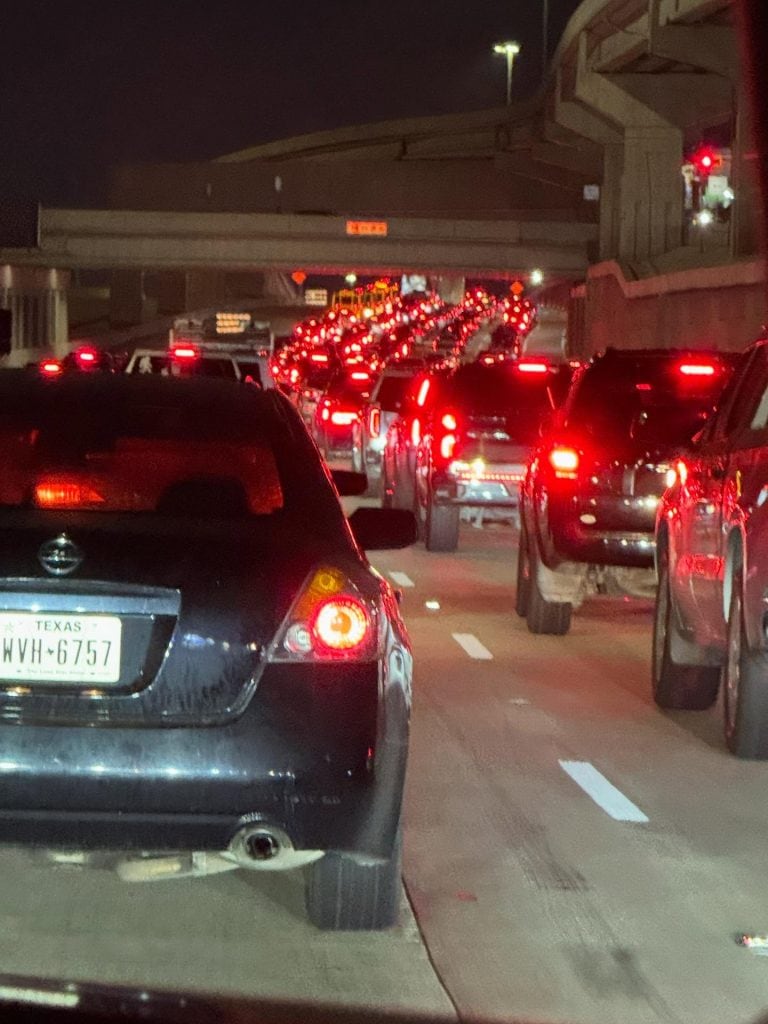
Traffic is a daily reality in big-city Texas. Your commute might only be 10 miles, but it could easily take 45 minutes during rush hour.
You plan your day around avoiding the worst of it, and you’ve memorized alternate routes for when the highway inevitably backs up.
Public spaces are shared and managed. Parks, trails, and recreational areas are there, but they’re crowded on weekends. You’re never truly alone, which can be energizing or exhausting depending on the day.
Two Texases, One Identity
Neither version of Texas is more “authentic” than the other. Small towns and big cities produce different rhythms, not different loyalties.
Both are deeply Texan, just in different ways.
At the end of the day, the question isn’t which one is better — it’s which one fits the life you want to live. And in Texas, you’ve got room for both.

Stella Raines
Editor-in-Chief
Stella brings over a decade of storytelling experience to TX Headlines. With roots in West Texas and a love for road trips, she leads the editorial team with an eye for the hidden stories that make Texas unforgettable.