This Overlooked Texas Aviation Museum Is Home to a Real Spacecraft and the World’s Only Flying Pancake
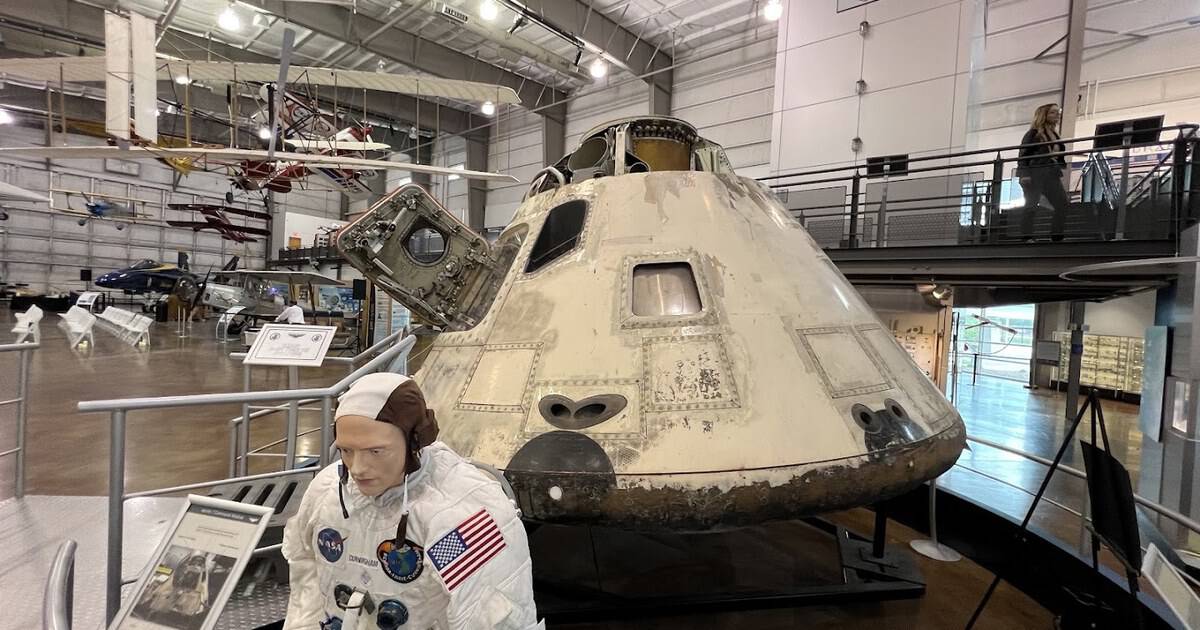
I will never get over the idea that you can stand a few feet from a real spacecraft, close enough to see where it scorched on the way home. Not a model. Not a shiny replica behind glass. The actual capsule that carried three men around the Earth and back.
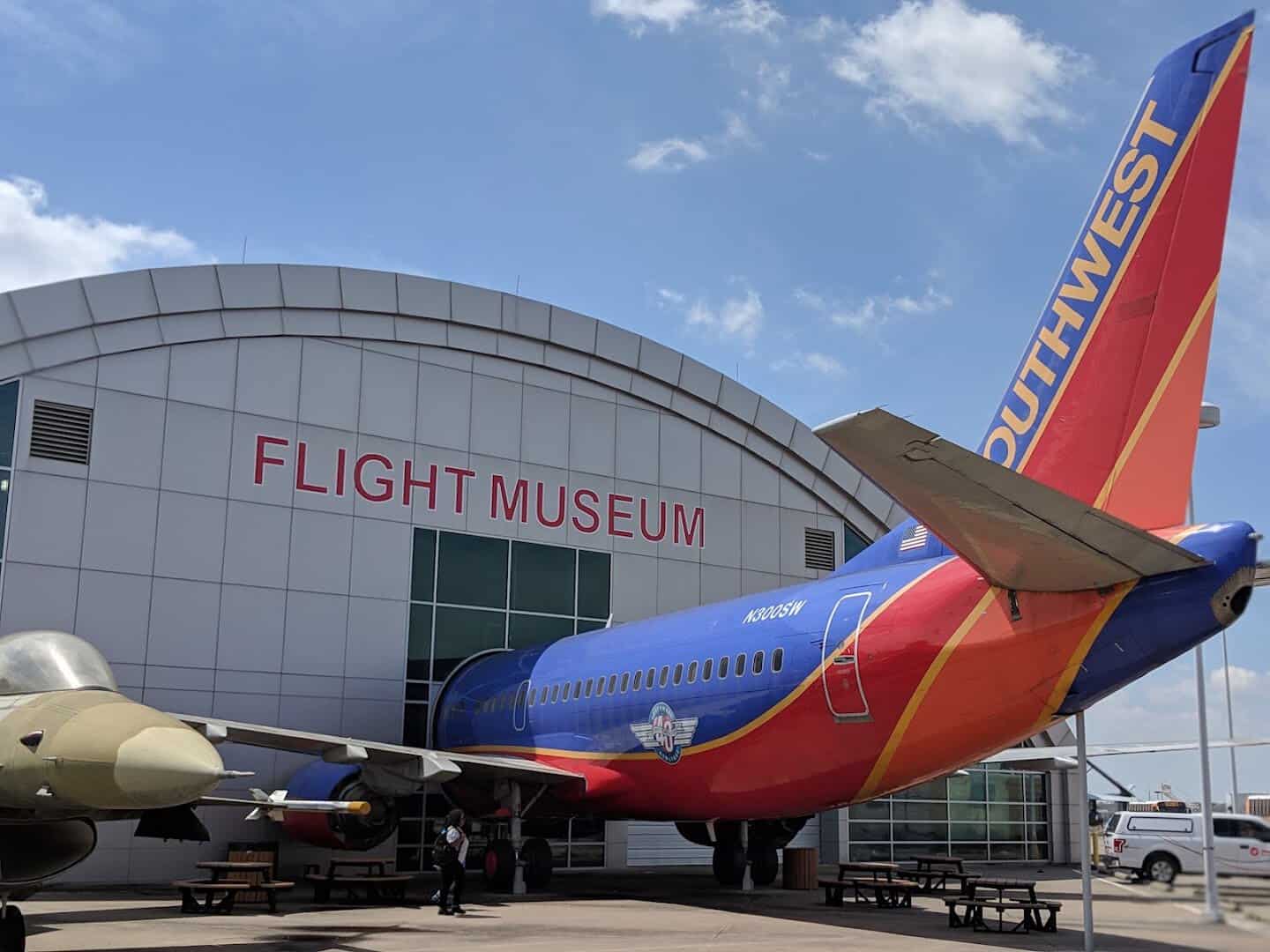
That capsule lives at the Frontiers of Flight Museum, a hangar full of wonders tucked into the corner of Dallas Love Field. Thousands of travelers roll past it every week chasing a boarding call, never guessing that one of the best aviation collections in Texas sits quietly right there.
Below, I’ll walk you through the aircraft, the spacecraft, the one-of-a-kind flying saucer, and everything you need to plan the visit. This is the North Texas day out you probably did not know you were missing.
Two Hangars, Thirty-Some Flying Machines
The museum fills a 100,000 square foot complex made of two hangar-like buildings joined together, and the scale hits you the moment you walk in. Wings hang overhead. Fuselages stretch across the floor. Your neck tilts back before you have taken ten steps.
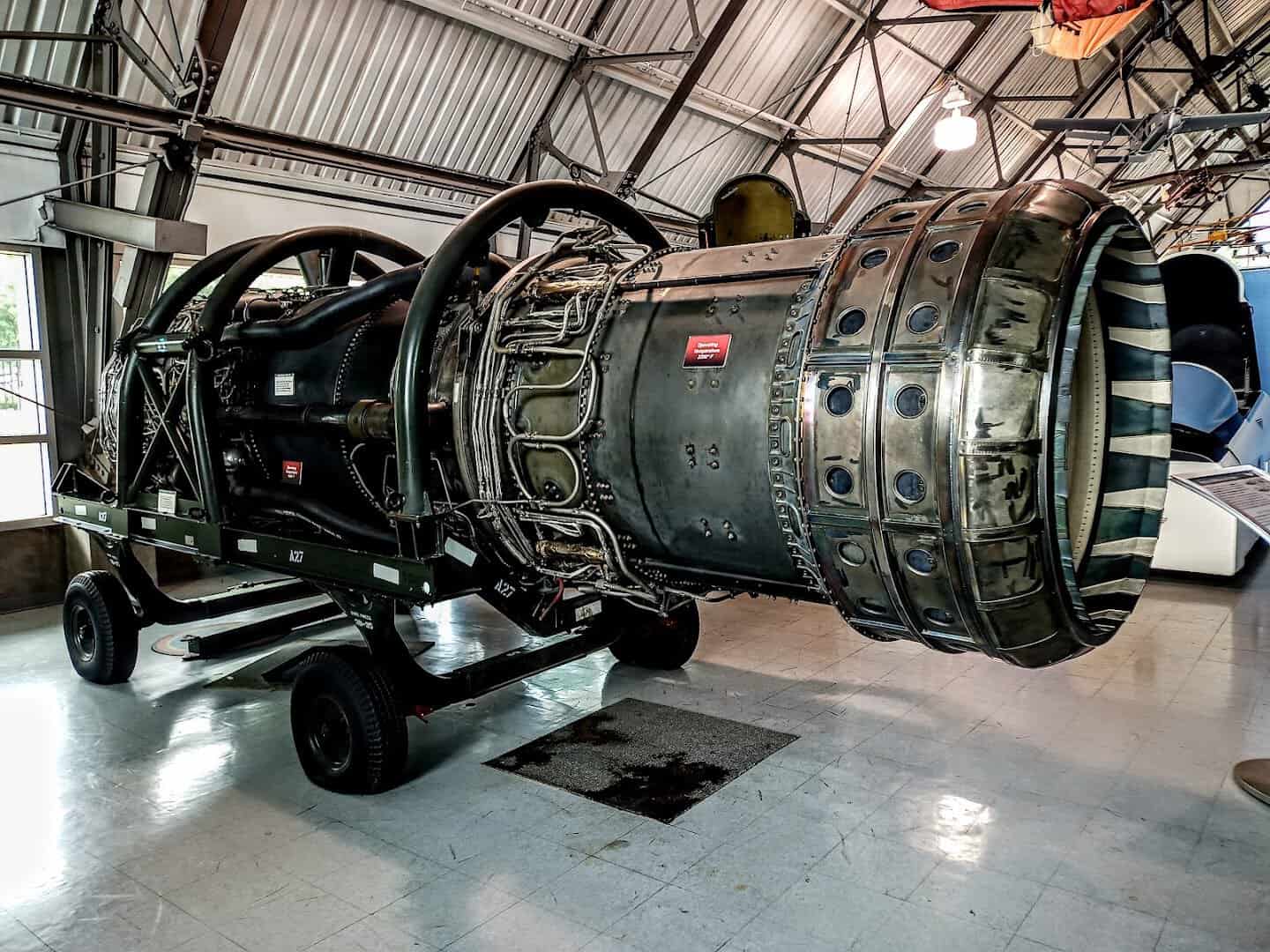
More than thirty aircraft and space vehicles live here, from fragile early biplanes to jet fighters. You can walk right up to most of them, no velvet rope, no long telephoto distance. The planes are the exhibit, and they are close enough to read the rivets.
The atmosphere is calm and roomy, the kind of place where you can wander at your own pace. One visitor review put it plainly, praising the “tons to see, comfortable atmosphere, and fascinating history.” That is the feel exactly. It rewards the slow lap.
Volunteers, many of them former pilots and aircraft workers, are scattered around the floor and happy to talk. Ask one a question about any machine in the room and you may get a story you will not find on the placard.
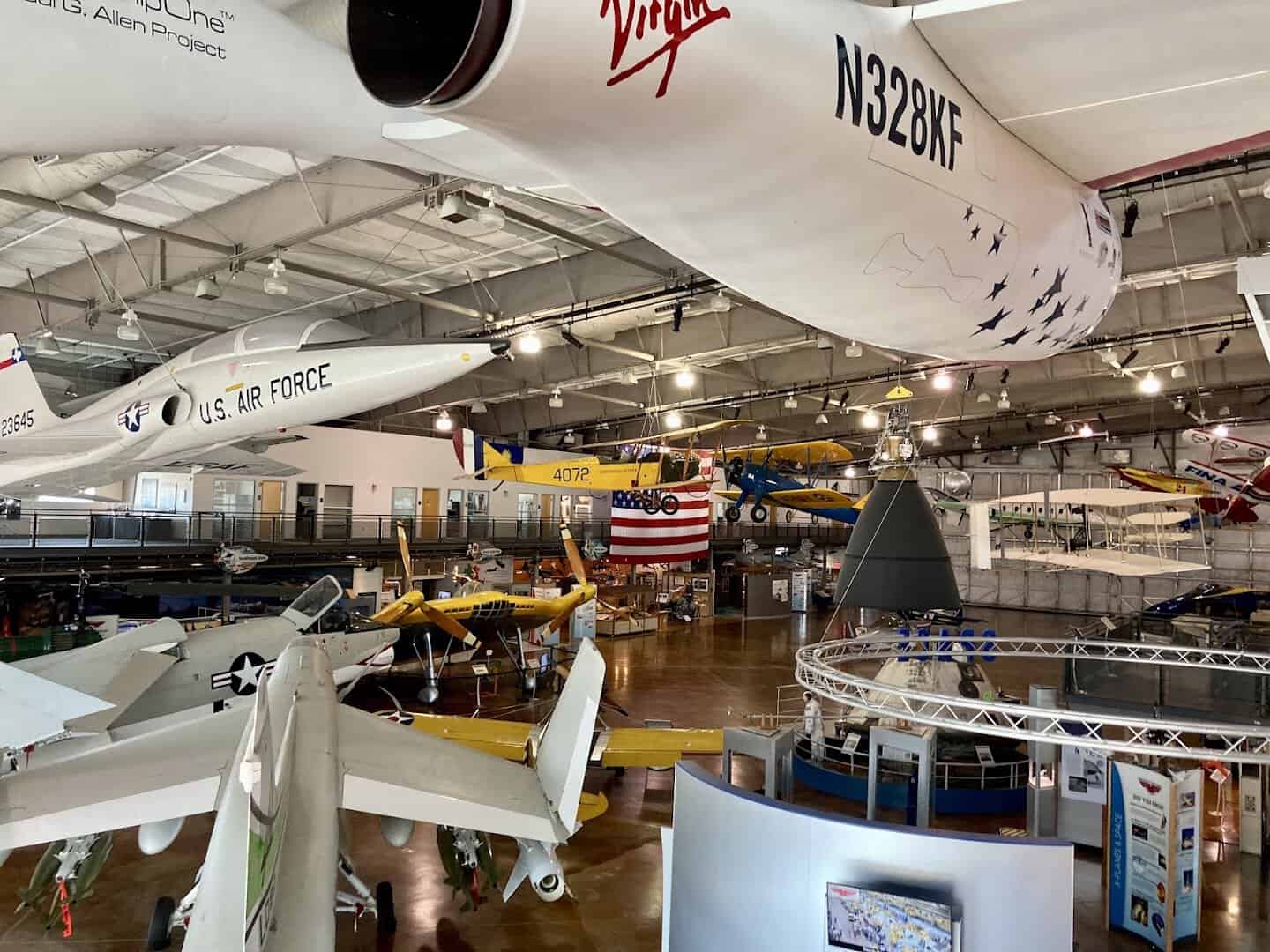
That mix of scale and access is what sets the place apart. Big-city museums often keep their treasures roped off and dimly lit, but here the aircraft feel present and reachable, like they landed an hour ago and just shut down the engines.
The Flying Saucer That Actually Flew
If one aircraft makes this place unmissable, it is the Vought V-173, nicknamed the “Flying Pancake.” Picture a nearly round, disc-shaped wing with a propeller on each side and you have it. People really did call it a flying saucer, and they were not wrong.
It was built during World War II to test a radical idea from engineer Charles Zimmerman: a very low, wide wing that let an airplane fly at astonishingly slow speeds and take off in almost no distance. It looked impossible, and then it flew.
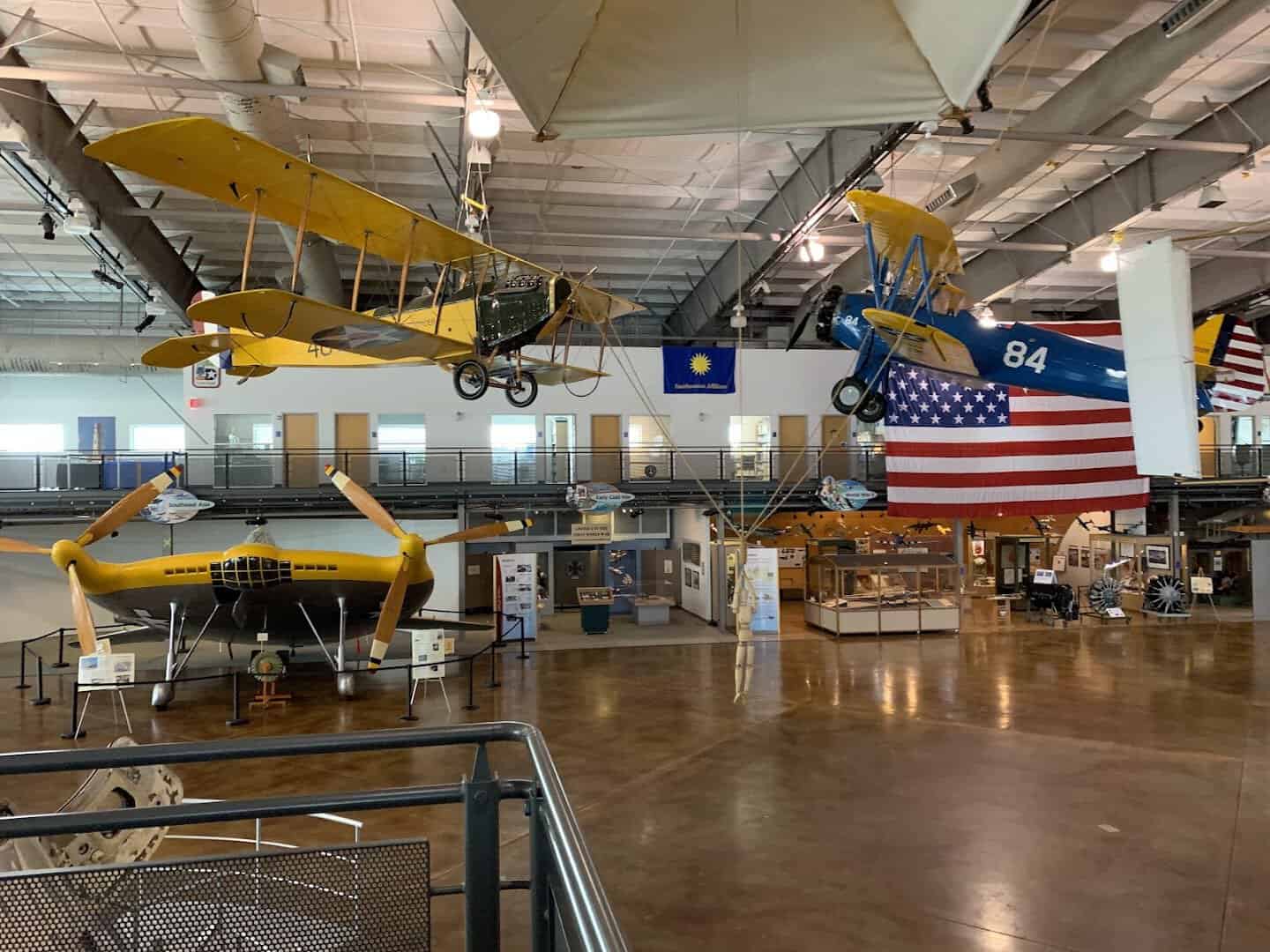
In 1942, none other than Charles Lindbergh climbed into the cockpit and took it up. He liked what he felt, and his thumbs-up helped keep the Navy funding the strange little test plane. That is a genuine Lindbergh connection you can stand next to.
The V-173 you see is the only one of its kind left in the world, the sole surviving Zimmerman disc-wing aircraft anywhere. Retired Vought employees spent about eight years restoring it by hand before it went on display, on loan from the Smithsonian. Few museums own anything this rare.
A Spacecraft That Went to Orbit and Came Home
The Space Age Gallery is anchored by the real Apollo 7 Command Module, and it is the reason I keep telling people to come. This is the actual spacecraft, not a stand-in, and its heat shield still wears the char from re-entry.
Apollo 7 flew in October 1968, the first crewed Apollo mission after the Apollo 1 fire took three lives. Astronauts Wally Schirra, Donn Eisele, and Walter Cunningham rode this capsule through eleven days in orbit, proving the redesigned ship was safe to fly.
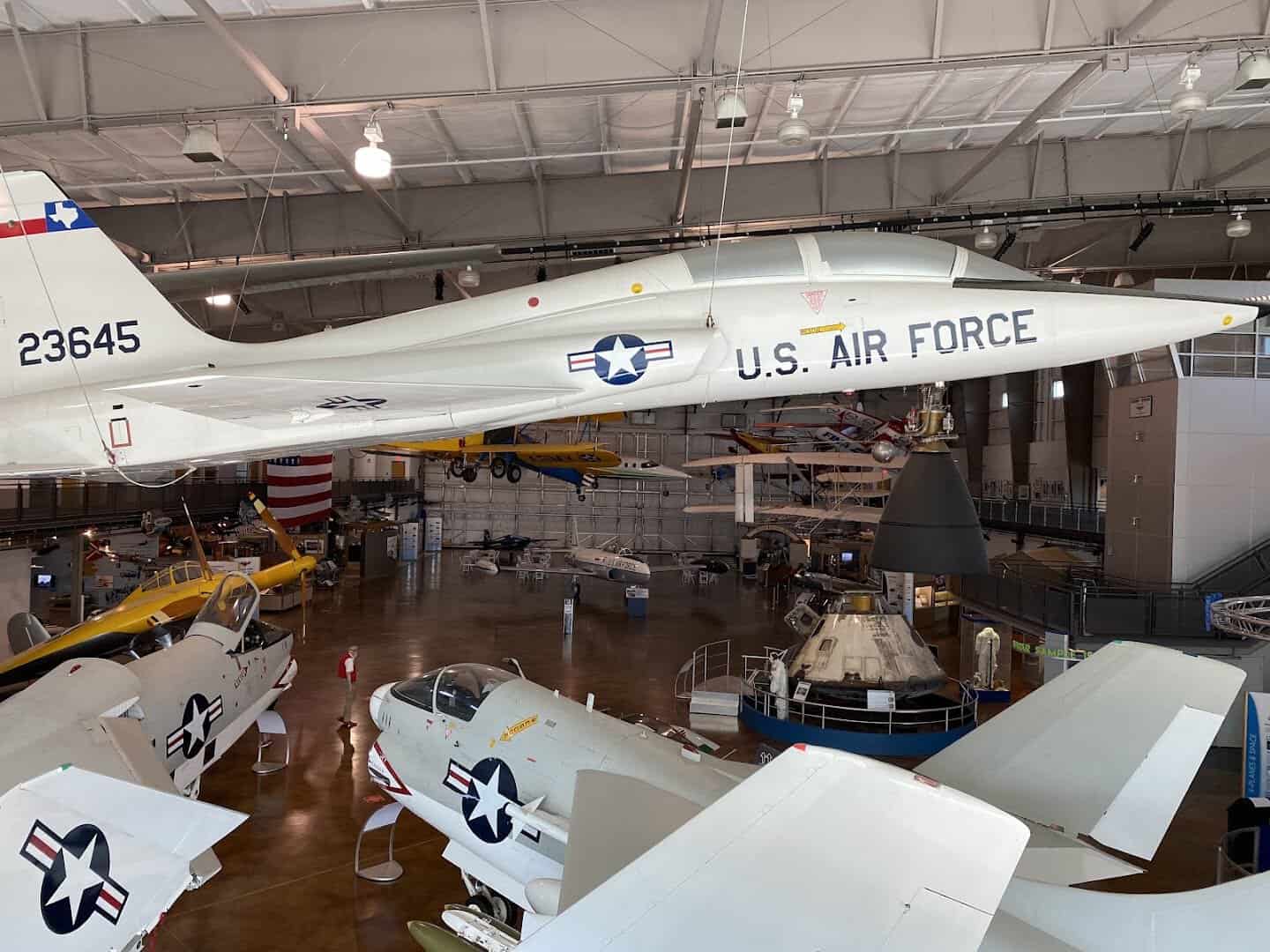
Everything that came after, the Moon landings included, started with this flight working. Standing under it, you are looking at the machine that got human spaceflight back on its feet. It is humbling in a way a photo never quite captures.
Nearby sits a genuine Moon Rock, billed as the only one on public display in North Texas. Add space suits, mission artifacts, and pieces tied to the space shuttle, and the gallery quietly turns into one of the best small space collections in the state.
What surprises a lot of visitors is how personal it all feels. This is the object that actually flew, with a heat shield that actually burned coming home. You do not need to be a space nerd to feel the weight of that when you are standing right underneath it.
From a Barnstormer’s Biplane to a Southwest Jet
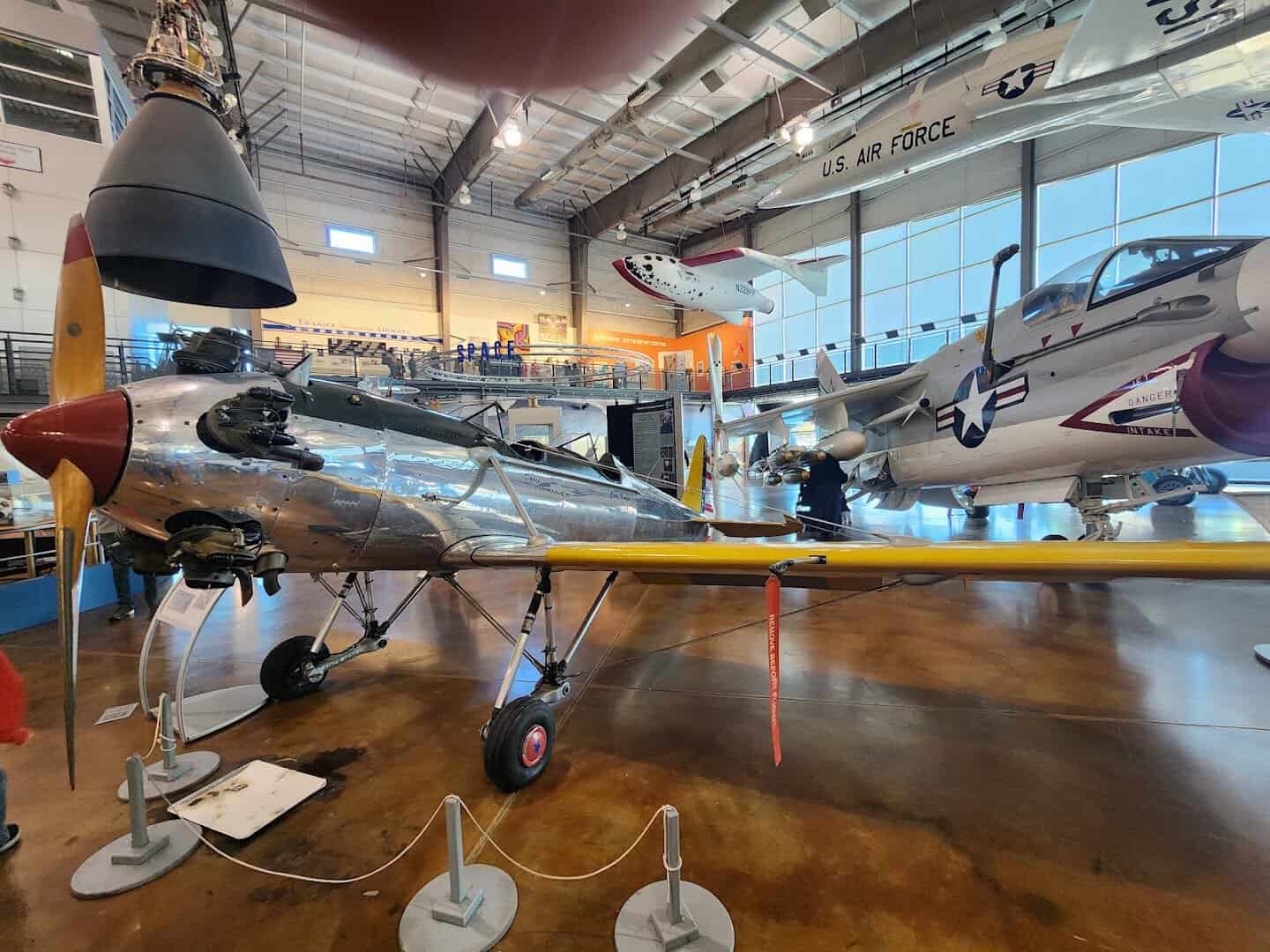
The rest of the collection sweeps across the whole history of flight. There is a Sopwith Pup replica from the World War I era, all wood and wire and open cockpit, the sort of machine pilots flew with a scarf and a lot of nerve.
A vintage DC-3 stands ready to board, the airliner that taught America to trust flying in the 1930s and 40s. Climb the steps and you feel how intimate air travel once was, with a narrow aisle and a gentle slope toward the tail.
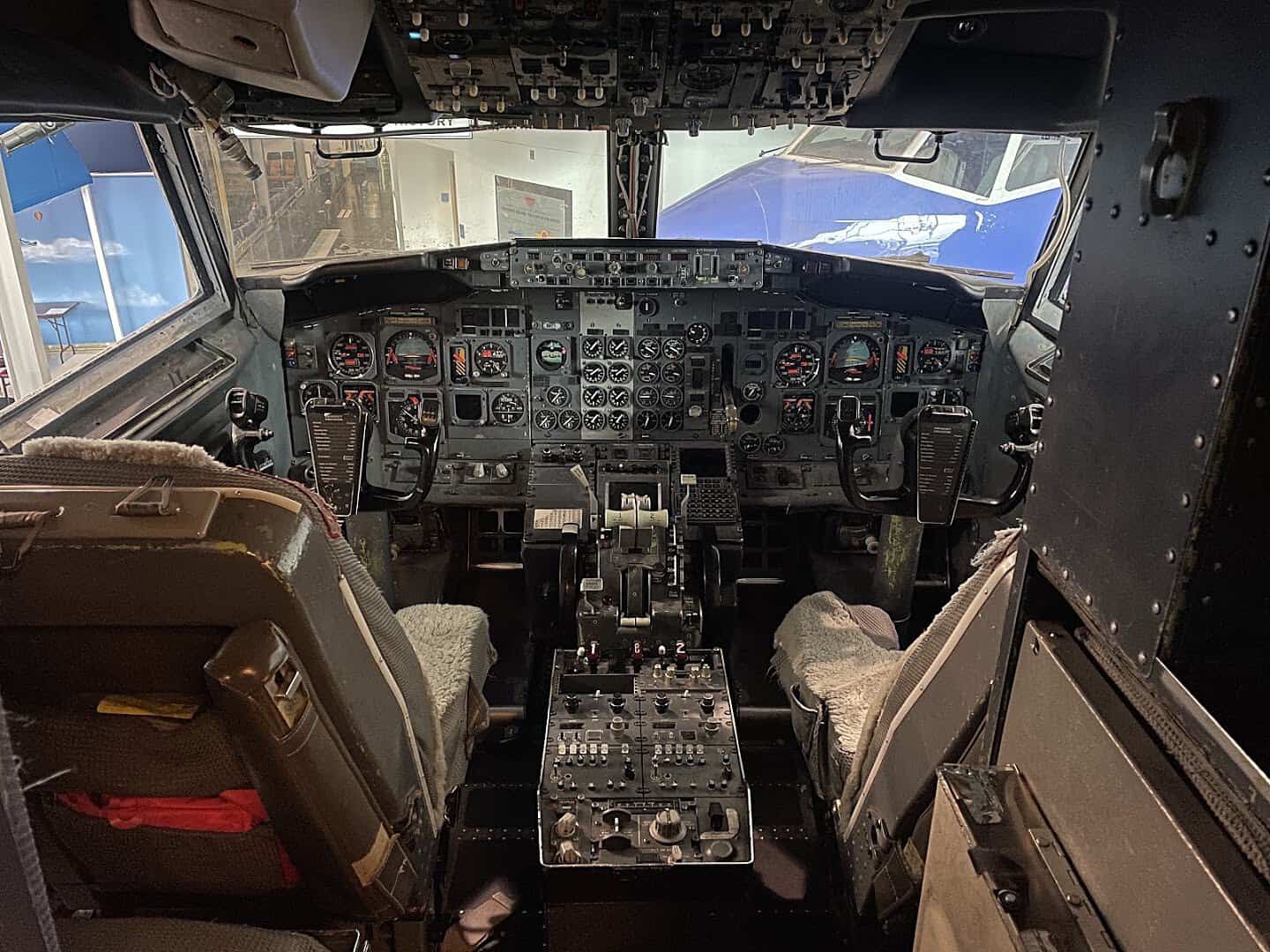
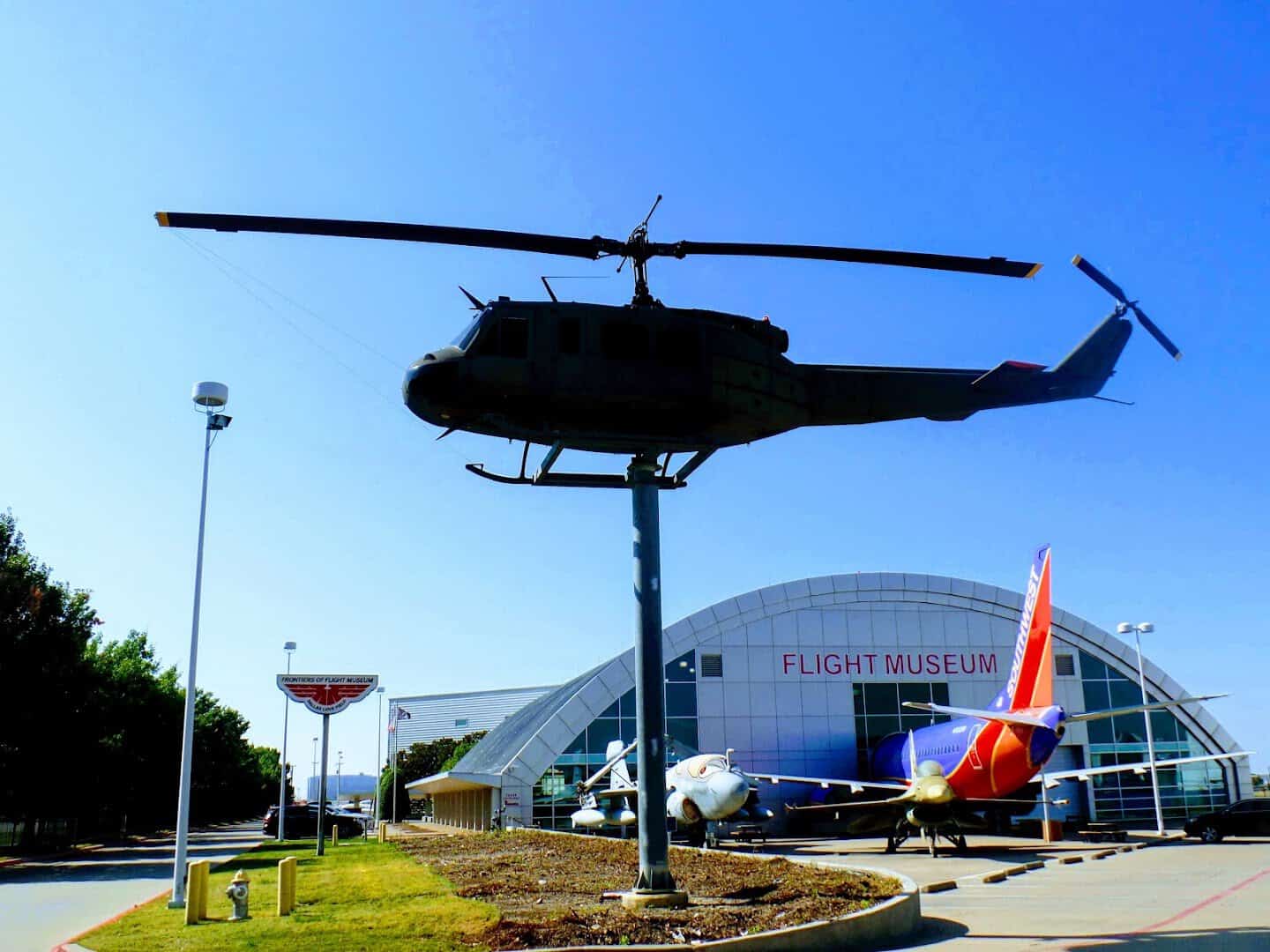
Then there is a full Southwest Airlines Boeing 737, the “Spirit of Kitty Hawk,” one of the first jets the Dallas-born airline ever put into service. Walking through a real commercial jet parked indoors is a small thrill that never gets old.
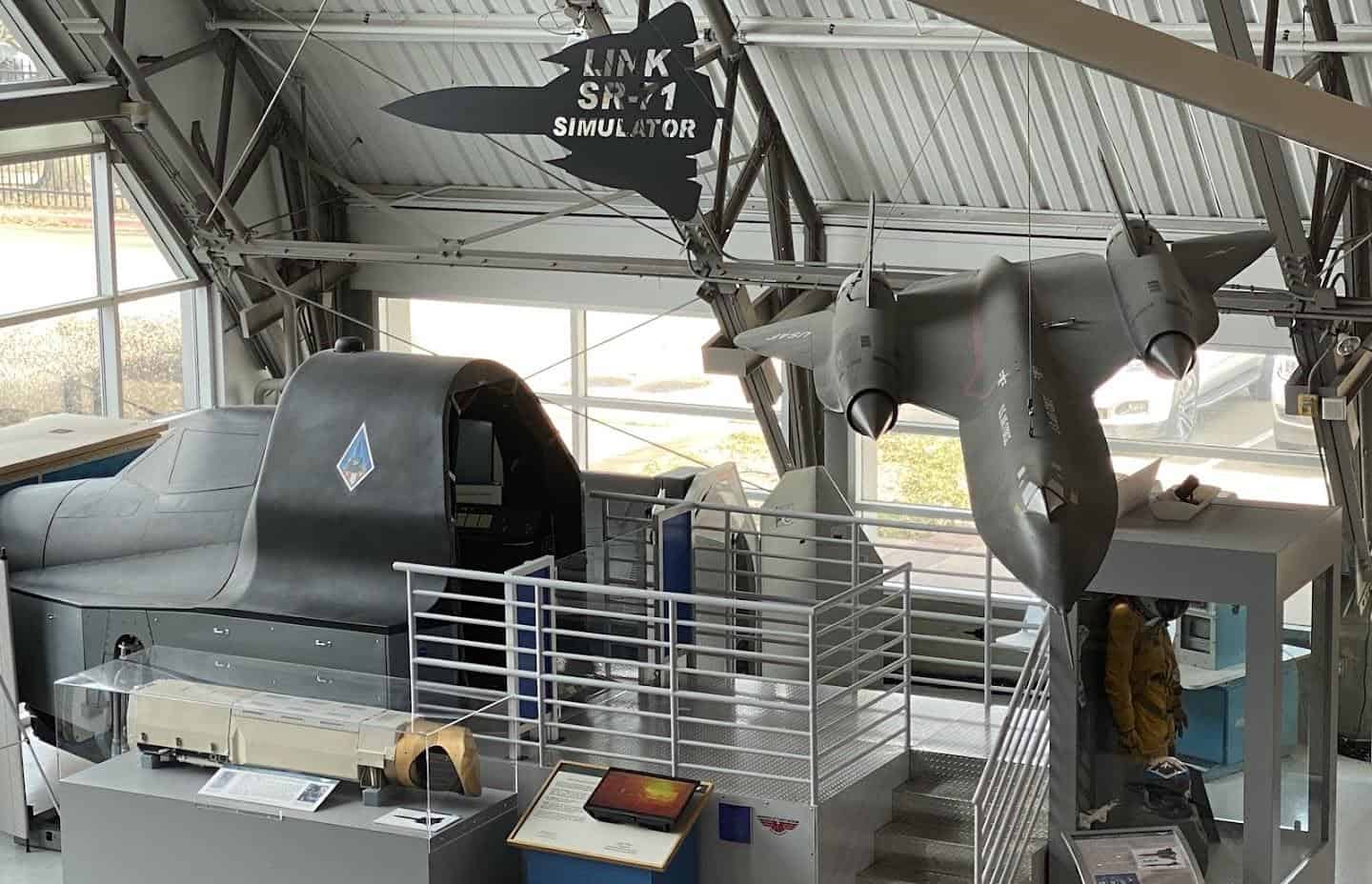
Military fans get plenty too, with fighters and a Huey helicopter among the hardware, plus a Cold War gallery full of jets, missiles, and simulators. A case of more than two hundred World War II model aircraft rounds out the sweep from canvas wings to supersonic.
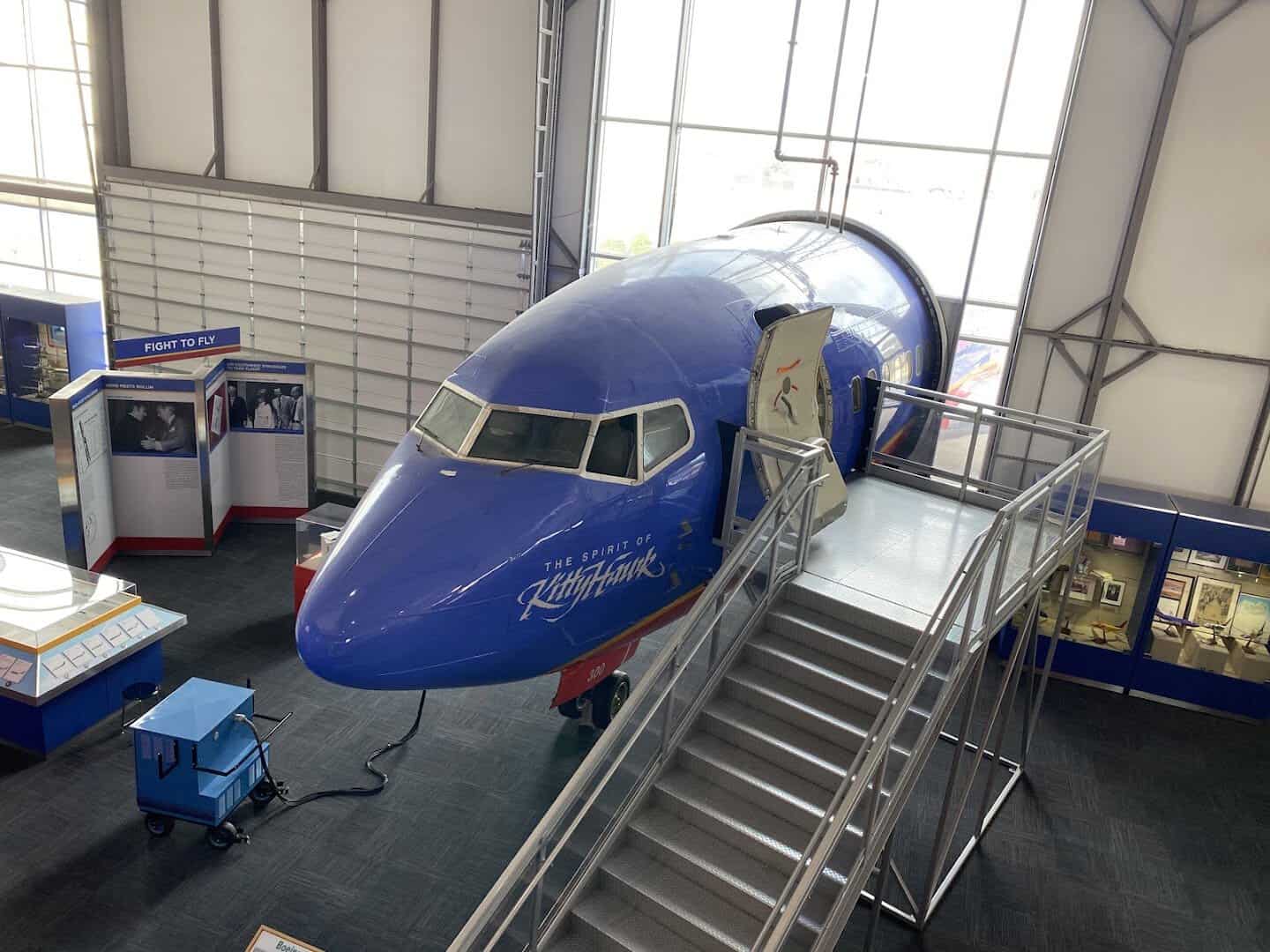
What makes the range so fun is the contrast. Turn from a wood-and-fabric biplane that could barely outrun a car, and a few steps away a sleek fighter jet reminds you the same instinct to fly produced both, only forty years apart.
Relics From Aviation’s Golden Age
Beyond the aircraft themselves, the museum holds artifacts that stop history buffs in their tracks. There are pieces connected to Charles Lindbergh and Amelia Earhart, the two names that made flying feel like destiny to a whole generation of Americans.
You will even find a fragment tied to the Hindenburg, the great airship whose fiery end in 1937 pretty much closed the book on passenger travel by giant zeppelin. Seeing a real relic from that story, rather than a grainy newsreel, lands differently.
All of this grew out of one enormous archive, the History of Aviation Collection, gathered over decades by a single determined historian. It is the seed the entire museum sprouted from, and pieces of it are woven through nearly every gallery you walk.
One review I came across called the chance to see artifacts from Lindbergh, Earhart, and the Hindenburg in one room simply “amazing,” and that is fair. Few places let you stand this close to so much history of flight at once.
Where Kids Get to Fly the Planes
This is a fantastic museum for families, and the little ones are not an afterthought here. A hands-on discovery area lets children climb, build, and play their way into how flight works, learning the science without ever feeling like they are in a classroom.
Flight simulators let older kids and grown-ups take the controls and feel what a pilot feels. It is the moment a lot of first-time visitors decide aviation is cooler than they thought, and it is included with the visit.
The museum is also a KultureCity certified sensory inclusive venue, with tools and quiet options for visitors who need a calmer experience. Did you know a place this full of jet engines could also be one of the gentlest field trips in Dallas? This one manages both.
A Brief History of a Collection That Started With One Man
The whole museum traces back to 1963, when aviation historian George Haddaway donated his sprawling personal collection of artifacts and documents, the History of Aviation Collection, to the University of Texas. It later moved to UT Dallas in the late 1970s.
By 1988, access and space had become a problem, so Haddaway and UT Dallas joined a group of Dallas civic leaders to found the Frontiers of Flight Museum as a nonprofit. Among the founders were future U.S. Senator Kay Bailey Hutchison, Bill Cooper, and Jan Collmer.
The young museum opened in 1990 on the mezzanine of the Love Field terminal, small but growing. Word spread, the collection outgrew the space, and a proper home became the goal for the volunteers and donors who believed in it.
In June 2004, the current 100,000 square foot building opened at the southeast corner of Love Field, and the collection finally had room to breathe. Today it is a Smithsonian Affiliate, a mark of the company it keeps in the museum world.
That journey, from one man’s boxes of papers to a Smithsonian-affiliated hangar, is part of what makes the place feel earned rather than corporate. It was built by people who loved flight and refused to let the story sit in a warehouse.
Pro Tips Before You Go
Admission is easy on the wallet, which is part of the charm. Adults run about $12, seniors around $8, and children roughly $7, with the littlest ones free. For a full building of real aircraft and a flown spacecraft, that is a bargain.
Pro tip: plan on two to three hours if you like to read the placards and chat with the volunteers, and less if you are herding excited kids from cockpit to cockpit. Either way, do not rush the space gallery.
The museum keeps generous hours, open Monday through Saturday from morning to late afternoon and Sunday afternoons. It also runs special events through the year, from Moon Day to visiting warbird tours, so it is worth a quick look at the calendar before you head over.
Watch for the museum’s special dollar-admission days too, offered so that families on a tight budget can still give their kids a day among real spacecraft and jets. It is a generous touch, and a reminder that this place sees itself as a community resource, not just a tourist stop.
How to Get There
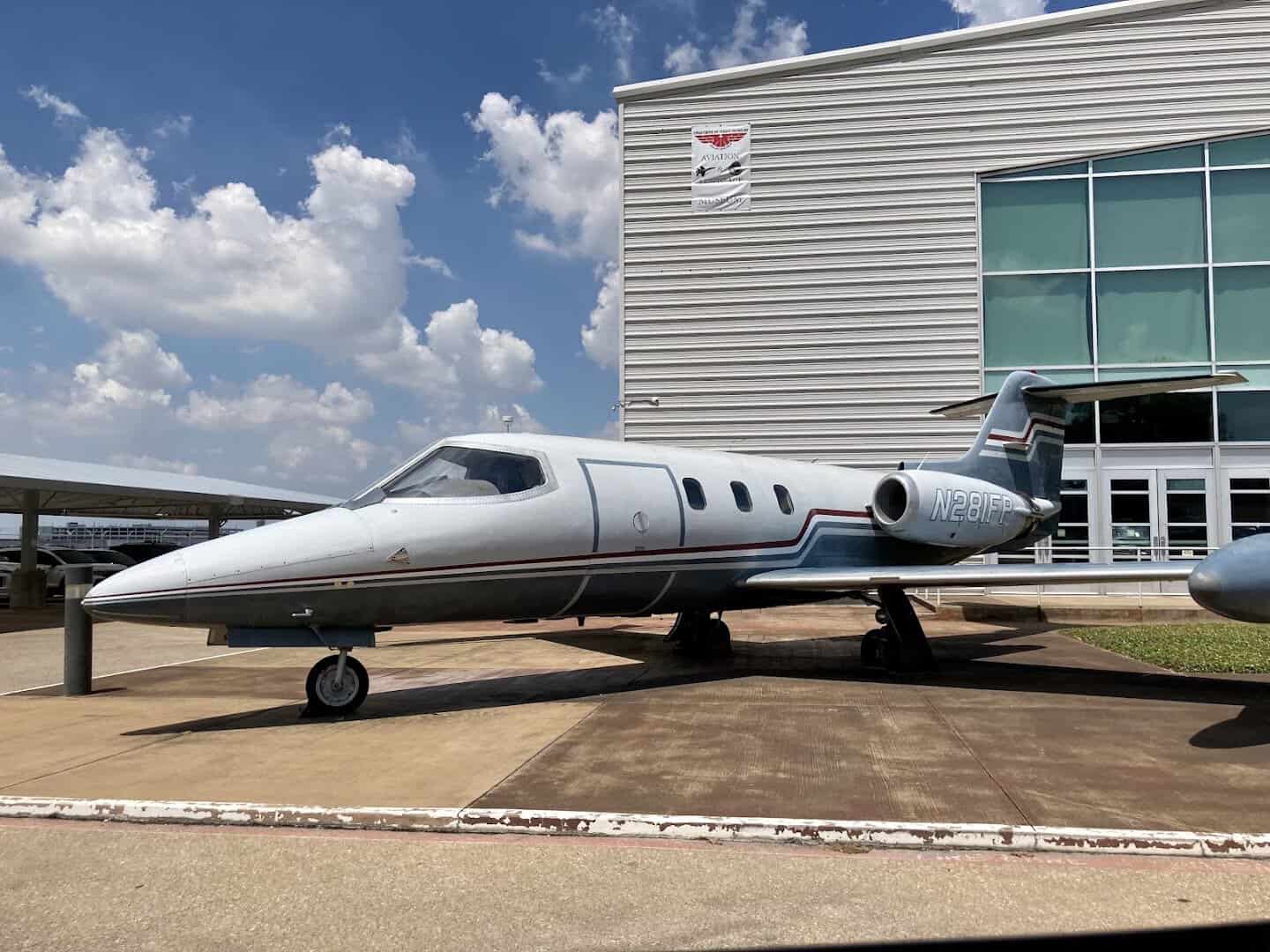
The Frontiers of Flight Museum sits right at Dallas Love Field, easy to reach whether you live in the Metroplex or you are passing through on a layover with a few hours to spare. There is parking on site and plenty of room for a school bus.
Where: 6911 Lemmon Ave, Dallas, TX 75209
Plan Your Landing in Dallas
Whether you are a lifelong plane spotter or you just want to show the kids something they will actually remember, this is the stop to make. Point the car toward Love Field, look up at a real spacecraft, and stand beside a genuine flying saucer. Texas flight history is waiting.
Featured image: Martin Handl via Frontiers of Flight Museum

Stella Raines
Editor-in-Chief
Stella brings over a decade of storytelling experience to TX Headlines. With roots in West Texas and a love for road trips, she leads the editorial team with an eye for the hidden stories that make Texas unforgettable.
More Stories
This Picturesque Texas Train Ride Steams Through the Piney Woods for a Relaxing Spring Day Trip
This Giant Texas Flea Market Has 490 Booths You’ll Want to Wander Again and Again
This Underground Texas River Cavern Was Once a Secret Speakeasy and an Outlaw’s Hideout
This Nostalgic Texas Open-Air Cinema Plays Two First-Run Movies for Less Than One Multiplex Ticket
Tags