This Wild Texas Nature Preserve Has Boardwalk Trails Winding Through Swamp, Bog, and Forest
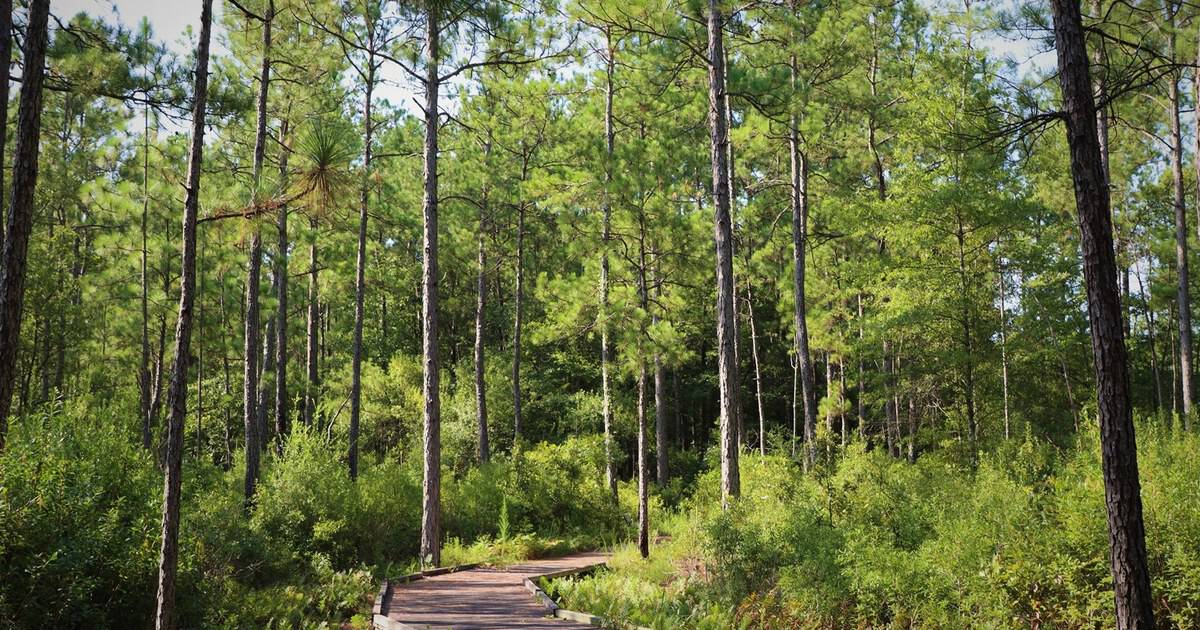
Swamps get a bad rap. We picture mud to the knees, mosquitoes the size of hummingbirds, and something with teeth waiting just under the surface. So the idea of strolling straight through one, dry and unbothered, on a raised wooden path, has always struck me as a small miracle.
That miracle sits in East Texas, near the little town of Kountze. Big Thicket National Preserve lays wooden boardwalks across bogs, cypress sloughs, and forest floor, and the whole place rests on what scientists call a biological crossroads, where four wild landscapes crash together in one green tangle.
Here is what makes these trails worth the drive: plants that eat bugs, 300 kinds of birds, ancient cypress the size of grain silos, and a grassroots fight that saved the whole thing before the chainsaws could finish it.
Where the Boardwalk Carries You Over the Wild
The Kirby Nature Trail is the one to start with. It loops out from near the visitor center in the Turkey Creek Unit, and it is built for every pair of legs, from toddlers to grandparents.
Long stretches ride on wooden boardwalk, lifting you a foot or two above the wet ground so your shoes stay dry while the swamp does its thing right beneath you. You get the wetland without the wading.
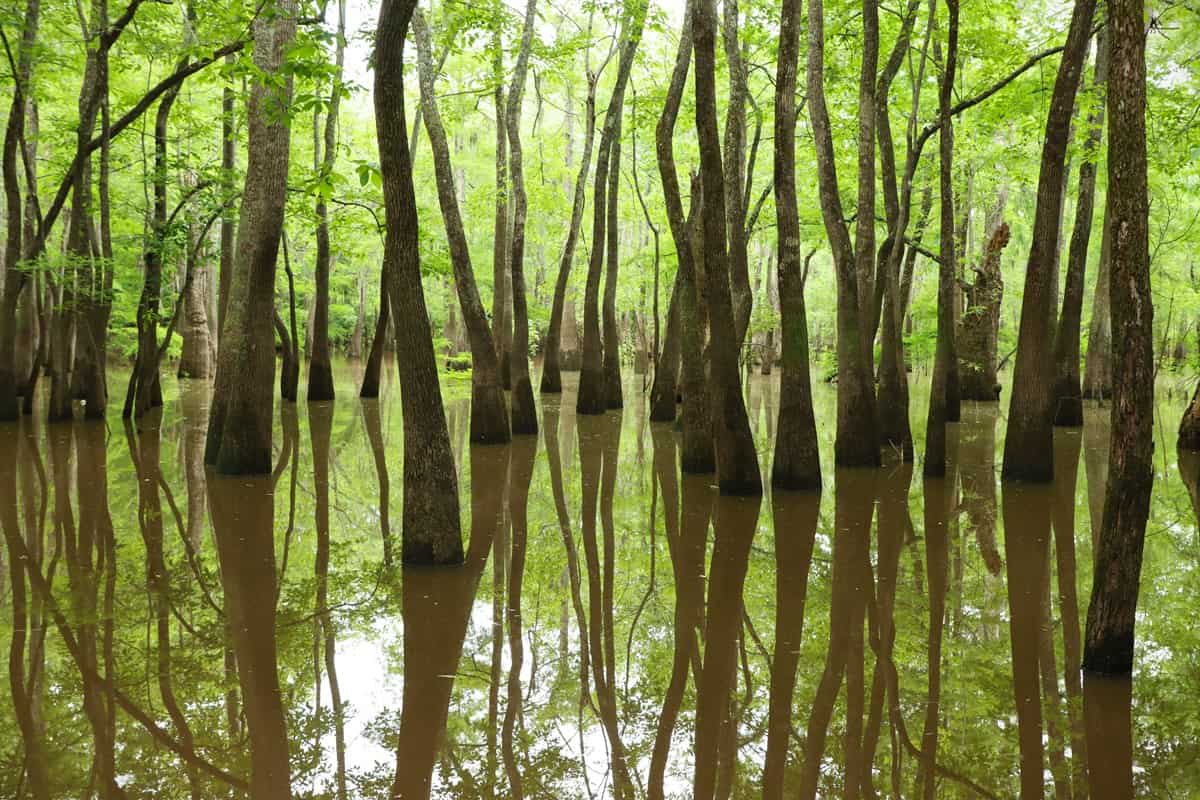
Pick your distance. The inner loop runs about 1.7 miles, the outer loop stretches to 2.4, and a short 0.3 mile spur ducks through a cypress slough where the trees stand knee-deep in still, tea-colored water.
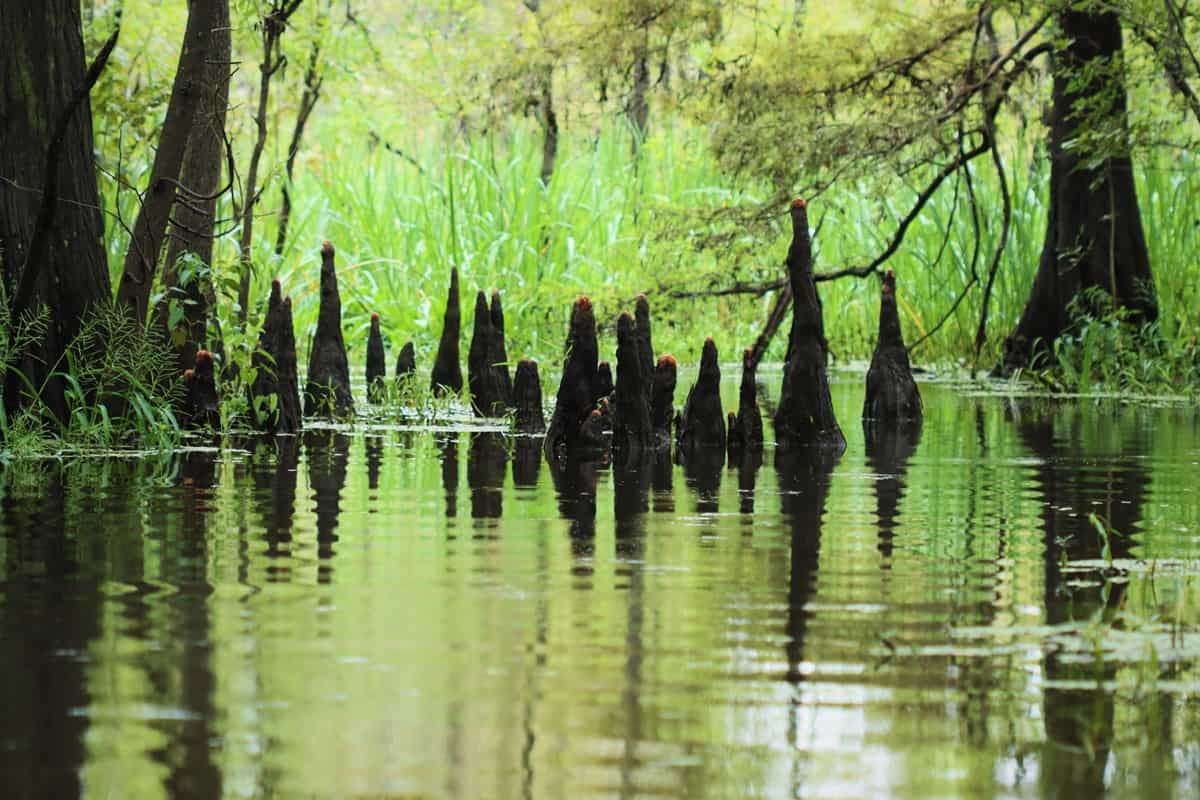
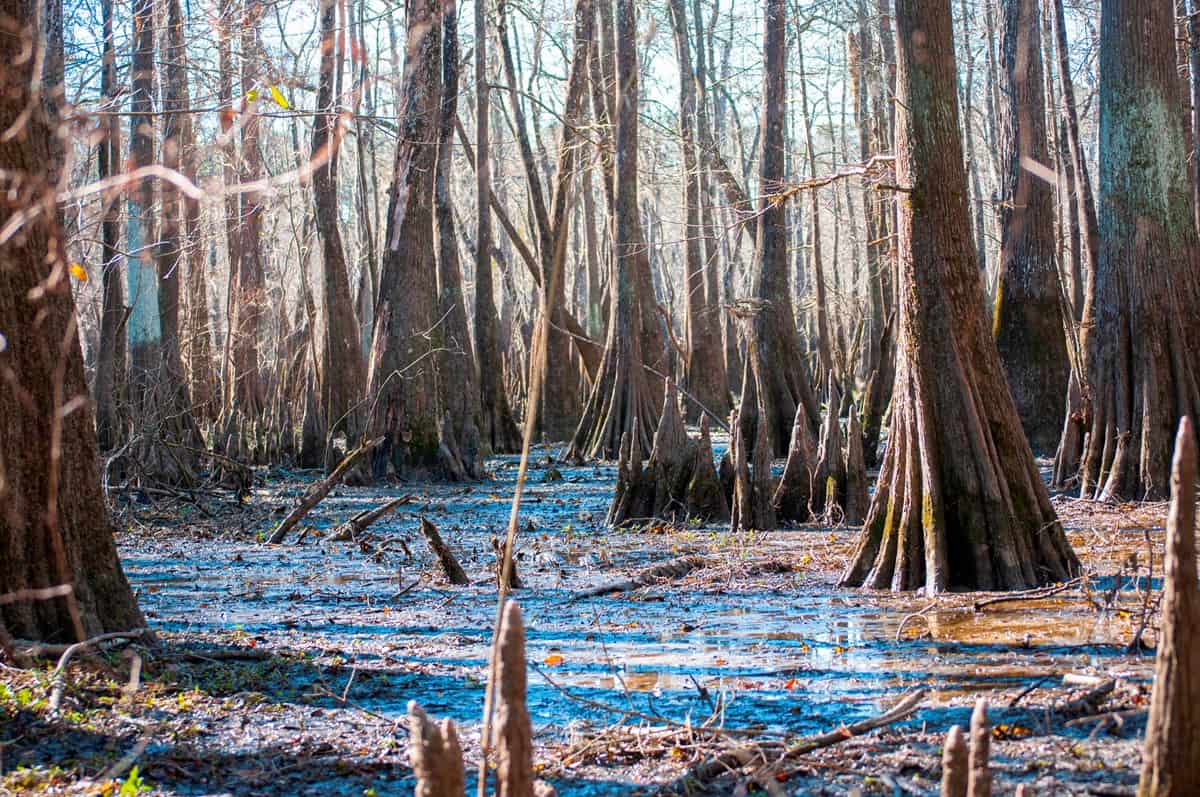
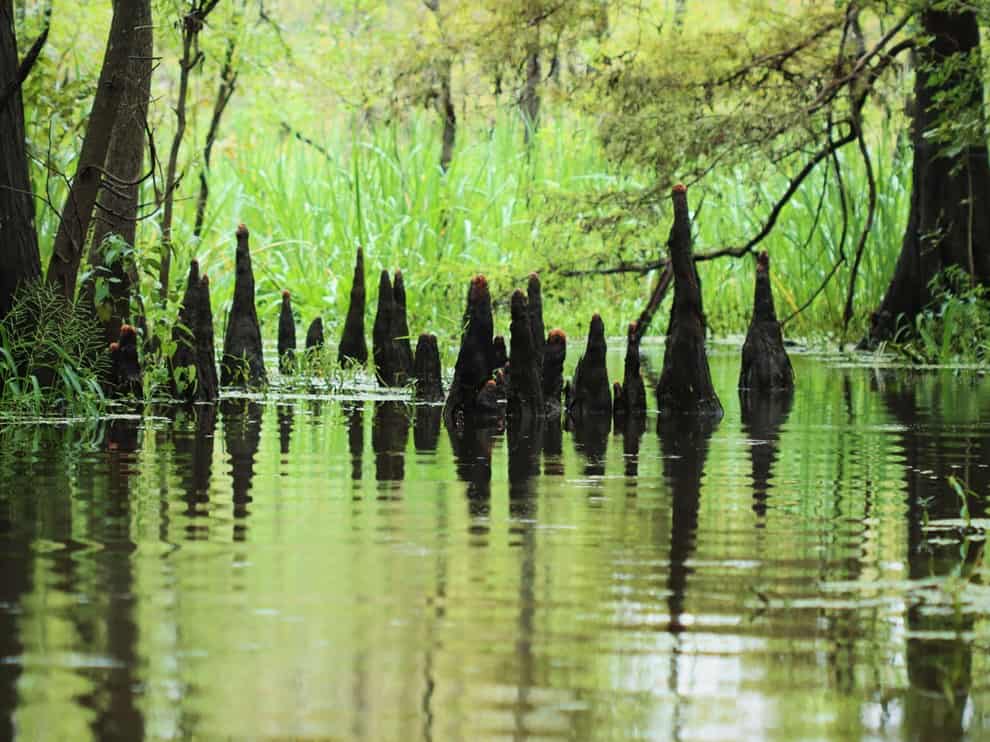
This is where the forest shows off. Massive bald cypress rise on flared, buttressed trunks, their knobby “knees” poking up out of the muck like something almost prehistoric. Spanish moss drapes the branches. The light goes soft and green.
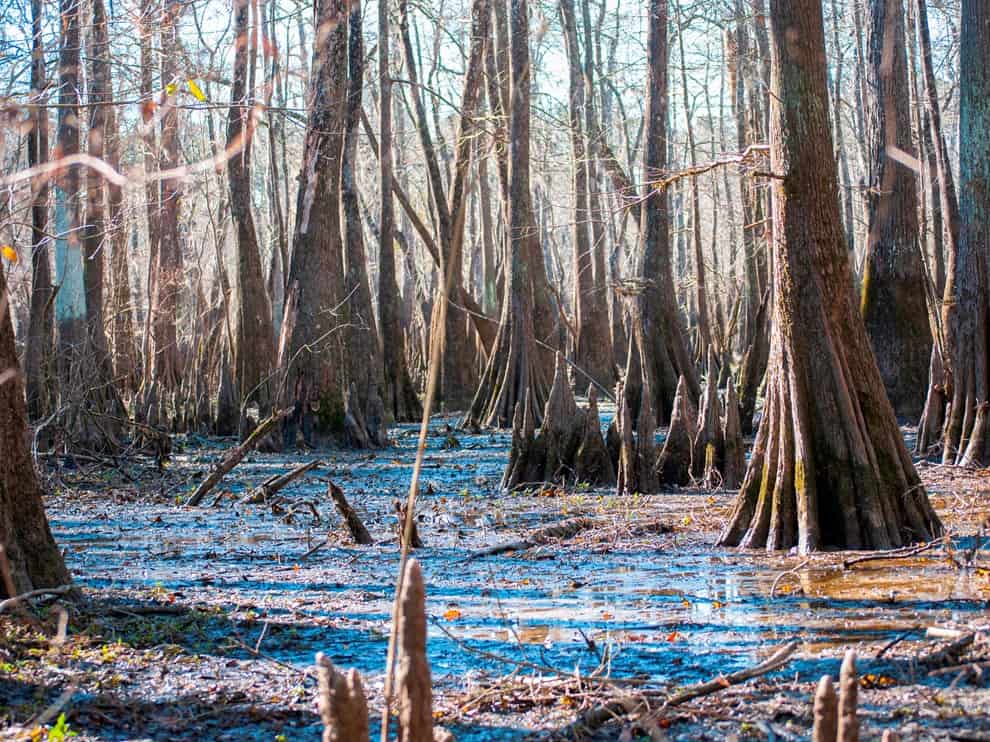
The air changes too. It smells of wet earth and leaf litter, and the temperature drops a few degrees under the canopy. Every so often the boardwalk opens onto Village Creek, and you get a clear look at the slow, dark water sliding past.
Hikers on AllTrails give this trail a 4.6-star average, and the reviews read like a chorus. One called it simply “very peaceful and quiet.” Another summed up the whole visit in one word: “beautiful.”
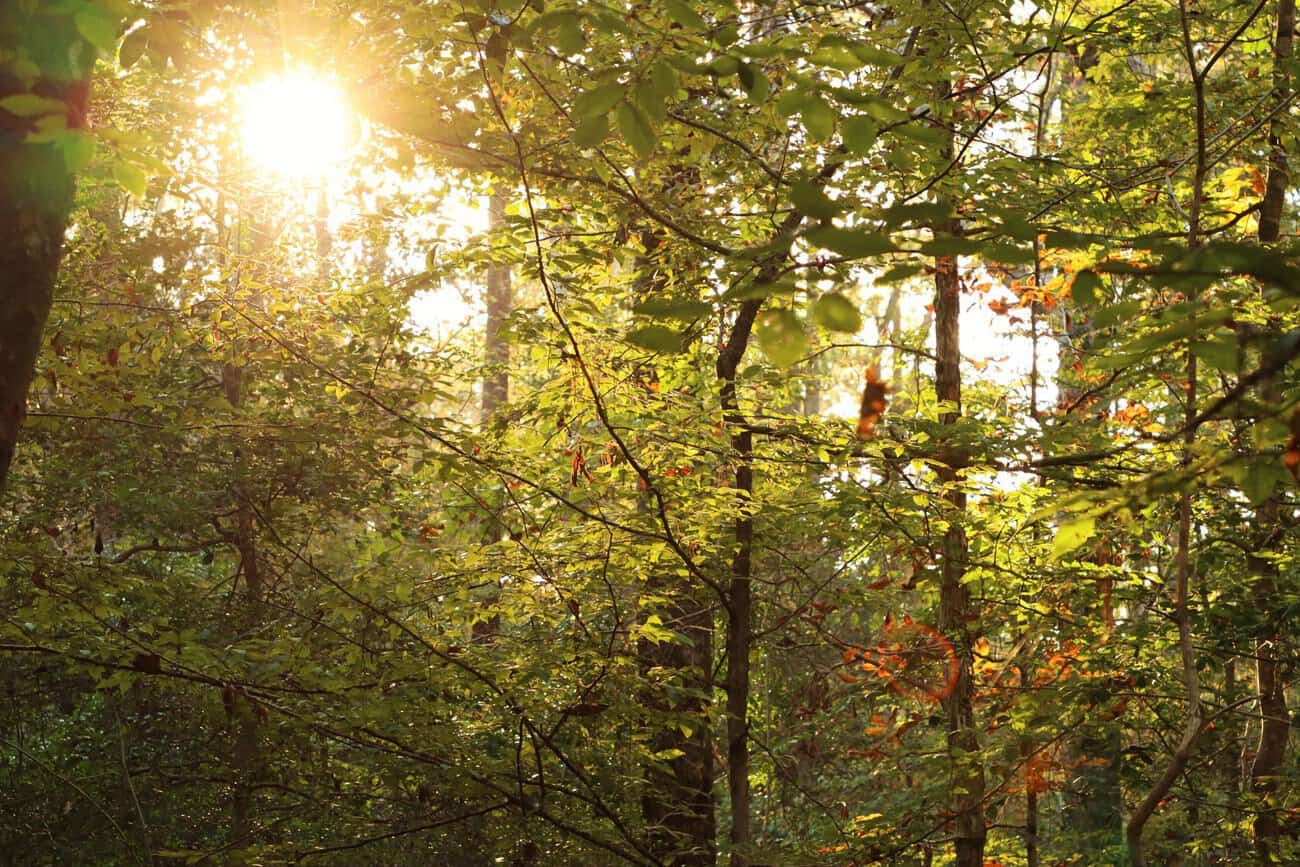
Come early and you may have the boardwalk to yourself. The quiet out here is the real attraction, the kind of hush that only exists deep in a forest where the loudest thing is a woodpecker working a dead pine.
It is also a gentle place to bring kids. The flat boardwalk means small legs can keep up, and the trail is close enough to the visitor center that a full loop feels like an adventure without turning into a march.
The Trail Where the Plants Bite Back
Now for the part nobody believes until they see it. Big Thicket is one of the best places in Texas to stand nose to nose with carnivorous plants, the kind that trap and digest live insects.
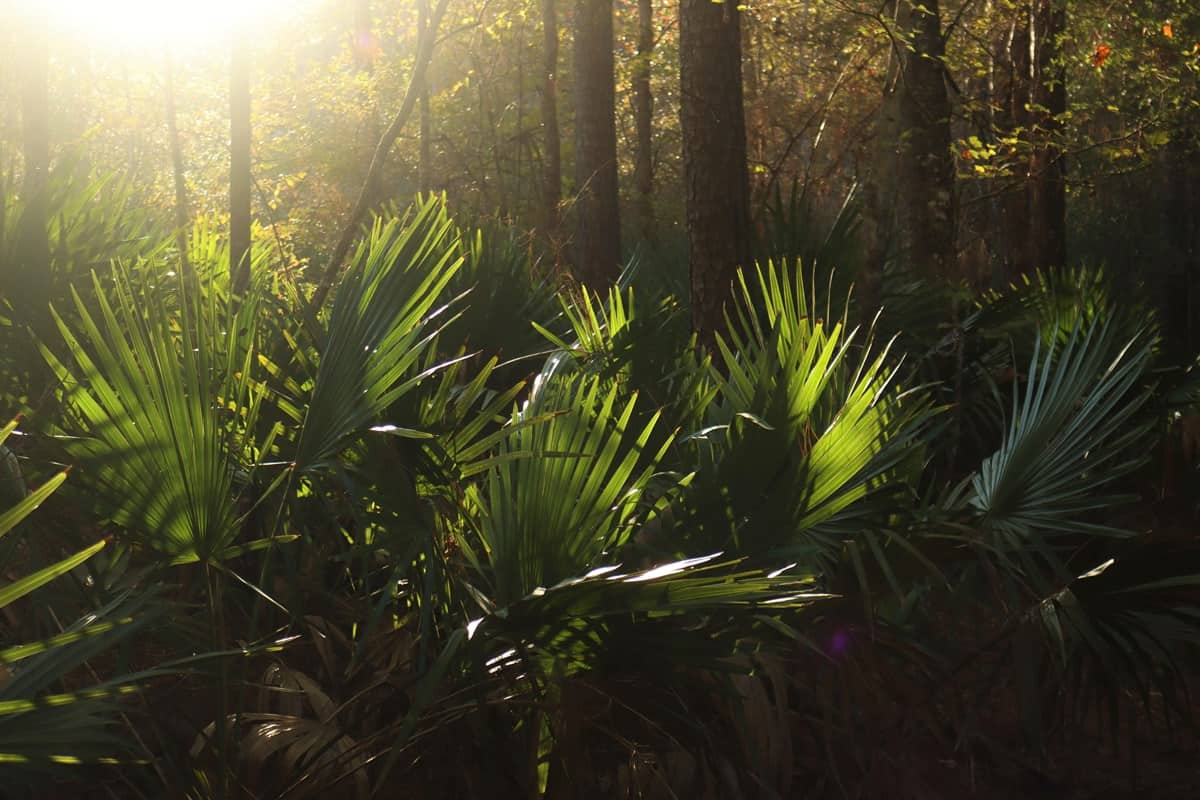
The Pitcher Plant Trail, over in the Hickory Creek Savannah Unit, runs a boardwalk straight out into a wet, sunny bog thick with them. This is a longleaf pine savanna, an open, grassy world that feels nothing like the shady cypress swamp a few miles away.
In spring and summer, hundreds of pale pitcher plants stand up out of the grass like slender green trumpets. Each one is a trap, luring insects down a slick throat they cannot climb back out of, where the plant slowly digests them.
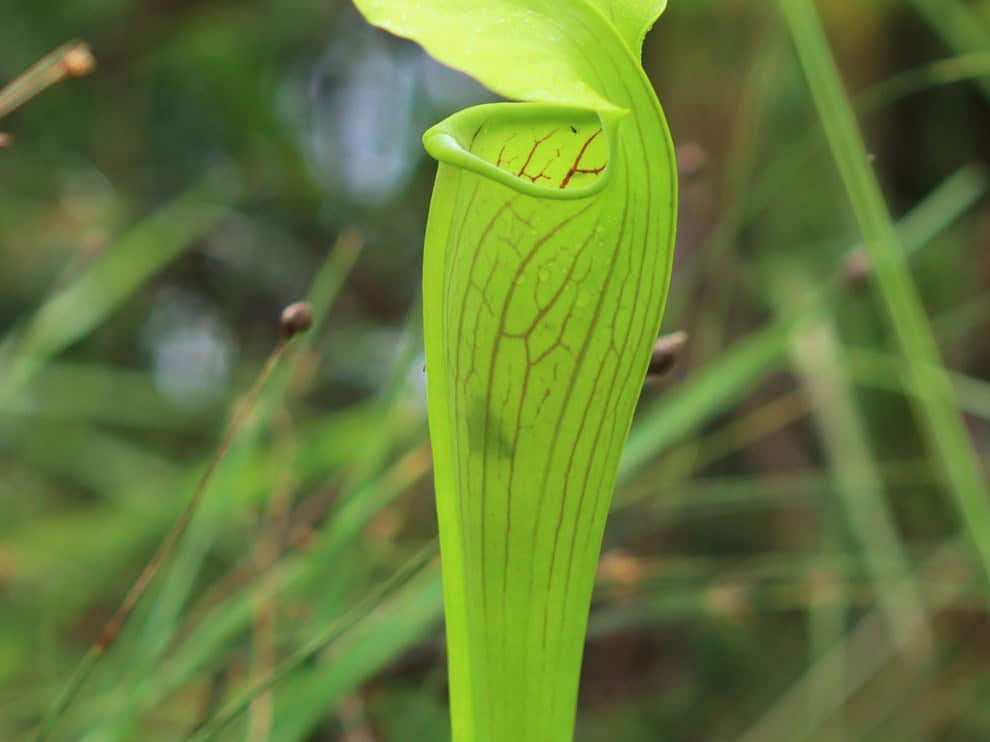
Look closer and you find the others. Tiny sundews glisten with sticky, dew-like droplets that glue an insect in place. Bladderworts and butterworts hide in the damp, harder to spot but just as hungry.
These plants are not exotic imports or a zoo exhibit behind glass. They grow wild in the sandy, boggy soil, which is so poor in nutrients that the plants evolved to catch their dinner instead of drawing it up through their roots.
Four of the five kinds of insect-eating plants found in the entire United States grow here. Did you know Texas held that secret? Most Texans do not, which is exactly why it feels like a discovery.
The nearby Sundew Trail offers a half-mile loop through the same savanna, with a shorter accessible inner loop for wheelchairs and strollers. Spring is the golden window, when the bog blooms and the little predators are easiest to see.
A Cast of 300 Birds and a Few Things With Teeth
The Big Thicket is a birder’s daydream. At least 300 species of birds move through the preserve as year-round residents or migratory travelers riding the seasons up and down the continent.
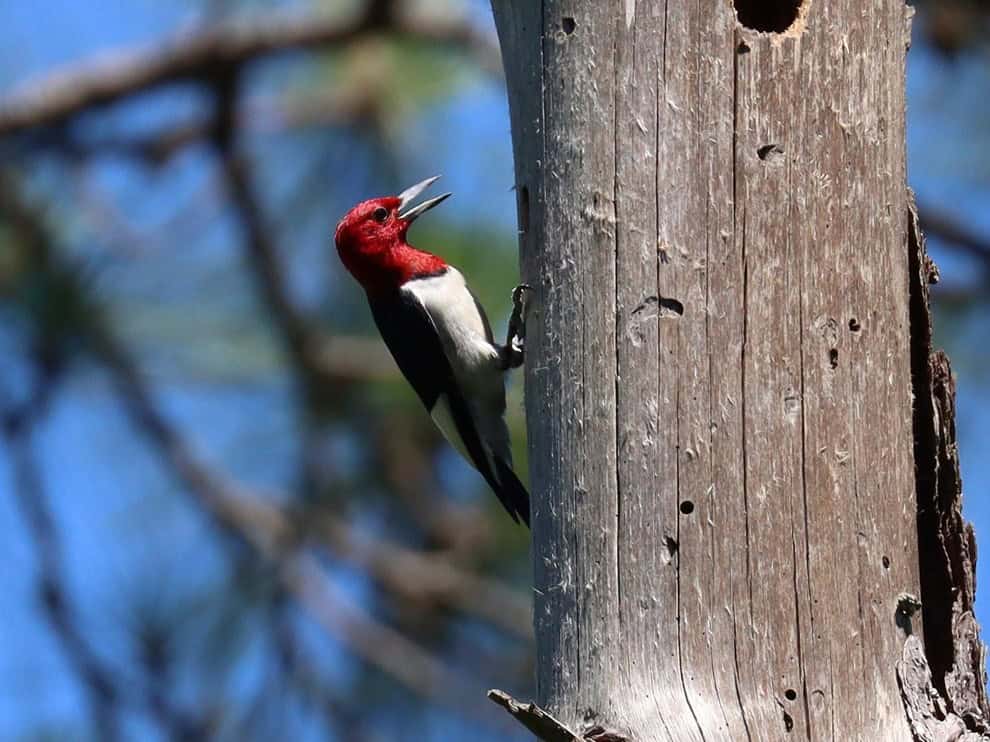
Warblers pour through in spring. Woodpeckers hammer the pines, including the crow-sized pileated with its flaming red crest. Hawks ride the thermals, and wading birds stalk the shallows on stilt legs.
You will hear far more than you see. Much of the action happens high in the canopy, so bring binoculars and let your ears lead. The dawn chorus here is worth setting an alarm for.
The waterways carry other residents. American alligators glide through the bayous and sloughs, most active in the warm months, keeping a respectful distance as long as you keep yours. White-tailed deer slip between the trunks at dusk.
Stay until dusk and a second soundtrack starts up. Frogs tune up in the wet spots, cicadas drone in the pines, and the whole forest seems to exhale as the light fades. It is the kind of noise that somehow feels like quiet.
Add it up and the numbers get dizzying: roughly 60 mammal species, 86 kinds of reptiles and amphibians, nearly 100 fish, and close to 1,800 species of butterflies and moths. Few patches of ground in America are this alive.
Four Wild Worlds in One Forest
So why is one preserve packed with so much? Geography got lucky here. The Big Thicket sits at a rare meeting point where four very different landscapes overlap and blend into each other.
Moist eastern hardwood forest reaches in from the east. Southwestern desert influences creep up from the arid country. Southeastern swamp seeps in from the Gulf lowlands. And central prairie brushes the edges.
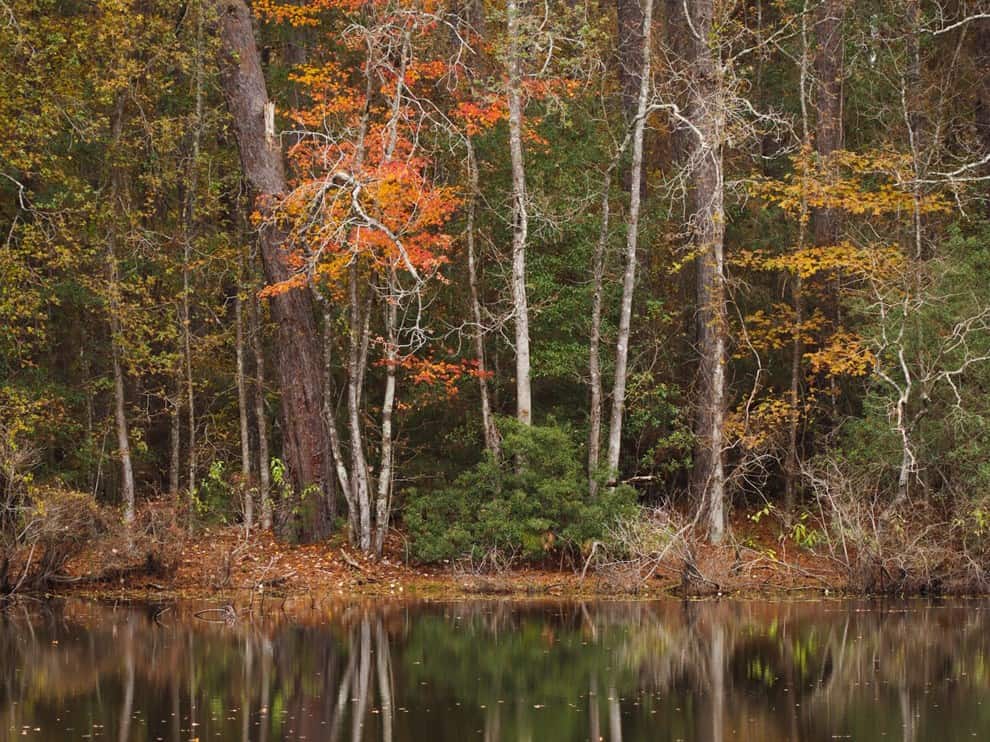
Stitch those together and you get an astonishing range of habitats within a short drive: cypress swamp, longleaf pine savanna, sandy uplands, dense hardwood bottoms, and open, sunny bogs. That is the “biological crossroads” reputation written into the ground itself.
All told, the preserve shelters more than 1,300 kinds of native plants. Walk a single afternoon and the scenery changes under your feet, from bog to slough to piney ridge, as if you crossed several states without ever leaving the county.
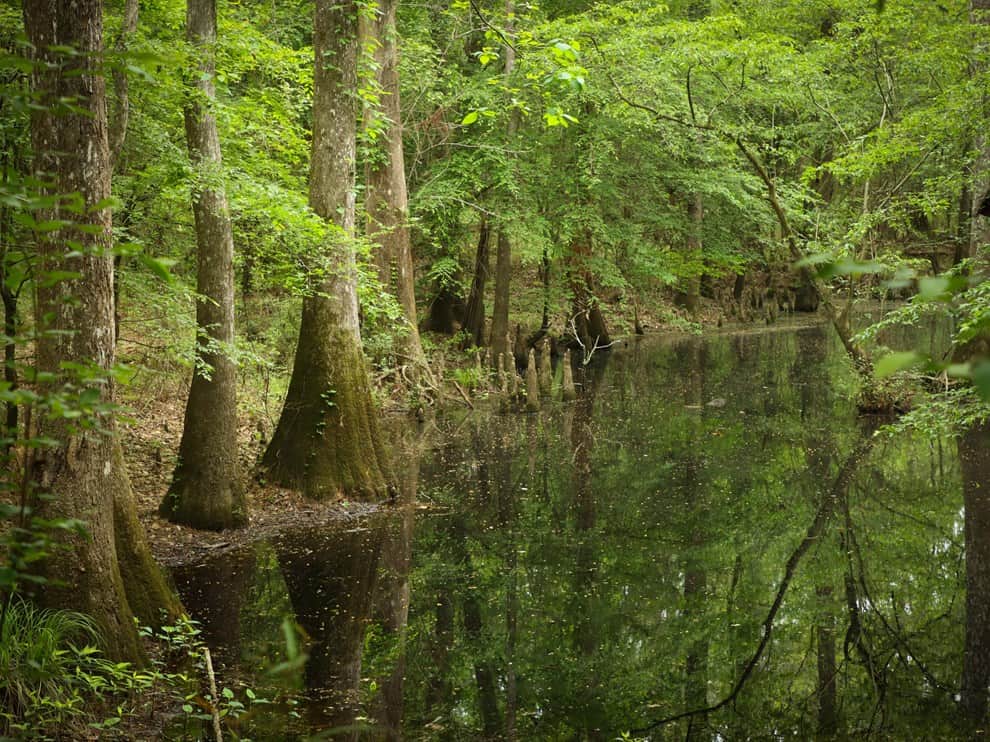
That variety is exactly why naturalists have called this corner of Texas one of the most biologically diverse places in North America. It is a rare thing to find so many living worlds packed into ground you can cover on foot in a morning.
How a Handful of Locals Saved It
None of this was guaranteed. By the middle of the last century the forest was falling to logging at a heartbreaking clip, reportedly around 50 acres a day, and the wild Thicket of old was shrinking fast.
The losses were not just trees. In 1963, longtime thicket guide Lance Rosier reportedly came upon the rotting skeletons of more than 300 white herons deep in the woods, a scene that hardened the resolve of everyone fighting to save the place.
Rosier became the forest’s voice. A self-taught naturalist known far and wide as “Mr. Big Thicket,” he walked visitors through the woods for decades and could name nearly everything that grew, flew, or crawled there.
On October 4, 1964, Rosier and Liberty mayor Dempsie Henley founded the Big Thicket Association, a scrappy group determined to win state or federal protection for the vanishing forest. A local librarian named Maxine Johnston later carried the torch for years, becoming the quiet force who kept the campaign alive.
The fight took a full decade more. Congressmen Charlie Wilson and Bob Eckhardt championed the bill, and on October 11, 1974, President Gerald Ford signed Big Thicket into being as the very first national preserve in the United States, an original 84,550 acres.
Rosier did not live to see it. He passed away four years before the signing, after a lifetime spent defending the woods he loved. In 1981 the wider world caught up, when UNESCO named the Big Thicket an international Biosphere Reserve.
Today the preserve has grown to more than 113,000 acres spread across nine land units and six protected water corridors. It is a living monument to what a handful of stubborn locals can save when they simply refuse to give up.
Planning Your Walk in the Woods
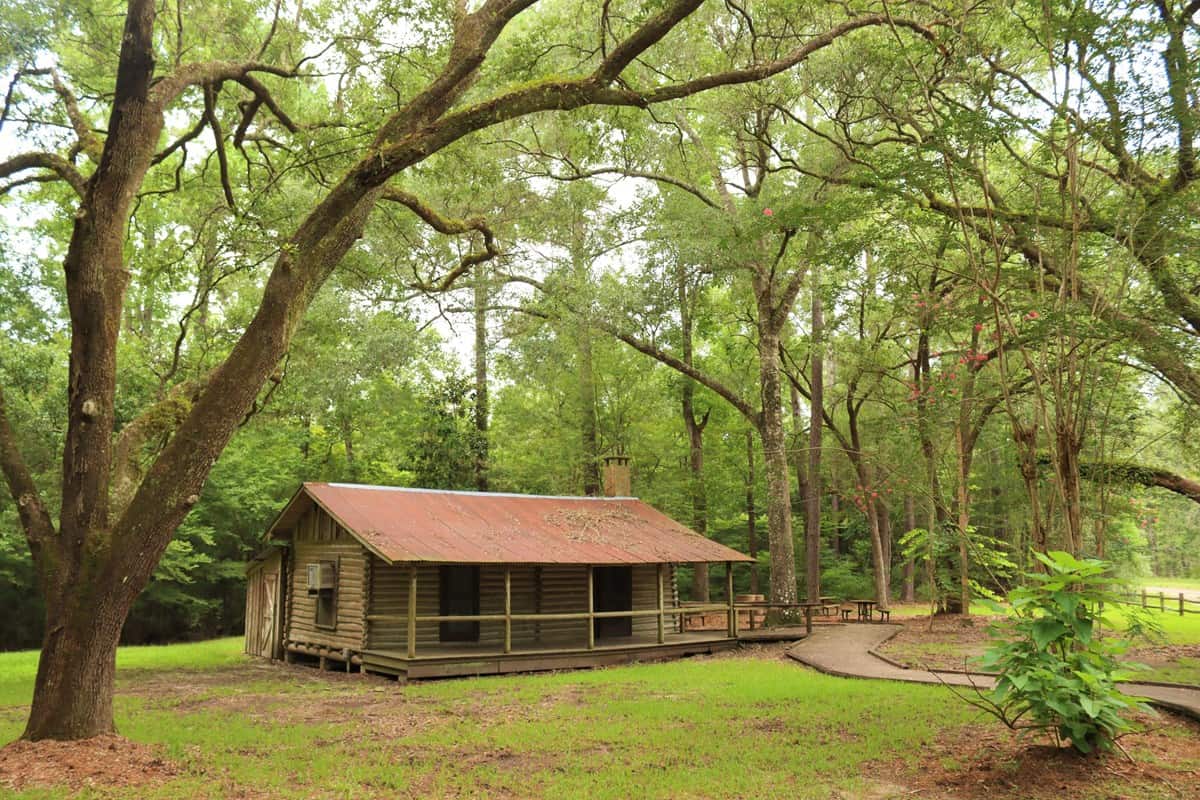
Start at the visitor center. The exhibits map out the units and trails, the rangers know exactly what is blooming or nesting that week, and it is the natural launch pad for the Kirby Nature Trail loops right nearby.
Best of all, it costs nothing. There is no entry fee to visit Big Thicket, which makes it one of the great free days out in the whole state.
Pro tip: time your trip for spring. That is when the carnivorous bogs bloom, the migrating warblers flood the canopy, and the temperatures stay kind before the East Texas humidity settles in for the summer.
Wear real shoes, bring water and bug spray, and pack binoculars. Check trail conditions before you go, since heavy rain can leave low sections wet, and let someone know your plan on the longer routes like the 15-mile Turkey Creek Trail.
If you paddle, the preserve protects six water corridors along the creeks and bayous, and a canoe or kayak trip is a whole different way to see the swamp from the inside. The units are scattered, so grab a map and plan your day before you drive.
For a first visit, the Kirby boardwalks plus the Pitcher Plant Trail make a near-perfect introduction to everything this place does well: swamp, savanna, wildflowers, and those hungry little plants.
How to Get There
The Big Thicket National Preserve Visitor Center is your anchor point, sitting where FM 420 meets Highway 69, about 30 minutes north of Beaumont and roughly 75 miles northeast of Houston.
Where: Big Thicket National Preserve Visitor Center, 6102 FM 420, Kountze, TX 77625. Open daily 9 a.m. to 5 p.m., except Thanksgiving, December 25, and January 1.
Go Meet the Swamp on Its Own Terms
There is a particular kind of magic in walking a wooden path through a living swamp: dry feet, wide eyes, cypress towering overhead and something carnivorous blooming at your ankles.
Pack the binoculars, aim the car toward Kountze, and let the boardwalk carry you into one of the wildest, most surprising corners Texas has. You will come home swearing you crossed four states in an afternoon, and technically, you nearly did.
Featured image: @ Big Thicket National Preserve

Stella Raines
Editor-in-Chief
Stella brings over a decade of storytelling experience to TX Headlines. With roots in West Texas and a love for road trips, she leads the editorial team with an eye for the hidden stories that make Texas unforgettable.
More Stories
This Hidden East Texas Spring Has Crystal-Clear Water and a Wonderfully Laid-Back Pace
This Forgotten Texas State Park Lets You Stand Beside a 1,000-Year-Old Tree
This Wild Texas Coastal Preserve Puts a Boardwalk Over the Marsh and 300 Birds at Eye Level
This Hidden Texas Waterfall Is a Peaceful Oasis Tucked Where You’d Least Expect It
Tags