This Lush Texas Garden Was Named One of the Most Beautiful in the World
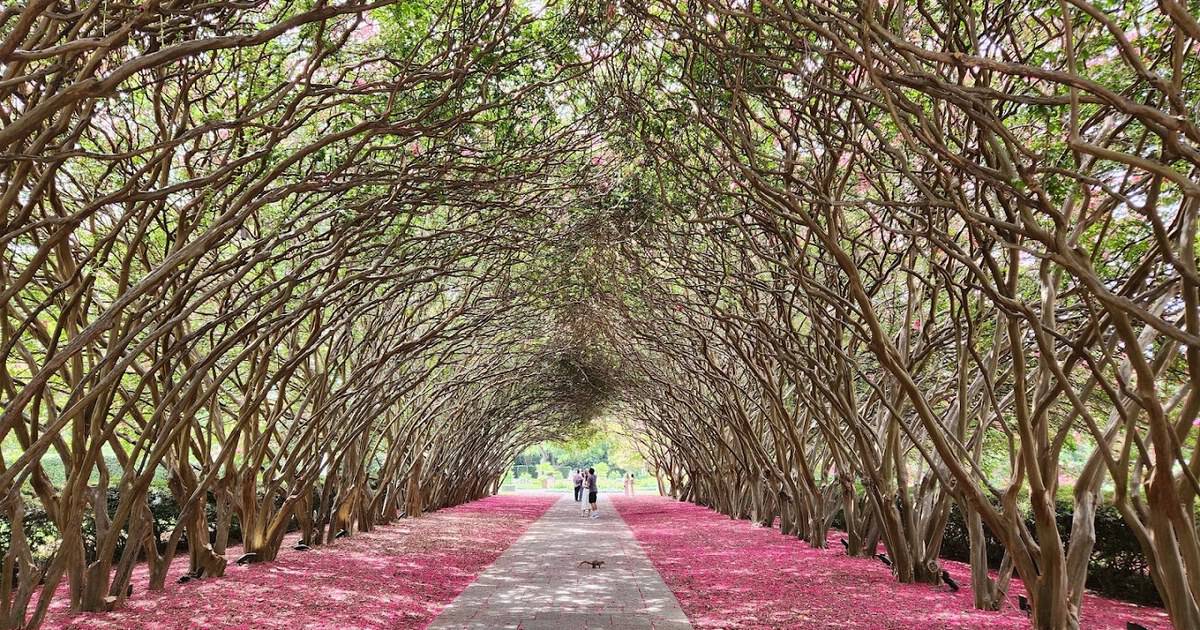
I have a theory that you can measure a city by its gardens. Anyone can pour concrete and call it a downtown. It takes patience, and a little faith, to plant something that will look like nothing for years and then, one spring, simply stop you in your tracks.
Texas plays this game better than most people give it credit for. The proof sits on 66 acres above White Rock Lake in East Dallas, a place so lavishly planted that a national magazine once set it beside Versailles.
The Dallas Arboretum and Botanical Garden is the kind of living postcard that makes you forget you are inside a major American city. Below, we’ll walk through why it earned a place among the most beautiful gardens on earth, what blooms when, and everything you need to plan the trip.
The Magazine That Put Dallas Next to Versailles
Here is the recognition that started all the fuss. In 2016, Architectural Digest published a roundup of the world’s most breathtaking gardens to visit, and the Dallas Arboretum landed near the very top of it.
Think about the company it was keeping. The Gardens of the Palace of Versailles. Claude Monet’s garden at Giverny. The Butchart Gardens in British Columbia. The Royal Botanic Gardens in London. And then, right there among them, a garden a few minutes off a Dallas freeway.
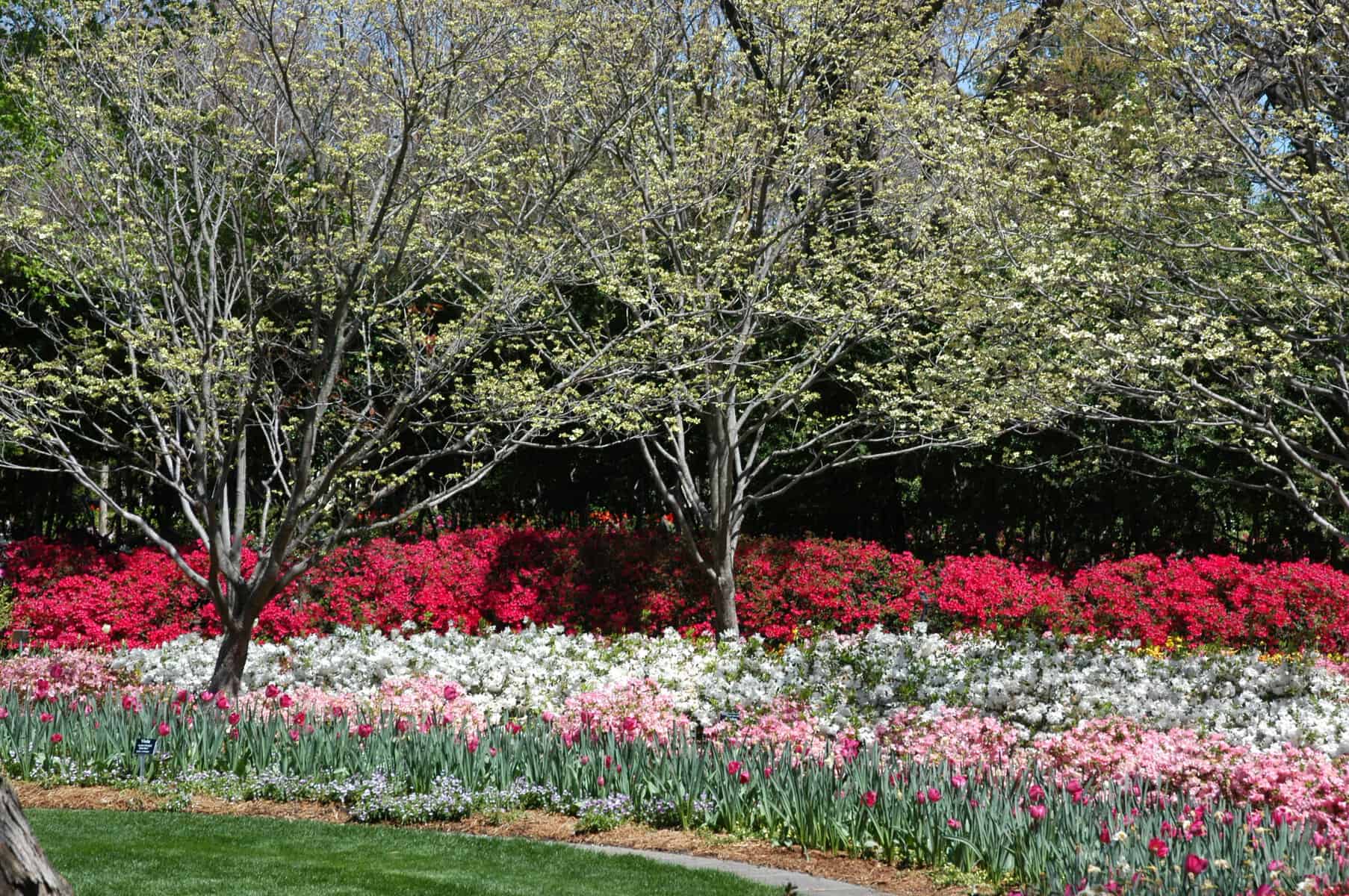
The magazine praised the arboretum’s ferns and azaleas. It also pointed to something none of those European estates could offer: what it called one of the best views of a downtown skyline in any garden on the list.
Stand near the water and the towers of Dallas rise straight out of the flowerbeds across the lake. Nature in the foreground, a modern skyline behind it, all in one frame. That contrast is the arboretum’s signature, and it is why photographers treat the place like a studio.
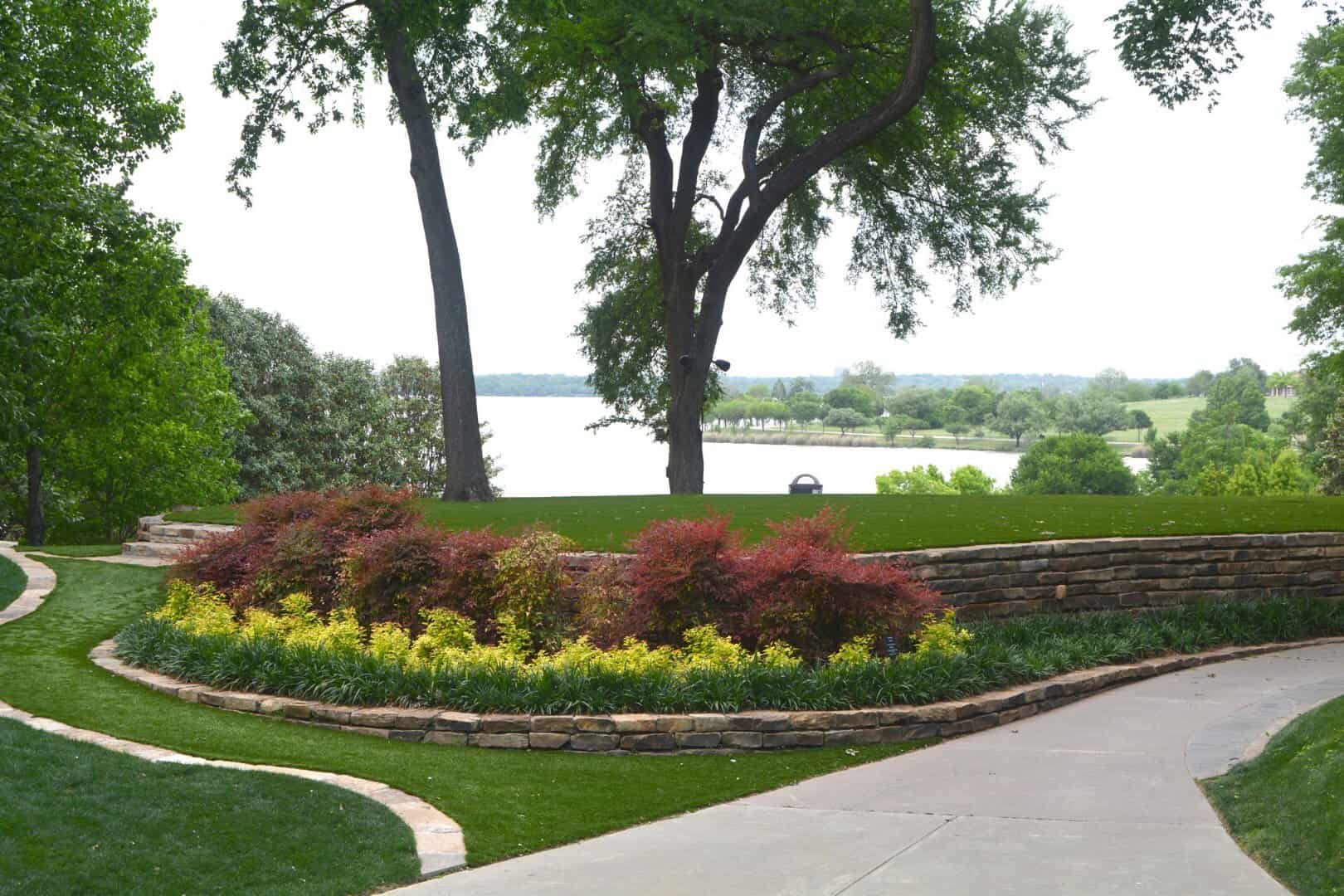
Travel and Leisure piled on a few years later, naming the arboretum’s spring festival the most beautiful springtime destination in the entire country. When national outlets keep deciding your flowers are worth a plane ticket, you stop arguing and start driving.
Nineteen Gardens, and Not a Dull One Among Them
The arboretum is not one garden. It is closer to twenty of them, stitched together by winding paths, and every one has its own personality and its own best season.
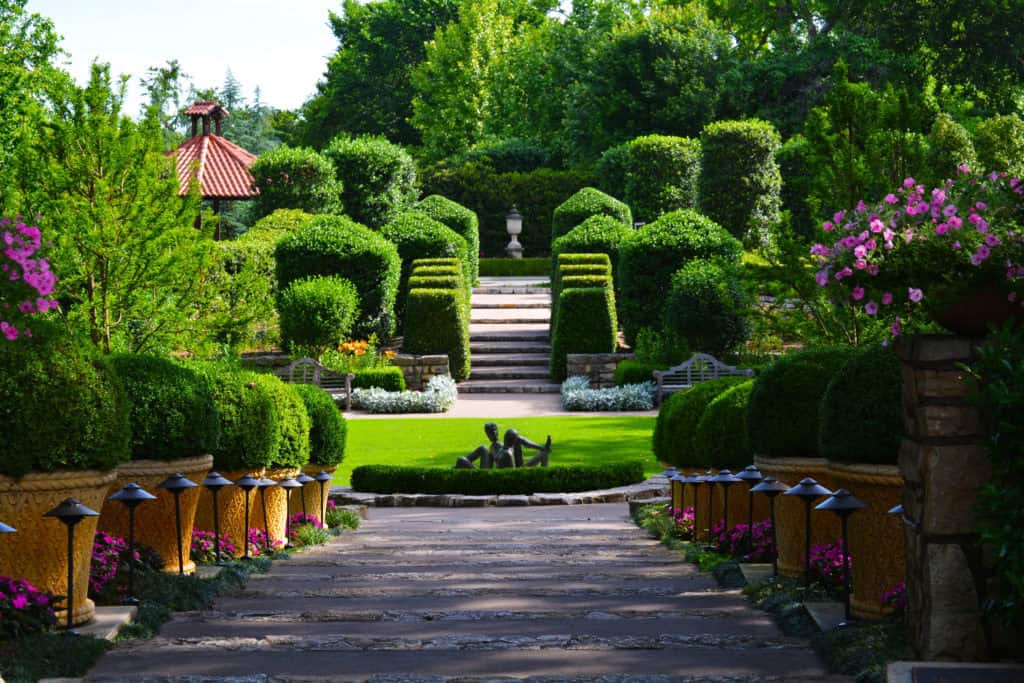
My favorite story on the whole property belongs to A Woman’s Garden. It is the only public garden in the United States conceived by women, funded by the efforts of women, and dedicated to the spirit of women.
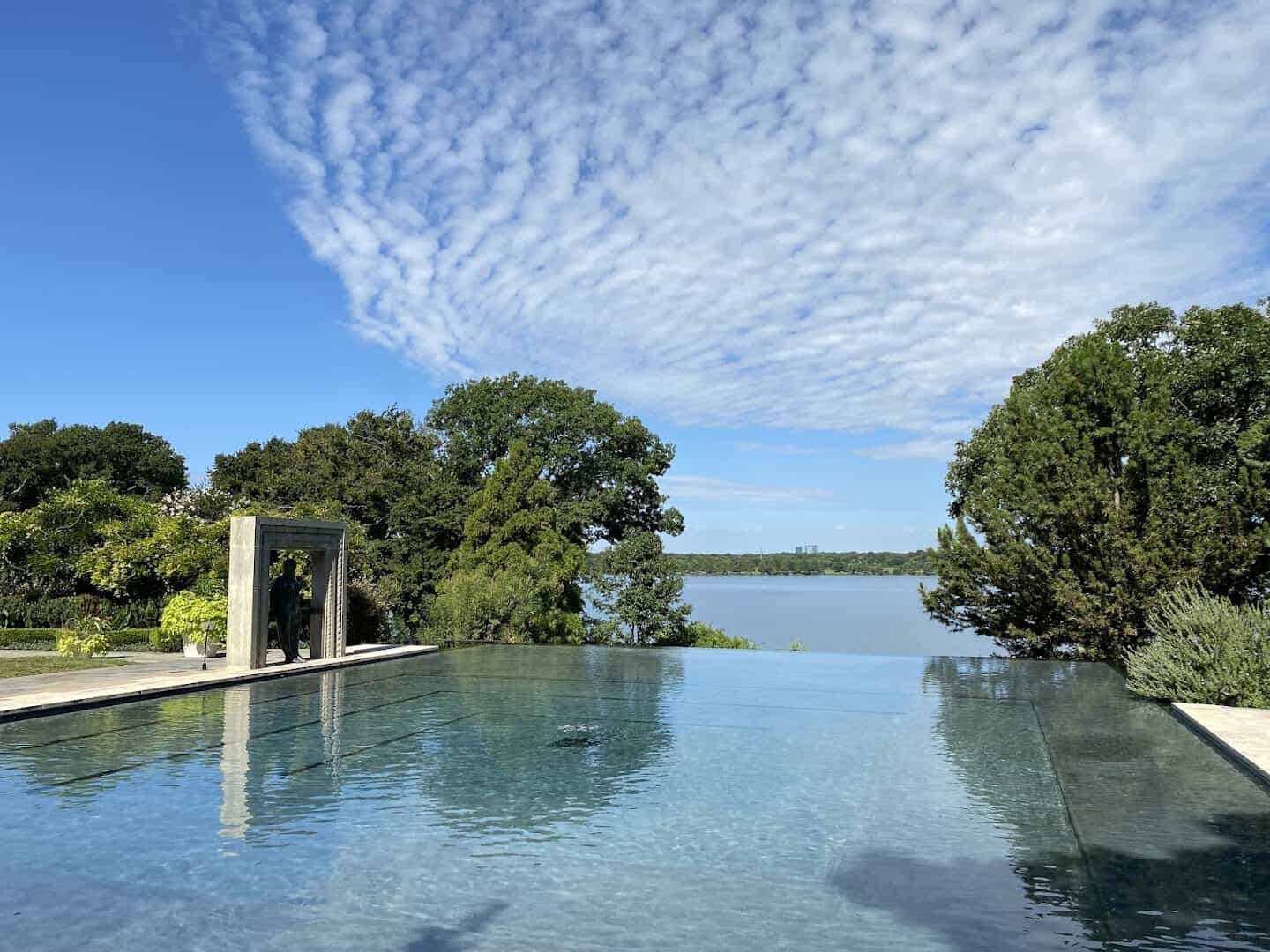
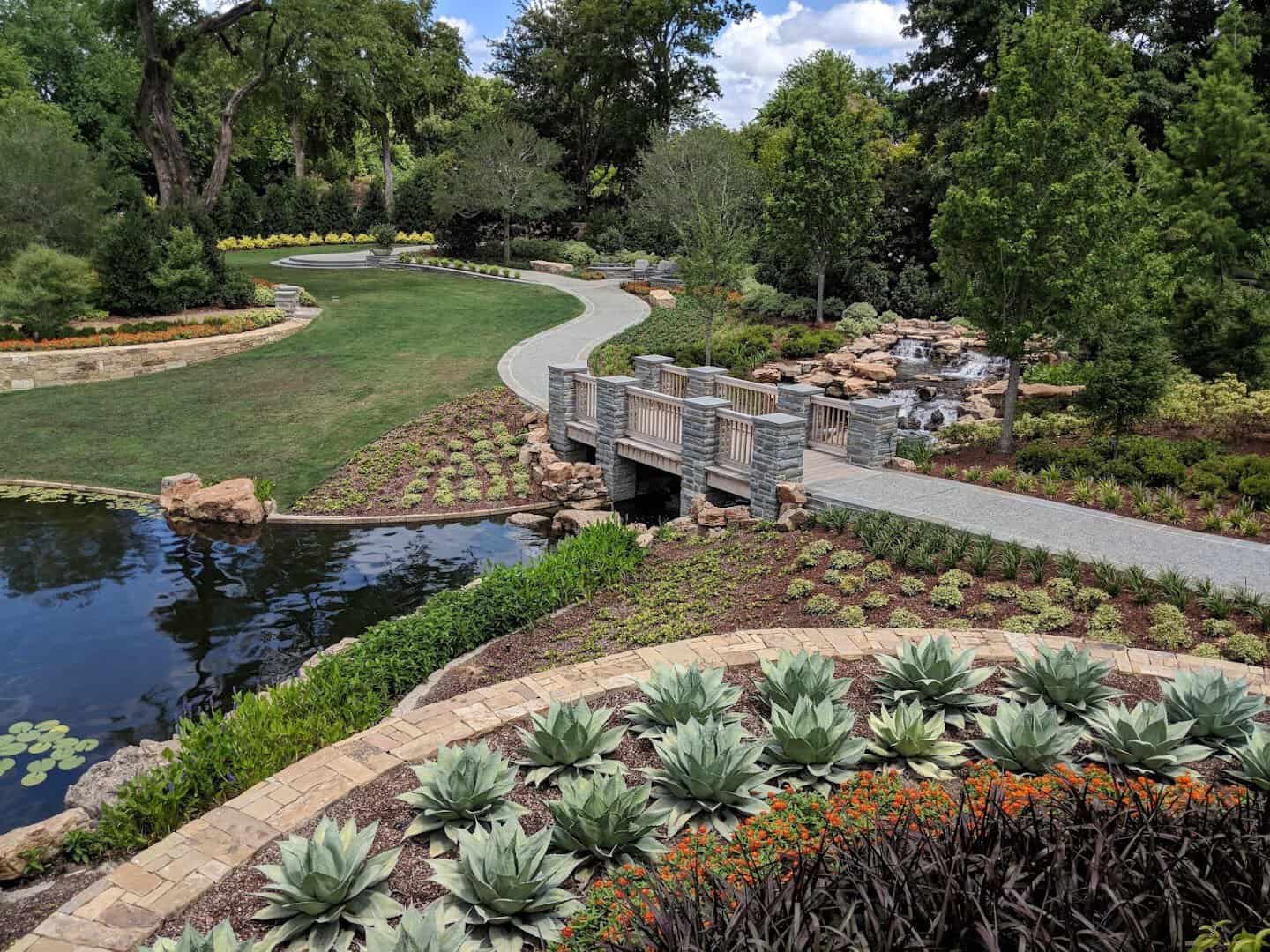
It opened in 1997 and climbs the hillside in terraced walkways toward an infinity pool that seems to pour straight into White Rock Lake. Stand at the top and the water, the stone, and the sky all line up into one clean, serene view.
It is easily one of the most photographed spots on the grounds, a favorite for weddings, and once you see it you understand why. There is a stillness up there that the rest of the busy garden never quite touches.
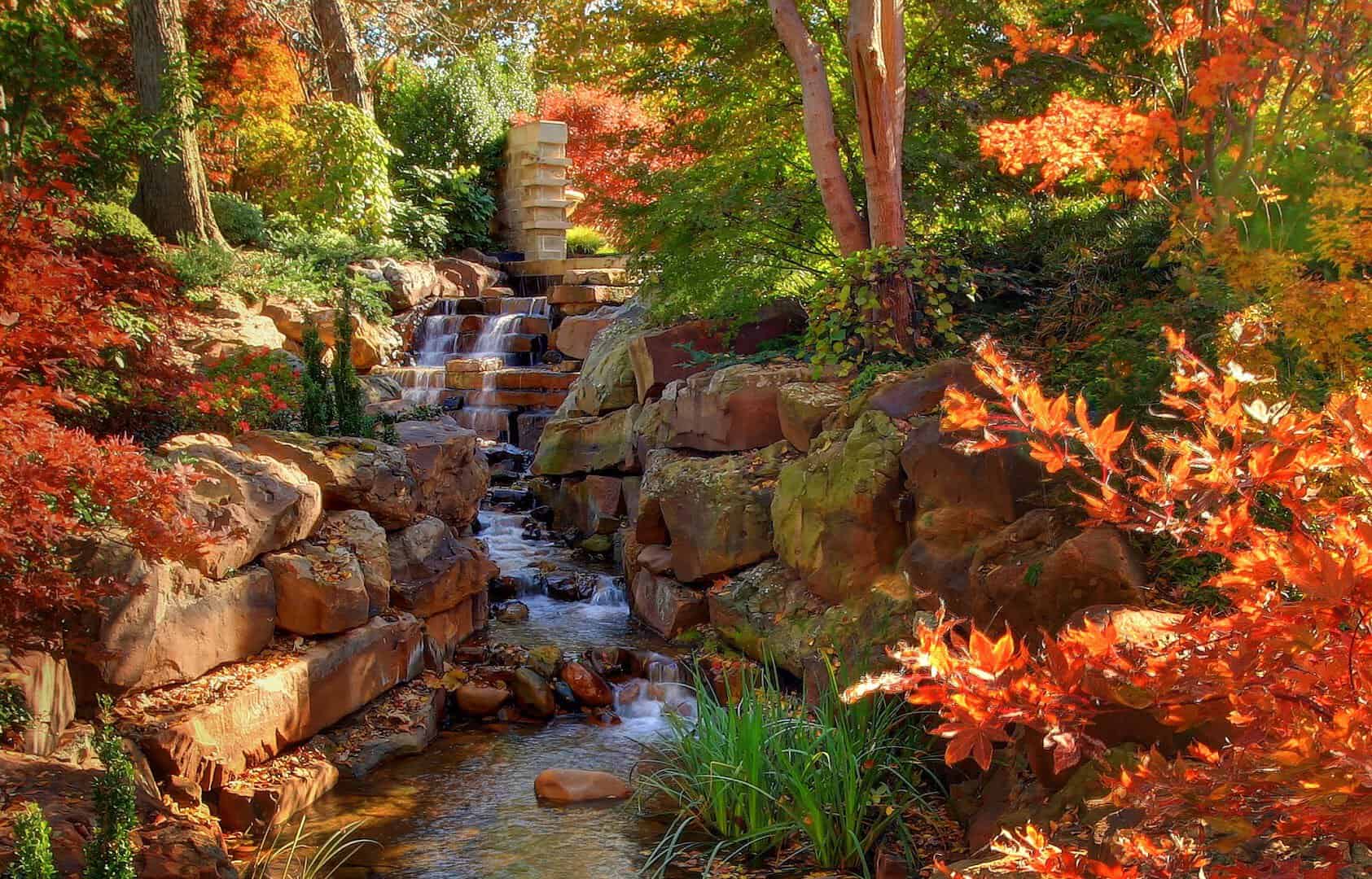
Then there is the Nancy Rutchik Red Maple Rill, two acres threaded by a stream and shaded by more than 80 varieties of Japanese maple. In autumn it turns molten, all reds and burnt oranges reflected in the moving water.
Nearby, the Lay Family Garden hides a grotto waterfall and a koi pond beneath a trellis. It is the closest thing to a secret hideaway the arboretum has, tucked and shaded and cool even when the Texas sun is blazing overhead.
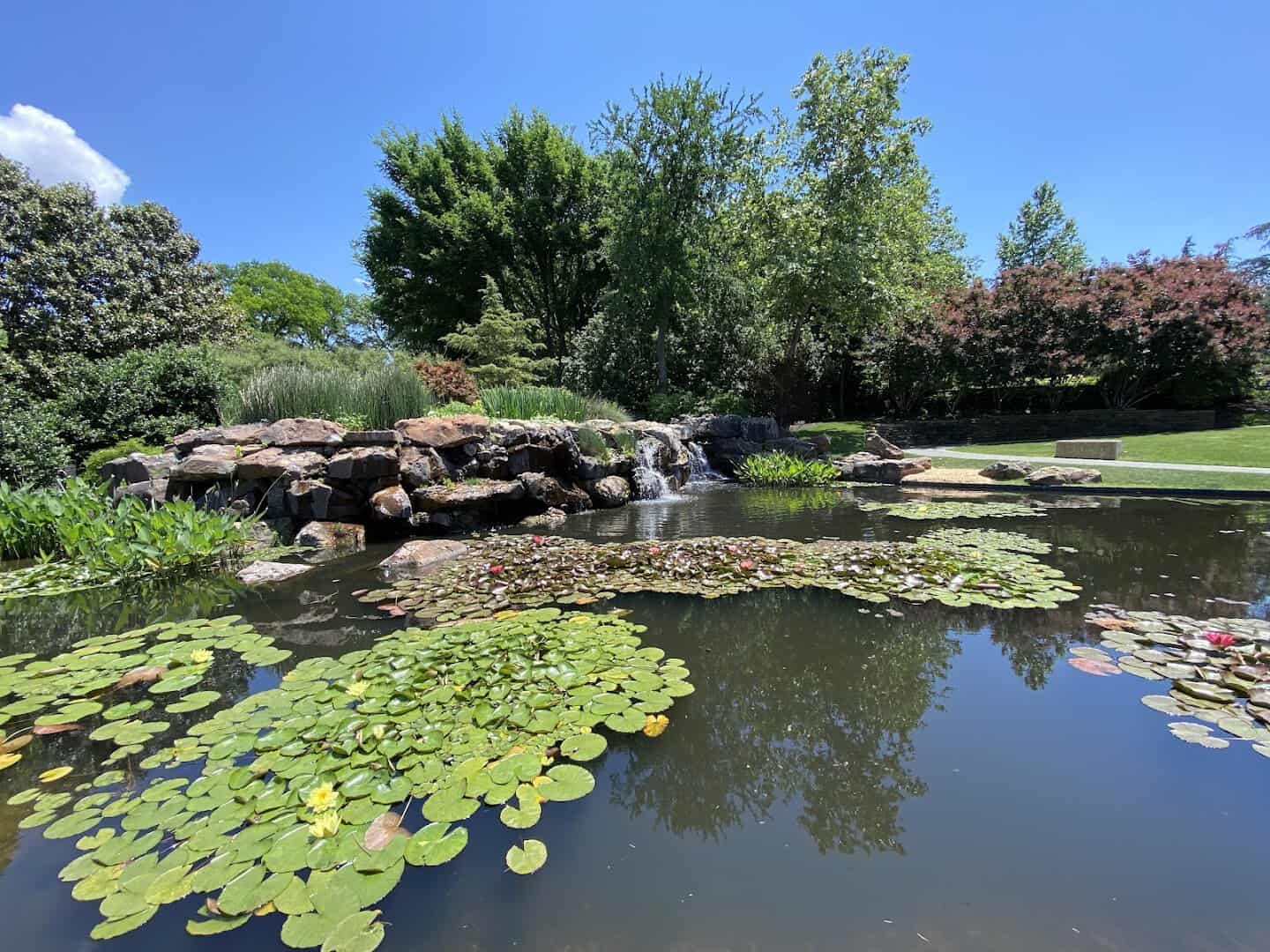
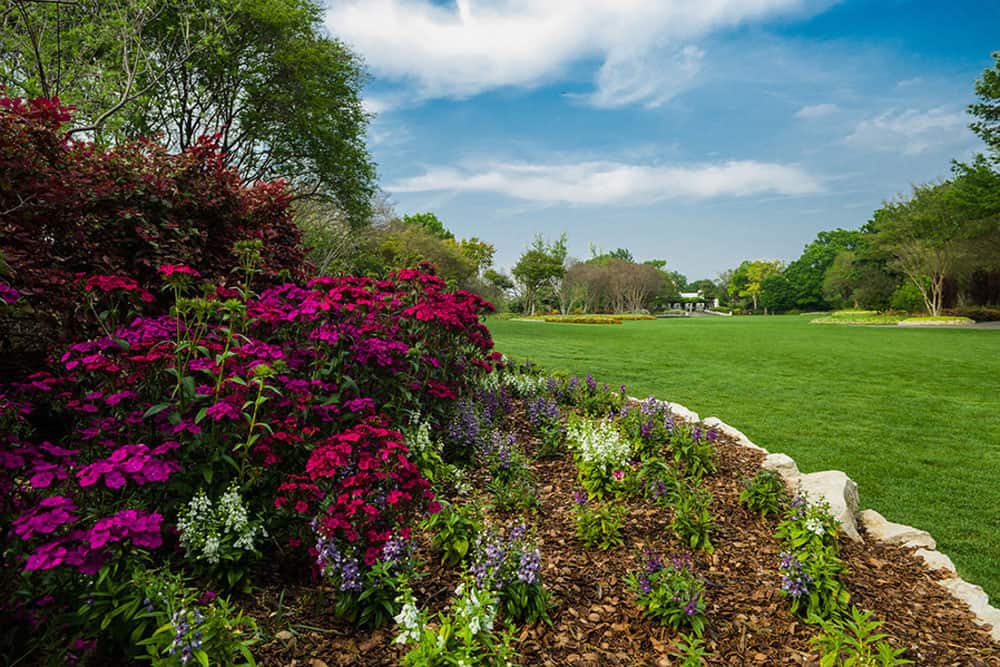
The Margaret Elizabeth Jonsson Color Garden is the show-off of the family. It runs six and a half acres of sweeping seasonal beds, designed by landscape architect Naud Burnett II, and it gets replanted again and again so the color never really stops.
Wander far enough and you will pass the Rose Garden, the Camellia Garden, and the Paseo de Flores, the flower-lined central spine that ties the whole property together. You could visit a dozen times and still turn a corner onto something you missed.
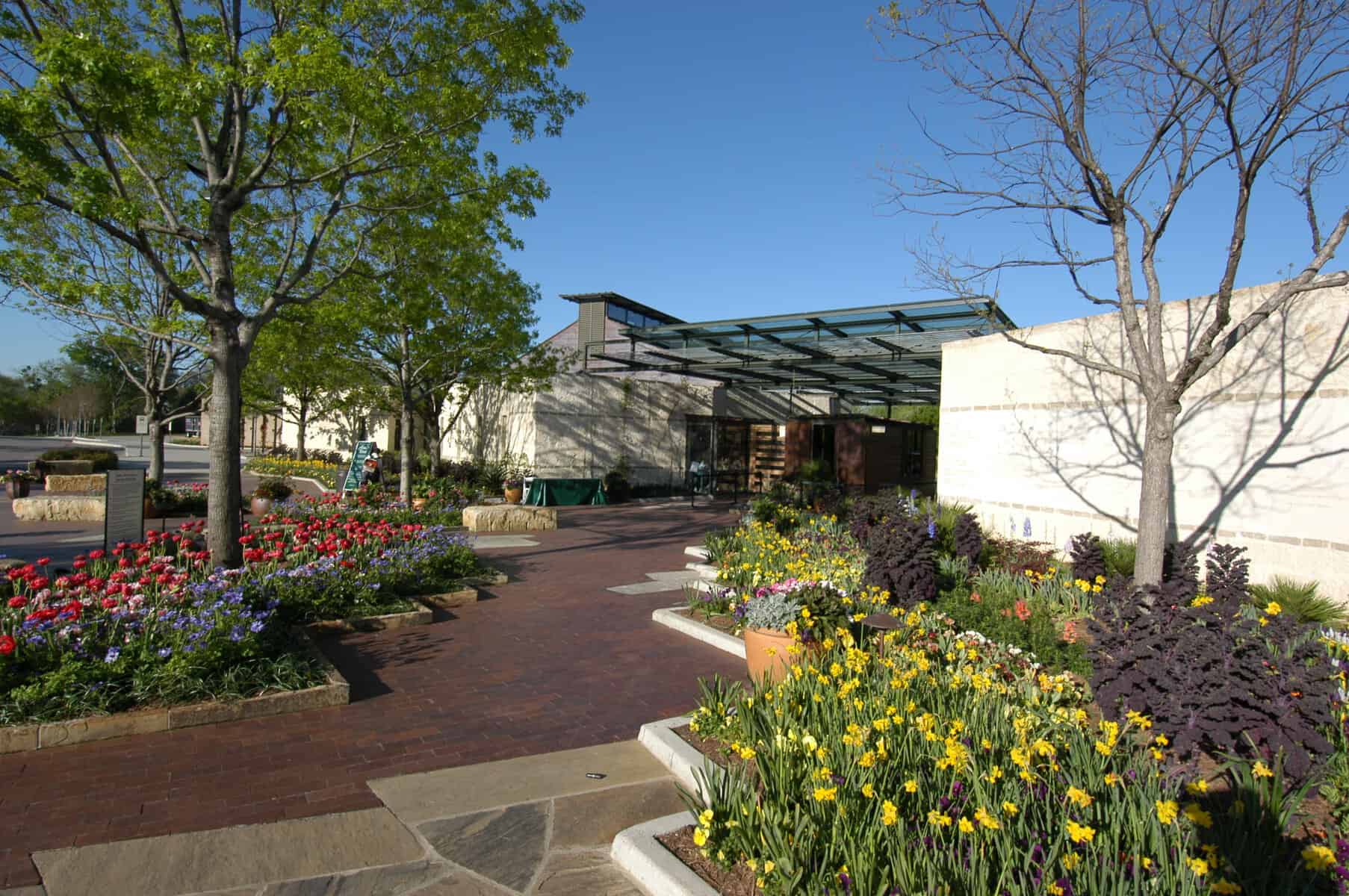
That range is the quiet magic of the place. A rose bed in one direction, Japanese maples in another, a hillside of tulips a short walk beyond that, and a skyline view waiting wherever the path bends back toward the lake.
Half a Million Reasons to Come in Spring
If you only get one visit, make it spring, and time it for Dallas Blooms.
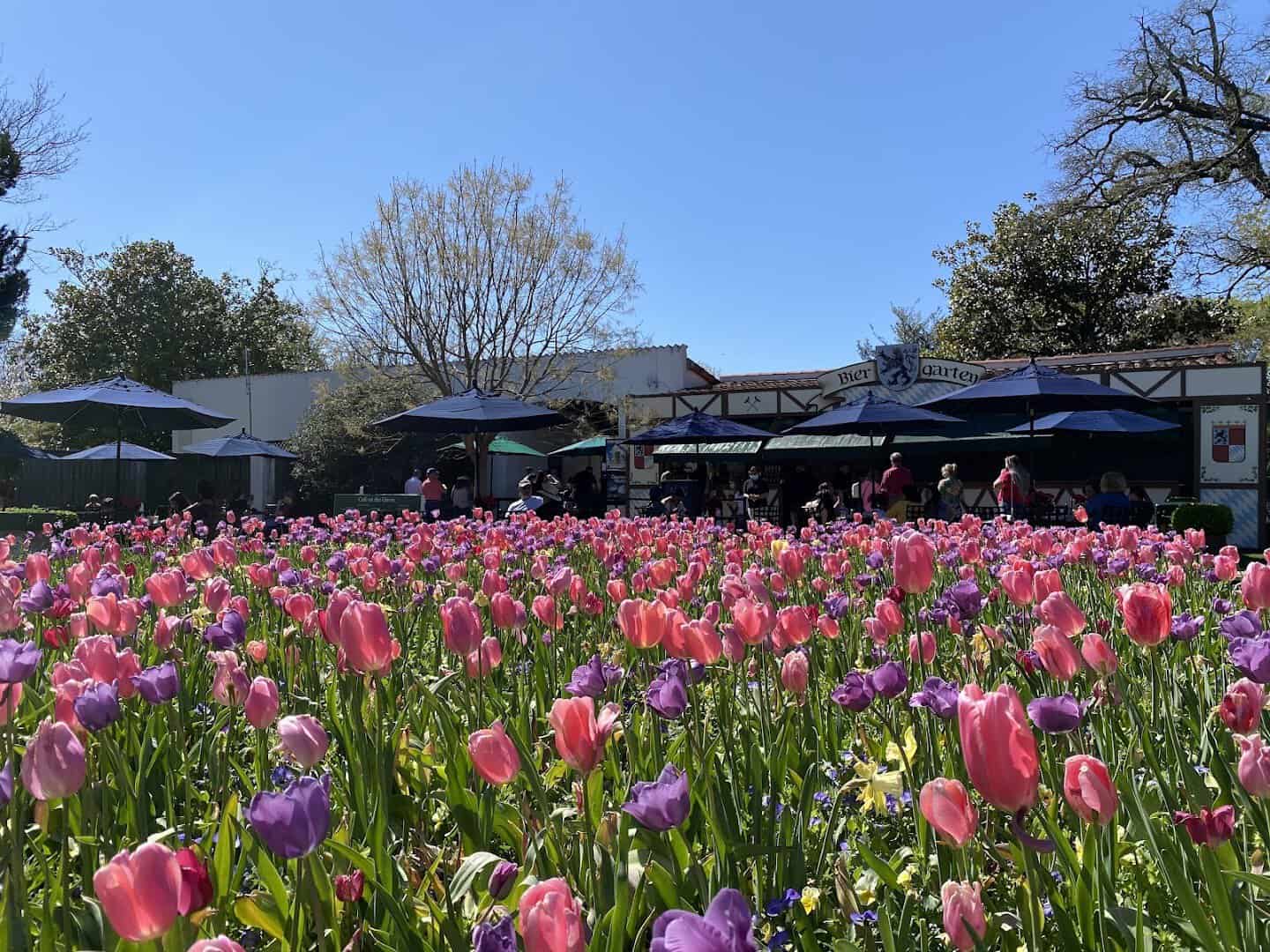
This is the largest floral festival in the Southwest, and the numbers are almost hard to believe. Roughly 500,000 spring-blooming bulbs go into the ground for it, including some 350,000 tulips, across more than 120 varieties.
For about eight weeks, from mid-February into April, the whole place detonates in color. Ribbons of red, yellow, and pink run down the slopes toward the lake, and the DeGolyer grounds turn into a painting you can walk through.
Come early on a weekday if you possibly can. The light is soft, the crowds are thin, and the tulips have not yet had a full afternoon of Texas sun beating down on them. That first hour after opening is the good stuff.
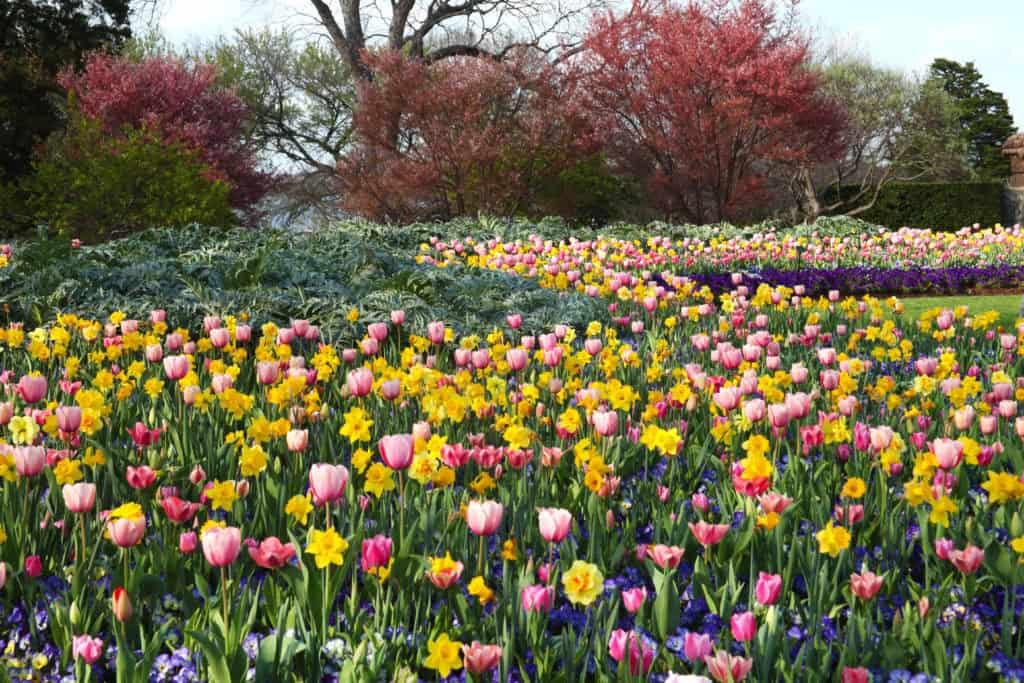
Bring a real camera, or at least clear off your phone first. You will not stop taking pictures, and there is nothing sadder than a “storage full” warning in front of 350,000 tulips.
Pro tip: the tulips peak for a shorter window than people expect, usually around mid-March. A warm February can pull the whole show forward, so check the arboretum’s bloom updates before you lock in a date and drive across the state.
A Fall Festival Built From a Hundred Thousand Pumpkins
Spring gets the glory, but autumn might be the arboretum’s most beloved trick.
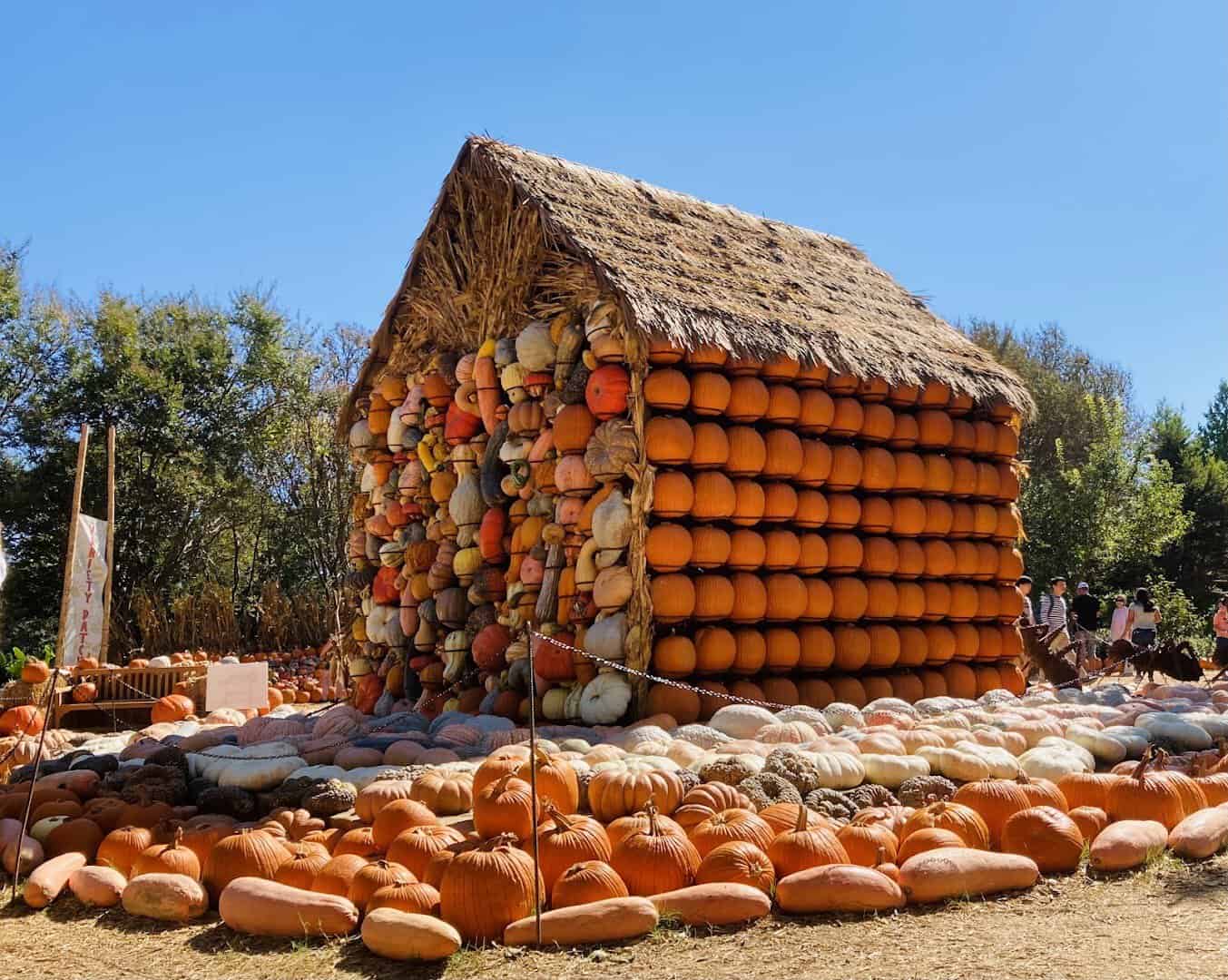
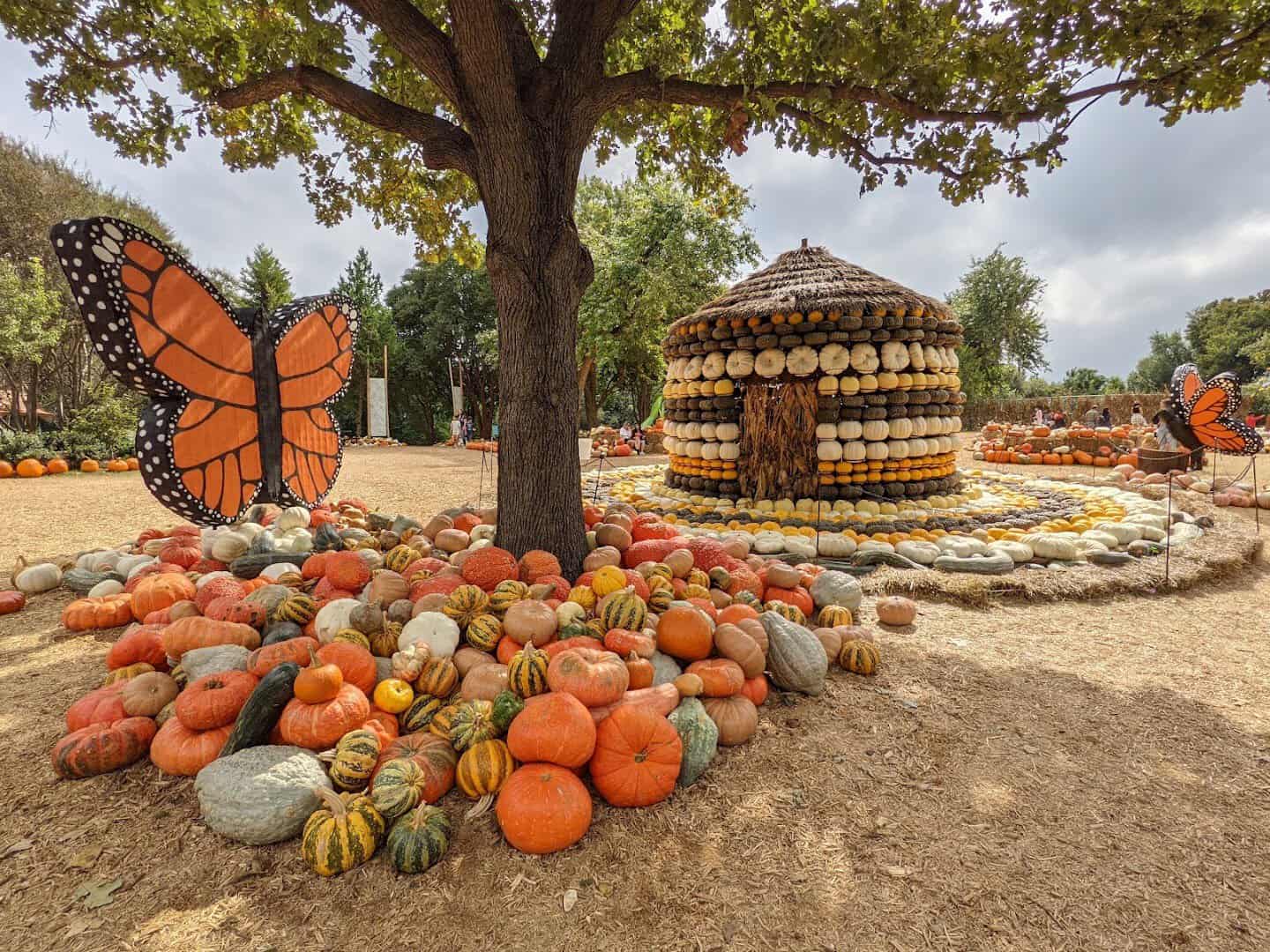
Every fall the grounds host Autumn at the Arboretum, anchored by the nationally famous Pumpkin Village. We are talking displays built from more than 100,000 pumpkins, gourds, and squash, stacked into houses, arches, and whole scenes you can actually walk into.
This is not a small event wearing a big name. Fodor’s Travel has called it one of America’s best pumpkin festivals, and U.S. News and World Report has ranked it among the best fall festivals in the country.
The crowds back that up. More than a million people pass through the arboretum’s gates in a typical year, and a healthy share of them come specifically to wander that mountain of orange in October.
Did you know the Pumpkin Village gets a brand new theme every single year? Families come back annually just to see what the designers dreamed up this time, which is exactly the sort of thing that turns a garden visit into a standing tradition.
Where the Kids Actually Want to Be
Plenty of gardens tell children to look but not touch. This one does the opposite, and thank goodness for that.
The Rory Meyers Children’s Adventure Garden sprawls across eight acres of hands-on science, all of it perched above White Rock Lake. Kids scramble through interactive exhibits, splash at water features, and learn how a plant actually works without ever noticing a lesson is happening.
When appetites strike, A Tasteful Place answers. It is a year-round edible garden and food destination where the rows of vegetables and herbs are as pretty as any flowerbed of tulips.
Cooking demonstrations there turn the harvest into an actual lunch, and the whole thing gives the arboretum something a lot of gardens quietly lack: a real reason to stay put through the middle of the day instead of fading by noon.
The Oilman’s Estate That Started It All
None of this existed as a public garden until fairly recently, and the whole story runs through one remarkable Dallas couple.
The land was once Rancho Encinal, the estate of Everette Lee DeGolyer and his wife Nell. Everette was a pioneering petroleum geologist, one of the most respected figures in the American oil business of his day.
In 1940 the couple built a sprawling Spanish Colonial Revival home on the shore of White Rock Lake. That 21,000-square-foot house still stands at the heart of the DeGolyer Gardens today, and you can tour it on select days to see how the family lived.
The public chapter began in 1974, when the Dallas Arboretum and Botanical Society incorporated as a nonprofit with a big idea and not much land yet.
By 1980 the group had raised more than a million dollars and picked up the neighboring 22-acre Alex Camp estate, joining it to the 44-acre DeGolyer property to form one continuous stretch of lakefront.
In 1982, the City of Dallas and the society signed a contract to build an arboretum and botanical garden across the combined 66 acres. The gates opened to the public in 1984. Two private estates had quietly become a garden the whole world would eventually notice.
What to Know Before You Go
The arboretum is open daily, generally from 9 a.m. to 5 p.m., so you have the whole day to wander at your own pace rather than racing a closing bell.
Admission runs about $21.95 for adults on weekdays and $25.95 on weekends. Children ages 3 to 12 pay less, and little ones under 3 get in free. Parking is a flat rate of roughly $15 per vehicle.
Wear comfortable shoes, because 66 acres adds up faster than you think, and carry water in the warmer months. If walking the full property sounds like a stretch, mobility scooters are available to rent on site.
Tip: prices tick up Friday through Sunday, so a weekday visit saves a few dollars and buys you a lot more elbow room around the best photo spots.
If Dallas is home, a membership gets you in free all year and pays for itself fast once you start chasing the seasons from tulips to pumpkins.
How to Get There
Where: Dallas Arboretum and Botanical Garden, 8525 Garland Road, Dallas, TX 75218
You will find it on the eastern shore of White Rock Lake in East Dallas, a short drive from downtown. The entrance sits right on Garland Road, and the moment you turn in, the city noise falls away almost completely.
Go See What the Magazines Keep Talking About
It is a rare thing when a place actually lives up to its headline. It is rarer still when it does it in all four seasons, spring through fall, year after year, without ever seeming to try too hard.
Whether you catch it under half a million tulips, inside a village of pumpkins, or on an ordinary afternoon with the skyline shimmering across the water, the Dallas Arboretum earns every kind word it collects.
So pick your season, pack a little patience for those short-lived tulips, and go stand in a Texas garden that a magazine set beside Versailles. Just try not to fill your entire camera roll before you reach the second garden.
Featured image: Happy via Dallas Arboretum and Botanical Garden

Stella Raines
Editor-in-Chief
Stella brings over a decade of storytelling experience to TX Headlines. With roots in West Texas and a love for road trips, she leads the editorial team with an eye for the hidden stories that make Texas unforgettable.
More Stories

This Picturesque Texas Train Ride Steams Through the Piney Woods for a Relaxing Spring Day Trip

This Overlooked Texas Aviation Museum Is Home to a Real Spacecraft and the World’s Only Flying Pancake
This Giant Texas Flea Market Has 490 Booths You’ll Want to Wander Again and Again
This Underground Texas River Cavern Was Once a Secret Speakeasy and an Outlaw’s Hideout
Tags