This Tiny Texas Town Is Home to One of the Most Beautiful Painted Churches in America
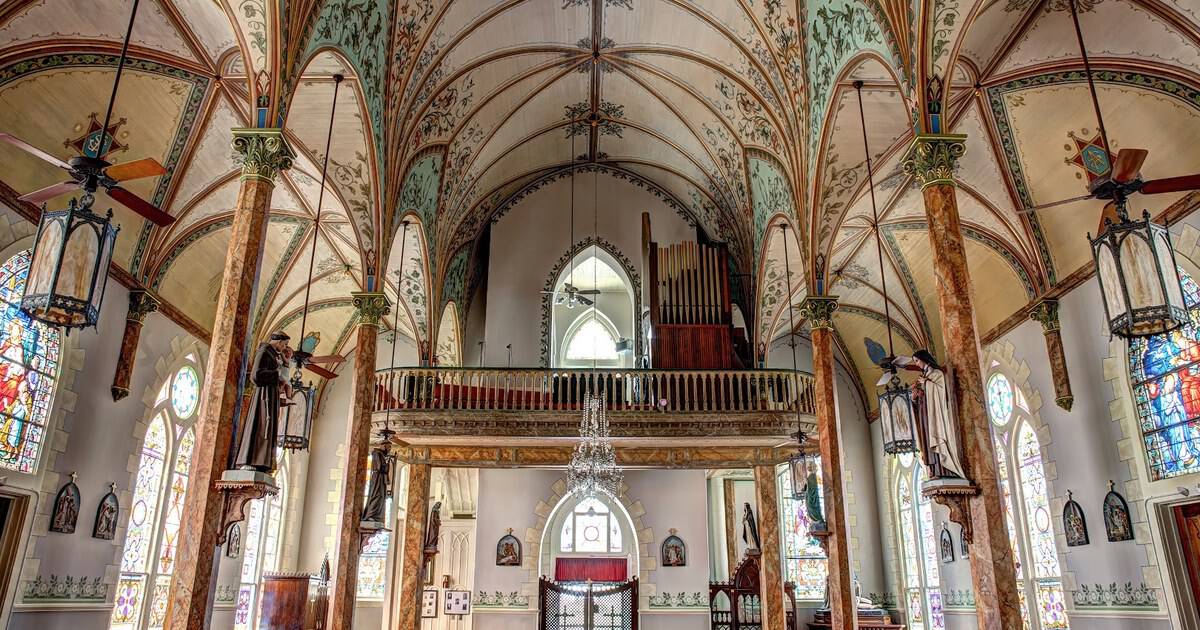
Nobody warns you that one of the prettiest rooms in Texas is hiding behind the plain brick walls of a country church. I love that. Give me a jaw-dropper in the middle of the farmland over a famous landmark with a two-hour line, any day of the week.
That surprise has a name. The Nativity of the Blessed Virgin Mary Catholic Church sits in the tiny Fayette County community of High Hill, a short hop north of Schulenburg. It is all painted grandeur inside, and the faithful have long crowned it the Queen of the Painted Churches.
Below, I will show you what makes this little country church worth a special detour, who painted it, how it came to be, and exactly how to plan your own visit.
A Country Church That Thinks It’s a Cathedral
From the road, High Hill’s church looks like a handsome red-brick building and not much more. Gothic windows, a tall steeple, a quiet churchyard. You could be forgiven for driving past.
Then you walk through the doors, and the whole thing changes.
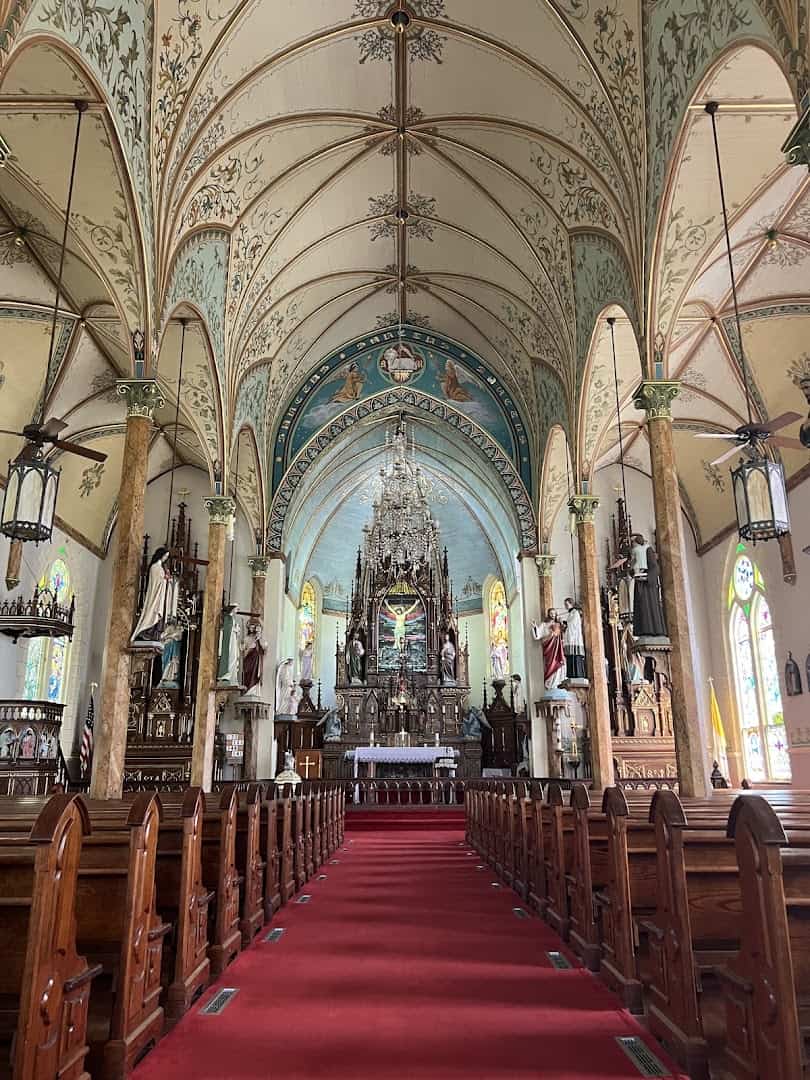
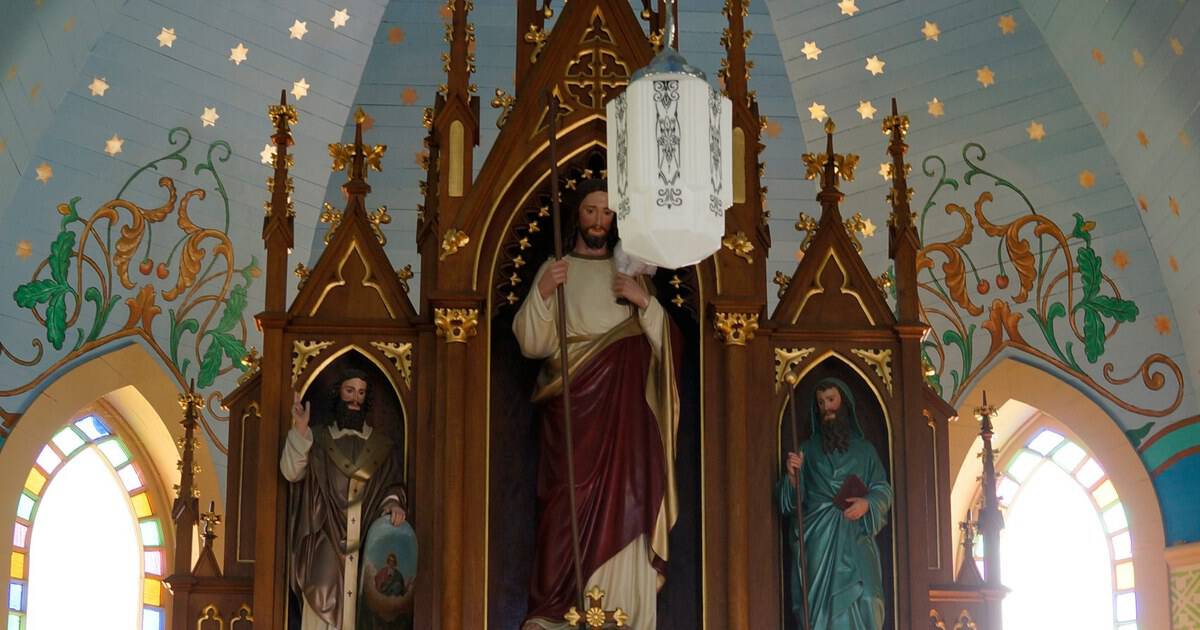
The ceiling arches overhead in soft blues and golds, laced with stars, vines, and angels. Slender columns march down the nave, each one glowing like polished marble. Ribbed vaults curve above you the way they do in a European cathedral, drawing your eye up and forward toward the altar.
Here is the trick, and it is a good one. Almost none of it is what it appears to be. The marble columns are wood. The stone vaults are flat boards.
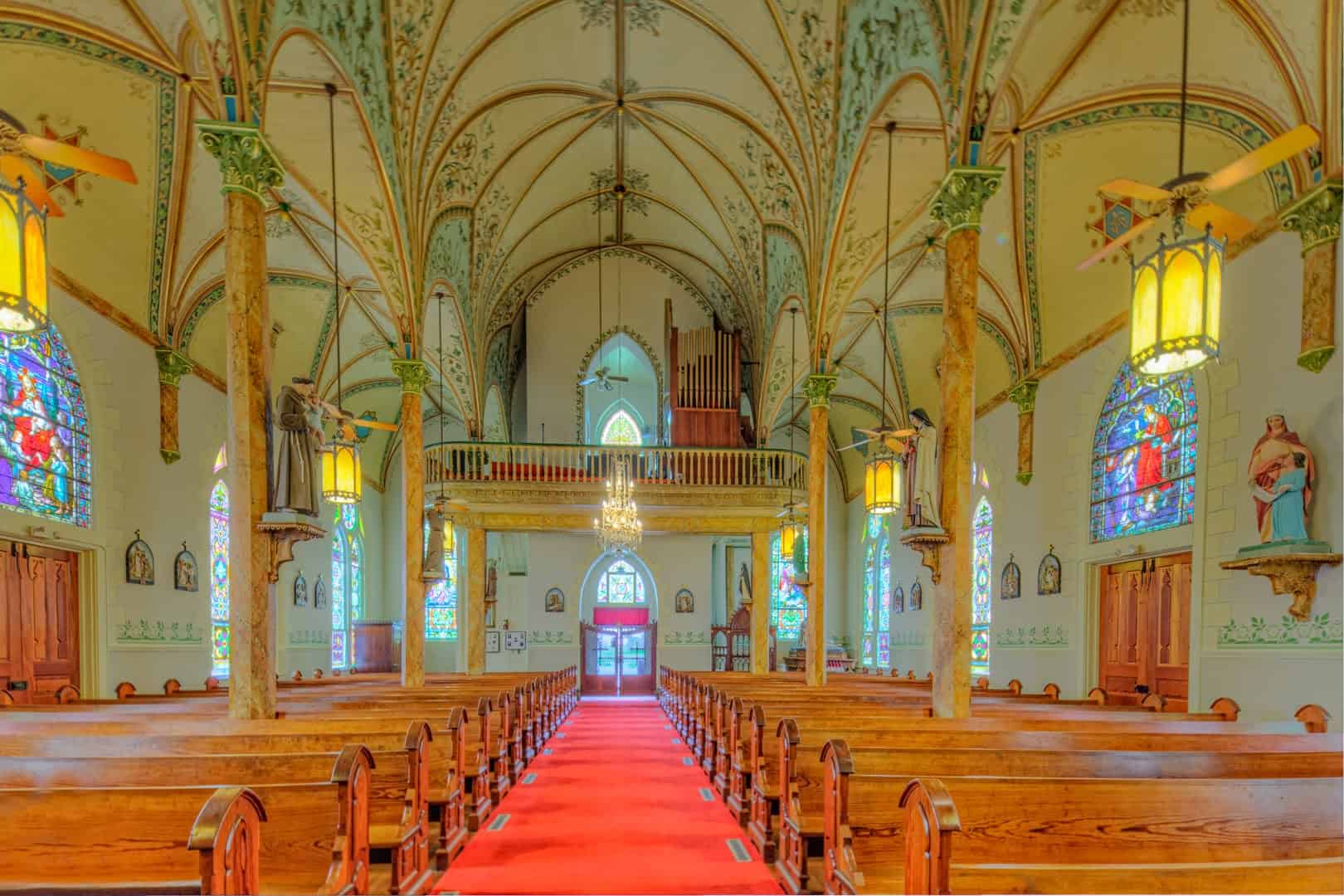
The soaring architecture that makes the room feel three times its size was painted on, brushstroke by brushstroke, by two artists who knew exactly what they were doing.
Architect Leo M.J. Dielmann designed the building in 1906 with this illusion in mind. A small German farming settlement could not pay for real carved stone, so Dielmann leaned on paint to conjure the grandeur that stone would have bought. It worked so well that people still gasp today.
Your eye lands, in the end, on the altar. Three carved and gilded altars stand at the front, the central one framing a tender Nativity scene, angels and saints keeping watch around it. Gold leaf catches the window light and throws it back at you.
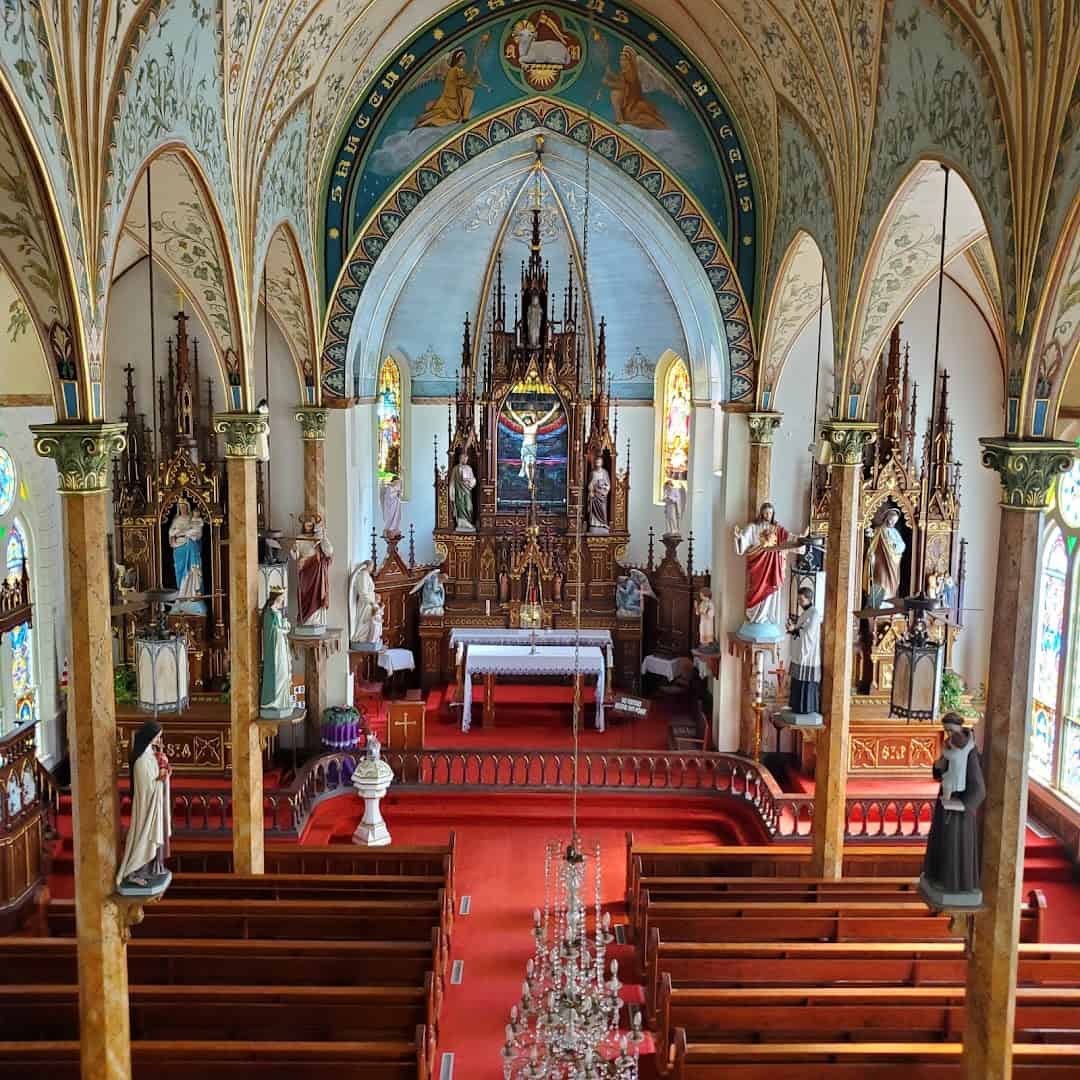
You do not need to be Catholic, or religious at all, to feel it. The room is simply one of the most beautiful interiors in the state, and it belongs to a town most Texans have never heard of.
Marble That’s Really Wood, Painted With Turkey Feathers
The magic here is the handiwork of two German-born artists from San Antonio, Ferdinand Stockert and Hermann Kern. In the summer of 1912, they set to work on the bare wooden interior and turned it into the showpiece it is today.
Their method was clever. Much of the decoration was painted on canvas first, then carefully affixed to the wood walls and ceiling, so the finished surfaces read almost like elegant wallpaper. Freehand flourishes and stenciled patterns fill every panel with angels, crowned crosses, six-pointed stars, and clusters of grapes.
My favorite detail is the columns. To fake the look of veined marble, the artists are said to have worked the wet paint with turkey feathers, dragging and dabbing until plain pine looked like stone quarried in Italy.
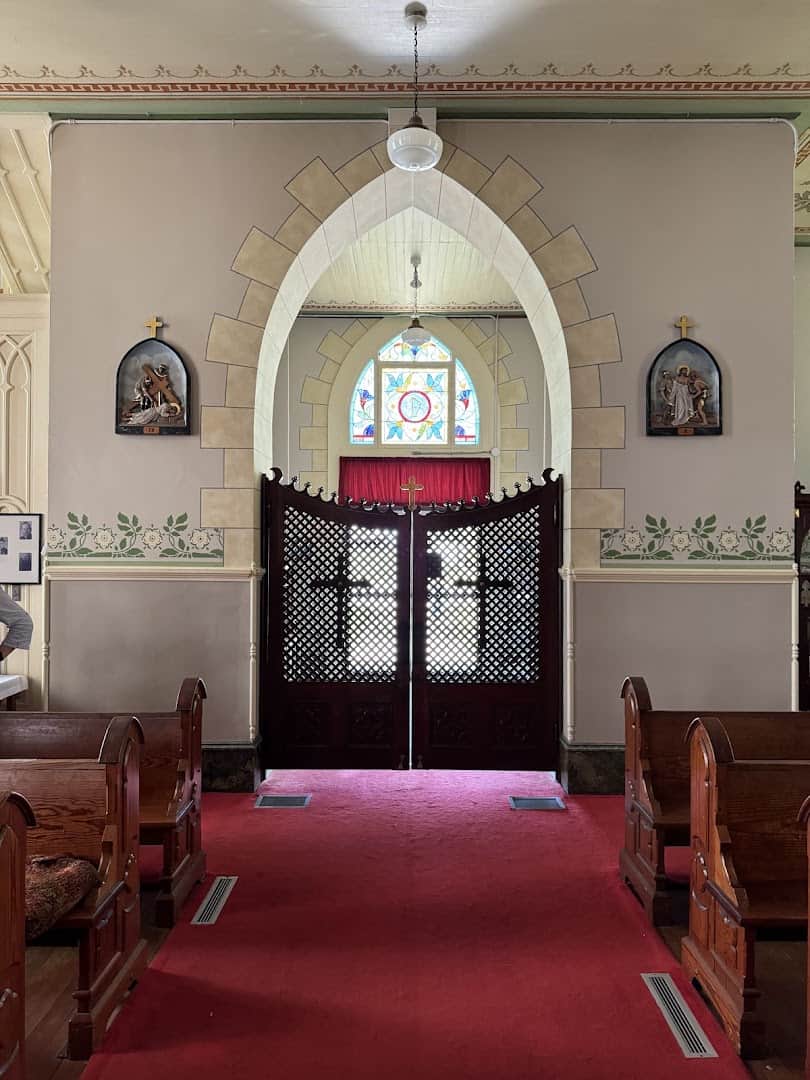
Stand close and the wood gives the game away. Step back and you would swear it was the real thing.
Did you know? That feather-worked marble effect, called faux bois and faux marble, was a prized craft in the old country. Immigrant artisans carried it across the ocean and set it loose on the little churches of Central Texas.
The result is why art lovers and photographers make the pilgrimage out here year after year. One visitor summed it up plainly, calling the windows, the glass, the columns, the altar, and the roof “just beautiful.” It is hard to argue.
Twenty-Five Windows, and Most Are Older Than the Building
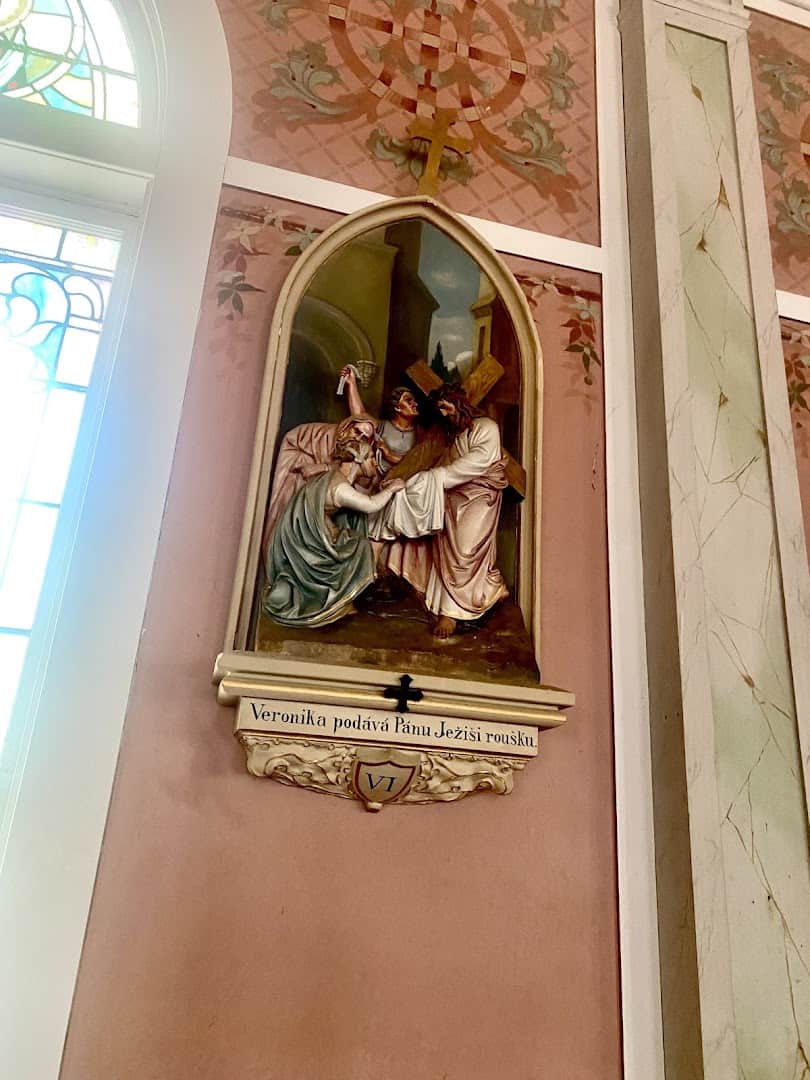
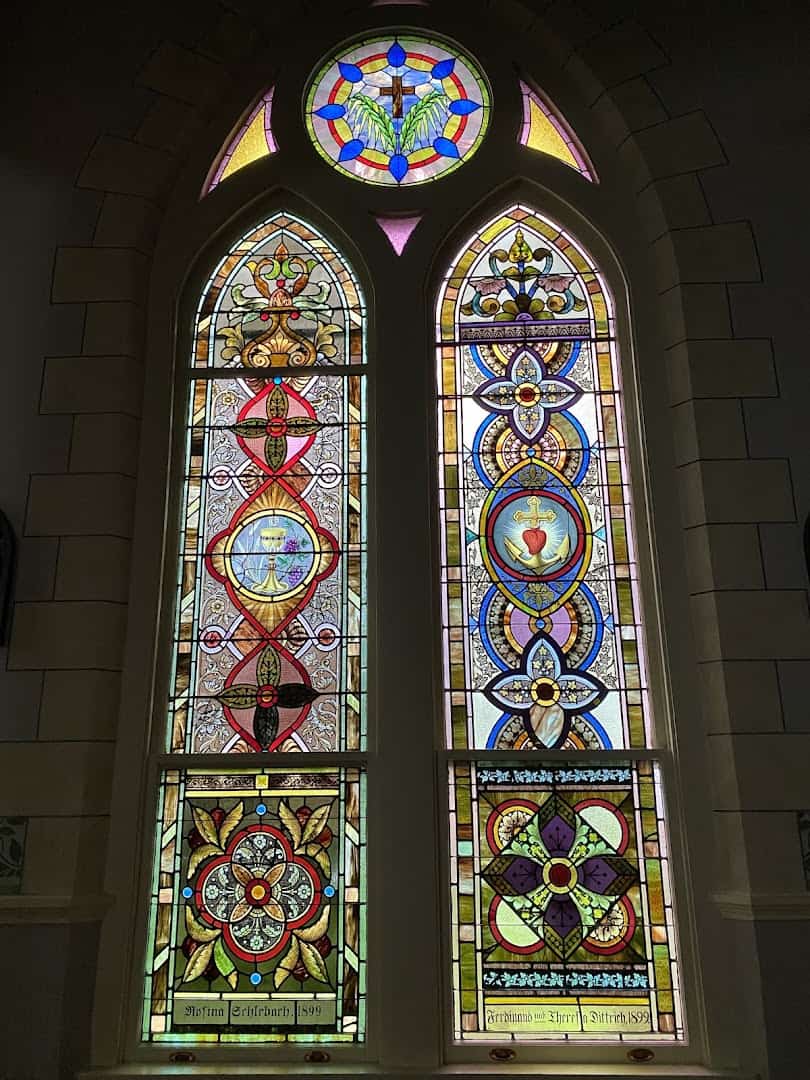
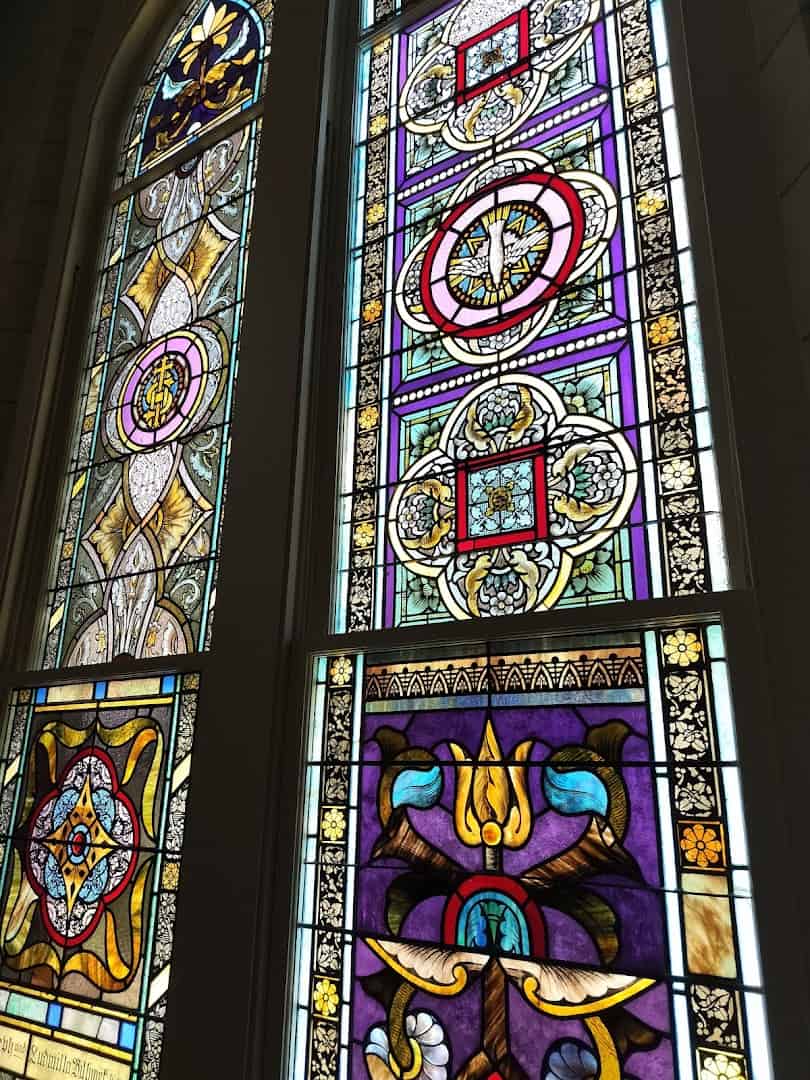
Look up from the columns and you meet the light. The church holds twenty-five stained-glass windows, and the story behind them is its own small wonder.
Eighteen of those windows are older than the church itself. They were saved from the earlier 1870s parish building and carried into the new one, so the colored glass that lights the nave today has been catching Fayette County sunshine for around a century and a half.
Five more windows were added in the sanctuary, and two flank the tower, tucked into lancet and rounded openings with stone sills. On a bright morning the whole room fills with jeweled color, red and blue and gold spilling across the painted arches.
Three altars anchor the front of the church, each one donated by parish families and installed in 1911. A carved communion rail and a baptismal enclosure went in the year before.
Up in the belfry, three bells from the old church still ring, older voices calling a newer building to prayer.
Pro tip: come mid-morning on a clear day and sit toward the back. That is when the eastern light works hardest through the old glass, and the painted ceiling seems to lift right off the boards.
How a Cornfield Got a Cathedral
High Hill was built by Czech and German Catholic immigrants who settled this stretch of Fayette County in the mid-1800s. They arrived with little money and a deep, portable faith, and building a beautiful church was one of the first things they did.
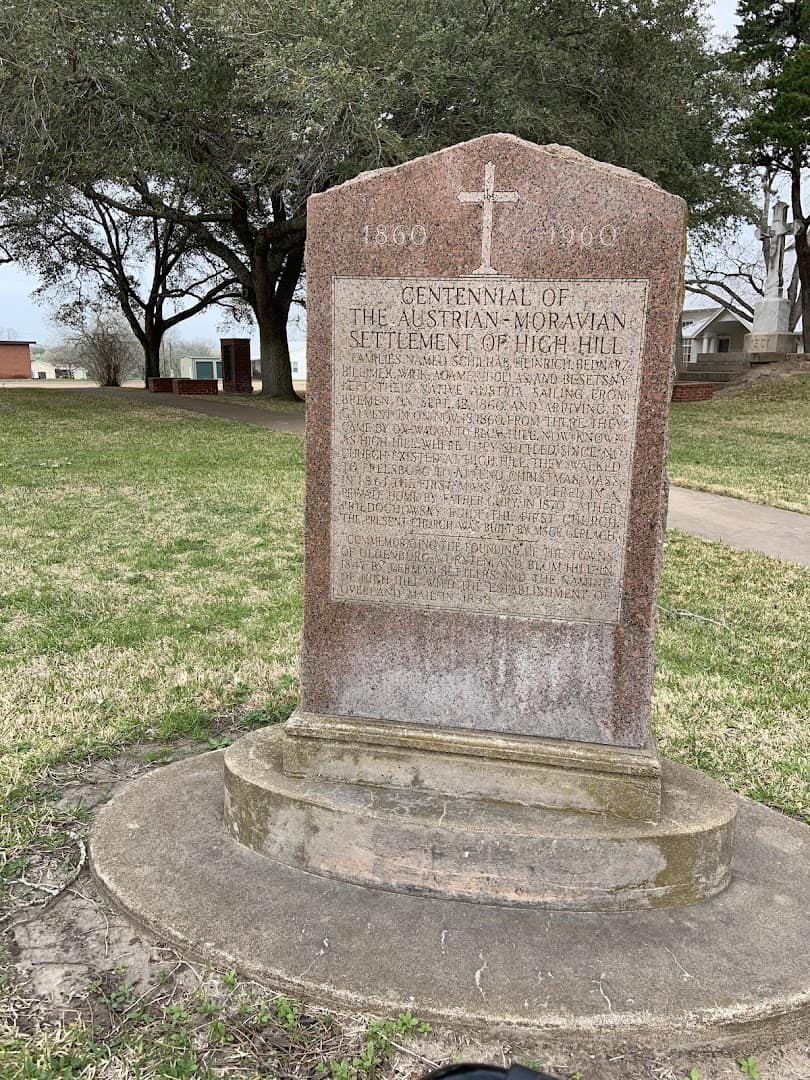
The first Catholic church here went up in 1869. The lumber was hauled by ox wagon from Columbus, sawn nearby, and set on a brick foundation, then blessed in the fall of 1870. A larger frame church replaced it in 1876 as the community grew.
By the turn of the century the parish wanted something grander still. In 1906, the young architect Leo M.J. Dielmann, fresh from his studies in Germany, drew up a Gothic Revival design in red brick.
The church was built by Frank Bohlmann of Schulenburg, who raised it on a concrete foundation scored to look like cut stone. The gothic vaults you see overhead were then painted rather than built, a clever stand-in for the carved masonry a richer parish would have ordered.
The altars followed in 1911, the painting in 1912, and the little settlement suddenly had a church that punched far above its weight. In 1983 the Nativity of the Blessed Virgin Mary was added to the National Register of Historic Places, its beauty officially on the books.
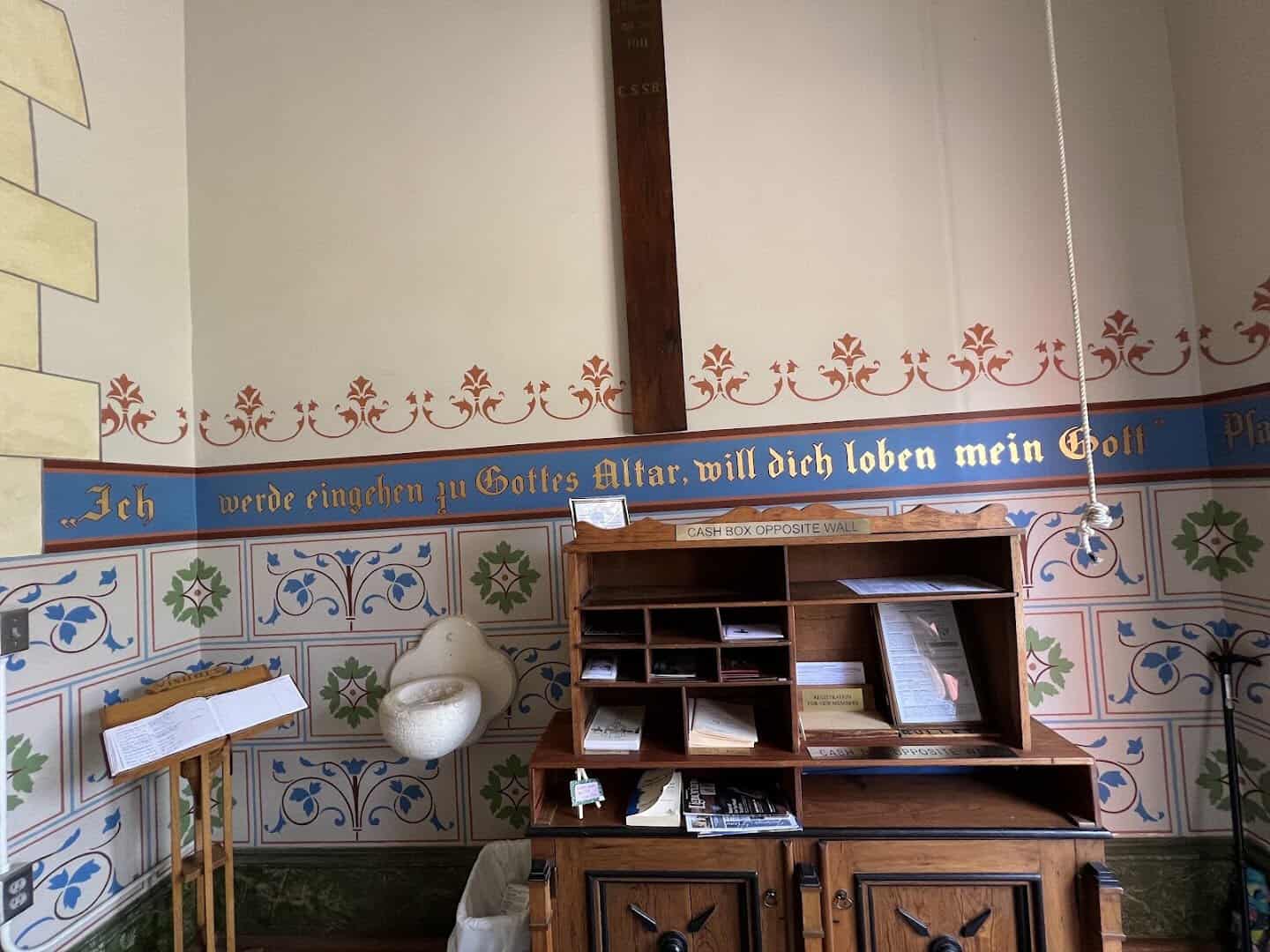
What gets me is the ambition of it. A handful of farming families in a place with more cattle than people decided their corner of Texas deserved a cathedral, and then they went and made one out of brick, wood, glass, and an awful lot of paint.
The Queen Doesn’t Reign Alone
High Hill wears the crown, but she has company. The rolling country around Schulenburg holds a whole cluster of painted churches, each built by the same wave of Czech and German settlers, each with its own personality.
In Praha, St. Mary’s Church of the Assumption spreads a green, garden-like ceiling overhead, painted in the same tradition. Its annual homecoming feast draws families back from across the state every August.
In Ammannsville, St. John the Baptist glows in warm pinks and reds, so cheerful that some call it the pink church. More of these little sanctuaries dot the back roads of Fayette and Lavaca counties, each with its own ceiling of stars, vines, and painted arches waiting to surprise you.
Together these little sanctuaries are what people mean when they talk about the Painted Churches of Texas. You can see High Hill on its own, but most people make a loop of several in a single, very rewarding day.
Booking a Painted Churches Tour
The easiest way in is a guided tour run through the Schulenburg Chamber of Commerce. A local guide meets you, unlocks the churches, and fills the drive between them with history you would never pull from a plaque.
Guided tours run year-round, Monday through Saturday, and usually start somewhere between 9:15 and 11:00 in the morning. They are not offered on Sundays, when the churches are busy being churches. Tours are available in Spanish, too.
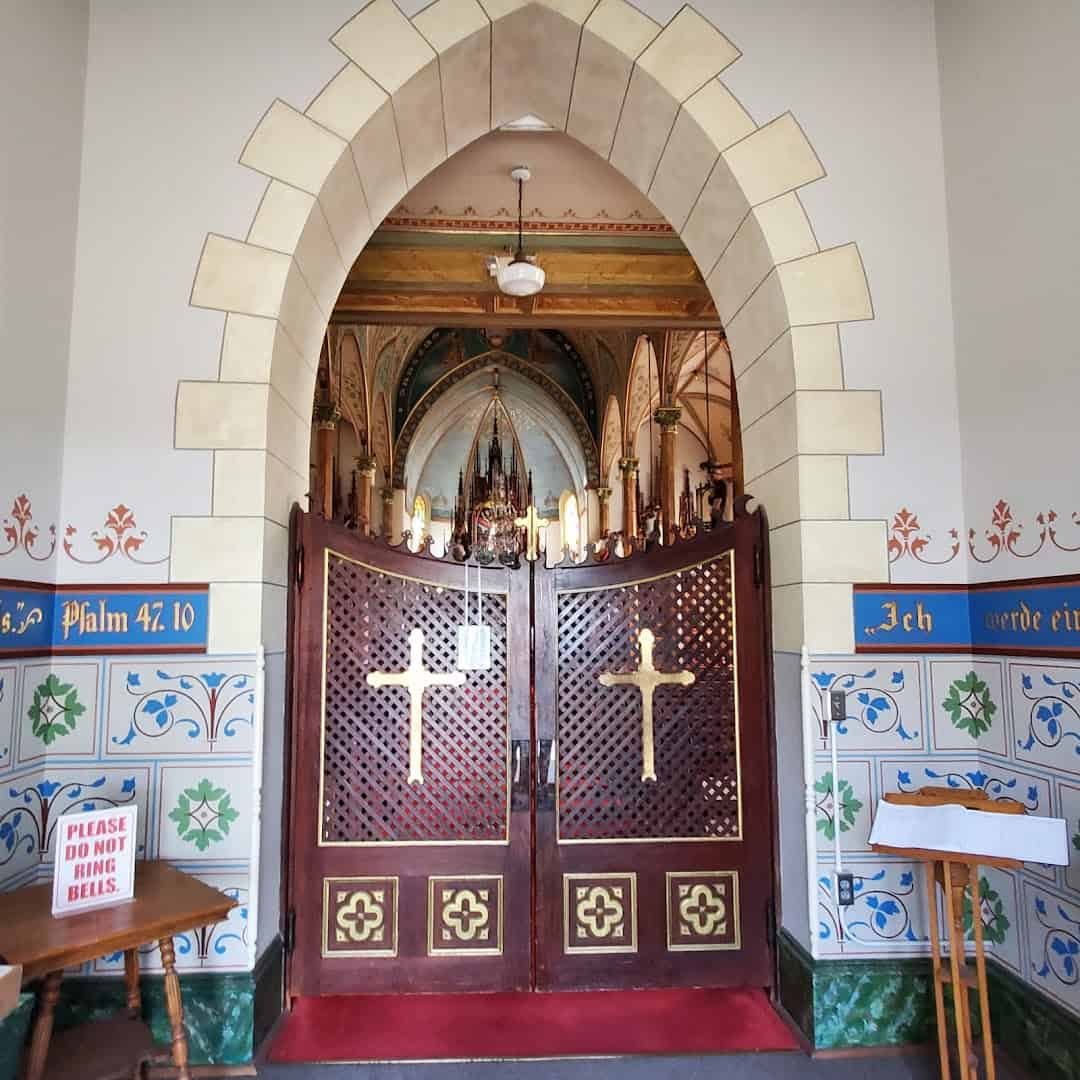
Pricing runs around $18 per person for a small group visiting a church or two, plus a guide fee and a refundable deposit. The full four-church loop costs a bit more.
Call the Chamber at (979) 743-4514 to book, and give them a little notice so a guide can be lined up for you.
Prefer to wander on your own? Several of the churches keep daytime hours, roughly 9:00 to 4:00 Monday through Saturday, for quiet self-guided visits.
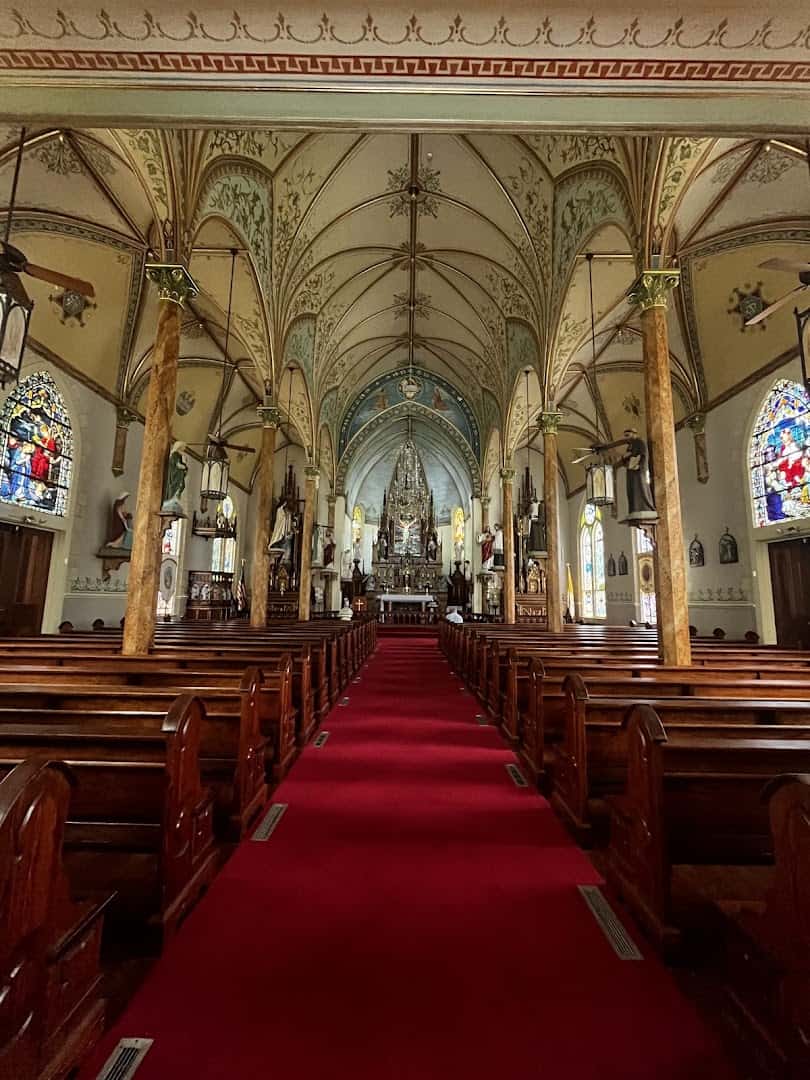
Whichever way you go, remember these are active parishes. Step softly, dress with a little respect, and drop something in the donation box that keeps the paint fresh.
Give yourself more than the churches, too. Schulenburg leans hard into its Czech and German roots, and the payoff for you is a town full of good eating.
The local bakeries turn out kolaches and klobasneks by the trayful, and a warm one in the car between churches is close to a requirement.
The little Schulenburg museum walks you through the area’s immigrant history, and the town keeps a soft spot for polka and painted-egg traditions that came over with those first families.
Antique shops and a couple of friendly cafes round out the square downtown. All told, it is an easy place to spend a slow half-day before or after your church loop.
How to Get There
High Hill sits in the gentle farmland just north of Schulenburg, which likes to bill itself as “Halfway to Everywhere.” It is an easy detour off Interstate 10, almost exactly between Houston and San Antonio, which makes it a perfect leg-stretch on a cross-Texas drive.
Where: Nativity of the Blessed Virgin Mary Catholic Church, 2833 FM 2672, High Hill (Schulenburg), TX 78956.
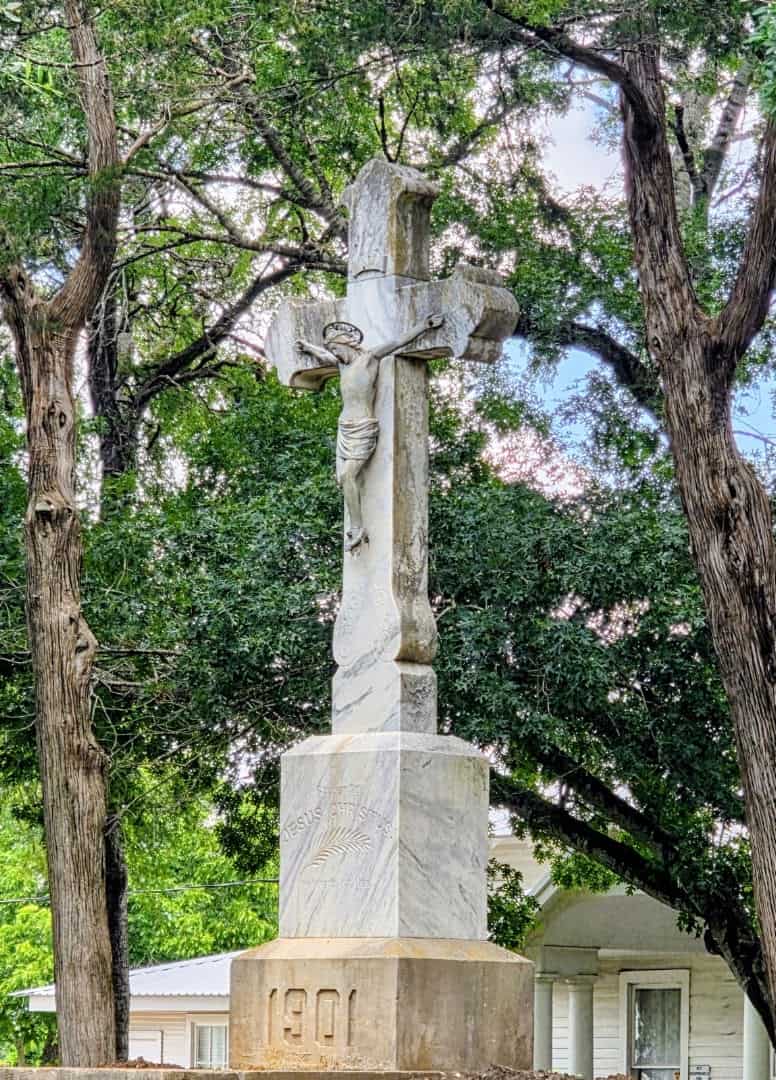
From I-10, take the Schulenburg exit and follow the farm roads a mile or two north. The steeple shows itself well before you arrive, rising over the fields the way it has for well over a century.
Start Planning Your Painted Churches Detour
Some of the best things in Texas are the ones hiding in plain sight, and this little church is near the top of that list. It costs you a short drive off the highway and rewards you with a room you will not stop talking about.
So the next time you are crossing the state between the big cities, carve out a morning for High Hill and its painted sisters. Book a tour, bring your camera, and let a tiny country church show you what a few determined families can build.
You will be planning your next visit before you even reach the car.
Featured image: James Oliver via Nativity of the Blessed Virgin Mary Catholic Church

Stella Raines
Editor-in-Chief
Stella brings over a decade of storytelling experience to TX Headlines. With roots in West Texas and a love for road trips, she leads the editorial team with an eye for the hidden stories that make Texas unforgettable.
More Stories
This Glowing Texas Museum Lets You Wander Through Hundreds of Antique Stained-Glass Windows
This Under-the-Radar Texas Craft Store Is Where Artists Hunt Down Supplies for Next to Nothing
This Depression-Era Texas Bridge Is the State’s Longest Stone Arch, Its 18 Limestone Spans Crossing the Brazos
This Tiny Texas Church Is Covered Inside With Thousands of Hand-Painted Frescoes
Tags