The 10 Most Iconic Texas Landmarks Every Local Should Visit
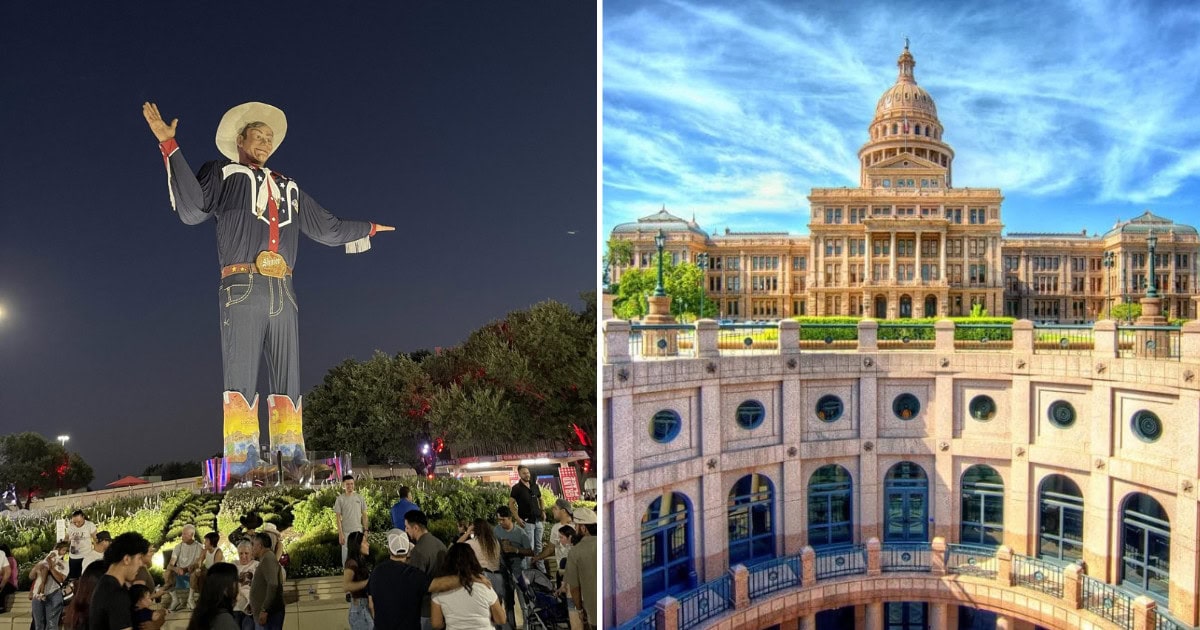
Every state has its landmarks, but Texas treats ours with special reverence because they represent not just history but the mythology we’ve built around being Texan.
These iconic sites appear on postcards, in movies, and in the collective consciousness of anyone who’s spent time in the state.
Yet surprisingly, many lifelong Texans have never actually visited these landmarks, assuming they’re tourist traps or that living nearby means they can visit “anytime.”
If you’ve lived in Texas for years without visiting these, you’re missing essential pieces of what makes this place Texas.
1. The Alamo — San Antonio
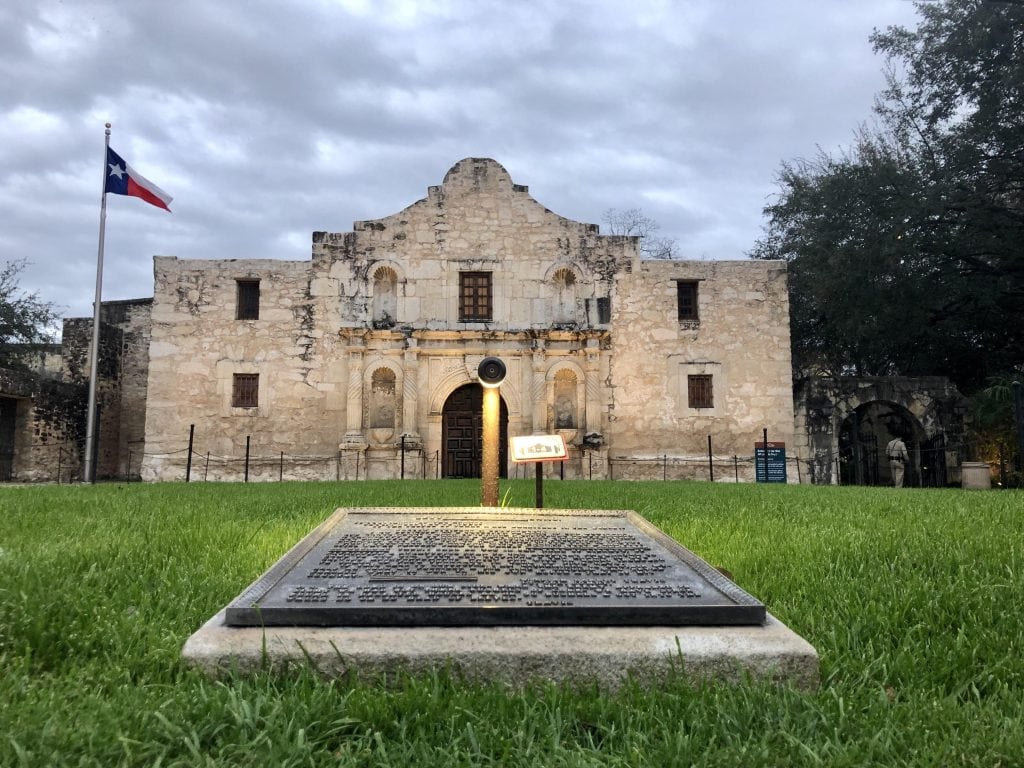
The most famous landmark in Texas represents the origin myth of Texas independence, where 189 defenders held out against thousands of Mexican troops for 13 days in 1836.
Every Texas schoolchild learns “Remember the Alamo,” but visiting as an adult and seeing the surprisingly small mission compound creates genuine appreciation for the defenders’ courage and the event’s significance.
The surrounding commercialization can feel tacky, but standing in the chapel where Davy Crockett and Jim Bowie made their last stand connects you tangibly to the moment that shaped Texas identity.
2. The Texas State Capitol — Austin
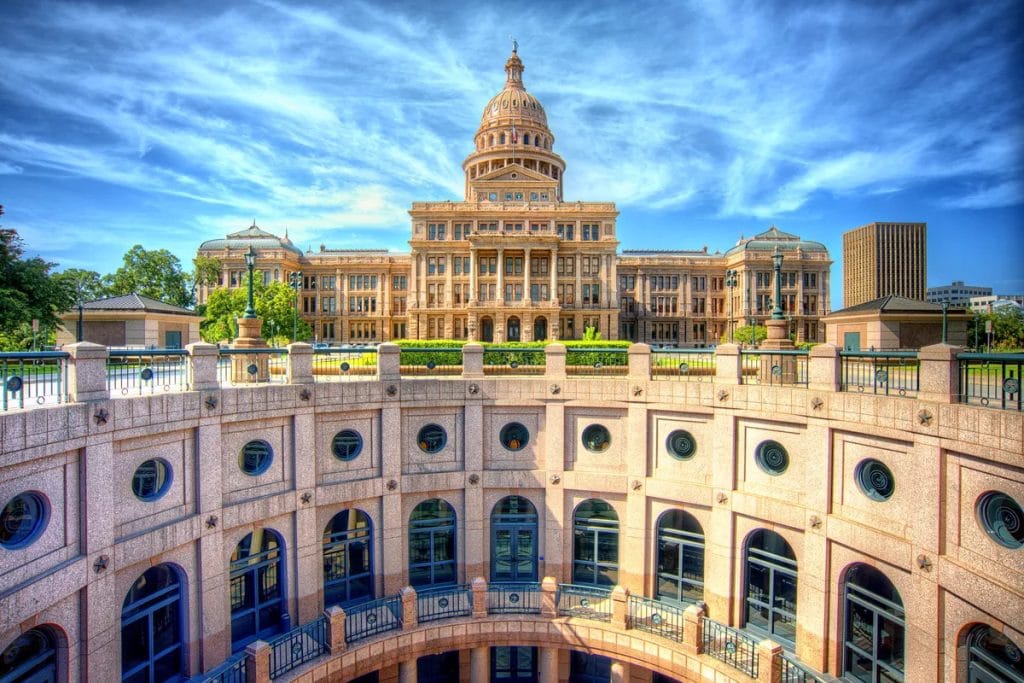
Taller than the U.S. Capitol and built from distinctive pink granite, the Texas State Capitol dominates Austin’s skyline and represents Texas’s outsized sense of itself.
The building’s architecture, art, and sheer scale reflect the state’s ambitions when it was constructed in the 1880s.
Free tours reveal the building’s history and function, and walking the rotunda floor with its embedded Lone Star creates the kind of civic connection that transcends politics.
3. Cadillac Ranch — Amarillo
Ten Cadillacs buried nose-first in a Panhandle wheat field represent both roadside Americana and legitimate art installation that’s become synonymous with Route 66 and Texas quirkiness.
Visitors are encouraged to bring spray paint and add their marks to the constantly evolving graffiti covering the cars.
The installation captures Texas’s embrace of the absurd, the automobile, and public art accessible to everyone rather than confined to galleries.
4. The San Jacinto Monument — La Porte
This 567-foot monument near Houston marks where Sam Houston’s forces defeated Santa Anna in 18 minutes, securing Texas independence.
The limestone column topped with a Lone Star rises taller than the Washington Monument, deliberately designed to exceed it as a statement of Texas pride.
The museum at the base and the view from the observation deck provide historical context while the monument’s presence dominates the landscape, visible for miles as a constant reminder of the battle that created the Republic of Texas.
5. Palo Duro Lighthouse Rock — Canyon
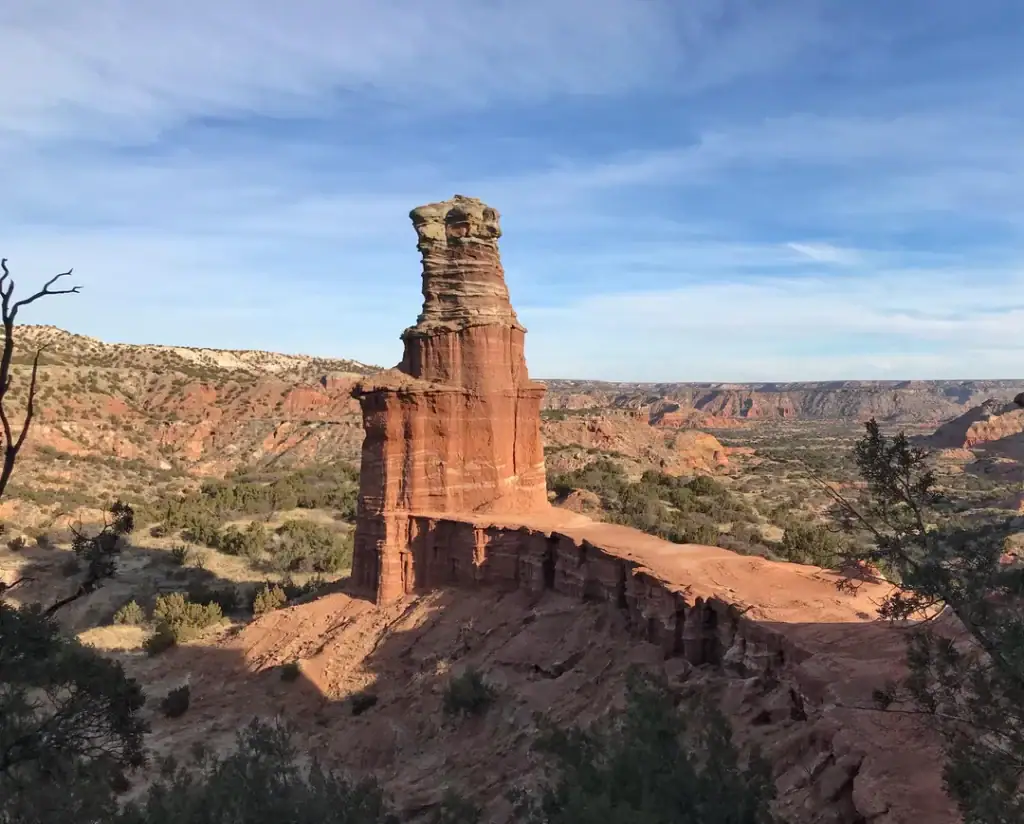
This distinctive rock formation rising from Palo Duro Canyon’s floor has become the symbol of the entire canyon and the Texas Panhandle.
The moderate 6-mile round-trip hike rewards visitors with close-up views of the 300-foot pillar and panoramic canyon vistas.
The formation appears on countless Texas photographs and paintings, representing the dramatic landscapes that exist beyond the state’s urban centers.
6. The Fort Worth Stockyards — Fort Worth
These historic stockyards preserve Fort Worth’s cattle-town heritage through twice-daily cattle drives, western-themed attractions, and the largest honky-tonk in the world.
While commercialized, the stockyards authentically represent the ranching culture that defined Texas for generations.
Watching longhorns being driven down Exchange Avenue creates tangible connections to the era when Fort Worth served as a major cattle shipping center.
7. Space Center Houston — Houston
NASA’s Johnson Space Center visitor complex showcases Texas’s central role in space exploration, from Mission Control for the Apollo moon landings to current International Space Station operations.
The massive rocket and shuttle displays, astronaut artifacts, and behind-the-scenes tours of NASA facilities demonstrate Texas’s contributions to humanity’s greatest adventure.
This represents Texas’s forward-looking ambitions as powerfully as the Alamo represents its mythological past.
8. Big Tex — Dallas (State Fair of Texas)
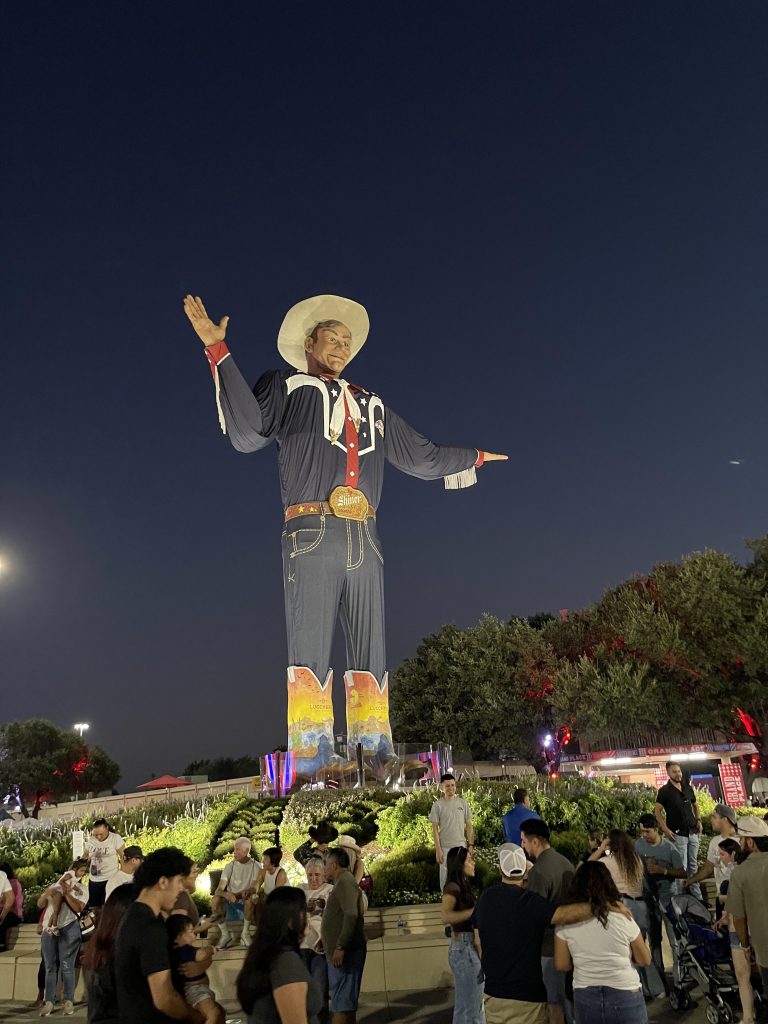
The 55-foot talking cowboy has welcomed visitors to the State Fair of Texas since 1952, becoming an instantly recognizable symbol of both the fair and Texas itself.
Big Tex embodies Texas’s love of oversized everything, roadside Americana, and the State Fair’s role as an annual gathering celebrating all things Texas.
While only visible during the fair’s October run, Big Tex represents Texas iconography as powerfully as any historical landmark.
9. The Driskill Hotel — Austin
This 1886 Romanesque Revival hotel represents Austin’s Victorian-era elegance and has hosted everyone from cattle barons to presidents.
The lobby’s ornate design, grand staircase, and historical significance make this a living landmark rather than a static monument.
Even if you can’t afford to stay, walking through the public areas connects you to Austin’s history before it became the modern tech hub.
10. Dealey Plaza and The Sixth Floor Museum — Dallas
The site of President Kennedy’s assassination in 1963 remains one of America’s most historically significant locations, frozen in time with the Texas School Book
The depository now houses a museum examining the event. Standing at the spot where the presidential motorcade passed creates an eerie connection to a moment that changed American history.
The museum balances commemoration with historical analysis, making this essential for understanding both Dallas and national history.
Why Locals Avoid Their Own Landmarks
Texans often dismiss these landmarks as “tourist stuff” beneath their notice, assuming that living near them means they’ll always be available for eventual visits.
The familiarity breeds contempt, with locals driving past exits to these sites dozens of times while never actually stopping.
There’s also a perception that experiencing these landmarks alongside tourists somehow diminishes the experience or marks you as unsophisticated about your own state.
This thinking misses that these landmarks became iconic precisely because they represent something essential about Texas — its history, mythology, ambitions, and character.
You can’t fully appreciate what it means to be Texan without experiencing the places that define Texas in the collective imagination.
Reclaiming These Sites From Tourist Status
The key to visiting iconic landmarks as a local is approaching them with the intention of genuinely learning rather than simply checking boxes.
Read the historical markers, take the tours, ask questions, and engage with these places as the significant historical and cultural sites they are, rather than photo opportunities.
Visit during off-peak times when crowds are smaller, and you can actually reflect on what you’re seeing. Bring family members, especially younger generations, and use these visits to pass down Texas history and identity.
Which iconic Texas landmarks have you visited, and which remain on your perpetual “someday” list?
Share what finally motivated you to actually visit these sites and whether the experience lived up to their iconic status.

Stella Raines
Editor-in-Chief
Stella brings over a decade of storytelling experience to TX Headlines. With roots in West Texas and a love for road trips, she leads the editorial team with an eye for the hidden stories that make Texas unforgettable.
More Stories
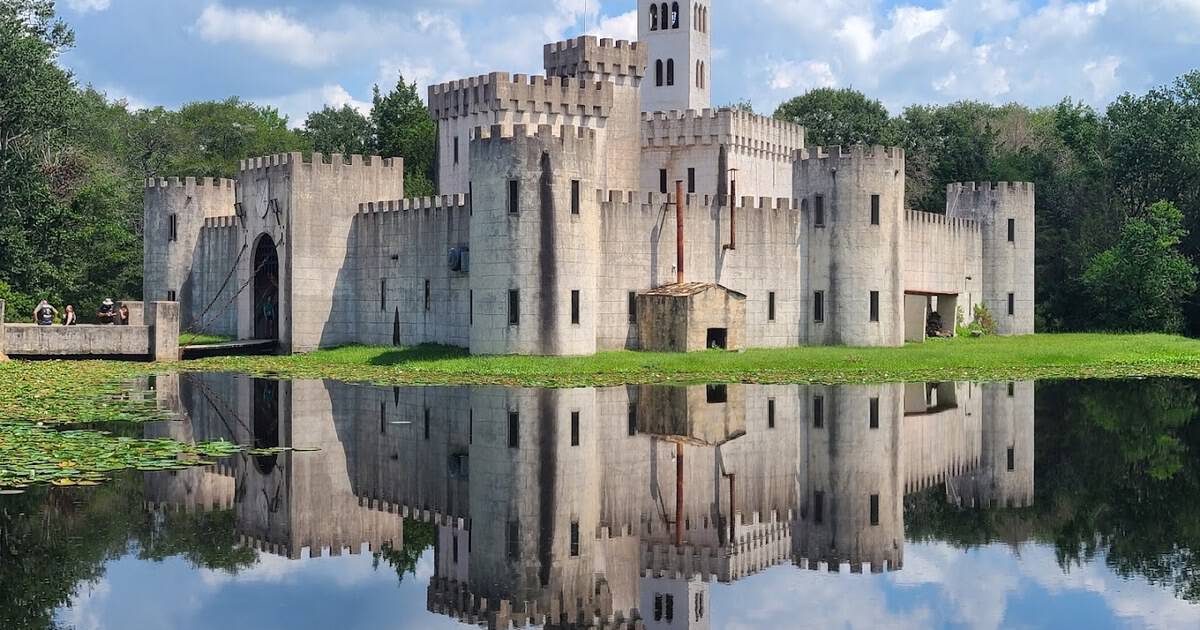
This Beloved Texas Bakery Hides a Fairytale Fortress Straight Out of a Storybook

This High-Rise Texas Movie Theater Lets You Watch Films Under the Open Sky, Skyline and All
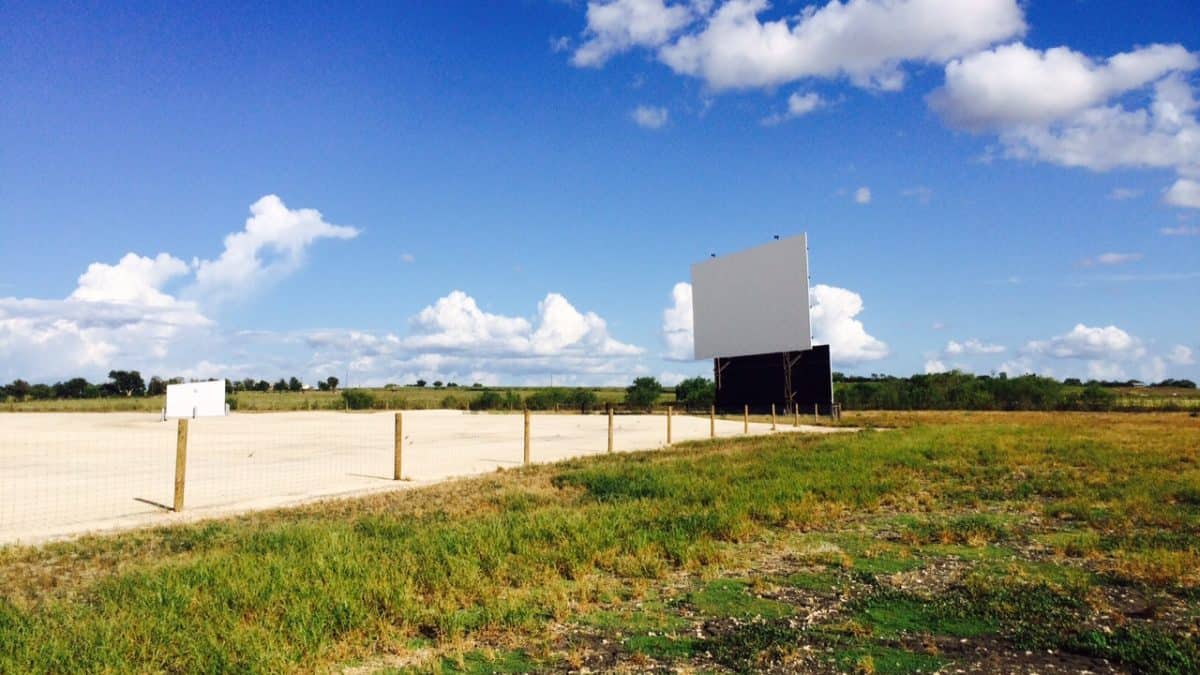
This Old-School Texas Movie Theater Still Draws Crowds Beneath the Night Sky