14 Hidden Oregon Gems That Most Travelers Drive Right Past

The first time I fell for Oregon, it was not at Crater Lake or Multnomah Falls. It was a gravel road in the middle of nowhere, dust on the windshield, a painted hillside glowing gold up ahead. I have chased that feeling ever since.
Most visitors stick to the same handful of postcards. The Oregon I love hides one turn past them, out in the high desert and the back canyons. It is wild and empty, and full of surprises that never make the brochure.
Here are fourteen of those spots, spread across the state’s interior, with exactly where to point the car. No coast, no crowds, no Crater Lake. Just the strange, beautiful backroads Oregon keeps mostly to itself.
1. Painted Hills, Oregon

Some places look impossible until you stand in front of them. The Painted Hills are low mounds banded in gold, rust, black and rose, like a layer cake left in the sun for 35 million years. The colors are ancient volcanic ash, not paint.
Rain deepens the reds, and late light turns the whole ridge to honey. Walk the short Overlook Trail for the classic view, then the Painted Cove boardwalk to stand right beside the stripes. It stays quiet most days.
Where: Painted Hills Unit, John Day Fossil Beds, about 9 miles northwest of Mitchell, Oregon, off Bridge Creek Road from Highway 26.
2. Smith Rock State Park, Oregon

Climbers built American sport climbing on these cliffs, and one look tells you why. Rust-colored tuff walls rise straight up from a bend in the Crooked River, and the whole canyon feels carved for a movie set. It is central Oregon at its most dramatic.
Hike the steep Misery Ridge Trail for a face-to-face with Monkey Face, a 350-foot rock spire. Easier paths follow the river below. Sunrise here turns the cliffs a deep orange you will not forget.
Where: Smith Rock State Park, 10260 NE Crooked River Drive, Terrebonne, Oregon, about 30 minutes north of Bend off Highway 97.
3. Alvord Desert, Oregon
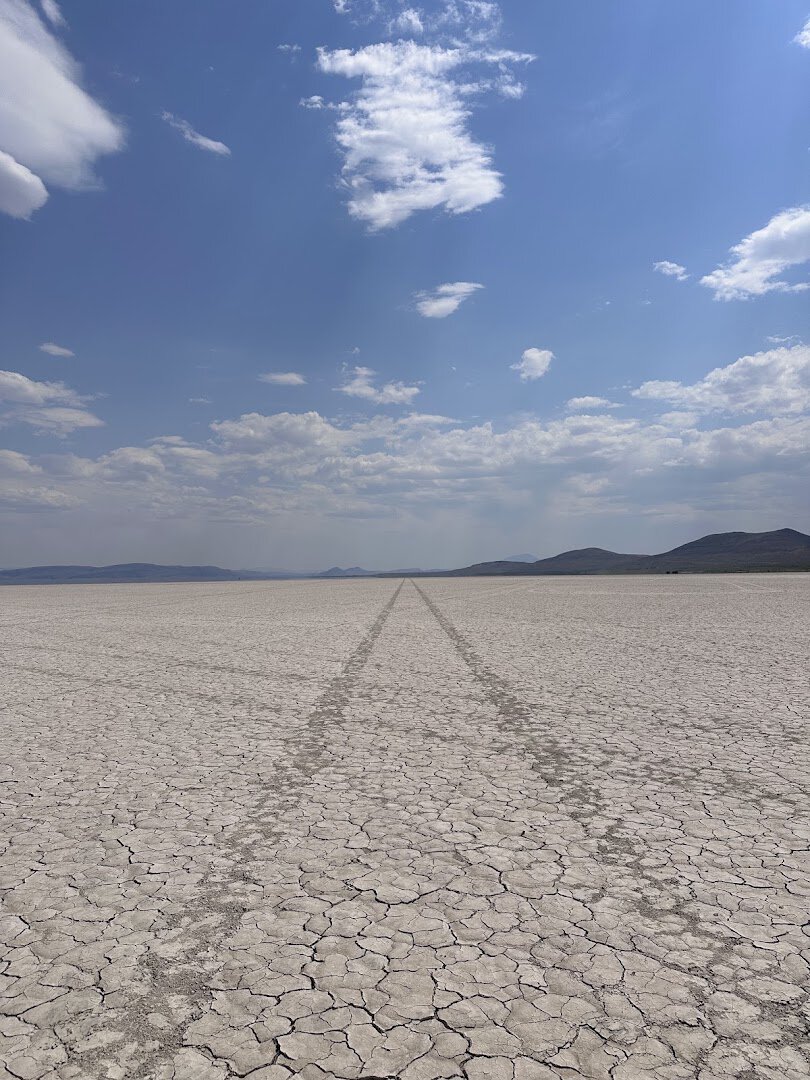
Picture a lake bed so flat and dry that people land small planes on it and drive across it like a runway. That is the Alvord, a cracked white playa twelve miles long in Oregon’s empty southeast corner.
It sits in the rain shadow of Steens Mountain, which leaves this basin barely seven inches of rain a year. In the dry season you can camp on the open crust under a sky thick with stars.
Where: Alvord Desert, along Fields-Denio Road about 22 miles north of Fields, Oregon, in Harney County. Alvord Hot Springs marks the main playa access.
4. Wallowa Lake Tramway, Oregon
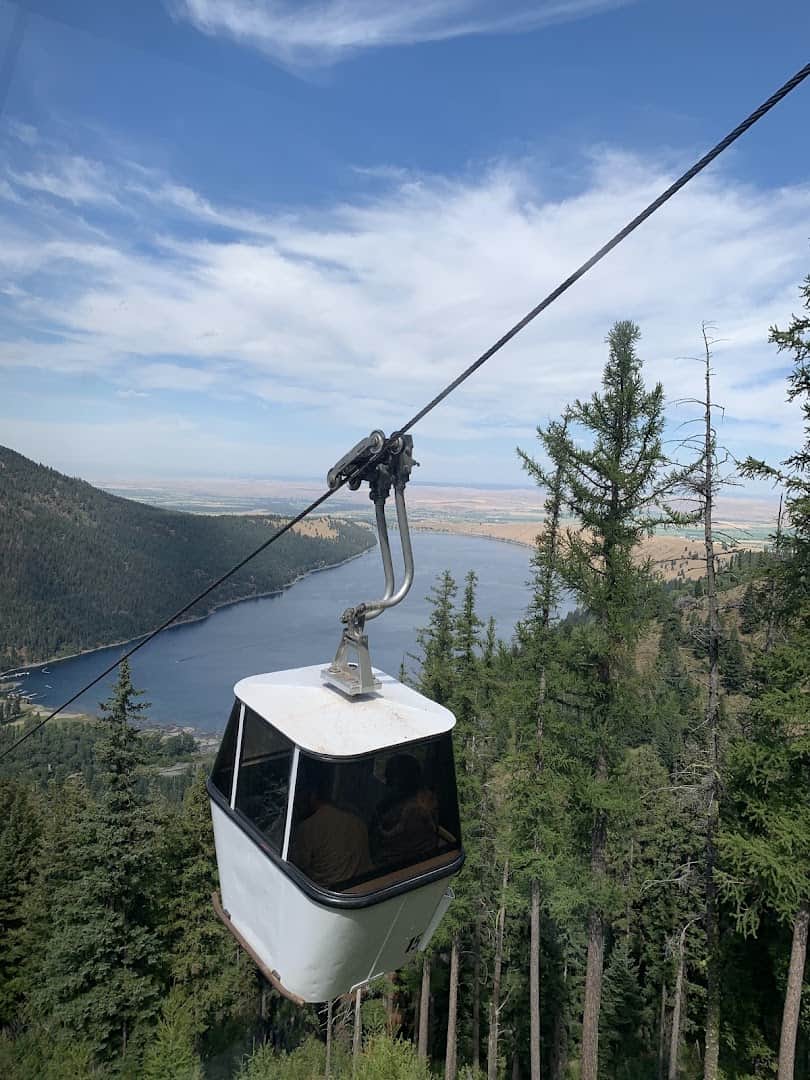
Tucked in Oregon’s far northeast, where the Wallowa Mountains earned the nickname the Alps of Oregon, a little gondola does something wild. It climbs 3,700 feet to the top of Mount Howard in about fifteen minutes.
That makes it the steepest gondola in North America. You step out at 8,150 feet into thin mountain air, with easy summit trails and long views into Idaho and Washington on a clear day. It runs late spring into fall.
Where: Wallowa Lake Tramway, 59919 Wallowa Lake Highway, Joseph, Oregon, at the south end of Wallowa Lake.
5. Toketee Falls, Oregon

There is a kind of waterfall that stops you cold, and Toketee is it. The North Umpqua River drops 113 feet in two steps, framed by a wall of hexagonal basalt columns that look hand-stacked by giants.
The columns formed when a lava flow cooled slowly and cracked into near-perfect posts. The trail is short, under a mile round trip, ending at a viewing deck. Go early on summer weekends; the little lot fills fast.
Where: Toketee Falls Trailhead, off Forest Road 34 at Highway 138 milepost 58.6, Umpqua National Forest, near Idleyld Park, Oregon.
6. Steens Mountain, Oregon
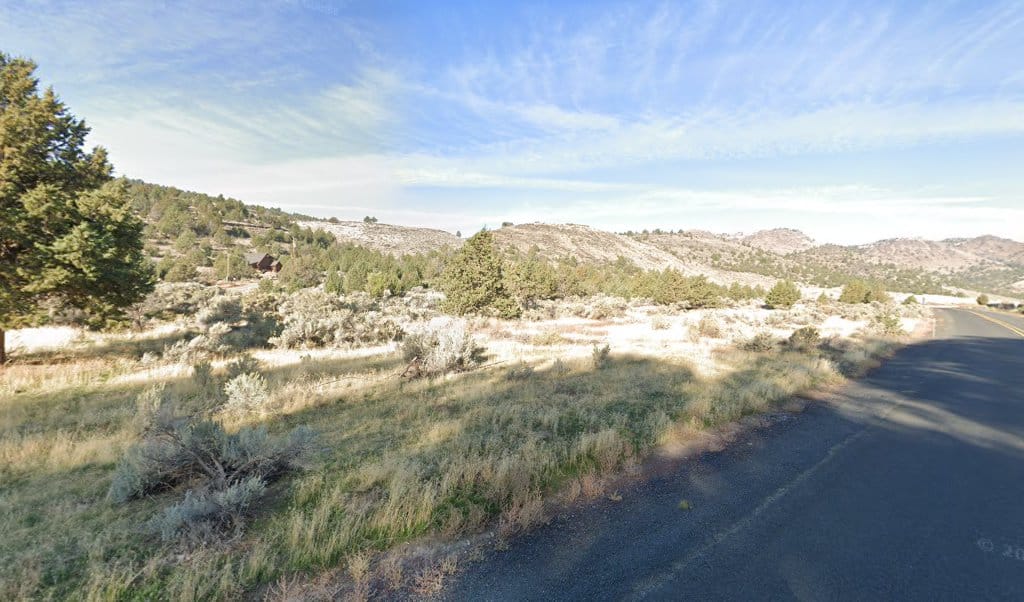
Steens is not a peak but a single tilted block of the earth’s crust, rising almost a mile straight up from the desert floor to 9,733 feet. The top holds glacier-carved gorges, alpine lakes, and one of Oregon’s biggest views.
A rough summer-only loop road climbs nearly to the summit, the highest road in the state. Wildflowers bloom late up here, and the drop to the Alvord Desert from the east rim will stop your breath.
Where: Steens Mountain rises east of Frenchglen, Oregon, in Harney County; the Steens Mountain Loop Road climbs from town and is open summer into fall. Worth a stop:
- Kiger Gorge Overlook, off the Loop Road, a textbook U-shaped glacial canyon
- East Rim Viewpoint, where the land falls a mile straight down to the Alvord Desert
- Wildhorse Lake, a short steep hike to an alpine lake below the summit
- Frenchglen Hotel, on Highway 205, a 1920s state-run inn that makes a fine base
7. Crack in the Ground, Oregon
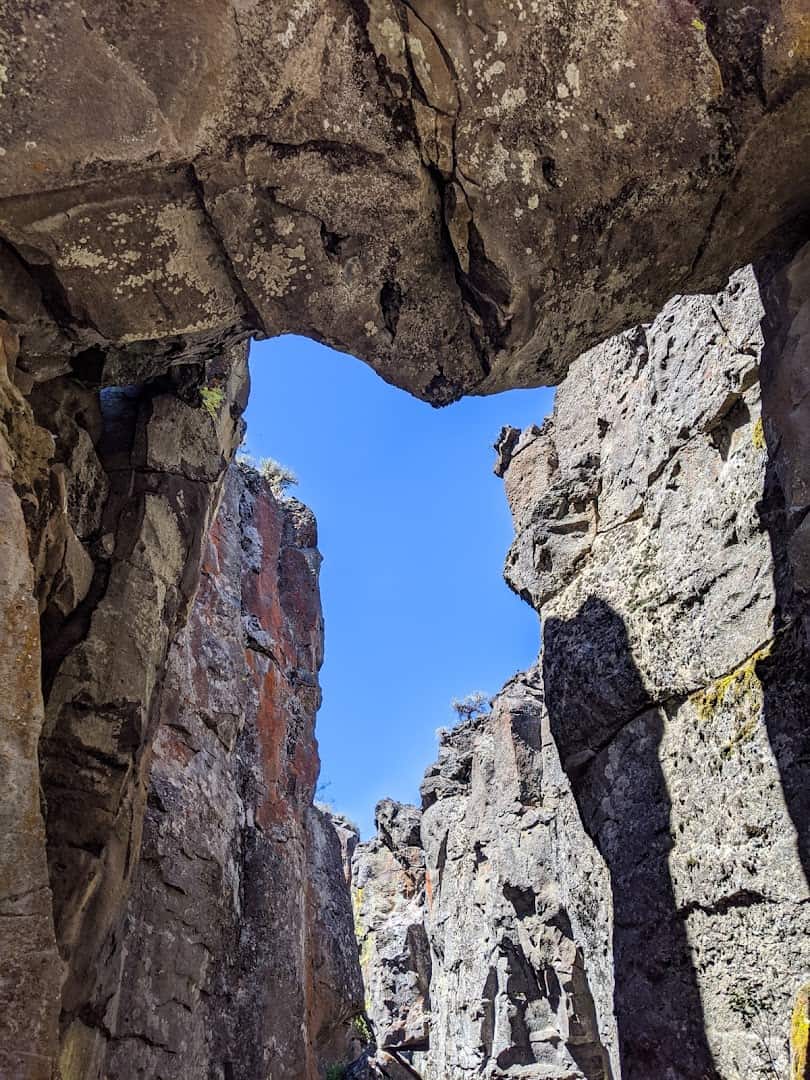
The name is not poetry. It is a literal two-mile crack in the high desert floor, a volcanic fissure up to 70 feet deep that you can climb down into and walk along the bottom of.
Down there the world shrinks to a slot of shadowed rock, and the air turns cold. On a hot afternoon the bottom runs twenty degrees cooler than the rim. Bring real shoes, water, and a little nerve.
Where: Crack in the Ground, about 7 miles north of Christmas Valley, Oregon, via Crack-in-the-Ground Road (rough dirt, high-clearance advised).
8. Oregon Caves National Monument, Oregon

Down in Oregon’s southwest corner hides a place nicknamed the Marble Halls of Oregon, and the name earns itself. This cave is carved not from ordinary limestone but from limestone cooked into marble deep inside the earth.
A guided tour winds past stone draperies while the River Styx, the only underground river in the National Park System, runs beneath your boots. Bring a jacket; it holds near 44 degrees down there all year.
Where: Oregon Caves National Monument and Preserve, 19000 Caves Highway, Cave Junction, Oregon. The mountain drive from town takes about an hour.
9. Owyhee Canyonlands, Oregon

People call this corner Oregon’s Grand Canyon, and almost nobody goes. The Owyhee River has carved a maze of red and gold canyons across the state’s far southeast, a landscape so remote it feels like another planet.
You need a full tank, a map, and patience for gravel roads, but the payoff is honeycombed cliffs, hidden springs, and total silence. Spring, when the desert greens and blooms, is the sweet spot.
Where: The Owyhee Canyonlands spread across Malheur County in far southeast Oregon, reached on gravel roads from Jordan Valley or Adrian off Highway 95. Worth a stop:
- Leslie Gulch, a canyon of honeycombed tuff spires above Owyhee Reservoir
- Succor Creek State Natural Area, a quiet canyon good for camping and rockhounding
- Lake Owyhee State Park, the reservoir’s blue water walled by red rock
- Pillars of Rome, pale cliff formations along the Owyhee near the hamlet of Rome
10. Sahalie Falls, Oregon
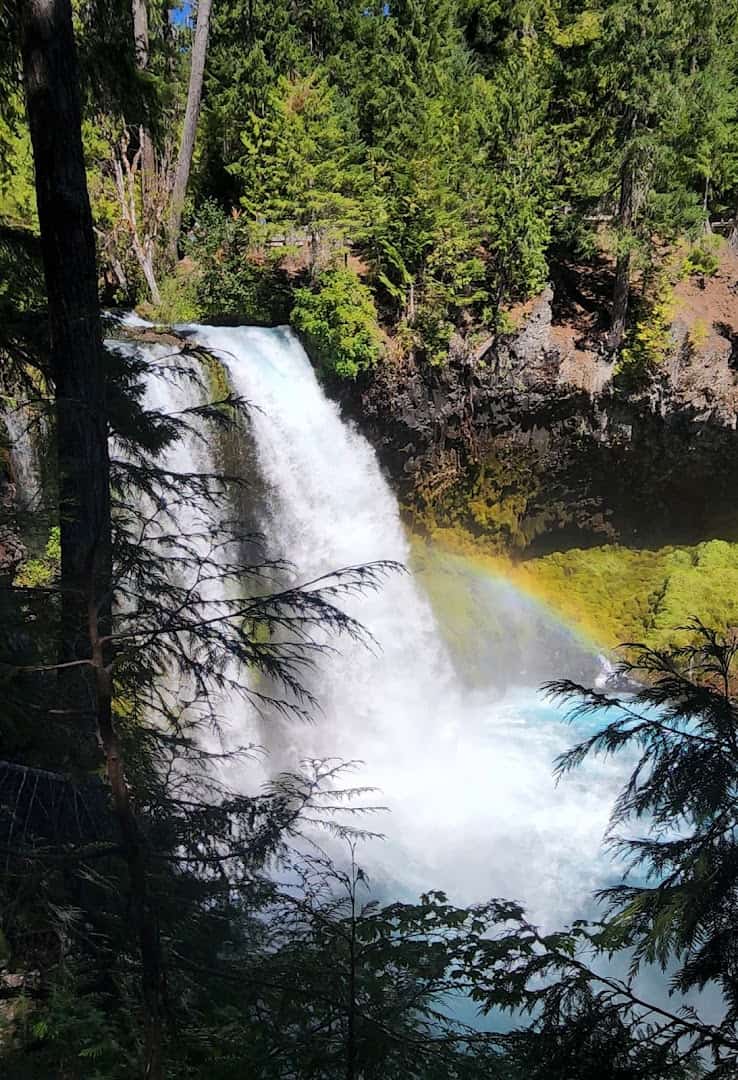
On the upper McKenzie River, the water throws itself 100 feet over an old lava dam into a cloud of mist and moss. Sahalie Falls roars all year, loud and cold and impossibly green around the edges.
A short loop links it to Koosah Falls just downstream, both fed by the startling blue water of Clear Lake. It is a roadside stop that feels far wilder than the parking lot suggests.
Where: Sahalie Falls, off Highway 126 near Clear Lake in the Willamette National Forest, about 20 miles east of McKenzie Bridge, Oregon.
11. Fort Rock, Oregon
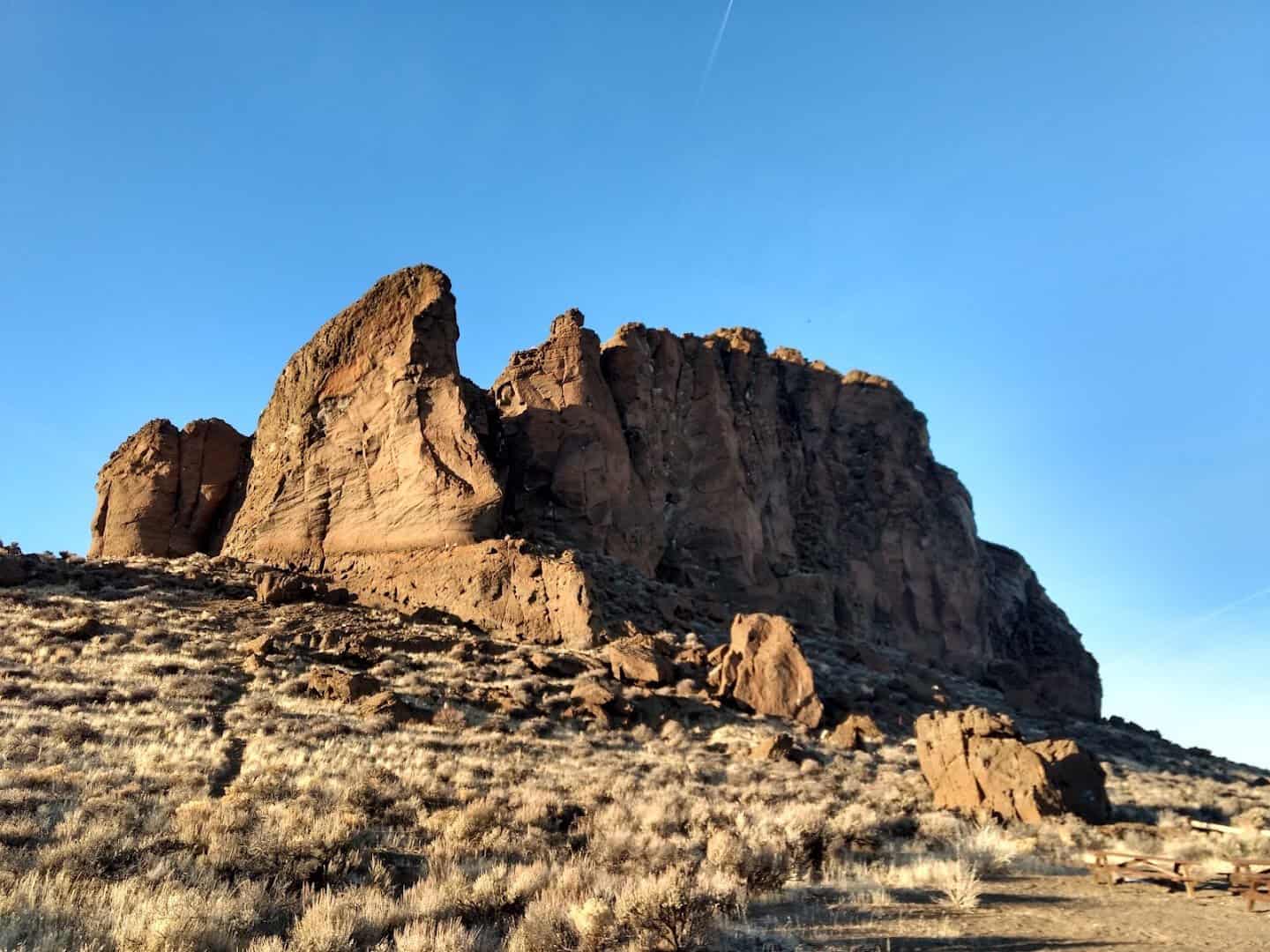
Rise up out of the flat high desert and there it is: a ring of jagged walls standing 200 feet tall, curved like a natural fortress. Early settlers thought it looked like a fort, and the name stuck.
It is really a tuff ring, born when rising magma hit groundwater and blew apart in a steam explosion. In a cave nearby, archaeologists found sandals roughly 10,000 years old, among the oldest shoes ever found.
Where: Fort Rock State Natural Area, off Fort Rock Road near the town of Fort Rock, Oregon, in Lake County, about an hour southeast of La Pine.
12. Newberry National Volcanic Monument, Oregon

Everyone drives to Crater Lake and skips this one, which is a shame. Newberry is a giant volcano south of Bend whose collapsed caldera holds two lakes, a glassy obsidian flow, and a summit road with a view over half of central Oregon.
The volcano is still considered active, and the youngest lava here is barely 1,300 years old. You can hike, fish, soak, and stand on a mountain of black glass, all in one afternoon.
Where: Newberry National Volcanic Monument sits about 20 miles south of Bend, Oregon, off Highway 97 and County Road 21 in the Deschutes National Forest. Worth a stop:
- Paulina Falls, twin 80-foot falls a short walk from the road
- Big Obsidian Flow, a mile-long trail across a field of black volcanic glass
- Paulina Peak, a 7,984-foot summit drive with a view across the caldera
- Lava River Cave, a mile-long lava tube you can walk with a lantern
13. Hart Mountain National Antelope Refuge, Oregon
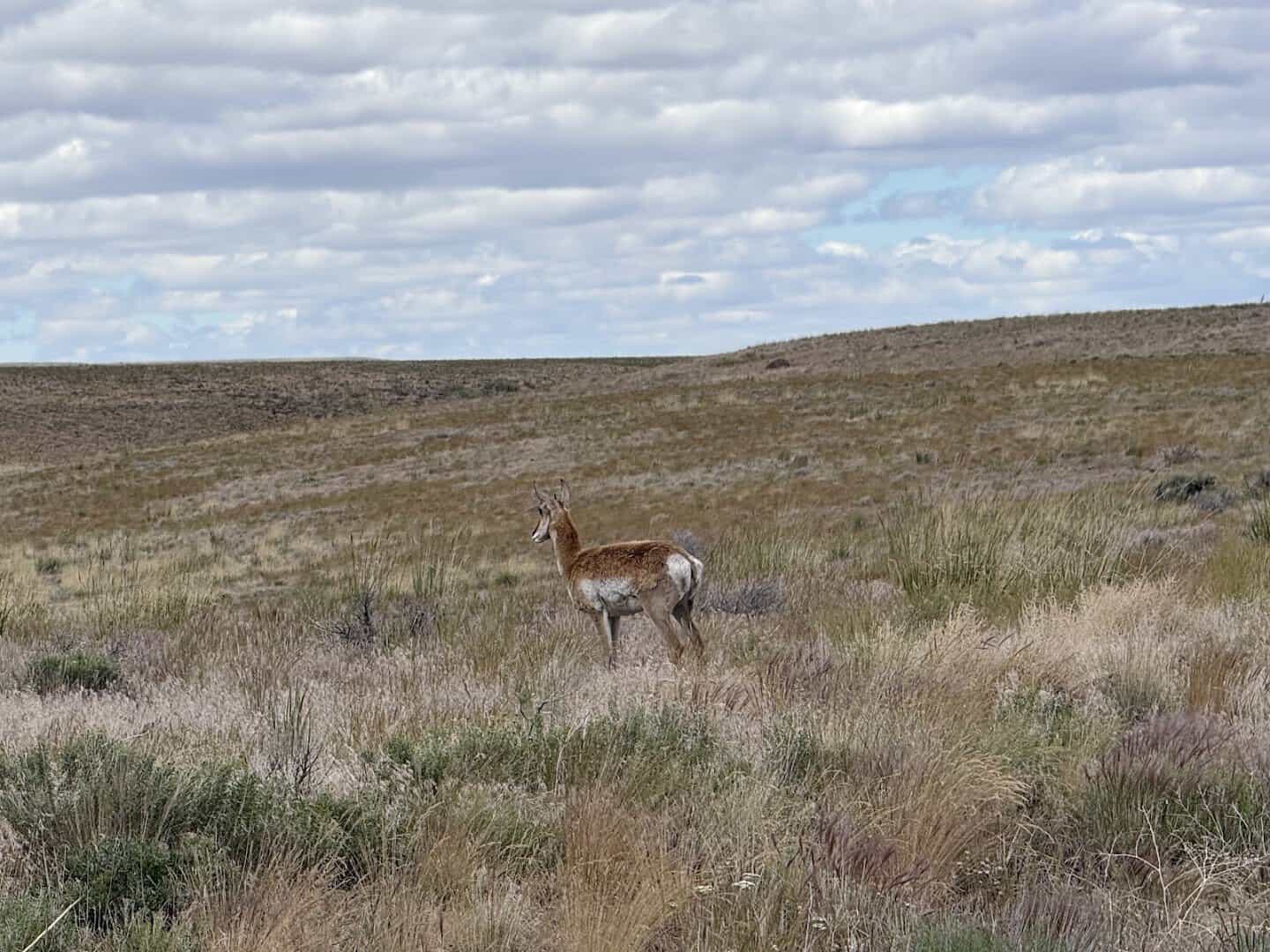
Few places feel as gloriously far from everything as Hart Mountain. A great fault ridge lifts out of the Warner Valley in south-central Oregon, home to pronghorn, bighorn sheep, and a sky that seems to go on without end.
The reward at the end of the washboard road is a free, primitive hot spring where you can soak under the stars after a day of watching wildlife. Bring everything you need; the nearest store is far.
Where: Hart Mountain National Antelope Refuge, reached by gravel road from Plush, Oregon, in Lake County, about 65 miles northeast of Lakeview. The hot springs sit near the refuge campground.
14. Blue Basin, Oregon
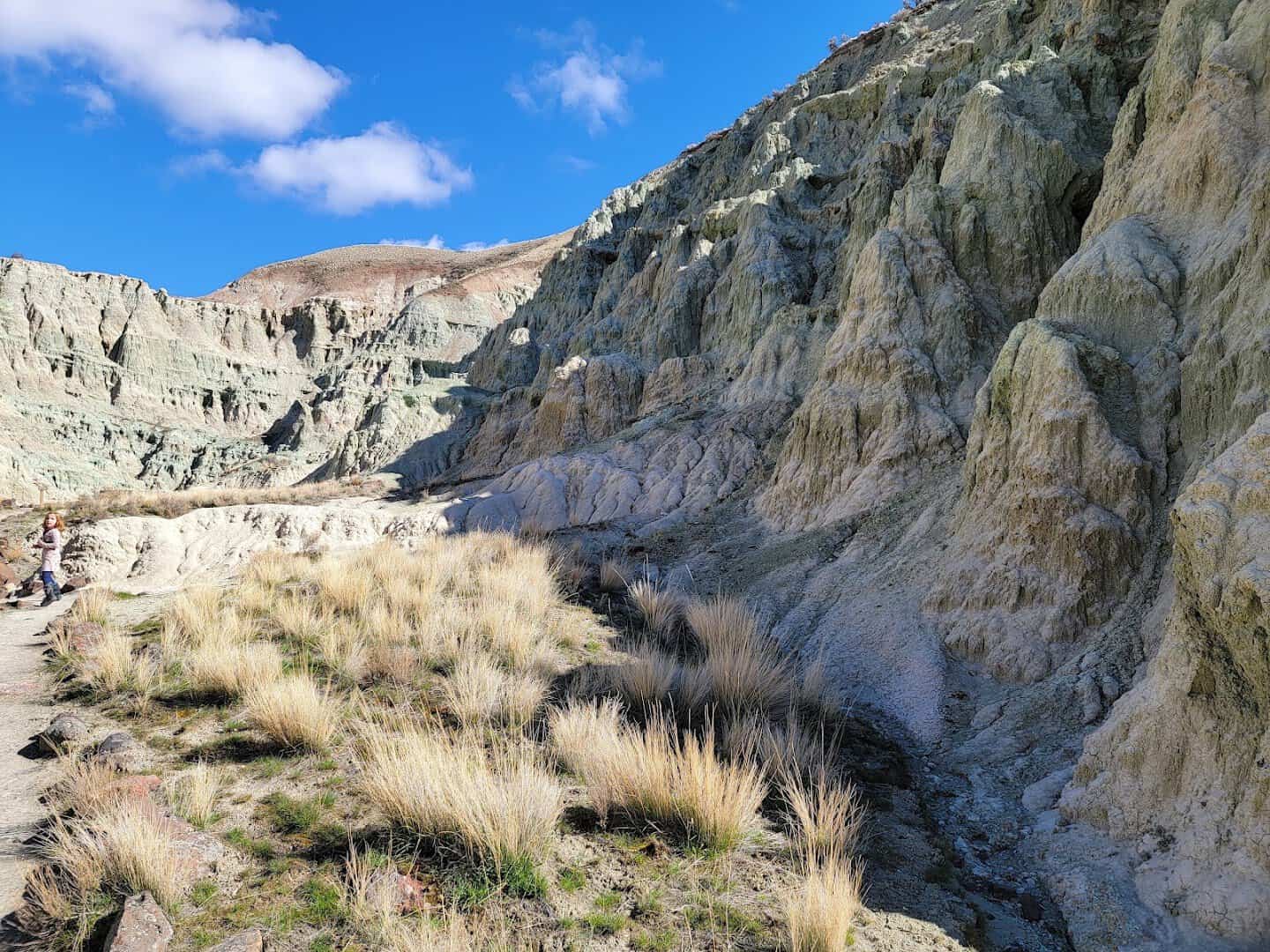
The Painted Hills get the crowds, but this pocket of the John Day country might be stranger still. Blue Basin is a bowl of blue-green claystone, eroded into soft spires that glow almost turquoise in flat light.
The short Island in Time trail leads right into the basin past replicas of the fossils found here. A longer rim loop climbs above it for a view over the whole painted valley. It stays wonderfully quiet.
Where: Blue Basin, Sheep Rock Unit of John Day Fossil Beds, off Highway 19 about 9 miles north of Dayville, Oregon.
Point the Car Toward the Quiet Corners
Oregon’s famous spots are famous for good reason, but they are also where everyone else is standing. The best surprises here tend to sit at the end of some gravel road nobody warned you about.
You do not need all fourteen in one trip. Pick a corner of the map, chase two or three, and let the long drives between them do the rest. That is usually where the best stories hide.
So next time you plan an Oregon trip, leave room for a crack in the ground or a desert full of stars. Point the car toward the quiet corners, and go find what everyone else drove past.
Featured image: Scottie McKee via Painted Hills

Stella Raines
Editor-in-Chief
Stella brings over a decade of storytelling experience to TX Headlines. With roots in West Texas and a love for road trips, she leads the editorial team with an eye for the hidden stories that make Texas unforgettable.