15 Montana Road Trip Stops That Belong on Every Bucket List
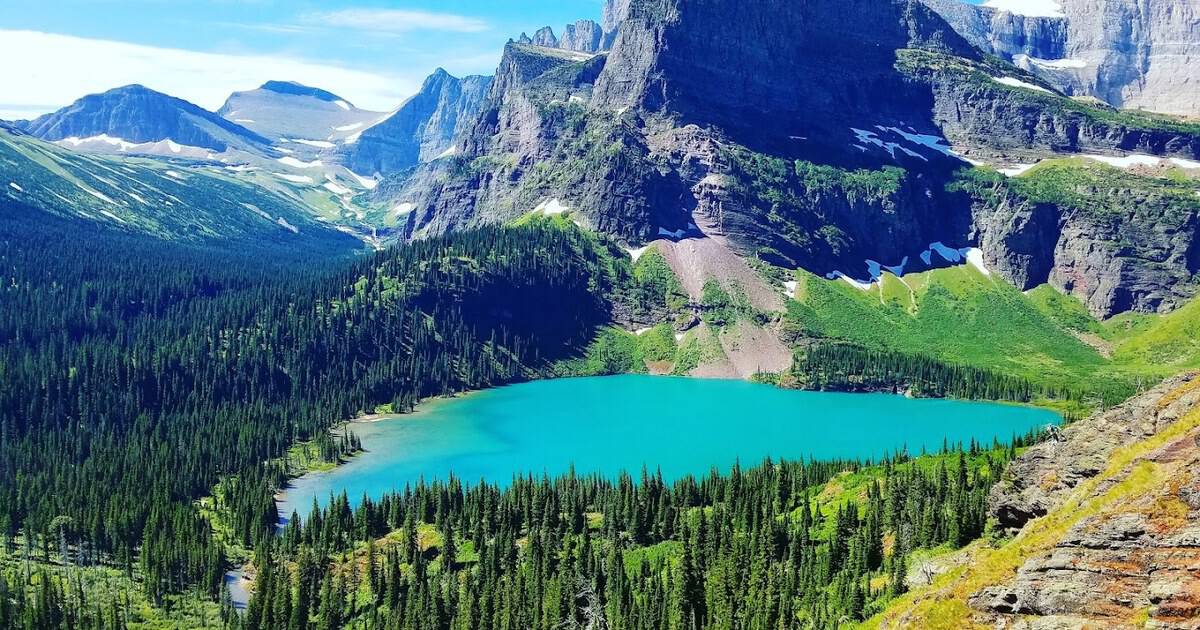
Some states you drive through. Montana you drive into. I have never met anyone who came home from it talking about the miles, only the mountains, the light, and the moment the horizon just stopped bothering to end.
That is the whole trick of a Montana road trip. It hands you wide-open wonder and dares you to keep the camera in your lap. Between Glacier’s peaks and the Beartooth switchbacks, the driving is the destination, and the towns in between are half the fun.
Here are fifteen stops worth building an entire trip around, laid out roughly in the order I would chase them. Each one is its own reason to point the car north and keep going.
Montana is the fourth-largest state in the country, so distances are real and the payoff is enormous. Give yourself a full week if you can, and treat the map below as a loop rather than a straight line.
1. Whitefish, Montana

Start where the mountains start. Whitefish is a railroad town turned resort town, and it wears both hats without a shred of fuss. The chalet-style depot from 1927 still greets Amtrak’s Empire Builder, and downtown is all brick storefronts and easy smiles.
Whitefish Mountain Resort rises about seven miles north, with winter skiing and lift-served hiking once the snow lets go. In summer the town swaps skis for paddleboards, and City Beach on Whitefish Lake mirrors the peaks past dinner.
Best of all, it is the smartest basecamp for Glacier, roughly twenty-five minutes from the west entrance. Sleep here, wake early, and drive straight into the postcard.
Where: Whitefish sits on US-93 in Montana’s northwest corner, about 25 minutes from Glacier’s west entrance. Worth a stop:
- Central Avenue, downtown Whitefish, for brick storefronts, coffee, and the Tuesday farmers market
- Whitefish Mountain Resort, 1015 Glades Way, seven miles north for skiing and lift-served hiking
- City Beach on Whitefish Lake, at the north edge of town, for a swim under the peaks
- The Whitefish Depot, 500 Depot Street, the 1927 chalet station still serving Amtrak
2. Glacier National Park, Montana

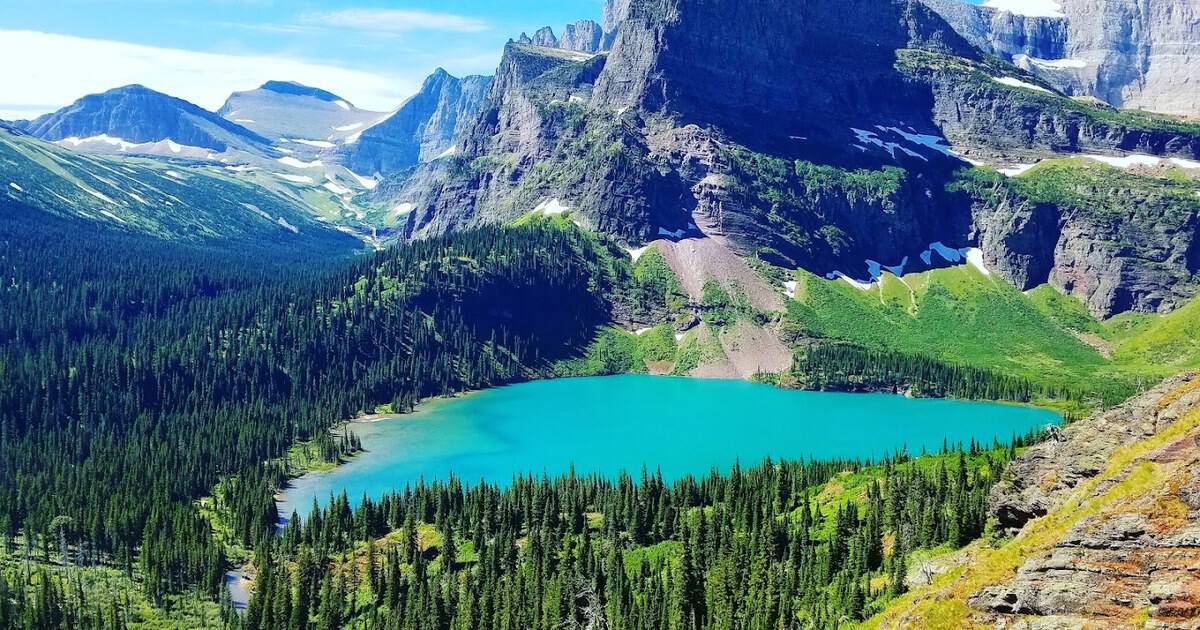
If you do one single thing in Montana, do this. Going-to-the-Sun Road runs fifty miles across the park’s spine and climbs to Logan Pass at 6,646 feet. It is the most jaw-dropping stretch of pavement I can name in this country.
Glacier was established in 1910, and it guards more than 700 miles of trails and water so clear it looks staged. Lake McDonald on the west side glows with famous multicolored pebbles under the surface.
The park once held around 150 glaciers, and only about two dozen sizable ones remain. Come at dawn, because the road fills fast in summer and first light on those peaks is the reason you drove all this way.
Where: West Glacier, Montana, off US-2. Going-to-the-Sun Road typically opens fully from late June through mid-October, weather allowing.
3. Flathead Lake, Montana

South of Glacier, the mountains hand you a sea. Flathead Lake is the largest natural freshwater lake west of the Mississippi in the lower 48, nearly 200 square miles of startlingly clean water ringed by cherry orchards.
Drive the eastern shore on MT-35 for the big views, then the western shore on US-93 for the roadside fruit stands. Flathead cherries ripen in mid to late summer, and the buckets sell out by afternoon.
Wild Horse Island sits out in the middle, a state park you reach only by boat, sheltering bighorn sheep, bald eagles, and a few actual wild horses. By midsummer the water is warm enough to swim.
Where: Polson, Montana, anchors the lake’s south end on US-93, about an hour south of Kalispell. Loop the whole shoreline on MT-35 and US-93.
4. Kootenai Falls, Montana

Tucked in Montana’s far northwest, Kootenai Falls is one of the largest undammed waterfalls in the state, a churning staircase where the Kootenai River drops in wide green shelves. You may recognize it from the films The River Wild and The Revenant.
A short trail from the highway leads to the falls, then on to the famous swinging bridge, a cable footbridge that sways high over the gorge. It is a genuine thrill and an easy leg-stretch on the long drive west.
The Kootenai people have long held this canyon sacred, and it is easy to feel why. Bring sturdy shoes for the rocks and give the overlooks a slow, unhurried hour.
Where: Kootenai Falls Park sits off US-2 about five miles west of Libby, Montana, roughly halfway between Kalispell and the Idaho line.
5. Missoula, Montana

Montana’s most easygoing city runs entirely on river time. The Clark Fork slides right through downtown, and on a warm afternoon you will spot people surfing a standing wave under the Higgins Avenue bridge, in the dead center of the city.
Missoula is a college town with a taproom on every other corner and a hand-carved carousel down by the water. The food scene punches well above the town’s size, from farm breakfasts to late-night tacos.
Come evening, wander the Hip Strip across the river for bookstores, vintage racks, and huckleberry ice cream. Missoula rewards the unhurried, the kind of place where you book one night and wish you had booked two.
Where: Missoula sits on I-90 in western Montana, where five valleys meet. Worth a stop:
- Brennan’s Wave on the Clark Fork, downtown below the Higgins Avenue bridge, where surfers ride a standing wave
- A Carousel for Missoula, 101 Carousel Drive, a lovingly hand-carved merry-go-round by the river
- The “M” Trail up Mount Sentinel, off Van Buren Street, a switchbacked climb to a whole-valley view
- The Hip Strip along South Higgins Avenue, for bookstores, vintage shops, and ice cream
6. Bannack State Park, Montana

For a genuine step back in time, few places anywhere beat Bannack. Gold was struck here in 1862, and for a moment this gulch was the largest town in the region and Montana’s first territorial capital.
Today Bannack is the best-preserved ghost town in the state, more than fifty weathered log and frame buildings standing quiet along a single dusty street. There are no gift shops or costumed actors, just the real thing, wonderfully left alone.
You can wander into the old hotel, the church, and the schoolhouse at your own pace. Photographers love the late light on the grey timber. It is a rare, honest window into the gold-rush West.
Where: Bannack State Park lies about 25 miles southwest of Dillon, Montana, off Highway 278 and a well-marked gravel road, in the state’s southwest corner.
7. Virginia City, Montana

If Bannack is the ghost, Virginia City is its lively cousin who stayed. Another 1863 gold strike built it fast, and this time the town never fully emptied. Wooden boardwalks and false-front stores still line Wallace Street.
Restored and living, it runs summer stagecoaches, an old-time opera house, and a short steam railroad to neighboring Nevada City. Costumed shopkeepers and cold sarsaparilla lean into the theme without tipping into kitsch.
It is one of the most complete gold-rush towns in the country, and an easy, joyful afternoon. Time a visit for a melodrama at the Opera House if you can.
Where: Virginia City sits on MT-287 about 90 minutes west of Bozeman, high in the southwest hills. Worth a stop:
- Wallace Street, the main drag, for the boardwalks, saloons, and false-front shops
- The Virginia City Opera House on Wallace Street, for a summer melodrama
- The Alder Gulch Short Line steam train out to Nevada City, 1.5 miles west
- Nevada City Open-Air Museum, a second preserved townsite just down the road
8. Lewis and Clark Caverns State Park, Montana

Montana’s first and best-known state park hides underground. Lewis and Clark Caverns are among the largest limestone caves in the Northwest, a cathedral of stalactites, columns, and glittering flowstone kept at a cool fifty degrees year-round.
Guided tours wind about two miles through lit chambers with names like the Paradise Room, ducking and climbing past formations that took millions of years to grow. Ironically, Lewis and Clark passed nearby but never found the cave.
Above ground the park adds hiking, a campground, and big views of the Jefferson River valley. Bring a light jacket and shoes with grip for the smooth, sometimes damp stone.
Where: The park sits off MT-2 between Whitehall and Three Forks, about an hour west of Bozeman. Tours usually run May through September.
9. Bozeman, Montana

Bozeman is where dinosaurs and ski bums share a zip code, and it works. The Museum of the Rockies holds one of the country’s great dinosaur collections, including a Tyrannosaurus rex dug up nearby and studied by paleontologist Jack Horner.
Downtown Main Street is a genuinely fun stroll, all independent bookstores, Western storefronts, and taprooms under the sawtooth Bridger peaks. Montana State University keeps the whole place young and buzzing.
It is the last full-service town before the run toward Yellowstone, so stock the cooler and sleep well. With a spare morning, the drive up Hyalite Canyon delivers waterfalls and easy trails.
Where: Bozeman sits on I-90 in southwest Montana, about 90 minutes from Yellowstone’s north entrance. Worth a stop:
- Downtown Main Street, for bookstores, Western shops, and taprooms under the Bridgers
- Museum of the Rockies, 600 West Kagy Boulevard, for the T. rex and dinosaur halls
- Montana State University campus, just south of downtown
- Hyalite Canyon, about 20 minutes south, for waterfalls, a reservoir, and trails
10. Beartooth Highway, Montana

Some roads are the whole reason to come. The Beartooth Highway climbs to 10,947 feet at Beartooth Pass, switchbacking past alpine lakes, snowfields, and tundra that feels closer to the Arctic than to anything below.
The broadcaster Charles Kuralt famously called it the most beautiful drive in America, and few who make the crawl up those hairpins argue. Marmots whistle from the rocks, and snow lingers into July.
It links Red Lodge to the Yellowstone gateway at Cooke City, so you can stitch it into the loop as high drama between towns. Watch the weather, because the pass closes with the first hard snow.
Where: The Beartooth Highway runs US-212 from Red Lodge, Montana, over the pass toward Cooke City. It is typically open only from late May through mid-October.
11. Roosevelt Arch in Gardiner, Montana

Some doorways earn the drama. The Roosevelt Arch marks Yellowstone’s north entrance at Gardiner, a 50-foot basalt gateway whose cornerstone Theodore Roosevelt himself laid in 1903. You feel small standing under it, in the best way.
Carved across the top is the line that still gives me a chill: “For the Benefit and Enjoyment of the People.” This is the park’s only year-round entrance, and just inside wait the surreal terraces of Mammoth Hot Springs.
Gardiner itself is a scrappy river town where elk wander the streets like they hold the deed. Time your arrival for late afternoon and the arch glows gold against the hills.
Where: Gardiner, Montana, on US-89 at Yellowstone’s north entrance, about an hour south of Livingston.
12. Bighorn Canyon National Recreation Area, Montana

Montana keeps a genuine secret down in its southeast corner. Bighorn Canyon carves red rock walls up to 1,000 feet above a startlingly blue reservoir, and hardly anyone outside the region ever mentions it.
Bighorn Lake stretches for miles behind Yellowtail Dam, made for a lazy boat day beneath glowing sandstone cliffs. The nearby Pryor Mountains shelter a wild mustang herd descended from Spanish horses, roaming free as always.
Devil Canyon Overlook is the view everyone remembers, a dizzying drop to the water with layered rock lit at golden hour. Bring binoculars for the wild horses and the bighorn sheep that named the canyon.
Where: Fort Smith, Montana, near Yellowtail Dam, reached via MT-313 south of Hardin, in the state’s southeast corner.
13. Makoshika State Park, Montana

Way out east, where the plains break open, Montana keeps its badlands. Makoshika is the state’s largest state park, a maze of striped bluffs, hoodoos, and pine-dotted ravines carved from ancient seabed.
The name comes from a Lakota phrase for bad land, and dinosaurs sleep in these rocks. Triceratops and Tyrannosaurus fossils have come out of the park, and a visitor center shows off the finds.
Drive the scenic loop for the overlooks, then walk a short trail out among the spires at sunset when the layered rock burns orange. It is a wild, uncrowded reward for driving all the way east.
Where: Makoshika State Park sits just southeast of Glendive, Montana, off I-94 in the far eastern corner of the state. The entrance is a short, signed drive from downtown Glendive.
14. Helena, Montana

Montana’s capital was born from a gold strike and never quite lost the swagger. In 1864, four discouraged prospectors took a “last chance” on a quiet gulch and hit pay dirt. The main street still carries the name Last Chance Gulch.
That street curves through downtown past the Gothic Cathedral of Saint Helena, its twin spires climbing 230 feet into the Big Sky. The copper-domed State Capitol and the brick lanes of Reeder’s Alley round out an easy afternoon.
Helena sits almost exactly between Glacier country and the Yellowstone gateway towns, a natural overnight in the middle of the loop. Ride the Last Chance Tour Train for the quick history, then wander the gulch on your own.
Where: Helena sits in central Montana at the junction of I-15 and US-12. Worth a stop:
- Last Chance Gulch, the pedestrian main street, for shops and the gold-rush story
- Cathedral of Saint Helena, 530 North Ewing Street, with its 230-foot Gothic spires
- Montana State Capitol, 1301 East 6th Avenue, under its copper dome
- Reeder’s Alley, at the south end of the gulch, the oldest intact block in town
15. Great Falls, Montana

End on the river that started everything. Great Falls takes its name from a chain of waterfalls on the Missouri that stopped Lewis and Clark cold in 1805, forcing an eighteen-mile portage that swallowed nearly a month.
Giant Springs, one of the largest freshwater springs in the country, gushes right beside the river inside a lovely state park. The C.M. Russell Museum honors the cowboy artist whose paintings taught the world how to picture the Old West.
Walk the River’s Edge Trail to string the waterfalls together on foot or by bike. It is a fitting last stop, where Montana’s wild scenery and its frontier story finally shake hands.
Where: Great Falls sits in north-central Montana at the junction of I-15 and US-87. Worth a stop:
- Giant Springs State Park, 4600 Giant Springs Road, for the spring and the falls overlooks
- The C.M. Russell Museum, 400 13th Street North, for the great Western art collection
- River’s Edge Trail, along the Missouri, a flat paved path linking the waterfalls
- Ryan Dam and the Great Falls overlook, northeast of town, for the namesake cascade
Start Plotting Your Big Sky Getaway
No single trip catches all of Montana, and that is part of the appeal. The state is far bigger than most people picture, and every one of these stops could easily hold you an extra day if you let it.
So rough out a loop, leave real room for the unplanned pull-offs, and resist the urge to over-plan the middle. The best Montana memory you carry home will probably be a view you never saw coming.
Fuel up, roll the windows all the way down, and go meet Big Sky Country for yourself.
Featured image: Josh Kettelkamp via Glacier National Park

Stella Raines
Editor-in-Chief
Stella brings over a decade of storytelling experience to TX Headlines. With roots in West Texas and a love for road trips, she leads the editorial team with an eye for the hidden stories that make Texas unforgettable.