15 Colorado Bucket List Spots That Look Too Wild to Be Real
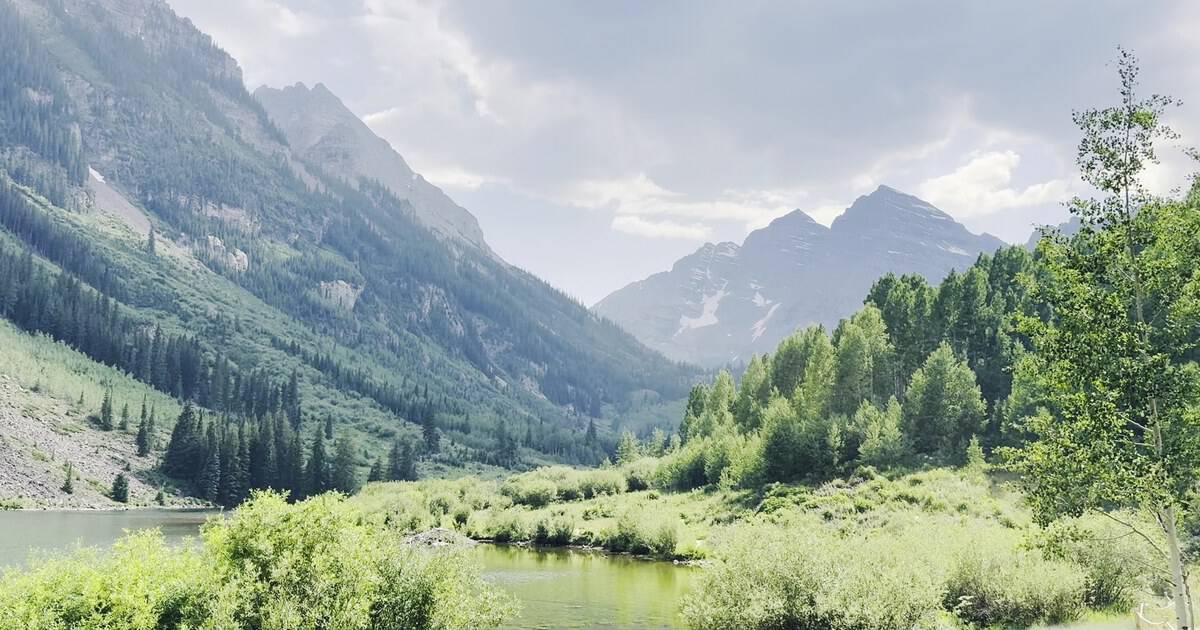
I keep a running list of places I swear I’ll get to before my knees quit on me. Colorado hogs an embarrassing share of it. Every time I think I’ve seen the best photo the state has to offer, another one turns up and makes me feel like a liar.
Colorado piles it on, all thin mountain air and rock walls that shrink you to a speck. Peaks that mirror themselves in glassy lakes. Dunes taller than skyscrapers. A canyon so deep the sun barely reaches the bottom.
Below are fifteen bucket-list spots worth building a whole trip around, spread from the San Juans in the southwest to the Front Range near Denver. These are the ones I’d point a first-timer to, the places that turn a casual road trip into the story you tell for years.
Grab a full tank and a good camera. You’ll want both.
1. Maroon Bells, Colorado
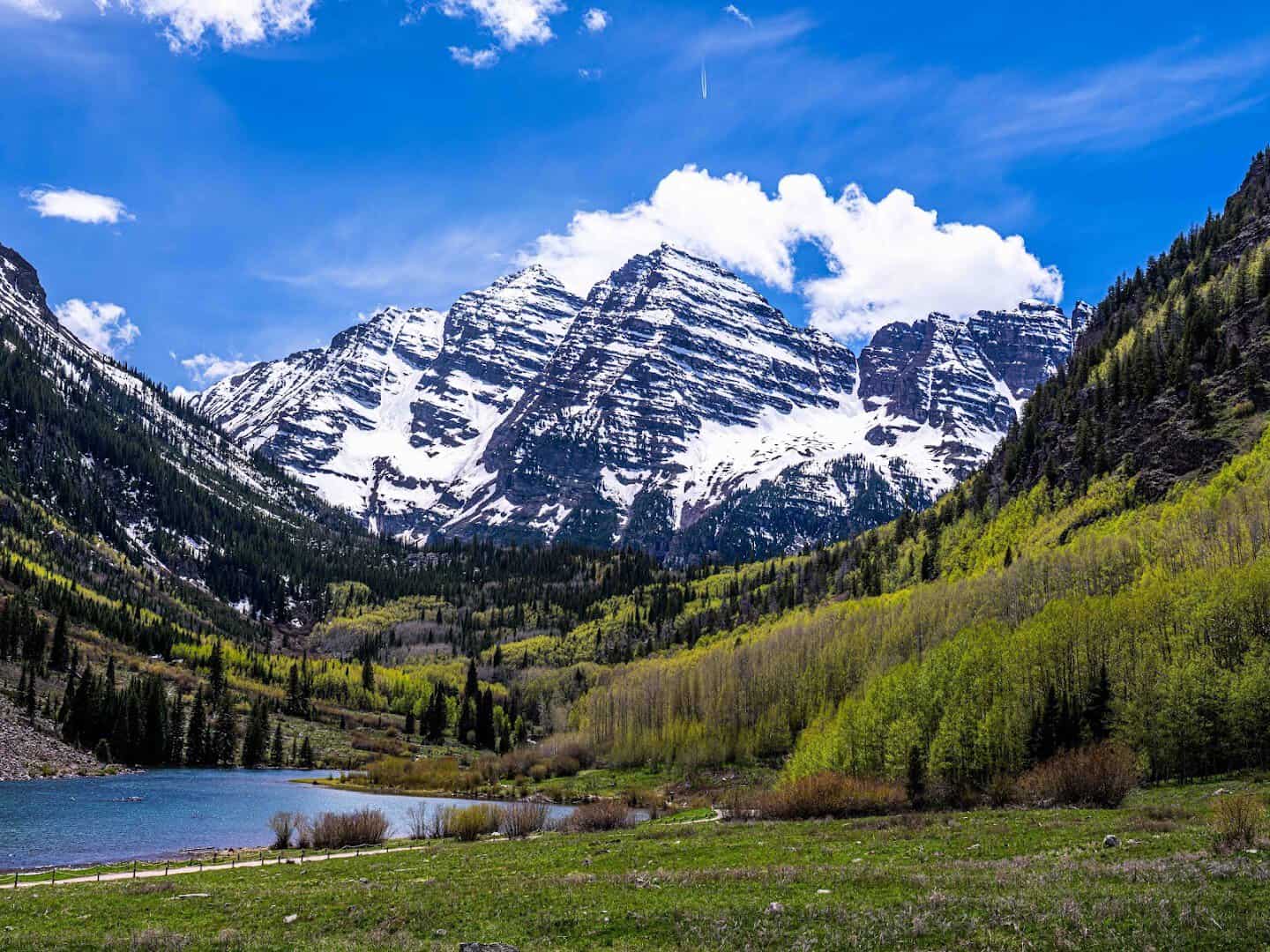
If you’ve ever seen a Colorado postcard, odds are you were looking at these two. The Maroon Bells are said to be the most photographed peaks in North America, and it takes about four seconds at Maroon Lake to understand why.
Two 14,000-foot summits rise straight out of the water, and on a still morning the lake hands you a perfect mirror image of them. The name comes from the deep maroon mudstone, streaked with pale bands you’ll spot in every shot.
Come at first light, when the peaks catch the sun and the crowds are still asleep. In fall the aspens turn gold around the lake, and the payoff is worth fighting the crowds for.
If your legs and lungs are up for it, the trail past Maroon Lake to Crater Lake adds about a mile and a half of nonstop scenery. Most people never leave the first overlook, so it thins out fast.
Where: Maroon Bells Scenic Area, Maroon Creek Road, Aspen, Colorado (seasonal shuttle from Aspen Highlands).
2. Rocky Mountain National Park, Colorado
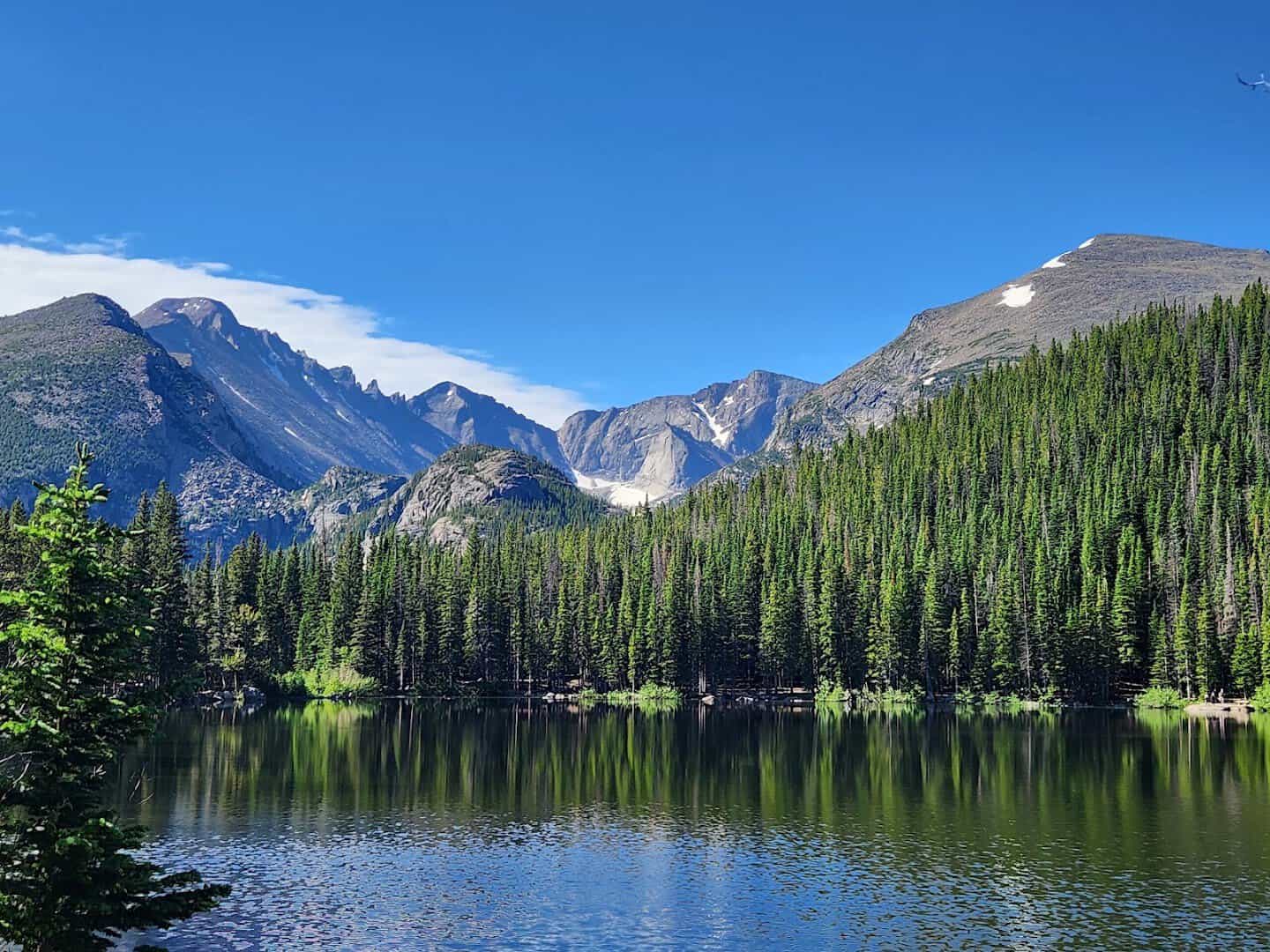
Nobody warns you how fast the air thins up here. Rocky Mountain National Park covers more than 265,000 acres of alpine lakes, tundra, and peaks, and the drive alone is a bucket-list item on its own.
That drive is Trail Ridge Road, the highest continuous paved road in the country, cresting above 12,000 feet where the trees give up and the world turns to rock and sky. Longs Peak, the park’s only fourteener, looms over all of it.
More than 350 miles of trails thread the park, from flat lakeside strolls to lung-busting climbs. Time your visit for Bear Lake or Dream Lake, two of the easiest big payoffs going, and listen for elk bugling in the fall.
Entry is timed during the busy months, so you reserve a slot to drive in at peak hours. It sounds fussy, but it keeps the park from turning into one long parking lot.
Where: 1000 US Highway 36, Estes Park, Colorado (Beaver Meadows entrance).
3. Garden of the Gods, Colorado
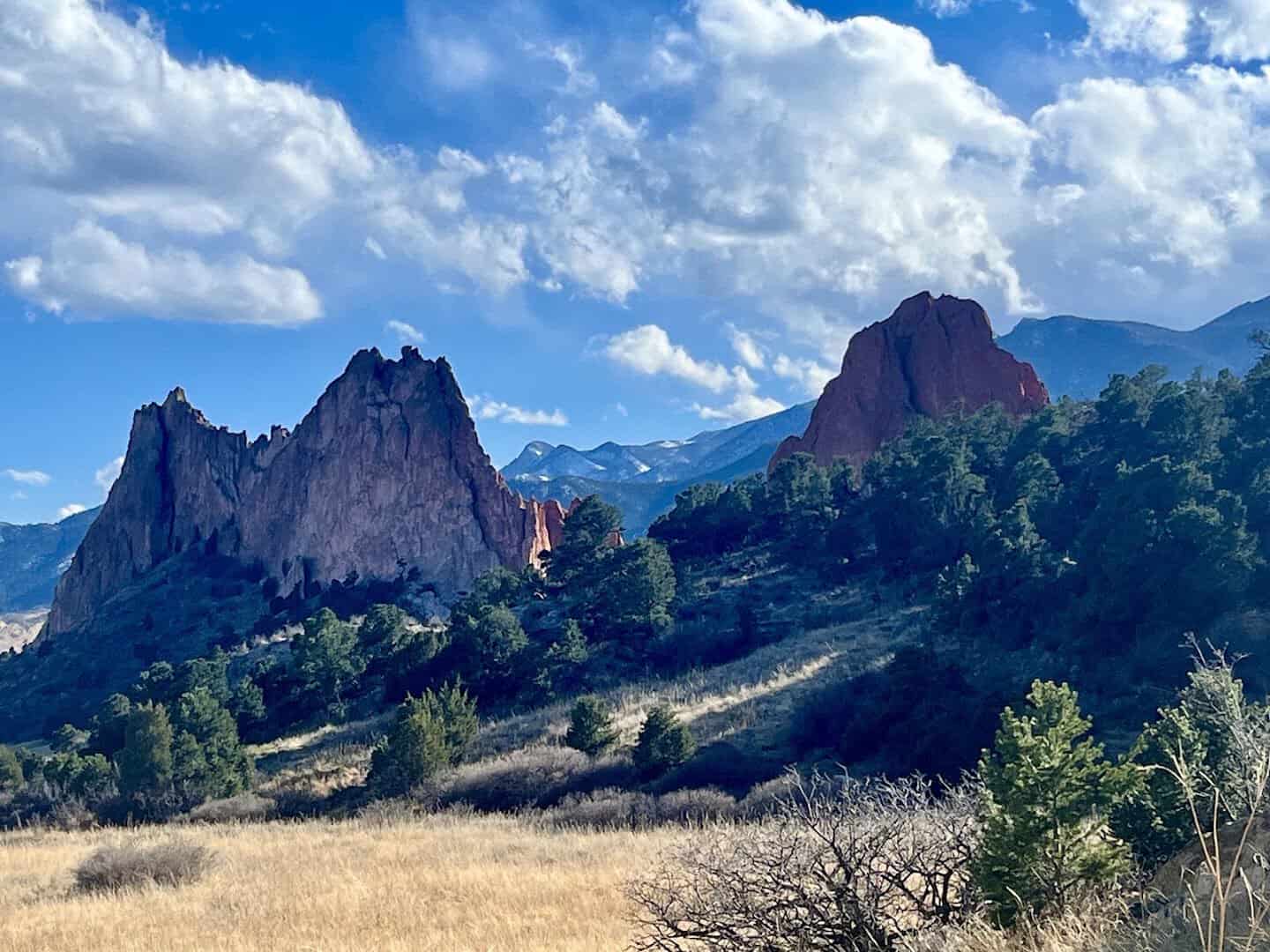
Here’s the part that always gets me: it’s free. Garden of the Gods is 1,300-plus acres of towering red sandstone fins jutting out of the ground, with Pikes Peak standing guard behind them, and it doesn’t cost a dime to walk in.
The rocks glow almost neon at sunrise and sunset. Paved trails wind right up to the base of the formations, so you don’t need to be a hiker to feel dwarfed by them. Balanced Rock is the classic photo stop, a boulder perched like it might tip any second.
The land was donated to the city in 1909 on one condition: it stay free to the public forever. It became a registered National Natural Landmark in 1971, and the visitor center explains how all that red got there.
Where: 1805 North 30th Street, Colorado Springs, Colorado.
4. Pikes Peak, Colorado

Some mountains you admire from below. This one you climb, and you don’t even have to hike. Pikes Peak rises to 14,115 feet above Colorado Springs, one of the most famous fourteeners in the country, and there are three ways to the top.
You can drive the 19-mile Pikes Peak Highway of switchbacks, ride the cog railway up from Manitou Springs, or hike the long Barr Trail if your lungs are feeling brave. Each one dumps you out at the same jaw-dropping summit view.
The panorama from up there inspired Katharine Lee Bates to write America the Beautiful back in 1893, and one look across the plains tells you why. The summit visitor center reopened in 2021, and yes, the famous high-altitude donuts are still there.
Bring a jacket no matter the season, because it can be summer at the base and freezing at the top. Go early to beat afternoon storms, which roll in fast at that elevation.
Where: Pikes Peak Highway, Cascade, Colorado (or the cog railway from Manitou Springs).
5. Great Sand Dunes National Park, Colorado
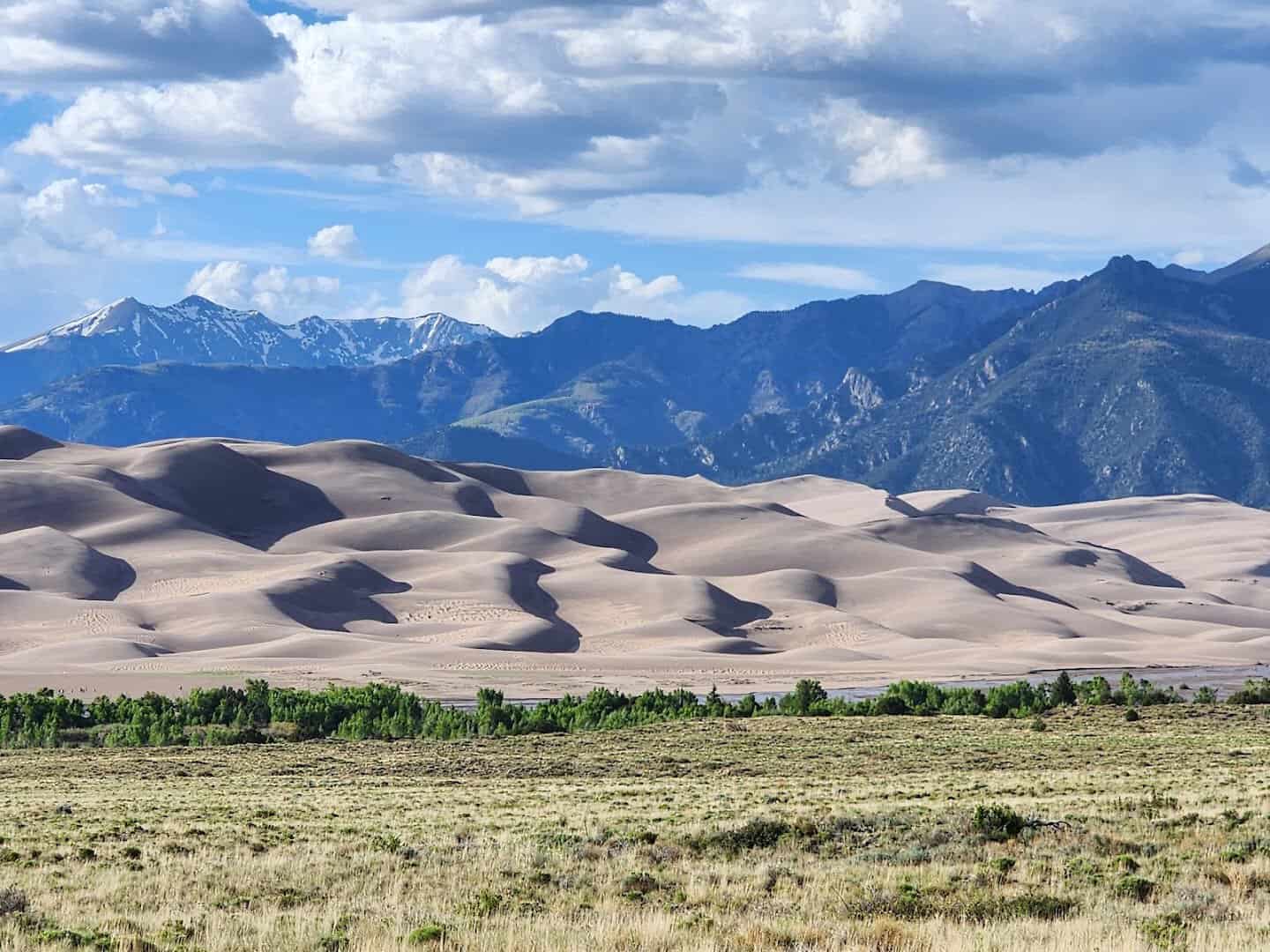
My brain still refuses to file this one correctly. You’re in the mountains, and then suddenly there’s a sea of sand, the tallest dunes in North America, some rising more than 700 feet against a backdrop of snowcapped peaks.
People sled and sandboard down the slopes like it’s a ski hill. You can rent the gear from shops near the entrance, since regular snow sleds don’t slide on sand. In late spring, Medano Creek runs along the base and turns into a wide, shallow beach.
Go early or late, because that sand can hit temperatures that will cook your feet by midafternoon. Stick around after dark, too: the skies here are some of the darkest in the country.
Bring water and closed shoes for the walk out to the tall dunes, which is farther and steeper than it looks from the lot. Kids treat the whole place like the world’s biggest sandbox.
Where: 11999 State Highway 150, Mosca, Colorado.
6. Mesa Verde National Park, Colorado
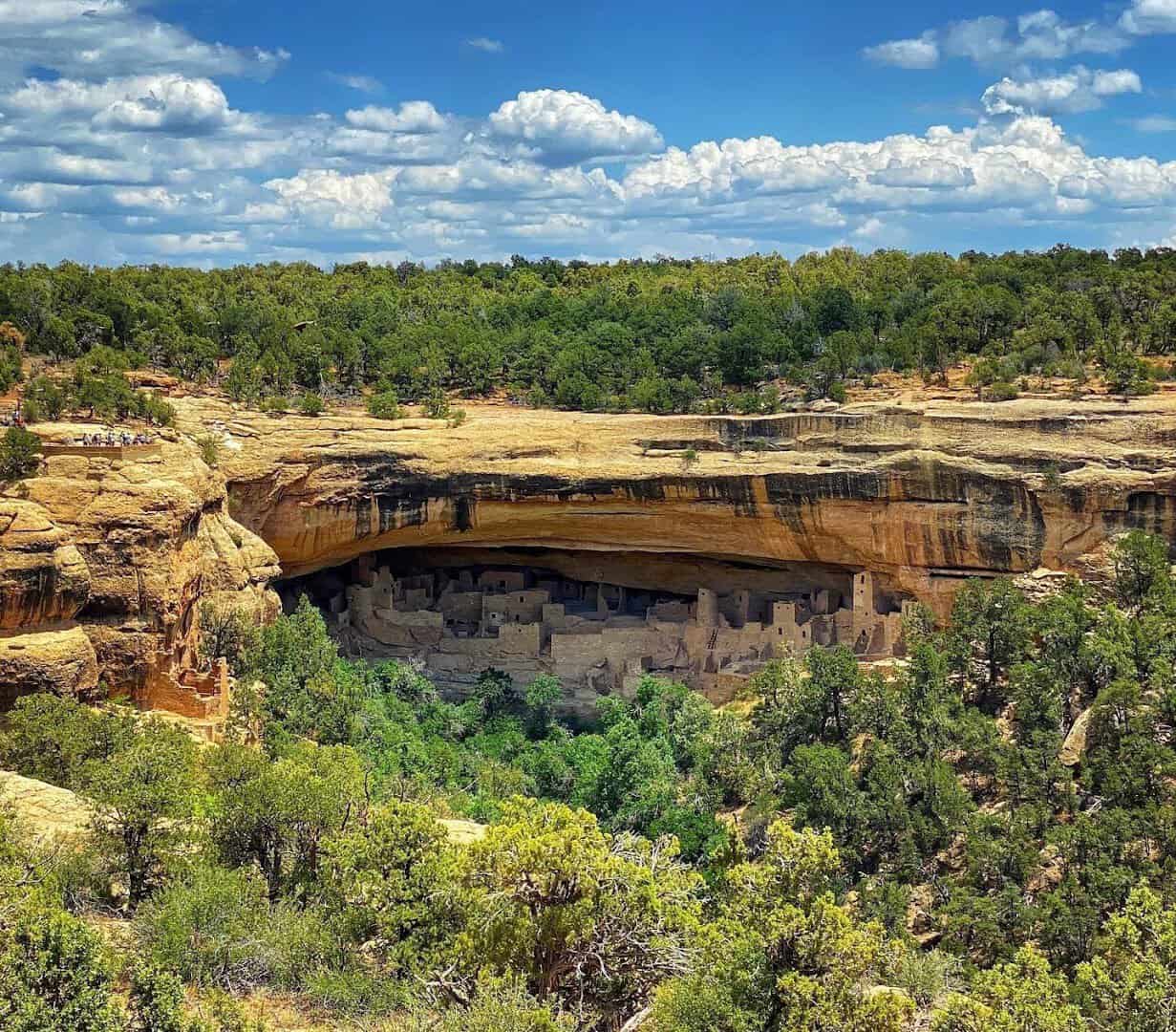
Some places make history feel close enough to touch, and this is the one that does it for me. Mesa Verde protects roughly 600 cliff dwellings built into the canyon walls by Ancestral Puebloans nearly a thousand years ago.
Cliff Palace is the showstopper, a sprawling stone village of around 150 rooms tucked under an overhang like it grew there. Ranger-led tours take you right into the dwellings, ladders and all, so you can stand where families once lived.
It was established in 1906 as the first national park set aside to protect the works of people, and it’s now a UNESCO World Heritage Site. Tours book up fast in summer, so grab tickets the moment they open.
Mesa Verde means green table in Spanish, a nod to the flat, forested plateau the dwellings hide beneath. The drive up to the sites is scenic on its own, all switchbacks and long valley views.
Where: Mesa Verde National Park, Highway 160, Mancos, Colorado (park entrance near Cortez).
7. Telluride, Colorado
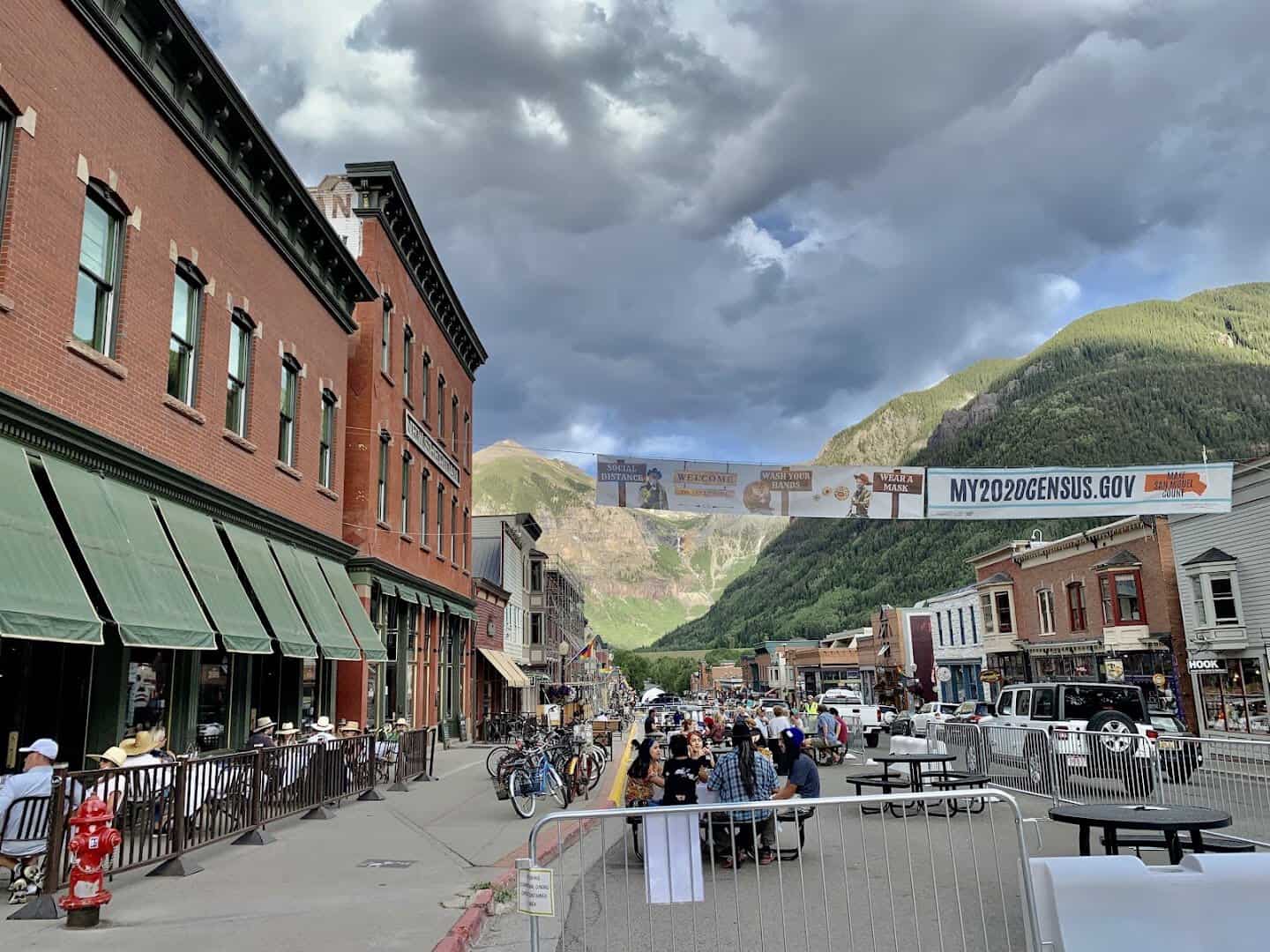
Tuck a town into the end of a box canyon, ring it with San Juan peaks, and you get Telluride. It’s a former mining camp turned world-class ski town, and even the free gondola ride into the mountains would justify the trip.
Bridal Veil Falls tumbles 365 feet at the head of the canyon, the tallest free-falling waterfall in the state. Summer brings a festival for nearly everything: film, bluegrass, food, jazz. Winter brings some of the best snow in the Rockies.
The town sits at 8,750 feet, so give yourself a day to adjust before tackling any trails. Wander the historic main street, ride the gondola up to Mountain Village, and let the peaks do the rest.
Where: Telluride sits at the end of a box canyon in the San Juan Mountains, about 65 miles south of Montrose. Worth a stop:
- Colorado Avenue, the historic main street lined with Victorian storefronts and a mountain wall at the end of every block
- The free gondola, which lifts you over the ridge between town and Mountain Village
- Bridal Veil Falls, at the head of the canyon, the tallest free-falling waterfall in the state
- Telluride Town Park, the riverside festival grounds that host film, bluegrass, and jazz all summer
8. The Million Dollar Highway, Colorado
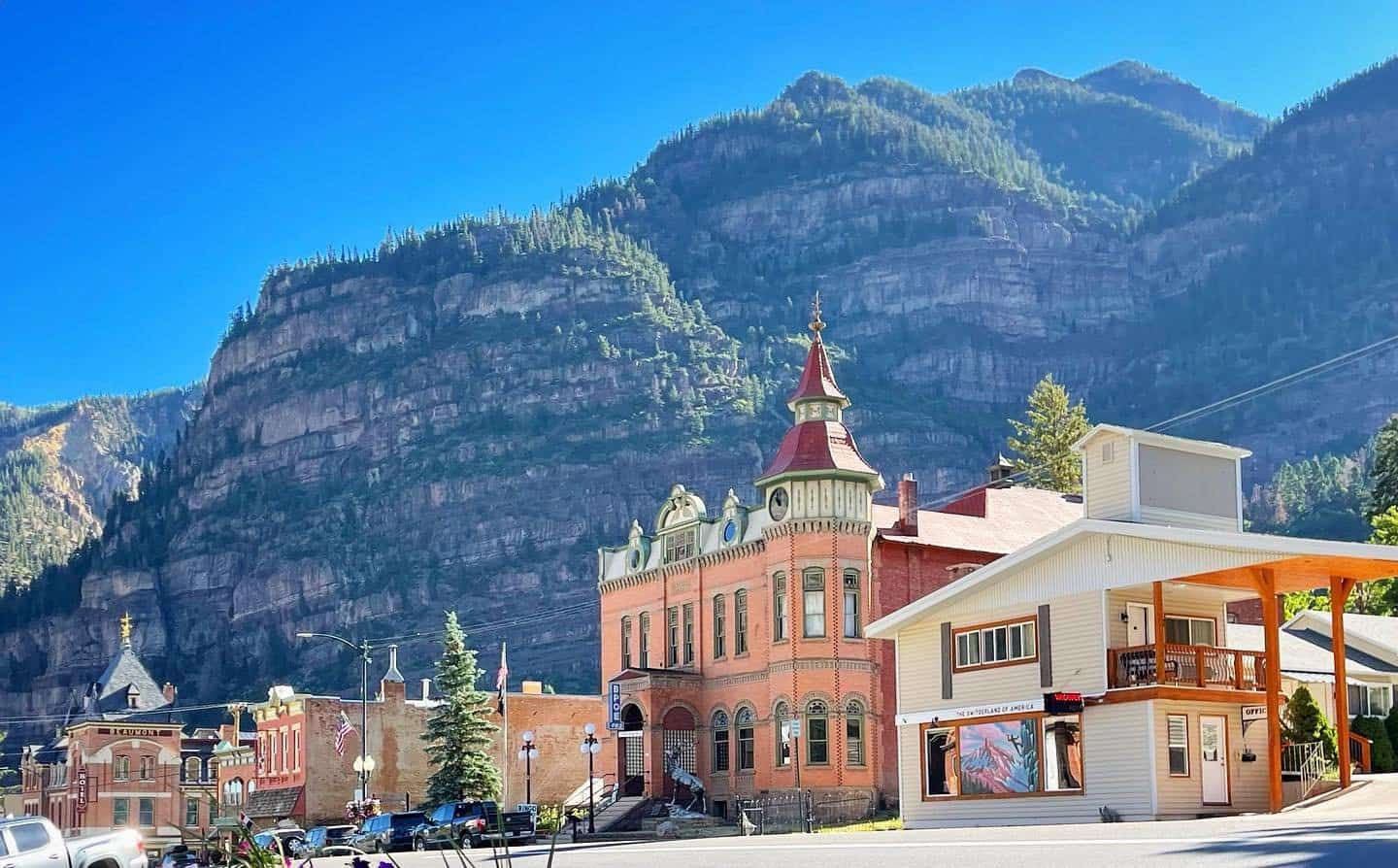
This might be the wildest drive in the state. The Million Dollar Highway is the stretch of US 550 that clings to the cliffs between Ouray and Silverton, all hairpin turns, sheer drops, and almost no guardrails to hide behind.
Ouray, at the northern end, is nicknamed the Switzerland of America, a tiny town wedged into an amphitheater of peaks with hot springs to soak in afterward. The road climbs over high passes with views that beg you to pull over, so do.
Nobody quite agrees where the name came from, the cost to build it or the gold-flecked gravel underfoot. Either way, budget extra time, drive it in good weather, and let someone else grip the wheel if you’d rather just look.
Where: US Highway 550 between Ouray and Silverton, Colorado (part of the San Juan Skyway).
9. Black Canyon of the Gunnison National Park, Colorado
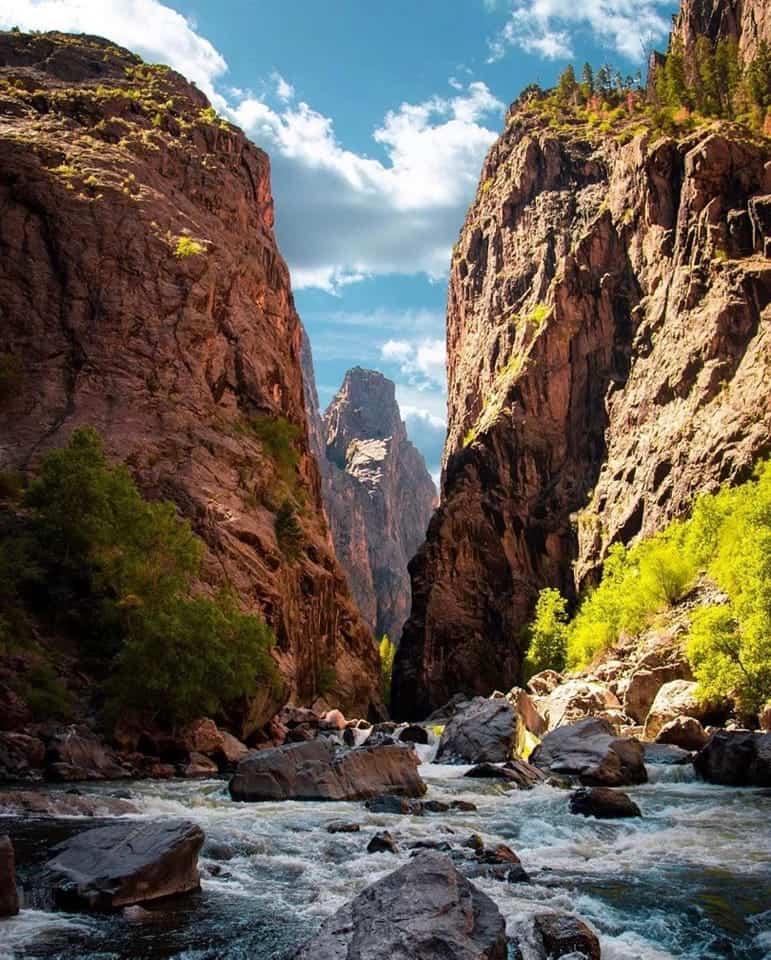
This is the one that genuinely made my palms sweat just reading about it. The Black Canyon is so deep and so narrow that parts of the floor get only a half hour of sunlight a day, which is exactly how it earned its name.
The walls drop as much as 2,700 feet to the Gunnison River below. The Painted Wall, streaked with pink veins of stone, is the tallest cliff in Colorado at around 2,250 feet. Peering over the rim is a thrill you feel in your feet.
It’s one of the least-visited parks in the state, so you’ll often have an overlook to yourself. Drive the South Rim Road and stop at every pullout, each one more vertigo-inducing than the last.
Stargazers love it too. It’s a certified dark-sky park with almost no light for miles, so on a clear night the Milky Way shows up like a smear of chalk overhead.
Where: 9800 Highway 347, Montrose, Colorado (South Rim entrance).
10. Hanging Lake, Colorado

I’ve stared at pictures of this water so long I half suspected it was edited. It isn’t. Hanging Lake sits on a cliff shelf in Glenwood Canyon, fed by waterfalls and glowing a turquoise green that comes from the travertine rock beneath it.
The climb up is short but steep, a little over a mile of switchbacks and stone steps that earn you the view. Because the lake is fragile, a permit and reservation are required, and swimming is off the table.
A boardwalk loops the rim, and Spouting Rock just above it shoots water straight out of the cliff face. Wear real shoes and go for the payoff, not the workout. That water rewrites what you think a lake can look like.
Where: Hanging Lake Trailhead, Glenwood Canyon, near Glenwood Springs, Colorado (permit and shuttle required in season).
11. Colorado National Monument, Colorado

Everybody knows the Grand Canyon. Far fewer know Colorado has red-rock canyons of its own on the Western Slope, and you can drive the rim of them with the crowds nowhere in sight.
Colorado National Monument is a maze of sheer sandstone canyons and freestanding monoliths near Grand Junction. Rim Rock Drive runs 23 miles along the edge, ducking through tunnels and past overlooks that drop straight into the void.
Independence Monument is the signature spire, a 450-foot tower of rock that climbers summit every Fourth of July. Bighorn sheep and soaring eagles are regulars, and the whole place glows copper at sunset.
Much of it exists thanks to John Otto, a settler who built the first trails by hand and lobbied to protect the canyons, which became a national monument in 1911. Start at the visitor center and drive the rim slowly.
Where: Rim Rock Drive, Fruita, Colorado (visitor center at 1750 Rim Rock Drive, near Grand Junction).
12. Steamboat Springs, Colorado

Some towns wear their cowboy roots and their ski slopes at the same time, and Steamboat pulls it off better than most. It’s a working ranch town in northwest Colorado that also happens to sit under some of the lightest snow in the Rockies.
Locals trademarked the phrase Champagne Powder for a reason. Beyond the slopes there are natural hot springs to soak in, a waterfall a short walk from a parking lot, and a historic downtown strip that still feels like a real place.
The town also claims the oldest continuously operating ski area in Colorado, Howelsen Hill, where Olympians have trained for a century. Come winter or summer, there’s a reason to stay a few days.
Where: Steamboat Springs sits in northwest Colorado on US-40, about three hours west of Denver. Worth a stop:
- Strawberry Park Hot Springs, 44200 County Road 36, stone-lined natural pools tucked in the forest
- Fish Creek Falls, off Fish Creek Falls Road, a 283-foot cascade a short walk from the lot
- Historic Lincoln Avenue, the downtown strip of shops, saloons, and the old railroad depot
- Howelsen Hill, the oldest continuously operating ski area in the state, right across the river from town
13. Crested Butte, Colorado

If you time it right, this whole valley turns into a wildflower painting. Crested Butte is a former coal town at the top of the Gunnison Valley that Colorado officially named its Wildflower Capital, and mid-July proves the title.
The main street is a row of candy-colored Victorian storefronts and old miners’ cabins, backed by the blunt peak the town is named for. In winter it’s a low-key ski mountain; in summer it’s wildflowers and mountain bikes.
Just outside town, Kebler Pass runs through one of the largest aspen groves on Earth, which means the fall color here is almost unfair. The Wildflower Festival each July fills the hills with guided hikes.
Where: Crested Butte sits at the north end of the Gunnison Valley, about 30 minutes north of Gunnison on Highway 135. Worth a stop:
- Elk Avenue, the colorful historic main street of Victorian storefronts and miners’ cabins
- Kebler Pass Road, a dirt drive through one of the largest aspen groves in the country, unreal in fall
- Crested Butte Mountain Resort, up the hill in Mount Crested Butte, for lifts, trails, and summer hikes
- The Wildflower Festival trails, where peak blooms carpet the slopes in mid-July
14. Red Rocks Park and Amphitheatre, Colorado

You’ve probably seen a concert filmed here without knowing where here was. Red Rocks is a natural amphitheater carved between two 300-foot sandstone monoliths just west of Denver, and no venue on the planet sounds or looks quite like it.
The stage is framed by Ship Rock and Creation Rock, with the Denver skyline shimmering in the distance behind the crowd. It opened as a concert venue in 1941, and the acoustics are so good the builders barely had to help them along.
Here’s the part most visitors miss: on days with no show, it’s a free public park. You can climb the seats for a workout, hike the Trading Post Trail, or catch a sunrise yoga session on the stage.
Where: 18300 West Alameda Parkway, Morrison, Colorado (about 15 miles west of Denver).
15. Royal Gorge Bridge, Colorado

Not a fan of heights? This might be your Everest. The Royal Gorge Bridge hangs 956 feet above the Arkansas River, one of the highest suspension bridges in the country, and walking across the wooden planks with the river a speck below is a full-body experience.
It was built back in 1929, and today the surrounding park piles on a gondola, a zip line, and a stomach-dropping aerial swing for anyone who wants more thrill. The views straight down the gorge are unreal.
There’s a carousel and playground up top too, for anyone who’d rather keep both feet planted. Even if you just walk to the middle and grip the rail, you’ll remember it.
Whitewater rafting trips run the Arkansas River far below, so you can flip the view and see the bridge from underneath. Spring runoff makes for the biggest rapids and the wettest ride.
Where: 4218 County Road 3A, Cañon City, Colorado.
Start Building Your Colorado List
Fifteen spots, and I’ve barely scratched what this state hides in its corners. You could spend a lifetime chasing Colorado’s peaks, canyons, and ghost towns and still leave with a longer list than you arrived with.
So pick two or three, map a loop, and go. Whether you’re a Texan pointing the car north or a first-timer flying into Denver, these are the places that will have you planning the next trip before you’ve even driven home.
Featured image: Riti Mishra via Maroon Bells

Stella Raines
Editor-in-Chief
Stella brings over a decade of storytelling experience to TX Headlines. With roots in West Texas and a love for road trips, she leads the editorial team with an eye for the hidden stories that make Texas unforgettable.