This Tranquil Texas Garden Was Built Inside an Old Rock Quarry and Hides a 60-Foot Waterfall
The first time I walked down into it, I stopped hearing the city about halfway down the stone steps. Traffic, sirens, the hum of a summer afternoon in San Antonio, all of it faded, and something else took its place.
Falling water. Somewhere below me, hidden by leaves, water was tumbling off a cliff, and I could not see it yet. I just kept following the sound down, one worn limestone step at a time.
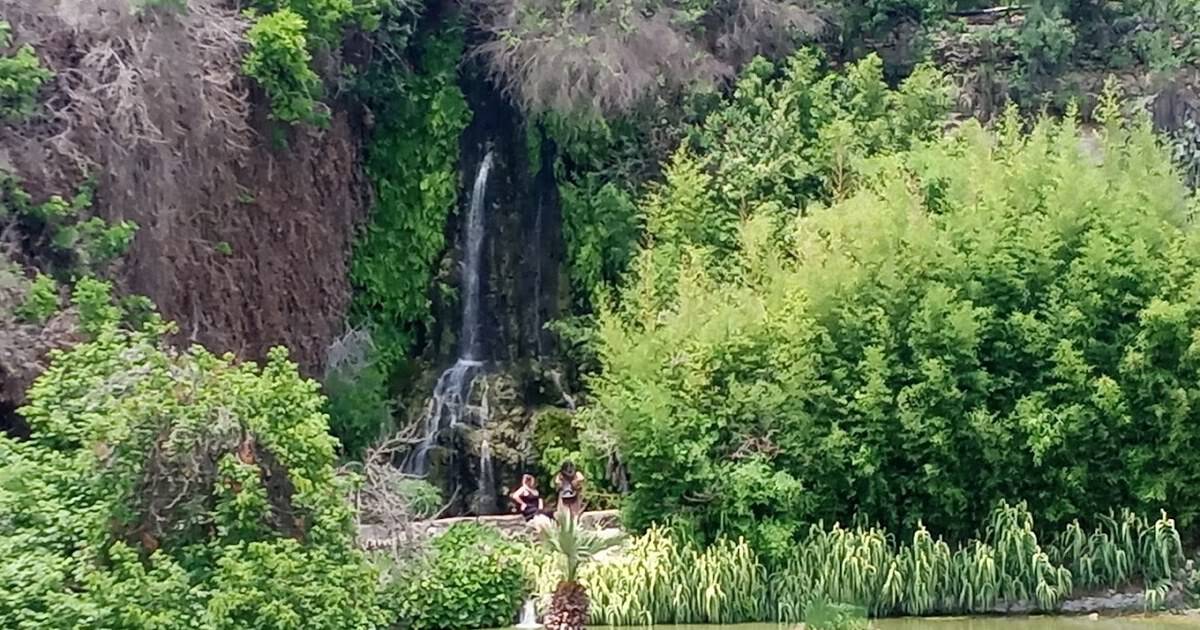
When the path finally opened up, there it was. A 60-foot waterfall spilling down a rust-colored rock wall into a pond full of koi, with green climbing every ledge around it.
This is the Japanese Tea Garden, a green hush tucked into the edge of Brackenridge Park, and it is one of the loveliest free things you can do anywhere in Texas.
Below, I want to walk you through the whole place, the falls, the koi, the little pavilion up top, the family who once lived here, and everything you need to plan your own quiet afternoon in it.
Following the Sound of the Falls
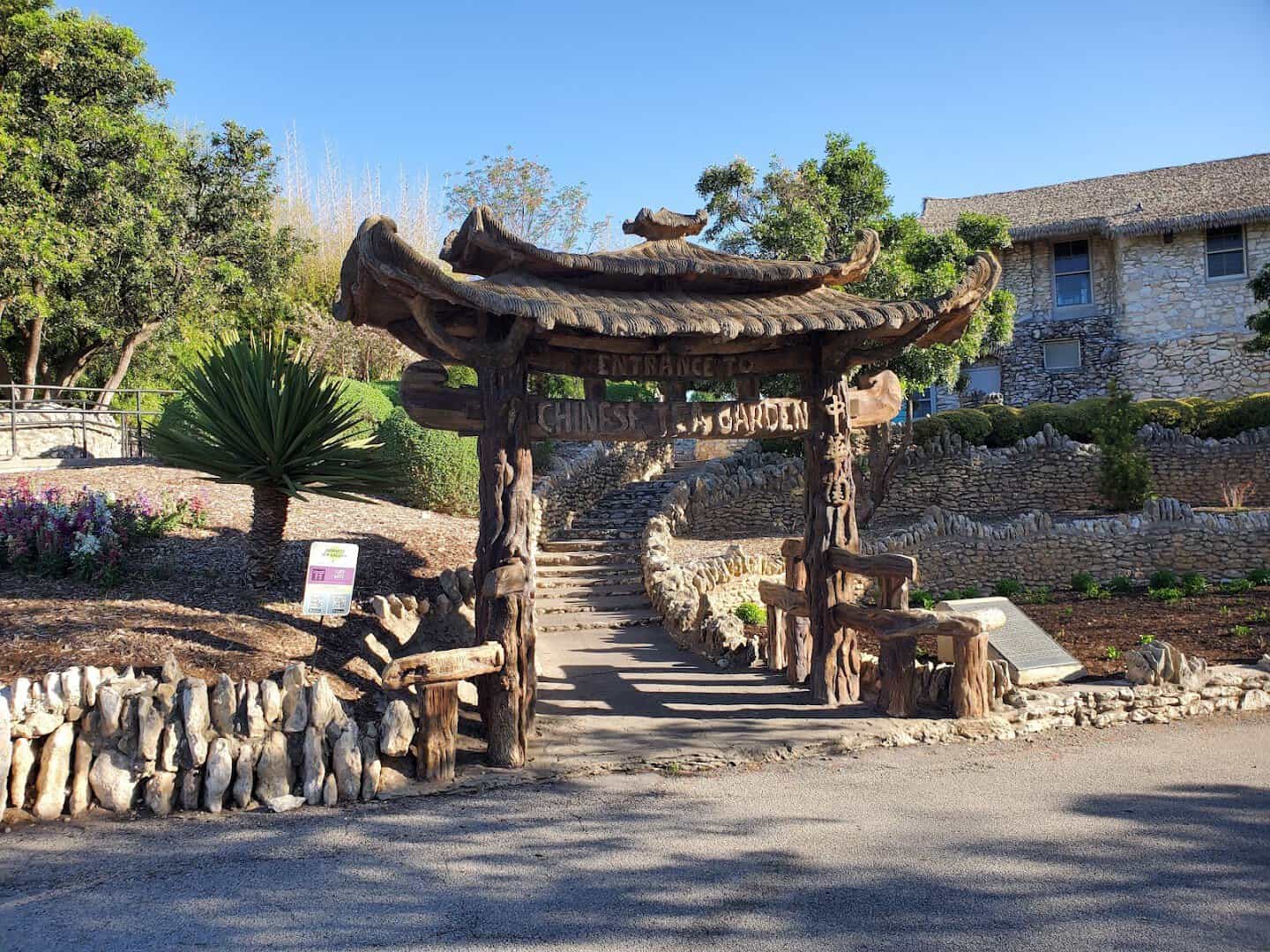
You enter under a gate that looks like it was built from knotted tree branches. Look closer and it is concrete, shaped and painted by hand to mimic wood. It is the first sign that nothing here is quite what it seems.
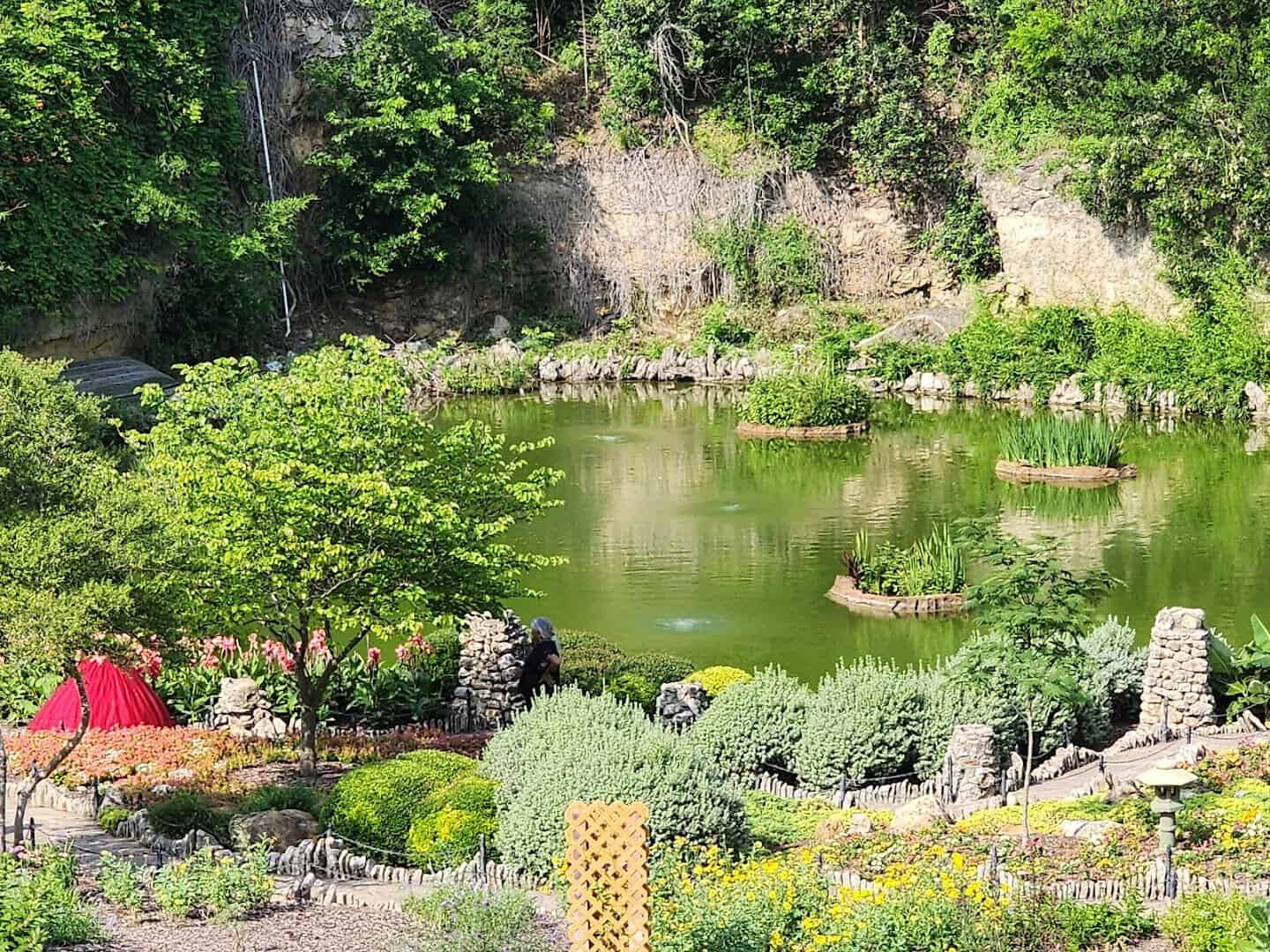
Past the gate, the ground drops away and the garden reveals itself all at once. You are standing at the lip of an old rock quarry, and the whole sunken world of it is laid out below you in green.
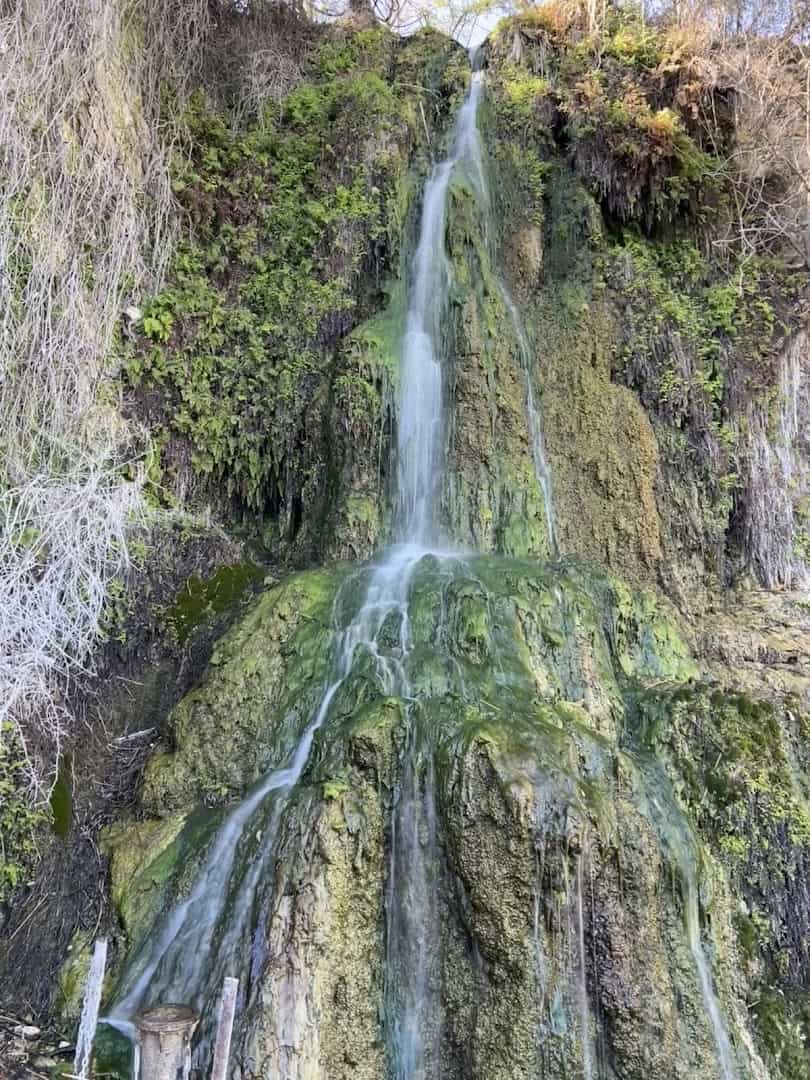
The waterfall is the thing everyone comes for. Sixty feet of it, a thin silver ribbon rather than a roaring torrent, sliding down the cliff and catching the light. I could have watched it for an hour, and honestly, I nearly did.
The sound is the part photos never capture. It fills the whole bowl of the garden, soft and constant, and it turns a hot Texas day down by a few degrees the moment you step below the rim.
The cliff behind it does half the work. It is the raw quarry wall, striped and pocked and the color of old brick, and it makes the falls feel like something the land grew on its own rather than a thing anyone built.
The water is kept moving by a quiet recirculating system, added when the garden went through a big restoration and reopened in 2008. You would never guess it from the bank. It just looks and sounds like a wild little waterfall that has always been here.
Koi, Bridges, and a Pavilion With a View
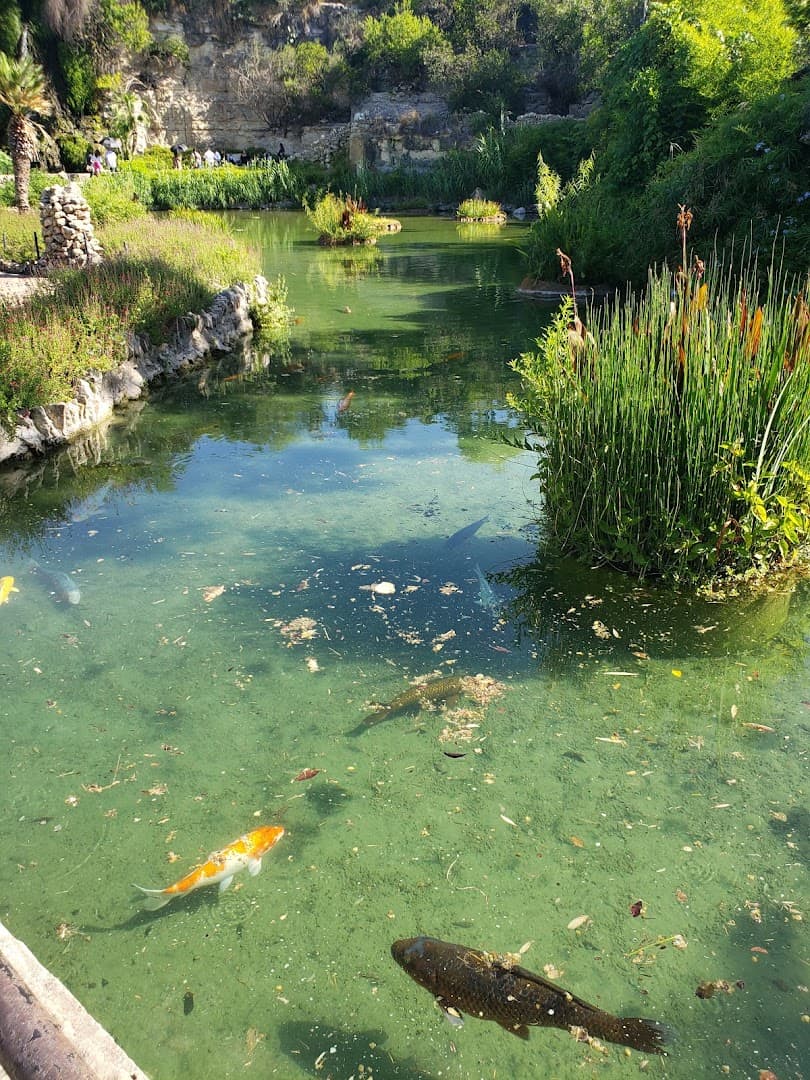
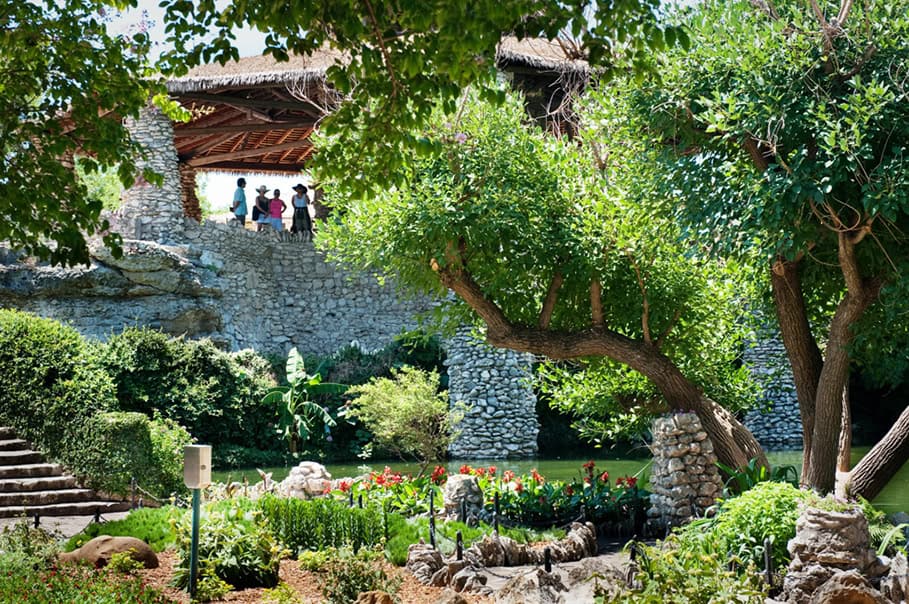
At the bottom, stone paths wind between ponds thick with lily pads. Fat orange, white, and gold koi drift just under the surface, and they glide right up to the arched stone bridges as if they own the place.
I leaned on one of those bridges and watched the fish for a while. A little kid nearby was counting them out loud and losing track past twelve, which felt about right. The koi do not sit still for anyone.
The bridges themselves are small works of art. They were laid by hand more than a century ago from the quarry’s own limestone, and they arch over the water in that gentle, deliberate way that makes you slow your steps.
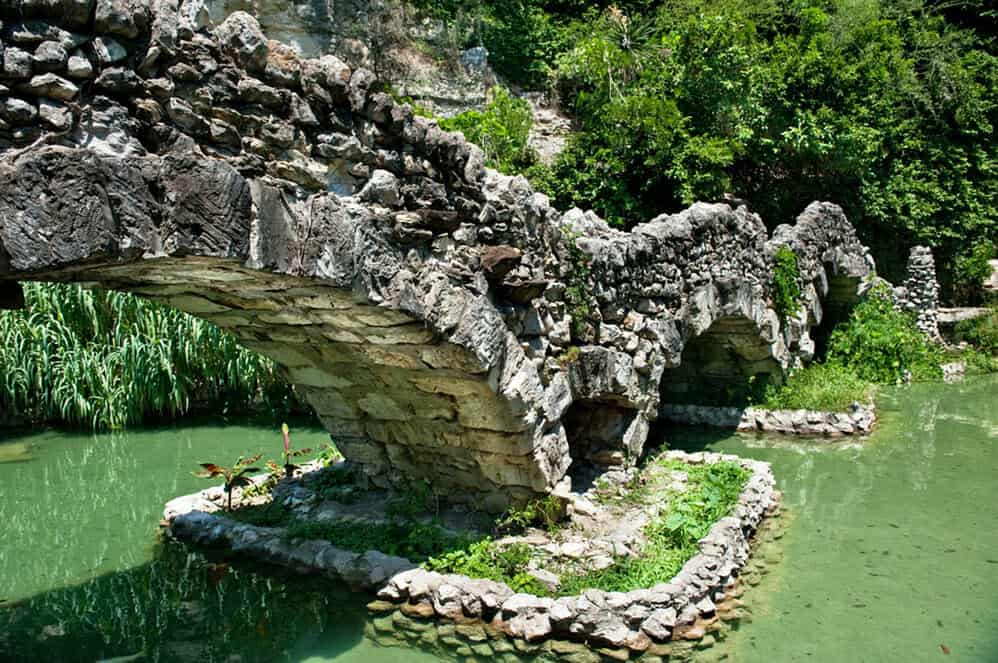
Everywhere you look there is another small view framed for you: a stone lantern half in shadow, a knot of water lilies, a bend in the path that hides what comes next. The garden rewards wandering slowly.
On a still morning the ponds turn into mirrors. The falls, the leaves, and the pale sky all land upside down on the water until a koi noses up and breaks the whole picture into rings. I never get tired of watching that happen.
Climb the path on the far side and you reach the pavilion, an open, thatch-roofed shelter perched right at the edge of the old cliff. From up there you look back across the ponds and straight into the face of the falls.
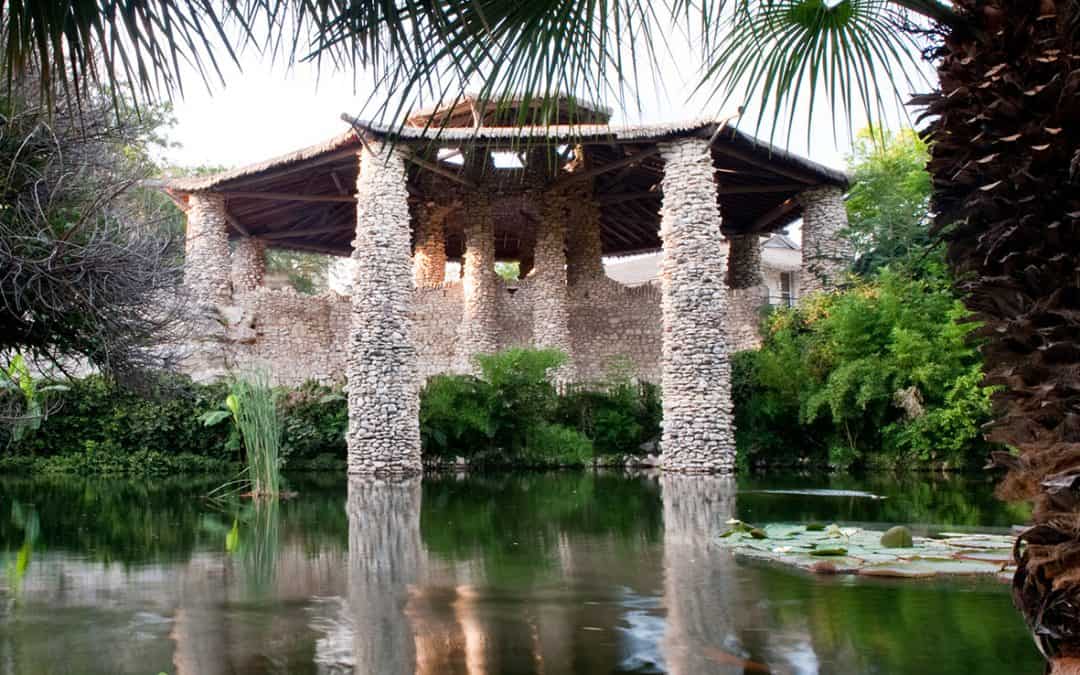
It is the best seat in the garden. Cool air rises off the water, the koi flash below, and the whole quarry spreads out green and glinting. I have sat up there and completely lost track of what time it was.
Did you know the garden stays green all year? The plantings are chosen so there is always something in bloom or in leaf, which means there is no wrong season to come. Even a mild January afternoon rewards the trip.
From Cement Quarry to Secret Garden
Here is the part that still amazes me. For decades, this was not a garden at all. It was an industrial pit, where the Alamo Cement Company quarried limestone, and the stone from this ground helped build landmarks all over the city.
By 1908 the quarry was worked out and abandoned, a raw hole in the ground on the edge of the park. Most people saw an eyesore. One man saw something else.
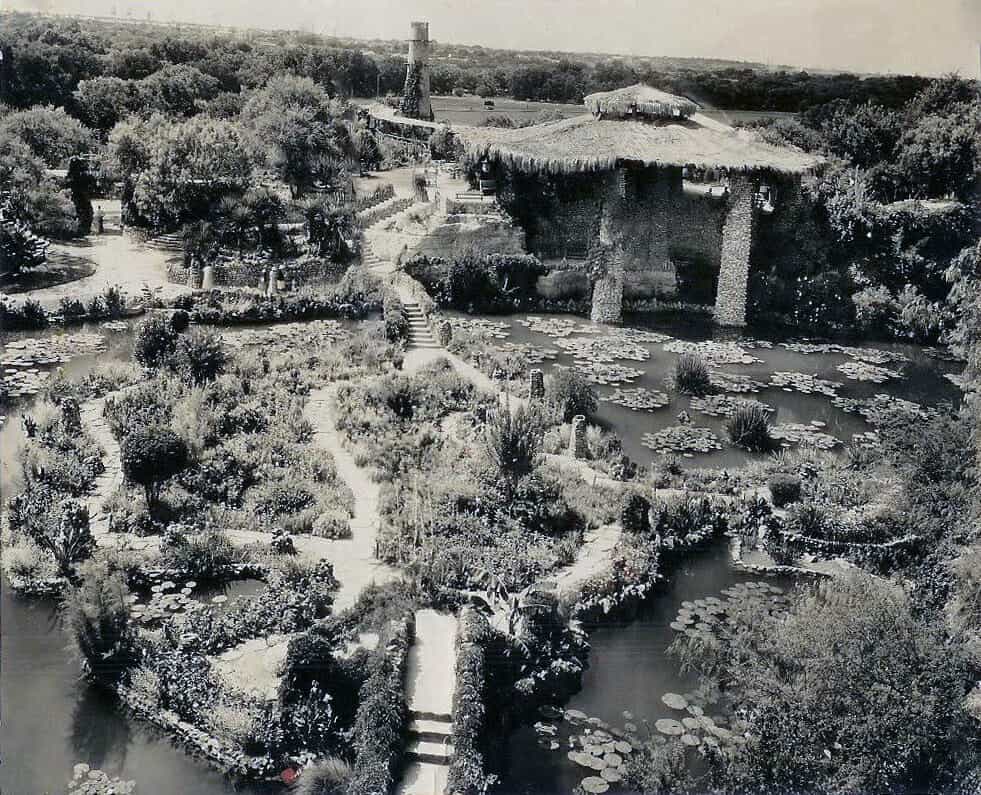
City Parks Commissioner Ray Lambert looked into that pit around 1917 and pictured a sunken garden, with lily ponds and stone paths where the machinery used to sit. His park engineer, W.S. Delery, drew up the plans.
The work ran from 1918 into 1919 and was done largely by prison labor, for a total cost of roughly $7,000. Out of that came the walkways, the arched bridges, an island, the ponds, and the pavilion. The garden opened in 1919.
That knotted-branch entrance gate came a bit later, in 1942, and it was built by Dionicio Rodriguez, a Mexican-born artist famous for his faux bois work, concrete coaxed to look exactly like rustic wood. Once you know his gate is fake, you start spotting his trick everywhere.
The whole place is now recognized as a civil engineering landmark, which is a fancy way of saying somebody looked at an old cement quarry and turned it into all of this. I think that is worth a slow lap around the ponds all on its own.
The Family Who Made It Home
A garden this personal needed a family in it, and for years it had one. In 1919, at the city’s invitation, a Japanese-American artist named Kimi Eizo Jingu moved onto the grounds with his wife, Miyoshi.
They did not just tend the place. They lived in it, and they raised eight children here among the koi ponds and the falling water. One of their daughters was even born in the garden itself.
In 1926 the Jingus opened the Bamboo Room, a little concession where visitors could stop for light lunches and cups of tea. For a while, this was the family business and the family home, all in one sunken green world.

Then history turned hard. Kimi Eizo Jingu died in 1938, and after the United States entered World War II, the Jingu family was evicted in 1942 amid the anti-Japanese feeling of the era. The garden itself was renamed the Chinese Tea Garden.
For years after that, a Chinese-American couple, Ted and Ester Wu, ran a small snack bar in the pavilion, keeping the tea-and-a-view tradition going even as the garden carried a name that erased the family who built its soul.
The story has a warmer ending than it might have. In 1984, under Mayor Henry Cisneros, the city formally restored the original name, the Japanese Tea Garden, in a ceremony the Jingu children came home to attend. Their family’s name is back where it belongs.
A Cup of Tea Where the Jingus Once Served It
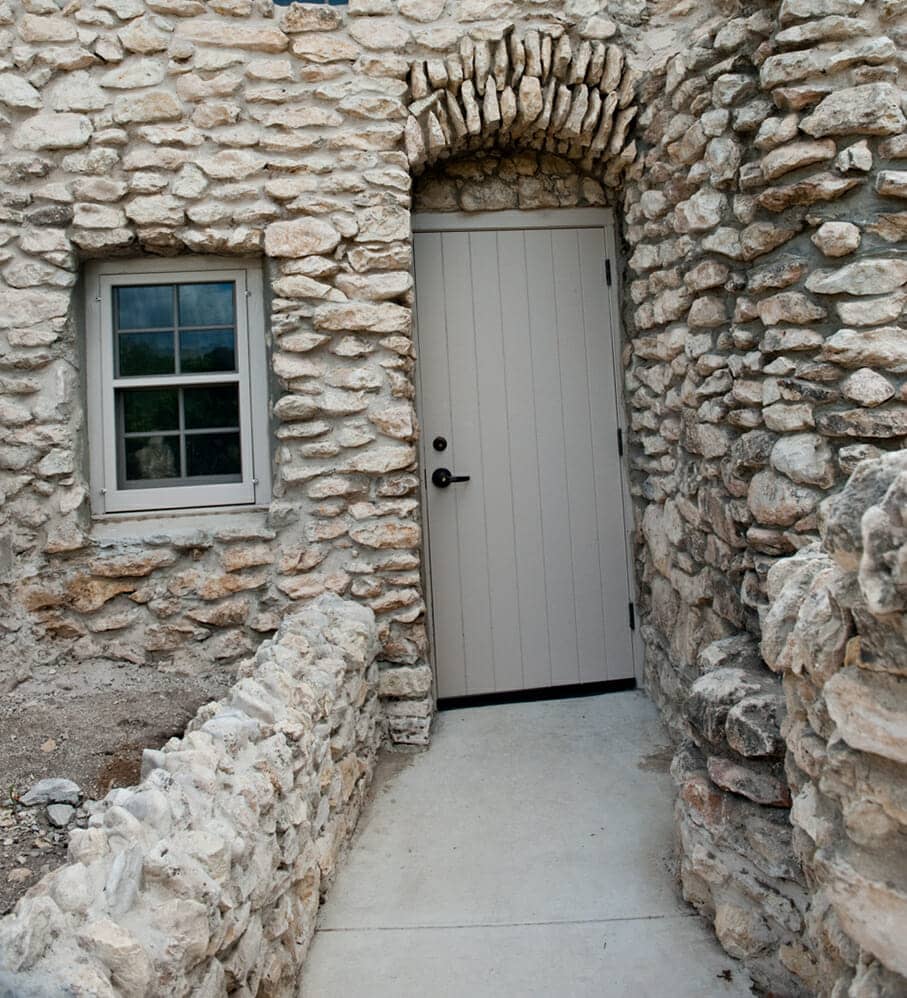
You can still stop for a bite in almost the same spot. The historic Jingu family house was restored and now runs as the Jingu House, a little cafe serving a Japanese and Tex-Mex mash-up that only San Antonio could dream up.
My move is to grab something cold there, carry it to a bench near the water, and just sit. There is something fitting about eating a snack in the exact place a family once served tea to visitors nearly a hundred years ago.
Take a beat inside the little house, too. It was lovingly brought back to life, and standing in the rooms where the Jingu children grew up gives the whole garden a heartbeat you can feel. It stops being pretty scenery and becomes somebody’s home.
The garden earned its place in the record books, too. It was added to the National Register of Historic Places in 2004, one more layer of the long, strange life this old quarry has led.
I am not the only one who leaves feeling lighter than I arrived. One visitor summed it up simply, writing that the koi ponds, waterfalls and stone bridges “create such a peaceful escape.” That is exactly it.
Tips for Your Visit
Pro tip: come early. The garden opens at seven in the morning, and the first hour is the quietest and the coolest, with the light coming in low and the koi already up and moving. Summer afternoons get warm down in the bowl.
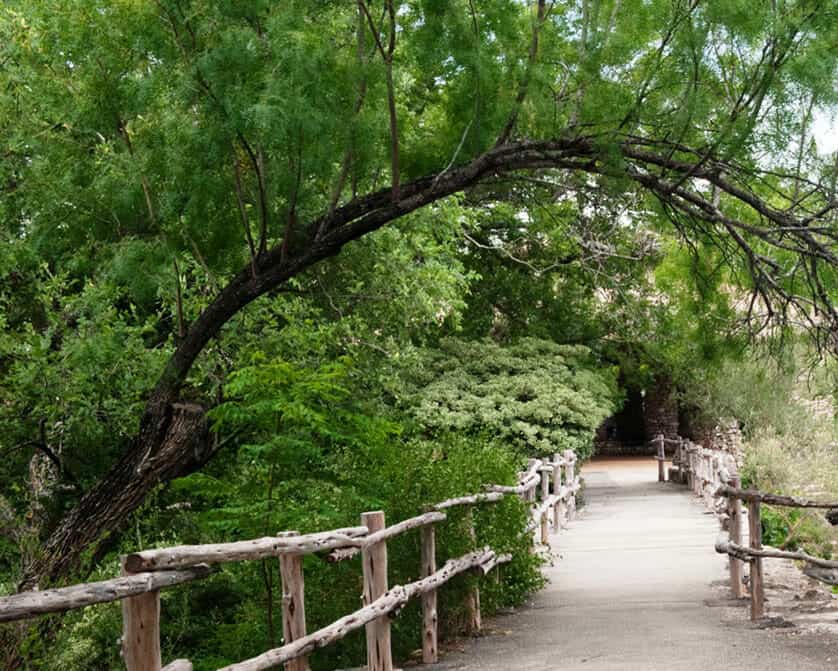
Wear shoes you can walk in. The paths are stone and they climb and dip around the quarry, which is part of the charm, but flip-flops and slick limestone are not a happy pair after a splash of spray from the falls.

Give yourself more time than you think. It looks small from the rim, but you will lose a while to the koi, the bridges, and the climb up to the pavilion. An hour is a good minimum, longer if you bring a camera.
Pair it with the neighbors. The garden shares Brackenridge Park with the San Antonio Zoo and sits close to the Witte Museum, so you can easily string all three into one relaxed day without moving your car very far.
Best of all, it will not cost you a thing. Admission is free, and so is the parking, which makes this one of the great cheap dates and easy family outings in the whole city.
How to Get There
The garden sits inside Brackenridge Park, just north of downtown San Antonio and an easy hop from the zoo and the Witte Museum if you want to make a full day of the area.
Where: Japanese Tea Garden, 3853 N St Mary’s St, San Antonio, TX 78212. Open daily, roughly seven in the morning to five in the evening. Admission and parking are free.
Plan Your Quiet Texas Afternoon
Some places shout for your attention. This one just quietly waits at the bottom of an old rock quarry for you to walk down and find it, the way I did, following the sound of water you cannot see yet.
So the next time you are anywhere near San Antonio, carve out a morning, follow the stone steps down, and let the city fall away behind you. Stand at the rail, watch the koi, and let that 60-foot waterfall do the rest. You will not want to leave.
Featured image: Anita Mills via Japanese Tea Garden

Stella Raines
Editor-in-Chief
Stella brings over a decade of storytelling experience to TX Headlines. With roots in West Texas and a love for road trips, she leads the editorial team with an eye for the hidden stories that make Texas unforgettable.
More Stories

These 10 Texas Spots Bloom Into Seas of Bluebonnets Each Spring

This Enchanting Texas Nature Trail Feels Like Hiking Through a Fairytale Forest

This Underrated Texas State Park Gives You a Full Day of Swimming and Hiking for Just $5

This Easy Texas Hike Leads to a Swinging Suspension Bridge Hidden in the Pines
Tags