This Short Texas Trail Is Fast Becoming One of the Most Talked-About Hikes in the State
I have a rule about hikes: the reward should never make me do trigonometry to figure out if it was worth the sweat. Give me a short climb with a giant payoff and I am a happy person for the rest of the day.
That is exactly what a little loop up Goodnight Peak keeps promising hikers. It sits inside Palo Duro Canyon State Park near the small town of Canyon, out in the Texas Panhandle.
It is short, it is steep in a couple of spots, and lately people keep coming back down saying it delivered. The view at the top is the kind of wide-open payoff that folks drive clear across the state to stand in front of.
Here is why this little trail keeps ending up on everyone’s list, what you actually see from the ridge, and how to time your visit so the canyon glows.
A Big View for a Short Climb
The whole point of Goodnight Peak is the ratio. You give the trail a couple of miles and a few hundred feet of climbing, and it hands you one of the biggest views in the Panhandle.
Depending on which route you stitch together, the Triassic Trail, the CCC Trail, and the scenic loop up top, you are looking at somewhere between 1.6 and 2 miles round trip. Most people knock it out in under an hour, even with a lot of stopping to stare.
The climb is honest. There is a stretch of flat canyon floor to warm you up, then a steeper push up the ridge that gets your attention. It earns the “moderate” label without ever tipping into a slog.
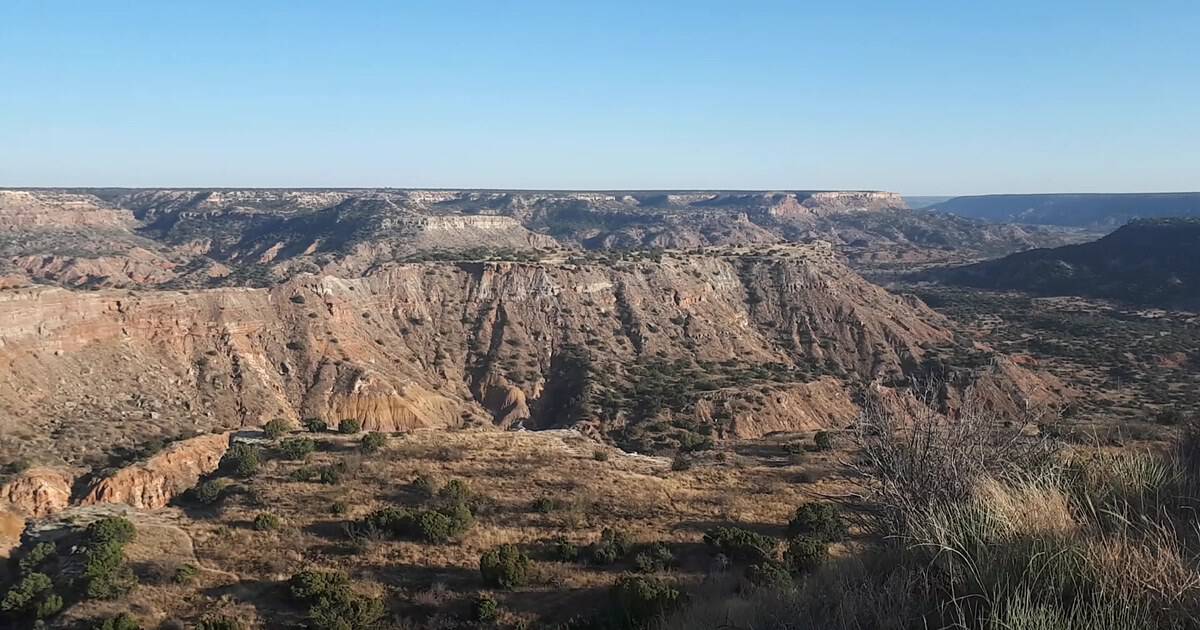
Then the ridge simply runs out, and the ground drops away on three sides. You get close to 270 degrees of canyon in one slow turn of your head. Reviewers keep reaching for the same word for it, and the word is worth.
What You Actually See From the Top
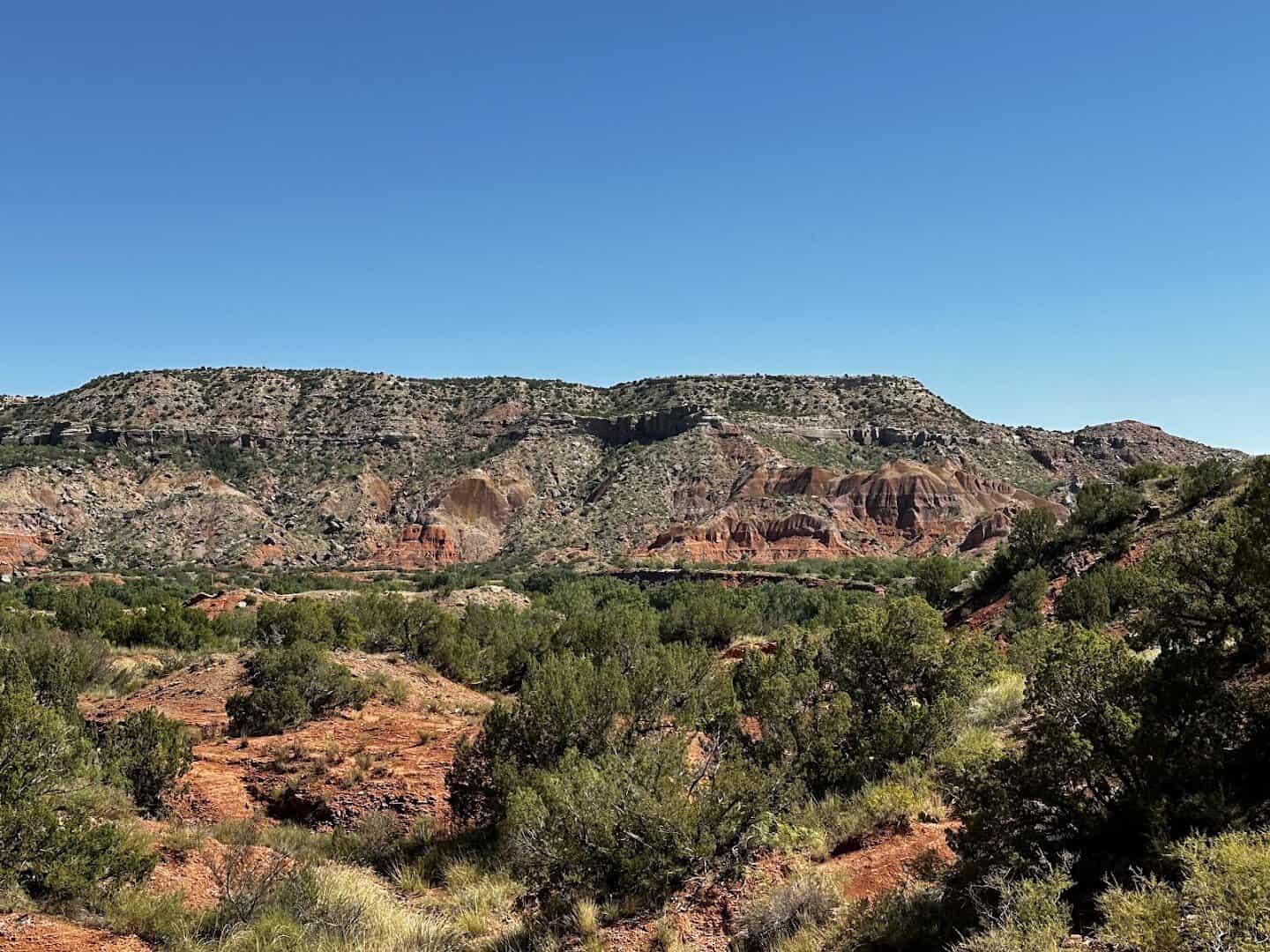
From the peak you look straight into Fortress Cliffs, the tall banded wall that guards the far side of the canyon. Below it, the valley of the Prairie Dog Town Fork of the Red River spreads out flat and green.
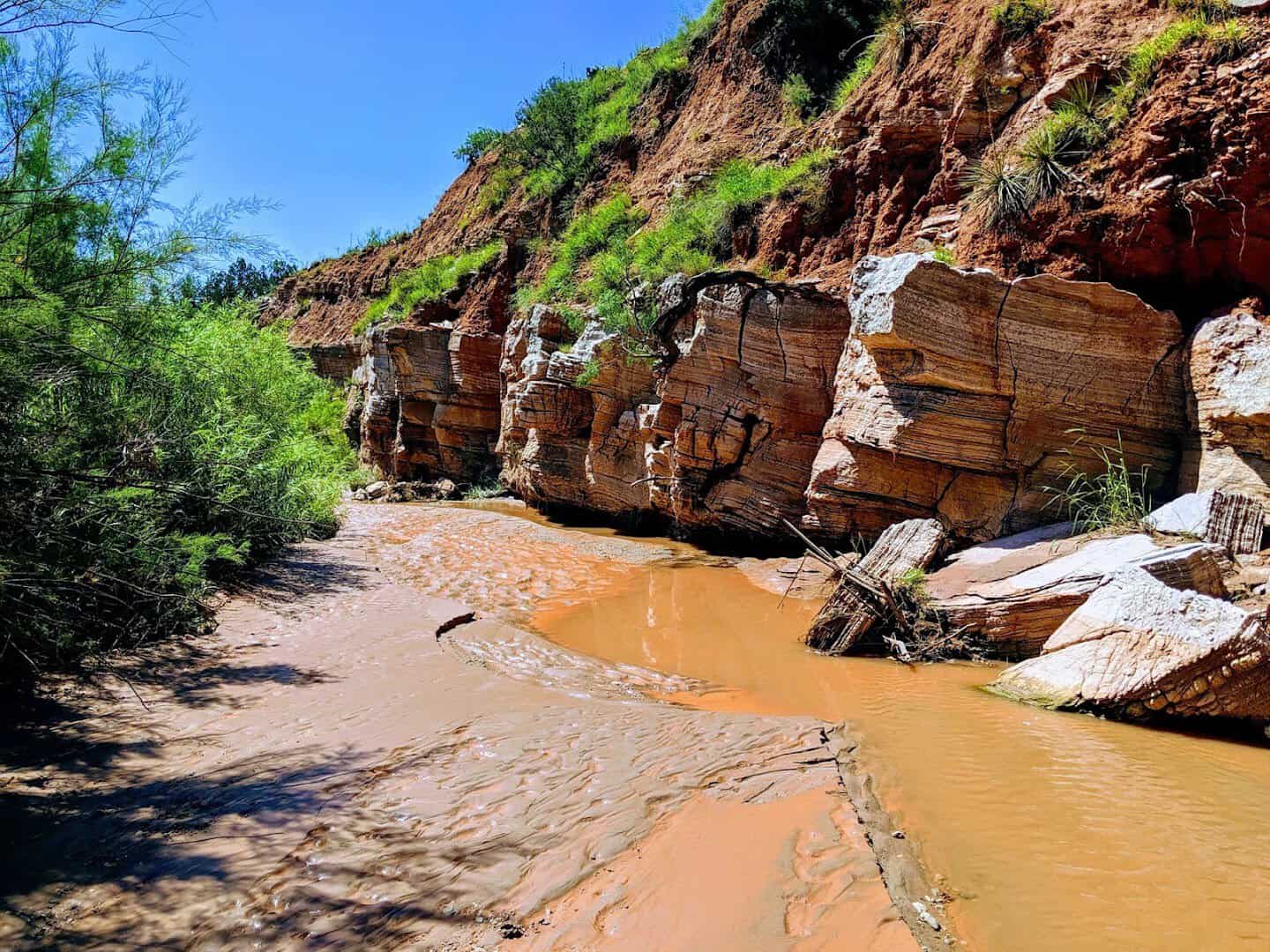
That little river is the whole reason any of this exists. It carved the canyon grain by grain over the ages, and from the ridge you can trace its path across the floor.
Off in the distance sits Timber Mesa and a run of ridges that fade to pale blue the farther out you look. On a clear day the depth of it plays tricks on you.
The canyon runs up to 800 feet deep here, and from the ridge you feel every single foot of it.
Keep your eyes moving on the way up, too. Wild turkeys, roadrunners, and mule deer all work the canyon floor, and the striped lizards on the rocks are used to an audience.
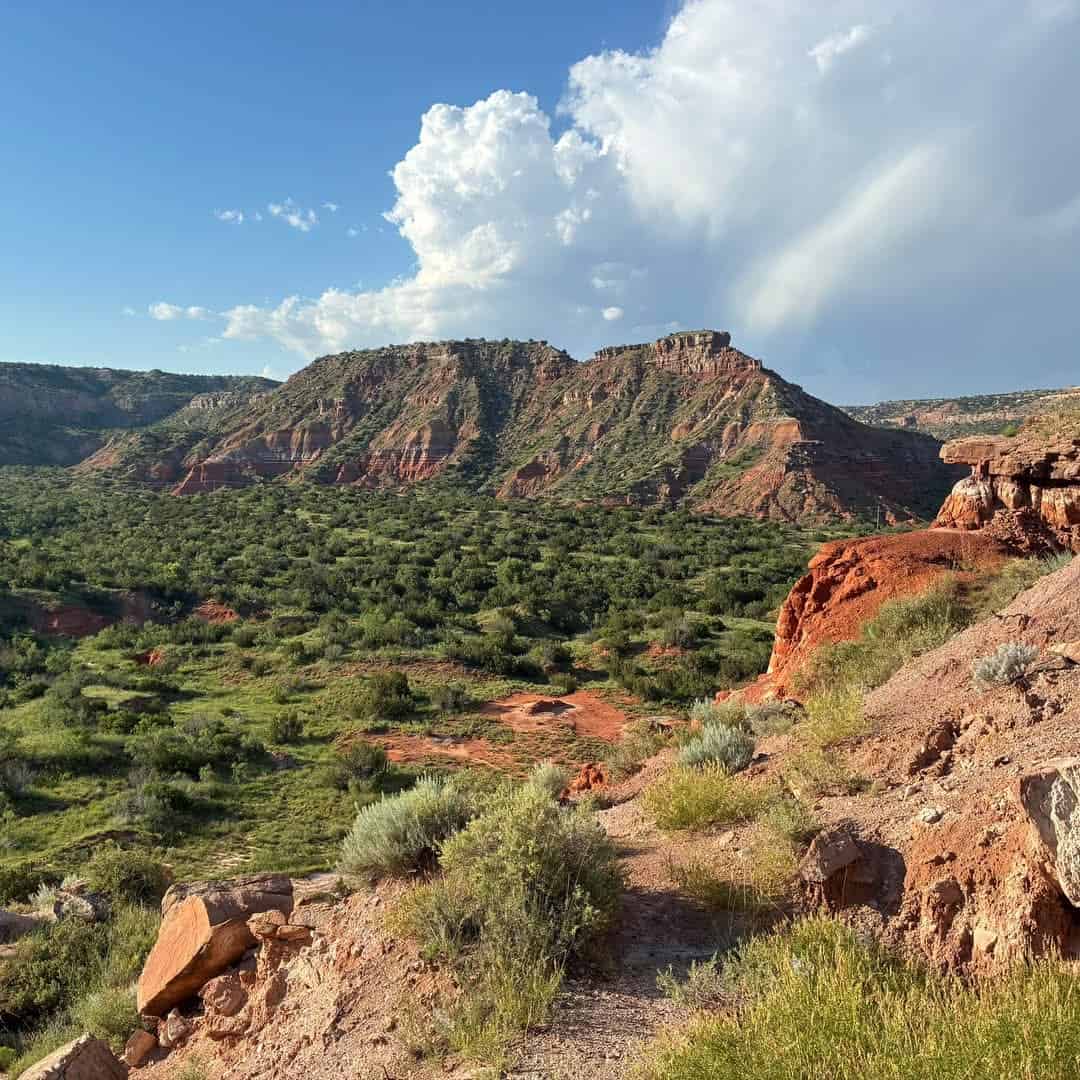
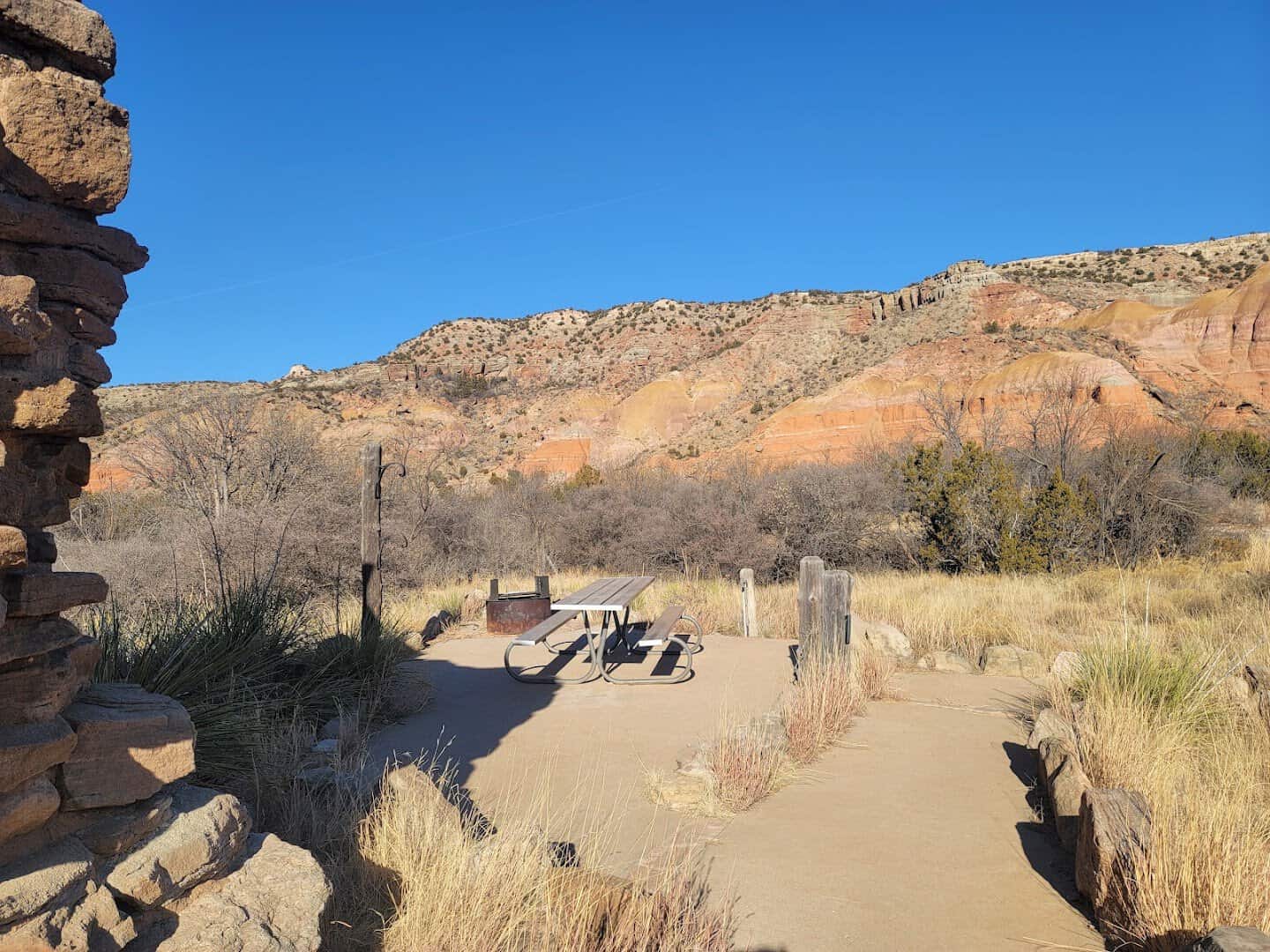
The colors are the part people are not ready for. The walls run red, orange, and pale tan in stacked bands, and they change all day long.
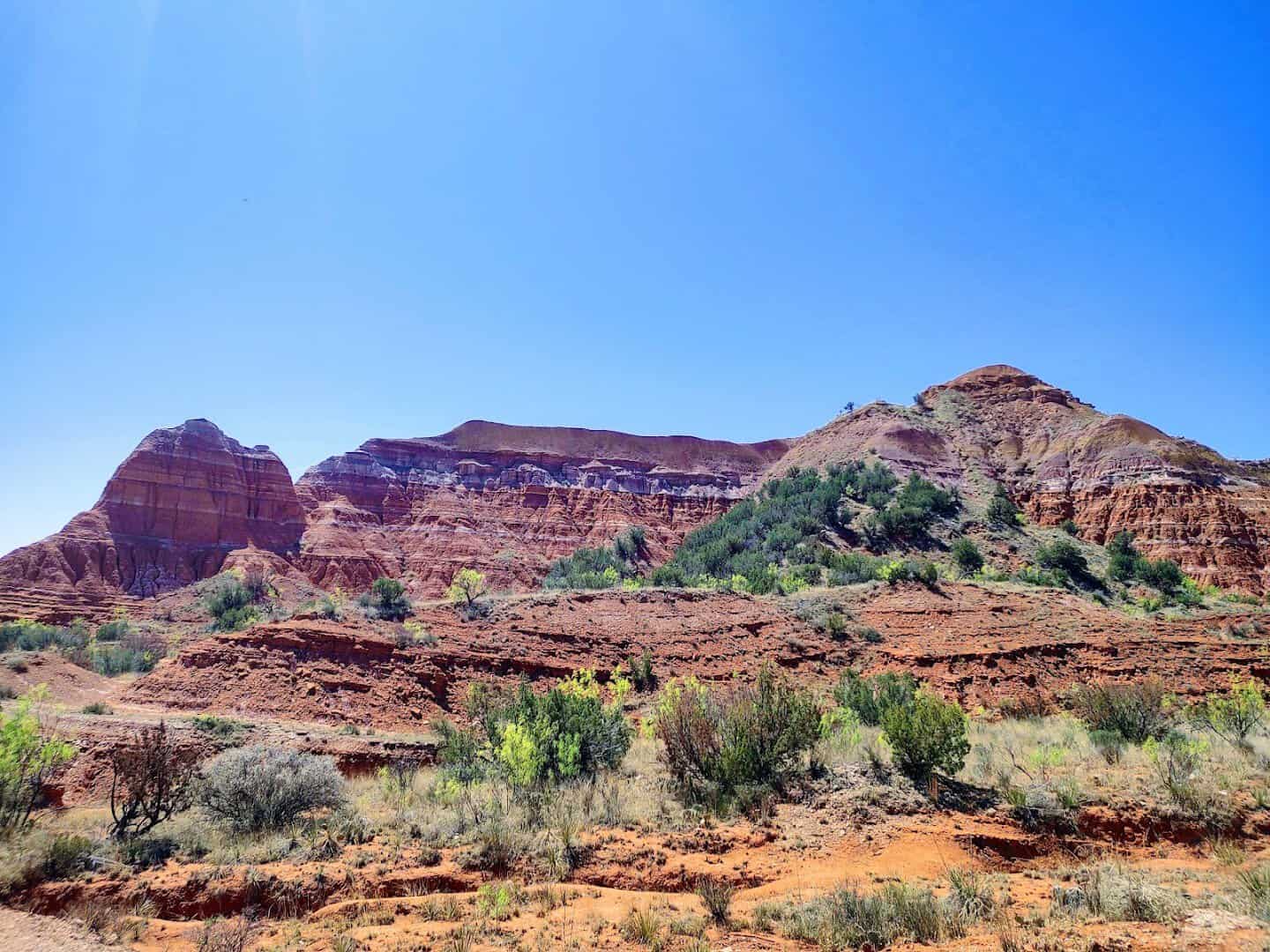
Come at golden hour and the whole canyon lights up like someone turned a dial. Photographers plan their whole trip around that last hour of sun.
This is a canyon that has fooled first-timers for a century. It hides below the flat plains, so you drive across empty grassland with no hint of what is coming, and then the ground splits open in front of you.
People call it the Grand Canyon of Texas, and it is the second largest canyon in the country. Standing on that ridge, the nickname stops sounding like an exaggeration.
Reading 240 Million Years in the Rock
Those colorful bands are not just decoration. They are a calendar. The walls of Palo Duro expose layers of rock stacking up more than 240 million years of history, and the trail runs you right past the good stuff.
The Triassic Trail, which feeds the Goodnight Peak loop, is named for the rock it crosses. The reddish and tan layers here belong to the Dockum Group, laid down in the Late Triassic when this was a wet lowland of rivers and floodplains.
Dig into the story and it gets better. Those old layers hold petrified wood, fossils, and hard calcite nodules. The Trujillo sandstone even shows crossbedding, the frozen ripples of ancient river currents, if you know to look for it in the walls.
Elsewhere in the park the layers do something showy. In a formation called the Spanish Skirts, red and white striped shale cascades down the slopes in ruffled folds, and it is easy to see how it earned the name.
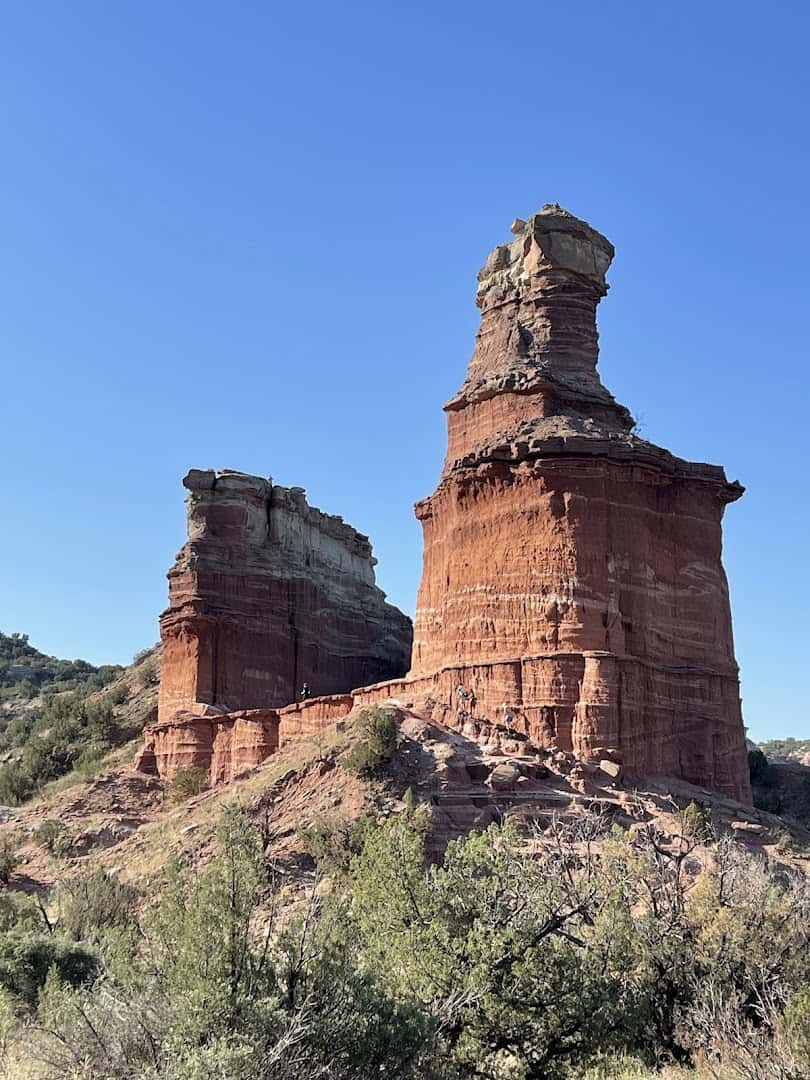
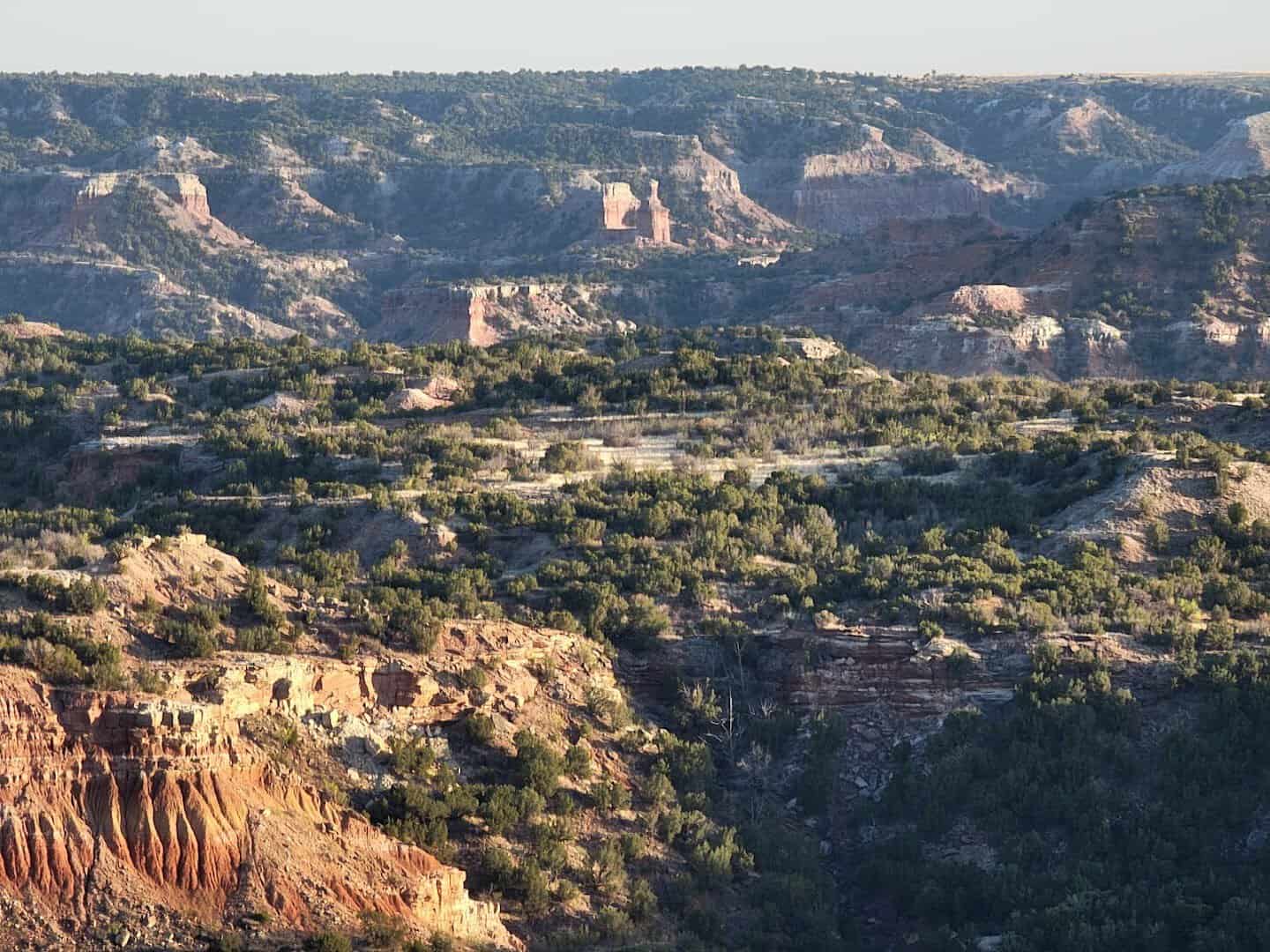
And then there is the Lighthouse, the park’s most famous shape, standing on a different trail nearby. It is a 300-foot hoodoo, a hard sandstone cap balanced on a softer column of shale that erosion keeps whittling thinner. It is the icon on every Palo Duro postcard for a reason.
Why It Is Called Goodnight
The peak carries the name of Charles Goodnight, one of the biggest figures in Texas ranching history, and the story of how he got here is a proper Western.
In the summer and fall of 1876, Goodnight drove roughly 1,600 longhorns down into Palo Duro Canyon and set up his “Home Ranch” near the Prairie Dog Town Fork of the Red River. Partnering with the Irish businessman John Adair, he grew it into the enormous JA Ranch.
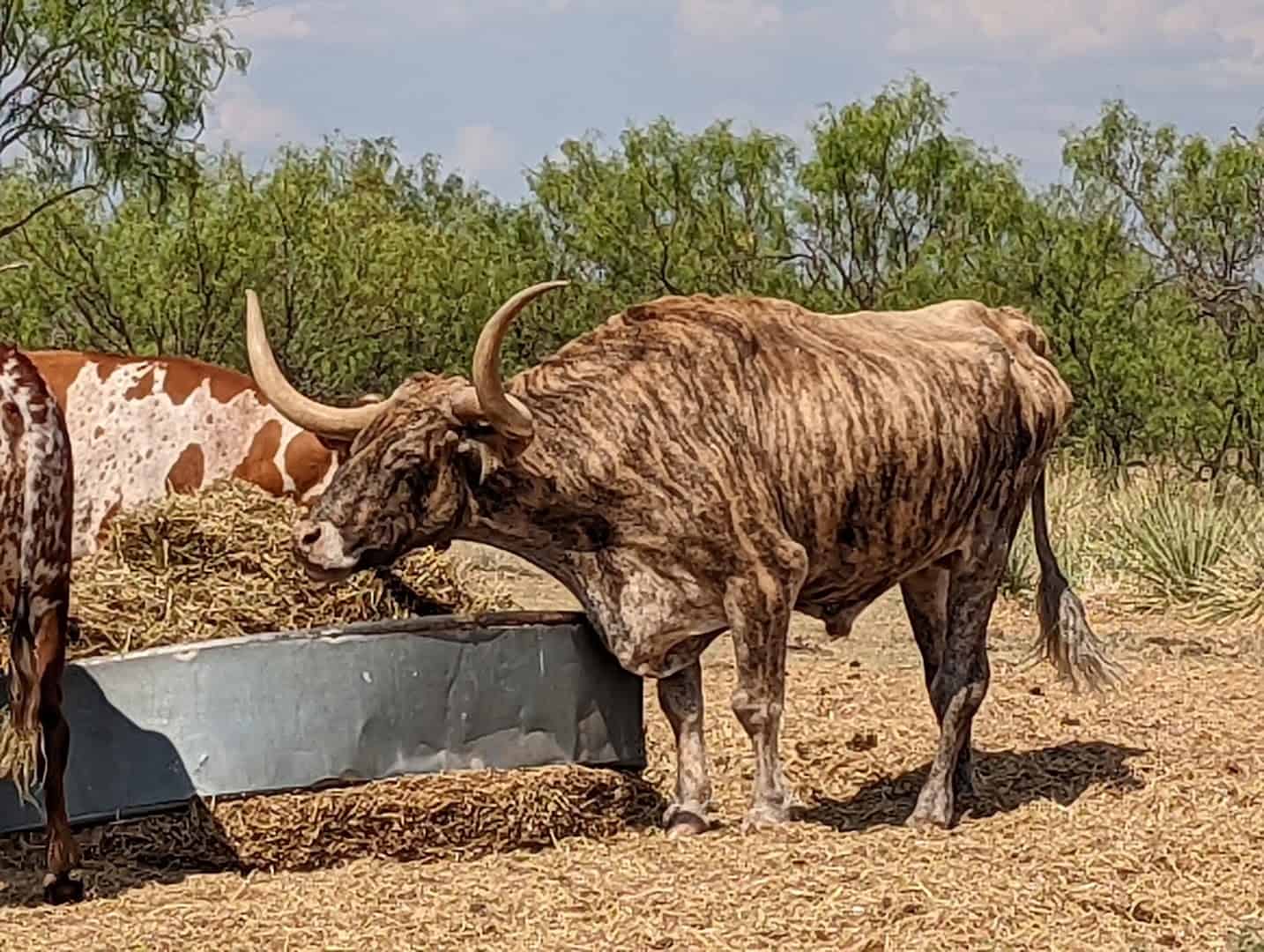
At its peak the JA ran cattle across hundreds of thousands of acres of the Panhandle. Goodnight picked the canyon for the same reasons hikers love it now: the walls block the wind, the river gives water, and the floor stays greener than the plains above.
Did you know an artist made this canyon famous long before Instagram did? Georgia O’Keeffe ran the art department at the college in Canyon from 1916 to 1918.
She painted these walls in bold, almost unreal blues, reds, and yellows. She saw the color here decades before the rest of the country ever caught on.
The Crews Who Built the Way Down
Getting a car to the bottom of a canyon this deep is not a small thing, and you have the Great Depression to thank for the road you drive in on.
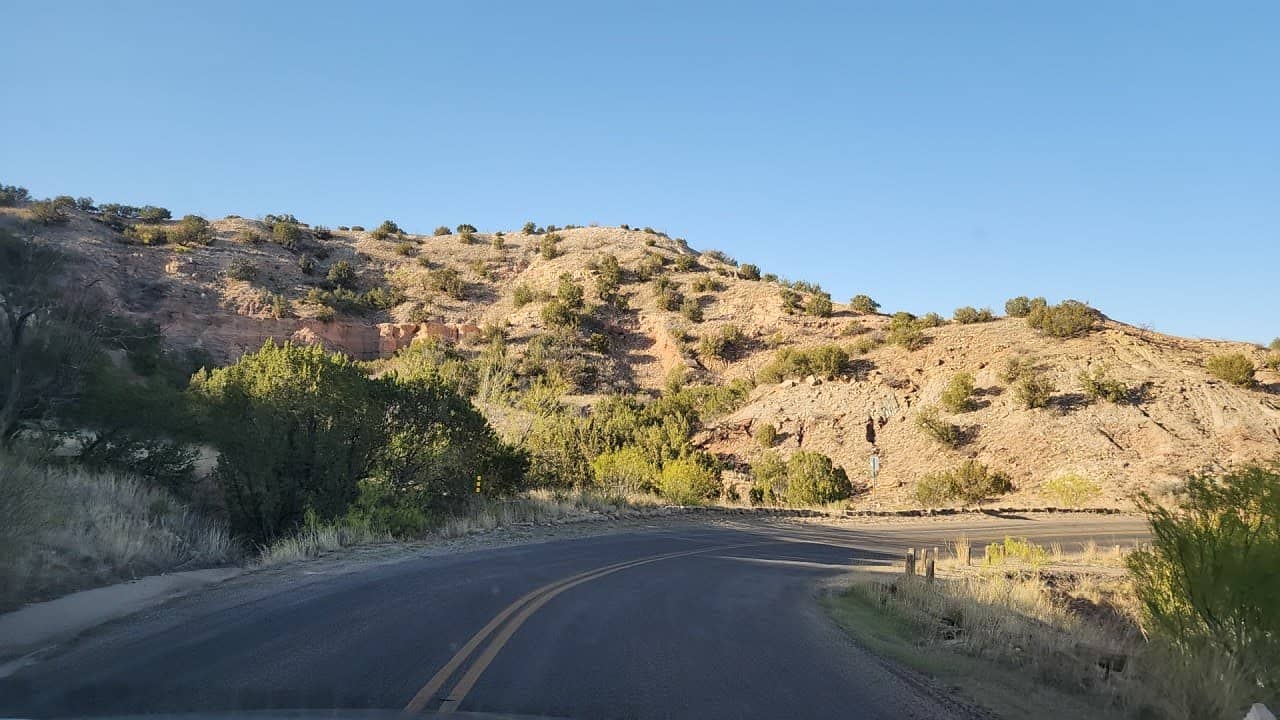
Palo Duro opened as a state park on the Fourth of July in 1934. Through the 1930s, crews from the Civilian Conservation Corps carved Park Road 5, the switchbacking two-lane road that drops from the rim to the floor, and they did much of it by hand.
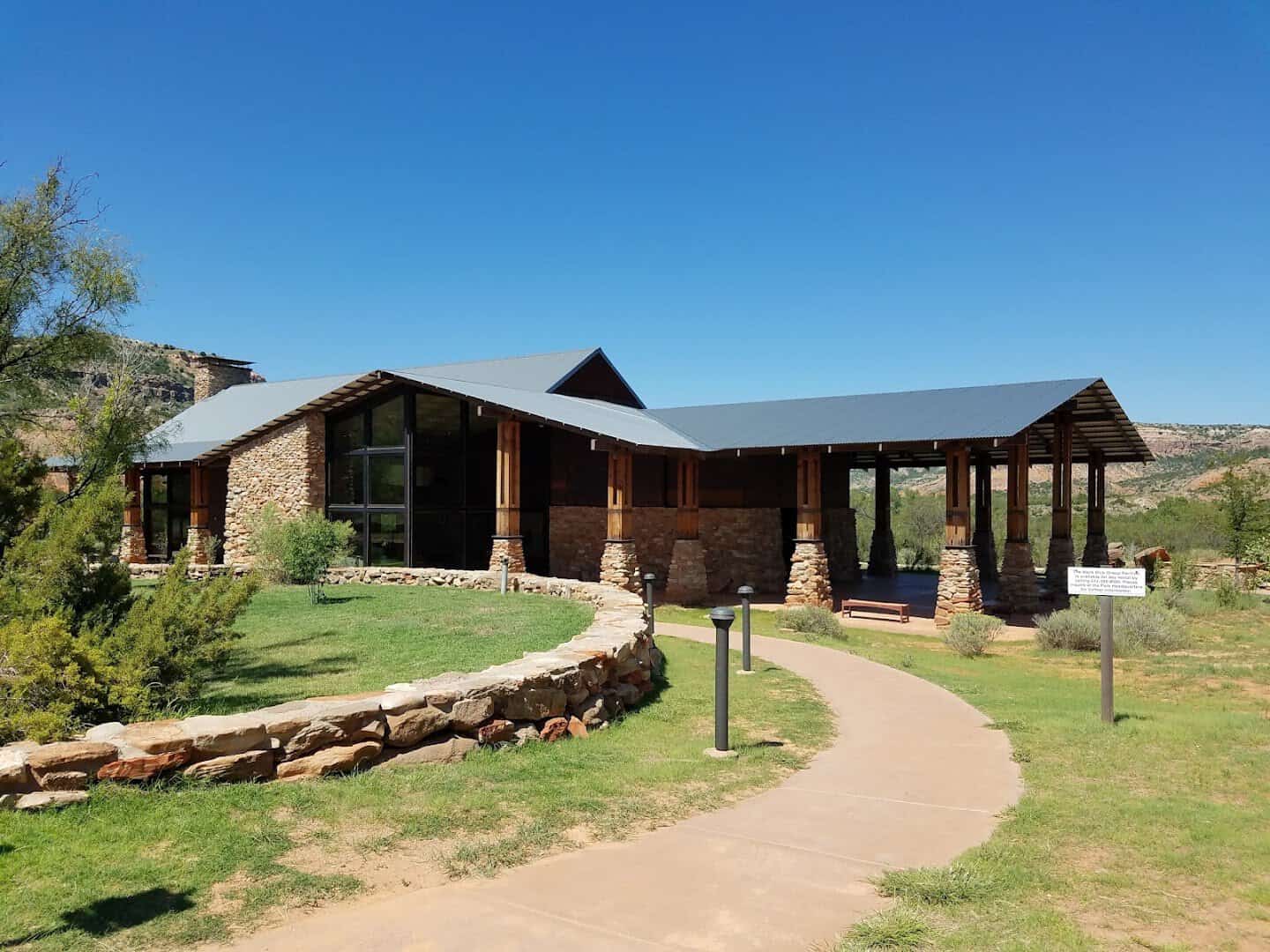
The same young men built the visitor center on the rim, the stone cabins you can still rent, the bridges, and the low-water crossings that carry the road over the river.
Nearly a century later, their stonework is still the backbone of the park, and it still looks like it grew straight out of the canyon.
If you want a bigger dose of Panhandle history, the park’s Pioneer Amphitheater has staged the outdoor musical drama Texas on summer nights since 1966. It is billed as the best-attended outdoor historical drama in the country, played against a real canyon wall.
When to Go So the Canyon Glows
Timing matters more here than on most trails, mostly because of the sun. The Panhandle does not do things by halves, and neither does the weather down in this canyon.
Spring and fall are the sweet spot. You get mild days, comfortable rock underfoot, and low-angle light that makes the walls look their reddest. Wildflowers turn up in spring, and fall brings crisp air with the same big color.
Summer is glorious but brutally hot, and the canyon traps heat like an oven. If you come in July, be on the trail at first light and carry far more water than you think you need.
Be off the exposed ridge before midday, too. There is no water and almost no shade once you leave the floor.
Winter is the quiet secret. Crowds thin right out, and a cold snap can leave frost tracing the canyon walls in the morning. That is a rare and genuinely beautiful sight in this corner of Texas.
Pro tip: the trail markers up on the ridge are sparse, and cell service in the canyon is spotty at best. Download an offline map before you head down, and wear real shoes with grip, since that steeper pitch is loose in places.
Make a Whole Day of It
The beauty of a short hike is how much room it leaves for everything else. Goodnight Peak pairs naturally with the Lighthouse Trail, the park’s signature walk out to that 300-foot rock tower, so you can bag the big view and the famous formation in one visit.
The canyon is also popular with mountain bikers and horseback riders, and outfitters near the park rent both. If you would rather let something else do the climbing, that is a fine way to cover more ground.
Stick around after sundown if you can. The Panhandle sky out here goes properly dark, and the stars over the canyon rim put on a show that city dwellers rarely get to see. Bring a blanket and give your eyes twenty minutes to adjust.
Know Before You Go
Palo Duro Canyon State Park is a day-use fee park, so plan to pay at the entrance. The day-use fee currently runs $8 per person for anyone 13 and older, and children 12 and under get in free.
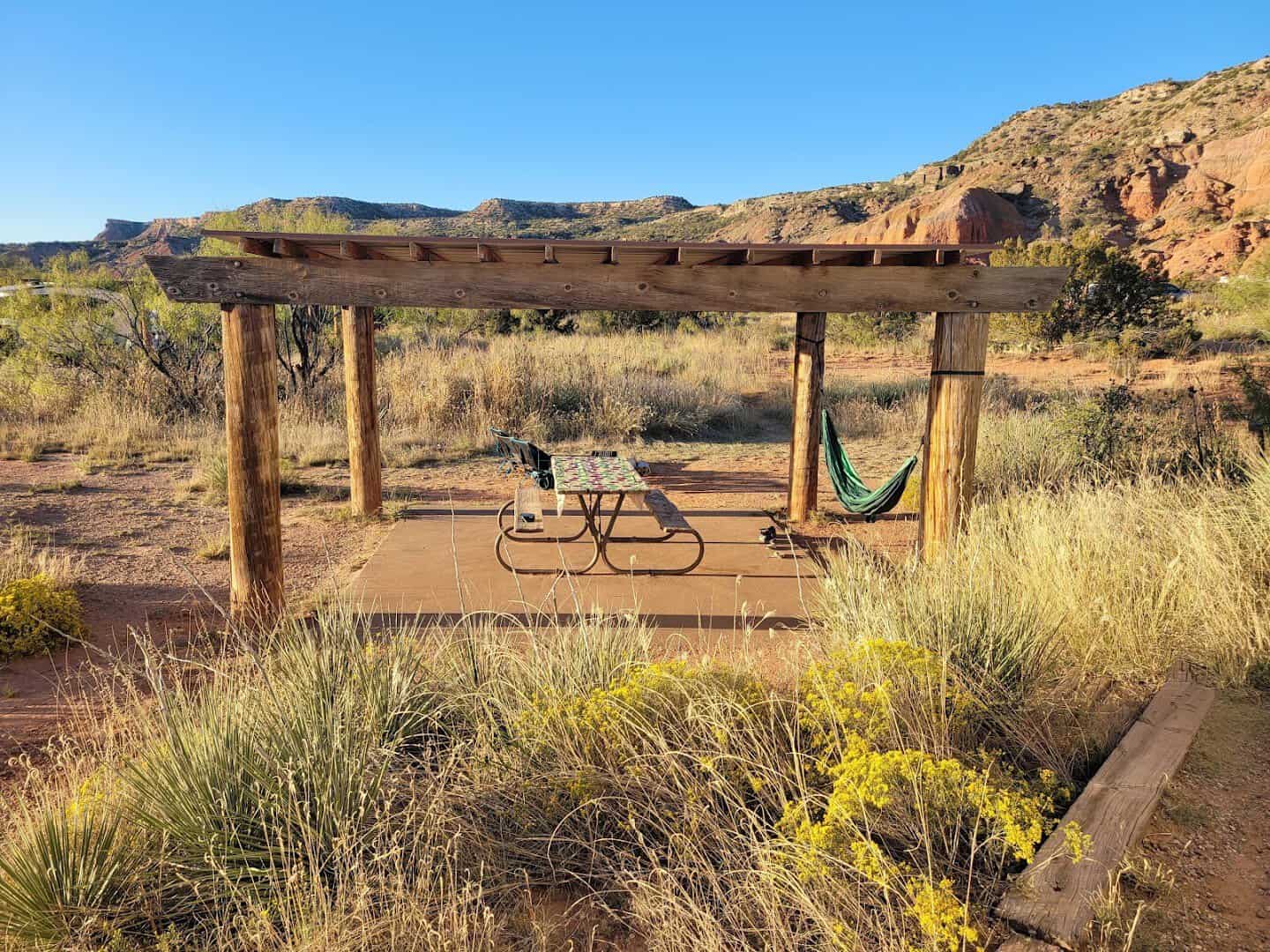
The park gets busy on weekends and holidays and regularly fills to capacity, so Texas Parks and Wildlife strongly recommends buying a day pass online before you drive out. It can be the difference between rolling in and getting turned around at the gate.
Once you are inside, drive Park Road 5 down to the canyon floor and look for the Triassic Trailhead to start the Goodnight Peak loop. Check current hours and fees on the official park page before you go, since both can change with the season.
Where to Find the Trail
Where: Palo Duro Canyon State Park, 11450 Park Road 5, Canyon, TX 79015. The Goodnight Peak loop starts from the Triassic Trailhead on the canyon floor, reached by driving Park Road 5 down from the visitor center on the rim.
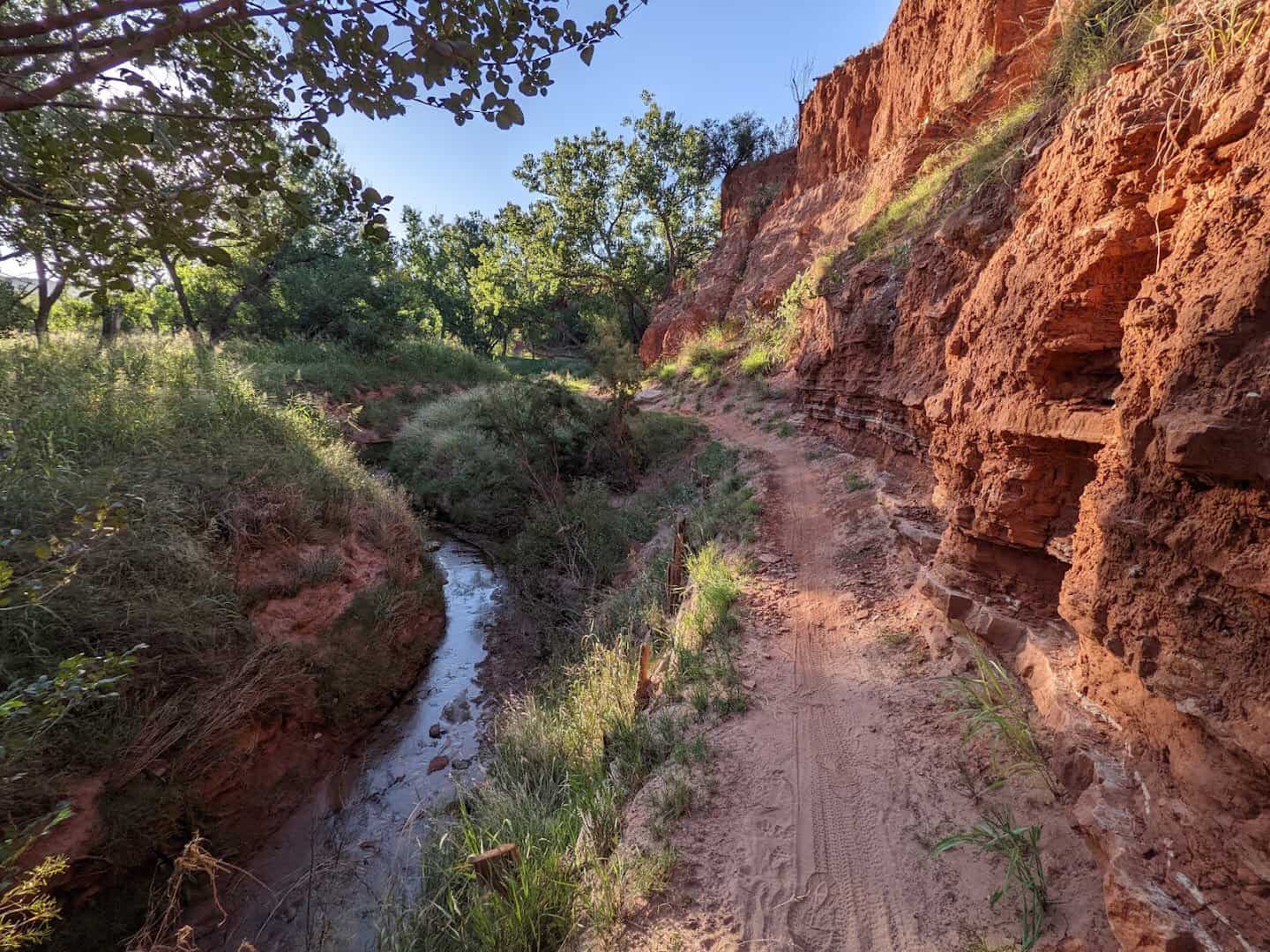
Point the Car at the Panhandle
The best trails are the ones that give you more than you paid in. Goodnight Peak is a couple of miles of your morning for a view that keeps showing up in people’s photos and their stories for years afterward.
So fill the water bottles, set the alarm a little early, and go stand on that ridge while the canyon is still lit gold. Texas is hiding one of its biggest views in plain sight, and it only asks for a short walk in return.
Featured image: Eduardo Alvarez via Palo Duro Canyon State Park

Stella Raines
Editor-in-Chief
Stella brings over a decade of storytelling experience to TX Headlines. With roots in West Texas and a love for road trips, she leads the editorial team with an eye for the hidden stories that make Texas unforgettable.
More Stories

These 10 Texas Spots Bloom Into Seas of Bluebonnets Each Spring

This Enchanting Texas Nature Trail Feels Like Hiking Through a Fairytale Forest

This Underrated Texas State Park Gives You a Full Day of Swimming and Hiking for Just $5

This Easy Texas Hike Leads to a Swinging Suspension Bridge Hidden in the Pines
Tags