This Short Texas Trail Hides a Waterfall and Cold, Clear Swimming Holes Just Below a Dam
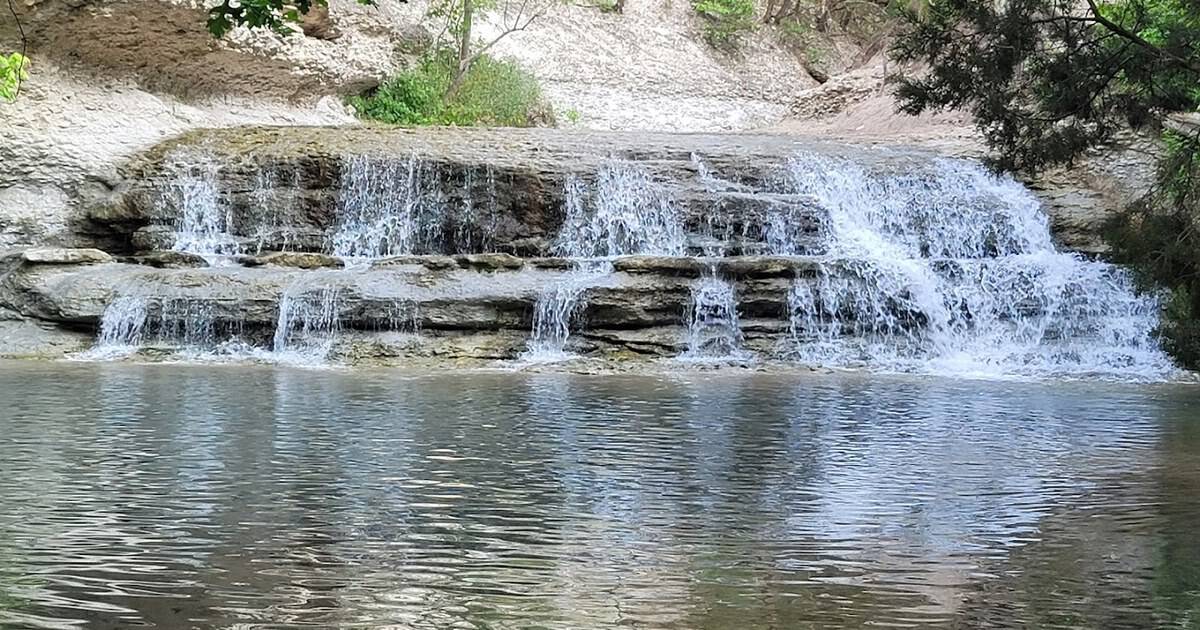
A half-mile of easy trail. A waterfall at the end of it. I will take that trade any day, and Chalk Ridge Falls throws in cold, clear swimming holes below the falls for free.
A wobbling cable bridge over clear water is exactly what waits at Chalk Ridge Falls Park near Belton, along with a wide waterfall over chalky limestone and cold swimming holes tucked under the trees.
For a walk this short, the place delivers a kind of quiet wonder you simply do not see coming.
Below, discover a pocket-sized adventure that fits a waterfall, cold swimming holes, a swaying cable bridge, and a shady riverside trail into a loop you can do before lunch.
A Waterfall That Spills Over Chalk
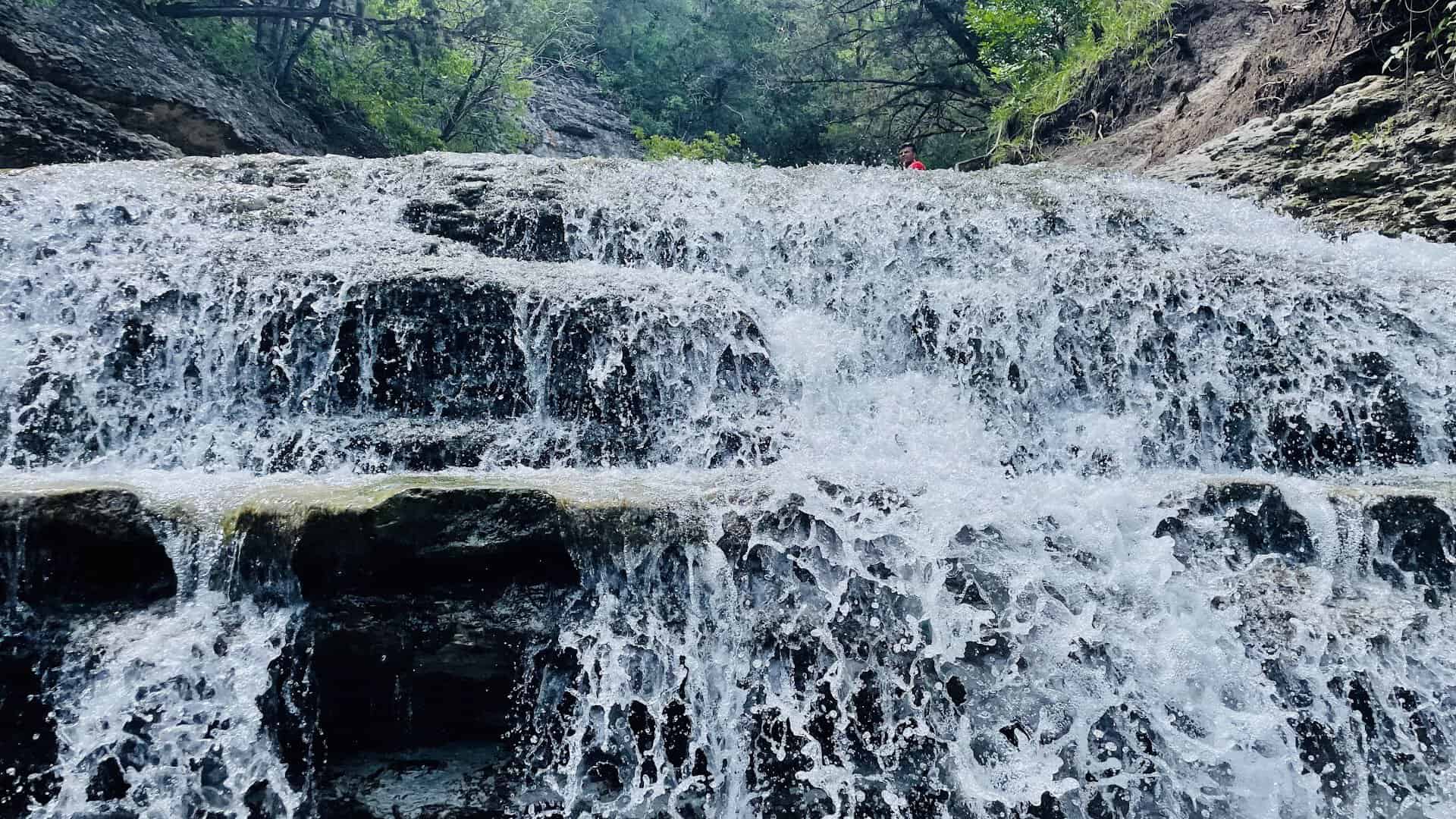
The falls are the reason people come, and they earn it. Water slides over layered limestone and chalky rock shelves in a wide, low cascade, not a single dramatic plunge but a broad sheet of white noise you hear before you see it.
The stone here gives the park its name. These pale, flaky ledges are the “chalk ridge,” and after rain the water fans across them and gathers in a shallow basin at the bottom.
On a warm afternoon the pool at the base turns into the best seat in the house. The water is cool and clear, the kind that makes your ankles ache in the good way.
On a warm afternoon, families spread out on the flat rocks with sandwiches while kids splash in the shallows. Nobody here is in a hurry, and that is the whole point.
Flow changes with the seasons. Spring and early summer, after the rains, is when the cascade runs full and photogenic. Come in the dry heat of late August and you may find a gentler trickle, still pretty, just quieter.
That is the honest trade with a Texas waterfall, and it is worth timing your trip around. A rainy week in April is your friend here.
Get there early and you will likely have the base to yourself for a while. Find a ledge above the pool, bring a coffee, and just listen.
The water talks to the rock in a low, steady hush that drowns out the highway you left behind. Ten minutes of that and you can feel your shoulders drop an inch.
Photographers have made this cascade a bit of a local star. Long-exposure shots that turn the water to silk show up all over Texas hiking pages, and the layered chalk gives every frame a soft, tiered look you do not get from a plain sheet of granite.
Cold, Clear Swimming Holes Along the River
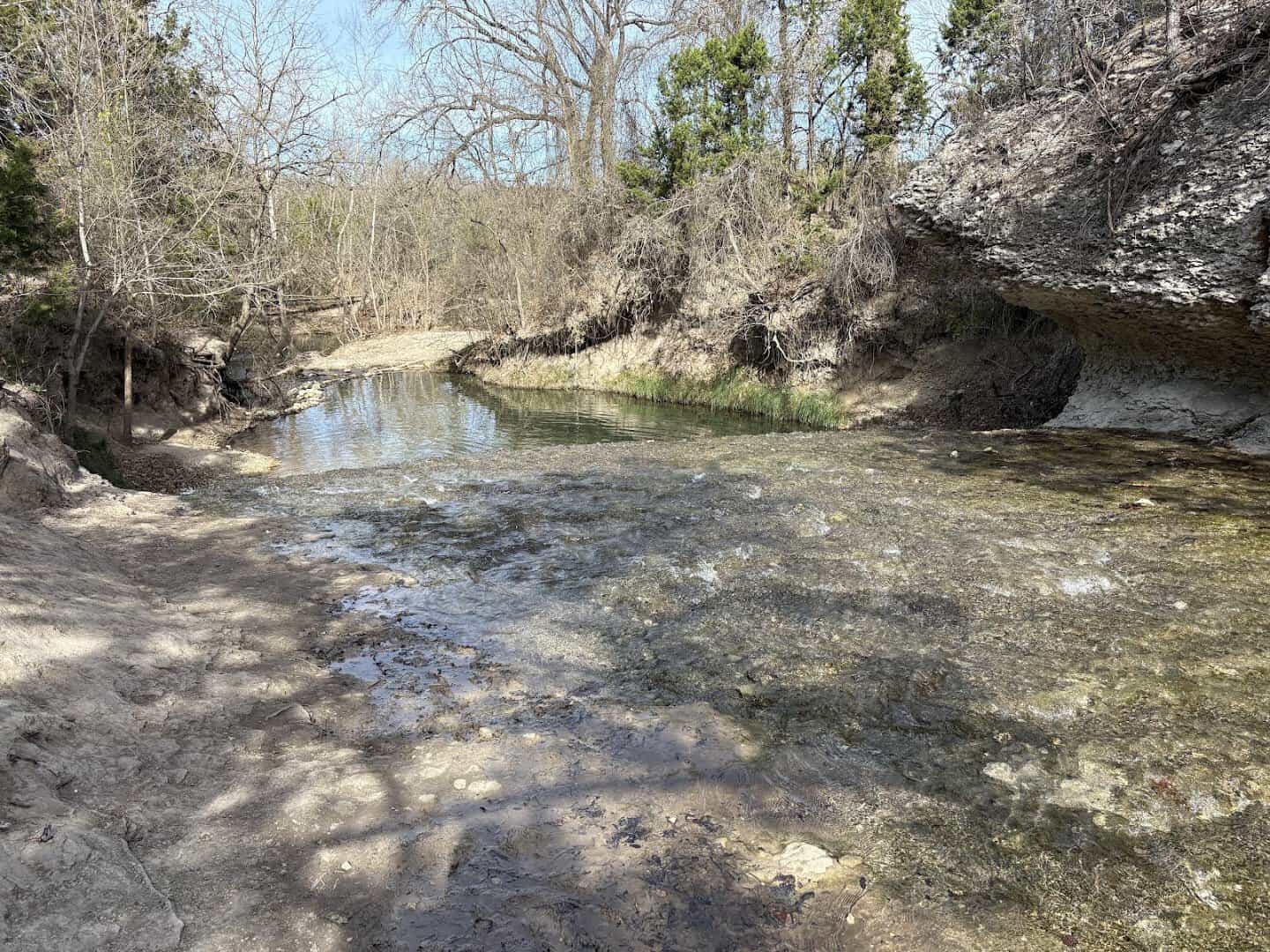
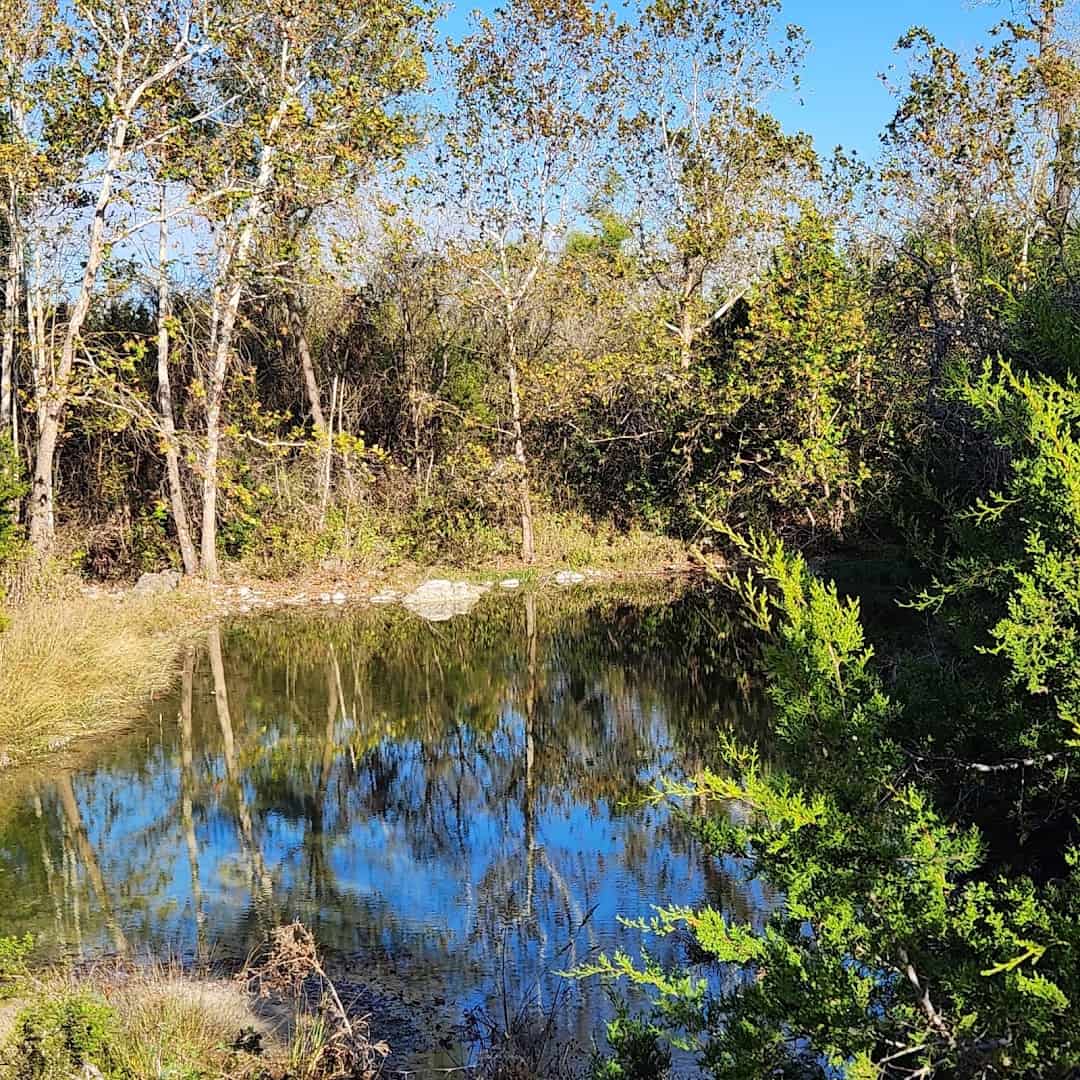
Past the falls, the Lampasas River strings together a series of calm pockets, and for my money this is the best part of the whole park. The water sits cool and clear, deep enough in spots to wade to your waist, shallow enough elsewhere to let a toddler paddle.
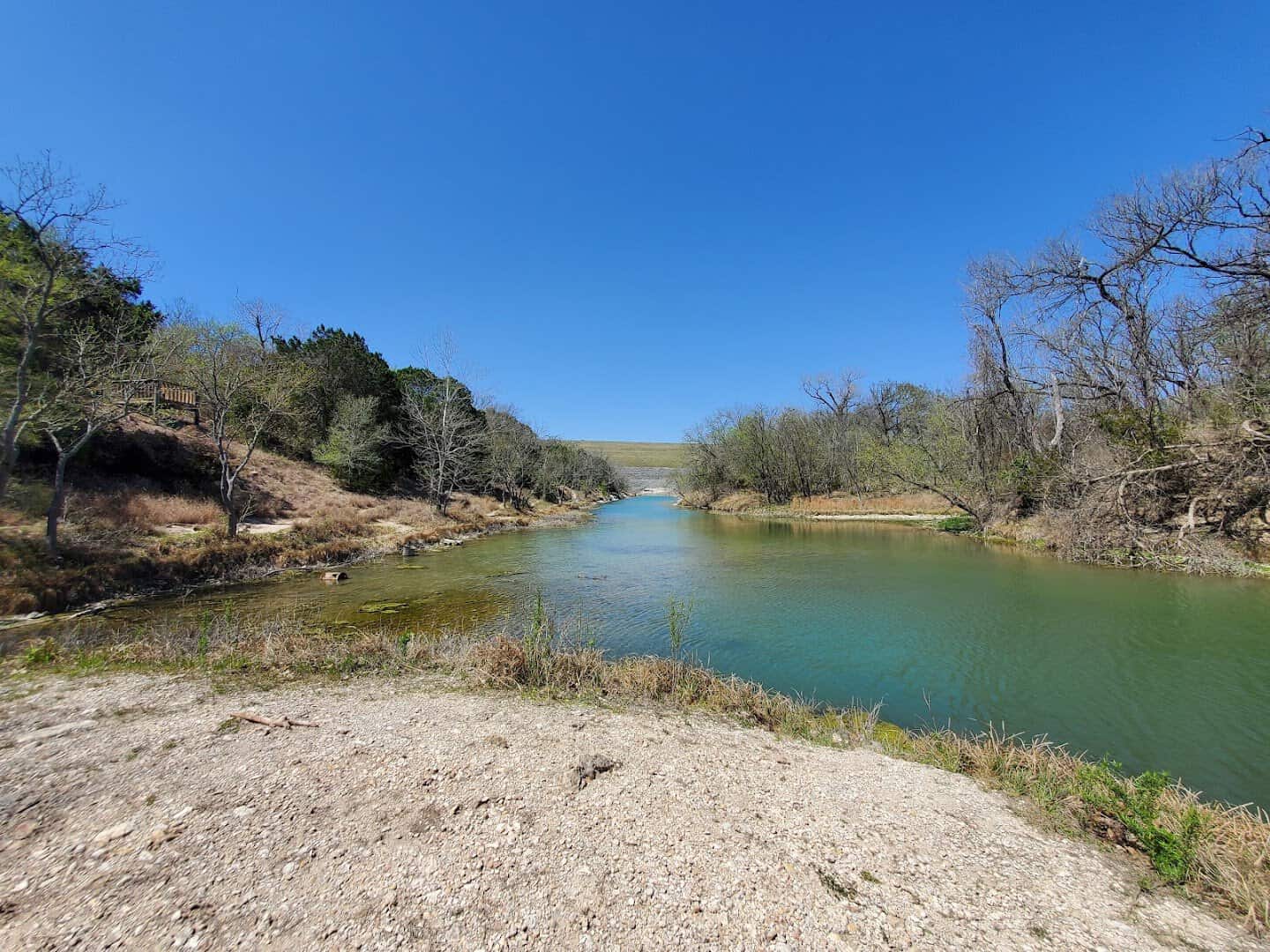
These are not manicured swimming pools. They are river holes, with slick stones and cool currents and the occasional curious fish. Water shoes save your feet and your dignity on the slippery rock.
Because the whole river corridor sits under a dense tree canopy, the swimming holes stay shaded through most of the day. That shade is a gift in a Texas summer. You get river-cold water and leaf-dappled light instead of a sunbaked concrete deck.
The move I would make is simple: hike in, cool off in one of the pools below the falls, then dry out on a warm rock while the kids skip stones. There is something old-fashioned and lovely about a river day where the whole plan is water, snacks, and shade.
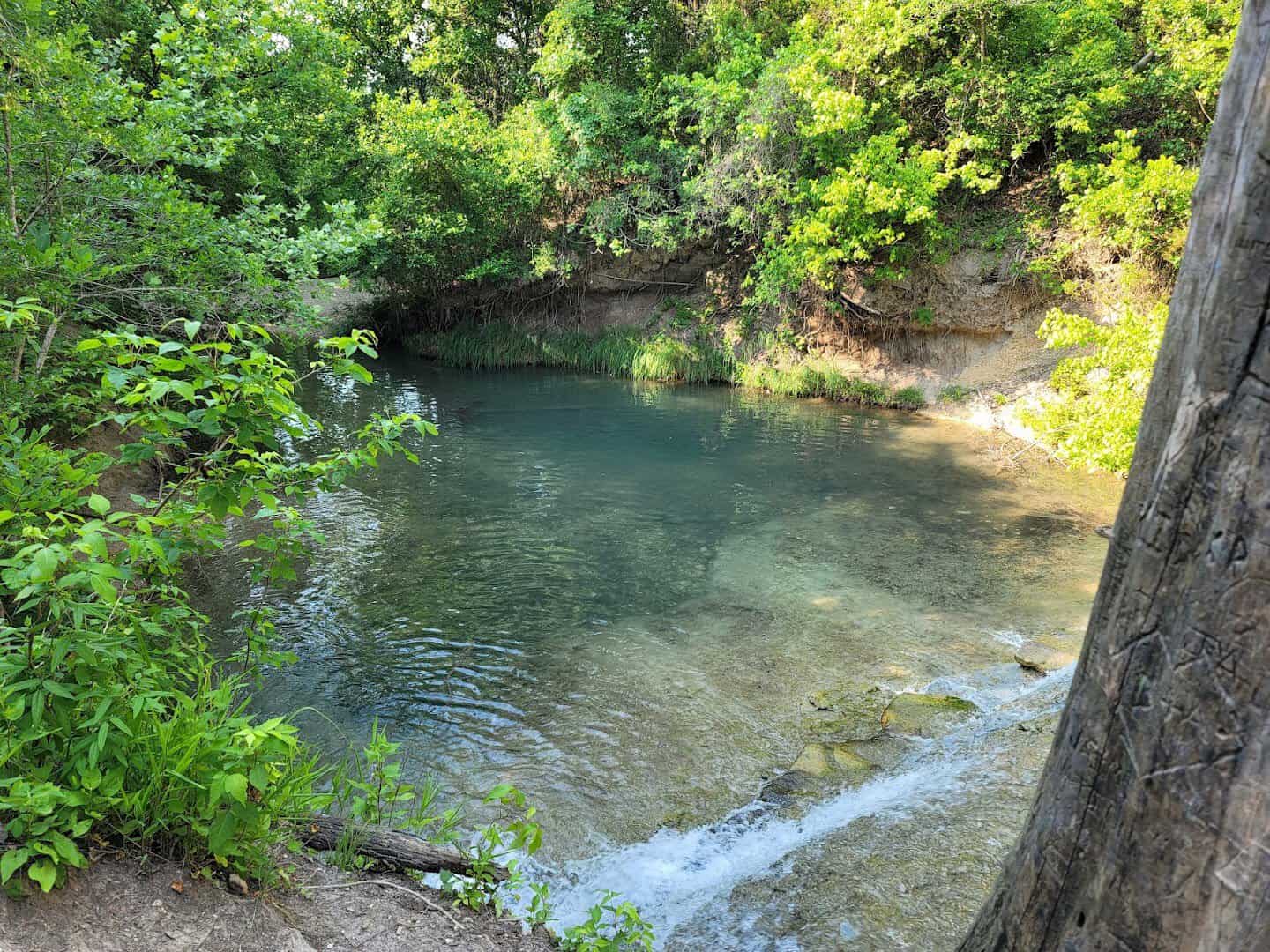
Wading up the creek bed above the pond is its own small adventure, roughly a mile of rough, wet, slippery rock that rewards careful feet. Go slow, watch for the current, and treat it like the mild scramble it is.
One honest, useful note: this is Central Texas, so blue-green algae can bloom in the warm months. Check for a current advisory before you let anyone swim, keep dogs out of scummy-looking water, and you will be fine.
The Little Bridge That Made It Famous
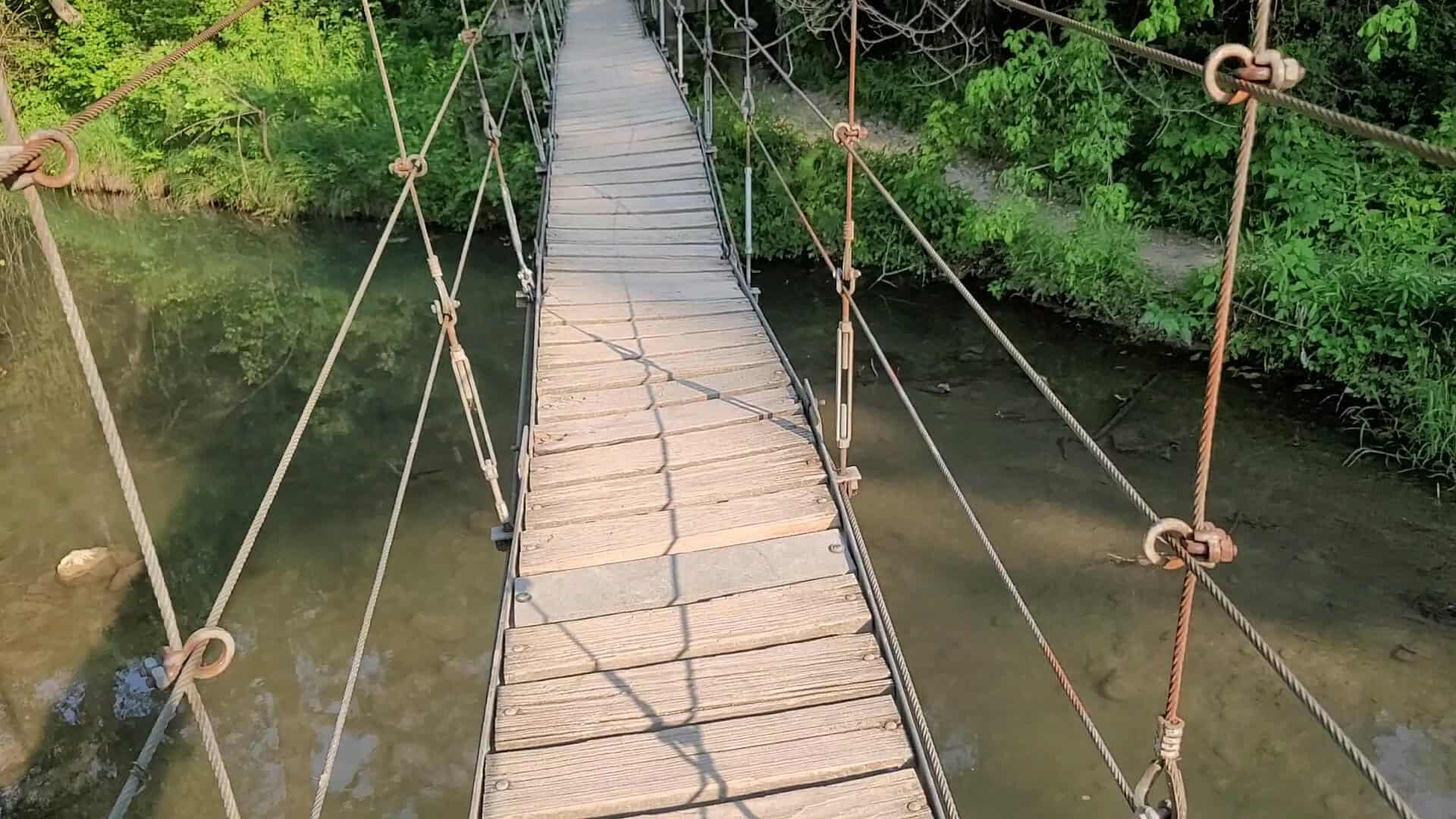
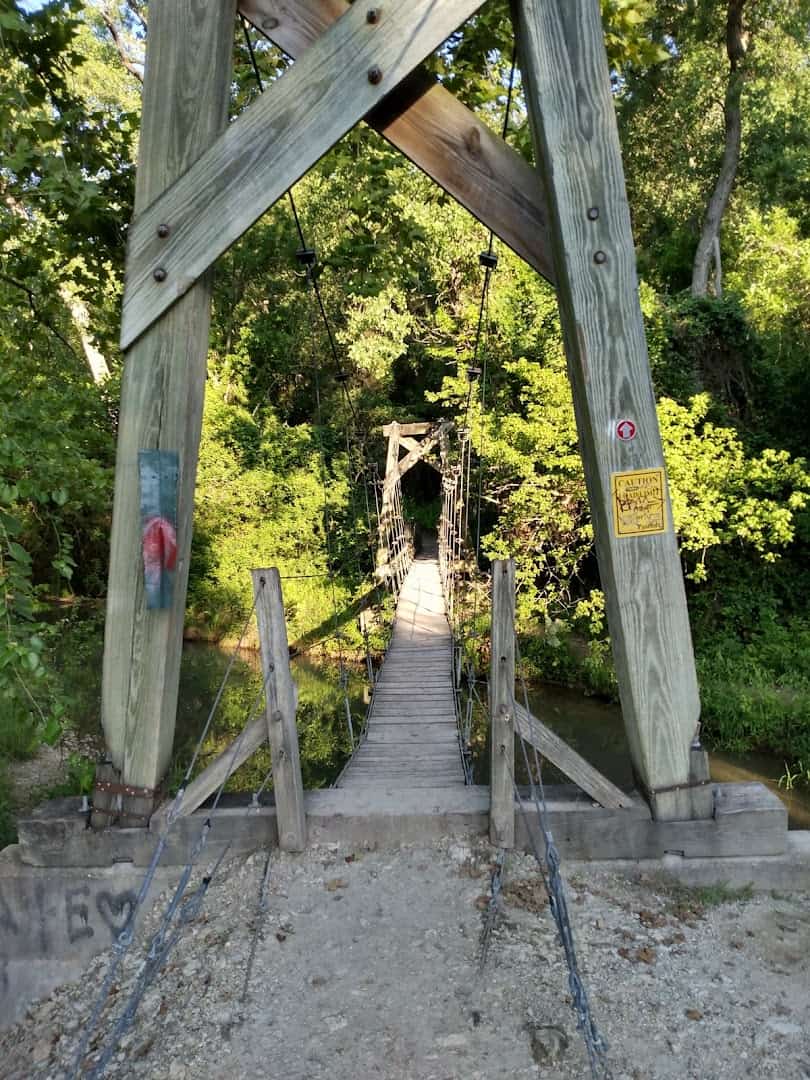
For years, the signature image of this park was its cable suspension bridge, a narrow steel-and-timber span that crossed the river downstream from the falls. Cross it and the deck sways just enough to give you that small flutter of adrenaline a moving bridge is famous for.
It became the park’s calling card. Search the place online and you will find a hundred photos of visitors mid-crossing, arms out for balance, grinning at the wobble. There is something about a bridge that moves under you that turns a gentle hike into a tiny expedition.
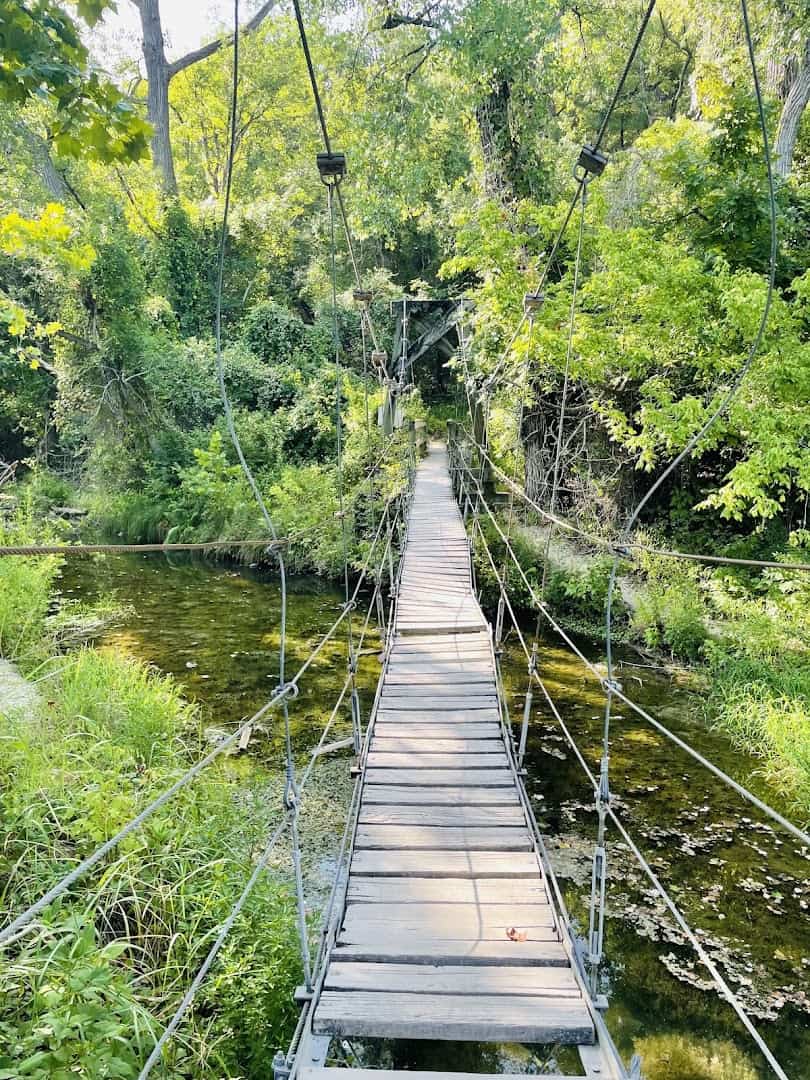
The setting does half the work. The bridge hangs over water so clear you can count the stones on the bottom, framed by green on both banks. Photographers love the low light of early morning here, when mist sits on the river and the cables catch the first sun.
Crossings like this one are part of why the park caught fire online after years as a locals-only secret. A waterfall is lovely, but a waterfall plus a bouncing river crossing is the kind of combination that turns a quiet trail into a weekend destination.
Pro tip: if you want that classic empty-bridge shot, arrive on a weekday before ten in the morning. By midday on a warm weekend, the whole park hums with day-trippers, and the bridge draws a happy little line.
A Whole Trail in Under Two Miles
Here is the part I love most about this place. You do not have to earn any of it with a punishing march.
The walk from the parking lot to the falls and the bridge runs roughly half a mile to a mile, mostly flat, hard-packed dirt with a few wooden steps and stream crossings.
Do the popular out-and-back and you are looking at somewhere around two and a half miles round trip, easy enough for kids and comfortable at a stroll. That is the whole appeal: a real payoff, a short investment.
If you want more, the park hides it in plain sight. There are close to five miles of trails in all, and side paths peel off the main route into rougher, steeper terrain along the bluffs.
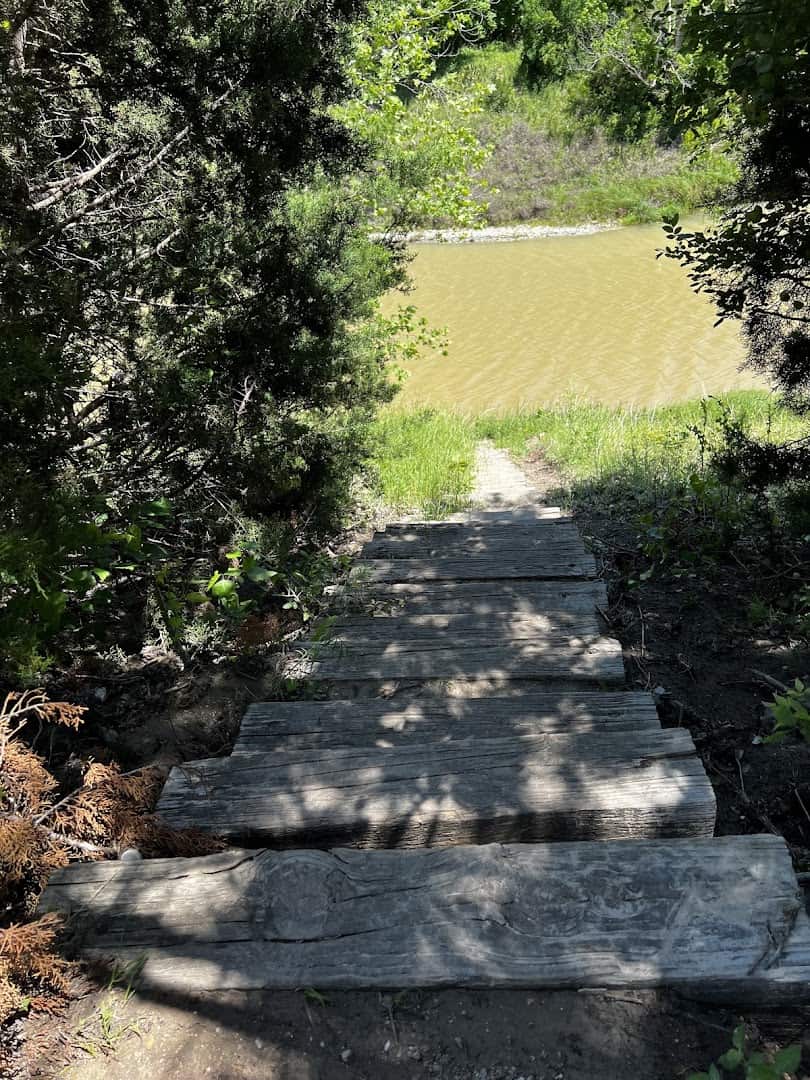
Ambitious hikers can turn a lazy morning into a proper workout without ever leaving the 90 acres. The park scales itself to whatever kind of day you came for.
Look up as you walk. The corridor is a birdwatcher’s happy accident, with warblers and woodpeckers working the canopy and herons stalking the shallows. There is even a small cave tucked into the bluff for anyone who likes a little exploring off the main path.
Anglers work the river too, casting into the deeper pockets where the Lampasas slows down. Between the fishing, the birding, and the swimming, the park quietly serves a lot of different afternoons out of one small footprint.
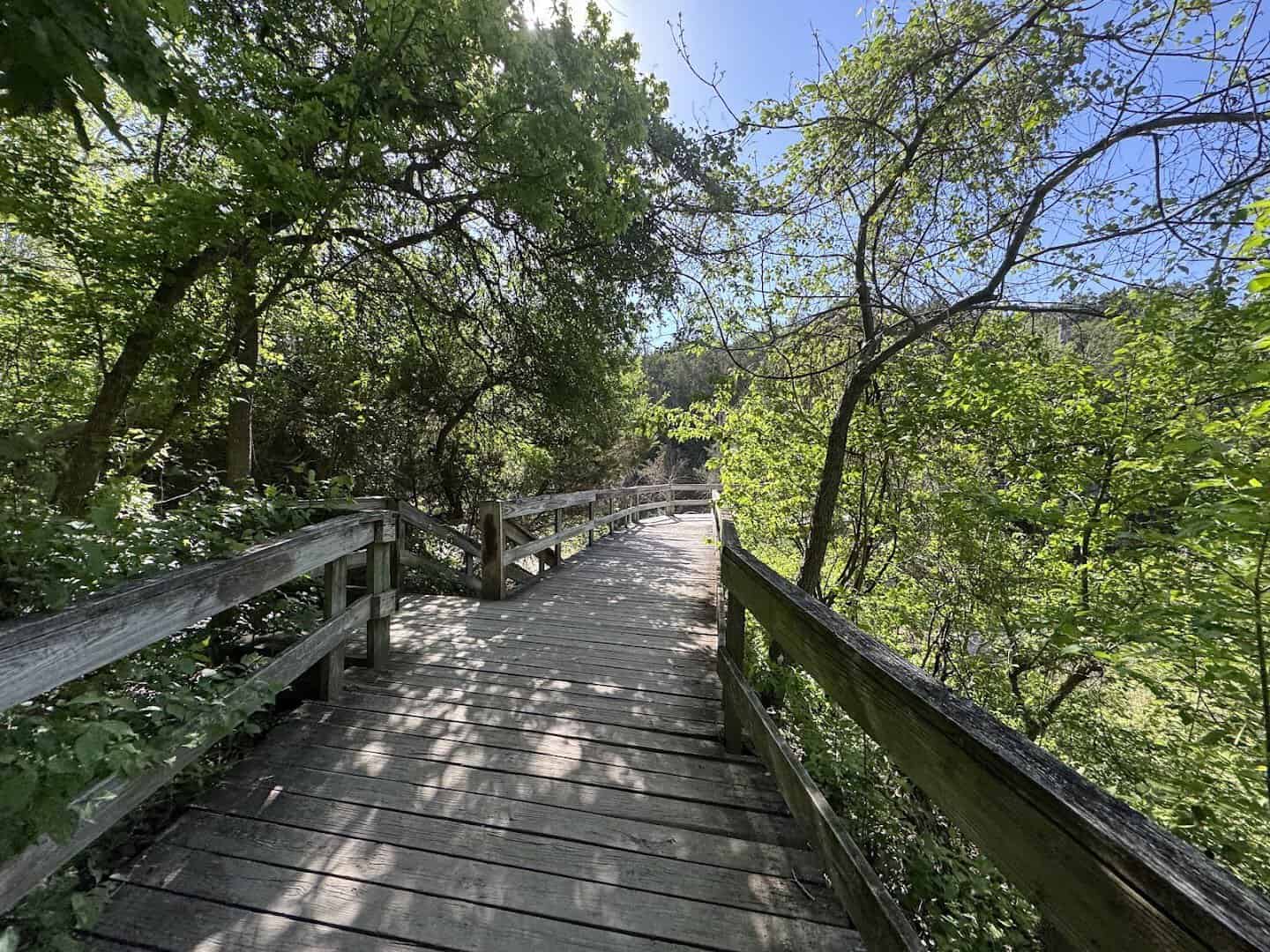
One visitor summed it up better than I can, calling the falls “one of the best waterfalls in Texas.” Bold company for a spot most people have never heard of, but picture a full-flow spring morning, water sheeting white over the chalk, and the claim makes sense.
Why There Is a River Here at All
The whole park is a happy accident of engineering, and the story starts uphill. Just above the falls sits Stillhouse Hollow Dam, a big earthen structure with a stone core that stands about 195 feet tall.
The U.S. Army Corps of Engineers built it on the Lampasas River mainly to hold back floodwater. Construction began in 1962, the gates closed to start filling the lake in early 1968, and the dam was finished that July.
Chalk Ridge Falls Park lies just downstream, on the release side of that dam, which is why the river runs clear and cool even in a dry spell. The Corps still manages the 90-acre park today, and admission is free.
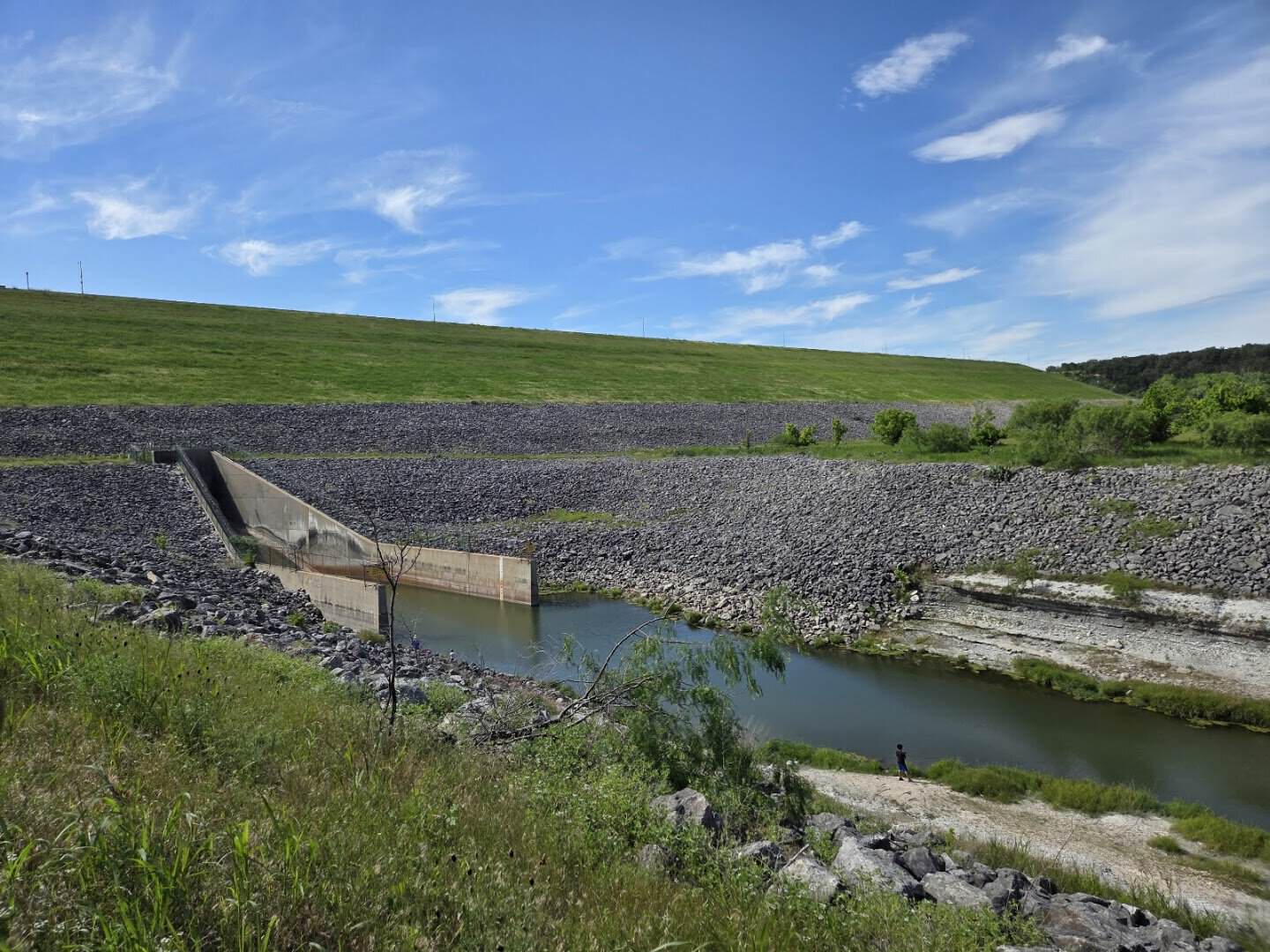
The numbers on that dam are genuinely big. It can hold back more than a million acre-feet of water, sitting about five miles southwest of Belton in the Brazos River basin.
All of that engineering exists so the towns downstream stay dry when the Hill Country gets a gully-washer. The falls are, in a sense, a happy side effect of flood control.
Did you know? The flow over those chalk shelves is tied to what the dam is doing upstream. When the Corps releases water, the falls run fuller. It is one of the few Texas waterfalls with a schedule, more or less.
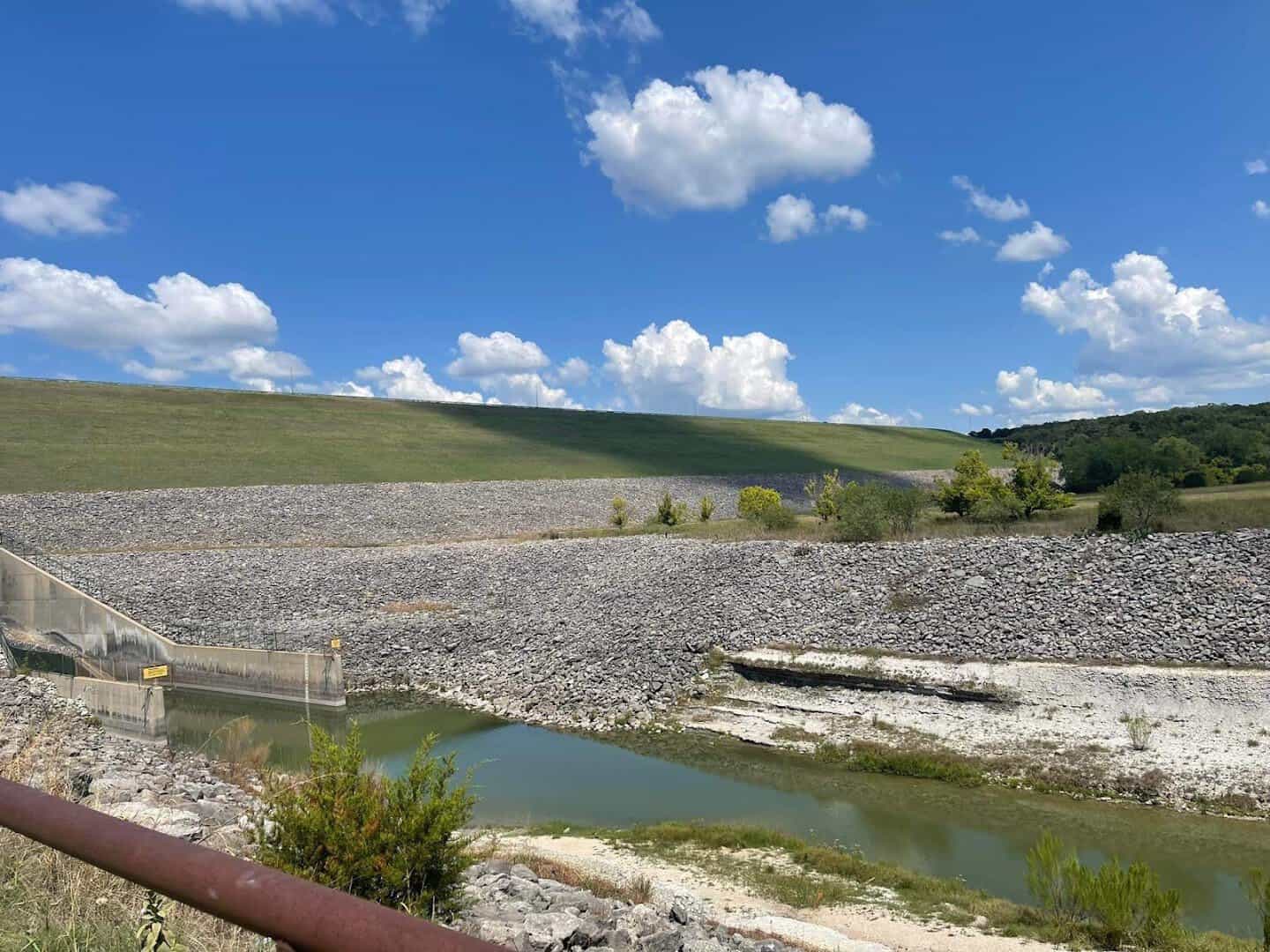
There is a small environmental learning center associated with the site, a nod to the fact that this stretch of river doubles as an outdoor classroom. Kids who come to splash often leave having learned a little about limestone, watersheds, and the birds overhead.
What to Know Before You Go
Chalk Ridge Falls is an easy day trip, and a few small things make it a smoother one. The park opens at 8 a.m. and closes around sunset, and there is no entry fee, which is a rare and lovely thing.
There is a decent parking lot at the trailhead with restrooms, so you can arrive, gear up, and go. Bring water, snacks, and water shoes, because the fun bits are wet and rocky.
Dogs are welcome as long as they stay leashed, and plenty of hikers bring theirs. To keep the place lovely, the park skips camping, bikes, glass, and alcohol, so pack accordingly and plan for a day trip rather than an overnight.
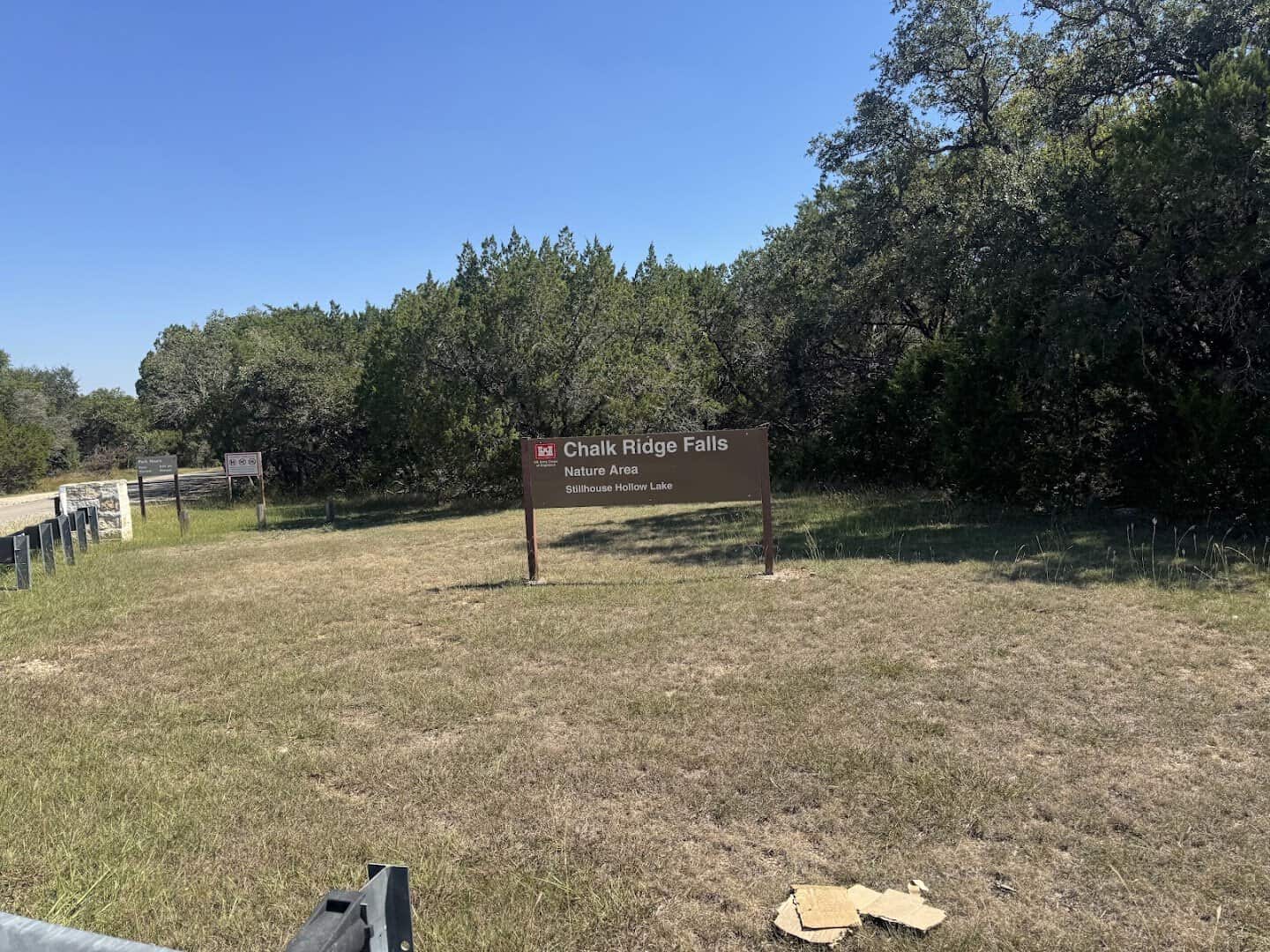
Time it right and you will have the best of it: spring or early fall, on a weekday morning before the crowds. That is when the water runs clear, the light is soft, and the whole shaded corridor feels like your own private stretch of river.
How to Get There
The park sits just southwest of Belton, tucked below the Stillhouse Hollow Dam, roughly ten minutes from downtown Belton, about twenty-five minutes east of Killeen, and a little over an hour north of Austin up Interstate 35.
Where: Chalk Ridge Falls Park, 5600 FM 1670, Belton, TX 76513
Go Chase a Little Waterfall
What makes this spot special is not one big showstopper. It is the stacking of small joys: the sound of water on chalk, a cold pool under the trees, the wobble of a bridge over a clear river, all within a short walk of your car.
Pack the water shoes, check the algae advisory, and get there before the morning burns off. Whether you live down the road in Bell County or you are just passing through on I-35, this little riverside pocket is worth the detour.
Go find your own flat rock by the falls, dip your feet in that cold, clear water, and stay a while. The highway will still be there when you are ready.

Stella Raines
Editor-in-Chief
Stella brings over a decade of storytelling experience to TX Headlines. With roots in West Texas and a love for road trips, she leads the editorial team with an eye for the hidden stories that make Texas unforgettable.
More Stories

These 10 Texas Spots Bloom Into Seas of Bluebonnets Each Spring

This Enchanting Texas Nature Trail Feels Like Hiking Through a Fairytale Forest

This Underrated Texas State Park Gives You a Full Day of Swimming and Hiking for Just $5

This Easy Texas Hike Leads to a Swinging Suspension Bridge Hidden in the Pines
Tags