This Short Central Texas Trail Ends at a Hidden Limestone Waterfall and a Summer Swimming Hole
I will drive halfway across Texas to stand at the bottom of a waterfall, but the ones I love most are never the easy ones. The best swimming spots in this state are rarely the places with a giant parking lot and a line out the gate.
They are the quiet ones, tucked just far enough off the road that most people never bother to look. That short walk is the whole point.
It filters the crowd, it drops the temperature ten degrees under the trees, and it hands you a reward that feels earned instead of handed over. My favorite Texas mornings have all started with a walk like that.
Chalk Ridge Falls Park, sitting just below the Stillhouse Hollow Dam near Belton, is exactly that kind of place. It trades in cool limestone water, and it makes you earn it with barely any effort at all.
Below, here is what waits at the end of the trail, when to go, and how to find it without circling FM 1670 twice.
A Waterfall That Hides in Plain Sight
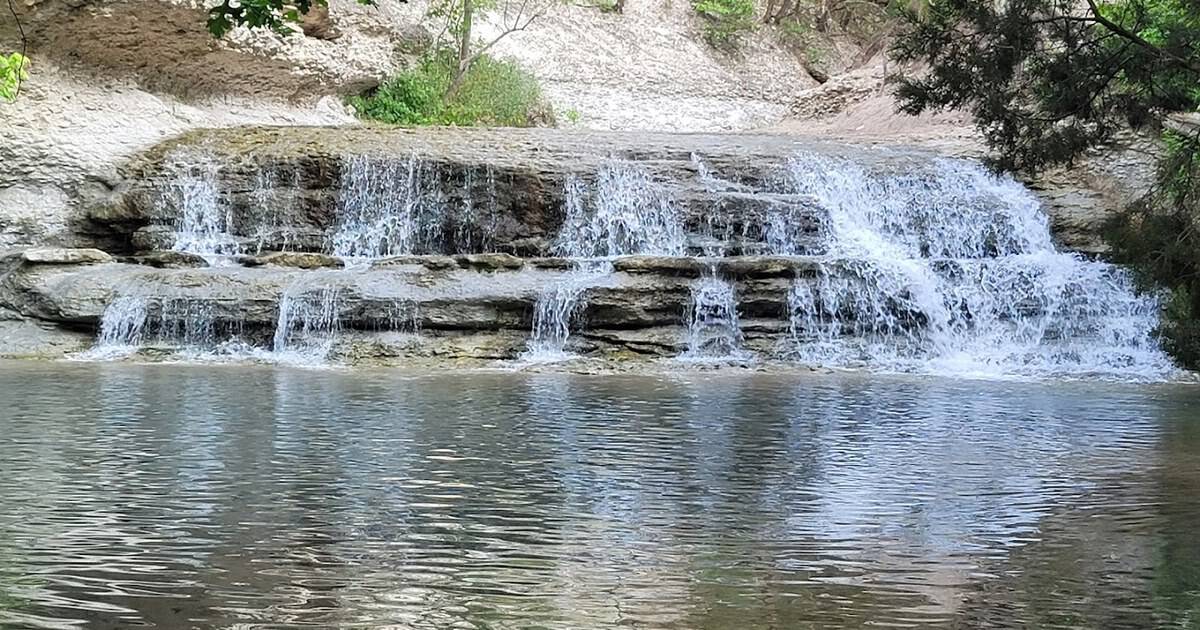
The star of the show is the falls themselves. Chalk Ridge Falls is not a thundering, hundred-foot drop, and it does not try to be. It is a wide, low cascade that slides over layered shelves of chalky limestone into a shallow pool below.
Think of it less as a Niagara and more as nature’s stone staircase, with water spilling down step by step. One Texas travel blog described the cascade simply as “a thing of beauty,” and that is the right register for it.
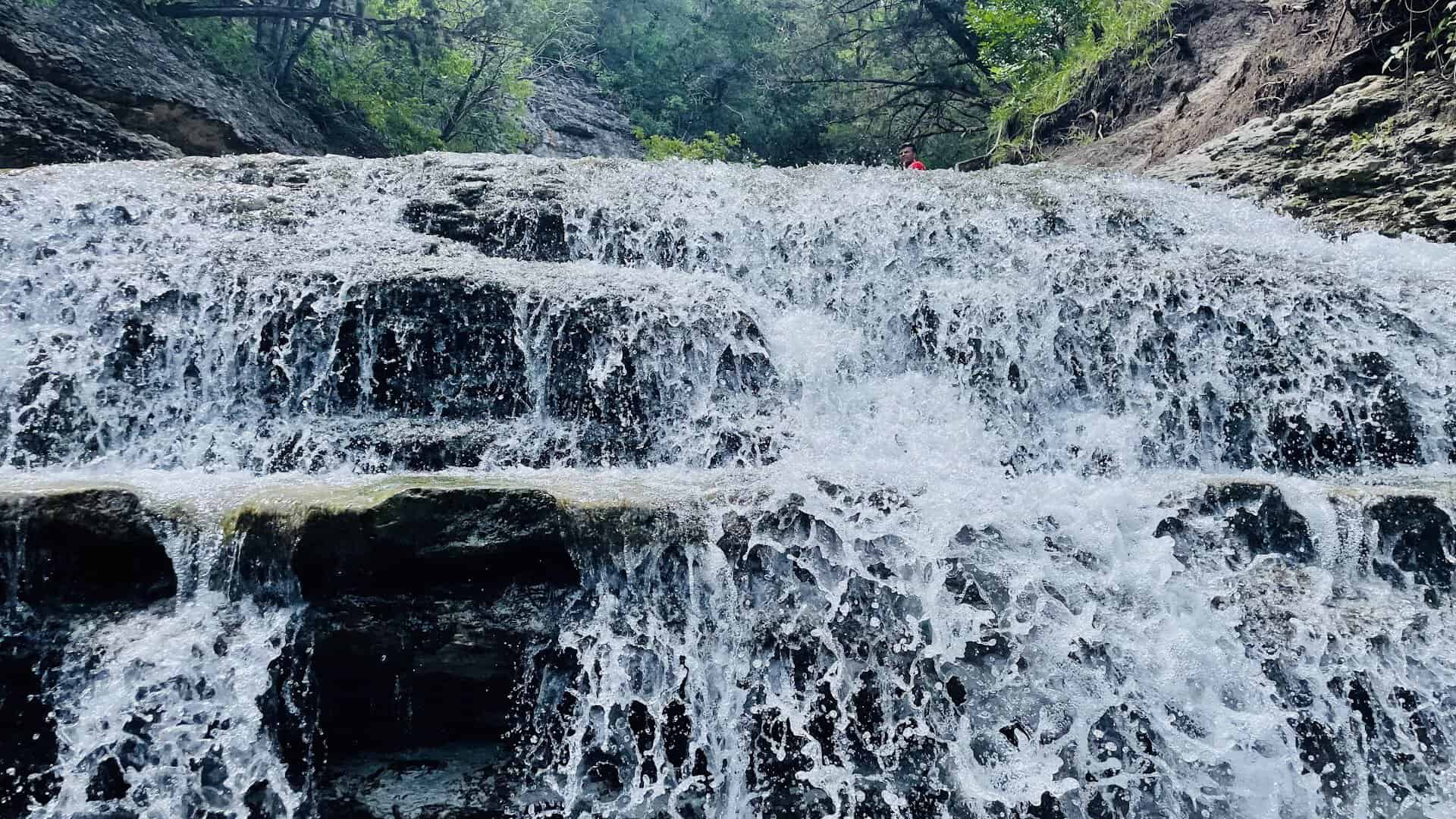
The chalk in the name is not decoration. This is soft, pale rock, worn into ledges and lips by the river over a very long time, and the water reads almost milky where it froths across the shelves.
It is the kind of scene that photographs far better than a small waterfall has any right to. Slow the shutter a touch and the cascade turns to silk over the stone.
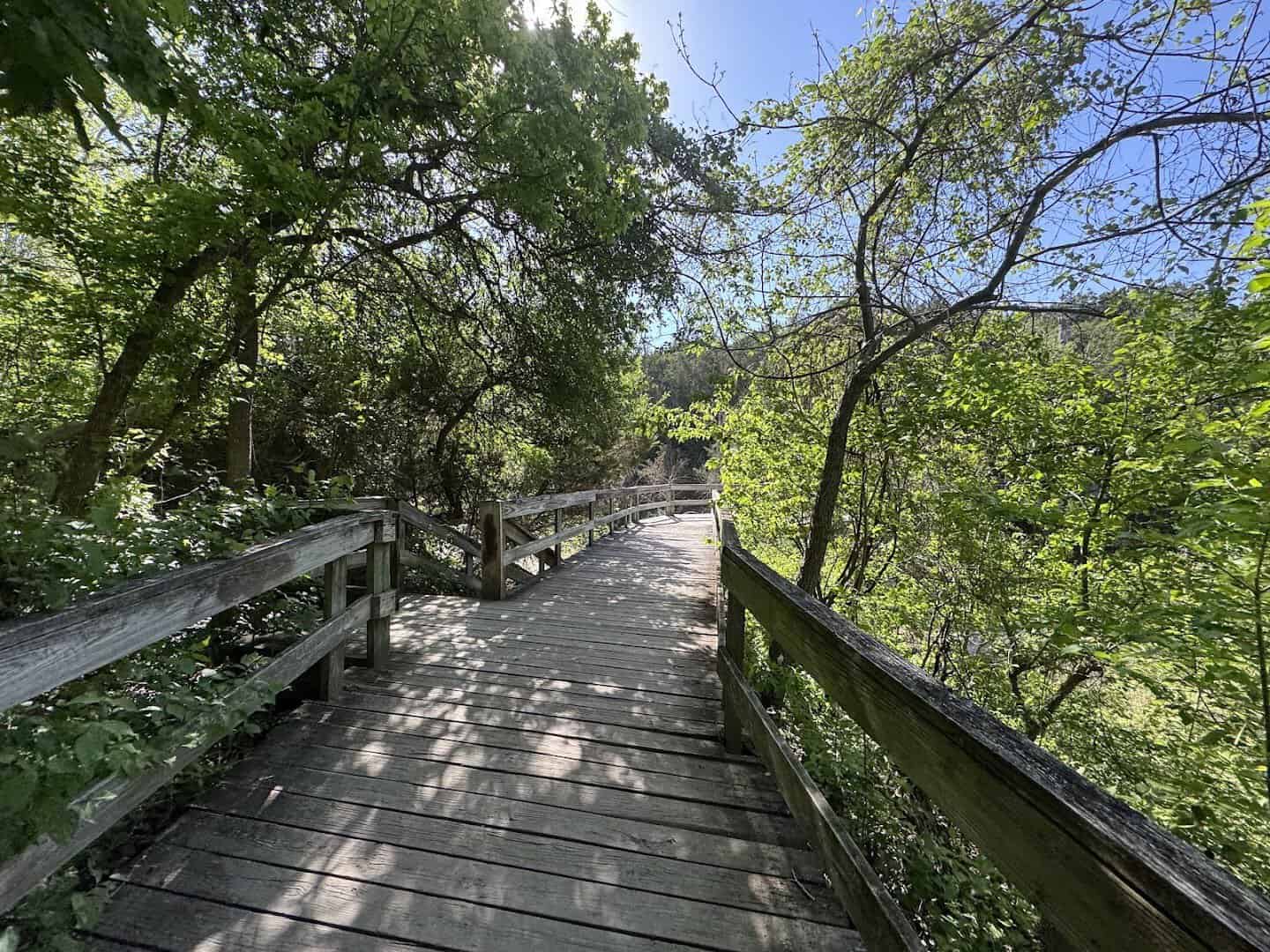
The whole walk out to the falls is short, well under a mile of packed dirt and rock along the water. You can hear it before you round the last bend, that soft rushing sound that tells you the payoff is close.
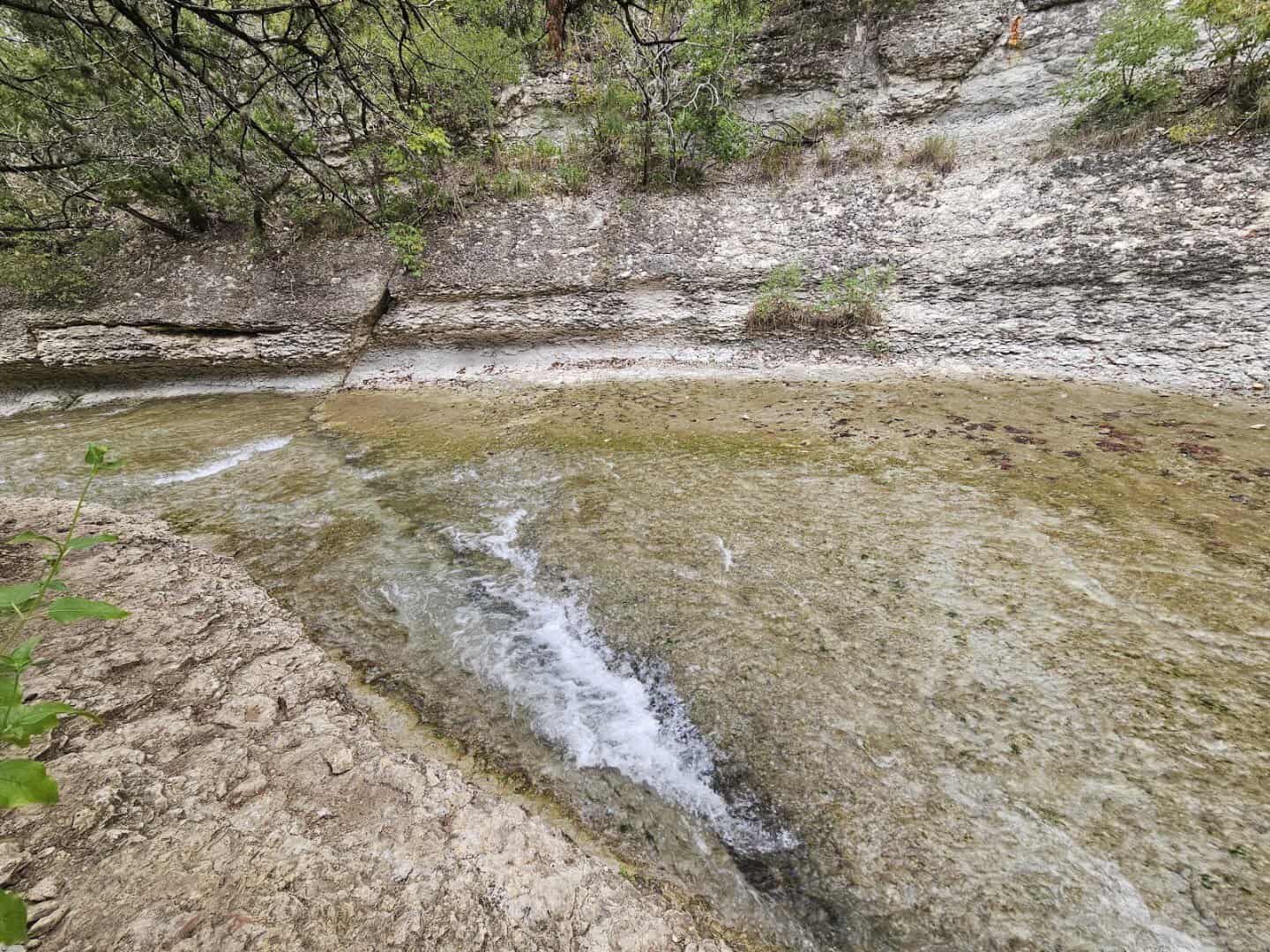
Come after a good rain and the falls run full and loud, spreading across the whole width of the ledge. Come in the deep heat of late summer and they thin to a trickle, quieter but still lovely with the light coming through the trees.
The Swimming Hole at the Bottom
At the base of the cascade, the water pools into a swimming hole that fills up in summer. This is the part people drive out for.
The water runs clear and cool, the kind of cold that makes you gasp on the first step and grin by the third. On a hot Central Texas afternoon, there are few better feelings than lowering yourself into spring-fed water after a walk in the sun.
You will find a wide, flat rock apron near the base. It is a fine spot for setting down a towel, wading in from the edge, or sitting with your feet in the current while the kids splash.
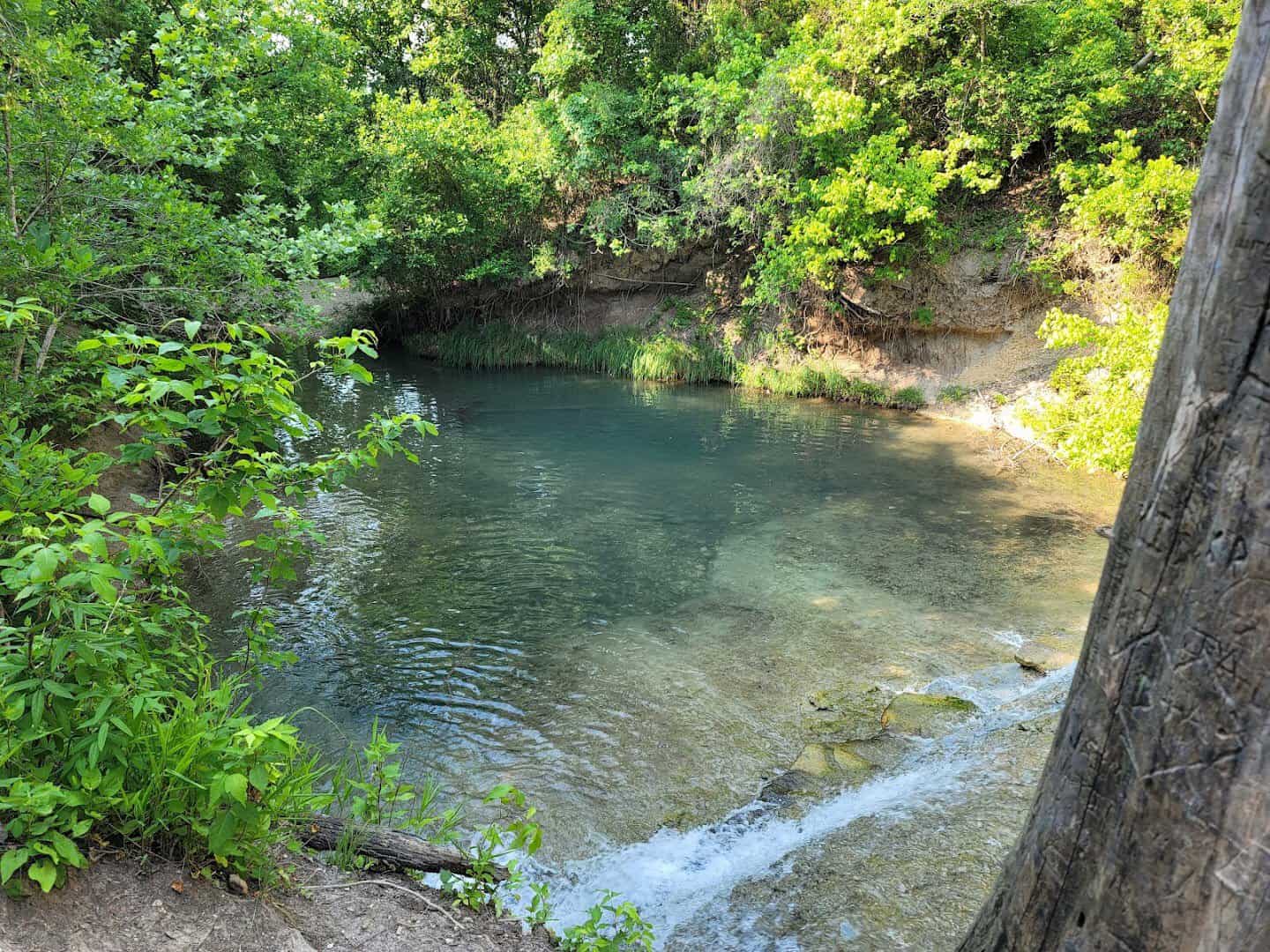
This is a pool for wading and cooling off, not for deep diving, and that easygoing pace is a big part of the charm. Bring a picnic and you can stretch a quick dip into a lazy half-day.
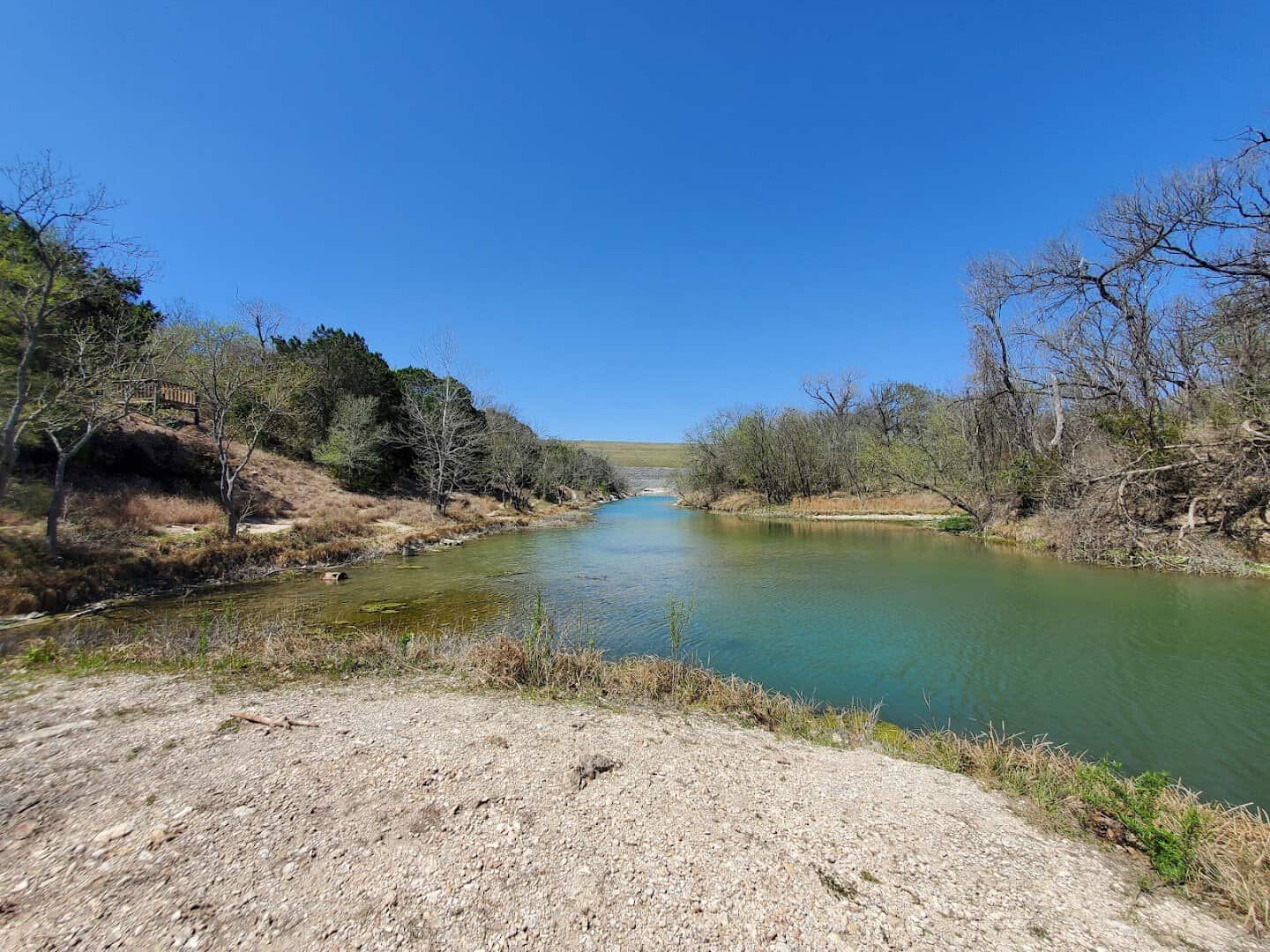
The whole scene runs along the Lampasas River, the same water that feeds the big lake sitting behind the dam upstream. Little pockets of calmer water form here and there along the banks, so the falls pool is not the only place to cool your feet.
Water levels swing with the seasons, so what you find shifts from visit to visit. After a wet spring the pool is deep and generous. In a dry stretch it drops to a shallow wade, pleasant in its own way when the heat is on.
A Shady Walk, Not a Slog
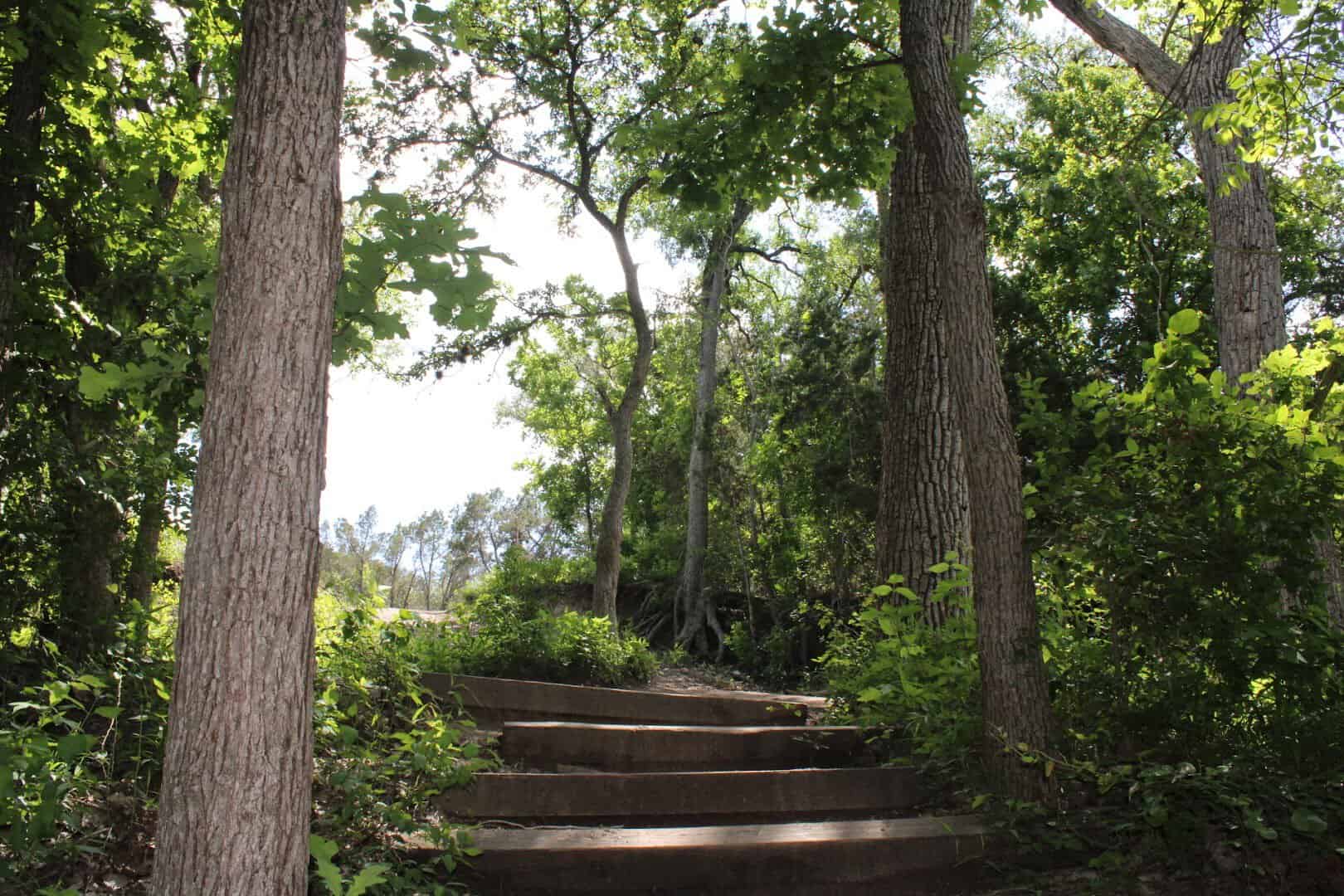
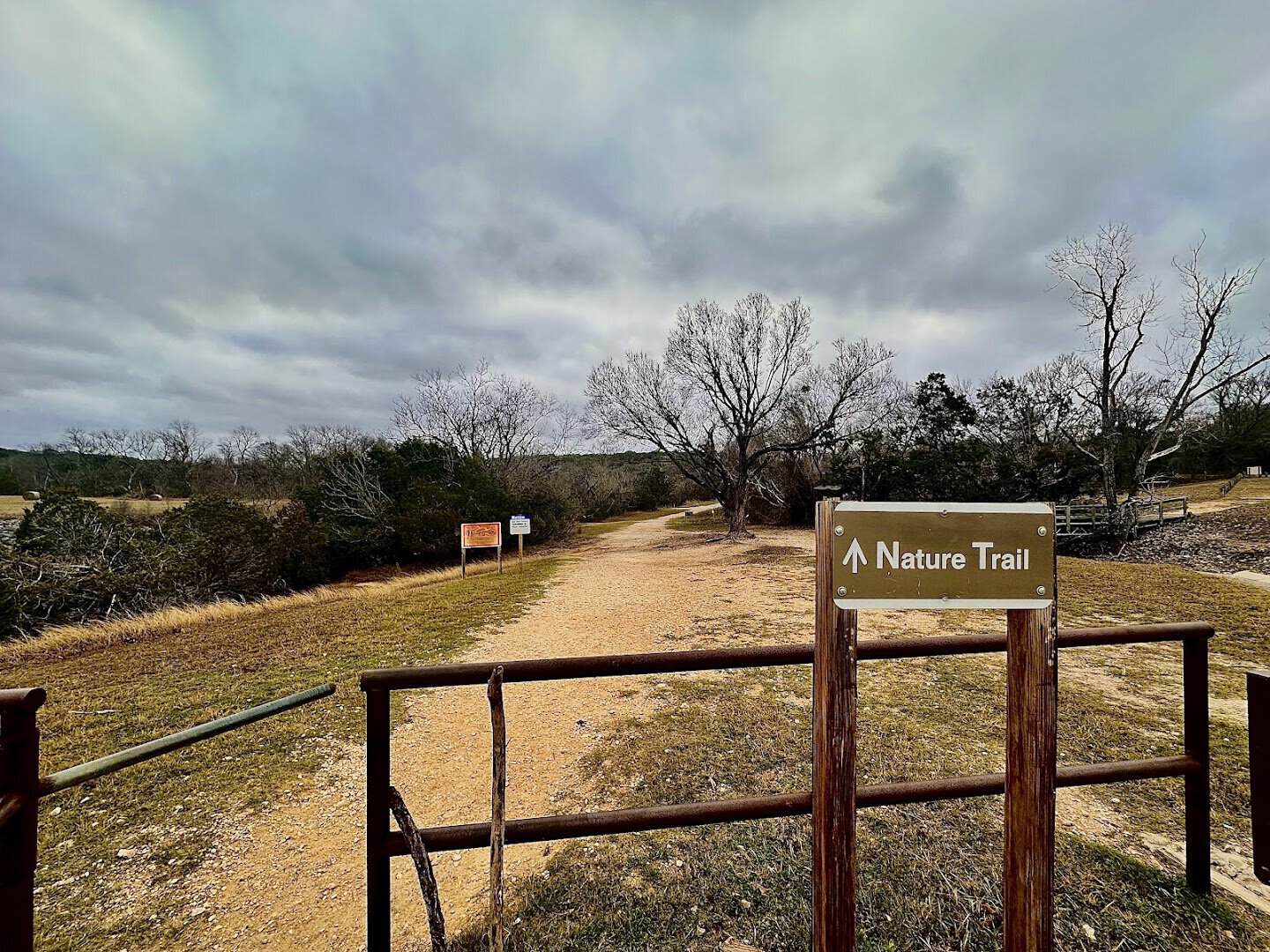
Here is what I love about a trail like this: it is genuinely easy. The path to the falls hugs the creek, stays mostly flat, and spends almost the entire way under a canopy of trees.
That shade matters more than anything else in a Texas summer. It is the difference between a pleasant stroll and a slow march, and Chalk Ridge keeps you covered nearly the whole time.
If you want more, the trail keeps going. The full network stretches to roughly two and a half miles out and back, with side paths that follow the water and cross it, so you can turn a quick waterfall visit into a proper morning outdoors.
The surface is hard-packed dirt, gravel, and natural rock. Trail shoes or sneakers with a bit of grip beat flip-flops here, especially near the water where the limestone gets slick.
Along the way, small overlooks double as quiet bird blinds. Sit still for a minute and you will start to notice how much moves through this little pocket of river bottom, from songbirds working the brush to the occasional heron stalking the shallows.
There is even a small cave tucked into the rocky hillside for anyone who likes to poke around off the main path. It takes a little scrambling to reach, so save it for sturdy shoes and a curious mood.
How the Dam Made a Park
This whole landscape exists because of a big idea about water. In 1968, the U.S. Army Corps of Engineers finished the Stillhouse Hollow Dam on the Lampasas River, five miles or so southwest of Belton.
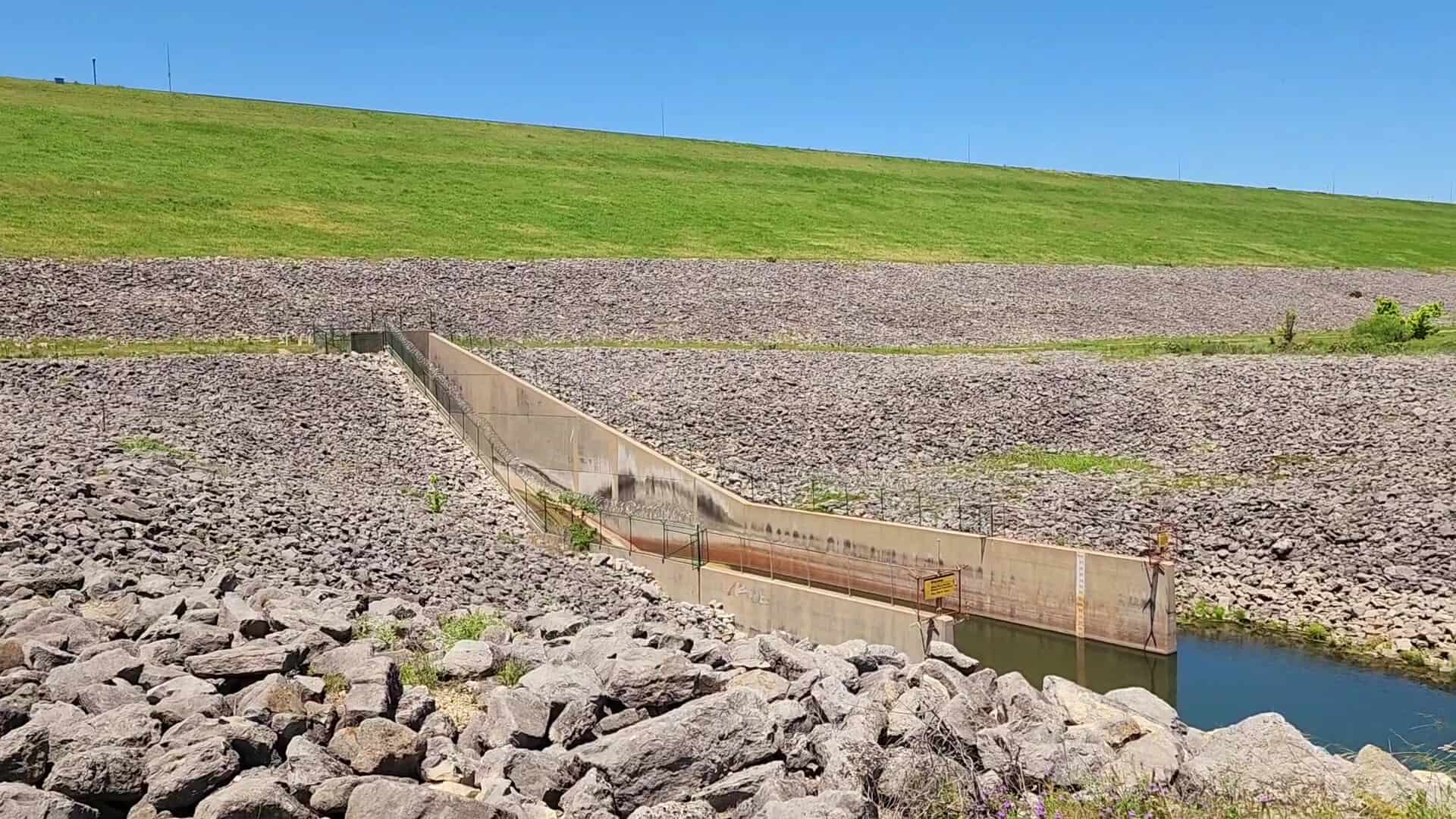
The dam was built for flood control and water supply in the Brazos River basin, and it created the roughly 6,400-acre Stillhouse Hollow Lake behind it. Chalk Ridge Falls Park is the roughly 90-acre stretch just below the dam.
That is where the released river runs over the limestone shelf and makes the falls. In other words, the same engineering that tamed a flood-prone river also handed Central Texas one of its prettiest little swimming spots.
The Corps developed the park as a nature education area, laced with an interpretive trail meant to teach visitors about the river, the rock, and the wildlife. That is why the walk feels so deliberate, following the water and pausing at the good views rather than just powering through.
Did you know? The whole park is free to visit. No entrance fee, no reservation, no season pass. In a state where so many good swimming holes now require booking weeks ahead, that is genuinely rare.
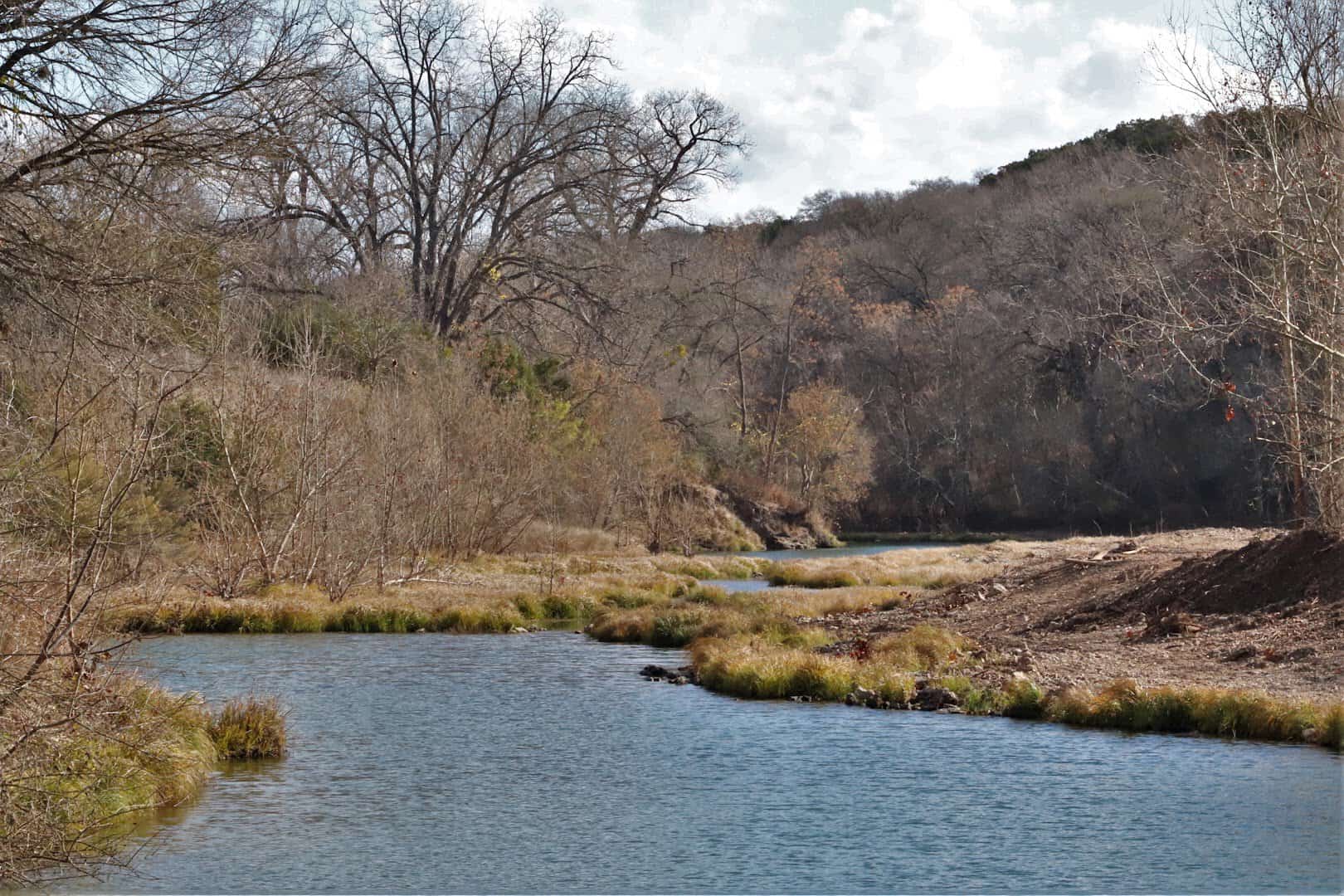
The Bridge That Used to Sway
For years, the signature photo op here was a narrow steel-cable footbridge that crossed the creek just downstream of the falls. It swayed with every step, the kind of gentle bounce that made kids shriek and adults grab the rail.
Weather eventually claimed it. Floods and freezes took their toll, and today the bridge itself is gone, with its anchor points still set into the banks like quiet bookends on either side.
So set your expectations on the water, not the crossing. The falls and the pool were always the real reason to come, and they are as good as ever. If a new bridge ever goes up, treat it as a bonus rather than the main event.
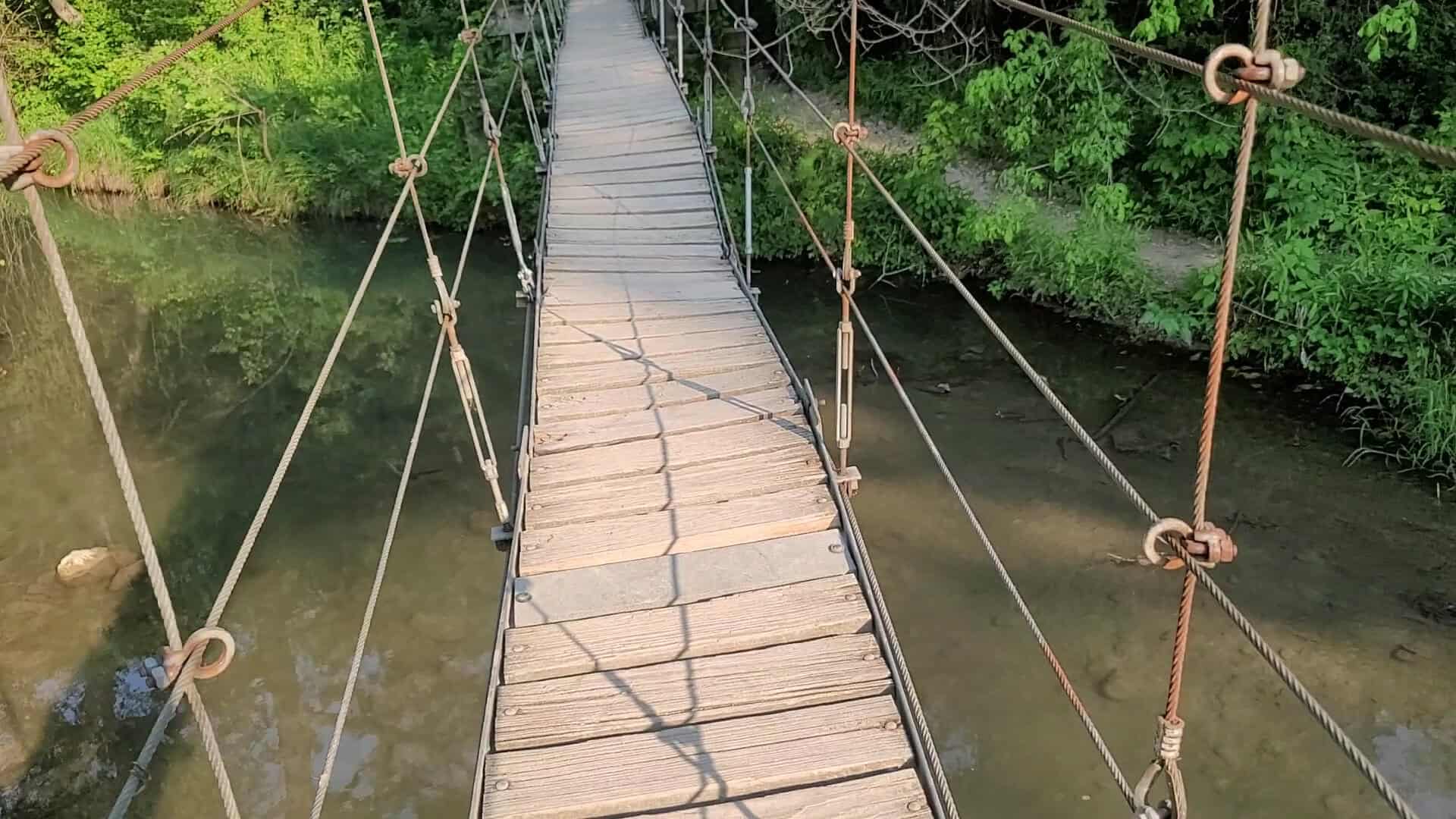
There is something honest about a park that lets you see the bones of what came before. Those old anchors are a small reminder that rivers rearrange things on their own schedule, and that the water always wins in the end.
When to Go for the Best Water
Timing changes this place completely. If the swimming hole is your goal, aim for late spring through summer, when the pool is full and the water is at its most inviting.
Spring brings wildflowers scattered along the banks and the fullest, loudest version of the falls after seasonal rains. It might be the prettiest window of the year here, and it is the one I would circle on a calendar.
Fall trades the flowers for color in the canopy, with the tree cover turning and the crowds thinning out. The water runs cooler and clearer, and the whole trail takes on a calmer, quieter mood.
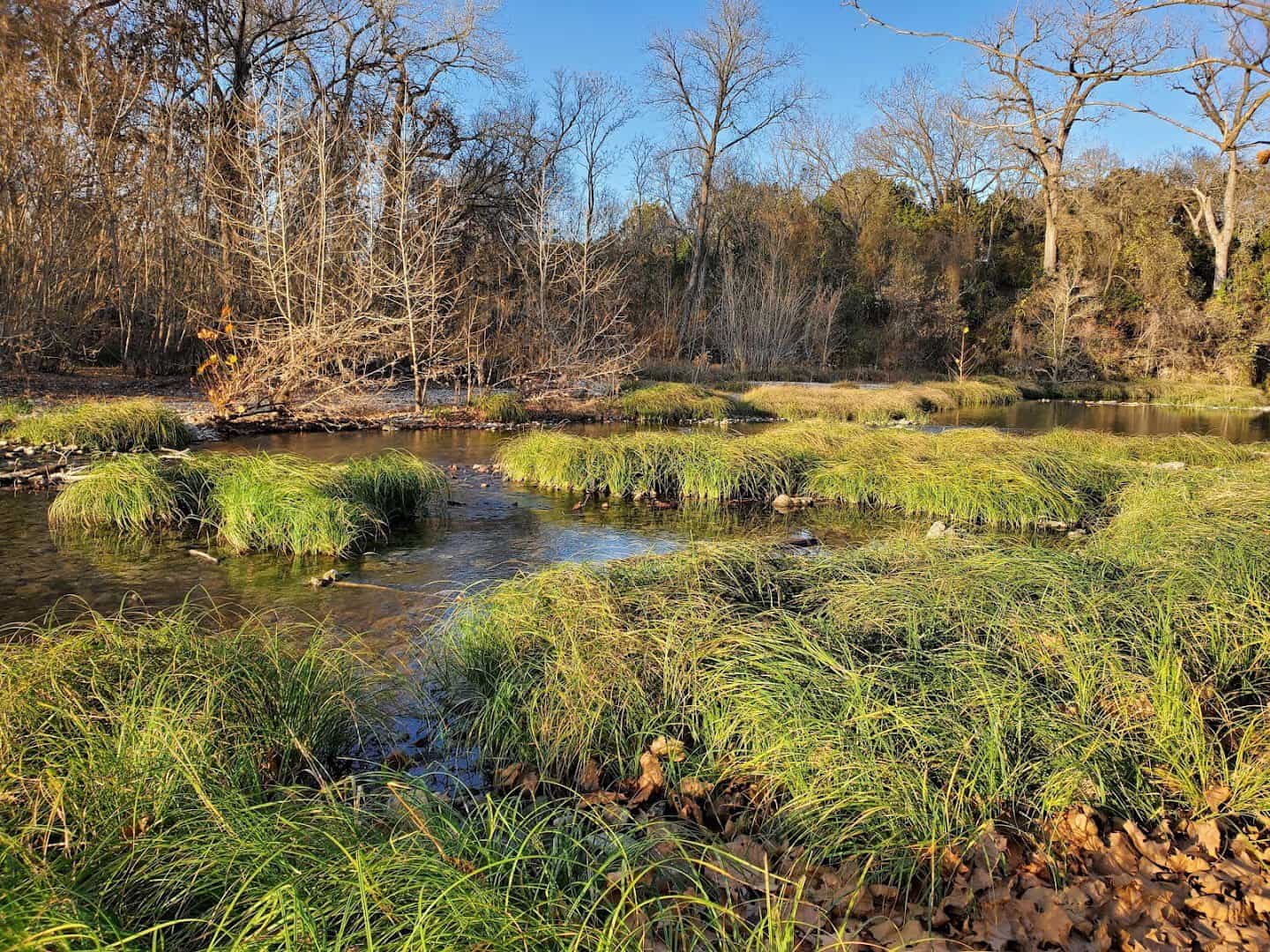
Even winter has its fans. The falls slow to their thinnest flow, but the bare trees open up views along the river you cannot see in the leafy months. Any season works, they just each show you a different park.
Pack Smart, Stay Easy
A few small things make this trip better. Bring water shoes or sandals with a strap if you plan to get in, because the limestone is smooth and can be slippery underfoot.
Pro tip: go early on a summer weekend. The parking lot is not huge, and by late morning on a hot Saturday it fills up with families who had the same good idea you did. An early start buys you the falls closer to yourself.
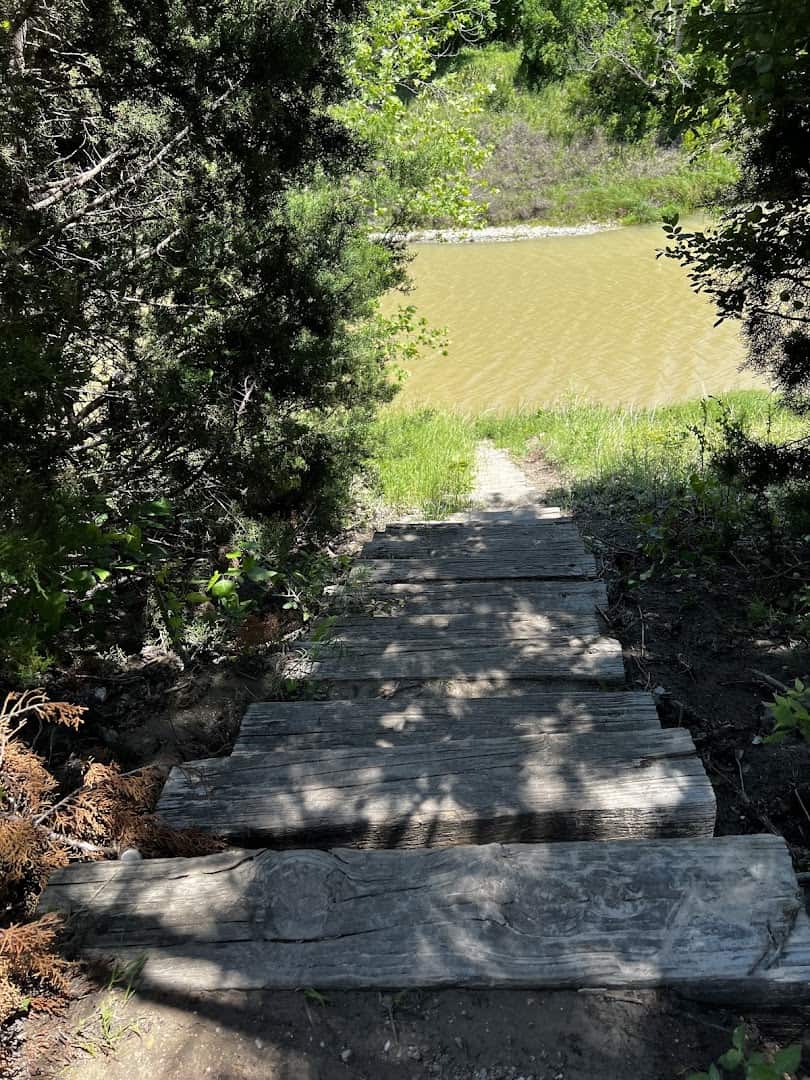
Bring your own water and snacks and plan to pack out your trash, since this is a natural area rather than a full-service park. Restrooms sit near the trailhead, not out on the trail, so plan accordingly before you set off.
Leashed dogs are welcome, which makes it an easy yes for anyone who hikes with a four-legged friend. Just bring bags and keep them out of the swimming pool at the base of the falls.
The park keeps daytime hours, opening in the morning and closing around sunset, so this is a daylight outing rather than a stay-late one. Aim for the middle of the day and you will have the best light for photos too.
How to Get There
The park sits just off FM 1670, on the south side of the Stillhouse Hollow Dam, a quick hop from Interstate 35 between Belton and Salado. That location makes it an easy detour on a Central Texas road trip, whether you are heading up toward Waco or down toward Austin.
Where: Chalk Ridge Falls Park, 5600 FM 1670, Belton, TX 76513
Punch that address into your maps app and follow it right to the trailhead lot. From there, take the main path along the water, and let the sound of the falls do the navigating for the last stretch.
Go Chase the Cool Water
Some Texas swimming holes ask for a long drive, a booking fee, and a fight for parking. This one asks for a short, shady walk and gives you a limestone waterfall and a cool pool at the end of it.
So grab a towel, lace up something with grip, fill a water bottle, and point the car toward Belton. The falls have been sliding over that chalky rock for a long time, and they are not going anywhere. Go let the cool water find you.
Featured image: Fred Nyangeri via Chalk Ridge Falls Park

Stella Raines
Editor-in-Chief
Stella brings over a decade of storytelling experience to TX Headlines. With roots in West Texas and a love for road trips, she leads the editorial team with an eye for the hidden stories that make Texas unforgettable.
More Stories

These 10 Texas Spots Bloom Into Seas of Bluebonnets Each Spring

This Enchanting Texas Nature Trail Feels Like Hiking Through a Fairytale Forest

This Underrated Texas State Park Gives You a Full Day of Swimming and Hiking for Just $5

This Easy Texas Hike Leads to a Swinging Suspension Bridge Hidden in the Pines
Tags