This Secret Hot Springs in Texas Is in the Middle of a Desert
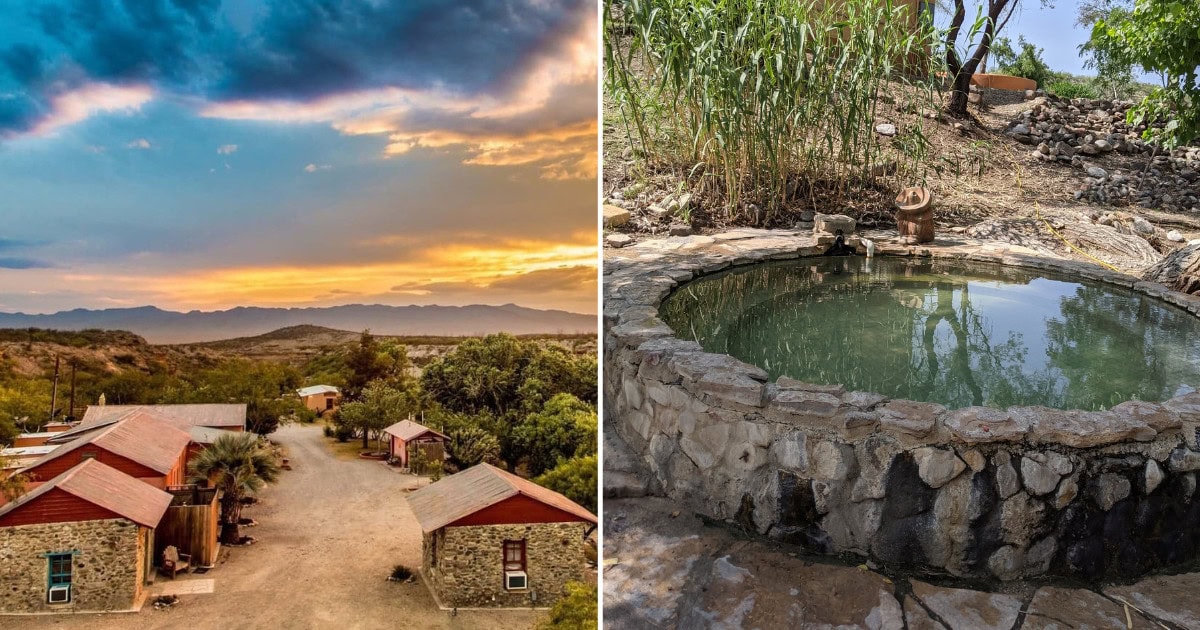
The hot mineral water emerges from the earth at 113 degrees Fahrenheit, as it has for thousands of years.
Indigenous people knew this place long before European settlers arrived. Spanish expeditions recorded stops here in the 1700s.
A crippled miner named John Lee came in the early 1900s seeking relief from his ailments and never left.
Minimalist sculptor Donald Judd bought the property in 1990 and closed it to everyone except himself and his friends.
Now Chinati Hot Springs operates as a small resort tucked into a rocky canyon in far West Texas, about five miles from the Mexican border, where the only things abundant are silence, stars, and warm water rising from underground.
If you’re looking for a getaway that feels genuinely removed from the modern world, this is it.
Where Chinati Hot Springs Is Located
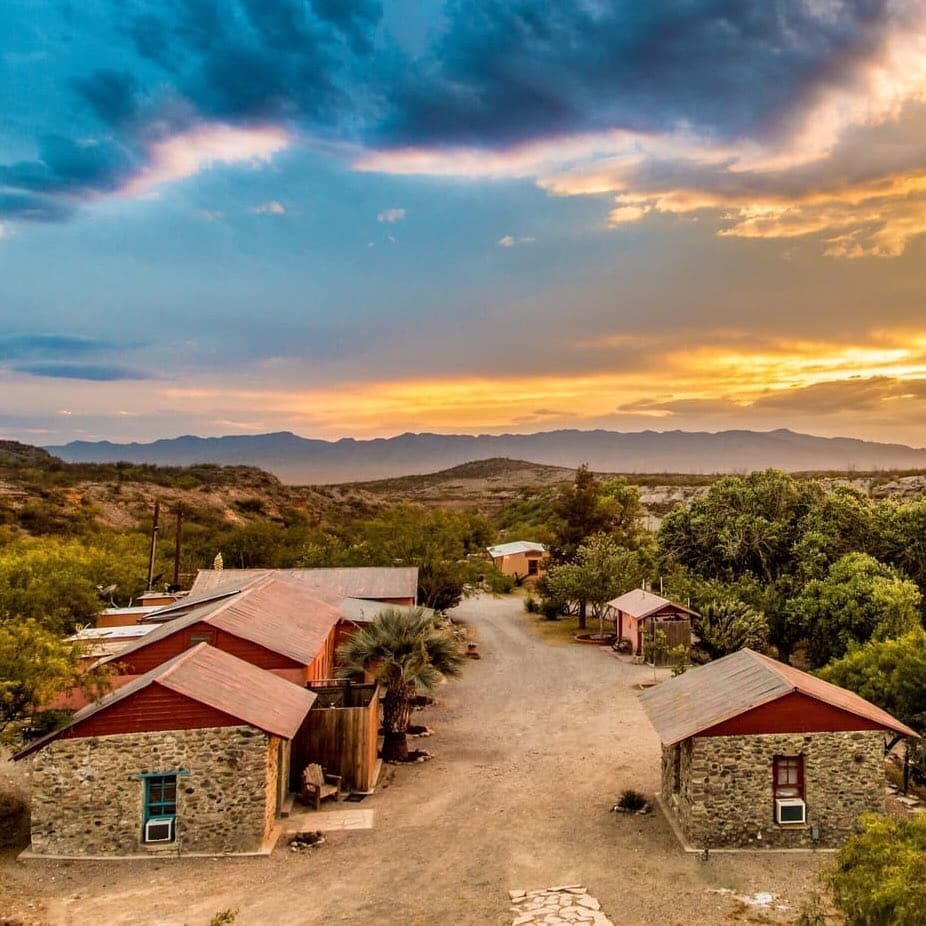
The springs sit in Presidio County, deep in the Chihuahuan Desert of far West Texas. The nearest town is Ruidosa, which isn’t much of a town at all. The nearest store is in Presidio, about an hour away.
Marfa—the famous art town where Donald Judd established his Chinati Foundation—is roughly two and a half hours from the springs, depending on which route you take.
And about those routes: the official website warns that Google Maps cannot be relied upon here.
Pinto Canyon Road, the most direct route from Marfa, is a rough dirt road not suitable for ordinary passenger cars.
Most visitors approach from Presidio, driving northwest along the border on Texas 170 to Ruidosa, then turning at the old church and following Hot Springs Road into the desert.
The final stretch is gravel and dirt. A high-clearance vehicle helps, though it isn’t strictly required in dry conditions.
The Springs
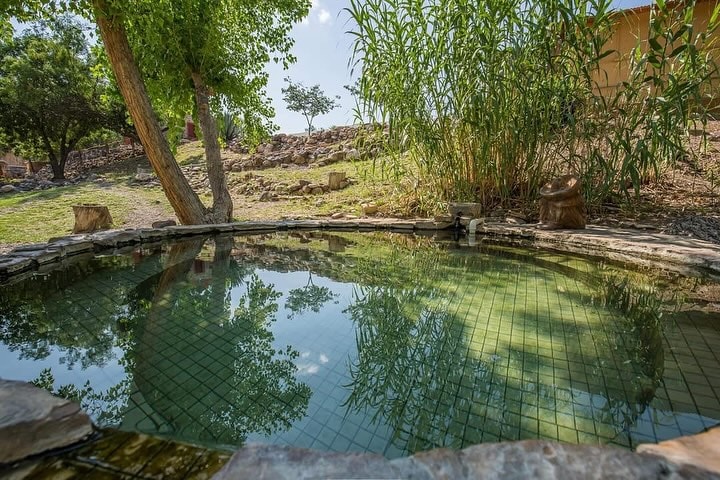
The geothermal water surfaces from Quaternary terrace gravels, located between two forks of the Candelaria fault, about ten feet above Hot Springs Creek.
The water emerges at around 109-113 degrees Fahrenheit and contains an extensive mineral profile, including lithium, barium, strontium, boron, and zinc, among others.
Historically, people have credited the mineral water with helping conditions ranging from arthritis to skin problems to stomach ulcers.
Soaking Options
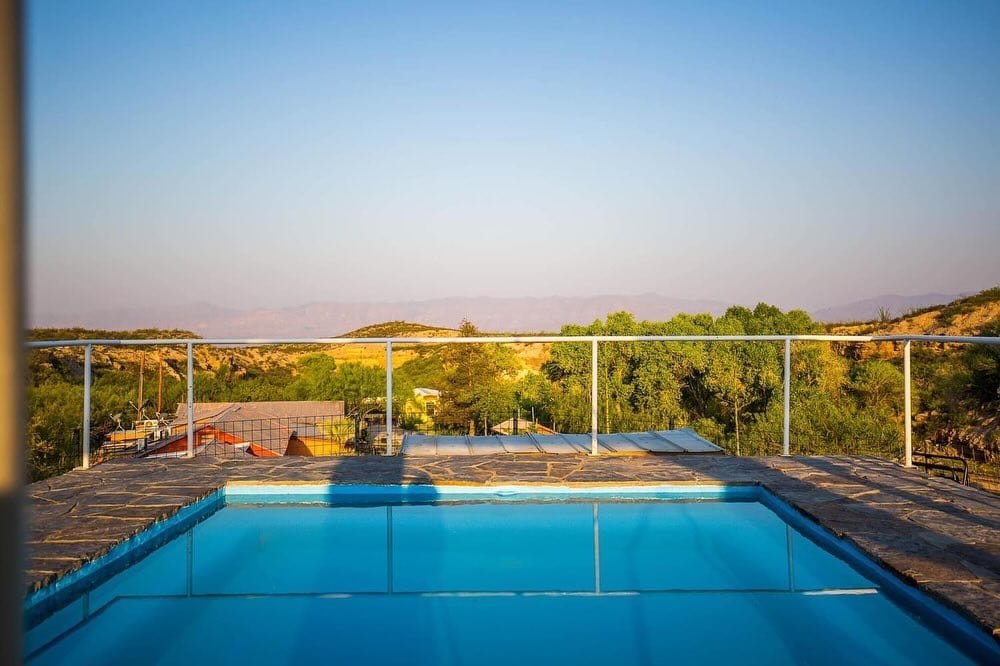
Chinati Hot Springs offers several ways to experience the water. A shared outdoor hot springs tub holds five or six people and maintains temperatures around 95-105 degrees—available 24 hours a day.
A seasonal cool pool (around 70 degrees) operates during the summer months for contrast plunges.
Several cabins include private indoor soaking tubs fed directly by the hot springs, with water temperatures between 104 and 109 degrees.
The round outdoor tub, available to all overnight guests, is the heart of the communal experience.
A thermal cover floats on the surface to retain heat when not in use. The tub overlooks the desert terrain, with the rugged Chinati Mountains as a backdrop.
Soaking here at night—under a sky so dark and star-filled it feels otherworldly—is the signature experience.
Bathing suits are required in public areas. Clothing is optional in private cabin tubs.
Lodging and the Off-Grid Experience
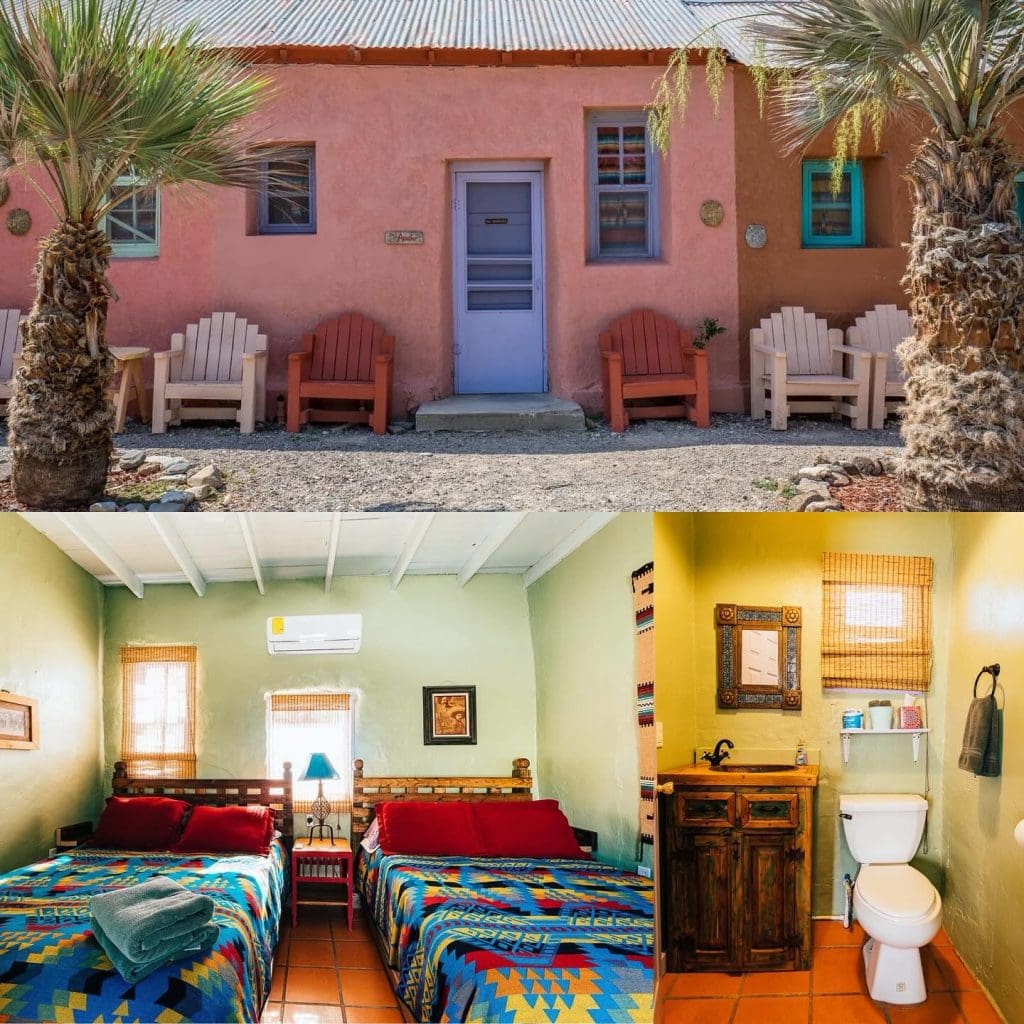
The property has seven adobe cabins, each with its own character. El Dorado accommodates families and groups.
Dos Amigos sleeps four. El Presidente and El Patrón rank among the most requested, with private tub rooms. El Corazón and Numero Uno work well for couples. Las Palmas is cozy and compact.
All cabins have heating and air conditioning, running water, flushing toilets, mini-fridges, and electricity.
Three cabins have full private bathrooms; others share a community bathhouse. The interiors are simple—cement floors, basic furnishings—but comfortable.
Expect beds, chairs, small stoves or toaster ovens, and cooking supplies. One cabin manager described the philosophy as “Spartan comfort.”
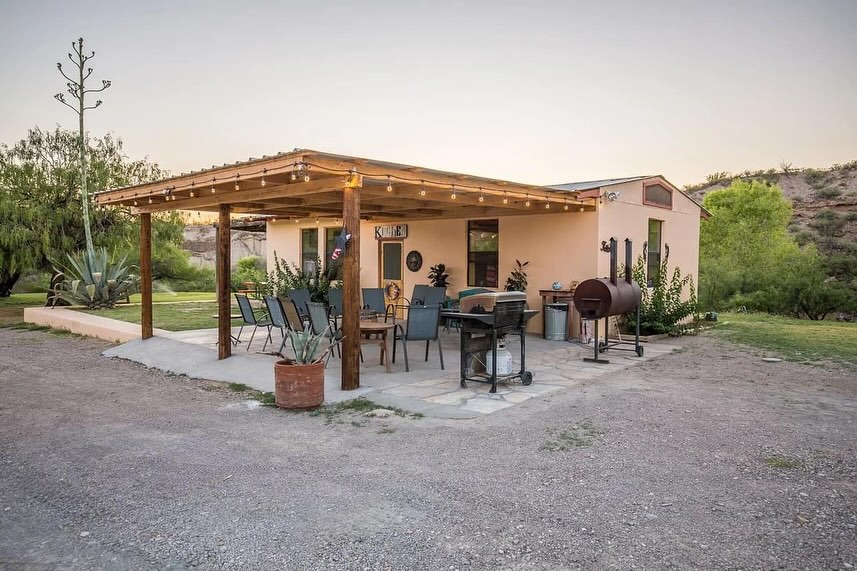
There is no restaurant. The general store is no longer open. You must bring all your own food, drinks, charcoal, and supplies.
The communal kitchen—well-equipped with multiple stoves, three large refrigerators, cookware, and counter space—makes self-sufficient cooking easy.
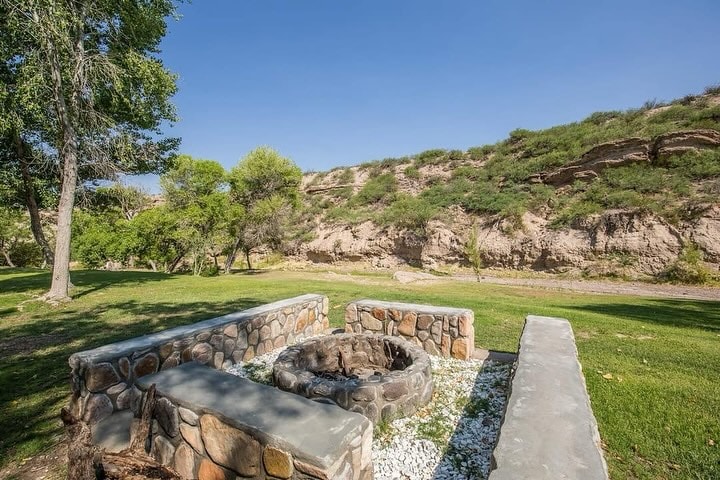
Outdoor grills are available. Tables and chairs sit inside and outside the cabins. Big cottonwood trees shade parts of the property.
Know Before You GO
There is no cell service. No WiFi. No television. Guest room doors don’t lock. The remoteness isn’t a bug—it’s the entire point.
Nightly rates start around $85-90 for rooms without private tubs, with larger and more equipped cabins running higher.
Reservations are required; no day passes are available, and no walk-ins are allowed. Camping is no longer permitted. The property often sells out, especially on weekends—book well in advance.
Note: Do not bring an electric vehicle. The property’s power lines cannot handle charging loads.
Beyond soaking, the 640-acre property offers hiking trails along arroyos and up the surrounding ridges.
Big Bend National Park lies a few hours southeast; the Chinati Foundation in Marfa offers world-class contemporary art. The ghost town of Ruidosa is about a half-hour drive.
Where the Desert Offers Healing
“All we have is quiet and a little hot water,” one former manager told visitors. That undersells it.
Chinati Hot Springs offers a kind of experience increasingly difficult to find—total disconnection, water that has been soothing human beings for millennia, and a sky full of stars that most people never get to see.
The drive is long.
The accommodations are simple.
The silence is complete.
That’s exactly why people keep making the journey.

Stella Raines
Editor-in-Chief
Stella brings over a decade of storytelling experience to TX Headlines. With roots in West Texas and a love for road trips, she leads the editorial team with an eye for the hidden stories that make Texas unforgettable.
More Stories
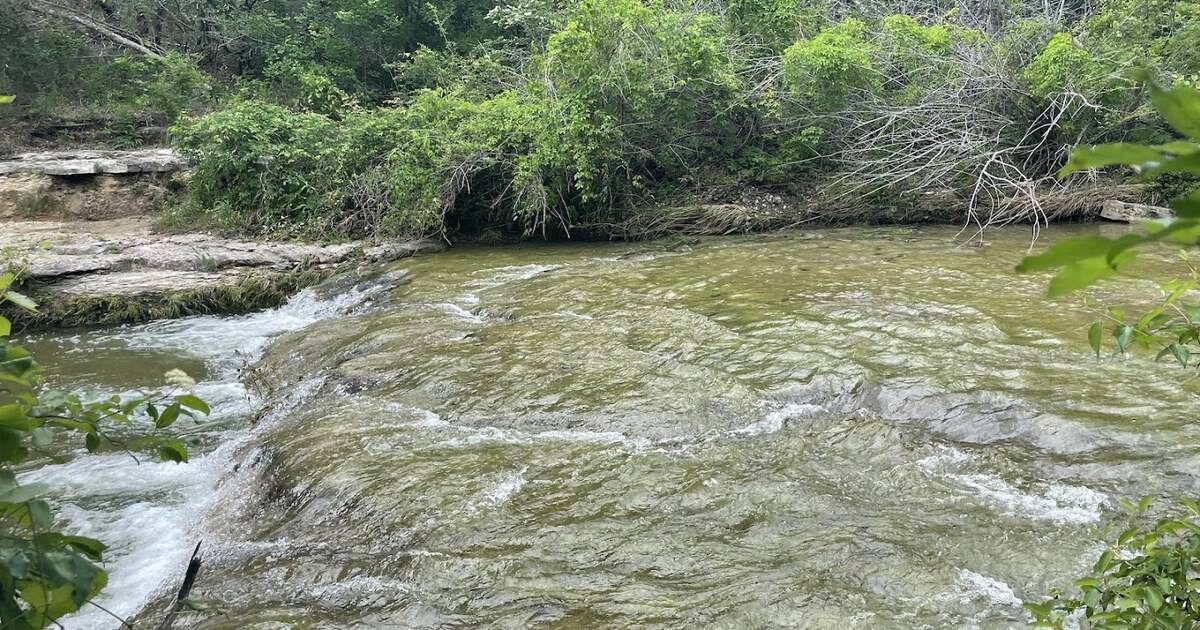
This Hidden Texas Trail Leads to Limestone Waterfalls and Spring Wildflowers
This Rugged Texas Ranch Has Nearly 30 Miles of Twisting Mountain Bike Trails That Keep Riders Coming Back
This Epic Texas Rail-Trail Stretches 130 Miles Past 19 Small Towns and Over 100 Old Trestles
This Crystal-Clear West Texas Pool Is the World’s Largest Spring-Fed Swimming Hole, and It Stays 72 Degrees Year-Round
Tags