This Overlooked Texas State Park Is Where the Word ‘Texas’ Was Born
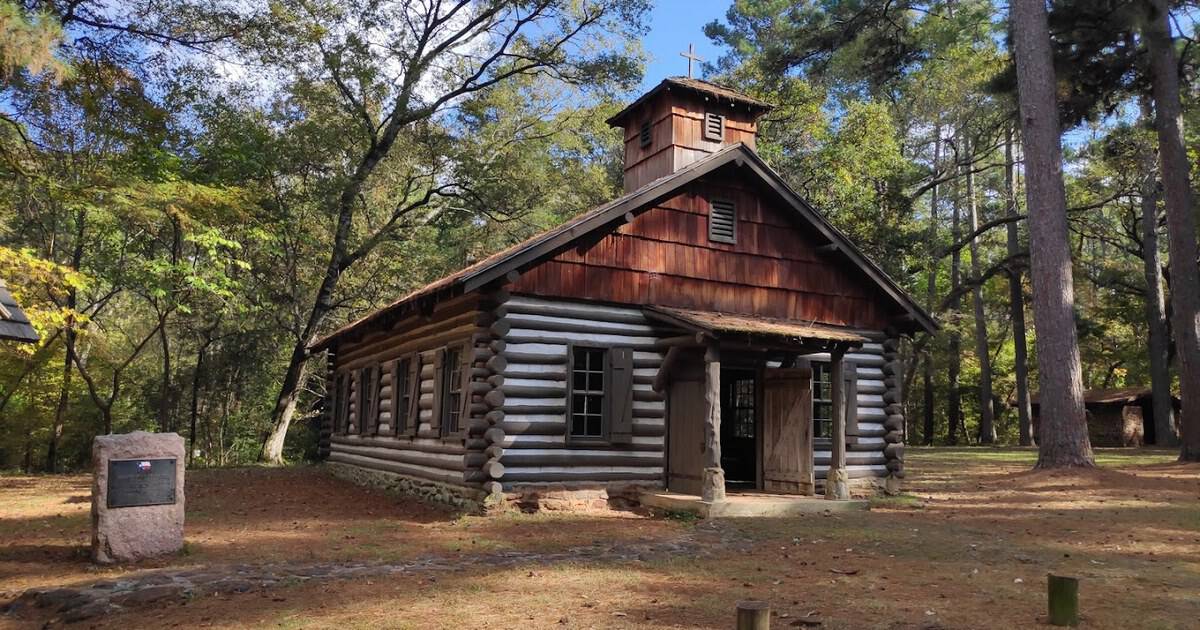
The first time I walked up to the little log mission in the East Texas woods, a mockingbird was working through its whole repertoire in a loblolly pine overhead. I stopped dead on the trail just to listen.
Sunlight came down in long gold bars through the branches. Somewhere off to my left, a fish plopped in the pond, and the smell of warm pine resin hung sweet in the air.
I remember thinking that I had driven right past this place a dozen times on my way to somewhere flashier, and never once turned in. What a mistake that was.
That log mission is the heart of Mission Tejas State Park. Standing there in the piney hush, I realized I was looking at the spot where the word “Texas” was practically born.
Below, I’ll walk you through why this quiet, overlooked park tells one of the most important stories in the whole state.
Because here is the thing about Mission Tejas. It does not shout. There is no towering waterfall, no famous overlook, no line of tour buses.
There is just deep pinewoods, a reconstructed chapel, an old pioneer cabin, and about 660 acres of the kind of stillness that makes you lower your voice without meaning to.
And woven through all that quiet is a history so big it named a state.
A Chapel in the Pines That Started It All
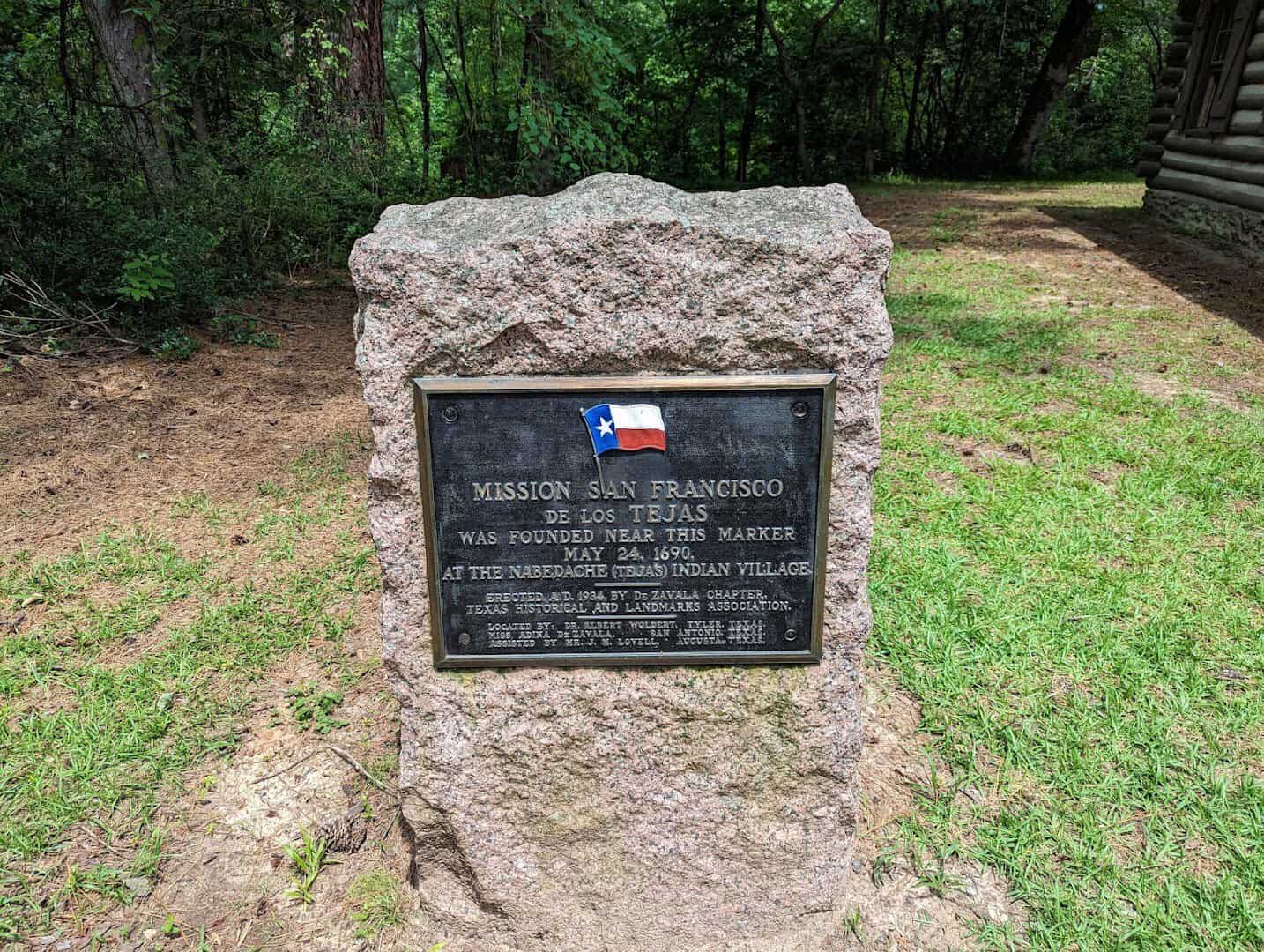
Let me take you back. In 1690, Spanish missionaries pushed up into the dense forests of what is now East Texas and built Mission San Francisco de los Tejas.
It was the very first Spanish mission in the entire province of Texas, planted right in the middle of a thriving Caddo village.
Sit with that for a second. The first one. Everything else came after.
The Caddo people had already been farming and building here for centuries, tending fields of corn, beans, squash, sunflowers, melons, and tobacco. They lived in graceful thatched houses and traded far and wide.
Their communities flourished across East Texas for a thousand years, from around the 800s onward. The Spanish arrived as newcomers to a land that was already very much home to someone.
Walking the grounds today, I like to picture those tidy fields and rounded grass-thatched homes standing where the pines now grow. This place was a gathering ground long before it was ever a park.
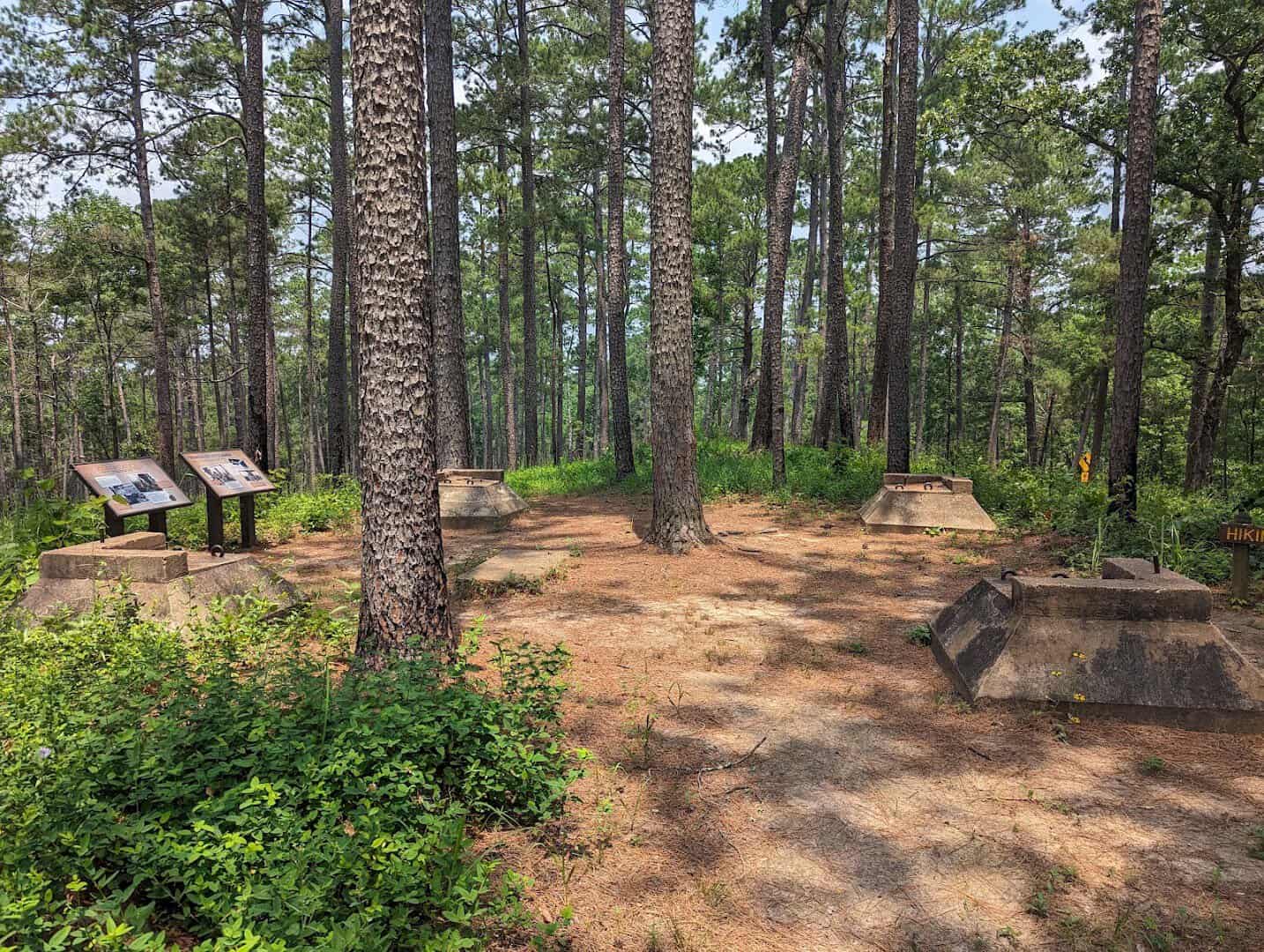
The mission itself did not last long. A brutal smallpox epidemic swept through that first winter, and relations soured. By 1693 the friars burned their own mission and retreated south to Mexico. A second attempt in 1716 flickered and faded too.
But the encounter left something behind that outlived every wooden beam.
Where the Name “Texas” Comes From
Here is my favorite part, and it gives me chills every single time.
When the Spanish met the Caddo, they kept hearing one warm little word: “táyshaʼ.” In the Caddo language it means “friends” or “allies.” The Spanish heard it, wrote it down as “Tejas,” and started calling this whole region the great kingdom of the Tejas.
Say it out loud. Tejas. Texas. Do you hear it?
The name of an entire state, stamped on trucks and belt buckles and football stadiums from Amarillo to Brownsville, began as a Caddo word for friendship. And it began right here, in these woods, at this mission.
Did you know? That is why so many Texans proudly say the state’s name literally means “friends.” When you stand at Mission Tejas, you are standing at the source of that story.
The Little Mission the CCC Rebuilt
The mission you see today is not the 1690 original, and the park is honest and lovely about that. It is a loving commemoration, built by young hands during one of the hardest chapters in American history.
In 1934, local citizens bought the land and raised a marker to honor the old mission. Then the Civilian Conservation Corps stepped in. Company 888, part of Franklin Roosevelt’s Depression-era program that put young men to work in the outdoors, got busy.
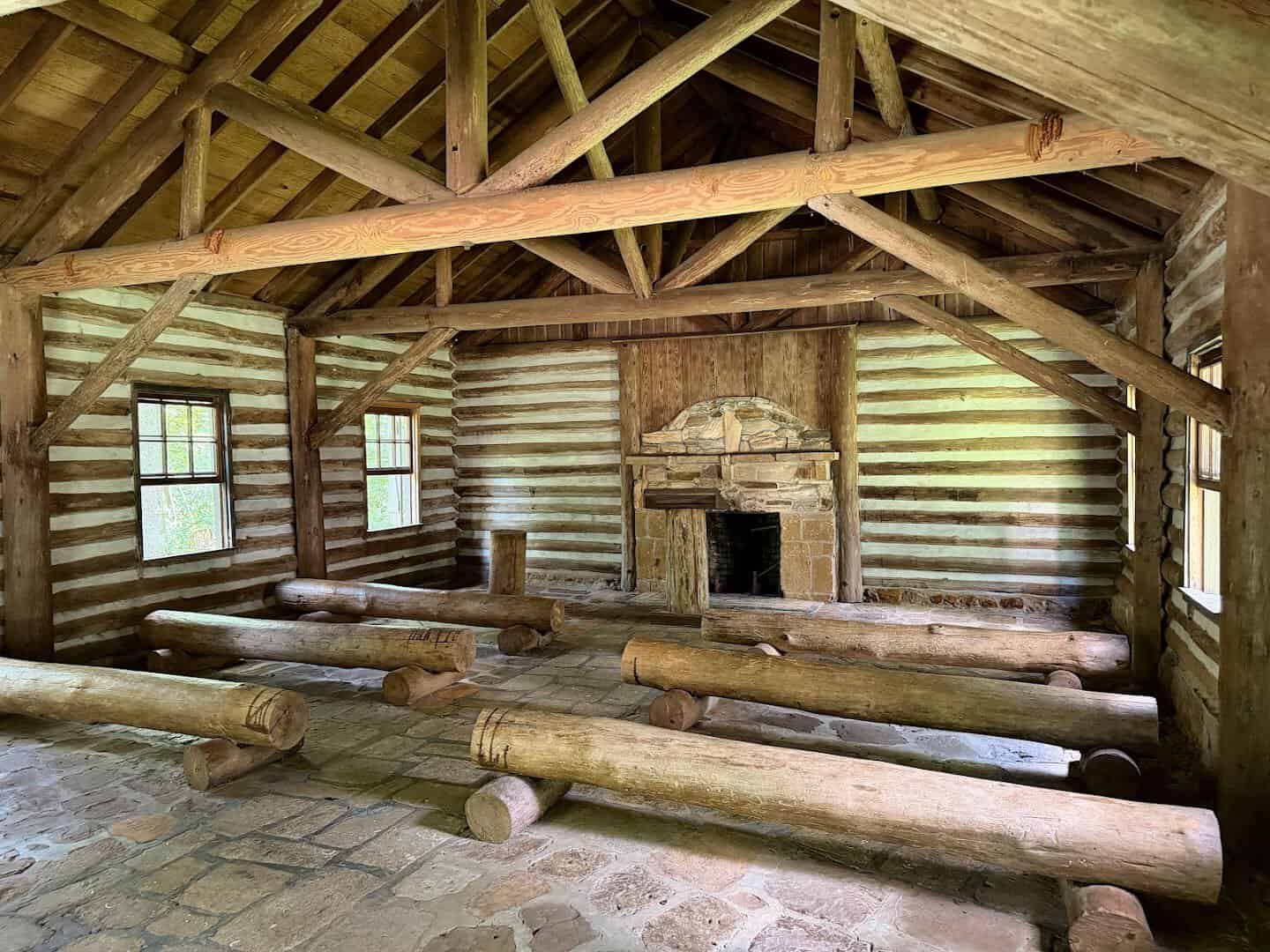
They built a representation of the mission chapel, a small dam and pond, picnic areas, trails, a park road, and more. These were often teenagers and young men far from home, earning a wage to send back to struggling families, learning skills with their hands.
When you run your palm along that log chapel, you are touching craftsmanship from the 1930s, made by people who needed the work as much as the state needed the park. I find that deeply moving.
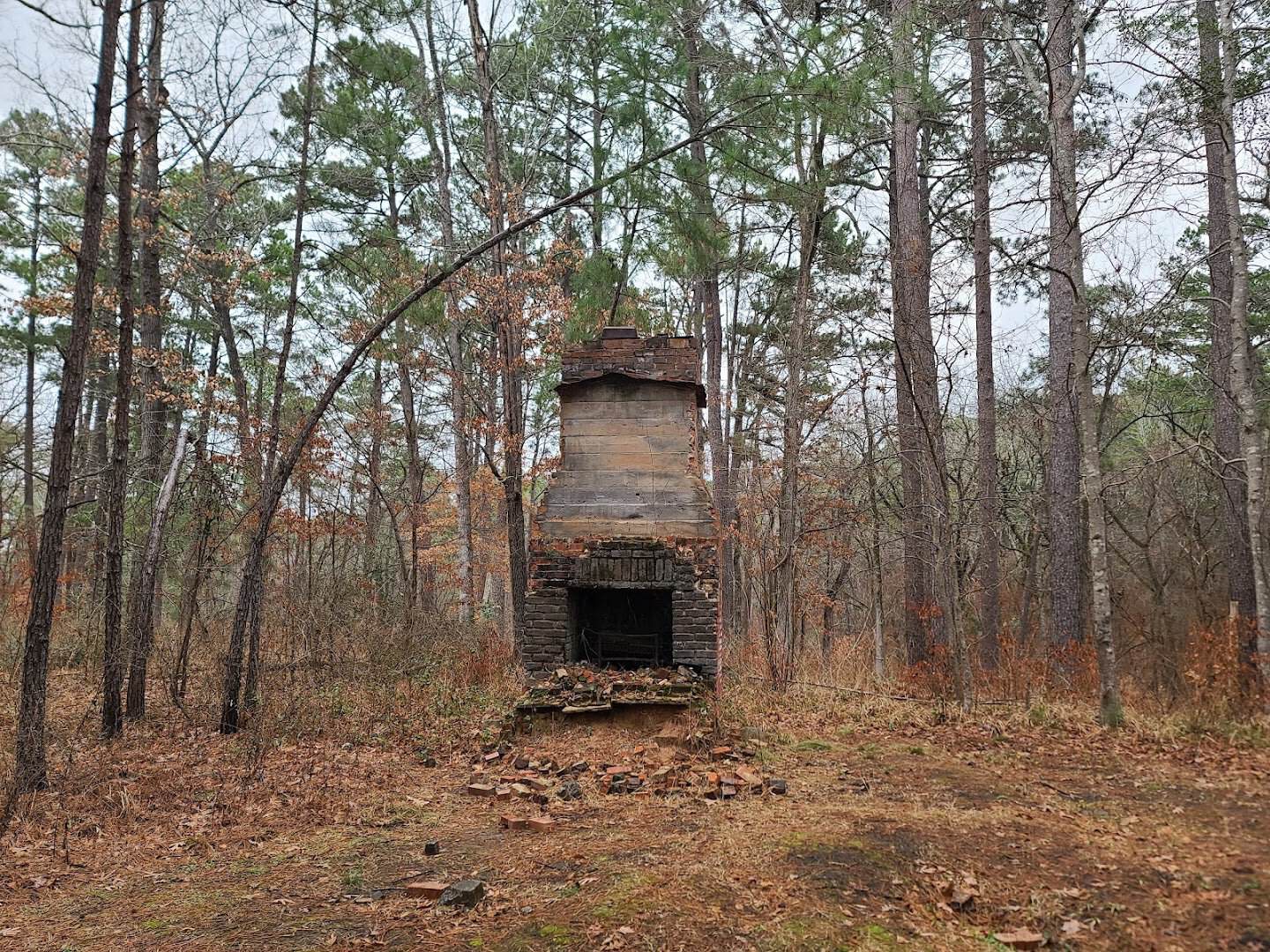
Little touches from that era are scattered around like Easter eggs. There is a mossy old CCC-built structure that campers have long nicknamed the “CCC Bathtub,” and a towering pine sometimes called the Sentry, standing guard over the grounds like it has been on duty for a hundred years.
Half the fun is spotting these small survivors as you wander. Each one connects you straight back to those young workers from nearly a century ago.
The Pioneer Cabin With Its Own Incredible Story
Just a short stroll from the chapel sits my other favorite thing in the park: the Rice Family Log Home.
This cabin is the real deal. Joseph Redmond Rice and his wife, Willie, built it in 1828, right along the old road that ran through here. They added on to it in 1832 and again in 1838 as their family and their needs grew.
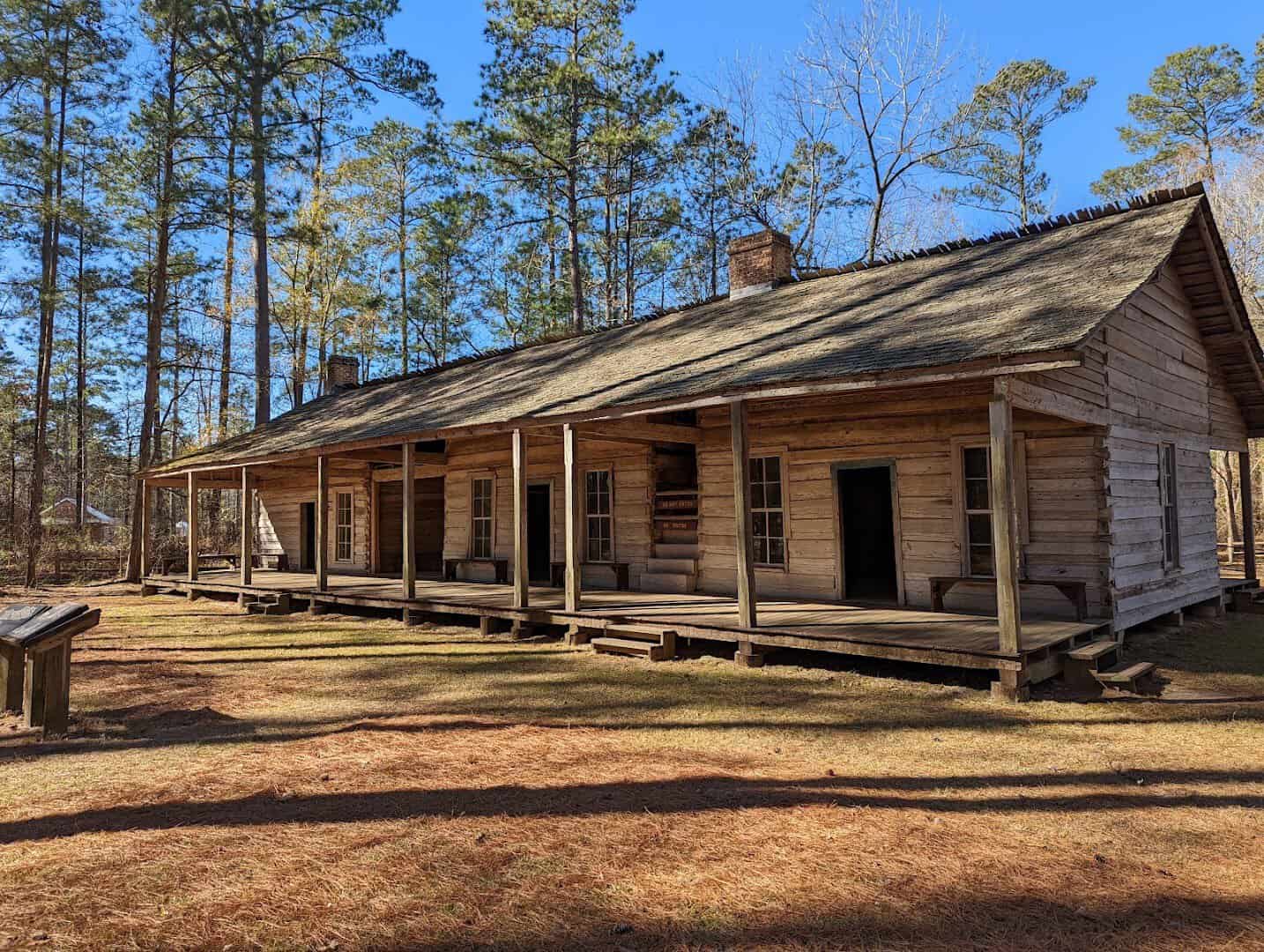
It is thought to be the oldest wooden structure in all of Houston County. Imagine the hands that hewed those logs, the winters they kept out, the travelers who found shelter under that roof.
Because that is exactly what it was: an inn. Weary travelers moving along the historic road would stop at the Rice place for a meal, a bed, and a bit of company before pressing on into the wilderness.
In 1973, the Rice family generously donated the old home to the State of Texas. It was carefully moved to the park so folks like you and me could stand beside a genuine piece of early Texas life.
Peek toward the doorway and you can almost hear the fire crackling and the low hum of travelers swapping road stories.
Walking the Royal Road
That old road the Rice cabin sat beside was no ordinary trail. It was El Camino Real de los Tejas, “The Royal Road.”
Beginning in the late 1600s, the Spanish mapped a route stretching some 2,500 miles, linking their missions and settlements all the way from deep in Mexico up through Texas. For generations it was the great highway of this land, carrying soldiers, settlers, priests, and traders deeper into the frontier.
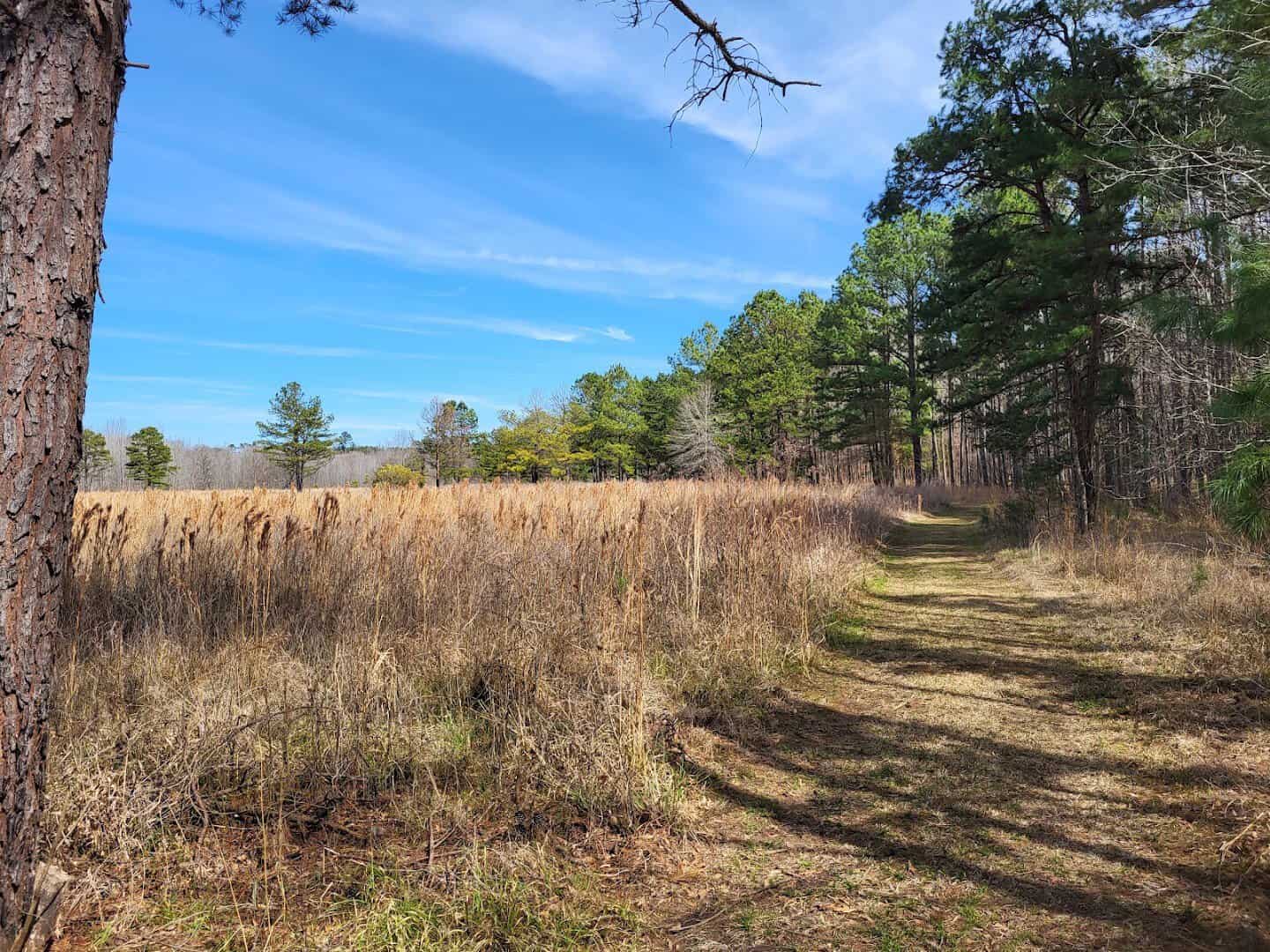
A stretch of that legendary route runs right through Mission Tejas State Park. In 2004 it was honored as the El Camino Real de los Tejas National Historic Trail.
So when you hike here, you are not just wandering pretty woods. You may be walking the same ground that people crossed three centuries ago, headed toward the very frontier that would become the state we love.
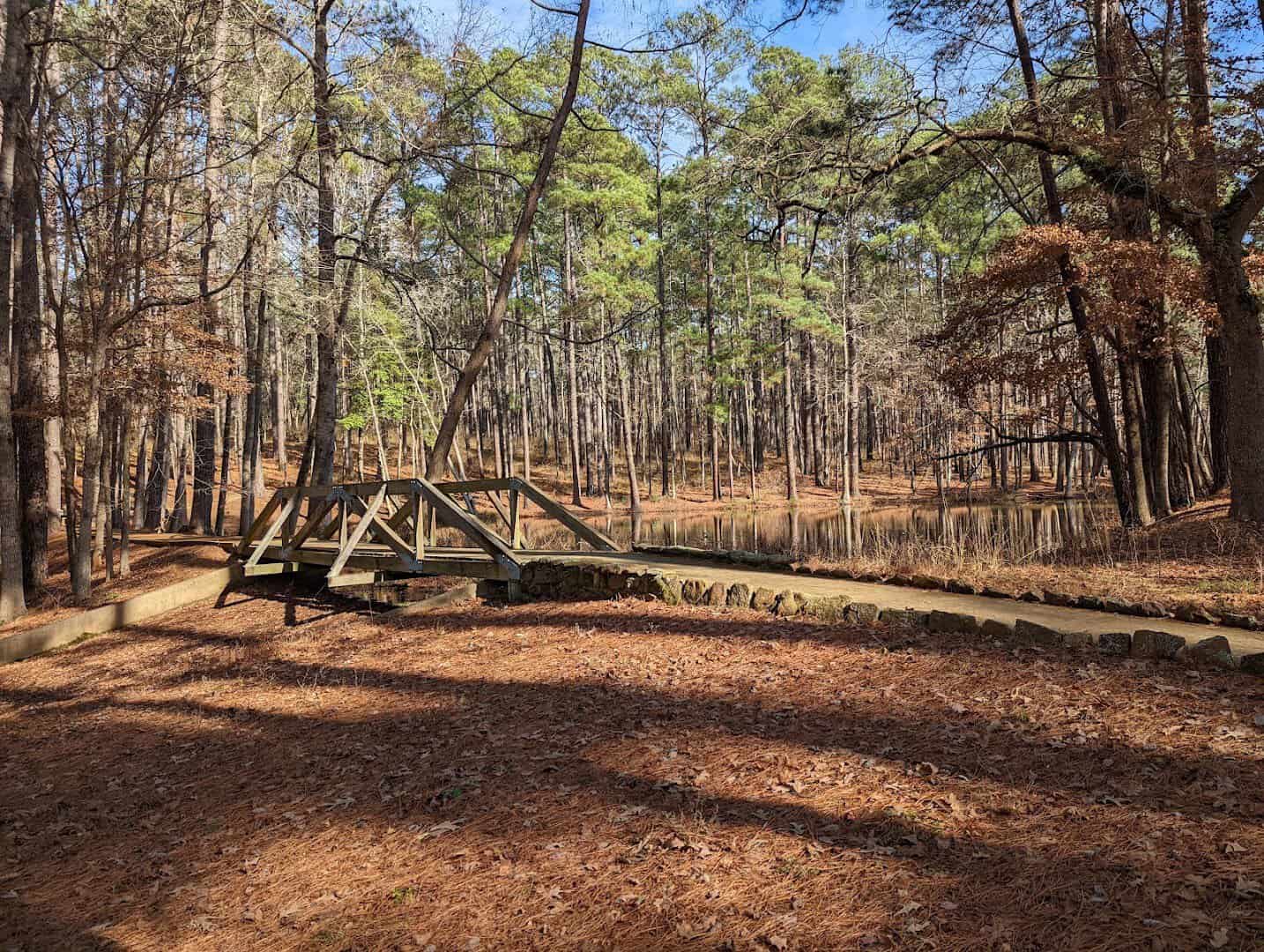
Pro tip: pause on the trail, close your eyes, and picture an ox-drawn cart creaking past. It turns a nice walk into a genuine time machine.
Miles of Trails Through the Tall Pines
Let’s talk about those trails, because they are a joy.
The park offers around 8.5 miles of pathways looping through the forest, spread across roughly a dozen routes for every energy level. Some are gentle and flat, perfect for little legs or a slow morning stroll. Others dip and climb through ravines and hardwood bottoms to get your heart going.
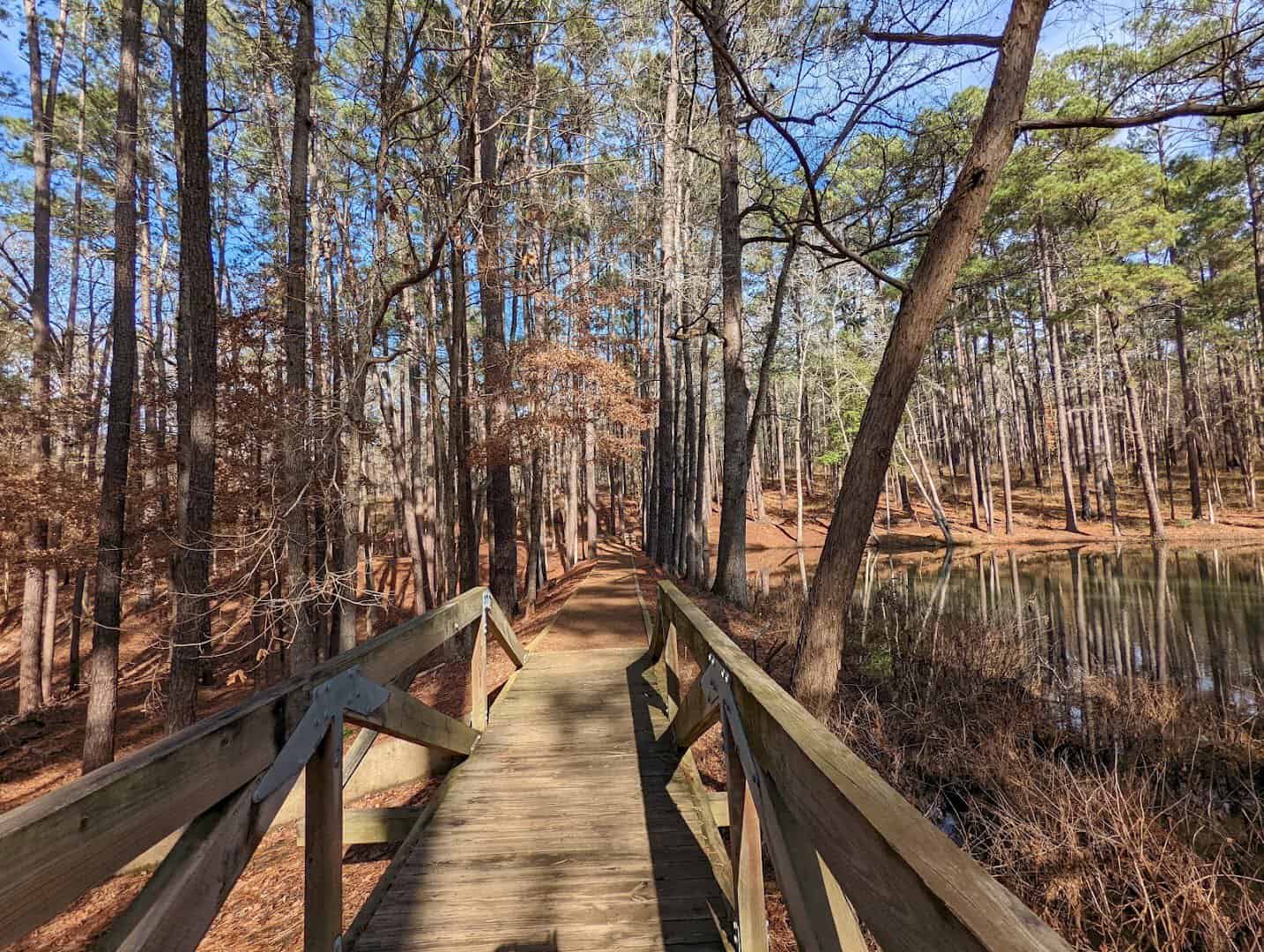
What you will notice first is the shade. This is the Pineywoods, the leafy northern edge of the Davy Crockett National Forest, and the tall pines throw down glorious cool shadows even in the thick of a Texas summer.
Hikers online rave about it. One reviewer called it a “serene and beautiful area with hiking trails of easy to moderate level of difficulty,” which matches my experience exactly.
The trails carry you past the historic spots, along the little creek, and around the fishing pond, so every walk doubles as a small adventure of discovery. You never quite know what you will stumble onto next.
Keep your eyes and ears open for wildlife too. Songbirds flit through the canopy and squirrels scold you from the branches. It is the kind of place where kids look up from their screens and actually start pointing.
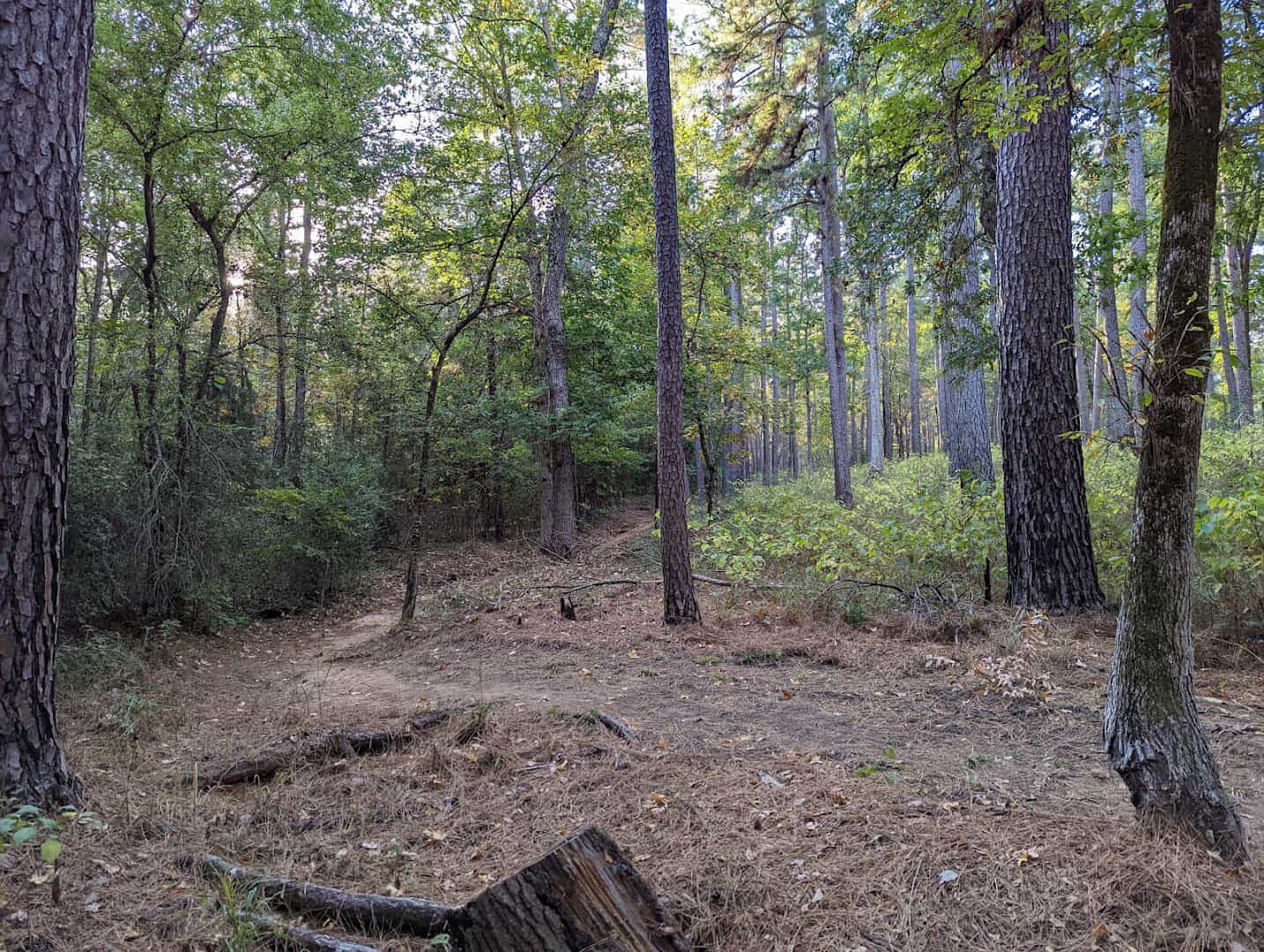
Spring dresses the forest floor in wildflowers, and autumn brings warm color to the hardwoods along the creek bottoms. Every season here has its own particular kind of pretty, which gives you a fine excuse to come back more than once.
Casting a Line and Pitching a Tent
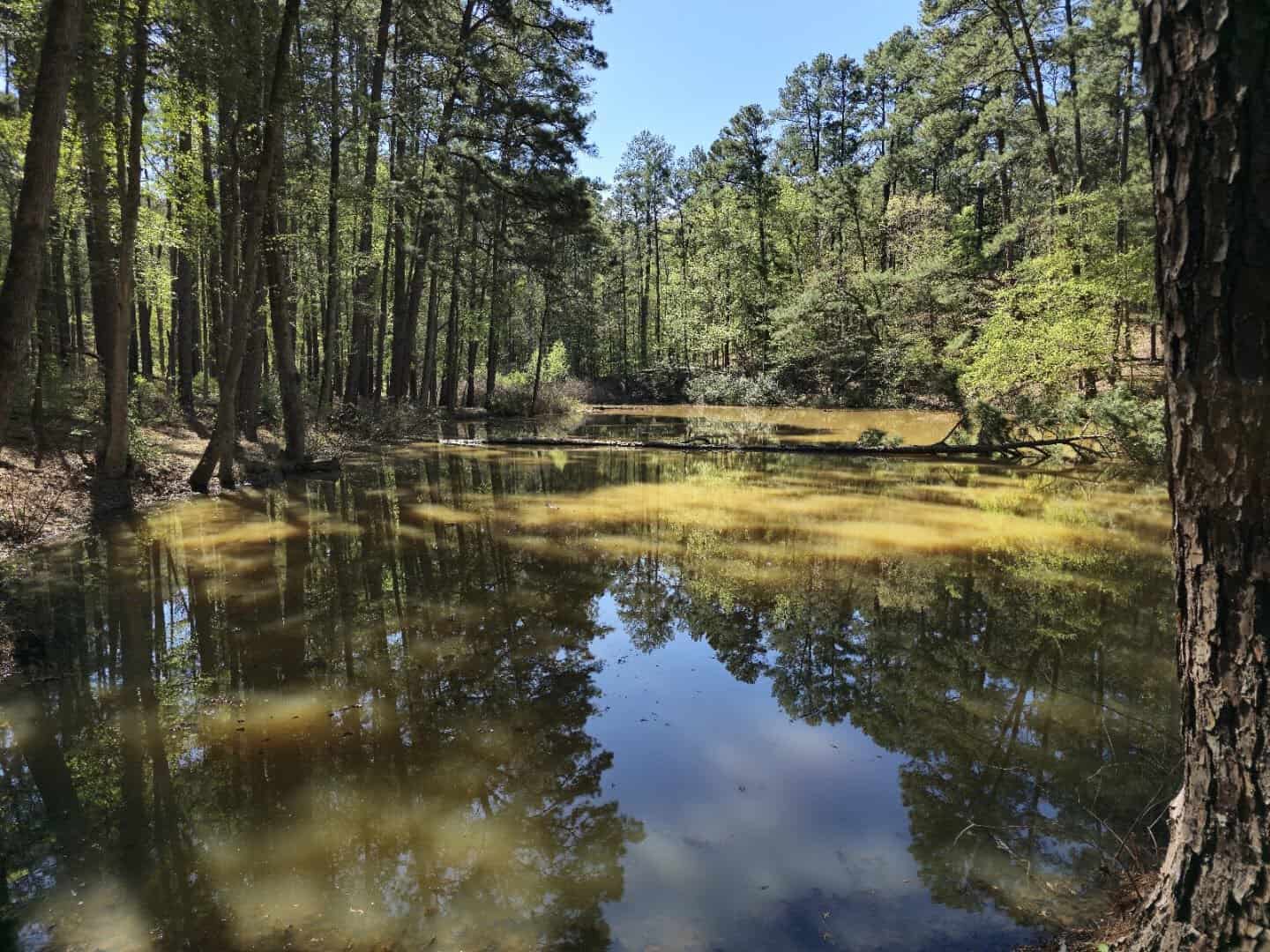
If fishing is your thing, bring a rod. There is a small, pretty pond in the park plus access to San Pedro Creek, and a quiet morning with a line in the water here feels like a gift.
Best of all, you do not need a fishing license to fish within a Texas state park, so it is a wonderfully easy way to introduce a child to the sport. Watching a kid reel in their first sunfish never gets old.
The campground is small, intimate, and beloved. There are 17 campsites tucked among the trees, most with electricity and water hookups, plus a couple of water-only sites and a group camp for bigger gatherings.
Campers consistently praise how well kept it all is. “Camp sites and park altogether super clean and maintained,” one visitor wrote, and another gushed that the “restrooms looked brand new.” That kind of care shows.
There is something magical about falling asleep under these pines. The dark comes down soft and complete, the stars wink between the branches, and you wake to birdsong and cool, resin-scented air.
Tip: even if you are just passing through, a night here breaks up a long Texas drive beautifully. It sits roughly midway between Dallas and Houston, an easy detour into something far more restful than a highway motel.
A Park for the Whole Family
What I love most about Mission Tejas is how gently it welcomes everyone, whether you are a hardcore history buff or a family just looking to run some energy out of the kids.
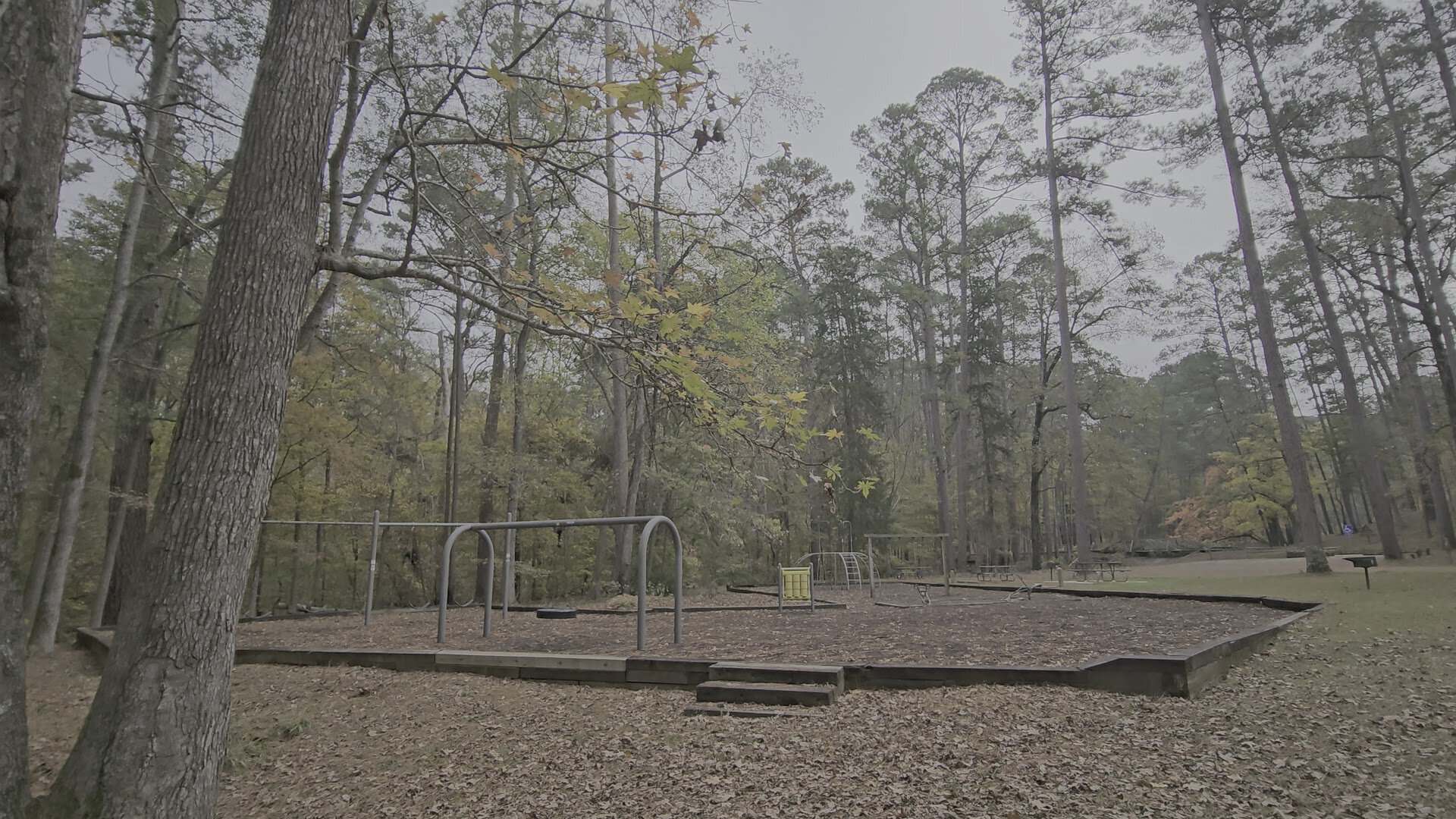
There are picnic tables and grills for a lazy lunch under the trees. There is a playground for the little ones. There is a visitor center with interpretive displays and a gift shop where you can dig deeper into the stories the park holds.
Rangers here have a warm reputation, too. One delighted visitor recalled that the “Rangers there were amazing,” happily sharing stories about the park’s past. That personal touch turns a good visit into a memorable one.
Geocaching fans will find fun hidden here as well, and history lovers can lose a whole afternoon just wandering between the chapel, the cabin, and the markers, reading and imagining.
It is the rare spot that teaches you something real while it relaxes you completely. You leave lighter and a little wiser than you arrived.
Bring a picnic blanket and let an afternoon stretch out with no agenda at all. Some of my happiest hours here were spent doing almost nothing, just soaking up the shade and the birdsong while the kids explored.
A Quiet Corner of a Big State
The park sits in the rolling Pineywoods of Houston County, in that green, tree-thick pocket of deep East Texas that too many road-trippers blow right past.
The land here climbs and rolls a bit, from around 167 feet up to more than 500 feet in elevation, giving the forest a gentle, layered feel. It is worlds away from the flat, wide-open Texas that shows up on postcards, and that surprise is part of the charm.
Because it is off the beaten path, you often get long stretches of trail all to yourself. That solitude is precious. It is why the quiet feels so complete, and why the history feels so close you could reach out and touch it.
The park has grown gently over the years too, from a small parcel in the 1930s into the roomy woodland it is today. It officially became a Texas state park in 1957, and it has been quietly enchanting visitors ever since.
How to Get There
Mission Tejas State Park is easy to reach and well worth the turn off the highway.
Where: 19343 State Highway 21 E, Grapeland, TX 75844
You will find it along State Highway 21, near Grapeland and Weches, at the northern edge of the Davy Crockett National Forest.
The daily entrance fee is a friendly four dollars for adults, and children twelve and under get in free, so it is a genuine bargain for a full day out.
The park is open daily, and it is always smart to reserve a campsite ahead through Texas Parks and Wildlife if you plan to stay the night, since the small campground fills up fast on pretty weekends.
Pack water, comfy shoes, a camera, and a little curiosity. That is really all you need.
Come Meet the Place Where Texas Got Its Name
Some parks dazzle you with size and spectacle. Mission Tejas does something quieter and, to me, far more lasting. It hands you the very roots of Texas, wrapped in birdsong and pine shade and the smell of warm earth.
You will walk where the Caddo once farmed and the Spanish once prayed, touch a cabin older than the state itself, and stand in the spot where a word for “friend” grew into the name of a nation-sized state.
So plan your visit, lace up your walking shoes, and go find this overlooked little treasure in the East Texas woods. Bring the kids, bring your curiosity, and try not to fall so in love with the quiet that you never want to leave.

Stella Raines
Editor-in-Chief
Stella brings over a decade of storytelling experience to TX Headlines. With roots in West Texas and a love for road trips, she leads the editorial team with an eye for the hidden stories that make Texas unforgettable.
More Stories

This Underrated Texas State Park Gives You a Full Day of Swimming and Hiking for Just $5

This Small Texas Church Is Called the Queen of the Painted Churches, and Its Ceiling Will Stop You Cold

This Radiant Texas Museum Lets You Walk Through Nearly 200 Stained Glass Windows

This Serene Texas Garden Is Free to Explore and Still Somehow Feels Exclusive
Tags