This Old-World Texas Restaurant Serves Schnitzel That Feels Like a Trip to Bavaria
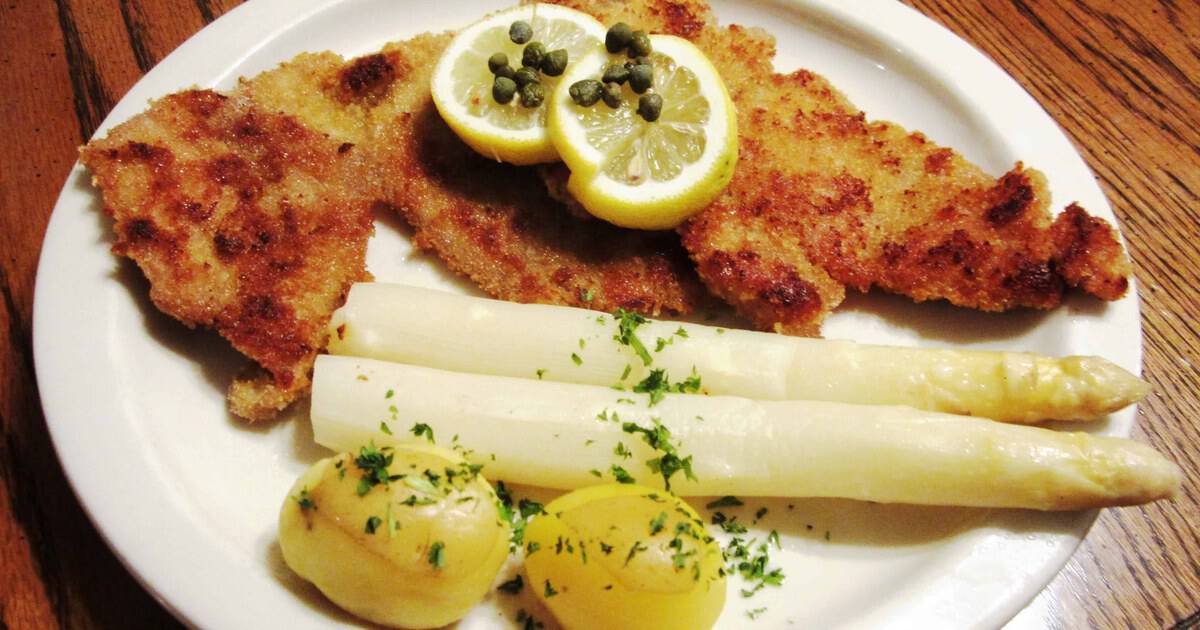
Here is a hill I will happily die on: a good schnitzel is one of the most underrated comfort foods on the planet. Thin, golden, fried until the edges crackle, then buried under something creamy or savory.
When it is done right, it ruins every dry chicken cutlet you will ever eat afterward. And most of us assume you have to fly to Munich to taste one done right.
You do not. Tucked into a corner of Plano sits a German restaurant with old-world soul, where the schnitzel comes out crisp, the spaetzle is made by hand, and a model train hums along the wall.
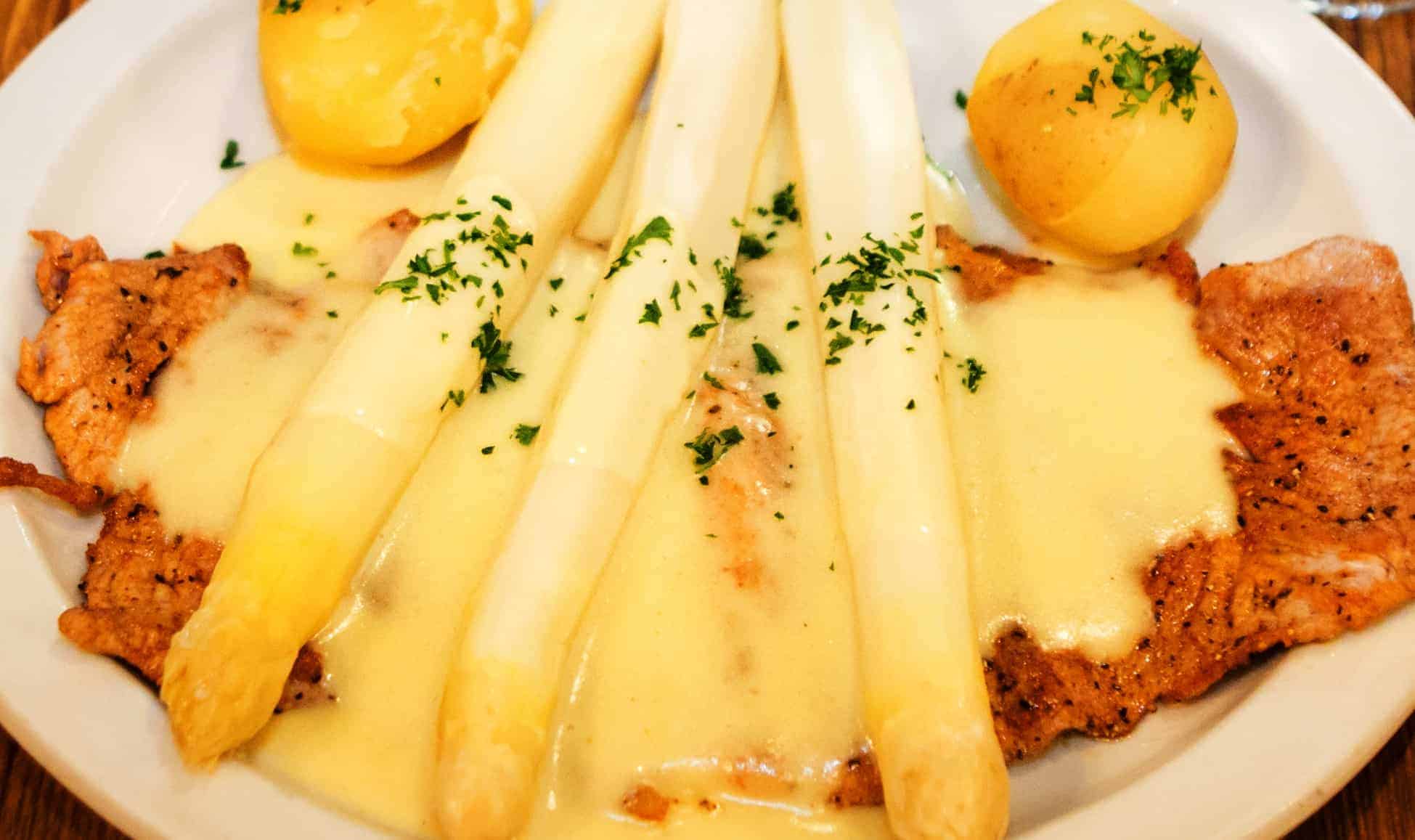
Here is why this thirty-year-old Texas institution tastes like a plane ticket to Bavaria, and everything you need to know to plan the trip.
The Schnitzel That Earns the Hype
Start where the menu wants you to start. The Rahm schnitzel is the one people drive across the Metroplex for, a lightly pan-fried cutlet finished in a cream sauce that is rich without turning heavy.
It arrives with a mound of buttery spaetzle, the little egg-dough dumplings that soak up sauce like they were built for it. They were.
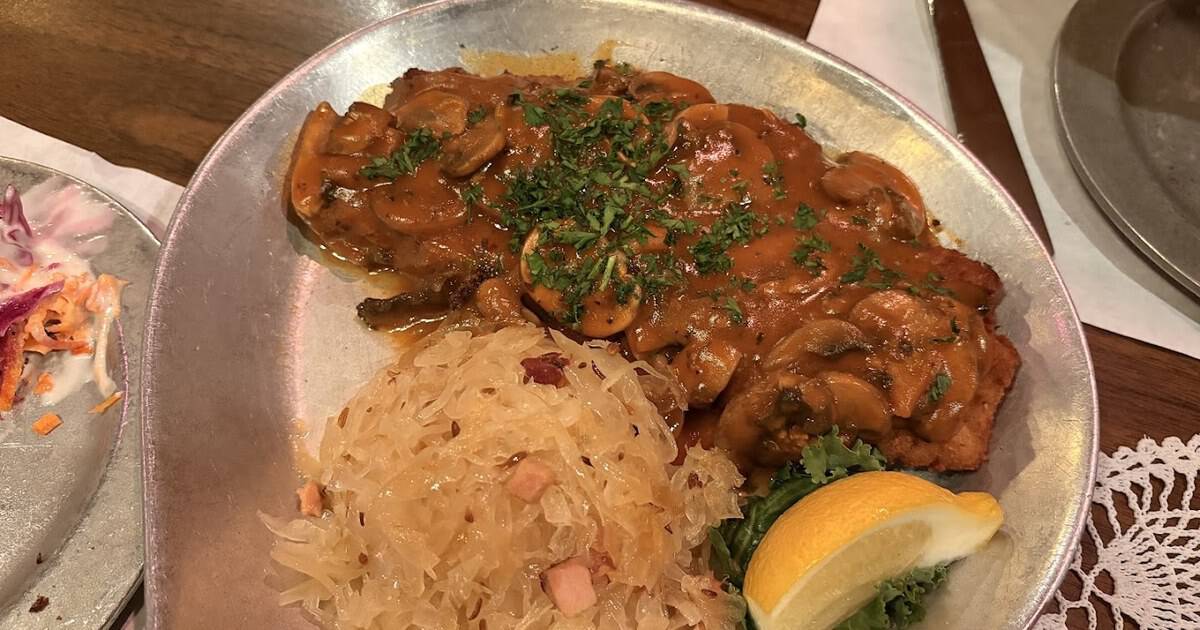
If you want the earthier version, order the Jäger schnitzel. That one comes smothered in a dark mushroom-wine gravy, the kind of plate you keep chasing with your fork long after you are full.
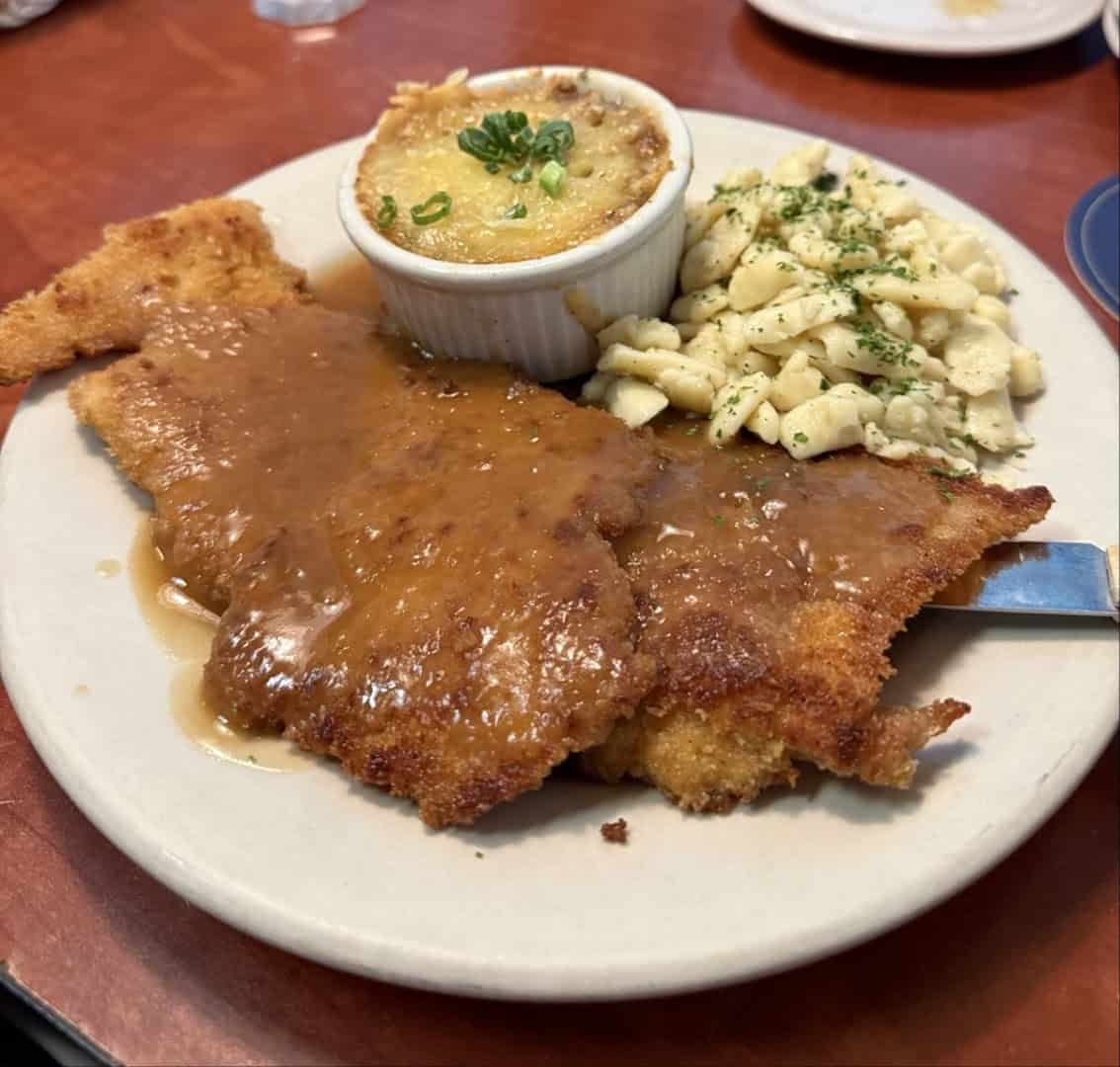
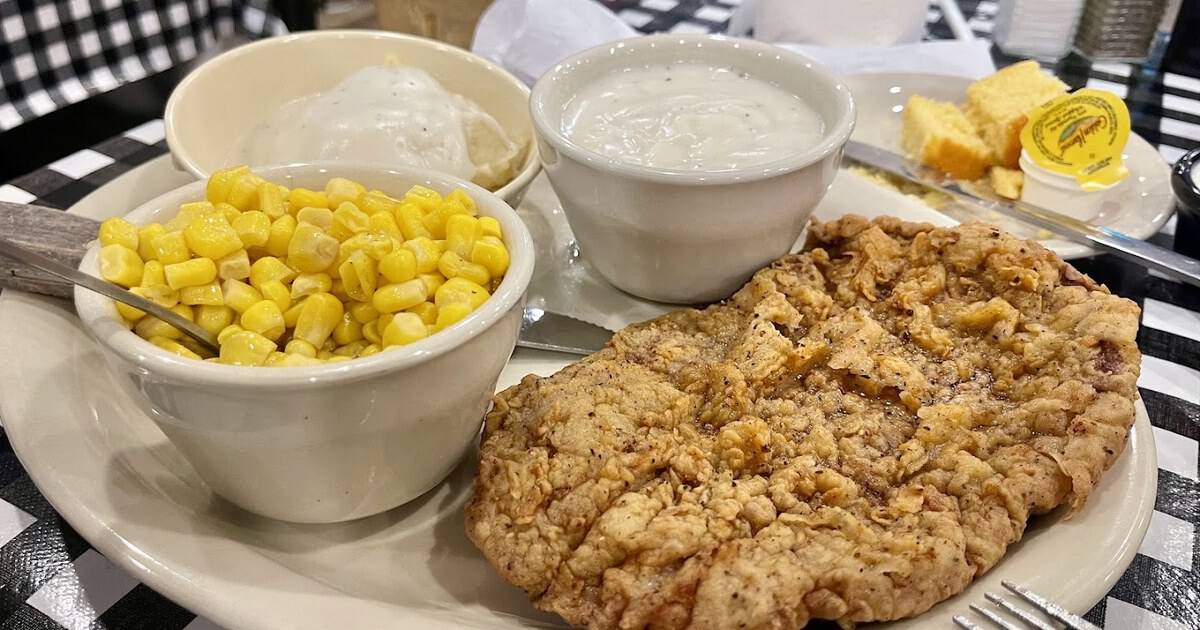
You will notice the crust first. It shatters instead of chews, which is the whole point of a schnitzel and the thing so many kitchens quietly get wrong. Here they get it right, plate after plate, night after night.
There is a lightness to it that surprises people who expect German food to sit like a brick. The cutlet is pounded thin, the breading is fine, and the frying is quick, so what lands in front of you is crisp rather than greasy.
If you want the textbook version, there is the classic Wiener style, breaded and fried plain with a wedge of lemon, the schnitzel every other schnitzel is measured against. It is the honest place to start before you graduate to the saucy ones.
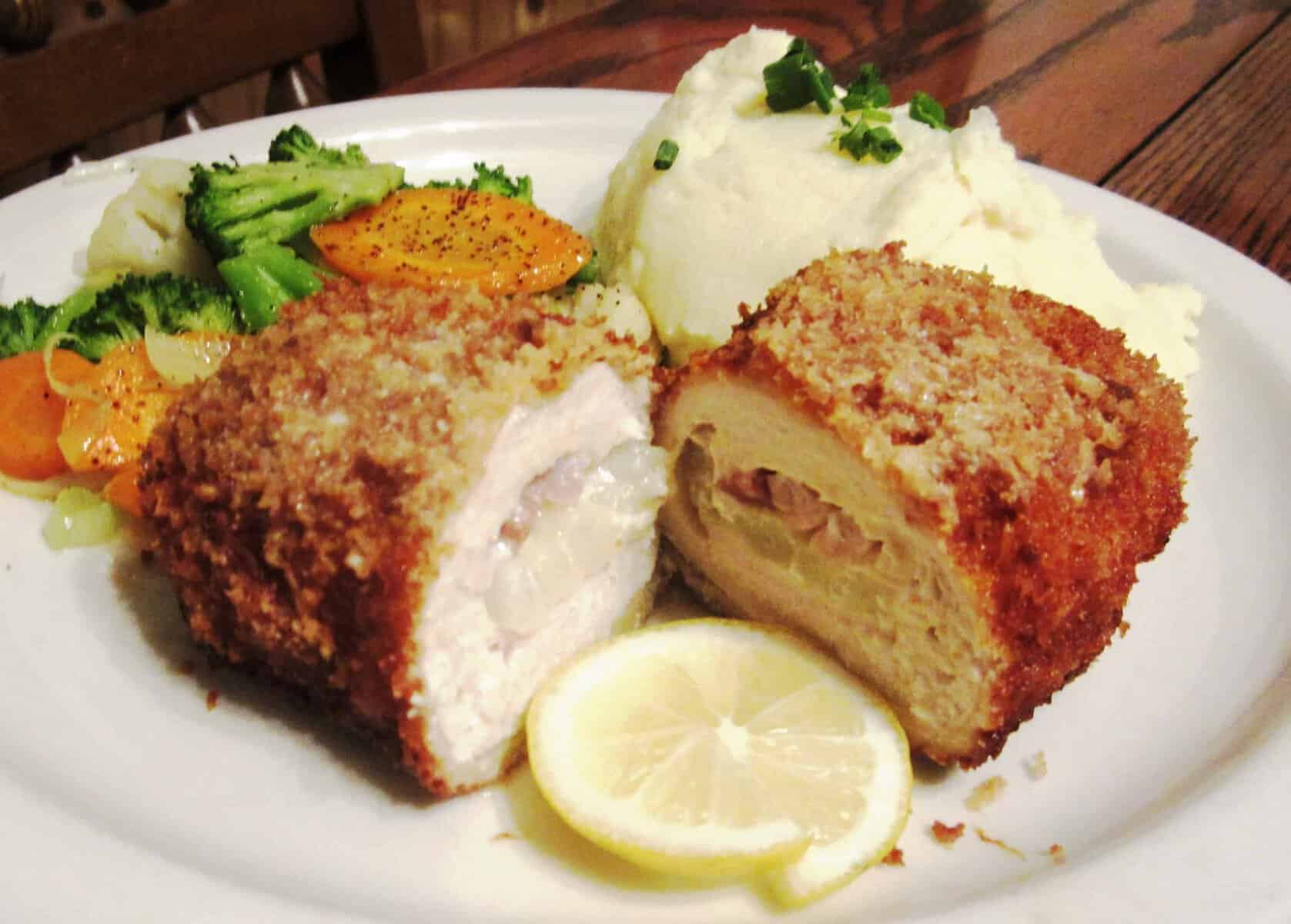
Whichever you pick, the plate comes loaded. This is not delicate, fussed-over food arranged with tweezers. It is generous, golden, and meant to be shared while the beer keeps coming.
Pair it with a cold beer and a fork full of spaetzle and you have the meal the whole trip is built around. One Tripadvisor reviewer called this the “best German restaurant out of Germany,” and after a bite of the Rahm schnitzel it is hard to argue.
Beyond the Cutlet
Schnitzel is the headliner, but the supporting cast is why regulars keep a standing table. The sauerbraten is a marinated pot roast in a sweet-and-sour gravy, served with Semmelknödel, a bread dumpling that catches every last drop.
Make room for the Käsespätzle. Picture Germany’s answer to macaroni and cheese: those hand-cut noodles tangled with melted cheese and sweet caramelized onions, comfort food in its gooiest form.
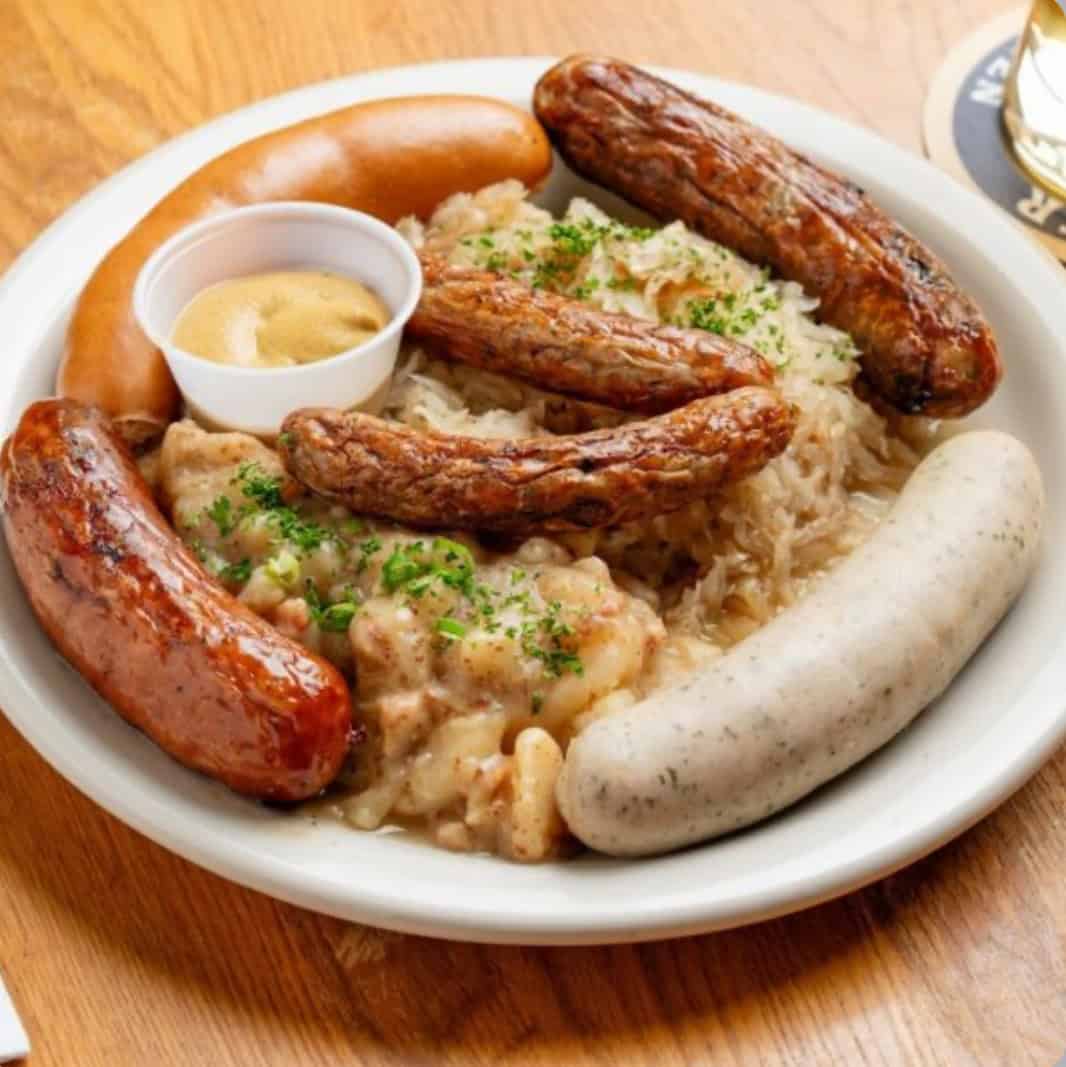
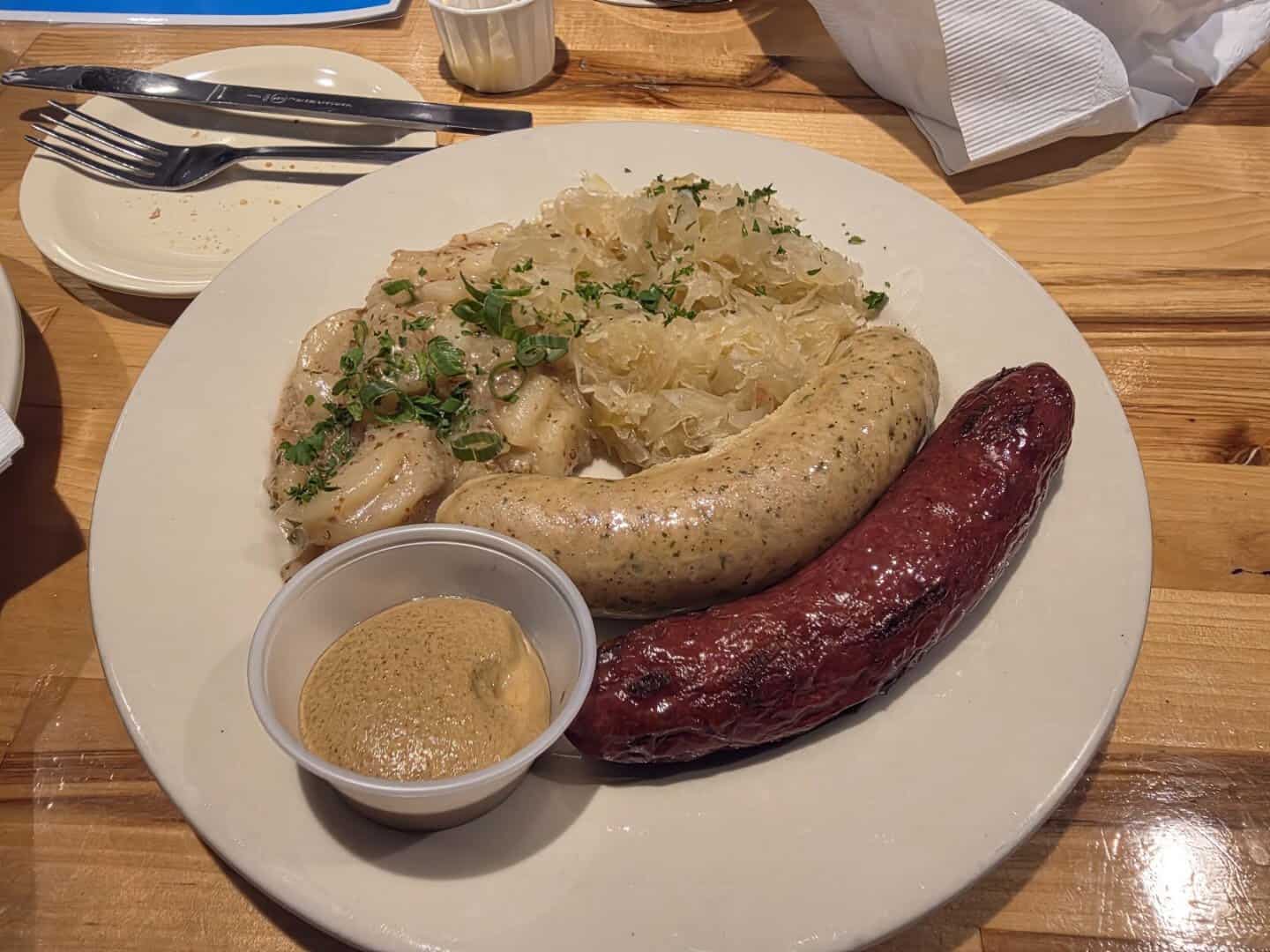
The rouladen is another regular favorite, thin beef rolled around bacon, onion, and pickle, then braised slow until it goes tender. The bratwurst snaps when you cut it, the way a good sausage should.
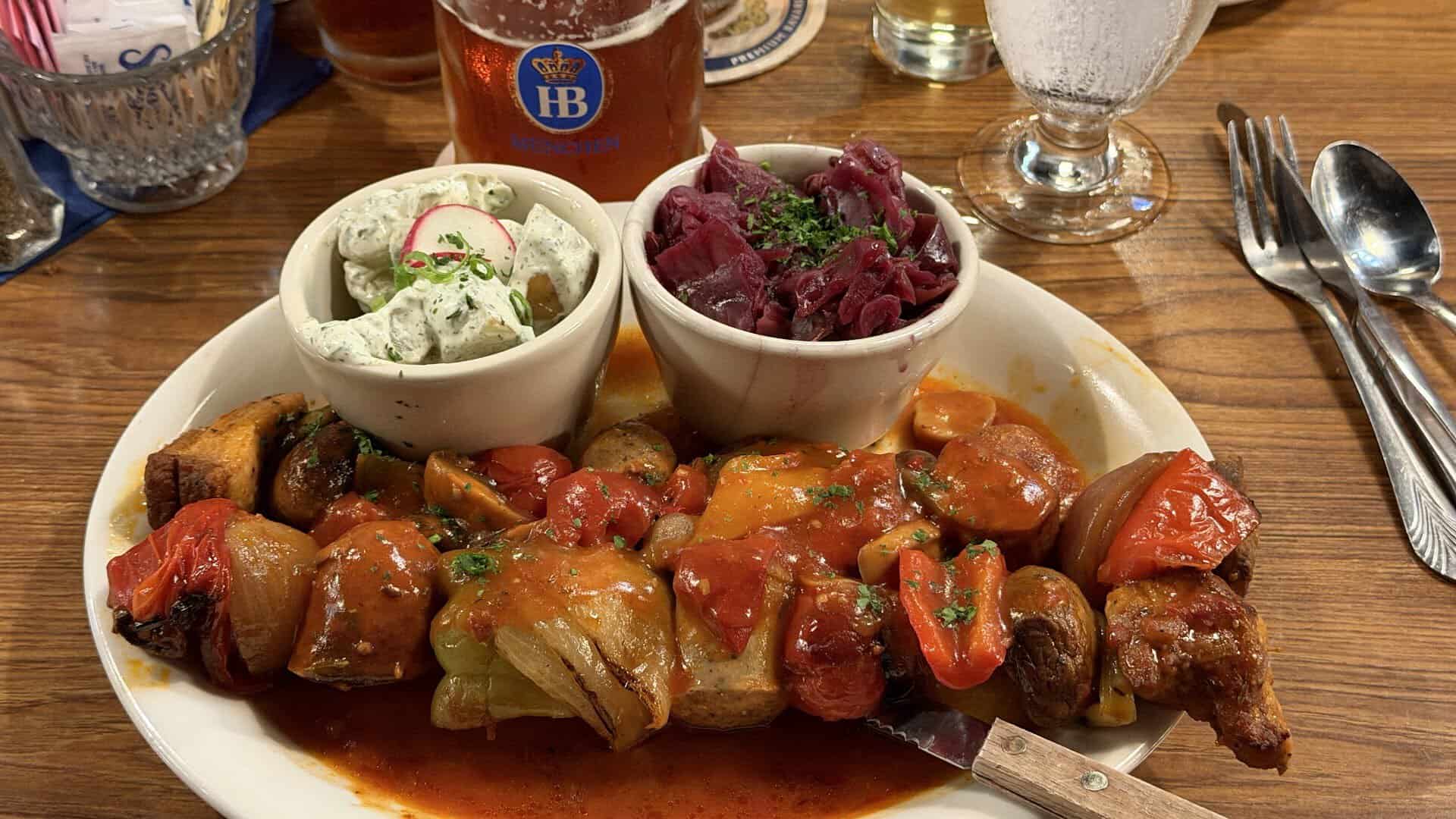
If you cannot decide, the sampler platters exist for exactly that problem. A mixed plate of sausages and sides lets a table taste half the menu in one go, which is the friendliest way to eat here.
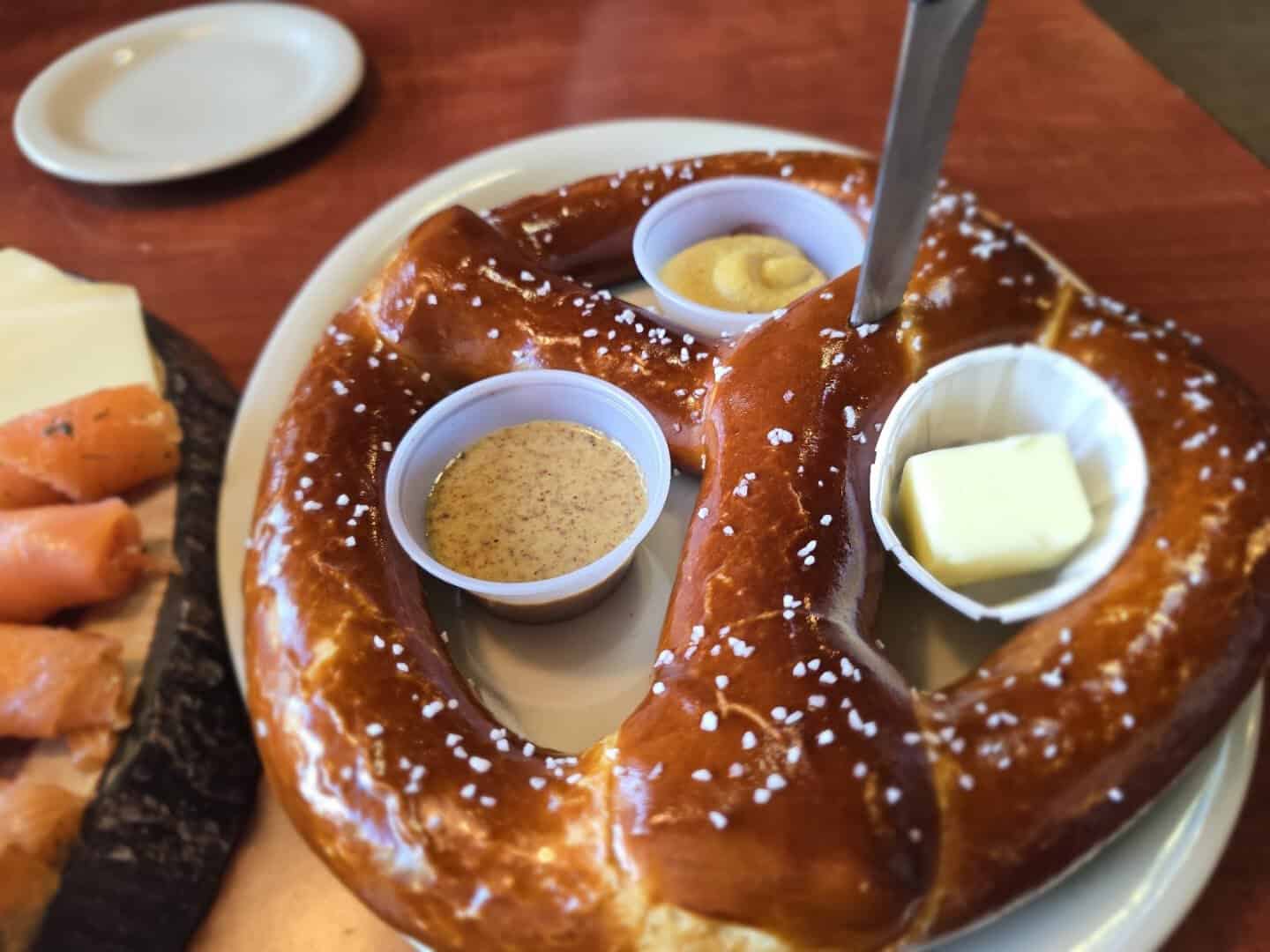
Then there is the red cabbage, stewed just enough to keep a little bite, and the warm German potato salad that arrives tangy instead of gloopy. The bread basket alone, all pretzel rolls and onion rolls, could pass for a meal.
Come in winter and the kitchen leans into game. Wild boar sausage and venison turn up on the seasonal menu, a nod to the hearty cold-weather cooking of southern Germany, where a long dinner is a form of shelter.
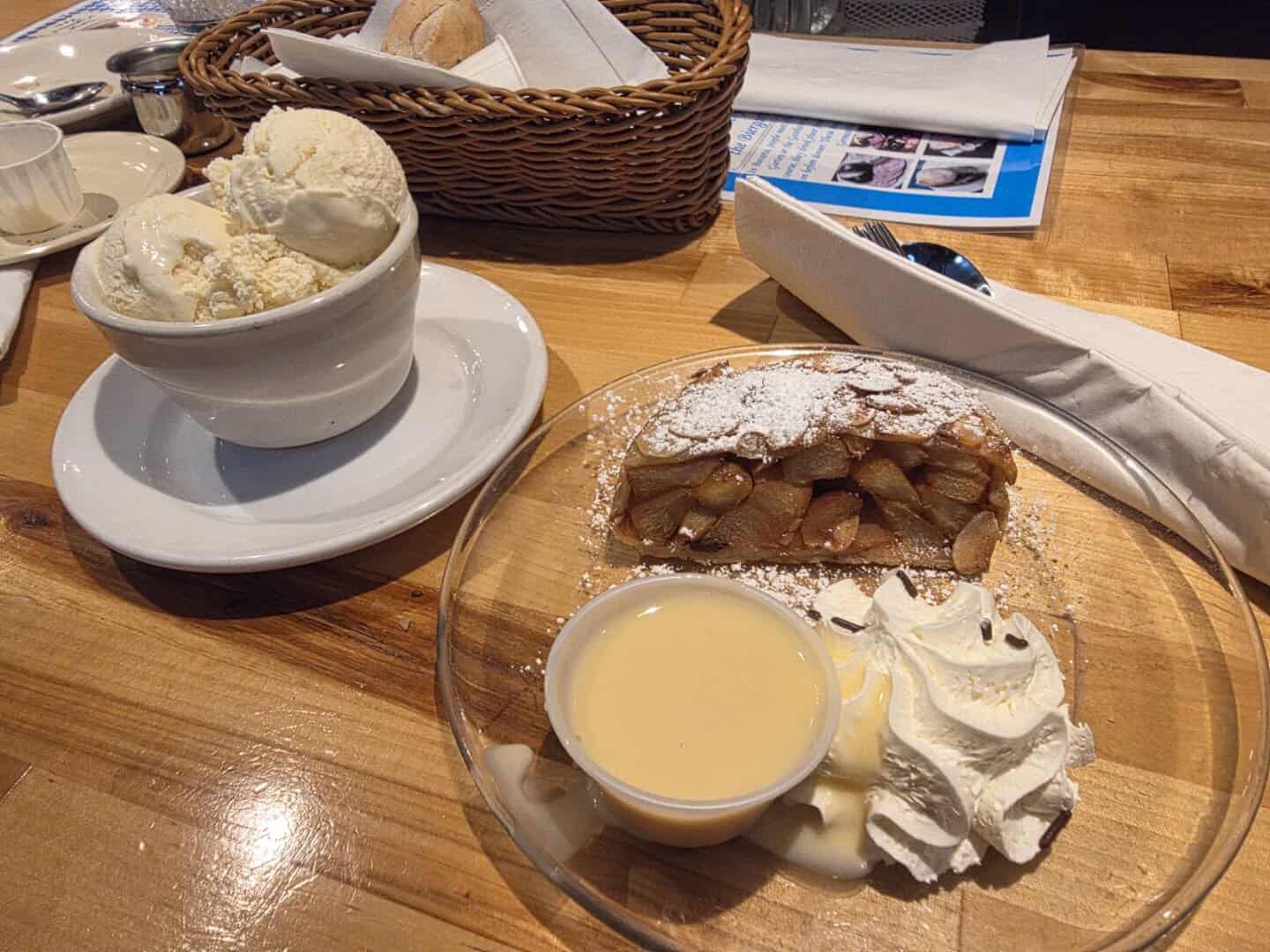
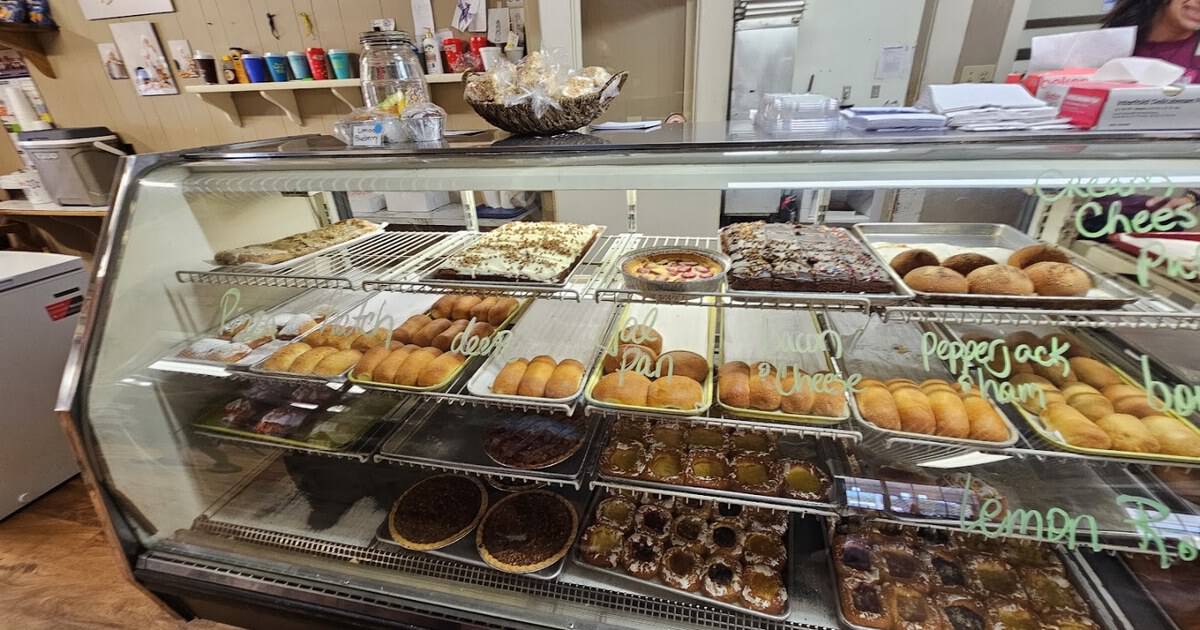
Save space for dessert, all of it made in-house. The strudel and the German chocolate cake are the classic ways to finish, and they will happily send you home with a birthday cake if you plan ahead.
Pro tip: portions here are generous in a way that feels almost aggressive. First-timers should split a schnitzel and a sauerbraten across the table so nobody leaves without tasting both.
A Beer Hall That Means It
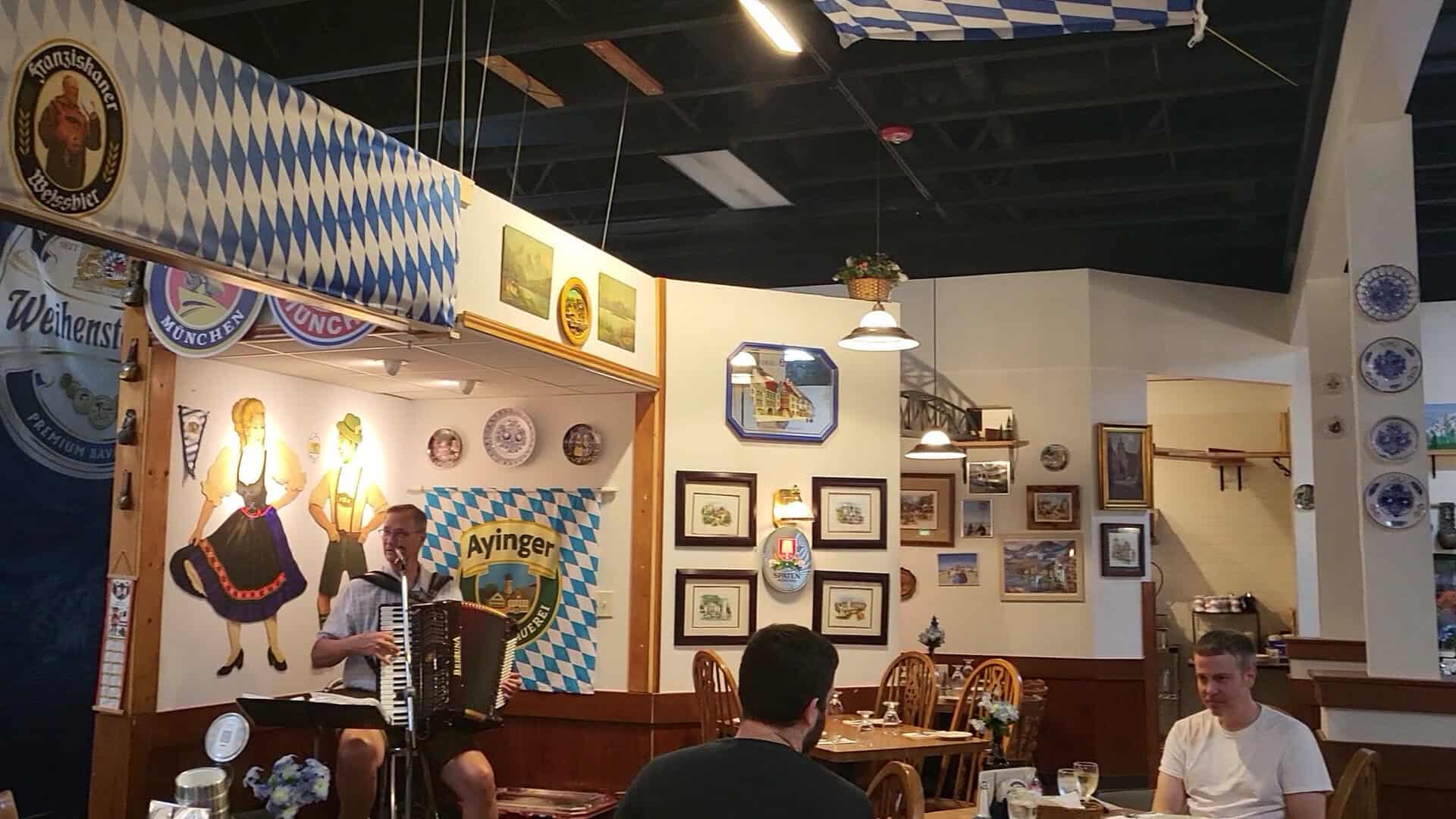
The food would be enough. The setting is what tips the whole thing over into a genuine escape. There are two biergartens, one indoors and one out, plus a main dining room packed with long wooden tables set close together.
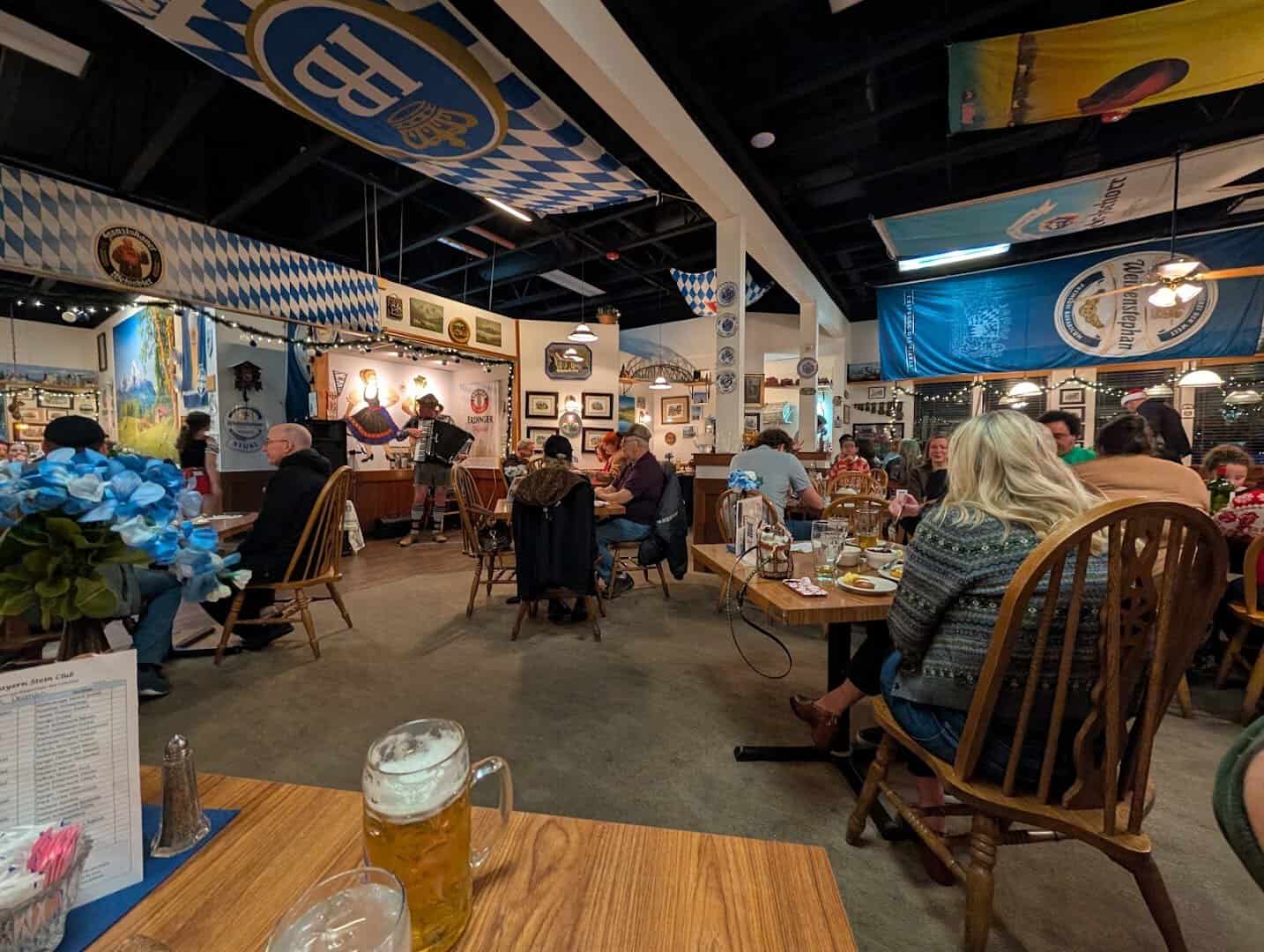
That closeness is not an accident. It is exactly how the beer halls feel in Bavaria, where strangers end up elbow to elbow and leave as friends by the second stein. On a full Friday night the room hums.
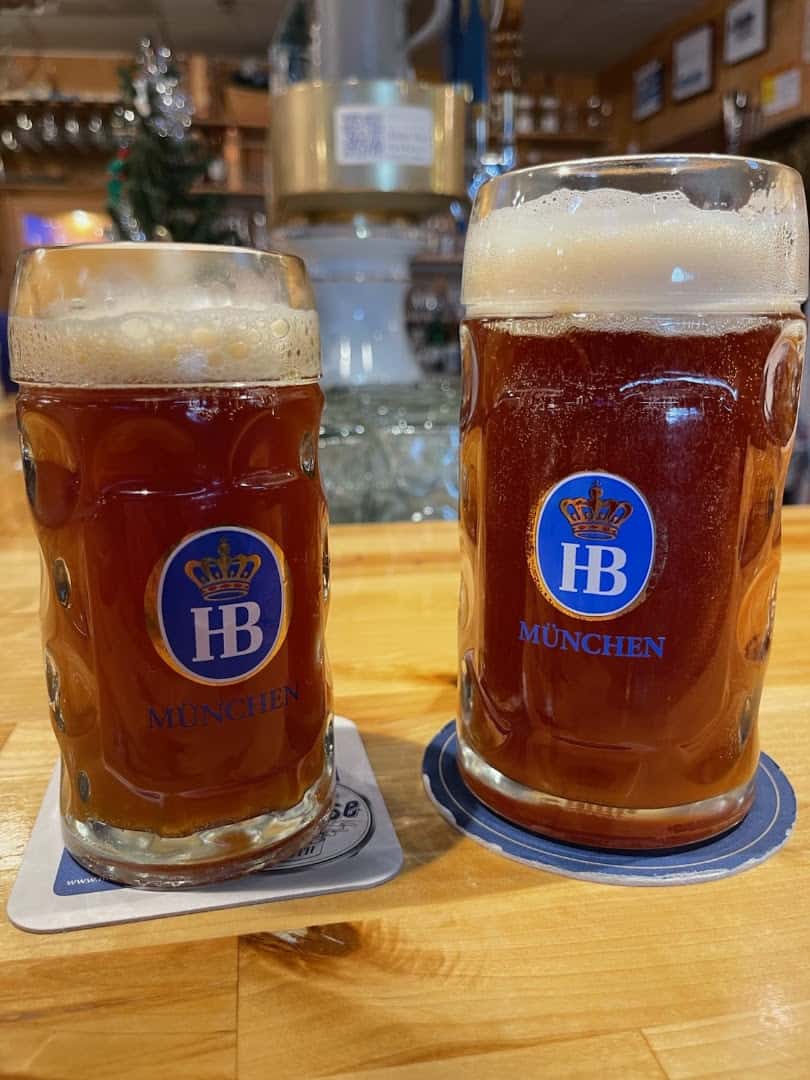
The beer is serious business. The list runs past eighty German brews, many poured to the Reinheitsgebot, the centuries-old purity law that says a beer should be barley, hops, water, and yeast, and nothing else.
If beer is not your thing, more than twenty German wines are waiting, along with a shelf of schnapps for the brave. The steins are the tall, proper kind, the sort that make a toast feel like an event.
On weekend nights a live band strikes up the Bavarian music and the room leans in. A model train, one of the pieces carried over from the original location, loops steadily along a shelf near the ceiling while the accordion plays.
When September rolls around, the whole calendar bends toward Oktoberfest. The seasonal beers come out, the music runs later, and the biergarten fills with the kind of happy noise that spills into the parking lot.
Did you know? There is a Stein Club for regulars, and a daily Stein Hour in the late afternoon when the biergarten hits its easy, unhurried stride. That window, before the dinner rush, is the sweet spot for a quiet first visit.
From Braunschweig to the Blackland Prairie
Every great restaurant has a founder with a stubborn dream, and this one had Juergen Mahneke. He was born in Braunschweig, in north-central Germany, in 1958, and came to the United States in his twenties.
He studied hospitality at Cornell, then cut his teeth at a Westin in Atlanta before landing in Plano in 1989. He wanted a place with soul that he could call his own.
So he took night business classes at Southern Methodist University to learn how to build one. It is the kind of detail that tells you everything about how seriously he took the work.
In 1993 he and his wife Elke opened the doors. The two of them ran it as a labor of love, and the awards followed close behind.
ZAGAT named it the number one German restaurant in the entire country from 2006 through 2013. D Magazine crowned it the best in Texas in 2015, and the honors have kept coming since.
In April 2022 the restaurant moved into a bigger building just up the road, and the toy trains and memorabilia came right along with it. “We have more space, and with that we have the ability to focus on the guest more,” Juergen said at the time.
Elke was the other engine of the place, running the front of house with the same care Juergen brought to the kitchen, until she passed in 2011. Regulars still speak of the two of them as the heart of the room.
Juergen passed away in 2026, but the institution he built keeps its doors open and its steins full. It carries on as a family legacy for a crowd that spans generations, and you can taste the care in every plate that leaves the kitchen.
What Makes It Feel Like Germany
Plenty of restaurants slap up a few Bavarian flags and call it a theme. This one earns the comparison by getting the small things right, the way a place does when the people running it actually care about the craft.
The servers move through the room in traditional dress. The dumplings are hand-formed. The beer is poured with respect for how it is supposed to taste, and the recipes stay loyal to the cooking of southern Germany rather than a watered-down idea of it.
Regulars talk about the tables being close together and the room being loud in the best way, and they say it feels like the places they remember from actual trips to Germany. The packed tables on a Friday make that case louder than any sign could.
Even the smell hits right when you walk in, warm bread and browning butter and something sweet from the sauces working on the stove. It is the smell of a proper kitchen that never cuts corners.
You do not get a costume-party version of the country here. You get the real thing, translated to a Texas strip of blackland prairie, schnitzel and all.
Before You Go
Lunch runs Tuesday through Saturday, and dinner stretches later on Friday and Saturday nights when the music is going. The place is closed early in the week, so plan around that.
Weekends fill up fast, so a reservation is the smart move if you are bringing a group. Around Oktoberfest the whole place turns into a party, and tables go quickly, so book ahead if you want in on the season.
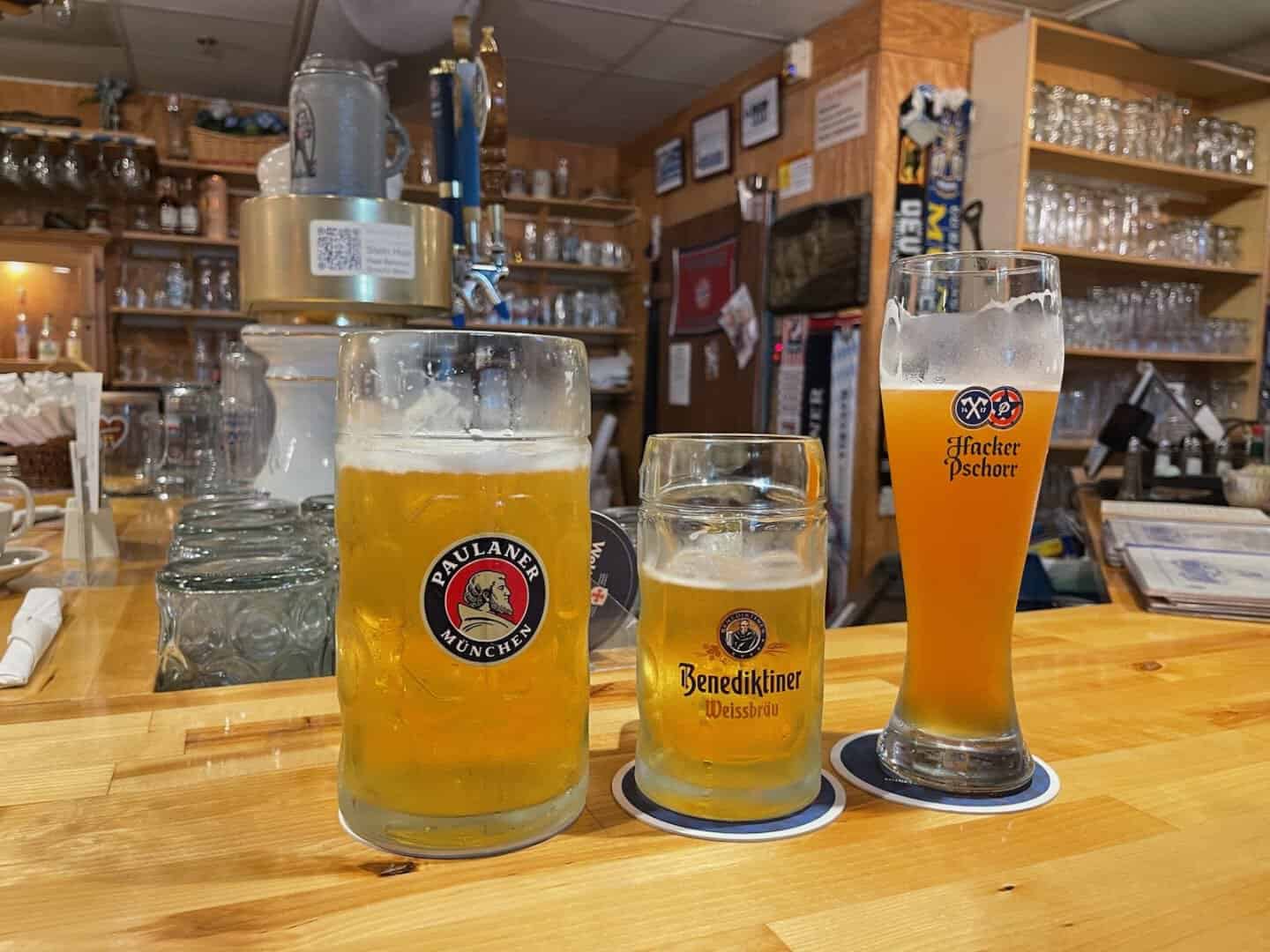
Bring an appetite and, ideally, a designated driver, because eighty beers on tap is a temptation best enjoyed responsibly. The Rahm schnitzel runs right around $20, and most entrees land in a similar range.
That is fair money for portions this size and food this consistent. If you have never had proper German food, this is the place to start, and if you grew up on it, you already know why the regulars keep coming back.
How to Get There
Where: Bavarian Grill, 3425 Premier Dr, Plano, TX 75023. Call ahead at 972-881-0705 to check current hours and grab a table.
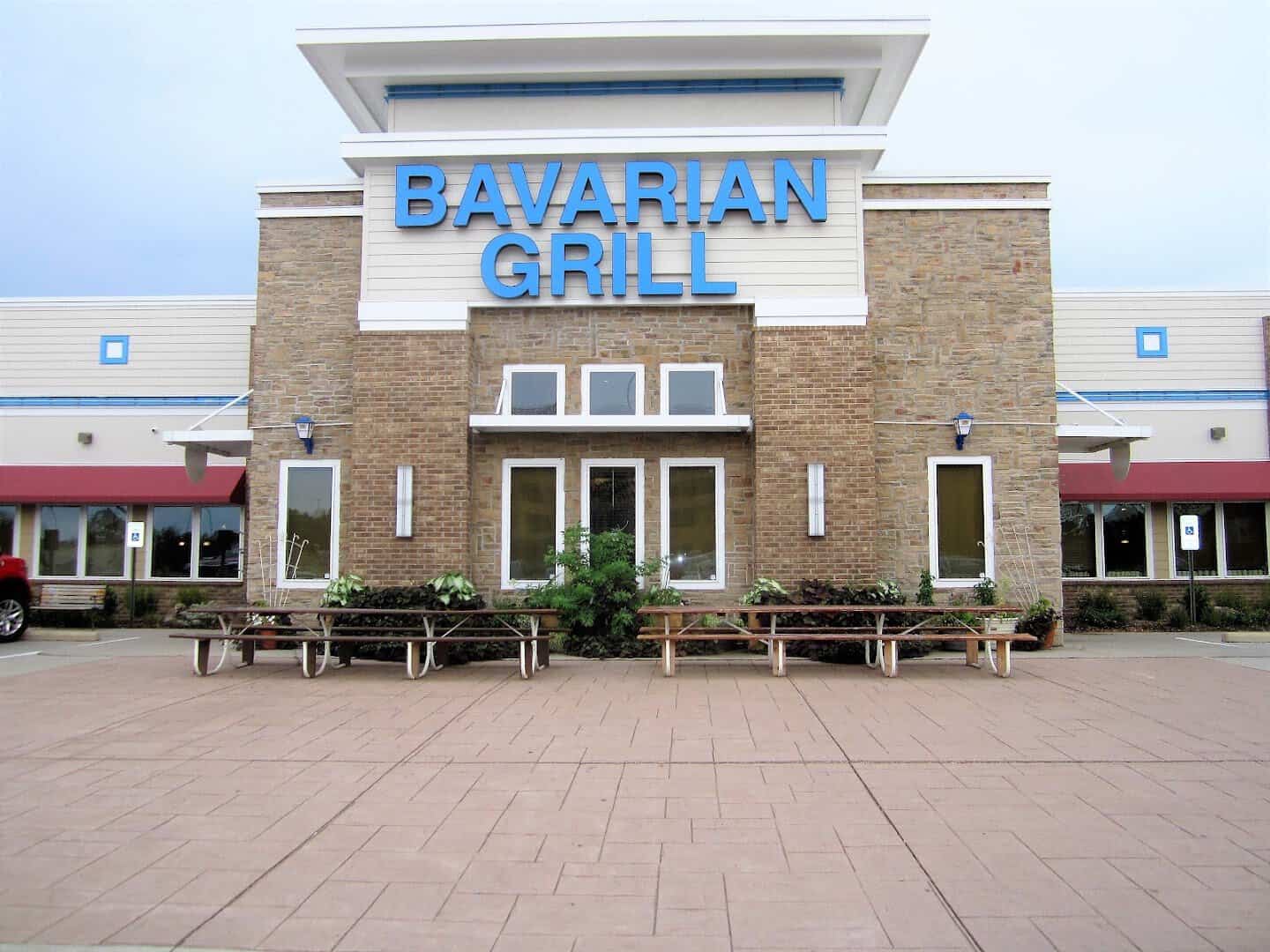
Plano sits just north of Dallas, an easy drive for anyone in the Metroplex and worth the trip from farther out. It is one of those places that turns a regular weeknight into a small occasion.
Aim for a weekday evening if you want the room a little calmer, or a weekend if you want the band and the buzz. Either way, come hungry and give yourself time. This is not a meal you rush through on the way to somewhere else.
Plan Your Bavarian Detour
You do not need a passport to eat like you flew to Munich. You need an afternoon, an empty stomach, and a drive to Plano.
Order the schnitzel, let the spaetzle do its work, and raise a stein to a founder who spent thirty years bringing a little of Bavaria to Texas. Just try not to book a return trip before you have even paid the check.
Featured image: @ Bavarian Grill

Stella Raines
Editor-in-Chief
Stella brings over a decade of storytelling experience to TX Headlines. With roots in West Texas and a love for road trips, she leads the editorial team with an eye for the hidden stories that make Texas unforgettable.
More Stories

Tags