This Old Texas Rail Trail Disappears Into a Pitch-Black Tunnel
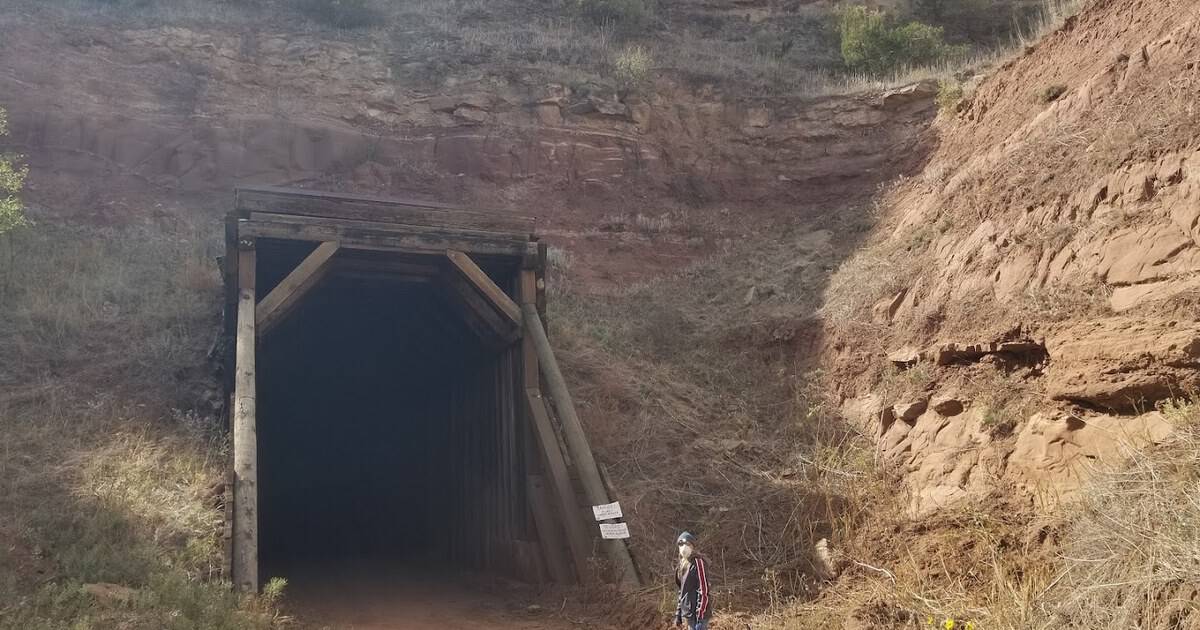
I have always been a little drawn to the dark. There is a specific thrill in walking toward a hole in the earth and choosing to go in anyway. Most of us spend our whole lives quietly avoiding it. Every so often, though, the dark is the entire point.
That is the strange promise waiting in the Texas Panhandle, out past a tiny town called Quitaque. Here an old railroad line has been reborn as a trail, and somewhere along it, the caprock swallows you whole.
This is the pitch-black tunnel at the heart of Caprock Canyons State Park and Trailway, and getting there is half the adventure.
Below, here is what the walk is really like, why half a million bats call the tunnel home, who the shaggy locals grazing nearby are, and everything you need to know before you point the car north.
A Walk Into the Caprock
First, the name. Quitaque is pronounced “KITTY-kway,” and getting it right is your first small badge of honor out here. The town is your gateway, and the park sits just beyond it.
The tunnel itself lives on the Caprock Canyons Trailway, a 64 mile ribbon of old rail bed that runs from the community of South Plains all the way to Estelline. You do not have to walk the whole thing. Almost nobody does.
The shortest path starts at Monk’s Crossing Trailhead. From the parking lot it is roughly four and a half miles west to the tunnel, which works out to a nine mile round trip on your own two feet.
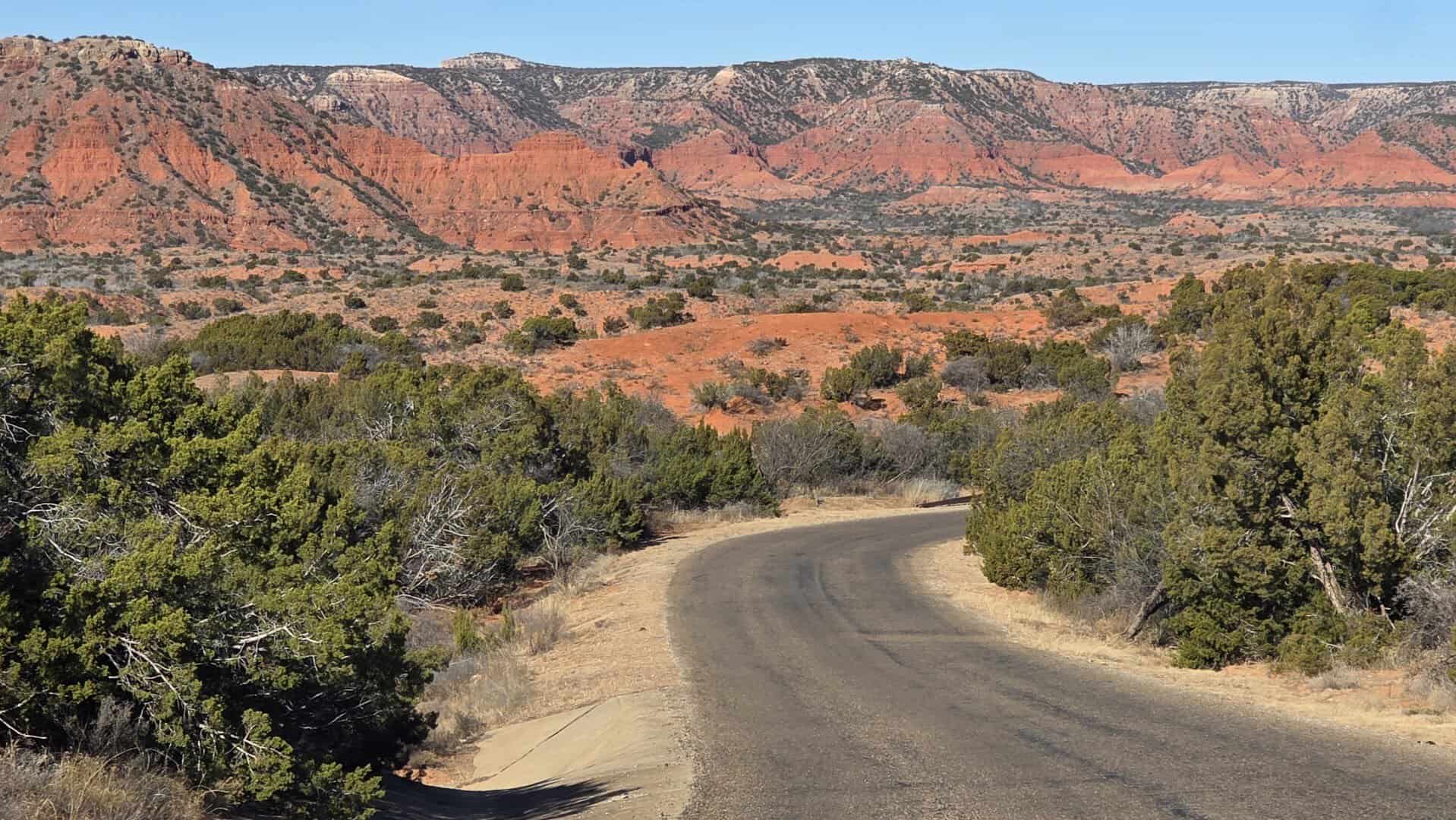
Because it follows a railroad grade, the trail stays gentle and remarkably steady. Trains cannot climb steep hills, so the crews who laid this line carved a path that rises and falls barely at all. Your legs will quietly thank the engineers.
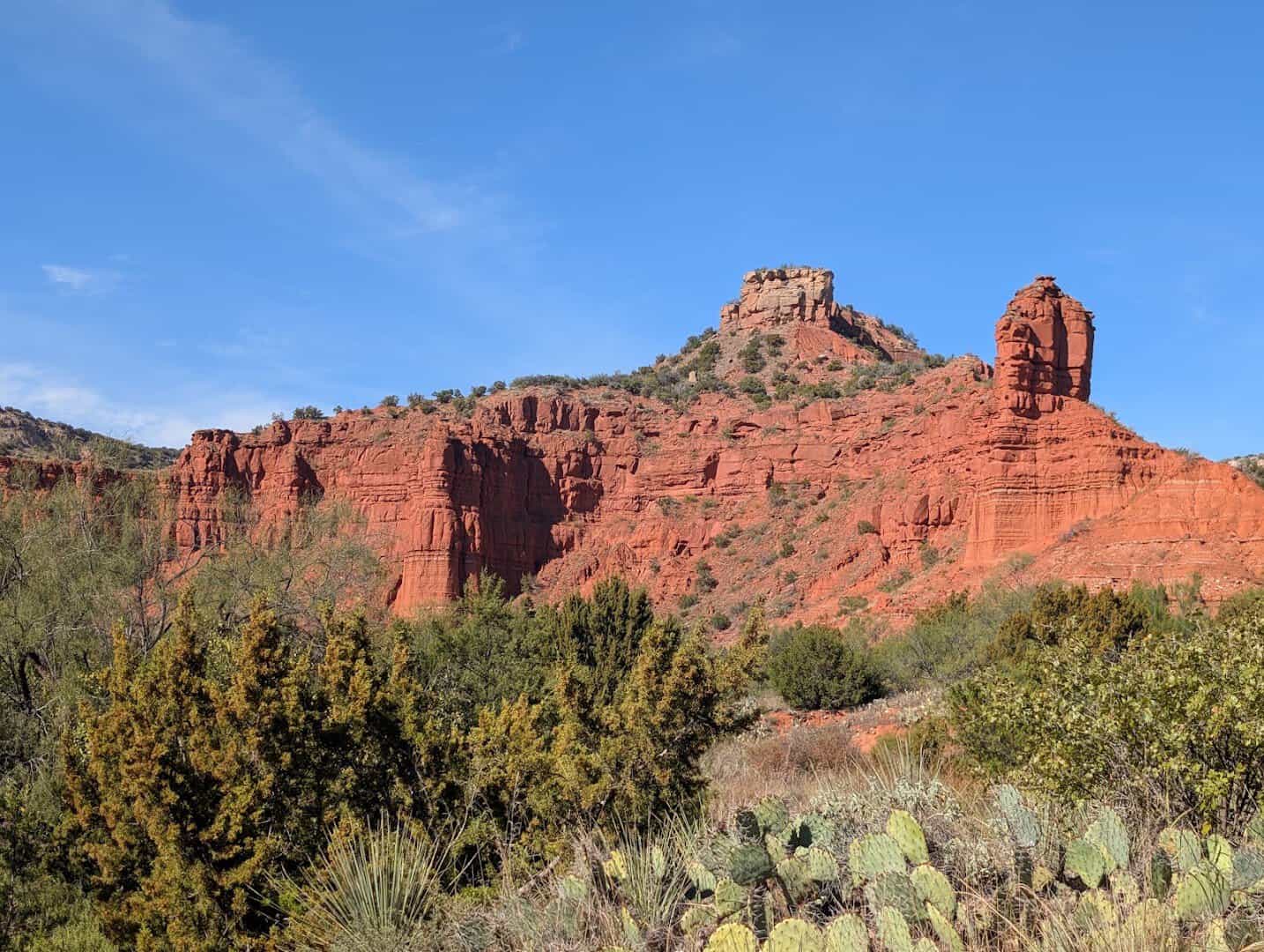
The scenery does the heavy lifting instead. You move through red rock cuts, past mesquite and waving grassland, under the enormous Panhandle sky. The caprock is the geological star here, a rugged escarpment where the high plains break apart into canyons streaked rust, orange, and cream.
Then the walls close in, the stone turns a deep rusty red, and a dark doorway appears in the cliff ahead. You have arrived.
Into the Dark
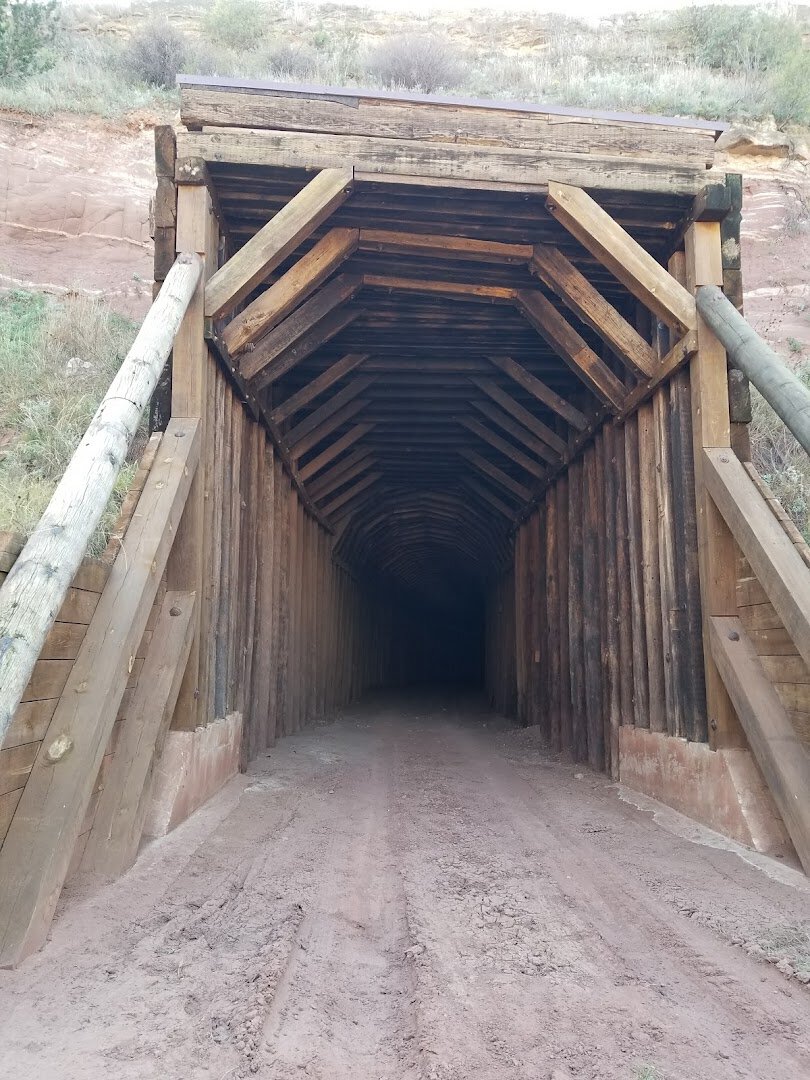
Clarity Tunnel stretches about 742 feet through solid rock. That number does not sound like much until you are standing inside it.
The daylight behind you shrinks to a bright coin. The daylight ahead is still a long way off. For a stretch in the middle you are wrapped in true darkness, not the dim of a cloudy night but the kind where your eyes simply give up trying.
The air changes too. The temperature drops several degrees the moment you step inside, and on a scorching Panhandle afternoon that cool wraps around you like a reward. You can hear your own footsteps bounce off the timber frame and the stone walls.
“Bring a flashlight,” the park will tell you, and it is not gentle advice. A headlamp is even better, since it keeps your hands free and your eyes pointed forward at that far circle of light.
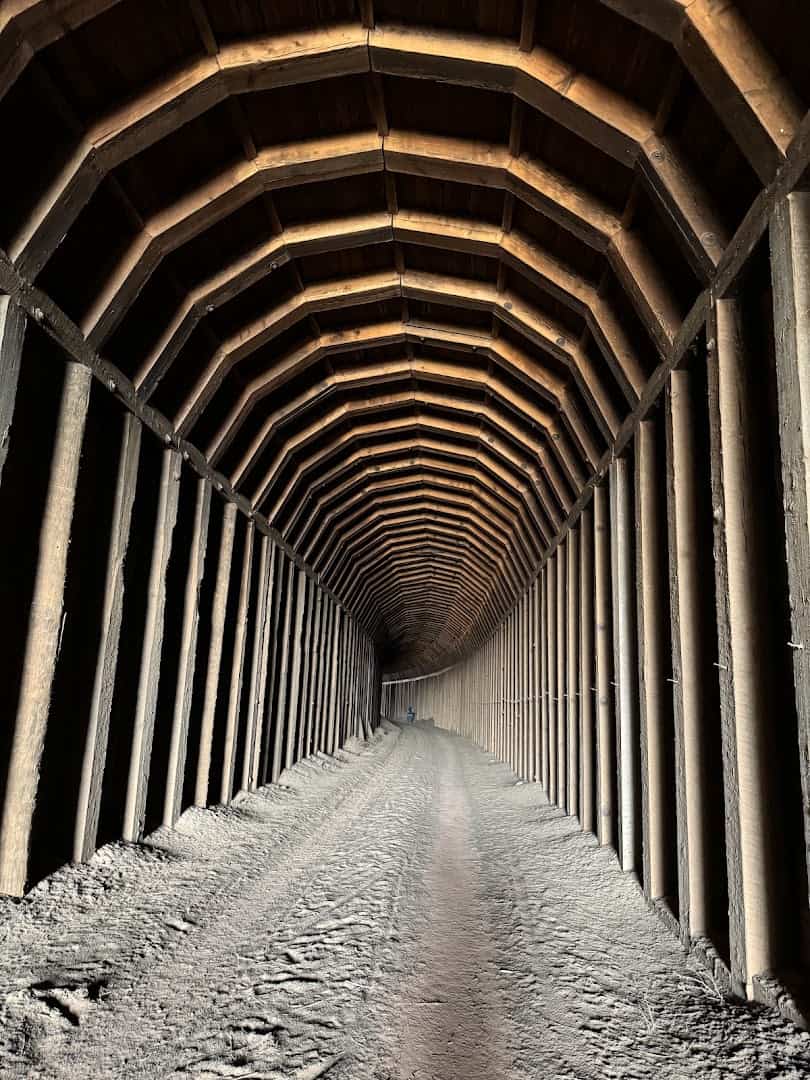
Run your light along the walls as you go and you can read the tunnel’s age in it. The heavy wooden timbers still frame the opening, weathered smooth, and the rock around them carries the marks of the crews who cut it a century ago.
Do yourself a favor and pause in the very middle. Switch the light off for just a few seconds and listen. There is a hush underground you cannot find anywhere above it, deep and complete. Then flick the beam back on and keep moving toward the light.
The Half Million Neighbors Overhead
You are not alone in there. From late April through the middle of October, Clarity Tunnel is home to as many as 500,000 Mexican free tailed bats.
They roost in the roof of the tunnel through the warm months, in what biologists call a pseudo maternity colony rather than a true nursery. During daylight they are mostly a soft rustle overhead. Glance up and you may spot them tucked into the cracks in the ceiling.
The real show comes at dusk. On a good summer evening the bats pour out of the tunnel mouth in a living, swirling river, streaming off to hunt insects across the plains.
It is the same spectacle that packs the crowds onto Austin’s Congress Avenue Bridge, only wilder and far less crowded out here on the plains.
Did you know? The biggest numbers show up in early September, when the colony swells for the fall migration back to Mexico. Time your visit for then and you may catch the tunnel at its absolute fullest.
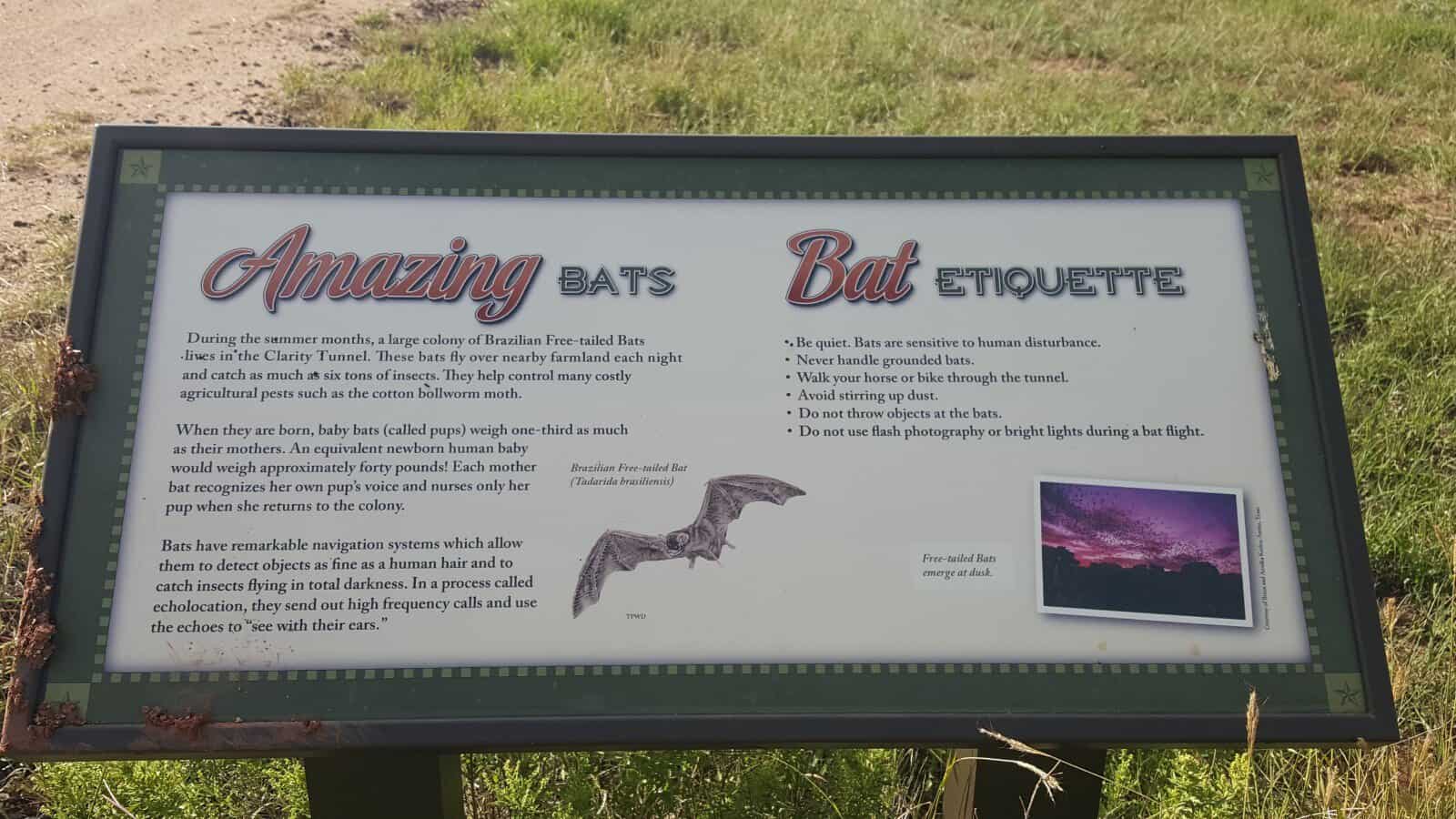
Give the bats plenty of space. Do not shine bright lights straight up at them, keep your voice low, and never touch a bat you find on the ground. Watch, wonder, and let them be.
Meet the State Bison Herd
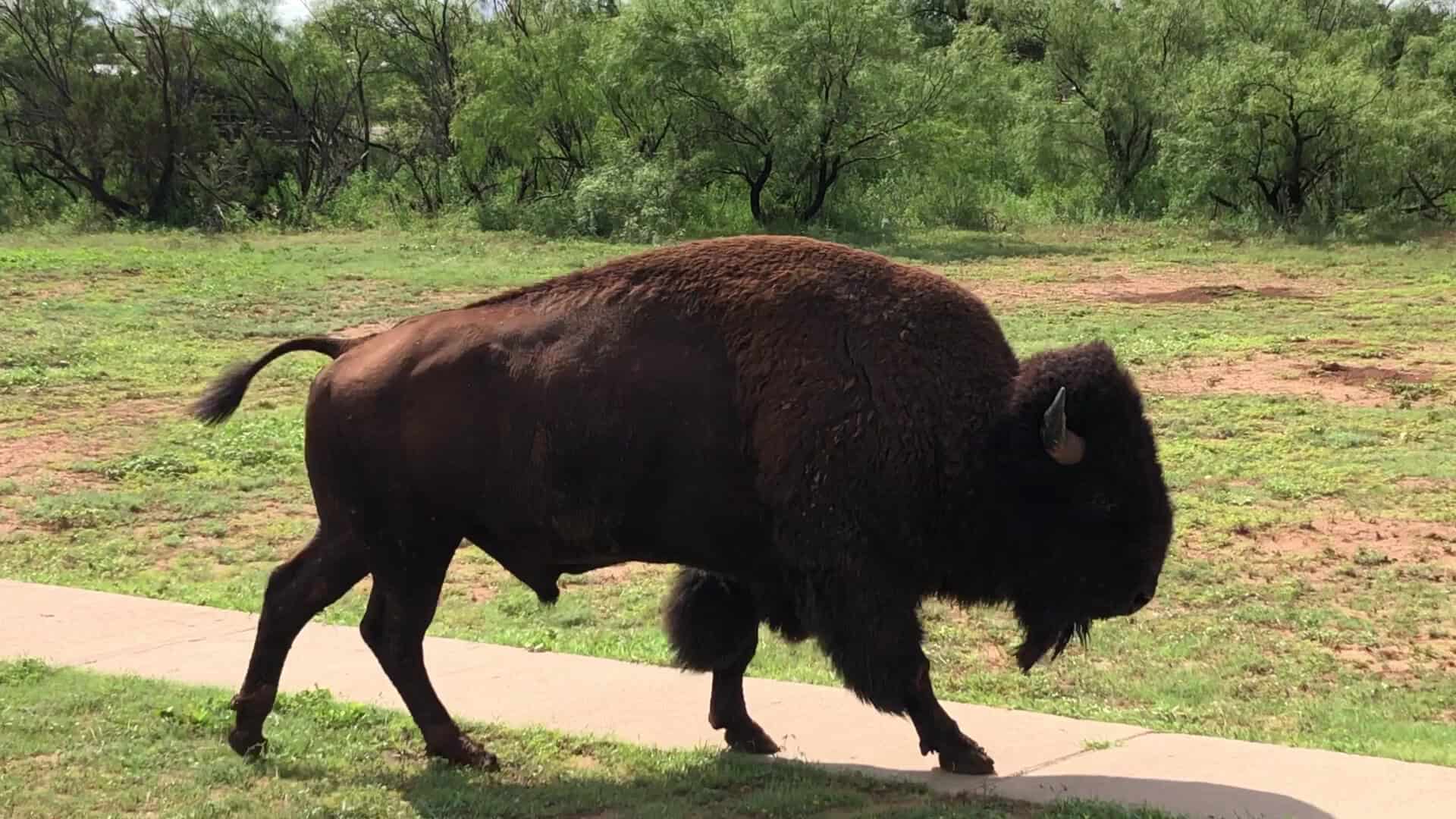
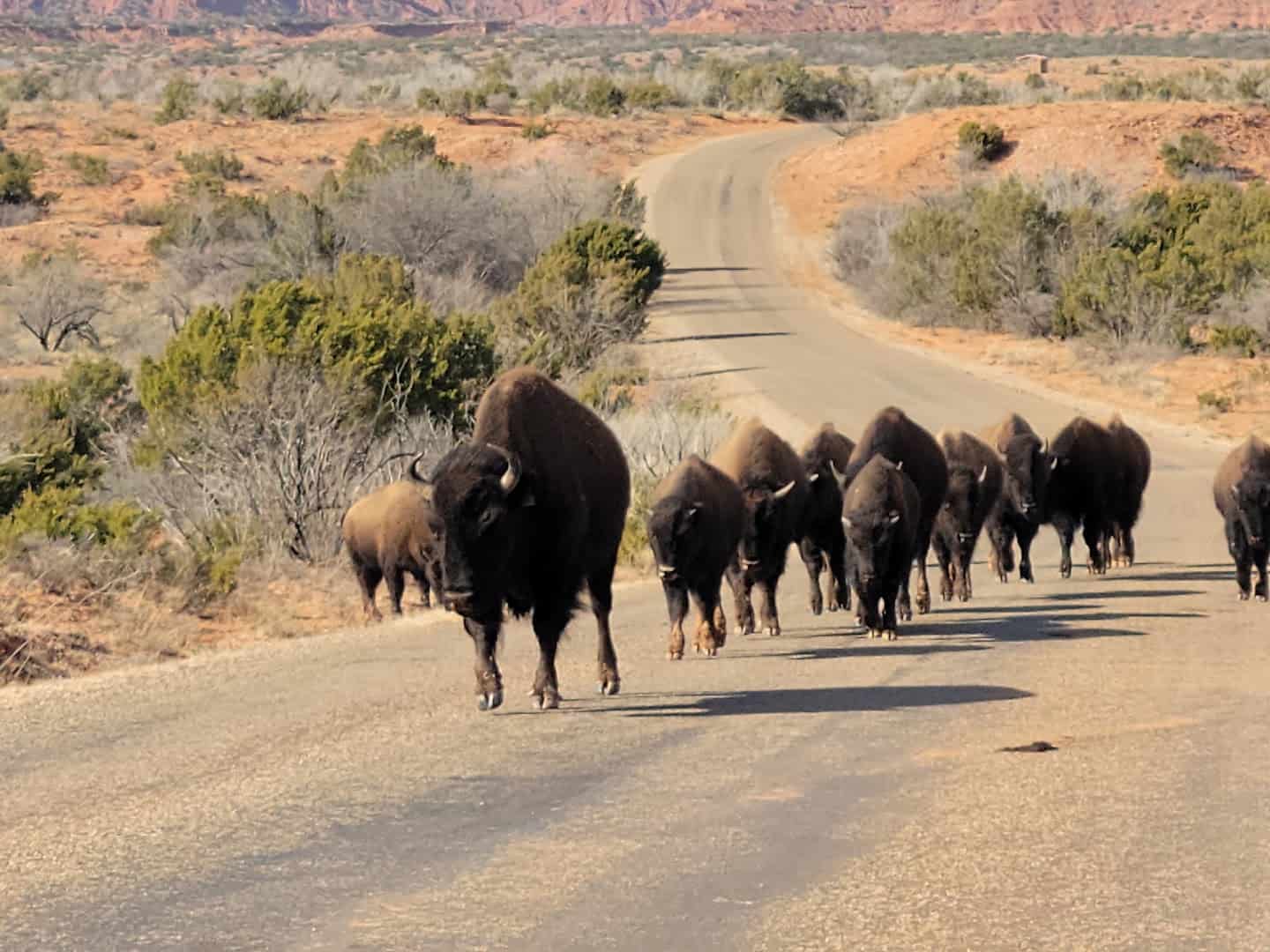
Here is the part that catches first time visitors off guard. Caprock Canyons is home to the Official Texas State Bison Herd, and the animals roam the park freely. You may well meet a few of them before you even reach the trailhead.
Their backstory is genuinely remarkable. In 1878, as bison were vanishing from the southern plains, the famous Goodnight herd was started by Charles Goodnight, a rancher who gathered a small handful of orphaned calves. He did it at the urging of his wife, Mary Ann Goodnight.
Mary Ann could not bear to watch the great herds disappear from the country she knew, and she pushed her husband to save what he could. Those few rescued calves became one of the most important bison bloodlines in America.
These are no ordinary bison. Genetic testing later revealed they are the last remnants of the Southern Plains bison, carrying DNA found in no other herd in North America. They are living history on the hoof.
In the 1990s, the JA Ranch donated the survivors, only 32 animals at the time, to Texas Parks and Wildlife. They were moved here to Caprock Canyons, where the herd has grown and thrived across the grasslands in the years since.
Keep a respectful distance always. They look slow and calm, and they are neither one. Admire them from your car or from well down the trail, and let a very large wild animal stay wild.
Why There’s a Tunnel Out Here at All
The tunnel was never built for hikers. It was built for trains.
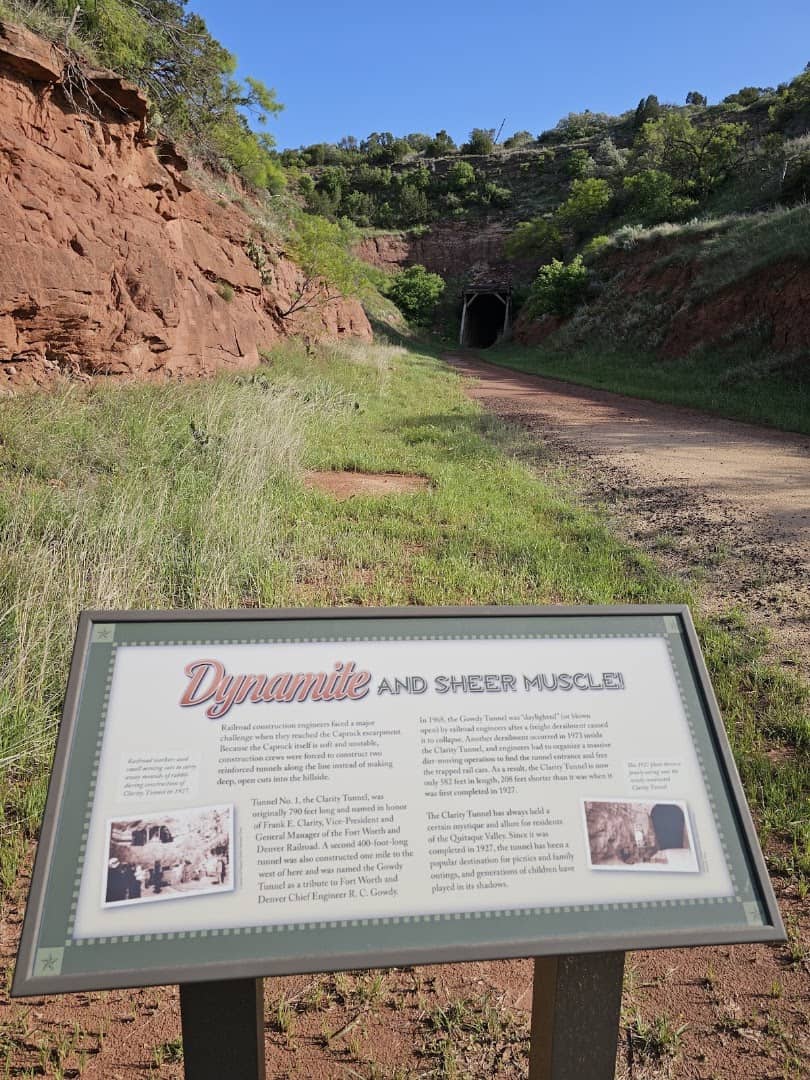
In the late 1920s, a branch of the Fort Worth and Denver line pushed south through this rugged country to reach the growing farm towns of the South Plains. To get past the caprock, crews bored straight through the rock and framed the opening in heavy timber.
Clarity Tunnel was the result, and it became one of the very few railroad tunnels ever built in the entire state of Texas. That rarity is a big part of why it feels so special to walk through today.
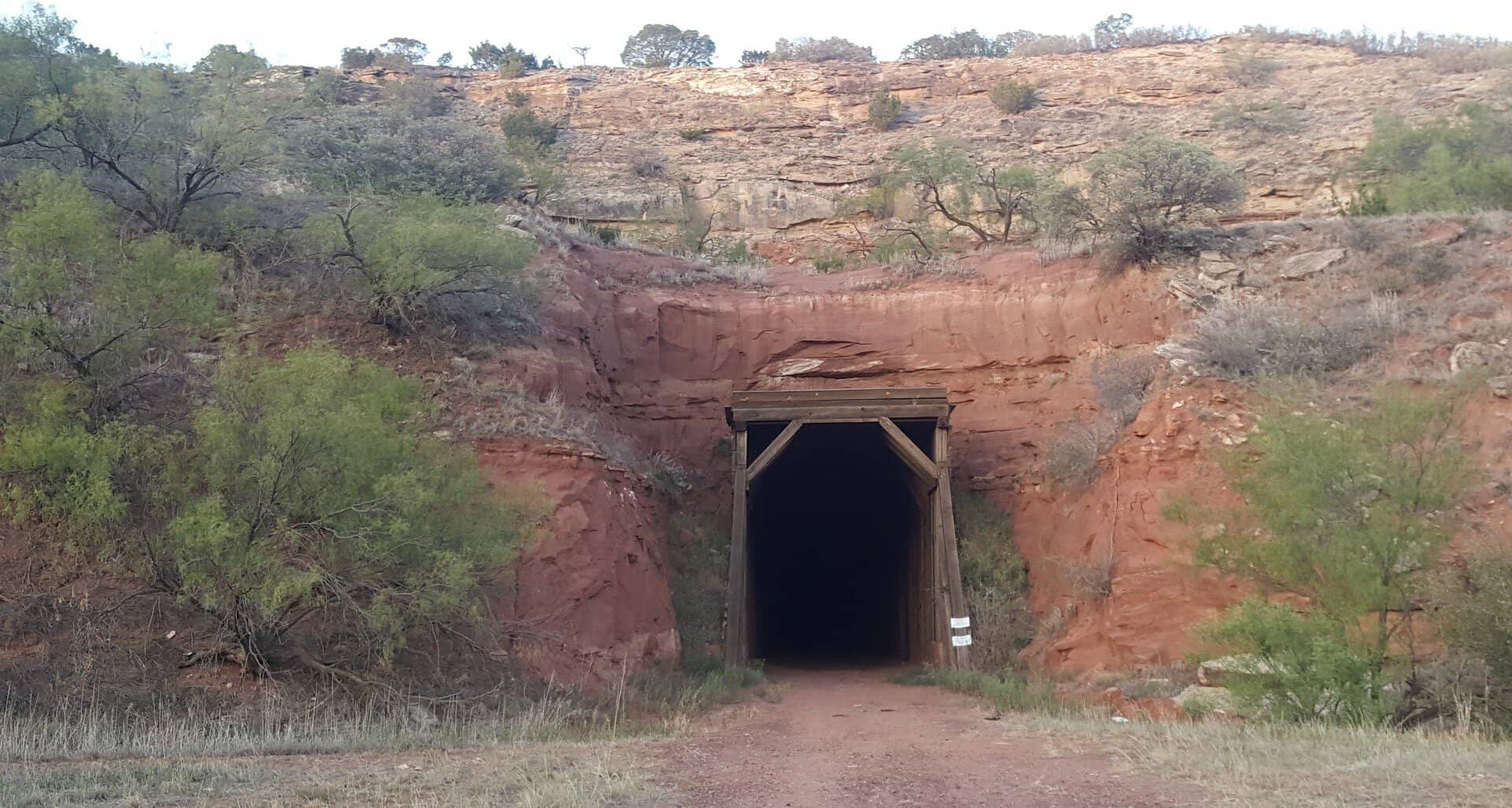
The line hauled freight and passengers for decades. In 1977, the tunnel earned a place on the National Register of Historic Places, a fitting nod to how rare and hard won it was.
When the trains finally stopped running, the whole corridor could have been lost to weeds and rust. Instead, the old right of way was donated to Texas Parks and Wildlife in 1992, and the trailway opened to the public in 1993.
A path once meant for locomotives now belongs to hikers, cyclists, and folks on horseback. It is one of the happiest second acts a piece of railroad ever got.
There’s a Whole Park Around It
The tunnel is the headliner, but do not treat the rest of the park as a warm up act. Caprock Canyons protects more than 15,000 acres of some of the most dramatic scenery in the Panhandle.
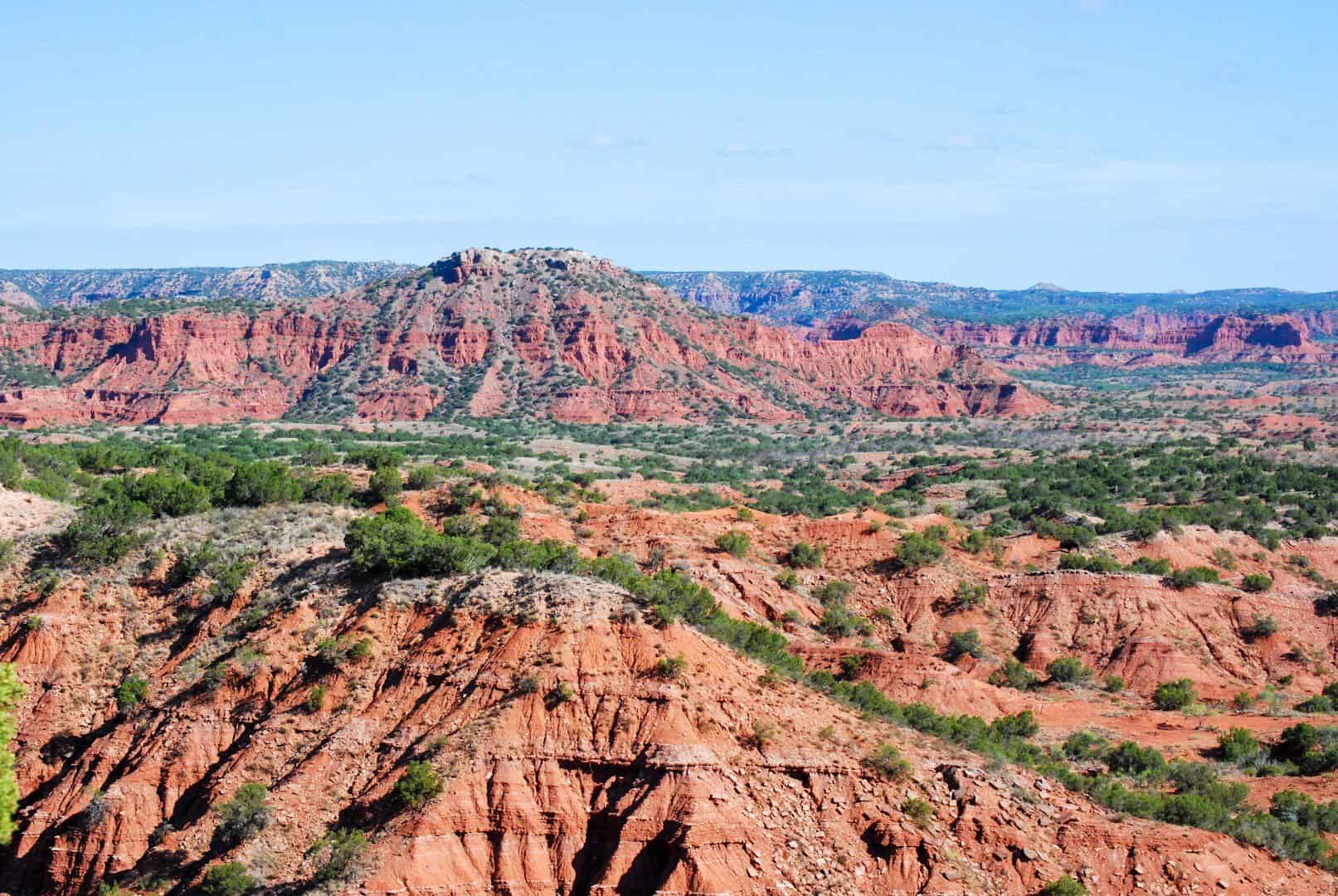
The main park loop is a feast of red rock spires, banded cliffs, and hidden side canyons that glow at sunrise and sunset. Little Lake Theo sits near the entrance, a quiet spot for fishing, paddling, or simply cooling your feet after a dusty walk.
Wildlife is everywhere if you keep your eyes open. Beyond the bison, you might spot mule deer stepping through the brush, a bustling prairie dog town, roadrunners, and the occasional aoudad sheep picking across the high ledges.
The park also keeps a full slate of shorter trails if the tunnel hike feels like a stretch. Loops wind past the cliffs and down into the canyon floor, so you can pick a distance that suits your day and still soak up the scenery.
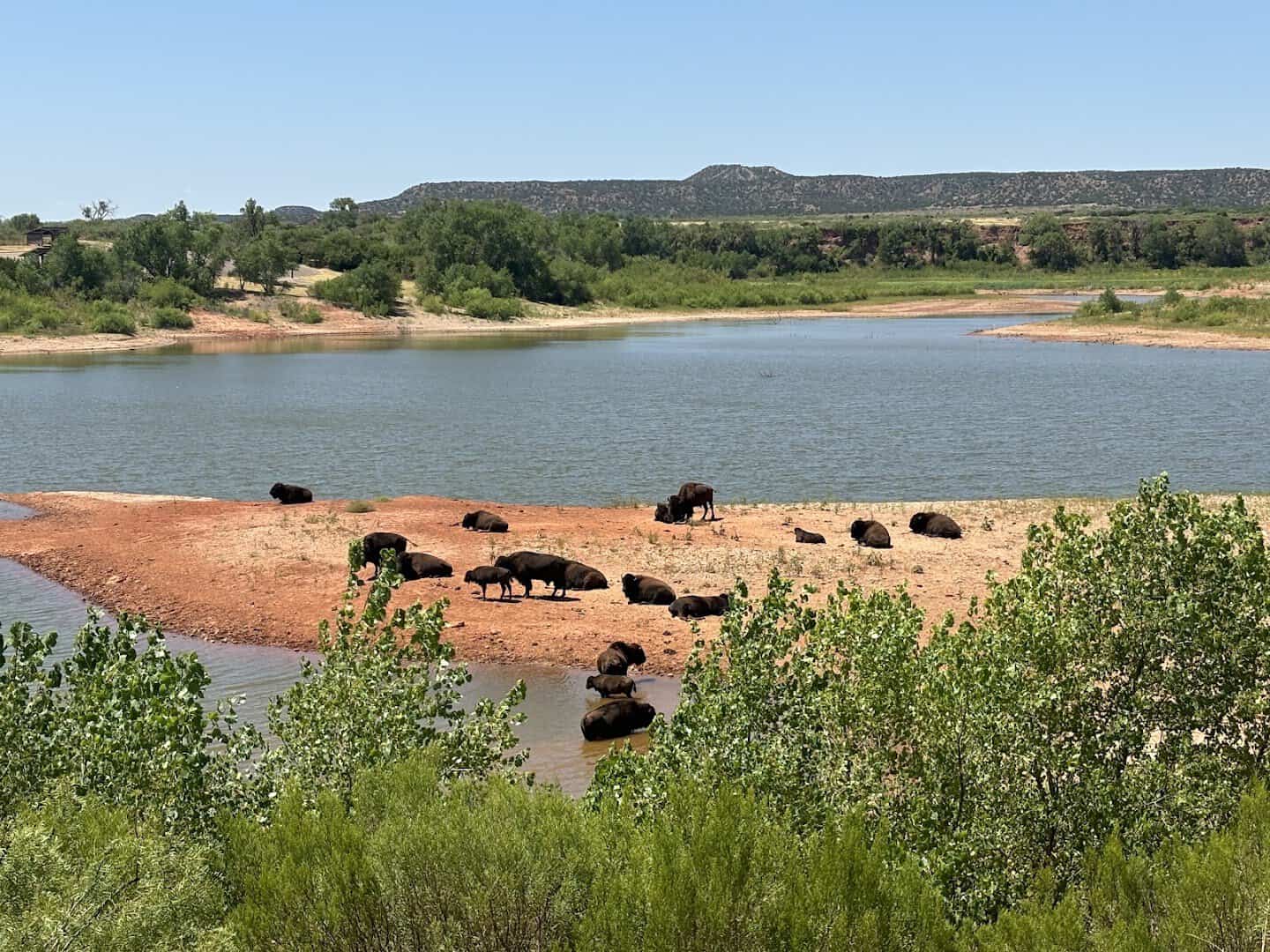
Campers can stay right inside the park, from drive up sites to backcountry spots for those who want the canyon to themselves after dark. Waking up to that red rock in the morning light is its own reward.
Planning Your Underground Adventure
A little preparation turns this trip from a slog into a highlight. The trail is remote, exposed, and a long way from the nearest store, so come ready for it.
Carry more water than you think you need, roughly a quart for every hour you plan to be out. Add sunscreen, a hat, sturdy shoes, and of course that flashlight or headlamp for the tunnel itself.
Spring and fall bring the kindest weather, and evenings from summer into early September give you the best odds at catching a bat flight. Summer afternoons on the open trail can turn brutally hot, so start early or aim for the cooler end of the day.
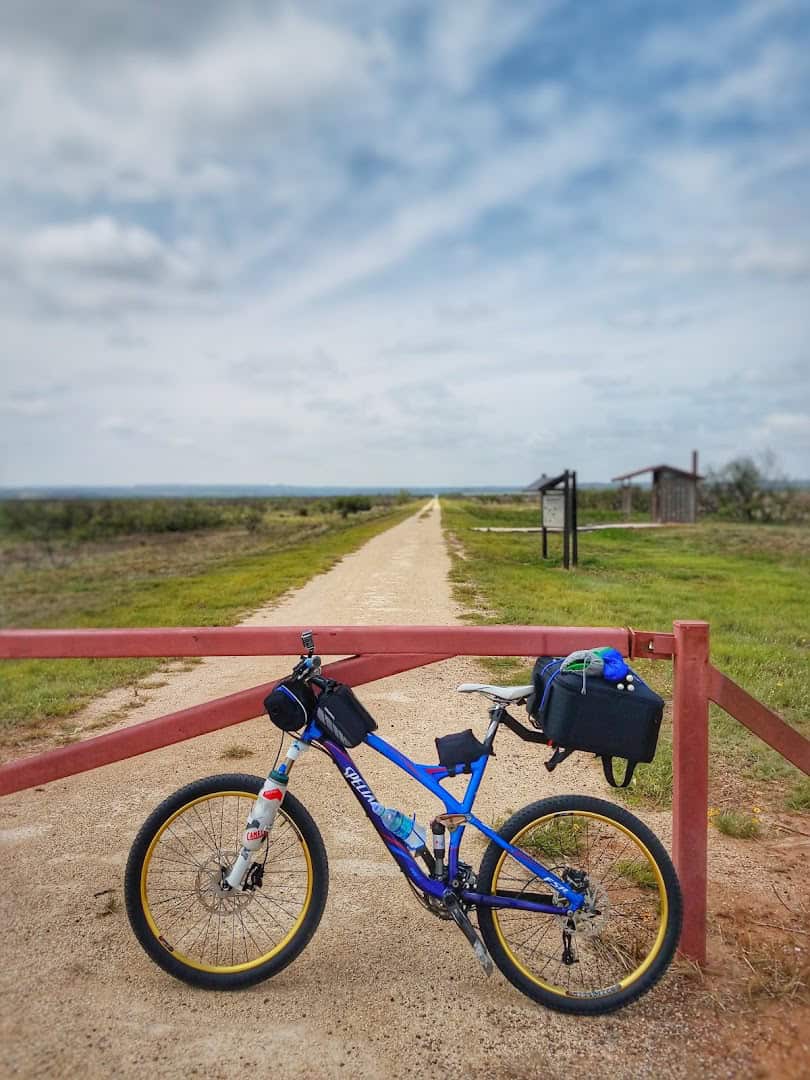
Pro tip: if a nine mile round trip on foot sounds like a lot, bring a mountain bike instead. The gentle rail grade was practically made for two wheels, and it turns the ride out to the tunnel into an easy, breezy cruise.
Day use runs about $5 per person for ages 13 and up, and the park offers campsites if you want to stretch the visit across a weekend. Check the park’s official page for current hours, fees, and any scheduled bat tour dates before you go.
How to Get There
Caprock Canyons State Park and Trailway sits in the Texas Panhandle near Quitaque, about 100 miles southeast of Amarillo. To reach the tunnel, follow the trailway west from Monk’s Crossing Trailhead.
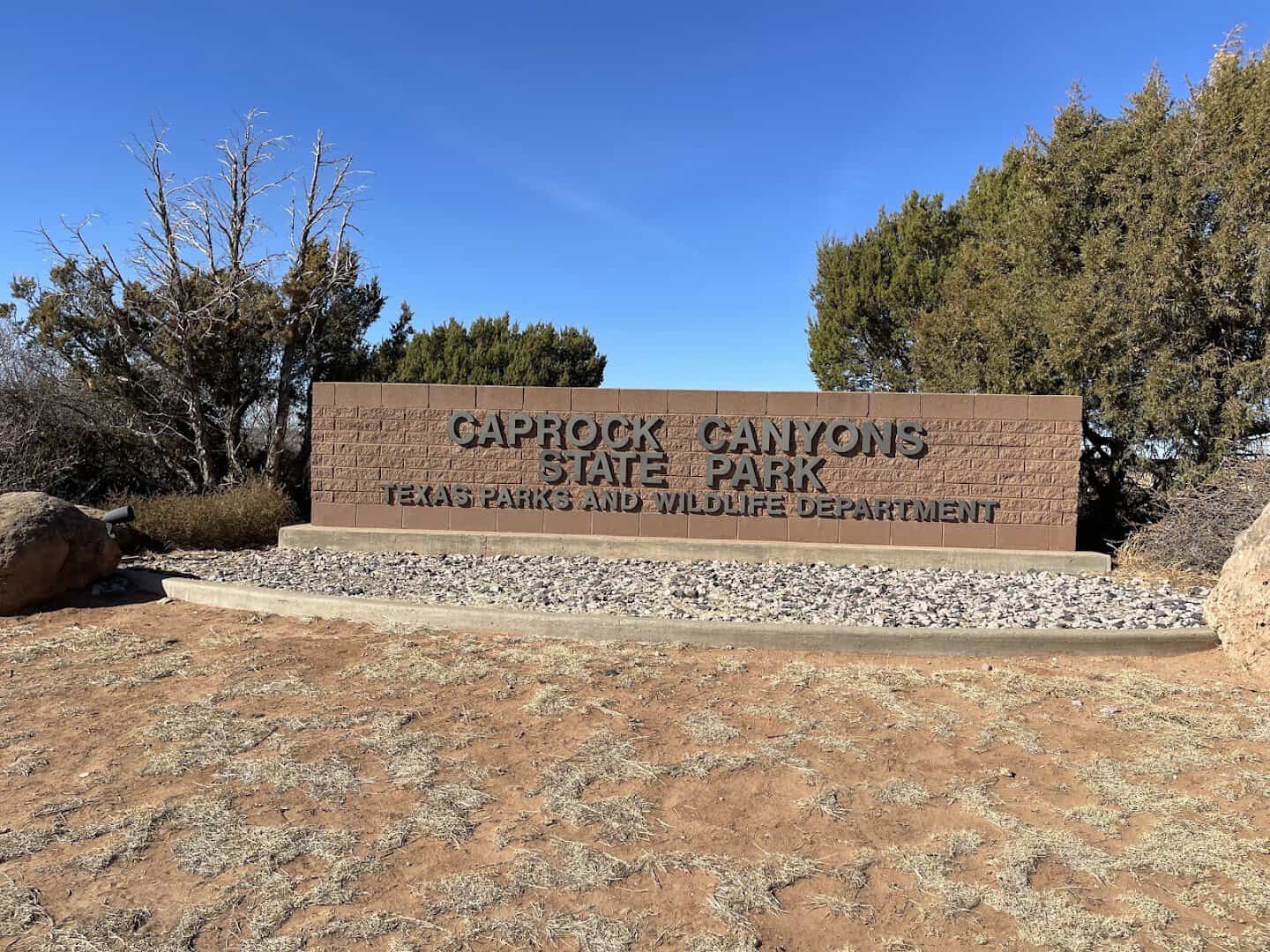
Where: Caprock Canyons State Park and Trailway, 850 Caprock Canyons Park Rd, Quitaque, TX 79255
Answer the Dark
Texas hiking usually means wide open skies and views that run forever. This one flips the whole script and sends you underground, into cool stone and deep quiet, with a red rock canyon on one side and a state bison herd on the other.
Pack your water, charge your headlamp, and go answer the pull of that dark doorway in the cliff. You will come back out blinking into the sunlight with a story worth telling for years.
Featured image: David Henderson via Clarity Tunnel

Stella Raines
Editor-in-Chief
Stella brings over a decade of storytelling experience to TX Headlines. With roots in West Texas and a love for road trips, she leads the editorial team with an eye for the hidden stories that make Texas unforgettable.
More Stories
Tags