This Lakeside Texas Park Turns Into a Bluebonnet Paradise Every Spring
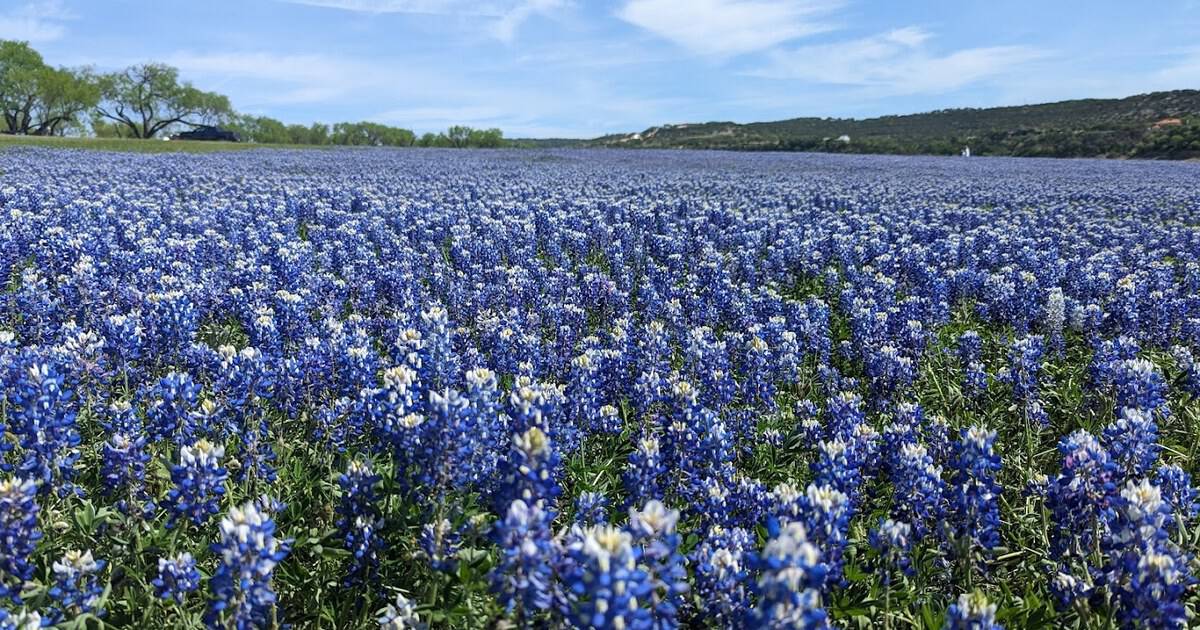
Every spring, half of Texas pulls onto a highway shoulder to photograph three bluebonnets and a fence post. I have done it. You have done it. And every year I think the same thing: we can do so much better than a roadside ditch.
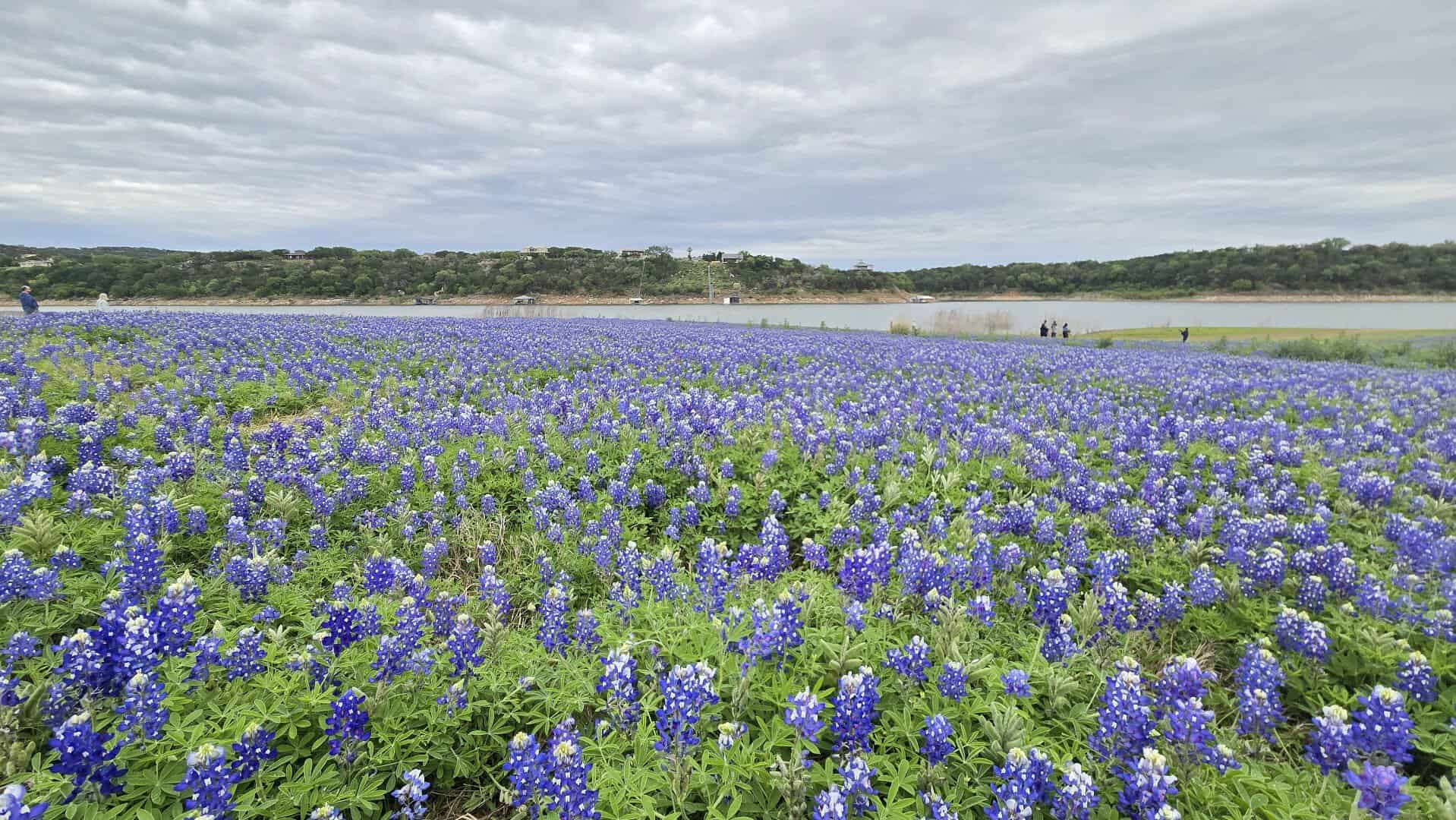
Muleshoe Bend Recreation Area in Spicewood is the better version. It is a lakeside park about 40 miles from downtown Austin where, for a few weeks each spring, entire hillsides turn a deep, rolling blue and run right down to the water of Lake Travis.
Below, I will walk you through when the bloom peaks, where in the park the best fields hide, what else there is to do once you have filled your camera roll, and exactly what it costs to get in.
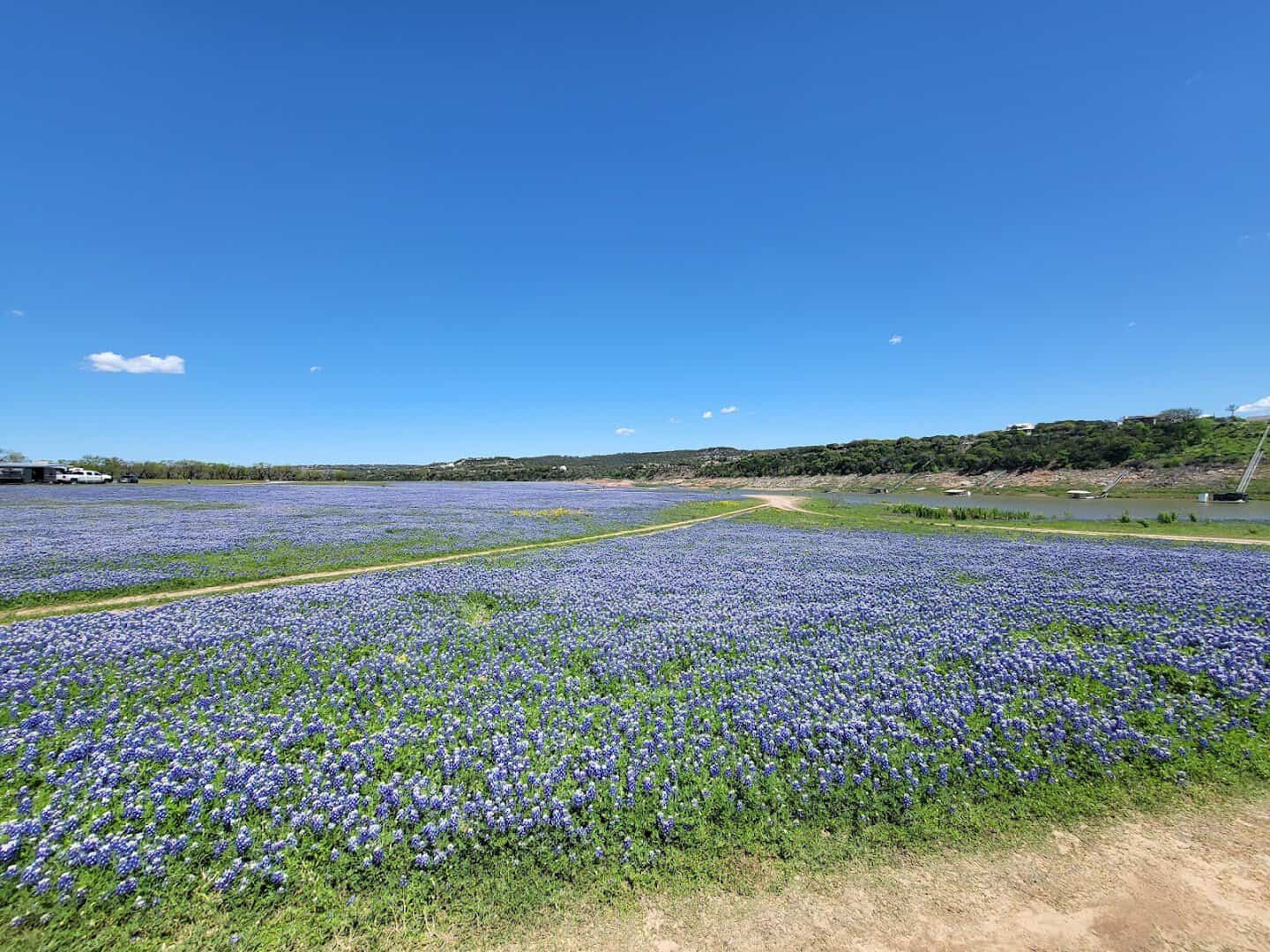
A Bluebonnet Field That Ends at the Water
Most bluebonnet spots in Texas are a strip of color along a road. This one is different. The park sits on a bend of the Colorado River where it widens into western Lake Travis, so the flowers grow on slopes that end at a shoreline.
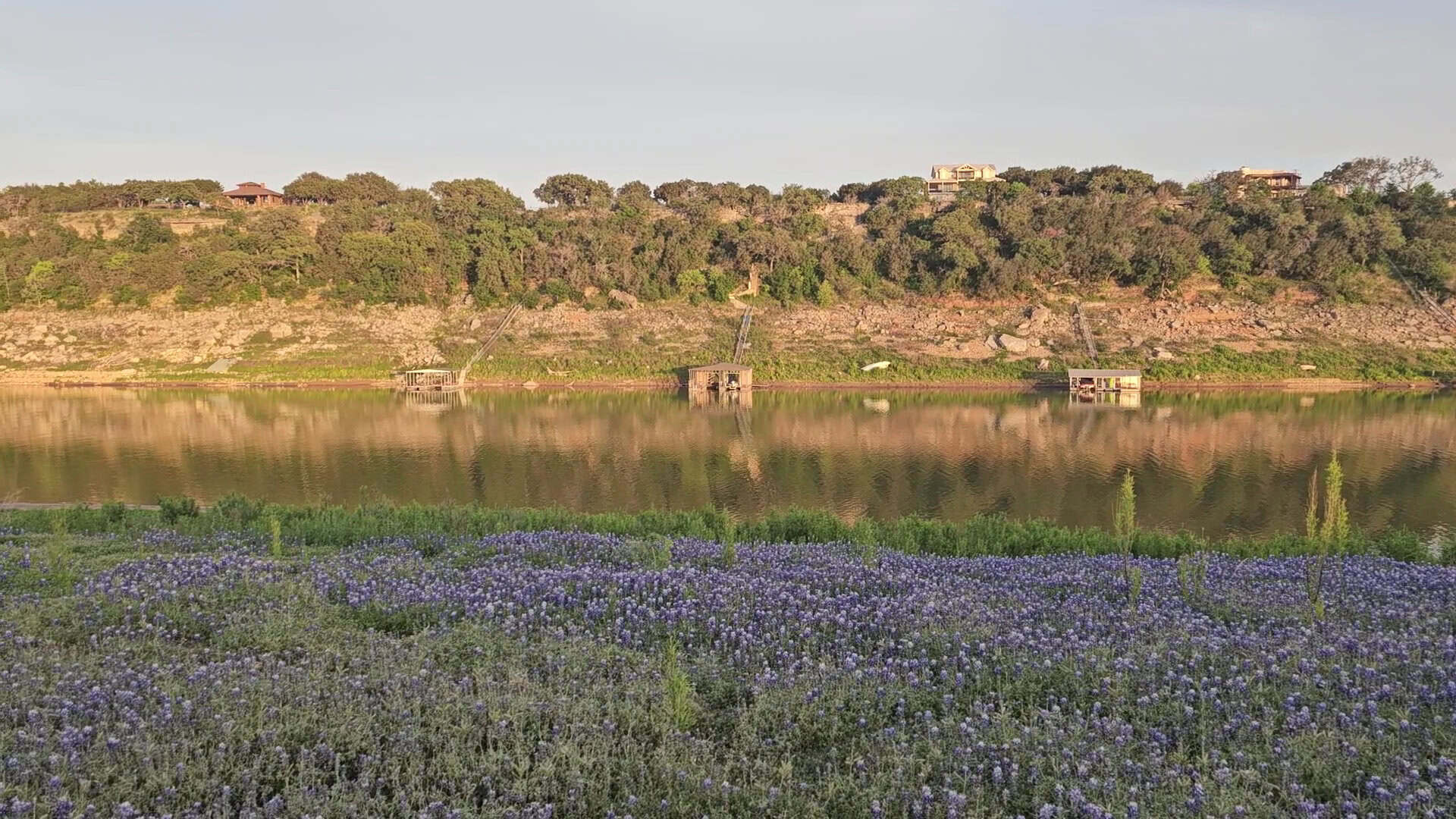
Stand at the top of one of those hills in late March and the view stacks up in layers. Blue flowers in front of you, green oaks behind them, and then the water, usually a shade somewhere between green and silver depending on the sky.
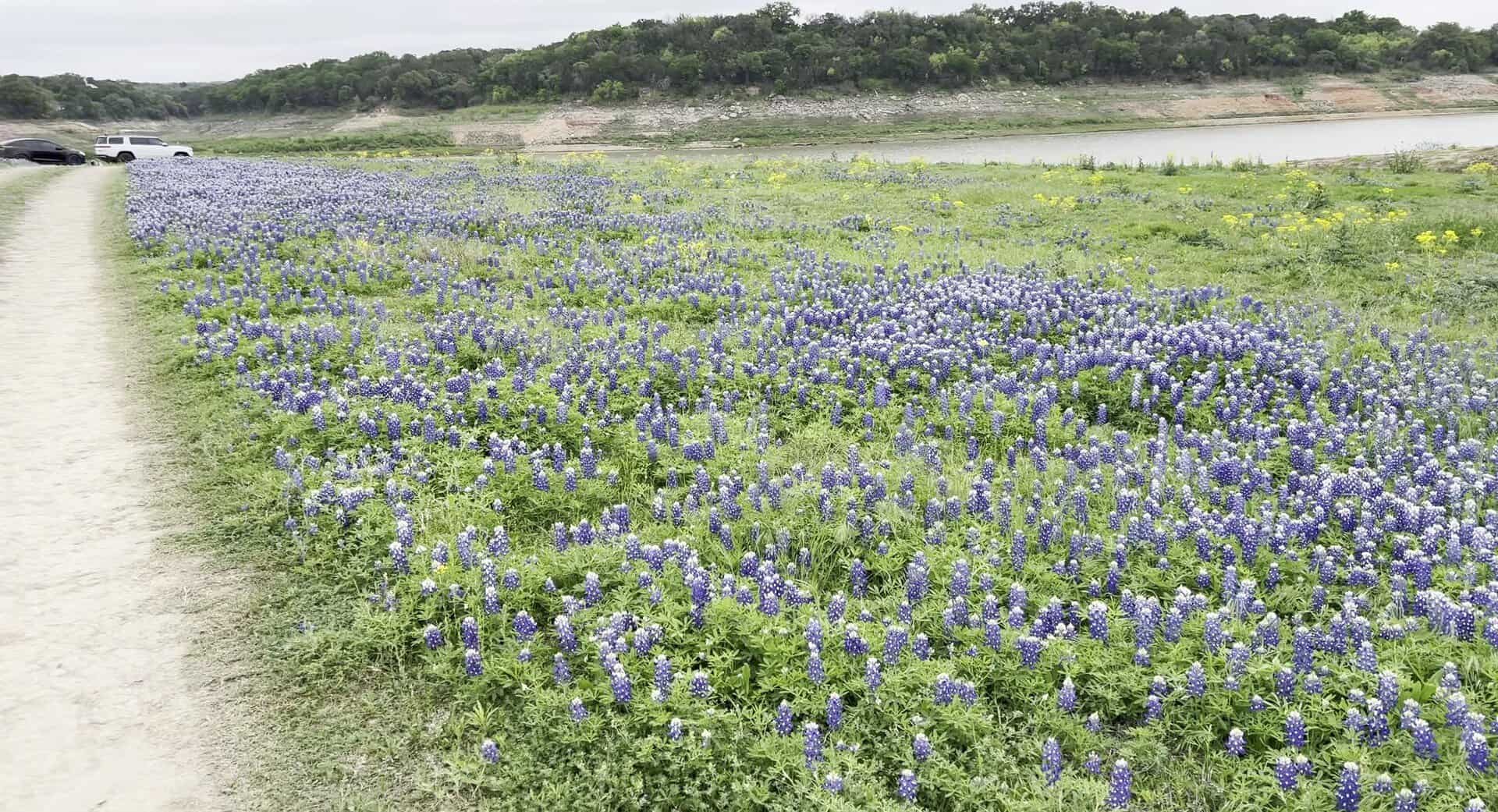
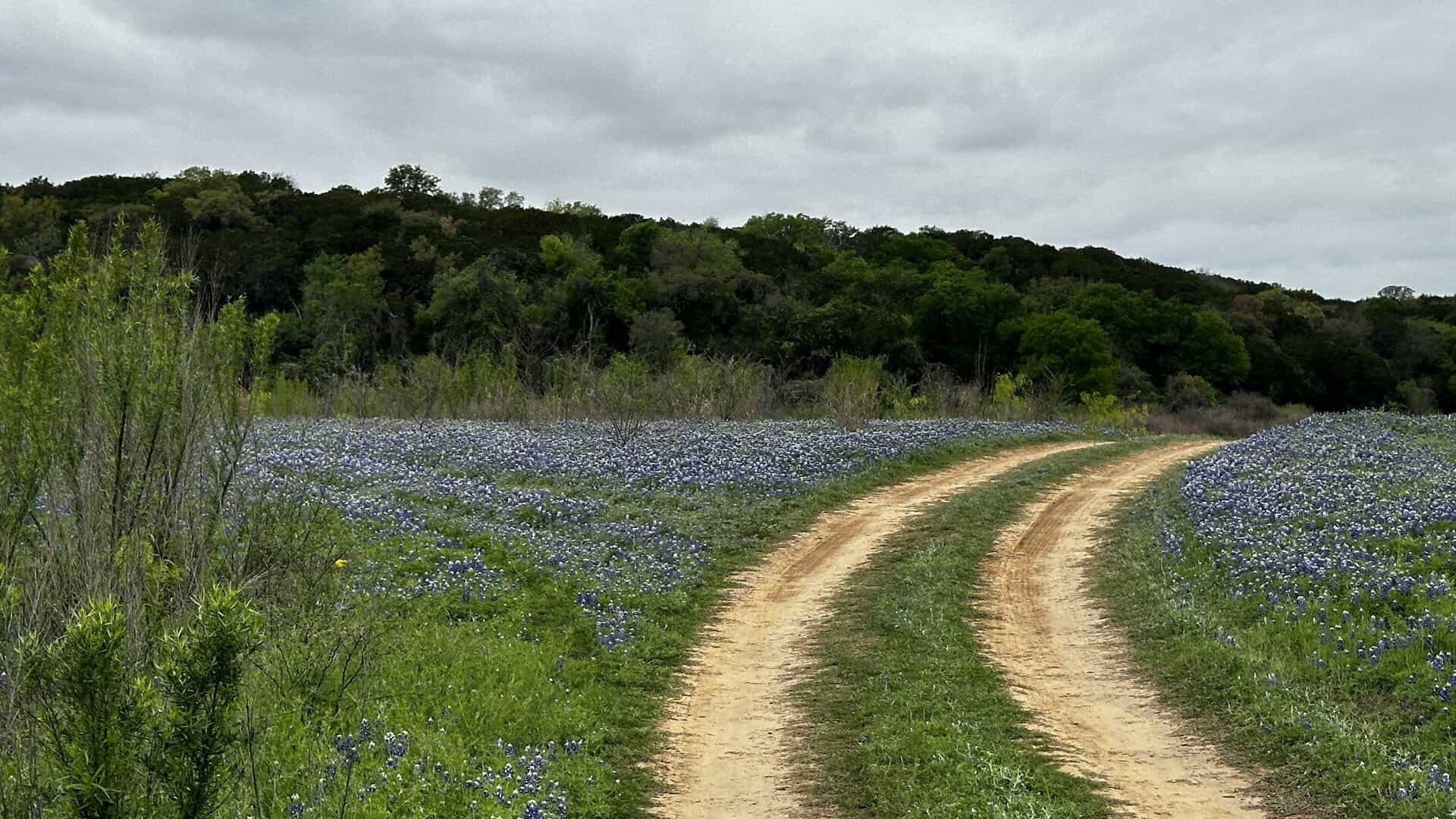
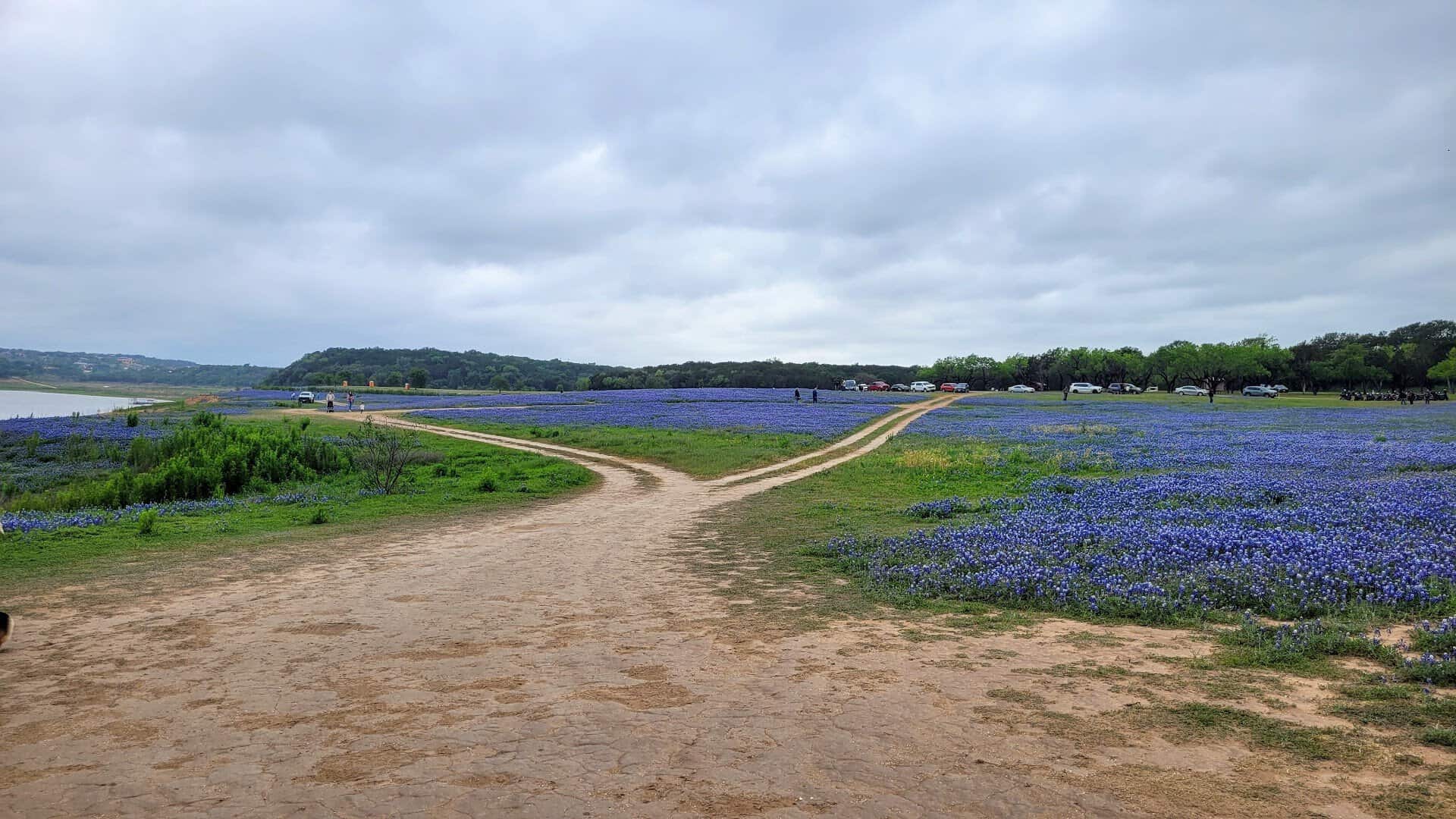
The park sits on a peninsula, and staff point visitors toward its eastern fields for the thickest color. Local guides say the river hills hold most of the bluebonnets. Near the campsites and boat ramp, the roads turn to dirt and the blue starts.
The part I find fascinating: some of this ground spent years under Lake Travis. When the lake drops, the old lake bed dries out and bluebonnets move in. A low lake year can mean an enormous bloom, which is a strange kind of consolation prize.
Bluebonnets are picky. They want a wet fall, a cold winter, and a warm spring to finish the job. Julie Marcus of the Lady Bird Johnson Wildflower Center put it simply to a Highland Lakes reporter: “If the weather stays mild, the bluebonnets will stay around.”
So the timing shifts a little every year. In a normal season, peak bloom lands in late March and early April. A warm winter pushes it earlier. Check the park’s social pages the week before you go, because a field can turn from green to blue in days.
What It Feels Like Out There
I have not stood in this field myself, so here is what people who have keep saying. The first thing they mention is the smell. A big stand of bluebonnets has a light, sweet scent, and out here the wind carries it across the whole slope.
The second thing is the sound. Bluebonnets are lupines, and bees love them. On a still afternoon the fields hum with bumblebees and honeybees working the blooms, and ladybugs crawl across the leaves. Kids find that as exciting as the flowers.
The third thing is the deer. They are everywhere here and do not seem to mind the people much. One camper wrote on The Dyrt, “In the month of April the bluebonnets are incredible and every time I’ve been there there have been tons of deer.”
Another reviewer on the same site said it more bluntly: “I HIGHLY suggest coming out here during Bluebonnet season. It is Absolutely beautiful!!!” Capital letters and all. I trust a review that cannot stay calm.
And then there is the space. The fields stretch far enough that you can find a patch with no one else in the frame. That is rare in bluebonnet country, where the famous roadside spots turn into a line of cars and a queue for the same photo.
How to Photograph the Flowers Without Wrecking Them
A few ground rules, because everyone loves bluebonnets until a field gets trampled flat. Follow the paths where they exist. Off the path, walk on the grass between clumps, not on the plants. If you want the classic sit-in-the-flowers photo, find a spot someone has already flattened.
Pro tip: the best light is early. The park opens at sunrise, and the day-trip crowds tend to roll in mid-morning. If you camp the night before, you get the fields to yourself at first light, when the dew is still on the leaves and the lake is glassy.
Bring a hat and water. There is shade on the trails, but the flower fields are open slopes, and a Texas spring sun does not care that it is only March.
Ten Miles of Trail Built by Mountain Bikers
The bluebonnets are the headline, but the trails are why this park has a year-round fan base. There are close to 10 miles of single track here, and they were built by the Austin Ridge Riders, a local mountain biking club that still helps maintain them.
The main loop is the Great Escape Trail, 6.5 miles that circle the whole park. Off that loop hang six shorter add-on loops with names like Sprocket, Derailleur, the Recycler and Side Winder. Sprocket dips close to the water’s edge. The Recycler is where the elevation change piles up.
The trails are rated by the International Mountain Bicycling Association, and they have a reputation for feeling more like Colorado than Central Texas. Ryan Vickery, an LCRA park operations coordinator, told the Austin American-Statesman that a visitor from Colorado said exactly that.
Vickery’s own reason for liking the trails is simpler. “I just like it because there’s a lot of tree coverage, so you’re not really exposed to a lot of sun,” he said. Roots, rocks, short steep climbs and a lot of shade. That is the whole recipe.
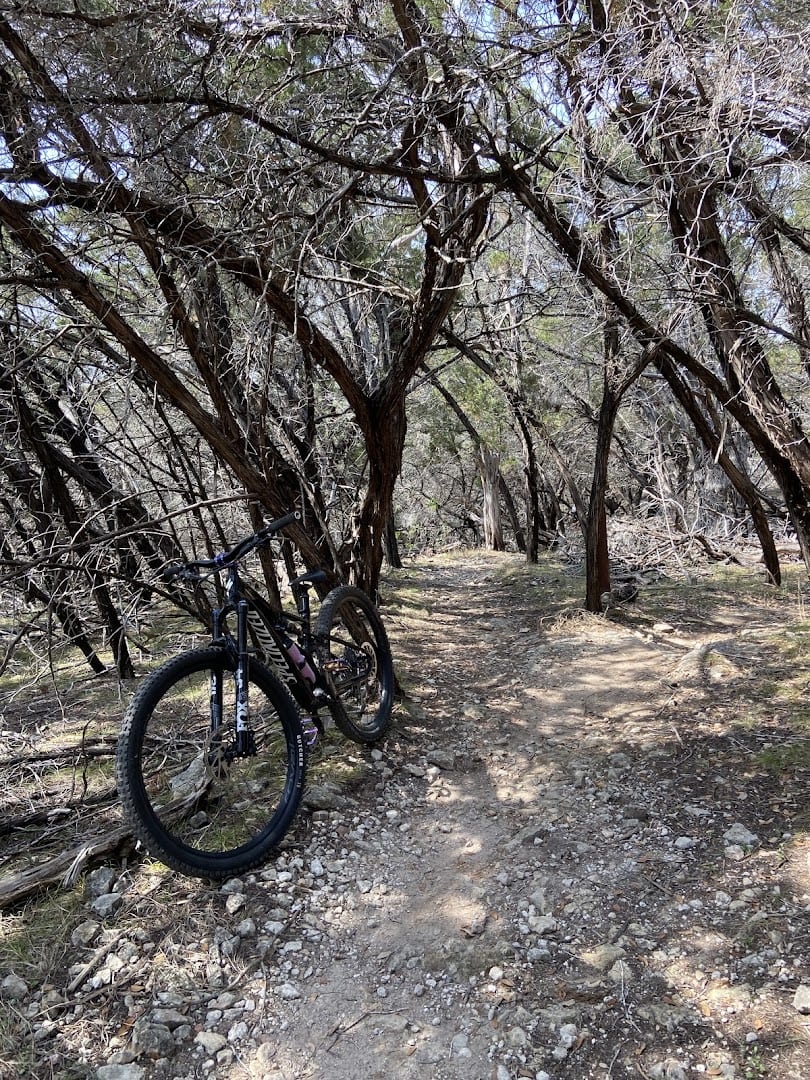
You do not have to be a rider to use them. Hikers share the trails, and so do horses, on the designated multi-use sections. If you are on a bike and meet a horse, hop off and let it pass. Nobody wants a spooked horse on a ledge.
No bike? The park rents electric mountain bikes, starting around $50 for a four-hour block. In spring, a slow e-bike lap of the Great Escape is a very good way to see bluebonnets from angles the car cannot reach.
Lake Travis, From the Quiet Side
Lake Travis has a party reputation, and most of that reputation lives on the Austin end. Out here at Muleshoe Bend, the lake is calmer, wider, and framed by hills instead of marinas.
A boat ramp went in back in 2015, so you can trailer in your own boat. If you did not bring one, the park rents kayaks Thursday through Sunday in the warm months. A single starts around $49 and a tandem around $59, depending on how long you keep it.
My pick for a spring visit is a kayak in the morning. Paddle along the shore below the bluebonnet slopes and you get the whole show from the water, which is a view almost nobody on land bothers to get. Fishing and swimming are allowed too.
Camping Among the Flowers
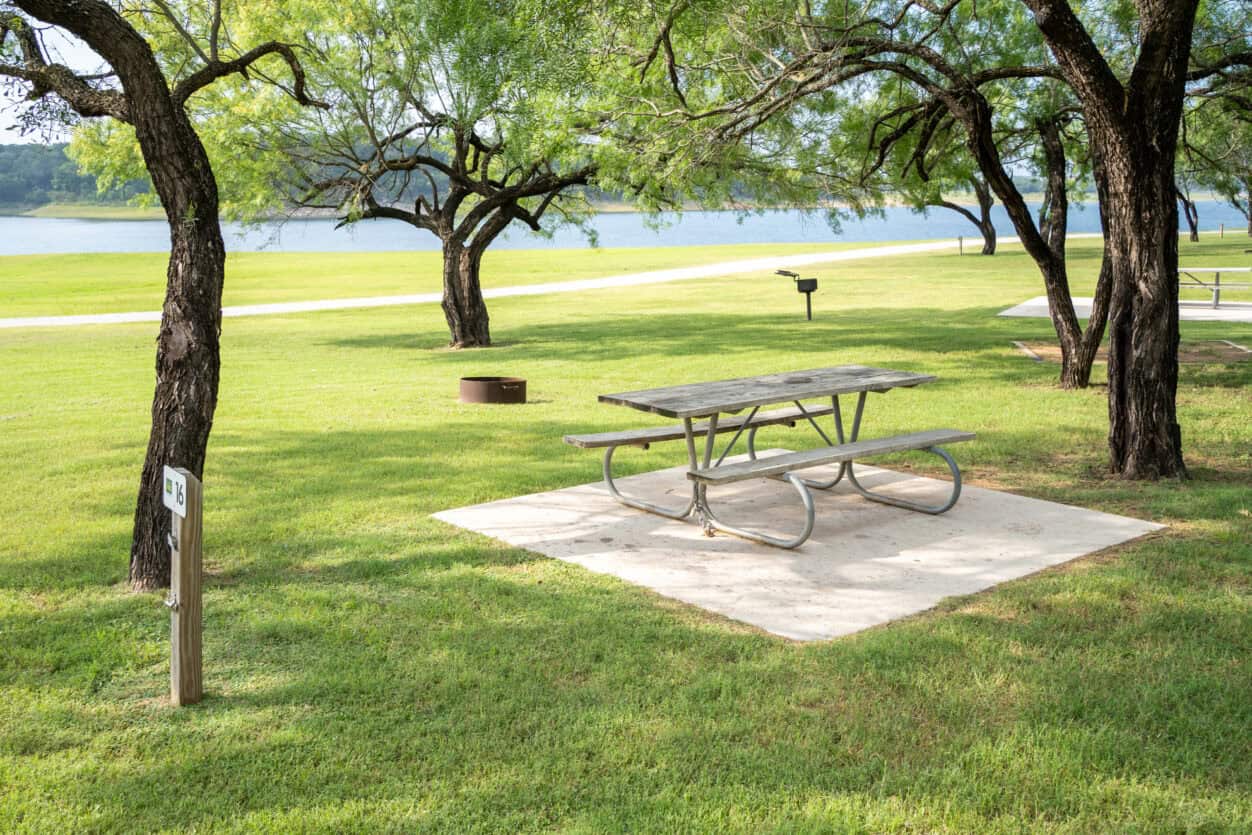
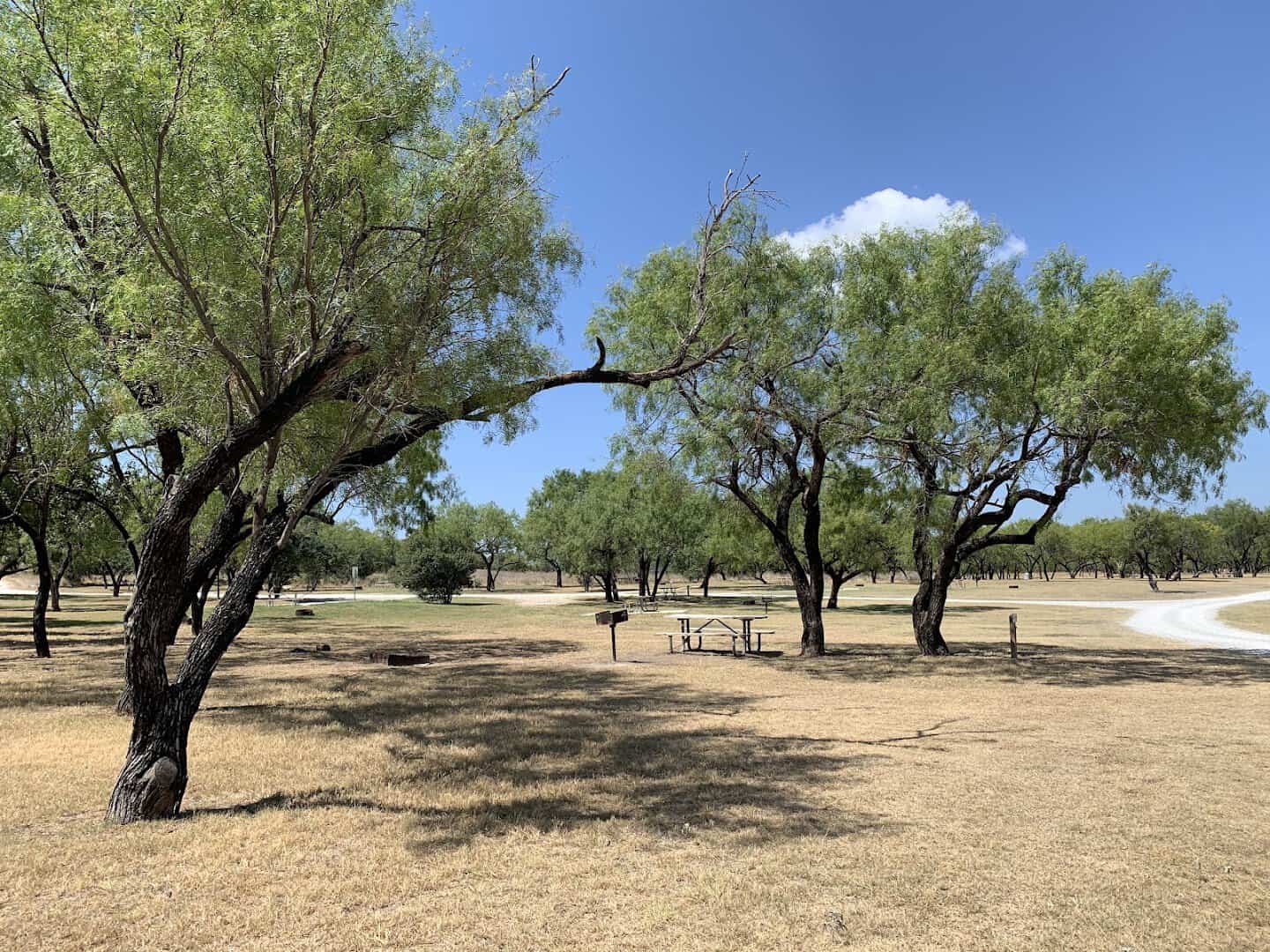
This is the move if you want the fields at sunrise. Muleshoe Bend has 41 campsites spread along two park roads, Turner Farm Road and Trammel Road. Many sit on open grass near the water, and a handful tuck under big live oaks for shade.
Every site comes with a picnic table, a grill and a fire ring. There are 35 standard sites that hold up to eight people, starting at $25 a night, and six large group sites for up to sixteen, starting at $35. Campers also get their day-use entry included.
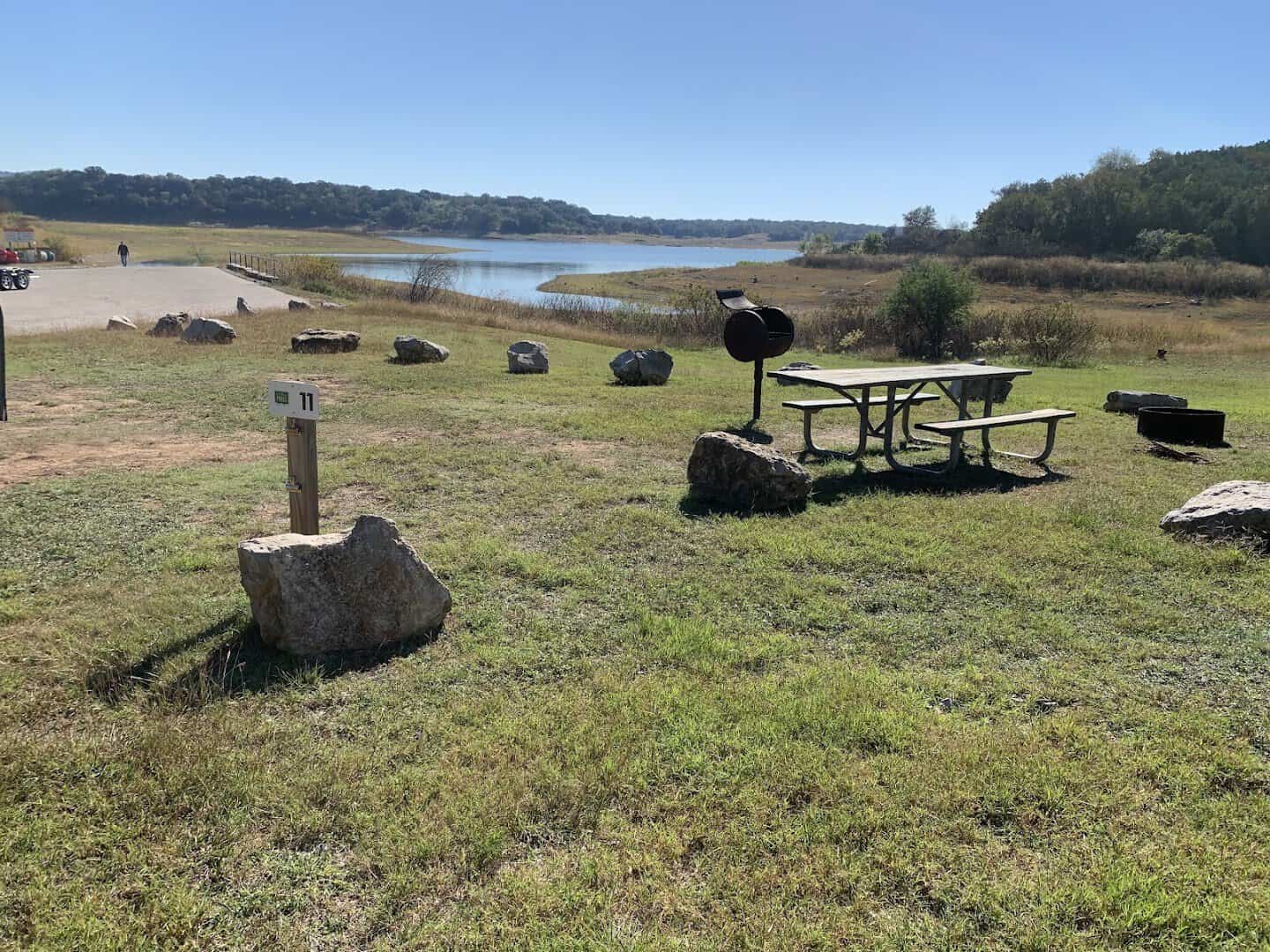
These are primitive sites: no hookups, no RV pads, and the restrooms by the sites are the non-flushing kind. The park makes up for it with a flushing restroom and outdoor shower near the entrance, potable water, and a 24-hour ice machine, which in Texas counts as a luxury.
One camper described the sites as well spaced and right beside the water, and reviewers keep using the same word for the place: quiet. In bluebonnet season, that quiet comes with a blue hillside outside your tent flap.
Pack a headlamp. There is very little light out here at night, which is the point, and the stars over the lake are their own show after the flowers close up for the evening.
A Brief History of Muleshoe Bend
The park owes its existence to a dam. In the late 1930s the Lower Colorado River Authority, the agency that manages the Highland Lakes, began buying land along the river for a new reservoir. Starting in 1939, it picked up the Muleshoe Bend property as six separate tracts.
That reservoir became Lake Travis when Mansfield Dam was finished in 1942. The lake was built to hold back floodwater in one of the most flash-flood-prone regions in the country, and the land around this bend was part of the buffer.
For decades the property simply sat there as lakeshore. Then, in the 1990s, LCRA began managing the roughly 615-acre parcel as a public park. The Austin Ridge Riders came in and carved the trail system out of the cedar and oak, and the boat ramp followed in 2015.
By 2016, Margo Richards, then LCRA’s vice president of community resources, was telling reporters that Muleshoe Bend was becoming one of the most popular parks in a system of more than 40. The bluebonnets did most of that marketing for free.
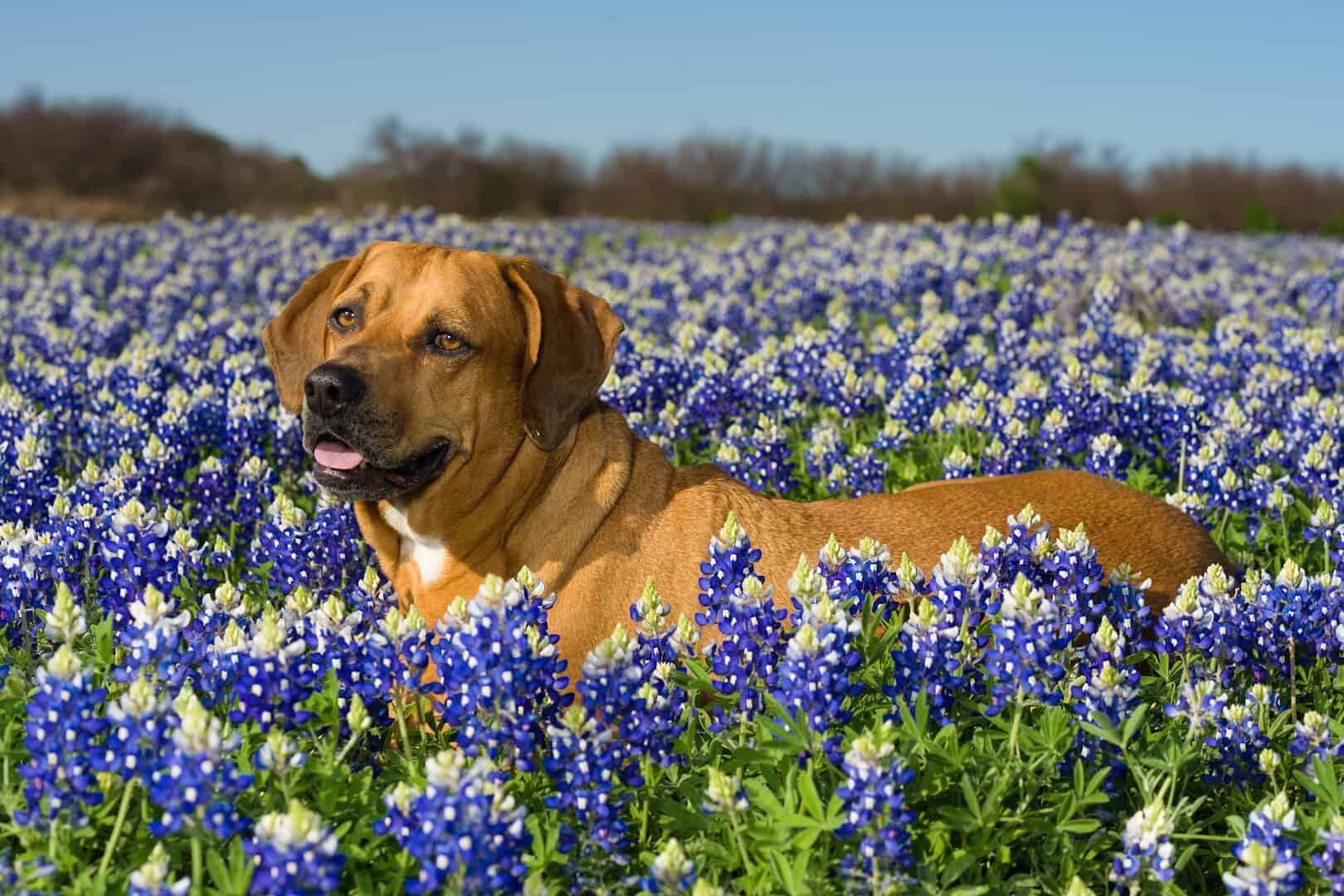
Did you know? The bluebonnet became the official state flower of Texas in 1901, and lawmakers later expanded the designation to cover every bluebonnet species that grows in the state. The ones carpeting these hills are mostly Texas bluebonnets, the same flower on every calendar in every Texas kitchen.
What It Costs and When to Go
Day-use entry is $5 per adult, and kids 12 and under get in free. Seniors 65 and older, military members, and visitors with disabilities pay $2. A horse and rider pay $12. An LCRA Parks Pass covers entry here and across the rest of the system.
The park is open daily from sunrise to sunset. Camping and rentals can be reserved through the LCRA parks reservation site, and I would book early for any weekend in late March or early April, because everyone else in Central Texas has the same idea.
Mobile pay sometimes works at the gate and sometimes does not, so bring a little cash. Pets are welcome on a leash. The main roads are paved, but the roads to the campsites and the meadows are gravel and dirt, so take them slowly in a low car.
How to Get There
Where: Muleshoe Bend Recreation Area, 2820 County Road 414, Spicewood, TX 78669. Phone: 512-473-3366.
From Austin, head west on Highway 71 toward Spicewood and follow County Road 414 into the park. The drive runs about an hour from downtown. From Marble Falls it is about 20 miles southeast. Pavement gives way to gravel inside the park, your cue that the flowers are close.
Plan Your Bluebonnet Weekend
Here is how I would do it. Book a campsite for a Friday in late March. Arrive before sunset, cook on the fire ring, and fall asleep listening to the lake. Wake early, walk down to the eastern fields, and watch the sun come up over a hillside of blue.
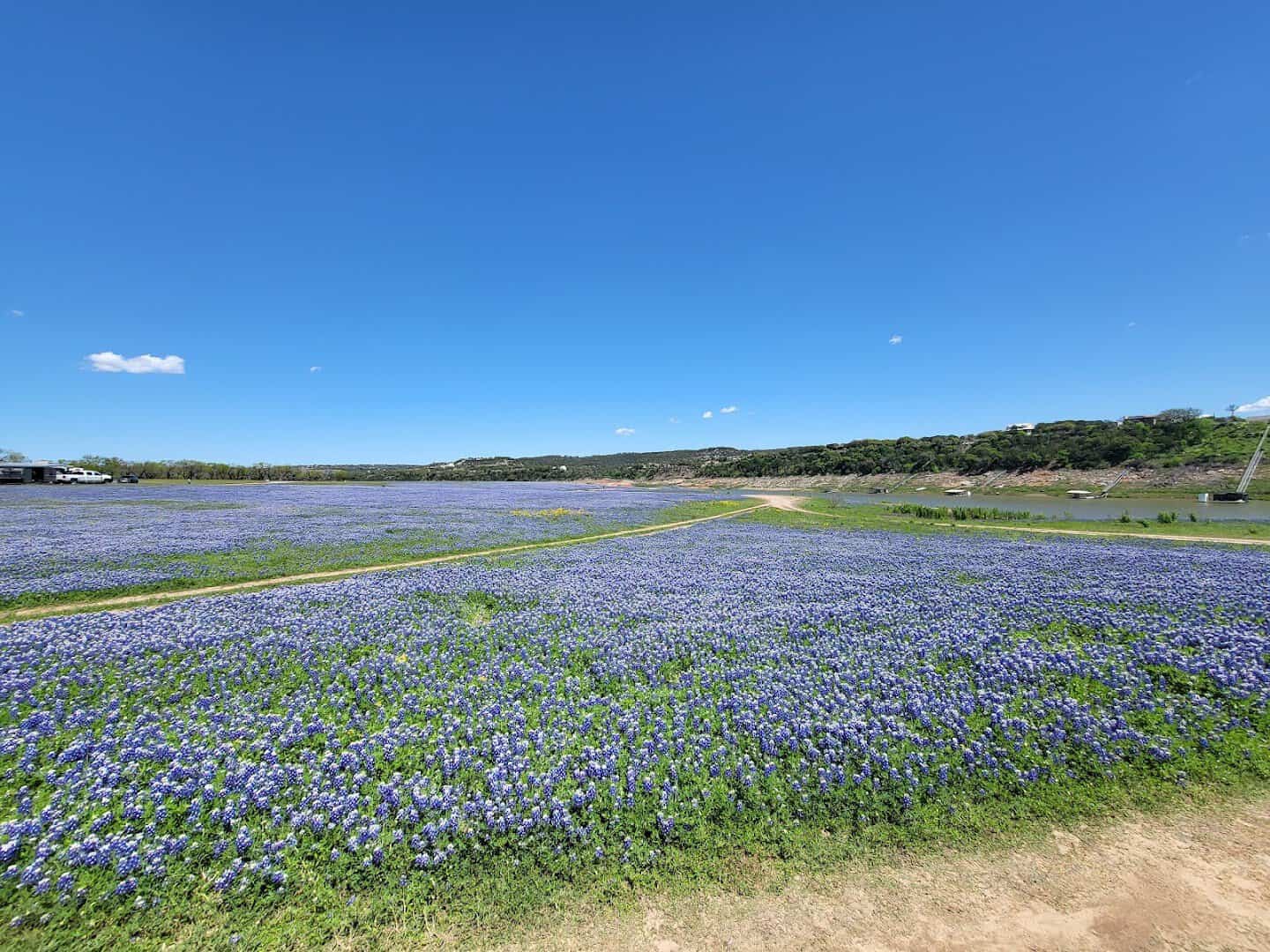
Then rent a kayak, paddle the shoreline, ride or hike a piece of the Great Escape, and drive home with a camera full of photos that no highway shoulder could ever give you. Texas only does this for a few weeks a year. Go see it properly.
Featured image: Julieta B via Muleshoe Bend Recreation Area

Stella Raines
Editor-in-Chief
Stella brings over a decade of storytelling experience to TX Headlines. With roots in West Texas and a love for road trips, she leads the editorial team with an eye for the hidden stories that make Texas unforgettable.
More Stories

These 10 Texas Spots Bloom Into Seas of Bluebonnets Each Spring

This Enchanting Texas Nature Trail Feels Like Hiking Through a Fairytale Forest

This Underrated Texas State Park Gives You a Full Day of Swimming and Hiking for Just $5

This Easy Texas Hike Leads to a Swinging Suspension Bridge Hidden in the Pines
Tags