This Easy Texas Trail Leads to Hidden Waterfalls and Spring Wildflowers
The best hikes in Texas usually make you earn the view. Miles of switchbacks, a thousand feet of climbing, a summit you bargain with your knees for. I respect those hikes. But some days I want the payoff without the penance, and I feel no guilt about it.
That is exactly what this little greenbelt on the northwest edge of Austin gives you. Under three miles of walking, a gentle bit of climbing, and a creek that hands you waterfalls, wildflowers, and swimming holes like it is showing off.
It is called St. Edward’s Park, an 80-acre ribbon of wild wrapped around Bull Creek, and it is one of the great low-effort, high-reward secrets in the Hill Country. People who grew up here tend to mention it quietly, the way you’d share a good fishing spot.
Below, we’ll walk the whole thing: the cactus wall that greets you, the limestone ledges where Bull Creek turns into a waterfall, the spring meadows, the swimming holes, and the odd, tangled story of how a family dam and a corporate land deal turned into a public park.
A Wall of Cactus Says Hello
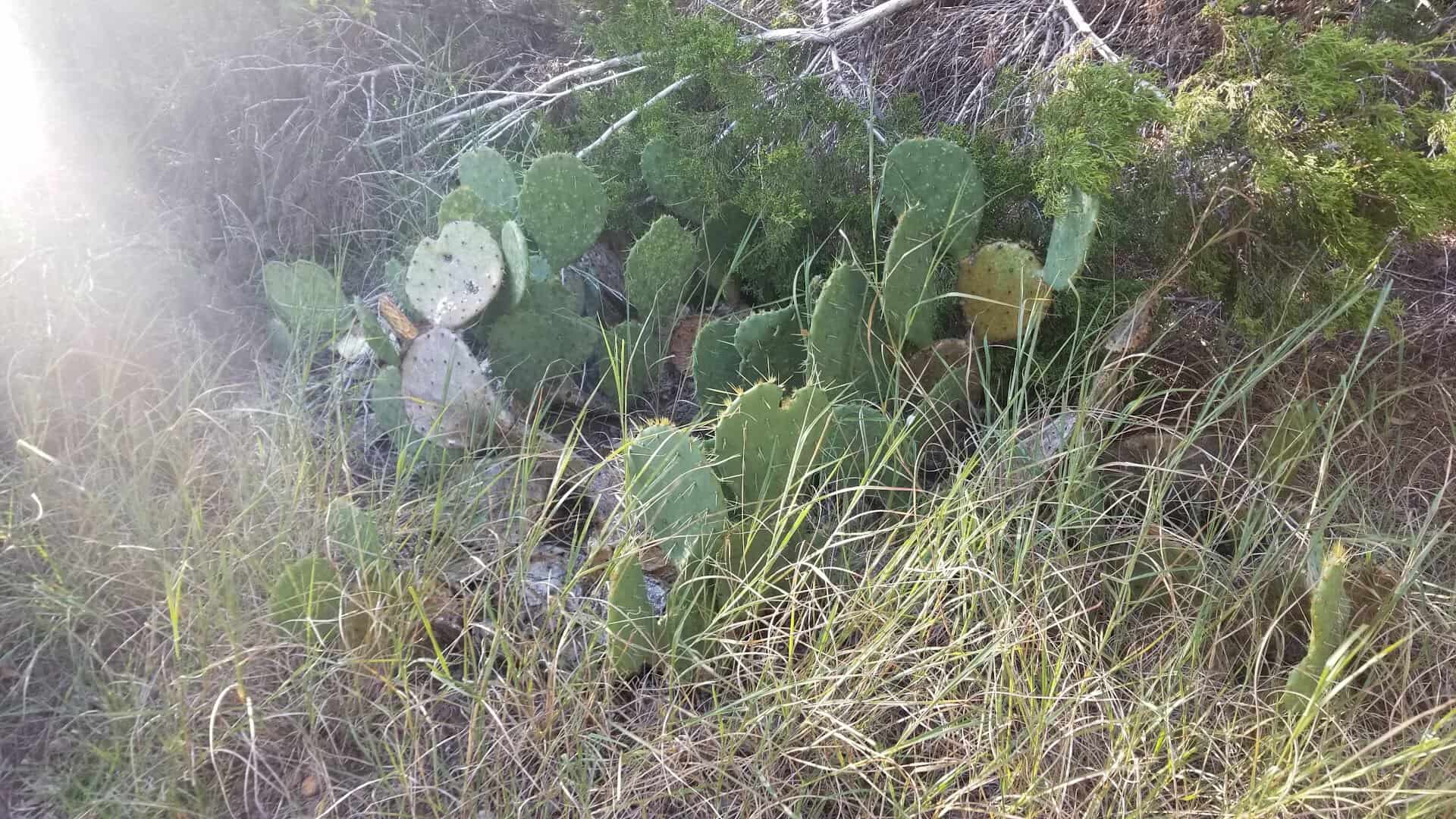
Most trails ease you in with a shady canopy or a friendly sign. This one opens with attitude. Right at the trailhead sits what locals swear is the largest single stand of prickly pear cactus anywhere around Austin, a low green wall of paddles and spines catching the morning light.
It is a strange, wonderful first impression. You expect a wooded creek park, and instead you get something that feels almost desert. Come in late spring and those pads throw up waxy yellow blooms. By summer the fruit, the tunas, blush a deep magenta.
Pro tip: this is the spot to set your expectations. The park keeps doing this, swapping one landscape for another every few hundred yards, cactus to creek to cliff to meadow, so you never quite settle into one kind of walk.
Where the Creek Turns Into a Waterfall
The heart of the park is Bull Creek, and the heart of Bull Creek here is the dam. Back in the 1970s, the Boatright family built a low dam across the water, and that quiet piece of engineering is why you get a waterfall at all.
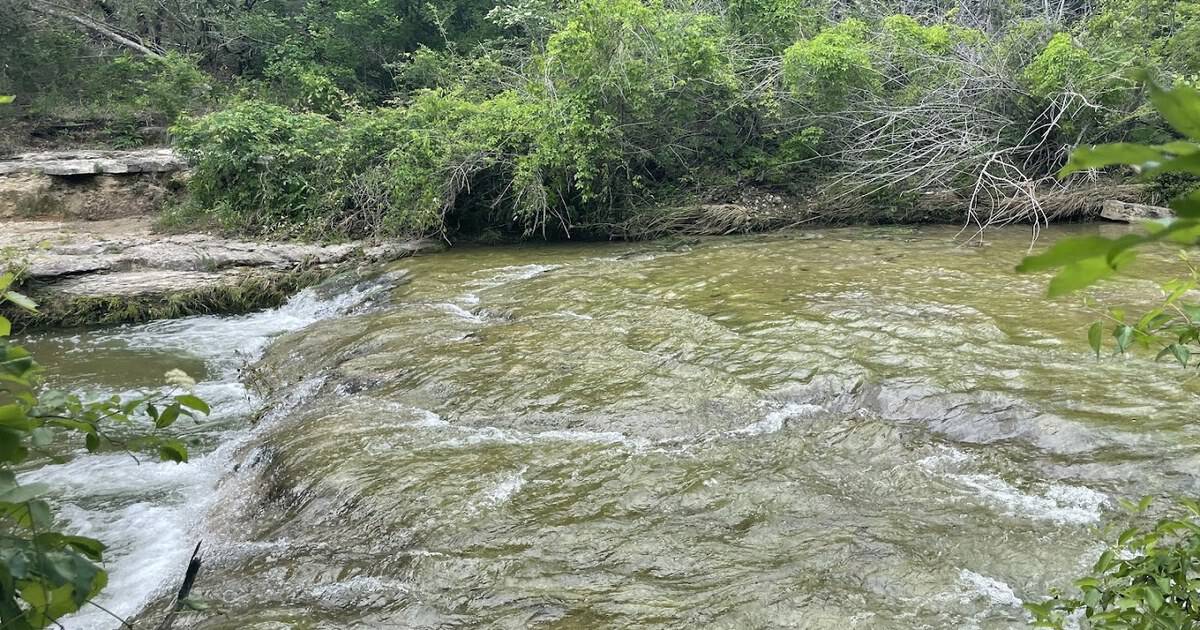
When the rain has been generous, water pours over the top of the dam and sheets down the limestone in a wide, roaring curtain. Below it, the creek drops over natural rock ledges in smaller cascades. This is tumbling white water you do not expect near the city.
I’ll be honest the way a friend would: this is a rain-fed waterfall, not a year-round one. In a dry Texas stretch the ledges go quiet and the pools turn glassy and still. Time your visit for the days after a real soaking, though, and you get a genuine show.
The overflow at the far end of the dam can turn into a serious torrent, so this is a look-don’t-leap situation when the water is high. Admire it, photograph it, and keep little ones back from the edge.
Bluebonnets, Blankets, and a Very Rare Songbird
If waterfalls are the reason to come after a storm, wildflowers are the reason to come in spring. From late February through the middle of April, the park’s open meadows fill in with color, and it is the good stuff.
Bluebonnets and Indian paintbrush do their classic Texas duet along the sunnier stretches. Then the Indian blankets, those fiery red and gold pinwheels, and the cheerful brown-eyed Susans take their turn as the weather warms. Smaller blooms crowd the creek banks where the soil stays damp.
There is a painterly quality to it, meadow flowers set against moving water, the sort of thing that would send an impressionist reaching for a brush. Just look at it in April and you understand why folks keep this place close to the vest.
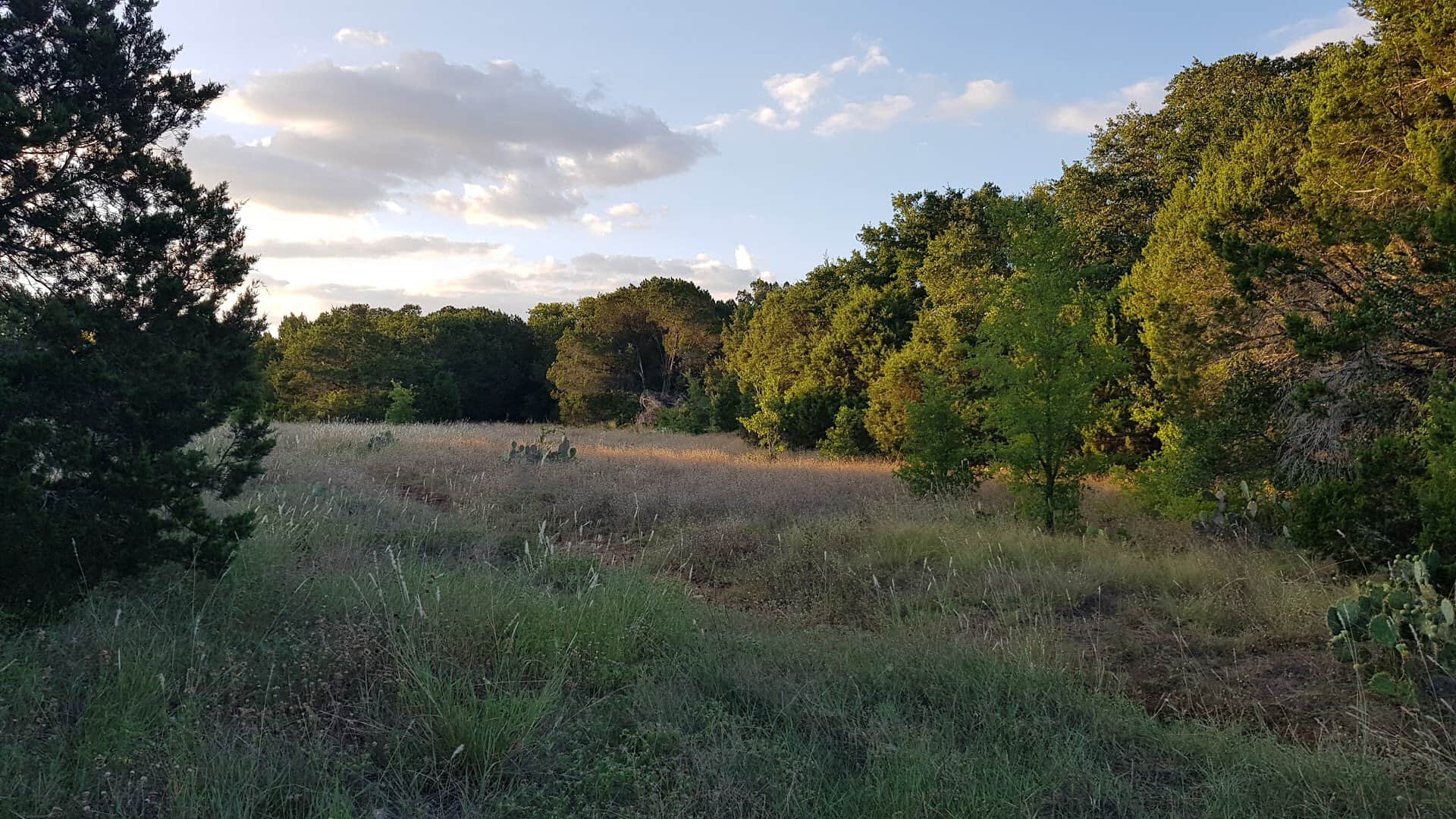
Here’s a detail that makes birders drive across town. St. Edward’s sits right against the Bull Creek section of the Balcones Canyonlands Preserve, protected nesting ground for the endangered golden-cheeked warbler. From mid-March to late May you can reliably hear that black-and-gold songbird in the oaks and junipers.
Did you know? The golden-cheeked warbler nests only in Central Texas, nowhere else on Earth. It peels strips of bark from Ashe juniper to build its nest, which is why these Hill Country slopes matter so much to it.
The Cliff, the Cypress, and the Long View
Cross the creek, and the park changes character again. On the south and west sides the ground rises, and the trails climb toward a long limestone cliff that Bull Creek has been carving out for a very long time.
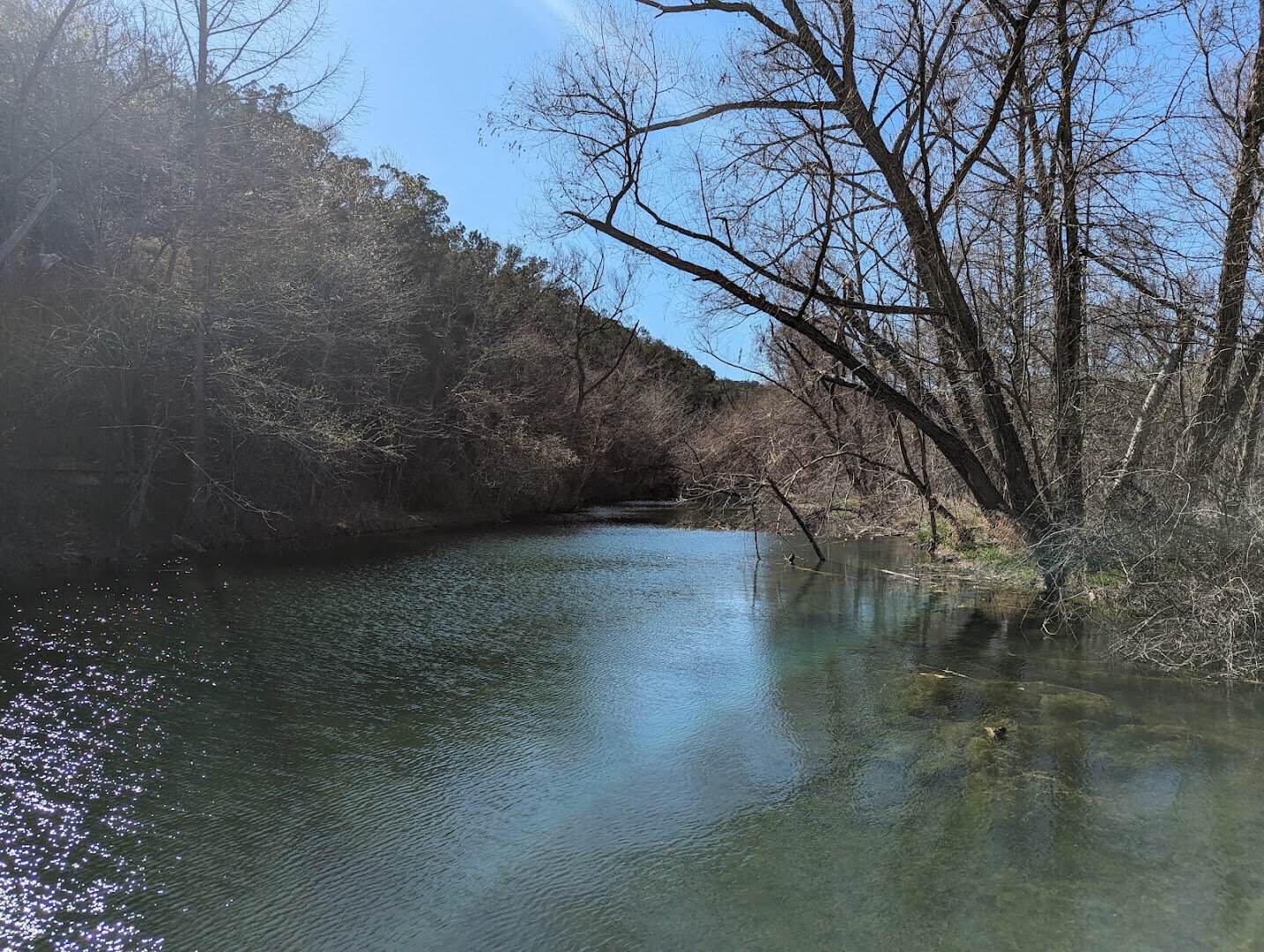
The climb is gentle, around 150 feet of gain spread out kindly, but the reward is real. From up top you look down on the creek threading through the trees, the dam a pale ribbon below, the whole green bowl of the park laid out under you.
Down along the water, old bald cypress trees lean over the creek, their knobby “knees” poking up through the mud and gravel at their feet. In the heat of a Texas summer, that cypress shade over cool water is the closest thing to air conditioning the outdoors offers.
Stop for a minute up there and listen. You’ll hear the creek working over the rocks below, cyclists rattling along a distant ridge, and a whole choir of birds. What you won’t hear is traffic, which is its own small miracle this close to town.
You’ll share these trails with mountain bikers, especially on the rockier ridge routes, so keep an ear out and step aside on the narrow bits. Everybody here is in a good mood. It is that kind of place.
The Swimming Holes Nobody Advertises
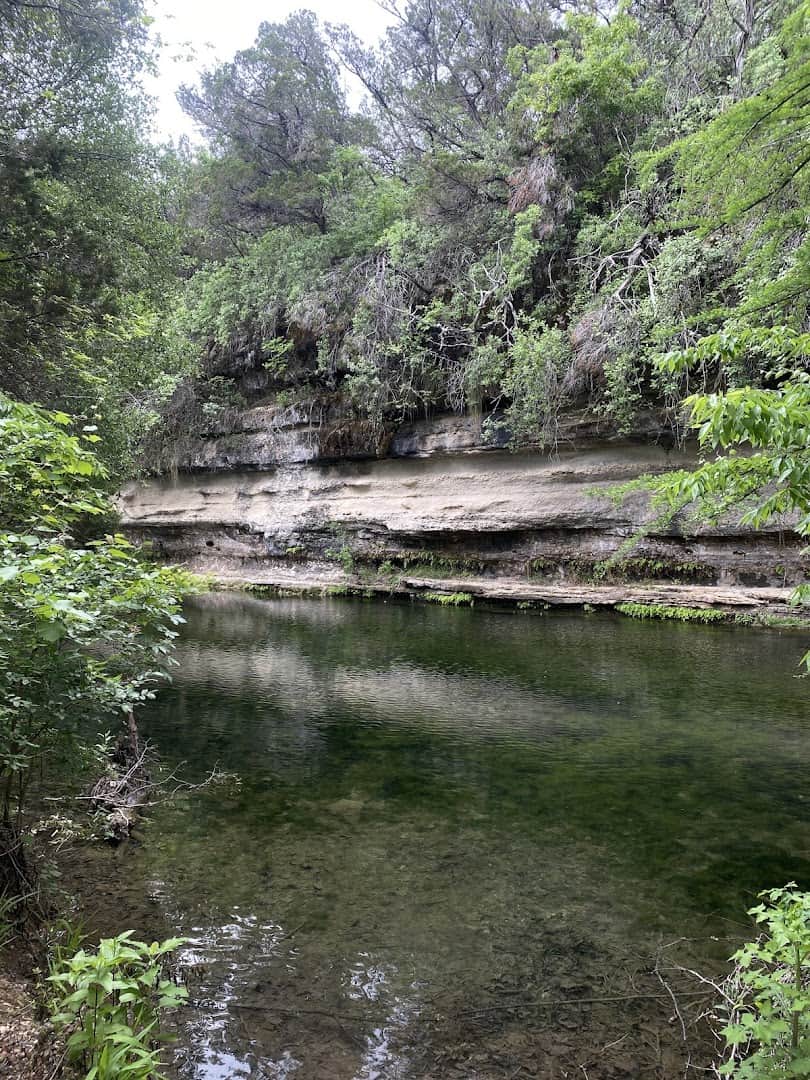
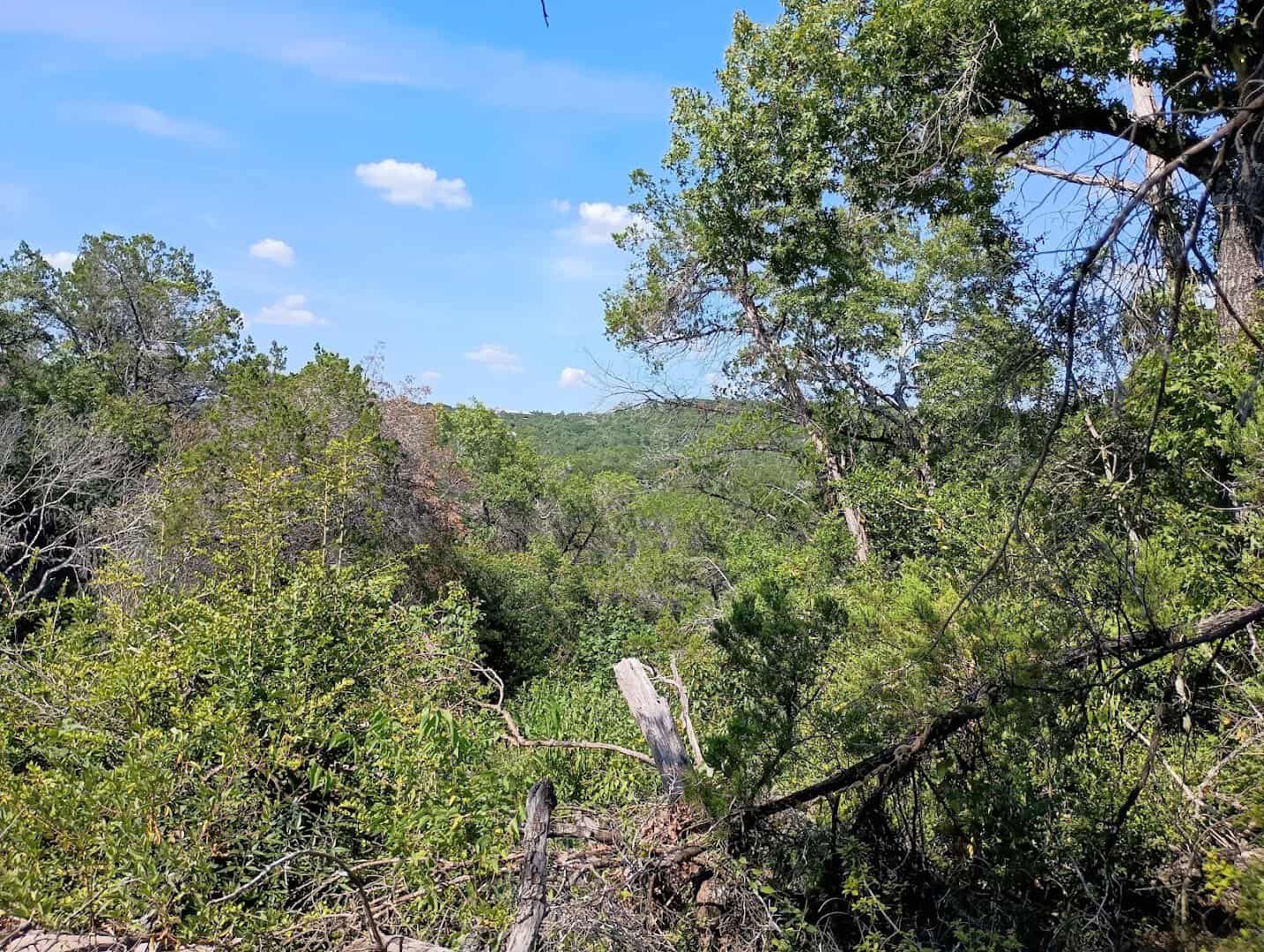
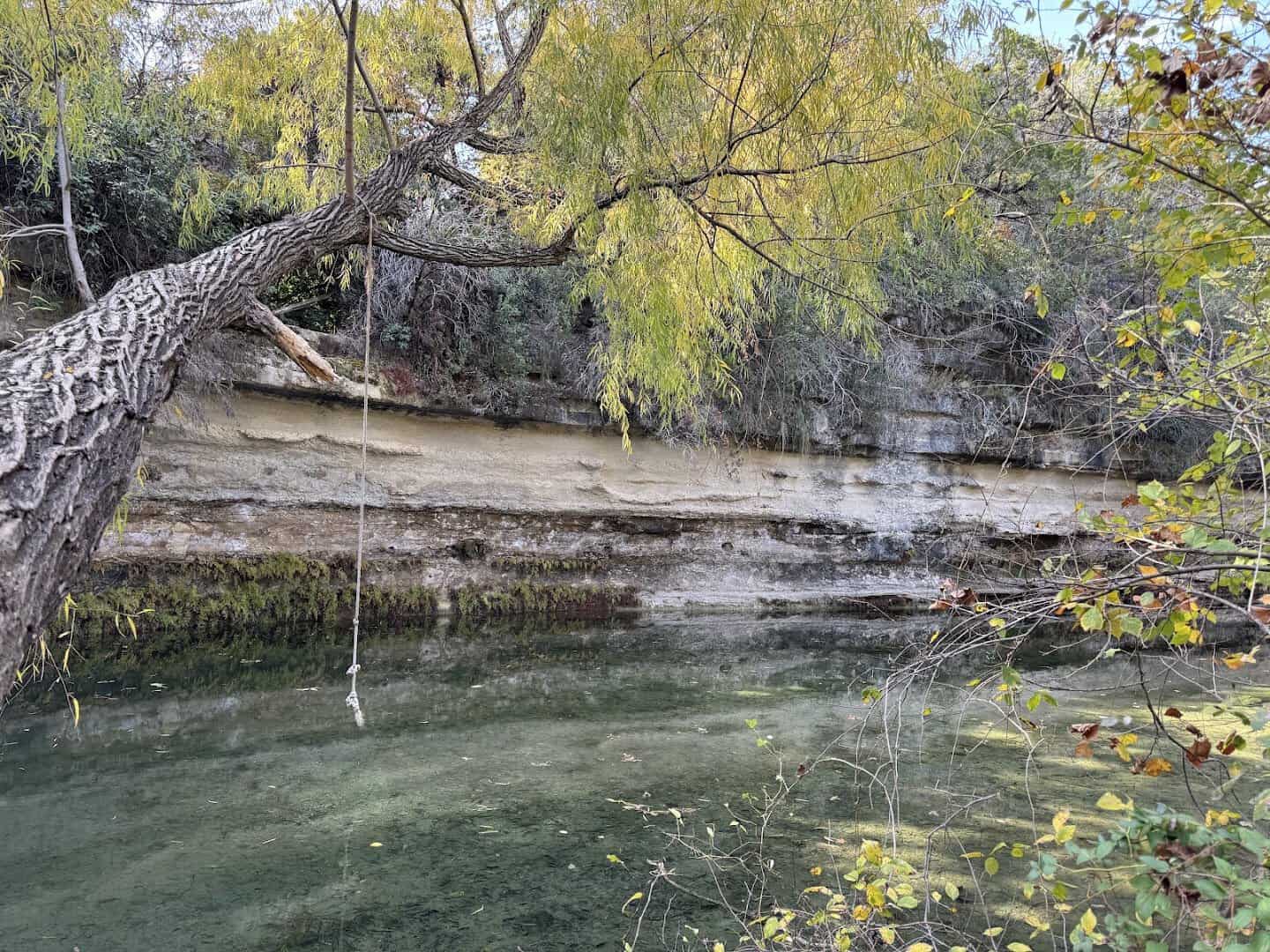
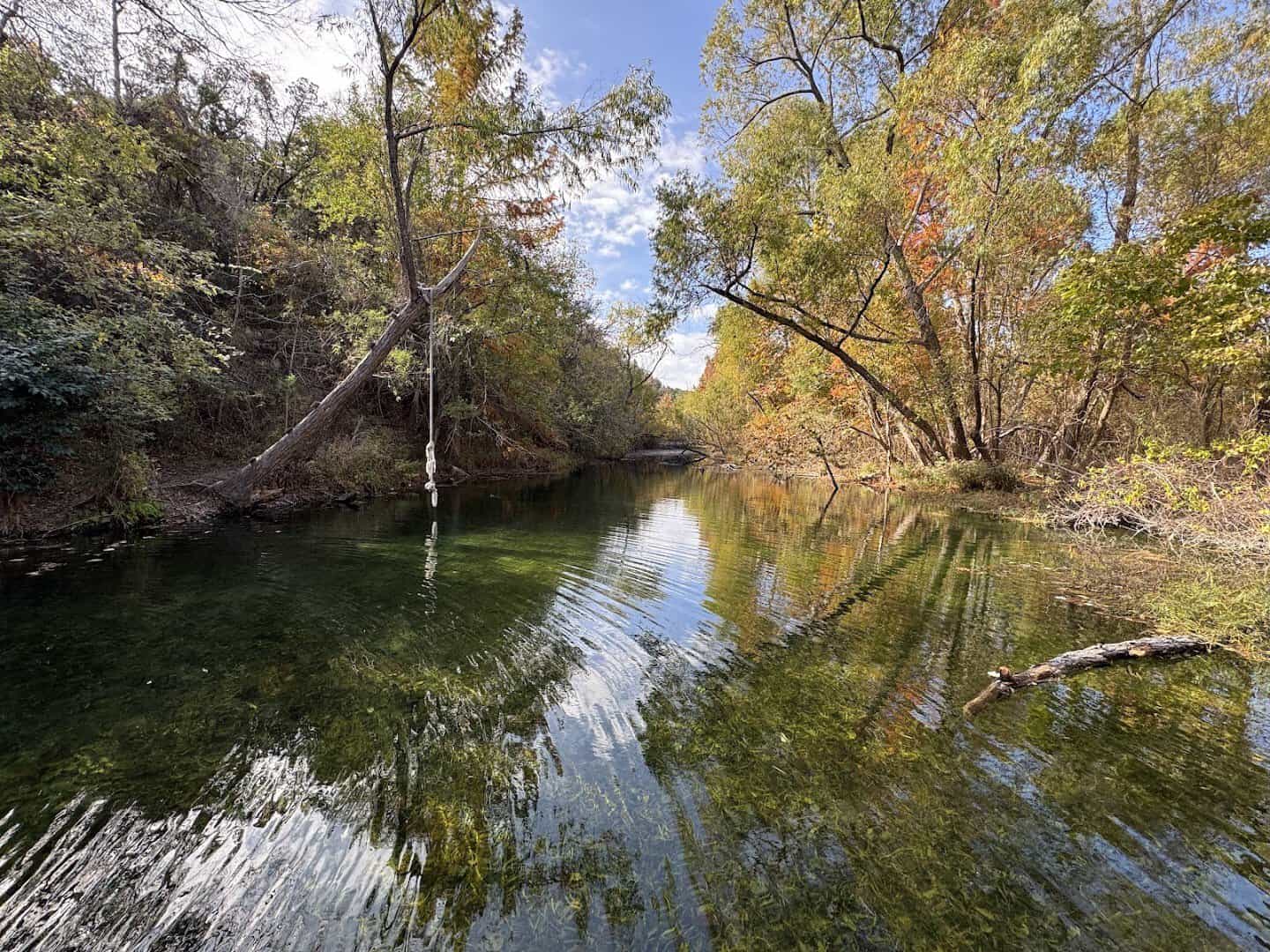
Below the dam and tucked along the creek, Bull Creek pools up into swimming holes that hold water even when the falls have gone shy. On a hot afternoon they are pure gold, clear and cool over a limestone bottom.
This is old-fashioned Texas creek play, the kind that does not need an admission gate or a lifeguard stand. Kids climb the rocks, dogs paddle in the shallows, and somebody’s speaker plays low from a shady spot on the bank.
The water is spring-fed and stays bracingly cool even in August, so the first step in is always a small shock and then pure relief. Bring water shoes if you have them, because the limestone bottom is slick and the ledges can be sharp underfoot.
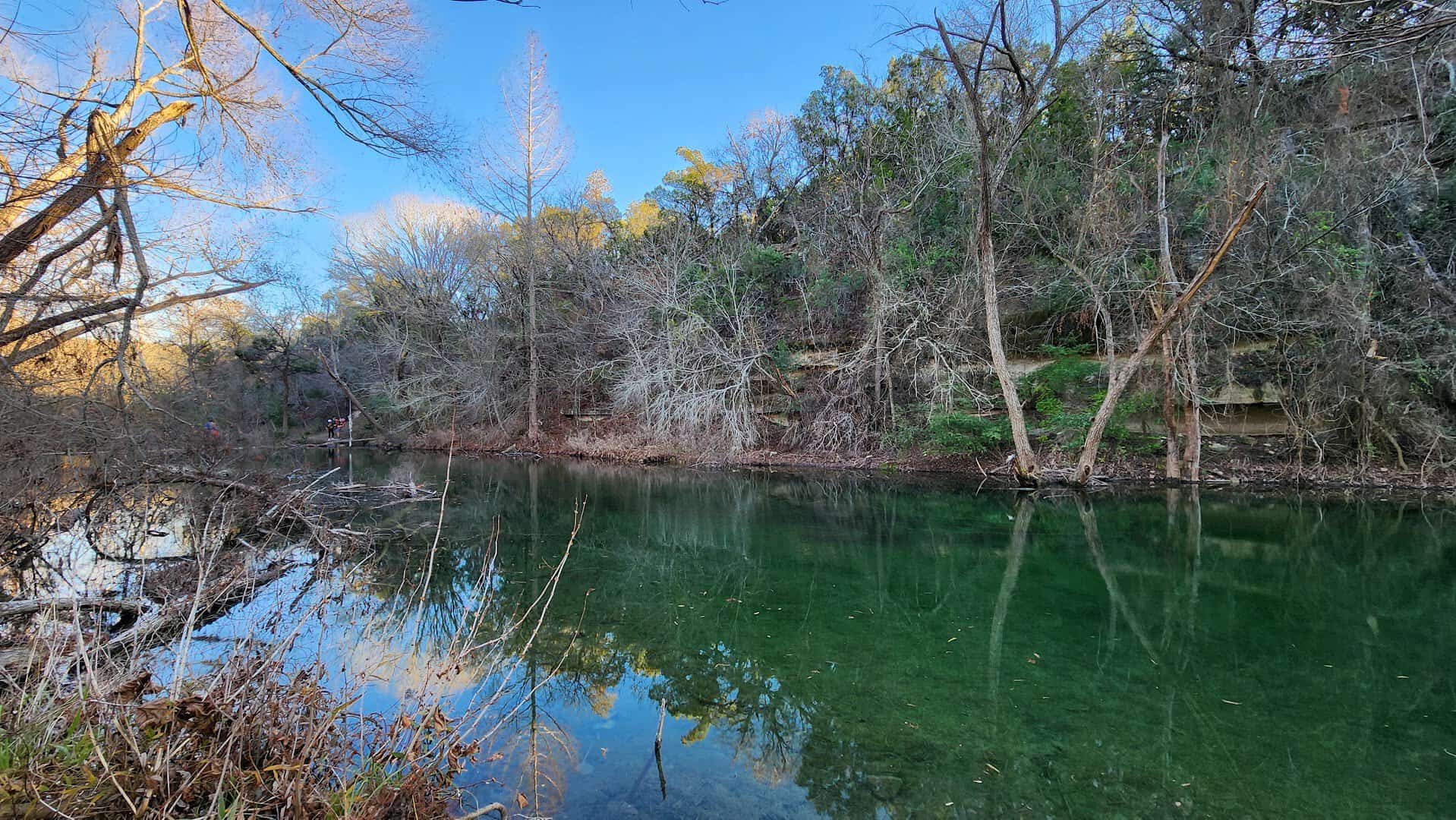
A word to the wise: after heavy rain the creek runs fast and can rise quickly, so save the swimming for calm, clear conditions. When the water is gentle and low, it is one of the best free splash spots in the city.
How a Dam and a Corporate Deal Made a Public Park
The history here is more tangled and more charming than you would guess from the trail signs. The land came together in pieces, and no single grand plan created it.
The Boatright family, whose dam gave the creek its waterfall in the 1970s, is woven all through the early story of these acres. Over time the parcels were stitched together from more than one source.
Some of it came as a private gift. Some came from the manufacturing giant 3M, handed over as environmental mitigation for building elsewhere in the city. The rest was ground the City of Austin bought outright to fill in the map.
The name is the giveaway to another thread. St. Edward’s Park shares its name with St. Edward’s University across town, itself named for Edward the Confessor, the medieval English king turned saint. A quiet nod to the land’s connections rather than a landmark you’ll find on the trail.
The park is still growing, too. In 2021 the city picked up roughly ten more acres near Spicewood Springs Road, aiming to knit St. Edward’s together with nearby Bull Creek District Park into a longer connected greenbelt. What started as a family’s dam is slowly becoming a corridor.
All of it sits on top of the Edwards Aquifer, the vast underground reservoir that supplies water to much of the region. Protecting this creek is not only about the view. It is about what soaks back down into the ground and comes out of the tap.
Reading the Trails: Follow the Colors
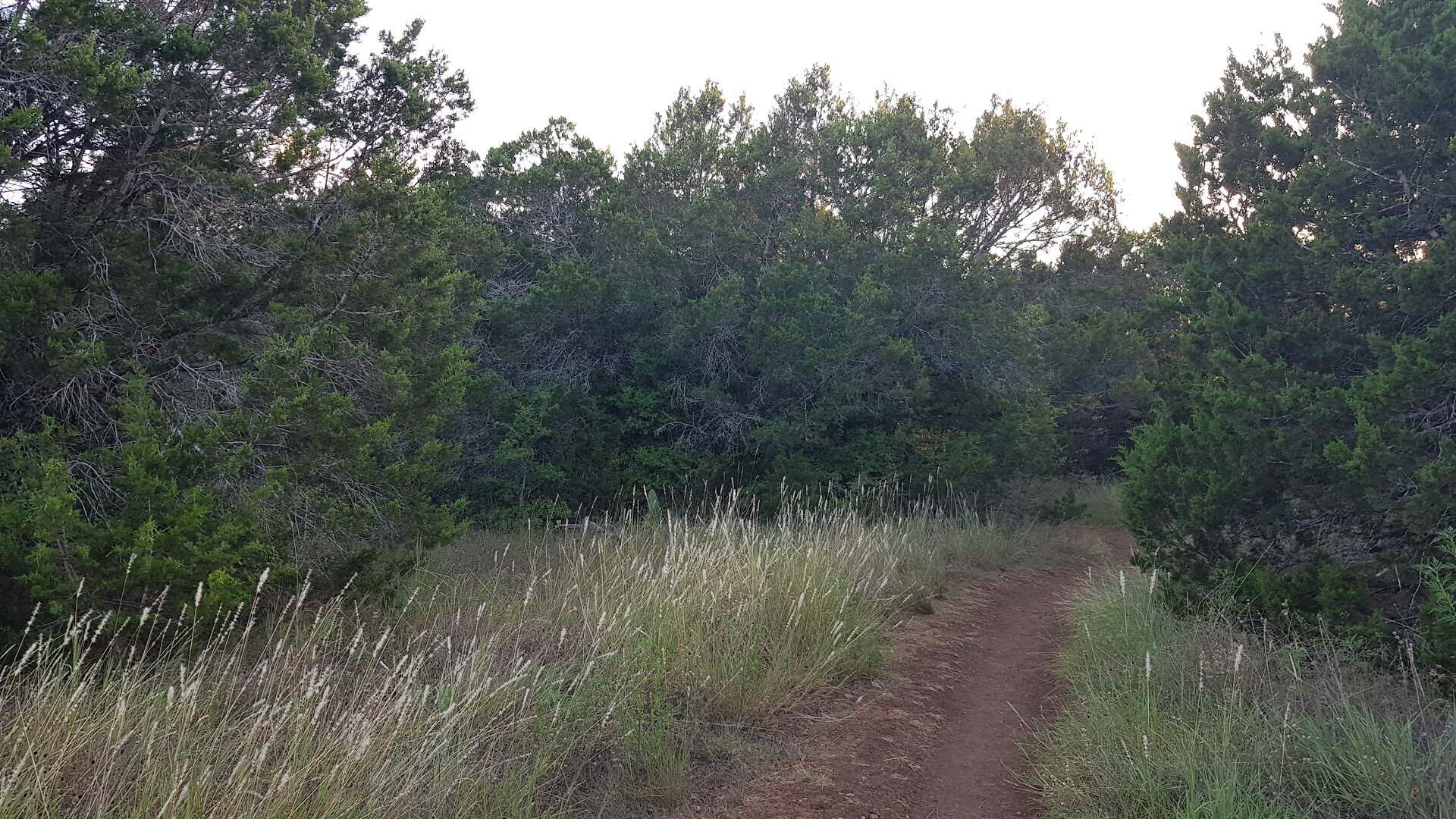
You do not need a map app to find your way, because the routes are color-coded. Roughly three and a half miles of trail thread through the greenbelt, most of it stitched into loops you can mix and match to the length you feel like walking.
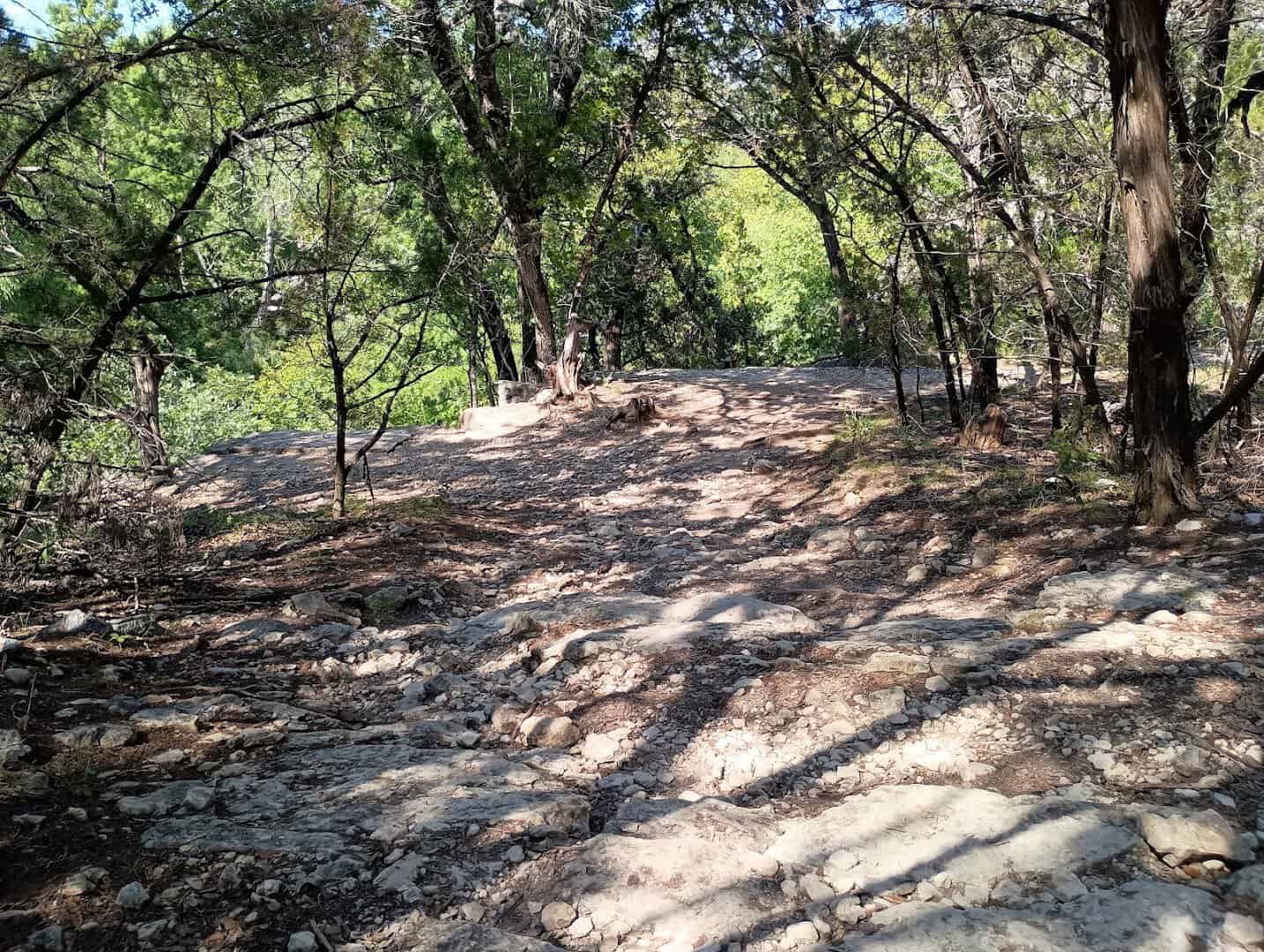
The flatter, creekside sections are the easy family stroll, soft dirt and dappled shade. The color routes that climb the ridge on the far side of the creek are where the mile-burner in you gets a little workout and the overlook pays it back.
Most visitors piece together a loop of well under three miles and call it a perfect morning. The beauty of a small park is that you cannot really get lost, so let the colored markers pull you toward whichever landscape you are in the mood for.
Tip: the low-water crossing near the dam is your bridge between the two halves of the park when the creek is calm. When it is running high, stay on your side and enjoy the view rather than risking the current.
What to Know Before You Go
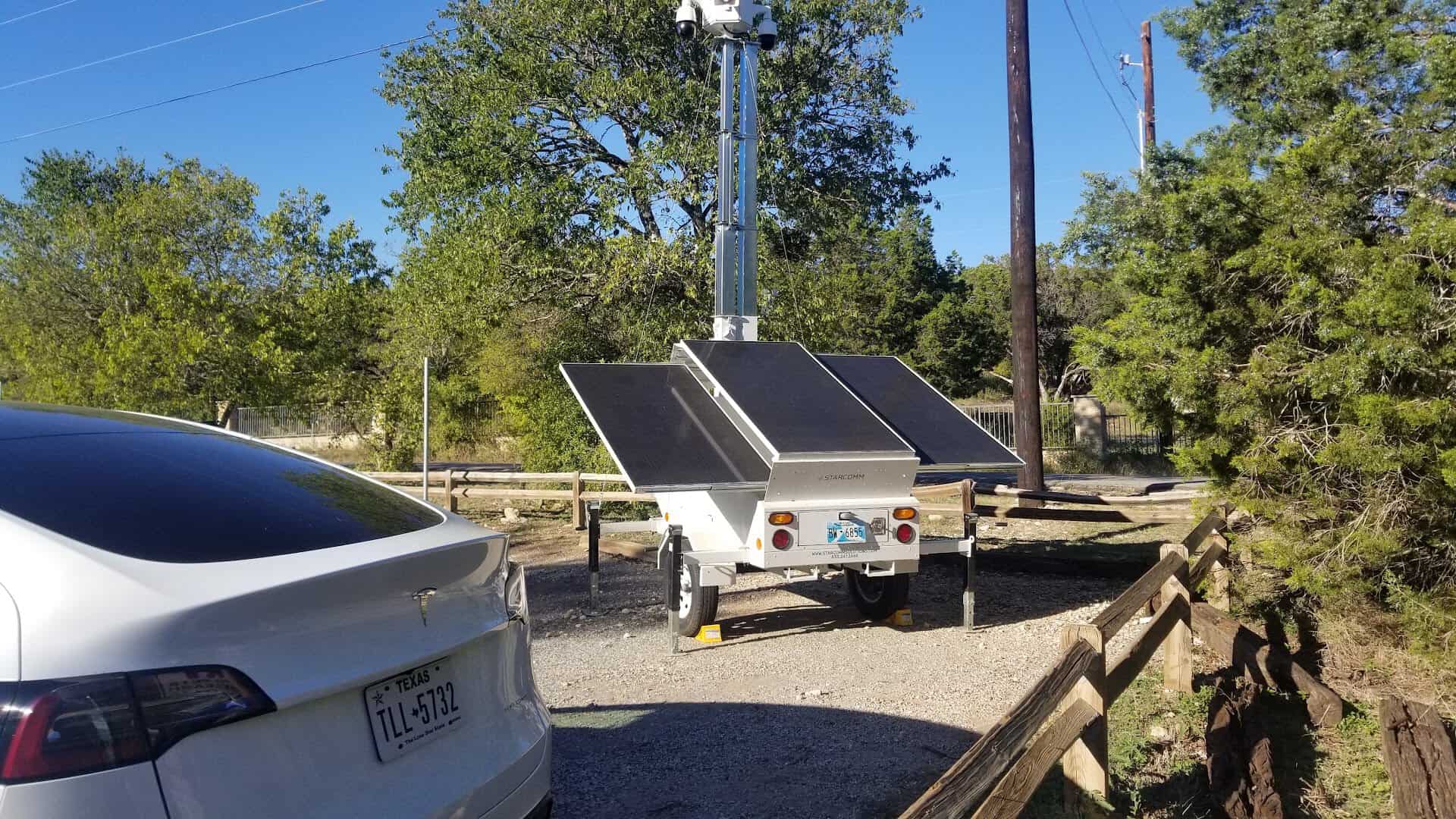
This is a wild little park, not a resort, and half its charm is that it has stayed that way. The parking lot is tiny, on the order of a dozen cars, so early mornings and weekday visits are your friend. Weekend afternoons in wildflower season fill up fast.
There are no restrooms and no water fountains, so bring your own water, especially in summer, and carry out what you carry in. Good shoes help on the rocky and sometimes muddy creek sections.
Best of all, it is completely free. No entrance fee, no reservation, no gate. It is open from sunrise to sunset, which makes an early golden-hour walk with the mist still on the creek entirely possible.
The finest windows are clear mornings a day or two after a good rain, when the falls are running and the crowds have not arrived, and any bright day from late February through April, when the meadows are in full color.
How to Get There
Where: St. Edward’s Park, 7301 Spicewood Springs Road, Austin, TX 78759. Phone: (512) 974-6700. Open daily, sunrise to sunset. Admission is free.
The park sits in northwest Austin off Spicewood Springs Road, an easy drive from the city yet tucked far enough into the trees that it feels like a real escape. Aim to arrive early, because that little lot is the only catch in an otherwise generous place.
Go Chase the Falls
Some parks ask a lot of you. This one just quietly overdelivers, a short walk that hands you a waterfall, a cactus wall, a spring meadow, a swimming hole, and a rare songbird, all in one loop you can finish before lunch.
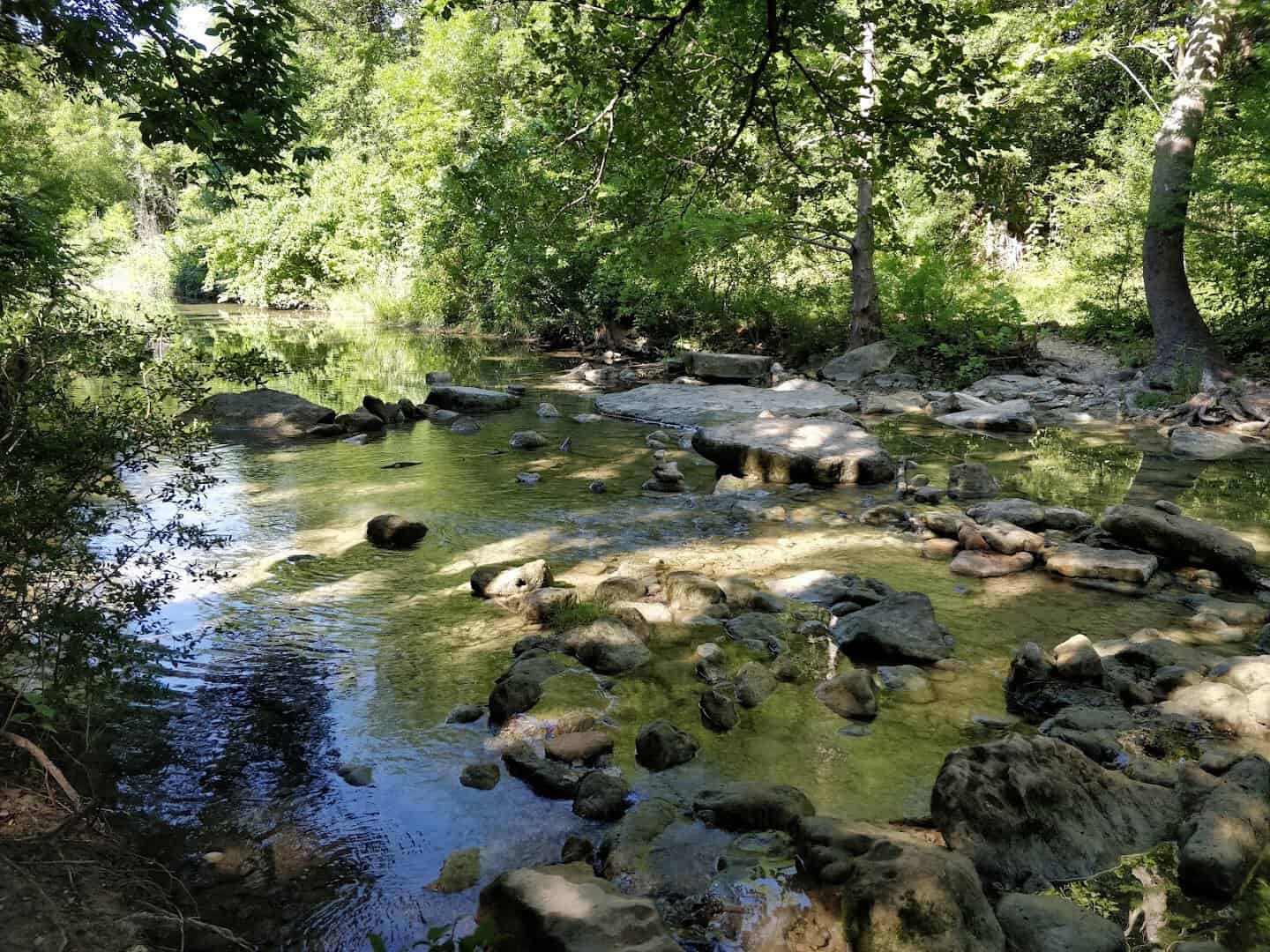
So watch the forecast, wait for a good soaking rain, and go see what Bull Creek does when it is showing off. Then find a flat rock, dangle your feet in a swimming hole, and try to remember you are only minutes from the city.
Featured image: Nick Athey via St. Edward’s Park

Stella Raines
Editor-in-Chief
Stella brings over a decade of storytelling experience to TX Headlines. With roots in West Texas and a love for road trips, she leads the editorial team with an eye for the hidden stories that make Texas unforgettable.
More Stories

These 10 Texas Spots Bloom Into Seas of Bluebonnets Each Spring

This Enchanting Texas Nature Trail Feels Like Hiking Through a Fairytale Forest

This Underrated Texas State Park Gives You a Full Day of Swimming and Hiking for Just $5

This Easy Texas Hike Leads to a Swinging Suspension Bridge Hidden in the Pines
Tags