This Tiny Texas Town Hides a Hand-Painted Church Locals Call the Queen
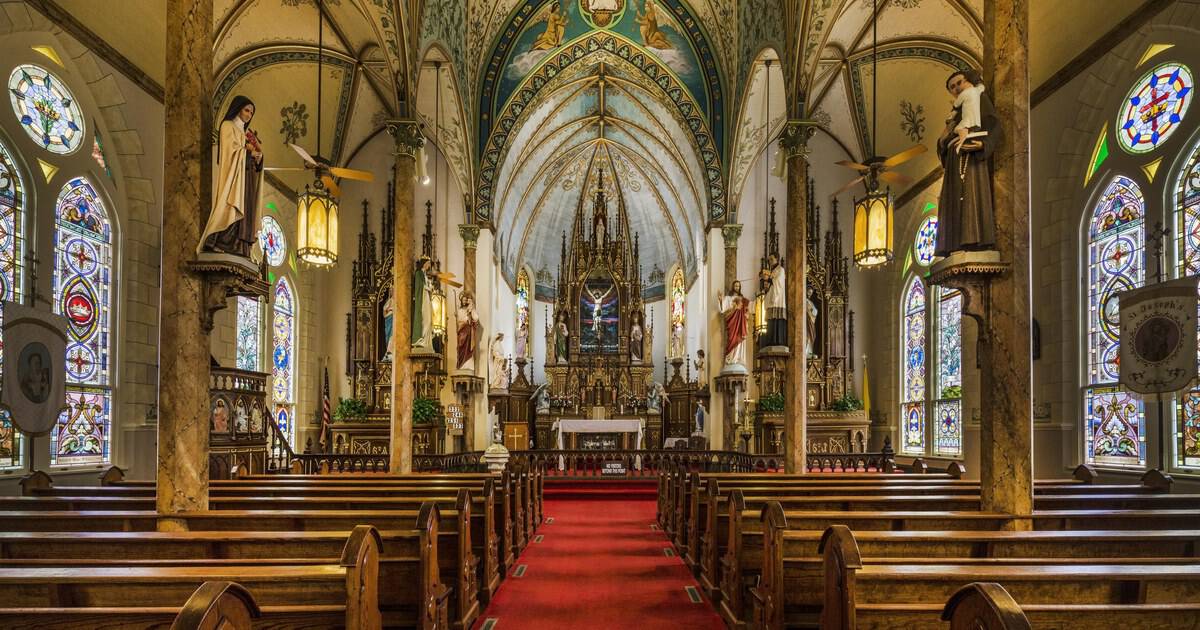
The first time I tipped my head back inside a country church in Fayette County, I forgot to breathe for a second. I had driven in off a flat, sun-bleached farm road, half expecting whitewashed walls and a plain wooden altar.
Instead I got a ceiling that looked stitched from ribbons of blue and gold. My footsteps echoed. Somewhere a fan hummed. And overhead, angels and crosses and little bunches of grapes marched across the vaults like the pages of an illuminated book had been unrolled and pasted to the sky.
That church sits in High Hill, a speck of a community a few miles north of Schulenburg. Officially it is the Nativity of Mary, Blessed Virgin. Almost everyone just calls it St. Mary.
Step through the doors and the hand-painted heavens overhead stop you where you stand. Here is why people drive hours to look up at them.
The Ceiling That Made Me Whisper
You do not walk into St. Mary so much as you enter it slowly, the way you would ease into cold water. The light is dim and honey-colored. It filters through colored glass and lands soft on the pews.
The first thing I noticed was the smell. Old wood, a whisper of candle wax, and that cool stone-and-plaster hush that old churches everywhere seem to share. It settles you the moment you cross the threshold.
Then your eyes adjust and the whole interior opens up above you. Slender columns rise toward the ceiling and seem to blossom into ribs and arches, painted to mimic the soaring stone vaults of a European cathedral.
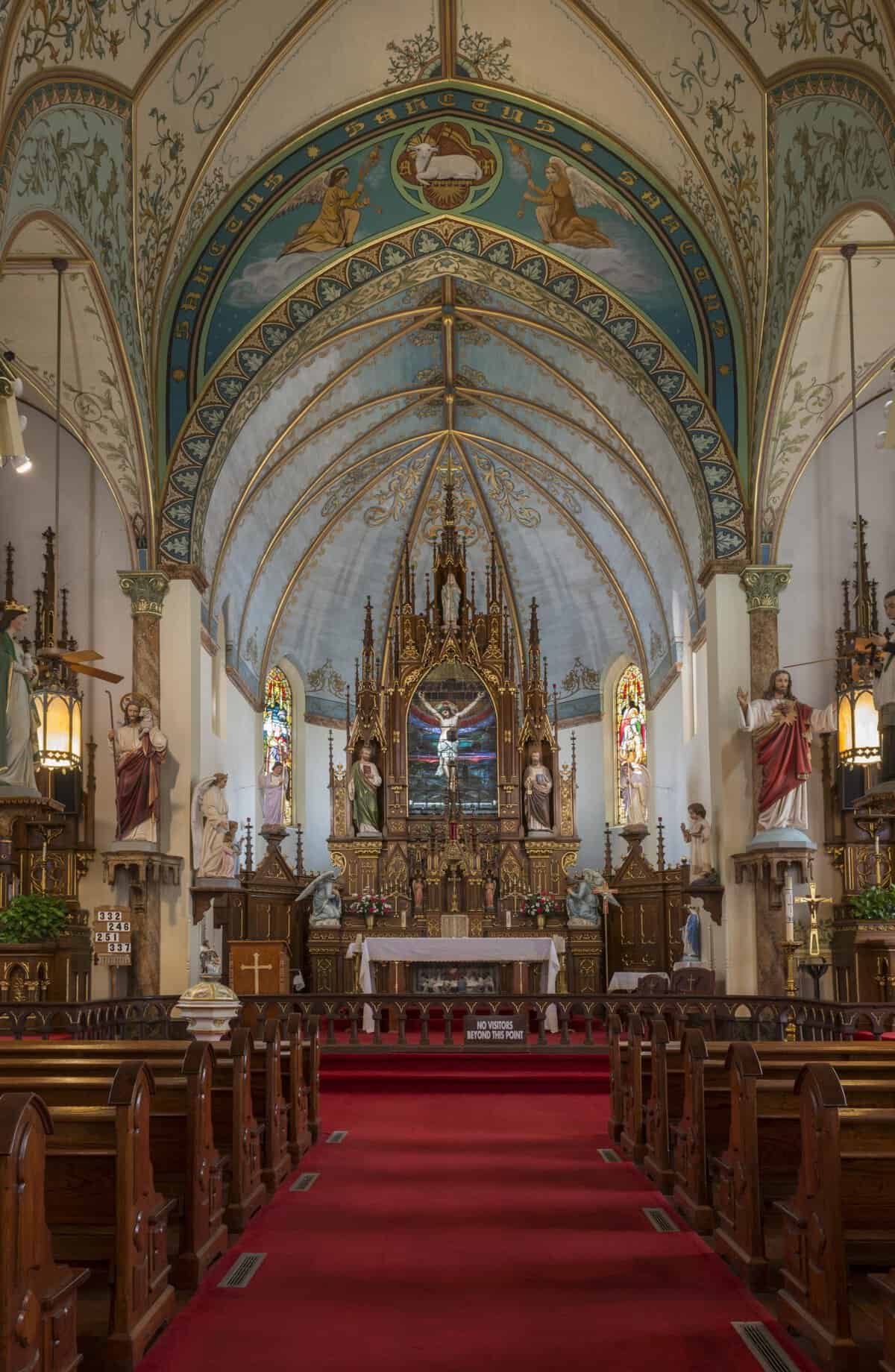
Except there is no stone here. There is Texas pine, brick, canvas, and paint. The grandeur is an illusion, and knowing that somehow makes it more moving, not less.
A handful of country parishioners wanted a piece of heaven on the prairie, so they conjured one with brushes and a little nerve. I found myself lowering my voice without meaning to.
A woman near the front was doing the same, running her fingers along a pew and whispering to her husband, “Just look up.” We both did, and neither of us said anything for a while.
Painted by Hand, Glued to the Walls
Here is the part that still amazes me. The intricate decoration was not brushed straight onto the plaster. Two artists, Ferdinand Stockert and Hermann Kern, painted the designs on canvas in 1912.
Then they fixed those painted panels to the walls and ceiling, almost like the world’s most beautiful wallpaper. The effect is seamless from the pews, a single glowing skin of color from floor to rafters.
They worked freehand, too. No stencils marching along in identical rows. Look closely and you can see the small human variations in the angels, the crosses crowned like royalty, the six-pointed stars, and those cheerful clusters of grapes that stand for the wine of communion.
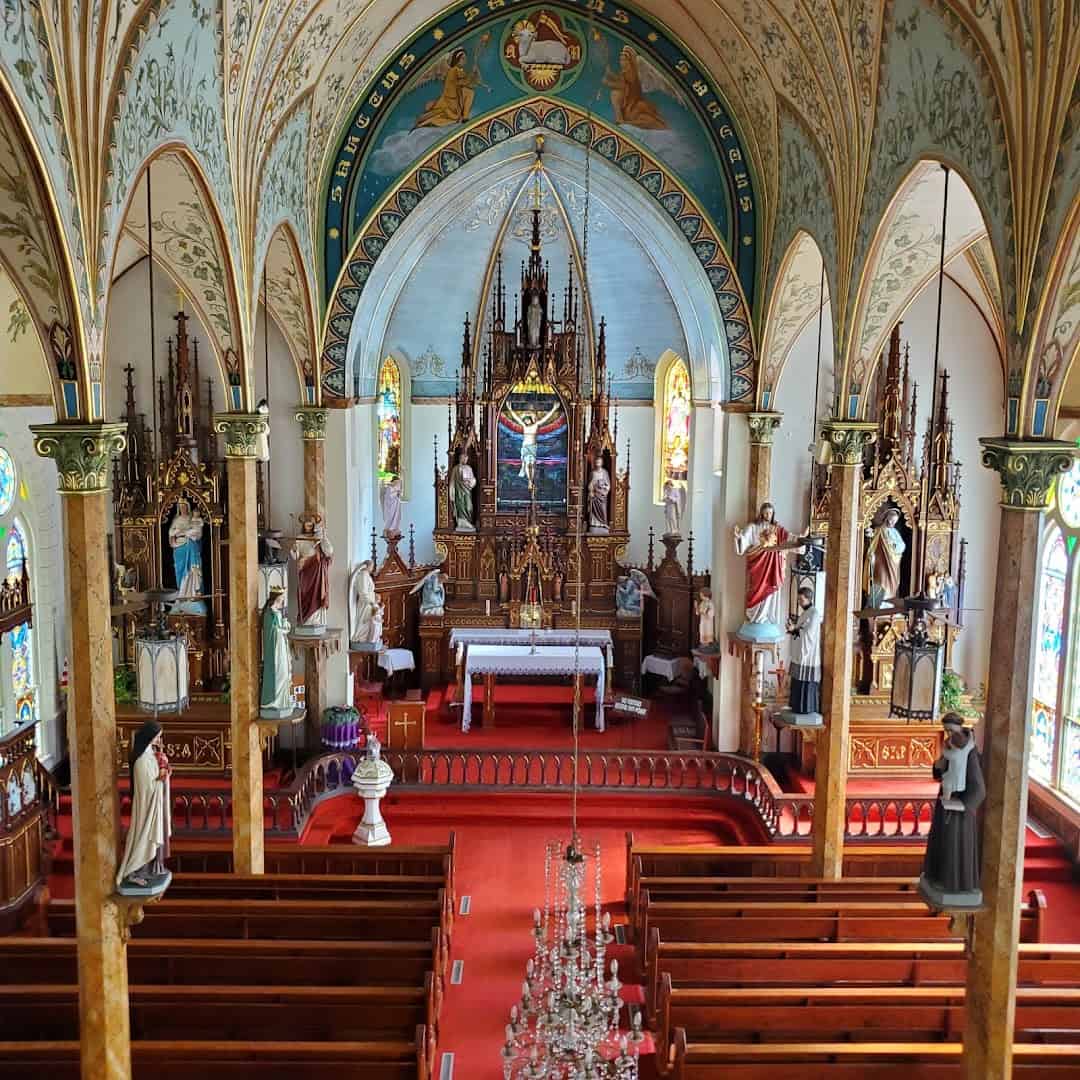
From the choir loft you can even spot where a century has tugged at the old canvas. A gentle ripple here, an edge grown stiff with age there. I love that. It is proof that human hands did this, one panel at a time, in a hot country church.
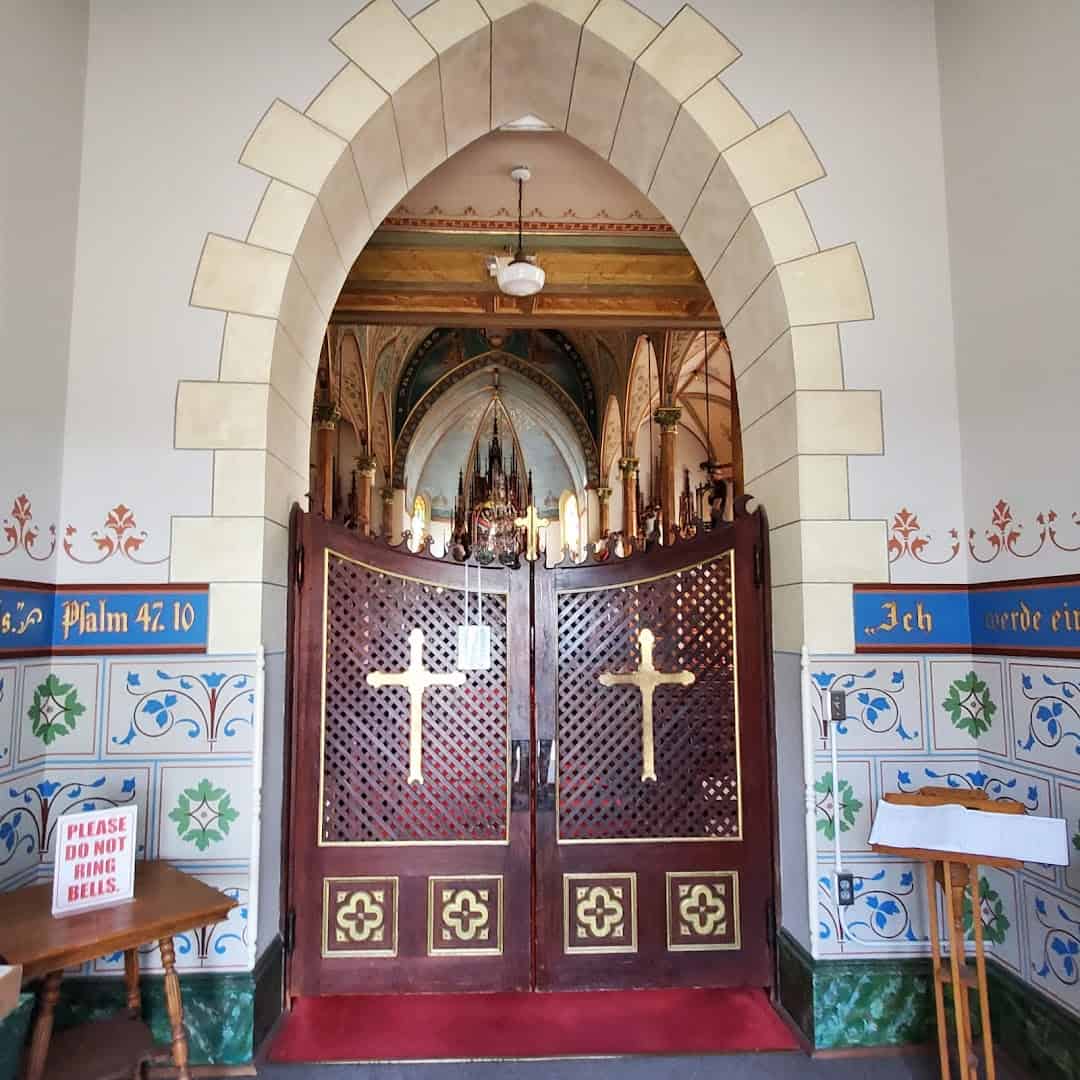
Did you know the same traveling painters decorated several churches in this corner of Texas? They moved from parish to parish with their brushes and their canvas, leaving color behind them like a trail of breadcrumbs.
Marble That Is Not Marble
Run your eyes down one of the columns and you would swear you were looking at cool, veined marble, the kind you find in an old cathedral in Rome. Reach out and touch it and you feel warm wood.
That is the trick the painters loved best. It is called faux marbling, and St. Mary wears it beautifully. The columns, the trim, and the little architectural flourishes all pretend to be something far richer than a frontier congregation could ever afford.
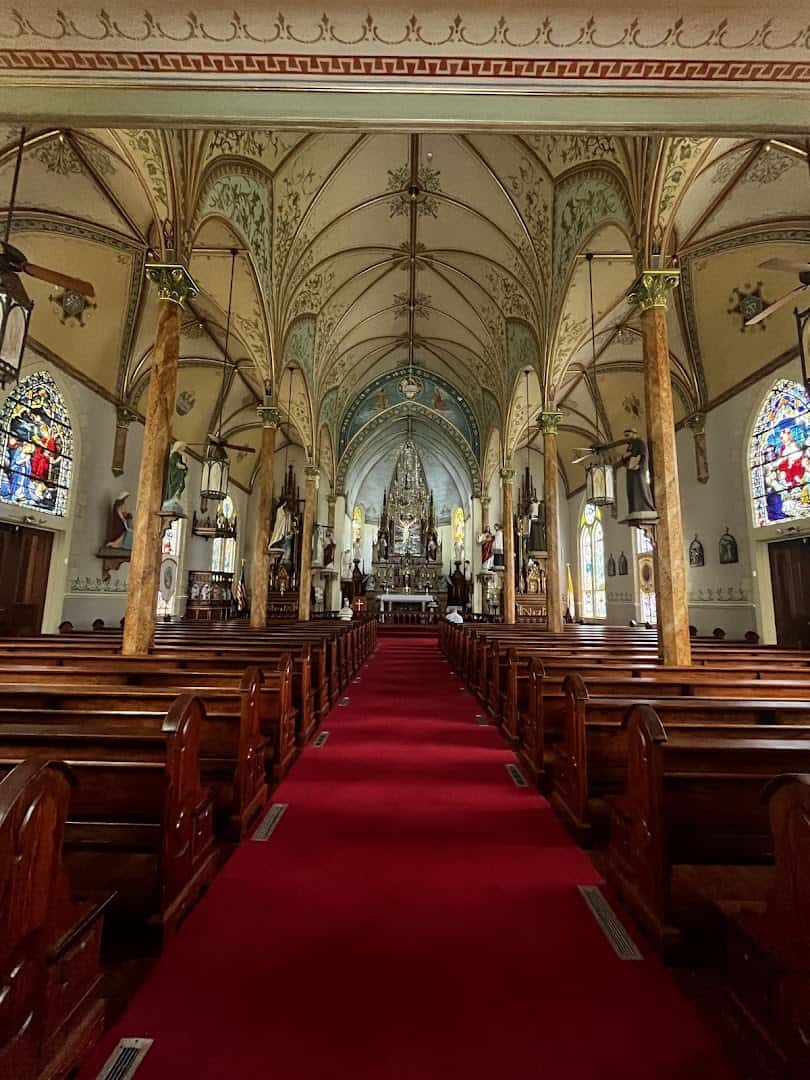
The same sleight of hand runs across the ceiling. Those soaring gothic ribs and vaults are not carved stone at all. They are flat surfaces painted so cleverly that your brain reads depth and shadow where there is none.
Pro tip: get close to a column and look at it from the side. In the raking light you can catch the brushstrokes that make the “stone” swirl. It is one of my favorite small discoveries in the whole building.
An Altar Worth the Drive
Walk up the center aisle and your eye is pulled straight to the front, where a tall carved altar climbs toward the ceiling in tiers of gilded wood. Saints stand in their niches. Candlelight catches the gold and makes the whole thing shimmer.
It is the kind of woodwork you expect in a grand city cathedral, not a parish out among the cornfields. The carvers spared nothing, and the congregation clearly wanted their best in the place they held most sacred.
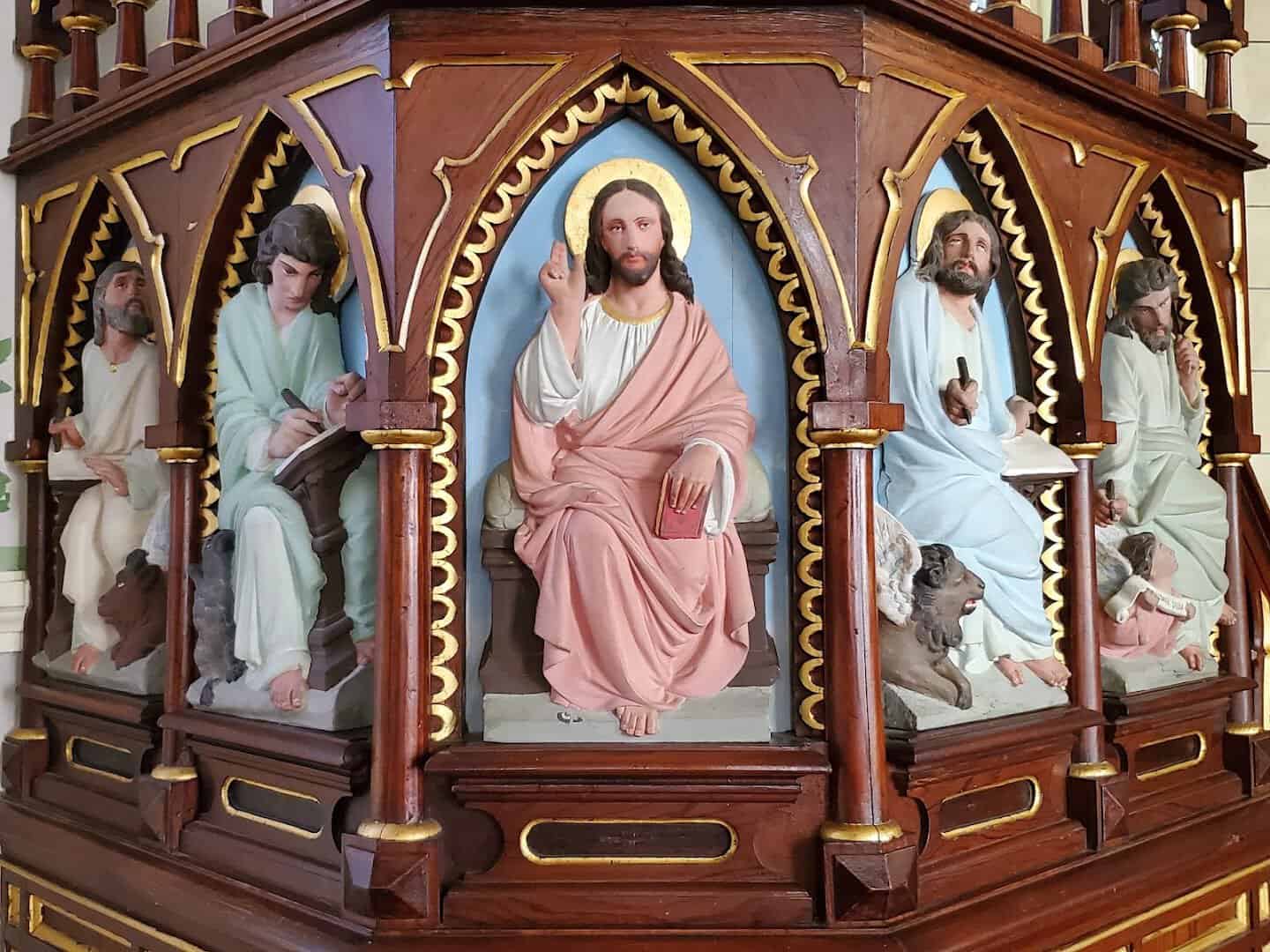
Flanking the main altar are two smaller side altars, each one honoring a favorite saint and each just as lovingly decorated. Little painted stars dot the arches above them like a night sky brought indoors.
I ran my eyes over the carved details for a good while. A small painted lamb here, a curl of gold leaf there. There is always one more thing to notice, which is exactly what keeps people coming back.
Eighteen Windows of Colored Light
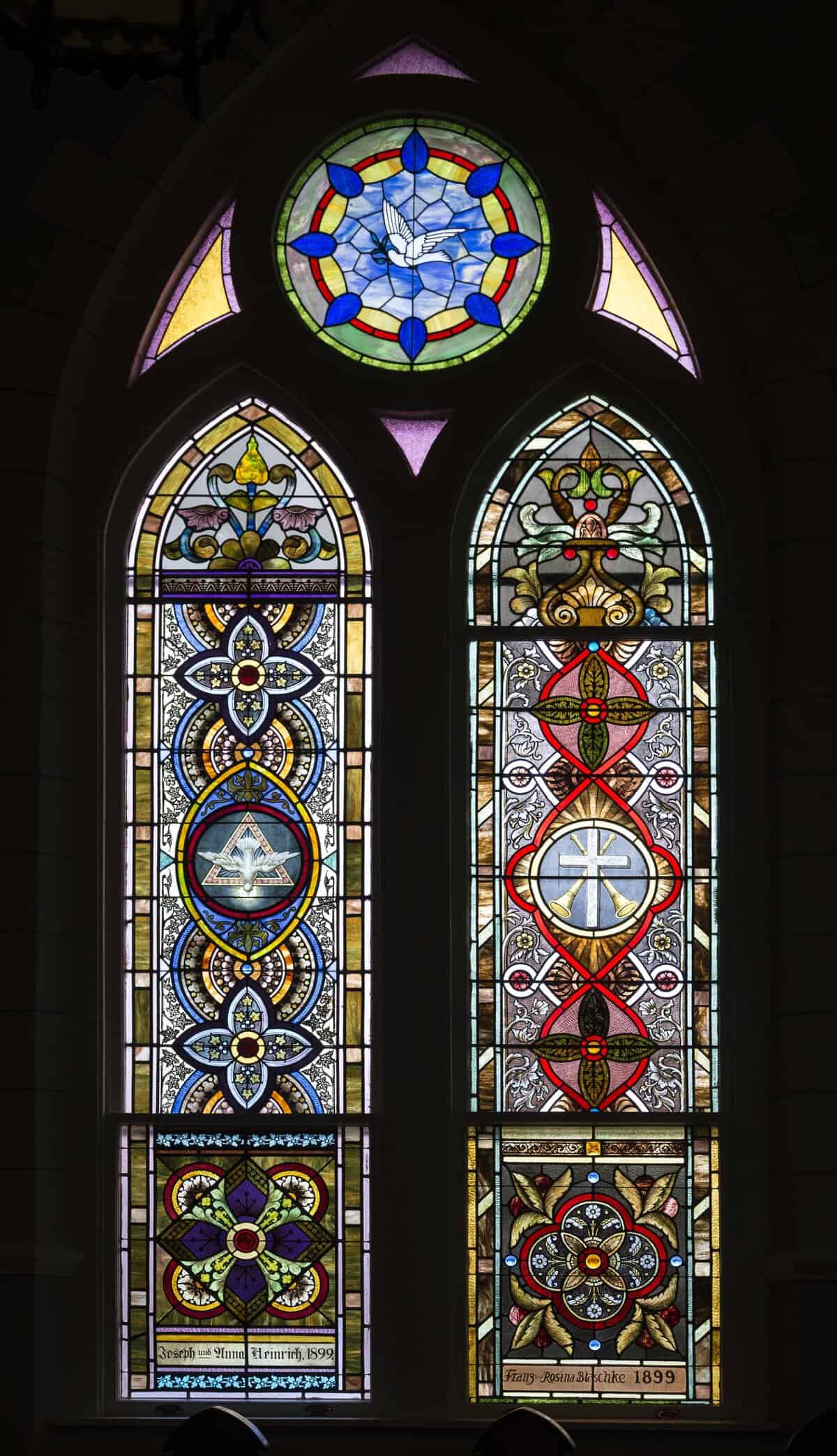
If the ceiling is the crown, the windows are the jewels. Eighteen stained glass windows line the walls of St. Mary, throwing pools of ruby, sapphire, and amber across the floor as the sun crosses the sky.
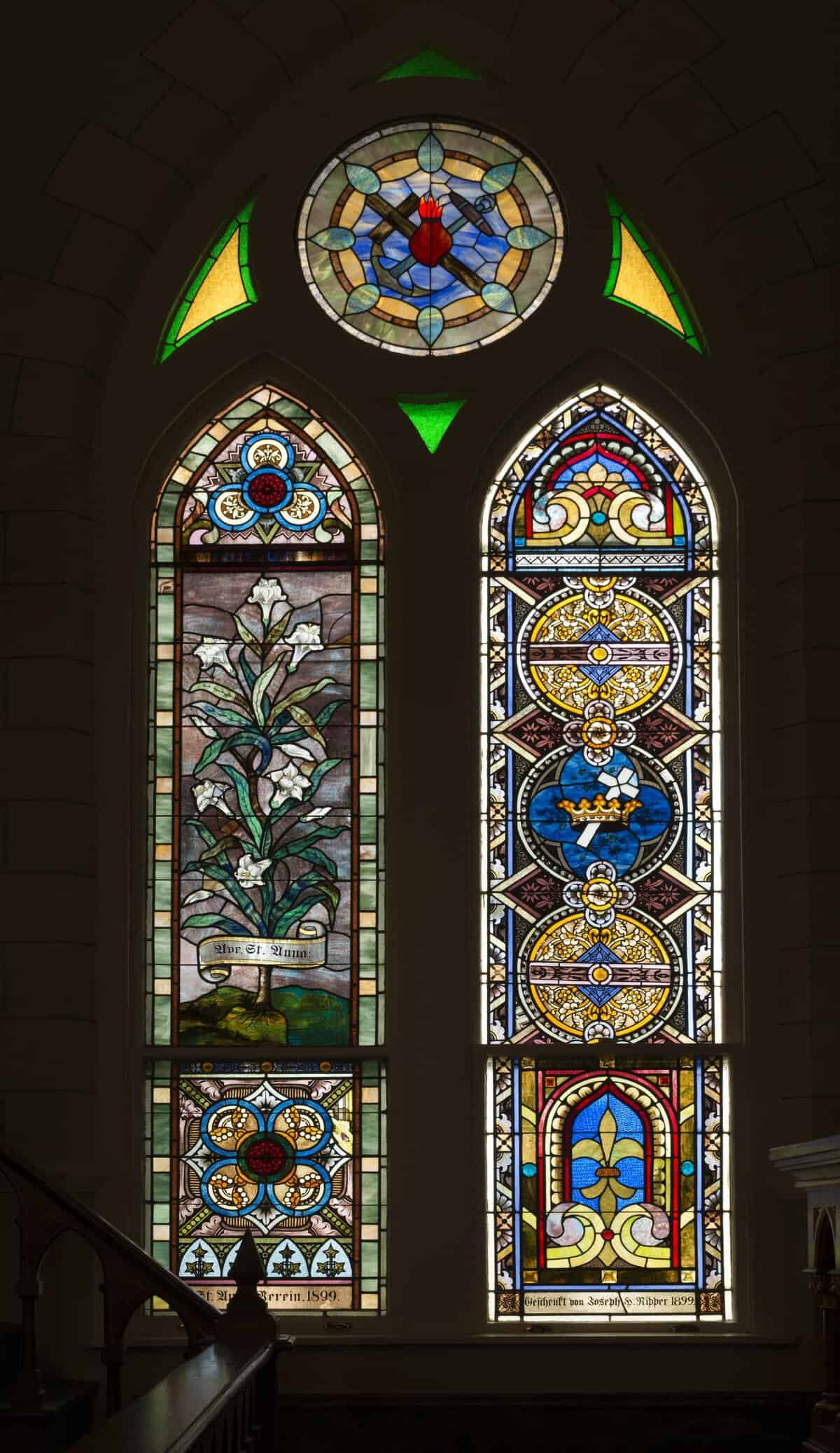
Some of that glass is older than the building itself. When the parish outgrew its first little church, the congregation carried the treasured windows over and set them into the new walls in 1906. Nothing beautiful was wasted.
Come on a bright morning and the color practically moves. I sat in a middle pew for a while and just watched a red patch of light crawl slowly along the aisle.
There are worse ways to spend twenty quiet minutes. The whole room seems to breathe with the weather outside, brightening when a cloud slides off the sun and dimming when one drifts back across it.
A Brief History of the Queen
The story starts with immigrants. German and Czech families settled this rolling stretch of Fayette County in the mid-1800s, many of them chasing religious freedom and good farmland.
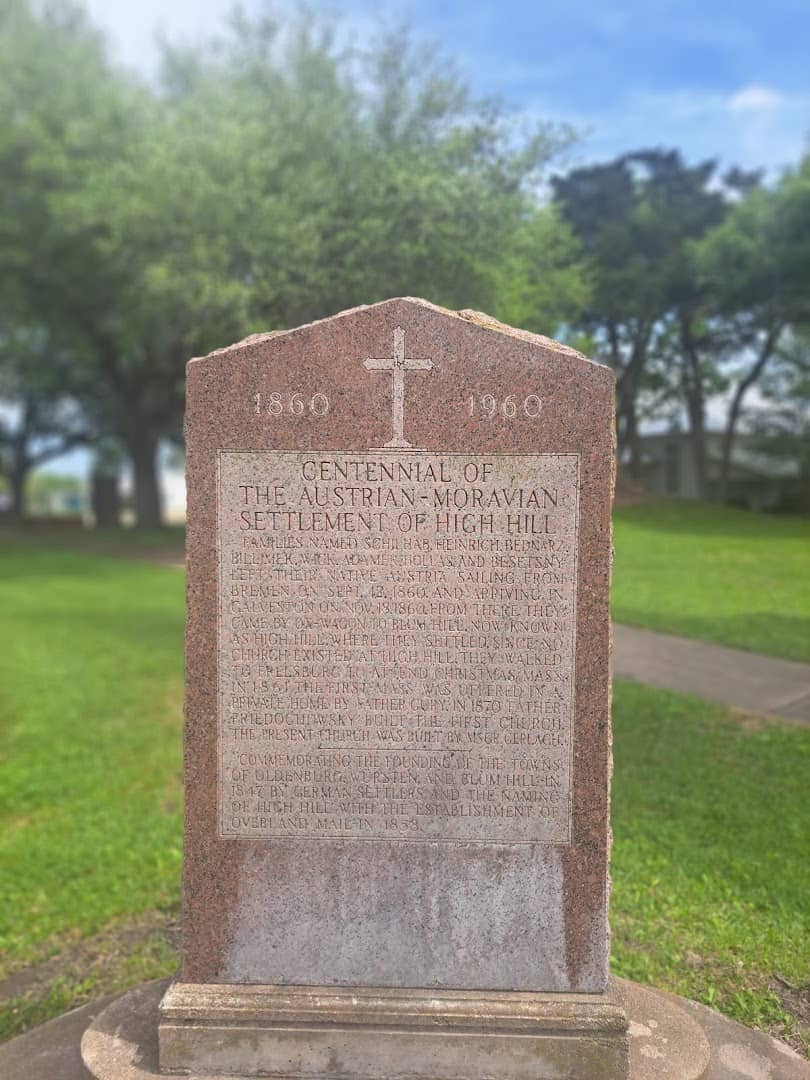
They came for the cotton land and the wide open country of central Texas, carrying their language, their recipes, and above all their faith across an ocean. The church was the first thing a new community built and the heart of everything that followed.
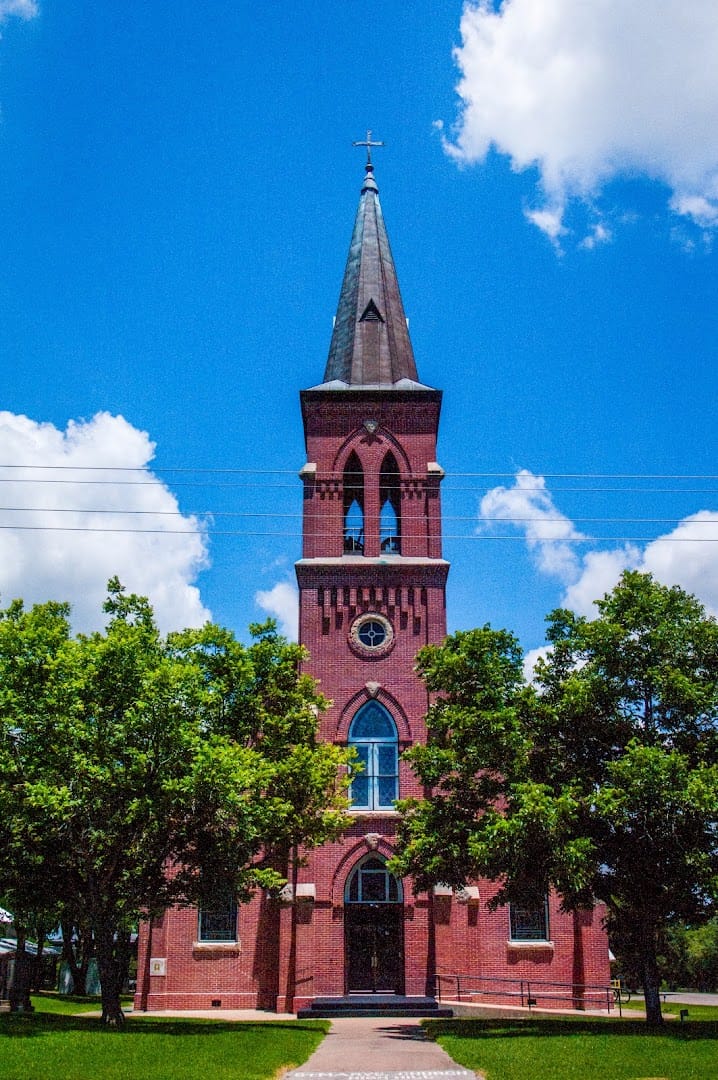
They built their first church here in 1876. As the community grew, they wanted something grander, and in 1906 they raised the red brick sanctuary that still stands today.
They chose brick on purpose. Brick resists fire and stands up to a Gulf Coast hurricane in a way wood never could. The sturdy shell is what has protected the delicate painted world inside for well over a century.
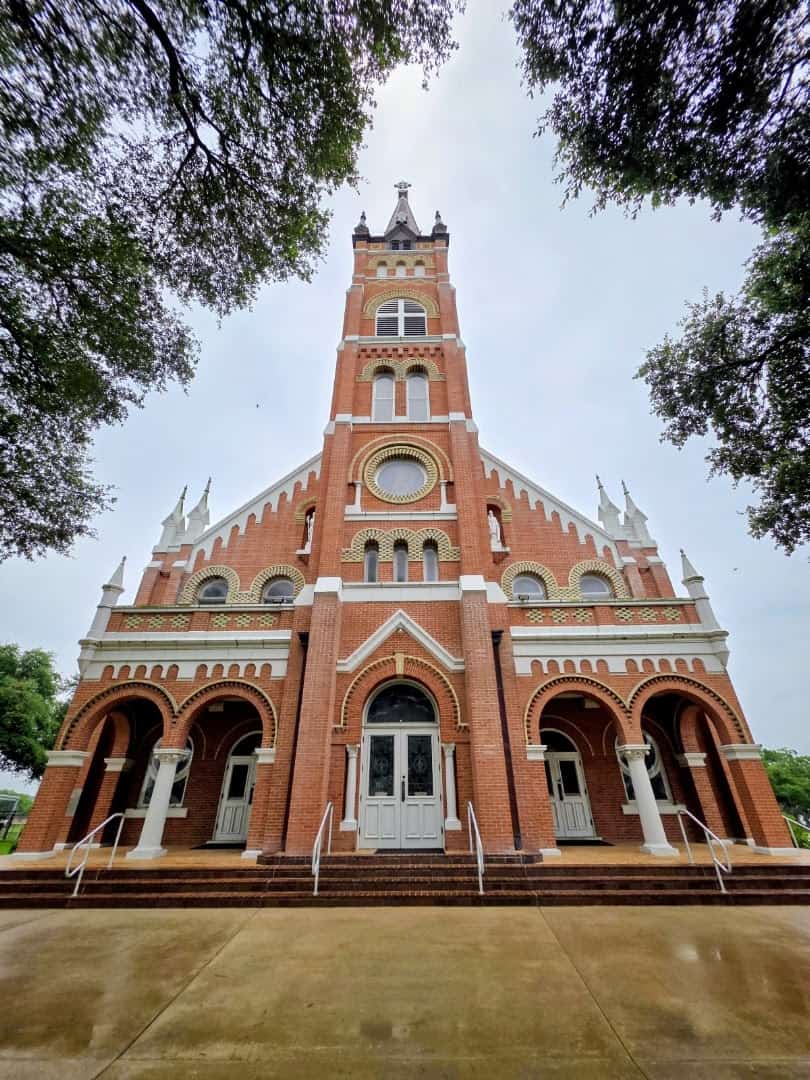
The design came from Leo M.J. Dielmann, a prominent San Antonio architect who gave the church its Gothic Revival lines, its pointed arches, and its tall steeple. Six years later Stockert and Kern arrived to paint the interior, and the plain brick box became a wonder.
In 1983 the church earned a spot on the National Register of Historic Places. Somewhere along the way, admirers began calling it the “Queen of the Painted Churches,” and the name stuck. Stand under that ceiling for five minutes and you will understand exactly why.
She Has Sisters Down the Road
St. Mary does not reign alone. She is the crown jewel of a whole cluster of painted churches scattered through the tiny farm towns around Schulenburg, and half the joy is hopping from one to the next.
Schulenburg itself proudly calls itself the home of the painted churches, and a loose trail links more than a dozen of them across the region. You could easily fill a whole day with just three or four.
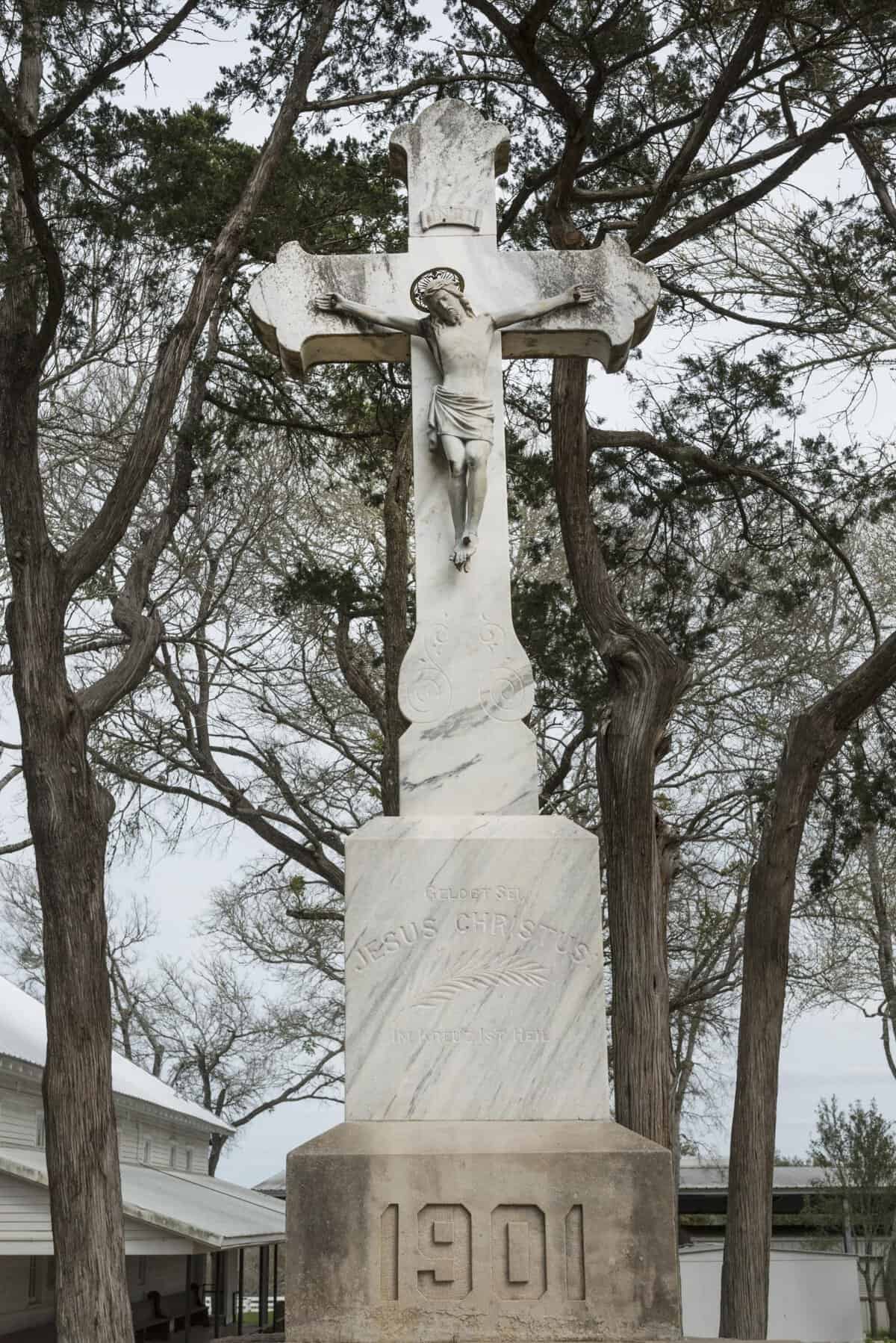
A few miles away in Dubina, Czech settlers named their oak-shaded spot after the Czech word for oak grove and put down roots starting in 1856. A freed blacksmith named Tom Lee forged the iron cross that once topped their steeple, a small true detail I have never forgotten.
Praha and Ammannsville hold their own painted treasures too, each with a slightly different palette and personality. See two or three in an afternoon and you start to feel like you are reading chapters of the same long story these families wrote on the prairie.
Tips for Your Visit
The churches are usually open to respectful visitors during the day, and the Schulenburg Chamber of Commerce can point you toward current hours and guided tours. These are active parishes, so step softly and check that no service or wedding is underway before you wander in.
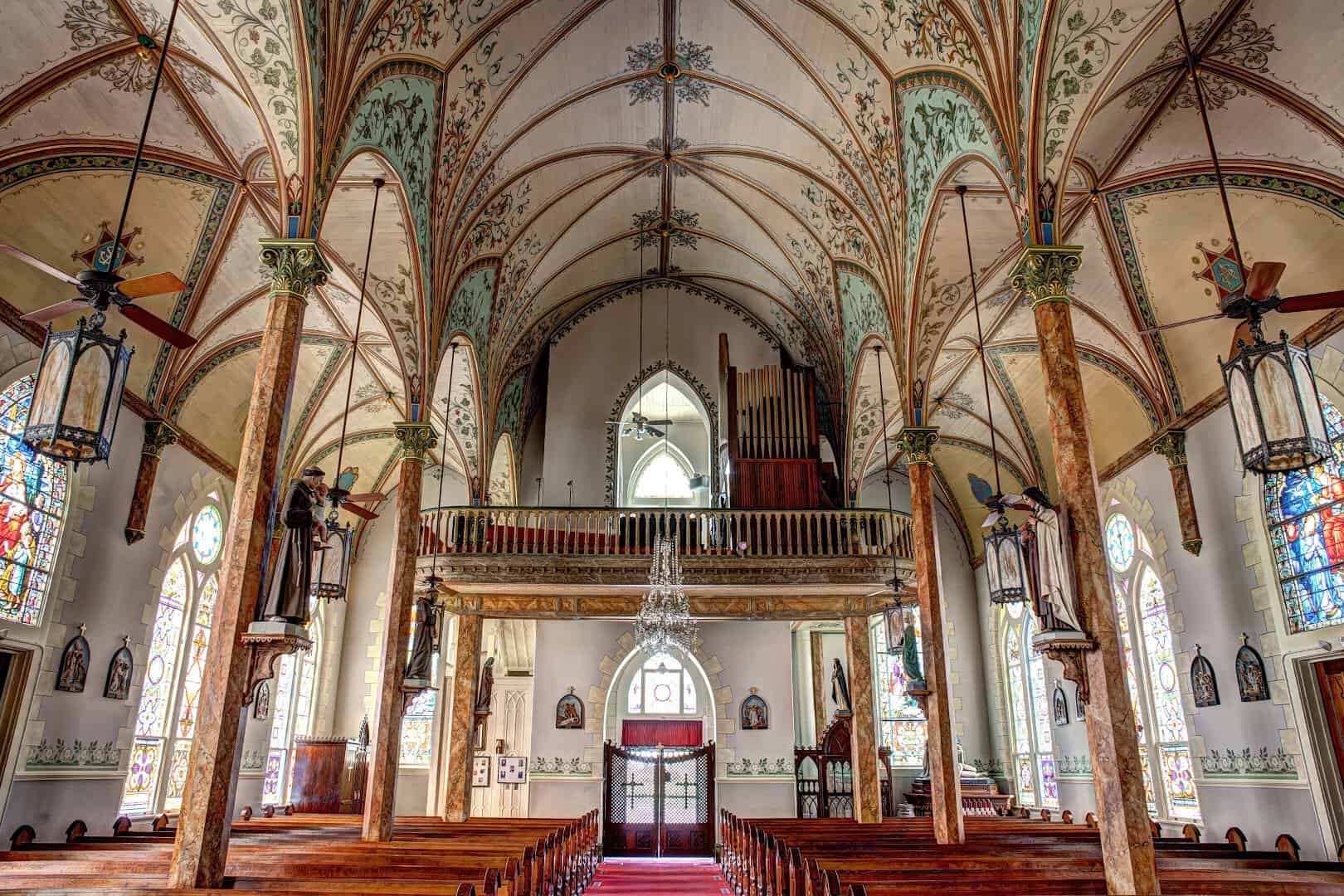
Tip: climb up to the choir loft if you can. That high vantage gives you the best view down the length of the painted ceiling, and it is where the century-old canvas shows its age most clearly.
Bring a little cash for the donation box, too. These small congregations maintain these treasures themselves, and every dollar helps keep the paint bright for the next wide-eyed visitor.
Morning light is kindest to the windows, so aim to arrive early if you can. Whether you are a devout pilgrim or simply someone who loves beautiful things, you are welcome to sit a while. Nobody rushes you here. The quiet is part of the gift.
How to Get There
High Hill sits just north of Schulenburg, which is roughly halfway between Houston and San Antonio along Interstate 10. It makes an easy day trip from either city, or a soulful detour on a longer Texas road trip.
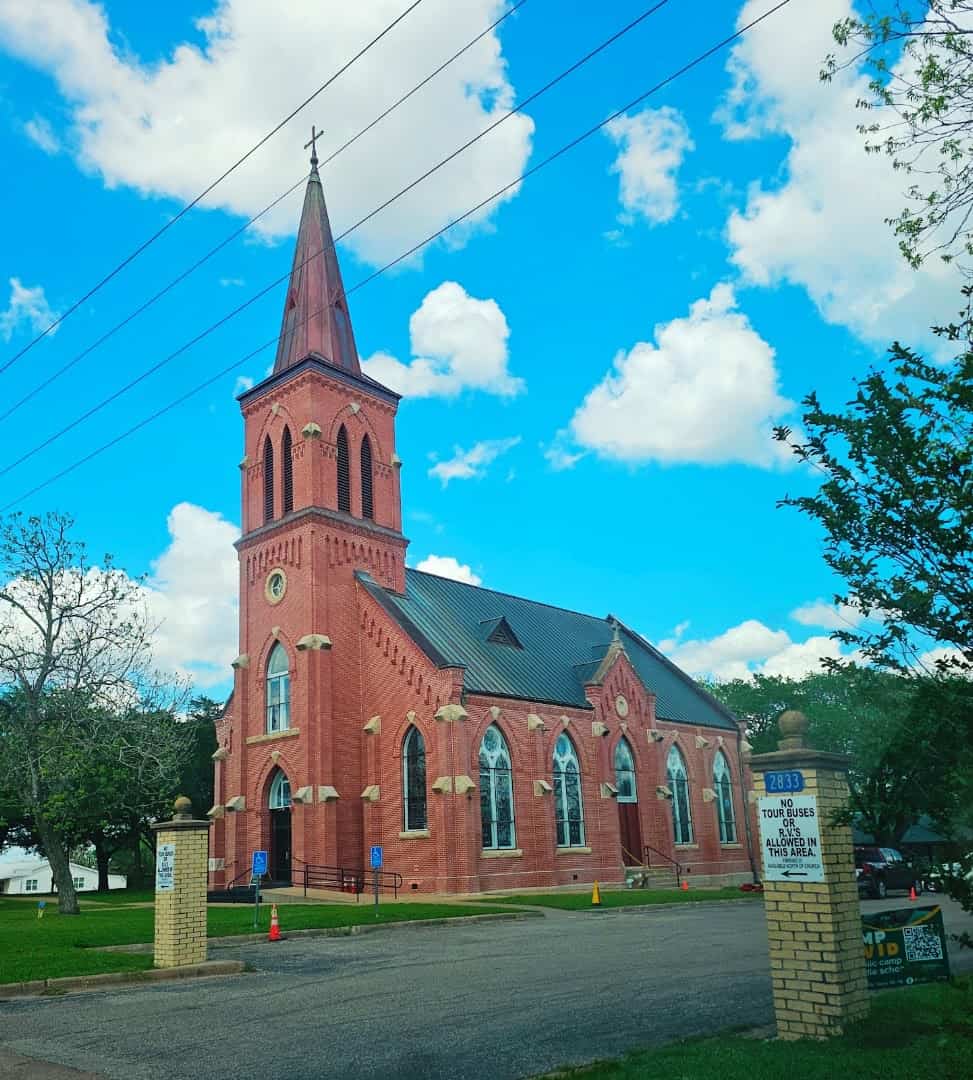
Where: St. Mary Catholic Church, 2833 FM 2672, Schulenburg, TX 78956
Go Look Up for Yourself
Some places you read about and file away for someday. This is not one of them. A hand-painted ceiling in a country church, raised by immigrant hands and still glowing after more than a hundred years, deserves to be seen with your own eyes.
The best part is how unassuming it all is. There is no gift shop, no ticket booth, no crowd of tour buses idling in the lot. Just a red brick church on a quiet road, keeping a small miracle safe for anyone who thinks to stop.
So point the car toward the Schulenburg exit and roll down a farm road or two. Push open a heavy wooden door in a town you have never heard of. Then do the one thing everyone does here. Tip your head back, and let the Queen take your breath away.
Featured image: Carol M. Highsmith, Library of Congress

Stella Raines
Editor-in-Chief
Stella brings over a decade of storytelling experience to TX Headlines. With roots in West Texas and a love for road trips, she leads the editorial team with an eye for the hidden stories that make Texas unforgettable.
More Stories

This Massive Texas Record Store Holds Over 250,000 Vinyl, CDs, and Tapes Under One Roof

This Pay-What-You-Want Texas Art Store Lets You Fill a Bag and Name Your Price
This Luminous Texas Museum Lets You Wander Through Hundreds of Rescued Stained Glass Windows

This Beloved Texas Resale Shop Hides Rare Vintage Treasures, and Every Sale Funds Children’s Brain Research
Tags