This Prehistoric Texas Park Lets You Dig for 300-Million-Year-Old Treasures, and You Keep What You Find
I was on my knees in the dirt, and I had not been that happy in years.
The little garden trowel in my hand kept turning up ordinary gray rubble, chip after chip of nothing. Then I flipped over one flat, unpromising rock and brushed the grit away with my thumb.
There it was. A tiny stack of pale beads pressed into the stone, neat as a strand of broken pearls. A crinoid stalk. The animal it belonged to had swayed in a warm sea before the first dinosaur ever drew breath, and now it was sitting in my palm.
I actually laughed out loud. There was no one around to hear me.
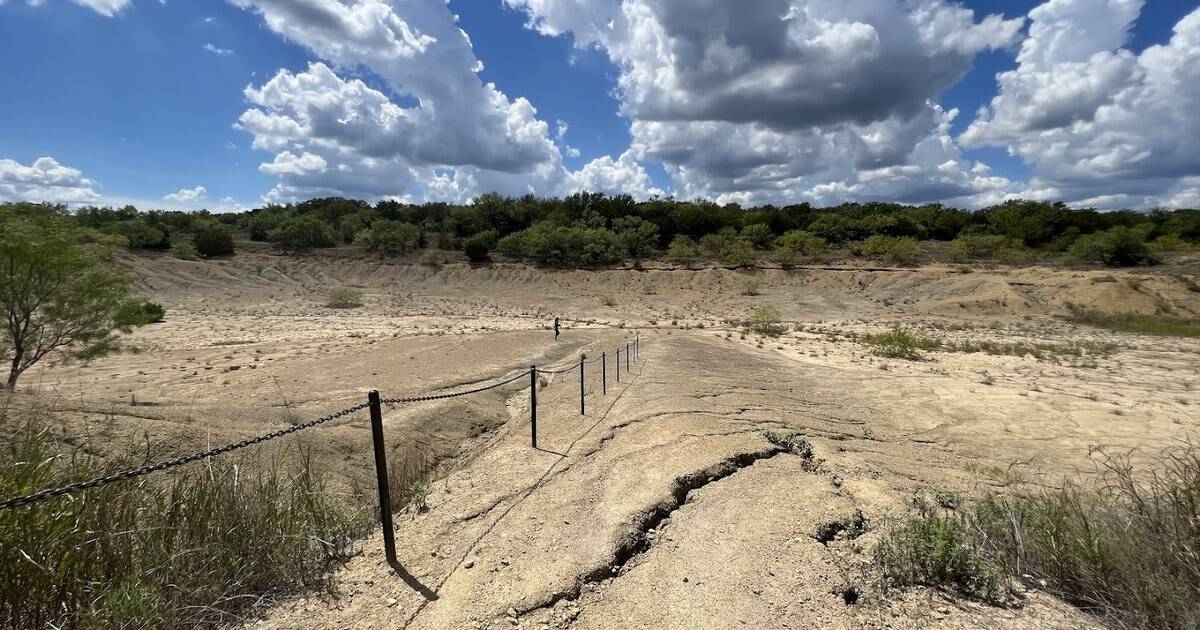
That is the strange magic of Mineral Wells Fossil Park, a scrappy, sun-baked patch of eroded ground west of Fort Worth where the deep past keeps working its way to the surface. The whole place feels almost prehistoric.
You do not look at the fossils through glass here. You dig them out of the earth with your own hands, and then you get to take them home. Below, I will walk you through the whole prehistoric treasure hunt.
Finders, Keepers, Genuinely
Most of us learned the museum rules early. Look, do not touch, and definitely do not pocket the exhibit. This place tears that rulebook up.
Mineral Wells Fossil Park is one of the very few spots in the whole country where you can collect real fossils and keep every one you find. There are no ropes and no display cases here, no plastic gift-shop replica standing in for the real thing.
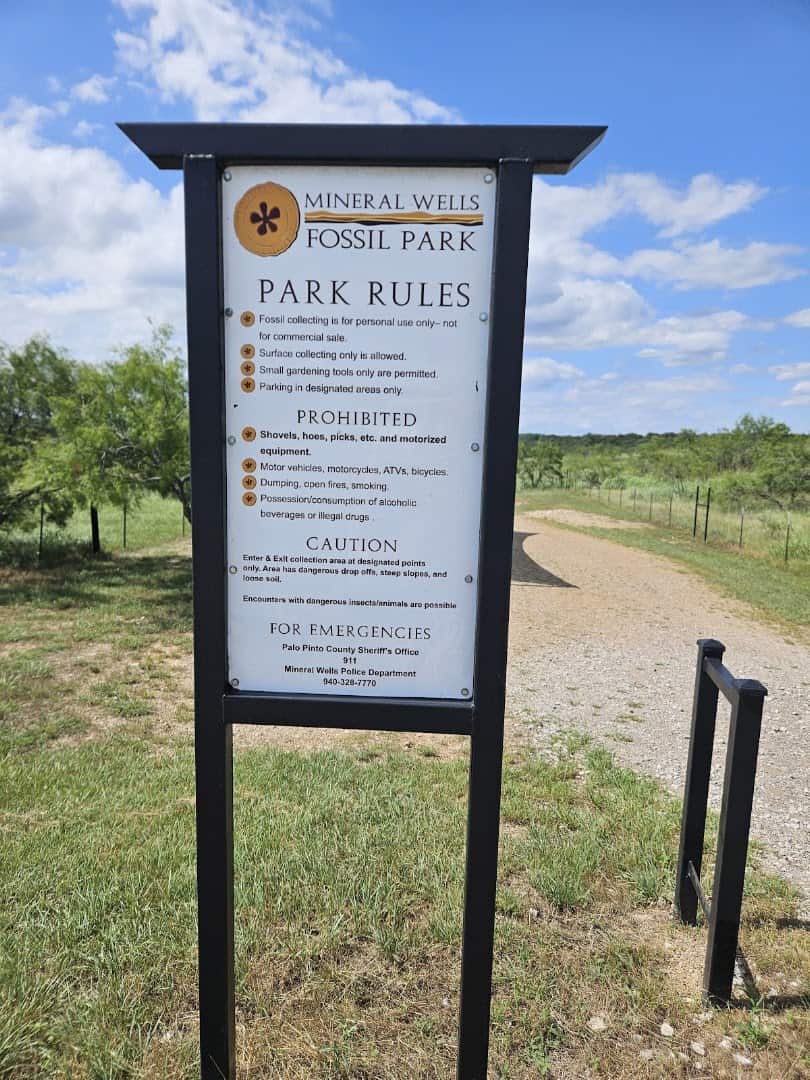
What you pry loose is yours to carry out. The only rule is that the fossils are for your own collection, not for selling.
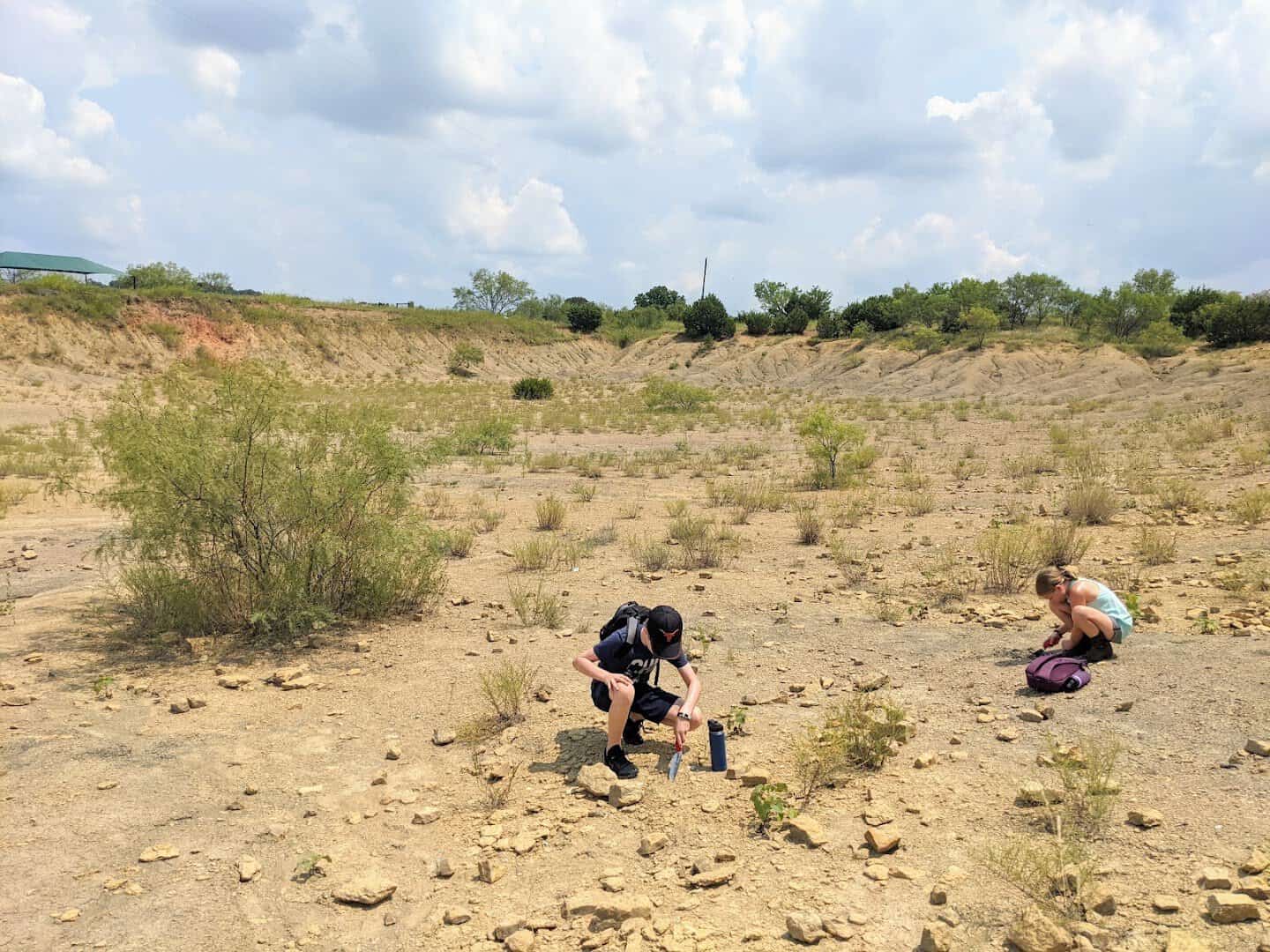
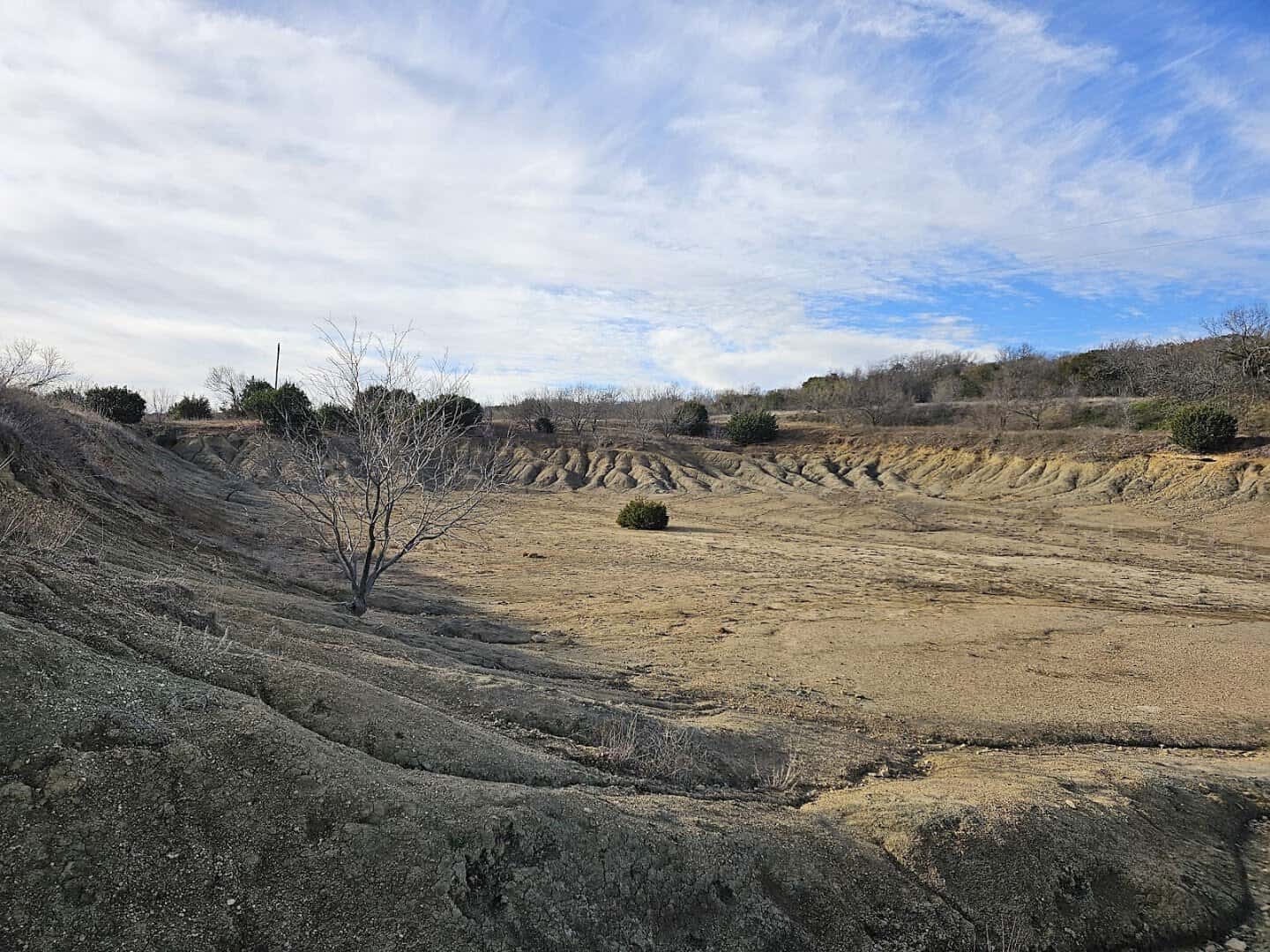
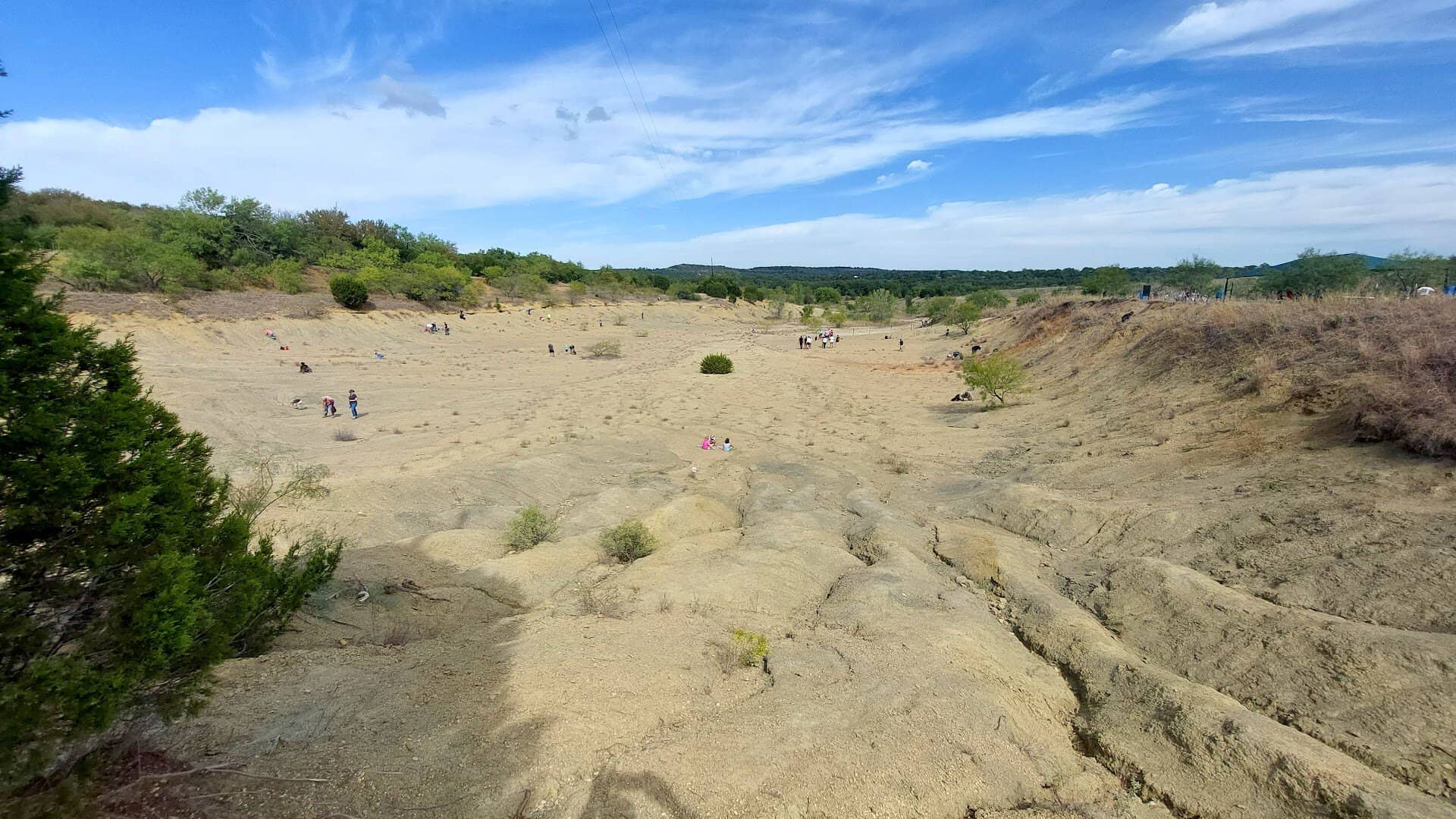
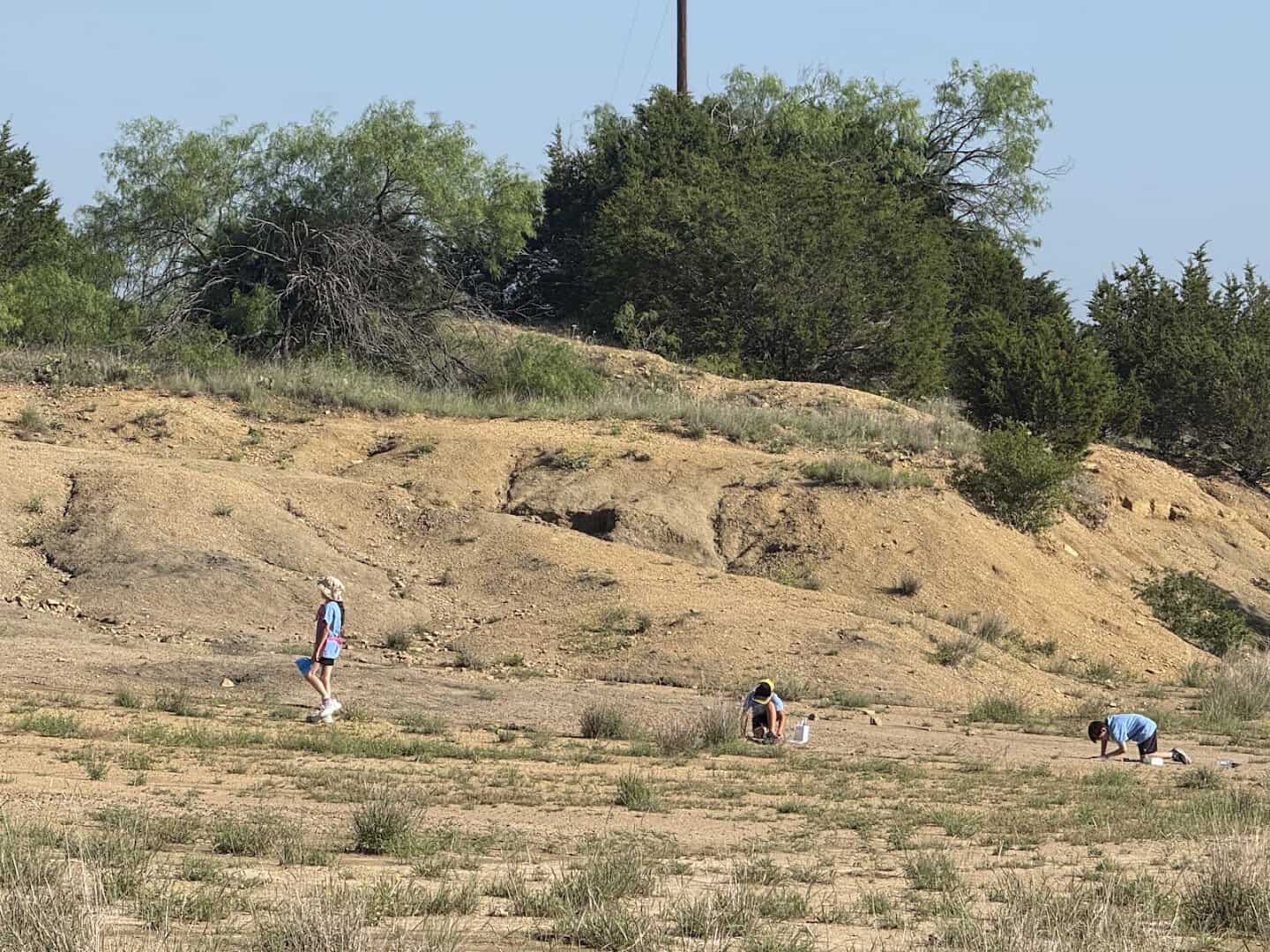
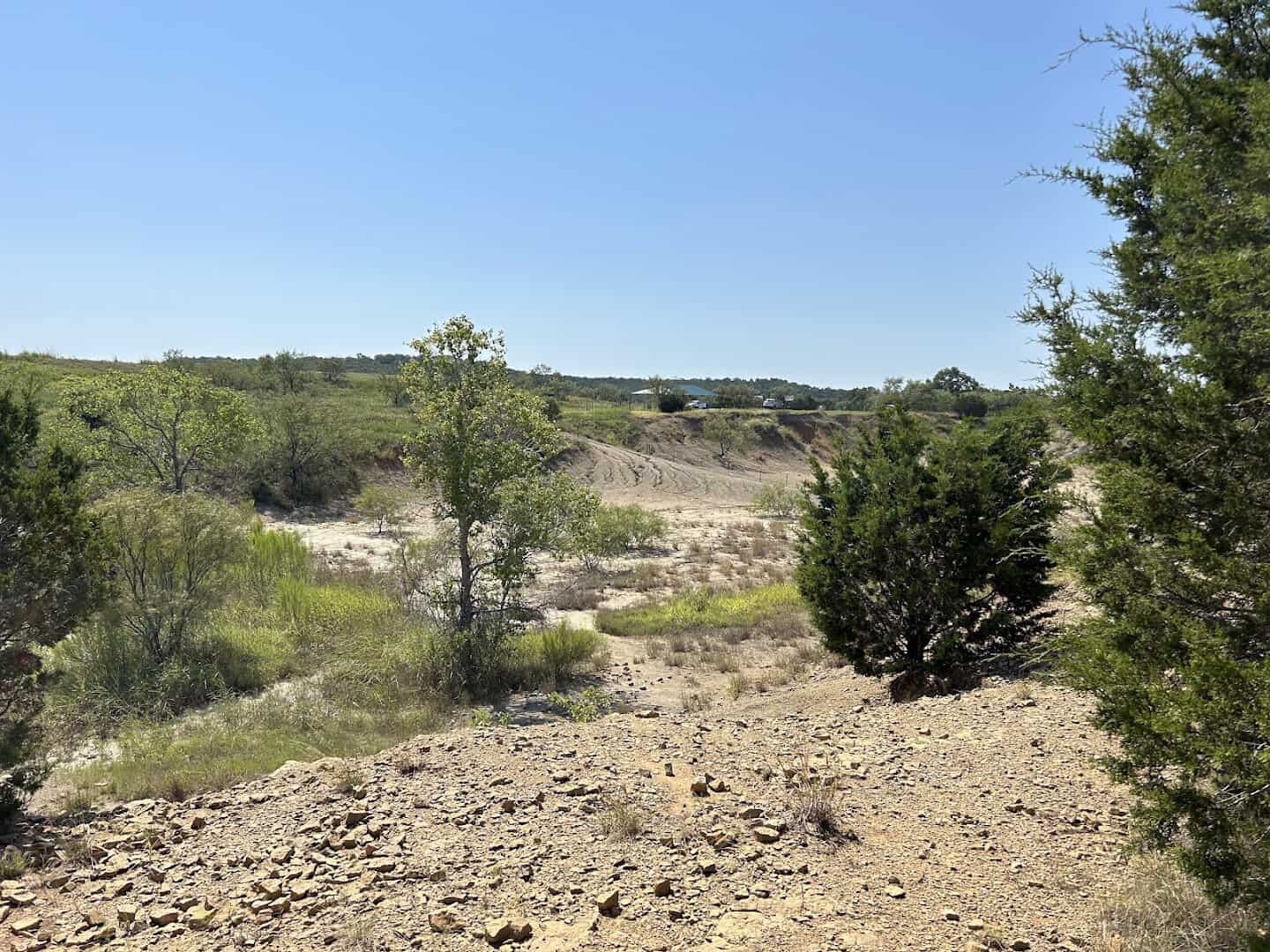
The dig site itself is a bowl of soft, crumbling shale, sculpted into little ridges and gullies by years of rain. You pick a spot, get low, and start working the loose ground.
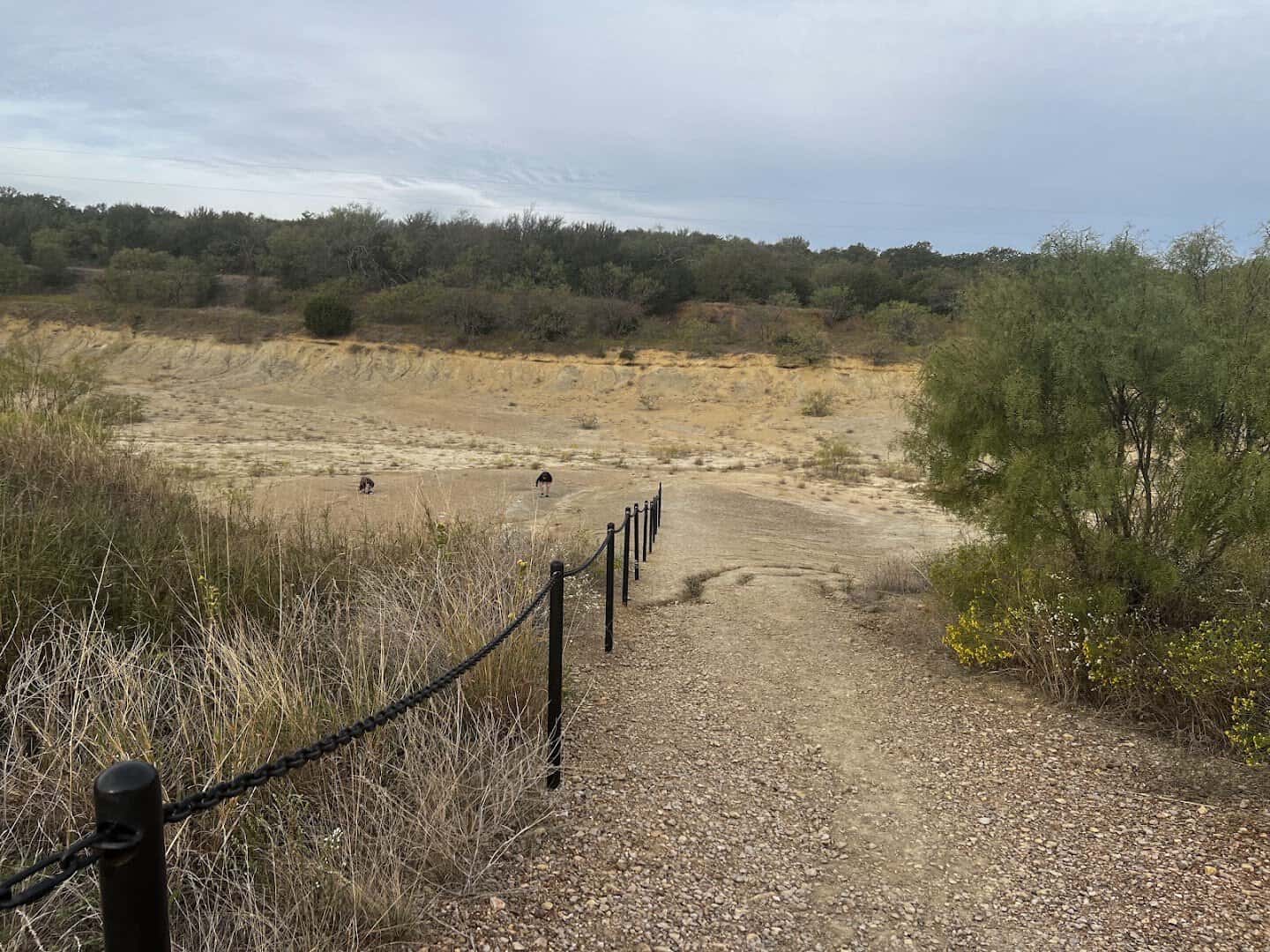
A ramp with a handrail leads down into the pit, so you can reach the good digging without scrambling down a bank. Once you are down there, the world above the rim disappears and it is just you and the rock.
When you step out onto that gray, rippling ground for the first time, it looks like nothing. Then your eye adjusts. Suddenly the whole surface is speckled with shapes that are not random at all, and you realize you are standing on the floor of a vanished ocean.
There is a rhythm to it that takes about ten minutes to find. Scan, kneel, brush, turn a rock, look. Most rocks are nothing, and then one is a small miracle, and that surprise never gets old no matter how many you find.
The best part is how democratic it is. A five-year-old with a plastic scoop finds treasure just as fast as a serious collector with a field guide. Everybody leaves with a pocketful.
What You Will Actually Pull Out of the Ground
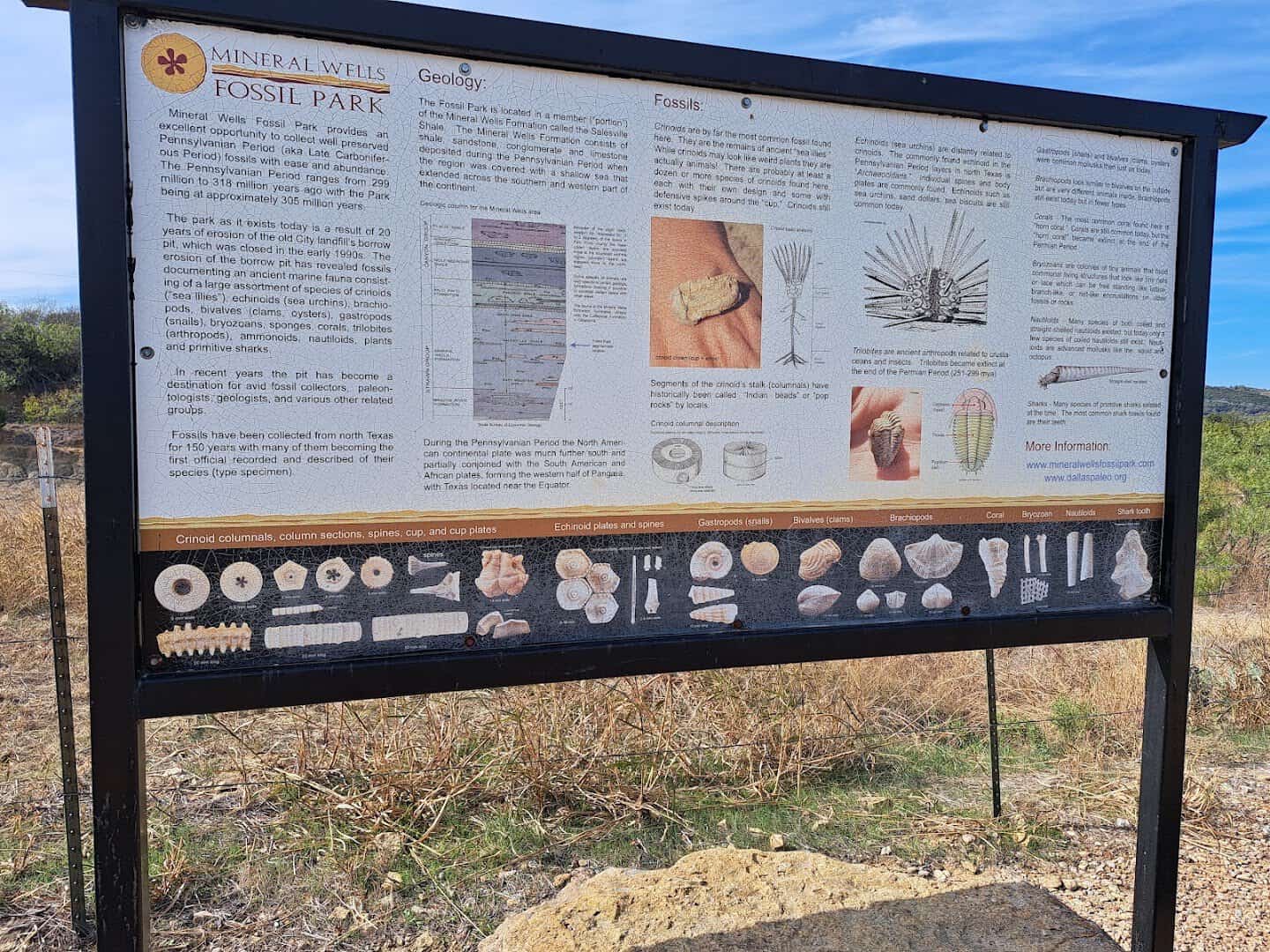
The star of the show, the fossil you will find by the fistful, is the crinoid. Sea lilies, people call them, though they were animals, not plants. They anchored to the seabed on long stalks and filtered food from the water with feathery arms.
Those stalks broke into little disc-shaped segments over the ages, and the segments are everywhere here. Some are single beads. Some are still stacked into short columns, like tiny screws or a roll of mints turned to stone.
But crinoids are only the opening act. Patient diggers turn up echinoids, the ancestors of the sea urchin. There are brachiopods and pelecypods too, the fanned and ribbed shells of ancient clams and oysters.
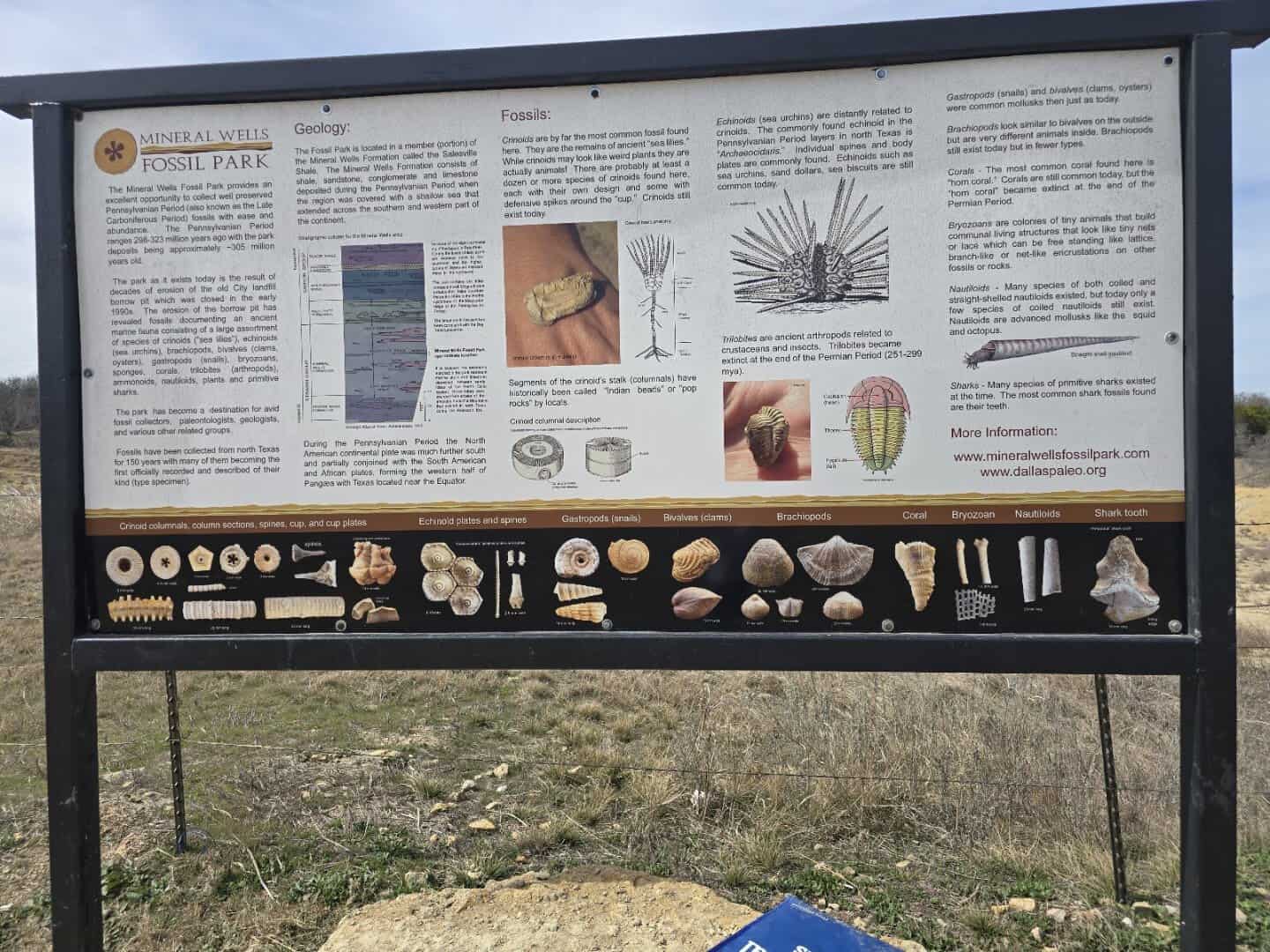
Look closer and you will spot bryozoans, delicate lace-like colonies of tiny animals, along with corals and the occasional fossilized plant. Every one of them once lived in the same warm sea.
Then there are trilobites, the armored little sea bugs that fossil hunters dream about. They are rarer and harder to spot, so finding even a fragment of one is a genuine trophy. Keep your eyes sharp and your patience longer.
And every so often, the ground gives up something truly special. Primitive shark teeth surface here too, small dark relics of creatures that hunted these waters 300 million years ago. More on one very lucky visitor in a moment.
Did you know? Everything you dig here is older than the dinosaurs by tens of millions of years. When you cradle a crinoid, you are holding something that predates Tyrannosaurus rex almost the way T. rex predates you.
An Ocean in the Middle of Texas
Here is the part that stops you cold once you are out there. All of this dry, dusty, landlocked North Texas country was once the bottom of the sea.
Roll the calendar back about 300 million years, to a stretch of deep time geologists call the Pennsylvanian Period. A warm, shallow inland ocean spread across what is now central Texas. Crinoids swayed in the current, shellfish crowded the muddy bottom, and early sharks cruised overhead.
As those creatures died, they settled into the mud, layer upon layer, and the mud slowly hardened into the gray Salesville shale you are digging through today. The whole park is a 300-million-year-old time capsule, sealed by rock and finally cracked open.
North Texas paleontologist Bob Williams put the age plainly. “These deposits were laid down about as close to 300 million years ago as we can reliably estimate,” he said. That number is not marketing. It is the real, staggering truth of the ground under your knees.
How a Landfill Became a Time Machine
The origin story of this park is my favorite kind, the sort where something wonderful comes out of something completely ordinary.
Back in the day, the City of Mineral Wells dug this pit for plain fill dirt, the kind of dirt a city uses to cover its landfill. The digging stopped and the pit closed in the early 1990s, and everyone moved on.
Then nature went to work. For roughly two decades, rain and wind chewed at the exposed banks, washing away the loose soil and slowly uncovering the fossil beds hiding just beneath the surface.
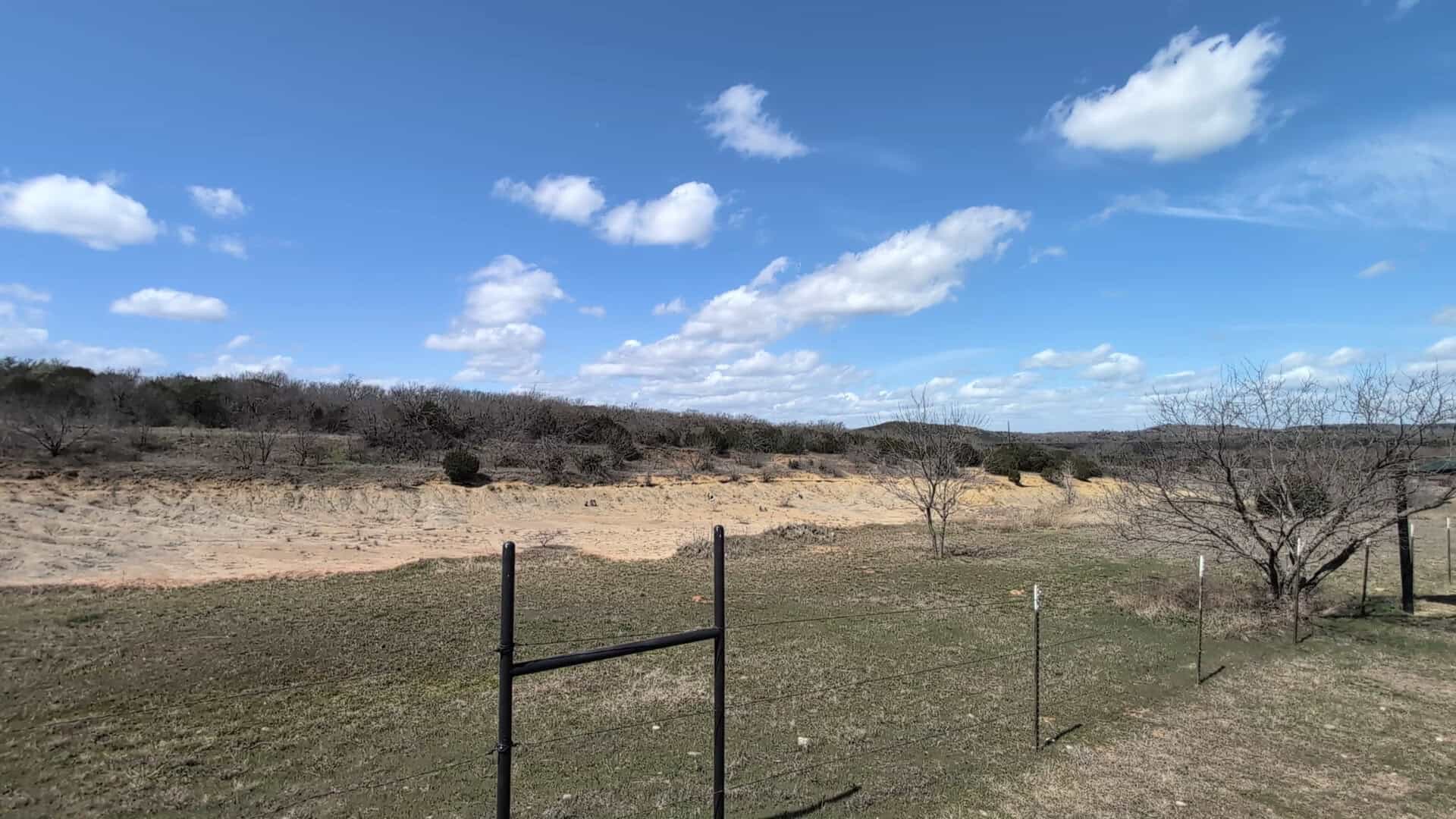
People eventually noticed. Members of the Dallas Paleontological Society heard the city was thinking of selling the land, saw what the erosion had exposed, and made the case that it should become a public fossil park instead.
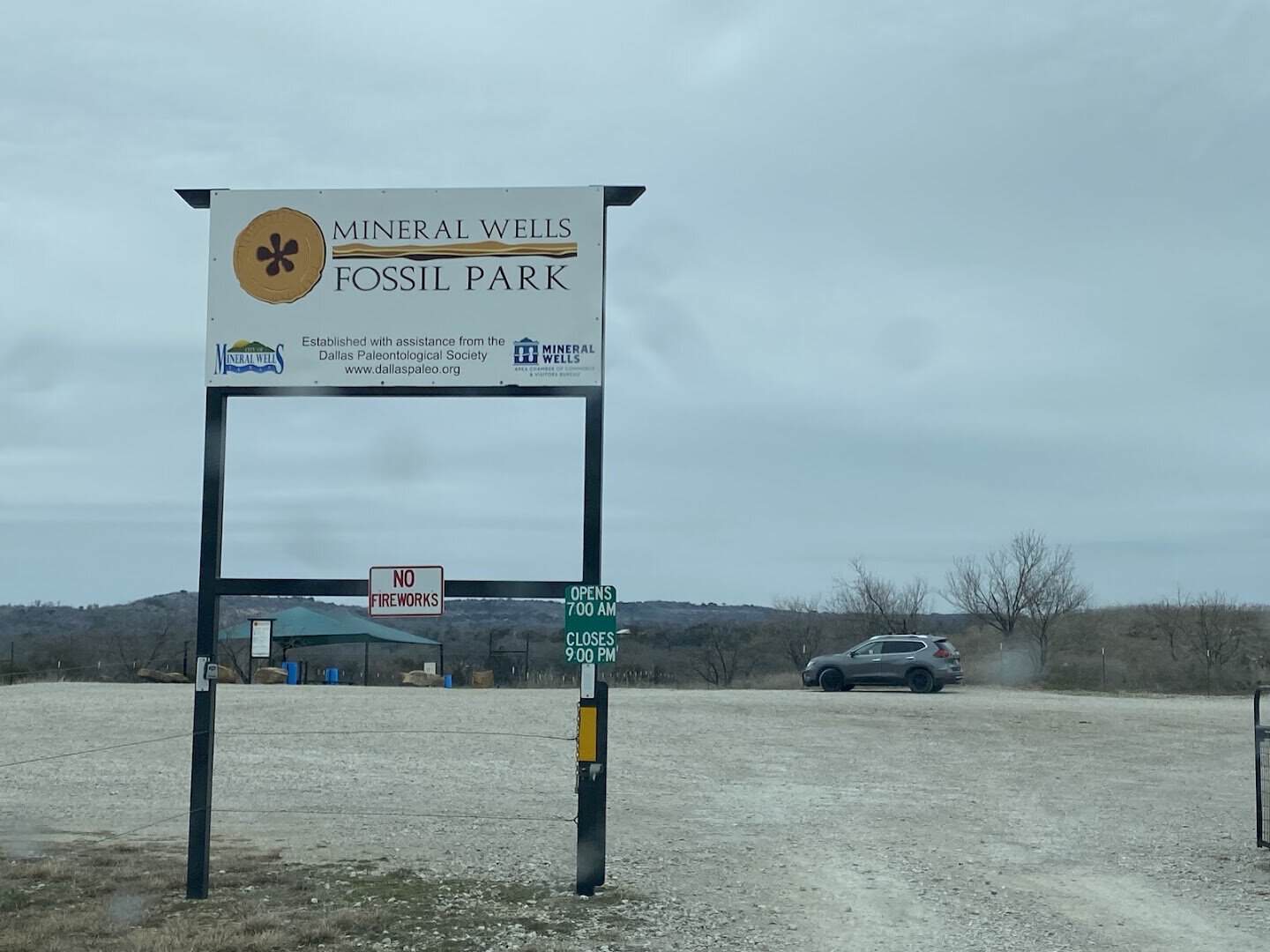
They put real money behind the idea, raising more than 7,000 dollars to develop the site. The City of Mineral Wells matched it, adding a parking lot, fencing, a handrail into the pit, and the interpretive signs that explain what you are looking at.
The park held its grand opening on May 8, 2010, and more than 400 people turned out to celebrate. Local leaders like city manager Lance Howerton, chamber director Beth Watson, and tourism director Christina Childs all helped push it over the line.
Because of that stubborn, generous effort, a place that could have been fenced off and forgotten is instead one of the friendliest fossil hunts in America.
The Day a Visitor Found a Shark
Let me tell you about Jeff Parshley, because his story is the reason you should never assume the ground is picked clean.
Parshley traveled all the way from Los Angeles and spent a long, quiet morning working the pit. “I was there for about four hours,” he recalled. “We were the only ones there that day.” Just him, a trowel, and 300 million years of Texas seabed.
Then he turned over the root of a fossilized shark tooth, a piece of a primitive species called Petalodus. Shark fossils are uncommon finds at the park, which made his discovery a small sensation among collectors.
“I can’t believe I found it and am so excited!!” Parshley said afterward. Anyone who has felt that jolt of turning up something real in the dirt knows the feeling behind those two exclamation points.
His find is the perfect argument for slowing down and looking closely. The showstoppers are out there. They are just waiting for someone patient enough to turn over the right rock.
Come Ready to Dig
A little preparation turns a good visit into a great one. This is a primitive site, wonderfully so, which means you bring your own comfort.
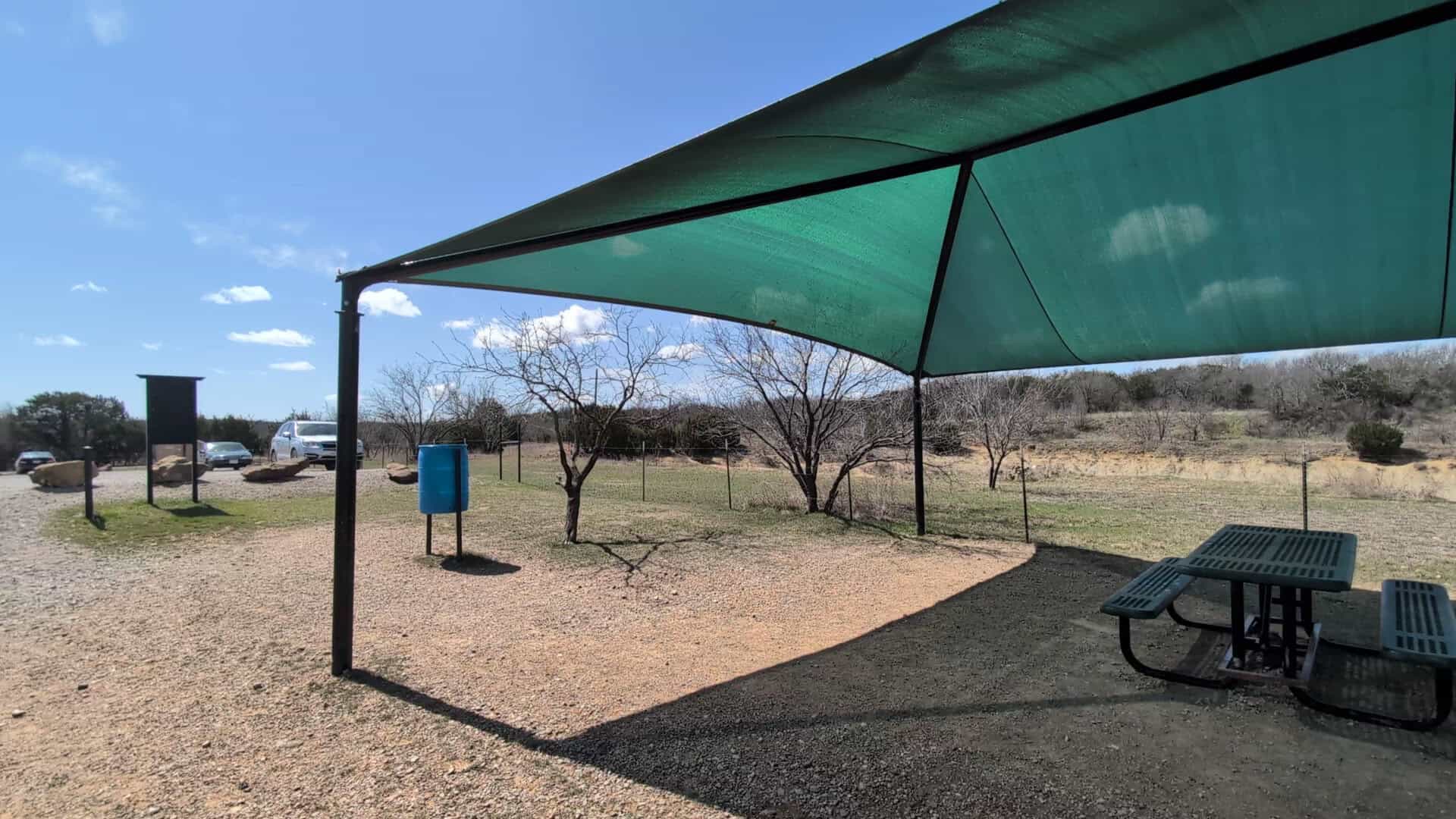
Pack plenty of water. There is no running water on site, and that North Texas sun is serious business. In the warm months, come early in the morning or in the cooler evening, and toss an umbrella in the car for a patch of portable shade.
Here is my best piece of advice: bring knee pads. You will spend real time kneeling on rocky ground, and your knees will thank you for an hour of it.
A small bag or a nail apron helps too. It keeps your finds sorted so your best crinoids do not rattle around loose in a pocket on the drive home.
Tools should stay small and simple. Little garden trowels and hand tools, nothing longer than elbow length, are the rule. Leave the shovels, picks, and anything motorized at home. The digging is gentle surface work anyway, so a light hand is all you ever need.
One lovely thing to remember: the fossils you find are yours to keep for the pure joy of keeping them, for your own shelf and your own kids. It is finders keepers in the best and most generous sense.
If you want the full experience, aim for the annual Crazy Fossil Dig, held on a Saturday each October. The Dallas Paleontological Society shows up with museum-quality specimens, fossil identification, and activity packets, so you can finally learn the name of that odd little rock you have been carrying around.
How to Get There
The park sits a couple of miles north of U.S. Highway 180, on the western edge of Mineral Wells in Palo Pinto County, an easy hour or so west of Fort Worth. You will find a shade shelter, information signs, and portable restrooms waiting at the entrance.
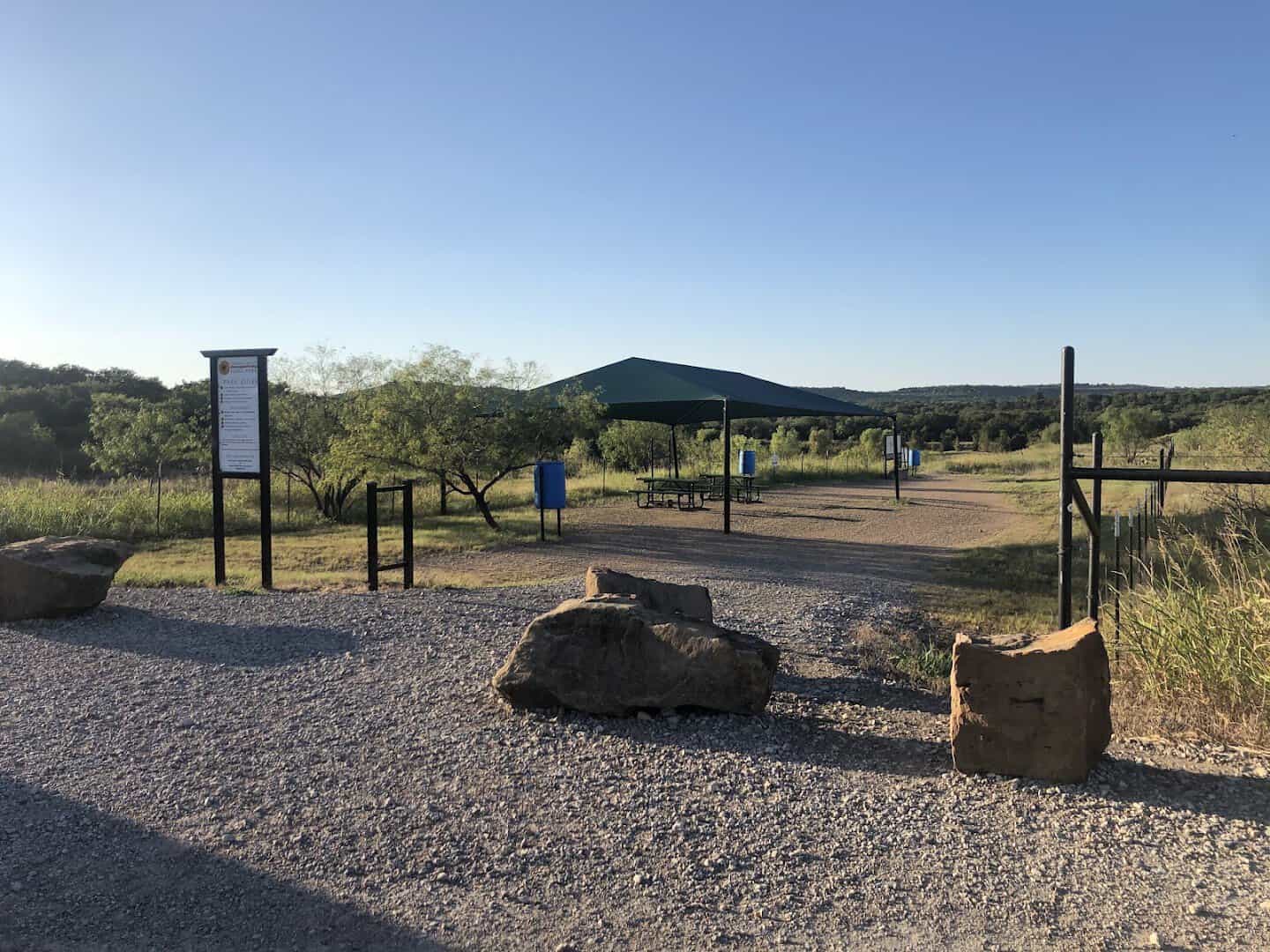
And the price of admission is exactly nothing. The park is free, and it is open every day, from morning until dusk.
Where: Mineral Wells Fossil Park, 2375 Indian Creek Road, Mineral Wells, TX 76067
Go Dig Up Something Ancient
There are not many places left where the deep past is this close, this free, and this generous with its treasures. You show up, you kneel down, and the earth hands you a souvenir that is older than almost anything you can imagine.
So pack the water, grab the knee pads, and round up the kids or the friends who will appreciate a good rock. Point the car toward Mineral Wells, get your hands dirty, and drive home with a pocket full of 300-million-year-old treasure that is yours to keep, forever.
Featured image: Lea Shi via Mineral Wells Fossil Park

Stella Raines
Editor-in-Chief
Stella brings over a decade of storytelling experience to TX Headlines. With roots in West Texas and a love for road trips, she leads the editorial team with an eye for the hidden stories that make Texas unforgettable.
More Stories
This Pay-What-You-Want Texas Art Store Lets You Fill a Bag and Name Your Price

This Centuries-Old Texas Cathedral Transforms Into a Dazzling Light Show After Dark
This Charming Small Texas Town Guards the World’s Largest Pecan and the State’s Best Barbecue
This Enormous Texas Saddle Shop Keeps Over 1,000 Saddles Under One Roof
Tags