This Luminous Texas Museum Lets You Wander Through Hundreds of Rescued Stained Glass Windows
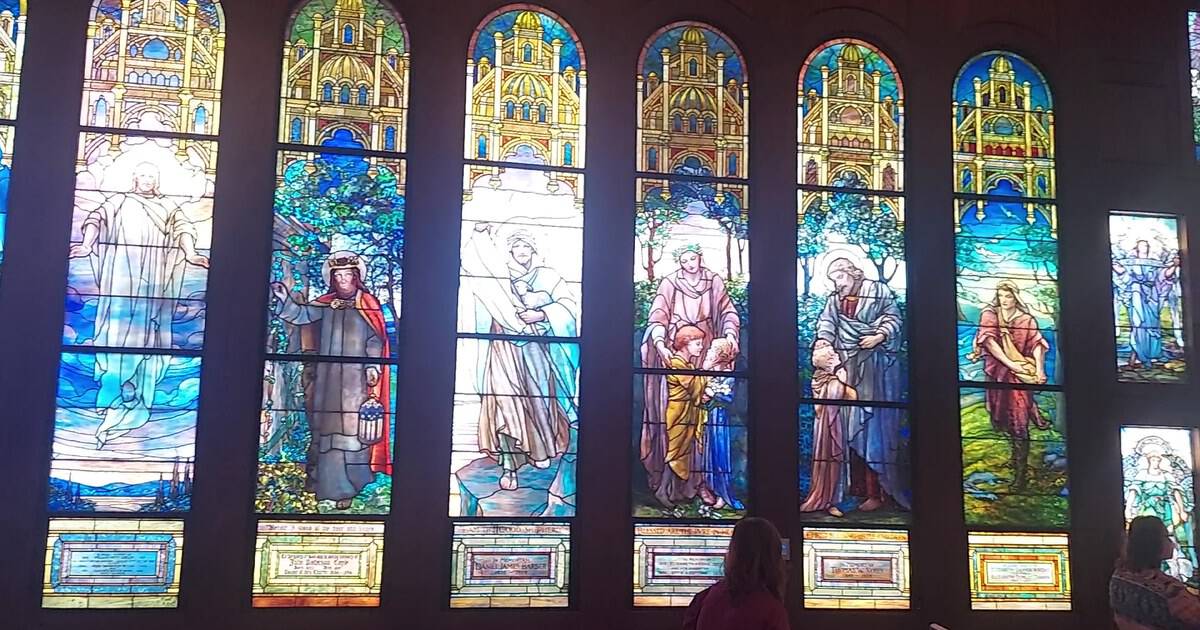
The first time I stood inside a real cathedral, I was a kid on a family trip. I remember tilting my head all the way back to watch the afternoon sun pour through the glass above the altar.
The light landed on the stone floor in pools of red and blue and gold. I stepped from one colored patch to the next like they were stones across a creek, and I never quite forgot the feeling.
I did not expect to feel that exact way again as a grown adult. Yet there I was, in a small town in the Rio Grande Valley, on an ordinary Saturday morning, feeling ten years old all over again.
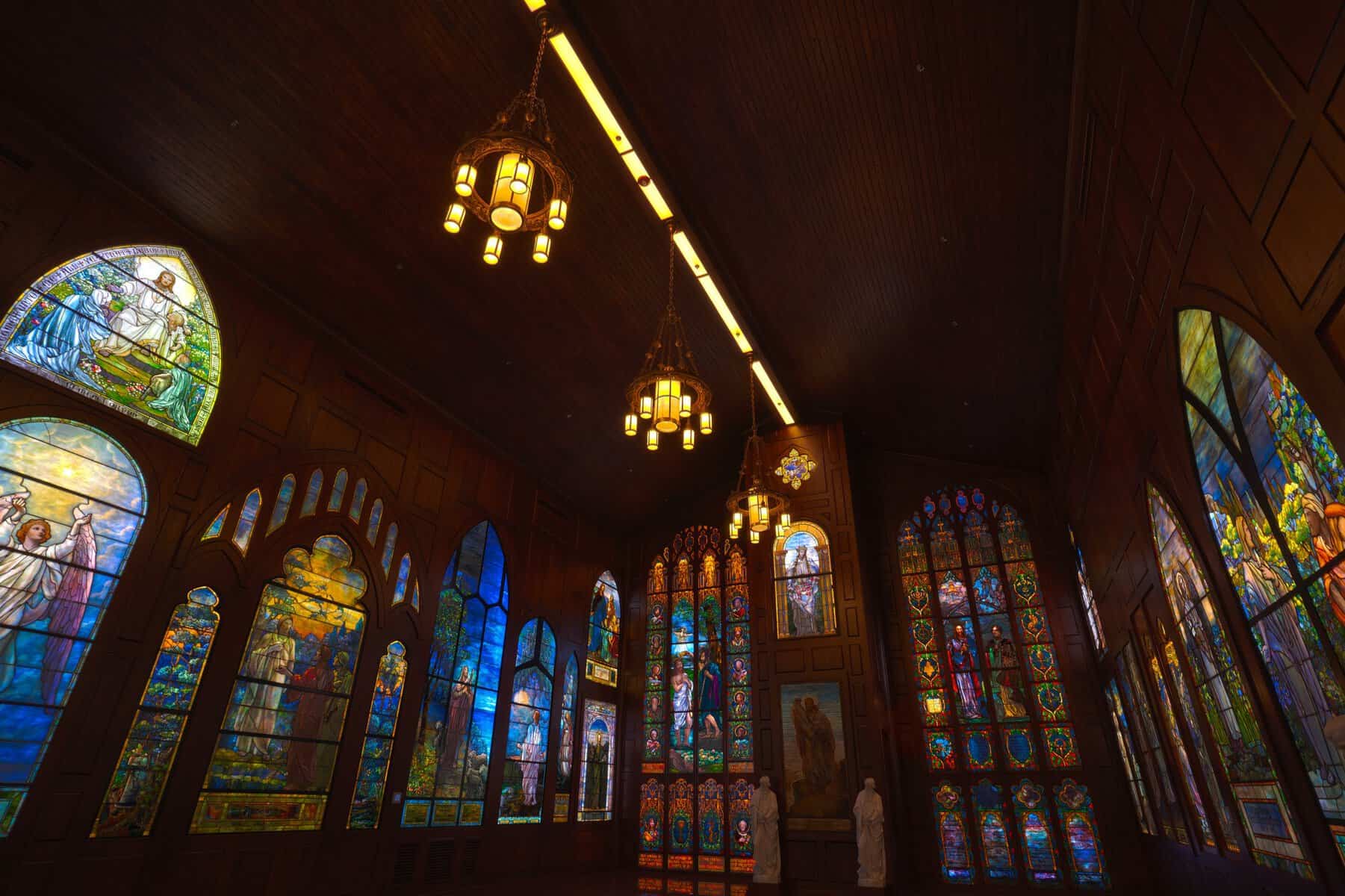
I was at the Gelman Stained Glass Museum in San Juan, standing in a cool, dim hall while a hundred windows glowed around me like they were lit from inside a memory.
This is a place of quiet, jewel-toned hush. It holds the most comprehensive collection of antique stained glass in the United States, tucked into a town most road-trippers blow right past on their way to the border.
Here is why you should stop, step inside, and let the light do its work on you.
Stepping Into a Kaleidoscope
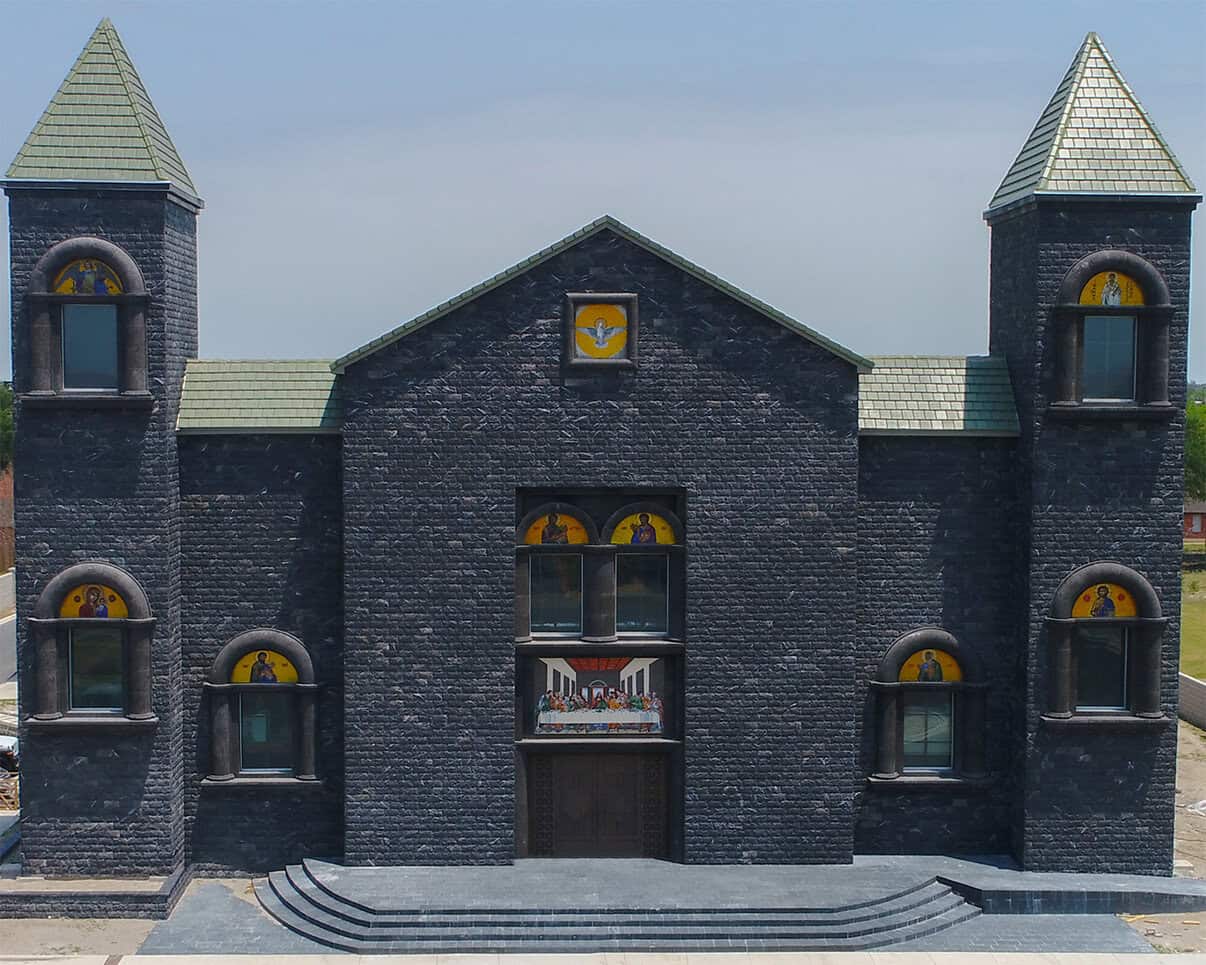
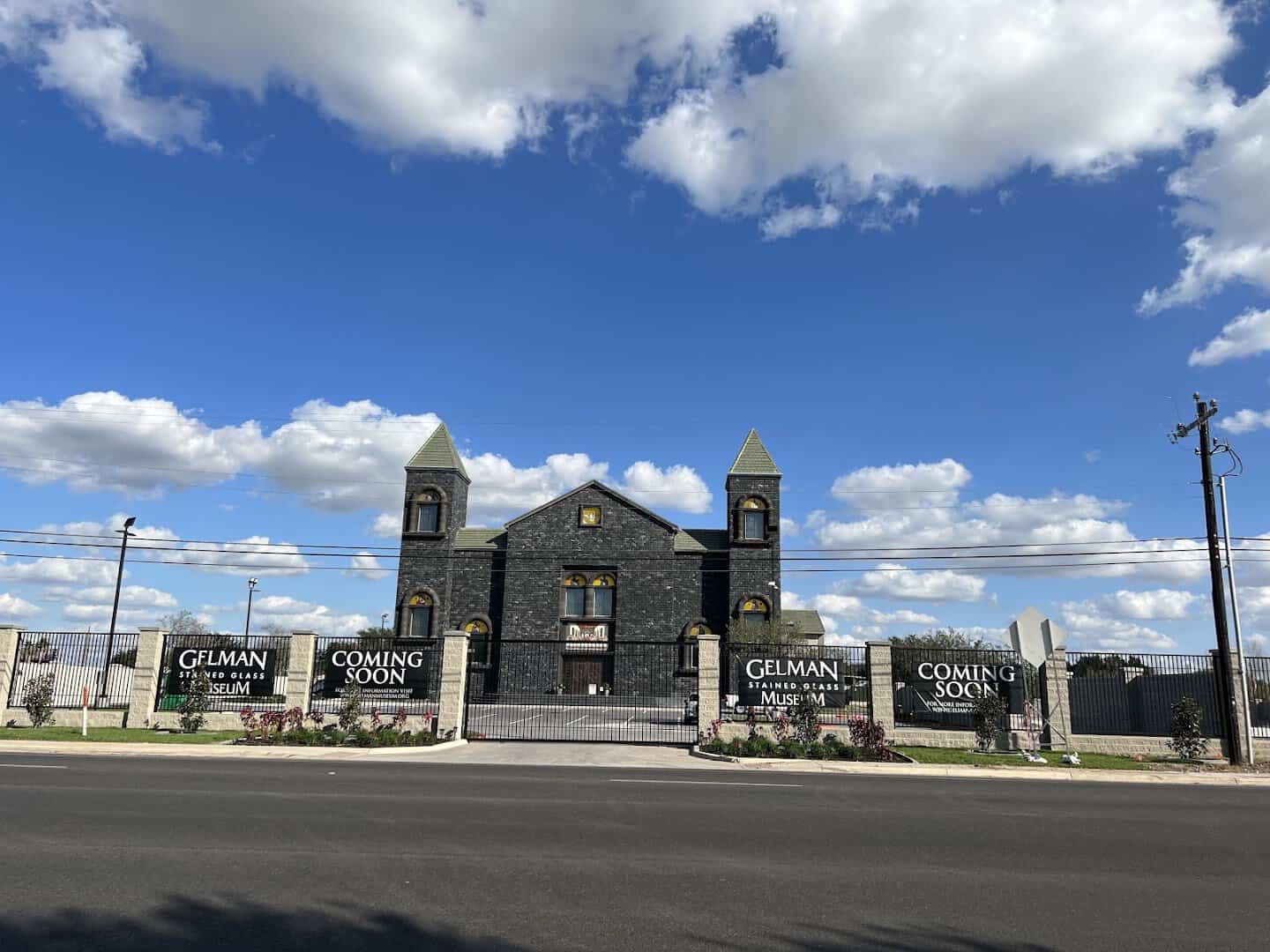
You walk in from the Texas heat and the temperature drops. The building is gray stone on the outside, plain and almost secretive, so nothing prepares you for what waits behind the doors.
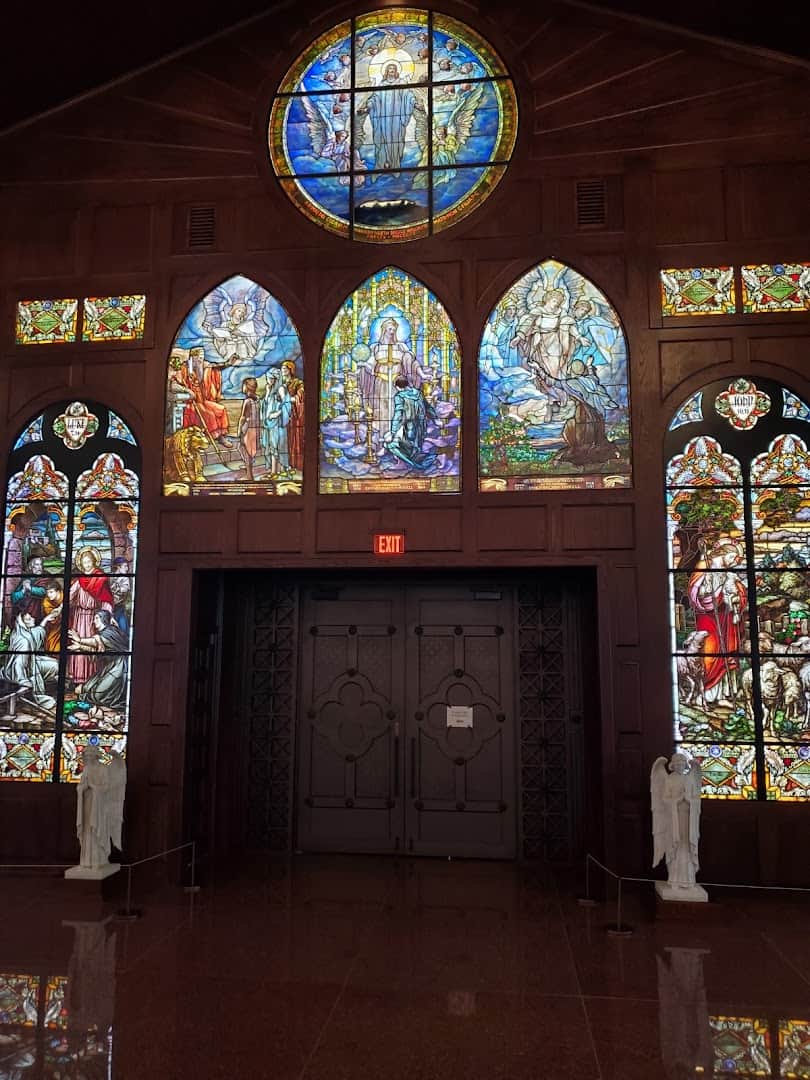
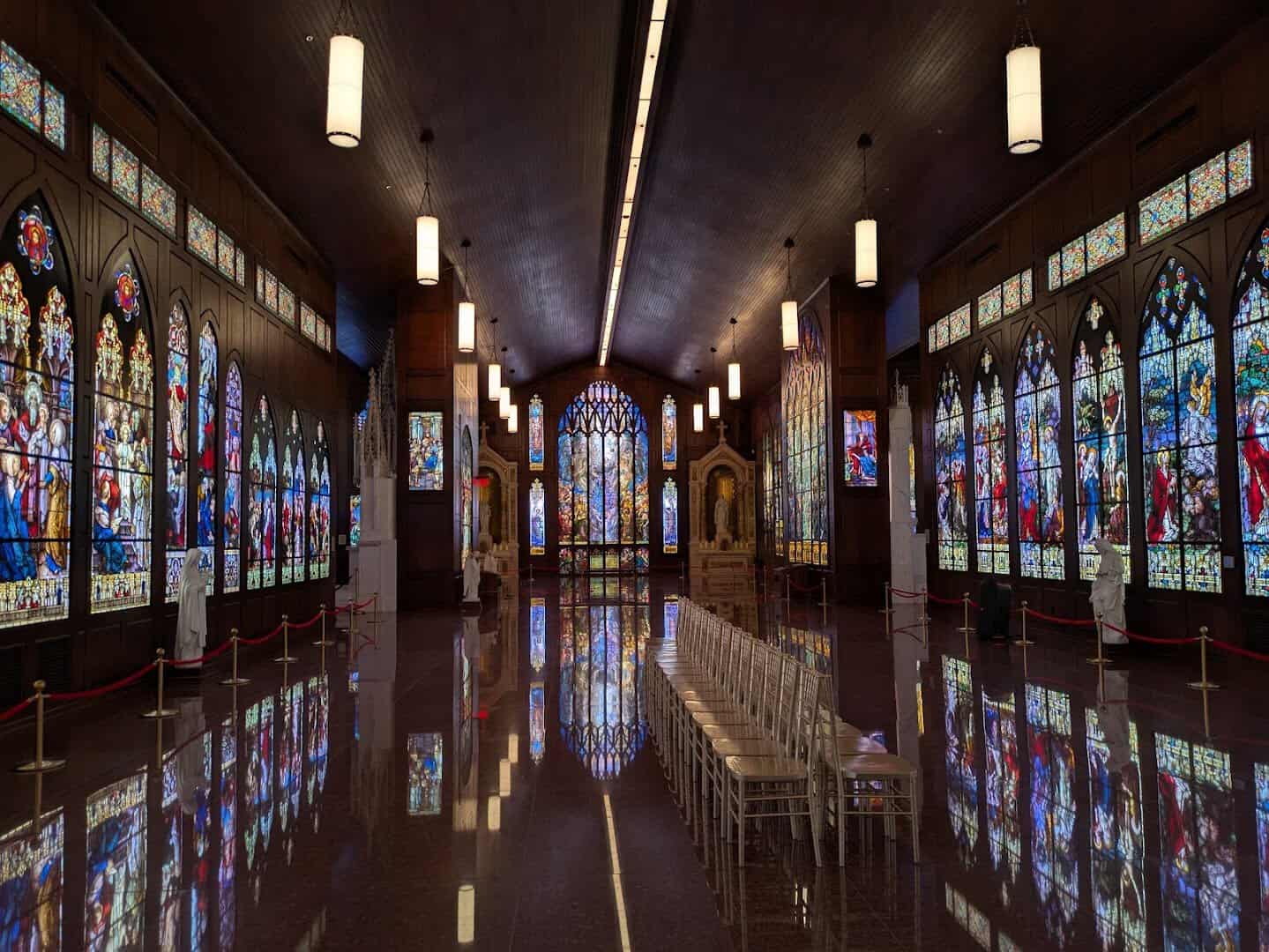
Inside, it is cool and shadowed on purpose. The floors are polished red granite, and they catch every color overhead and throw it back up at you, so the reflections seem to float in the air.
Some of the windows tower 10 to 25 feet tall. You feel small in the best possible way, the way you do under a big sky or inside an old church.
There are 174 antique windows in all, from the 19th and 20th centuries. They were rescued from churches around the country that were closing their doors or falling into ruin, most of them crafted between 1880 and 1910, the golden age of American stained glass.
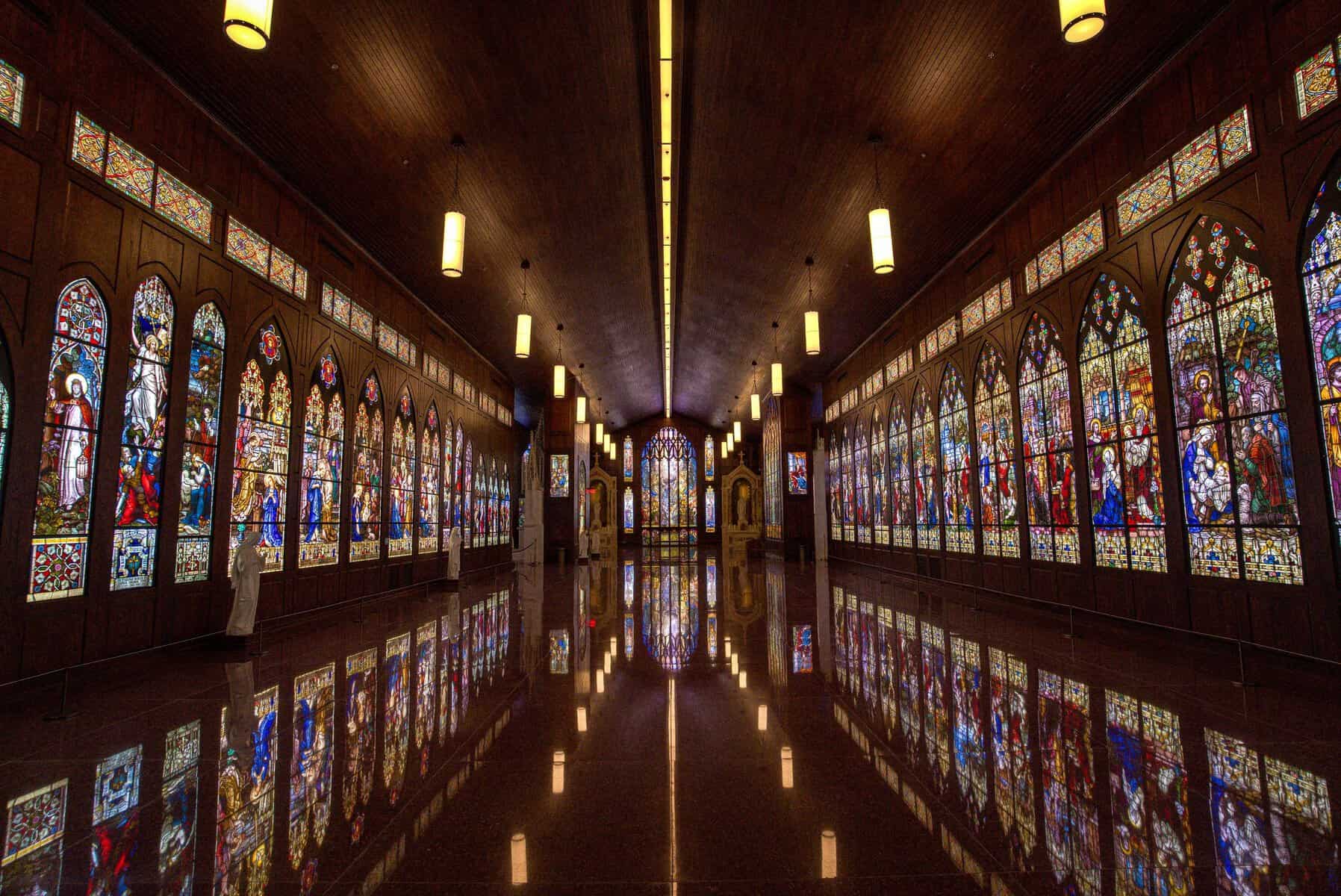
The genius of the place is that there is no sun to depend on. Custom back-lit LED panels sit behind every window, glowing at a steady, even brightness no matter the weather outside.
On a gray day, a rainy day, or after dark, the glass looks exactly as radiant as it did the moment it was made. Nothing dims. My friend leaned over and whispered, “It feels like we should be quiet in here.” We were. Almost everyone is.
The Window That Stops You Cold
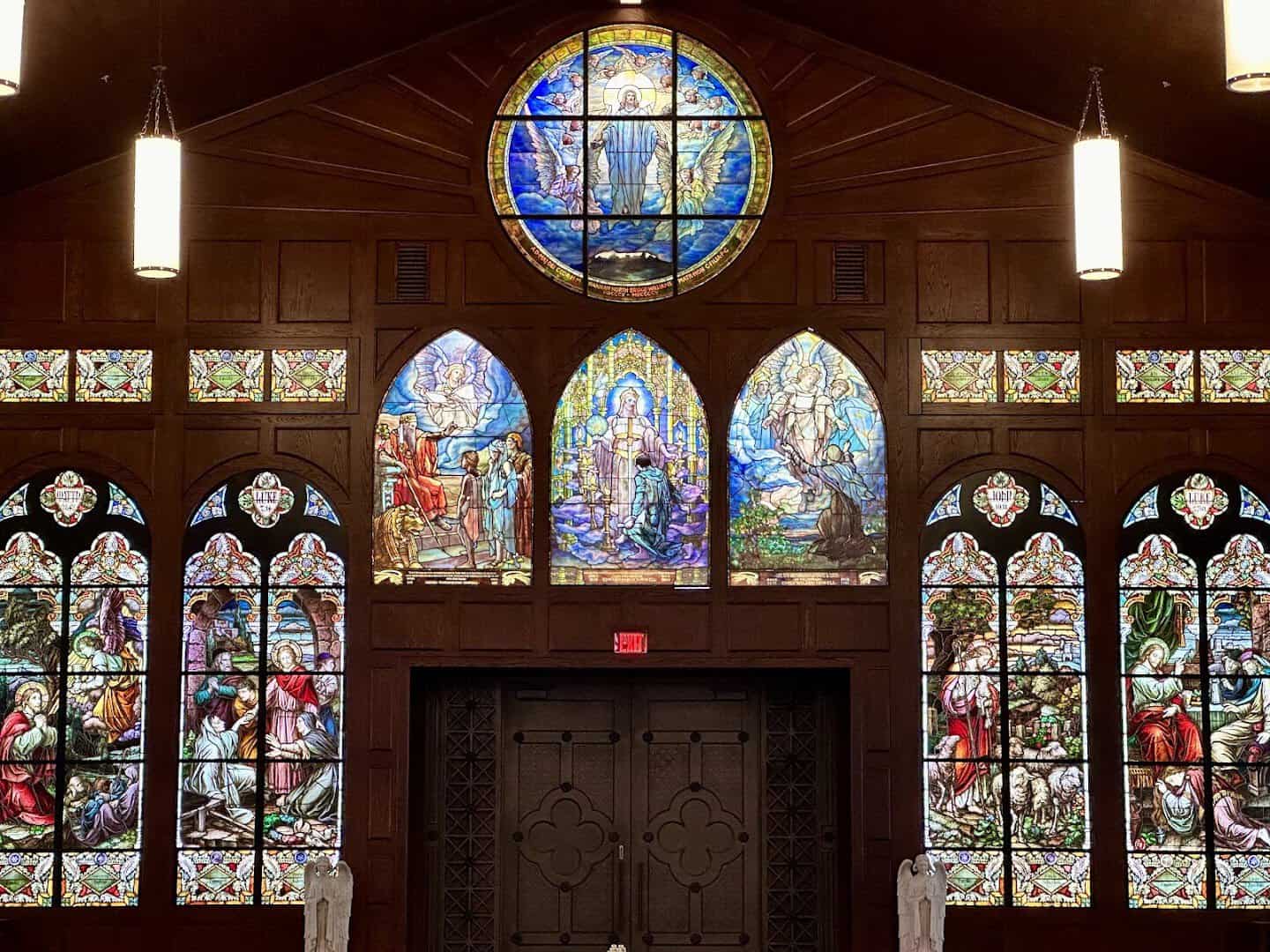
Somewhere in the middle of your visit, you turn a corner and meet Te Deum, and you stop walking entirely. It is a Tiffany Studios masterpiece, and it is enormous, roughly 40 feet wide and 15 feet tall.
Cool blues and deep purples wash across it, broken by metallic golds and a sudden burst of brilliant white. Figures from the New Testament fill the left side, figures from the Old Testament fill the right, and the whole thing hums.
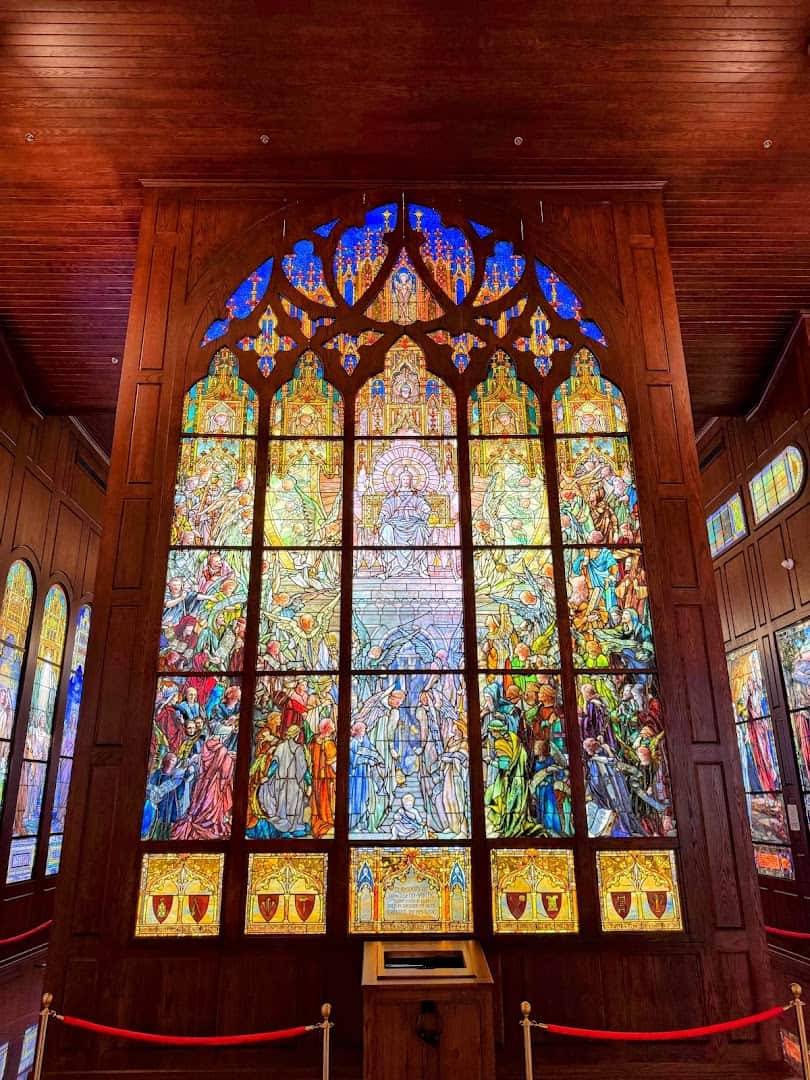
Te Deum is the showpiece, but it is not alone. The Gelman holds the largest collection of Louis Comfort Tiffany windows in the country, with 71 Tiffany works under one roof.
Standing among that many of them at once is something you simply cannot do anywhere else in America. Museums usually own one or two prized Tiffanys. This place has dozens, side by side.
Tip: give yourself time here. People rush museums out of habit, but this collection rewards standing still. The longer you look at a single window, the more of it you see.
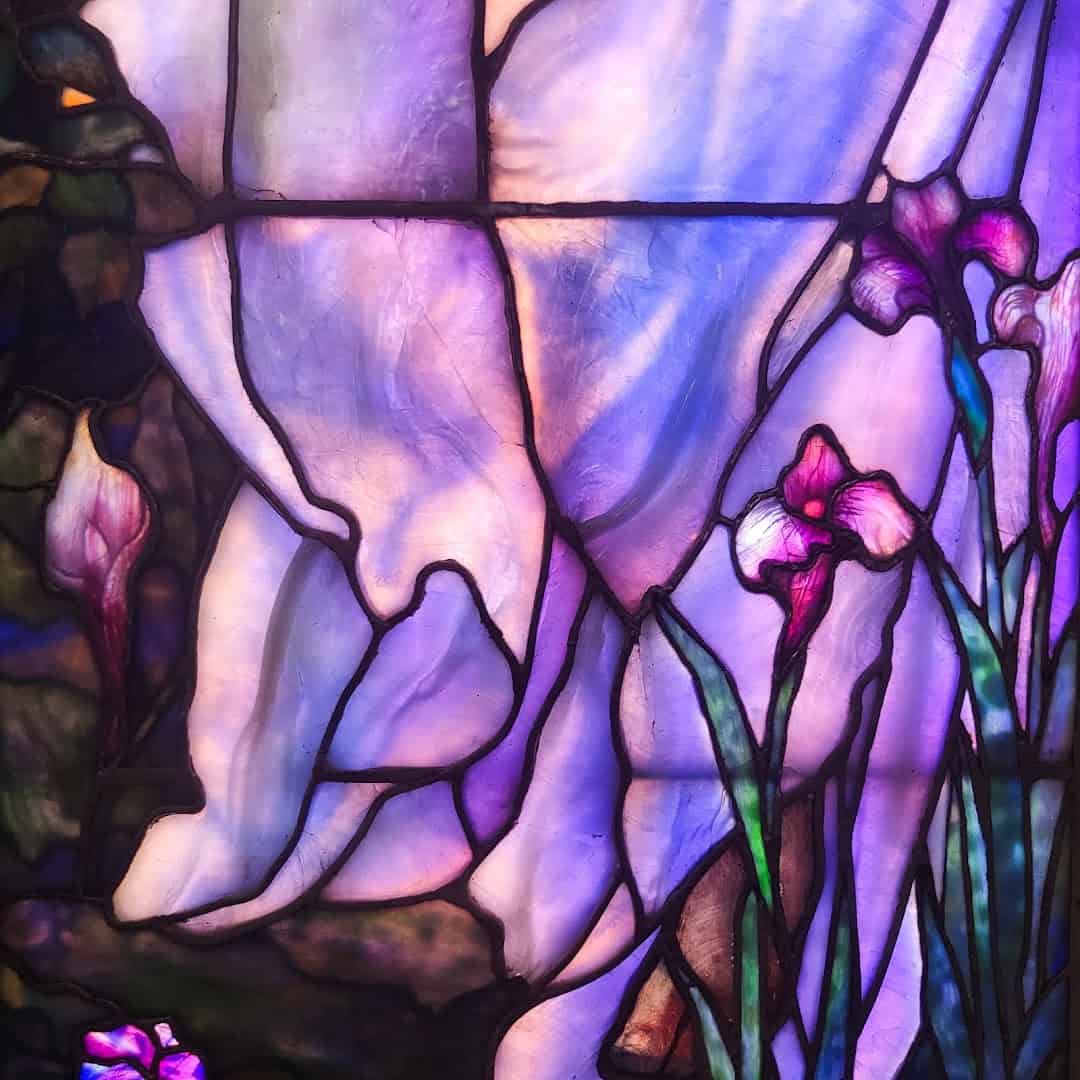
The tiny painted faces come forward first, then the layered opalescent glass, then the little jeweled bits that catch light like water. Nothing about it is flat.
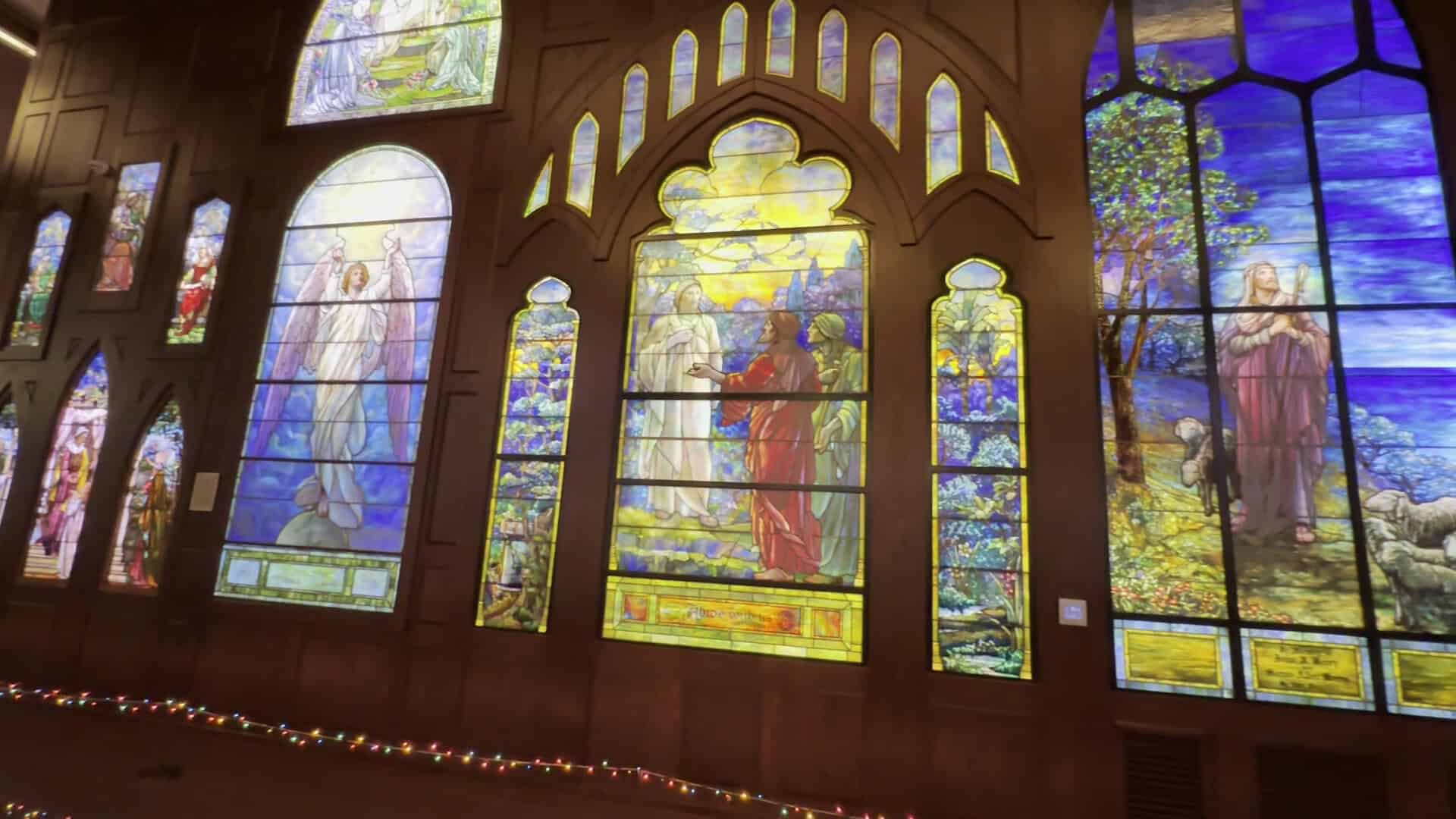
Wander a little farther and the subjects keep changing. There are saints and angels, yes, but also landscapes, doves, lilies, and geometric borders that look almost modern.
Each window was made for a specific church, so each one carries its own small mystery about where it hung and who once prayed beneath it.
One Doctor, One Obsession, Forty-Five Years
Every great collection starts with one person who cannot let go. This one is the life’s work of Dr. Lawrence Gelman, an anesthesiologist who made his home right here in the Valley.
The story goes that decades ago he watched a stained glass window being repaired in Atlanta, and something in him locked on. He was struck by the way the color changed the instant light passed through it, alive in a way paint on canvas never is.
That single moment turned into a hunt that lasted roughly 45 years. He collected the windows one at a time, many of them saved from churches being demolished or shuttered, glass that would otherwise have been smashed or hauled off.
He assembled the collection in large part as a tribute to his wife, whose Catholic faith gave the whole project its heart. It was a labor of love long before it was ever a museum.
Think about what that hunt actually took. A church closes somewhere in Ohio or New York, its windows headed for a dumpster, and one person a thousand miles away decides they are worth saving.
Then he does it again, and again, for four and a half decades, until a small Texas town holds the finest such collection in the country.
For years the windows had no proper home. Then, in 2015, construction began on a building worthy of them. It opened its doors in December of 2021, after decades of quiet collecting finally became something the public could walk into.
Dr. Gelman passed away in early 2026, but the museum he built keeps his life’s work glowing for everyone who walks in. Every lit window is a piece of what one person refused to let disappear.
A Building Shaped Like a Cathedral
The museum itself is part of the art. It runs about 16,000 square feet, and it is built in the Latin-cross cruciform shape of a medieval European cathedral, a long central hall crossed by shorter arms.
That shape is not decoration. It gives the windows the tall, narrow, reverent setting they were made for, the kind of space a church would have given them a century ago.
Walking the length of it feels like walking a nave, even though the nearest great cathedral is an ocean away. The proportions do half the work before you even look up.
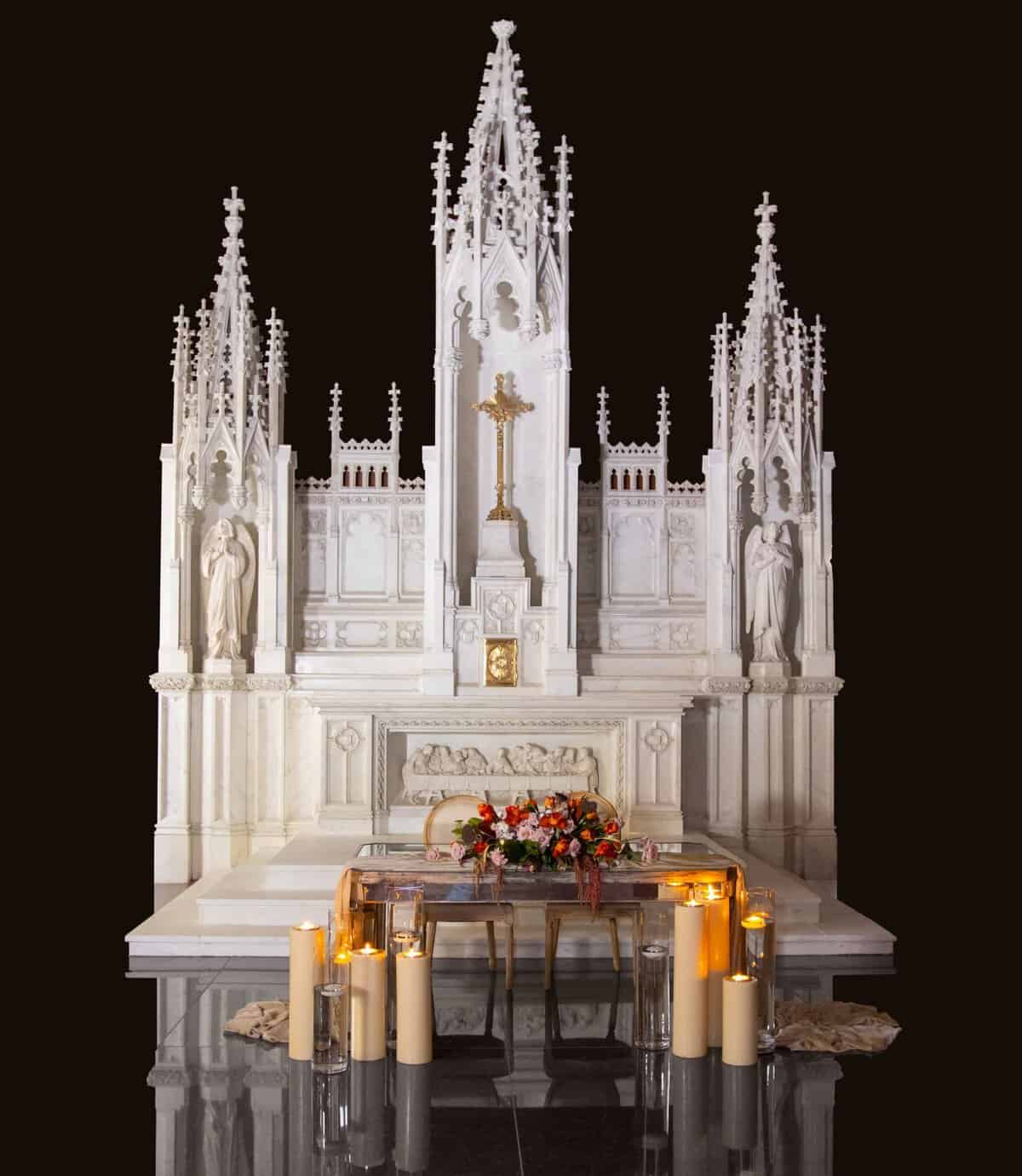
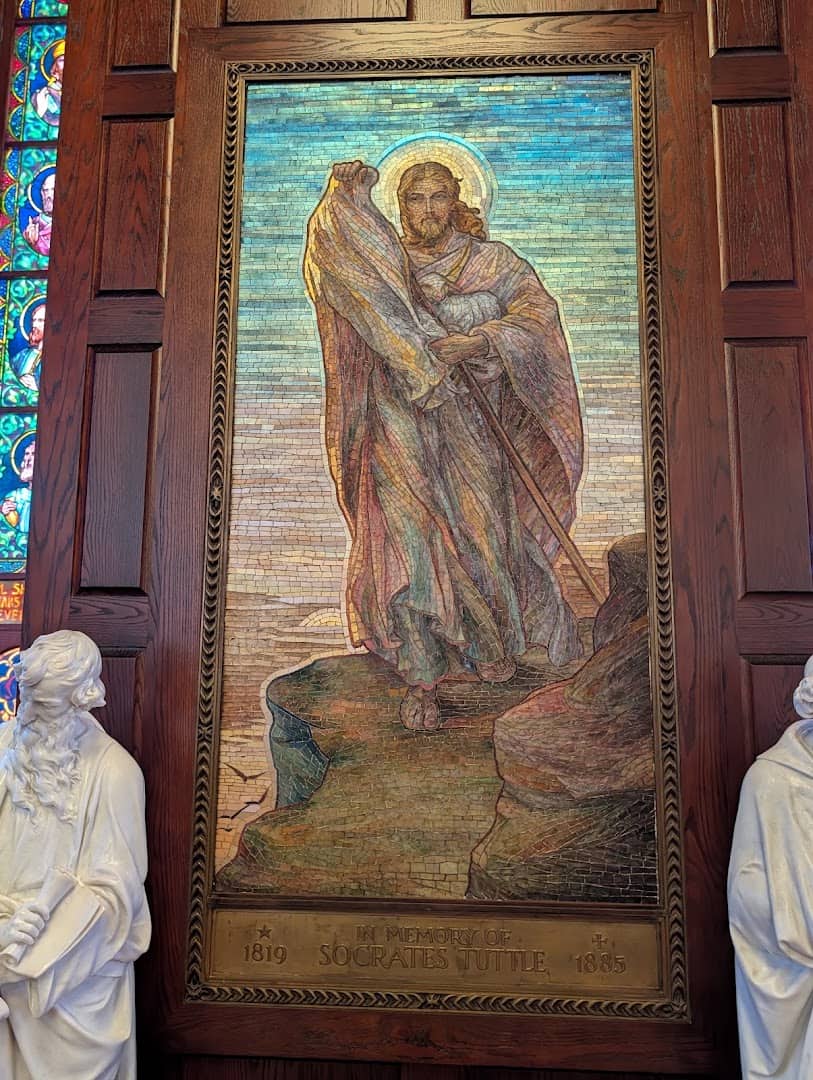
The collection is not only windows, either. Antique altars, baptismal fonts, and other religious artifacts are set throughout the galleries, gathered from the same era and often the same churches. They ground the glass in the world it came from.
Did you know? The museum sits just down the road from the Basilica of Our Lady of San Juan del Valle, one of the most visited shrines in the country. The town has drawn pilgrims for generations, so a hall full of sacred glass fits right in.
The Names Behind the Glass
If you love the history of a craft, this collection is a who’s who of it. The windows carry the signatures of the greatest studios of the age.
There is Tiffany Studios, of course, with its famous opalescent glass that seems to hold color in layers rather than on the surface. There is John La Farge, Tiffany’s great rival, who patented that opalescent technique first.
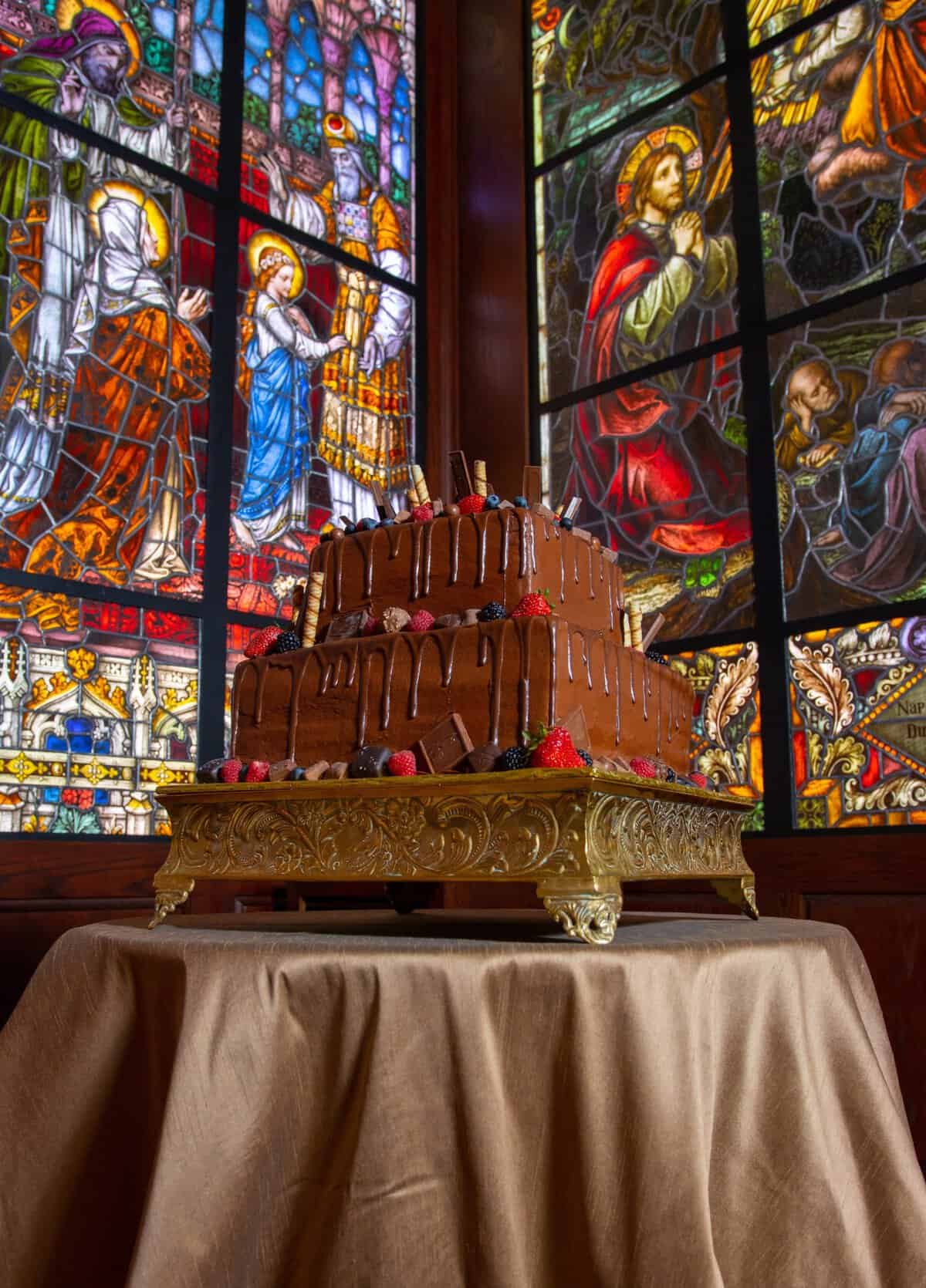
There is Mary Tillinghast, one of the few celebrated women in the field, and J and R Lamb Studios, the oldest decorative arts firm in America. Each name is a chapter in how this art form grew up.
From across the Atlantic came the Munich style, all painted detail and rich storytelling, in windows by Franz Mayer and F. X. Zettler. Put an American opalescent Tiffany next to a painted German Mayer and you can see two entire philosophies of light standing side by side.
You do not need to know any of these names to be moved by the room. But there are QR codes beside the windows, and if you want the story behind a piece, you can pull it up on your phone as you go, at your own pace.
Light You Can Hear
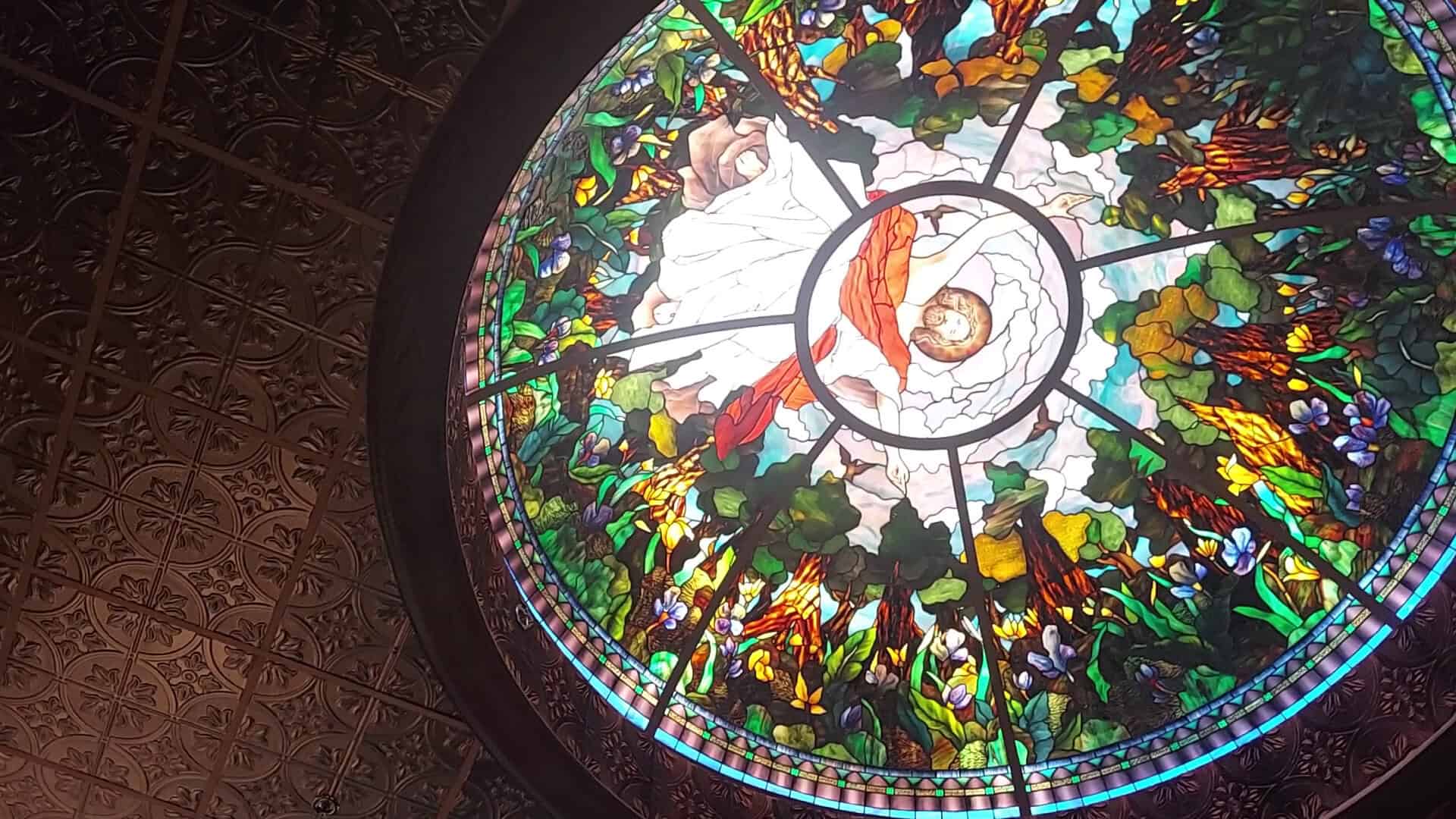
The eyes get most of the attention here, but the ears are not left out. As you move through the galleries, recorded Gregorian chant drifts through the space, low and unhurried.
It does something to the light, honestly. The color and the sound together tip the whole experience past pretty and into peaceful, the way a real service might.
One arm of the building holds a chapel with a pipe organ and a serious sound system. The museum hosts orchestral and chamber concerts there, under all that color.
Imagine that music rising while the glass glows around you. If you can time a visit to a performance, do it. It turns a quiet gallery into something closer to a shared moment.
What to Know Before You Go
A few practical things make this visit smoother. First, the museum runs by appointment, and you book your slot through the website ahead of time rather than just showing up. Plan a little.
Admission for an adult runs about $20, which is a fair price for a collection you cannot see anywhere else on the continent. There are no guided tours, but you do not need one.
The visit is self-guided, and the QR codes give you as much or as little detail as you want. Move at your own speed and double back to your favorites.
Pro tip: wear comfortable shoes and give yourself at least an hour, more if you like to linger. The lighting is low by design, so let your eyes adjust when you first walk in.
Give it a minute and the colors bloom. Photographers, this place is a dream, but the best images come from patience rather than flash. Turn the flash off, hold still, and let the glass do the glowing.
How to Get There
The Gelman sits in San Juan, a small city in Hidalgo County in the heart of the Rio Grande Valley. It is an easy detour if you are anywhere near McAllen or heading down toward the border.
Where: Gelman Stained Glass Museum, 411 Virgen de San Juan Blvd, San Juan, TX 78589. Book your visit ahead at gelmanmuseum.org, and check the current hours, which generally run afternoons midweek and daytime on weekends.
Let the Light Find You
There are grand cathedrals in Europe that people cross oceans to stand inside. Here is a version of that feeling waiting in a South Texas town you have probably driven past without a second glance.
Book a slot, drive down into the Valley, and step out of the heat into that cool, glowing hall. Stand in front of Te Deum until you lose track of time, and let a hundred rescued windows pour their color over you.
Some of the best light in Texas is hiding in San Juan, and it has been waiting a very long time for you to come see it.
Featured image: jeff reardon via Gelman Stained Glass Museum

Stella Raines
Editor-in-Chief
Stella brings over a decade of storytelling experience to TX Headlines. With roots in West Texas and a love for road trips, she leads the editorial team with an eye for the hidden stories that make Texas unforgettable.
More Stories

This Massive Texas Record Store Holds Over 250,000 Vinyl, CDs, and Tapes Under One Roof

This Pay-What-You-Want Texas Art Store Lets You Fill a Bag and Name Your Price
This Tiny Texas Town Hides a Hand-Painted Church Locals Call the Queen

This Beloved Texas Resale Shop Hides Rare Vintage Treasures, and Every Sale Funds Children’s Brain Research
Tags