This Elegant Texas Museum Is the Only One in the World Devoted to the Women of the West
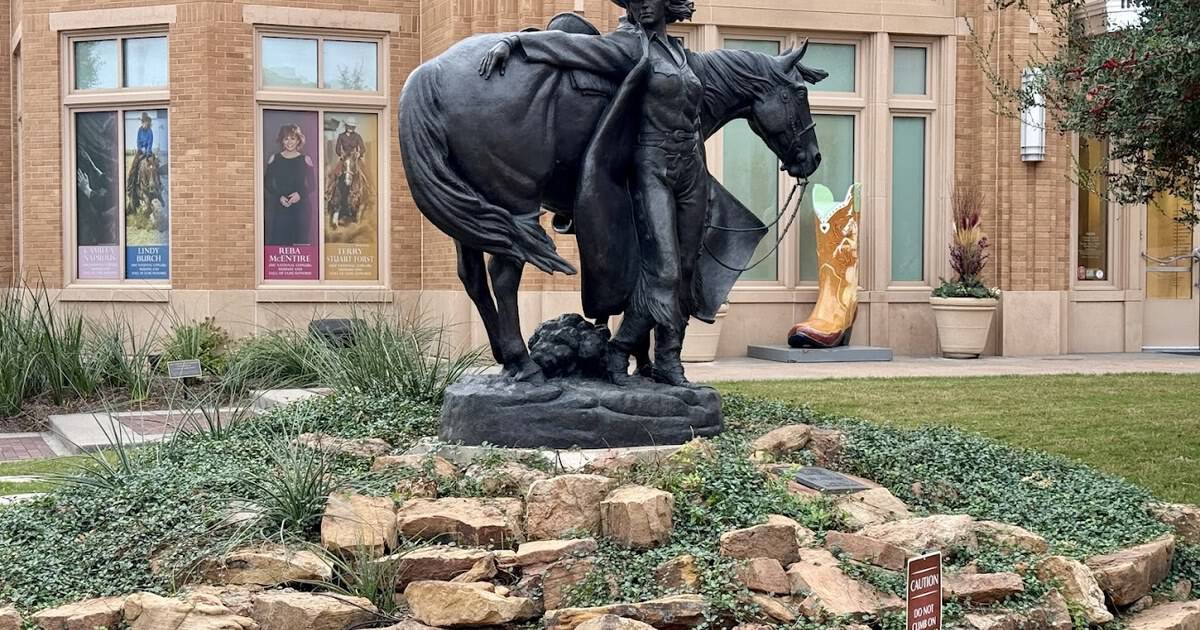
When I was six years old, I was absolutely certain I would grow up to be a cowgirl. My grandmother kept a pony, and I have never quite shaken the sweet straw smell or the dream of a ranch of my own.
So a museum built entirely around the women who shaped the American West is exactly my kind of place. The National Cowgirl Museum and Hall of Fame in Fort Worth runs on true grit, and it is the only one of its kind in the world.
Below, I will walk you through the elegant building, the galleries, the remarkable women, and the practical bits, so you can plan your own visit to Fort Worth.
A Cathedral for Cowgirls
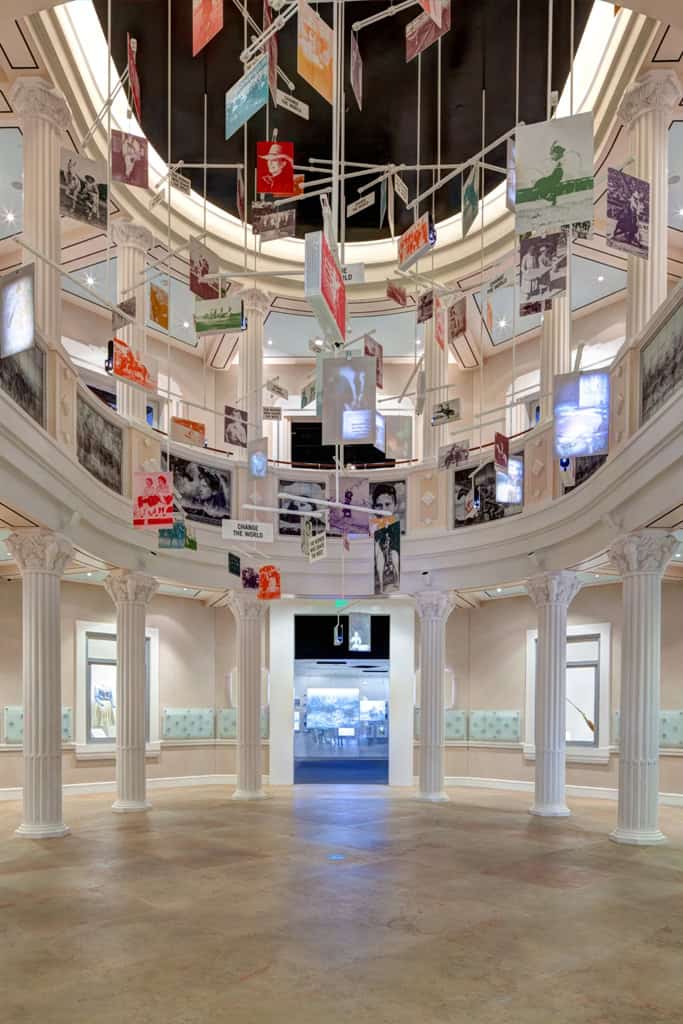
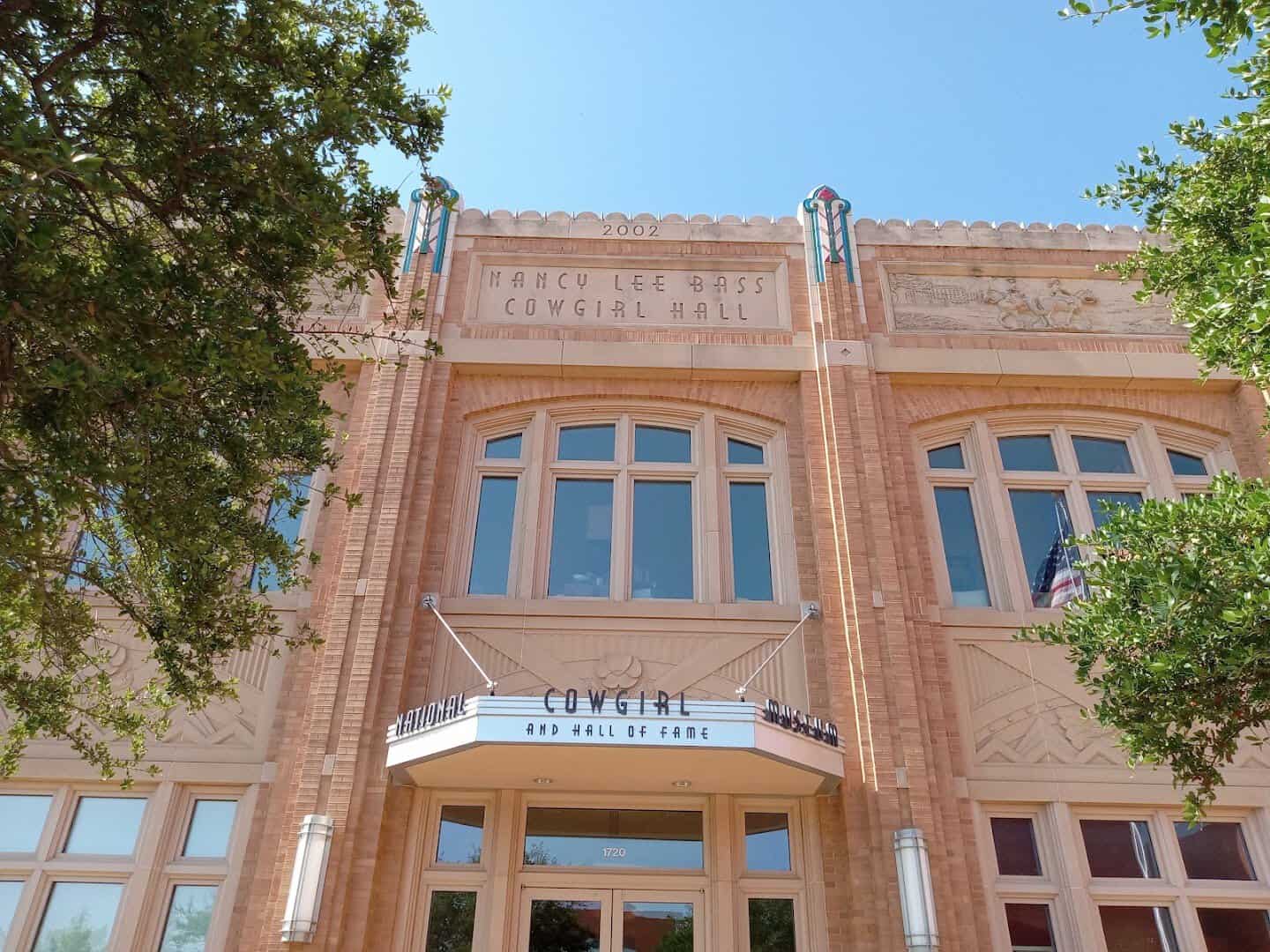
You feel the ambition of the building before you read a single label. The exterior is brick, cast stone, and terracotta finials shaped like wild roses. The architect, David M. Schwarz, went on to win the Driehaus Prize for classical design, and it shows.
Step inside and the space opens into that soaring rotunda, forty-five feet to the top of the dome. French limestone floors stretch out under your boots and art deco railings curve along the balconies.
It feels less like a small regional museum and more like a temple raised to honor its subjects. You lower your voice a little without meaning to.
The whole building runs to thirty-three thousand square feet, and you notice the room to breathe. Nothing is crammed. Each honoree, each saddle, each photograph gets the space to hold your eye for a moment before you move on to the next one.
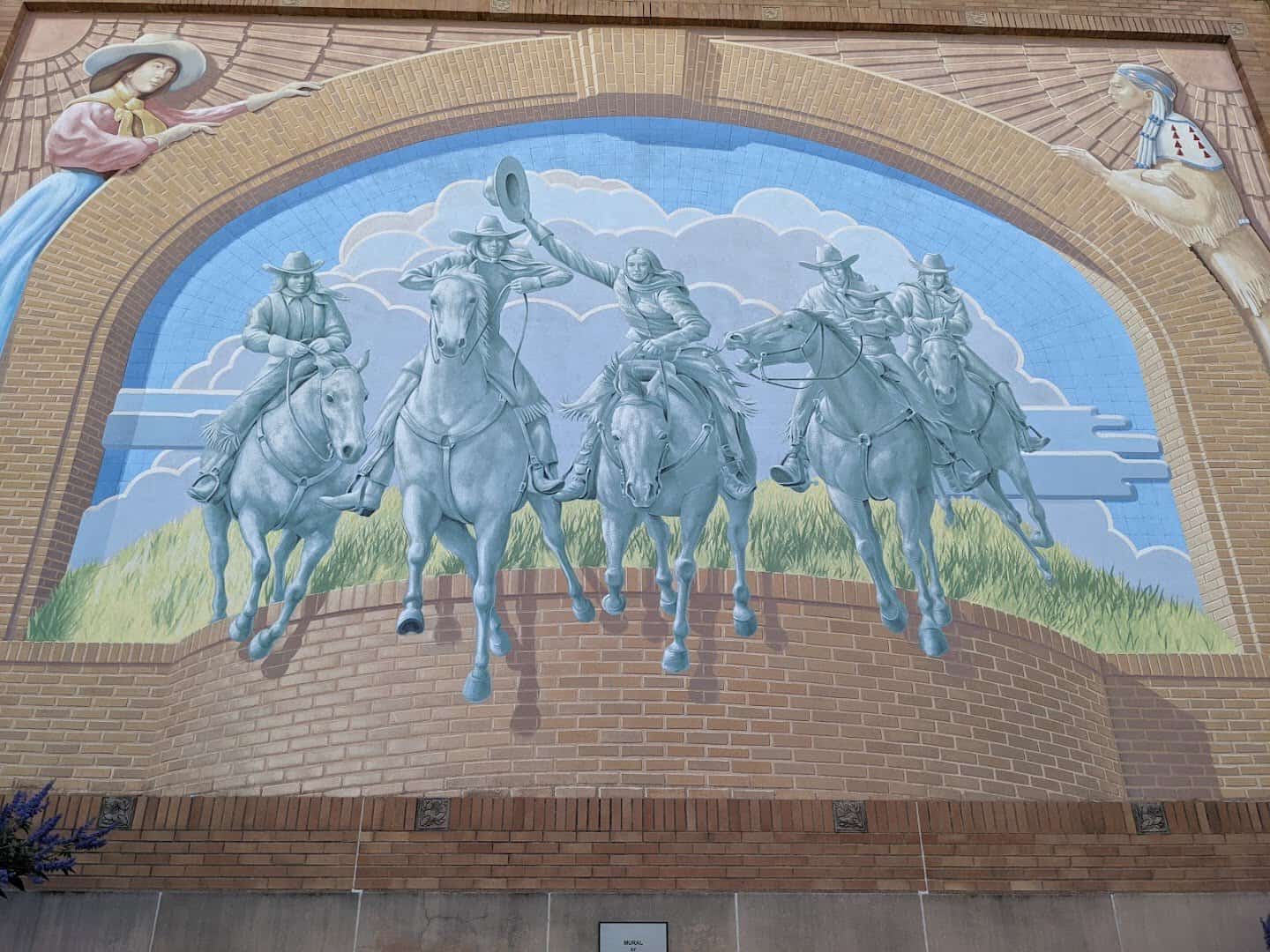
And what subjects they are. The archives here hold more than four thousand artifacts and the stories of over seven hundred and fifty women.
The Hall of Fame itself counts more than two hundred and sixty honorees. Reading their names is the fastest way to understand what a “cowgirl” really means, because the list is so much wider than the word suggests.
The museum sums up its own purpose plainly. Its mission, in its own words, is “honoring and celebrating the incredible legacy of women who shape the West.” Spend an hour under that dome and the mission stops being a slogan and starts feeling like a promise kept.
The Women on the Wall
A cowgirl, it turns out, is not only the woman on the horse. She is also the painter, the writer, the scientist, and the judge.
The honorees include Sacagawea, who guided Lewis and Clark across a continent. They include Annie Oakley, the sharpshooter who out-shot the men of Buffalo Bill’s Wild West Show and became a global star while she was at it.
They include the painter Georgia O’Keeffe, whose desert canvases became shorthand for the Southwest itself, and the potter Maria Martinez, whose black-on-black pottery from San Ildefonso Pueblo is treasured in museums around the country.
Keep reading the wall and the range only widens. Laura Ingalls Wilder is there. So is Sandra Day O’Connor, the first woman on the United States Supreme Court, and Temple Grandin, whose work changed how a whole industry treats its animals.
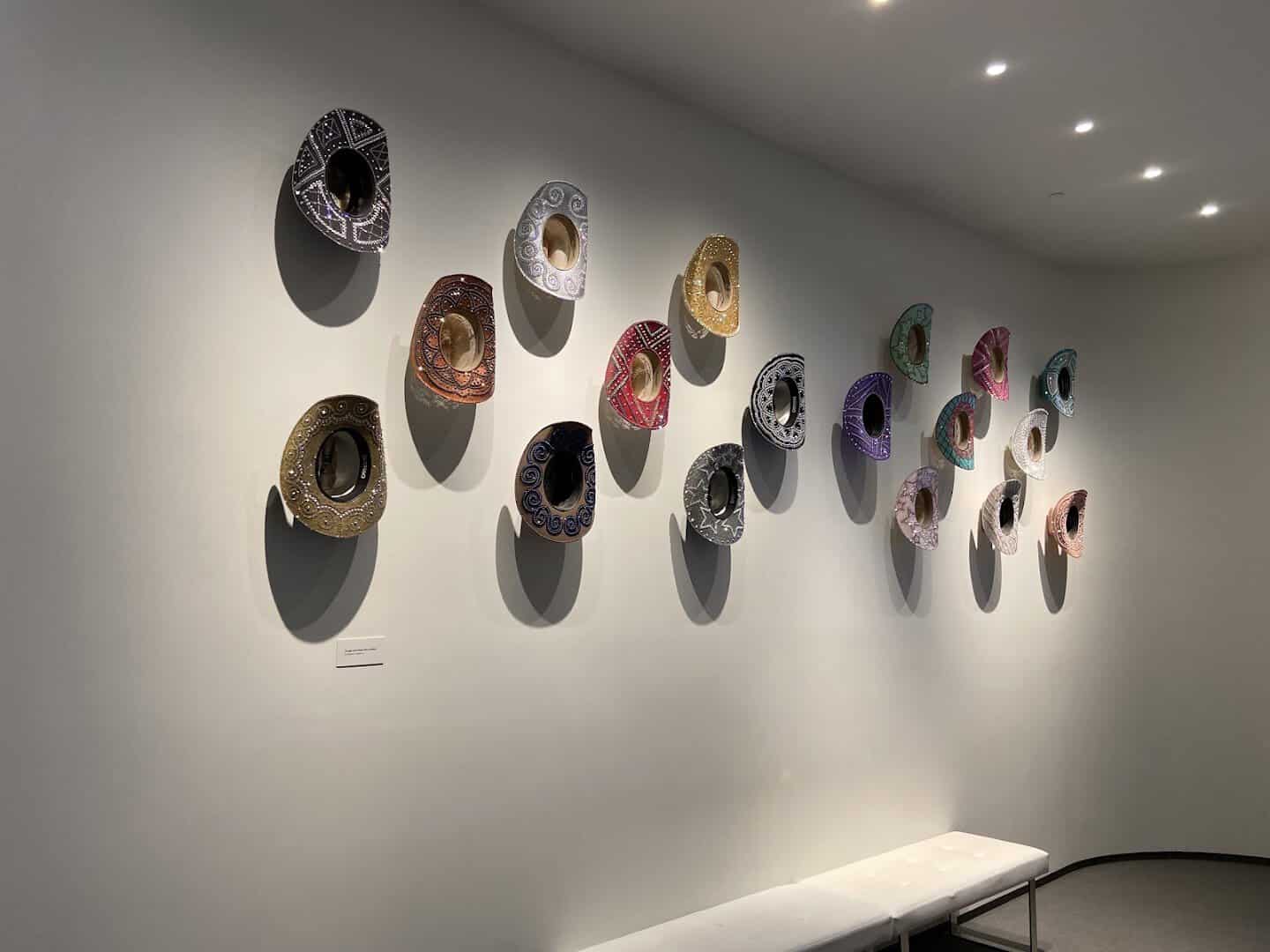
Then there is Enid Justin, a favorite of mine. She founded the Nocona Boot Company in a small North Texas town and grew it into a multi-million dollar business.
She did it at a time when a woman running a factory was almost unheard of, and she ran hers for more than fifty years. Her boots are Texas history you can pull on your own two feet.
It is the kind of wall you could stand in front of for a long time. Somewhere in that roll call is proof that a girl who once dreamed on a pony had picked a bigger dream than she knew.
Saddles, Six-Shooters, and a Little Hollywood
The collection is not all sepia photographs and reverent hush. Some of it is pure fun.
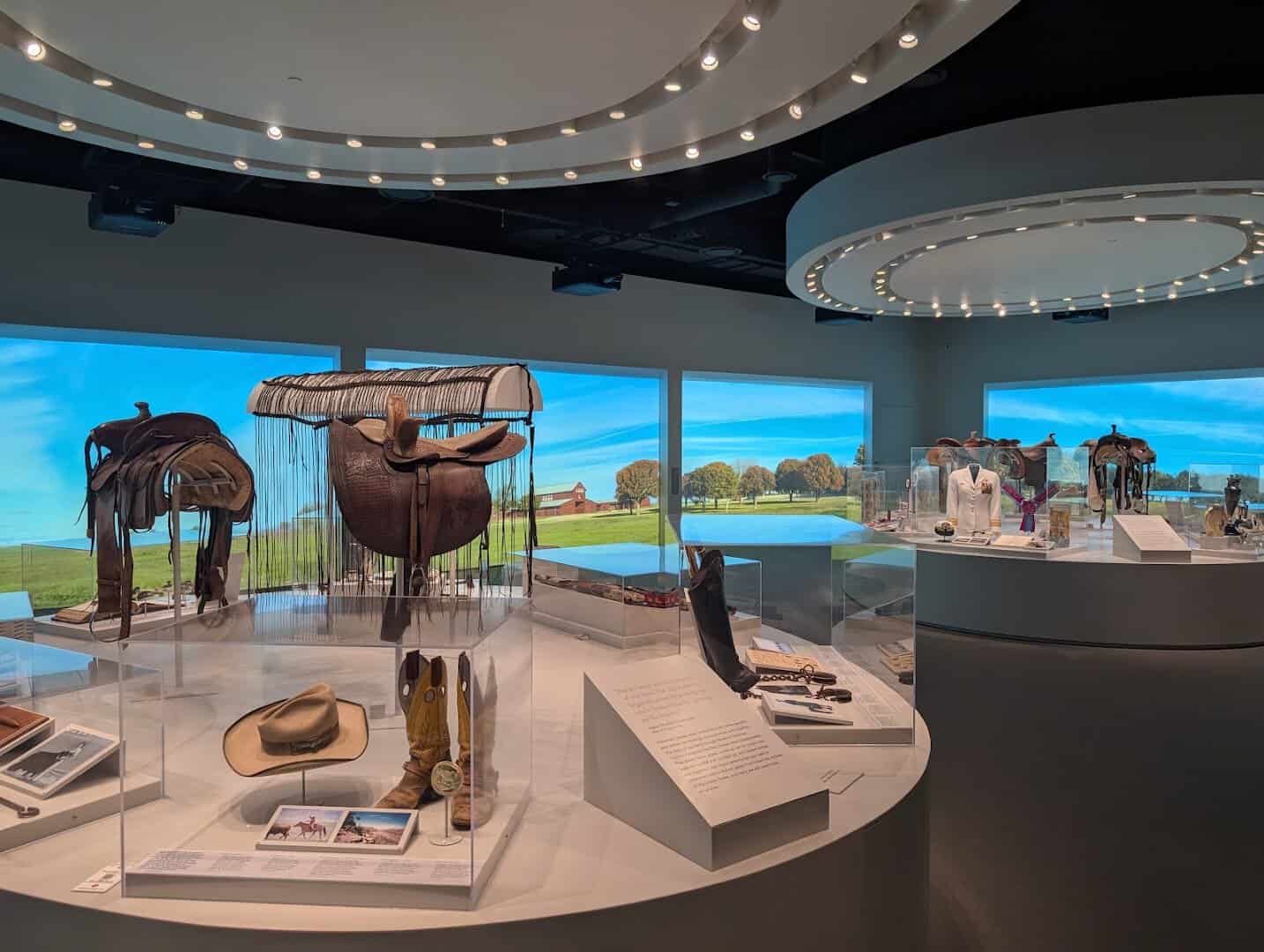
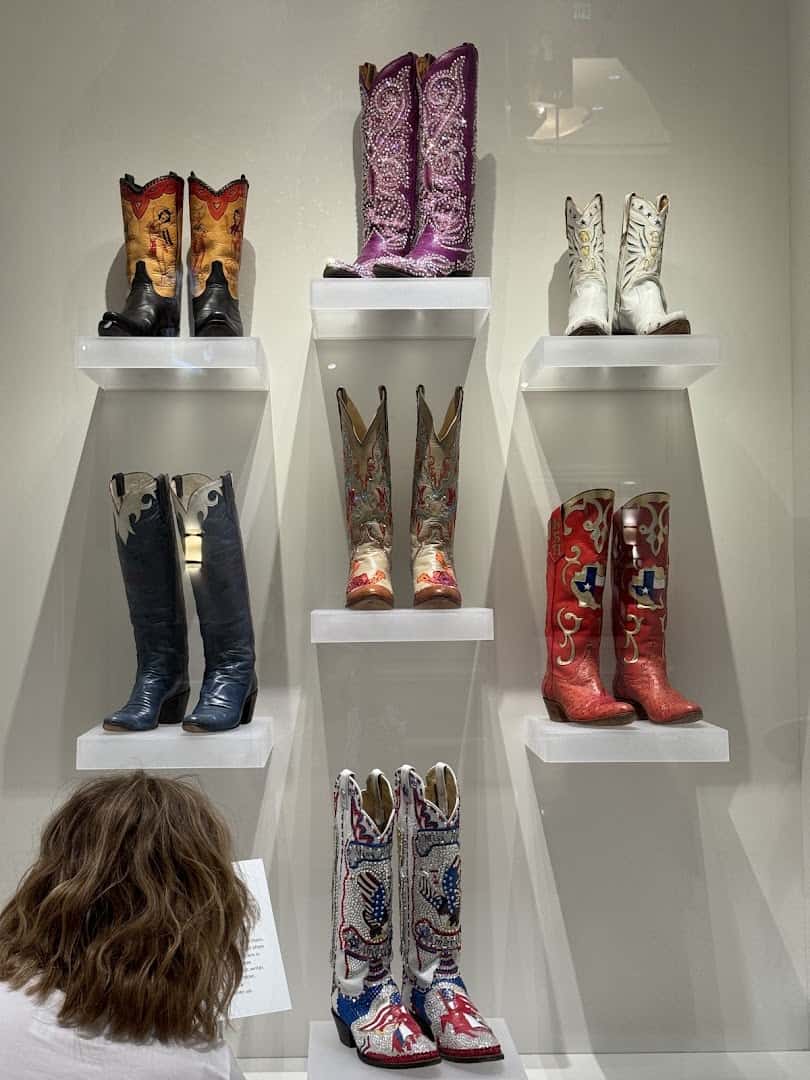
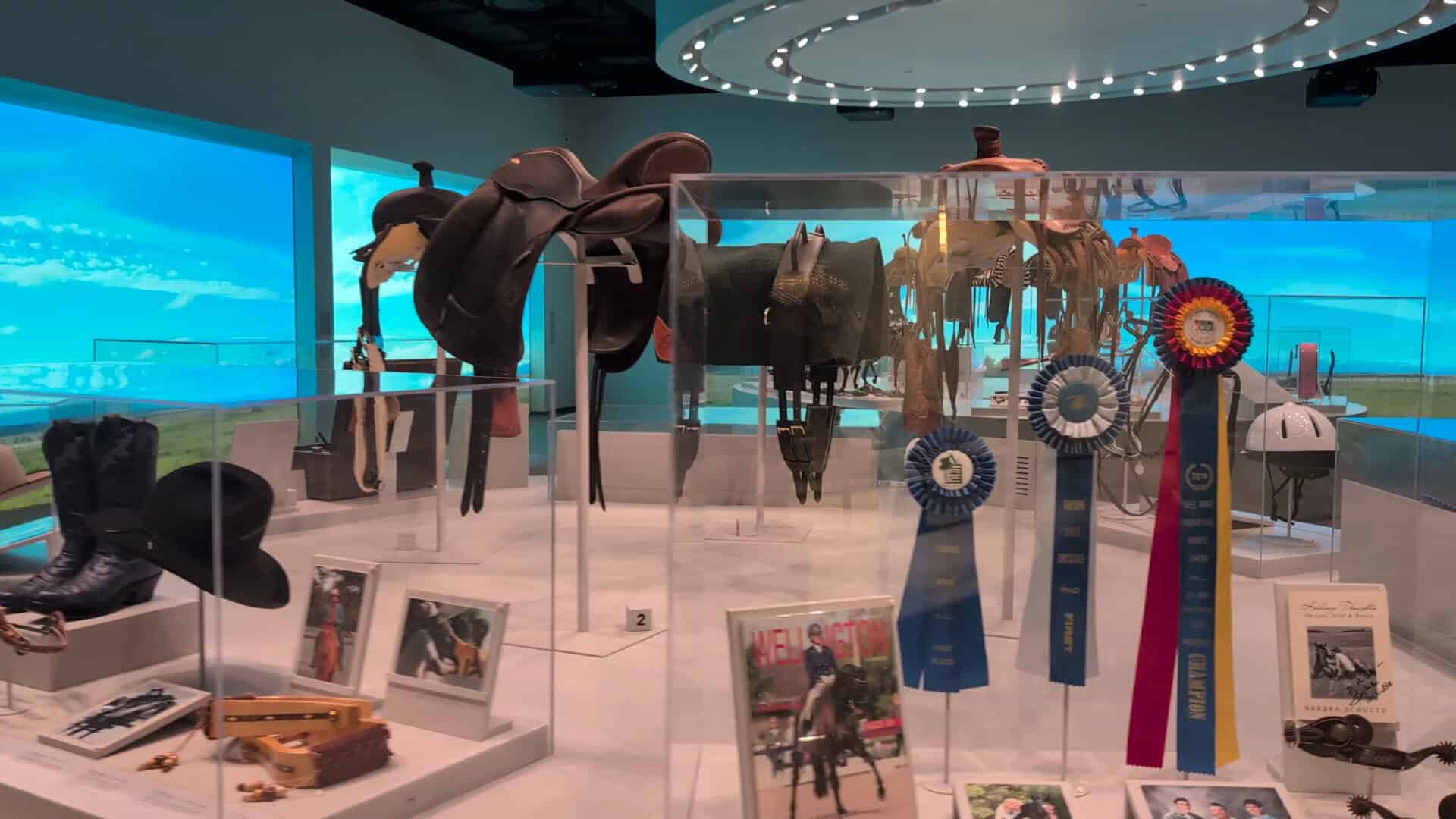
Tucked among the historic saddles and rodeo memorabilia are a few showstoppers from the screen. The museum displays the costume, sword, and shield Gal Gadot wore as Wonder Woman in the 2017 film.
There is the saddle Jon Snow rode in Game of Thrones. And there is a sparkling stage ensemble worn by Reba McEntire, a Hall of Fame honoree in her own right and one of the most famous Texans alive.
It is a clever bit of storytelling. The message lands without a lecture. The cowgirl spirit did not stay in the nineteenth century. It rode straight into pop culture and never got off the horse.
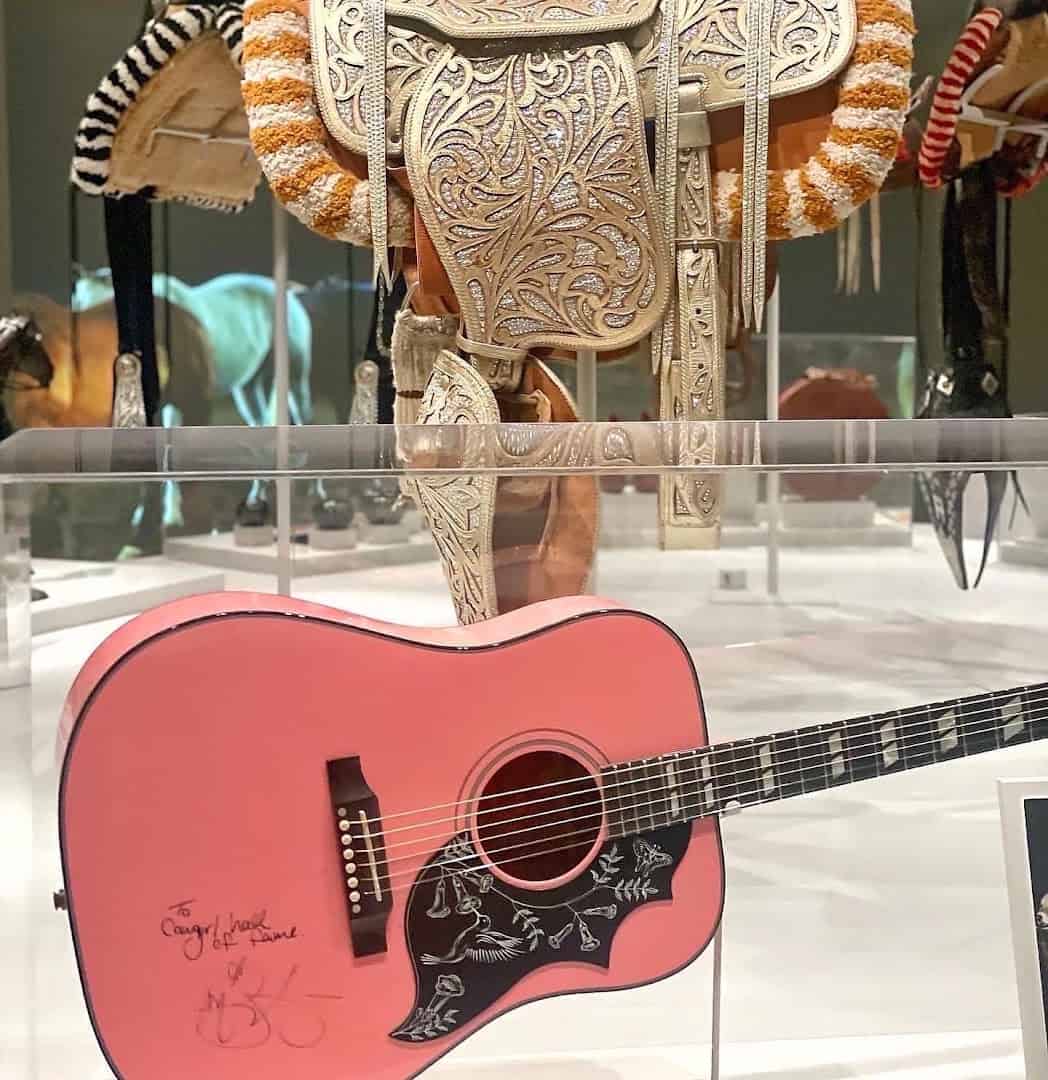
Look closely at the older cases too. A worn pair of chaps, a hand-tooled belt, a trick rider’s spangled shirt: each one belonged to a real woman who wore it in a real arena, and the little cards beside them tell you exactly who and when.
That is the quiet trick of the whole museum. It puts a movie sword and a hundred-year-old saddle in the same building and lets you see they belong to the same long story.
The girl who idolized Wonder Woman and the girl who idolized her rancher grandmother turn out to be chasing the very same thing. Courage looks good in spangles and in worn leather both.
Design Your Own Boots, Then Ride a Bronc
Upstairs is where the museum turns the visitor loose. In 2019 the second floor reopened as the Kit Moncrief Galleries after a five-and-a-half-million-dollar renovation, and it is built to be touched.
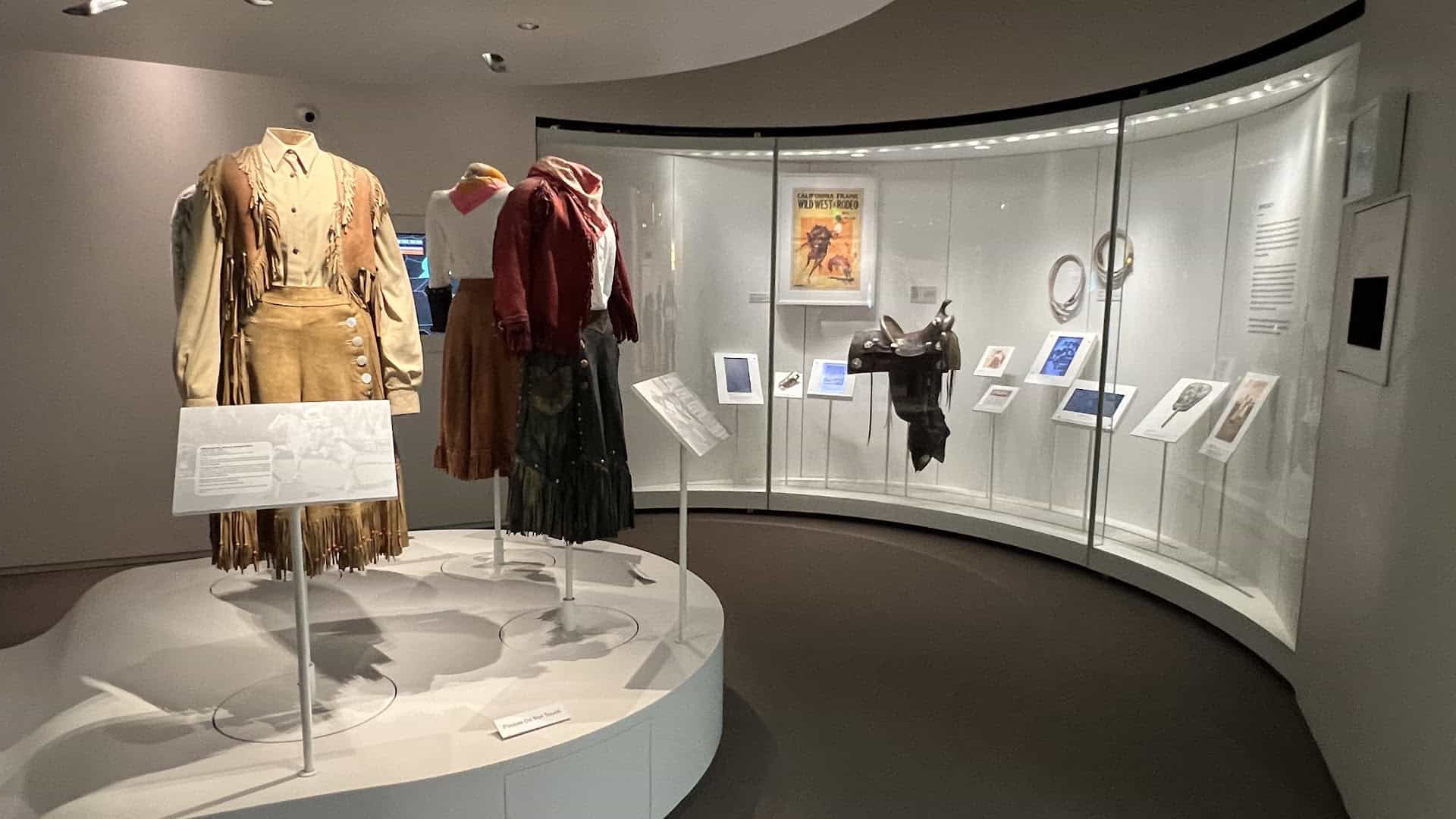
In the Western Design Room, you sit at a sixty-five-inch multi-touch table and design your own horse, your own western shirt, and your own pair of boots. As you choose each detail, it projects up onto the walls all around you, filling the room with color and tooled leather patterns.
Here is the sly part. While you play, you are quietly learning. Each design choice teaches the history behind it, drawing on real honorees like trick rider Tad Lucas, rancher Connie Douglas Reeves, and rodeo champion Fern Sawyer.
You can even snap a photo of your finished design glowing across the walls. Mine would be loud and purple and objectively excellent, and no, I would not let you see it.
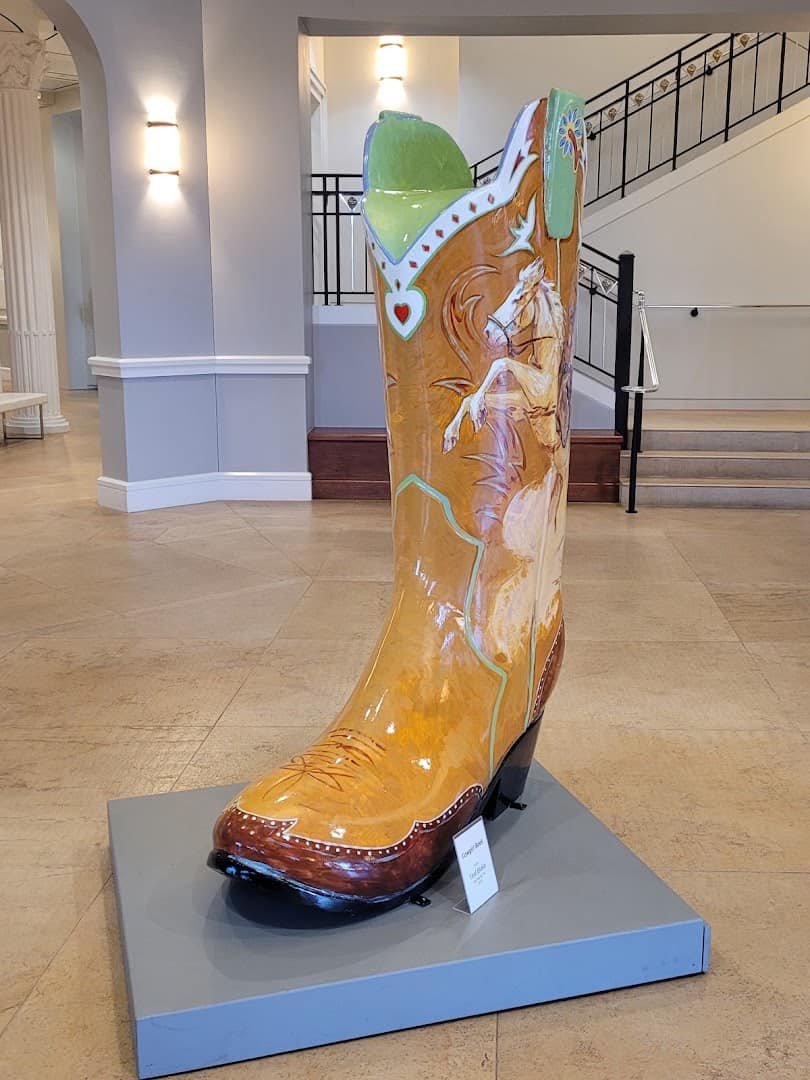
Connie Douglas Reeves is worth knowing. She taught horsemanship at a Texas girls’ camp for decades and was still riding in her hundredth year. That is the kind of woman whose name you carry out the door with you.
Did you know you can climb aboard a digital bronc? In the Bucking Bronc Room, the museum superimposes you onto a bucking horse for your own eight-second ride. My inner six-year-old would not be able to walk past that one.
It’s Never Just a Horse
The best name in the whole building belongs to a gallery called “It’s Never Just a Horse.” It explores the deep partnership between women and the animals they rode, worked, and loved, and it earns every inch of that title.
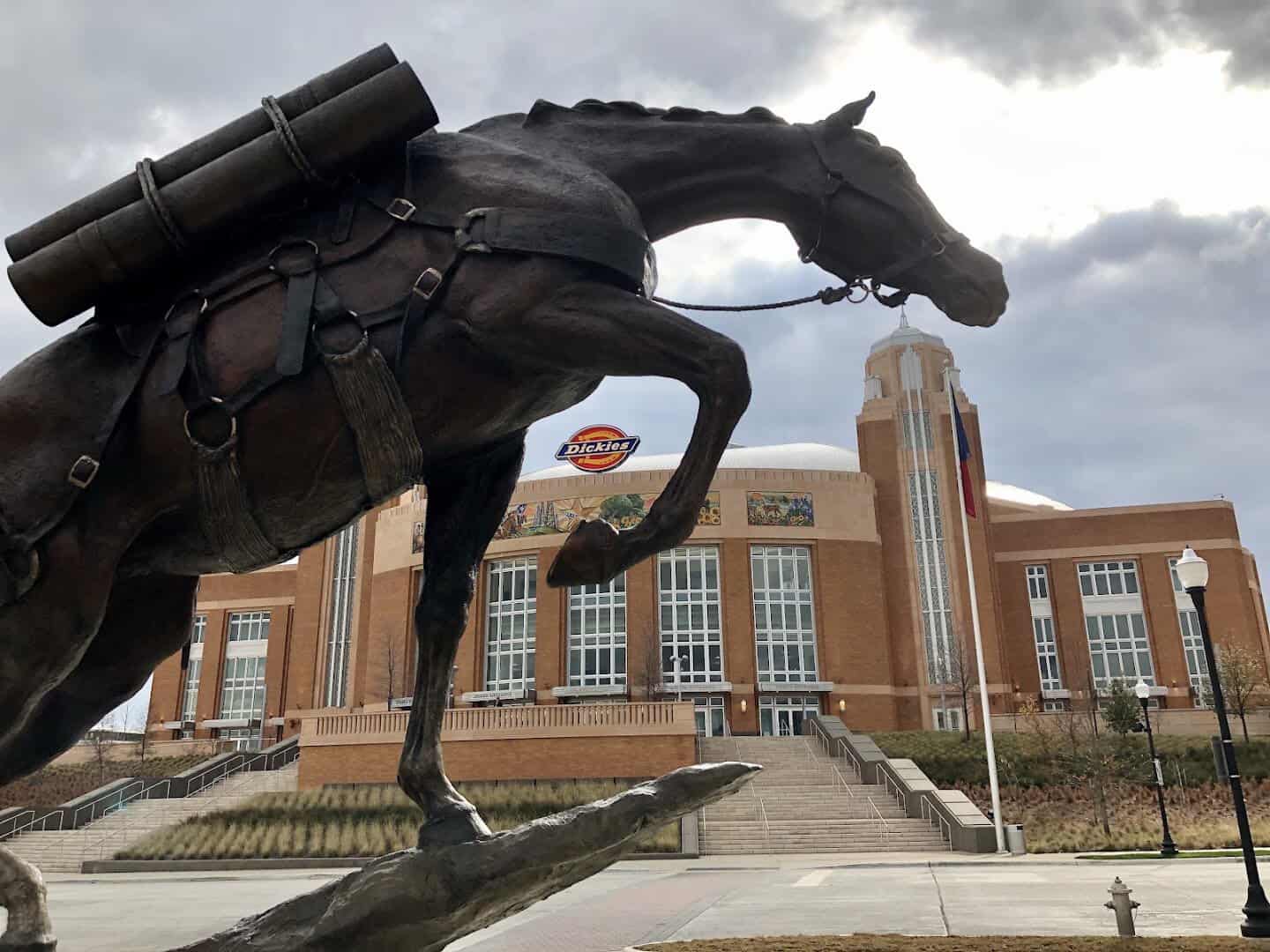
The larger exhibits do the same emotional work on a grand scale. “Kinship with the Land” honors the ranchers who built the West one fence line at a time. “Into the Arena” celebrates the rodeo riders and trick riders who owned the spotlight.
There is also “Hitting the Mark,” which tells the story of the Wild West shows, and “Claiming the Spotlight,” which follows cowgirls through film, television, and pop culture. Larger-than-life video projections sweep you into the wide open spaces of ranch country between the galleries.
Pro tip: give yourself more time than you think you need. Visitors routinely plan for an hour and stay for two, caught by one more story on one more wall.
From a Library Basement to the Cultural District
The grandeur of the place makes its beginnings almost hard to believe. The museum started in 1975 in the basement of the Deaf Smith County Library in the small Panhandle town of Hereford.
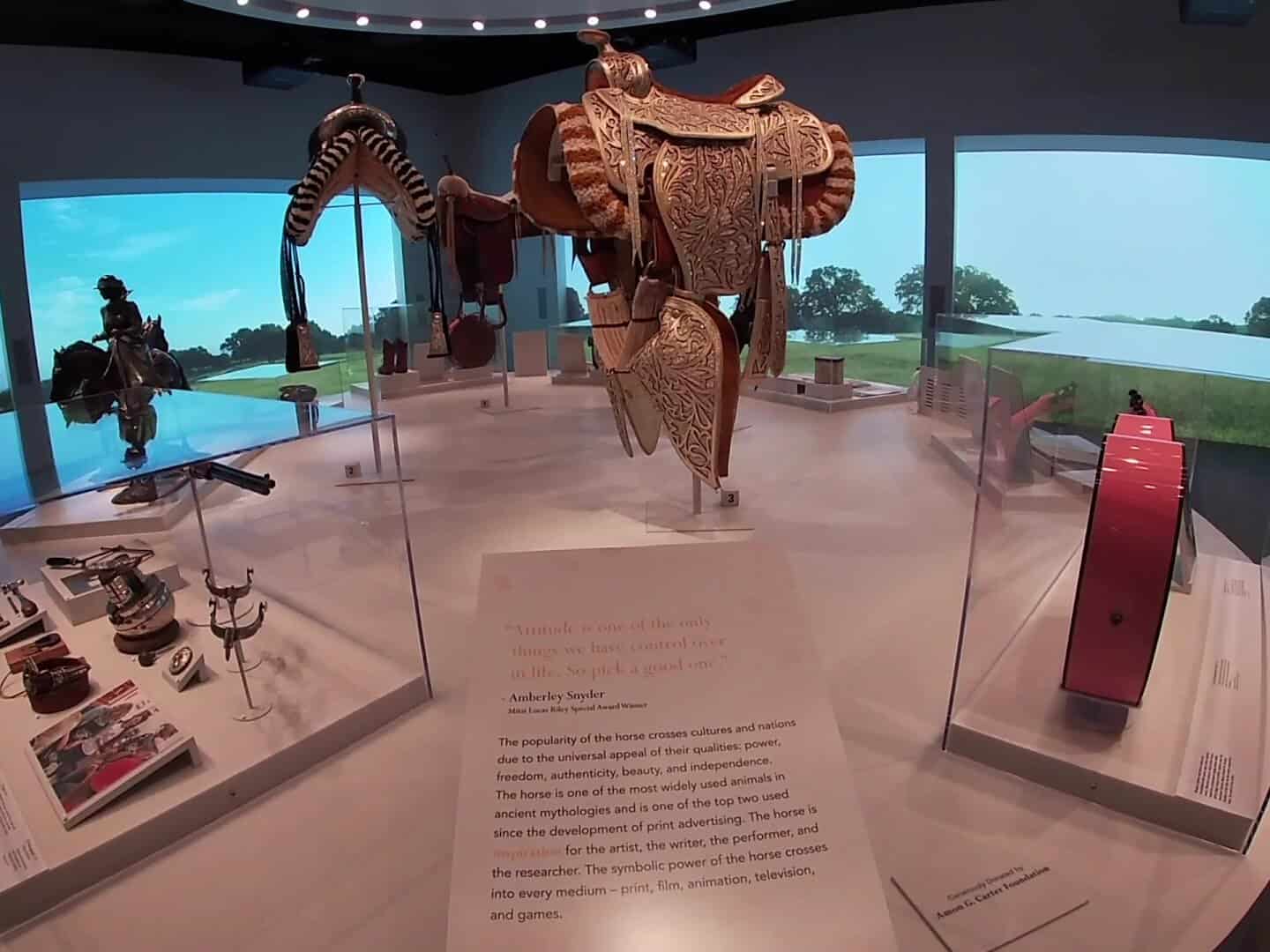
A handful of locals refused to let these women be forgotten. They gathered photographs, saddles, and letters, and built a Hall of Fame on almost no money and plenty of stubbornness. The first class of honorees was inducted that same year, and the roll has grown ever since.
In 1994 the collection made the move to Fort Worth. Then, on June 8, 2002, the current thirty-three-thousand-square-foot home opened in the Cultural District, near the Will Rogers Memorial Complex. Every year the museum still inducts a new class of honorees at a black-tie ceremony.
The story is not finished. The museum has announced a nearly twenty-million-dollar expansion that will add sixteen thousand square feet of gallery space, so there will soon be even more room for the women of the West.
What It Costs and When to Go
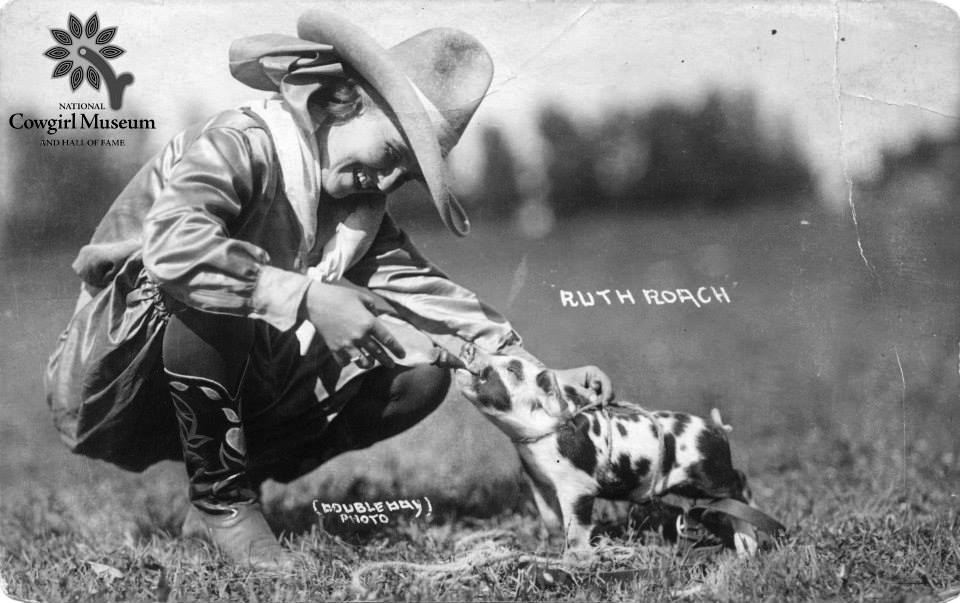
There could not be a better city for it. Fort Worth still calls itself the place Where the West Begins, and it wears the title honestly, with stockyards and rodeo grounds a few minutes up the road. A museum for the women of the West belongs exactly here.
The museum sits in Fort Worth’s walkable Cultural District, surrounded by other first-rate museums, so it pairs beautifully with a full day out.
Adult admission runs $10, with seniors, military, and first responders at $7, and children four to twelve at $4. There is a family special of $28 for two adults and up to four kids. Little ones three and under get in free with a paying grown-up.
The galleries are open Tuesday through Saturday from 10 a.m. to 5 p.m., and Sunday from noon to 5 p.m. The museum is closed on Mondays and major holidays. Manual wheelchairs are available at the desk, and there is a drop-off zone right at the entrance.
Tip: buy a membership if there is any chance you will come twice. Members get in free and park free with a voucher, and once you have met these women you will want to come back and introduce someone to them.
How to Get There
Where: 1720 Gendy Street, Fort Worth, TX 76107
Parking sits right nearby in the Cultural District lots, and museum members park free with a voucher from the visitors desk. The Fort Worth Stockyards, the Kimbell, and the Modern are all a short hop away, so you can build a whole Fort Worth day around this stop.
Saddle Up for Your Own Visit
Whether you grew up dreaming on the back of a pony or you have never sat a horse in your life, this is a place that will make you stand a little taller.
It hands you the stories of women who were brave, stubborn, and joyful enough to help build a whole West and never once asked permission for the privilege.
So point the car toward Fort Worth, give yourself the whole afternoon, and come meet the cowgirls. Just try to leave without wanting a pair of boots of your own.
Featured image: Sergey Ishkhanov via National Cowgirl Museum and Hall of Fame

Stella Raines
Editor-in-Chief
Stella brings over a decade of storytelling experience to TX Headlines. With roots in West Texas and a love for road trips, she leads the editorial team with an eye for the hidden stories that make Texas unforgettable.
More Stories
This Historic Texas Market Is Full of Handmade Goods You Won’t Find in Any Store
This Pay-What-You-Want Texas Art Store Lets You Fill a Bag and Name Your Price
This Centuries-Old Texas Cathedral Transforms Into a Dazzling Light Show After Dark
This Charming Small Texas Town Guards the World’s Largest Pecan and the State’s Best Barbecue
Tags