This Storied Texas Rodeo Is the Longest-Running Weekly Show in the Nation
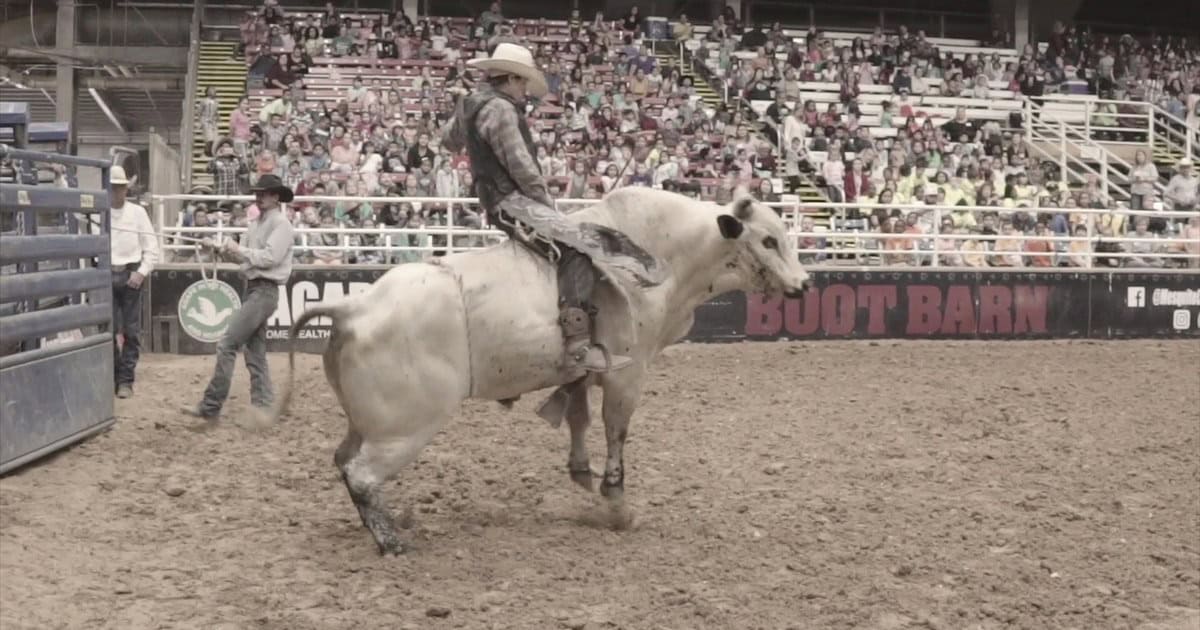
The first time I sat in a rodeo grandstand, a bull came out of the chute like a thunderclap, and I forgot how to breathe.
I was small, gripping a sweating paper cup of lemonade, and the whole building went quiet for the eight seconds that cowboy hung on. Then the buzzer sounded, and a few thousand people exhaled at once.
Years later I can still smell that night, the sweet straw and warm popcorn and the faint tang of livestock. Some experiences stamp themselves on you young, and a good rodeo is one of them.
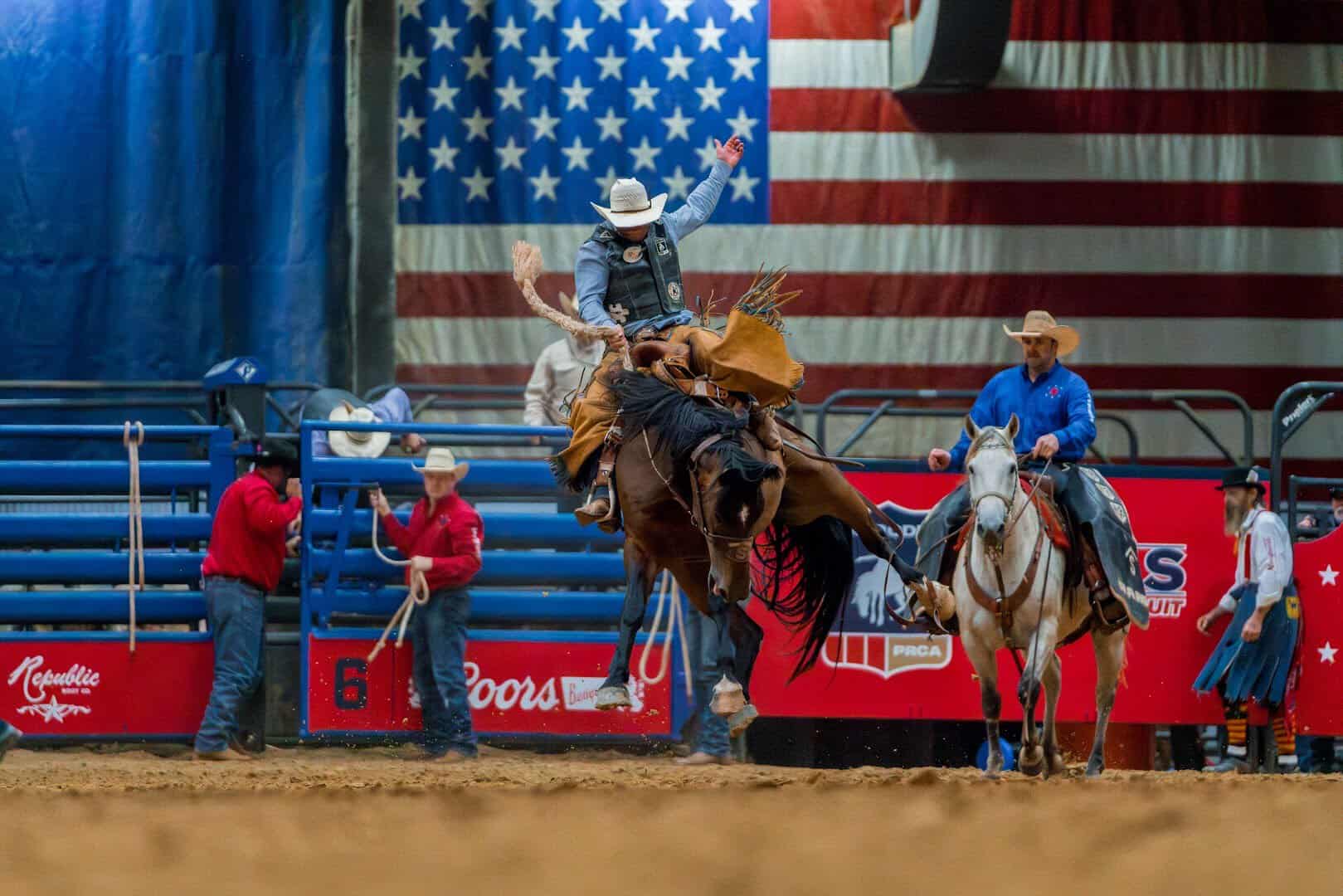
That same electricity crackles every Saturday night in a climate-controlled arena just fifteen minutes east of downtown Dallas, at the Mesquite Championship Rodeo. It carries a dust and diesel honesty that no amount of stadium polish can fake.
Below, discover why this working rodeo has pulled in families, cowboys, and even a couple of U.S. presidents for more than sixty years, and how to make a proper night of it yourself.
Under the Big Arena Lights
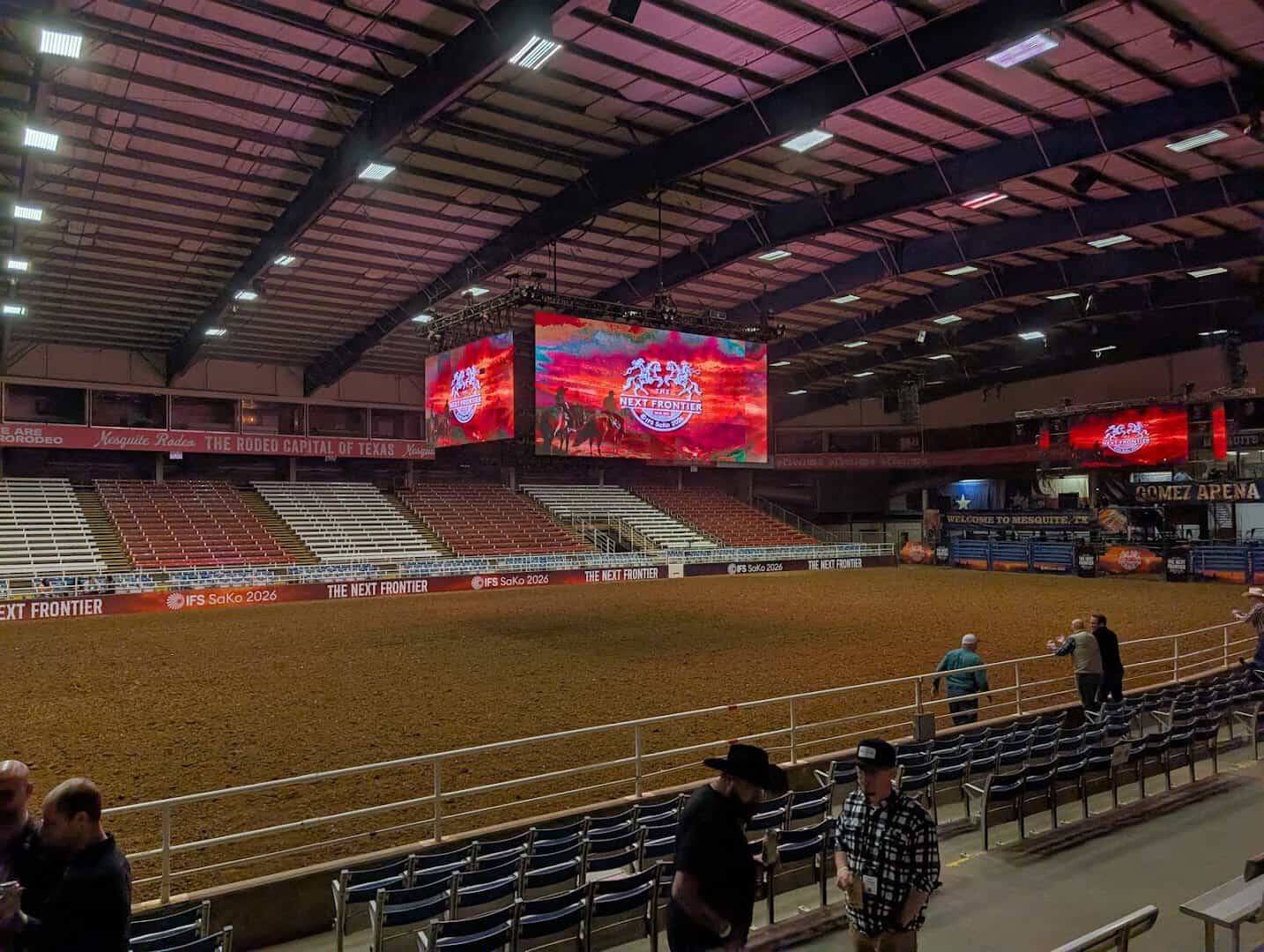
When you step through the doors, the first thing you notice is the dirt. Groomed, raked, and smelling of damp earth, it stretches out under banks of white light while the grandstands climb steep on every side.
The arena holds around 5,500 people, close enough that you can hear a cowboy’s spurs jingle and a bull’s hooves thud into the ground. There is no bad seat in the place, and the roof means the show goes on rain or shine.
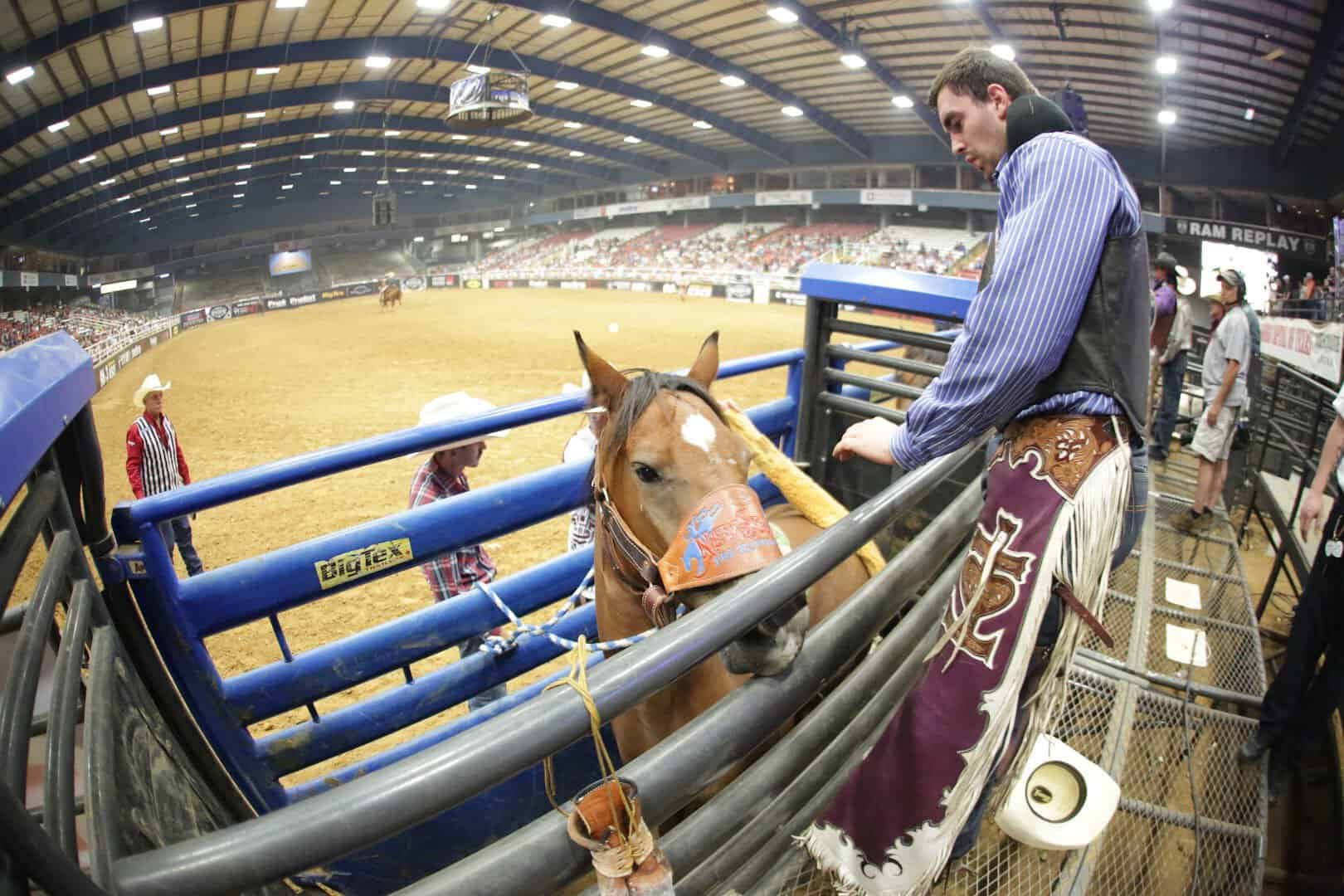
Doors open at 6 p.m. and the action starts at 7:30. Come early anyway. The pre-show hum, the smell of popcorn and slow-smoked barbecue, and the sight of riders stretching behind the chutes is half the fun.
The lights drop, a spotlight swings, and the grand entry gallops in with flags snapping. By the time the national anthem ends and the first chute rattles, you are already leaning forward in your seat.
Between events, the announcer keeps the night rolling with easy jokes and quick introductions of each rider. It never drags. One competitor exits the arena and the next is already backing an animal into the chute.
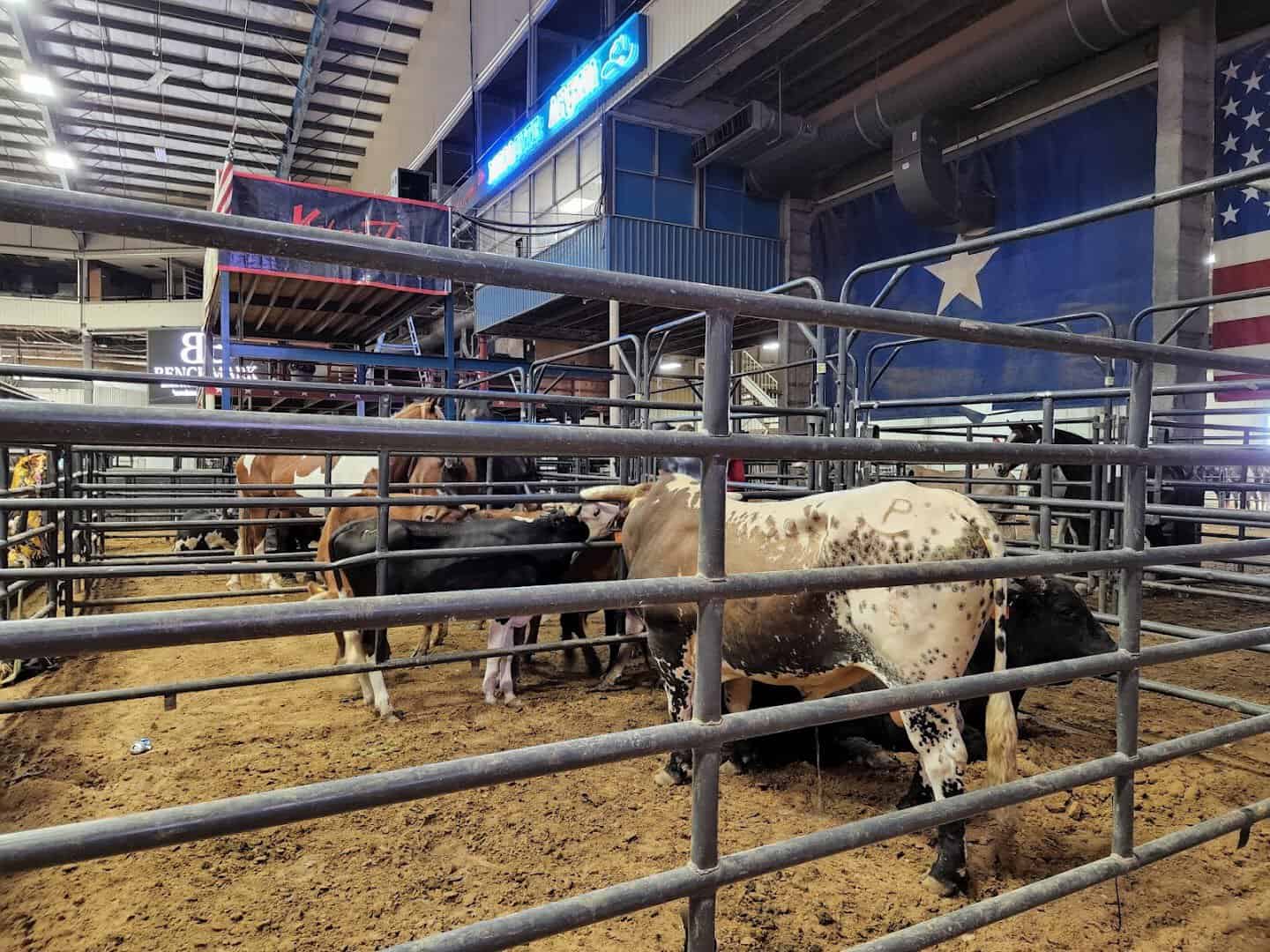
What strikes you most is how unstaged it all feels. There are no giant video screens demanding your attention, no manufactured hype. Just real cowboys, real stock, and a crowd that came to watch the genuine article.
Eight Seconds on a Ton of Muscle
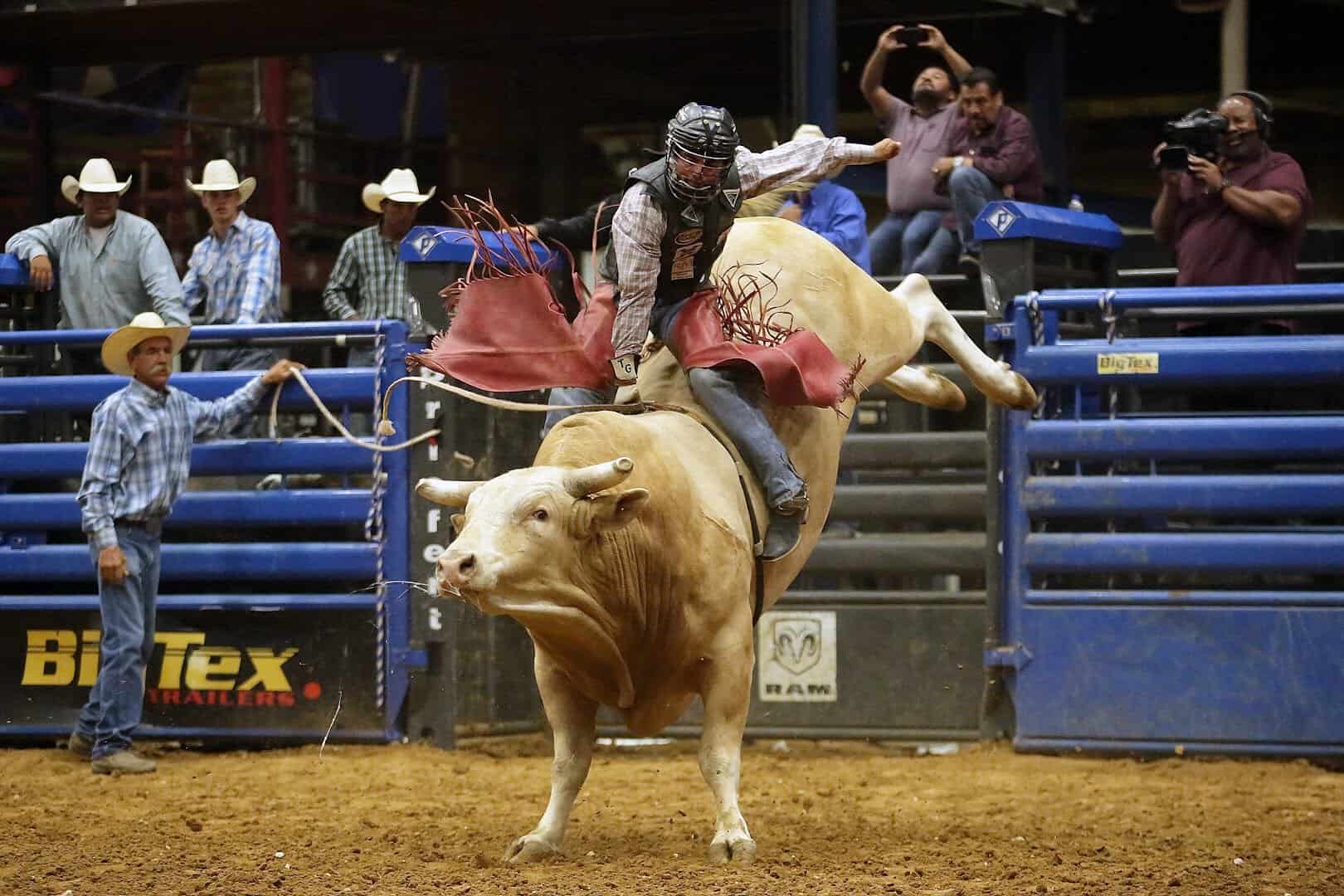
Bull riding is the headliner, and it is exactly as wild as you hope. A rider lowers himself onto more than a ton of bucking muscle, wraps his hand in a rope, nods once, and the gate swings wide.
What follows lasts eight seconds if he is lucky. Spins, kicks, a blur of rope and hat and hooves, then either a clean dismount or a scramble as the rodeo clowns dart in to draw the bull away.
“How do they hold on that long?” my seatmate whispered the first time, and honestly, I still do not have a good answer. You just watch, and you clap until your hands sting.
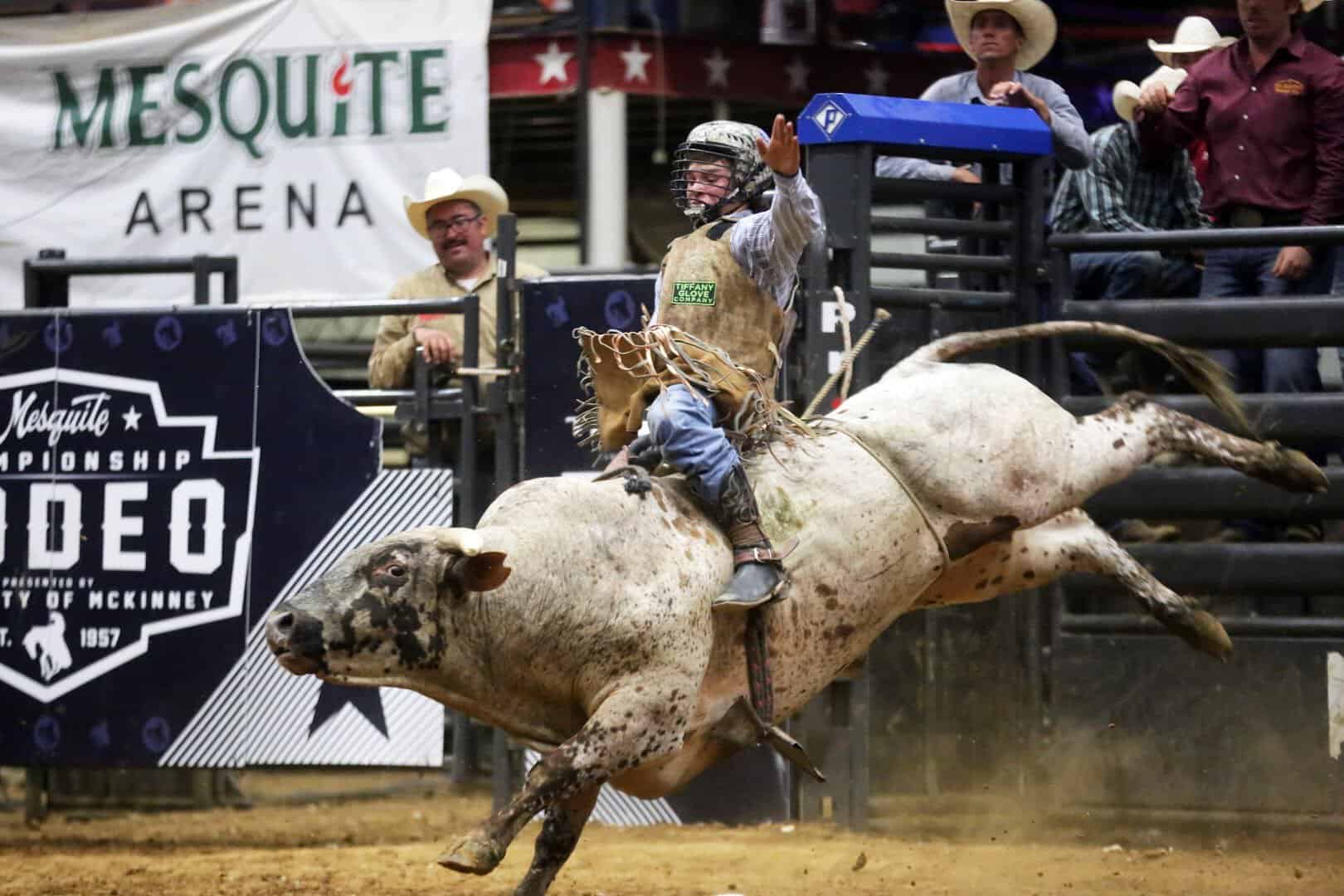
Each qualified ride is scored out of 100 points, with half going to the rider and half to the bull. A high-scoring ride needs a fierce, spinning animal and a cowboy calm enough to match it, jump for jump.
Watch the bullfighters, too. Dressed in bright colors and baggy shorts, these athletes put themselves between a loose bull and a fallen rider, and their split-second bravery is a show all its own.
Did you know? The man who made this arena famous for bull riding grew up right here. Donnie Gay, son of the founder, won eight world bull riding championships, a record that still stands today.
Broncs, Bareback and Saddle
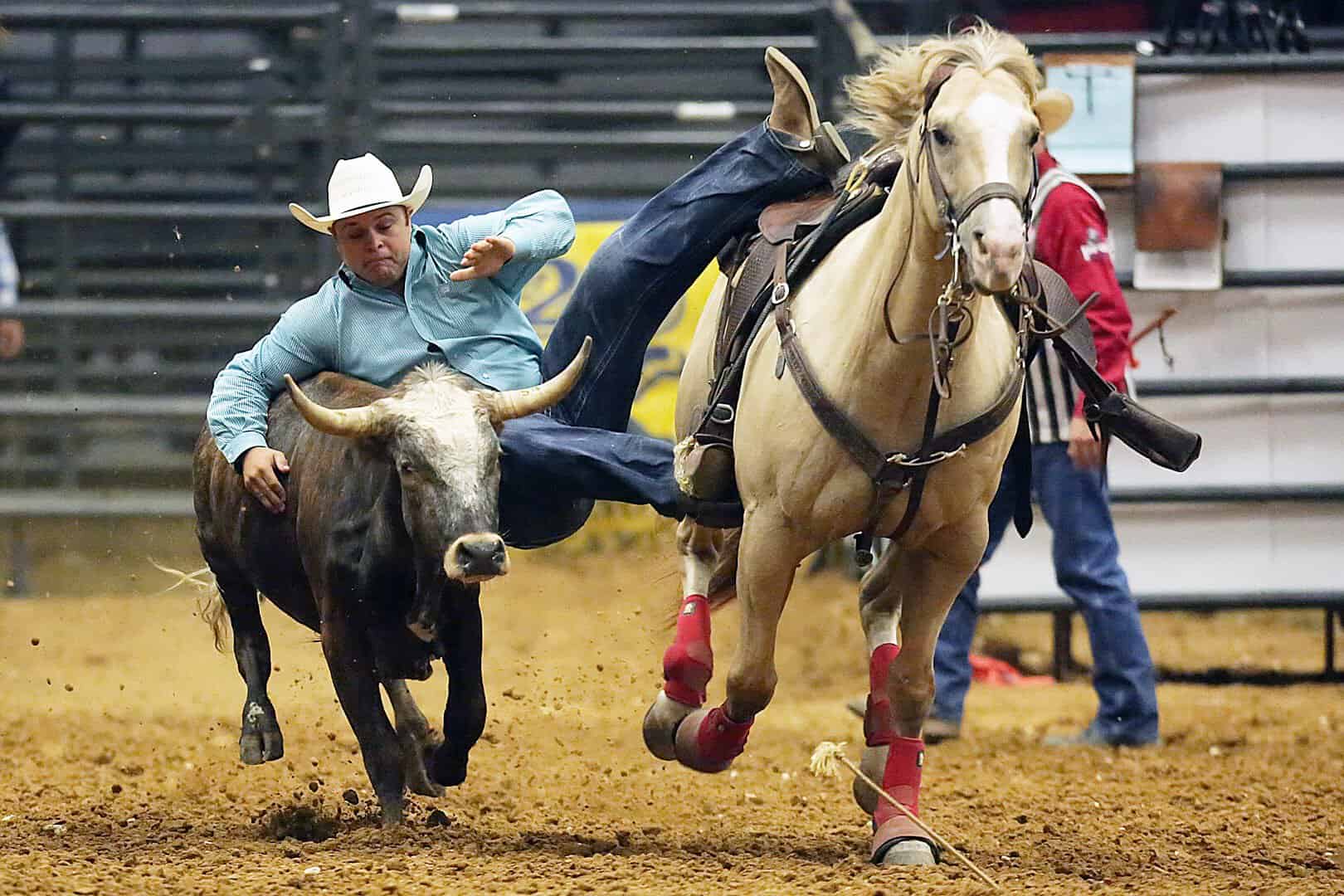
Before the bulls take over, the broncs set the tone. In bareback riding, a cowboy grips a single leather rigging and lets a bucking horse throw his body into a violent, rhythmic arc, spurs raking with every jump.
Saddle bronc riding is the classic image, and it is the oldest event on the card. Judges score the cowboy’s form as much as the horse’s power, so timing and grace matter as much as raw grit.
It looks like poetry from the stands, right up until you remember the animal underneath weighs a good half a ton. The best rides have a rhythm you can feel in your own chest.
Both events demand that a rider mark out, keeping his spurs above the horse’s shoulders on the very first jump. Miss that split-second detail and the run does not count, no matter how well he finishes.
Ropes, Reflexes and Real Ranch Work
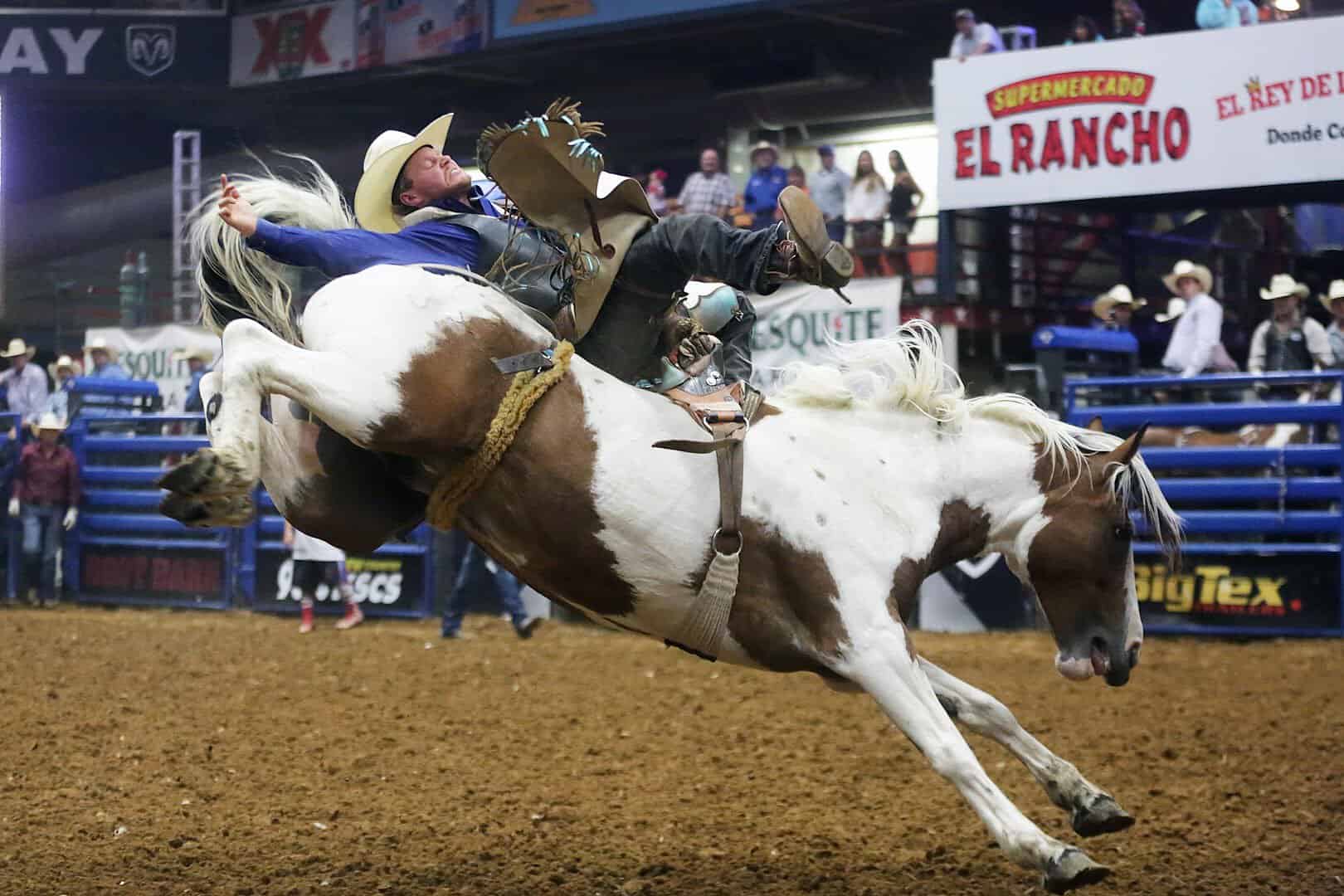
Roping is where the crowd learns to love quiet precision. In tie-down roping, a rider chases a calf out of the box, throws his loop, drops from a galloping horse, and ties three legs while the clock runs.
Team roping pairs a header and a heeler, two riders working a single steer with split-second timing. One ropes the horns, the other the hind legs, and a clean run is over almost before you register it.
Steer wrestling adds pure muscle to the mix. A cowboy launches off his horse at a dead run, grabs a steer by the horns, and wrestles it to the dirt in a heartbeat.
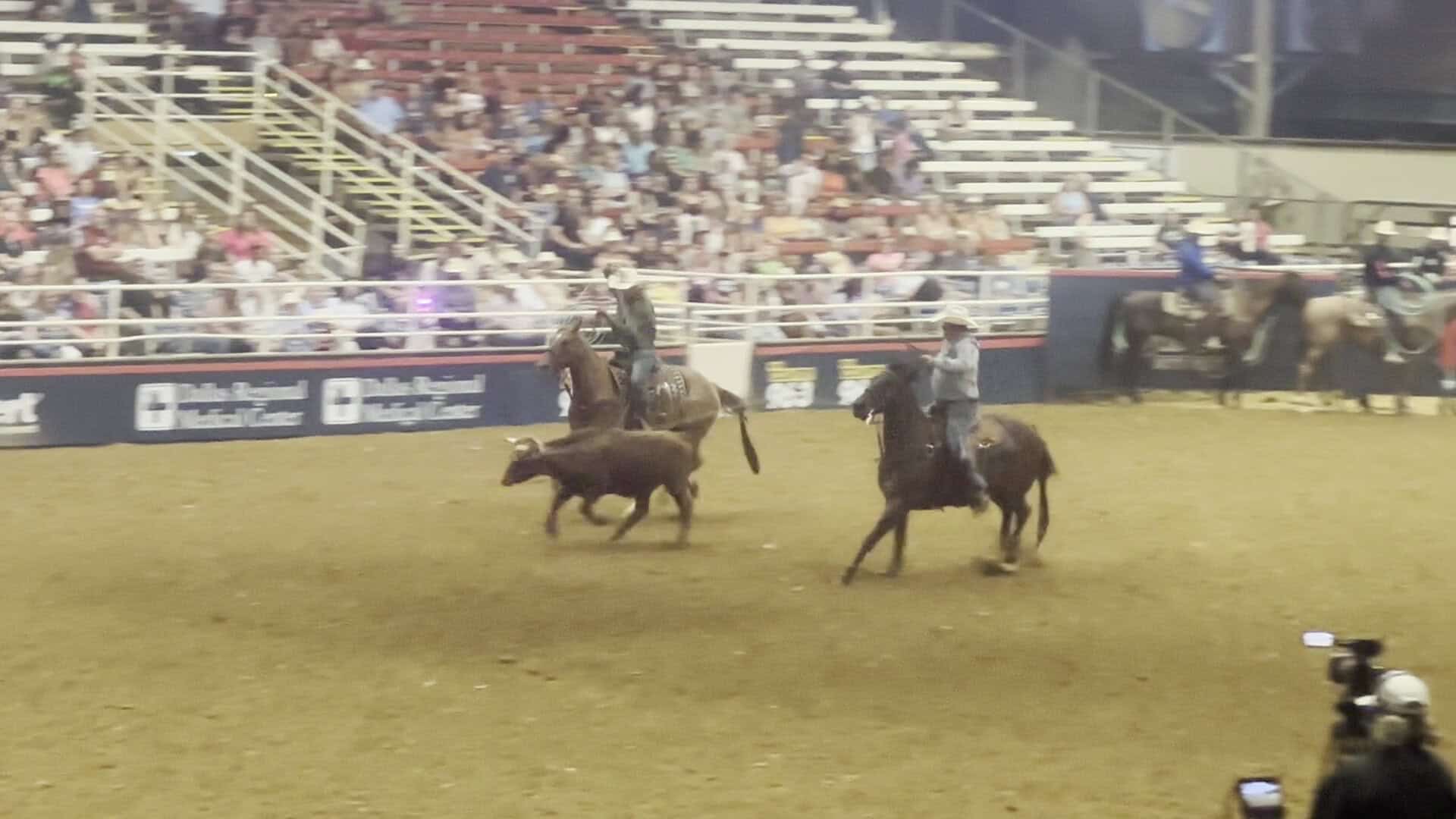
None of this is invented for the show. It is the everyday work of a real ranch, sped up, sharpened, and set to the roar of a Saturday-night crowd.
The Fastest Cloverleaf in Texas
Barrel racing is the one event where the cowgirls own the arena, and they run it flat out. A horse and rider carve a tight cloverleaf around three barrels, leaning so hard into the turns that the dirt sprays.
Times are measured in hundredths of a second, and a knocked barrel adds a costly five-second penalty. The margin between winning and going home is often smaller than a blink.
My eyes always go straight to the turns. A great horse drops a shoulder, seems to pivot on a dime, and then explodes toward the next barrel like a rocket coming off a launch pad.
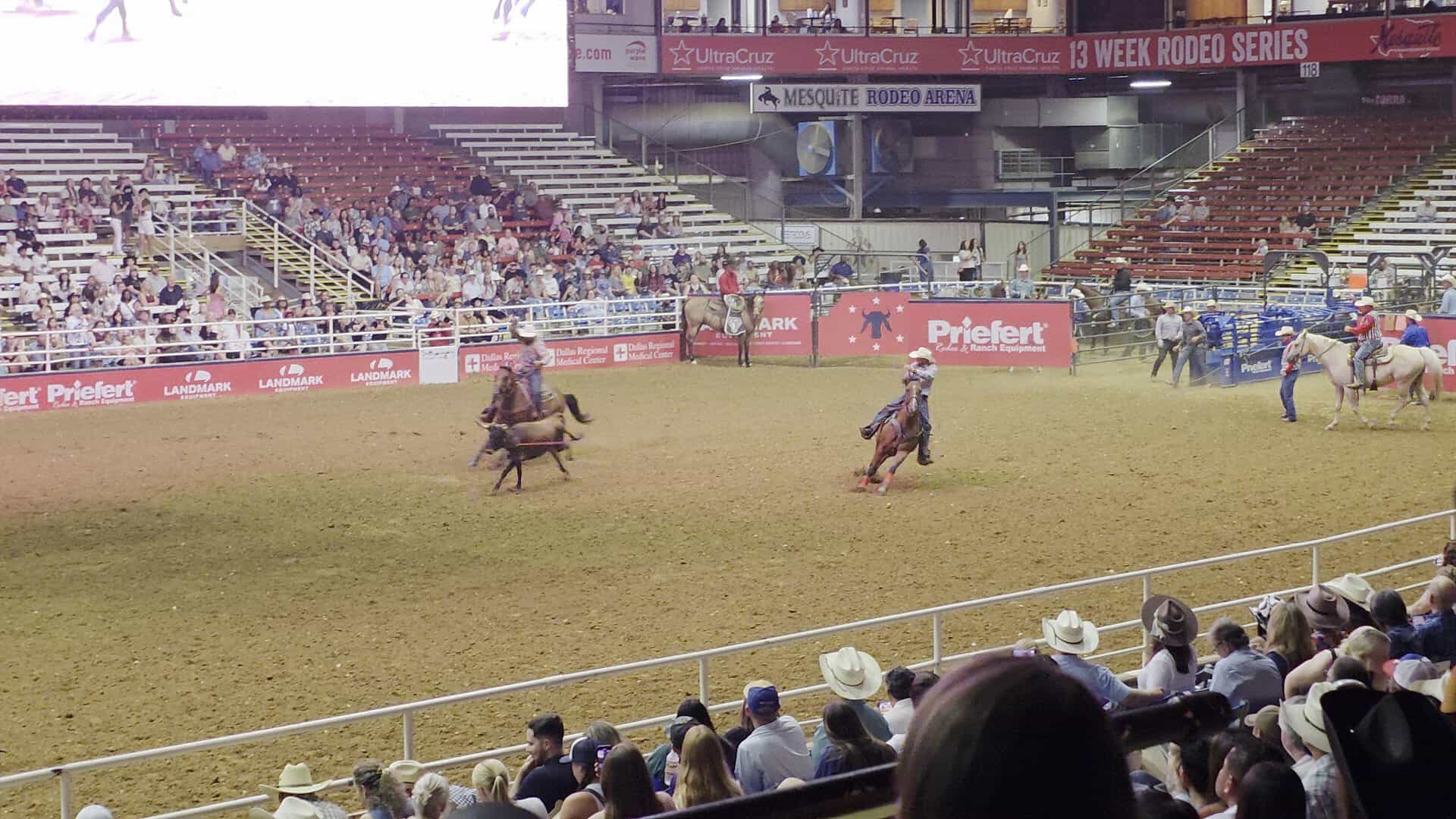
The bond between rider and horse is the quiet marvel here. These animals train for years, and a top barrel horse reads its rider’s weight and hands so closely that the two move as one down the final stretch.
Little Buckaroos and the Fan Zone
This is a family night out at heart, and the youngest cowboys get a moment of their own. In mutton bustin’, kids ages five to seven hold on to a running sheep for as long as they can, which is rarely long.
There is a calf scramble for children under twelve, a chaotic and joyful chase across the arena. Before the show, a Fan Zone offers pony rides and a petting zoo for the smallest visitors.
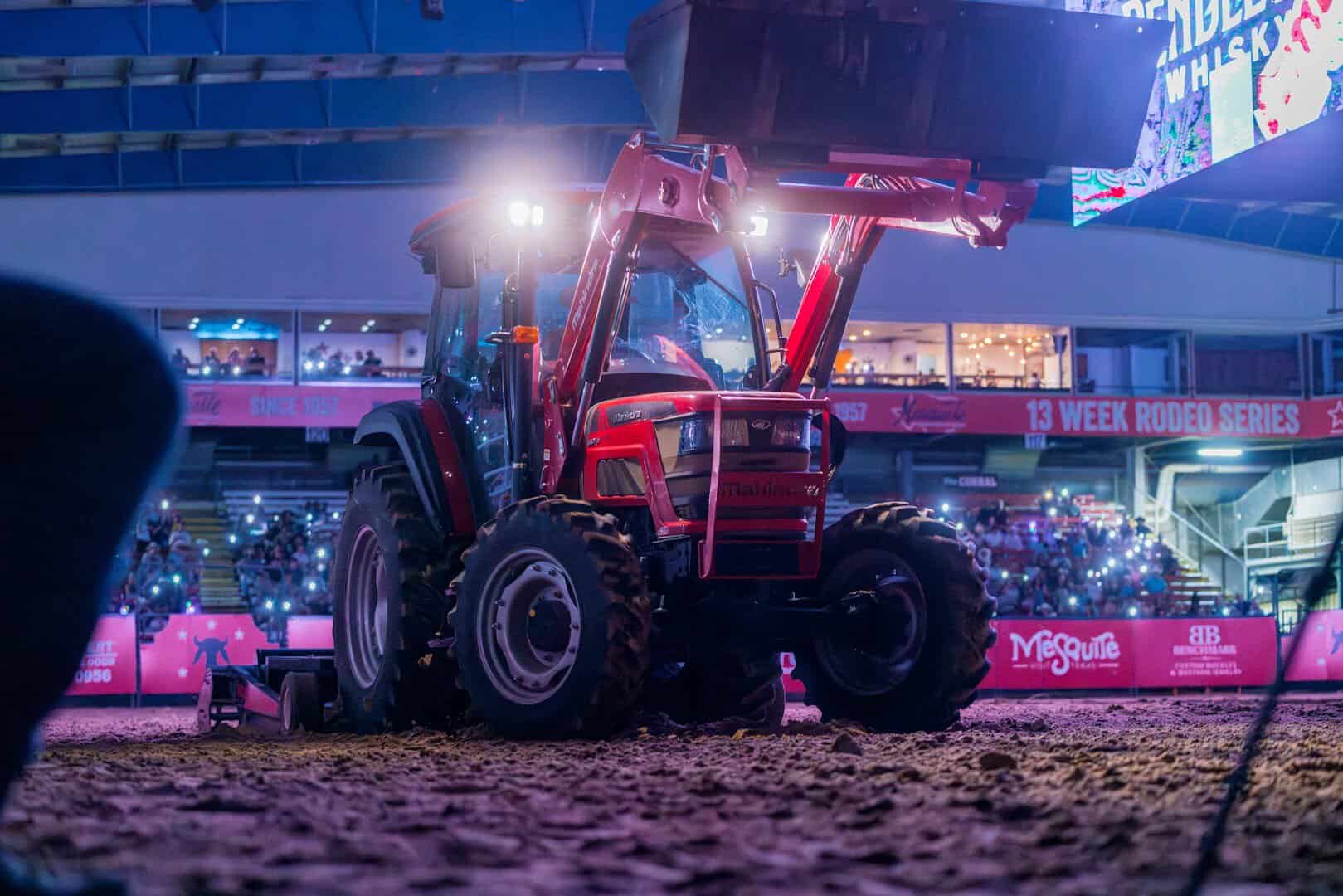
Pro tip: arrive right at 6 p.m. so the little ones have time to do it all before the grand entry. Signing a young rider up for mutton bustin’ ahead of time is worth the effort.
Watching a five-year-old in an oversized helmet cling to a woolly sheep, then bounce off grinning, is somehow as thrilling as the pros. The whole arena cheers just as loud for the tiny buckaroos.
Roots That Run Back to 1958
The story starts with Neal Gay, a working cowboy who saw a future in producing rodeos rather than just riding in them. In 1957 he and his partners bought a local arena and rebuilt it from the ground up.
One of those partners was Jim Shoulders, a legendary world champion whose name still means something to rodeo fans. The professional Mesquite Championship Rodeo opened its gates in May 1958.
The town’s rodeo roots reach back even further, to smaller local shows in the 1940s. Neal Gay took that spark and built something permanent, a weekly institution that would eventually earn Mesquite the nickname Rodeo Capital of Texas.
A roof went up over the seats in 1964, and a larger arena rose in the mid-1980s as the crowds kept growing. Along the way it became the longest-running weekly rodeo in the entire nation.
For years the action beamed into living rooms across the country, first on ESPN and later on cable. Neal Gay entered the ProRodeo Hall of Fame in 1993, joining son Donnie as the first father-son pair to earn the honor.
Presidents Ronald Reagan and George W. Bush have both watched from these stands, and so has a prince of Monaco. Today the rodeo runs under Stace Smith Pro Rodeo, still every Saturday, still packing the house.
The recognition keeps coming, too. In 2020 the venue was named both the PRCA Small Rodeo of the Year and the Texas Small Rodeo of the Year, more than sixty years after it first opened.
Making the Most of Your Night
Seating ranges from open bleachers to cushioned VIP chairs to private suites where you can order some of the best barbecue in Texas and watch the whole card from above. Every option puts you close to the action.
Did you know? The entire arena is air-conditioned, so even a sticky Texas August night feels downright pleasant once you are inside. That alone makes it one of the easiest summer outings around Dallas.
Concessions lean into the theme, with turkey legs, nachos, funnel cakes, and cold drinks flowing all night long. Grab something before the bull riding, because once the chutes open you will not want to leave your seat.
Wear your boots if you have a pair, but jeans and sneakers fit right in too. This is a come-as-you-are crowd, and nobody is checking your hat brim at the door.
The season runs Saturday nights from June through August. Check the official site for the current schedule, ticket options, and to reserve a spot in mutton bustin’ before you go.
How to Get There
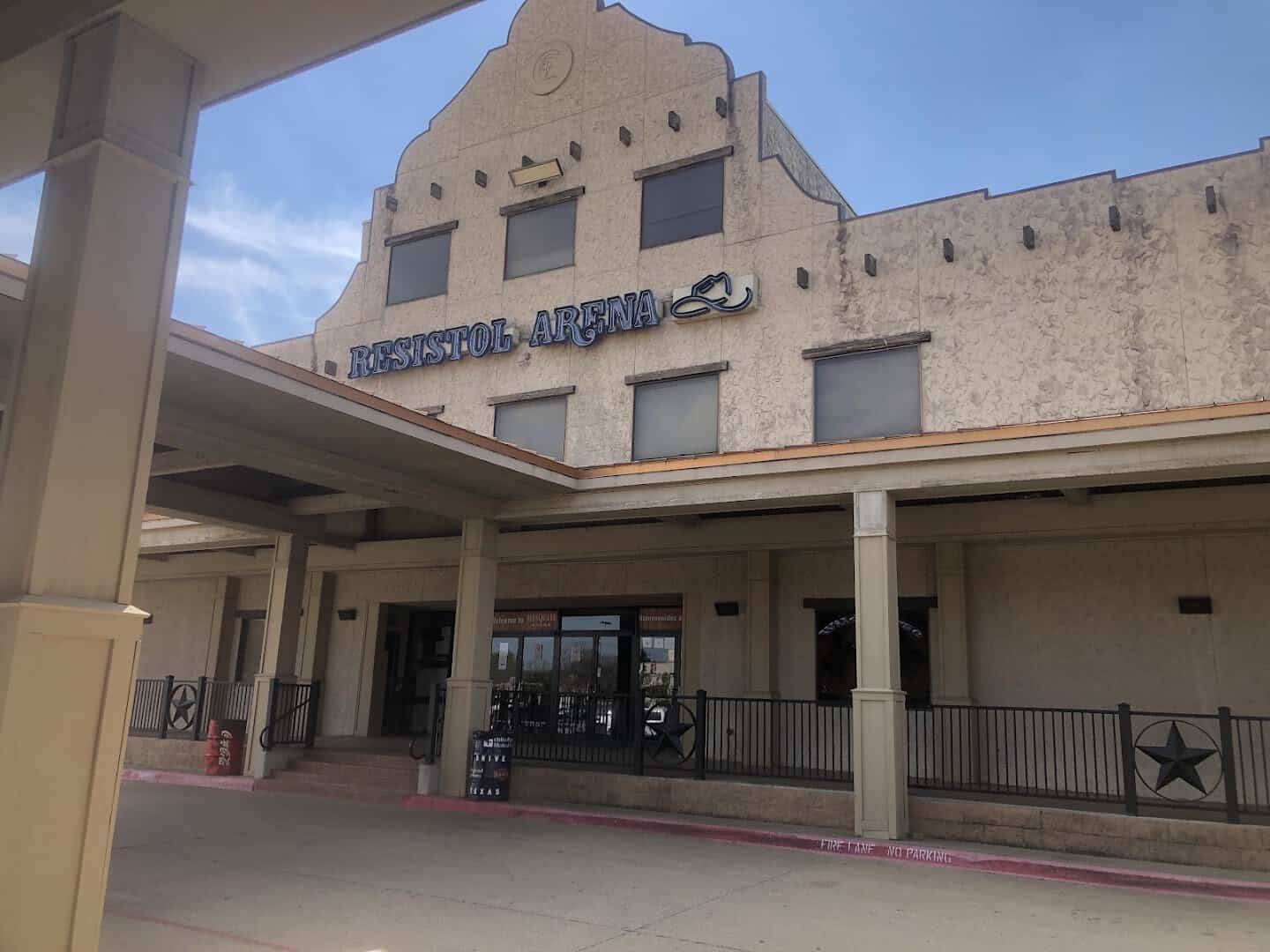
The arena sits just off Interstate 635 in Mesquite, an easy drive from anywhere in the Dallas-Fort Worth area. Parking is on-site, and the venue is well signed once you reach the exit.
Where: 1818 Rodeo Drive, Mesquite, TX 75149
Saddle Up for a Saturday Night
There is something about a genuine, small-town rodeo that a big arena concert simply cannot touch. It is loud, dusty, thrilling, and warm all at once, the kind of night that quietly turns a first-timer into a regular.
Whether you live down the road or you are just passing through Dallas, this is a night that sticks with you. The kids will talk about the sheep for weeks, and you will find yourself missing the smell of the dirt.
So grab your family, get there early for the mutton bustin’, and settle in for eight seconds of held breath at a time. This is Texas doing exactly what Texas does best, and it has been doing it every Saturday for generations.
Featured image: @ Mesquite Championship Rodeo

Stella Raines
Editor-in-Chief
Stella brings over a decade of storytelling experience to TX Headlines. With roots in West Texas and a love for road trips, she leads the editorial team with an eye for the hidden stories that make Texas unforgettable.
More Stories
This Sprawling Texas Vintage Emporium Is a Shopper’s Paradise Packed With 150 Booths
This Giant West Texas Vintage Store Hides a Navy Plane Out Front and Two Floors of Affordable Treasure
This Scenic Texas Train Ride Rolls Through the Piney Woods Behind a Century-Old Steam Engine
These Storied Texas Landmarks Make an Unforgettable Haunted Road Trip
Tags