This Cinematic Texas Town Is a Real Movie Set That Serves the Best Brisket in the State
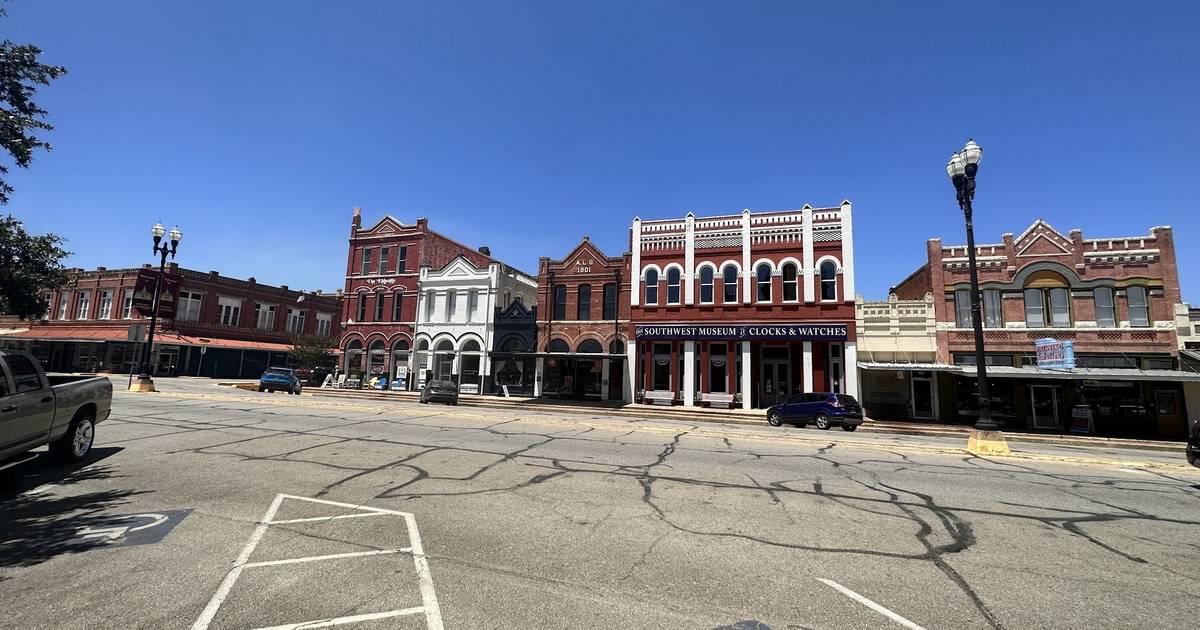
The first time I drove into town, I braked right in the middle of the street. I was sure I had wandered onto a film set that somebody forgot to strike.
A three-story courthouse the color of vanilla ice cream sat dead center in the square, its clock tower catching the late sun.
Every storefront around it looked like it had been waiting eighty years for a director to yell action. I half expected a crew to shoo me out of the shot.
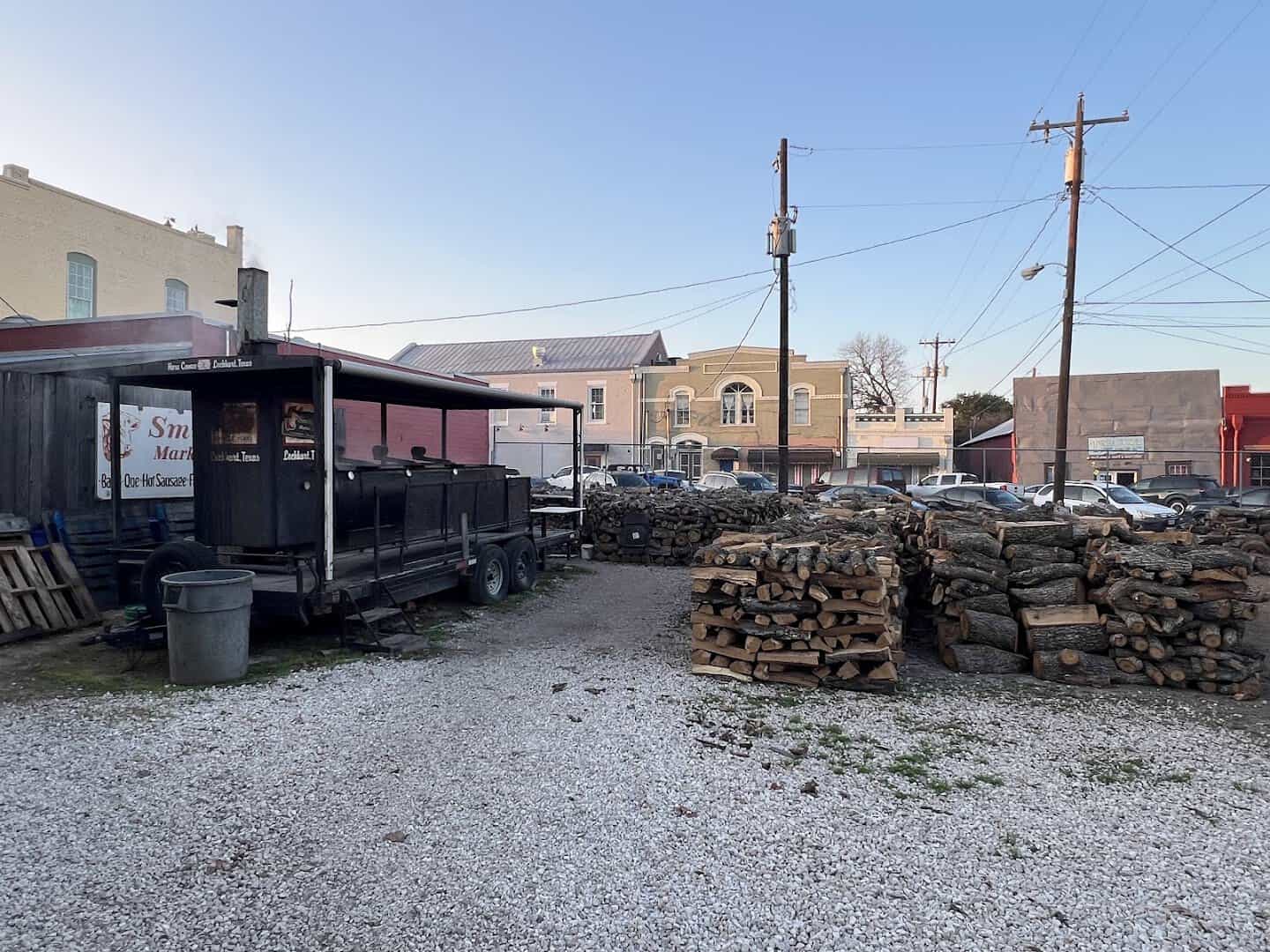
Turns out I was not entirely wrong. This small Central Texas town, about thirty miles south of Austin, really has doubled for Hollywood more times than most people realize, and it carries a certain time-warp charm that no set decorator could fake.
Welcome to Lockhart, the Barbecue Capital of Texas, where the smoke hangs over the square like a welcome banner and the courthouse has played more roles than some working actors.
Below, I want to walk you through all of it: the movie-set streets, the four generations of pitmasters, the courthouse that keeps stealing scenes, and the practical bits you need to plan your own day here.
Why It Feels Like You Walked Onto a Movie Set
Lockhart does not try to look cinematic. It just does. The nine-block district around the square has kept its Victorian storefronts, its early-1900s brick, and its wide, unhurried sidewalks, so the whole thing reads like a set built for a Western that never wrapped.
Directors noticed a long time ago. The town square stood in for the fictional Blaine, Missouri in the cult comedy Waiting for Guffman, with the courthouse cast as Blaine City Hall.
It showed up again in What’s Eating Gilbert Grape, and Robert Rodriguez used the town as a stand-in for small-town Ohio in his horror film The Faculty. The list of credits is long enough that the city keeps a running one for visitors.
If you have seen the HBO series The Leftovers, you have already been here. The fictional town of Miracle, Texas is really Lockhart, and the courthouse at 110 South Main Street is its most recognizable face.
In Where the Heart Is, Novalee and Forney pick out a Christmas tree with that same courthouse glowing behind them. Once you know where to look, half the town starts to feel familiar.
What sells it is the light. I stood on the square one afternoon and watched the shadows crawl across the sandstone, soft in the morning, dramatic by four o’clock, gold by supper.
No lighting rig required. The town does it for free, all day, which is exactly why the camera keeps coming back.
The Smoke That Greets You at the County Line
Here is the thing nobody warns you about: you smell Lockhart before you see it. Somewhere around the edge of town the air turns to post oak and rendered fat, and your stomach starts negotiating with your schedule.
Lockhart was named the Barbecue Capital of Texas by the state legislature in 2003, and the claim is not marketing. This is a town of roughly fourteen thousand people that supports four legendary smokehouses, and people drive in from three states to eat at all of them in one sitting.
I have watched them do it. I have been one of them. There is no shame in it, only a full stomach and a nap in the car afterward.
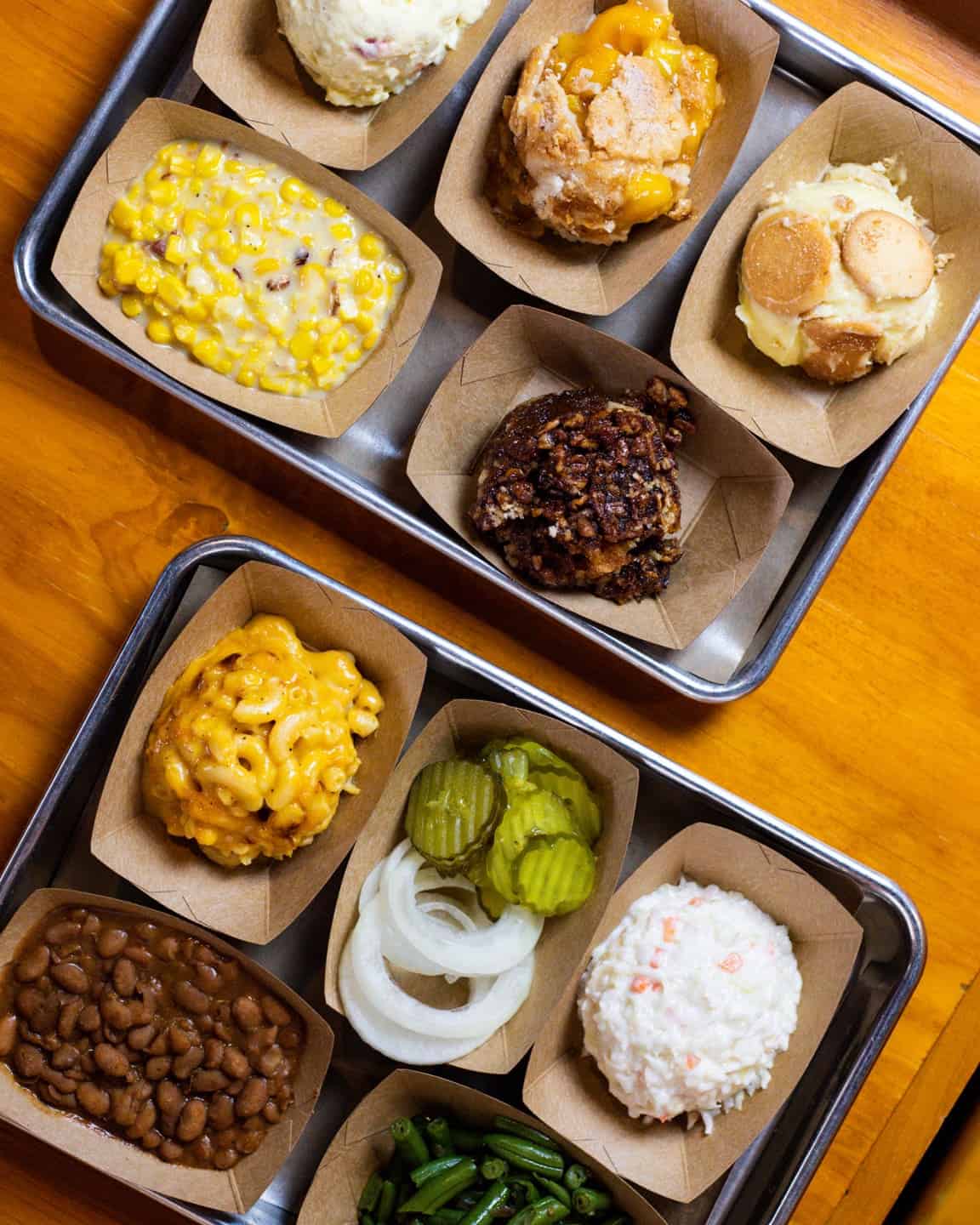
What strikes me every time is how little the joints have changed. The screen doors still slap shut behind you, the tables are still shared with strangers, and the whole ritual runs on butcher paper and trust. It could be 1955 in here.
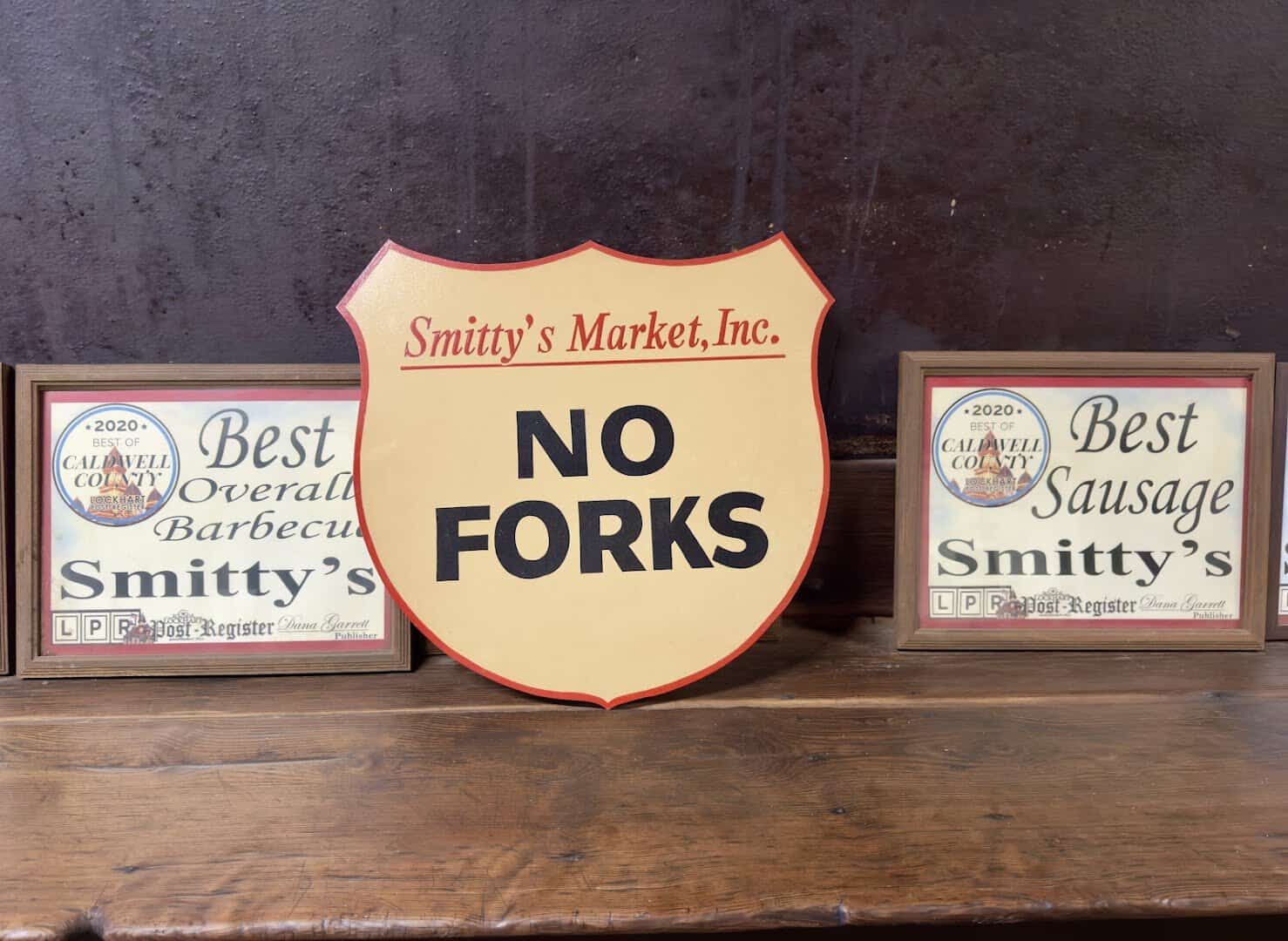
The old-school way here is meat by the pound, sliced onto butcher paper, no plate and, at the oldest joints, no fork.
You point, they cut, you carry it to a long communal table and eat with your hands and a slice of white bread. It is humbling and glorious, and it ruins you for lesser brisket forever.
Four Pitmasters, One Very Famous Family Feud
You cannot understand Lockhart barbecue without the family tree, and it is a soap opera worth telling.
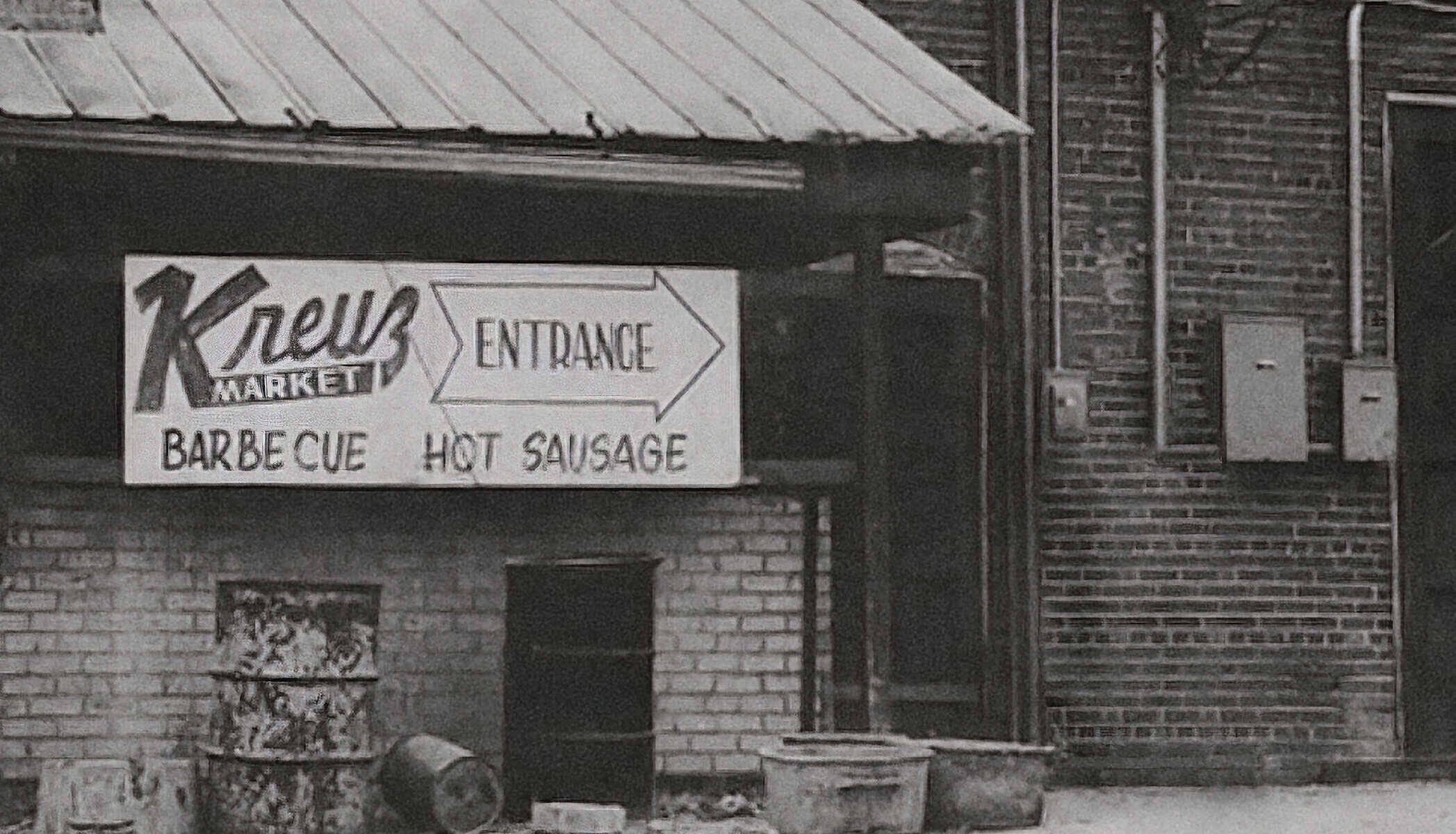
It starts in 1875, when Jesse Swearingen opened the first meat market in town, selling barbecued pork and beef out the back. In 1900 a man named Charles Kreuz Sr. bought the place and put his name on it.
Kreuz Market became the oldest barbecue joint in Lockhart. In 1948 a longtime employee named Edgar Schmidt bought it, a man who had worked there since he was thirteen years old. He knew the pits better than anyone alive.
Then it got dramatic. When Edgar died in 1990, he left the building to his daughter, Nina Schmidt Sells, which quietly made her the landlord to her own brothers.
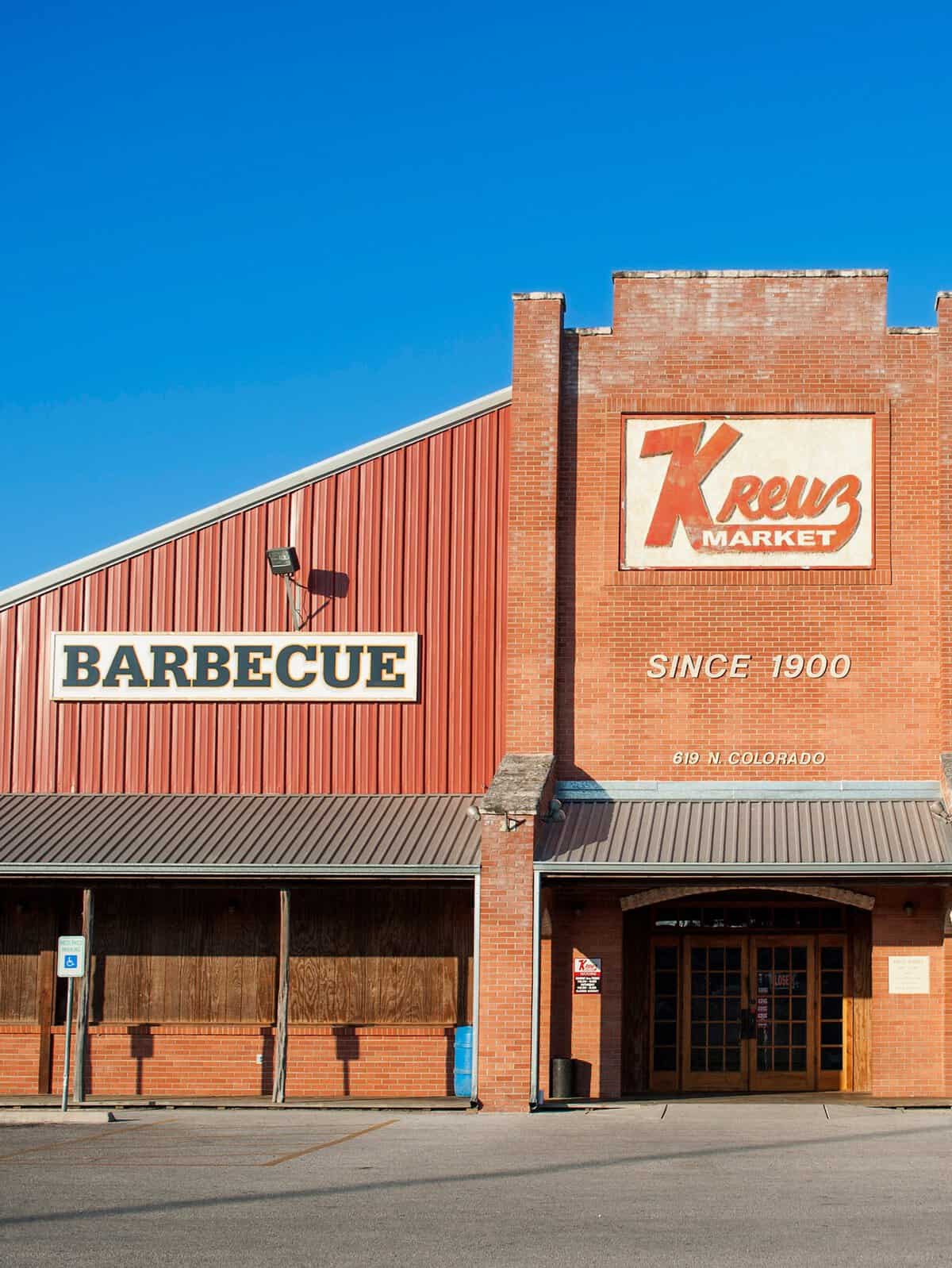
A lease disagreement followed, and in 1999 her brother Rick moved Kreuz Market to a big new building at 619 North Colorado Street, after ninety-nine years at the original address.
Nina stayed put. She kept the century-old building at 208 South Commerce, kept the very pits her father had smoked on since 1948, and reopened under a new name: Smitty’s Market.
So today you can eat the “same” barbecue in two different buildings, and locals will happily argue with you about which one is the real Kreuz. Both of them are correct, in their own way, which is honestly the most Texan answer possible.
Then there is the third dynasty. Black’s Barbecue has been run by the same family since 1932, which makes it the oldest barbecue joint in Texas continuously owned by one family.
Four generations of Blacks have worked those pits. When someone tells you Lockhart takes this seriously, this is what they mean: not decades, generations.
Stepping Into Smitty’s, Where the Floor Is on Fire
Walking into Smitty’s is the closest thing to time travel I know. You come in through a dim back hallway, and the walls are black, genuinely black, caramelized by more than a century of smoke.
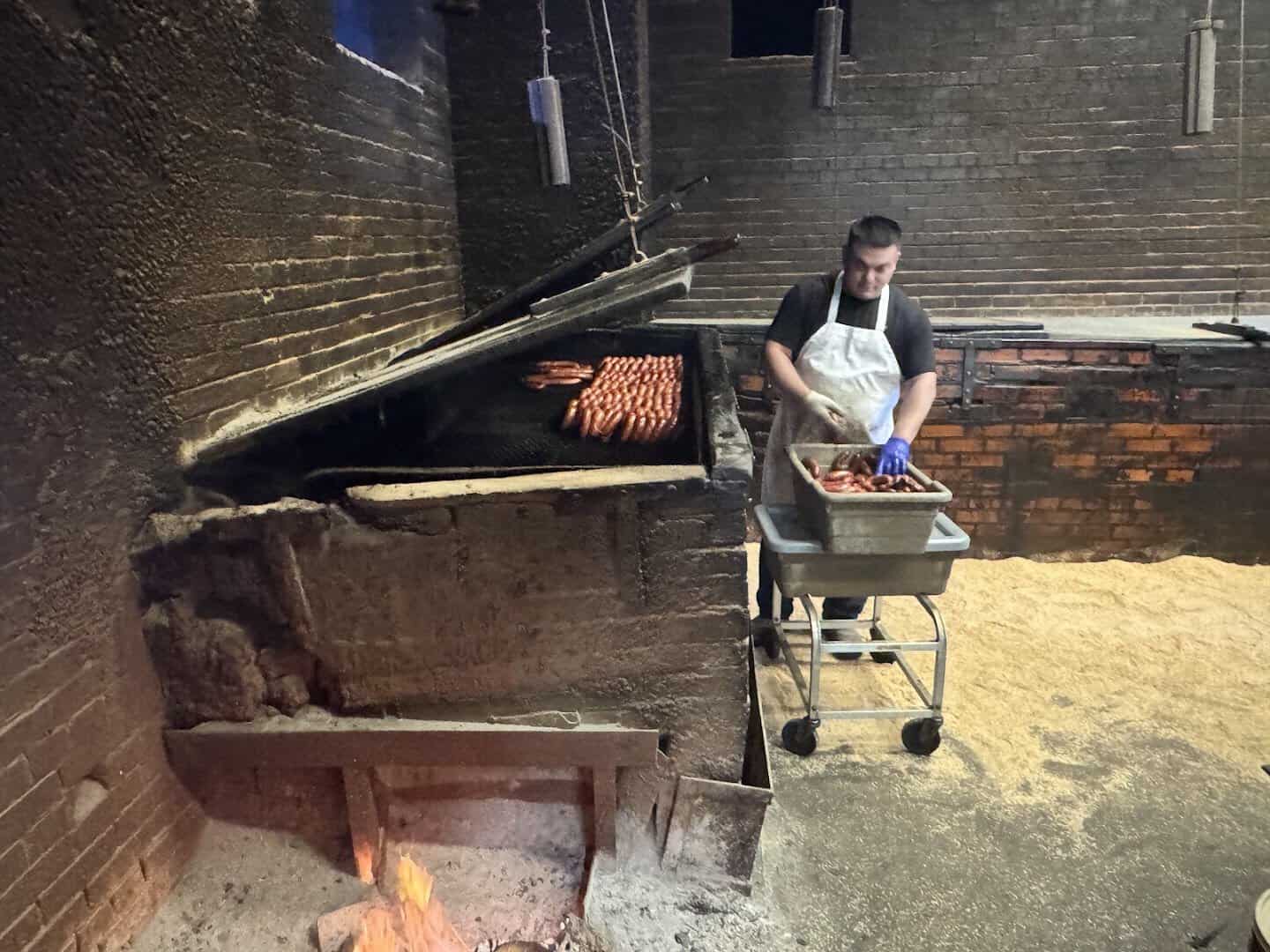
Then you see the pits, open fires burning at floor level right beside the doorway, so close you feel the heat on your shins. “Watch your step,” the man working the pit told me, not looking up from his cleaver.
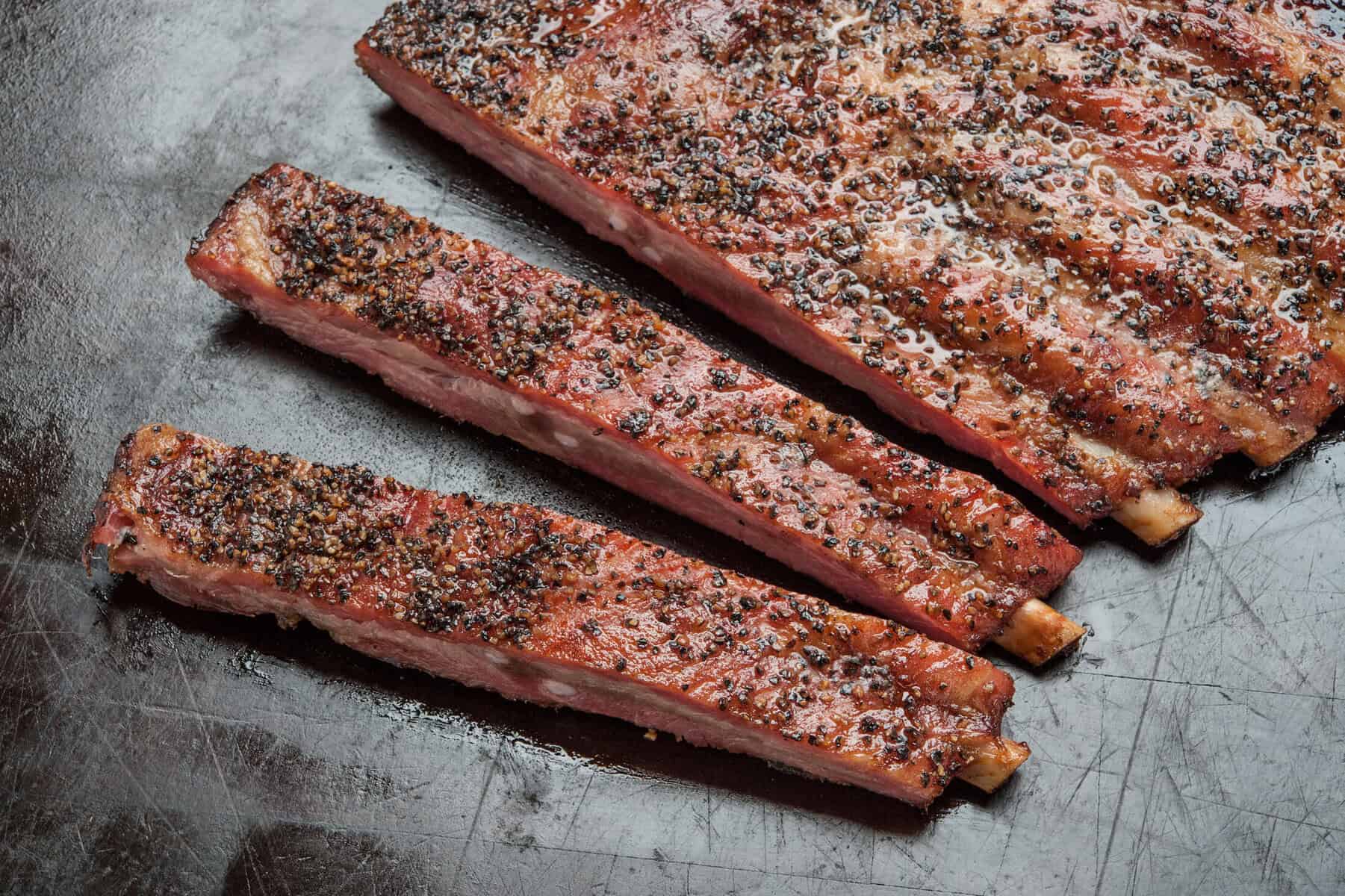
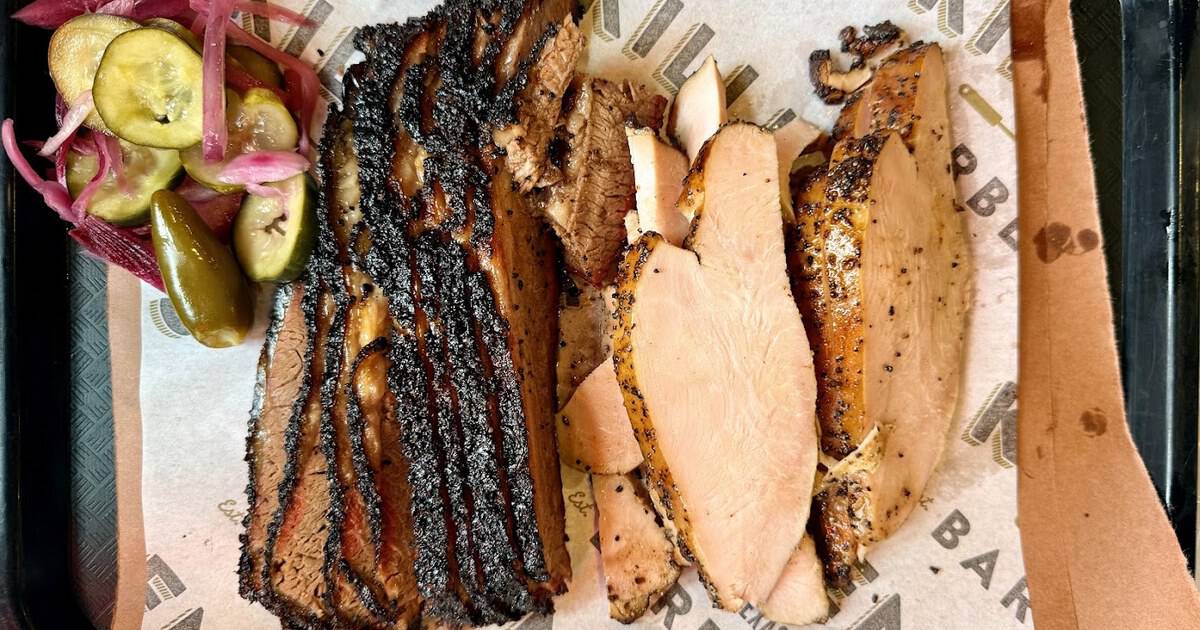
I watched my step. I also watched him pull a brisket that had been going low and slow all morning and slice it into slabs with an edge of fat that just gave way. It practically fell apart on the paper.
The dining room past the pits is all long wooden tables and high windows, worn smooth and shiny by decades of elbows. You share a table whether you meant to or not, and by the end of the meal you have usually made a friend or two.
No sauce sits on the counter, and for a long time no forks did either. The meat is the argument. You order by the pound, they weigh it, and you carry your butcher-paper bundle to the table like you earned it.
Pro tip: order a ring of the sausage too. The snap on the casing is a whole event, and it is the thing regulars quietly rank the joints by.
How to Eat Your Way Through All Four
My advice, if you want to do this right, is to treat it as a crawl rather than a meal. Order a quarter pound of brisket at one joint, share it, walk it off around the square, then hit the next one. Nobody here judges you for it.
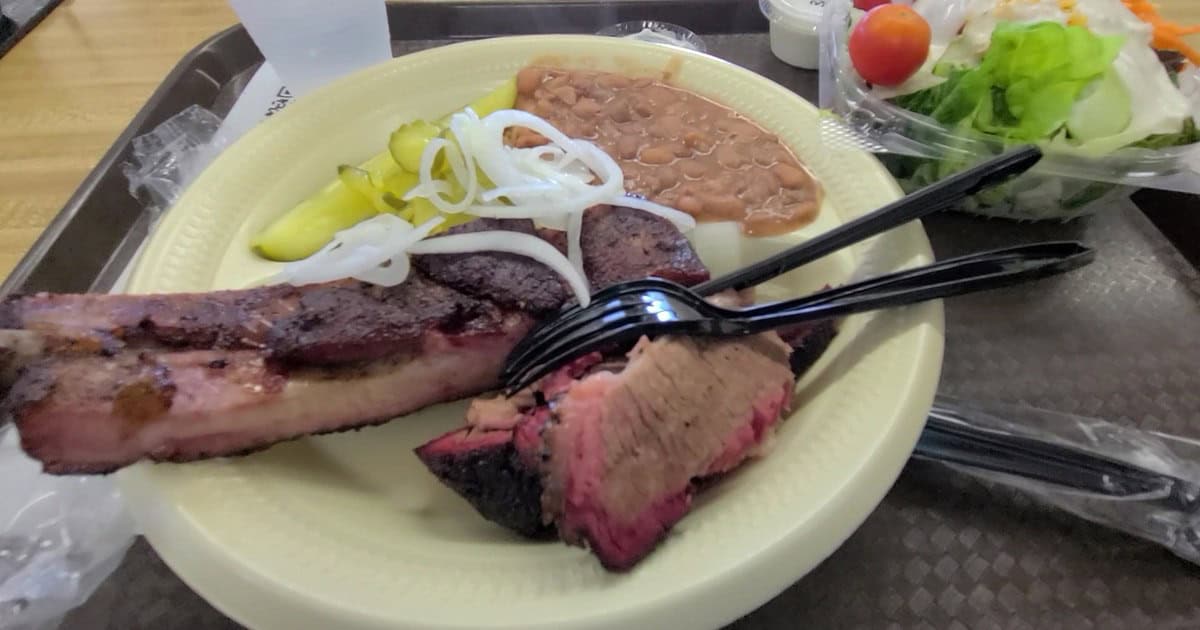
Start with the fatty brisket, the cut Central Texas built its reputation on, and get a rib or two while you are at it. The sausage rings are the sleeper pick, snappy and peppery, and they travel well if your eyes were bigger than your stomach.
Bring napkins and an appetite you have been saving all week. This is not a dainty cuisine. The best compliment you can pay a Lockhart pitmaster is to show up hungry and leave a little sleepy, with barbecue on your hands and no regrets in your heart.
The Courthouse That Keeps Getting Cast
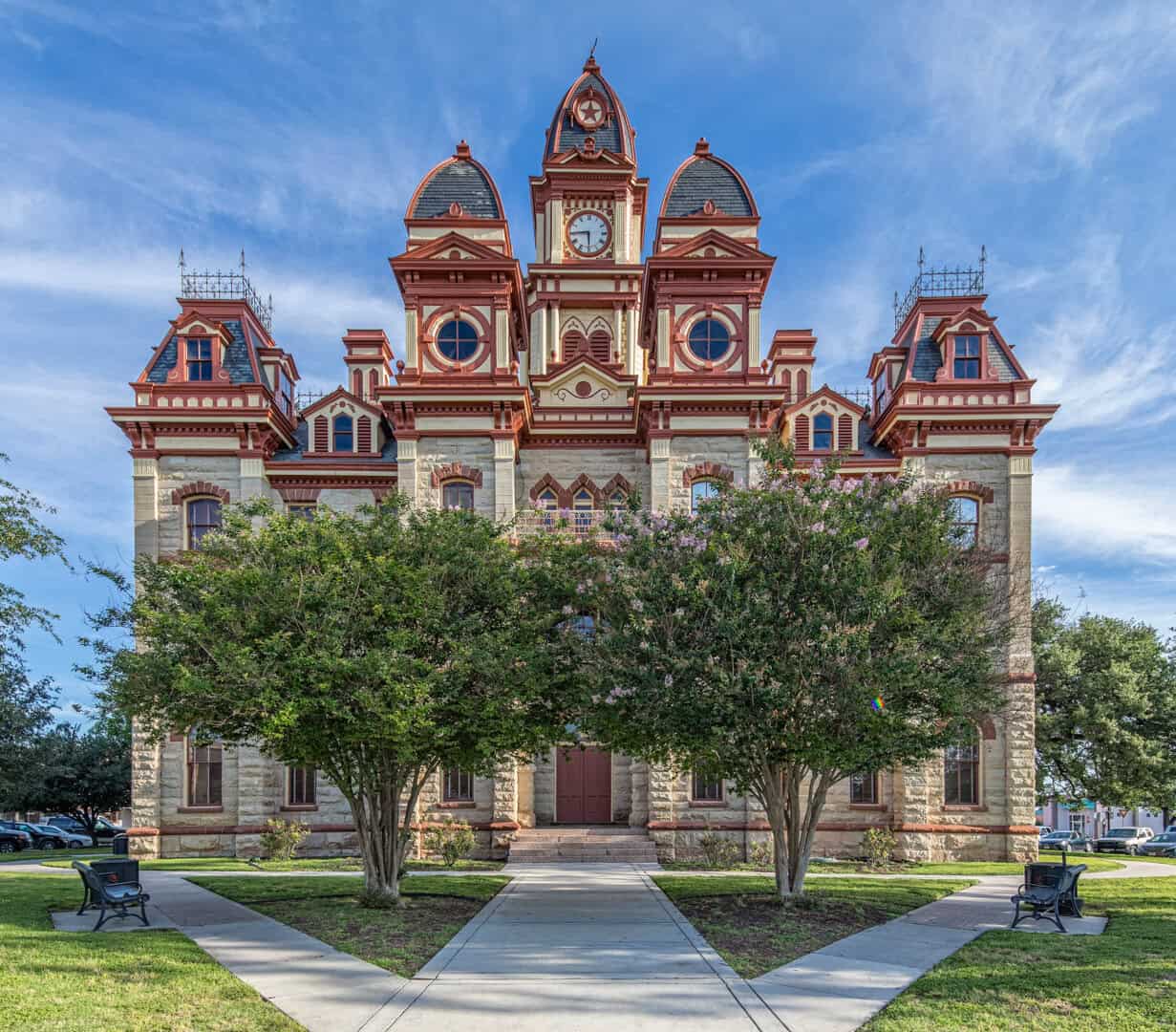
Now, back to that showstopper in the middle of the square. The Caldwell County Courthouse went up in 1894, and it is the reason the whole town photographs like a period film.
Built in the Second Empire style, it wears a steep mansard roof, a tall clock tower, and a facade of cream-colored limestone trimmed with red sandstone. The cornerstone was laid on August 15, 1893, and the finished building was handed to the county on March 19, 1894.
It is nearly a twin of the Goliad County courthouse, because both came from the same set of plans. Those plans have a small mystery attached.
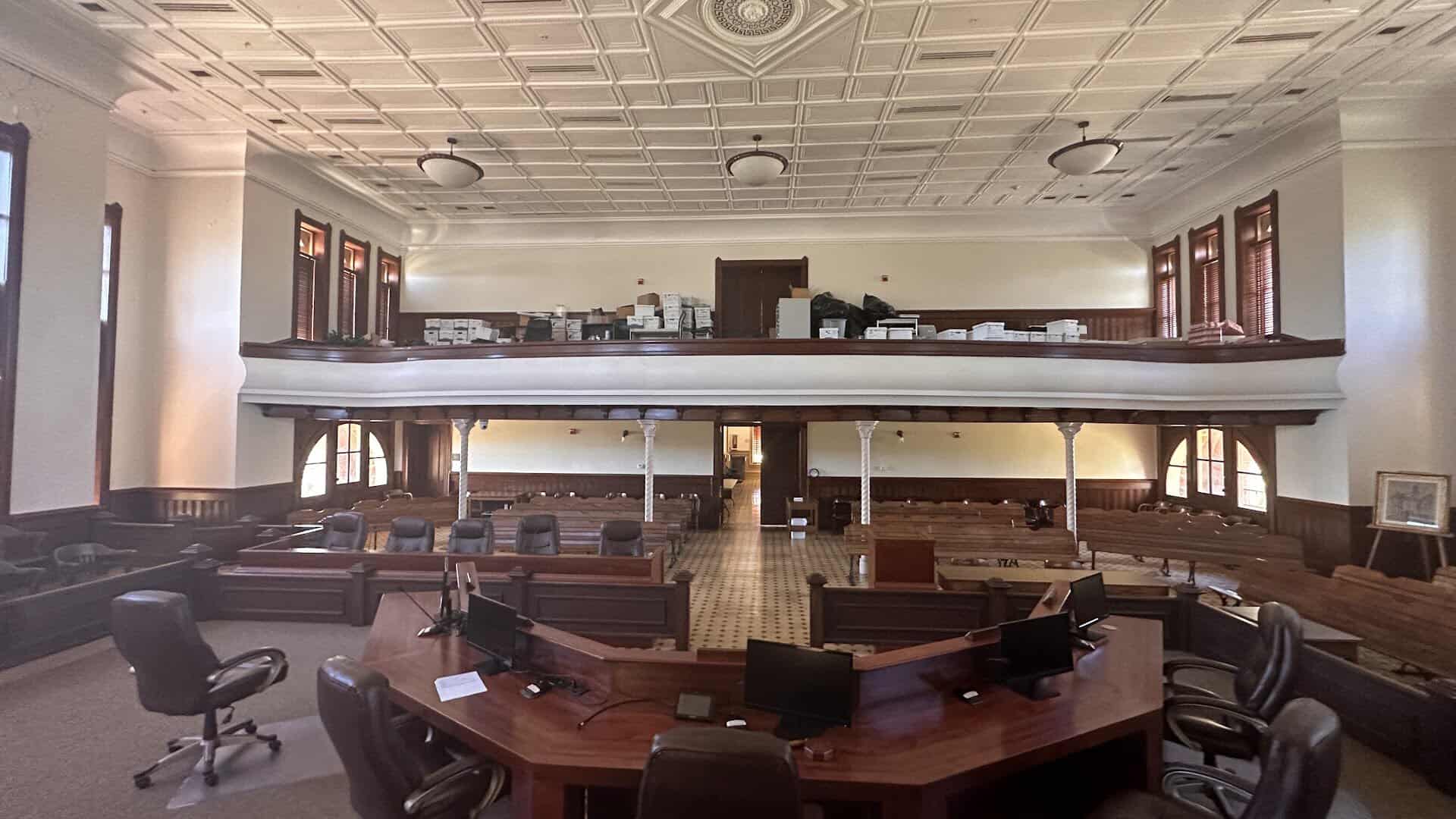
The design is often credited to the noted architect Alfred Giles, but recent research points to Henry E.M. Guidon, who later became Giles’s business partner, as the real hand behind it.
Either way, the building earned its stripes: a Texas Historic Landmark in 1976 and a spot on the National Register of Historic Places in 1978.
Up close, the stonework is the star. The limestone glows almost white at midday, the red sandstone trim runs around the windows like piping on a cake, and the clock tower keeps honest time above it all.
Did you know the square around it is a nine-block historic district in its own right? Stand on any corner and the courthouse anchors the view. It is genuinely hard to take a bad photo here, which is a sentence I do not say lightly.
Antiques, Clocks, and a Slow Afternoon on the Square
Barbecue and film heritage get the headlines, but the square rewards a slow browse. The storefronts are full of antique shops and boutiques where the inventory runs from vintage furniture to one-of-a-kind oddities, and nobody rushes you out.
My favorite surprise sits on the ground floor of the historic Brock Building, right on the square: the Southwest Clock Museum. It is a whole collection of timepieces ticking away in a town that already feels frozen at the best possible moment. There is something perfect about that.
Coffee shops and a couple of easygoing cafes fill the gaps between the antique stores, so you are never far from a place to sit and let a barbecue coma pass. The pace here is set to a Sunday setting even on a Tuesday.
This is the kind of place where you buy an iced tea, wander into a shop you did not plan on, and lose an hour without noticing. Whether you live in Texas or you are just passing through, the square gives you permission to slow all the way down.
When the Whole Town Throws a Party
If you want Lockhart at full volume, come for the Chisholm Trail Roundup. Held over three June days, it celebrates the town’s place on the historic cattle-driving trail that once pushed longhorns north.
There is a barbecue cook-off, a parade, an old-west gunfight reenactment, pig races, a petting zoo, and a full carnival on the grounds. It is the whole county turning out at once.
It is loud, dusty, sun-drenched, and completely sincere. The locals are not performing small-town charm for visitors. They are just doing what they do, and you are welcome to jump right in.
There is also a barbecue festival that draws smoke-chasers from across the state to eat their way around town. In Lockhart, the food is never far from being the reason for the gathering.
Green Space and a Round of Golf at the State Park
When you need to walk off all that brisket, Lockhart State Park is a few minutes from the square. The park covers 263 acres and offers hiking, fishing, and camping, plus something you rarely find in a Texas state park: a nine-hole golf course.
Much of the park was built in the 1930s by the Civilian Conservation Corps, and their stonework still holds up beautifully. That fits a town where nothing good ever seems to get torn down.
Shaded trails wind down toward Clear Fork Creek, and the whole park sits under a canopy of oaks and elms that keeps things cool even in a Texas July. It is a quiet, green counterpoint to a day of smoke and sizzle.
The golf course is the detail I love telling people about. It is one of the oldest state park courses in Texas, laid out in the same 1930s push that built the shelters, so you are essentially playing nine holes inside a piece of Depression-era history.
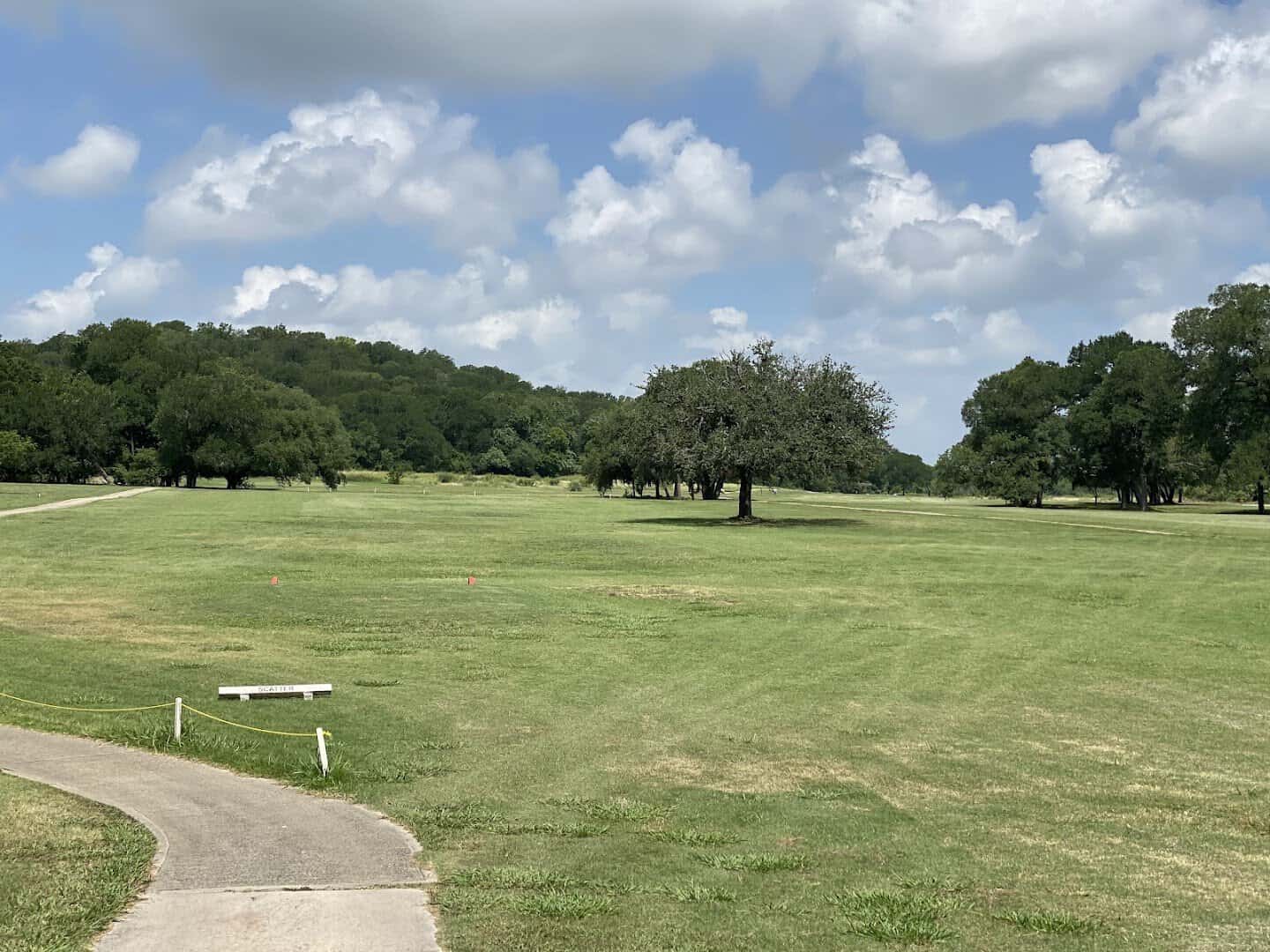
There is a swimming pool too, fed the old-fashioned way and beloved by generations of Lockhart kids on a hundred-degree afternoon. The park has that hand-built, human scale that the big destination parks lost somewhere along the way.
Bring a picnic, or better, bring your leftovers. Eating cold brisket under a CCC-built shelter, with the crickets starting up and the light going long, is a very Lockhart way to spend an evening.
A Brief History of How a Cattle Town Became a Film Star
Lockhart grew up as a stop on the Chisholm Trail, the great nineteenth-century route that pushed longhorn cattle north to the railheads. That heritage is why the courthouse square was laid out grand and why the town had money to build in stone in the 1890s.
The barbecue tradition grew straight out of that cattle economy, from meat markets that smoked their unsold cuts so nothing went to waste. By 1900 the practice was an institution, and by 2003 the state made it official with the Barbecue Capital title.
Those German and Czech meat markets are the reason the sausage matters as much as the brisket here, and the reason the oldest joints still sell by weight off the block. The pit was a butcher’s tool first, and a tourist attraction second.
The film business is the newest chapter. Once location scouts realized the square looked like a movie backlot that happened to be real, the cameras started arriving and never fully stopped.
A cattle town became a barbecue town became a place Hollywood borrows when it needs somewhere honest to point a lens. Not many towns get to be three things that well.
How to Get There and What to Know
Where: Downtown Lockhart is centered on the Caldwell County Courthouse, 110 South Main Street, Lockhart, TX 78644, roughly a forty-minute drive south of Austin.
Come hungry and come early. The best barbecue joints sell until they sell out, and a great pitmaster stops when the meat is gone, not when a clock says so. Get your brisket first, then walk the square.
Wear comfortable shoes, bring cash for the small shops, and give yourself a full unhurried day. The whole point of Lockhart is that it refuses to be rushed, so do not fight it. Let the town set the pace.
Start Planning Your Lockhart Day Trip
Some towns you visit. Lockhart you sort of step into, like a scene already in progress, with the smoke curling and the courthouse clock keeping time over the whole warm, unbothered picture.
Point the car south from Austin, arrive with an empty stomach and an open afternoon, and let a real-life movie set feed you the best brisket of your life.
Just do not brake in the middle of the street the way I did. The locals have seen that look before, and they will wave you on with a grin.
Featured image: Greg Alford via Caldwell County Courthouse

Stella Raines
Editor-in-Chief
Stella brings over a decade of storytelling experience to TX Headlines. With roots in West Texas and a love for road trips, she leads the editorial team with an eye for the hidden stories that make Texas unforgettable.
More Stories
This Unassuming Texas Cafe Fries Golden Frog Legs Worth Crossing the State For
This Beloved Texas Barbecue Joint Serves a Bread Pudding People Drive Miles to Eat
This Old-School Texas Cafe Serves Lemon Meringue Worth Driving Miles For
This Storied Texas Smokehouse Is the State’s Oldest Barbecue Joint and Its Snappy Sausage Started It All
Tags