This Unassuming Texas Produce Market Is Where Locals Buy Avocados Four for a Dollar
I stood in a checkout line last spring watching the little screen tick upward and doing that quiet math we all do now. Bananas. Bag of limes. A clamshell of strawberries that felt like a splurge. Forty dollars, and I had not bought anything to actually cook.
That was the week a friend from Oak Cliff texted me an address and three words: “Trust me. Go.”
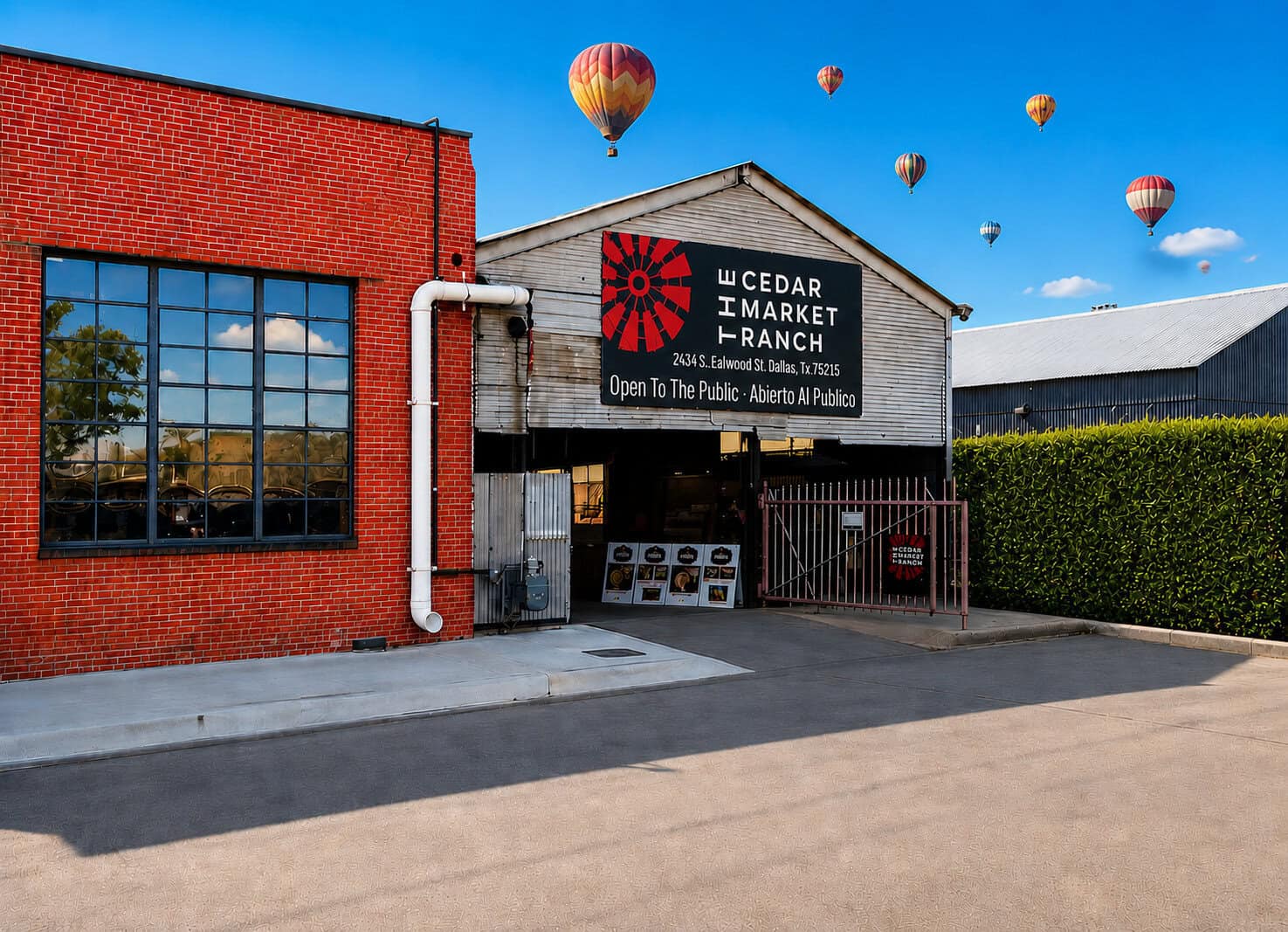
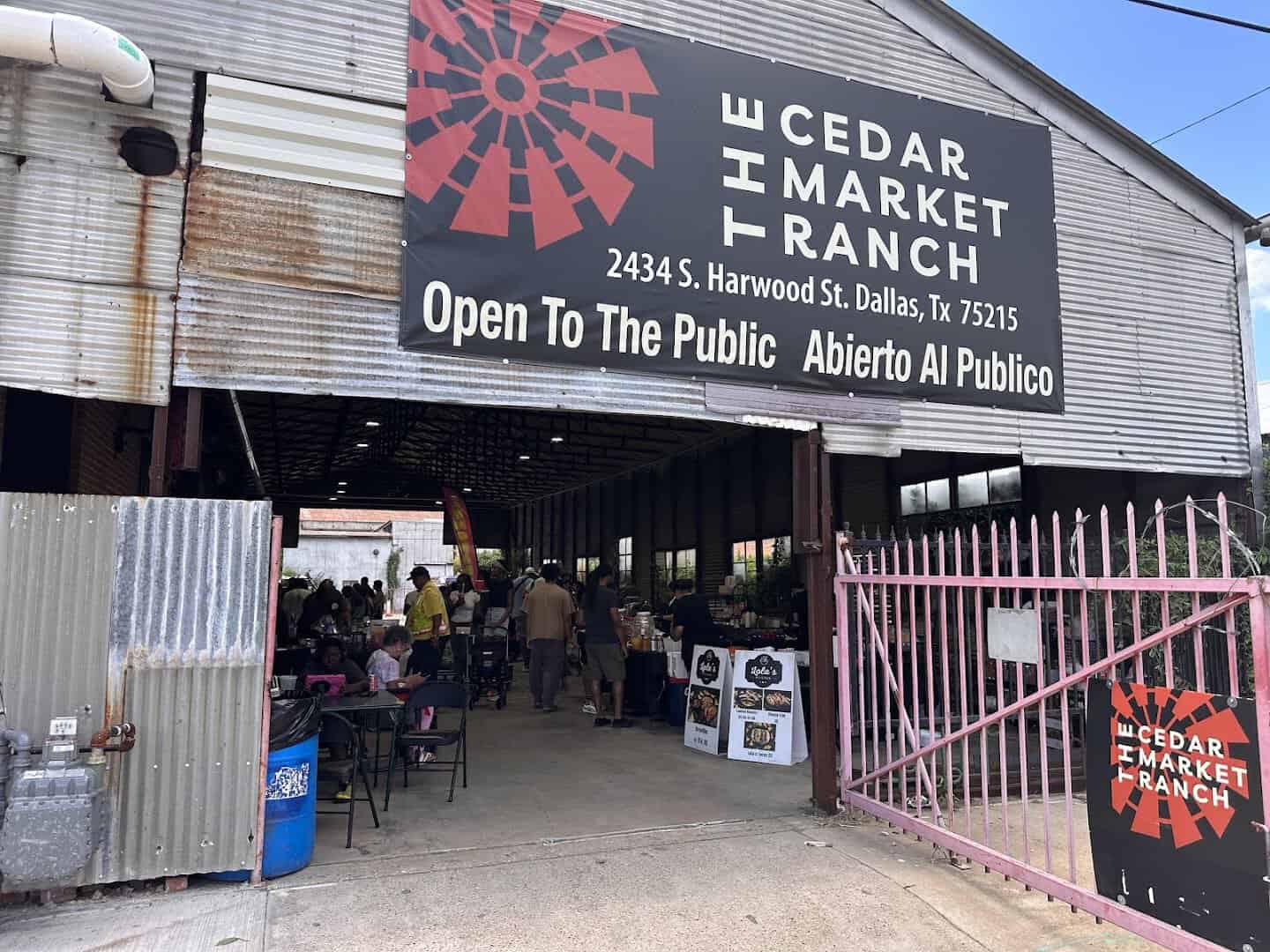
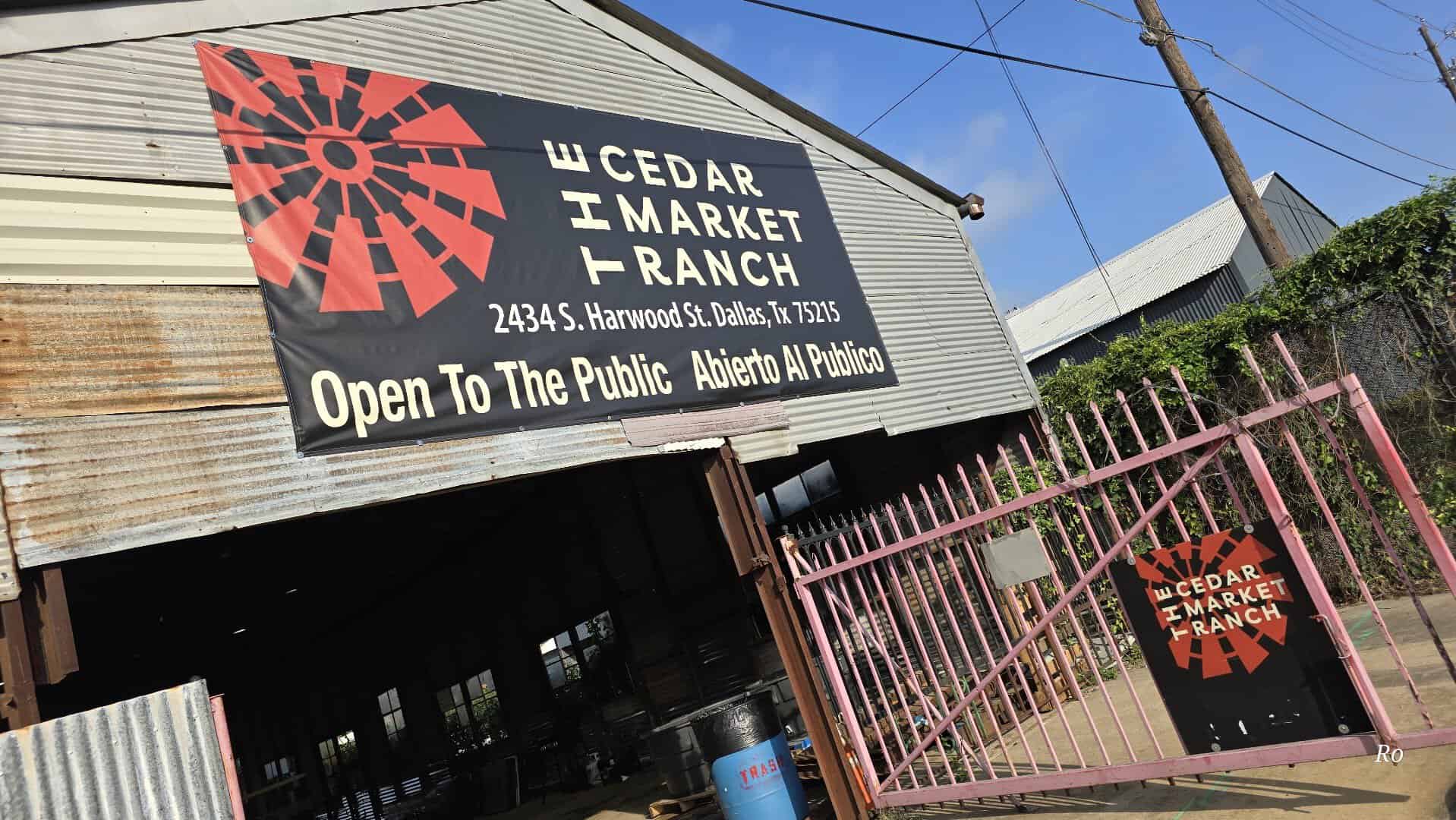
The address belonged to The Cedar Market Ranch, a produce warehouse on South Harwood Street in Dallas. Walking in the first time felt like stepping into a walk-in cooler stacked with color.
What hits you before anything else is the cold citrus air, sharp and sweet, the smell of a thousand oranges breathing at once.
Below, discover what the room actually looks like, the family who spent thirty years building the supply chain behind it, how a phone video turned a quiet warehouse into a weekend destination, and what it costs to fill a box.
Push a Dolly, Not a Cart
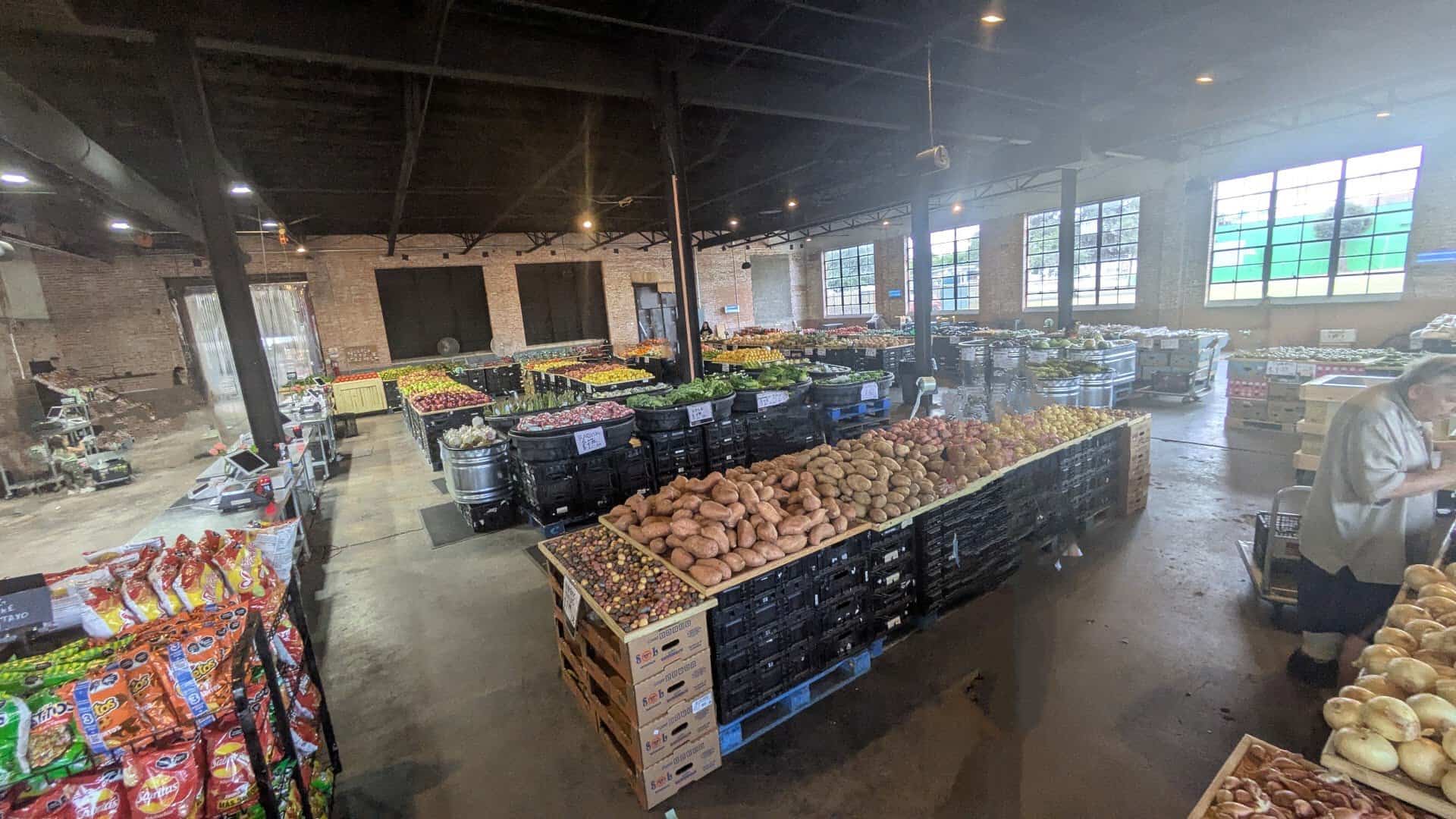
There are no shopping carts here. There is a stack of flatbed dollies by the door and a pile of empty cardboard boxes, and the moment you pick one up you understand the whole operation.
You are not browsing aisles. You are shopping a warehouse floor the way a restaurant buyer would, straight off long tables piled with crates.
Tomatoes sit in flats. Onions come in sacks. The peppers are heaped so high you have to reach over the top row to get at the ones underneath, and nobody minds if you dig.
The floor is concrete. The ceiling is open, with the ductwork and the lights right there where you can see them. It looks exactly like what it is, a working produce house that decided to open its doors to regular people.
I love that about it. Nobody has bolted fake barn wood to anything or hand-lettered a chalkboard about the harvest. The produce is the whole show, and it holds up.
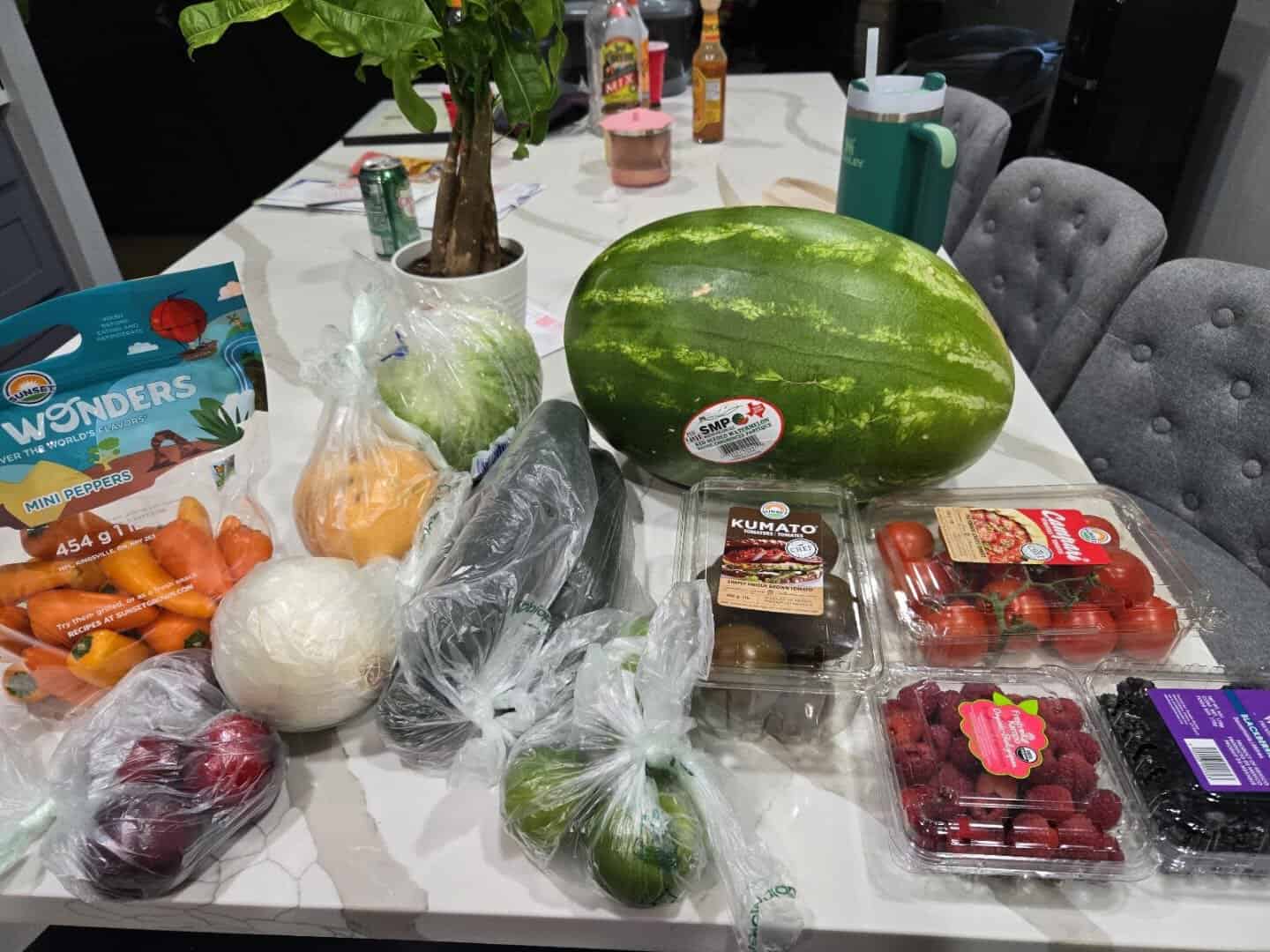
My first trip I filled a box with tomatoes, cilantro, a pineapple, two pounds of limes and a watermelon so heavy I had to shuffle it to the car with both arms. I have made that shuffle many times since.
Four Avocados, One Dollar
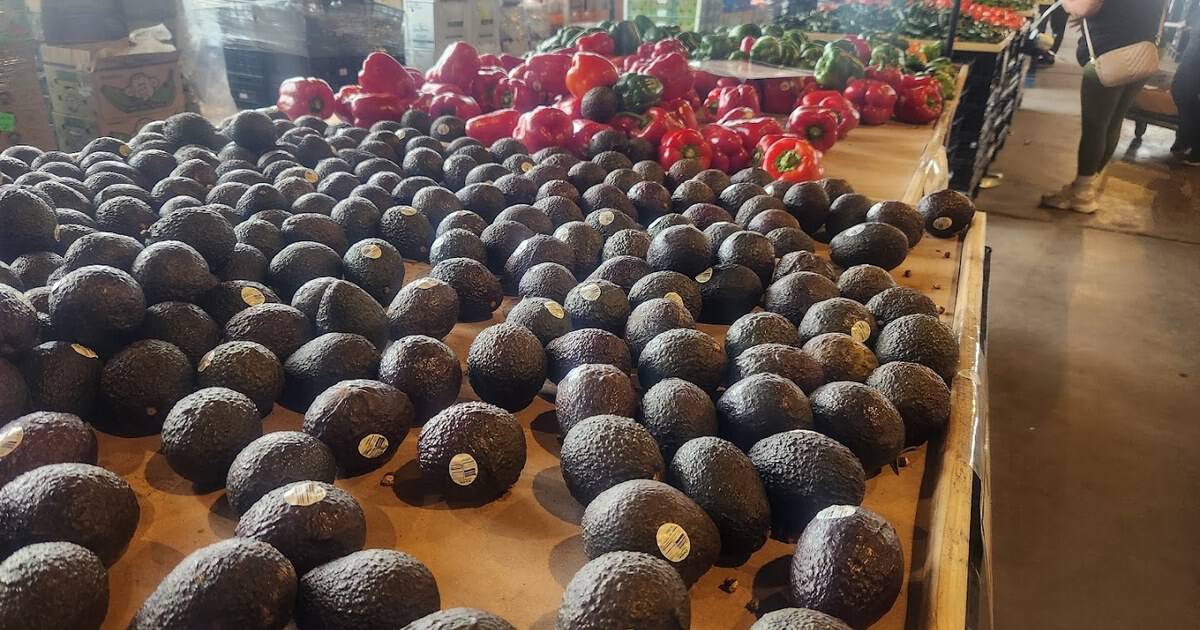
On a good week, avocados here run four for a dollar.
I have watched people stop dead in the aisle when they see that sign. I did it myself. One woman near me said it out loud twice, as if the second time would make it stick.
The deals do not stop there. Ten pounds of potatoes have gone for $3.99. Two pounds of strawberries, also $3.99. A bag of avocados for $1.50 when the crop is running heavy.
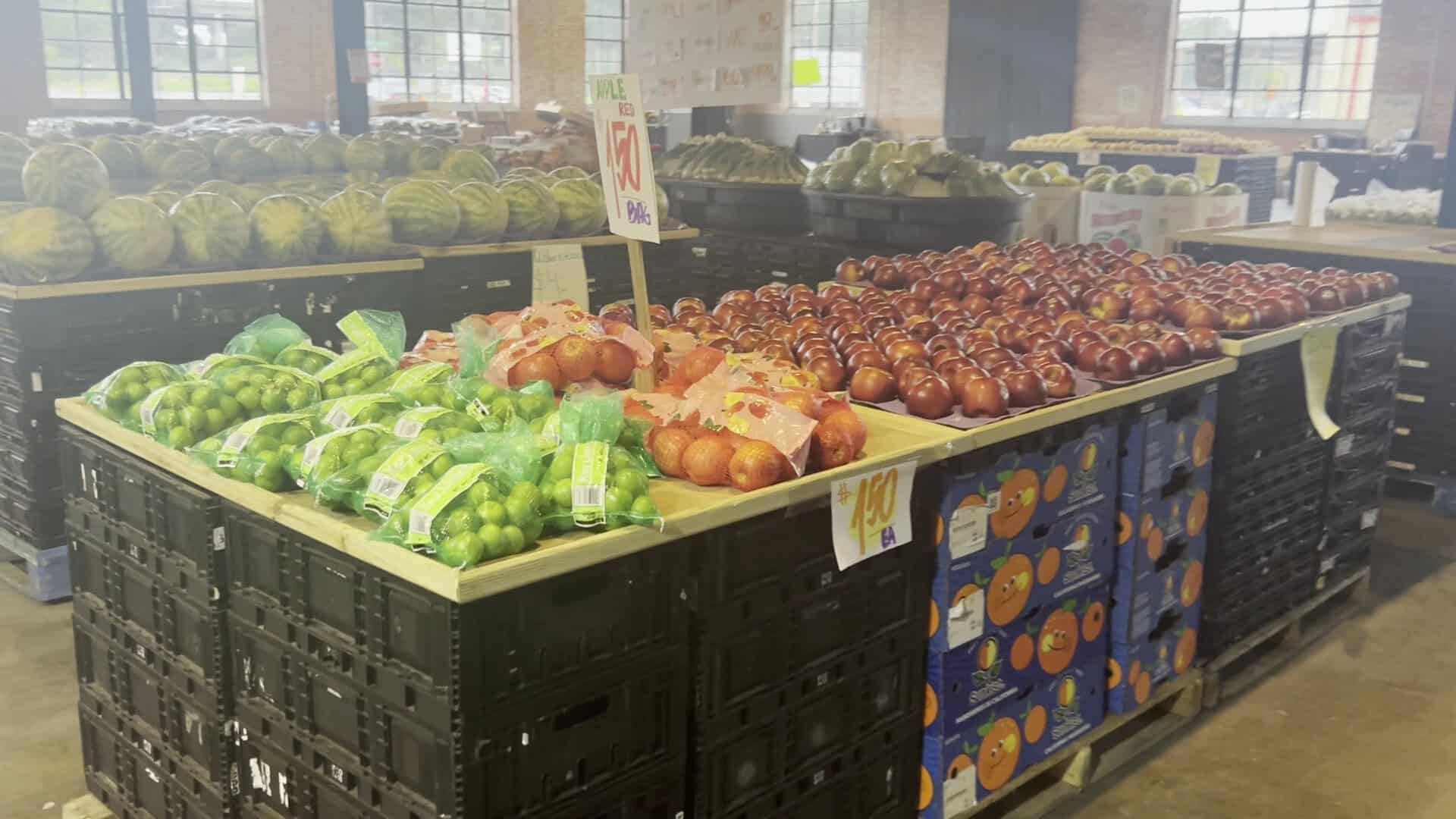
Prices move with the season, because that is how produce works. Something that was two dollars in April might be three in August, and something else drops to almost nothing when a grower has more than the market can take.
The savings come from the shortest possible line between the field and your box. The family buys straight from growers and runs its own distribution, so the usual layers of middlemen simply are not in the chain.
“We’ll buy more when it’s cheaper and buy what we need when it’s expensive, so we can balance it out and give it the best price possible,” Arnie Perez told KERA News.
Freshness is the other half of it. Produce on those tables came off a truck that morning or the day before, straight from the family’s own cold warehouse a short drive away.
Chelsi Lacour, a nurse from West Dallas, told KERA what she noticed first: “I didn’t see a lot of things that were beat up or bruised or brown and looked like they had been on the shelves for weeks.”
That tracks with my experience. I have bought tomatoes here that still smelled like the vine, which is a thing I had almost stopped expecting from February tomatoes.
Dragon Fruit, Guava, and Other Happy Surprises
The staples are the backbone, but the fun is in the corners of the room.
Most of the fruit arrives from California, with select greens coming out of Texas. That mix means the tables carry things a standard grocery run rarely turns up.
Passion fruit, wrinkled and purple and worth every second of the spooning. Guava that perfumes the whole car on the drive home. Dragon fruit with that magenta skin like something from a coral reef.
There are plantains in every stage of ripeness, jicama the size of a softball, mangoes by the case, fresh herbs in bunches big enough to make you rethink your dinner plans.
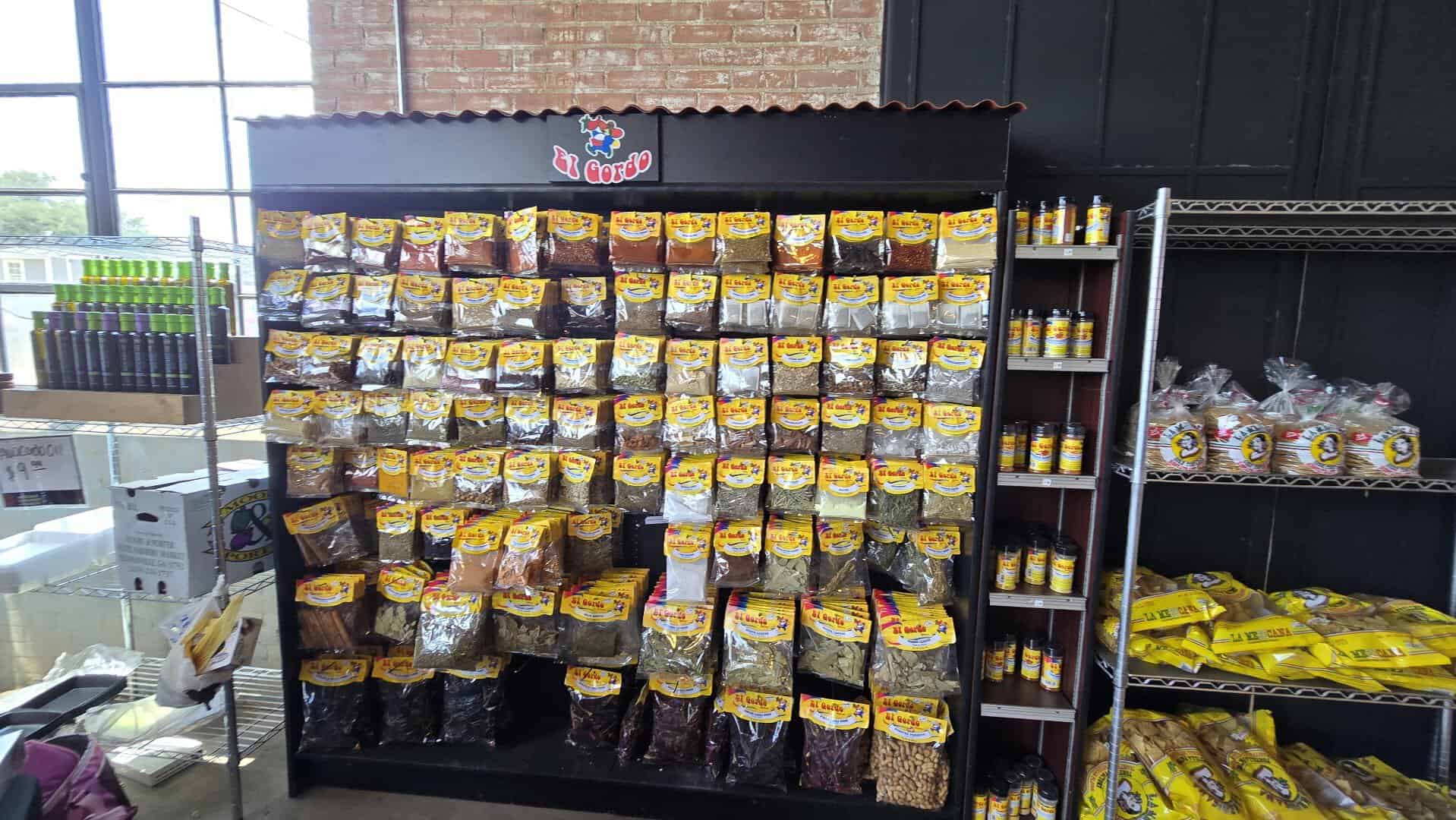
The dry side of the market has its own pull. Dried chiles by the bag, beans and rice, nuts and seeds, spices, a honey bar, teas, and shelves of the pantry basics you would otherwise make a second stop for.
Did you know a fresh guava will ripen on your counter in two or three days and tell you when it is ready by scent alone? Mine usually do not last that long.
I always end up buying one thing I have never cooked before. That is the tax this place charges, and I pay it happily.
The Coffee Bar Hiding in the Back
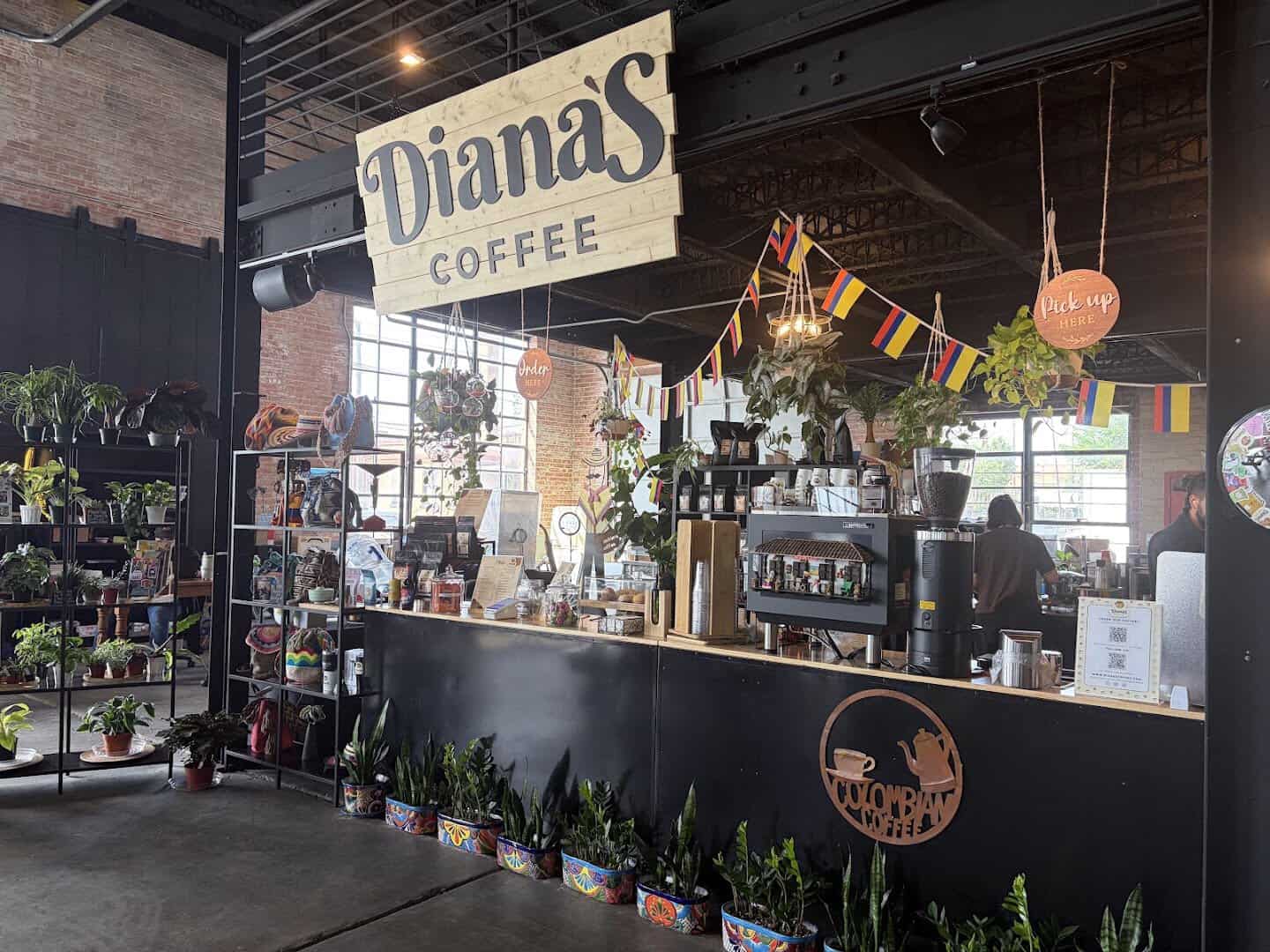
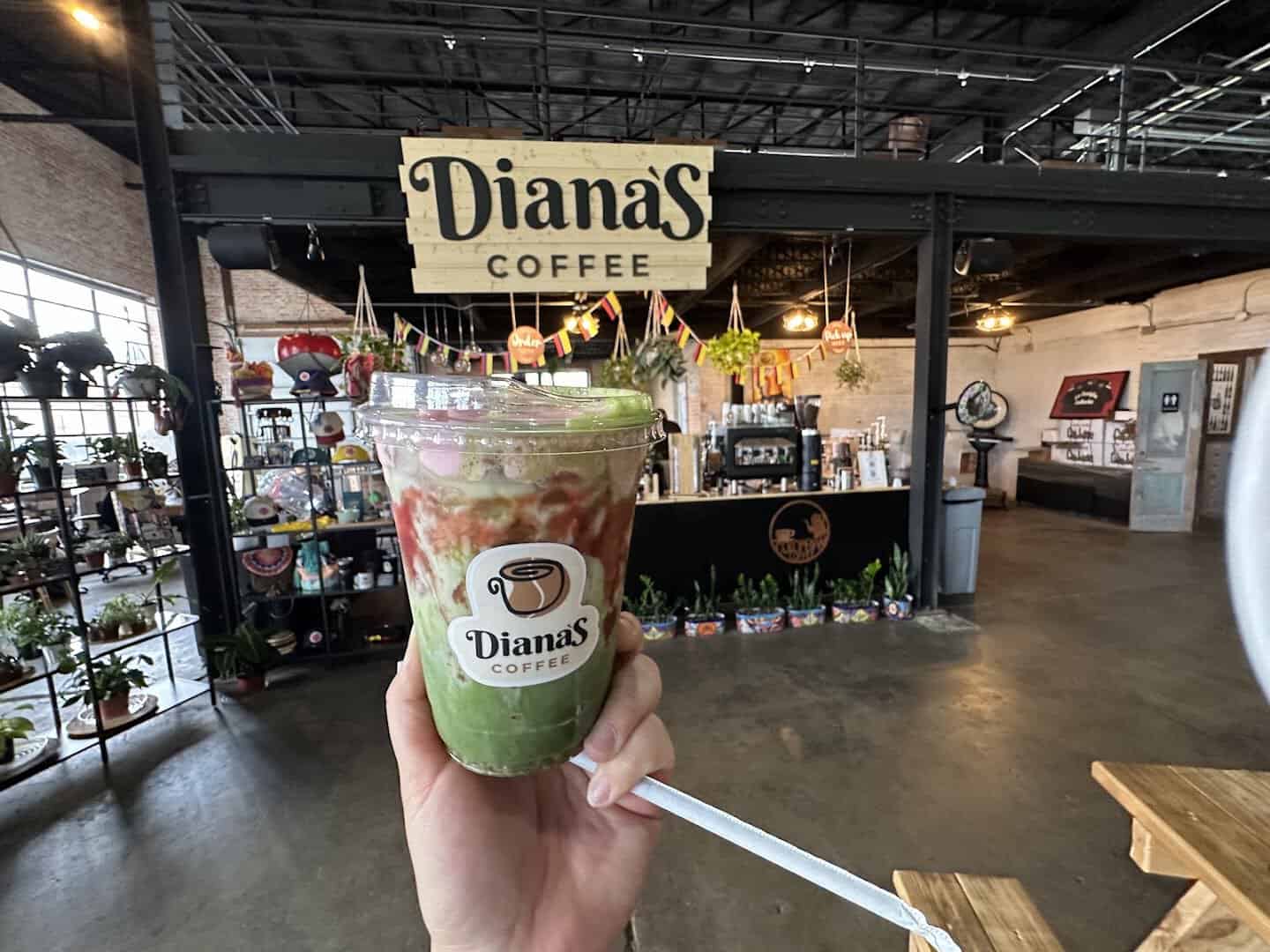
Tucked into the market is Diana’s Coffee, a small women-led, family-owned counter that has become my reason to arrive early.
The strawberry matcha is the one people photograph, pink and green in layers, sweet without being a milkshake. The dulce de leche latte is the one I actually order.
They pull espresso, whisk ceremonial matcha, keep cold brew going, and set out pastelitos, which is a dangerous combination at seven in the morning.
Pro tip: get the drink first, then shop. A cold brew in one hand and a dolly in the other is a genuinely pleasant way to spend a Saturday morning, and the line at the coffee counter grows as the room fills.
I have stood at that counter and watched the market wake up around me. Forklifts nudging pallets into place. Someone stacking mangoes into a pyramid. Music going the whole time, a shuffle of eighties pop, Latin hits, country, and rock that nobody seems to be curating.
Tacos, Salsa, and the Neighbors Along the Wall
The Perez family made room for other small businesses inside the building, and that decision changed the feel of the place entirely.
Vendor booths line parts of the floor. The Salsa Texan sets up here. So does TransforMEtion Journey. Honey sellers, taco vendors, and small makers rotate through the space.
So you can arrive for onions and leave with fresh tacos, a jar of salsa, an agua fresca, and a conversation with the person who made two of those three things.
That is the part a regular grocery run cannot give you. You end up talking to the person who cooked the thing you are eating, which changes an errand into a morning out.
“Is this your first time?” a woman at one of the booths asked me, holding out a spoon. It was not, but I took the spoon anyway.
Samples show up unprompted. So do free mandarins some mornings, handed over with the change like it is nothing.
From a Watermelon Truck to a 32,000 Square Foot Warehouse
The market opened in 2024, but the story behind it runs about thirty years deeper.
In the 1990s, Arnulfo Perez II was selling watermelons at the Dallas Farmers Market. That was the beginning of it, one man and a load of melons and a good eye for what things should cost.
In 1995, a produce distribution company called Southcoast Produce was started by Arnulfo Perez and his wife Mayra Perez. It grew into a 32,000 square foot refrigerated warehouse with a staff of around fifteen, moving fruit and vegetables to restaurants and shops across the region.
For decades that was the business. Wholesale, behind the scenes, the kind of company most shoppers never hear about even while eating what it delivers.
Then came the idea to open a retail door on the same supply chain. Same growers, same trucks, same cold rooms, but with the public invited in.
Arnulfo “Arnie” Perez III runs the market floor and does the price negotiating. His younger brother Andres Perez works the register and the phone camera. Natalya Melián, Andres’s partner and a public relations major at Texas State University, shaped the social media side.
So the market runs on a supply chain three decades in the making, staffed by the people whose father built it. I find that a genuinely lovely thing to know while picking through a crate of limes.
Arnie has talked about watching shoppers ration themselves at regular grocery stores, holding back on fresh fruit because of what it rings up as. Food prices in the United States climbed roughly 23 percent between 2020 and 2024, according to USDA figures, so that hesitation was not imagined.
How One Video Changed a Saturday
For a while the market was a local secret, the kind of address people passed along by text the way my friend passed it to me.
Then the videos landed. Three of the family’s clips passed a million views apiece in a matter of weeks, and one of them cleared a million in under 48 hours.
The floor changed overnight. Daily transactions went from around 200 to a peak of 800 on a single Saturday.
People started driving in from Fort Worth, McKinney and Arlington, up to an hour each way, for fruit and vegetables. Grocery arithmetic will do that to a person.
The wait to get in stretched long during that first rush. It has settled since, and now the room breathes the way a market should, busy on weekend mornings and calm on a Tuesday.
I like it both ways. Saturday for the buzz and the vendor booths, Tuesday for the room to think.
Why the Neighborhood Is Called the Cedars
The market sits in the Cedars, one of the oldest neighborhoods in Dallas and one of the most interesting to drive through.
The name is literal. Cedar trees once lined these streets, and in the 1870s, after Old City Park was established nearby, Victorian cottages and mansions went up under them for the city’s professional class.
Dallas grew, and the money moved north and west. The grand houses came down and warehouses went up in their place, which is how the neighborhood earned its low brick and concrete skyline.
Produce has deep roots in these blocks. Wholesale houses have operated along South Harwood for generations, so a produce market here is carrying on a very old local habit.
In the early 1980s, developer Bennett Miller started buying up old buildings in the Cedars and converting them into lofts, which set off the slow revival still going today. The old Sears warehouse became South Side on Lamar, a short drive from the market.
So when you park on Harwood and walk toward a plain warehouse door, you are standing in a neighborhood that has been reinventing itself for 150 years. The market fits right in.
Bring Your Own Bags, and Other Pro Tips
There are no plastic grocery bags here, on purpose. Shoppers load into the recycled cardboard boxes stacked by the entrance or bring their own totes.
My advice: bring the sturdy reusable bags and a cooler for the drive home in summer. Texas heat and a trunk full of berries are not friends.
Go early. Seven in the morning is a real option here, and the first hour is when the tables look their best and the parking is easiest.
Saturday is the liveliest day, with the most vendors and the most energy. A weekday morning is the calm version, and both are worth doing at least once.
Bring cash for the vendor booths even though cards work at the main registers. It moves the taco line along.
Come with a rough plan but leave room to improvise. You will find something at a price that makes no sense, and you will want to build a meal around it.
If you want to shop from the couch, the market has online ordering with free pickup at the location, usually ready within about 24 hours.
What It Costs to Fill a Box
People drive in from three counties over, and the arithmetic is the reason.
On my regular runs I walk out for around $30 with a box that would have run me a great deal more elsewhere. Produce for a week, plus the extras I could not resist.
Prices shift with the seasons and the harvests, so treat any single number as a snapshot rather than a promise. The pattern holds even when the specific figures move.
Shoppers have told Arnie the same thing over and over, some version of “Thank you for these prices. I can shop for my family.”
I keep repeating that line to people because it explains the place better than anything I could write about it.
How to Get There
Where: The Cedar Market Ranch, 2434 S Harwood St, Dallas, TX 75215
The market sits just south of downtown Dallas in the Cedars, an easy hop off I-30 and a few minutes from the Dallas Farmers Market where the family story began.
Hours run Monday through Friday from 7:00 a.m. to 6:00 p.m. and Saturday from 7:00 a.m. to 4:00 p.m. The market is closed on Sundays. Phone: (214) 747-8118.
Hours and pricing can change, especially around holidays, so a quick look at the market’s website or a call ahead is smart before a long drive.
Parking is on site, and it fills up fastest on Saturday mornings, which is one more argument for the early start.
Fill a Box, Then Go Make Something
Most of the Texas places I write about are scenic. This one is useful, and after a year of shopping here I have decided that counts for just as much.
You will walk in expecting a grocery errand and walk out with a cardboard box of color, a coffee you did not plan on, and the specific satisfaction of having beaten the checkout screen at its own game.
Whether you live twenty minutes away or you are passing through Dallas with a cooler in the trunk, give yourself an hour on a weekend morning and see what a dollar still buys.
Grab a dolly, get the strawberry matcha, and go make something good out of all that fruit before it ripens on your counter.
Featured image: Cerberessa via The Cedar Market Ranch

Stella Raines
Editor-in-Chief
Stella brings over a decade of storytelling experience to TX Headlines. With roots in West Texas and a love for road trips, she leads the editorial team with an eye for the hidden stories that make Texas unforgettable.
More Stories
This Beloved North Texas Smokehouse Is Where Folks Cross County Lines for 18-Hour Brisket
These Legendary Texas Barbecue Joints Are Worth Every Mile of the Drive
These Endless Texas Buffets Serve Southern Feasts Worth Loosening Your Belt For
This Revolving Texas Restaurant Is 750 Feet Up and Turns a Full Circle Over Dinner
Tags