This Revolving Texas Restaurant Is 750 Feet Up and Turns a Full Circle Over Dinner
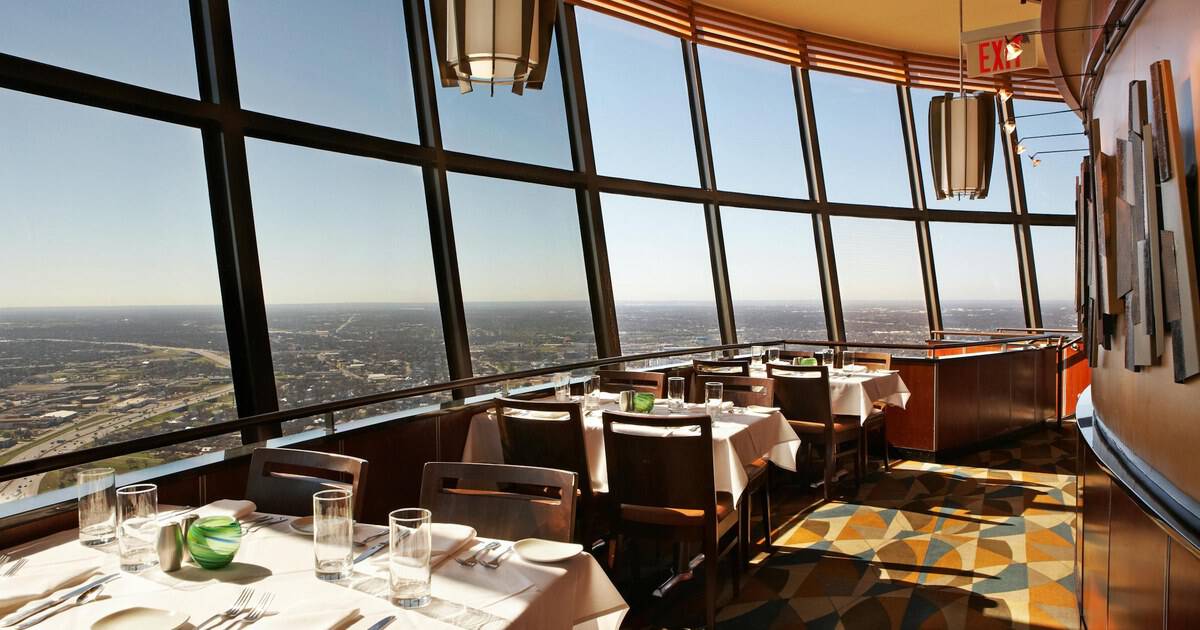
The first time I ate dinner in a room that moved, I was nine years old and completely convinced the building was going to tip over. I spent the whole meal with one hand on the table edge, watching a city slide past the glass like a slow carousel.
My mother told me to eat my green beans. I told her I was busy.
Decades later I got to do it again, this time 750 feet above downtown San Antonio, at the Chart House inside the Tower of the Americas. The green beans were creamed spinach now, and I still spent half the meal with my nose near the window.
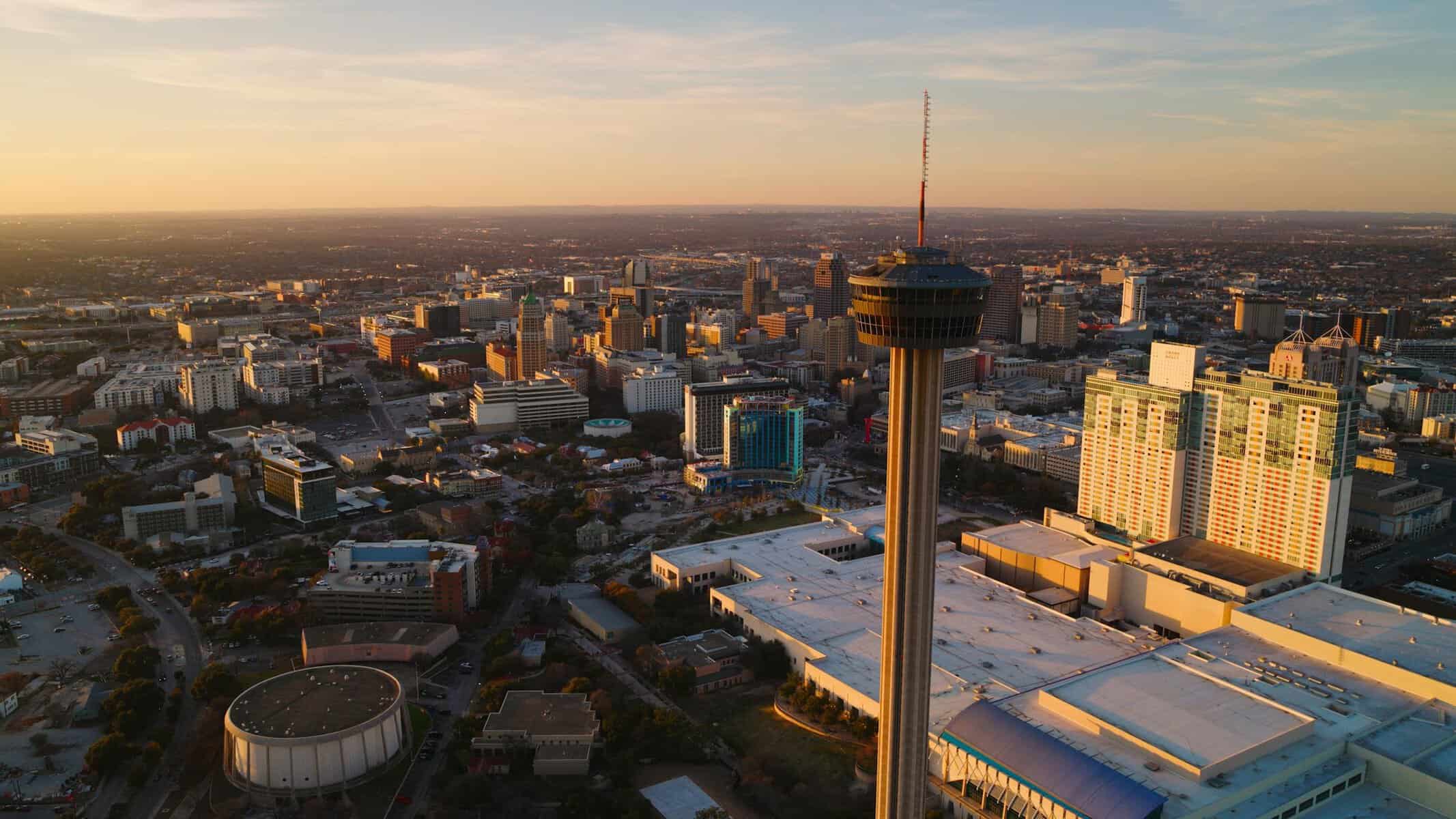
What sold me the second time was the slow-turning skyline, a whole city rolling by at the pace of a long conversation. Below, discover how the room turns, what lands on the table, and how a 1968 world’s fair left Texas with the tallest observation tower in the state.
Forty-Three Seconds That Change the Whole Evening
You do not walk into this restaurant so much as you launch into it. Three elevators run up the tower’s concrete shaft at 800 feet per minute, which works out to 43 seconds from the ground floor to the top.
That is faster than it sounds. Your ears pop somewhere around the halfway mark, the shaft windows flick past, and then the doors open onto a room with a horizon in it.
The elevators can carry about 1,950 people an hour between them. On a Saturday night in summer, they need every bit of that capacity.
There is a staircase too, all 952 steps of it, though it is not the guest route. In 1981 a climber named Tommy Johnson ran those steps in 5 minutes and 18 seconds, a record set on January 29 of that year that still gets repeated by tour guides.
I will take the 43 seconds, thanks.
Smell hits you before anything else when the doors open. Butter, seared steak, and a faint clean drift of glass cleaner from all that window.
The Room Turns, and You Do Not
Here is the part people get wrong before they arrive. The whole tower does not spin. The dining room floor rotates on a track inside the top of the structure while the elevator core, the kitchen, and the bar stay put.
One full circle takes about an hour. That is slow enough that you never feel it move, and fast enough that the view at dessert is nothing like the view at appetizers.
It is a strange, lovely trick. You look up from your bread plate and the Alamodome has quietly replaced the courthouse.
The engineering detail I cannot stop repeating: the top house is balanced so precisely that a single one horsepower motor turns it. One horsepower. Your kitchen blender is not far off that.
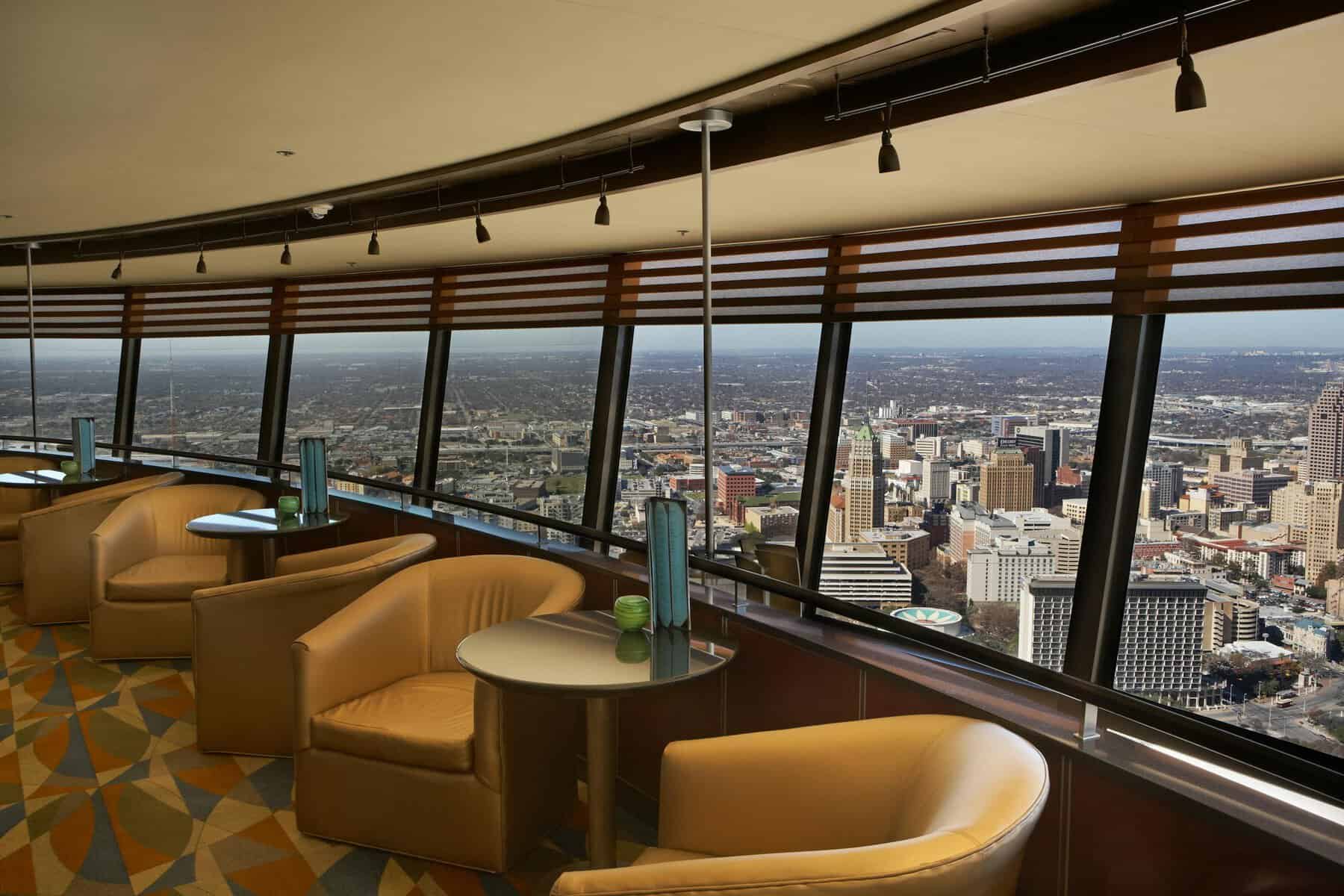
The rotating section sits at the 550 foot level. Above it are two observation decks, the indoor one at 579 feet and the open-air one at 560 feet, so the restaurant is tucked just under the viewing floors.
On a clear afternoon you can pick out the Alamodome, the cathedral downtown, the green line of the river as it threads between buildings, and the low blue smudge of the Hill Country out past the northwest edge of town.
At night it all turns into circuitry. The highways become moving strings of light and the neighborhoods glow in soft grids, and the whole thing keeps sliding gently to your left.
Did you know? If the movement bothers you, the staff can seat you in the non-rotating section. Ask when you book, not when you arrive, and everyone stays happy.
Seafood, Steaks, and a Very Good Bisque
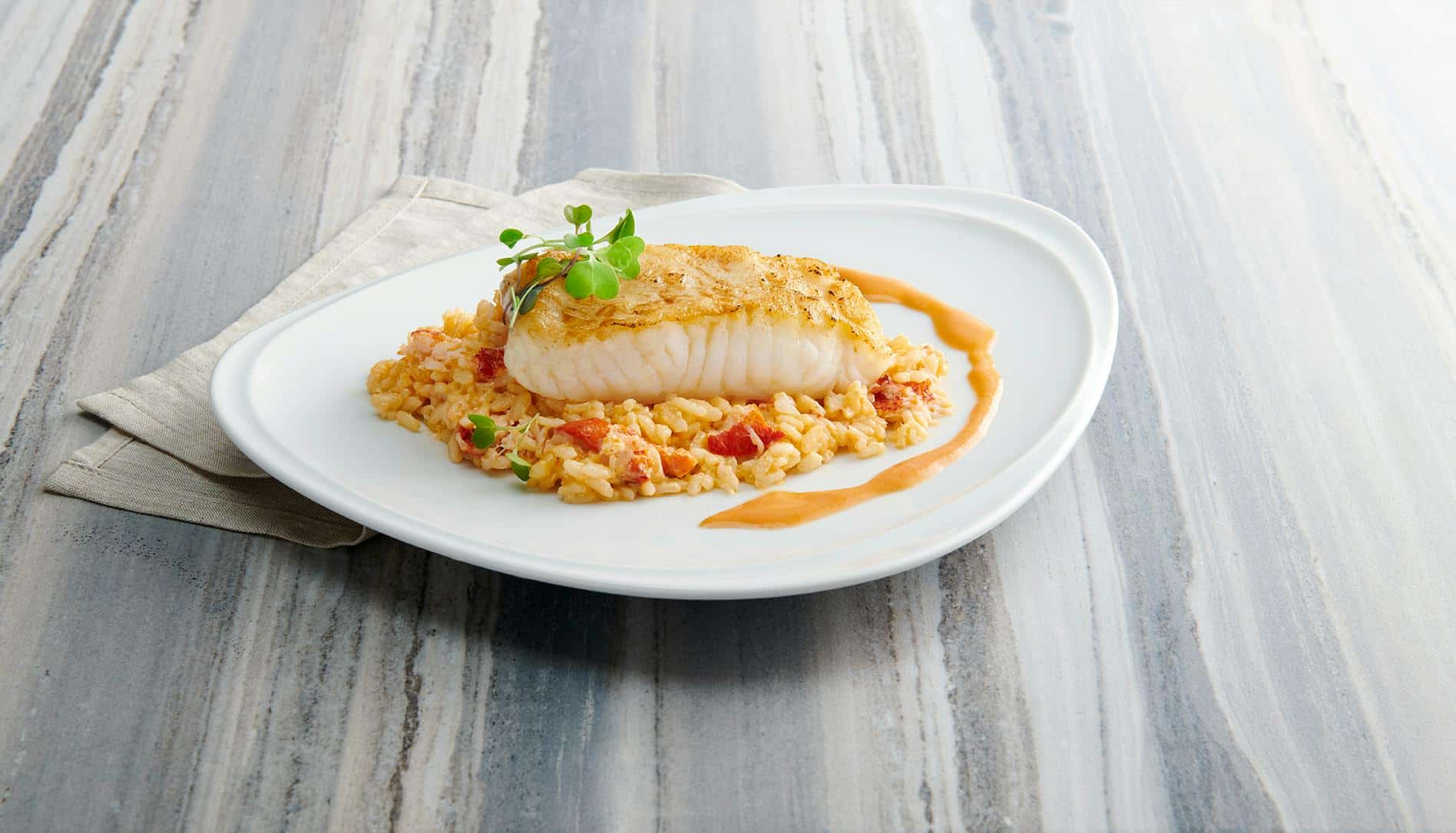
Chart House built its name on fish, and the kitchen here leans hard into it. Chilled towers of oysters and shrimp, seared ahi, salmon, sea bass, crab cakes with real crab in them.
The lobster bisque is the thing I would order twice. It arrives smelling of sherry and butter before it reaches the table, which is my favorite kind of warning.
New England clam chowder shares the menu with it, and both come by the cup or the bowl. Get the cup if you are eating a full dinner. The portions here are not shy.

On the warm side of the appetizer list, the coconut crunchy shrimp is the crowd pleaser, sweet and salty at once, and it disappears fast when it is shared.
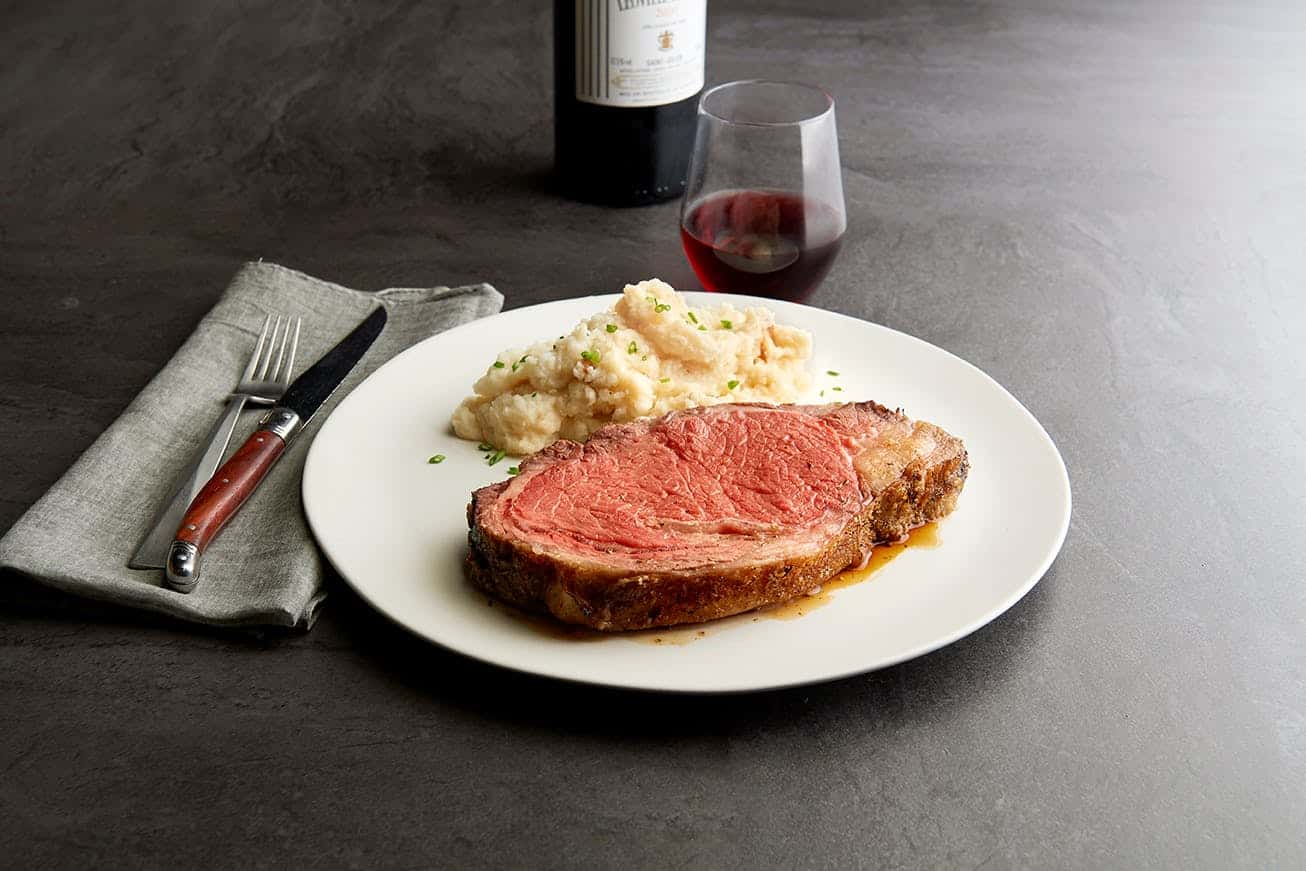
For the steak people at the table, and there is always one, the signature cuts run from a seven ounce filet mignon up through New York strip and slow roasted prime rib. My dining companion went straight for the prime rib and did not speak for several minutes.
Sides come family style, which is the right call in a room like this. Creamed spinach, brussels sprouts, lobster mac and cheese, steamed asparagus, all built to be passed around.
Ask for the bread early. It shows up warm, and it is the right partner for whatever soup you ordered.
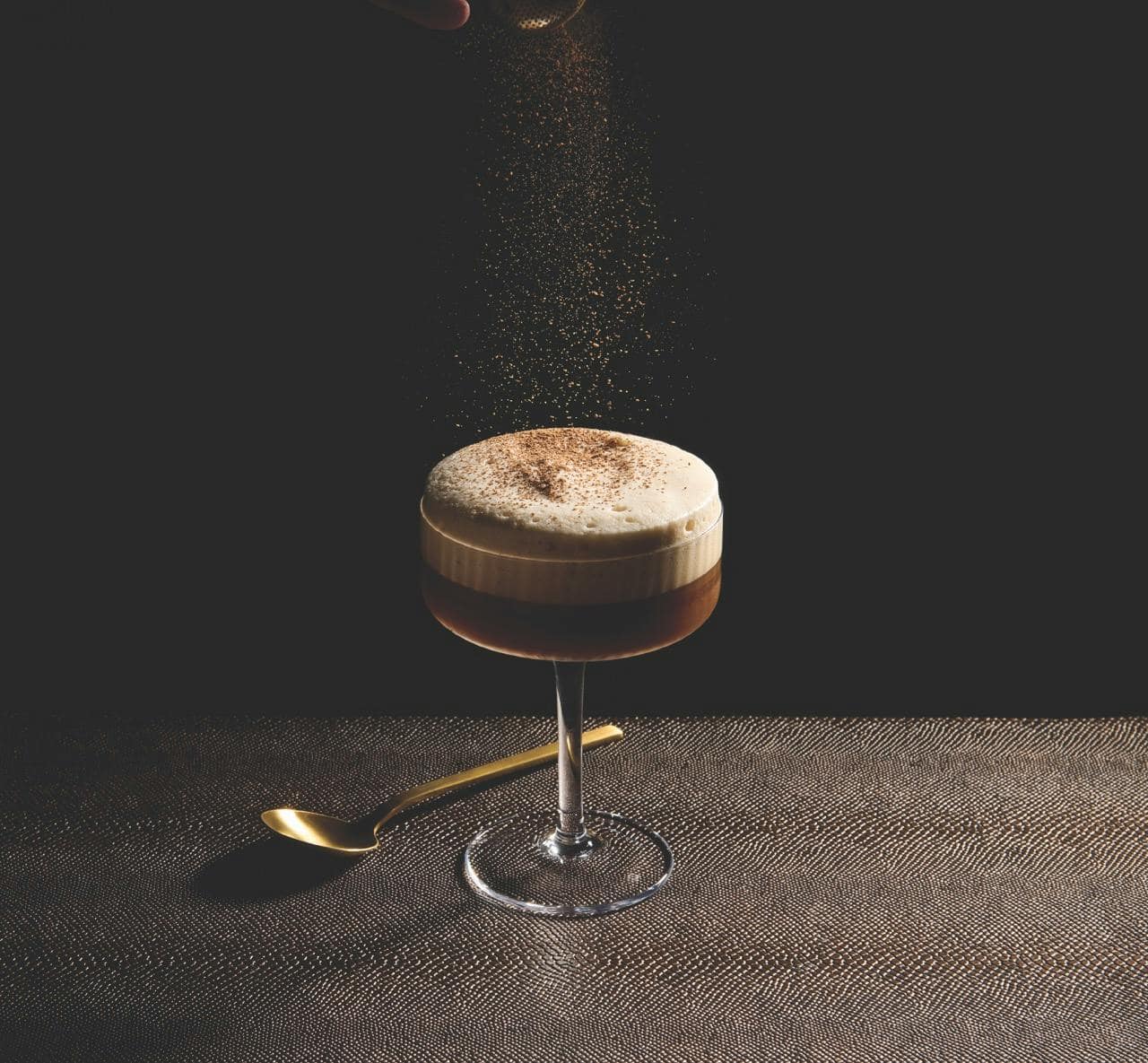
Dessert is not an afterthought here either. A warm chocolate cake with a molten center is the classic order, and it lands on the table at roughly the moment the city switches its lights on.
Lunch is the value play. The midday menu keeps things lighter and cheaper, and the view costs exactly the same at noon as it does at nine.
Happy hour runs Monday through Friday from 4:30 to 7:00 in the lounge, with discounted bites in the $6 to $12 range and drinks around $7 to $10. That is a remarkably reasonable way to get 750 feet of window.
During San Antonio Restaurant Week the kitchen puts out a three course lunch at $30 a person and a three course dinner at two price tiers. If your trip lines up with it, book early, because that table fills.
Prices move, so check the current menu before you plan the splurge. What does not move is the reason you came.
A World’s Fair, a Deadline, and 18 Months
San Antonio turned 250 years old in 1968, and the city decided to throw itself a world’s fair. HemisFair ’68 ran from April 6 to October 6 that year under the theme “The Confluence of Civilizations in the Americas.”
More than thirty nations built pavilions. Around 6.3 million people came through the gates. The whole enterprise cost roughly $156 million and reshaped the eastern edge of downtown.
Every fair needs a theme structure, the thing on the poster. San Antonio’s was this tower, designed by local architect O’Neil Ford with his partner Richard Colley and structural engineers Feigenspan and Pinnell.
Ford was a Texas original, a self-taught modernist who cared about craft and local materials and who called himself an architect without ever finishing an architecture degree. He gave the city a silhouette it has never stopped using.
Construction started on August 10, 1966, and finished in 18 months. That is a brutal timeline for a structure that weighs 80 million pounds.
The concrete shaft alone rises 605 feet with a diameter of 45 feet. Crews slipformed it upward around the clock.
Then came the genuinely audacious part. The top house, the 1.4 million pound assembly holding the observation decks and the restaurant, was built on the ground and then jacked up the shaft using twenty-four steel lifting rods.
It climbed inch by inch for about twenty days. Imagine watching that from a lawn chair in 1967.
The fair itself lost money, about $7.5 million of it, and San Antonio decided the trade was worth it anyway. The city got a convention center, a redrawn downtown, and a landmark.
The tower opened with the fair on April 6, 1968. From that day until 1996, when the Stratosphere went up in Las Vegas, it was the tallest observation tower in the United States. It is still the tallest in Texas.
From Tower Foods to Chart House
The restaurant up top has had more than one name. The original operating contract went to Tower Foods, a company owned by Frontier Enterprises, which San Antonio knew better as the parent of Jim’s Restaurants.
Frontier was built by Jim Hasslocher, who started out in 1947 with his wife Veva and one small drive-in, then grew it into a local restaurant empire. His company ran the tower for roughly 36 years, right up to 2004.
That is a long run in a business where five years is a career. Generations of San Antonio couples got engaged in that dining room.
In 2004 the city awarded a new lease to Landry’s, and the tower closed for a top to bottom overhaul. The company put about $8 million into the restaurant, the lounge, the observation deck, and a new 4D theater, plus another $4 million adding ground level space.
It reopened on June 21, 2006, with a restaurant called Eyes Over Texas, a lounge called Bar 601, and the Flags Over Texas observation deck. In 2007 the restaurant took on Landry’s own fine dining brand and became Chart House.
That brand has its own origin story, and it starts nowhere near Texas. The first Chart House opened in Aspen, Colorado, on the Fourth of July in 1961.
It was the idea of two men with an unlikely combination of resumes: Hawaiian surfing legend Joey Cabell and Buzzy Bent, a former Navy frogman. They had $5,000 between them.
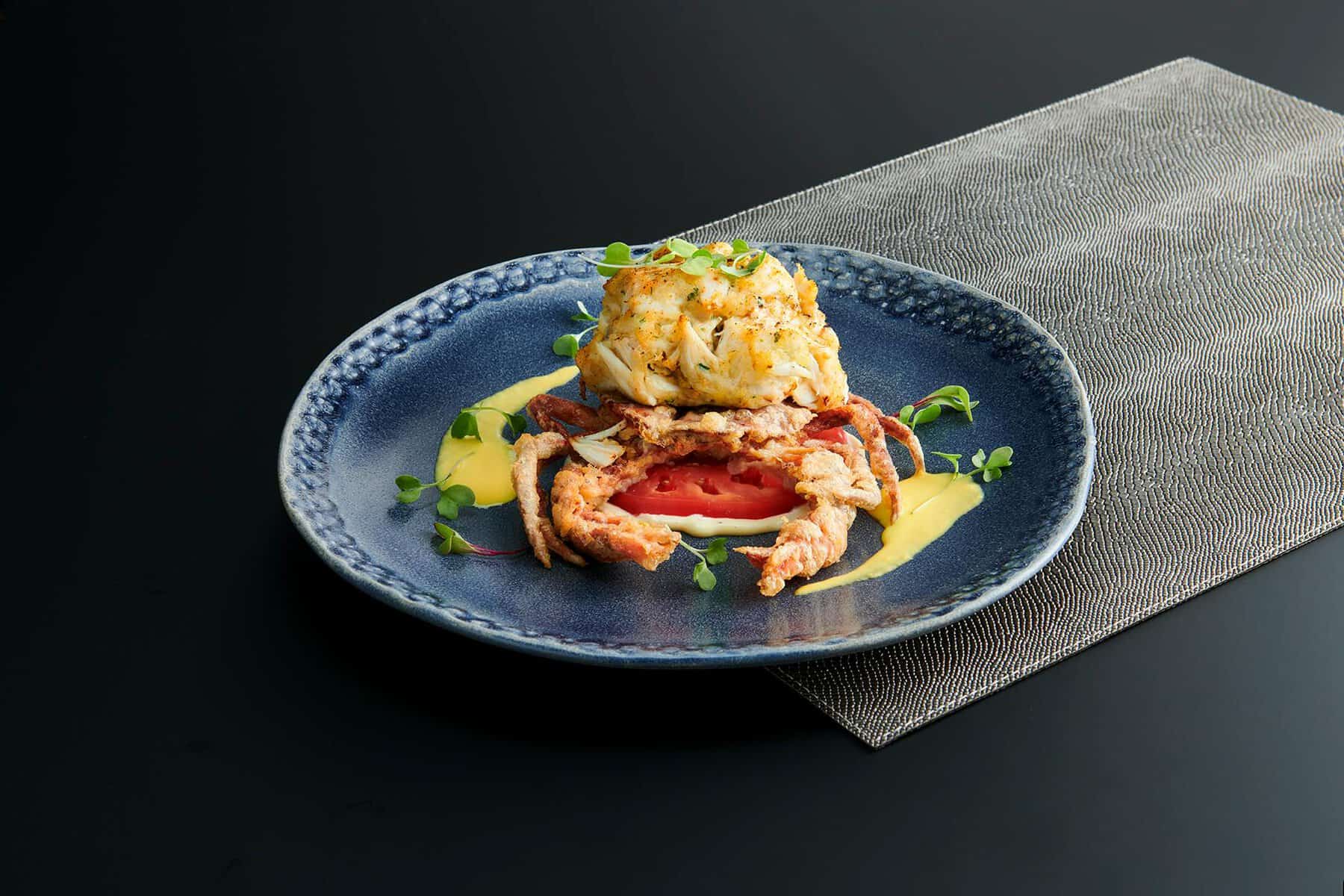
Their first dining room had fourteen tables and four bar stools in a converted diner, with nautical charts laid on the tabletops. That is where the name comes from, and 2026 marks the chain’s 65th year.
The city still owns the tower itself. In late 2024 the San Antonio City Council approved a major repair and upgrade program for the structure, with Landry’s putting its own money into refreshing the restaurant, the deck, and the theater.
What Else Is Up There
Your dinner reservation is only one floor of a much bigger attraction, and the rest of it is worth an hour of your day.
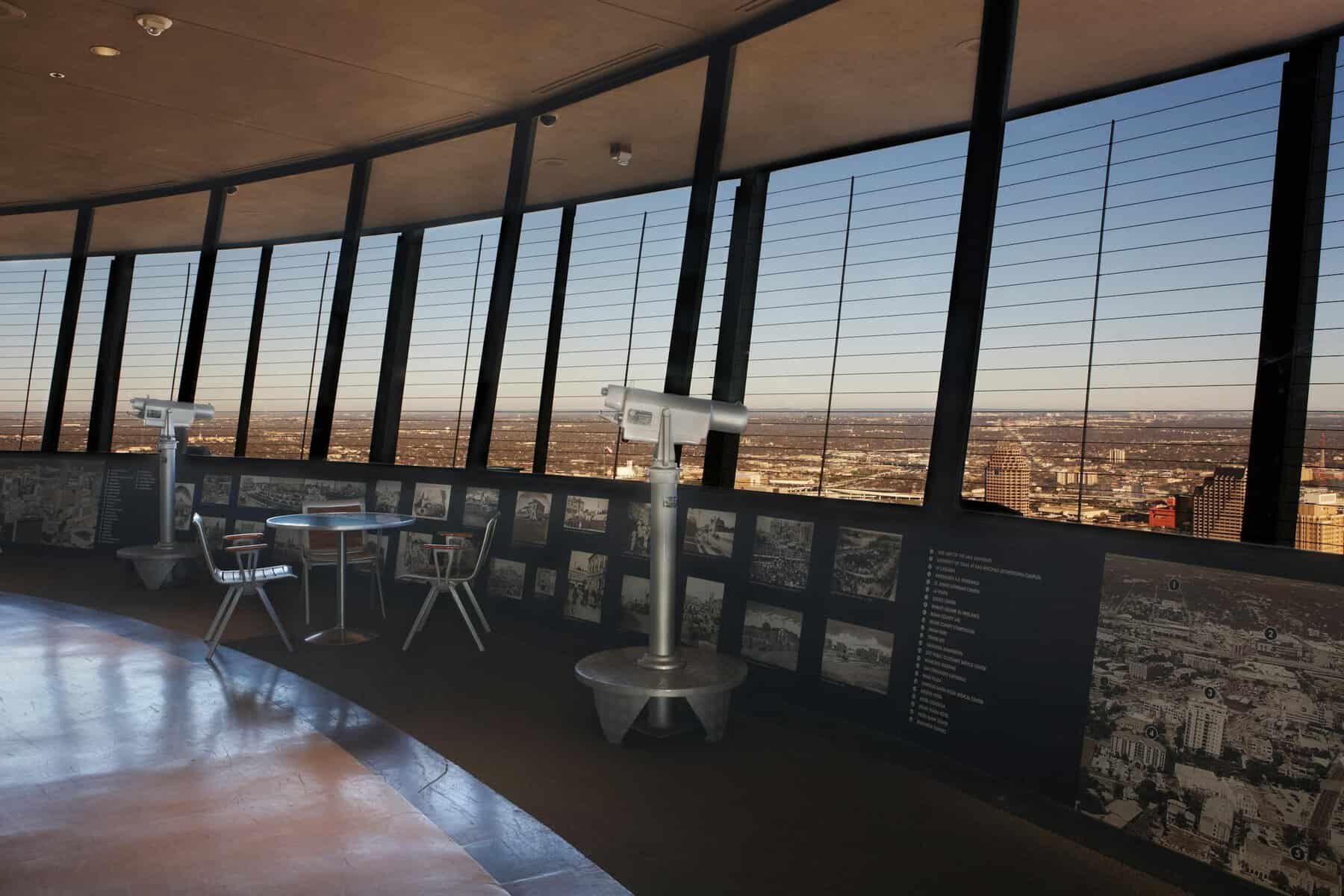
The Flags Over Texas observation deck wraps the tower with 360 degree views, floor photographs that name the landmarks below, and murals covering the six flags that have flown over the state. Spain alone held this ground for more than three centuries.
I am a sucker for the floor maps. There is something deeply satisfying about standing on a picture of a building and then looking up to find the real one.
Downstairs, the Skies Over Texas 4D theater ride flies you across the state with wind, motion, and a screen big enough to make your stomach lurch. There is a Friday night high school football scene that gets every Texan in the room.
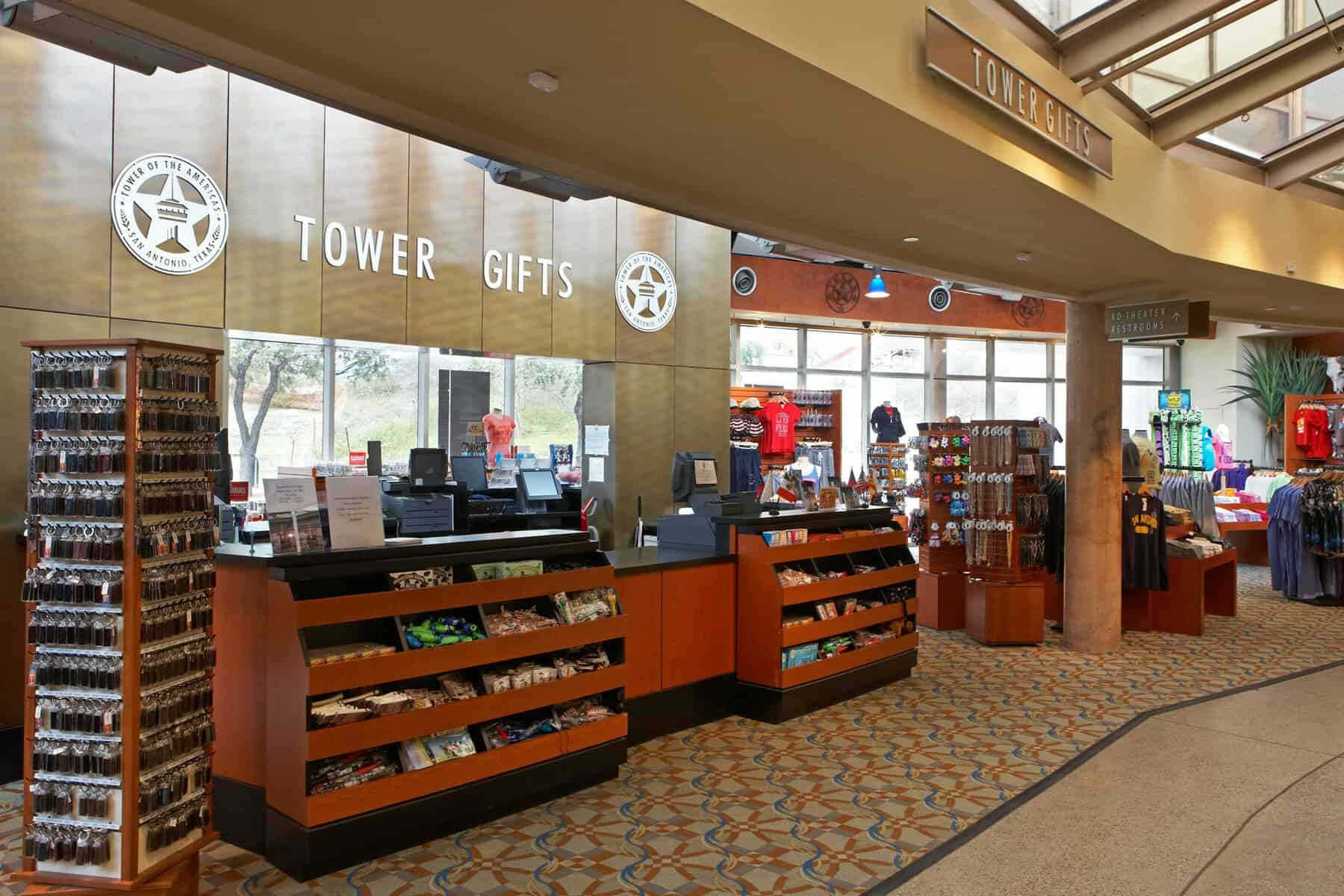
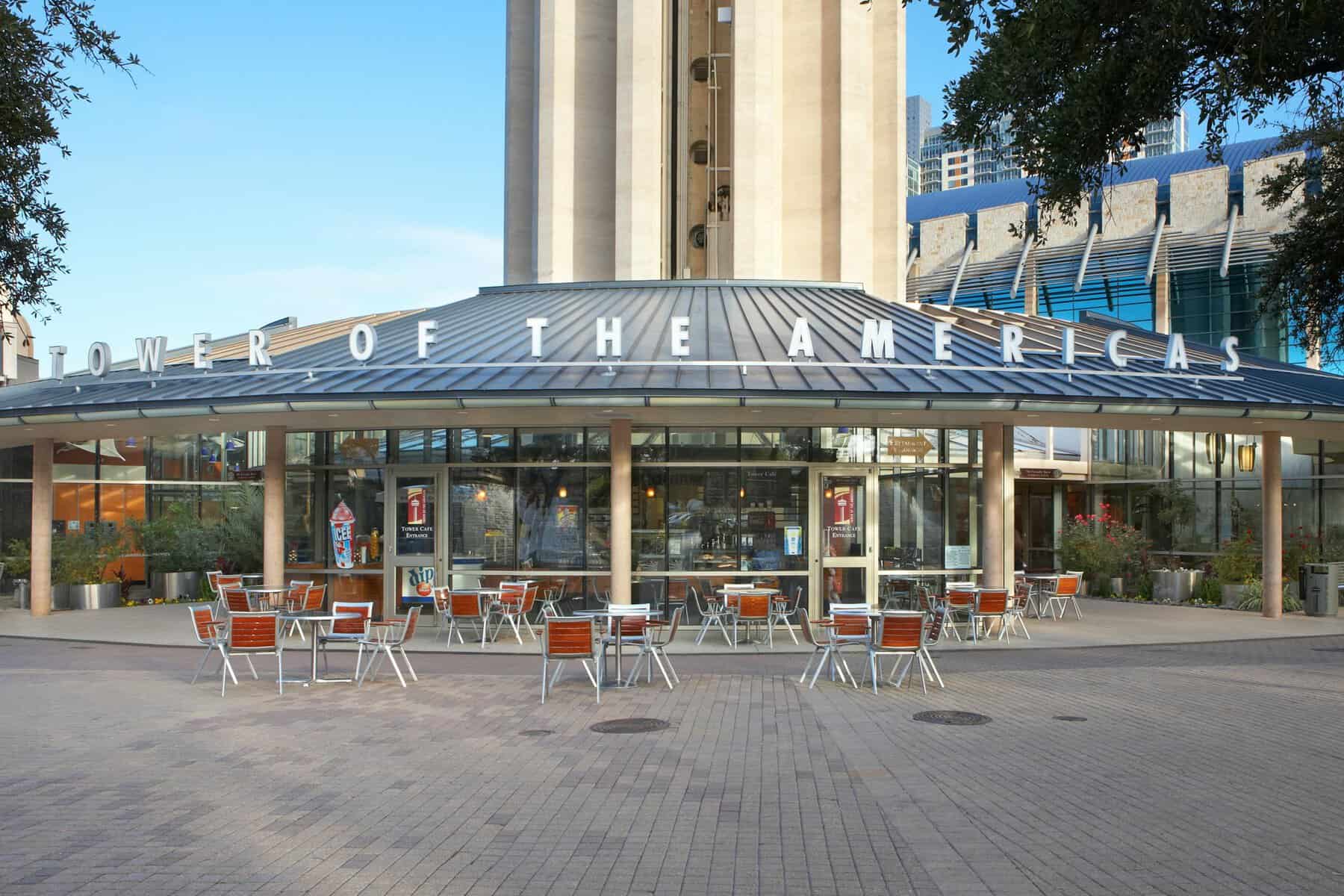
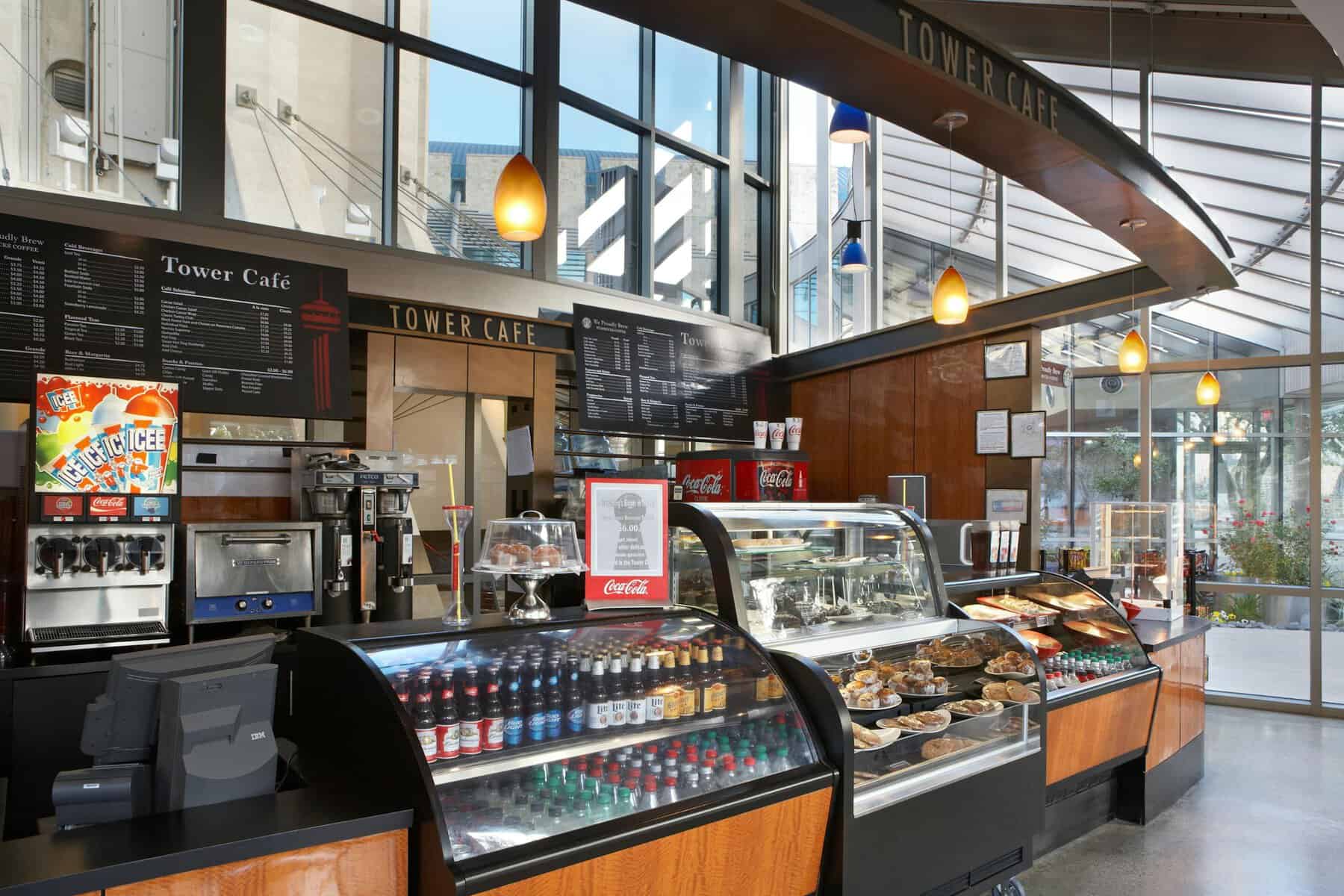
Ground level holds a gift shop and the Tower Cafe, which does grab and go snacks, light bites, and Starbucks coffee for anyone waiting on a table upstairs.
Tower admission recently ran $19.50 for adults, $16 for seniors, and $15 for children four to twelve, with kids three and under free. A combo ticket pairs the tower with a narrated Go Rio river cruise on the River Walk.
Note that the tower and the restaurant keep slightly different hours. The attraction opens at 10:00 in the morning, while Chart House starts serving at 11:00.
Pro Tips for the Best Seat in the Room
Pro tip: book for roughly forty five minutes before sunset. You get the city in daylight with your appetizer, the sunset over your entree, and a carpet of lights by dessert. One full rotation, three completely different cities.
That timing is the single best piece of advice I can give you about this place. One Tripadvisor guest described it plainly, writing that “the view is incredible and we were able to watch the sunset as we dined.”
Reserve your table. Walk ins happen, but the dining room is not large and weekends book out well ahead.
Weekdays are calmer than weekends if you have the flexibility. The elevator line at the base is the only real bottleneck in the building.
Dress is business casual by recommendation and not enforced, which is my favorite kind of dress code. Nobody will turn you away in nice jeans, and plenty of guests do dress up for anniversaries.
Plan two to three hours for the whole visit if you are doing the deck, the theater, and dinner. The deck alone takes thirty minutes to an hour, and the meal runs about the length of one rotation.
The building is fully wheelchair accessible with ramps and elevators throughout. Service animals are welcome, and other pets are not permitted on the property.
Parking is on site, and rates shift during downtown events, so build a few extra minutes into your arrival. The tower sits in Hemisfair, a short walk from the River Walk and about ten minutes on foot from the Alamo.
Bring a real camera if you own one, and shoot through the glass with the lens pressed close to kill the reflections. Phone photos at night up here fight the window and usually lose.
One more thing worth knowing: window seats are not guaranteed. Ask for one when you book, be gracious if you land inside the ring, and remember that in an hour the whole room will have shown you everything anyway.
How to Get There
Where: Chart House at the Tower of the Americas, 739 E Cesar E. Chavez Blvd, San Antonio, TX 78205
Reservations run through the restaurant at (210) 223-3101 or online, and the kitchen serves Sunday through Thursday from 11:00 to 10:00, Friday and Saturday until 11:00.
Coming in on I-37, take exit 141A toward Commerce Street and turn onto East Cesar E. Chavez Boulevard. From US-281 follow the signs for Hemisfair, and from I-10 use exit 155 toward downtown.
You will see the tower long before you see the turn. That is rather the point of it.
Book the Table That Turns
Some restaurants give you a good meal. This one gives you a good meal and a slow lap around a city that has been welcoming visitors since 1718.
Whether you live an hour down I-35 or you are passing through on a Texas road trip, put this one on the list for a birthday, an anniversary, or a Tuesday that needs improving.
Book the sunset table, order the bisque, and let the room do the traveling for you. Just try not to keep one hand on the table edge the whole time, the way I did at nine.
Featured image: @ Tower of the Americas

Stella Raines
Editor-in-Chief
Stella brings over a decade of storytelling experience to TX Headlines. With roots in West Texas and a love for road trips, she leads the editorial team with an eye for the hidden stories that make Texas unforgettable.
More Stories
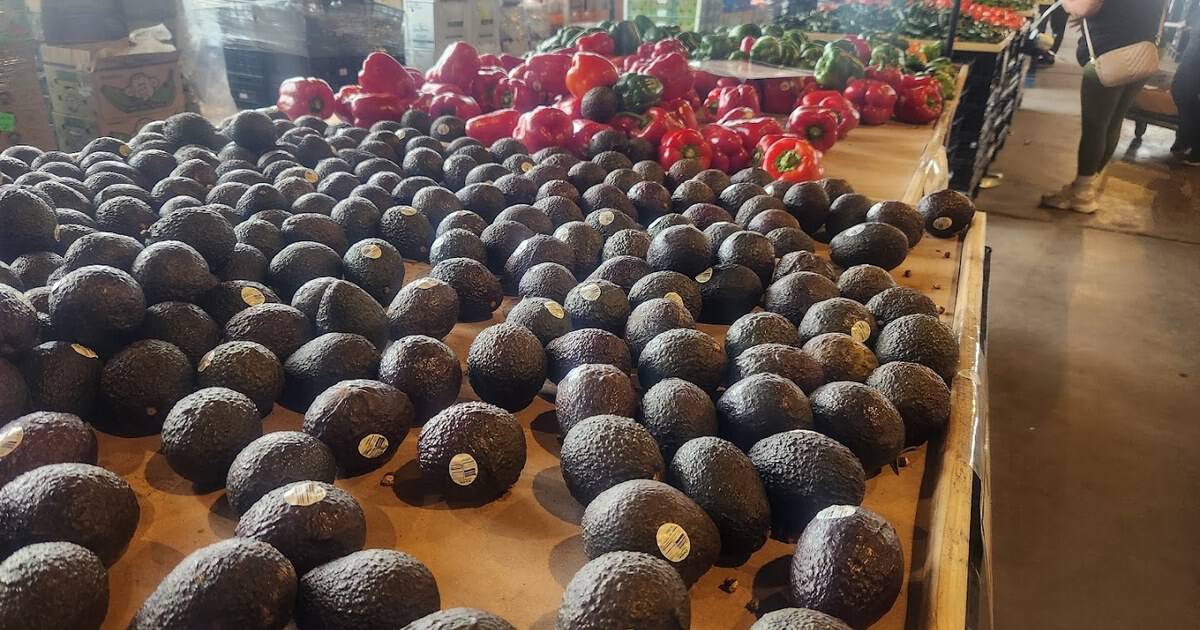
This Unassuming Texas Produce Market Is Where Locals Buy Avocados Four for a Dollar
This Beloved North Texas Smokehouse Is Where Folks Cross County Lines for 18-Hour Brisket
These Legendary Texas Barbecue Joints Are Worth Every Mile of the Drive
These Endless Texas Buffets Serve Southern Feasts Worth Loosening Your Belt For
Tags