Scoop Your Dinner With Injera At This Secret Ethiopian Restaurant
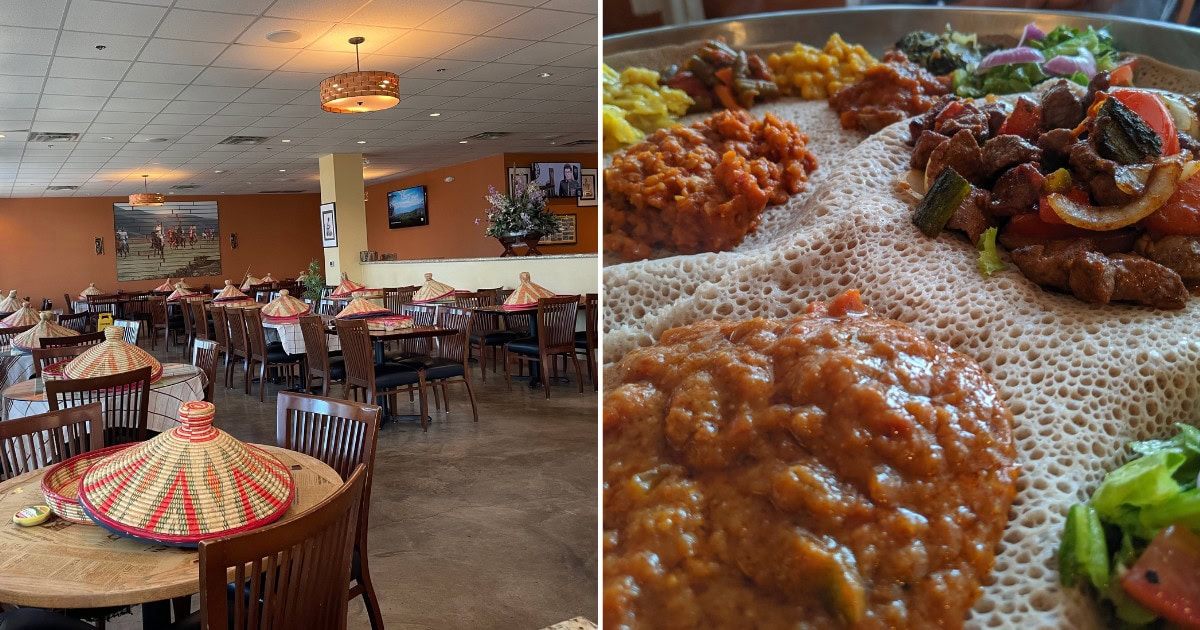
Dining at Taste of Ethiopia feels like being invited into someone’s home for dinner.
The warm colors, the smell of earthy spices, and the woven baskets called mesob scattered among the tables create an atmosphere rooted in centuries of Ethiopian tradition.
This is the kind of place where the owners know their regulars, where staff happily walk first-timers through the menu, and where meals are meant to be shared.
A Family Story on South Congress
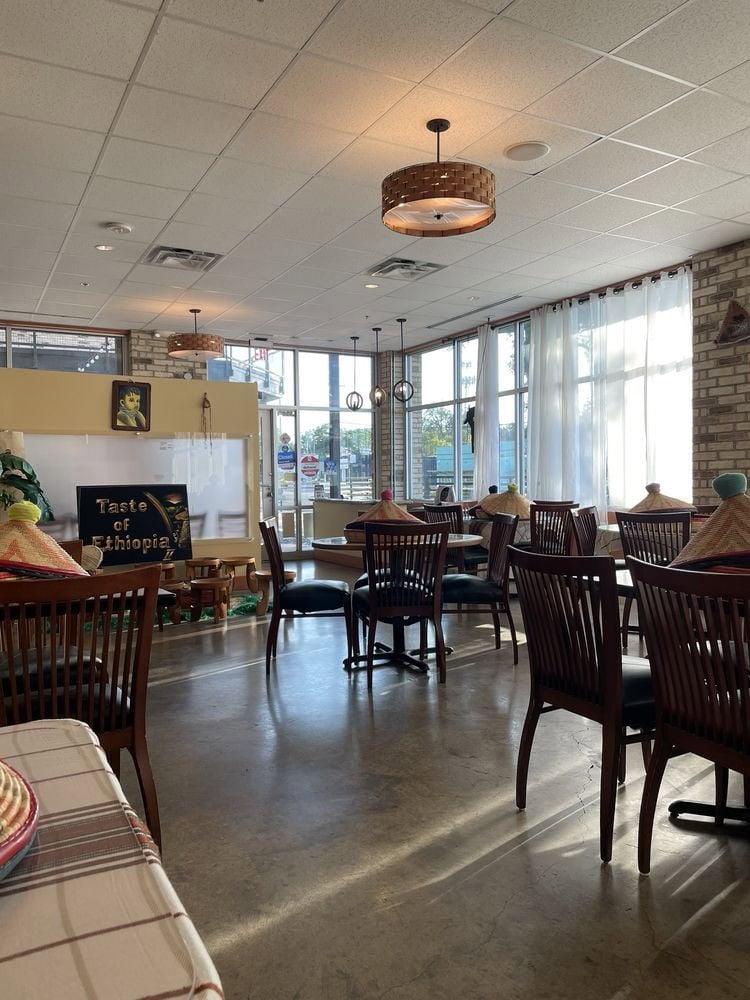
Woinee Mariam opened her first Taste of Ethiopia in Pflugerville in 2011, followed by the South Congress location.
She immigrated to Washington, D.C. at sixteen, bringing her mother’s kitchen with her.
As one of ten children, her job was making injera—the spongy, fermented flatbread that anchors Ethiopian cuisine. That childhood skill now shapes every plate she serves.
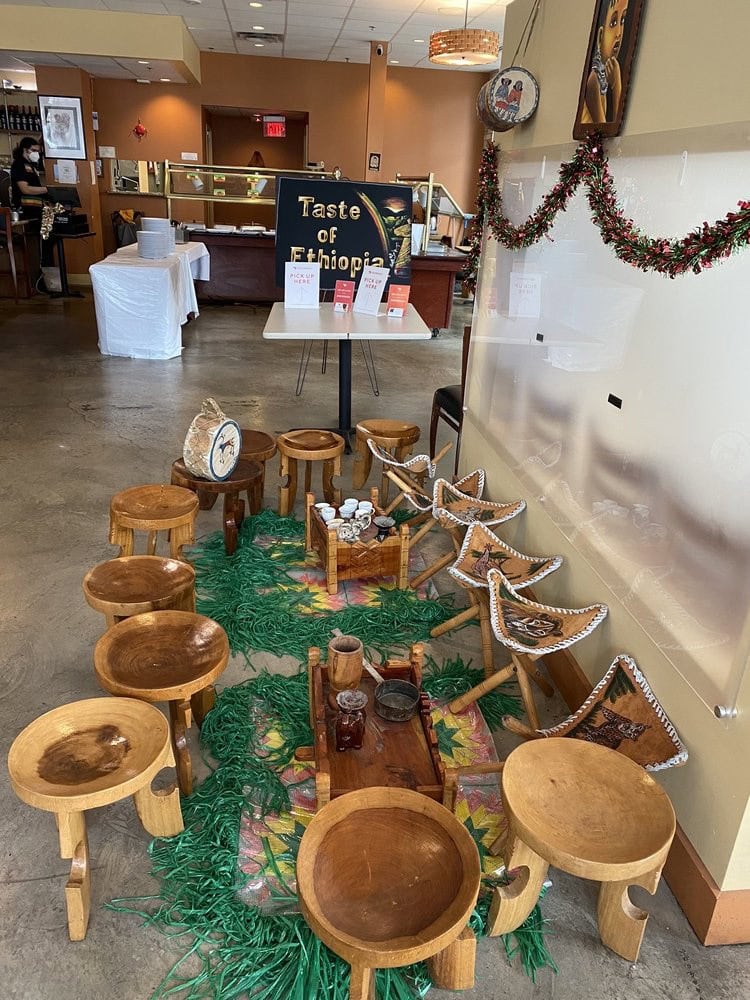
Mariam runs the restaurant with her husband, Solomon Hailu, and the couple is often on hand, greeting guests and answering questions.
She imports spices directly from family in Ethiopia, arranging shipments through cousins and aunts when supplies run low.
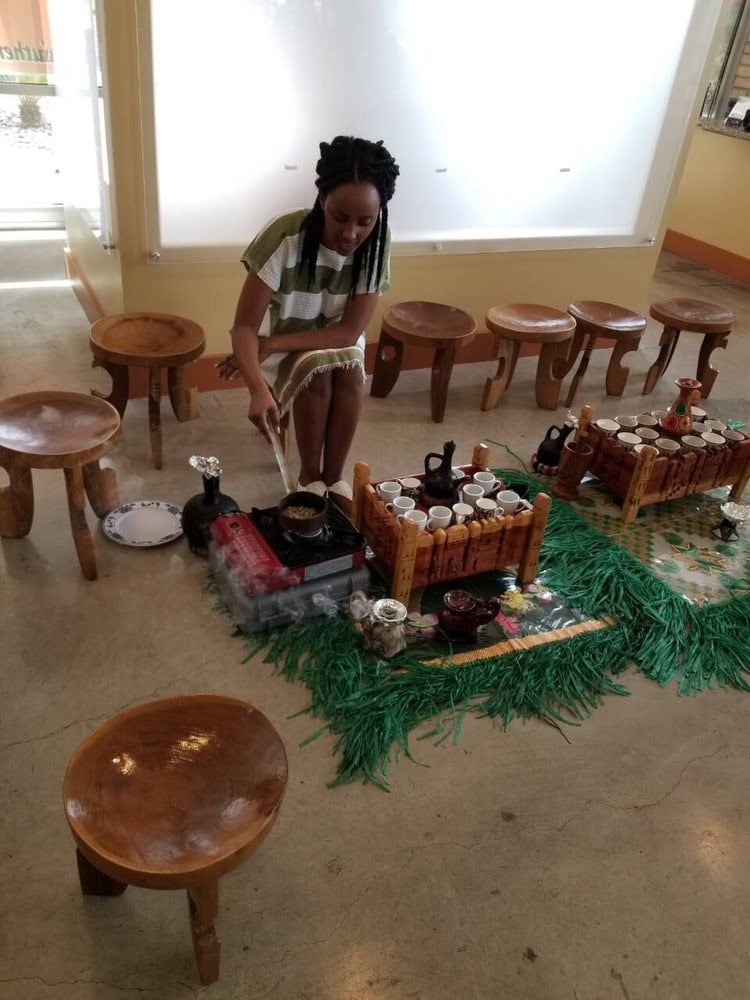
Calling Ethiopian food “healthy, tasty, and colorful,” Mariam delivers all three in a space that feels both personal and authentic.
The Injera Tradition
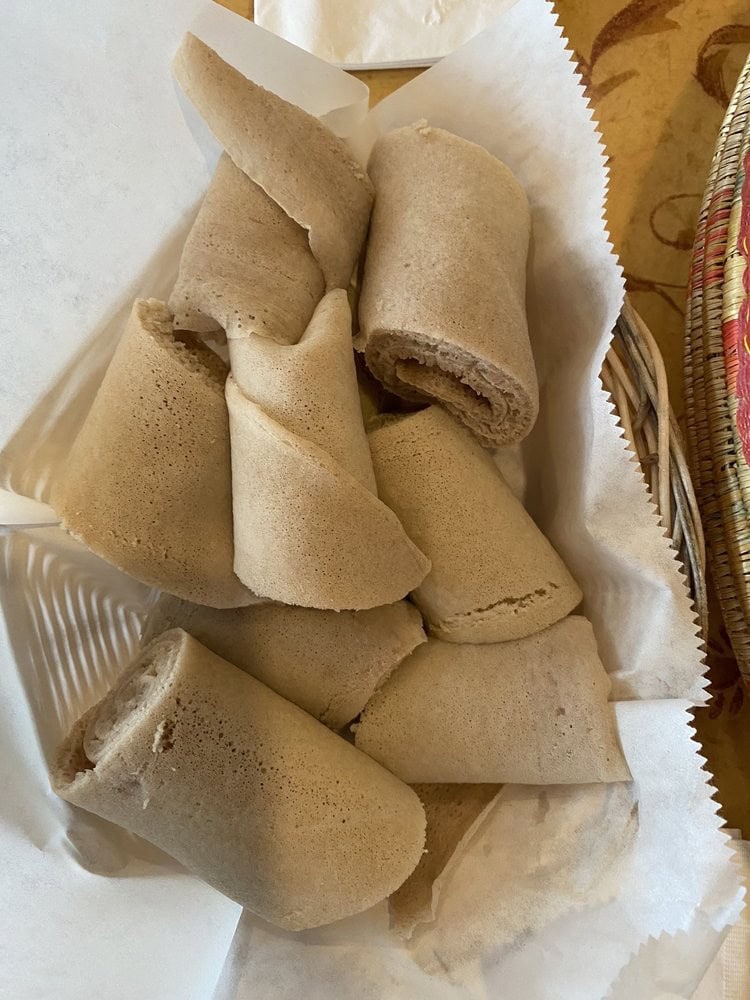
The injera at Taste of Ethiopia is made from scratch daily using Mariam’s own yeast starter and 100% teff flour, making it naturally gluten-free.
The bread arrives as a large round covering the bottom of a mesob basket, with various stews and dishes spooned directly onto its surface. Additional rolls of injera come alongside for tearing and scooping.
There are no forks required here—you tear off a piece of bread, pinch up some food, and eat with your hands.
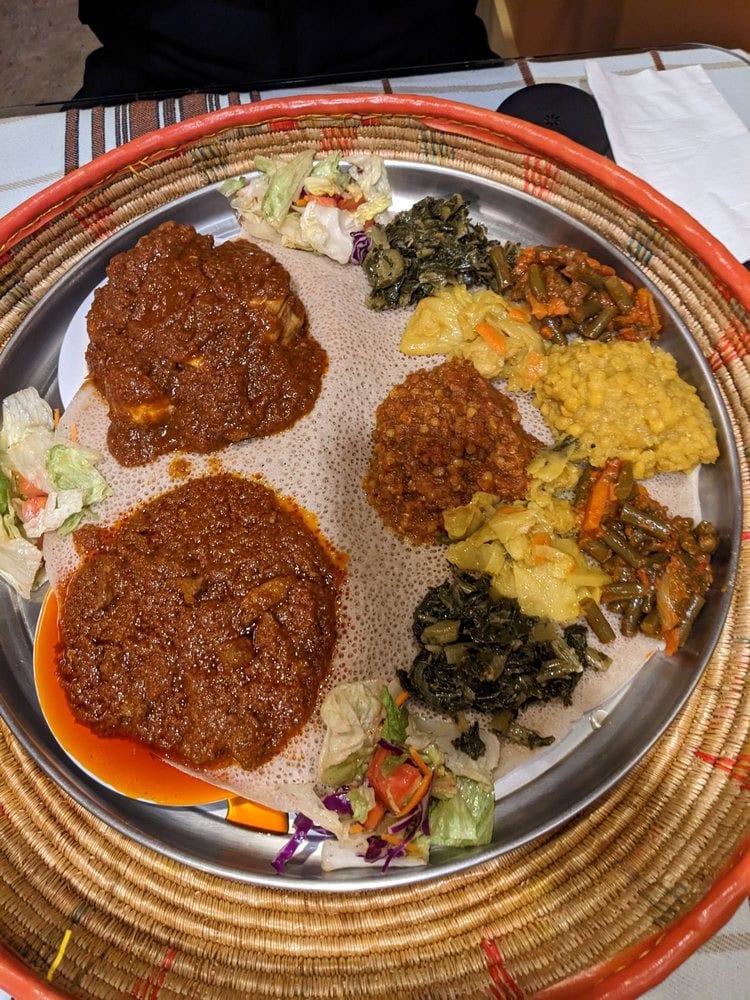
Utensils are available if you prefer them, but the traditional method creates a communal, tactile experience that makes the meal feel like more than just eating.
Mariam keeps an Ethiopian word of the day written at the front of the restaurant to share her language and culture alongside her cooking.
Her favorite phrase has been “gursha,” which refers to the intimate tradition of rolling up injera with food and feeding someone else by hand.
Signature Dishes
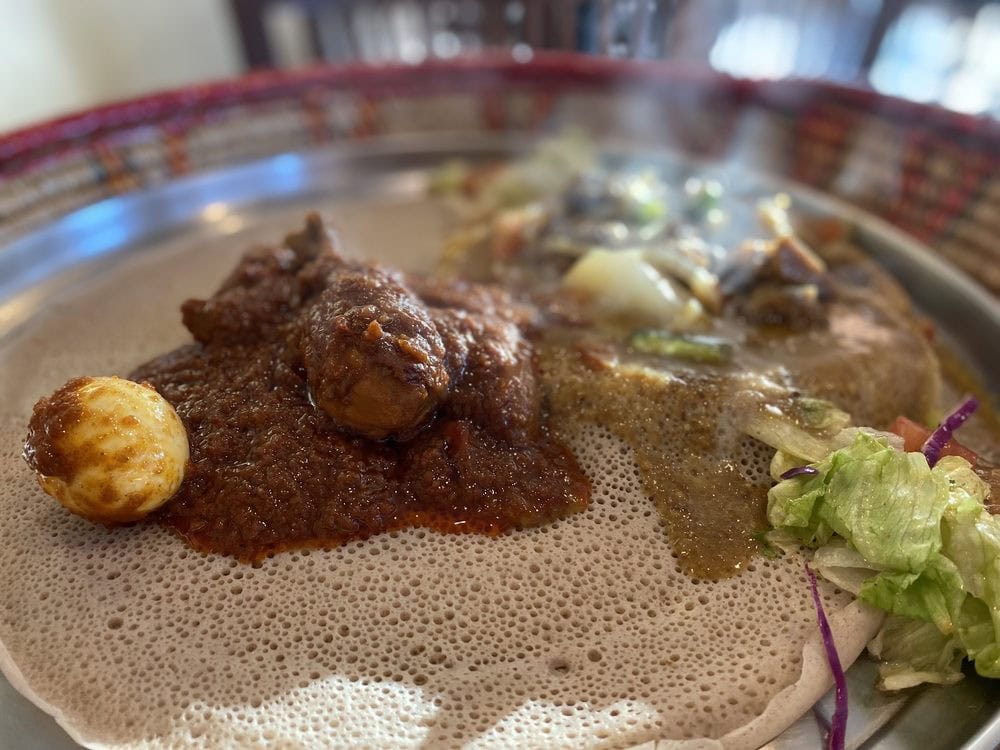
The national dish of Ethiopia, doro wat, is the best starting point for newcomers. Chicken and red onions simmer in a berbere‑based sauce until bold, complex flavors emerge.
It’s served with two drumsticks, a hard-boiled egg, injera, and a side salad.
Berbere itself anchors Ethiopian cooking—a slow‑stewed blend of garlic, onions, ginger, cardamom, turmeric, and ground chiles that creates a ruby‑red sauce layered with heat and warmth.
Lamb fans gravitate toward lamb tibs, pan‑fried with ginger, onion, jalapeño, and cardamom before finishing in berbere.
Beef lovers choose awaze tibs, marinated tip pieces sautéed with peppers, onions, and rosemary.
The house specialty, kitfo, features finely chopped beef seasoned with mitmita and cardamom, served rare to well‑done with clarified butter—the chef recommends medium rare.
Appetizers deserve attention, too.
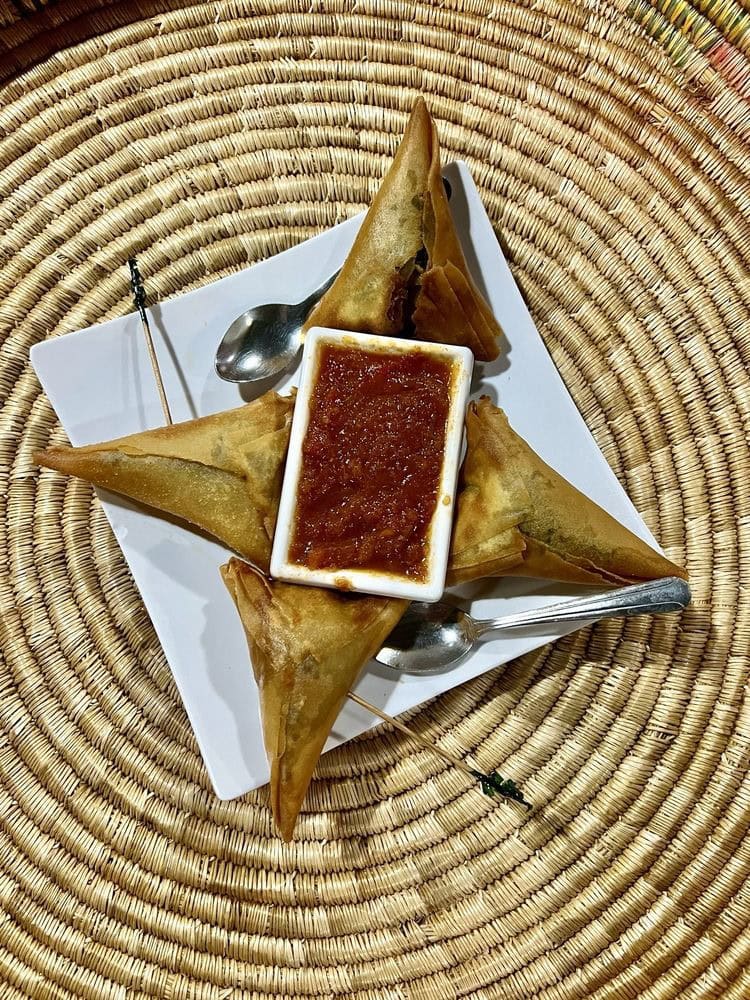
Sambusas come filled with beef, lentils, or spinach, each seasoned with onion, garlic, and jalapeño, then wrapped in crisp dough and pan‑fried until flaky, served with homemade tomato sauce.
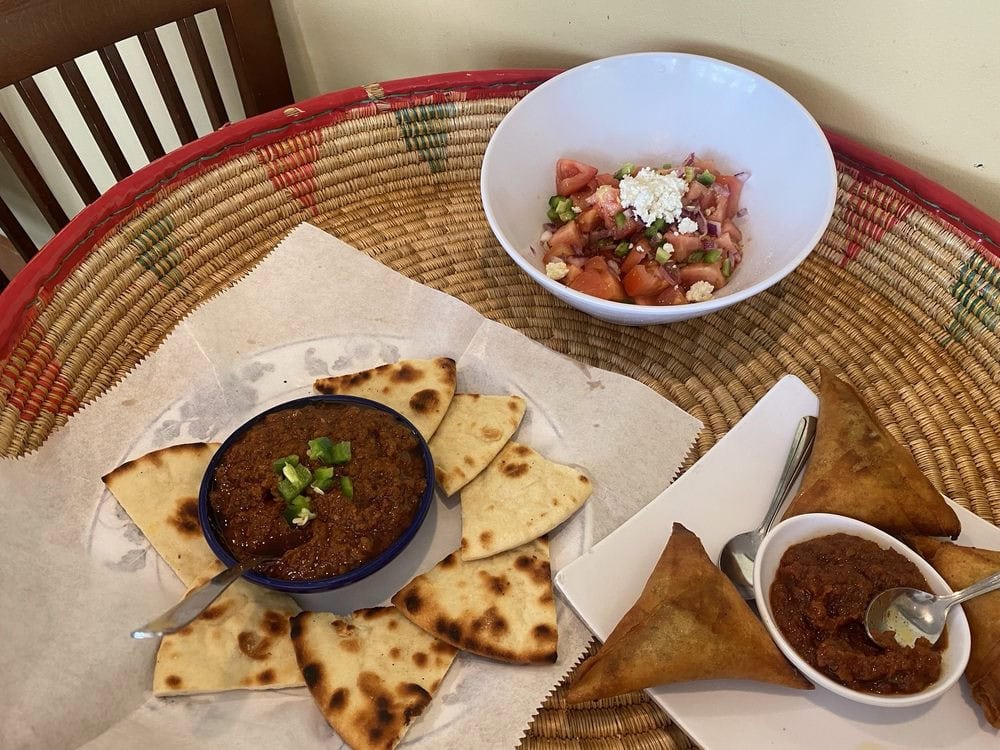
Minchet Abish offers another strong start: finely chopped beef stewed in berbere with garlic, ginger, and cardamom, delivering explosive flavor from the first bite.
Vegetarian and Vegan Options
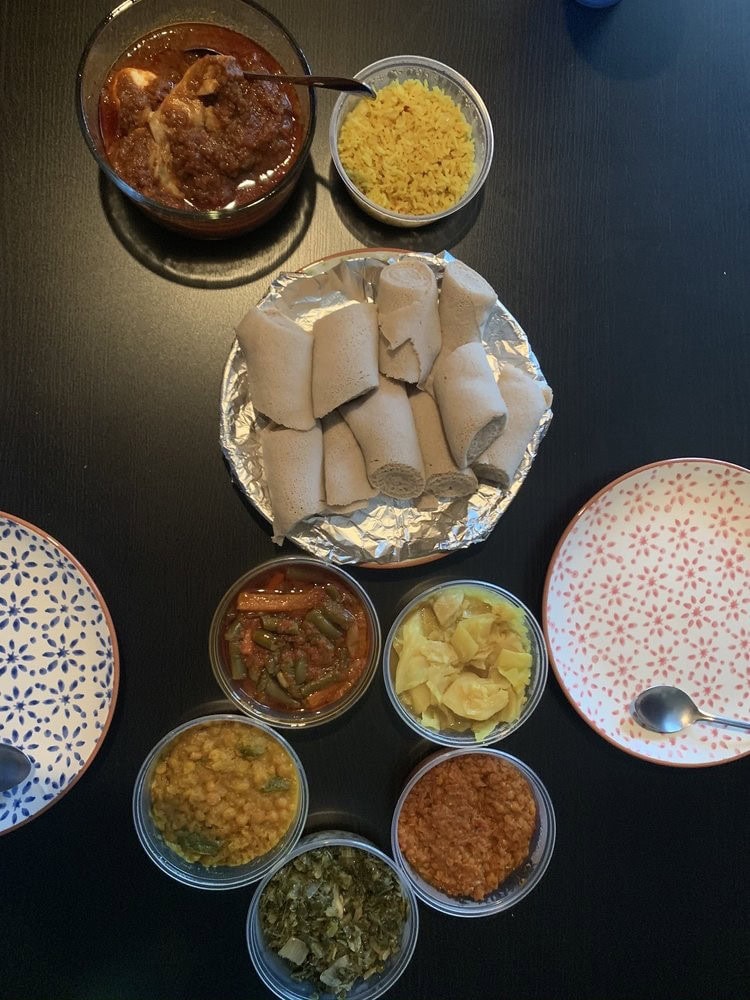
Ethiopian cuisine naturally offers an abundance of vegetarian options, and Taste of Ethiopia embraces this tradition fully.
The vegetarian platter presents a feast of gomen (collard greens), fesolia (string beans with carrots), yemisir wot (zesty lentil splits in berbere sauce), tikil gomen (cabbage), ater kik (split peas in turmeric sauce), and eggplant wot.
Vegans and those with gluten sensitivities will find plenty to enjoy—many dishes fit dietary restrictions naturally rather than through modification.
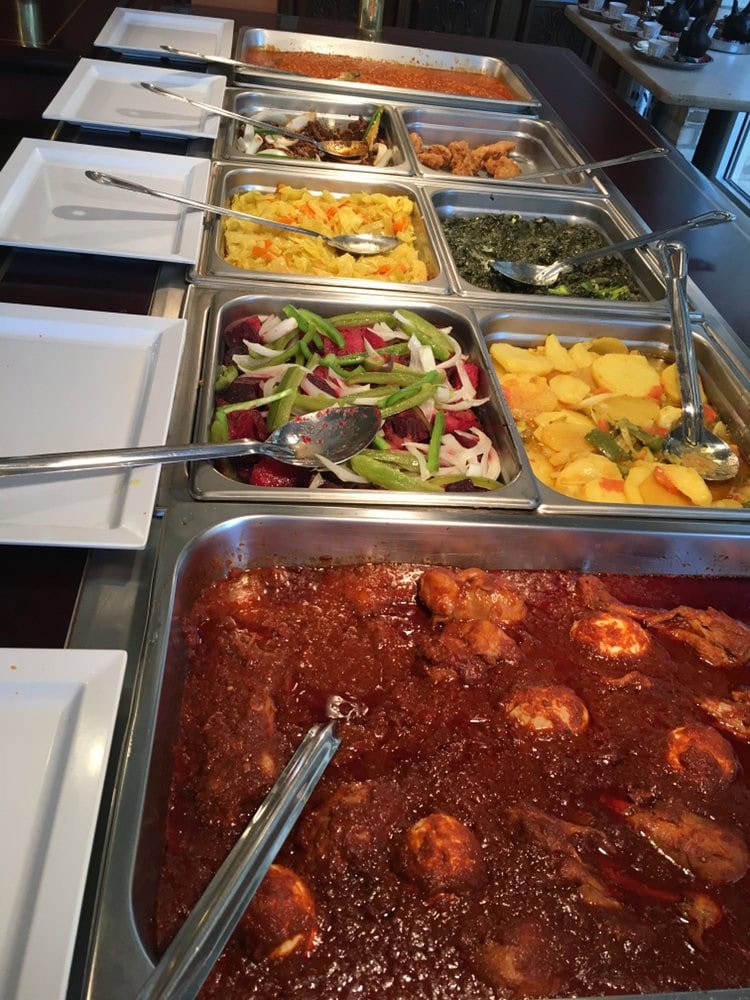
The lunch buffet, available Monday through Friday from 11 a.m. to 2 p.m., runs almost entirely vegetarian, with doro wat typically being the only meat option. It offers an affordable way to sample multiple dishes in one visit.
Planning Your Visit
The South Congress location opens daily at noon, closing at 9 p.m. on most nights and extending to 10 p.m. on Fridays and Saturdays.
The restaurant is closed on Tuesdays. Evenings tend toward busy, particularly on weekends—mid-day visits offer a quieter introduction for first-timers.
Taste of Ethiopia operates two locations: the South Congress restaurant in Austin and the original in Pflugerville on Grand Avenue Parkway.
Both serve the same menu and maintain the same family-run warmth that has earned loyal customers over more than a decade of operation.
Taste of Ethiopia transforms a meal into a shared experience, with injera replacing plates and hands replacing forks in a tradition that has sustained Ethiopian families for generations.
For more information about visiting Taste of Ethiopia, check their official website or social media pages for menus, hours, and seasonal specials.
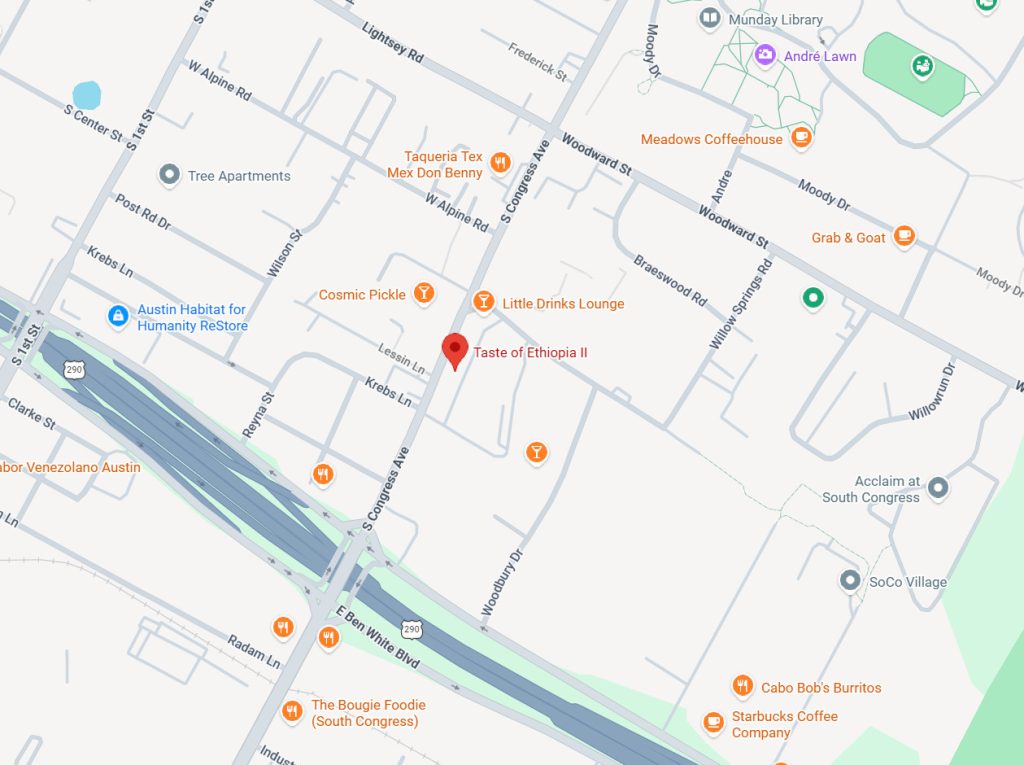
Use the map to plan your route to the restaurant and explore nearby South Congress attractions—every stop adds to the flavor of this cultural dining experience.
Where: 3801 S Congress Ave, Ste 107, Austin, TX 78704

Stella Raines
Editor-in-Chief
Stella brings over a decade of storytelling experience to TX Headlines. With roots in West Texas and a love for road trips, she leads the editorial team with an eye for the hidden stories that make Texas unforgettable.
More Stories


Tags