This Tiny Texas Coastal Sanctuary Fills With Thousands of Migratory Birds Every Spring
Nobody warns you that some of the best wildlife watching in Texas happens because a flock of exhausted birds ran out of gas over the Gulf of Mexico. I mean that as the highest compliment.
It is the honest version of what pulls me, and thousands of other birders, toward the Texas coast every spring.
Songbirds no bigger than a lime leave the Yucatan at dusk and fly straight across open water through the night. That crossing is hundreds of miles with nowhere to land, a nonstop push that can last the better part of a day.
If the wind turns against them, they arrive over the Texas coast running on empty, and they drop into the very first trees they can find.
Those trees sit on a little rise near the water, and the sanctuary that protects them is a feathered gold rush.
Below, I’ll walk you through why thousands of migratory birds funnel into this one small spot, what you’ll actually see, and how to plan a trip that lands on the good days.
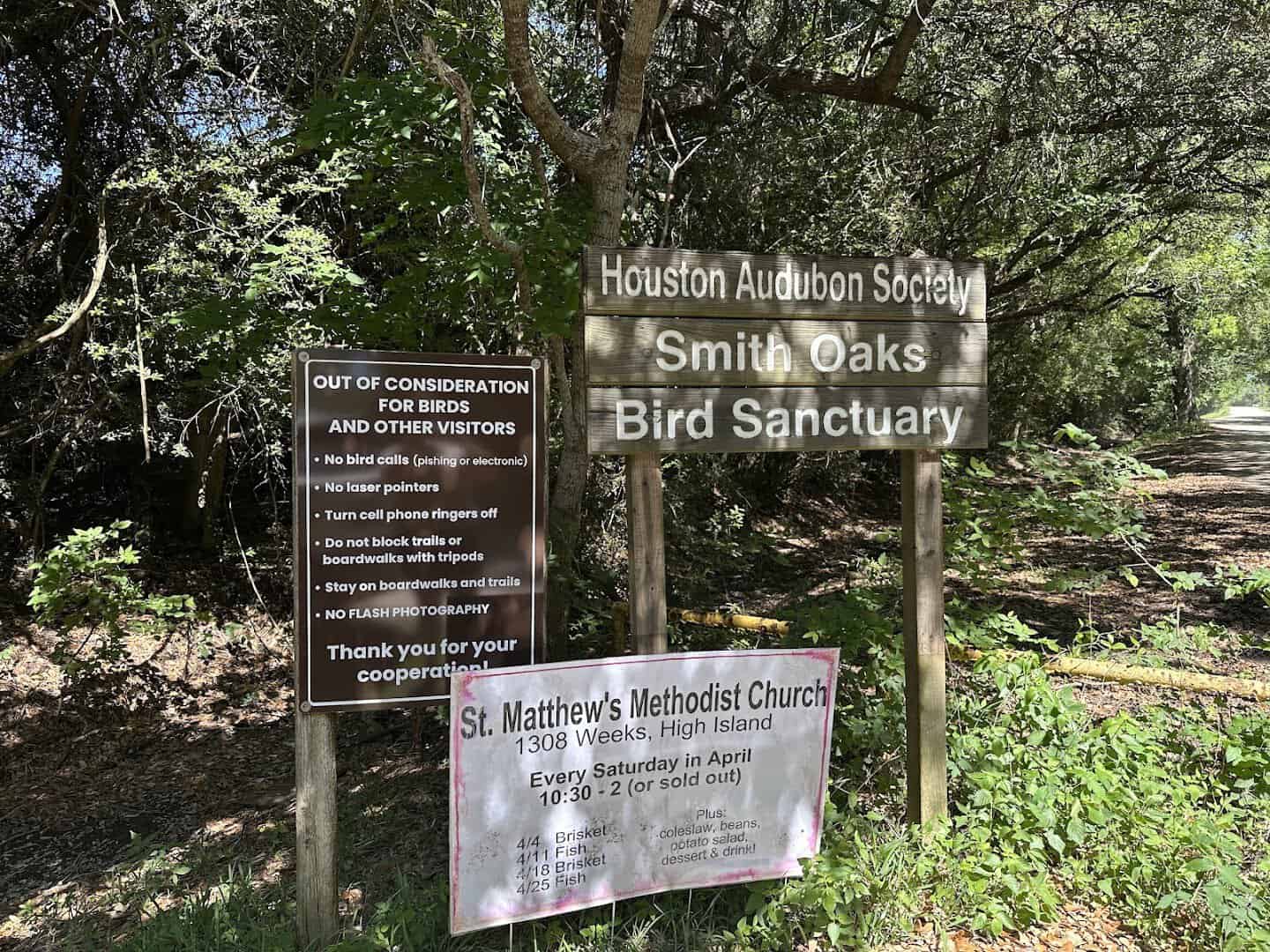
The place is Smith Oaks Sanctuary, tucked into the tiny community of High Island on the Bolivar Peninsula, about 75 miles east of Houston. Houston Audubon looks after it, and in birding circles it is quietly world famous.
When the Sky Falls In
Birders have a dramatic word for the best days here: a fallout. It sounds alarming. It is actually the greatest show the Texas coast puts on.
Here is how it works. Neotropical migrants cross the Gulf in one long overnight push. In good weather they fly right over the coast and keep going inland to rest.
But when a north wind or a fast cold front hits them mid-flight, they burn through their reserves fighting it. The moment they reach land they have to stop, and High Island’s oak woods are the first real cover for miles.
On a true fallout morning the trees fill with color. Warblers, tanagers, buntings, orioles, and grosbeaks drape the branches, too tired to be shy, close enough to study without binoculars.
The variety is the draw as much as the numbers. On a good spring the warbler list alone can climb into the dozens, mixed with vireos, thrushes, and flashes of scarlet and indigo you would swear escaped from a paint set.
You cannot order a fallout off a menu. It needs the wrong weather for the birds and the right timing for you. That gamble is a big part of why people come back year after year, hoping to catch the day the sky pours in.
Even a quiet day still delivers. The migration runs for weeks either way, and there is almost always something new working through the branches, so you rarely leave empty-handed.
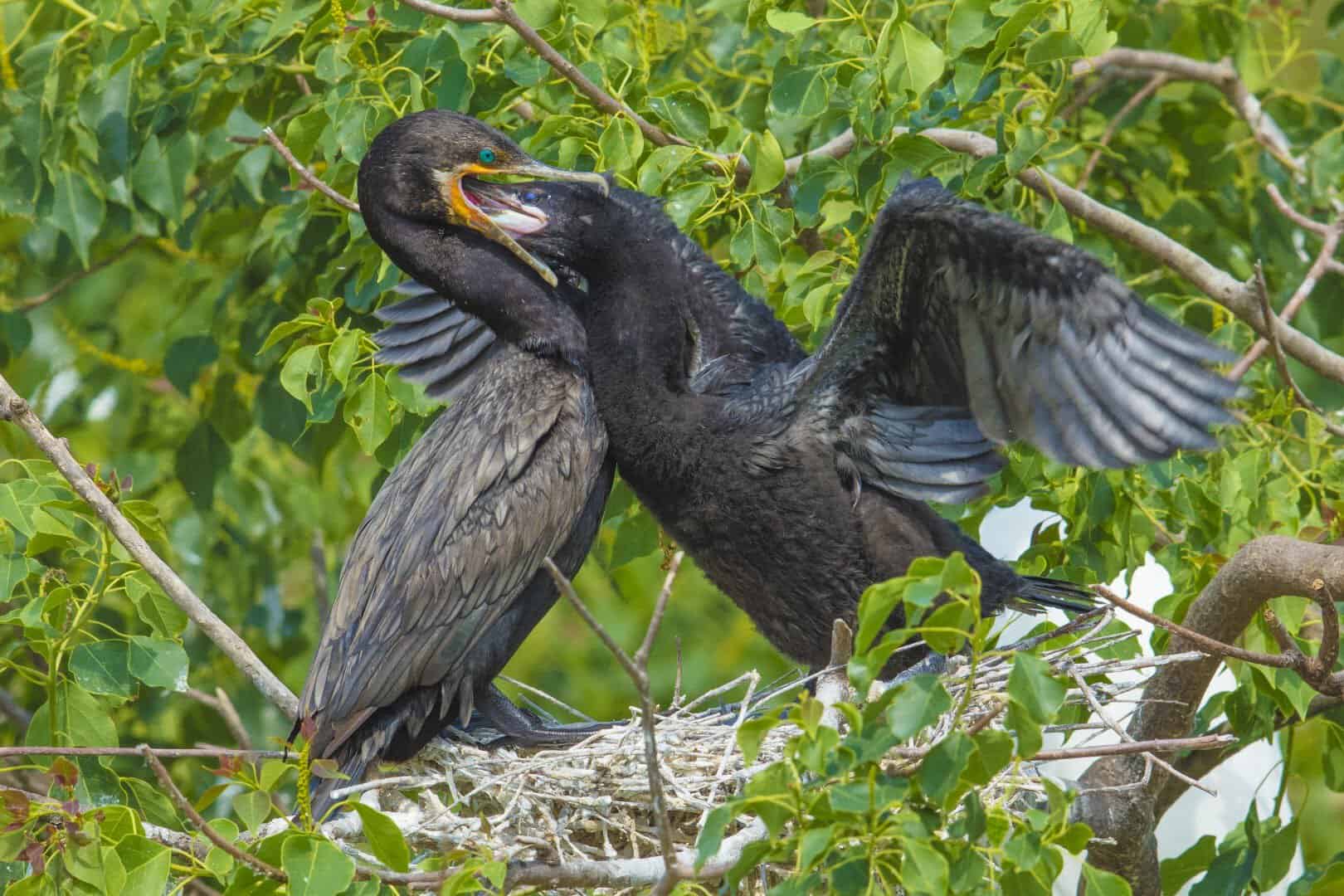
Pink Birds and a Moat Full of Alligators
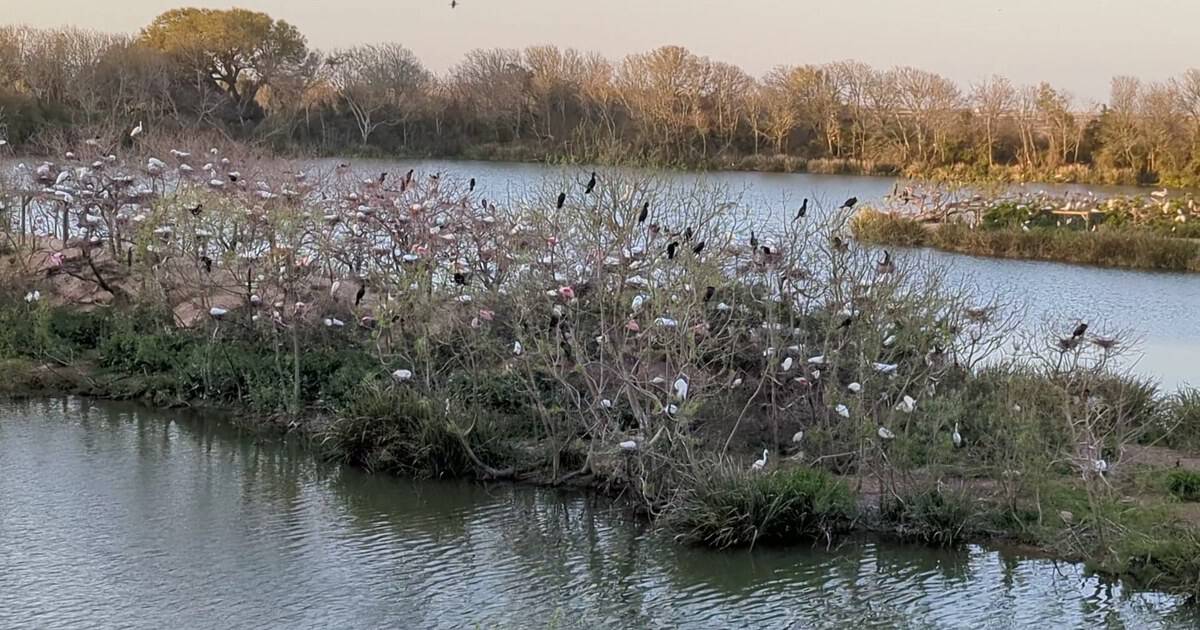
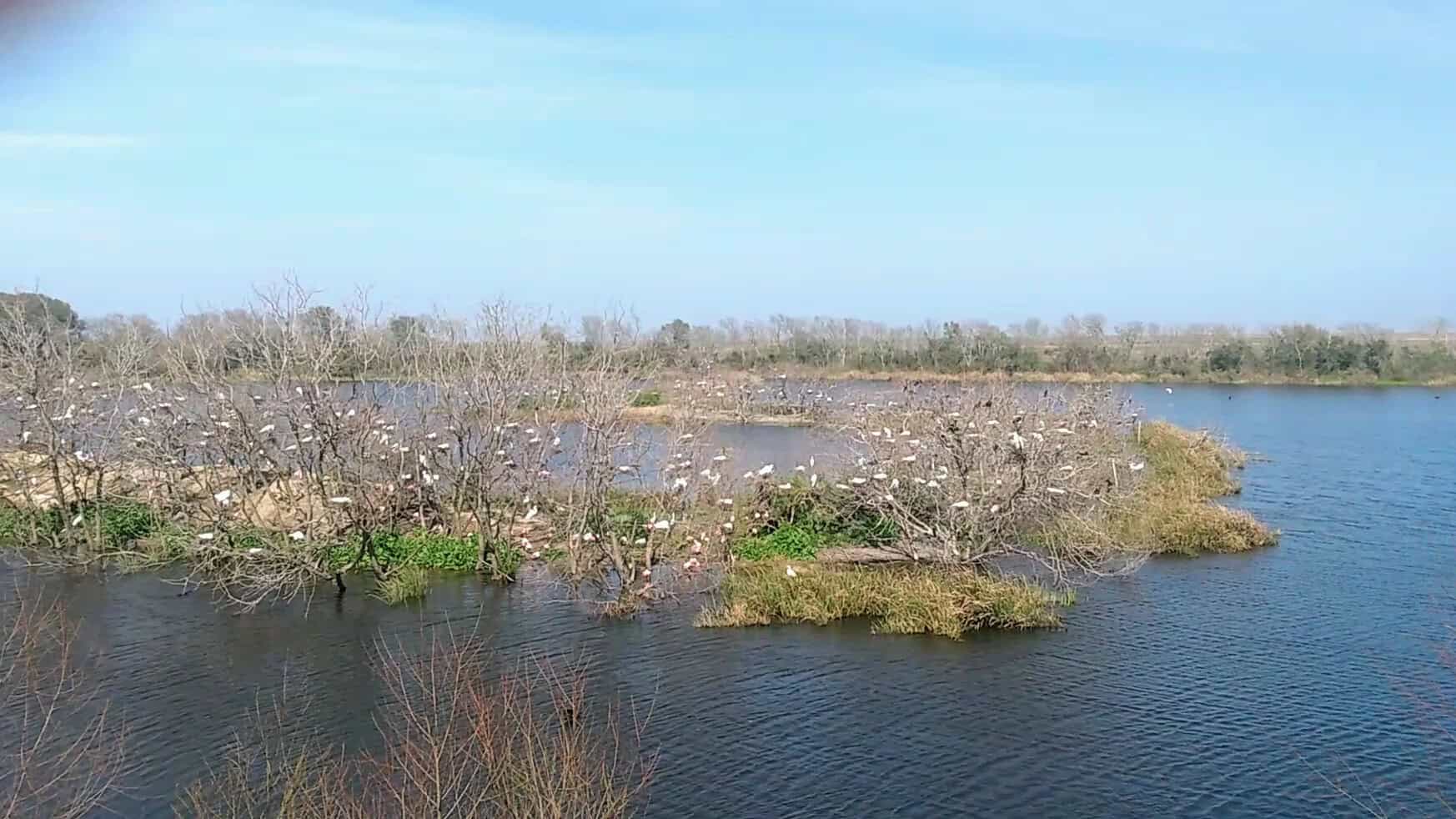
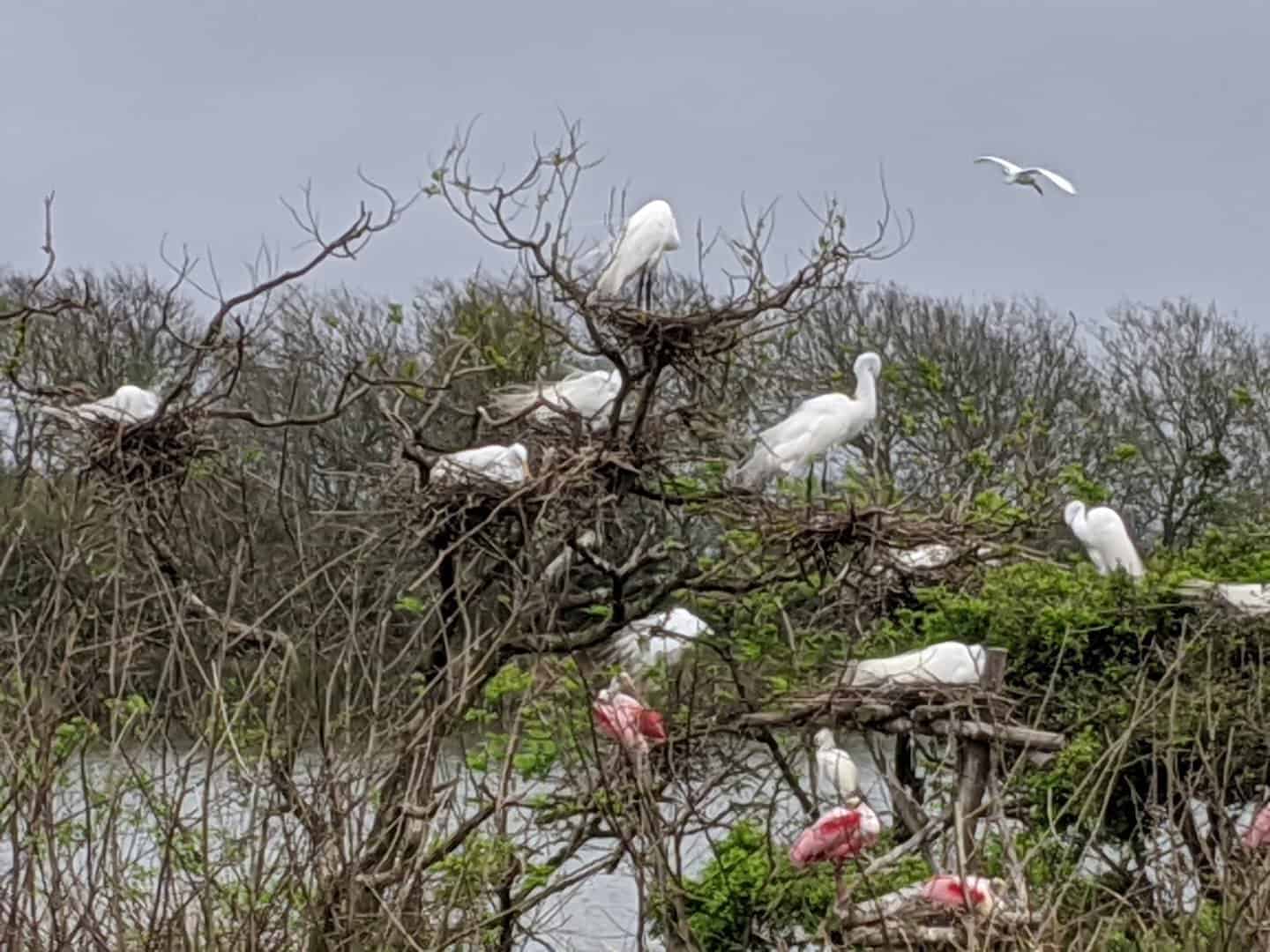
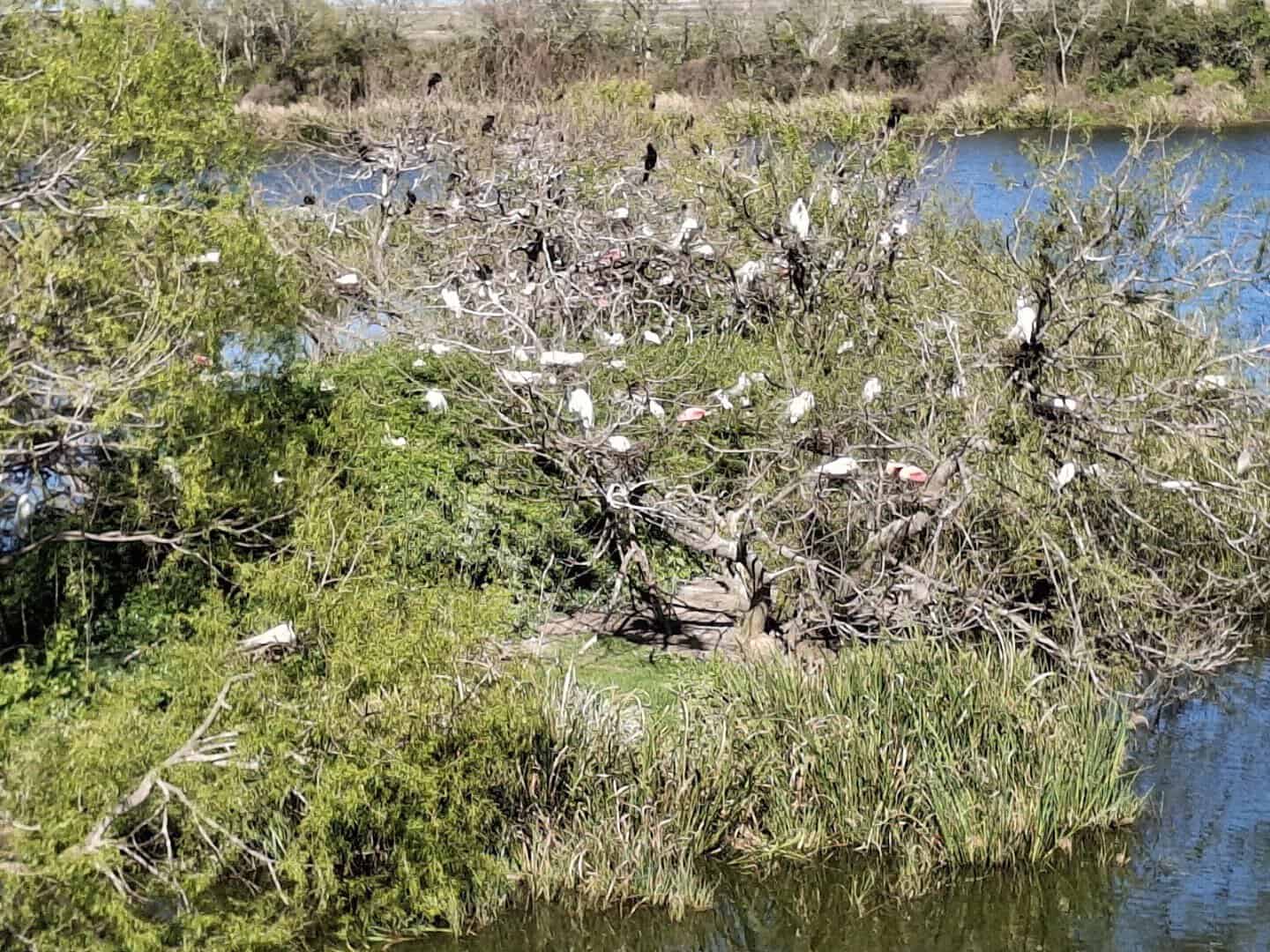
Even on an ordinary day, Smith Oaks has one guaranteed spectacle: the rookery at Claybottom Pond. Come here in spring and you will not forget the color.
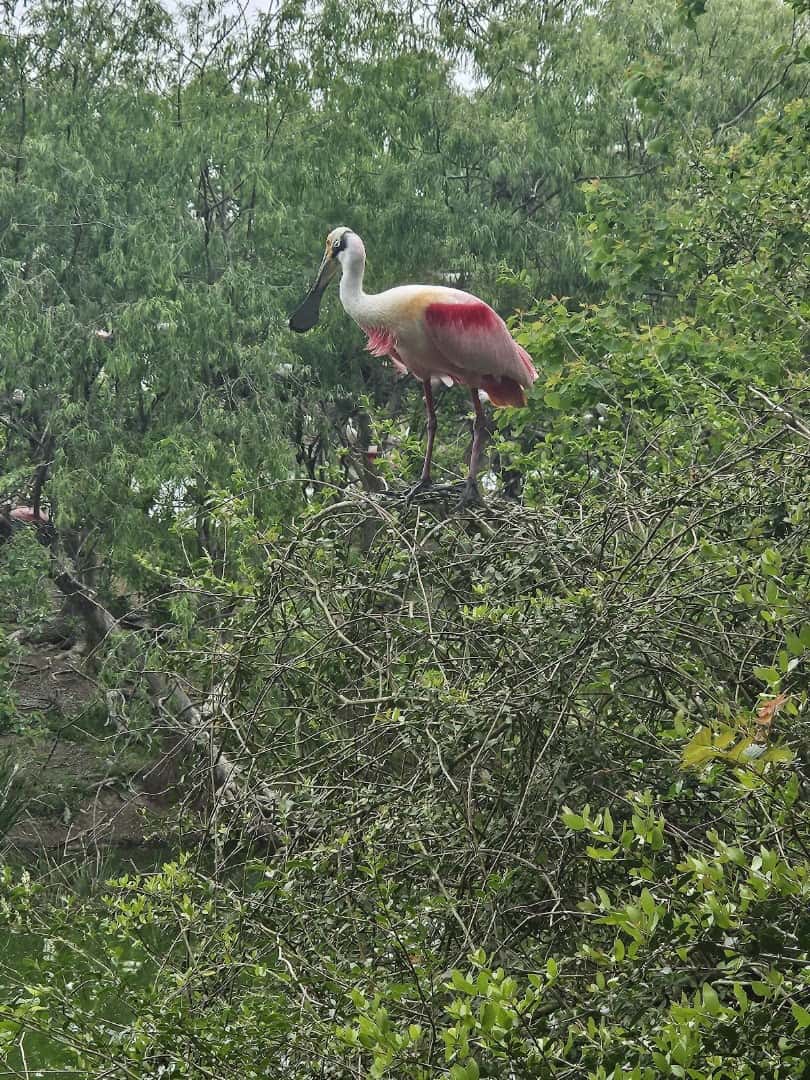
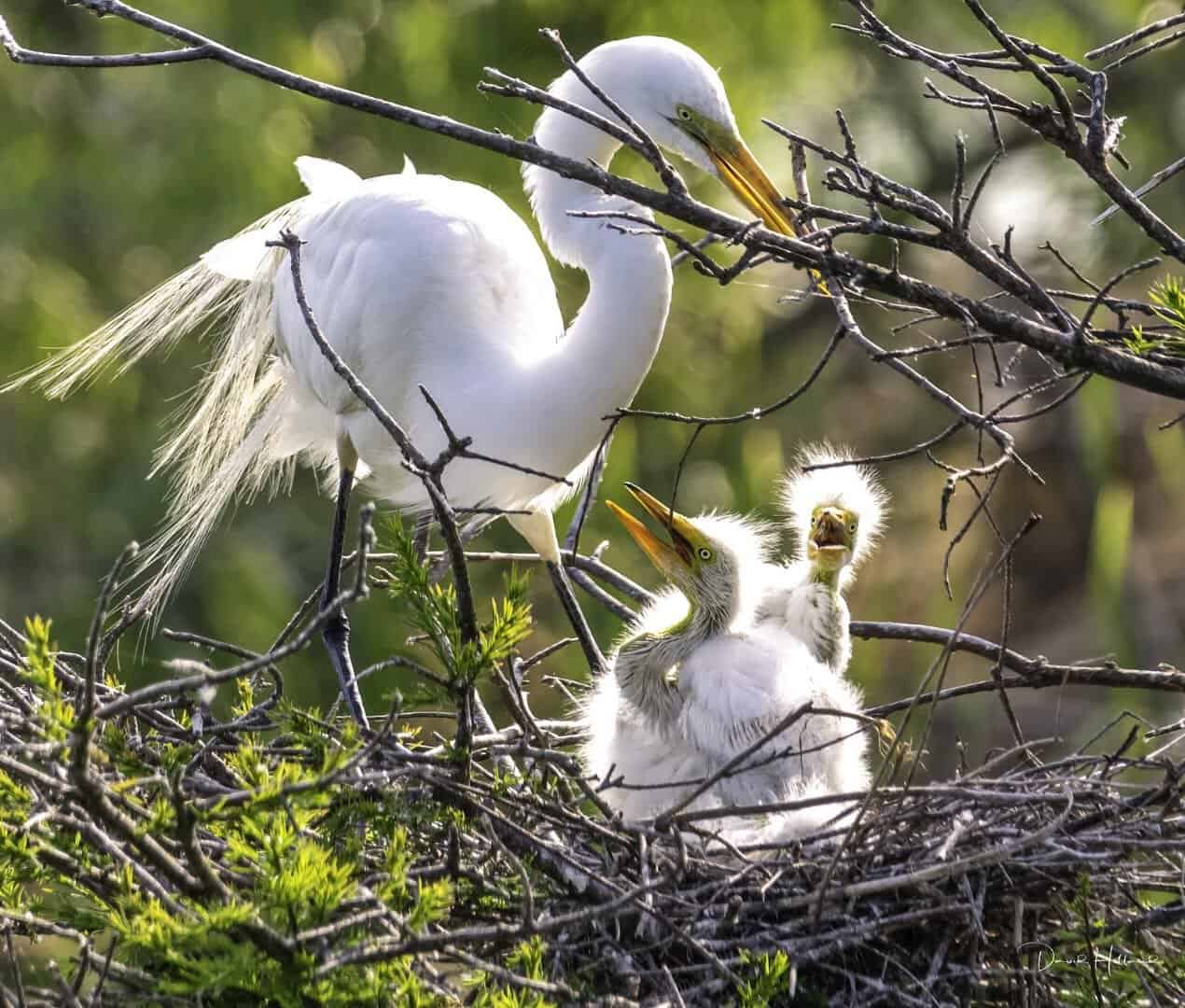
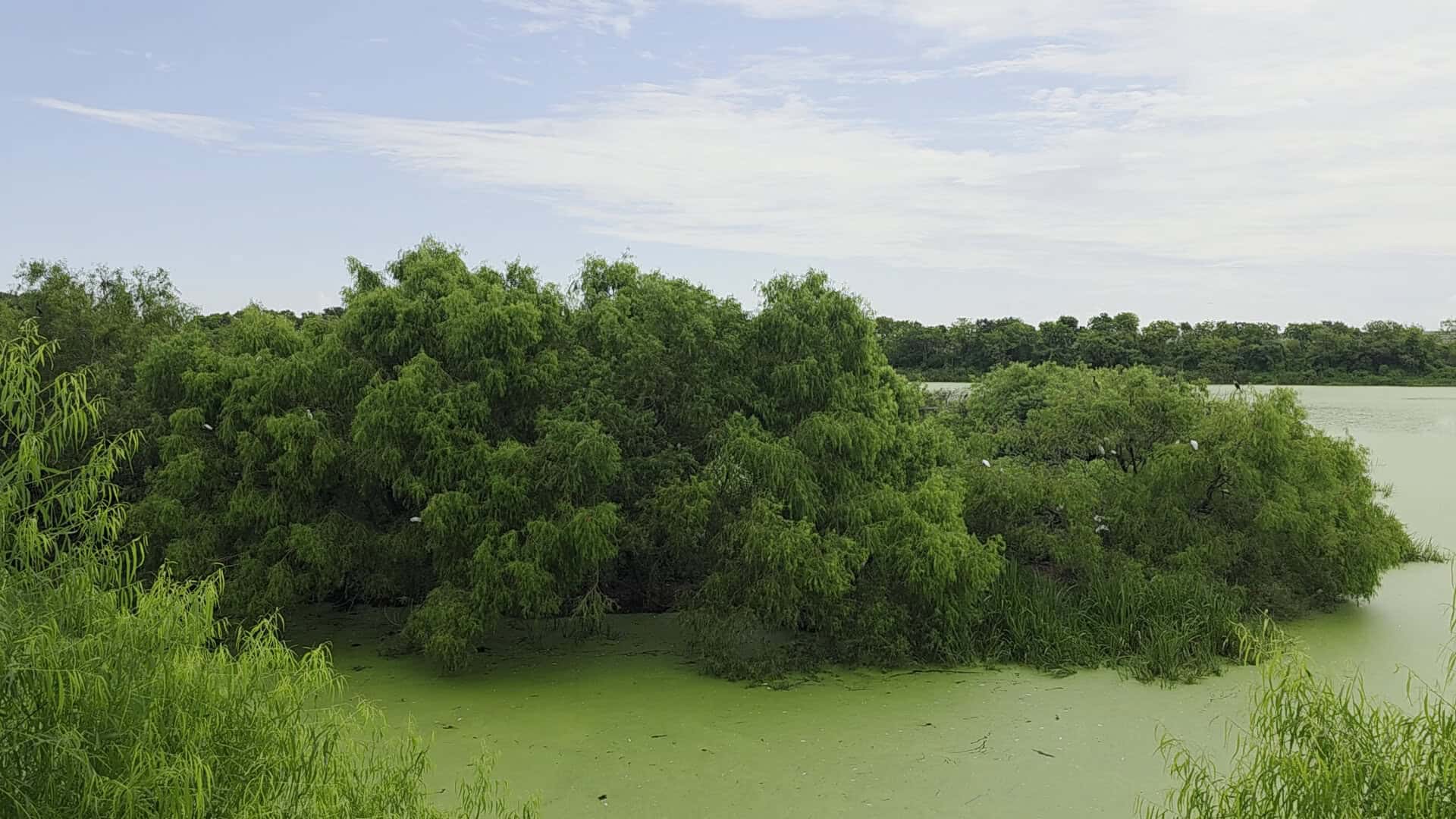
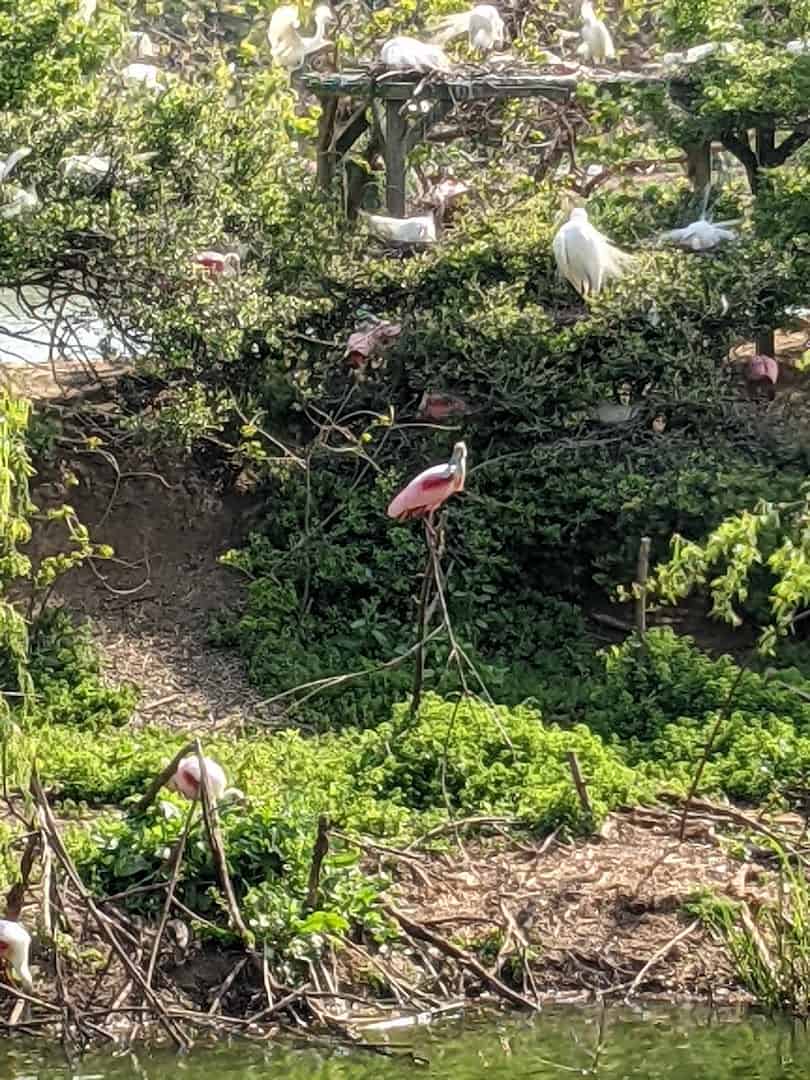
Rising out of the water is a small, U-shaped island where colonial waterbirds pack in to nest. Great Egrets, Snowy Egrets, Tricolored Herons, Neotropic Cormorants, and the show-stealer of the whole coast, the Roseate Spoonbill.
Newcomers tend to ask the same thing the first time one drops in: “Wait, is that thing actually pink?” It is. A grown spoonbill glows a hot flamingo pink, swings a bill shaped like a kitchen spatula, and looks frankly impossible in the morning light.
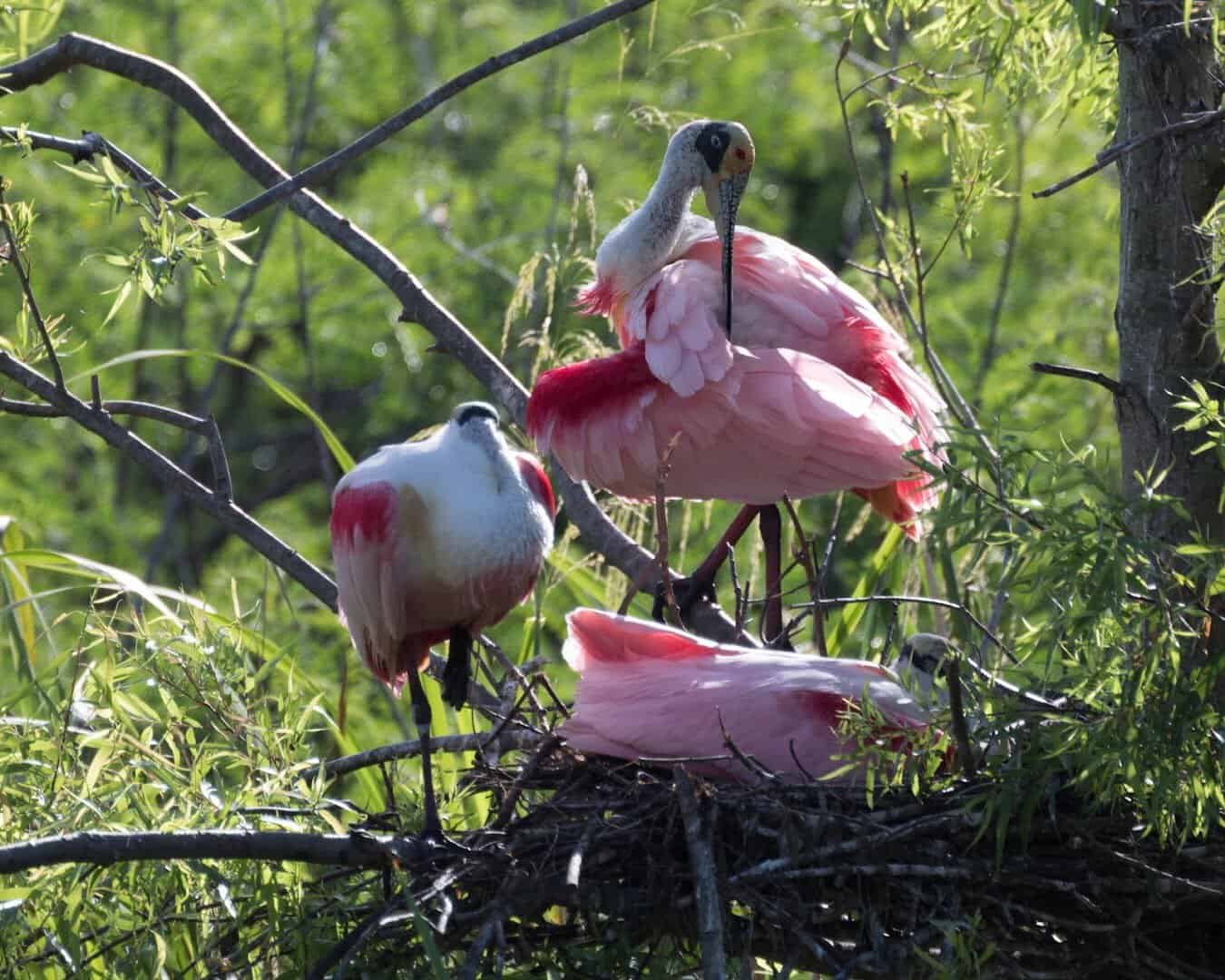
So why do so many birds crowd onto one little island? The answer is swimming right below them. The pond is home to alligators, and that turns the water into a moat.
Raccoons and other nest raiders will not cross a channel patrolled by gators, so the island becomes a fortress. The parents get to raise their chicks in peace, and you get a front-row seat to the nursery.
Did you know? The gators are not purely benign landlords. Every so often one catches an adult bird that wanders too close to the edge. The trade the birds make is a fair one anyway: a little risk at the shoreline buys total safety for the nest.
A Walk Through the Treetops
For years you watched the rookery from the ground. Now you can watch it from the canopy, thanks to one of the best additions any Texas sanctuary has made in the last decade.
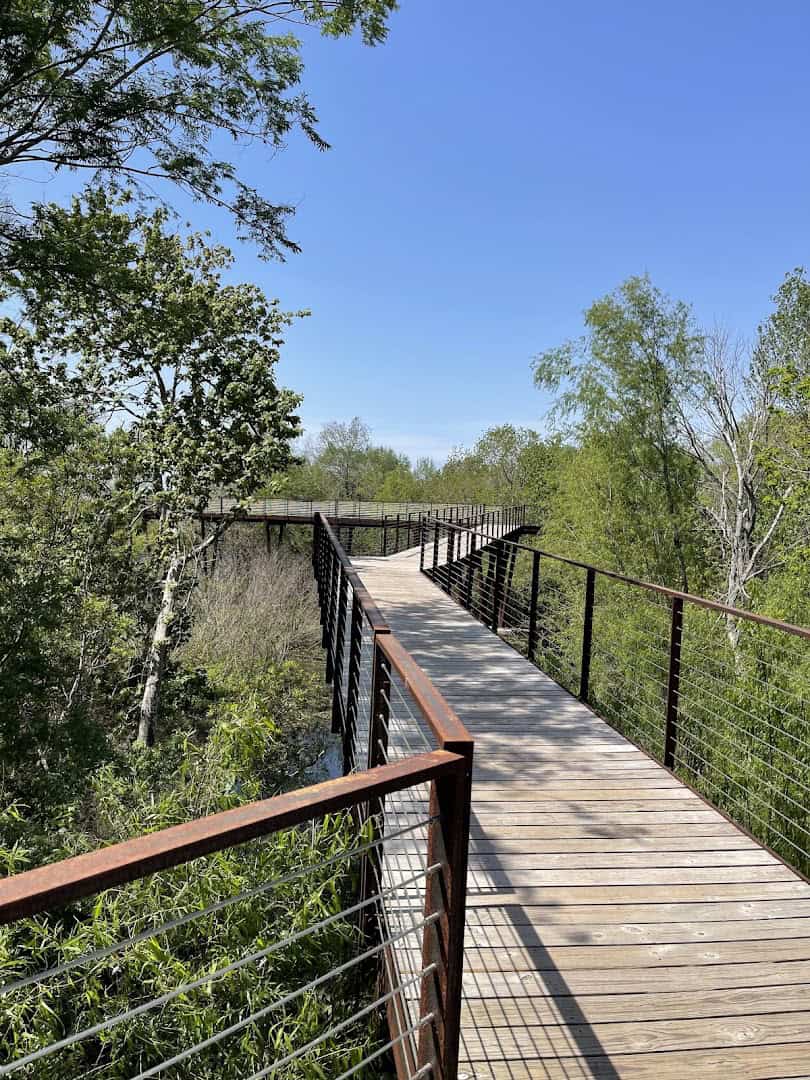
The Kathrine G. McGovern Canopy Walkway is an elevated boardwalk that runs about 700 feet through the treetops, lifting you roughly 17 feet off the forest floor. It was finished in late 2020 and dedicated the following spring.
Up there, everything changes. Instead of craning your neck at birds far overhead, you are level with them. A Prothonotary Warbler flickers past like a spark of yellow, and you are looking it dead in the eye.
The walkway carries you to overlooks above Smith Pond and the Claybottom Pond rookery, so you get the spoonbills and the egrets from a whole new angle. An entrance ramp makes the climb accessible, which matters at a place people visit well into their eighties.
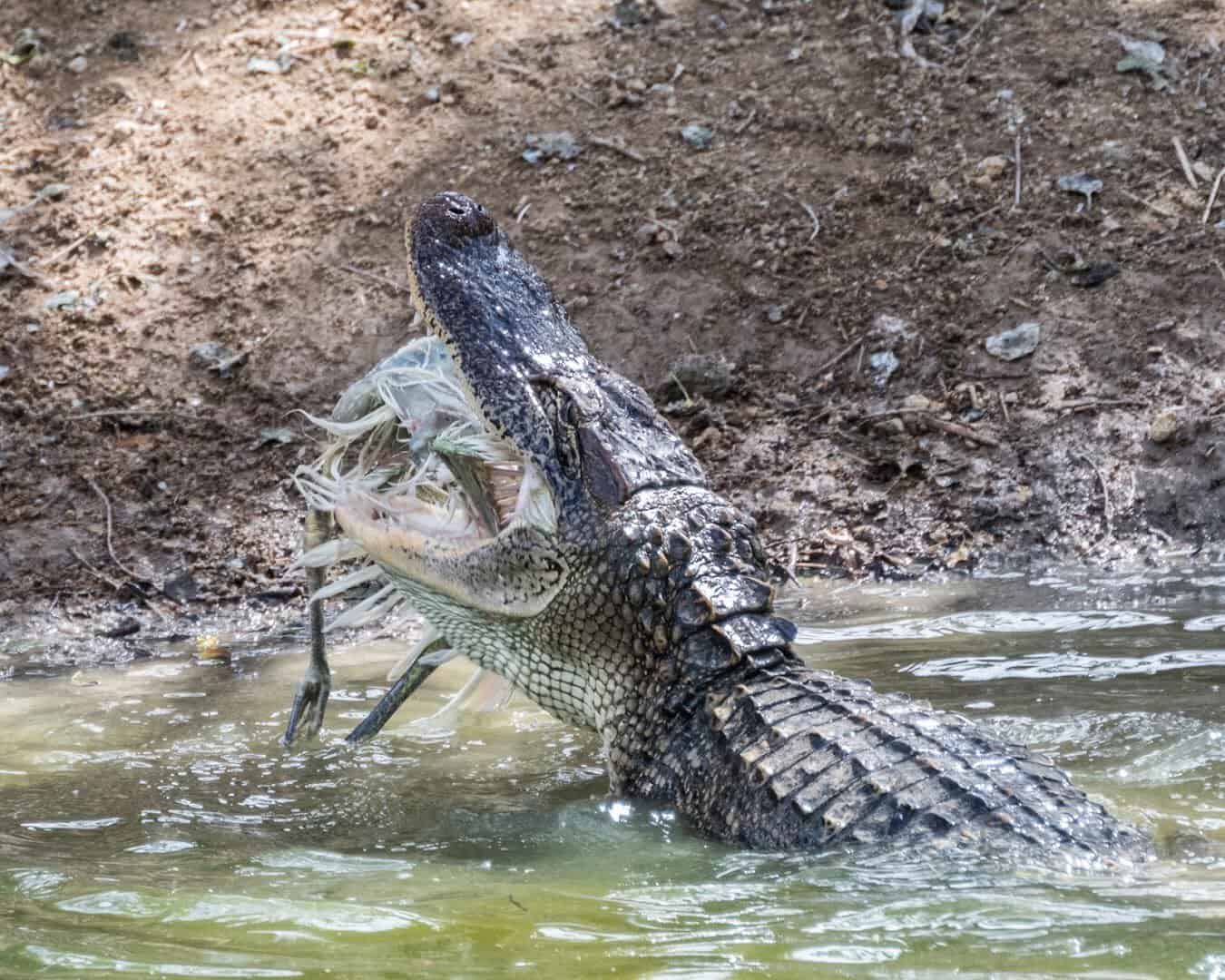
Look down as often as you look up. Alligators bask in the ponds beneath the boardwalk, so a single sweep of your eyes can take in a nesting spoonbill overhead and a lazy gator sunning below.
Pro tip: the last hour before dark is the magic window at the rookery. That is when the birds pour back in to roost for the night, thousands of silhouettes settling into the trees at once, and the light goes gold behind them.
A Guest List Nearly 400 Names Long
Smith Oaks is one of four Houston Audubon sanctuaries clustered around High Island, alongside Boy Scout Woods, Eubanks Woods, and S.E. Gast Red Bay. Together they have logged an astonishing roster.
Nearly 400 bird species have been recorded on these properties over the years. Some of those sightings were the first of their kind ever documented in the United States, birds blown off course from the tropics that showed up here and nowhere else.
For serious listers, that is the stuff of legend. But you do not need a life list to fall for the place.
Beyond the migrants and the rookery stars, you might spot White Ibis, Little Blue Herons, Black-crowned Night-Herons, Anhingas drying their wings, and shorebirds picking along the wetland edges.
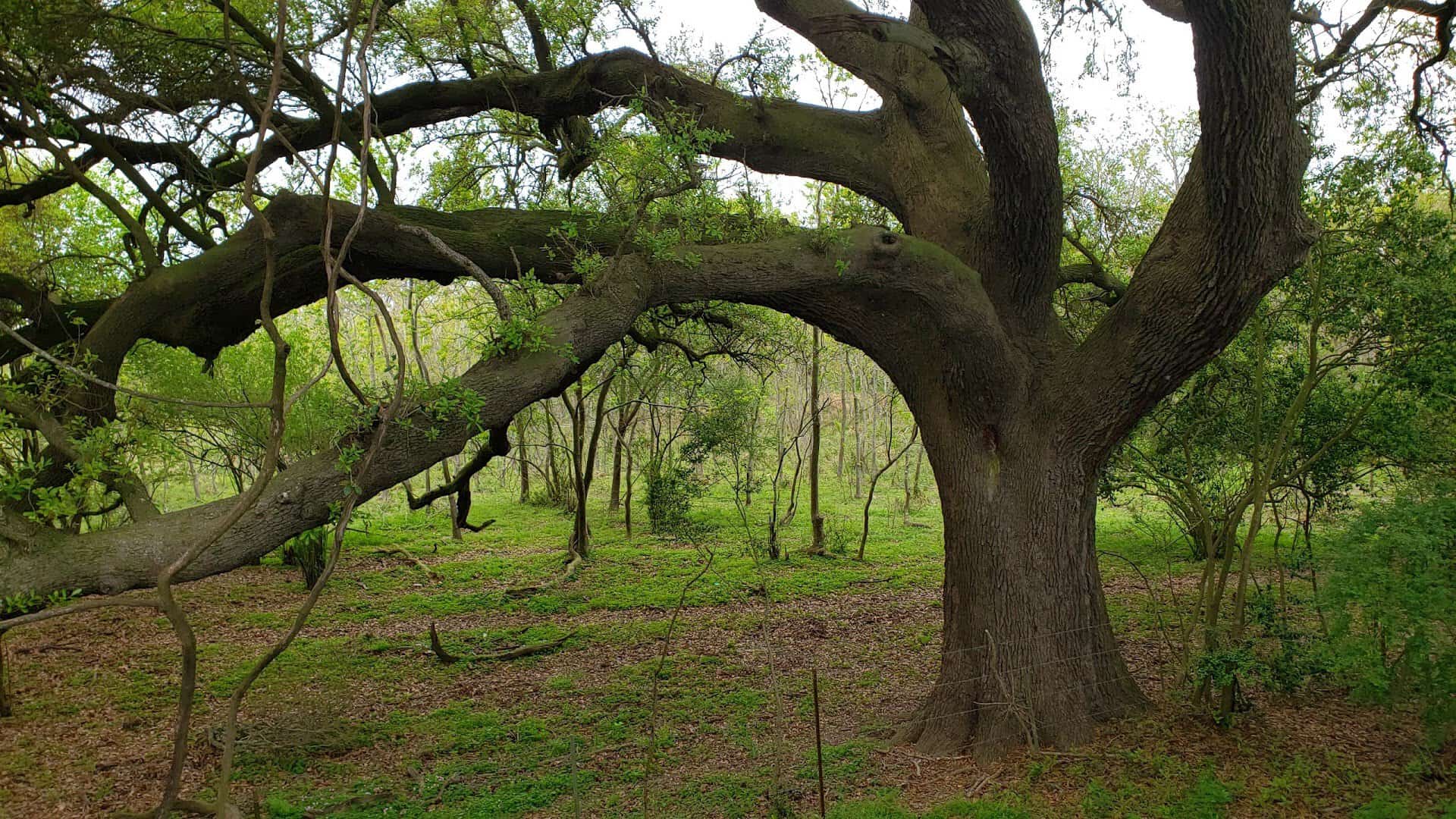
The habitat is what makes the variety possible. Oak mottes give the tired songbirds cover, freshwater ponds feed the waders, and open edges pull in yet another set of species. Pack a lot of different homes into a small space and you get a lot of different tenants.
Sister sanctuary Boy Scout Woods is worth the short hop too. It has a photo blind where flash is allowed and bleacher seating where birders sit quietly and wait for the woods to come to them.
How an Oil Company’s Gift Became a Bird Fortress
The story of this sanctuary has an unlikely benefactor. In 1994, the oil company Amoco donated the Smith Oaks land to Houston Audubon, handing a birding paradise to the people who would protect it.
The famous pond is older, and it was never meant for birds at all. Claybottom Pond was dug in 1936 during construction of the Intracoastal Waterway, then enlarged in 1967 to help supply water locally. The rookery was a happy accident.
When Houston Audubon first took over, almost nothing nested on the island. The turnaround, once the birds were left alone and protected, was fast and remarkable.
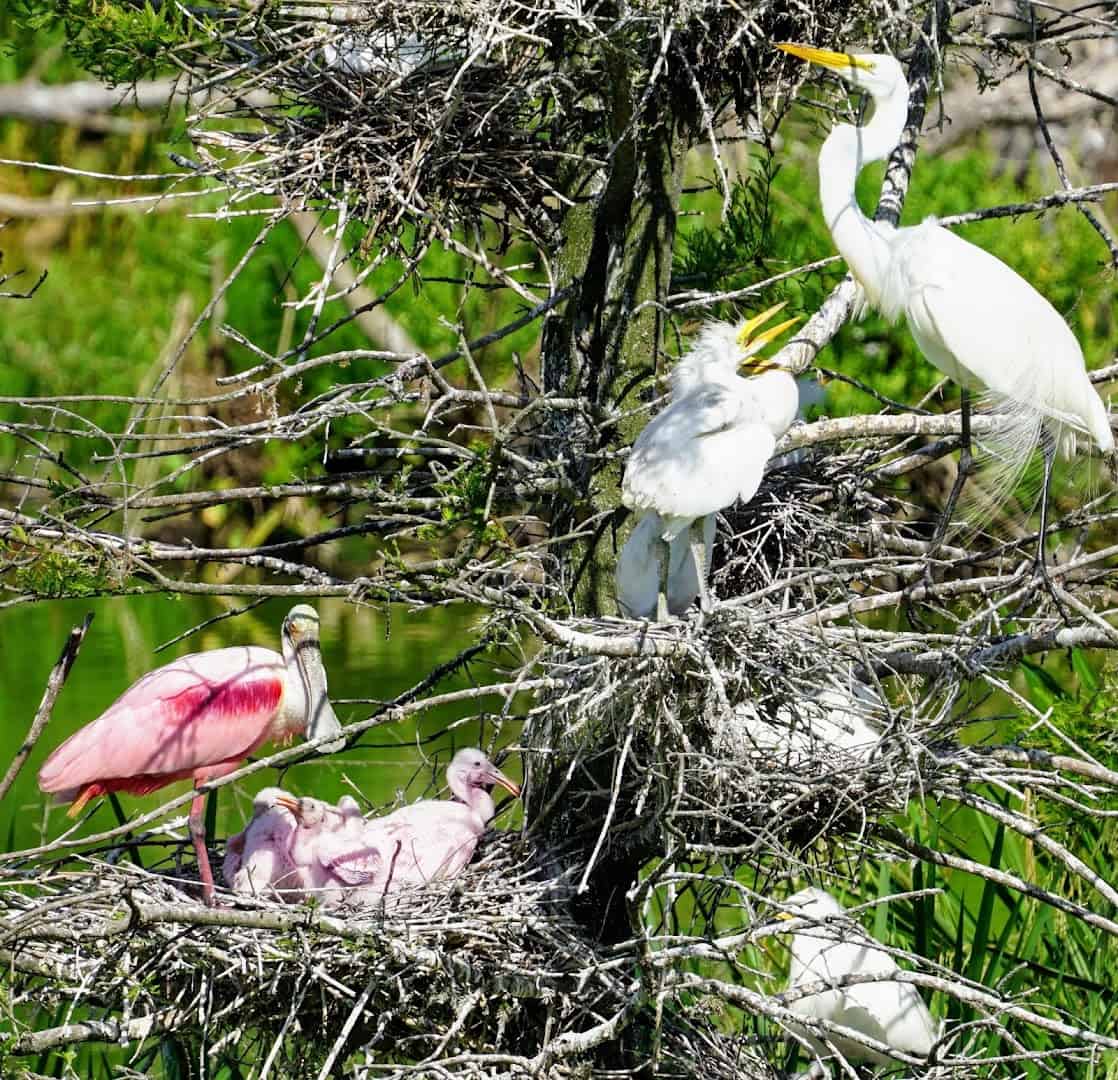
In July 1995, staff counted 50 heron nests. By 1997 that had jumped to 332 nesting pairs, and the very first Roseate Spoonbills arrived to join the colony. By 2003, the island held more than 1,000 nesting pairs.
The numbers at peak roost are almost hard to believe. On one August evening in 1998, a count of birds settling in for the night at the pond topped 13,000. That is thirteen thousand wings coming home to a single small island.
The land itself has a quirk worth knowing. High Island is not really an island at all. It sits atop a salt dome that pushes the ground up to about 38 feet above sea level.
That makes it the highest point on the Gulf of Mexico between Mobile, Alabama and the Yucatan Peninsula. When storms flood the flat coast for miles around, High Island can be the only dry land in sight.
It becomes an island of trees rising out of the water. Those same trees are what save the migrating birds.
When to Come and What to Bring
Timing is everything here, and the calendar is kind about telling you when. Spring migration runs from mid-March through mid-May, and that stretch is the headliner, the season of fallouts and full rookery nests.
Fall brings a quieter second act from late September into mid-October, with its own waves of migrants passing through. The rookery is at its most colorful in April and May, when the spoonbills are nesting and the chicks are loud.
Bring binoculars if you have them, though the canopy walkway gets you close enough that even bare eyes do fine at the rookery. Water and a hat are a must in the coastal humidity, and bug spray earns its place in the bag.
The sanctuary is open every day of the year from dawn to dusk. A day pass runs about $10 for adults, and students get in free, which makes this one of the great cheap-thrill family outings on the coast.
Frequent visitors buy the annual patch, which for around $35 covers admission to all the High Island sanctuaries for a full year. The 2026 patch features a Brewster’s Warbler by artist Linda Feltner, so it doubles as a keepsake.
How to Get There
Smith Oaks sits at the north edge of High Island, an easy day trip from Houston or a natural stop on a Bolivar Peninsula road trip. There are two entrances, and the sanctuary points weekend crowds toward the Old Mexico Road gate, with the Winnie Street entrance open year-round.
Make a day of it. The drive out crosses the marshes and rice country of the upper coast, and pairing Smith Oaks with the free Bolivar ferry and a stretch of beach turns one sanctuary into a full coastal outing.
Where: Smith Oaks Sanctuary, 2205 Old Mexico Road, High Island, TX 77623.
Plan Your Spring Birding Run
You do not have to be a hardcore birder to be flattened by this place. All it takes is standing under a tree full of tired, technicolor songbirds, or watching a pink bird the color of bubblegum feed her chicks on a fortress island.
Pick a spring morning, keep half an eye on the weather forecast, and point the car toward the coast. Bring the binoculars, bring the kids, and let High Island show you what it means when the whole sky decides to stop for a rest.
Featured image: Subash G via Smith Oaks Sanctuary

Stella Raines
Editor-in-Chief
Stella brings over a decade of storytelling experience to TX Headlines. With roots in West Texas and a love for road trips, she leads the editorial team with an eye for the hidden stories that make Texas unforgettable.
More Stories

These 10 Texas Spots Bloom Into Seas of Bluebonnets Each Spring

This Enchanting Texas Nature Trail Feels Like Hiking Through a Fairytale Forest

This Underrated Texas State Park Gives You a Full Day of Swimming and Hiking for Just $5

This Easy Texas Hike Leads to a Swinging Suspension Bridge Hidden in the Pines
Tags