This Tranquil East Texas State Park Is Where Your Worries Go Quiet Under the Pines
Some days the only thing I want from a place is for it to be quiet. Not silent, exactly. Just quiet enough that the noise in my own head finally has to compete with something better, like wind moving through a few hundred pine trees.
That is the whole promise of this hushed pine sanctuary tucked into the Pineywoods of East Texas. A spring-fed lake sits under a canopy so tall and green that locals have taken to calling it a cathedral of trees.
Below, here is why it belongs on your next slow-weekend list, and exactly how to enjoy it.
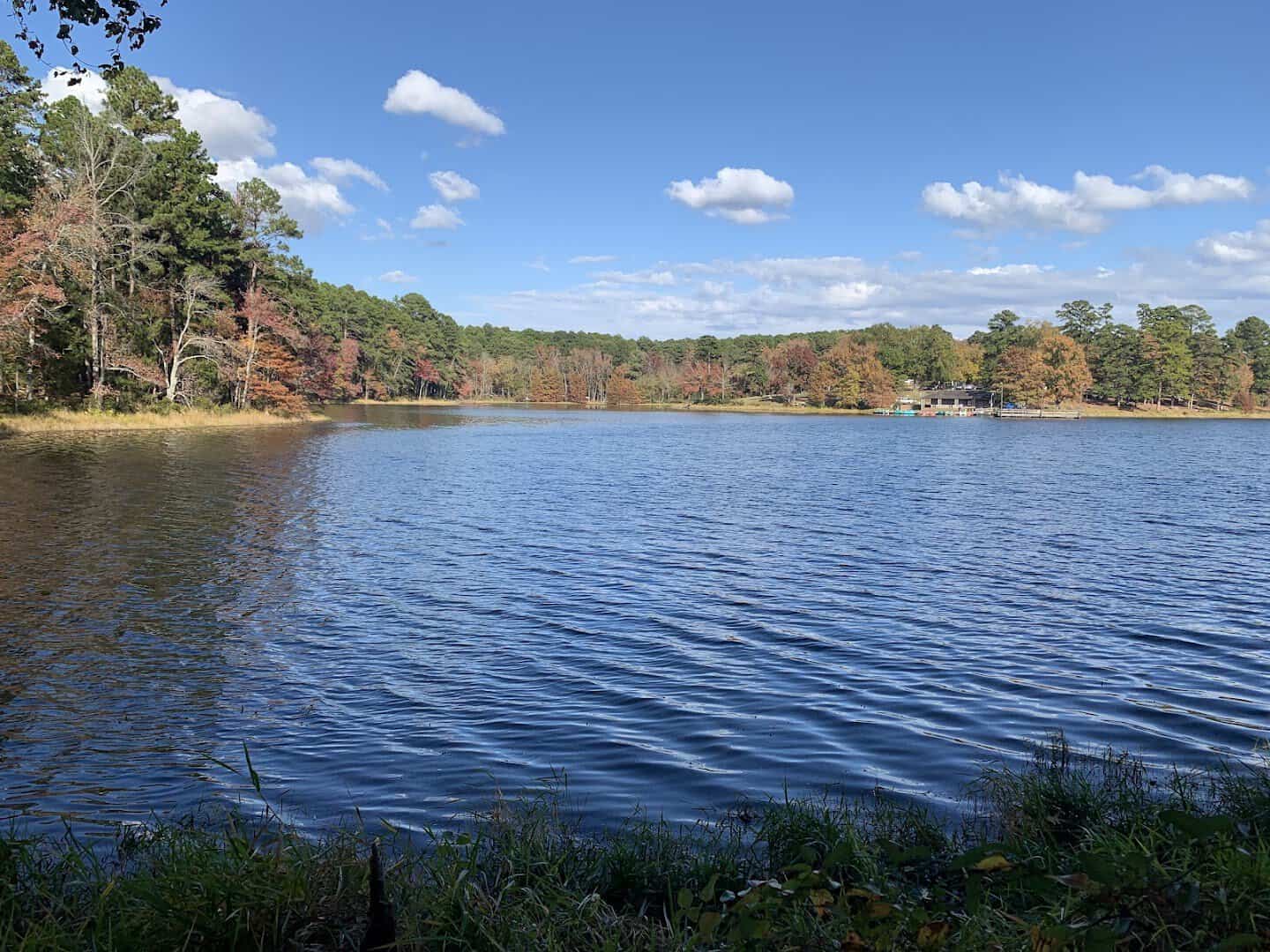
The park in question is Daingerfield State Park, just outside the small town of Daingerfield in Morris County. It is a little over 500 acres of forest wrapped around an 80-acre lake, and it was built for exactly the kind of day I described above.
Where the Pines Close In Overhead
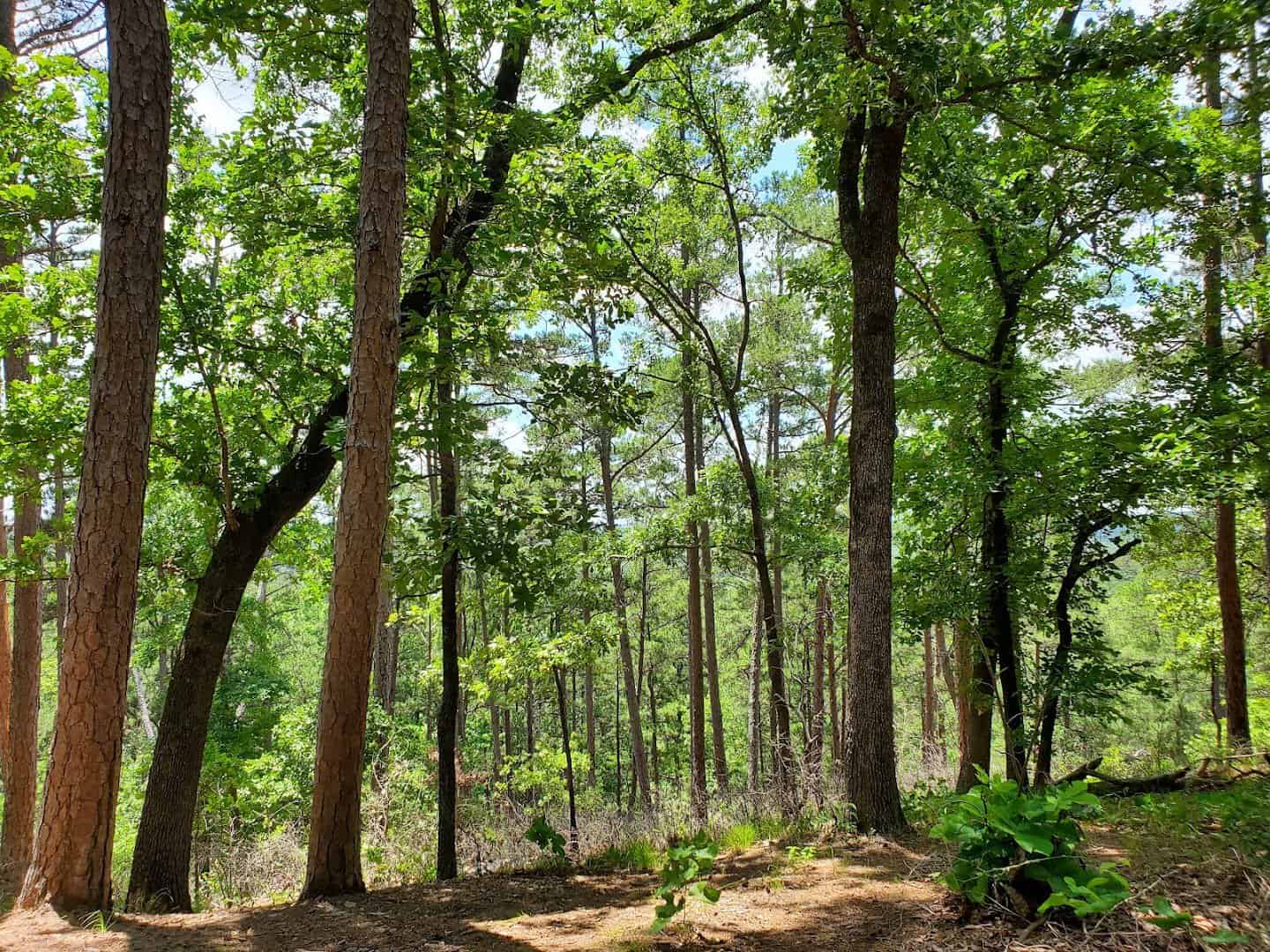
The first thing anyone notices is the ceiling. Loblolly and shortleaf pines shoot straight up, dozens of feet before the first branch, and the light comes down soft and green after it filters through all those needles.
Underfoot, the trails are cushioned with fallen pine straw, so your own steps go quiet too. It is the kind of forest that makes you lower your voice without ever deciding to.
Mixed in with the pines are oaks, flowering dogwoods, eastern redbuds, and red maples. In spring the dogwoods and redbuds bloom, and the whole understory softens into drifts of white and pink beneath the evergreens.
That mix is the quiet magic of the Pineywoods. Evergreens hold the place steady all year while the hardwoods put on a show twice, once with spring blossom and again with autumn fire, so no two visits look quite the same.
You can feel the deliberate design in it. The people who shaped this place a lifetime ago planted trees on purpose, and nearly 90 years later you get to walk through the grown-up result.
It is worth saying how compact all of this is. A little over 500 acres means you are never far from the water or the trailhead, and a family with small kids can see the best of the park in an afternoon without a forced march.
An 80-Acre Lake You Can Almost Have to Yourself
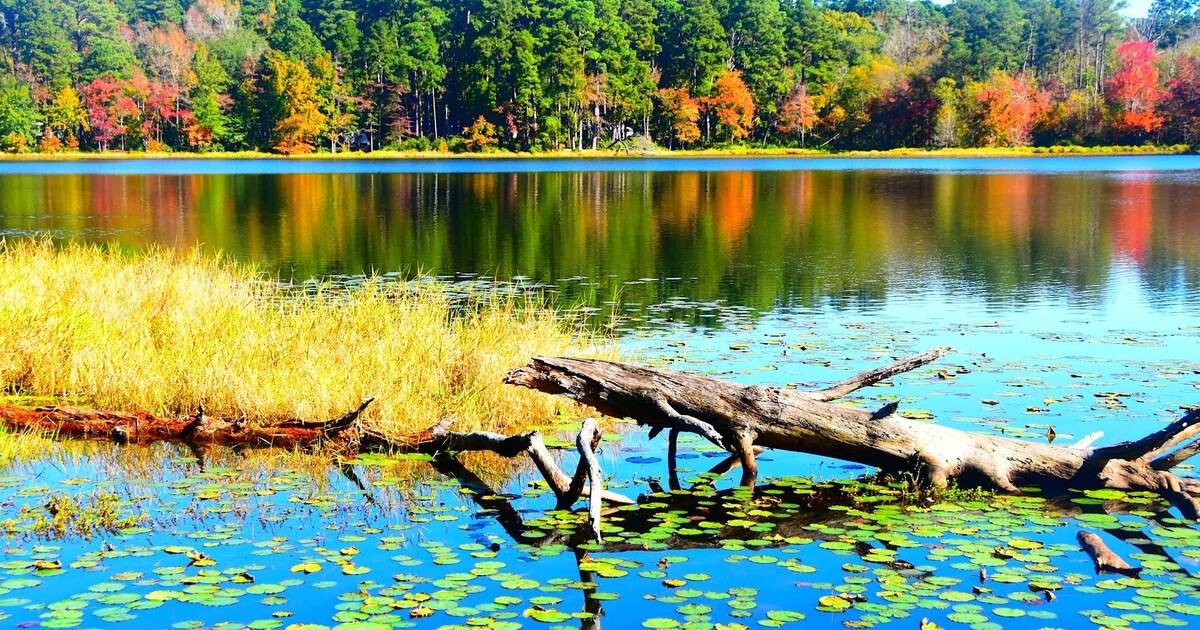
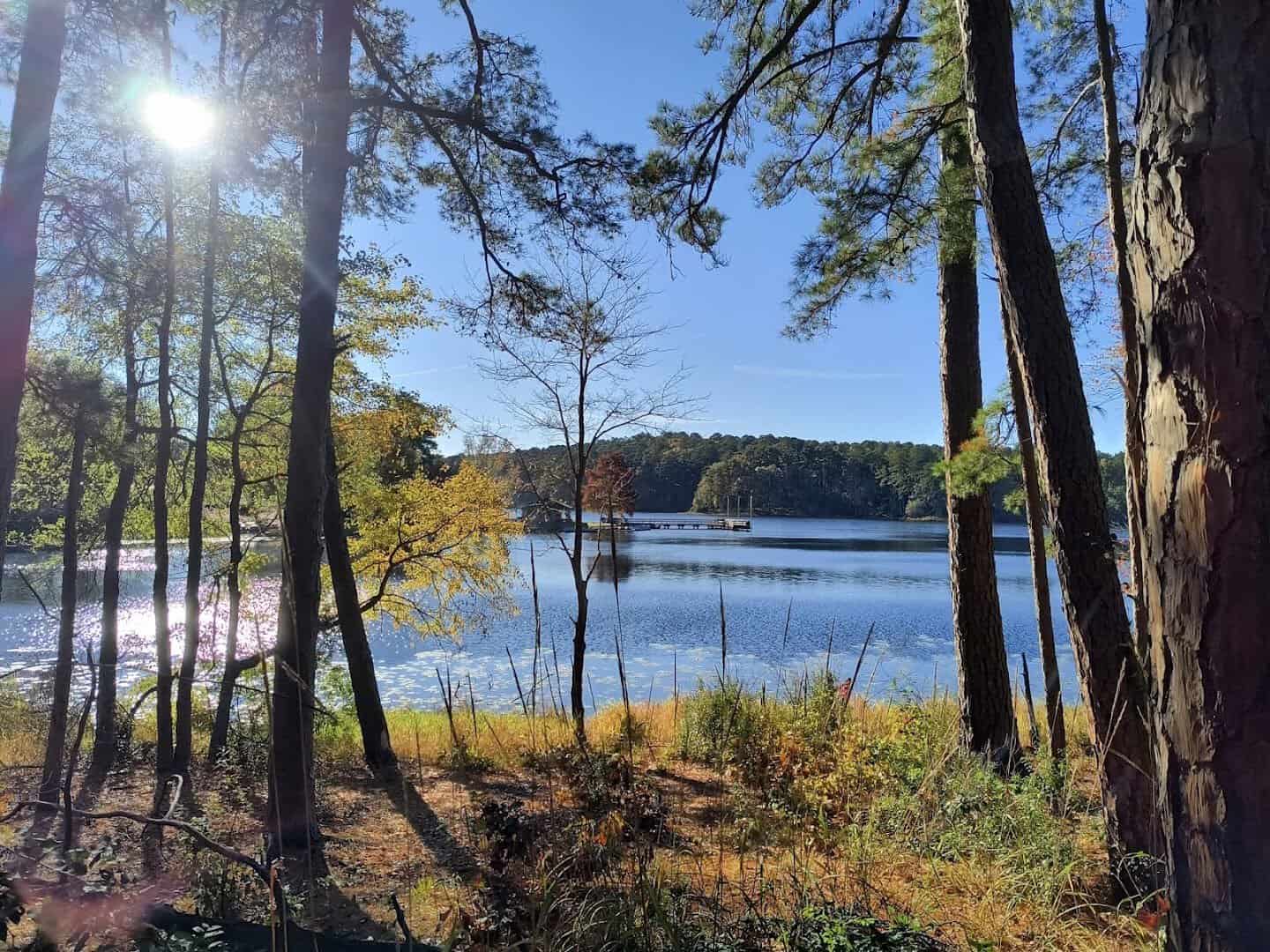
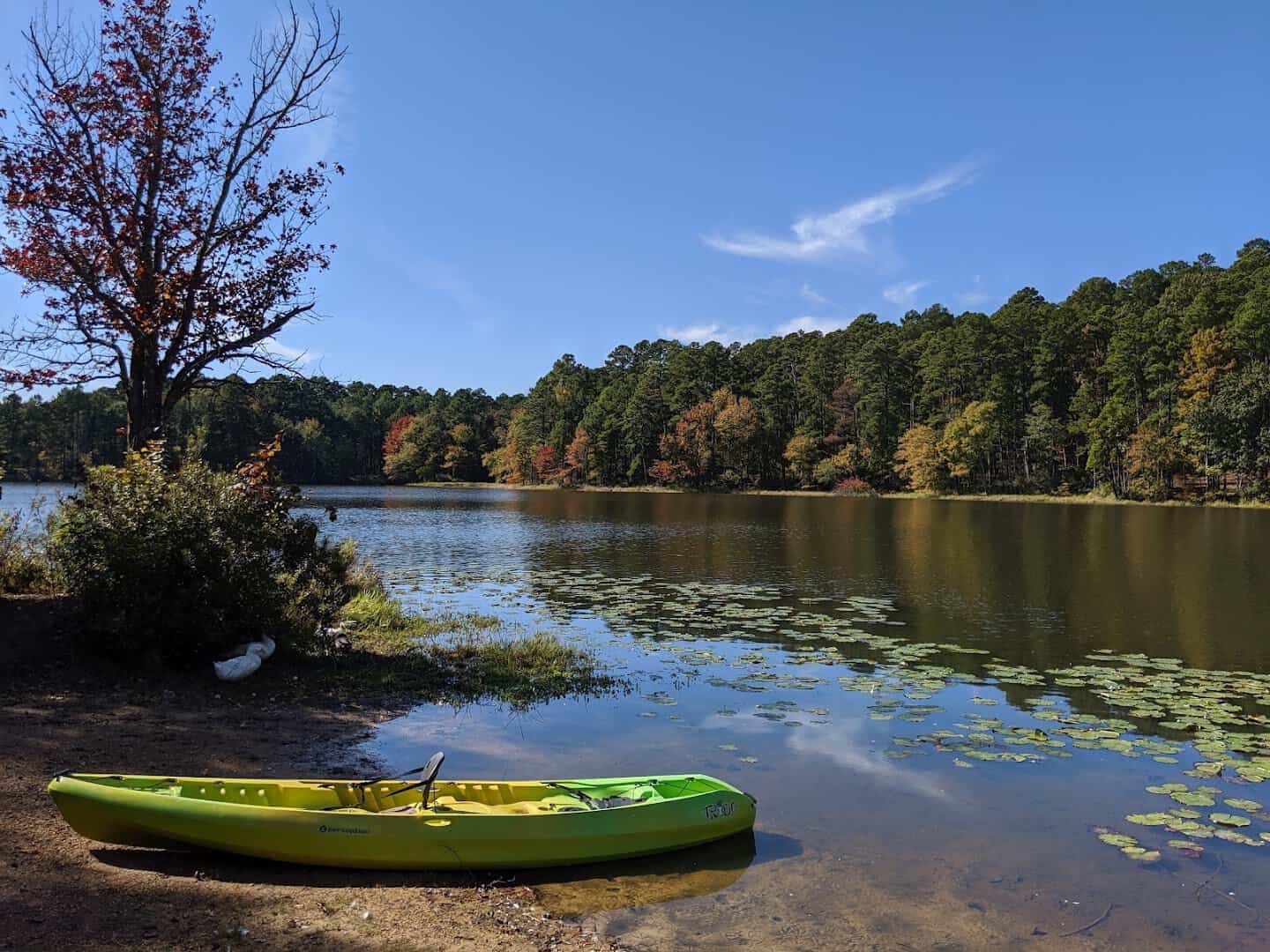
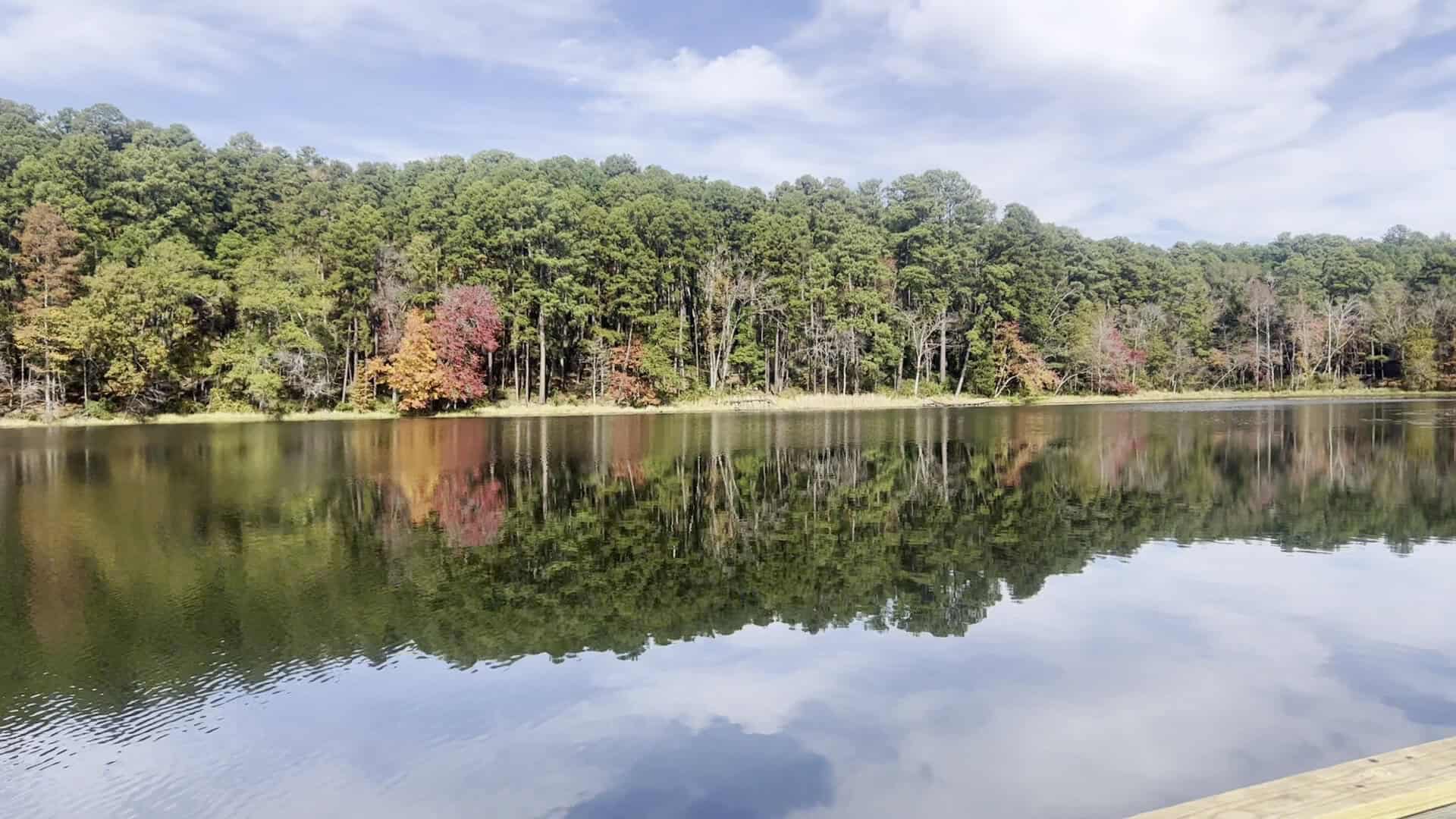
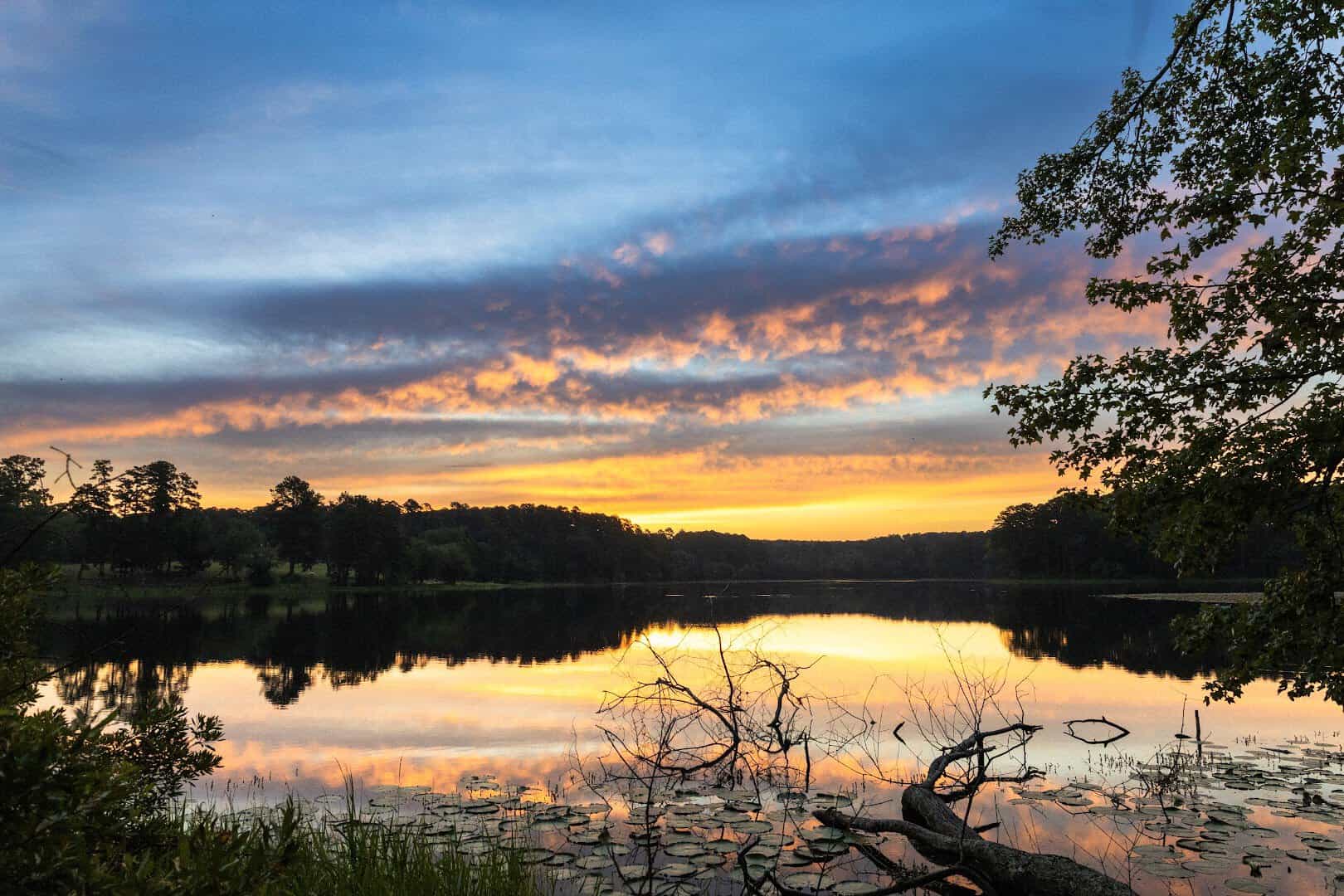
The centerpiece is the water. The 80-acre lake is spring-fed, calm, and clear, and on a still morning it reflects the tree line back at you like a dark green mirror.
You can rent a kayak or a paddleboat from the park concession and push out onto it. A couple of hours is plenty to make a loose loop, dip a hand in the water, and let the shoreline slide past at the speed the day deserves.
The concession and boat rentals run seasonally, roughly March through October, so this is a warm-weather treat. In the cooler months the lake is still yours to walk beside, just without a paddle under you.
There is a swimming area too, with shallow, easy-entry water. It is unsupervised, so you swim at your own risk, but on a hot afternoon that cool spring water is the reward you drove all this way for.
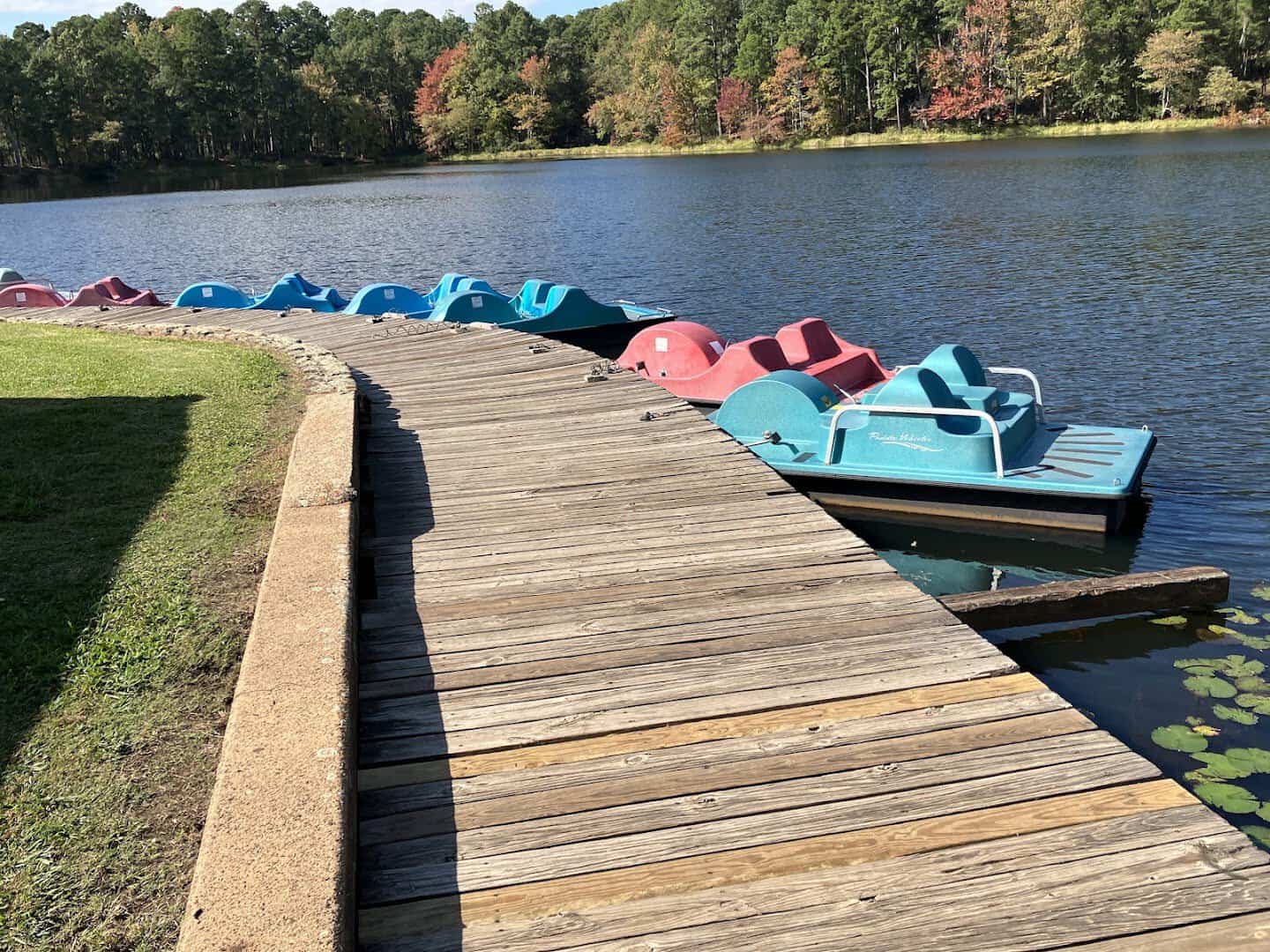
The CCC left a boathouse and a pier on the water back in the 1930s, and the shoreline still has that easy, old-fashioned rhythm of people fishing, launching a boat, and drifting nowhere in particular.
Anglers, take note. The lake holds crappie, largemouth bass, catfish, perch, and chain pickerel, and because you are fishing inside a state park, you do not need a fishing license to drop a line here.
Did you know? Texas waives the state fishing license requirement for anyone fishing in a state park, from the bank or a boat. Daingerfield is one of the prettiest places in the state to use that freebie.
Two Trails, Two Completely Different Walks
You get a real choice here, which I love in a park this size. The signature walk is the Rustling Leaves Trail, a 2.4-mile loop that traces the entire shoreline of the lake.
It stays mostly flat and easy, and the water is almost always in view on one side, so it is the walk to bring a slow friend or a curious kid on. Give yourself an hour and do not rush it.
The name is not just poetry, either. In autumn that same loop becomes the front-row seat for the color, and the sound of dry leaves underfoot is half the reason to come.
If your legs want more, the Mountain View Trail peels off and climbs. It is shorter and noticeably steeper, working its way up to one of the higher points in the park for a look out over the treetops.
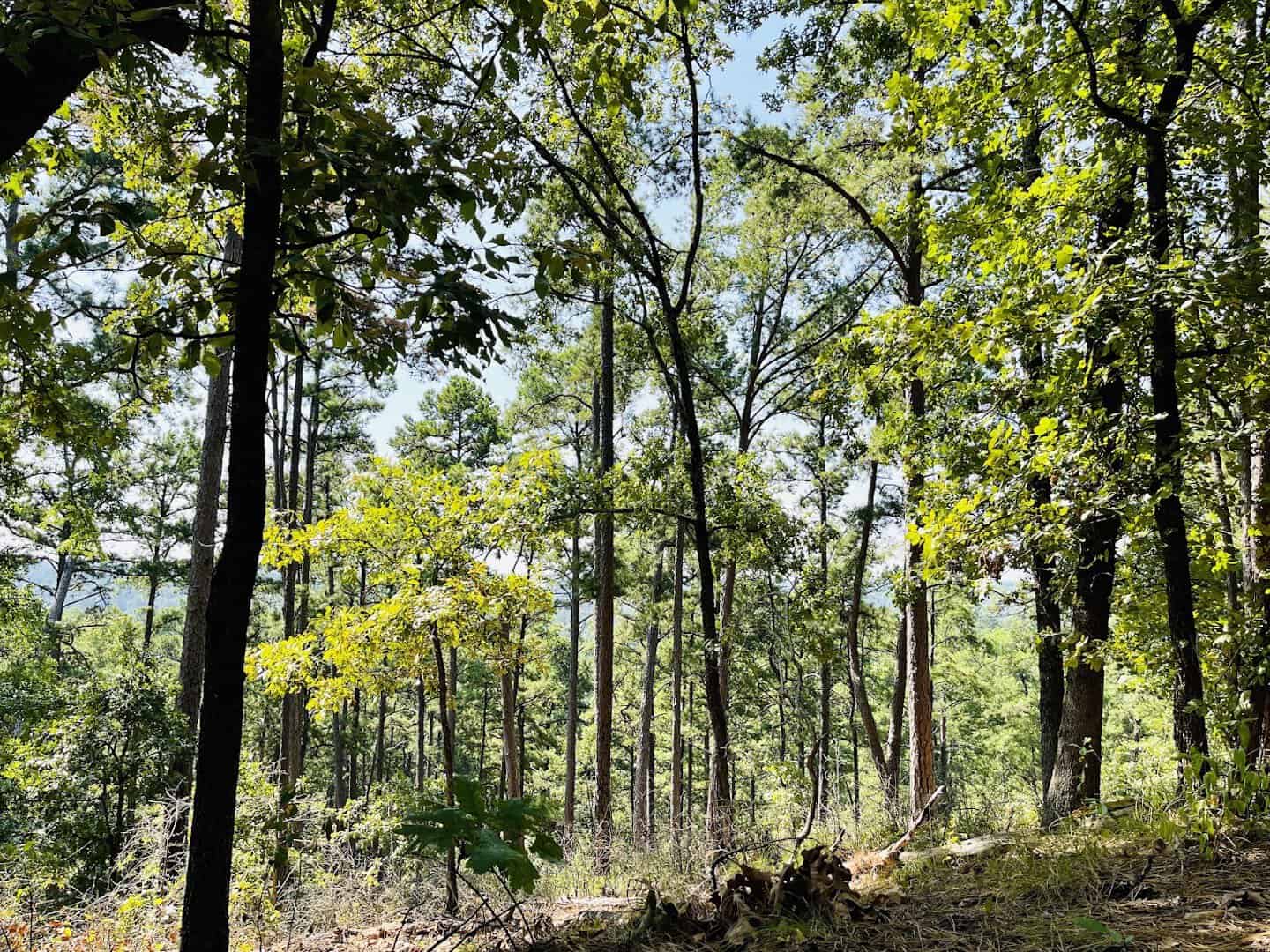
Pack water for that one, especially in summer. The climb is short, but East Texas humidity has a way of making a modest hill feel like an honest workout.
The Deer, the Birds, and the Rest of the Locals
This is a living forest, not a manicured lawn, so you share it. White-tailed deer drift through at dawn and dusk, and squirrels and rabbits treat the picnic areas like their personal commons.
Birders do well here. The Pineywoods pull in woodpeckers, warblers, wading birds along the shallows, and the occasional showy flash of a summer tanager or a cardinal against all that green.
Bring the dog, too. The park runs a B.A.R.K. Ranger program, so a well-behaved leashed pup is a genuinely welcome trail companion, not a barely-tolerated one.
When the Whole Forest Turns to Fire
Here is the season people drive across Texas for. Come late October and early November, the maples, sweetgums, and dogwoods let go of their green and turn red, orange, and gold.
Texas is not famous for fall color, which is exactly why this park has become a bit of an open secret. It is regularly named one of the best places in the whole state to actually watch the leaves change.
Picture that autumn canopy doubled in the still surface of the lake. A slow paddle across the water in early November might be the single most colorful thing you can do outdoors in this corner of Texas.
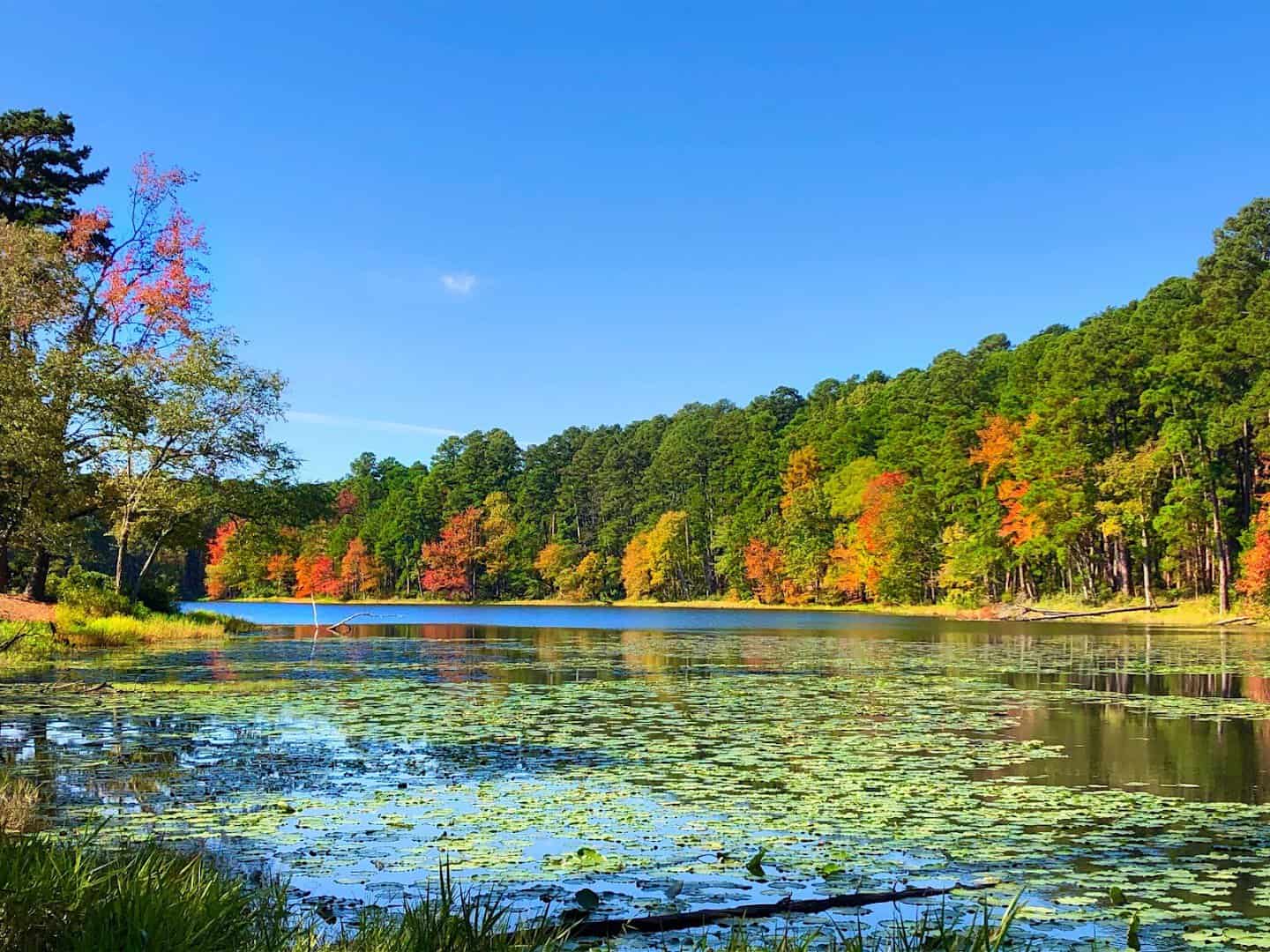
Pro tip: The park posts fall foliage updates on its social pages through October and November. Check them before you drive, because peak color in East Texas can swing a week or two either way.
Built by Hand, Almost 90 Years Ago
The park has good bones, and I mean that literally. Private owners deeded more than 500 acres to the state in 1935, and the Civilian Conservation Corps went to work.
Company 2891 arrived first and built the earthen dam that impounded the lake. Company 1801 followed and finished the job, and the park opened to the public in 1938.
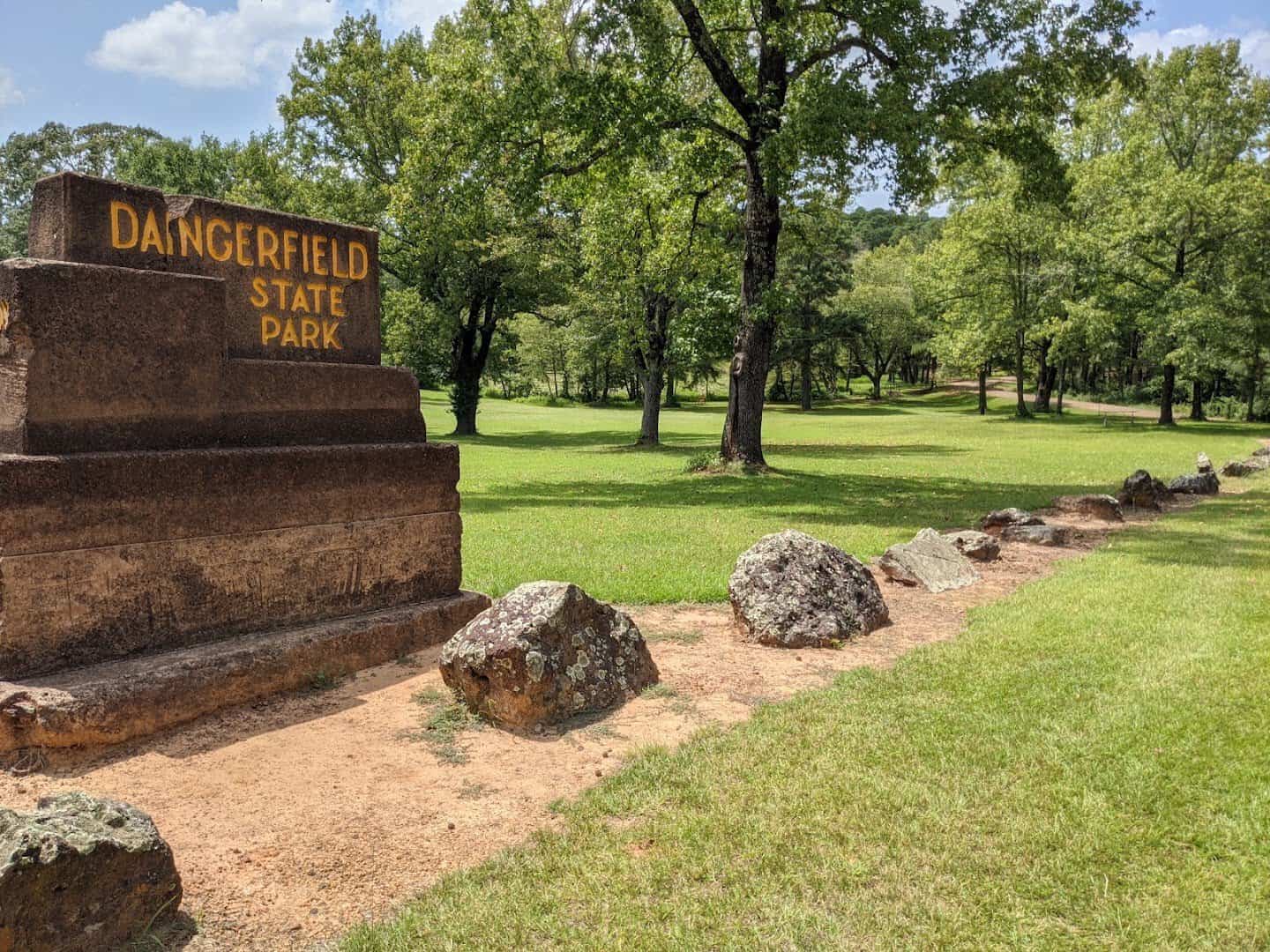
Those young crews did far more than dig a lake. They laid the roads and steps, built the boathouse and cabins, cut the trails, and replanted the whole forest with native pines, oaks, and maples.
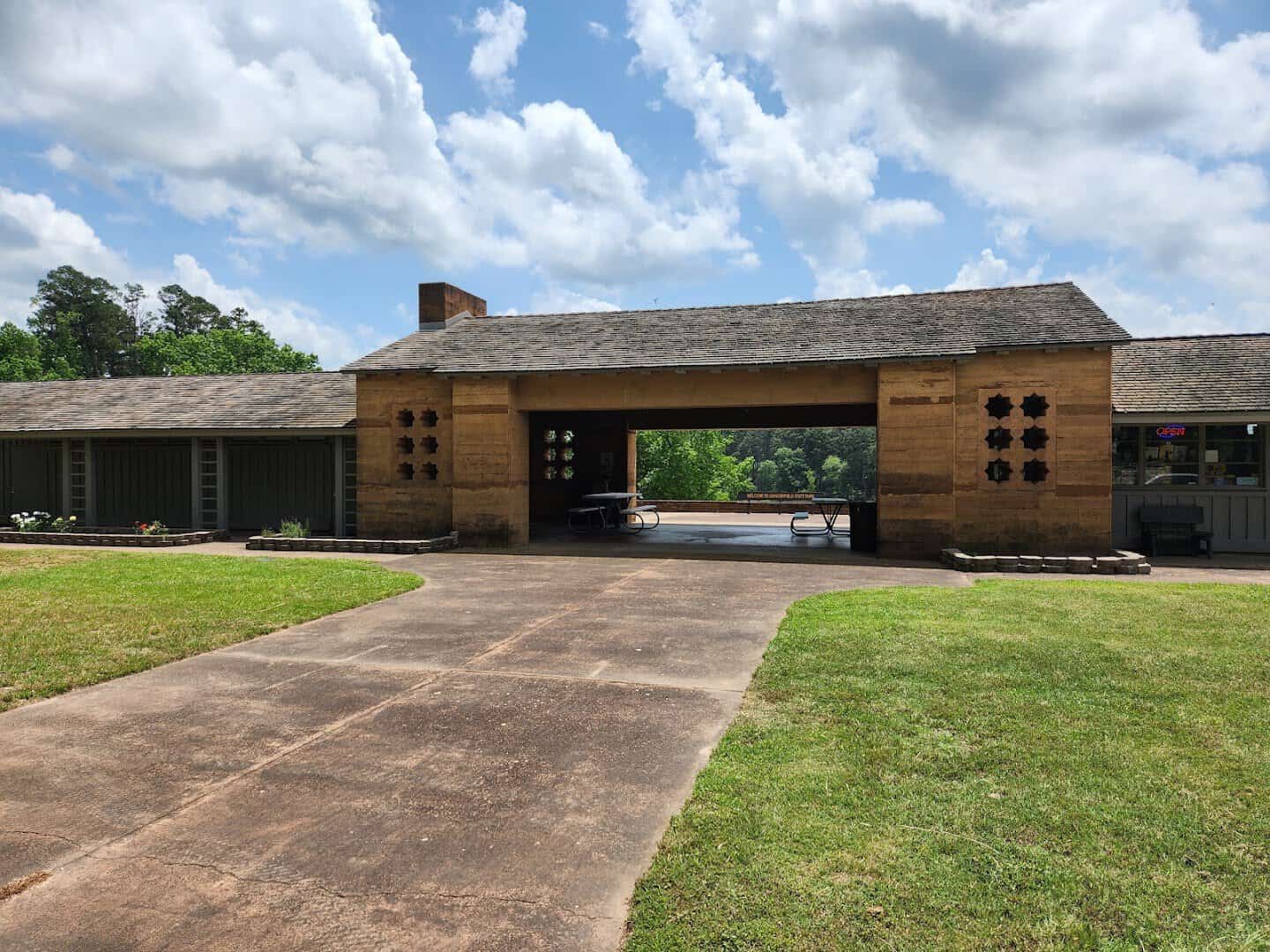
A lot of that handiwork is still standing. The stone-and-timber structures carry that unmistakable 1930s parks craftsmanship, and a 2011 remodel updated the facilities while leaving the CCC character in place.
Look closely and you see the details those crews sweated over: hand-cut stone steps, timber beams, fireplaces and culverts fitted with a care that mass-produced park furniture never gets. It is the kind of work that reads as generous, decades on.
There is something grounding about resting on a wall that someone stacked by hand nearly a century ago. You are leaning on the work of people who built this to outlast themselves, and it did.
Where to Sleep Under the Trees
You will not want to leave at sunset, so plan to stay. The park keeps a set of historic CCC-era cabins tucked into the trees, with kitchens and bathrooms, so you can settle in without roughing it.
There are smaller cabins that sleep four to six people, and the larger Bass Lodge that holds a group of up to 15. That makes it a favorite for family reunions and the reunions that are really just old friends.
Prefer canvas or an RV? The campground has sites with full hookups, including pull-through spots with 50-amp service for the bigger rigs. Wake up to birdsong and the smell of pine, and start the whole quiet routine over again.
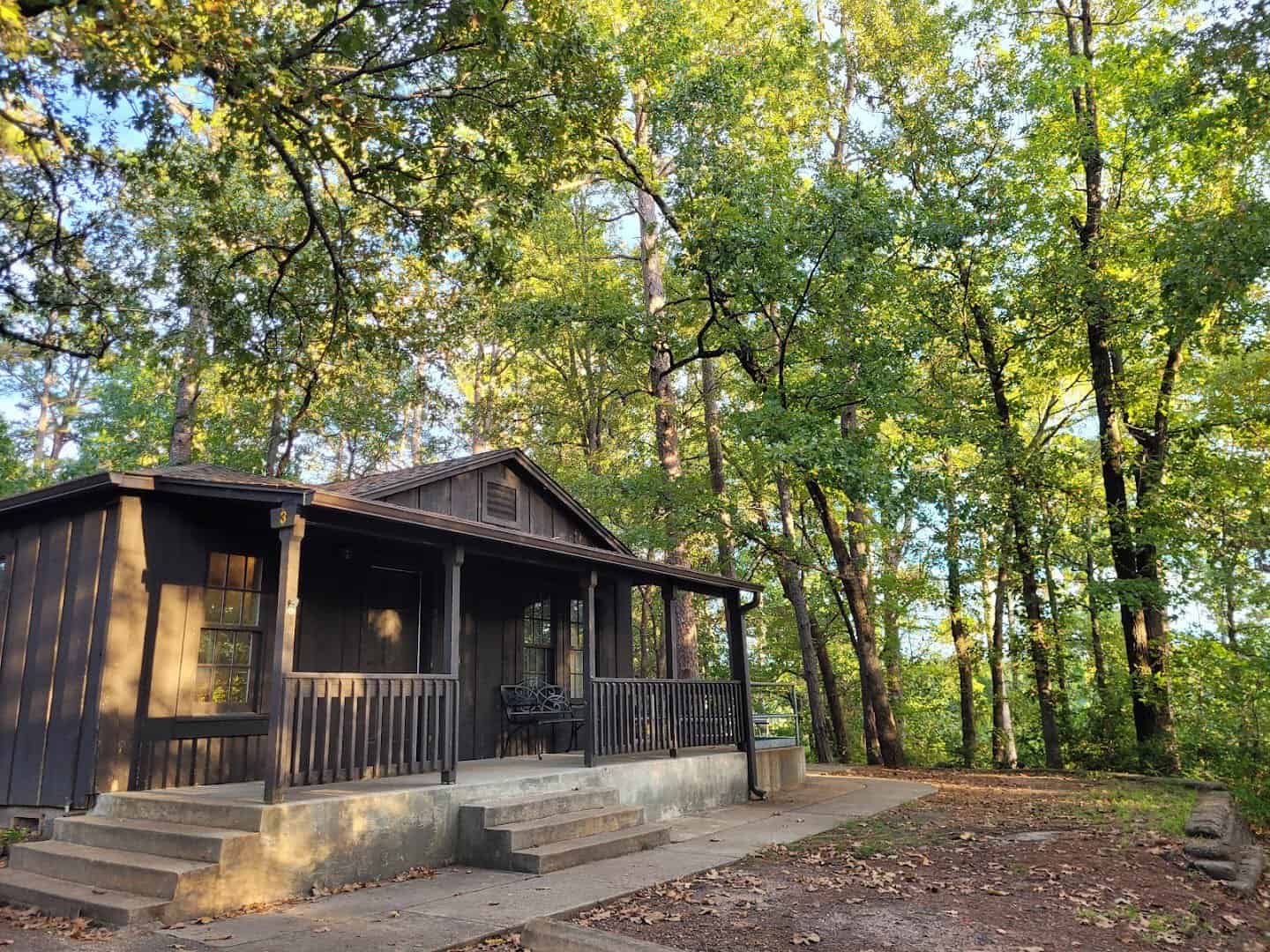
Cabins here book out fast on fall weekends, when the foliage crowd arrives, so reserve early if color season is what you are after.
A Park That Gives You Permission to Rest
What sets this place apart is how unhurried it wants you to be. There are benches set along the shoreline and the trails, positioned like small invitations to just sit for a minute and do nothing productive.
Texas Parks and Wildlife once described Daingerfield as “an oasis for harried urbanites,” and honestly, that lands. It is a park engineered for the exact person who forgot how to slow down.
You do not need to hike hard or paddle far to get the point of it. Sometimes the whole itinerary is a thermos, a good bench, and an hour of watching light move on the water.
The picnic areas make that easy. Tables and grills sit scattered under the pines near the water, close enough to the parking that you can haul a cooler out, spread a lunch, and never feel like you earned it through suffering.
It is a small park with a big personality, and the “cathedral of trees” nickname is not marketing. Stand under that canopy once and you understand why people keep coming back to a spot most of Texas has never heard of.
How to Get There
The park sits just south of the town of Daingerfield in East Texas. It is an easy add-on if you are already exploring the Pineywoods or the pre-Civil War town of Jefferson, about half an hour to the southeast.
Where: Daingerfield State Park, 455 Park Rd 17, Daingerfield, TX 75638
There is a small daily entrance fee per adult, and children get in free, which keeps a day trip here refreshingly cheap. Check current hours, fees, and cabin availability on the official state park site before you go, since seasons and rentals shift.
Start Planning Your Quietest Weekend of the Year
Not every trip has to be a bucket-list spectacle. Some of the best ones are just a tall stand of pines, a still lake, and a whole day where nobody needs anything from you.
So pack a paddle and a thermos, point the car toward East Texas, and give yourself permission to do gloriously little. Whether you come for the fall color or just for the quiet, this is the kind of place your shoulders remember long after you have driven home.
Featured image: mumu lu via Daingerfield State Park

Stella Raines
Editor-in-Chief
Stella brings over a decade of storytelling experience to TX Headlines. With roots in West Texas and a love for road trips, she leads the editorial team with an eye for the hidden stories that make Texas unforgettable.
More Stories

These 10 Texas Spots Bloom Into Seas of Bluebonnets Each Spring

This Enchanting Texas Nature Trail Feels Like Hiking Through a Fairytale Forest

This Underrated Texas State Park Gives You a Full Day of Swimming and Hiking for Just $5

This Easy Texas Hike Leads to a Swinging Suspension Bridge Hidden in the Pines
Tags