This Secret Texas Lake Lets You Fish for Free Without a License
Here is my honest opinion about fishing licenses. They are the single biggest reason people who say they want to fish never actually go. You decide on a whim to drop a line, then you remember you have to buy the paperwork first.
By the time you sort it all out, the mood has usually passed. So I have a real soft spot for the rare spot where that whole hurdle just disappears. Grab a rod, walk to the water, cast. No wallet, no website, no excuses.
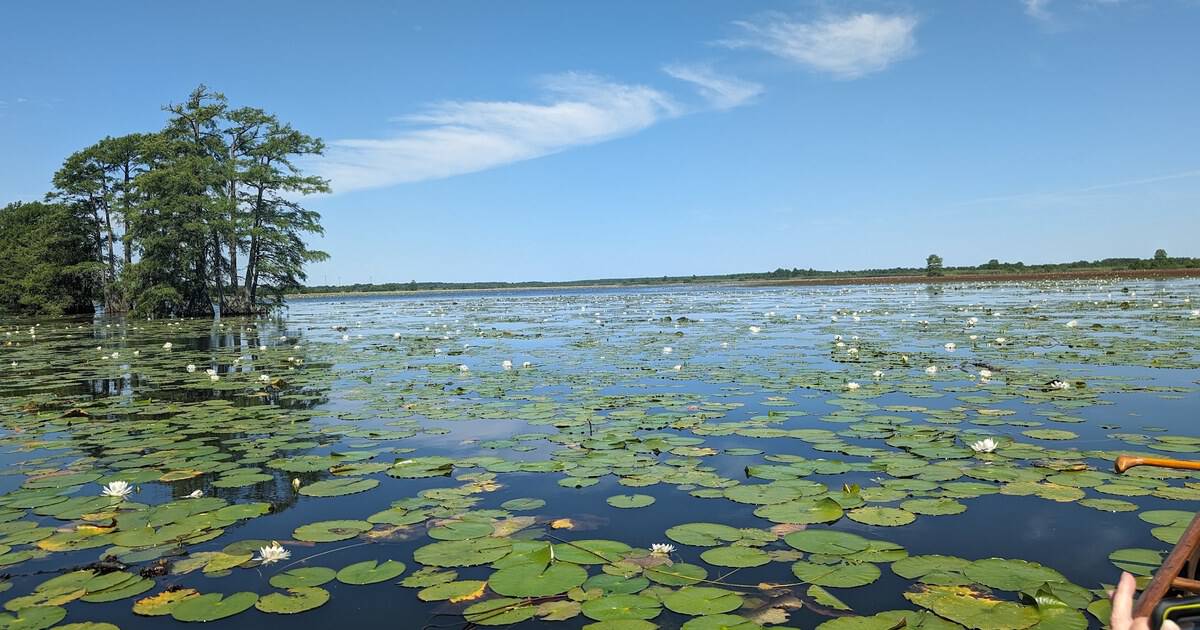
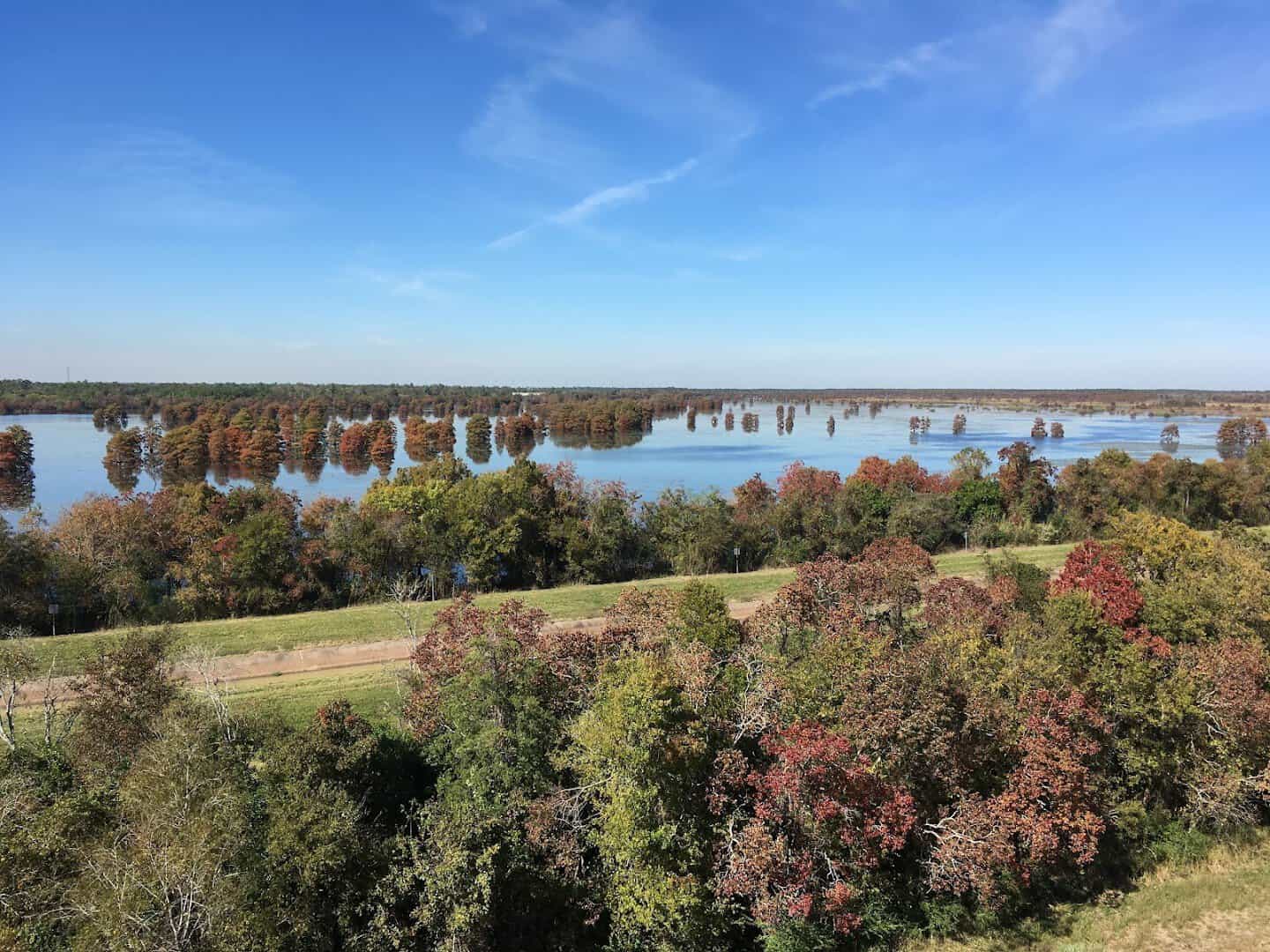
That is exactly the deal at Sheldon Lake State Park, a 2,789-acre pocket of wetland and prairie that sits about fifteen minutes from downtown Houston. It is the kind of quiet green refuge most people drive past for years without ever turning in.
Here is why that is their loss, and why it could be your next favorite Saturday.
Cast a Line Without Buying a License
Texas has a rule that far too few anglers know about. When you fish from the bank inside a Texas state park, you do not need a fishing license. Not a resident one, not a day pass, nothing.
The exemption is written into state law. Once you have lawfully entered land the state runs as a park, you are free to fish its shoreline without buying a license or any of the usual freshwater stamps.
Sheldon Lake State Park qualifies, so the water here is genuinely open to everyone. It does not matter if you are eight or eighty, a lifelong Texan or just passing through on a road trip.
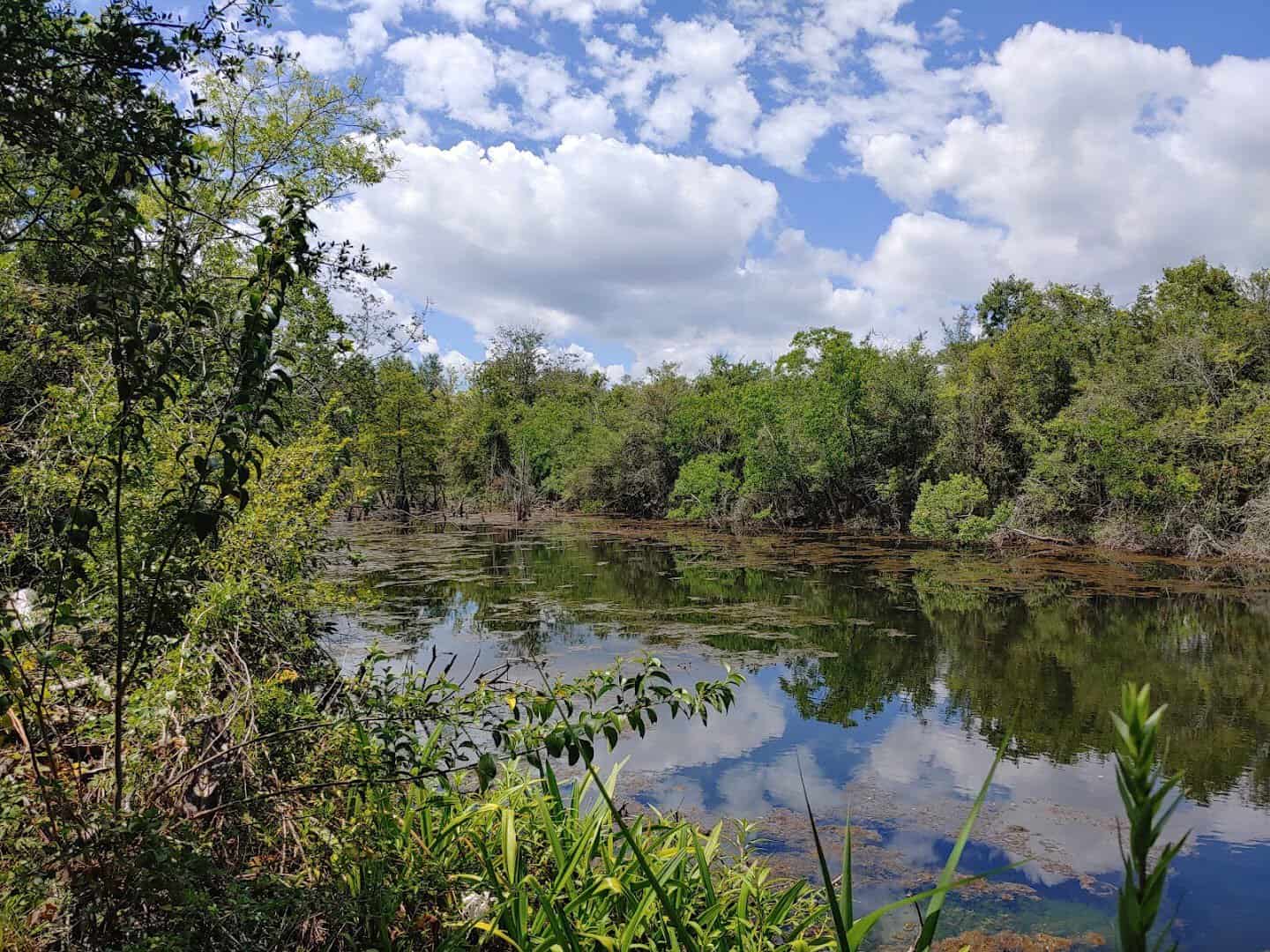
You can show up, set up on the bank, and start fishing. Bag, size, and catch limits still apply the same as anywhere else in Texas, so the rules of good sportsmanship do not go out the window. The cost of entry is simply gone.
Better still, the park itself charges no entrance fee. Free to get in, free to fish. For a family trying to give the kids a real day outside without spending a cent, that combination is genuinely hard to beat around Houston.
Two Ponds Made for First-Timers
The park did not stop at waiving the license. It built two stocked fishing ponds specifically for families, set aside for children fishing alongside an adult.
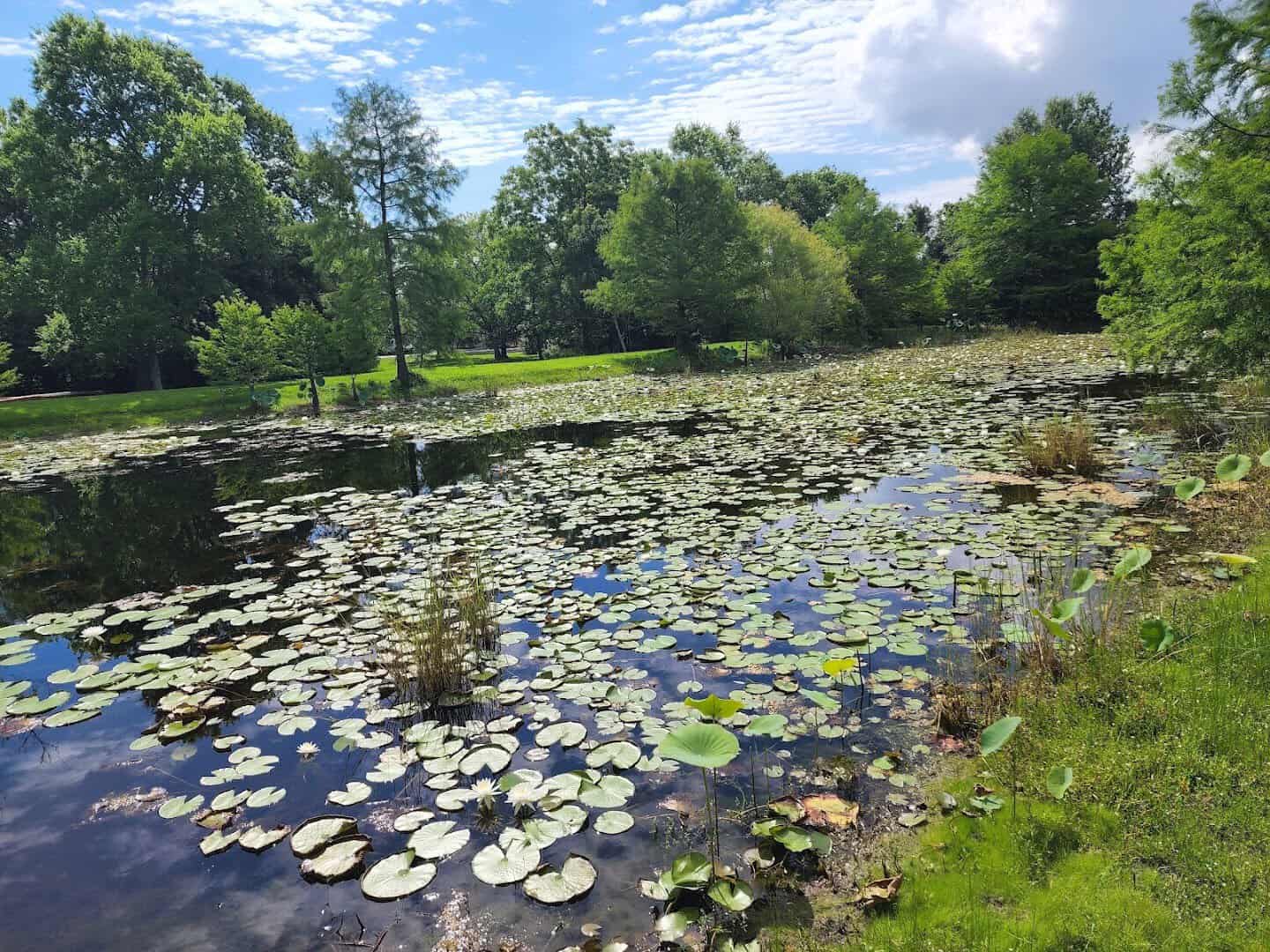
Both ponds are catch-and-release, which is the perfect setup for a young angler still learning the ropes. The fish are there, the bites come often enough to keep a kid interested, and every fish goes gently back to be caught again another day.
There is a specific kind of pride on a child’s face the first time they feel a fish tug the line and realize they did that. These little ponds are built to hand that moment out as often as possible.
That is a lovely thing for a park to decide to do. Plenty of grown anglers I know got hooked on the hobby exactly this way, on a small pond with a borrowed rod and someone patient standing next to them.
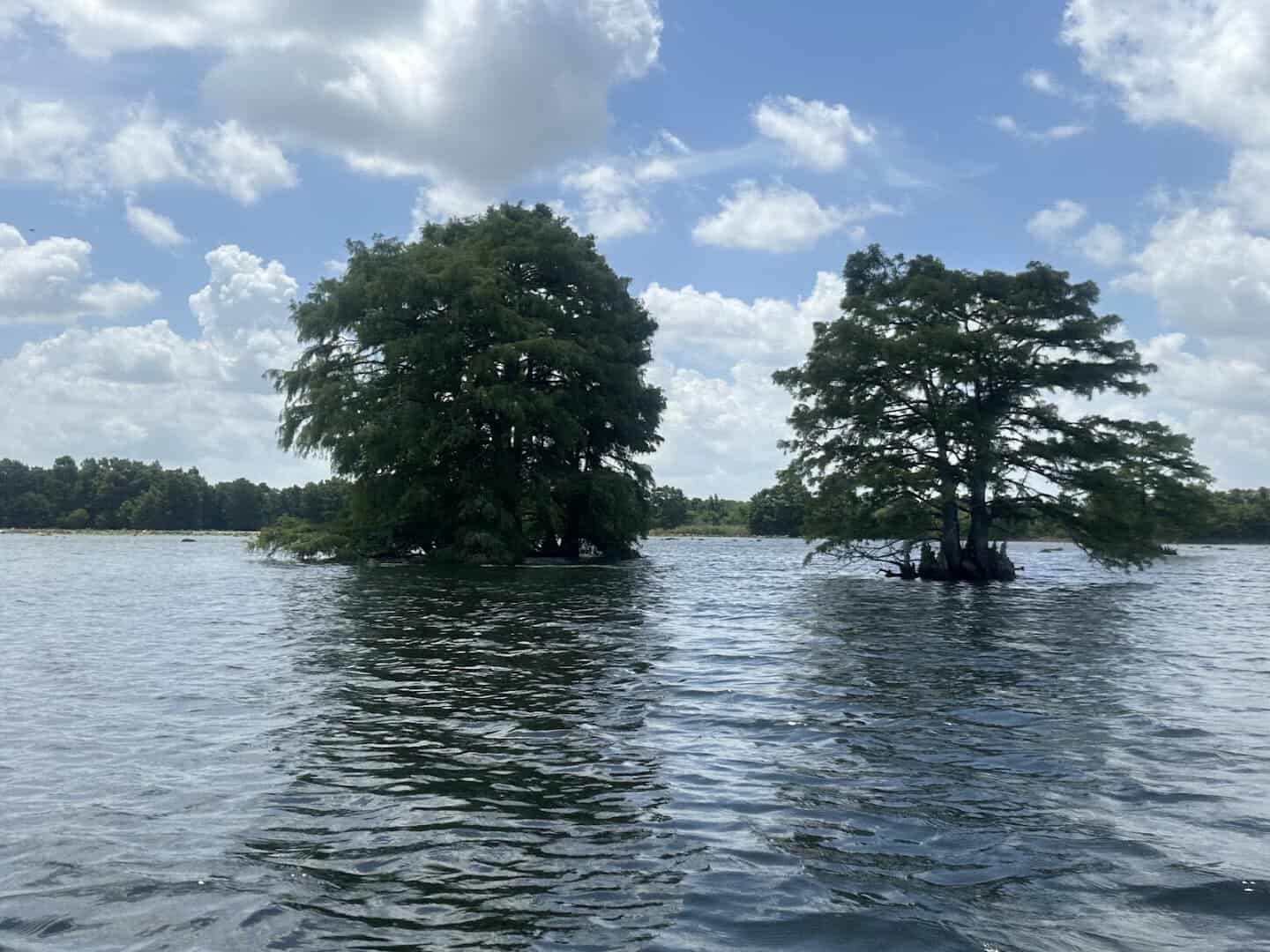
If you would rather work the big water, the shoreline along the Garrett Road crossing opens onto the main 1,200-acre reservoir. Bank access is easy, and the water stretches out flat and glassy in a way that makes an afternoon slip past before you notice.
What You Will Actually Catch
This is not a stocked novelty pond dressed up as a lake. Sheldon holds a genuine warmwater fishery, and people go home with real fish in the cooler.
From the bank you have a shot at largemouth bass, crappie, and bluegill, plus both blue and channel catfish. The stocked family ponds add red-eared sunfish to the mix, those bright little scrappers that are almost impossible for a beginner not to catch.
Catfish are the reliable workhorse here, the fish that keeps a slow afternoon from turning quiet. Bass anglers who know the water tend to time their trips for the cooler edges of the day, early and late, when the fish move shallow.
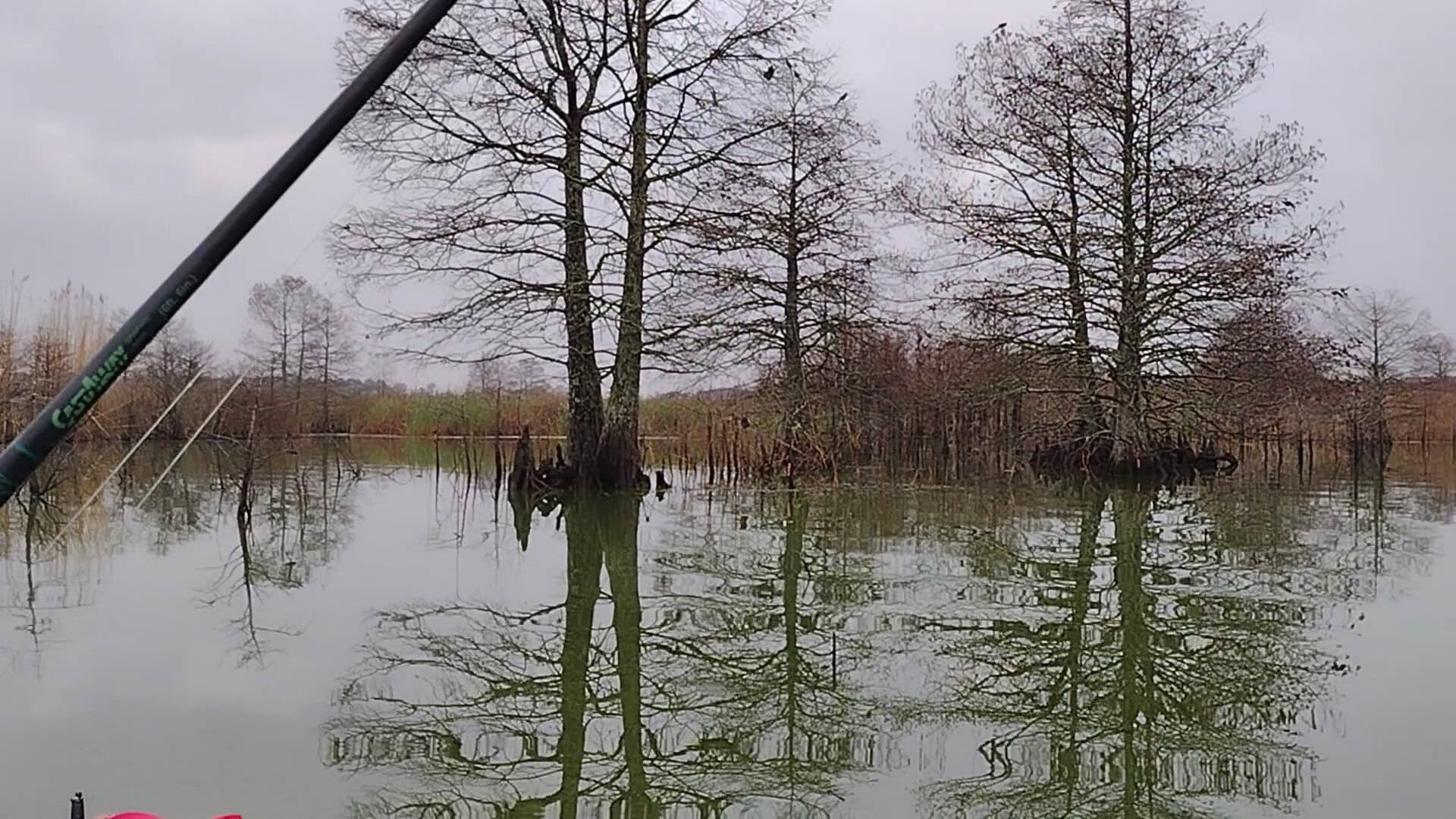
Crappie and bluegill are the ones that keep young hands busy between the bigger bites. A simple rig, a bobber, and a little patience is usually all it takes to put a steady string of panfish on the line.
The reservoir itself covers 1,200 acres, so there is far more water than you could fish in a single visit. That is part of the appeal. You can come back a dozen times and still find a stretch of bank you have never tried before.
Did you know Sheldon started life as a working fish hatchery? That heritage is part of why the fishing still rewards a patient angler today. The whole place was built around raising fish, and the water remembers it.
The park occasionally runs free Fishing 101 classes too, aimed at complete beginners. If nobody in the family has ever baited a hook, that is the softest possible landing into the hobby, and it costs nothing.
Climb the Tower for the Best View Around
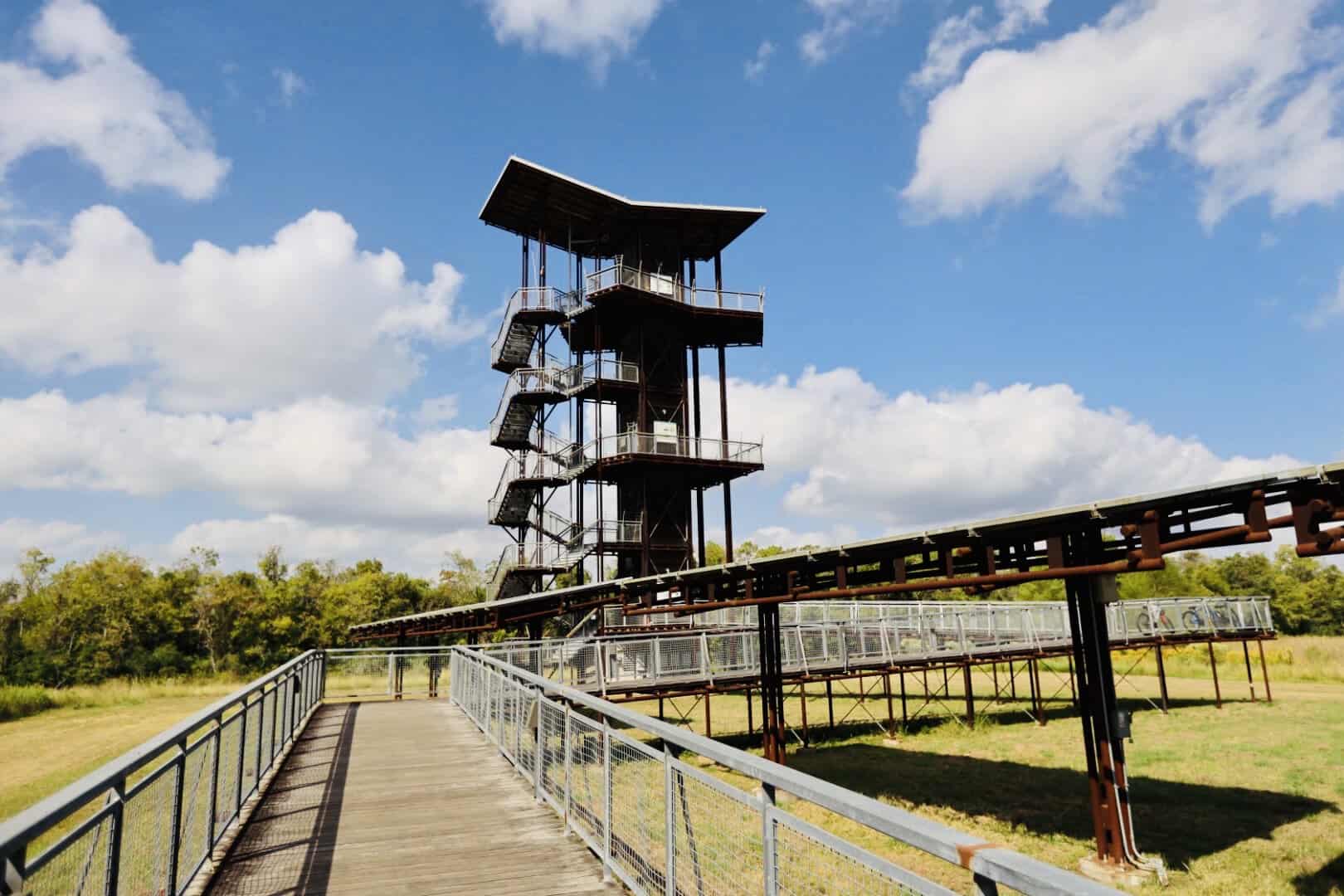
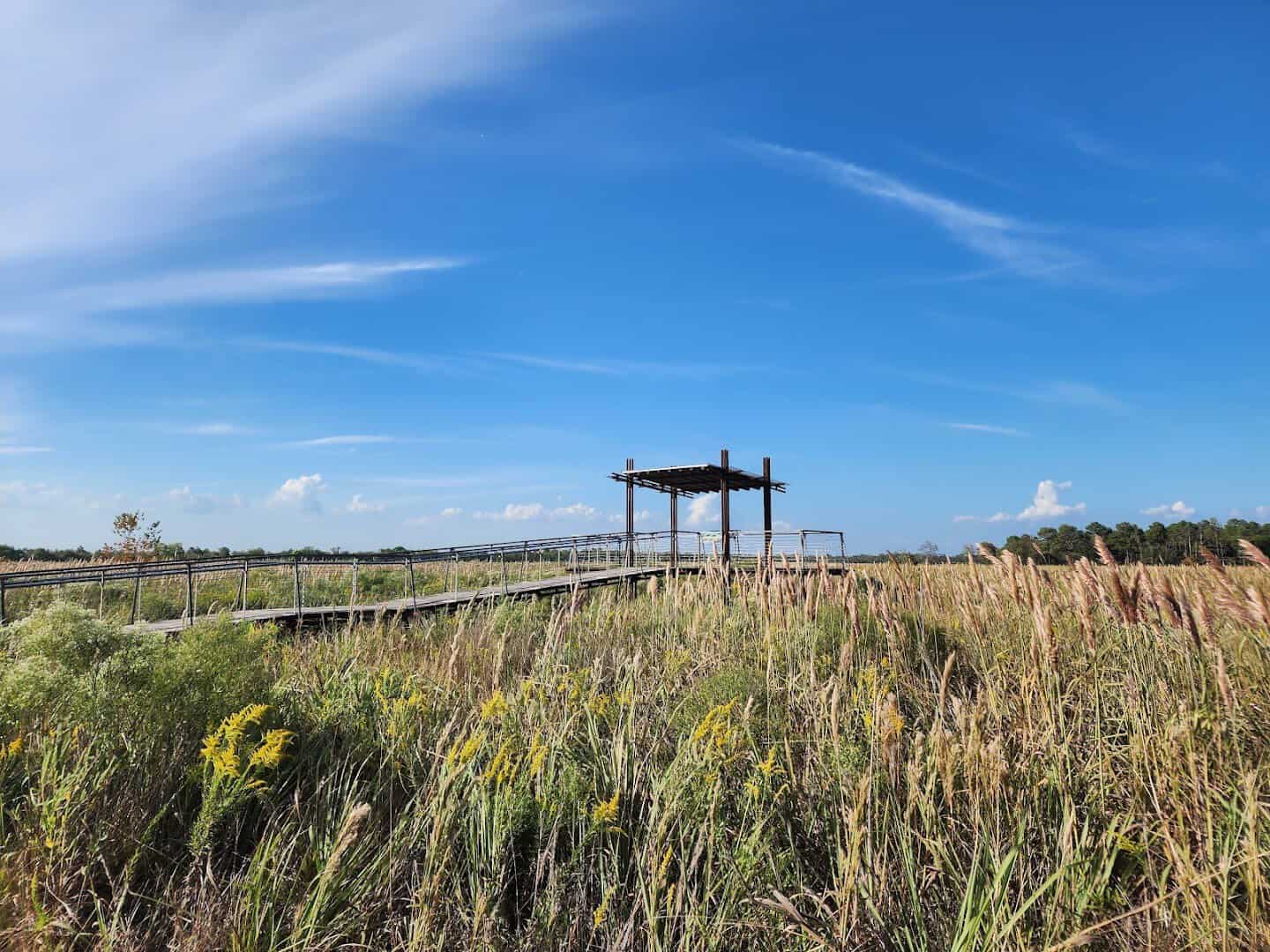
When your casting arm needs a rest, there is one stop you should not miss. The park’s 82-foot John Jacob Observation Tower rises straight up out of the wetland like something from a different landscape entirely.
From the top you get a panorama that surprises almost everyone. The park’s ponds and prairie spread out flat below you, the distant Houston skyline shimmers on one horizon, and the San Jacinto Monument stands off in another direction.
The tower has two observation decks. One is reached by a gentle ramp, the other by stairs and an elevator, so nearly everyone in your group can make it up to enjoy the view together.
It is a strange and wonderful thing to stand that high over quiet water with a major American city glinting in the haze beyond the reeds. Come toward the end of the day and the low light does half the work for you.
Bring the camera. This is the shot your friends will not believe was taken inside Houston city limits, and it is one of the few places you can frame skyscrapers and marsh grass in the same photograph.
A Wetland Full of Wings and Scales
Sheldon is a state park with an Environmental Learning Center attached, and the wildlife is a headline attraction in its own right, not a side note to the fishing.
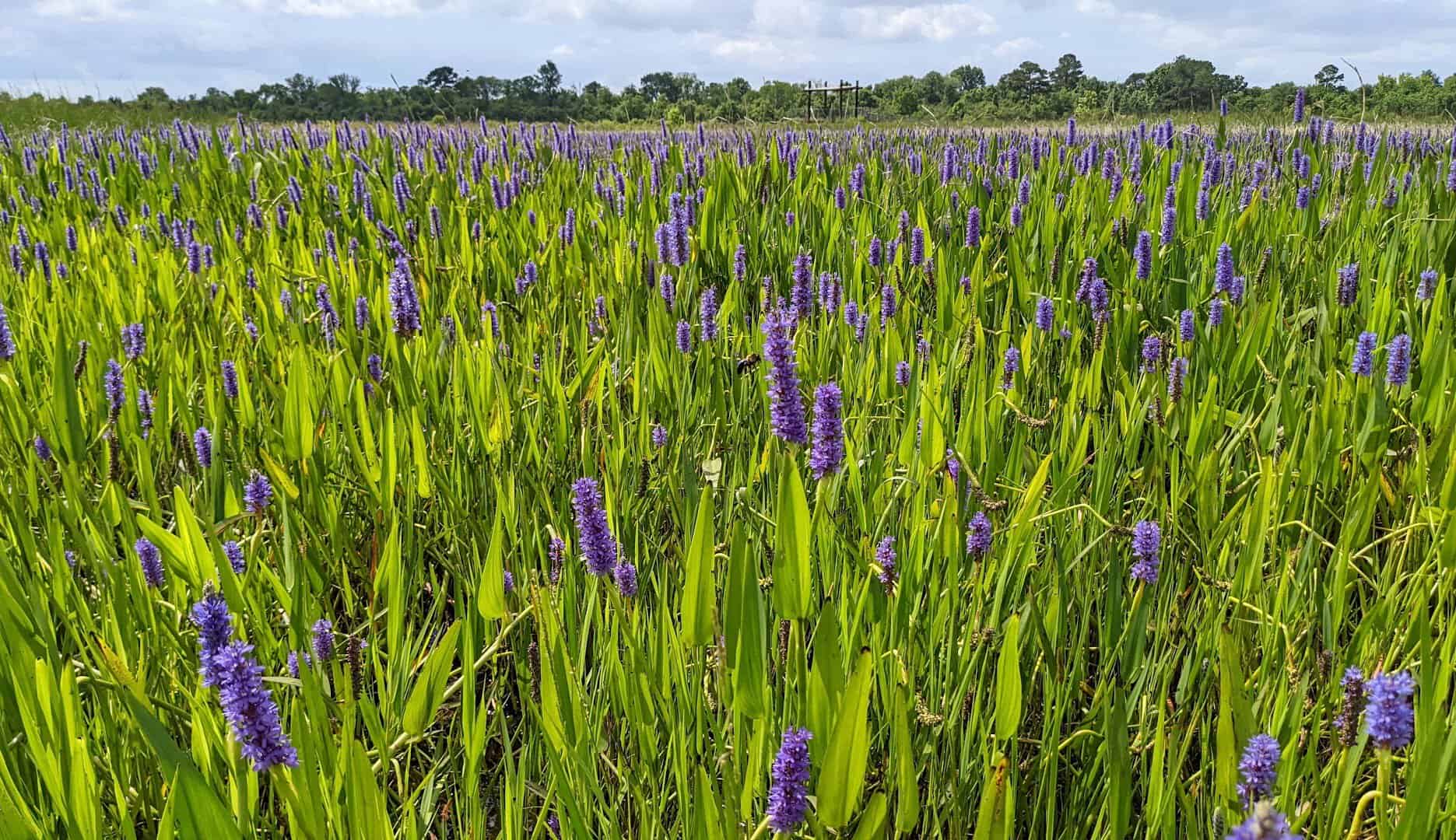
The wetlands draw an impressive cast of birds. Great blue herons stalk the edges, snowy egrets pick through the shallows, ducks paddle the open water, and if you are lucky you will catch the flash of pink from a roseate spoonbill. Birders keep binoculars trained here all season long.
And yes, there are alligators. They are wild, they are native, and they are best admired from a respectful distance while you keep a close eye on children and any pets you brought along. Seeing one is a thrill, not a hazard, as long as you give it room.
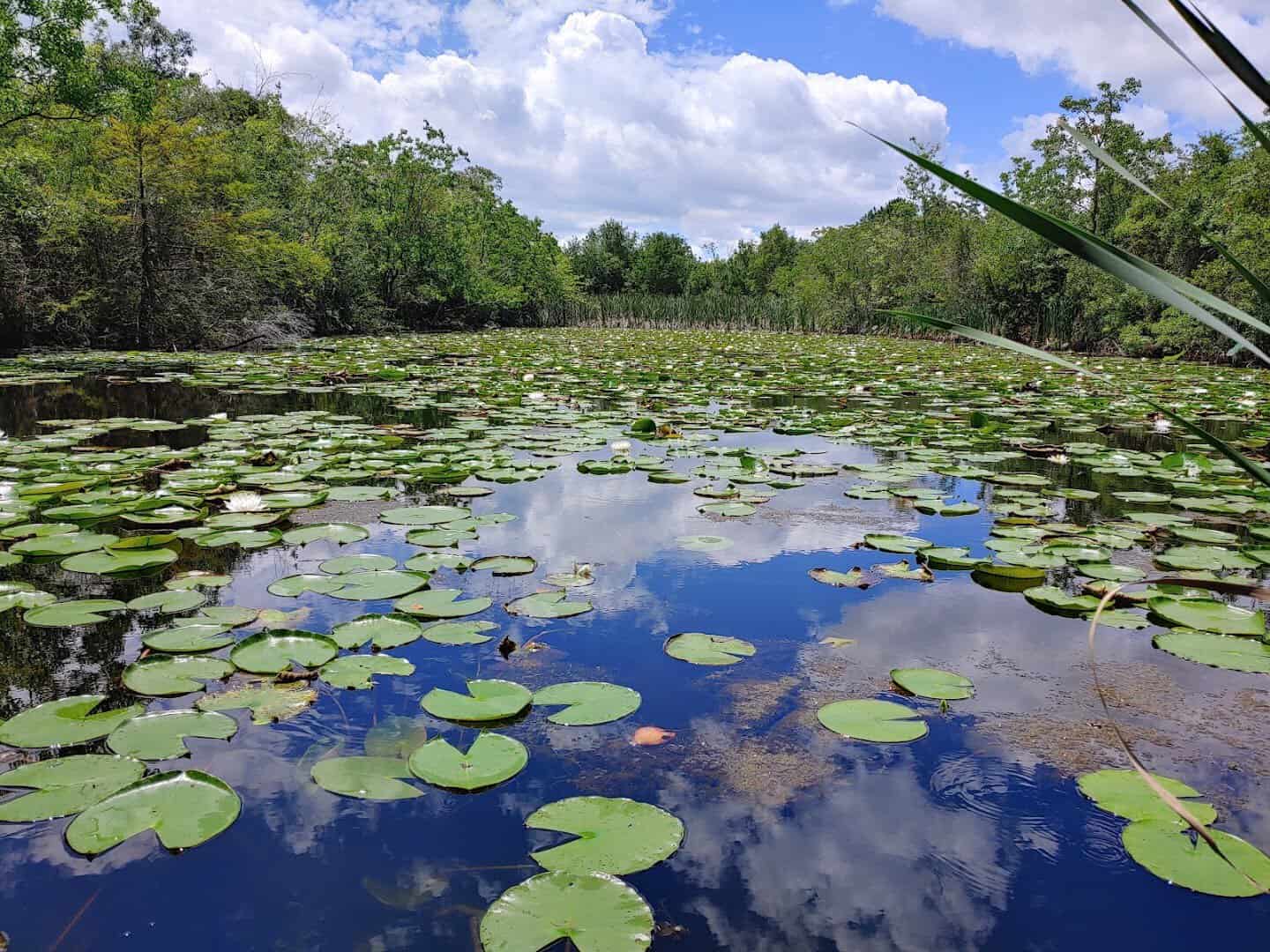
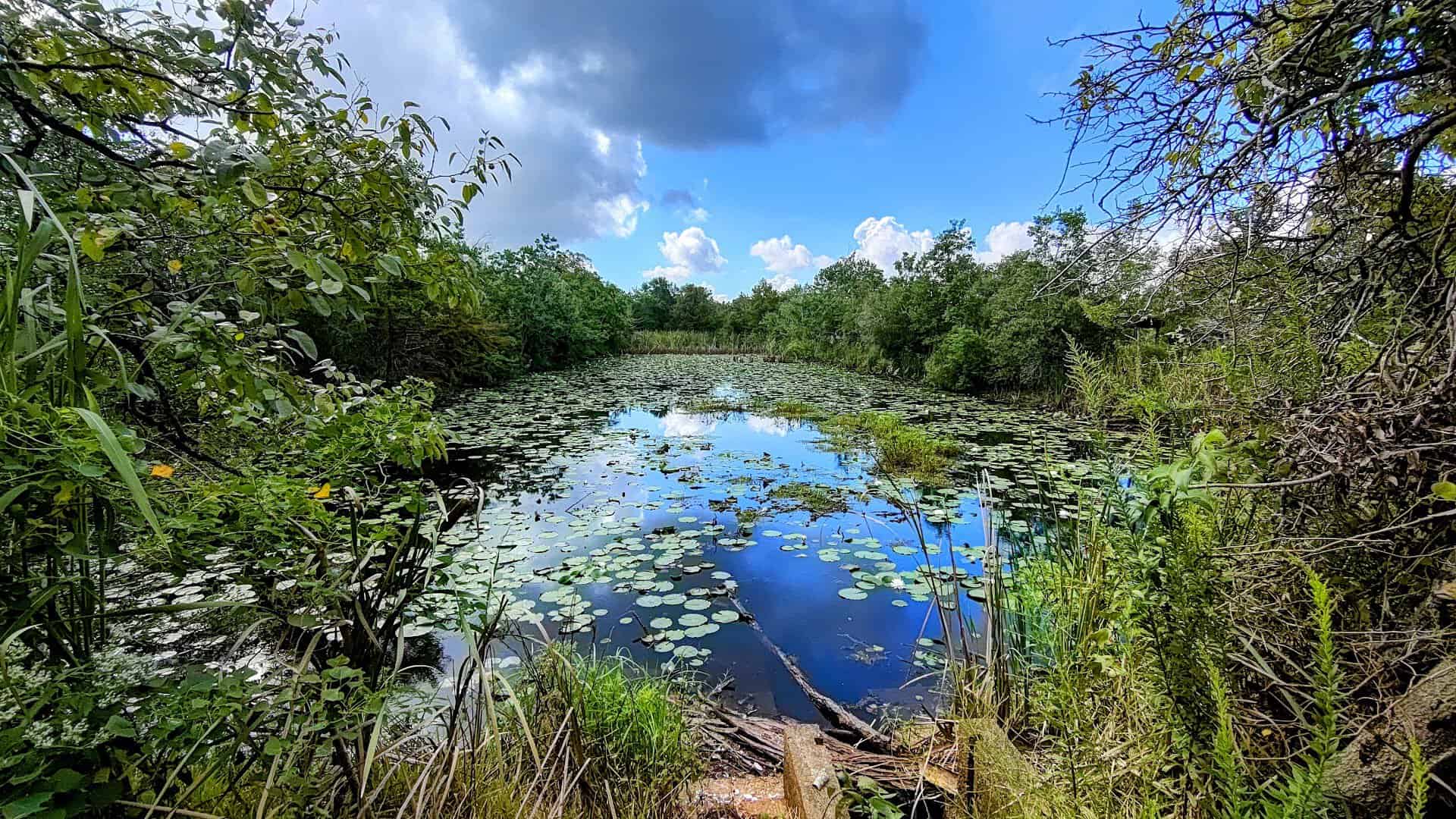
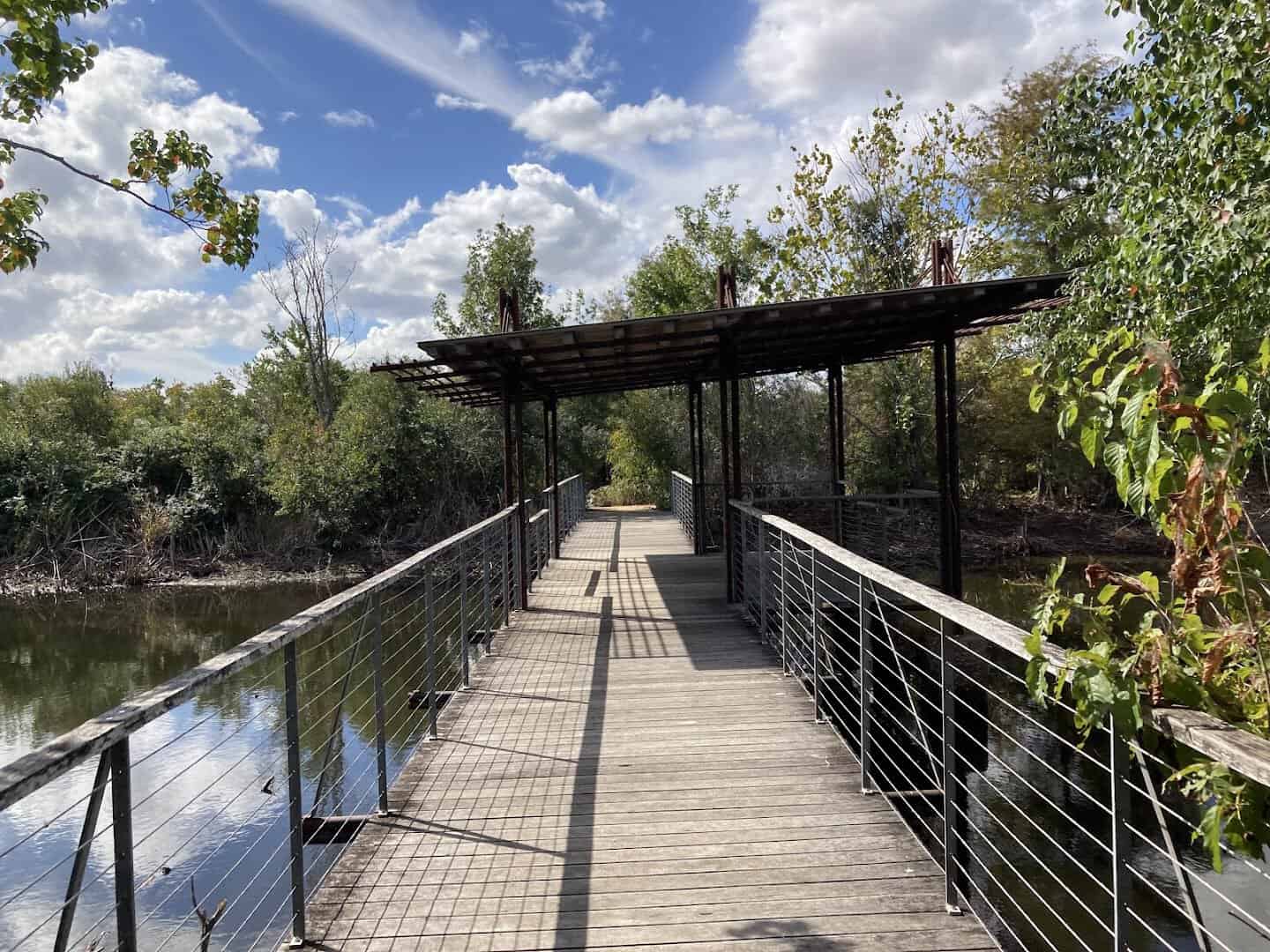
The Pond Loop Trail threads past 28 former hatchery ponds, now reclaimed by marsh and prairie grass. It is a gentle, flat walk that turns a fishing trip into a proper morning outdoors, butterflies and wildflowers included.
Walking it, you would never guess these ponds once raised fish by the truckload. Nature has quietly moved back in, and the tallgrass prairie here is some of the last of its kind anywhere near Houston.
Stop by the Wildscape demonstration garden while you are there. It shows how to plant a Houston backyard for pollinators and native birds, and it is a quiet reminder that the whole park is a lesson in how land heals when you let it.
From War Effort to Wild Refuge
The lake you are fishing was never meant to be a park at all. The federal government built the reservoir on Carpenter’s Bayou back in 1942, during World War II, to supply water to the booming war industries along the Houston Ship Channel.
Texas Parks and Wildlife acquired the reservoir in 1952 with a triple purpose. It was to be a refuge for migratory waterfowl, a public fishing lake, and a fish hatchery all at once, and it opened to the public in 1955 as the Sheldon Wildlife Management Area.
The hatchery ran until 1975. When it finally closed, the land was largely left alone, and it did what wild land does. The old ponds and cleared ground reverted naturally to forest, marsh, and prairie over the following decades.
By 1984 the site was officially designated a state park. What began as wartime infrastructure is now one of the greenest escapes inside the Houston city limits, and in 2025 it welcomed more than 51,000 visitors through the gate.
The Environmental Learning Center leans into that comeback story. The building was designed with green techniques like solar panels, rainwater collection, and recycled steel, so the place practices the conservation it teaches.
Plan a Smooth, Free Fishing Day
A little planning turns a good trip into a great one. The park is open daily from 8 a.m. to 5 p.m., closing only for Thanksgiving Day and December 24 and 25.
Pro tip: Sheldon frequently fills to capacity, and day-use runs on a free reservation. Book your free day-use slot online or by phone ahead of time so you are not turned away at the gate on a beautiful Saturday morning.
Pack the basics, because there are no boat rentals and no tackle shop on site. Bring your own rods, a small tackle box, bait, sunscreen, water, and a hat, and you are set for the whole day.
There are about two miles of easy trails if you want to stretch the visit beyond the water, all of it flat and family-friendly. Restrooms and accessible facilities make a long morning comfortable for every age in the group.
Whether you are teaching a five-year-old to reel in their first sunfish or you just want a quiet bank to yourself, the price of admission stays exactly the same. Nothing.
How to Get There
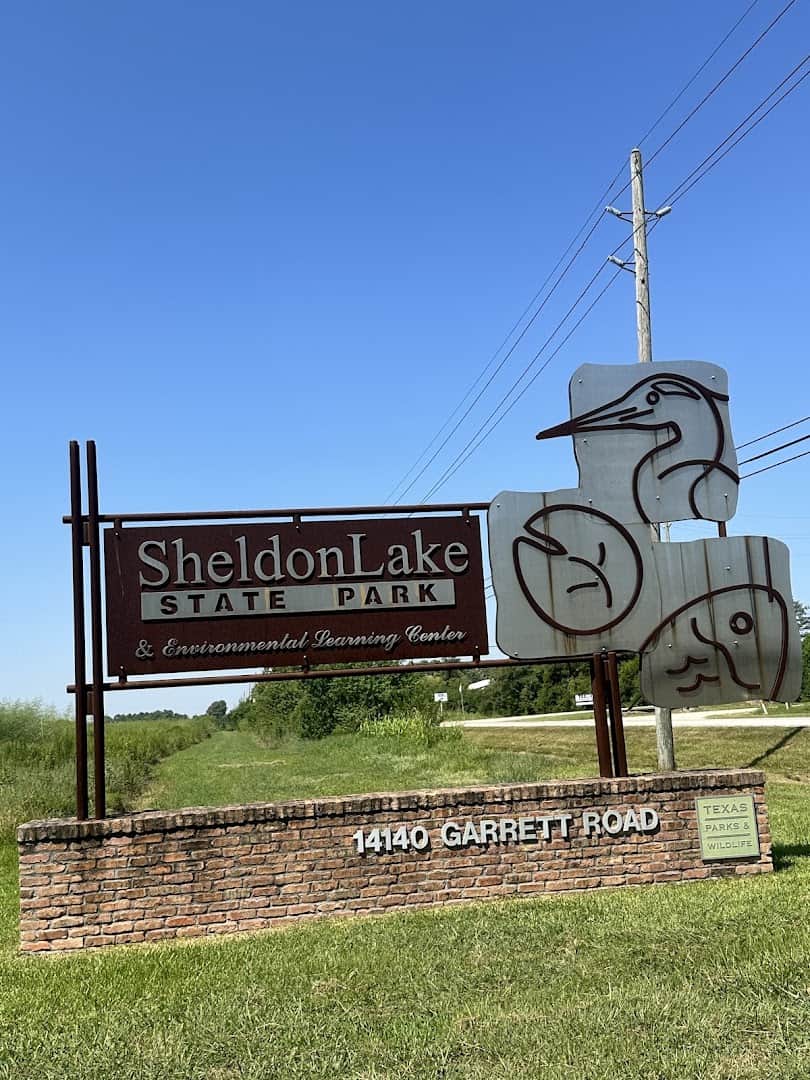
Where: Sheldon Lake State Park & Environmental Learning Center, 14140 Garrett Rd., Houston, TX 77044. Call (281) 456-2800 for current conditions and to reserve a free day-use pass.
It sits in northeast Houston off Garrett Road, an easy drive for anyone in the greater Houston area and well worth the detour if you are passing through on the Gulf Coast.
Grab a Rod and Go
There are not many places left where you can hand a child a fishing rod, walk to the water, and simply begin. No license to buy, no gate fee to pay, no reason to keep putting it off.
Sheldon Lake State Park is one of them, hiding in plain sight at the edge of the fourth-largest city in the country. Load the cooler, dig the rods out of the garage, and go find out why the anglers who know about this place tend to keep it to themselves.
Featured image: John Bartos via Sheldon Lake State Park

Stella Raines
Editor-in-Chief
Stella brings over a decade of storytelling experience to TX Headlines. With roots in West Texas and a love for road trips, she leads the editorial team with an eye for the hidden stories that make Texas unforgettable.
More Stories

These 10 Texas Spots Bloom Into Seas of Bluebonnets Each Spring

This Enchanting Texas Nature Trail Feels Like Hiking Through a Fairytale Forest

This Underrated Texas State Park Gives You a Full Day of Swimming and Hiking for Just $5

This Easy Texas Hike Leads to a Swinging Suspension Bridge Hidden in the Pines
Tags