This Crystal-Clear Texas Lake Is So Blue It Feels Nearly Coastal
I have a theory that everybody in Texas is secretly homesick for the coast. We are a landlocked people at heart, most of us hours from the Gulf.
Something in us lights up the second a stretch of water turns that clean, unbothered blue you usually have to drive all the way to Port Aransas to find.
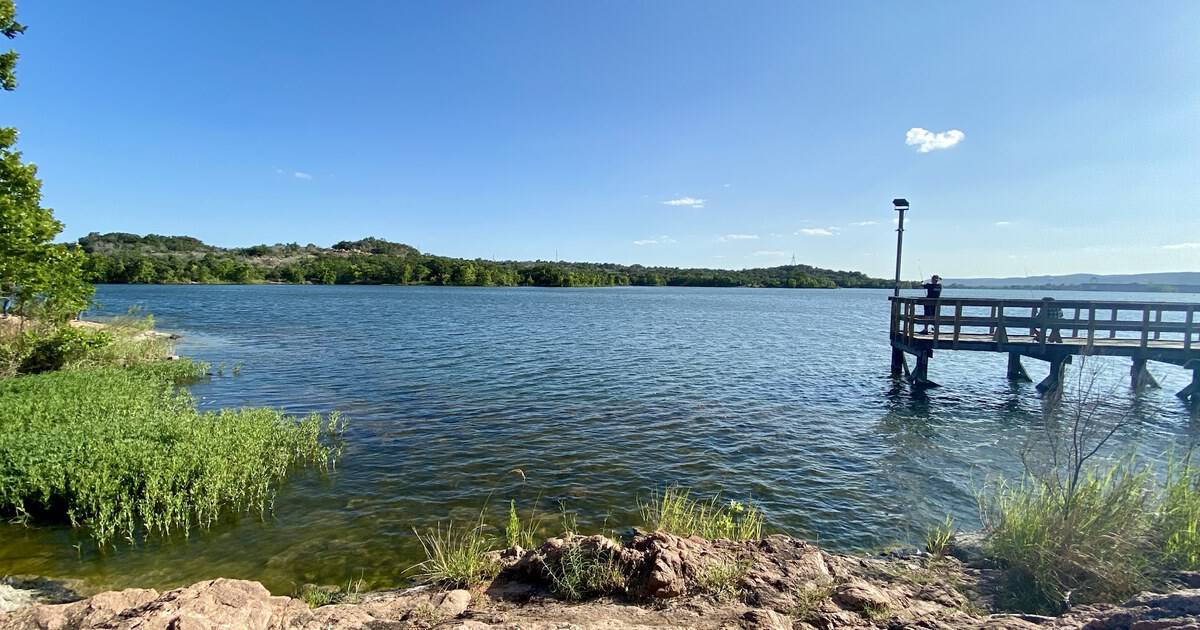
So it feels a little like cheating that you can get that color in the middle of the Hill Country. Inks Lake, tucked into Burnet County about an hour northwest of Austin, holds a shade of blue that makes first-timers do a double take.
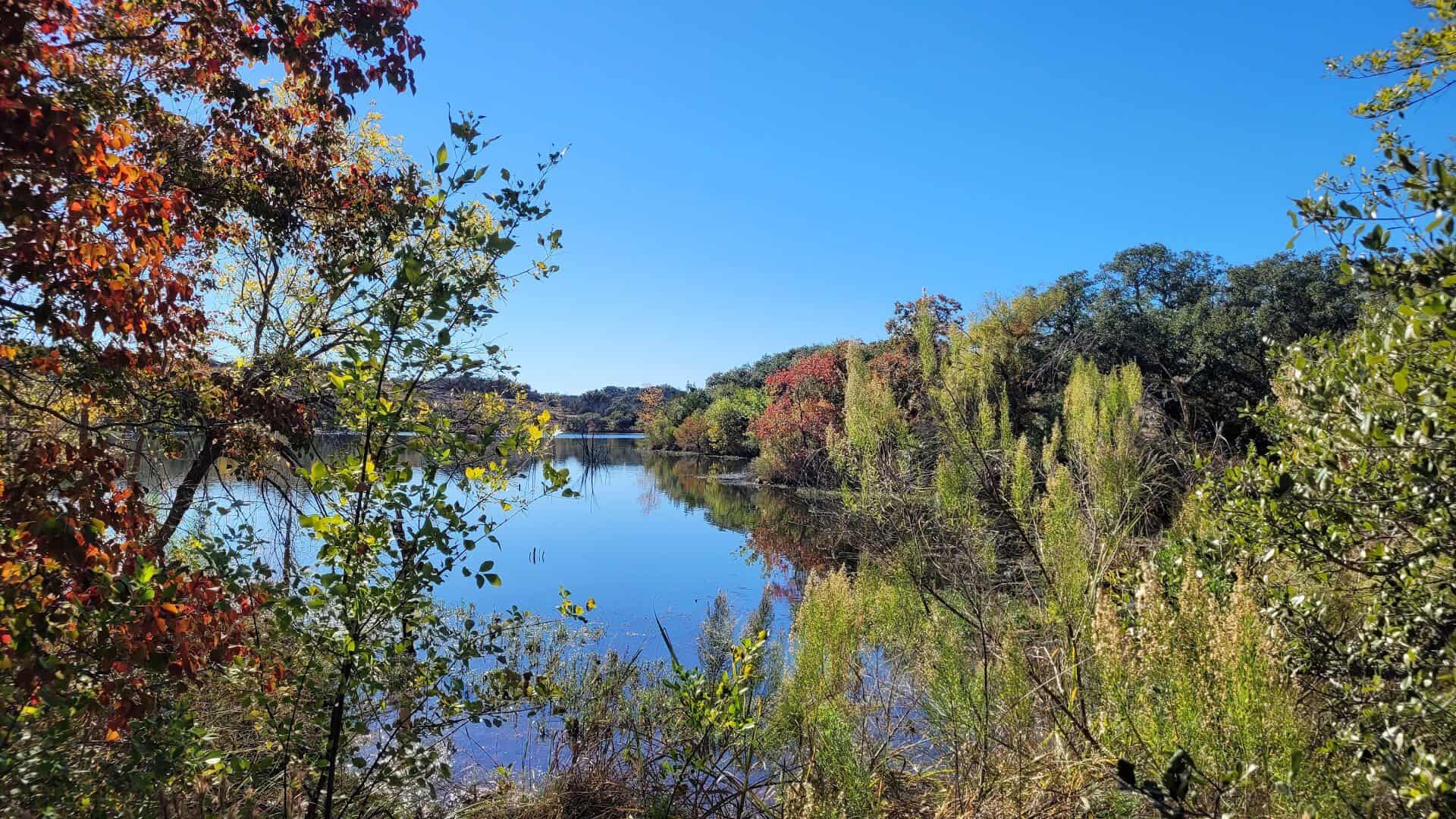
This is the kind of bright, glassy water people expect from a postcard, not from a lake sitting an easy day trip from the capital.
Below, I’ll walk you through why the water looks the way it does, the billion-year-old rock you can climb down to, and everything you need to plan a day or a long weekend here.
The Water That Never Drops
Most Texas reservoirs are moody. They swell after a storm, drop through a dry summer, and leave a bathtub ring of cracked mud where the boat ramp used to reach. Inks does not really do that.
It sits in the Highland Lakes chain as a constant-level lake, a pass-through pool on the Colorado River caught between the far bigger Lake Buchanan upstream and Lake Lyndon B. Johnson down below. Water moves through it steadily instead of pooling and stagnating.
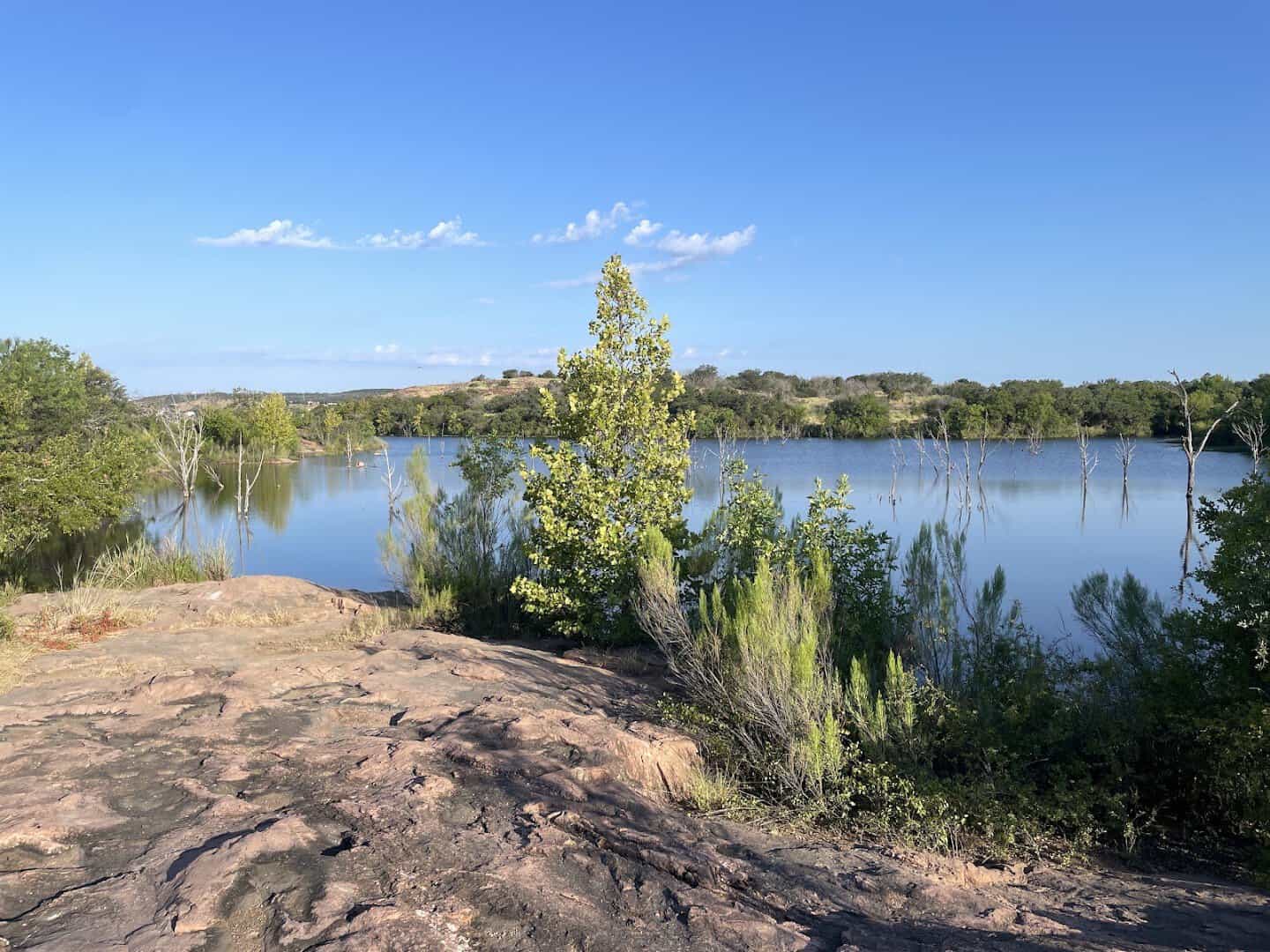
Because of that flow, the surface stays put. The lake holds around 831 acres and roughly seven miles of shoreline, and the level usually shifts only about a foot across a whole year while the reservoirs on either side rise and fall by the dozens.
That stability is the secret to the color. When a lake is not constantly rising and falling, far less sediment gets churned up off the bottom, so the water stays clearer and holds that deep blue.
It helps that the whole basin is floored with ancient granite and gneiss rather than the soft, silty clay that clouds a lot of Texas water. Hard rock does not dissolve into the lake the way loose soil does, and the bottom drops to around sixty feet at its deepest.
The clarity is good enough that scuba divers actually come here to train. They drop into water where they can see far more of what surrounds them than a typical Texas lake allows. Just look at it on a bright afternoon and you understand the reputation.
Devil’s Waterhole and the Oldest Rock You Can Touch
The signature spot on the lake has an unfriendly name and a wildly friendly reputation. Devil’s Waterhole is a narrow cove almost completely ringed by rock, and on a warm day it turns into the happiest place on the whole shoreline.
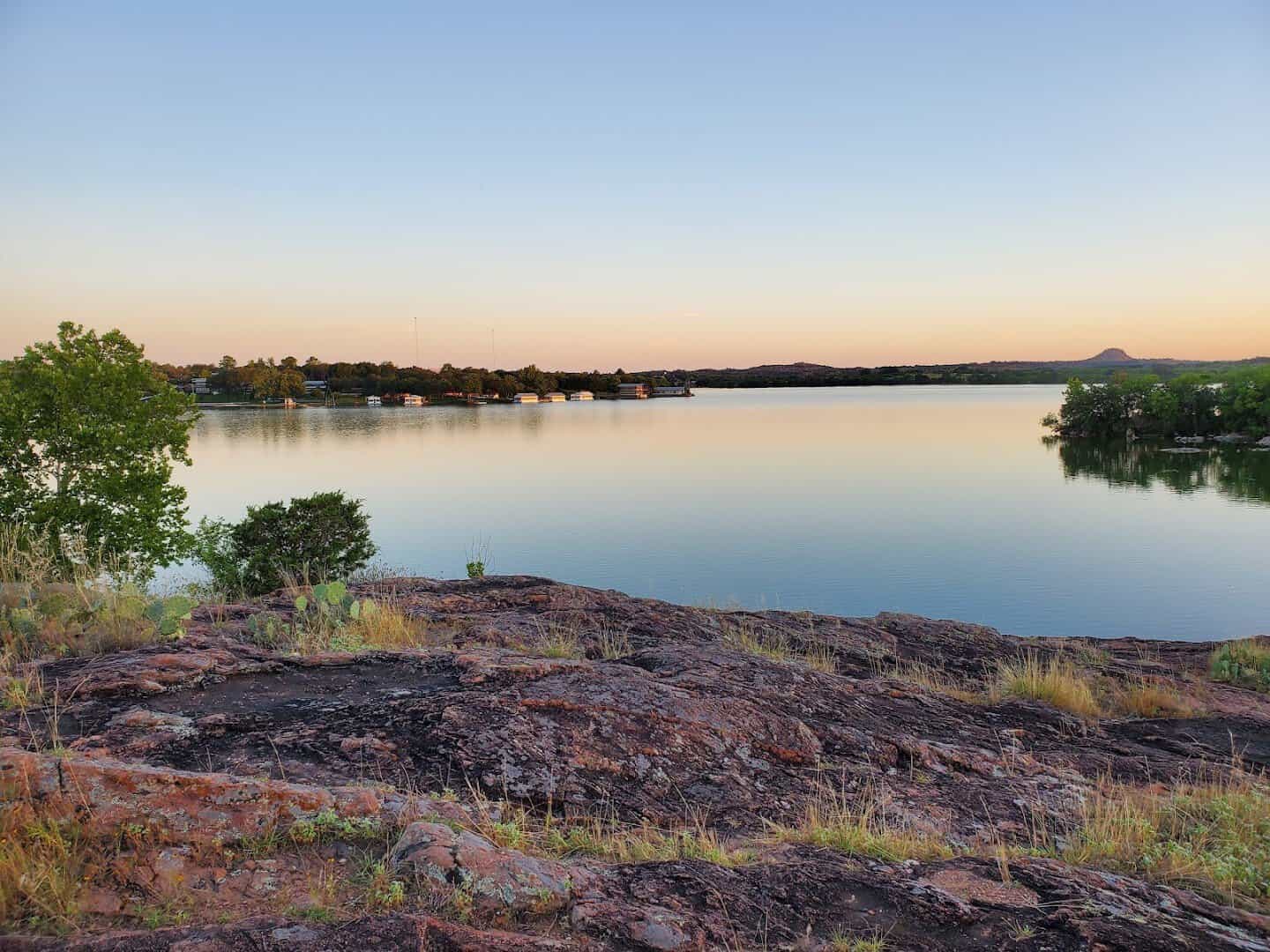
People wade in from the smooth stone ledges, kayakers thread through the little canyon, and the braver crowd finds low rock shelves to jump from into the deep, clear water below. The blue looks almost tropical against the pale and pink stone.
Here is the part that stops me every time. The rock cradling that cove is some of the oldest exposed stone anywhere in Texas. Geologists at the University of Texas call the gneiss here the oldest rock accessible on public land in the state.
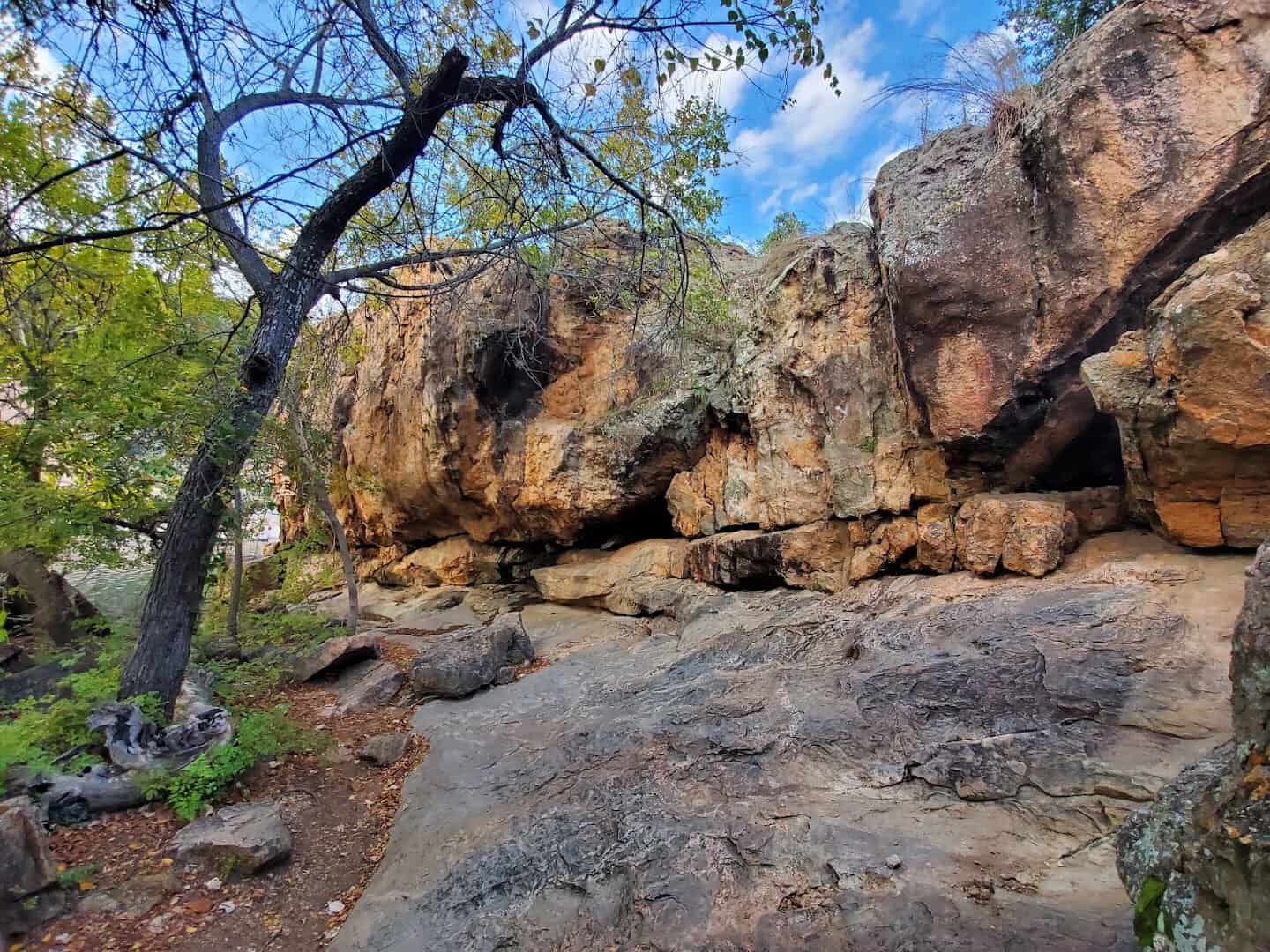
Did you know you can lay your hand on stone that is roughly 1.25 billion years old? The park’s Inks Lake gneiss has been dated at about 1,232 million years, older even than the famous dome at nearby Enchanted Rock.
This is part of the Llano Uplift, a window where some of the most ancient rock in the state pushes up to the surface. Hike up Valley Spring Creek toward its seasonal waterfall and you can spot pale bands running through the stone.
That banding is what geologists call partial melting, where the rock got so blisteringly hot that some minerals liquefied and gathered into ribbons before cooling again. It is a billion-year-old story you can read with your own eyes.
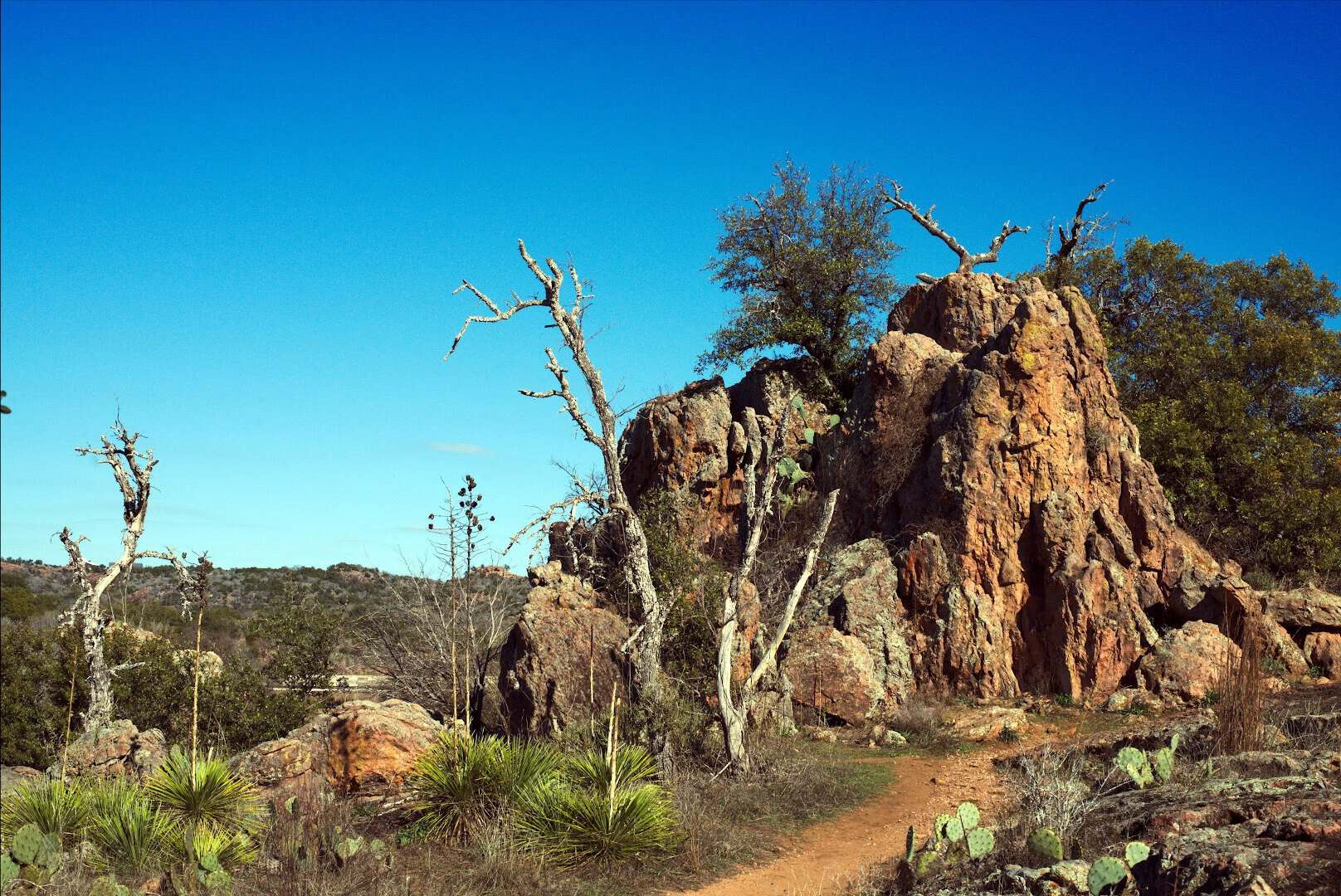
The stone is beautiful even if you never think about its age. Much of it glows a soft pink, streaked and speckled, and against the bright water the whole shoreline reads like something a painter mixed on purpose.
Everybody Gets on the Water
You do not need to own a boat to make the most of this place, which I appreciate. The park rents paddle boats, canoes, kayaks, and stand-up paddleboards right from the shore.
The pricing is simple, around $20 for the first hour and $10 for each hour after, which makes a lazy afternoon on the water an easy call.
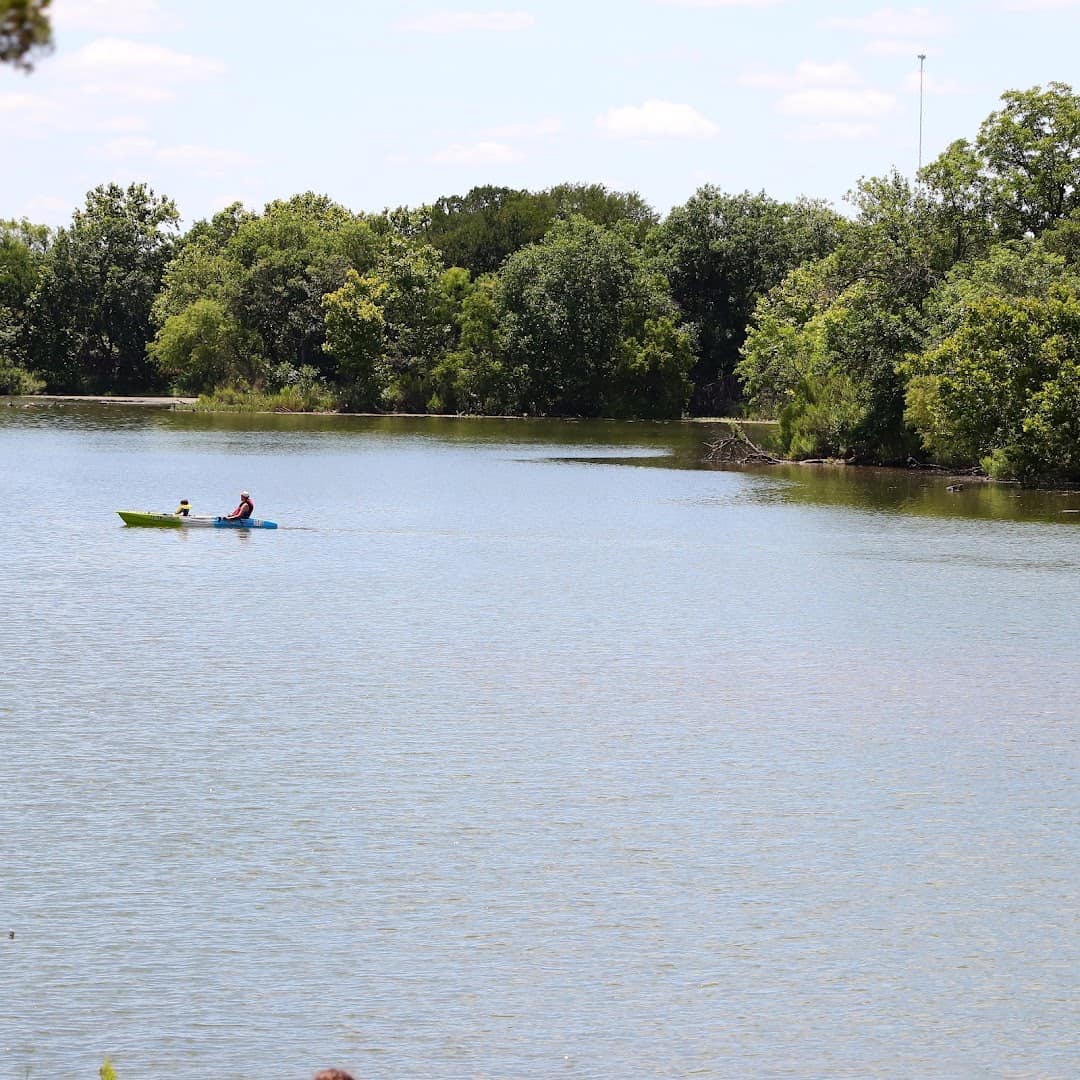
If you do tow your own, there is a boat ramp, and the lake is roomy enough for skiing and tubing while still leaving quiet coves for a slow paddle. Swimmers wade in straight off the rocks and the grassy banks.
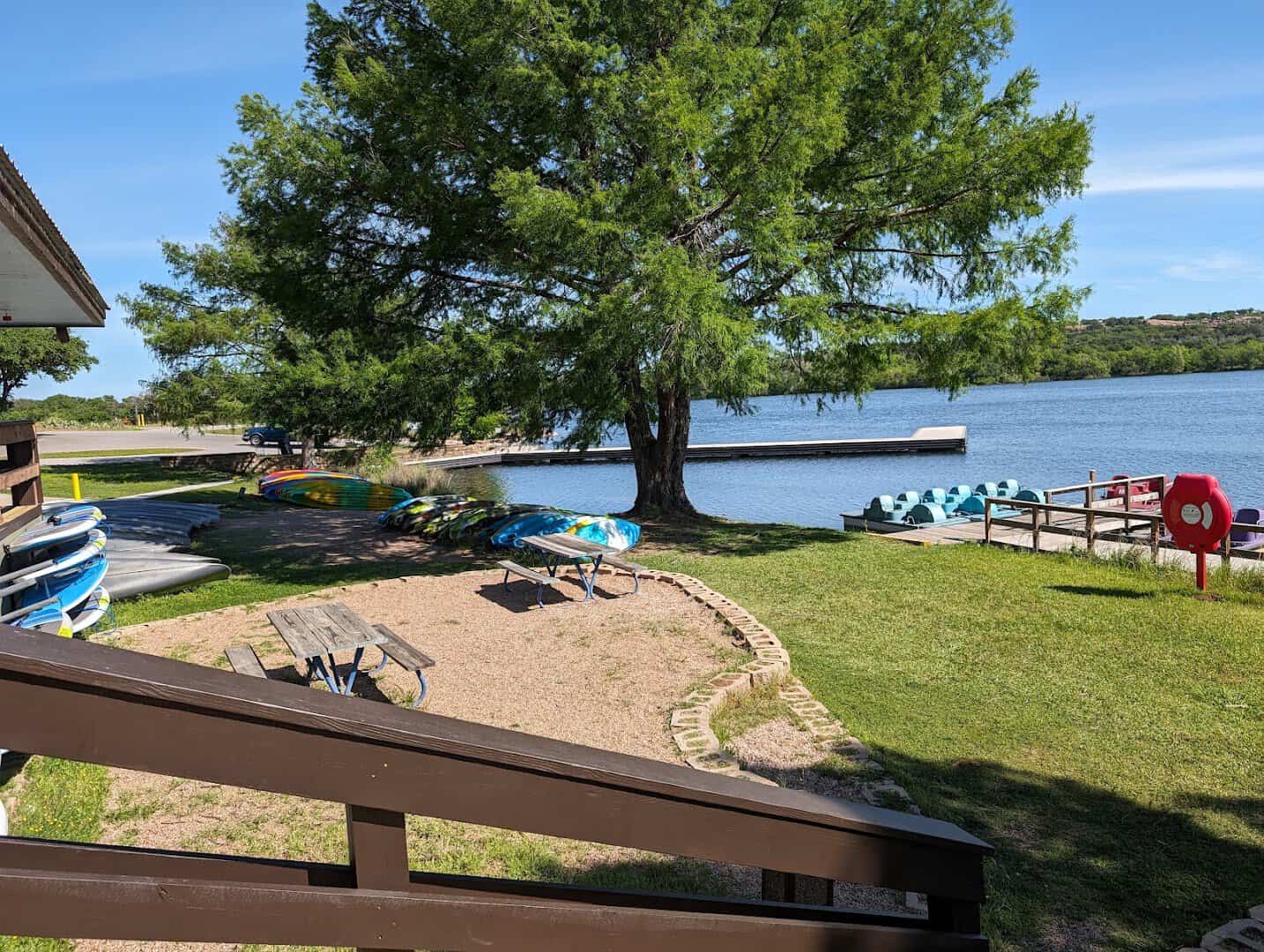
There are no lifeguards, so this is very much a keep-an-eye-on-your-crew situation. Bring the flotation you would want for the kids and you will be glad you did.
A paddleboard is my personal pick for a place like this. Gliding across water this clear, you can watch the granite bottom slide by beneath you and spot fish holding in the deeper pockets, which turns an ordinary loop of the cove into something like a slow-motion snorkel.
My honest advice is to come on a weekday if you can. The water is the star, and it feels twice as blue when you are not sharing the cove with half of Central Texas.
Cast a Line, No License Required
Anglers have it easy here. You can fish from the two piers or the shoreline inside the park without a Texas fishing license, which makes it an easy way to get a kid hooked on the sport for an afternoon.
The lake holds largemouth bass, Guadalupe bass, white bass, crappie, sunfish, and catfish. The park keeps fish-cleaning stations near the water and even lends out tackle, so a spur-of-the-moment fishing trip does not require a single stop at a sporting goods store.
Pro tip: the sunfish keep young kids busy and biting when the bass are not cooperating, and there is no better way to buy yourself twenty quiet minutes on the pier.
Early morning and the last hour before dusk are the sweet spots, when the fish move into the shallows and the light goes gold across the water. Bring a folding chair and let the afternoon go slow.
Trails, Cabins, and Actual Sleep
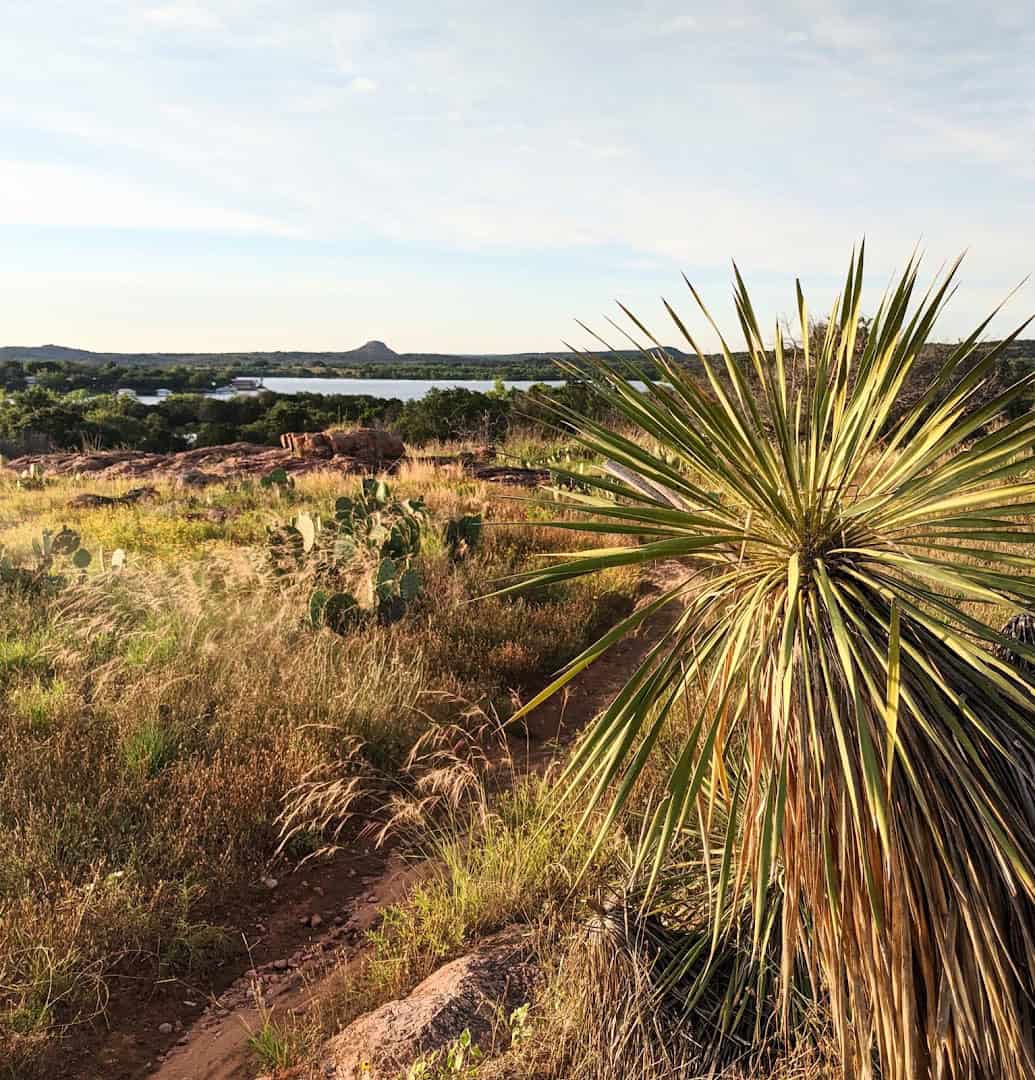
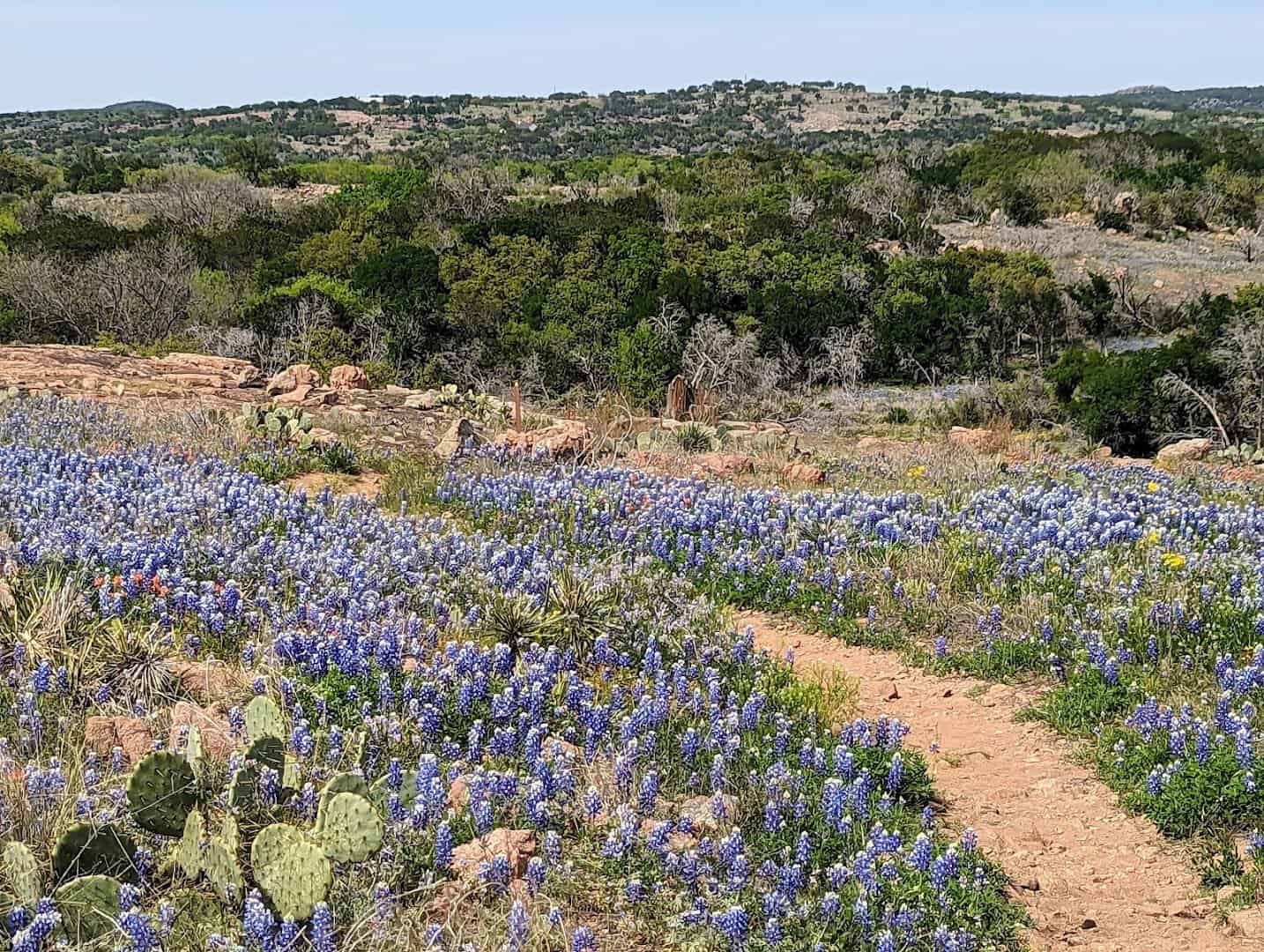
The park wraps around the lake across roughly 1,201 acres, laced with about nine miles of hiking trails that climb over the pink granite outcrops and duck through oak and juniper.
The paths near Devil’s Waterhole and Valley Spring Creek reward you with the best water views, especially in the soft light near sunset.
For a longer stay, there are nearly two hundred campsites, many of them lakeside, plus twenty-two cabins if you would rather not wrestle a tent. Two of the cabins are built to be accessible, and a youth group area and a picnic pavilion round out the options for bigger crews.
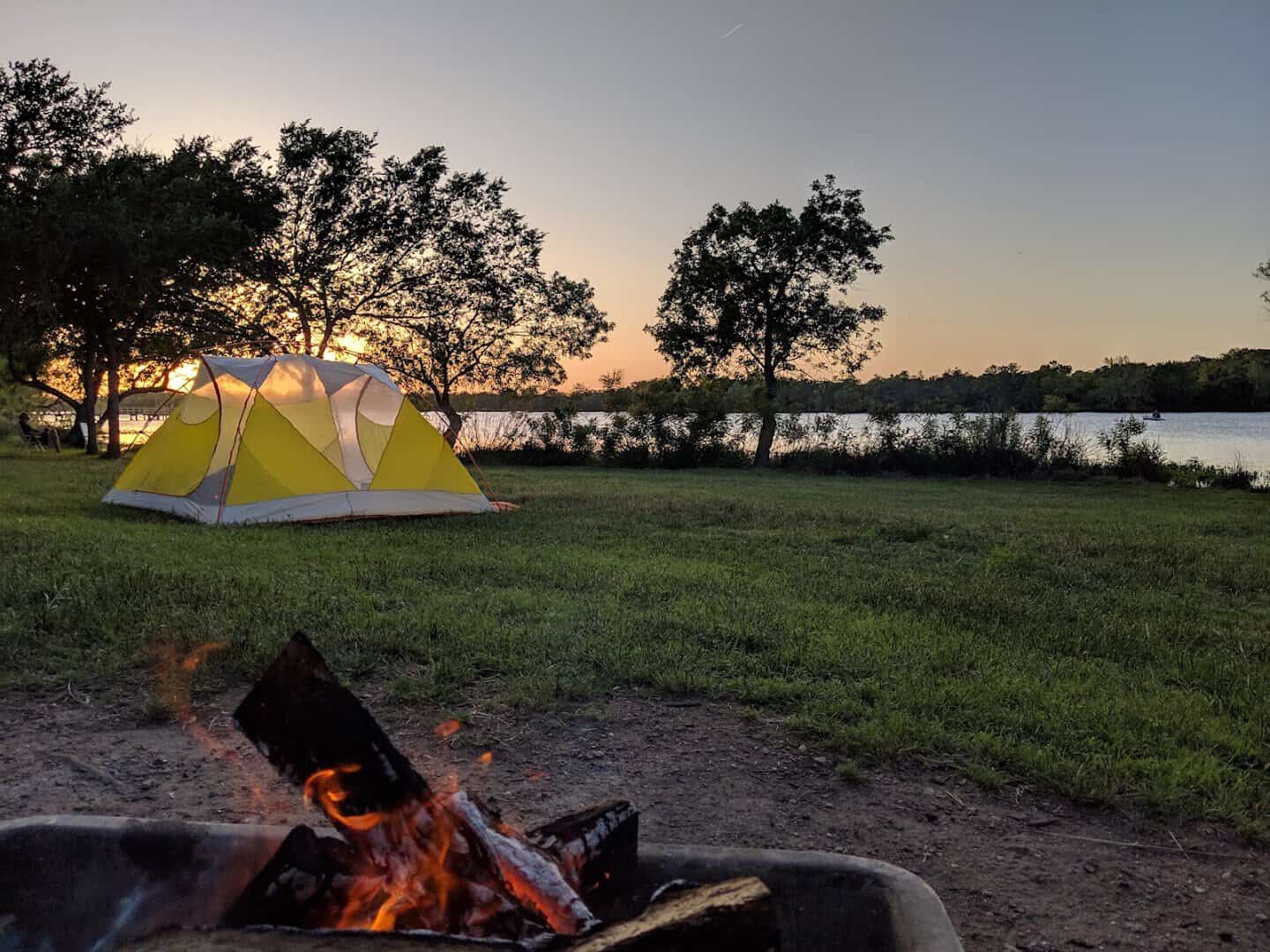
Waking up on this lake is the real reward. The early light lands soft on the water before the boats get going, and a lakeside site means you can roll out of the tent and be swimming in that clear blue before your coffee has even cooled.
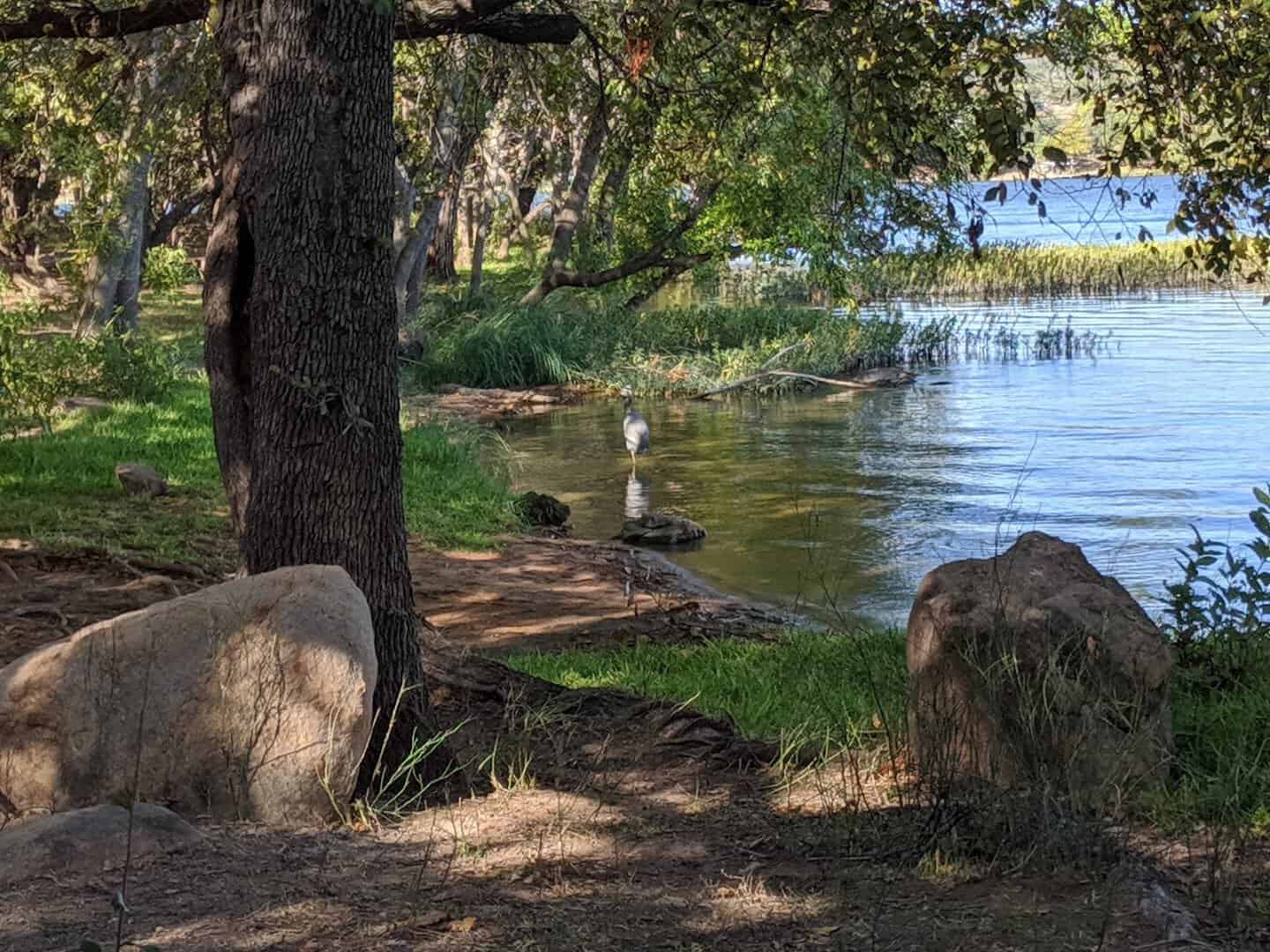
Wildlife is easy company out here. White-tailed deer drift through the campsites at dawn, armadillos root around the brush, and herons and egrets work the shallows while cardinals flash through the trees.
When to Go and What to Pack
Summer is peak season for a reason. The water is warm, the coves are lively, and the whole place hums. If you want that clean blue mostly to yourself, aim for late spring or early fall, when the weather is still swim-friendly but the crowds have thinned out.
Because so much of the shoreline is bare rock, water shoes earn their keep here more than at most lakes. The granite gets hot and slick, and you will want sure footing for the ledges around Devil’s Waterhole. Pack sun cover too, since shade near the water is patchy.
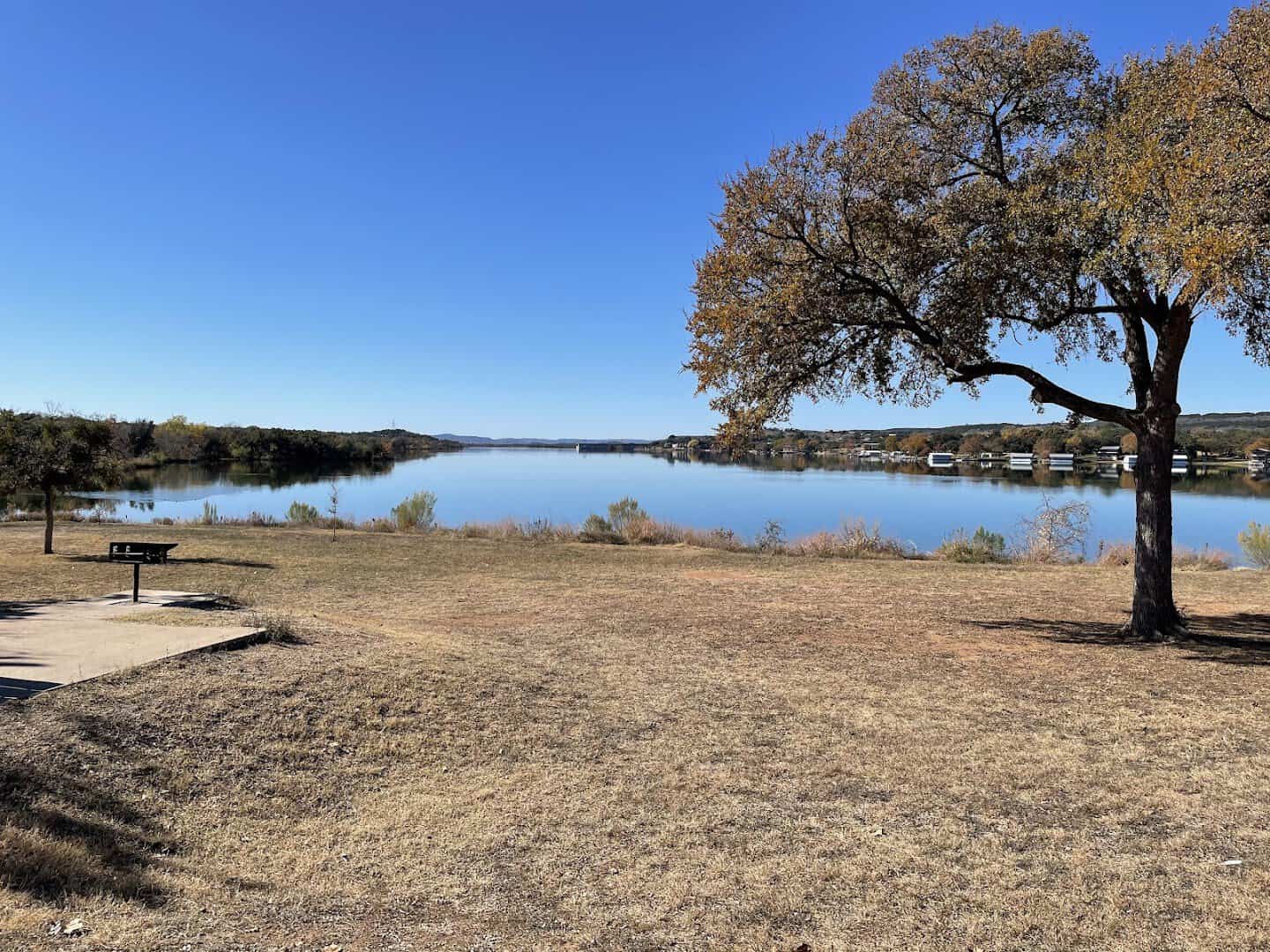
Reservations are your friend, especially for cabins and lakeside campsites on a summer weekend. Both book out well ahead, and rolling in on a Saturday hoping for a spot is a good way to end up somewhere else.
A Brief History of a Lake With a Name
Inks Lake did not exist until engineers made it. In the 1930s, the Lower Colorado River Authority set out to tame and harness the Colorado River, and Roy B. Inks Dam was the piece that created this pool. Crews began the dam in 1936 and finished it in 1938.
The lake carries the name of Roy B. Inks, an early member of the LCRA board of directors and a Llano civic leader whose name got attached to the water his agency’s work brought into being.
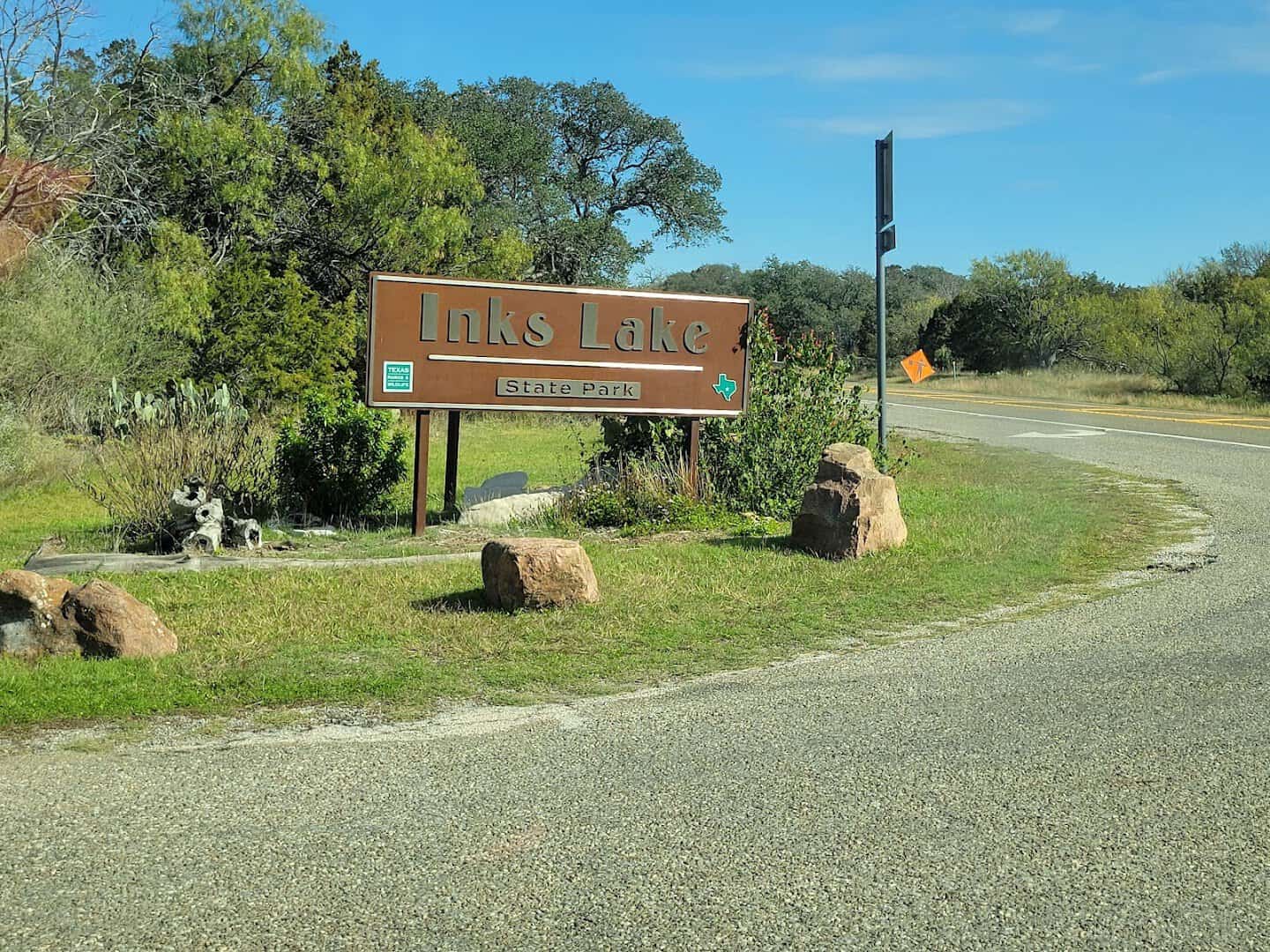
The park came a little later and a little harder. The Civilian Conservation Corps, fresh off building nearby Longhorn Cavern, started shaping roads, culverts, and a boathouse here in the 1930s and early 1940s.
Funding ran dry in 1942 and the work stalled. The State Parks Board finally finished the job, and Inks Lake State Park opened to the public in 1950.
The dam did its job and then some. It generates hydroelectric power, steadies the river, and along the way it created one of the prettiest bodies of water in Central Texas almost as a side effect.
These days the park draws serious crowds, welcoming well over two hundred thousand visitors in a single recent year, which tells you the secret got out a long time ago.
How to Get There
Inks Lake State Park sits about an hour northwest of Austin and a short hop from both Burnet and Marble Falls, so it pairs neatly with a Hill Country weekend.
Where: 3480 Park Road 4 West, Burnet, TX 78611
The park is open daily from 6 a.m. to 10 p.m. Day-use entry runs about $7 for adults, while children twelve and under get in free, so a family day out here stays gentle on the wallet.
The boat rentals and park store keep their own daytime hours, so plan a paddle for the middle of the day. Prices and hours drift, so it is worth a quick check of the official park page before you load the car.
Pack the Cooler and Point the Car West
Some Texas lakes you visit for the boat ramp and the bragging rights. This one you visit for the color, for the billion-year-old rock warming under your feet, and for that first look at water so clean and blue you forget the coast is four hours away.
Fill the cooler, grab the paddles, and go see the bluest water in the Hill Country while the light is still good.
Featured image: Javed Imtiaze Khan via Inks Lake State Park

Stella Raines
Editor-in-Chief
Stella brings over a decade of storytelling experience to TX Headlines. With roots in West Texas and a love for road trips, she leads the editorial team with an eye for the hidden stories that make Texas unforgettable.
More Stories

These 10 Texas Spots Bloom Into Seas of Bluebonnets Each Spring

This Enchanting Texas Nature Trail Feels Like Hiking Through a Fairytale Forest

This Underrated Texas State Park Gives You a Full Day of Swimming and Hiking for Just $5

This Easy Texas Hike Leads to a Swinging Suspension Bridge Hidden in the Pines
Tags