This Remote Texas Canyon Hides Rock Art Older Than the Egyptian Pyramids
There’s a certain kind of traveler who hears “you can only see it on foot, with a guide, at the bottom of a canyon” and immediately starts checking the calendar. I am absolutely that person.
Some places make you earn them. They sit at the end of a long, empty highway, past the last gas station and the last bar of cell signal, and they do not care one bit whether you show up. That is usually exactly where the good stuff is hiding.
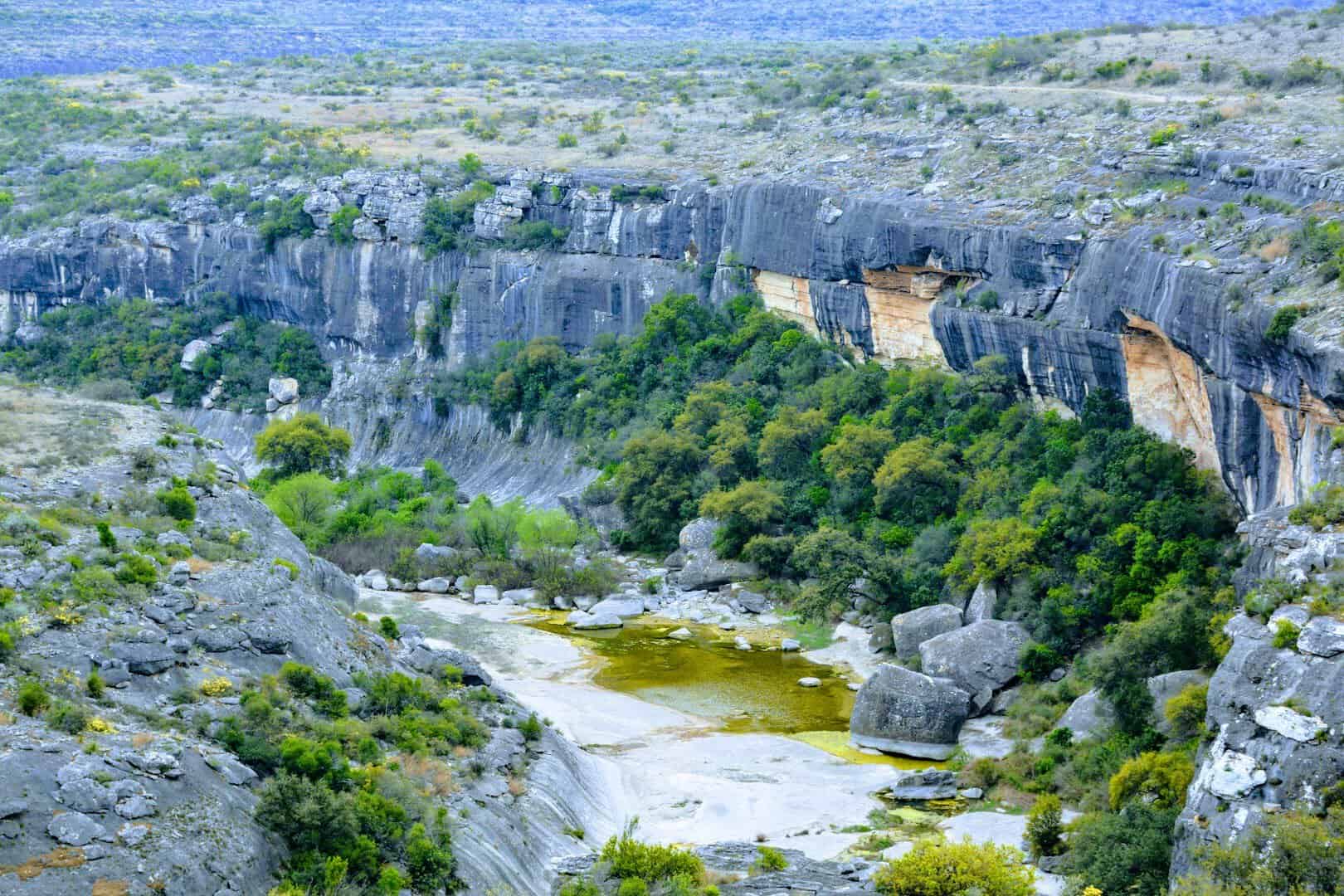
Out on the Texas-Mexico border, where the Chihuahuan Desert drops away into the Rio Grande, one of those places guards ancient painted walls older than almost anything you studied in a history class. It is called Seminole Canyon State Park and Historic Site.
The rock art here was already thousands of years old when the first block of the Great Pyramid was cut. Sit with that for a second.
Below, here’s what makes this remote canyon worth every quiet mile: the paintings themselves, the guided hike that reaches them, the wild desert wrapped around them, and everything you need to plan the drive.
Paintings Older Than the Pyramids
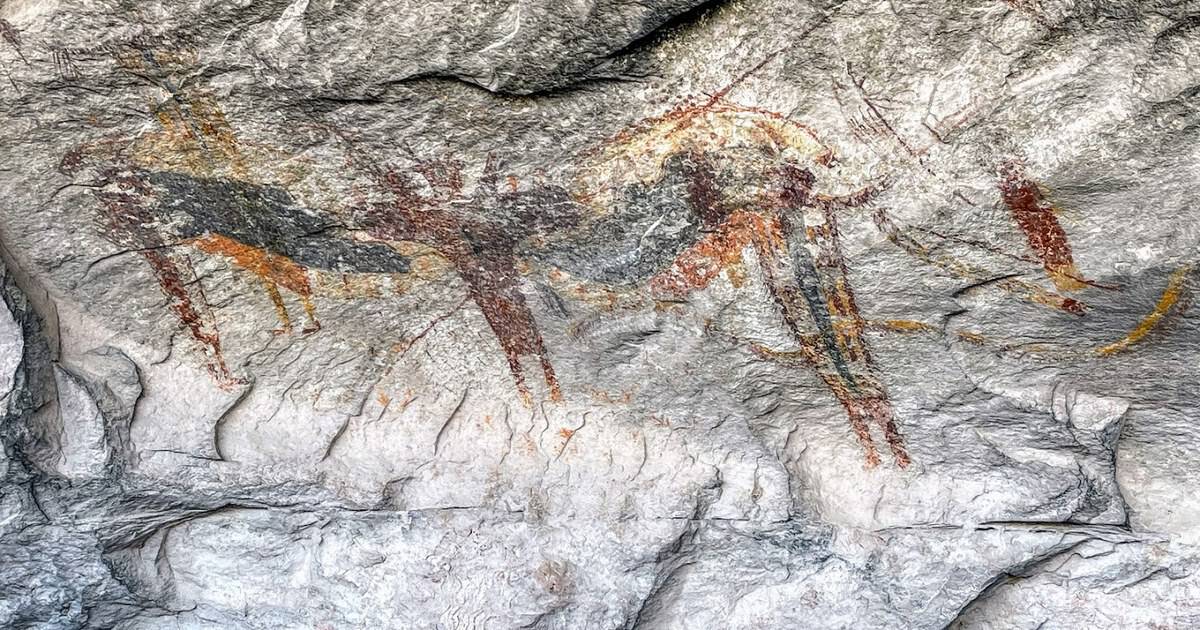
People drive out to the middle of nowhere for one reason above all. Deep in the canyon, tucked under sheltered limestone overhangs, are pictographs painted by people who lived here long before written history ever reached this continent.
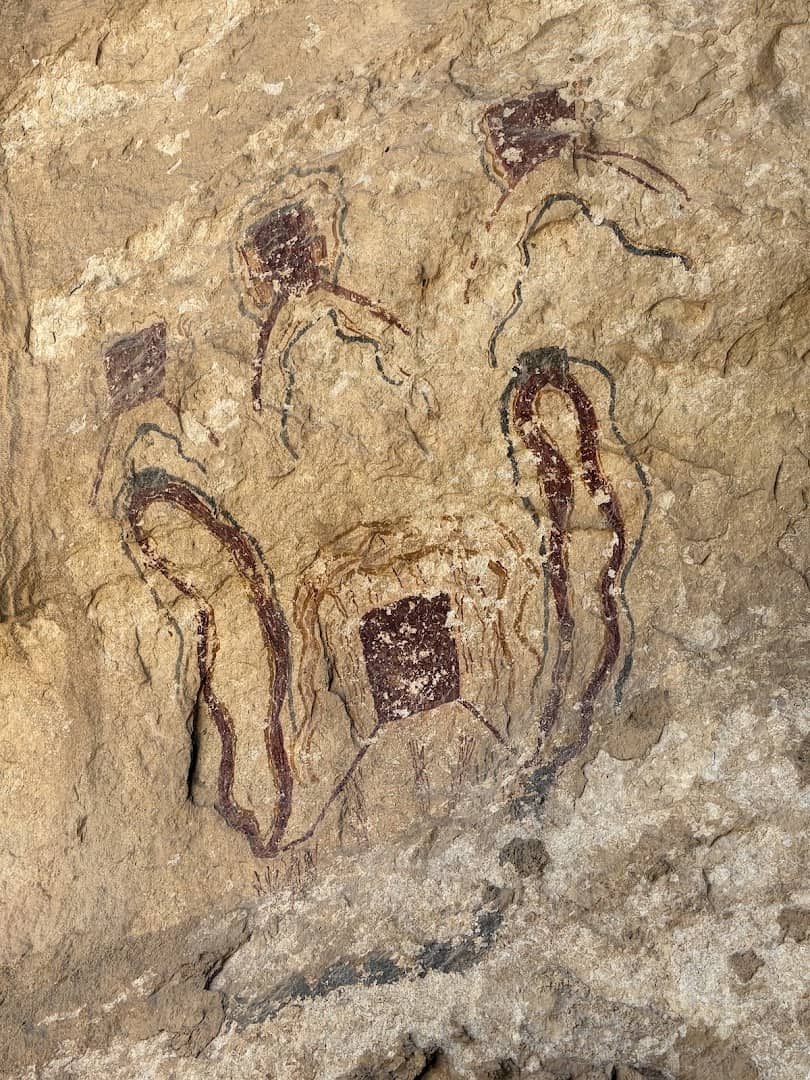
They belong to the Pecos River style, the most elaborate rock art tradition in the whole region. Radiocarbon work has shown the style was painted continuously for more than 4,000 years, which researchers call the longest-enduring narrative art tradition in all of the Americas.
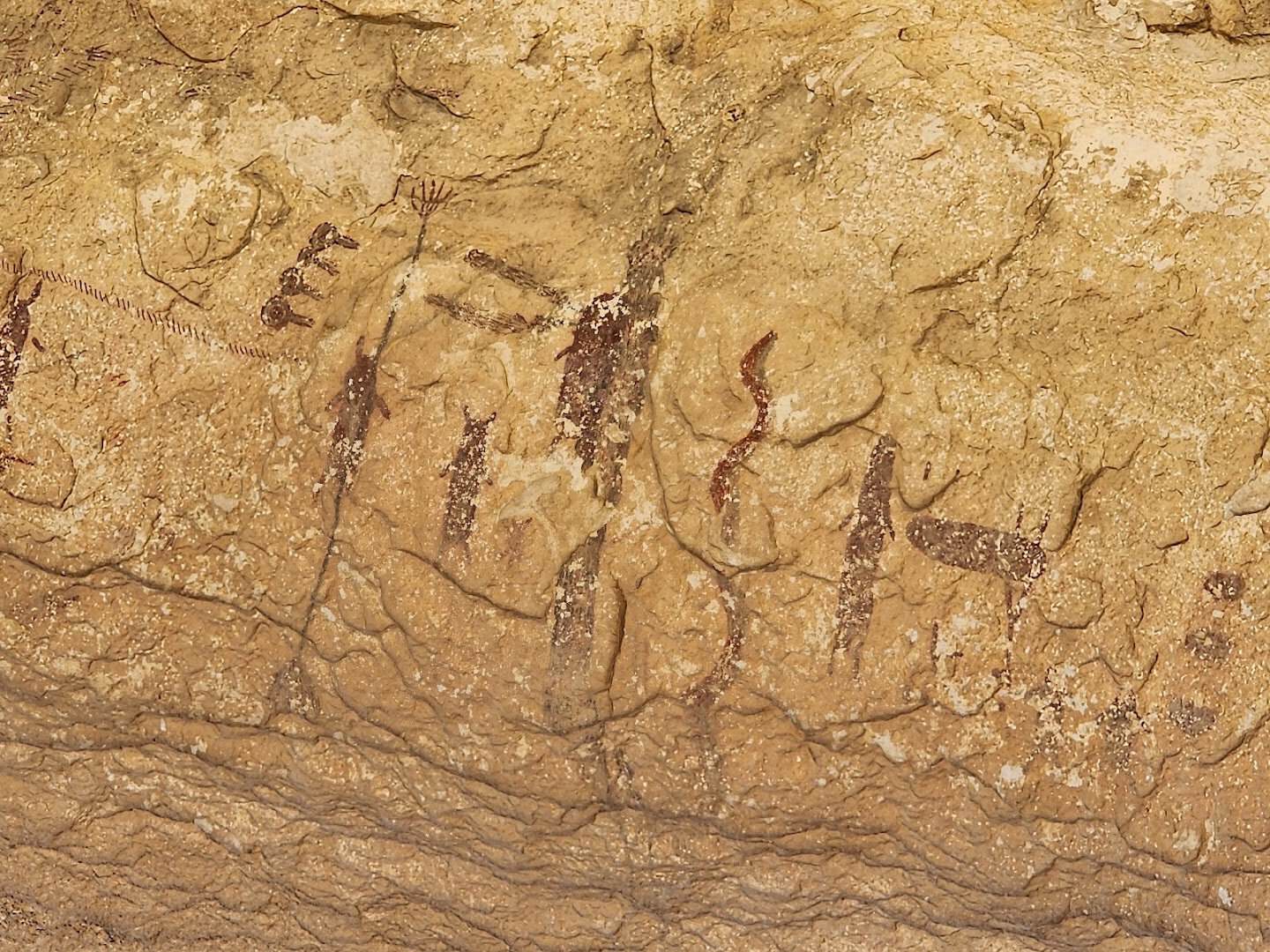
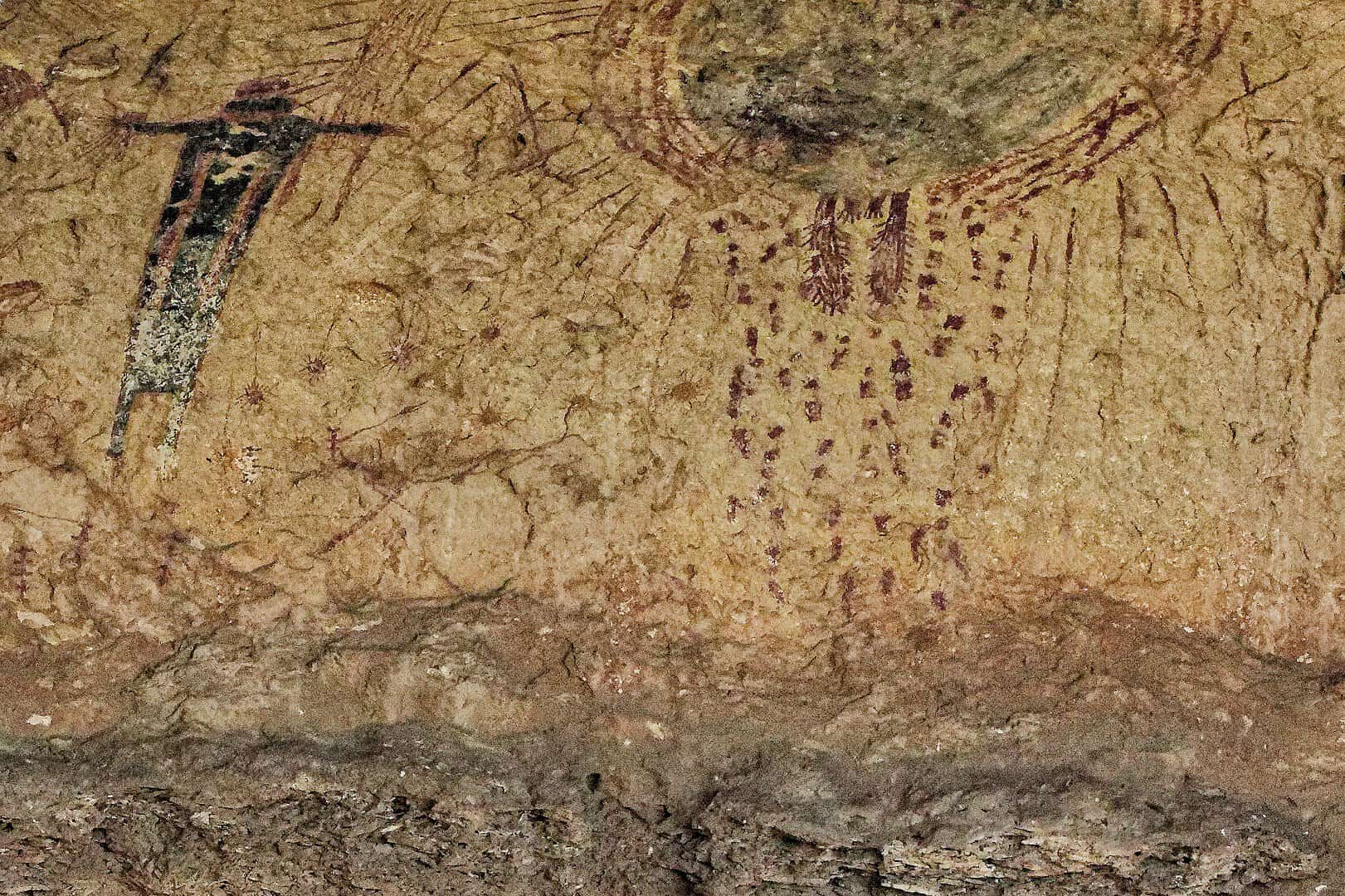
The images are strange and gorgeous. Tall, humanlike figures with animal features stride across the rock beside big cats, deer, and symbols nobody has fully cracked. They were painted in red, black, yellow, and white, and many of them still glow against the pale stone after all this time.
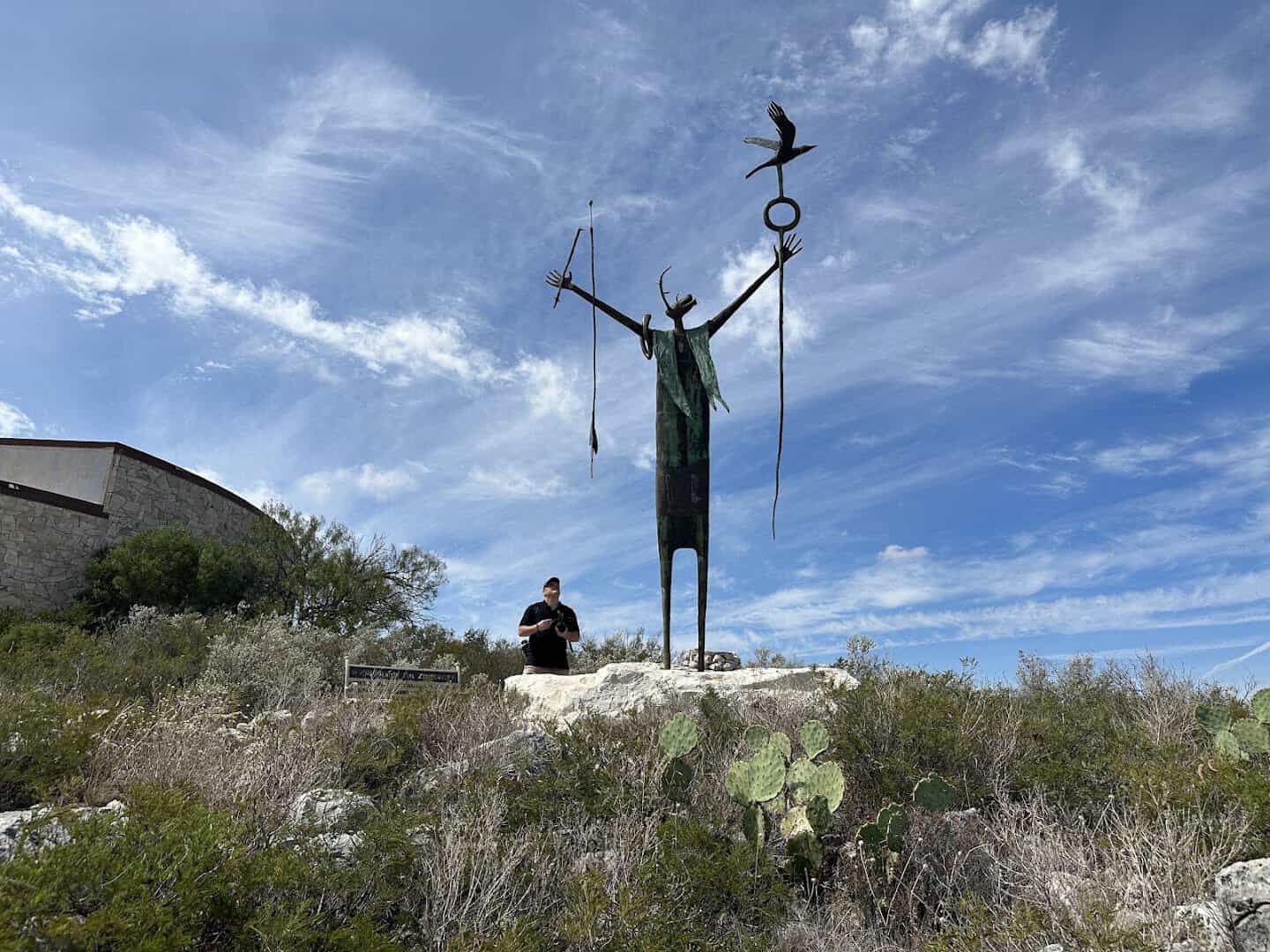
Many of the tallest figures are thought to be shamans, shown with wings, antlers, or weapons and caught mid-transformation between human and animal. Whole panels read like scenes rather than scattered doodles, which is a big part of why researchers are so sure these are true stories.
The scale of it is hard to hold in your head. The Lower Pecos Canyonlands hold more than 350 known pictograph sites within about a 60-mile radius of where the Pecos River meets the Rio Grande.
Experts have called this stretch of desert “the oldest library in North America.” Once you know that, every blank-looking cliff out here starts to feel like a shelf you haven’t opened yet.
The Only Way In Is a Walk Back in Time
Here’s the catch that keeps this canyon special: you cannot just wander down and find the art on your own. The pictograph shelters are reached only on a guided tour, and honestly, that rule is part of the magic.
Park rangers and trained docents lead a roughly 90-minute walk down into the canyon to Fate Bell Shelter, the largest rock shelter in the region and one of the most significant archaeological sites in North America.
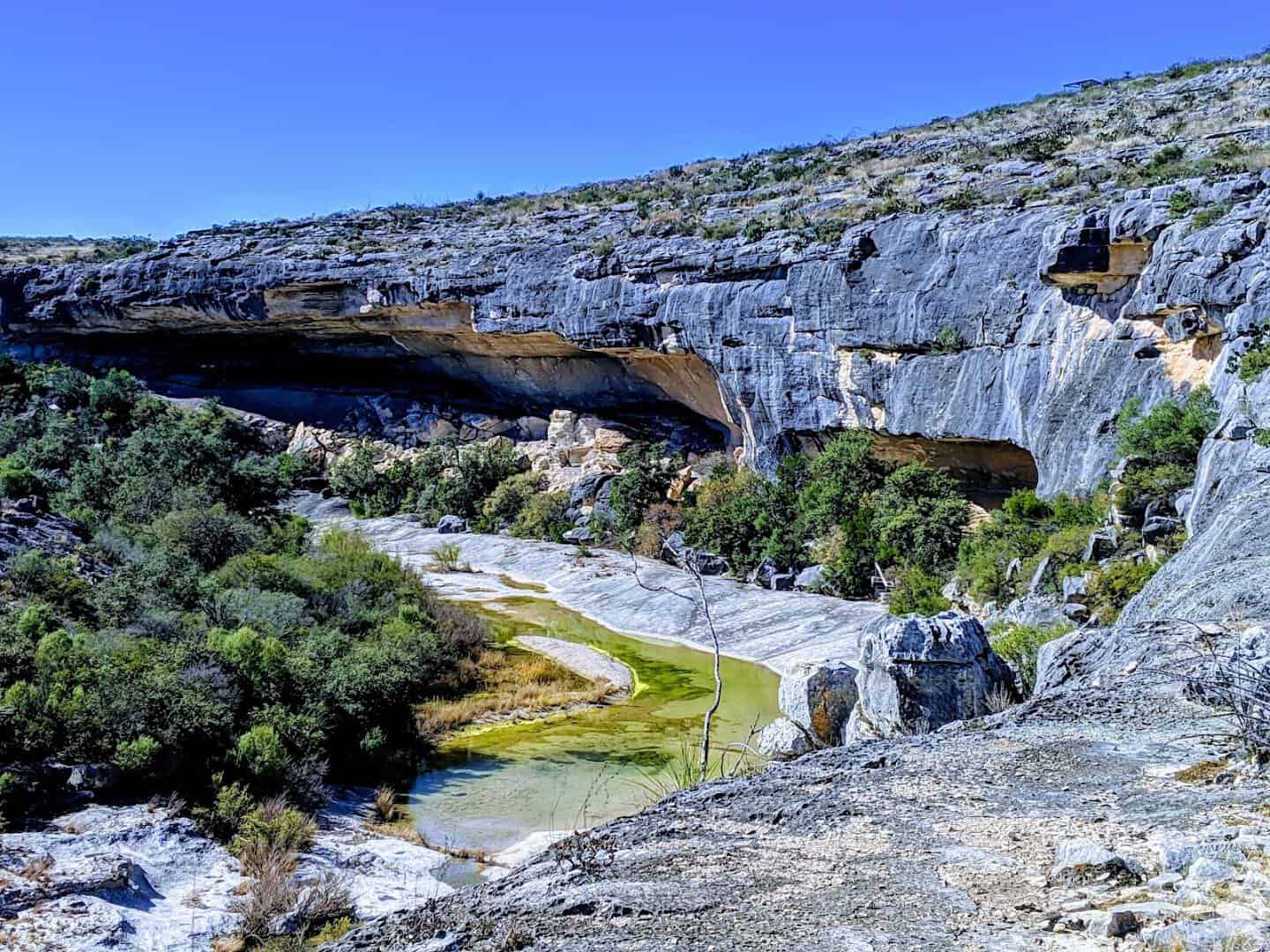
The route drops over the rim on stone steps, so wear real shoes and take the descent slowly. The tour visits two spots close together, Fate Bell Shelter and the Fate Bell Annex, where the paintings sit beneath a massive overhang that has sheltered people for thousands of years.
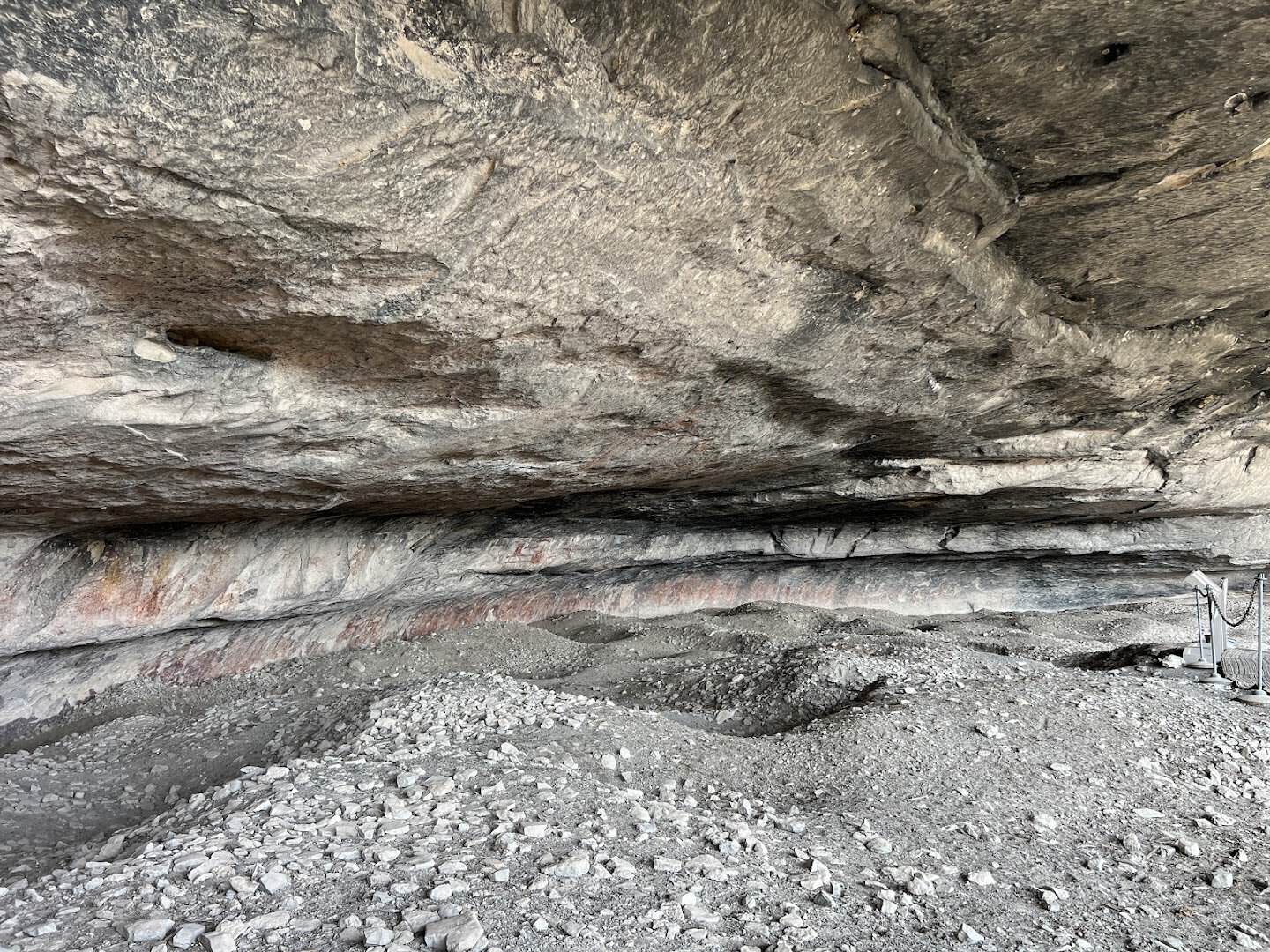
Standing under that ceiling, looking up at figures someone painted forty centuries ago, is the kind of moment that reorders your sense of time. The guides fill in the context, and suddenly the shapes stop looking abstract and start telling you something.
Tours run Wednesday through Sunday, usually at 10 a.m. and 3 p.m. Summer heat trims that back to just the 10 a.m. slot in June, July, and August, when the canyon turns into an oven by afternoon.
Pro tip: book your tour online the moment you know your dates, up to 30 days ahead. The walks are kept small on purpose, and in the cooler months the good spots sell out fast.
A Canyon Carved Long Before Anyone Painted It
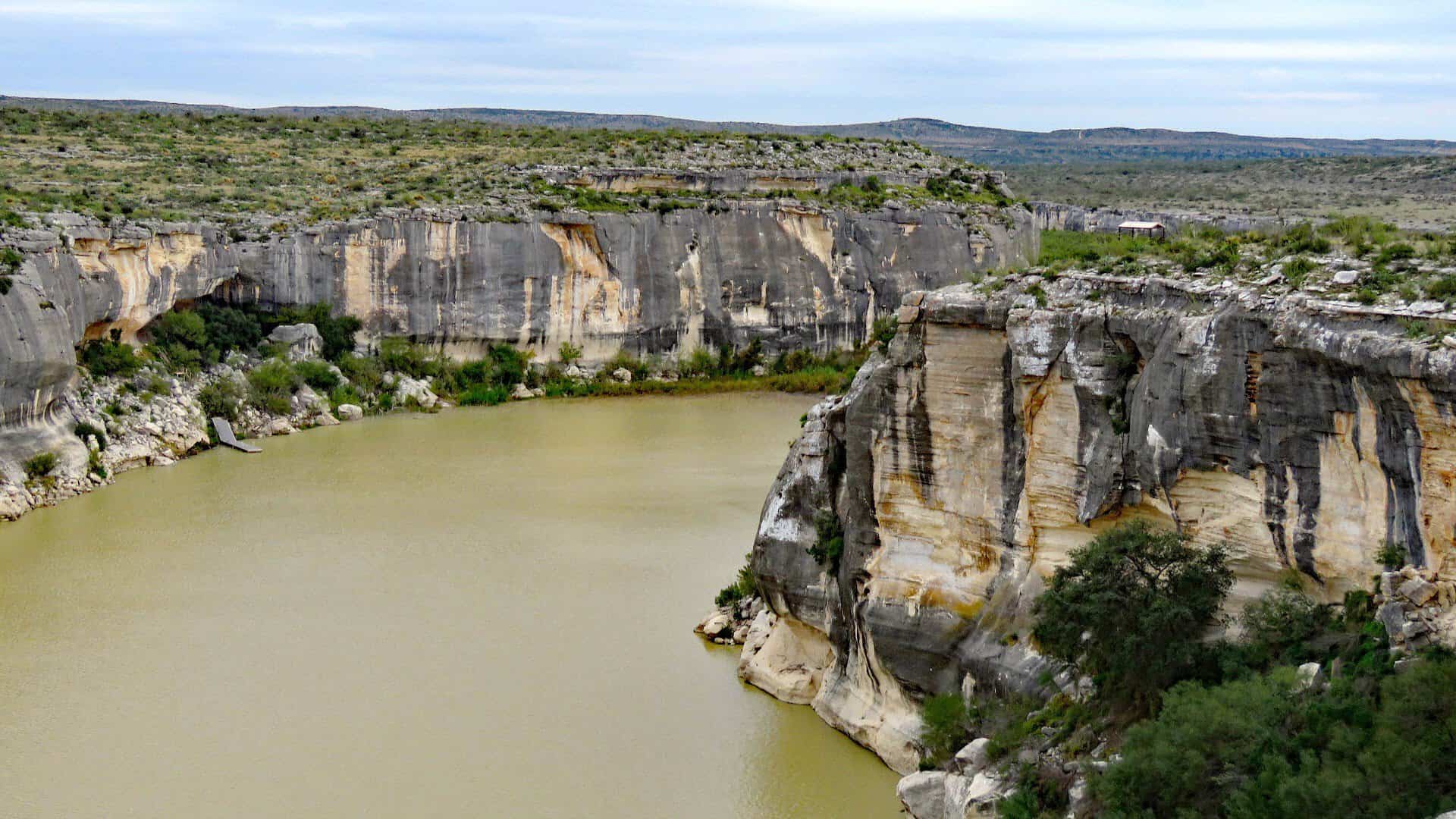
The canyon itself is a headliner, not just a frame for the art. Seasonal floods cut it over millions of years, slicing down through limestone that was laid on the floor of ancient seas up to 100 million years ago, back in the age of the dinosaurs.
Look closely at the walls and you can read the layers, pale bands of clay and lime stacked like pages, a geological record of land and ocean trading places across deep time.
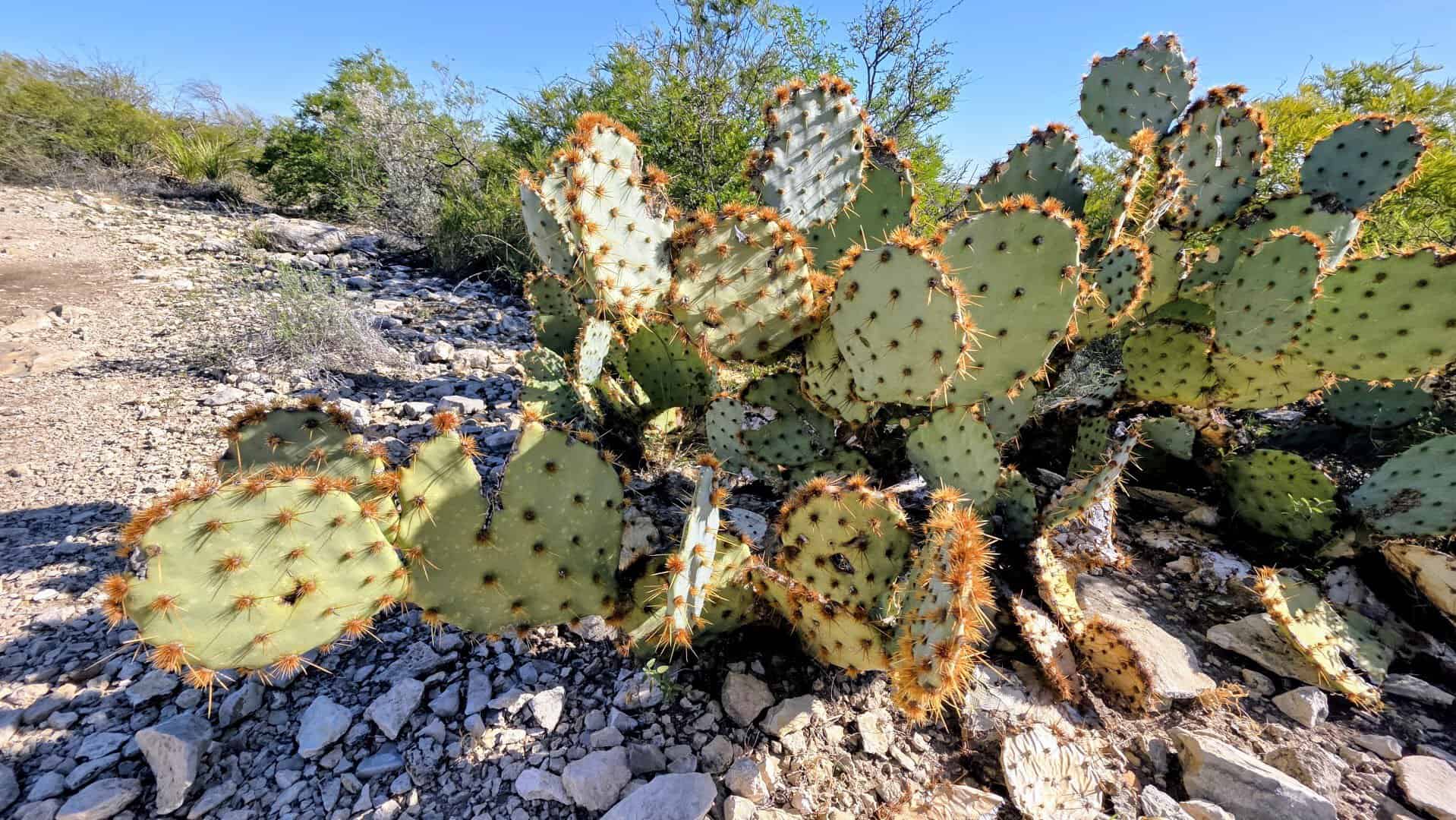
All around, the land is pure Chihuahuan Desert. Sotol, lechuguilla, yucca, prickly pear, and cenizo dot the rocky ground. It is spare and sun-bleached and quietly beautiful, the sort of country where every drop of water clearly counts for something.
The Rio Grande runs just a mile to the south. Several trails lead to overlooks with wide views of the river and Mexico on the far bank, right where the Pecos, the Devils, and the Rio Grande once drew people together for millennia.
The Woman Who Learned to Read the Walls
For a long time, most people saw the pictographs as beautiful mysteries and left it there. Then a muralist named Carolyn Boyd stood in front of them in 1989, and everything changed.
The paintings moved her so much that she went back to school for a PhD in anthropology just to understand them. In 1998 she founded the Shumla Archaeological Research and Education Center in nearby Comstock, a nonprofit built entirely around studying this art.
Boyd was the first to notice striking links between the Pecos River paintings and much later Indigenous traditions, including Aztec codices and the sacred stories of the Huichol people of Mexico. She calls the murals “North America’s first books,” and once she explains it, you can’t unsee the storytelling.
The science behind that claim is solid. Radiocarbon methods refined at Shumla gave these pictographs their standing as the oldest securely dated paintings in North America, and the team has now recorded hundreds of art sites across the canyonlands.
Scholars have been drawn here for nearly a century. The University of Texas ran its first dig at Fate Bell back in 1932, and the debris packed under the shelter floor runs more than ten feet deep with the ordinary leavings of daily life.
Others worked to save the art long before the science caught up. In the 1930s, the artist Forrest Kirkland and his wife Lula spent their vacations painting careful watercolor copies of Texas rock art. They captured panels that have faded since, and researchers still treasure their records today.
Texas opened Seminole Canyon as a state park in 1980, protecting 2,172 acres of this rugged border country. The wider Seminole Canyon Archeological District was added to the National Register of Historic Places even earlier, back in 1971.
So Why Is It Called Seminole Canyon?
Did you know the park’s name has nothing to do with the rock art at all? It honors the Seminole Negro Indian Scouts, who were based at nearby Fort Clark and served with real distinction on this stretch of frontier.
Several of those scouts earned the Medal of Honor. Their story is a big part of why the site carries “Historic” in its full name, standing right alongside the ancient paintings the canyon is famous for.
Miles of Trails Along the Rim
You don’t need a tour ticket to stretch your legs here. The park keeps nearly 10 miles of trails open for self-guided hiking and mountain biking along the canyon rim, all of it free to explore.
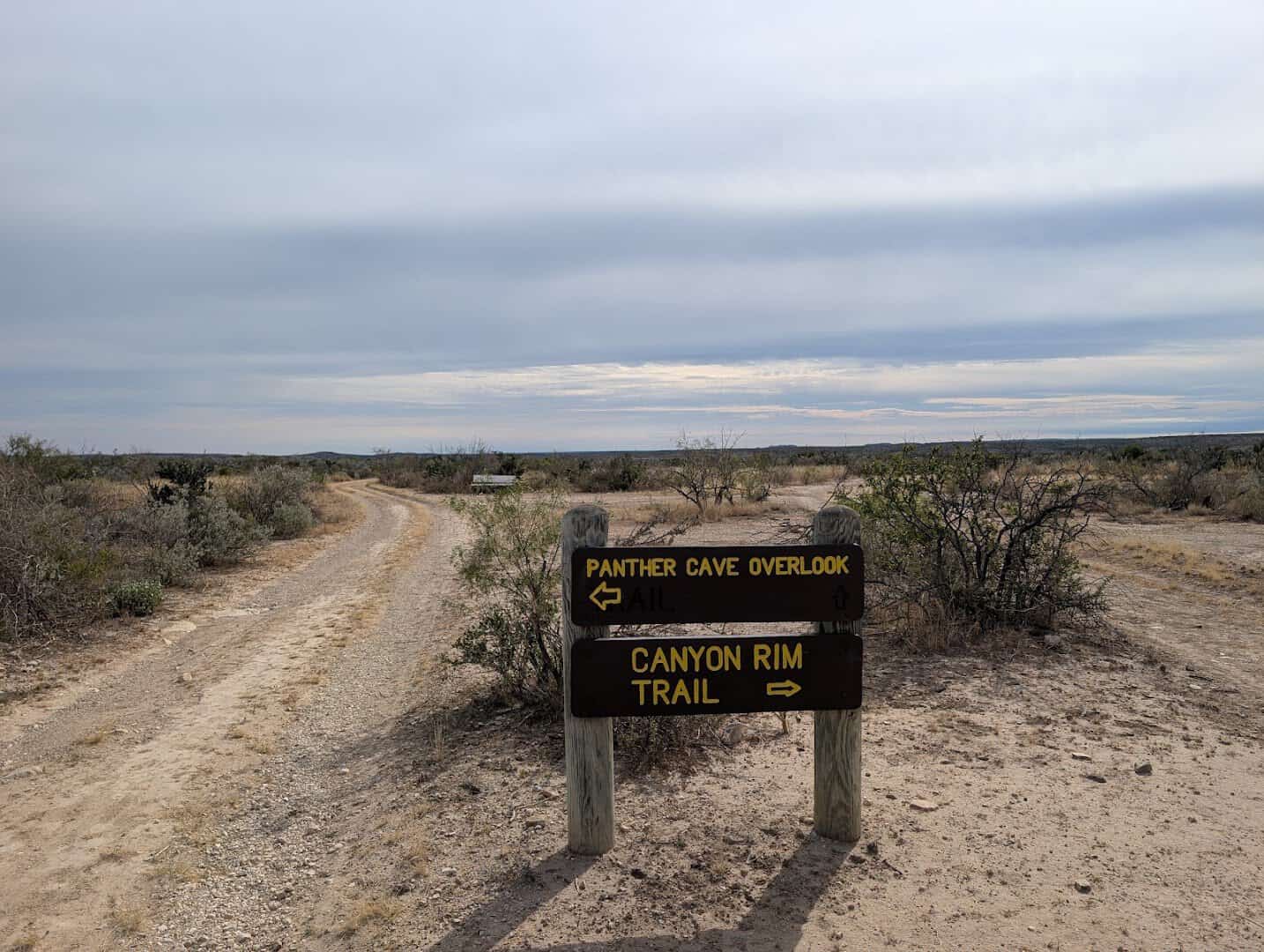
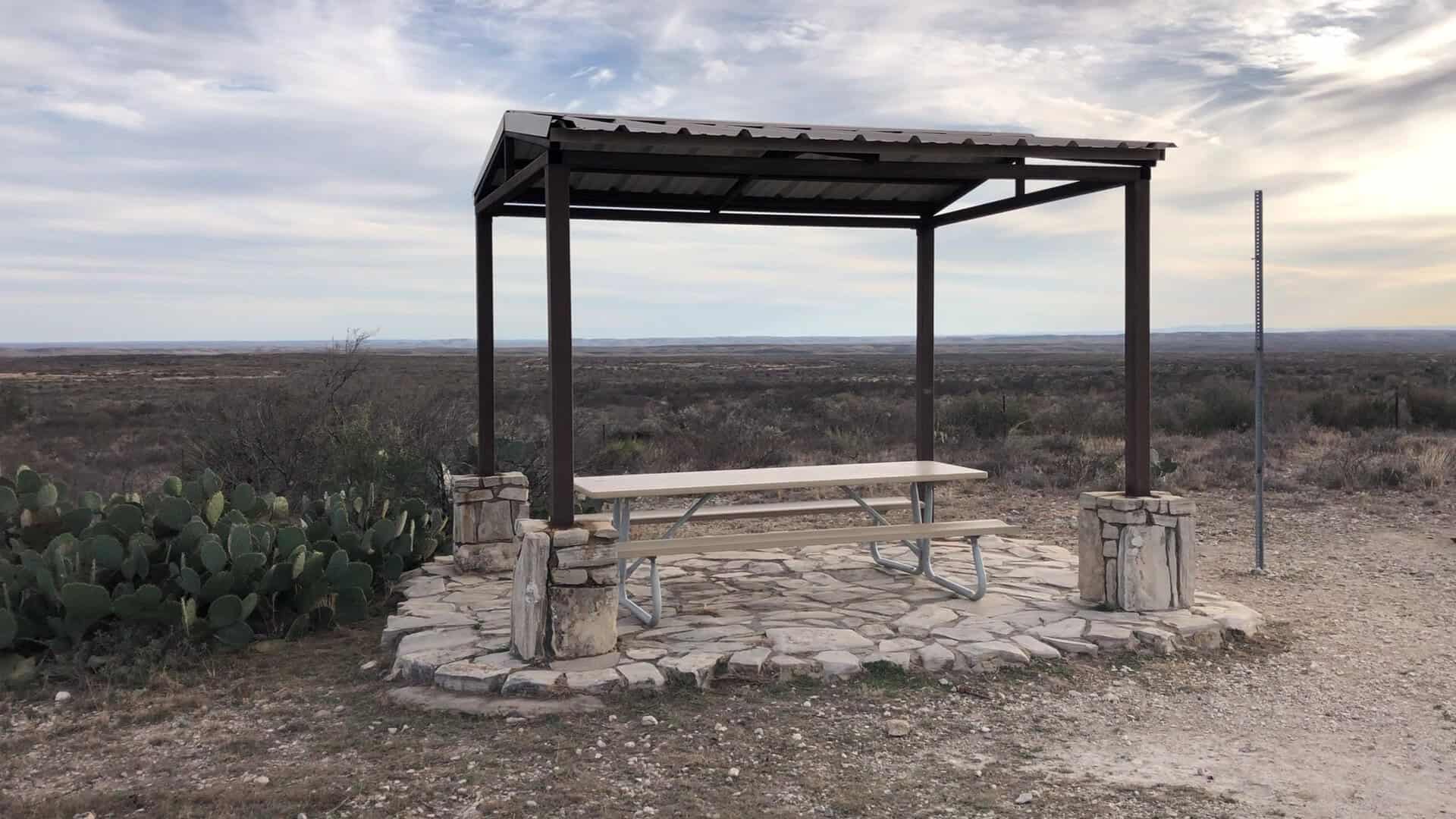
The star is the Canyon Rim Trail, a 4.9-mile route that traces the canyon’s edge out to overlooks of the Rio Grande and a distant view across the water to Panther Cave, named for a huge painted panther stretched along its wall.
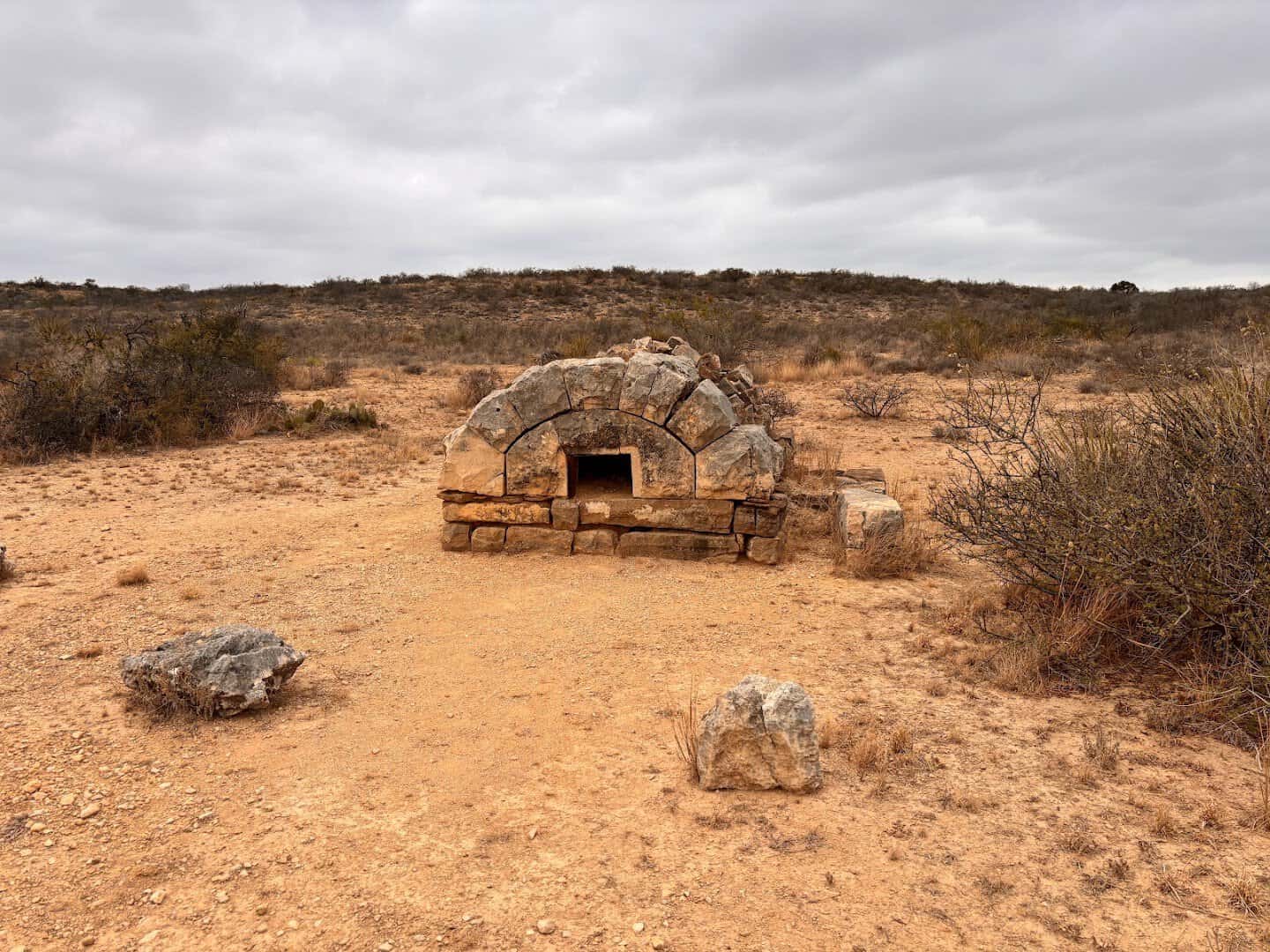
Along the way, the trail crosses an old Southern Pacific Railroad bed from the 1880s and passes circular stone foundations from Native American wickiup shelters that are more than 1,000 years old.
Prefer something shorter? The Rio Grande Trail runs 2.3 miles down toward the river, and the quick Presa Overlook and Windmill Nature trails sit near the entrance. Link the big two and you get a satisfying 6 to 7 mile loop.
Roadrunners, Horned Lizards, and Big Desert Skies
The park sits where three ecological regions overlap, so the wildlife list runs long and lively. Keep your eyes on the ground and you might spot the famous Texas horned lizard, the spiky little “horned toad” that is a genuine Lone Star icon.
White-tailed deer, javelina, armadillos, and jackrabbits all move through the brush, and roadrunners dash across the trails like they own the place. They are every bit as fast and ridiculous as the cartoon promised.
Birders do especially well out here. Canyon wrens, painted buntings, red-tailed hawks, and hooded orioles all turn up, and golden hour along the canyon rim turns the whole desert into a photographer’s dream.
How to Plan Your Visit
Seminole Canyon sits right on U.S. Highway 90, nine miles west of Comstock and about 45 miles west of Del Rio. From San Antonio it is roughly a 3.5-hour drive west, so treat it as a real destination rather than a roadside quick stop.
The entrance fee is just $4 per person for ages 13 and up, and kids 12 and under get in free. The Fate Bell tour is booked separately at $8 for ages 13 and up and $5 for ages 5 to 12, which is a bargain for what you’re seeing.
Start at the visitor center, which opens at 8:15 a.m. and is packed with excellent exhibits on the canyon’s people and paintings. Cell service is unreliable out here, so download your maps and confirm your tour before you arrive.
Want to stay the night? The park has dozens of campsites, from primitive spots to sites with water and electricity, running from about $10 to $20 a night plus entry. The desert stars out here are worth setting an alarm for.
Come dressed for real desert. There is little shade, the ground is rocky, and summer temperatures routinely top 100 degrees, so bring at least two quarts of water per person and a good hat.
Where: Seminole Canyon State Park and Historic Site, U.S. Highway 90, Comstock, TX 78837
Go See the Oldest Library in Texas
Some Texas trips are all about convenience. This one is the exact opposite, and that is the whole point of it.
Pack the cooler, fill the water jugs, and point the car toward the far edge of the map. Stand at the rim and take the walk down to Fate Bell.
Let it sink in that people were painting these stories here 4,000 years before you were born. A place this old has a quiet way of pulling you back west again.
Featured image: Terry McCoy via Seminole Canyon State Park

Stella Raines
Editor-in-Chief
Stella brings over a decade of storytelling experience to TX Headlines. With roots in West Texas and a love for road trips, she leads the editorial team with an eye for the hidden stories that make Texas unforgettable.
More Stories

These 10 Texas Spots Bloom Into Seas of Bluebonnets Each Spring

This Enchanting Texas Nature Trail Feels Like Hiking Through a Fairytale Forest

This Underrated Texas State Park Gives You a Full Day of Swimming and Hiking for Just $5

This Easy Texas Hike Leads to a Swinging Suspension Bridge Hidden in the Pines
Tags