This Texas Wildlife Refuge Is a Birdwatcher’s Paradise Best Explored in May
I have a running argument with other birders about where the best birding in America actually hides, and it keeps ending the same way. The serious ones skip right past the famous coasts. They do not point at the Hill Country or the Gulf beaches.
They point at the very bottom tip of Texas, a subtropical pocket along the Rio Grande where birds wander up from Mexico and turn up in nobody else’s backyard in the whole country.
That pocket has a headquarters, and in spring it delivers one of the most bird-drunk mornings you can have with a pair of binoculars. It is Bentsen-Rio Grande Valley State Park in Mission, the flagship of the Texas World Birding Center.
Come May, the trees practically hum. Below, here is why late spring is the moment to point the car south, what you will actually see, and everything you need to plan the trip.
Why May Turns the Trees Into a Show
Spring in the Lower Rio Grande Valley is not subtle. As the days warm, the sky over the park fills with raptors riding the thermals north, and the resident Valley birds get loud and busy with nesting season.
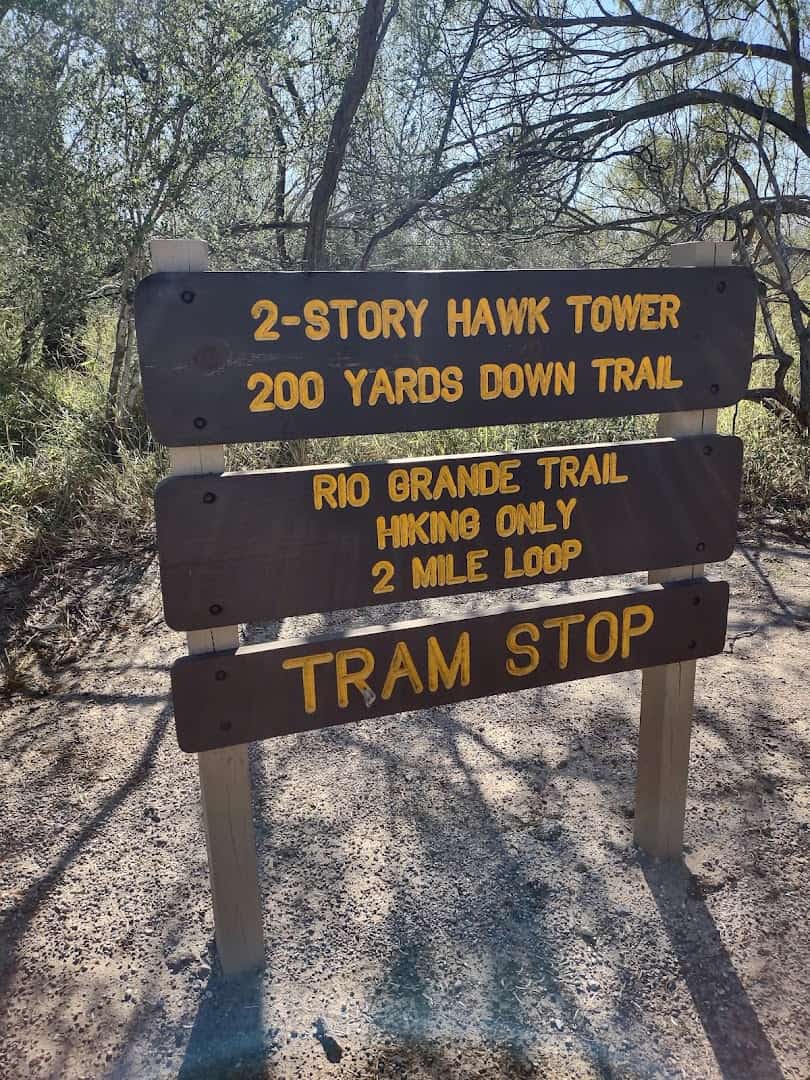
The headline act is the hawk migration. Thousands of Broad-winged and Swainson’s Hawks stream overhead in tight, swirling columns that birders call kettles. The park’s two-story Hawk Observation Tower was built to put you right underneath them.
May is also when the park’s free tram tours shift into their warm-season rhythm, running every hour between 9 a.m. and 4 p.m. Thursday through Sunday. The sky is busy, the feeders are busy, and getting around is easy.
That is a rare combination, and it is why the locals will tell you spring is the sweet spot. Winter draws the snowbird crowds, but May has the migration and a fraction of the people.
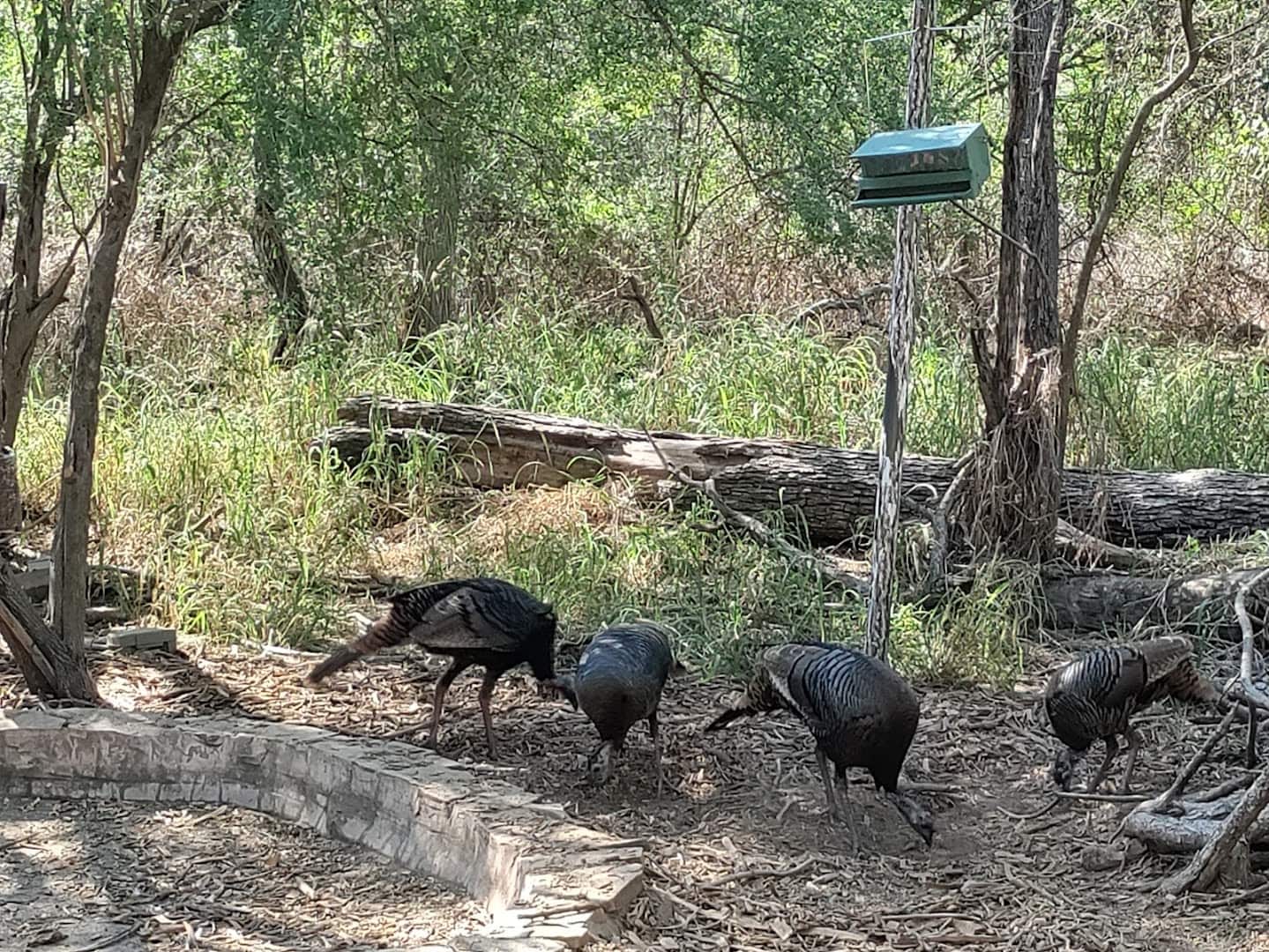
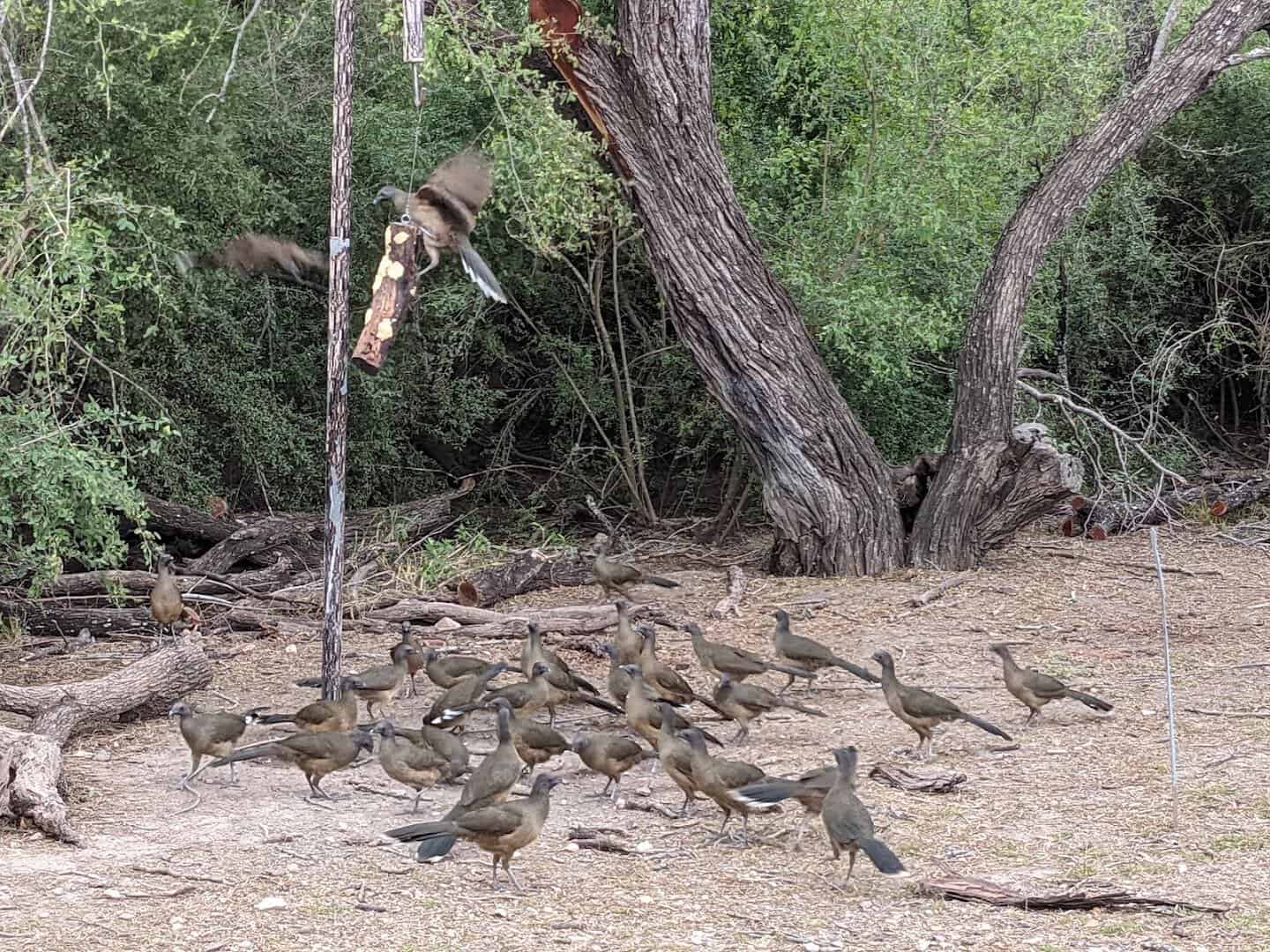
There is a quieter reason too. Cars are banned inside the park, so the loudest thing you will hear is a Plain Chachalaca throwing a fit in the brush. Bird calls carry when engines do not, and it changes the whole feel of the place.
The Birds You Cannot See Anywhere Else in the Country
Here is the fact that pulls birders from every state and a dozen countries. More than twenty bird species that show up regularly at this park are recorded nowhere else in the United States.
They are Mexican and Central American birds at the very northern edge of their range, and this scrap of Texas is as far as they come. In all, about 360 species have been logged inside the park boundaries.
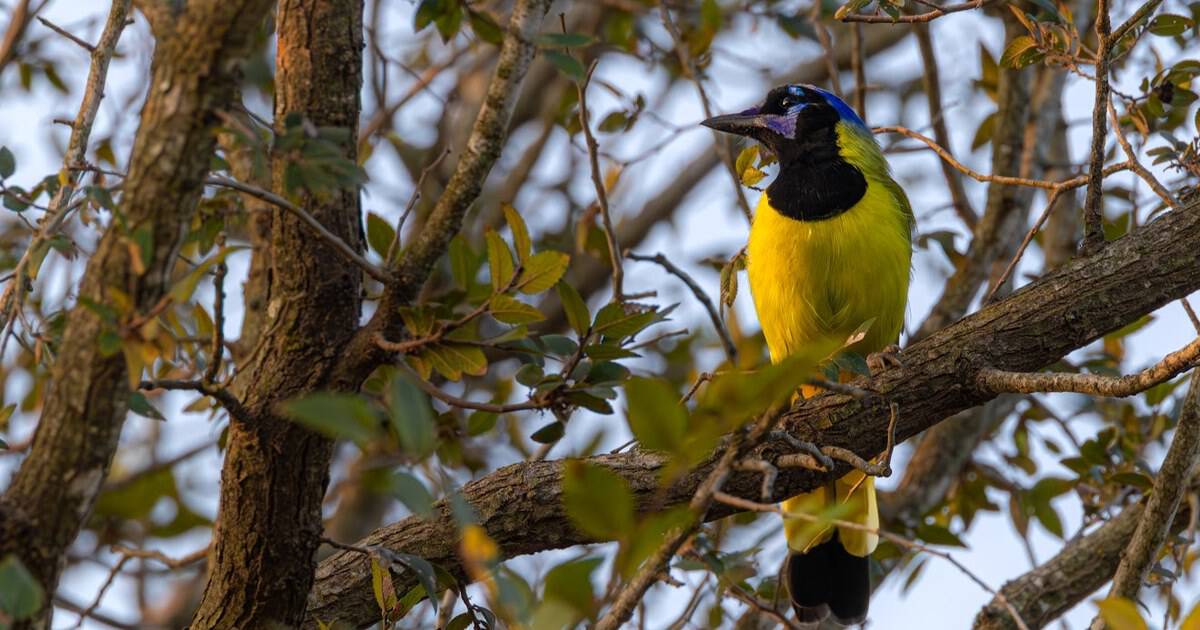
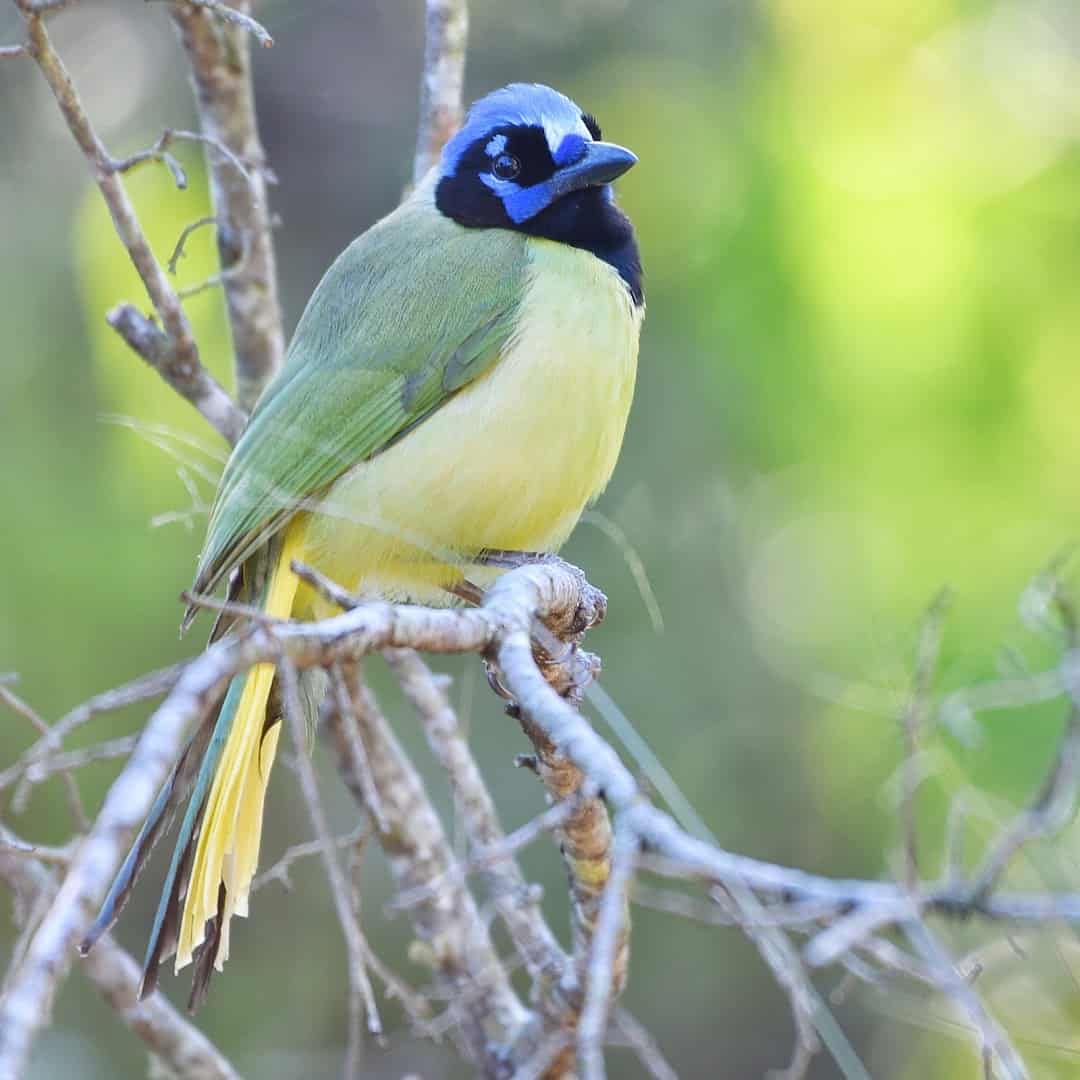
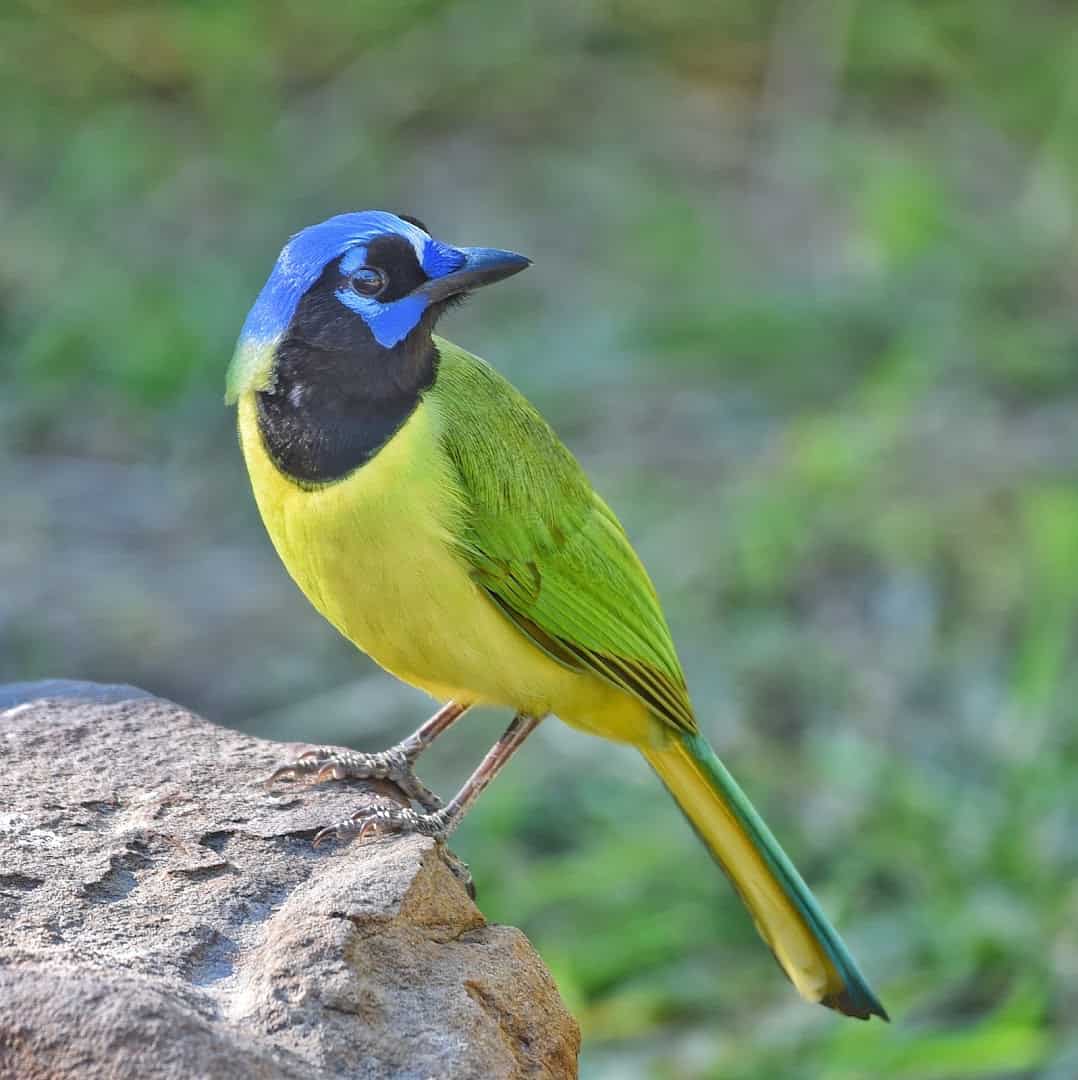
The Green Jay is the poster bird, and for good reason. It looks like a parrot crossed with a jay, lime green and electric blue with a black bib, and it is so common at the feeders that first-time visitors think someone is exaggerating. They are not.
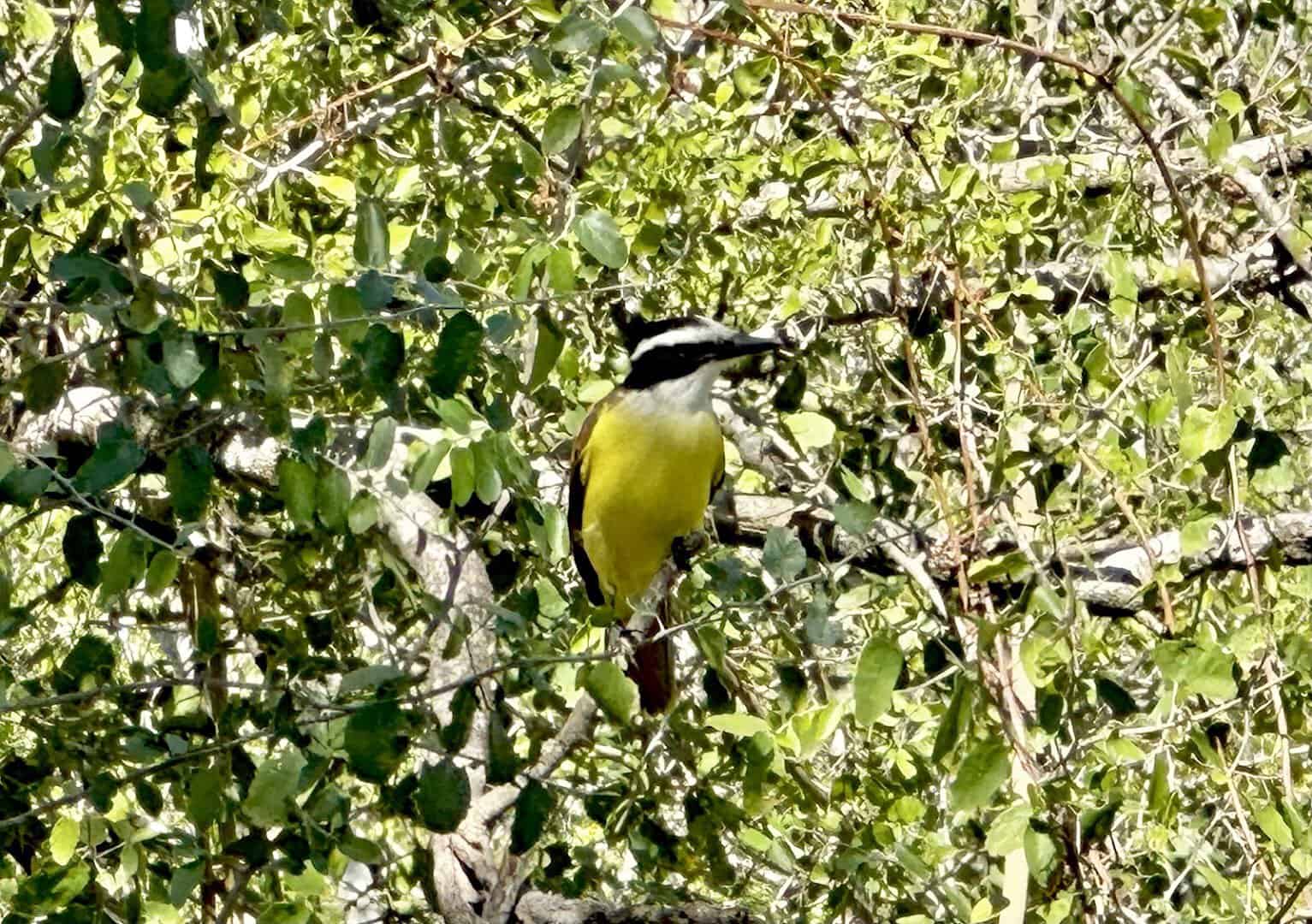
Then there is the Great Kiskadee, a bandit-masked yellow-and-rust flycatcher that shouts its own name. Nearby is the Altamira Oriole, the largest oriole in North America, flame orange and impossible to miss.
Add the Plain Chachalaca, a chicken-sized bird that travels in noisy gangs, plus the White-tipped Dove, the Golden-fronted Woodpecker, Couch’s Kingbird, and the Olive Sparrow. The lineup reads like a field guide to another continent.
Then come the harder-won ones that spring birders love to chase. The Hook-billed Kite drifts over the canopy, the Groove-billed Ani skulks in the thickets, and after dark the Common Pauraque presses itself flat against the trail and all but disappears.
May adds another layer on top of the residents. Migrant songbirds funnel through the Valley on their way north, so warblers, buntings, and flycatchers drop into the same trees the specialties already own. A single morning can turn up birds that live worlds apart the rest of the year.
Did you know? The park has become famous for once-in-a-lifetime strays from deep in Mexico. Its records include the first and only United States sightings of birds like the Bare-throated Tiger-Heron and the Collared Forest-Falcon.
When one of those turns up, word travels fast through the birding grapevine, and the parking lot fills with license plates from twenty states within days. People will fly across the country for a single feathered rarity.
Blinds, Feeders, and a Tower Above the Floodplain
What makes this park special is not just what lives here. It is how close the park lets you get. Scattered along the trails are covered viewing blinds set beside feeding stations and small water features.
They are designed so you can sit in the shade and let the birds come to you. The Green Jay blind is the one everyone talks about. You settle onto the bench, stay still, and within minutes the feeders light up.
Green jays, chachalacas, kiskadees, and woodpeckers land close enough that you can put the binoculars down and just watch. Photographers line up for it, and even a phone camera comes away with keepers.
Spring makes the blinds even better. Birds that spend winter loafing turn territorial and vocal in May, so the feeders see more chasing, calling, and showing off. You get behavior, not just a bird sitting still for the camera.
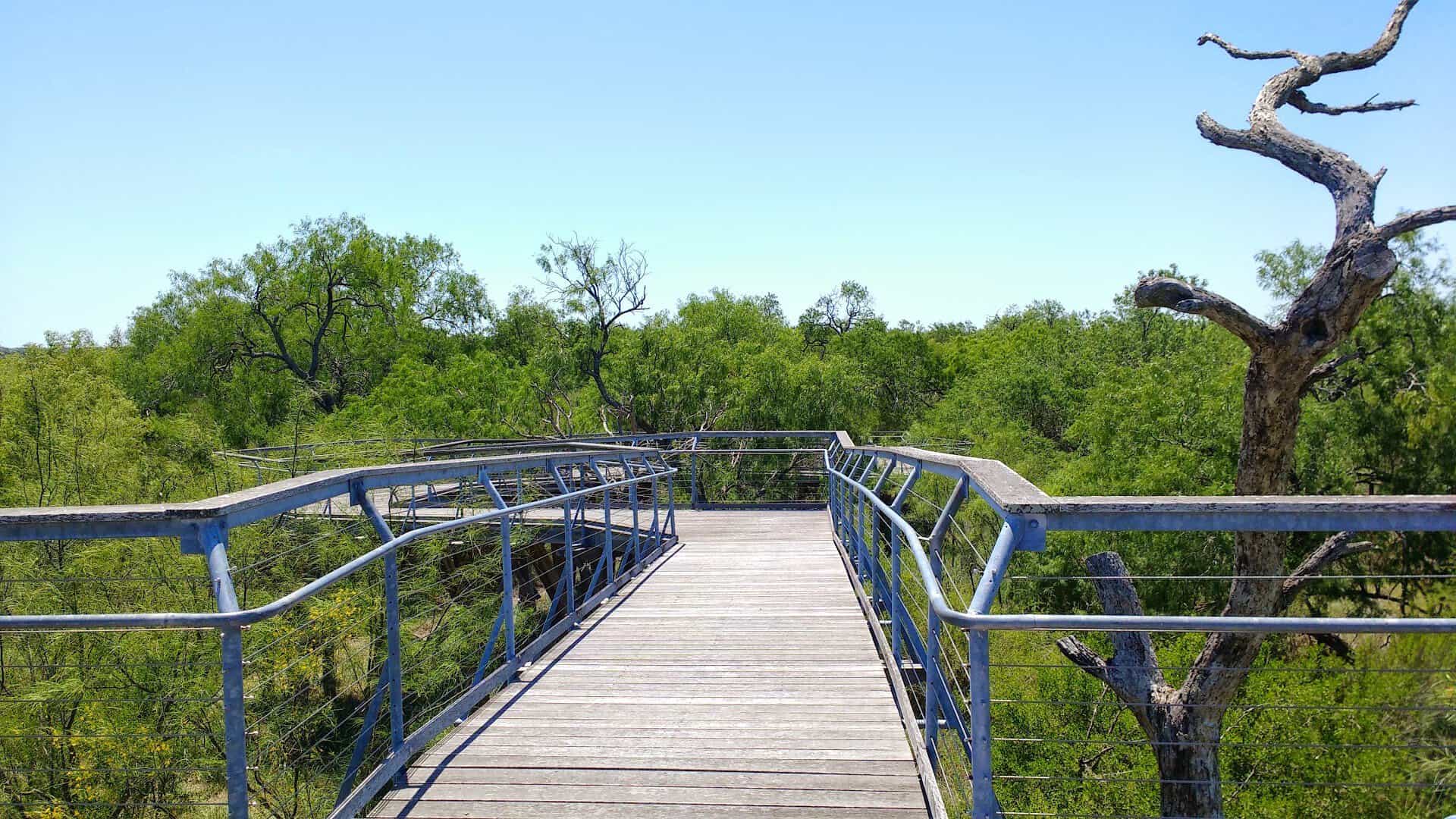
Above it all sits the Hawk Observation Tower, two stories of ramp and platform that lift you over the canopy for a view across the Rio Grande floodplain. It is wheelchair accessible, and in spring it is the best seat in the park for the raptor kettles.
Come early, bring water, and give yourself an hour up there. The park also keeps a proper visitor center with a bilingual exhibit hall, feeders you can watch through the glass, and a store that rents binoculars if you arrived hoping to wing it.
How a Family’s Gift Became a Birding Capital
The park owes its existence to one family. On January 28, 1944, Lloyd M. Bentsen Sr. and his wife Edna Ruth, along with Elmer and Marie Bentsen, donated 586 acres of Rio Grande floodplain to the state as a nature habitat.
The Bentsen name may sound familiar, and yes, this is the family of the late United States senator Lloyd Bentsen. The park opened to the public in 1962 and spent decades as a popular winter spot for RV campers escaping the northern cold.
Then its purpose sharpened. A 270-acre gift from Mike and Lori Rhodes in 2002 helped set the stage for something bigger, and in 2004 the park became the headquarters of the World Birding Center.
The World Birding Center is a network of nine sites strung along the Lower Rio Grande. That is when the cars went away and the RV camping ended, and the whole property was handed back to the birds.
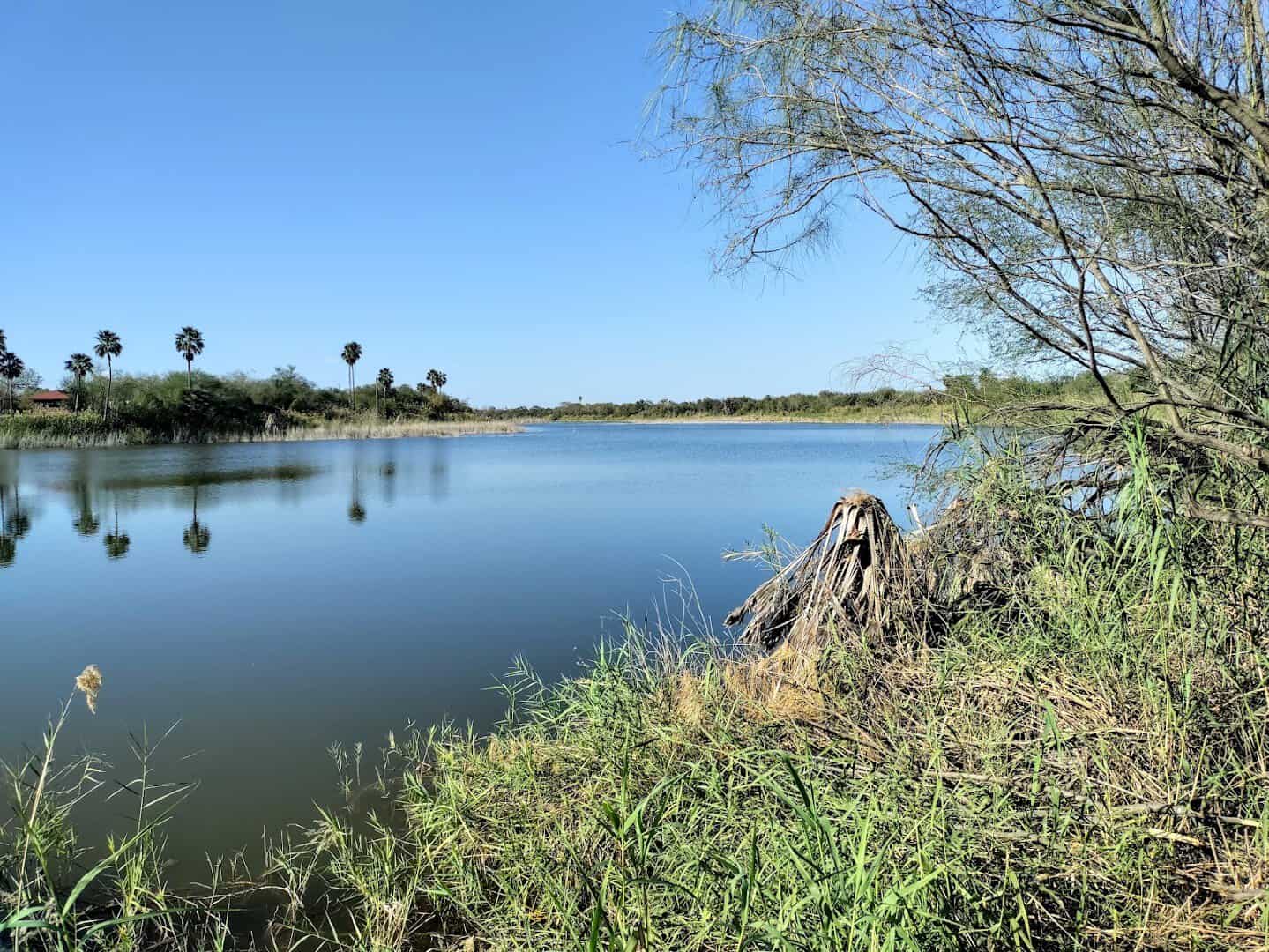
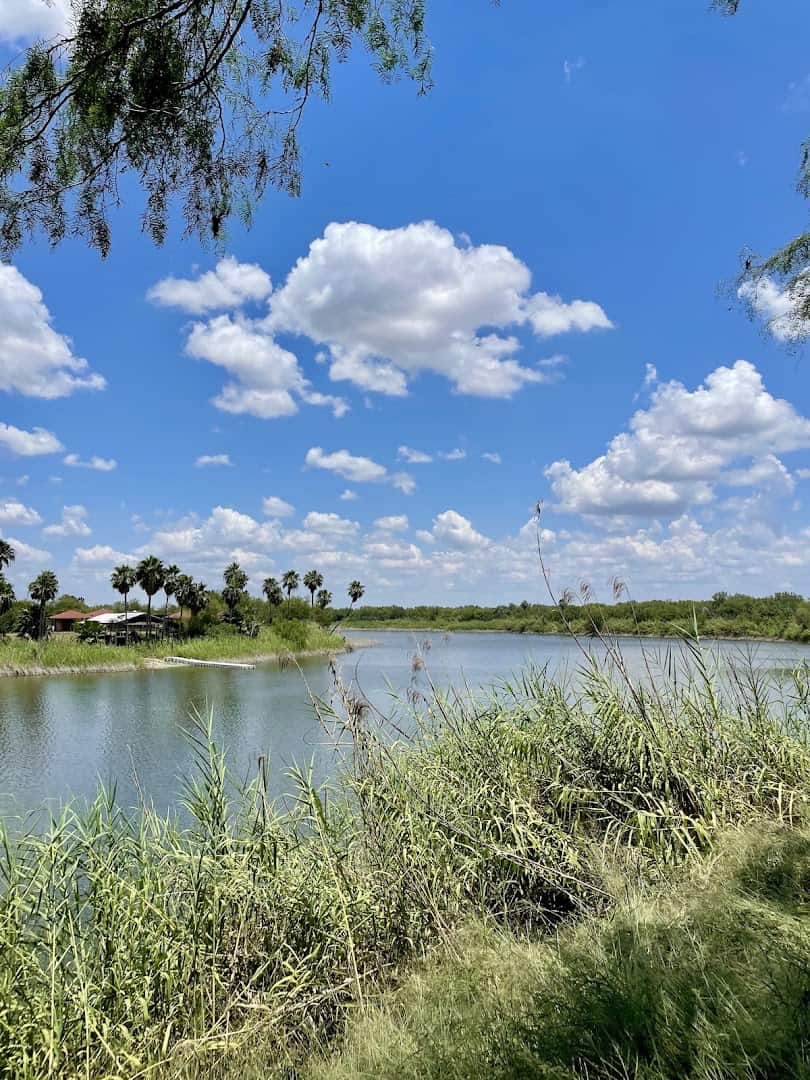
Today it covers roughly 760 acres of resaca woodland and Tamaulipan thornforest. That is the tangled, semi-tropical habitat that once blanketed the entire Valley and now survives only in fragments like this one.
It is a small piece of a story worth knowing. The Valley lost most of its native brush to farming over the last century, so every protected acre here shelters the wildlife and stands in for a landscape that has nearly vanished.
Walking, Biking, and Riding the Tram
Roughly seven miles of trail thread through the park, including about 3.5 miles of old park road now closed to traffic and open to your feet, your bike, or the tram. The 1.8-mile Rio Grande Trail is paved and wheelchair accessible.
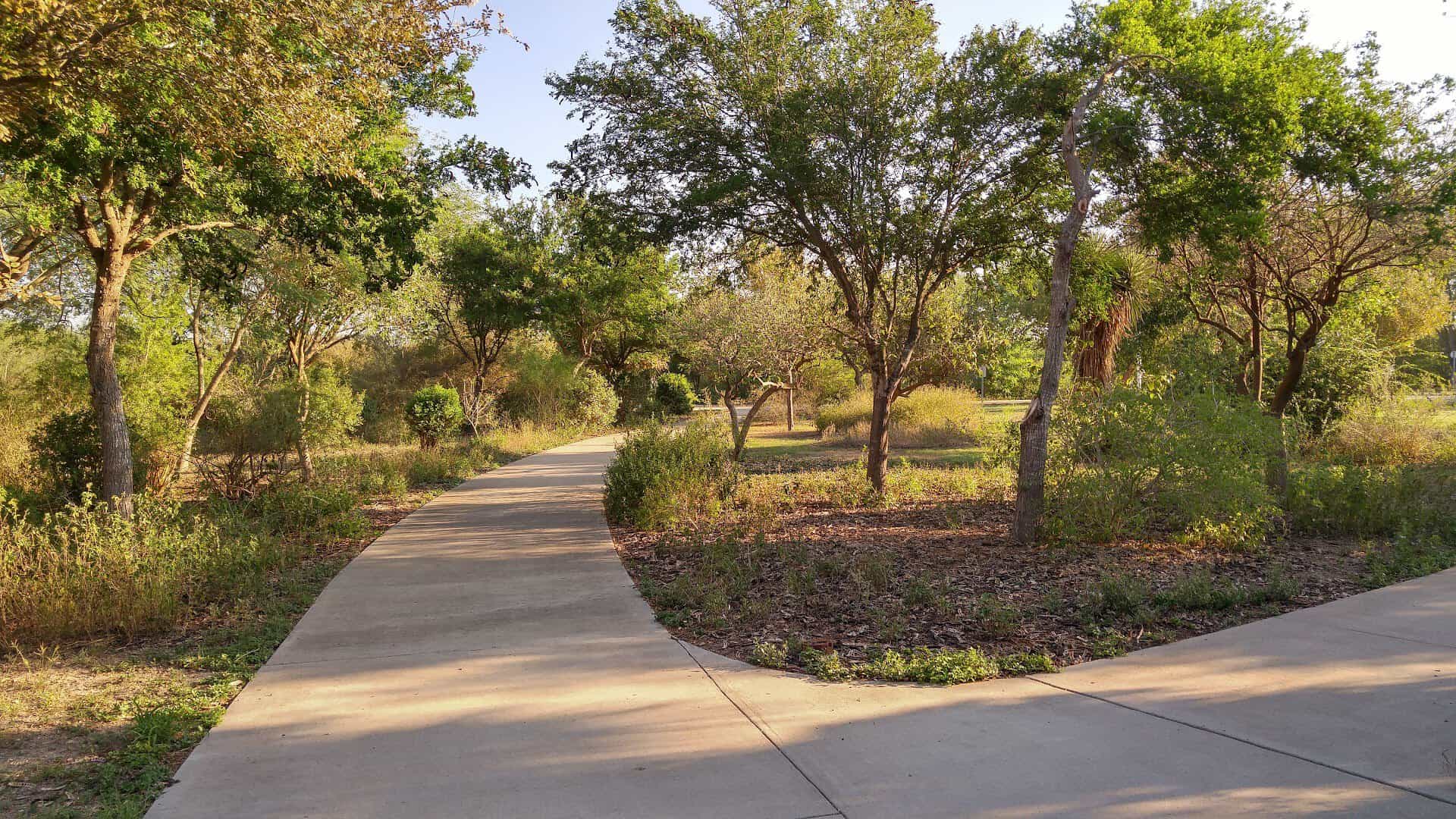
You have three honest choices for getting around. Walk it slowly and you will hear more. Rent a bike at the park store for just $5 a day and you can cover the whole loop between blinds in an easy morning.
Or hop the free tram, which shuttles from station to station. It is a gift on a hot afternoon, or for anyone who would rather save their legs for standing at the feeders.
Pro tip: go at dawn. The park opens at 7 a.m., the birds are most active in the first cool hours, and you will have the blinds to yourself before the tram crowds arrive.
By midday the heat settles in and the activity drops off. That is exactly when the shaded tram bench starts to look like the smartest ticket you ever bought.
Make It a Valley Birding Loop
This park is the flagship, but it is one of nine World Birding Center sites scattered along the Lower Rio Grande. Serious birders rarely stop at one.
Within an easy drive you can add Estero Llano Grande in Weslaco, with its shallow lakes and shorebirds, or Quinta Mazatlan, a restored adobe mansion in McAllen wrapped in thornforest trails. Resaca de la Palma near Brownsville protects the largest tract of native habitat in the whole network.
String a few together over a long weekend and you can build a life list that would take weeks anywhere else. Spring is when that loop pays off best, because every site is riding the same wave of migrants and nesting residents.
More Than Birds
Even if you cannot tell a kiskadee from a kingbird, the park earns the drive. More than 250 species of butterflies have been recorded here, and the National Butterfly Center sits right next door for anyone who wants a full day of winged things.
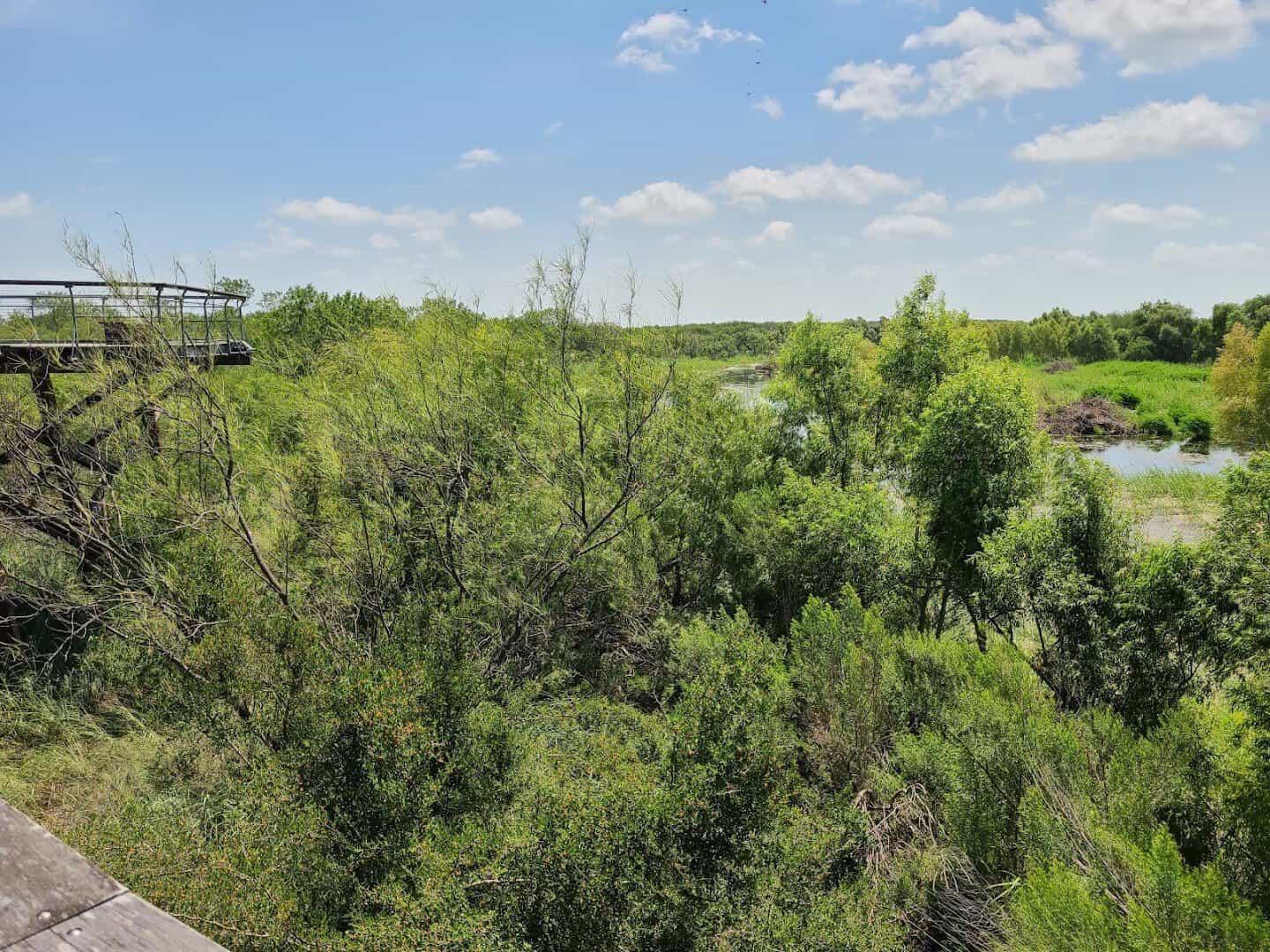
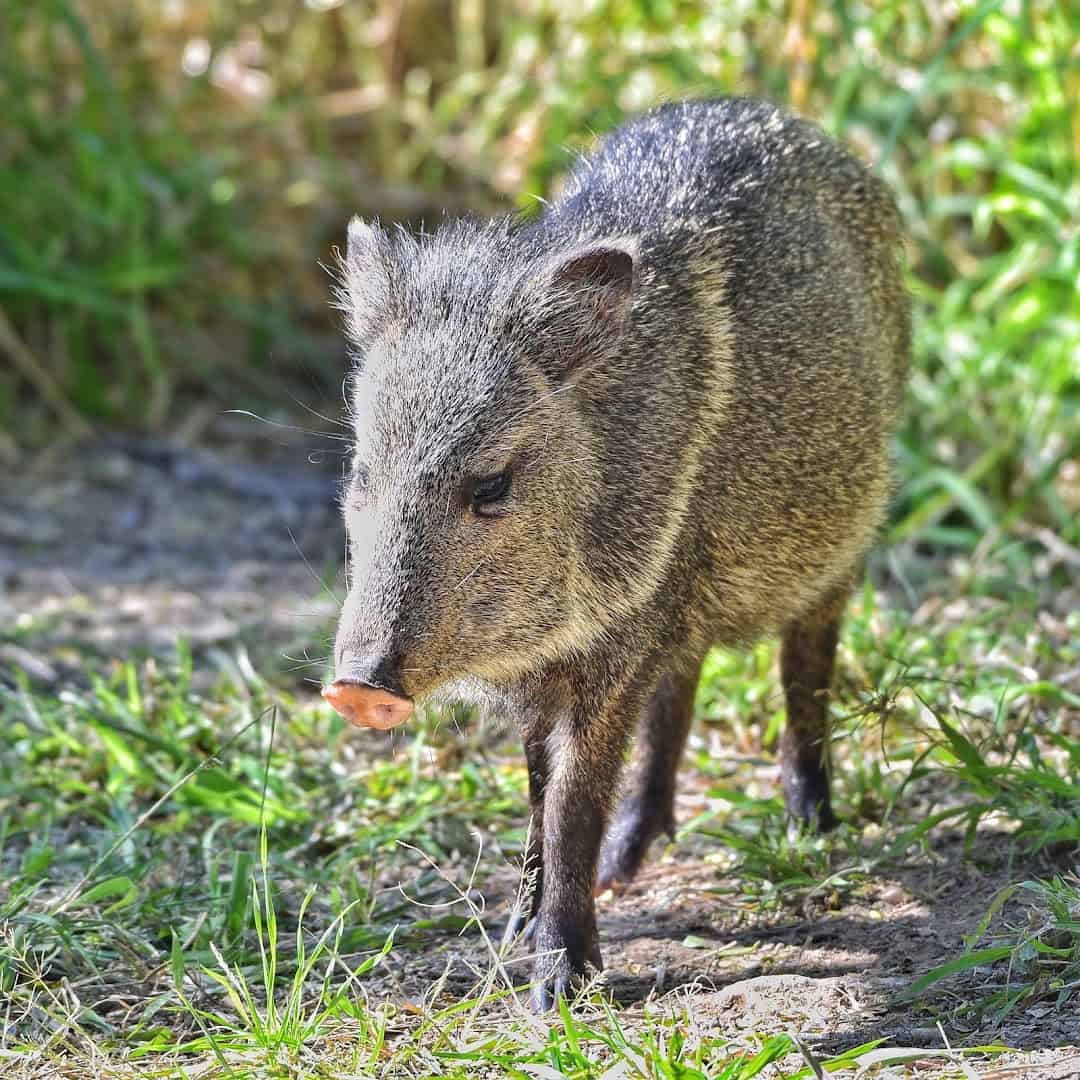
The brush hides more than birds and butterflies. Javelinas root through the thornforest, and bobcats slip along the resacas at the quiet edges of the day. You may not see them, but you are sharing the trail.
The whole place carries that green, humid, slightly wild smell you only get where the river runs close. It feels less like a manicured park and more like a piece of old Texas that got to stay itself.
Whether you are a life-list birder chasing a Green Jay or a family looking for a genuinely different afternoon, there is room here for you. Bring binoculars if you have them, borrow a pair if you do not, and plan to move slowly.
How to Get There
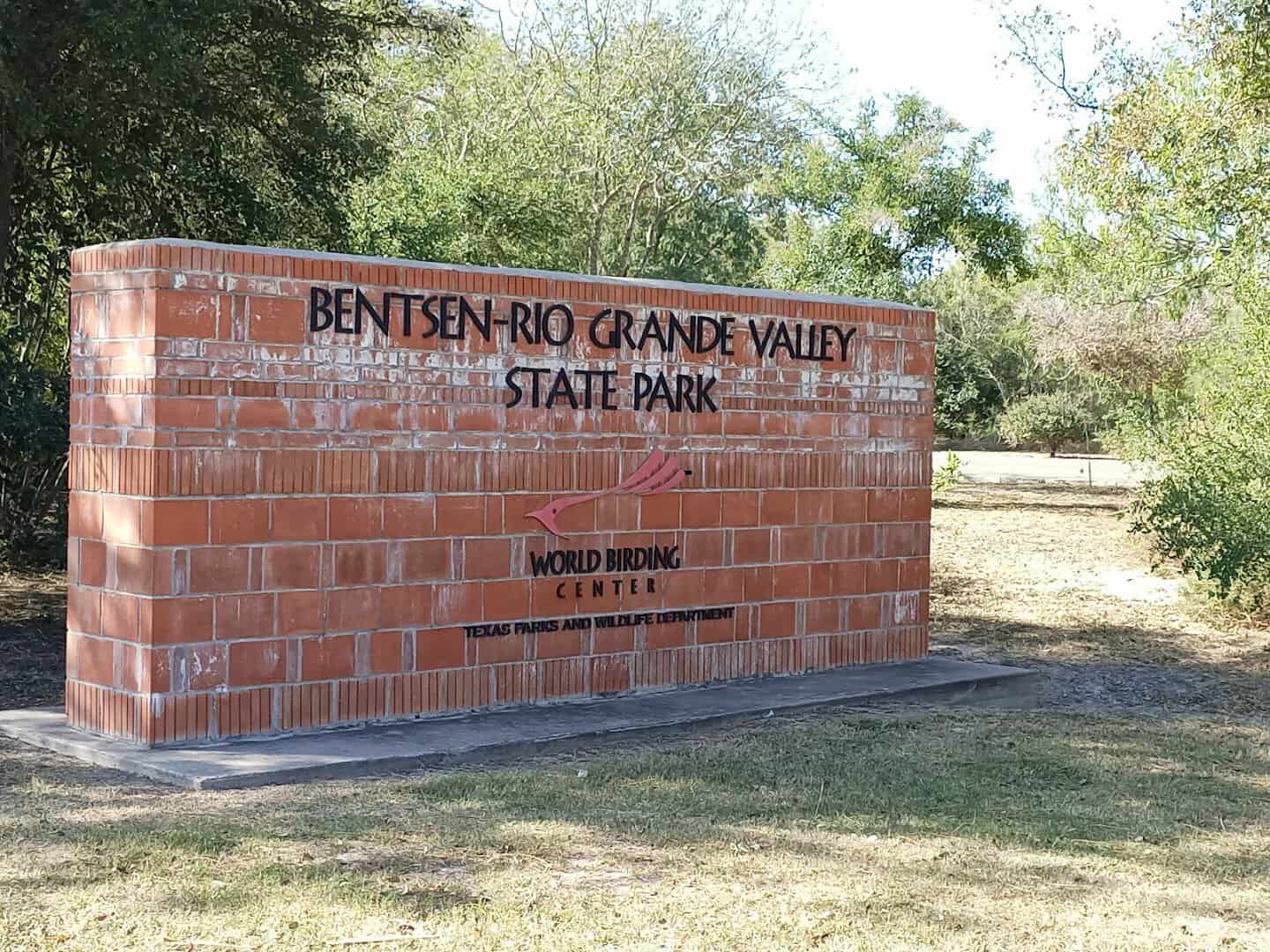
Where: Bentsen-Rio Grande Valley State Park, 2800 S. Bentsen Palm Drive, Mission, TX 78572.
The park is open daily from 7 a.m. to 10 p.m. Entry is $5 for visitors ages 13 and older, free for children 12 and under, and free with a Texas State Park Pass.
From May through October the free trams run hourly from 9 a.m. to 4 p.m., Thursday through Sunday, and daily from November through April. Bikes rent at the park store for $5 a day.
The park sits just west of Mission in the far south of Texas, about twenty minutes from McAllen-Miller International Airport. That makes it an easy add-on to any Valley trip, and reservations through Texas Parks and Wildlife are smart in the busy season.
Start Planning Your Spring Birding Run
There are showier parks in Texas and there are bigger ones. But there is nowhere else in the country where you can sit in the shade and watch birds most Americans will never see in the wild.
Point the car south, get there by sunrise, and let the trees do the rest. Bring the good binoculars, and try not to lose the whole morning to a single green jay, even though you probably will.
Featured image: Josh M via Bentsen-Rio Grande Valley State Park

Stella Raines
Editor-in-Chief
Stella brings over a decade of storytelling experience to TX Headlines. With roots in West Texas and a love for road trips, she leads the editorial team with an eye for the hidden stories that make Texas unforgettable.
More Stories

These 10 Texas Spots Bloom Into Seas of Bluebonnets Each Spring

This Enchanting Texas Nature Trail Feels Like Hiking Through a Fairytale Forest

This Underrated Texas State Park Gives You a Full Day of Swimming and Hiking for Just $5

This Easy Texas Hike Leads to a Swinging Suspension Bridge Hidden in the Pines
Tags