This Old-School Texas Bakery Is Run by a Fourth-Generation Baker From the Black Forest
Let me say the unpopular thing first. Most “German” bread I have bought in America is a costume. A soft sandwich loaf that borrowed a word, wrapped in plastic, gone stale by Thursday.
Real German bread is a different animal. It has a crust that crackles when you squeeze it, a dense sour crumb that tastes of actual grain, and a smell that hits you the second the oven door opens.
I chase that smell the way other people chase good coffee. So when I hear that a genuine Black Forest baker has been pulling that exact bread out of a Texas oven since the early 2000s, I want directions.
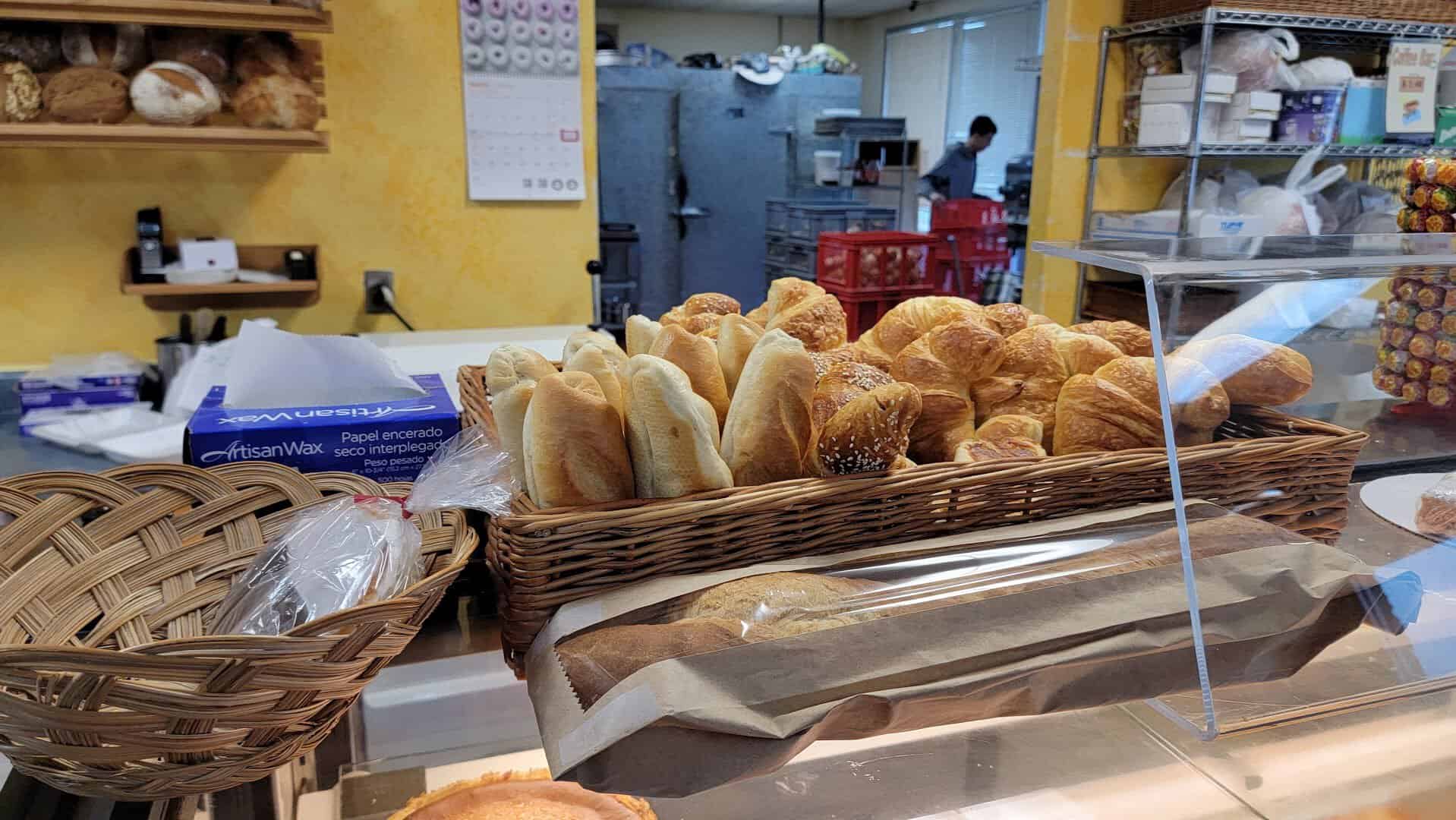
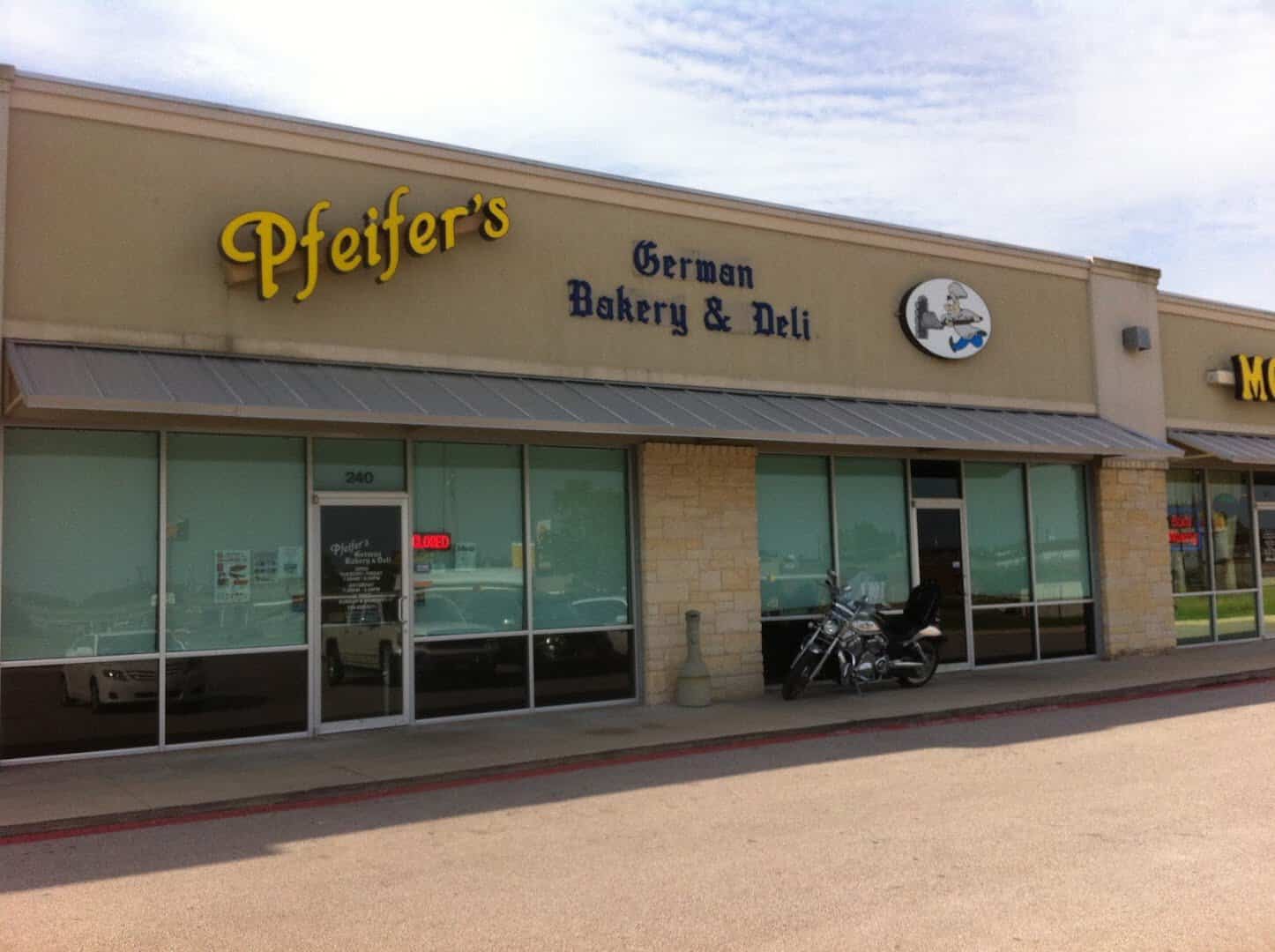
Tucked into a strip of shops in Harker Heights, off the highway between Killeen and Belton, is a small bakery and deli that fakes none of it. This is flour-dusted proof that you do not need a plane ticket to eat like you are in Europe.
Below, here is what comes out of that oven, who is behind it, and why a bakery this authentic ended up in Central Texas of all places.
The Bread That Actually Snaps
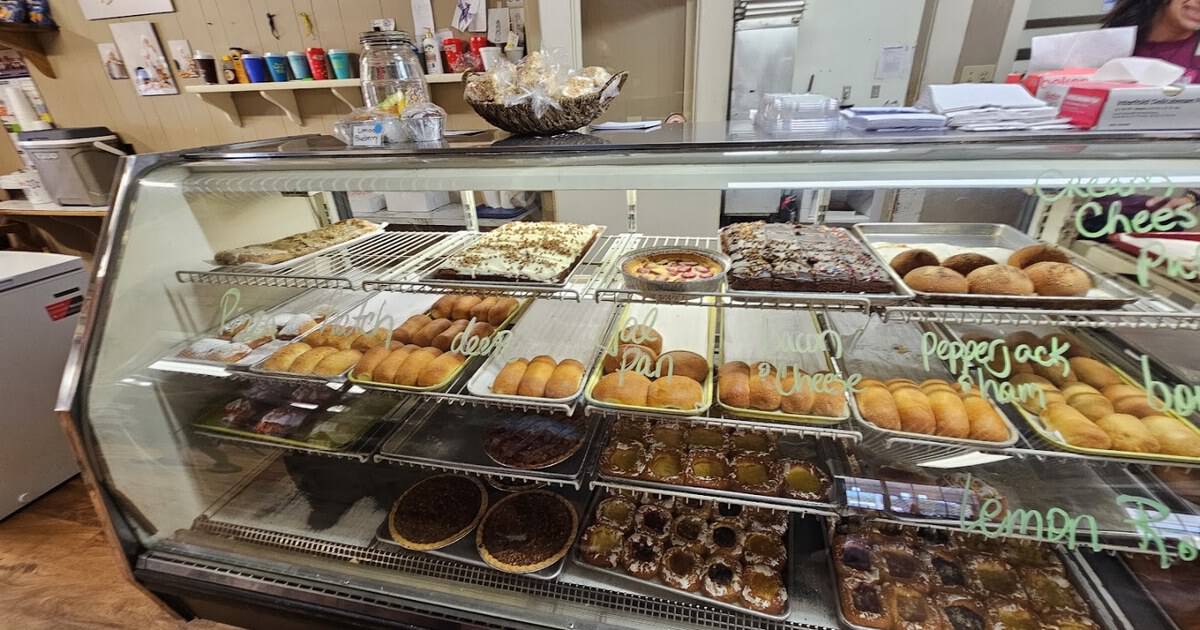
Walk in early and the shelves are a lesson in what bread can be. There is Black Forest bread, dark and nutty. Light rye for the people who want something in between. A six grain loaf packed with seeds.
There is cheese bread with real cheese baked into the crust. There is a pumpkin sunflower loaf that sounds like a health-food gimmick and tastes like nothing of the sort.
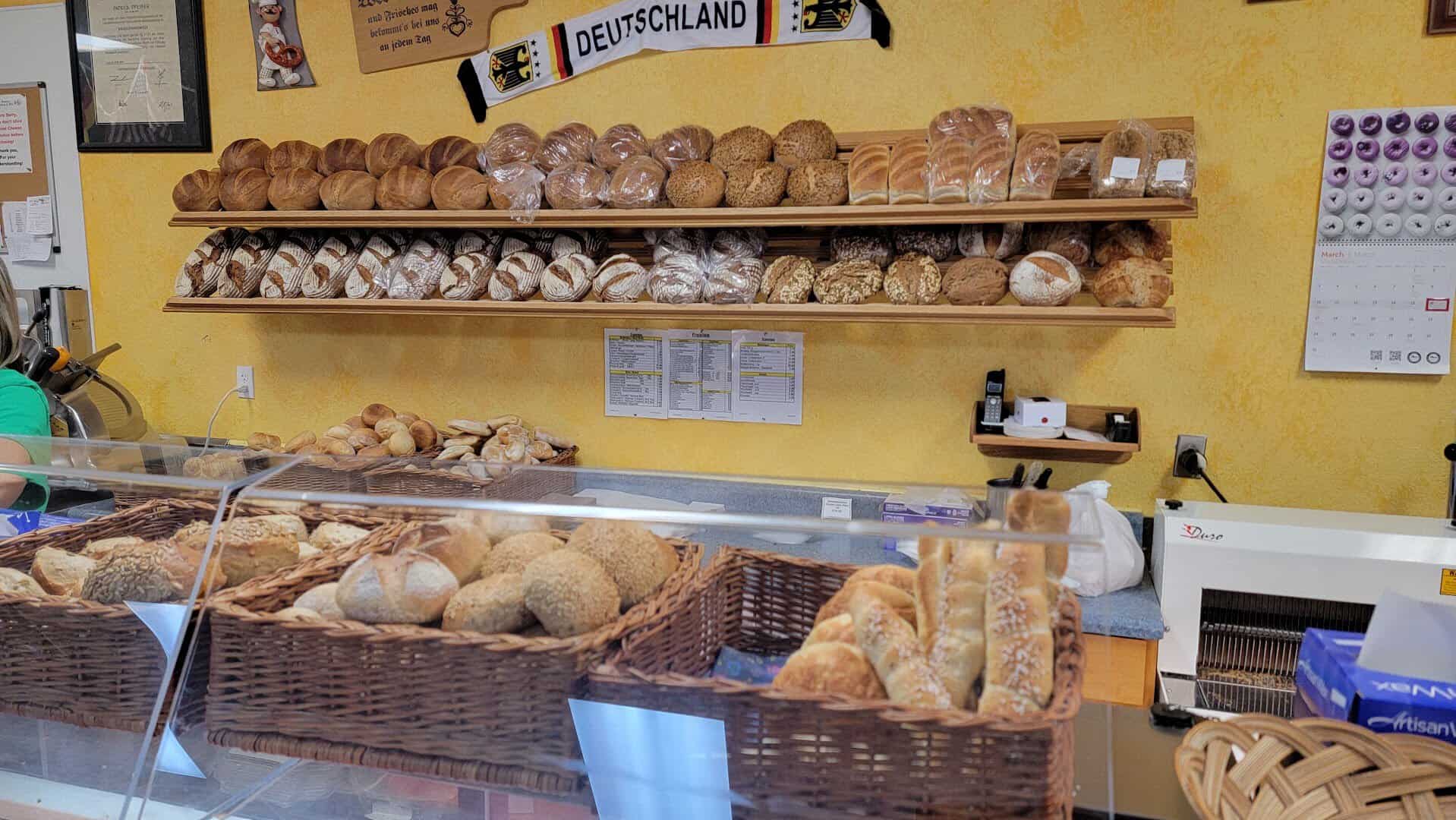
These are not sourdough experiments dressed up for a menu board. They are the workaday breads of southern Germany, the ones a family eats every single day.
Then there are the rolls. Crusty Kaiser rolls with their five-fold swirl on top. Brötchen, the little breakfast rolls a German kitchen runs on. You tear one open and the inside is soft and steamy while the outside shatters into flakes.
That contrast is the whole point, and it is impossible to get from a bag off a shelf.
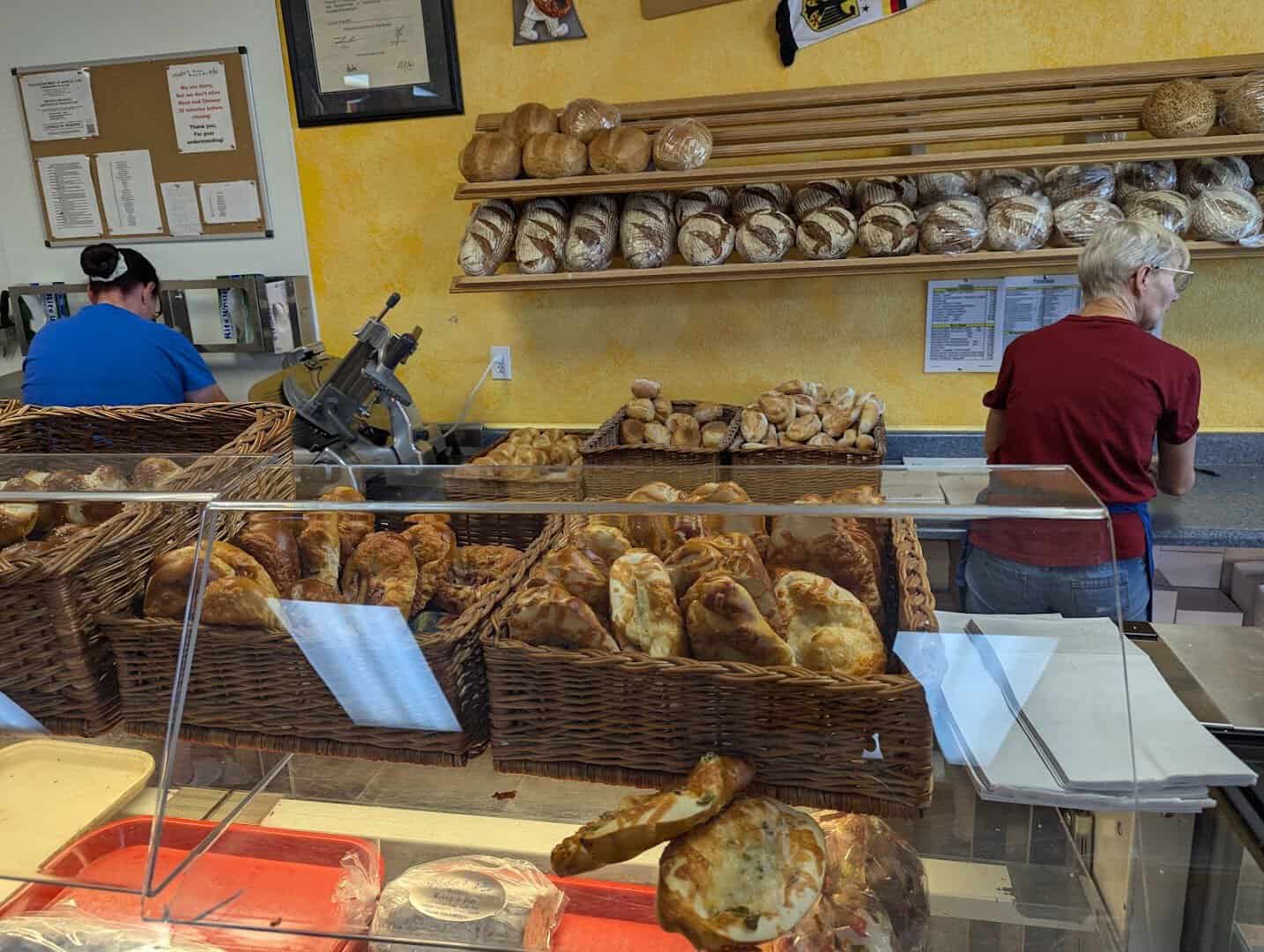
And the pretzels. Not the mall kind, glazed and sugary and the size of your head. These are proper Laugenbrezeln, deep mahogany brown, chewy, kissed with coarse salt, with the faint tang the lye bath gives the crust.
A warm one in the car before you have even left the parking lot is a rite of passage here.
There is a practical genius to bread like this, too. A dense rye or a seeded loaf is built to last. It keeps for days on the counter, gets better toasted, and turns yesterday’s slice into today’s open-faced sandwich.
The Pastry Case Ends the Fight
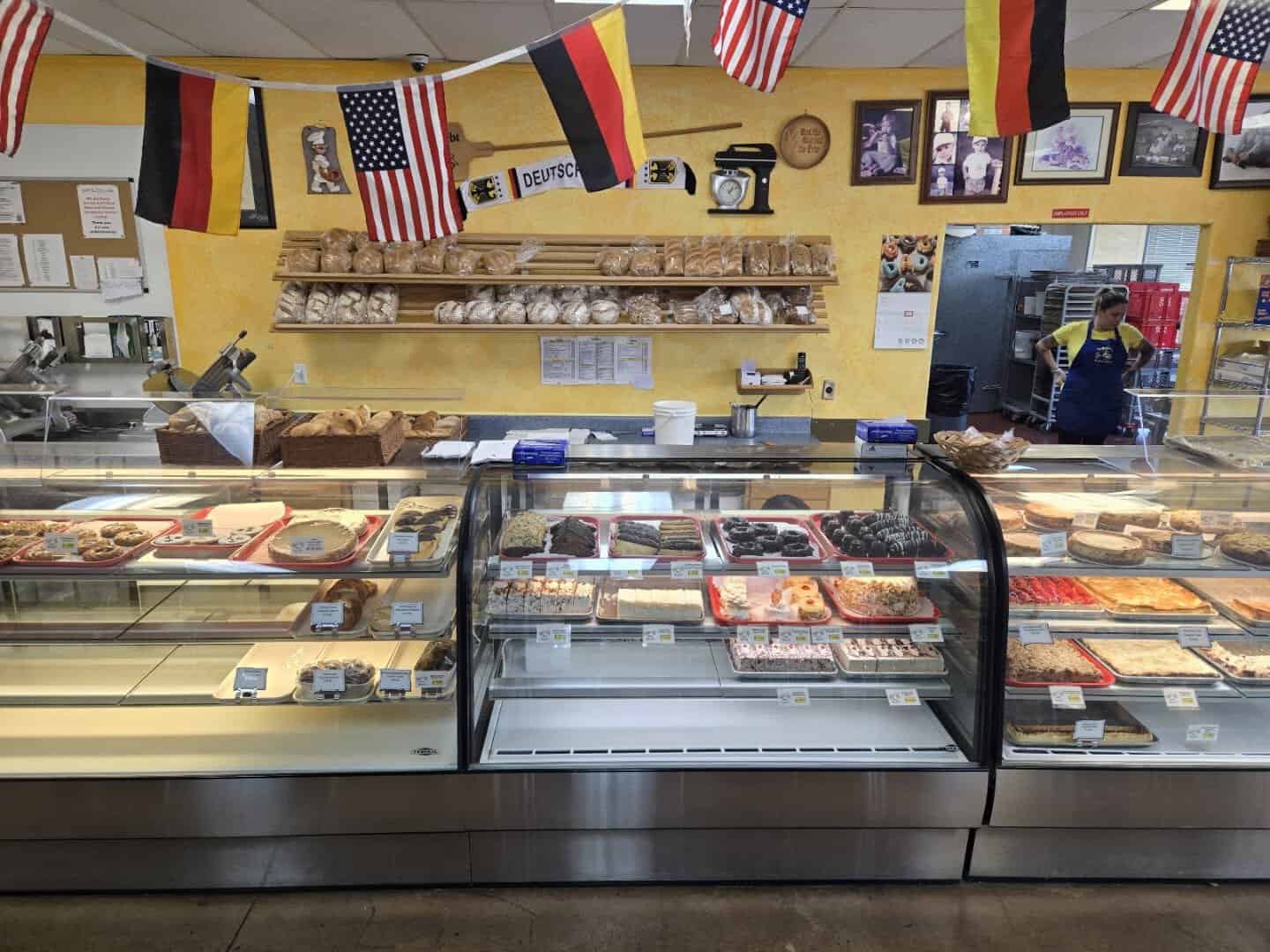
If the bread shelf tests your restraint, the pastry case ends the argument. This is where four generations of muscle memory really show.
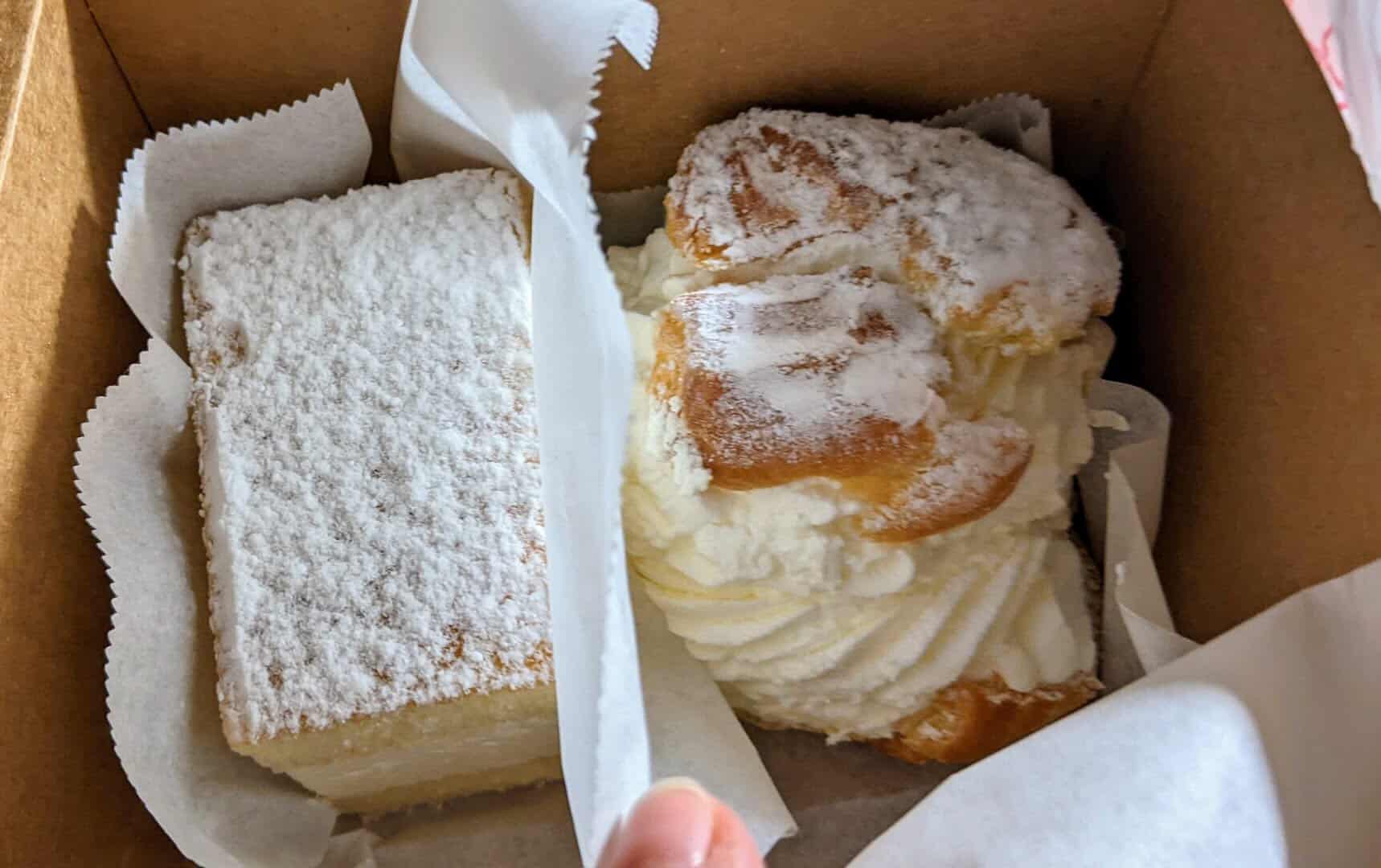
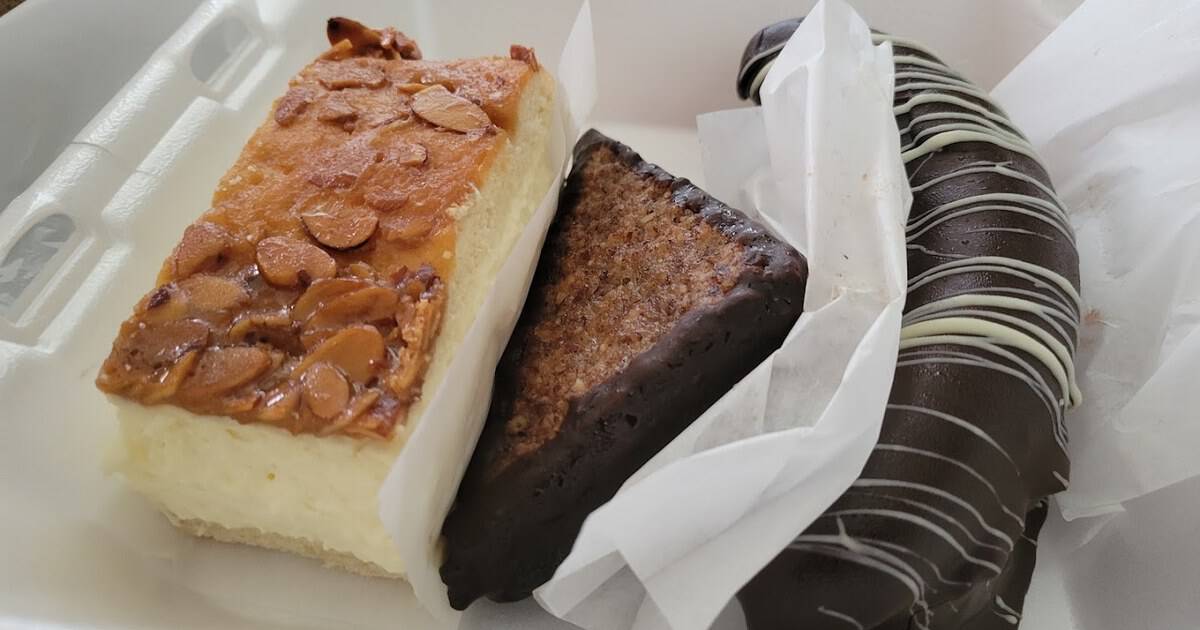
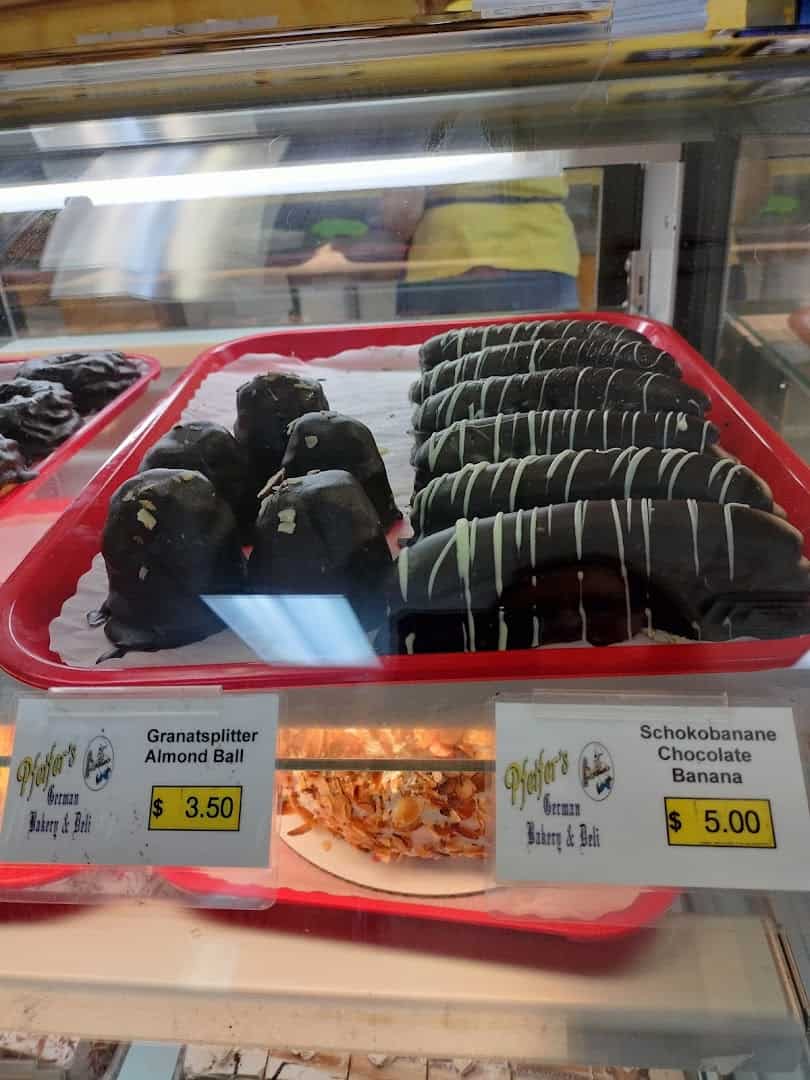
Start with the Bienenstich, the “bee sting” cake. A pillow of soft yeasted dough, split and filled with vanilla cream, capped with a lid of honey-glazed almonds caramelized until they crackle.
It is sweet without being cloying. It is the kind of thing that makes you understand why Germans take their afternoon coffee-and-cake ritual so seriously.
Then the Black Forest cake, the real Schwarzwälder Kirschtorte. Layers of chocolate sponge, tart cherries, and clouds of whipped cream, done the way it is in the region it is named for.
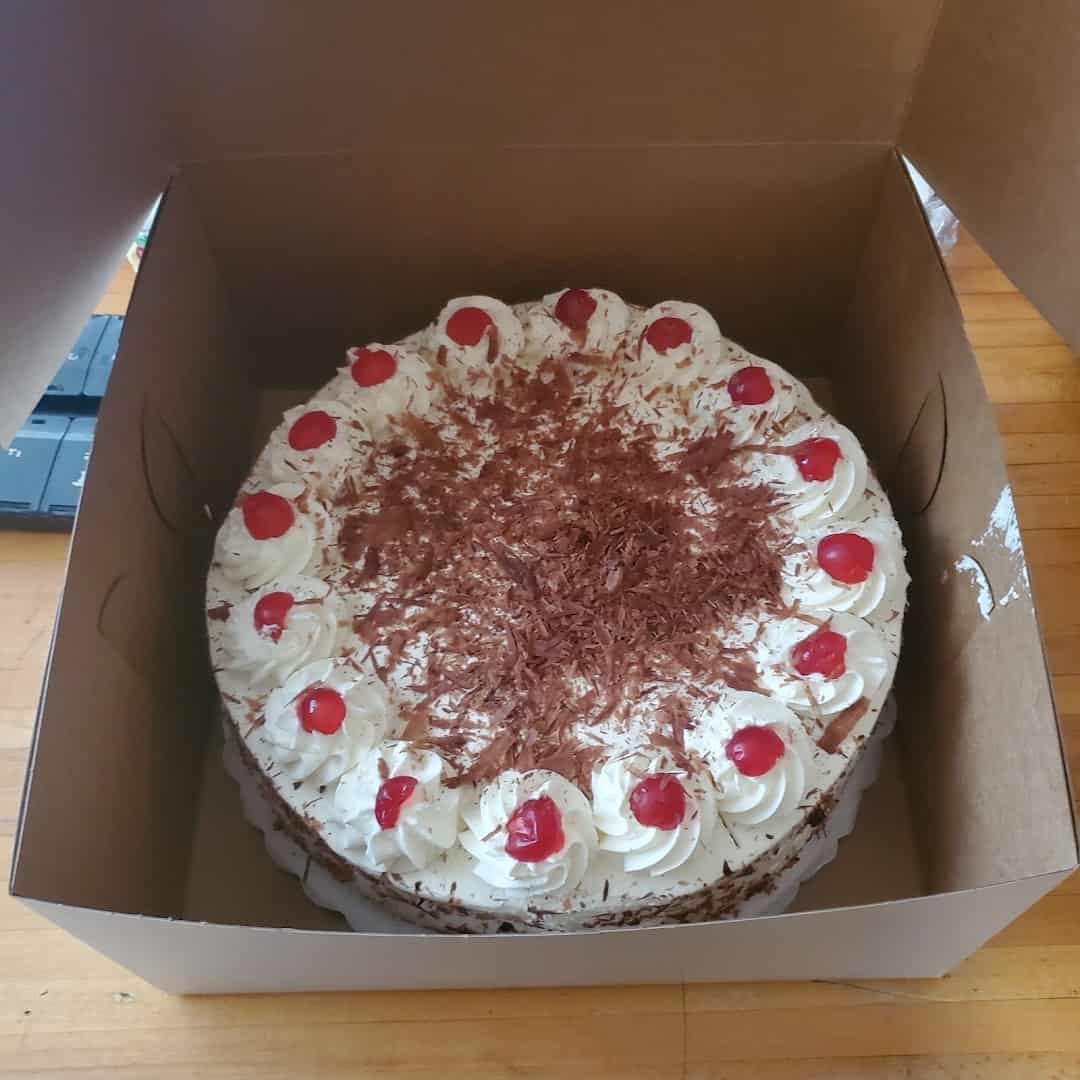
One customer who drove forty minutes over from Waco summed the place up in five words. “Oh my gosh, well worth the drive,” they said. The cakes get called “moist and delicious” often enough that it reads like a house motto.
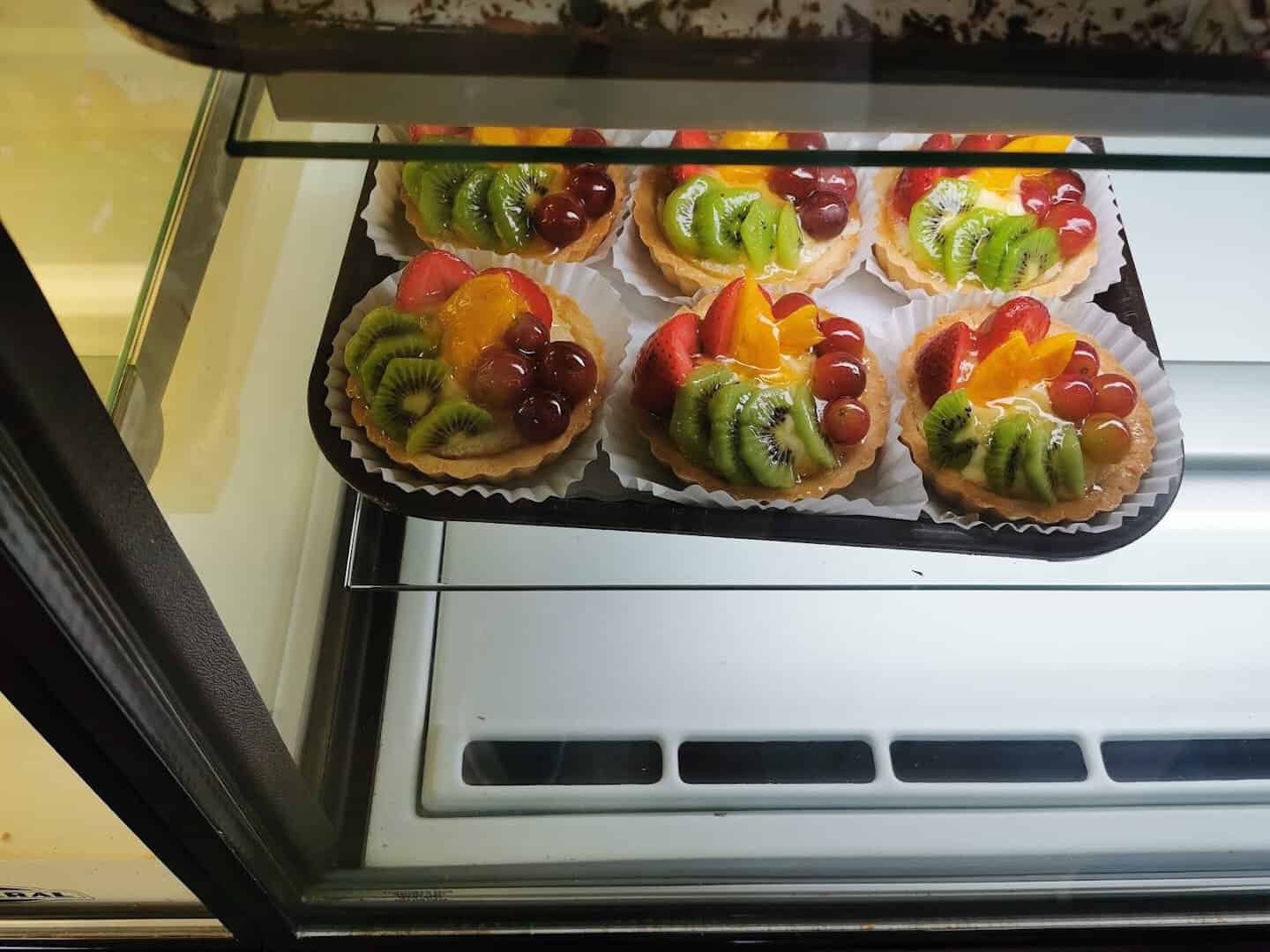
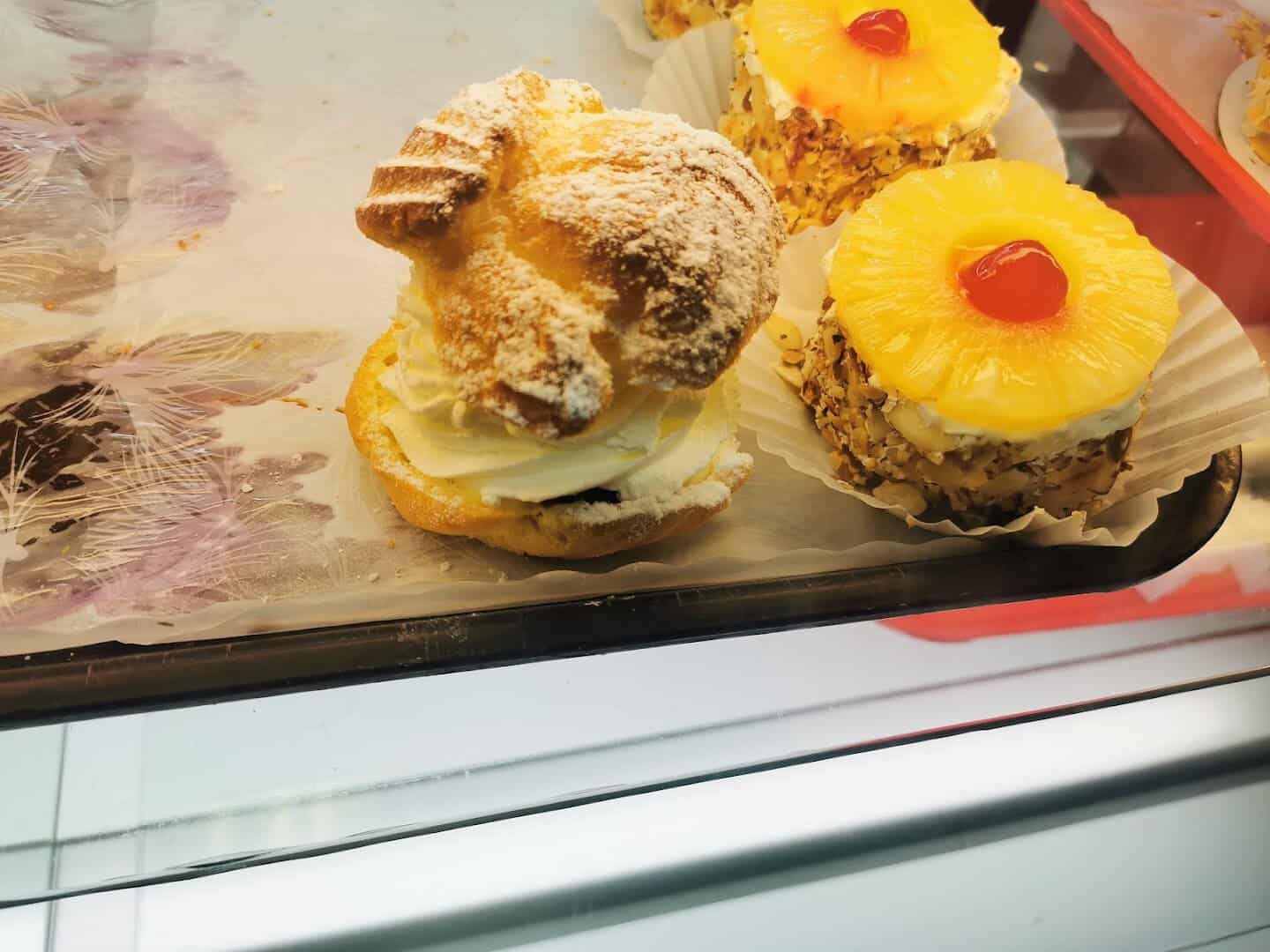
There is more where that came from. Flaky strudel wrapped around fruit. Braided pastries studded with raisins. Tortes for when you have something to celebrate, and racks of cookies for when you just want one anyway.
Everything is made from scratch, in-house, every day the doors are open.
Did you know? In Germany this kind of shop is a Konditorei, a pastry bakery, and it is a separate craft from ordinary bread baking. A place that does both well, under one roof, is doing two demanding jobs at once.
The Coffee-and-Cake Ritual Worth Stealing
Germans have a habit the rest of us should adopt immediately. It is called Kaffee und Kuchen, coffee and cake, a proper afternoon pause when you sit down with a strong cup and a slice of something and simply stop for half an hour.
A bakery like this one is built for exactly that. The cakes are not oversized American slabs engineered to be split four ways. They are the right size for one person, one fork, one quiet moment.
So here is my suggestion. Do not just grab a box and run. If there is a spot to sit, take a Bienenstich and a coffee and give yourself the full experience. If not, do it the second you get home.
It Is a Deli, Too, and a Little Piece of Home
Here is the part that surprises first-timers. This is not only a bakery. Slide over to the counter and it turns into a proper German deli.
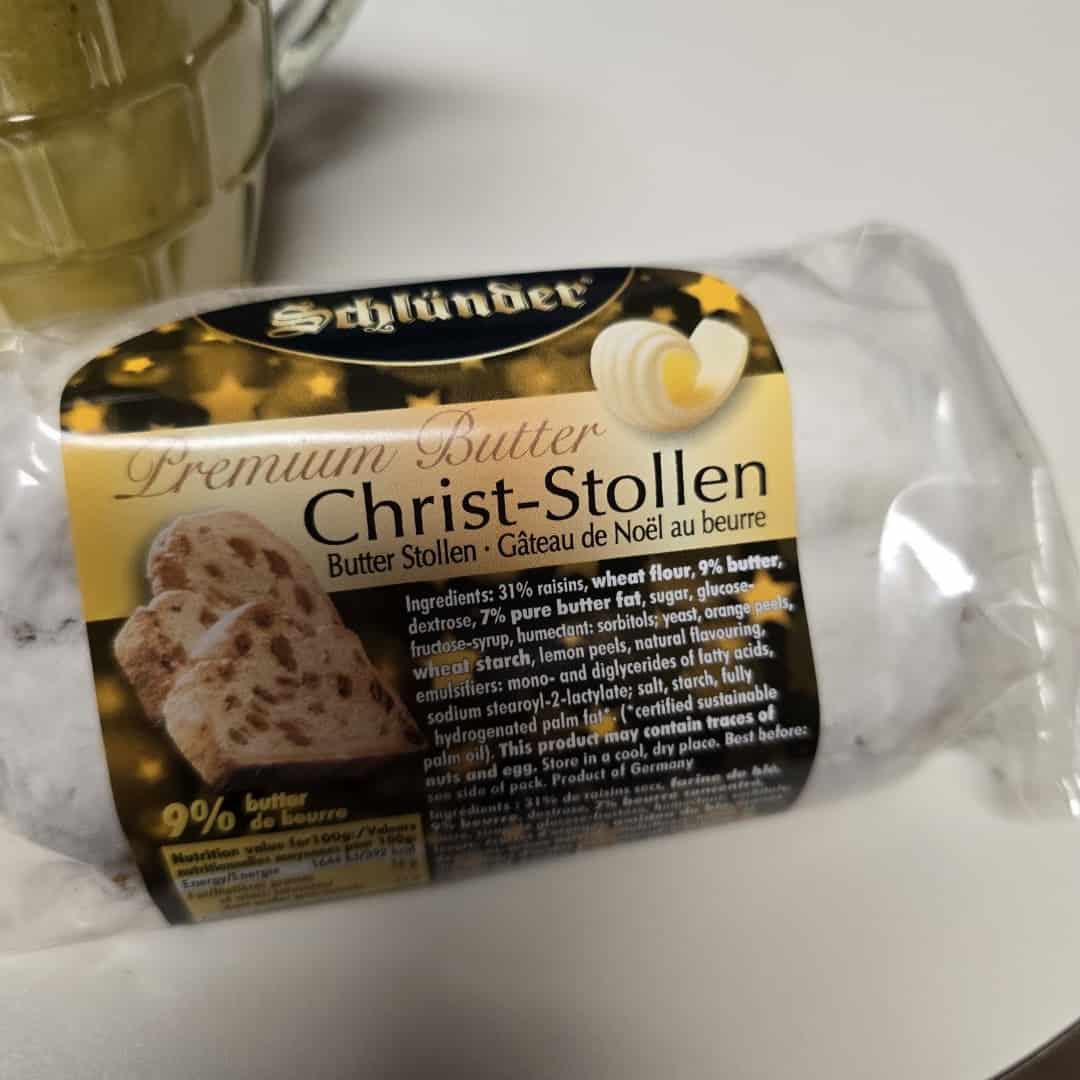
There are the sausages, the cold cuts, the bacon and the ham, sliced to order. There is Fleischsalat, the creamy strips-of-meat salad Germans pile onto a fresh Brötchen without a second thought. There are wieners that taste like a street stand in Stuttgart.
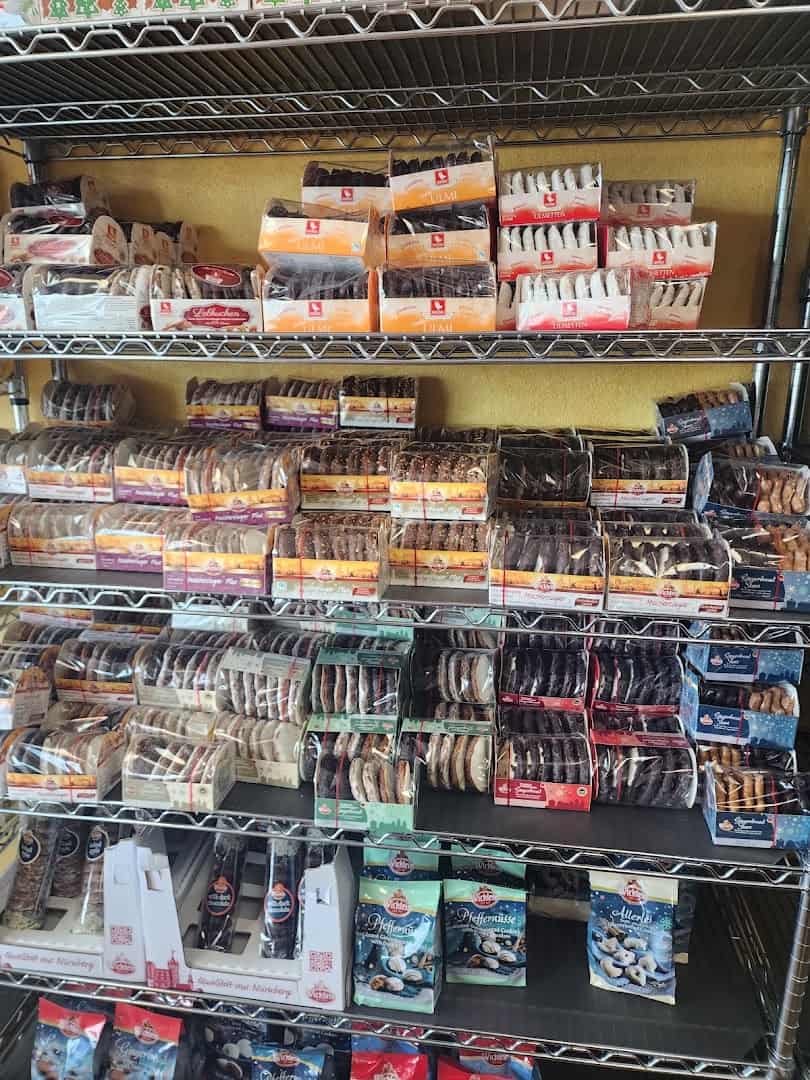
And then the shelves of imported groceries. Mustards and condiments, chocolates, the pantry staples you simply cannot find at a regular supermarket. It is the closest thing to a corner shop in a German town for a very long drive in any direction.
My move here is simple. Grab a fresh Brötchen, have them layer it with Fleischsalat or a few slices of good ham, and add a jar of German mustard for the road. That is lunch, done properly.
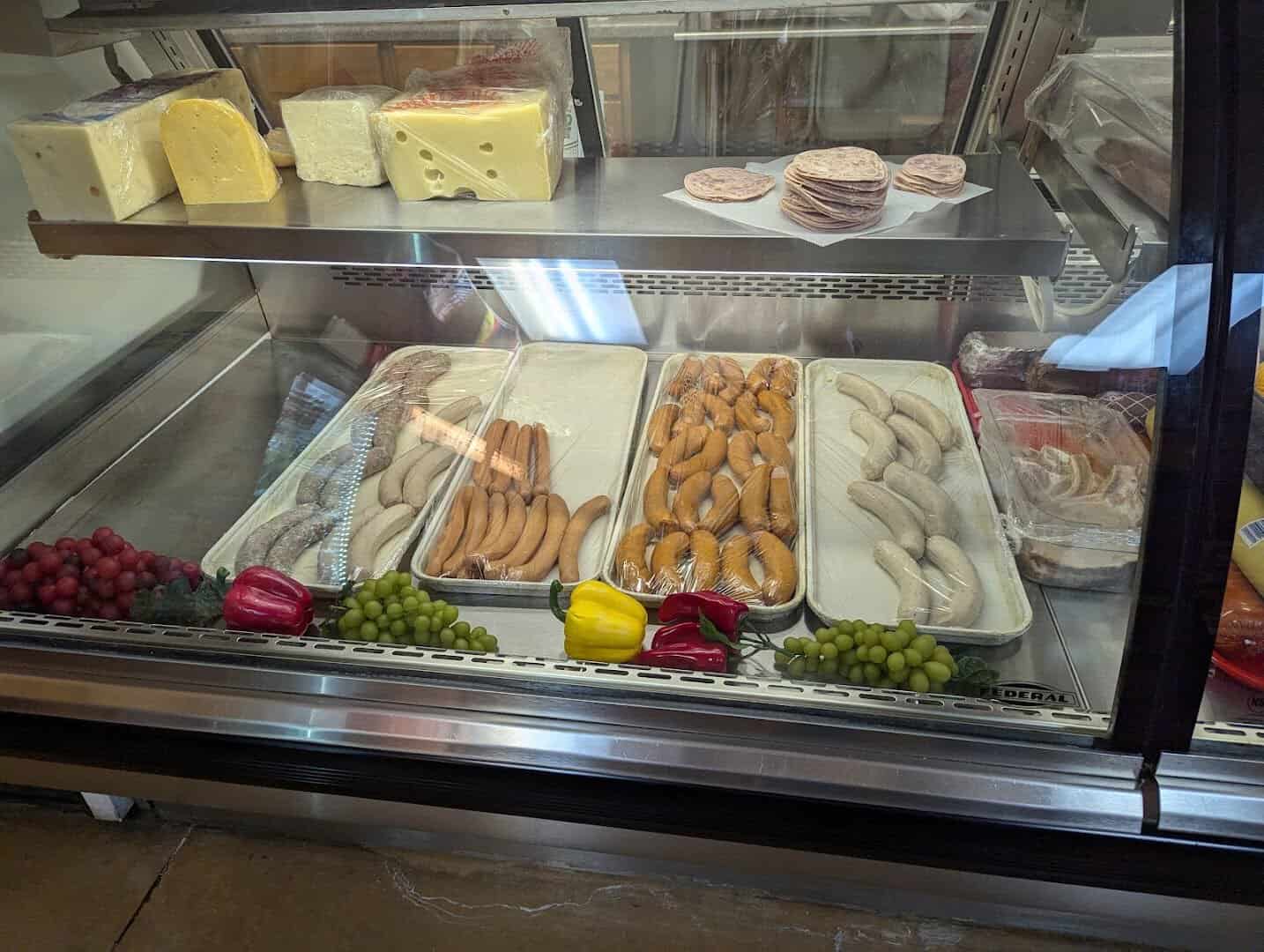
Do not be thrown if you hear German being spoken behind the counter. That is not for show. It is the everyday language of the people who run and love this place, and a big part of why it feels so genuinely transporting.
A Baker From the Black Forest, in Bell County
So how does a shop this real end up in a Harker Heights strip mall? The answer is one man and a very long apprenticeship.
The bakery is the work of Patrick Pfeifer, a fourth-generation baker who learned the trade in the Baden region of Germany, the corner of the country that folds into the famous Black Forest.
Four generations means this is not a recipe he found in a book. It is knowledge passed down a family the way other families pass down land or a name.
He brought that training across an ocean and opened the doors here in 2002. Bakers’ hours are brutal everywhere, and they do not get gentler when you insist on doing it all by hand.
Sixty to eighty hour weeks are the norm, the kind of schedule that only makes sense when the work is also the point.
More than twenty years on, the recipes have not been sanded down to please a mass market. There are no gluten-free swaps, no trendy reinventions. What is in the case is what a Black Forest bakery would have in its case.
Why a German Bakery Thrives Next to an Army Post
The location makes more sense once you know the neighborhood. Harker Heights sits right up against the enormous Army post long known as Fort Hood, renamed Fort Cavazos in recent years.
The wider Killeen area has one of the deepest German connections in Texas. For decades, American soldiers rotated through bases in Germany, and a great many came home to Central Texas with a German spouse.
Those families settled here by the thousands. They grew up on this bread and these cakes, and they are not interested in a substitute. A German grandmother knows exactly what a real Brötchen should feel like in her hand, and she will tell you if it is wrong.
That is a demanding crowd to bake for, and it keeps a place honest. You cannot cut a corner on a Schwarzwälder Kirschtorte in front of people who ate the original their whole lives.
So a shop like this one is not a novelty act. It is a lifeline to a specific kind of homesickness, the sort you can only cure with the right loaf and a slice of proper torte.
It is a lovely, very Texas thing when you think about it. This state has always been built out of people who came from somewhere else and brought the good parts with them. A Black Forest bakery in Bell County is that story in edible form.
What It Costs and How to Order Like a Regular
The prices are refreshingly small-town. Most of the breads and rolls run just a few dollars, with plenty landing right around the $2.25 to $3 mark apiece. You can fill a bag for less than a single fancy coffee-shop pastry would cost you elsewhere.
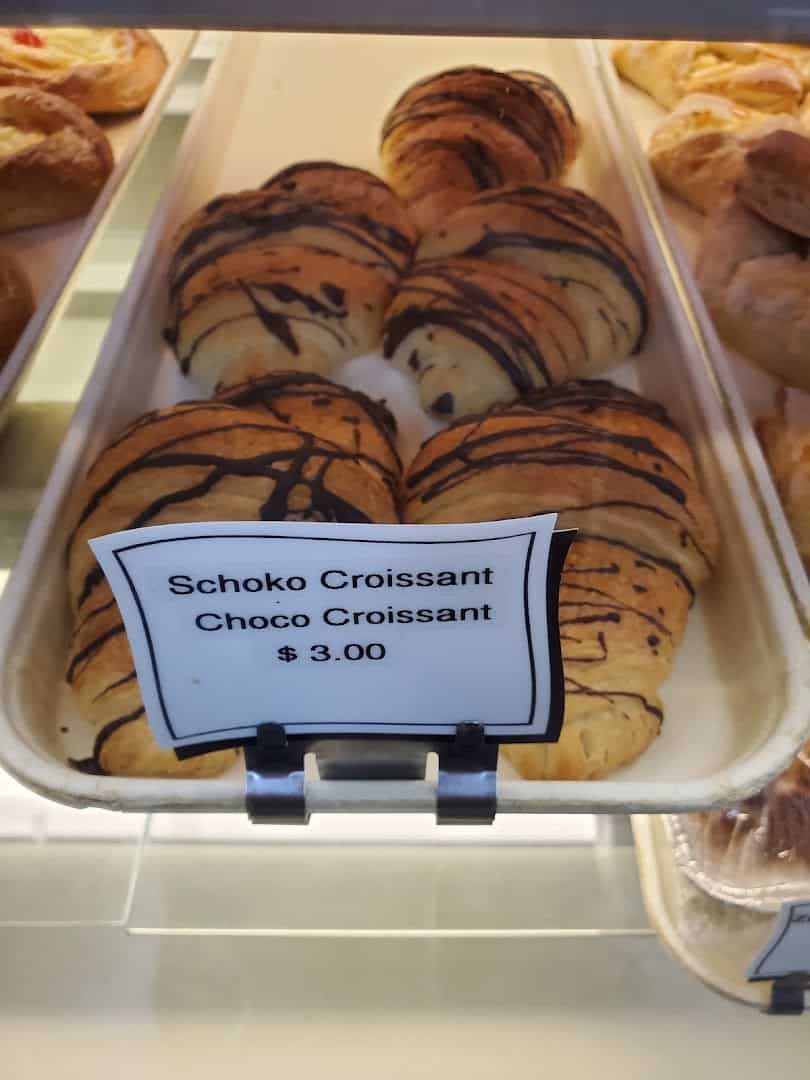
Over at the deli, sliced meats and specialty items climb a bit. A hunter sausage runs around $8.19, blood sausage about $7.39, and a premium nut ham lands near $13.49 for the good stuff. Still, none of it is precious.
That is part of the charm. This is a working bakery for working people, not a boutique trading on the word “artisan.” The value is in the craft, priced like it is 2002, the year the ovens first fired up.
A few things worth knowing before you go. This is a cash-friendly, old-fashioned kind of shop, so bringing some bills along is never a bad idea. The best bread and pastries sell out, so earlier in the day is your friend.
Pro tip: a small family bakery lives and dies by its baker, so hours and days can shift with the season. A quick phone call before a special trip is the surest way to catch it open and stocked.
How to Get There
Where: 716 Indian Trail, Suite 240, Harker Heights, TX 76548. It sits in a shopping strip just off US 190, an easy detour between Killeen and Belton, and roughly an hour north of Austin.
You can reach the shop at (254) 698-0211 to check the day’s hours and what is fresh, and browse the offerings ahead of time on the bakery’s own site.
Plan a Central Texas Bread Run
Some road trips are about the big attractions. This one is about a warm pretzel eaten in a parking lot, a box of Bienenstich riding shotgun, and a loaf of Black Forest bread that will ruin the grocery-store stuff for you forever.
So point the car toward Harker Heights, come hungry, and bring a cooler for the deli haul. Grab a dozen rolls and a slice of the Schwarzwälder Kirschtorte, and try, if you possibly can, to make it home before you have eaten the whole bag.
Featured image: Anne via Pfeifer’s German Bakery

Stella Raines
Editor-in-Chief
Stella brings over a decade of storytelling experience to TX Headlines. With roots in West Texas and a love for road trips, she leads the editorial team with an eye for the hidden stories that make Texas unforgettable.
More Stories
Tags