This Dreamy Texas Tulip Farm Is a Pick-Your-Own Sea of Color Every Spring
Bluebonnets get all the press in Texas, and I love them as much as anyone. But nobody mentions the catch: you cannot take a bluebonnet home. Picking them is frowned upon, and they wilt in the car anyway.
Tulips are a different story. You are supposed to cut them.
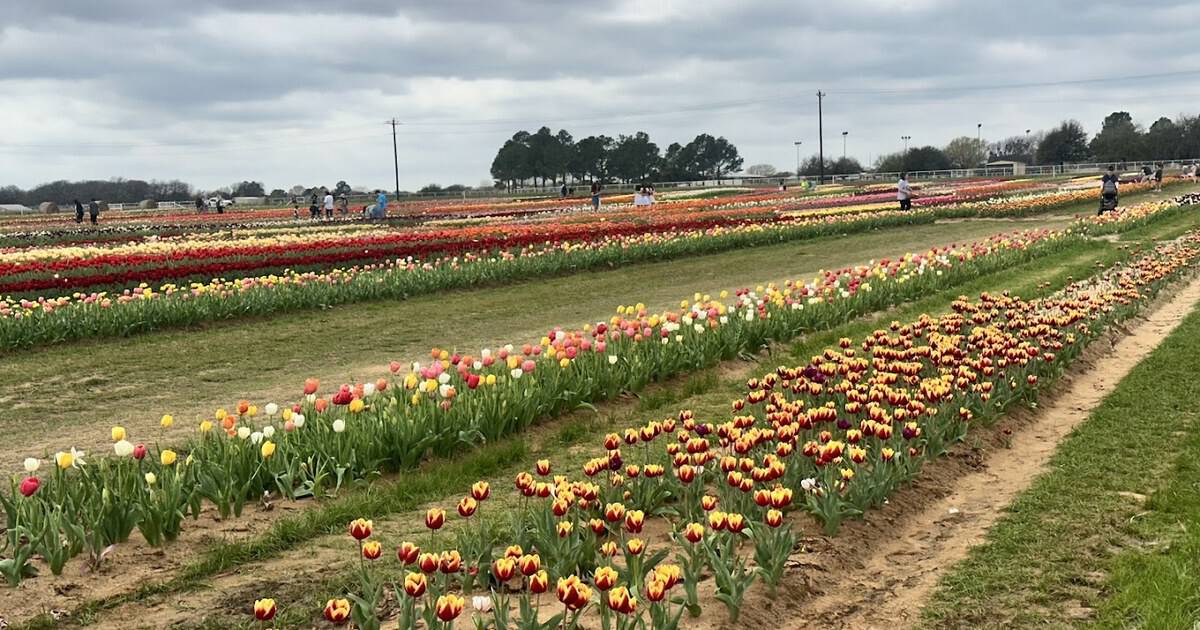
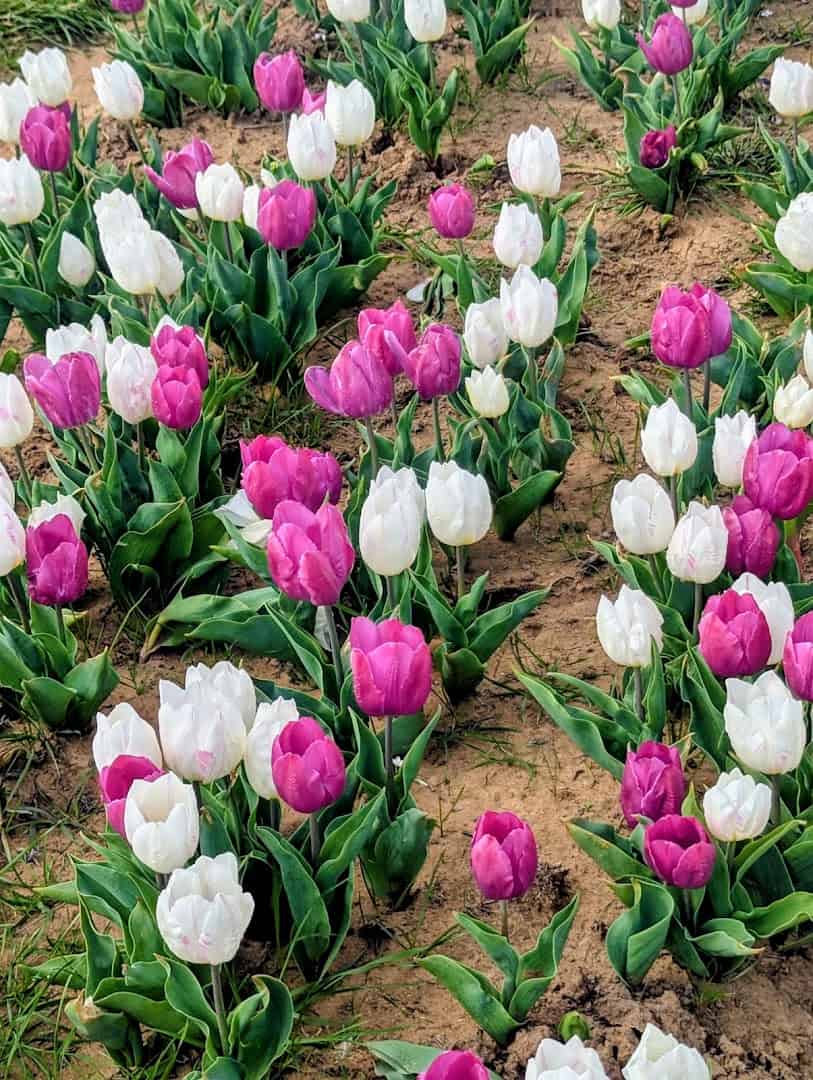
About an hour north of Dallas, Texas-Tulips in Pilot Point plants more than a million Dutch bulbs each winter and then hands you a basket. What you get is a candy-striped horizon of red, purple, pink, orange and white that you are allowed to walk into.
Below, here is how the whole thing works, from the gate to the vase.
A Sea of Color an Hour From Dallas
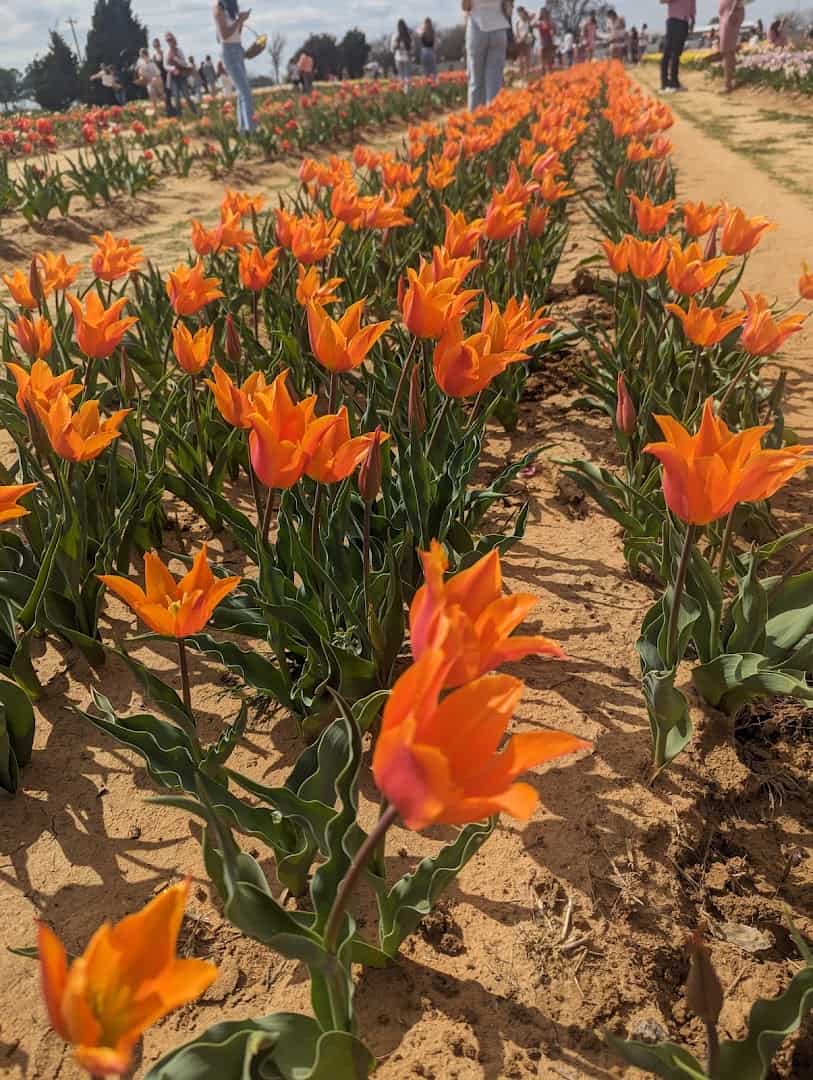
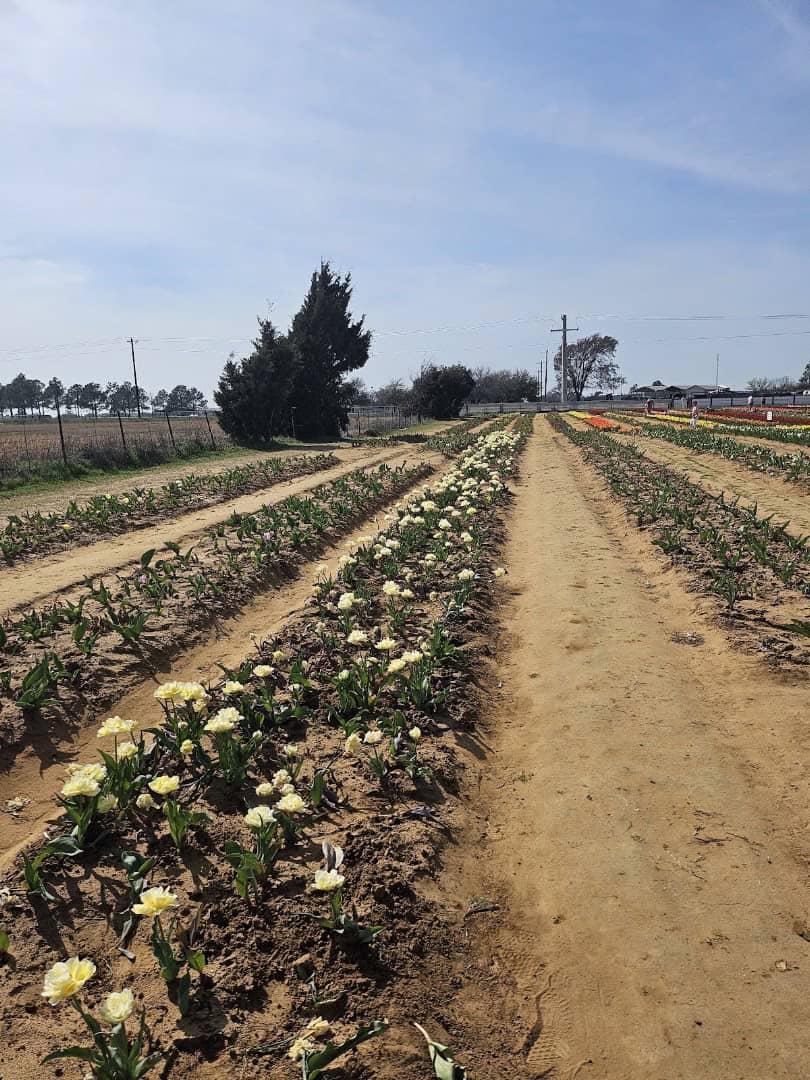
The first thing that hits you is the scale. The farm says its fields cover more than 12 acres, and the rows run in long, straight bands of single colors, one variety after another.
From the parking area it looks less like a Texas pasture and more like somebody unrolled bolts of fabric across the ground. The seed of this whole idea, a Dutch bulb field, is sitting in Denton County.
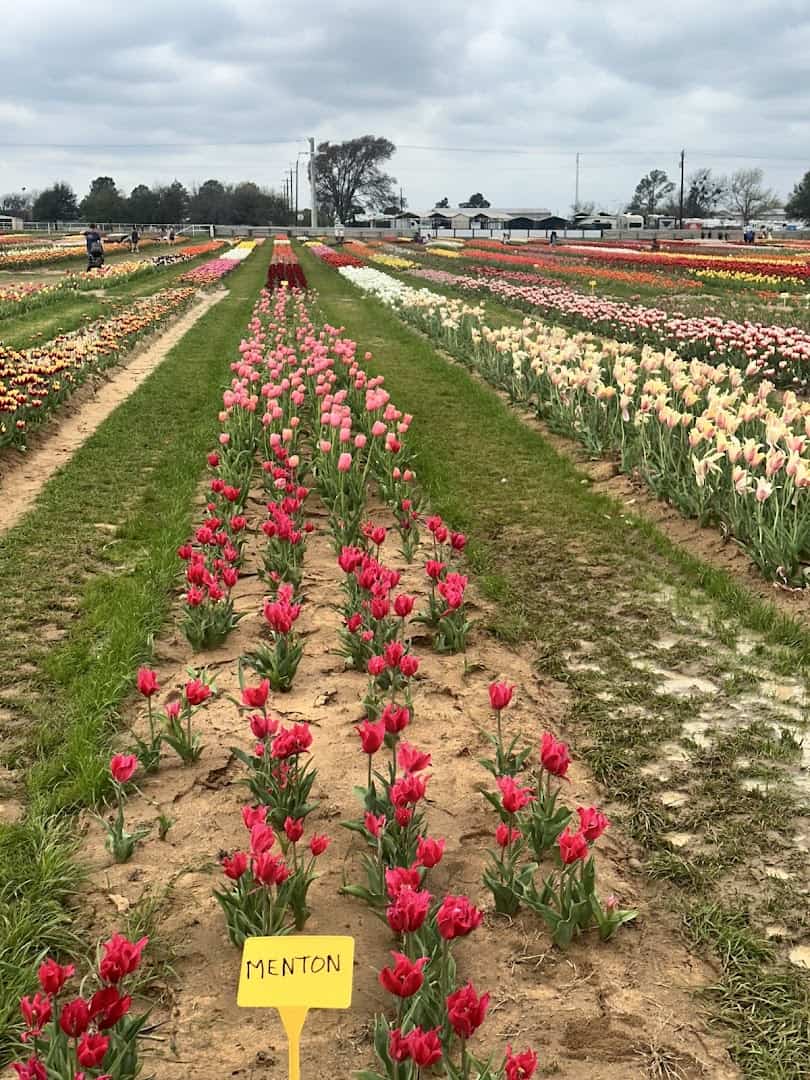
Each row is labeled by variety, and the planting is staggered on purpose. Early bloomers open first, then the mid-season types, then the late ones. That is why the field looks different every week, and why something is usually in bloom whether you come early or late.
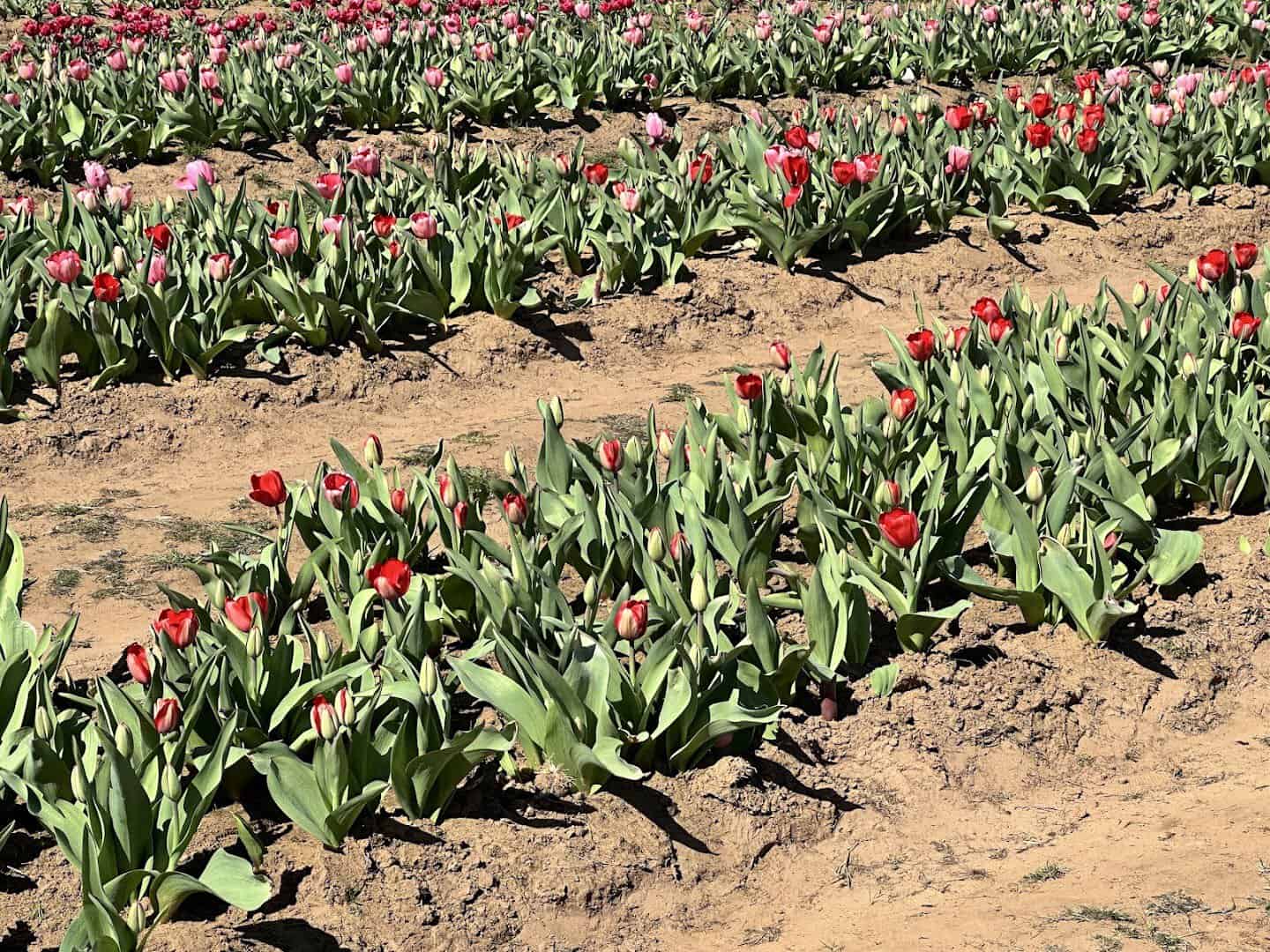
Early in the season the reds and deep purples tend to dominate. Come back in mid-March and the soft pinks, creamy whites and bright oranges have filled in. At peak the stems reach 18 to 24 inches, and the rows look full from the road.
Wide grass aisles run between the rows, so you can wander without stepping on anything. Benches sit here and there for anyone who wants to just stare at the color for a while. I would be one of those people.
There are a few little white footbridges over the irrigation channels and a painted backdrop near the entrance, both built for photos. Bring the good camera. The color does most of the work for you.
How Pick-Your-Own Actually Works
It is simple, which is part of the charm. You pay a per-person entry fee at the gate, grab a basket, and head into the rows. Then you pick whatever catches your eye.
Bring a small pair of pruning shears if you have them. A clean cut near the base gives you the longest stem, and long stems are the whole point of a tulip.
Pick a few, then stop and look around. I guarantee you will find a color three rows over that you like better. That is the trap of this place, and it is a good trap.
When your basket is full, you carry it to the checkout kiosk. Staff count the stems, clean them up, and drop the cut ends into flower gel so the bouquet survives the drive home.
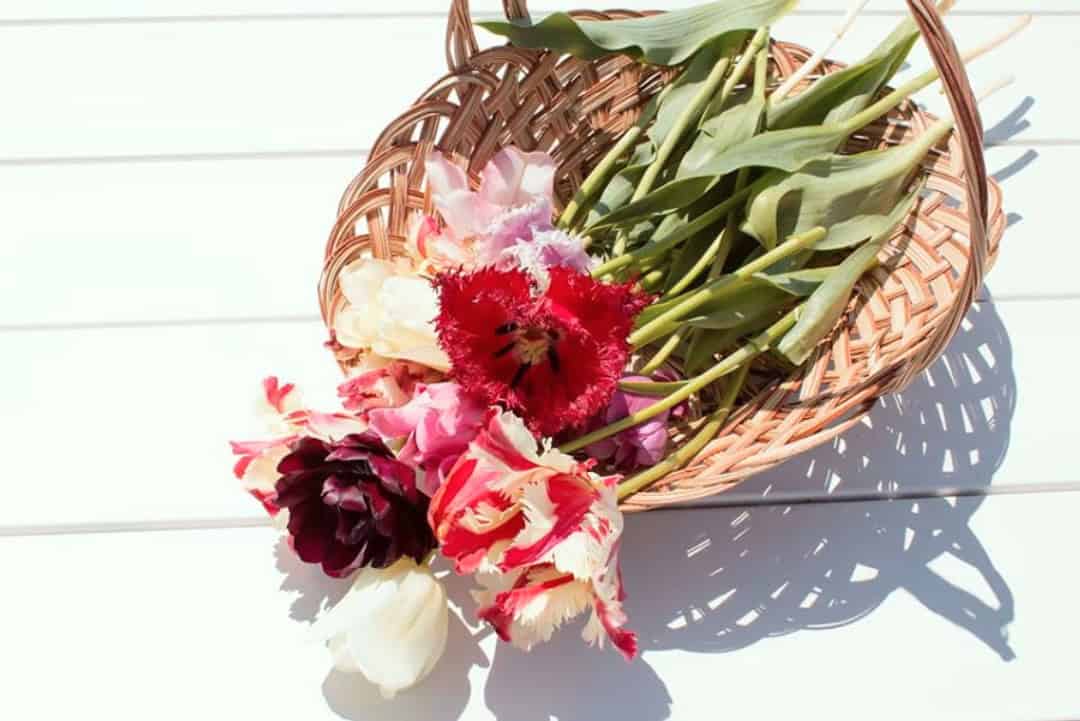
Then they wrap the whole bundle in paper. You walk out looking like you just left a florist, except the flowers were in the dirt twenty minutes ago.
Stems are sold by the piece, and the farm’s website lists them at $3 each. The bouquet is priced by how many you cut, not by size, so a dozen mixed tulips runs about what you would pay at a grocery store, except you chose every single one.
Which Tulips Should You Pick?
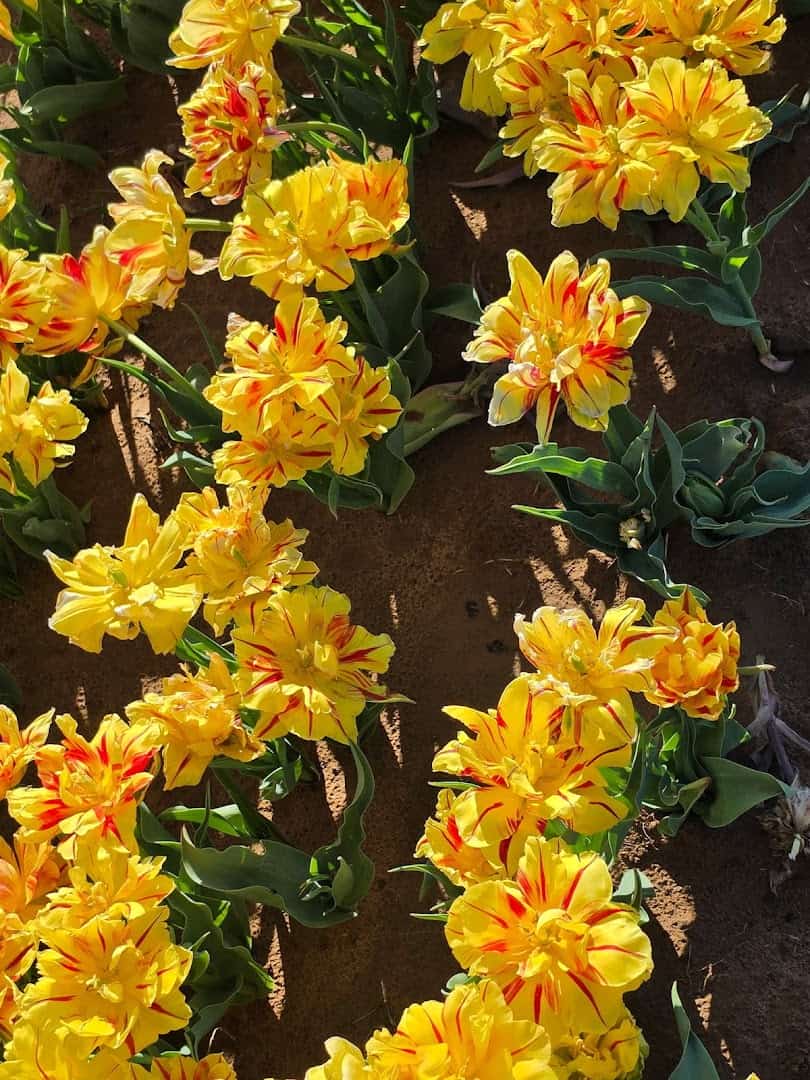
The farm grows about 100 varieties across the season, split between early, mid and late flowering types. Some are the classic egg-shaped tulips you picture in a Dutch painting. Others are fringed, or ruffled like a peony, or streaked with two colors at once.
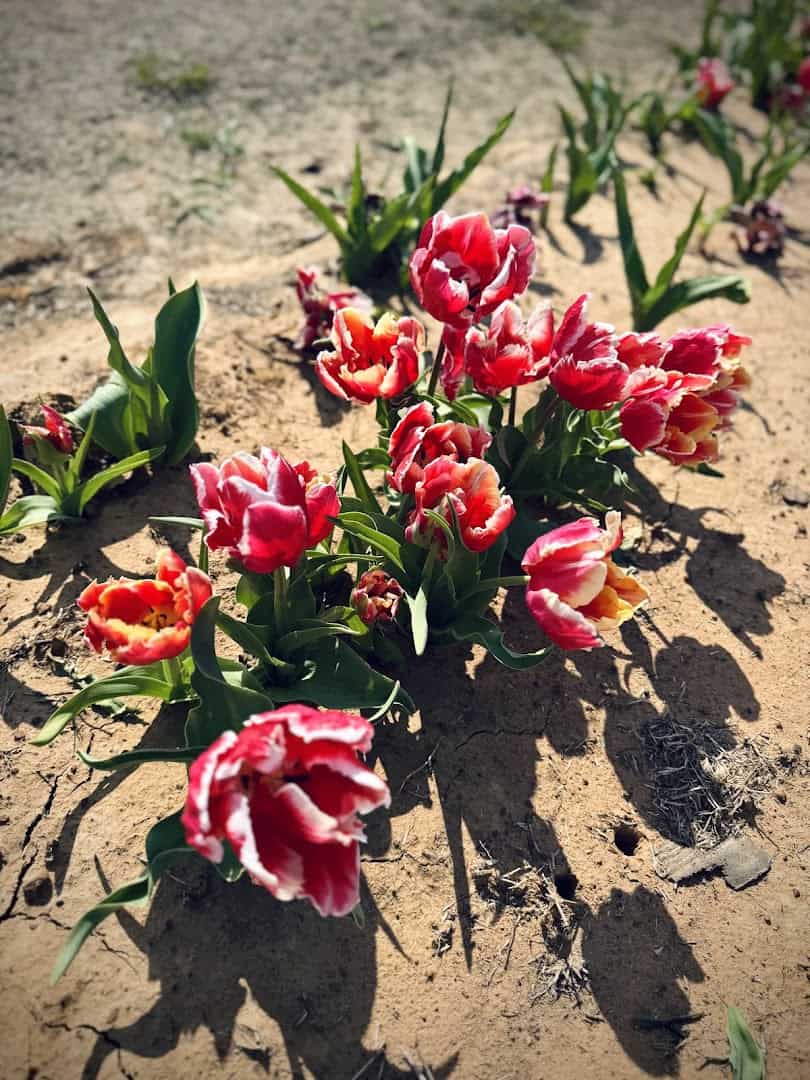
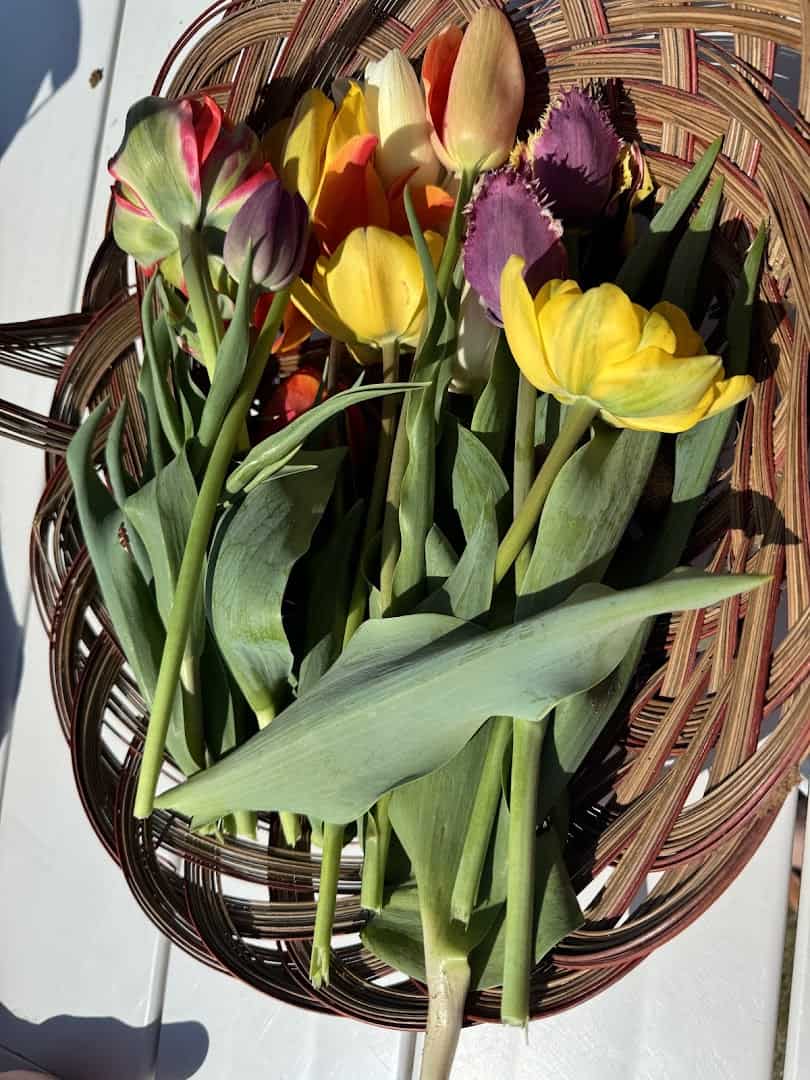
My advice is to pick the ones that are still slightly closed. A tulip keeps opening after it is cut, so a tight bud today is a full bloom on your kitchen table by the weekend. Fully open flowers look glorious in the field but fade faster in a vase.
Mix your colors, or do not. There is a real case for a single bouquet of nothing but deep purple. I have gone back and forth on this and still cannot decide, which is the best kind of problem to have.
The travel blog TravelLatte put it well after a day in the rows: “There is something special about having a beautiful bouquet of fresh tulips that you picked yourself!” That is the whole pitch, really.
Pro tip: Once you get home, trim the stems again, use cold water, and keep the vase out of direct sun. Tulips also keep growing in the vase, sometimes an inch or more, so leave them a little room.
From Holland to the Prairie
The story behind the field starts an ocean away. Piet and Afra Koeman began their farm in the Netherlands roughly 40 years ago with a handful of onion seeds. They added leeks, then chrysanthemums and irises, and finally tulip bulbs.
The operation grew to 80 acres, and each winter the family raised tens of millions of tulips in greenhouses for the Dutch flower auctions. That is the scale of the tulip trade in Holland, where flowers are an industry, not a hobby.
Piet died in 2011, and the family decided to change course. Here is my favorite detail: they had grown up watching the 1980s TV show Dallas, and after several trips to Texas, they chose to bring the business here.
Their son Pieter and his wife Petra opened Texas-Tulips in Pilot Point in 2015. A Texas Farm Bureau profile said the family wanted to finally meet the people who buy their tulips, instead of selling them through an auction hall.
It was the first pick-your-own tulip farm in the state. That first field covered six acres. Today the farm says it has grown to more than 12 acres, with over a million tulips planned to bloom in a single season.
Afra came along too. A 2018 profile in Plano Magazine noted that at 73 she was still very active in the company. The family later opened a second field in La Vernia, near San Antonio, in early 2020. The Pilot Point farm remains the original.
Wait, How Do Tulips Grow in Texas?
Did you know? Tulips need a long cold spell to bloom, which is why they thrive in the Netherlands and struggle in a Texas backyard. The Koemans solve this the way Dutch growers always have: the bulbs are pre-cooled before they ever touch the ground.
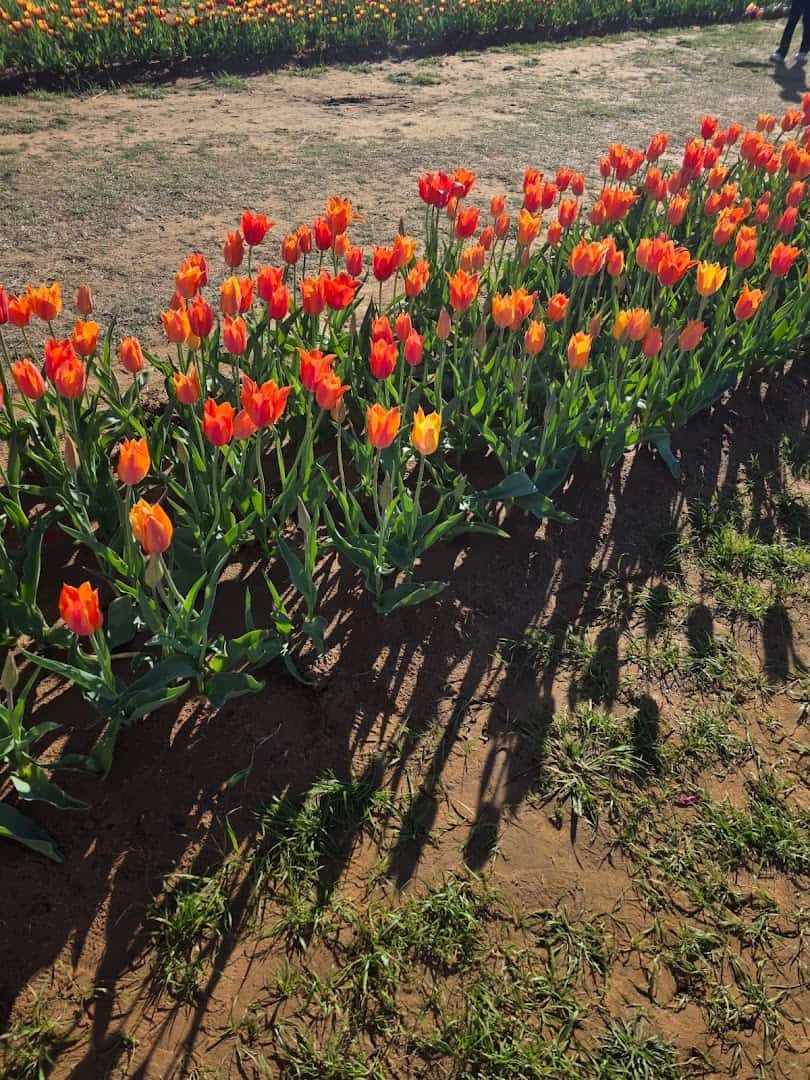
Fresh bulbs are imported from Holland every year, where the family has deep contacts in the trade. They go into the ground in December, and the first blooms show up in late February. The whole field is replanted each season, which is why the color layout changes year to year.
If you want to try this at home, the farm sells pre-cooled bulbs by the dozen and ships them to your door in December or early January, right when you should be planting them in North Texas.
You can fill out an order slip during your visit and forget about it until the box shows up. I think that is a lovely way to bring a piece of the field home twice, once in a vase and once in the yard.
Timing Your Trip
The season is short, and this is the part people miss. The farm typically opens in the middle or end of February and runs through late March or early April, depending on the weather. Most seasons last about five weeks.
Peak color usually lands in mid-March, when the mid-season varieties are open and the late ones are starting. Weekday mornings are calmest, and the light is softer for photos. Weekends get busy, especially when the weather is pretty, so come early.
The 2026 season opened on February 15 and has already wrapped up. The farm’s website says it is closed for 2026 and plans to reopen in spring 2027. Follow its Facebook or Instagram page in late winter for the exact opening date and daily bloom updates.
One warm week can push the whole field forward, and a cold snap can hold it back. Check the farm’s social pages the day before you drive, and you will not show up to bare dirt.
What to Know Before You Go
Wear closed-toe shoes you do not mind getting dirty. The rows are irrigated, and the ground between them can be muddy even when it has not rained.
Strollers and wheelchairs work fine when it is dry, and the farm says staff can help with access when weather allows. There is not much shade out there, so a hat and sunscreen are smart on a bright day.
Dogs are not allowed in the field or the parking lot, and drones are off limits too. Outside food and drinks stay in the car, but there is a concession stand with snacks, chips, candy and sodas. Restrooms, picnic tables and free parking are all on site.

Stay in the aisles and never step into a row. It sounds obvious, but the bulbs beneath your feet are next week’s flowers. The farm asks that you leave nothing behind but footprints.
Pricing on the official website lists general admission at $7 per person, with children 12 months and under free. Veterans and seniors get a weekday package at $10 that includes three tulip stems. Professional photographers can buy a $25 day pass. Major credit cards are accepted.
Make a Day of Pilot Point
Pilot Point is a small Denton County town with a historic square worth a slow walk. Lake Ray Roberts sits just to the west if you want to pair your tulips with a picnic by the water.
Animal lovers can add Sharkarosa Wildlife Ranch, a few miles away, and the town’s own visitor guide points to a strawberry farm and a walking tour of the downtown historic district. You could easily stretch a tulip run into a full spring Saturday.
How to Get There
Where: Texas-Tulips, 10656 FM 2931, Pilot Point, TX 76258
From Dallas, take US 380 west toward Denton or head up the Dallas North Tollway and cut over on FM 2931. It is about an hour from downtown Dallas and 45 minutes from Plano. The farm is open daily during the season from 10 a.m. to 8 p.m., weather permitting.
Go Pick Your Own Spring
Every year I tell myself I will get out to see the wildflowers, and every year the season slips past before I do. Tulips give you a reason to actually put a date on the calendar, because the payoff is a bouquet you cut with your own hands.
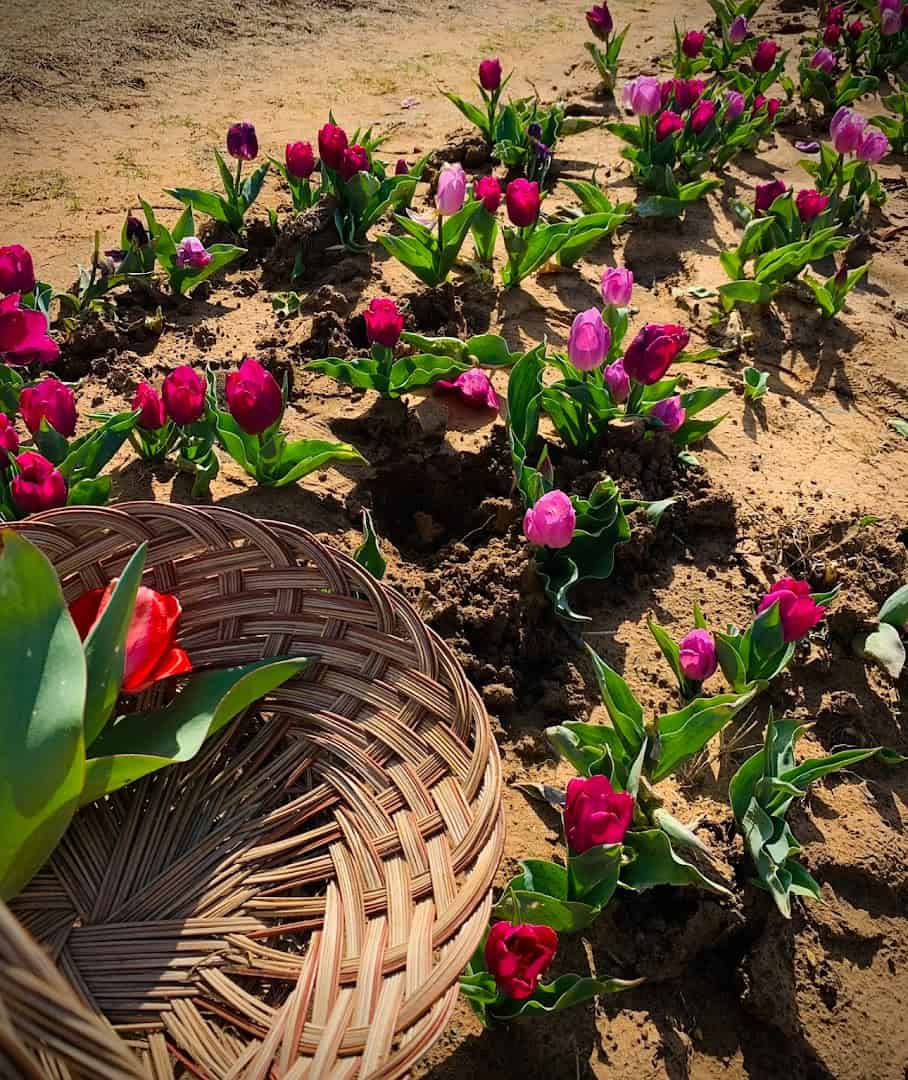
So pick a March weekday, wear old shoes, and bring a friend who will not judge you for filling two baskets. Walk the rows, pick the tight buds, and let the folks at the kiosk wrap them up. Then drive home with a sea of color riding shotgun.
Featured image: Allie Tann via Texas-Tulips

Stella Raines
Editor-in-Chief
Stella brings over a decade of storytelling experience to TX Headlines. With roots in West Texas and a love for road trips, she leads the editorial team with an eye for the hidden stories that make Texas unforgettable.
More Stories

These 10 Texas Spots Bloom Into Seas of Bluebonnets Each Spring

This Enchanting Texas Nature Trail Feels Like Hiking Through a Fairytale Forest

This Underrated Texas State Park Gives You a Full Day of Swimming and Hiking for Just $5

This Easy Texas Hike Leads to a Swinging Suspension Bridge Hidden in the Pines
Tags