9 Fall Foliage Hikes That Reward You With Jaw-Dropping Color
I can hike the same trail in July and barely remember it a week later. Walk it in October, under a canopy going gold and crimson, and it sticks with me for years. Fall does that to a good hike.
There is a short window every autumn when the whole country seems to catch fire in slow motion. Gold creeps down from the ridgelines, red pools in the valleys, and then it is gone. Miss it by two weeks and you get bare branches and regret.
That is the quiet magic of a fall hike: a familiar trail becomes something else entirely. Below are nine hikes across America built for exactly that window, each ending at a lookout, a summit, or a stretch of trail that turns spectacular when the leaves turn.
Lace up, check the foliage forecast, and pick your leaf-peeping route.
1. Maroon Bells, Colorado
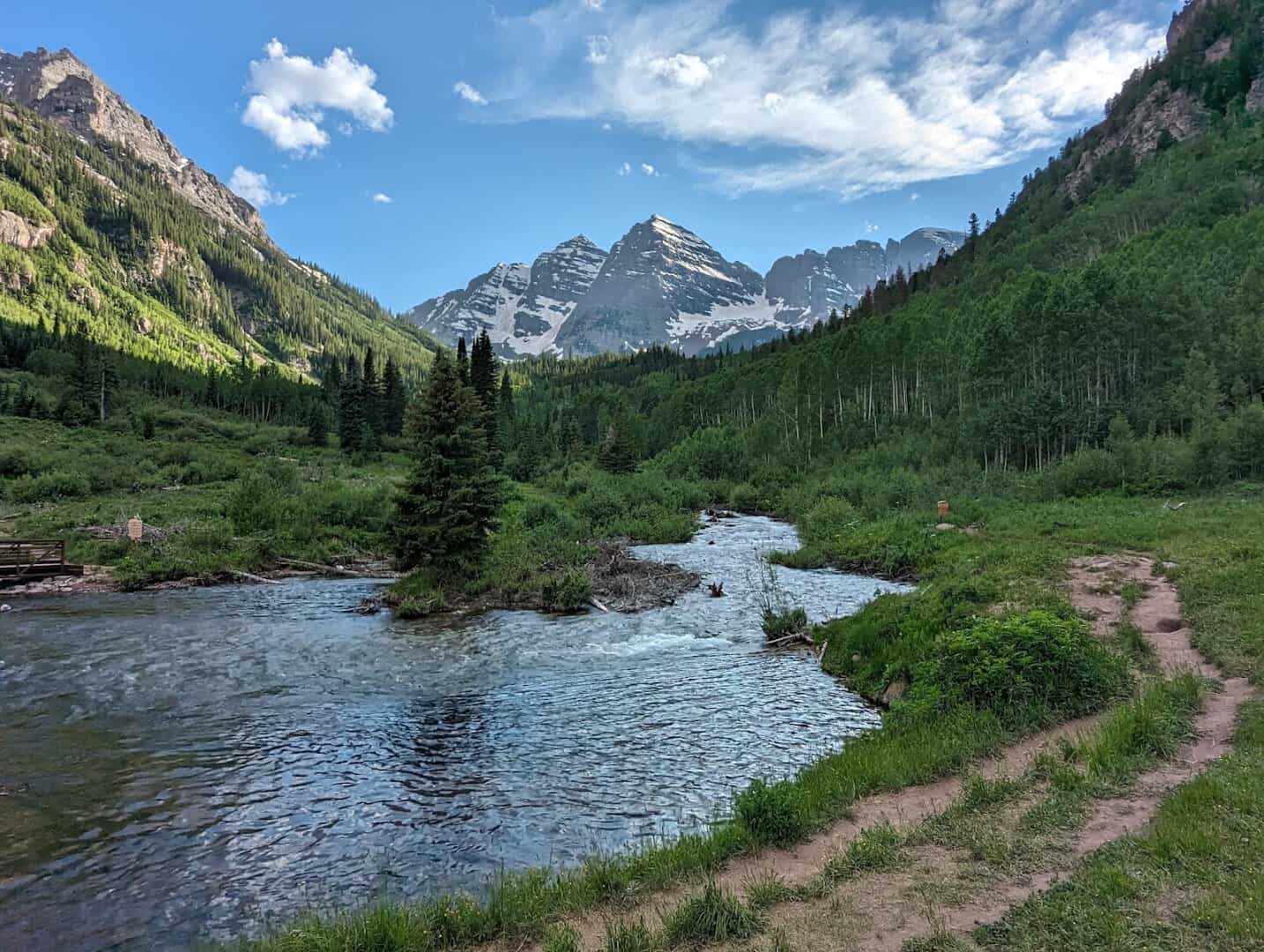
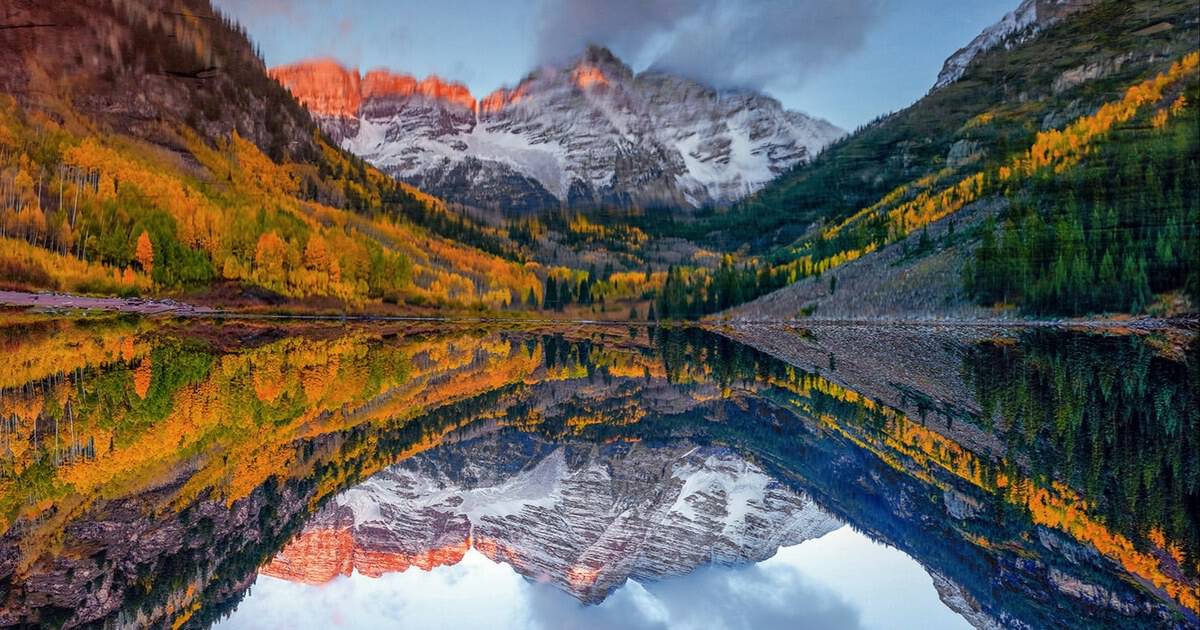
The Maroon Bells might be the most photographed mountains in North America, and fall is when they earn it. Two jagged maroon peaks rise behind Maroon Lake, and every September the aspen groves at their feet blaze gold.
The Maroon Lake Scenic Trail is the easy way in: a mostly flat mile that hugs the shoreline, past a beaver pond, with the reflection doubling the whole scene in still water.
At 9,500 feet the color peaks mid-September into early October, earlier than most of the country. Golden aspens against snow-dusted peaks is the shot everyone drives up for. Calm mornings turn the lake into a mirror that doubles every gold slope.
Both summits here, North Maroon and Maroon Peak, top 14,000 feet. Snow often lingers near the top well into aspen season, so you can catch gold trees and white peaks in the same frame, which is half the reason the photos look unreal.
Pro tip: personal vehicles are restricted in peak season, so take the shuttle from Aspen Highlands and leave the driving to someone else. The ride up Maroon Creek Road is a preview of the color to come.
Where: Maroon Lake, end of Maroon Creek Road, about 10 miles southwest of Aspen, Colorado. Ride the RFTA shuttle from Aspen Highlands during fall season.
2. Artist’s Bluff, New Hampshire
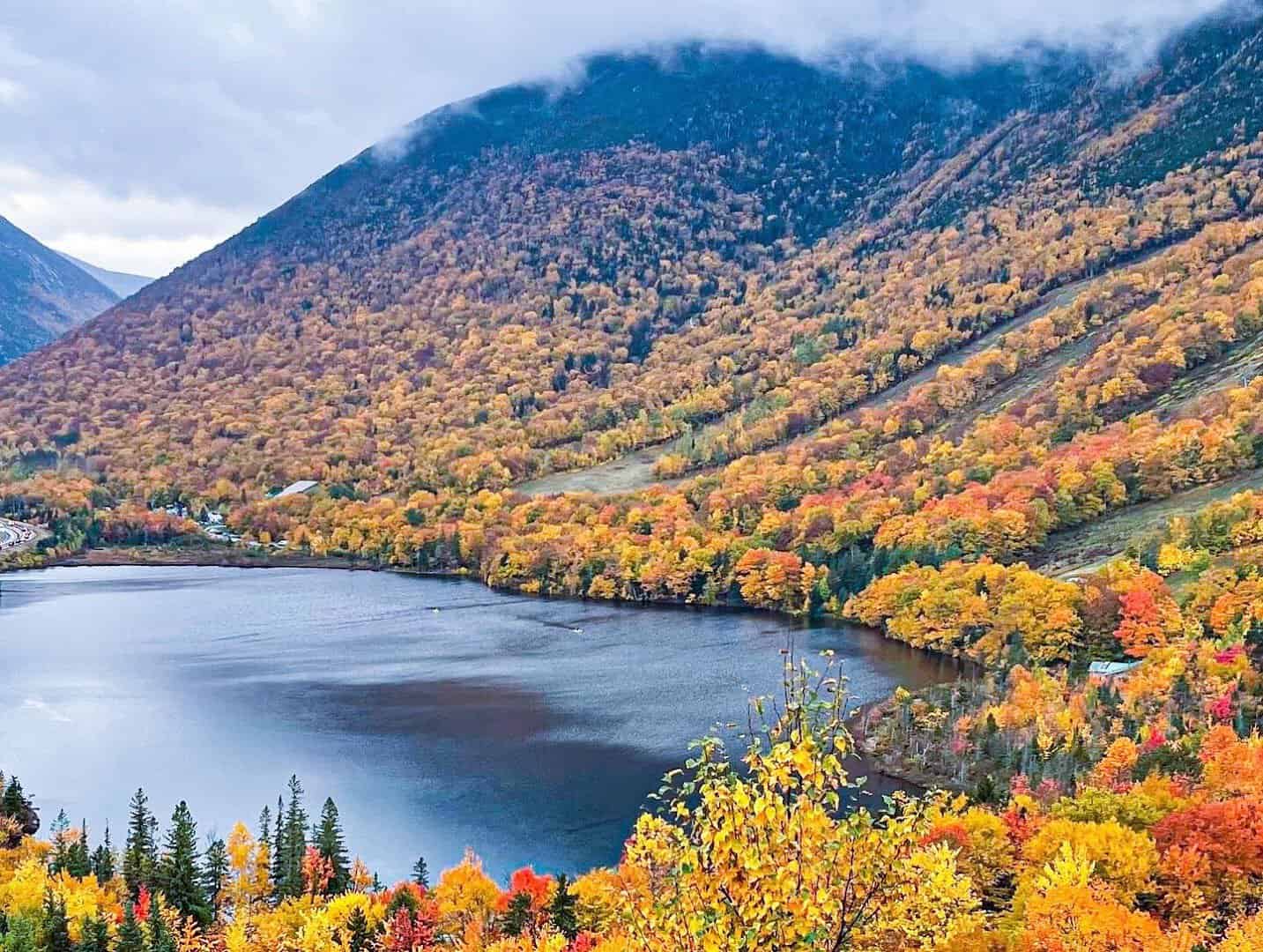
Some overlooks make you work an hour to earn ten seconds of view. Artist’s Bluff hands you one of New Hampshire’s biggest panoramas for barely a mile of effort.
The short, steep loop climbs to a rocky perch above Echo Lake, right in the heart of Franconia Notch. Below, the notch spreads out in a bowl of color, with Cannon Mountain rising across the water.
The whole loop runs about a mile and a half and connects to Bald Mountain right next door. Tack that on and you bag two little summits in a single short, high-payoff outing, which is rare in the White Mountains.
It draws big crowds on peak foliage weekends, and one look explains why. Get there early, or the trail starts to feel like a parade route.
Where: Bald Mountain and Artist’s Bluff trailhead, Franconia Notch State Park, off Exit 34C on I-93, near Franconia, New Hampshire.
3. Rough Ridge, North Carolina
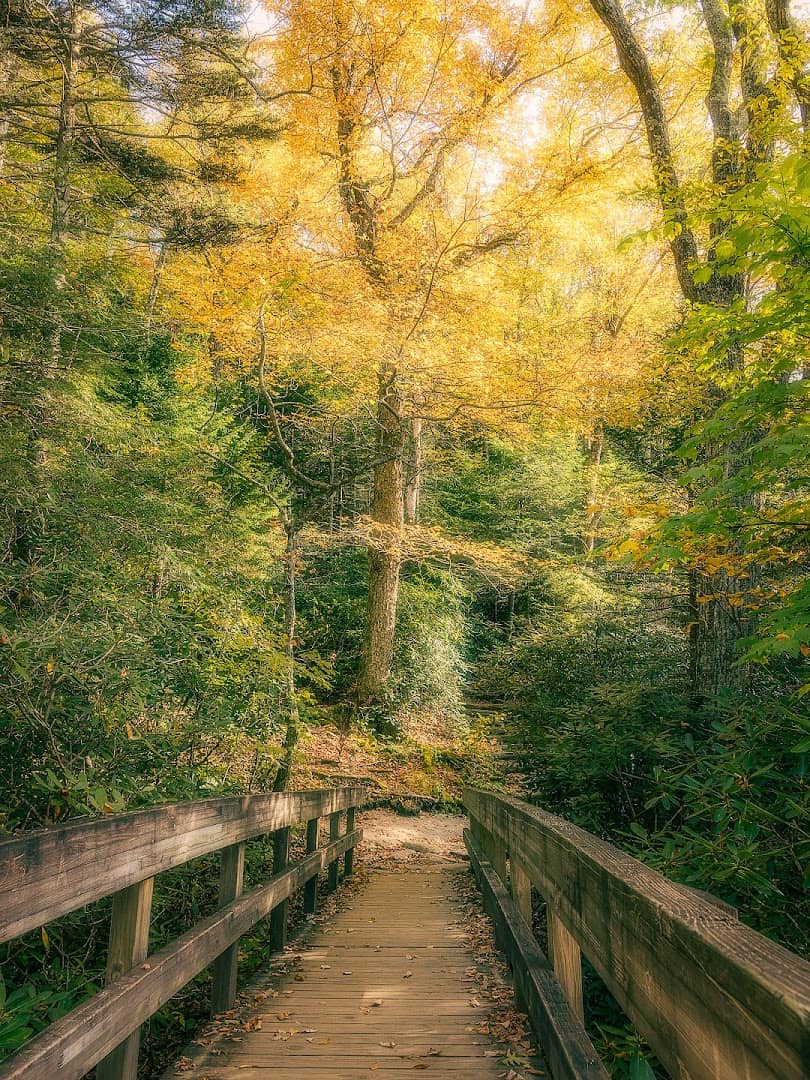
Rough Ridge is where the Blue Ridge Parkway shows off. A wooden boardwalk carries you up through windswept trees to bare rock outcrops, and the valley below turns every shade of red and gold.
From the top you look straight across to Grandfather Mountain and the graceful curve of the Linn Cove Viaduct, the road appearing to float on the mountainside. Completed in 1987, the viaduct was the final piece of the whole Blue Ridge Parkway to open.
At 4,773 feet it catches color early, often the first real foliage on the Parkway in late September. The round trip is barely over a mile, so the reward comes fast.
Because the trail climbs an open rocky spine with sky on both sides, the color reads especially bright against the bare stone. It is a favorite of Parkway photographers for exactly that reason, and the boardwalk keeps you off the fragile alpine plants.
Where: Rough Ridge parking area, Blue Ridge Parkway Milepost 302.8, near Linville, North Carolina.
4. Maple Pass Loop, Washington
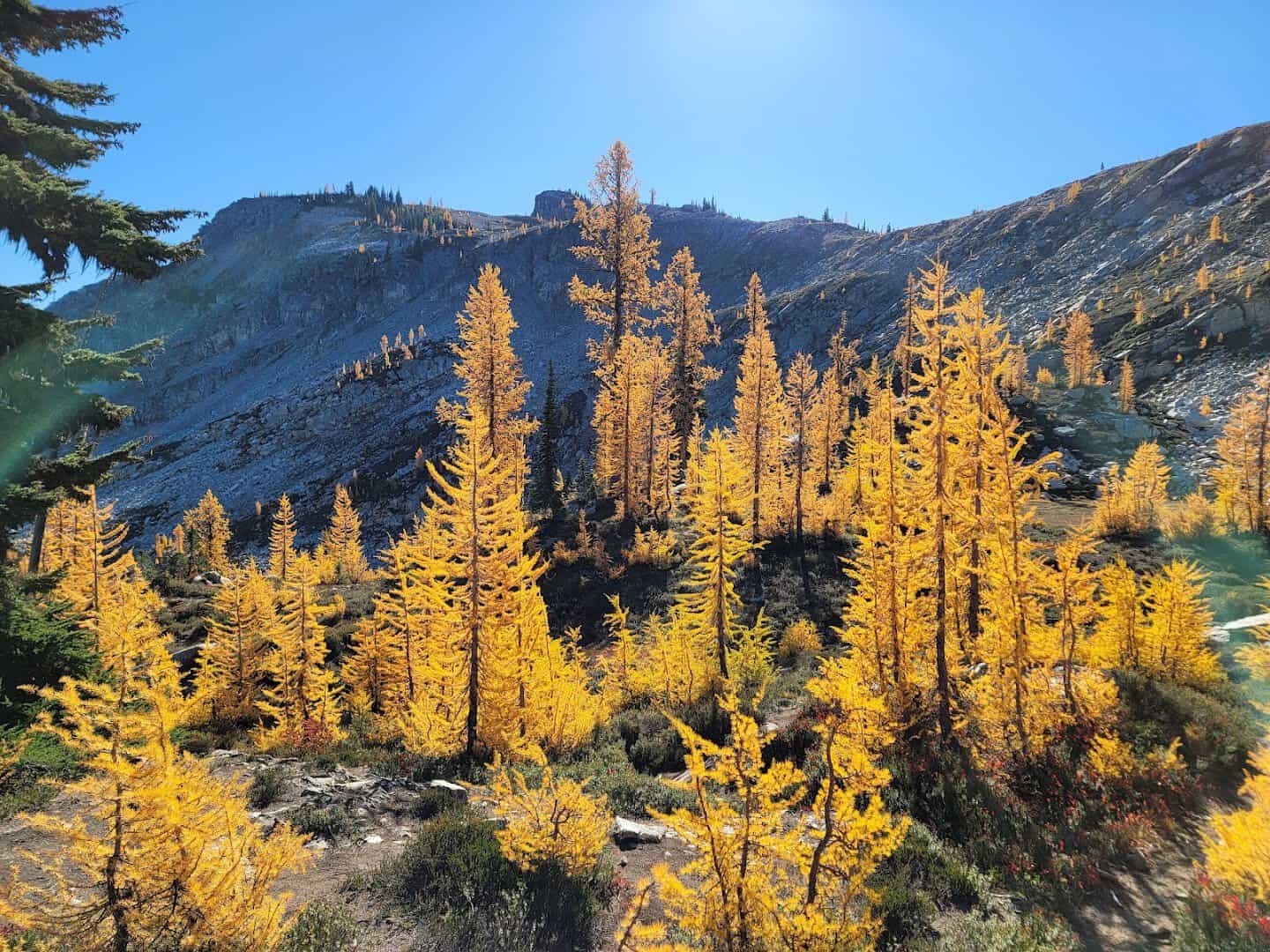
Most of America thinks fall means maples. The North Cascades know a rarer trick: golden larches. These alpine conifers turn brilliant yellow before dropping their needles, and Maple Pass is the place to see them.
The seven-mile loop climbs past Lake Ann into high country where whole hillsides glow amber against blue-gray peaks. It tops out near 6,600 feet, with the lake glinting far below. Late September into early October is the narrow larch window.
The full loop climbs about 2,000 feet, so it earns its views, but the trail stays well graded the whole way. That keeps the effort honest rather than brutal, even near the top.
Hike it counterclockwise for a gentler climb and constant views. It is one of Washington’s most beloved autumn trails, so weekends fill the lot fast.
Did you know? Larches are one of the few conifers that shed their needles each year, going bare like a maple.
Where: Rainy Pass trailhead, Highway 20 Milepost 157, North Cascades, about 37 miles east of Newhalem, Washington.
5. Kaaterskill Falls, New York
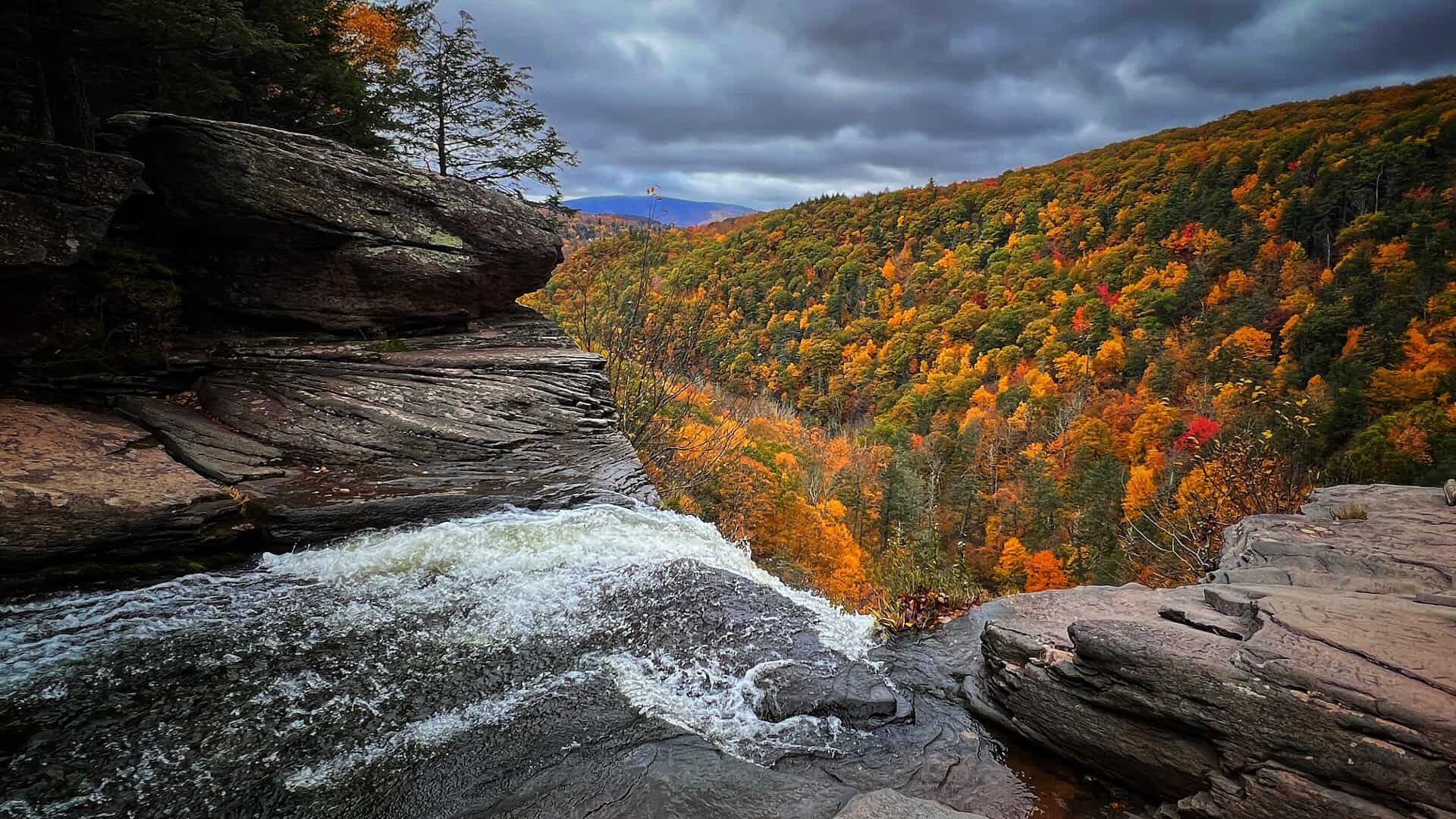
The Catskills gave American landscape painting its start, and Kaaterskill Falls is a big reason why. At 260 feet across two tiers, it is the highest cascade in New York, and in autumn the gorge around it becomes a painter’s palette.
The hike from Haines Falls is short, under two miles, following an old rail trail to a viewing platform built for exactly this scene: water plunging through a frame of crimson and orange.
The two-tiered drop is taller than Niagara, and the lower viewing area lets you take it in without scrambling the slick upper ledge. Come after a wet stretch of weather and it truly roars.
The rocks up top get dangerously slick, so stay on the marked path. Arrive before ten on a fall weekend, or you will circle for parking.
Where: Kaaterskill Falls trailhead at the Mountain Top Historical Society, Haines Falls, New York, between Haines Falls and Palenville.
6. Charlies Bunion, Tennessee
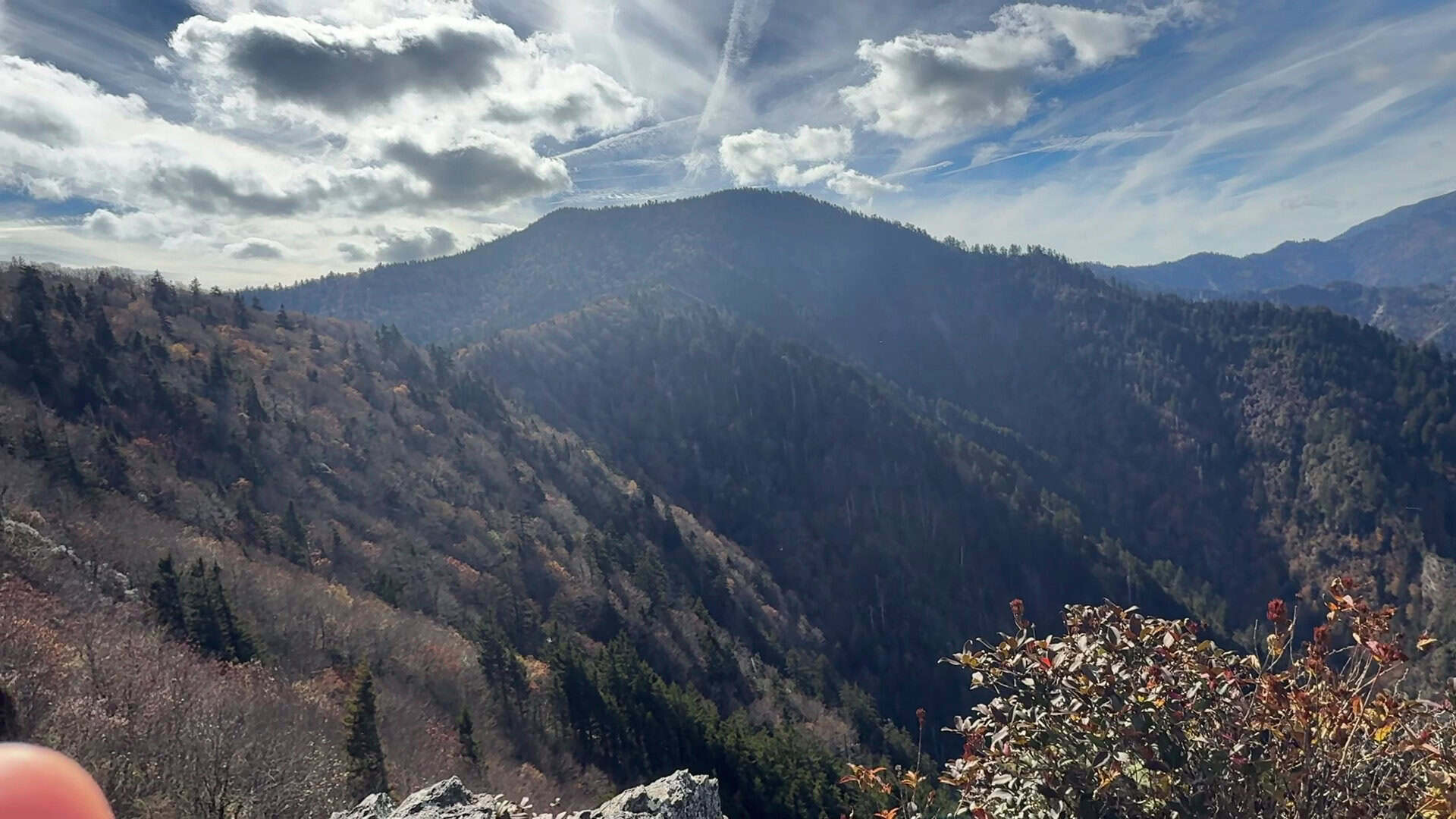
The Smokies get their name from the blue haze that hangs over the ridges, and in October that haze drifts over a sea of orange. Charlies Bunion is one of the best places to stand above it.
The eight-mile out-and-back follows the Appalachian Trail east from Newfound Gap, climbing a high ridgeline to a bare rock outcrop near 6,000 feet. The views run for miles in every direction.
The overlook sits right on the state line between Tennessee and North Carolina, so the view takes in fall color across both states at once. Most hikers make a full day of it, out and back along the ridge.
It is a full day and a real climb, but the payoff is a front-row seat to the most-visited national park’s autumn show.
The odd name is real history: a 1920s hiker looked at the bare, jutting rock and joked that it stuck out like a bunion on his companion Charlie’s foot.
Where: Newfound Gap parking area, Newfound Gap Road (US-441), Great Smoky Mountains National Park, near Gatlinburg, Tennessee.
7. Lost Maples, Texas
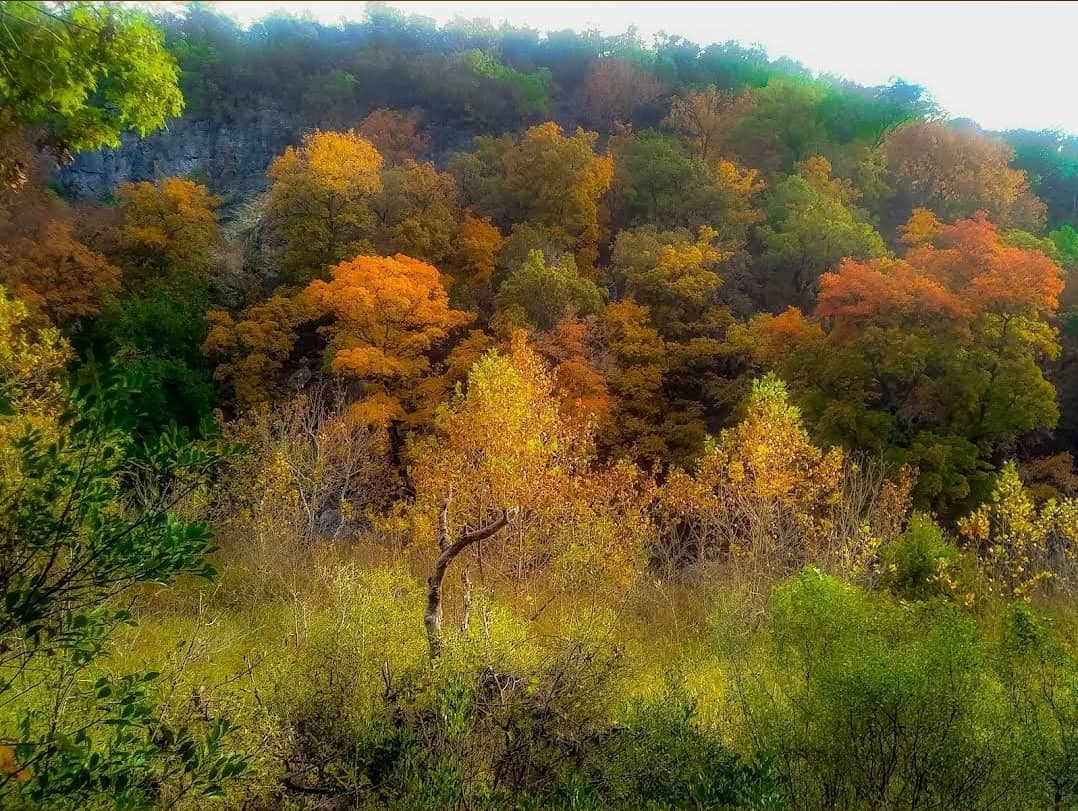
Texans do not get many maples, so they built a whole park around the ones they have. Out in the Hill Country on the Sabinal River, Lost Maples protects a relict stand of bigtooth maples that turn fiery red every fall.
Walk the East Trail or the Maple Trail and the canyon walls close in, the river running clear beneath a canopy of crimson and gold. In Texas, this is where fall actually happens.
The park protects about 2,900 acres of canyon along the upper Sabinal, and Texas Parks and Wildlife bought the land in the 1970s to save these maples. On a good year the reds genuinely rival New England.
Peak color usually lands in November, later than the rest of the country, and weekends sell out. Plan ahead and treat it as your season extender.
Where: 37221 FM 187, Vanderpool, Texas, about 5 miles north of Vanderpool and 71 miles northwest of San Antonio.
8. Whitaker Point, Arkansas
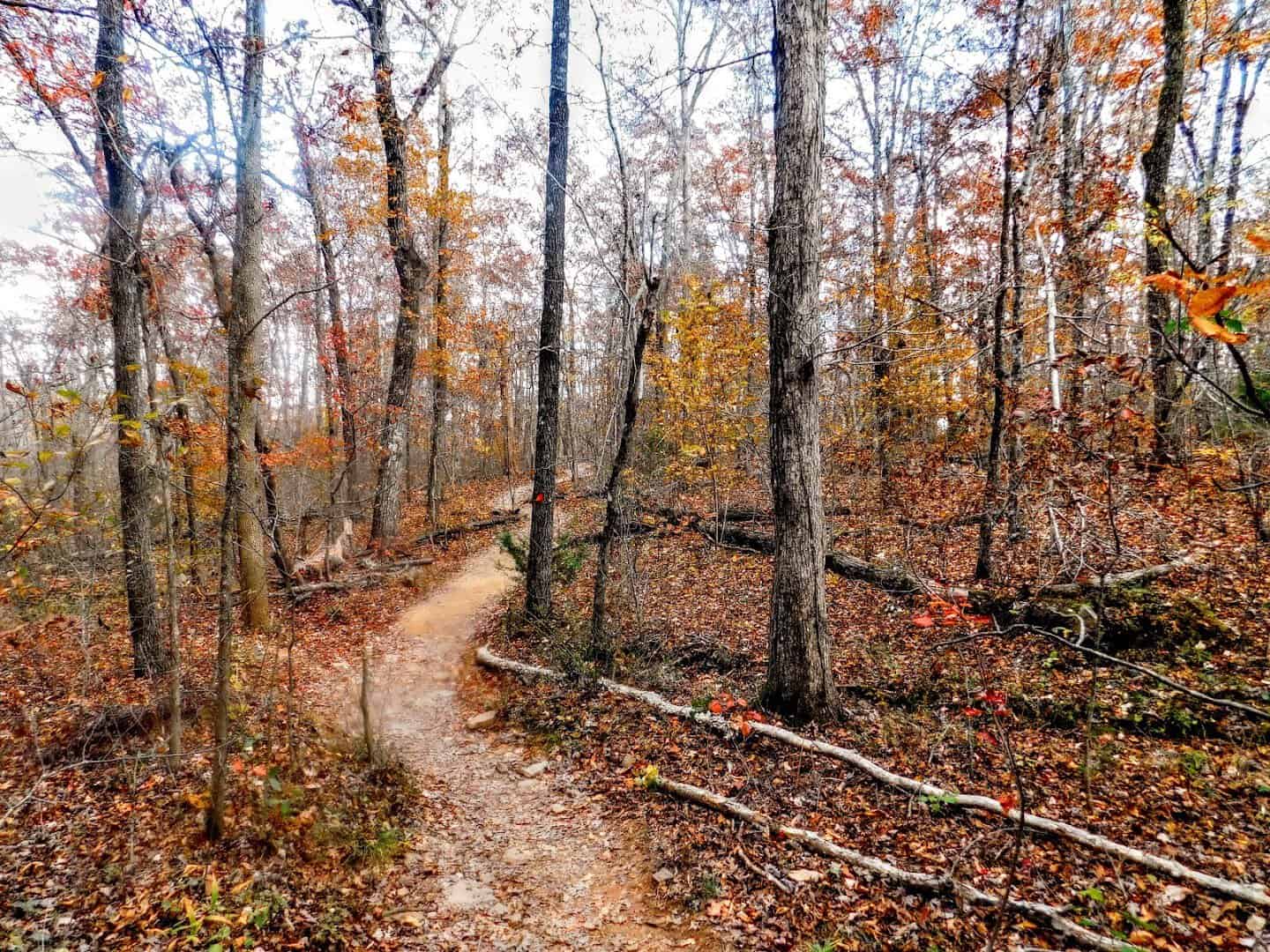
The Ozarks are the South’s best-kept fall secret, and Whitaker Point, also called Hawksbill Crag, is their signature view. A curved lip of rock juts out over the Buffalo River wilderness, and in autumn the hardwood forest below runs gold to the horizon.
The three-mile round trip is easy to moderate, weaving through dense woods and along a bluff line to the crag itself. It is the most photographed spot in Arkansas, and one look tells you why.
The crag is a curved shelf of sandstone that has become an unofficial symbol of the state, printed on posters and postcards everywhere. Photographers say the light is best in the last hour before sunset, when the whole valley glows.
The gravel access road is rough, so a high-clearance vehicle helps, and warm weekends fill the small lot.
Where: Hawksbill Crag and Whitaker Point trailhead on Cave Mountain Road (County Road 5), near Ponca, Arkansas, in the Ozark National Forest.
9. Jordan Pond Path, Maine
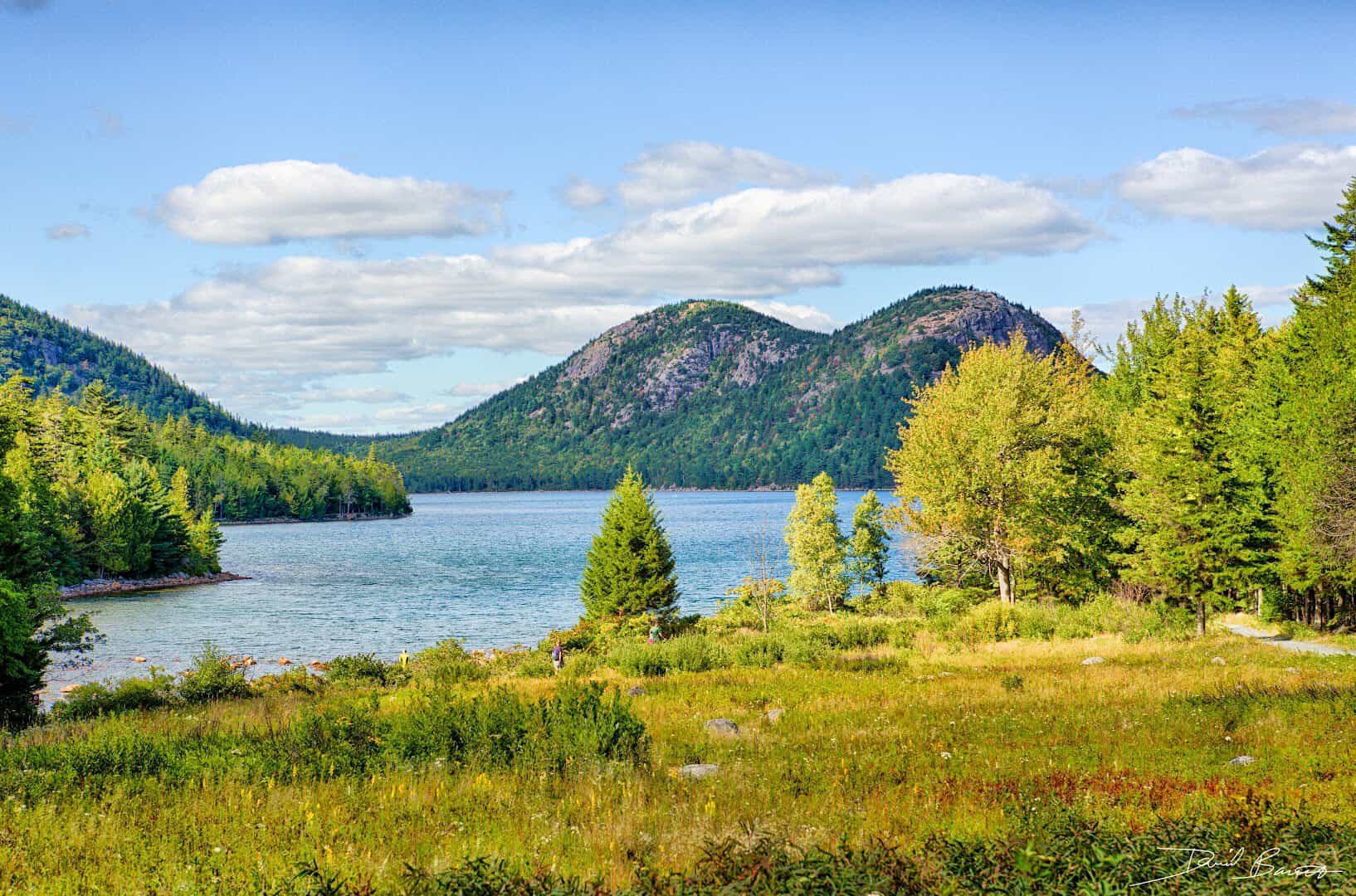
Acadia is where the mountains meet the sea, and Jordan Pond is its calmest, most photogenic corner. Two rounded peaks called the Bubbles rise at the far end, and the still water mirrors them perfectly.
The flat loop around the pond runs an easy few miles, passing pockets of paper birch, aspen, and red maple that light up gold and crimson in October. On a windless morning the reflection doubles every color.
The pond is glacier-carved and famously clear, ringed by a gentle, well-kept path. The Jordan Pond House has served warm popovers with jam on its lawn since the 1890s, a fall ritual in its own right.
Peak foliage usually falls between October 8 and 18. Time it right and the Bubbles turn into two perfect cones of color above the water.
Where: Jordan Pond parking area, Park Loop Road, Acadia National Park, near Seal Harbor, Maine.
Chase the Color While It Lasts
Fall foliage is the most fleeting show in nature, and that is exactly what makes it worth chasing. A ridge that is peak-gold one weekend is bare the next, so half the fun is timing your trip right.
Watch a foliage forecast, start early to beat the crowds, and remember that color moves from north to south and from the high peaks down to the valleys. When the northern mountains go bare, Texas is just getting started, so you can chase the season for two full months.
So pick your trail, pack a warm layer, and get out there to catch autumn before it slips away. Your future self, scrolling back through the photos in January, will thank you.
Featured image: Joe Alsko via Maroon Bells

Stella Raines
Editor-in-Chief
Stella brings over a decade of storytelling experience to TX Headlines. With roots in West Texas and a love for road trips, she leads the editorial team with an eye for the hidden stories that make Texas unforgettable.