6 Underrated Midwest Spots That Blaze With Fall Color Every October
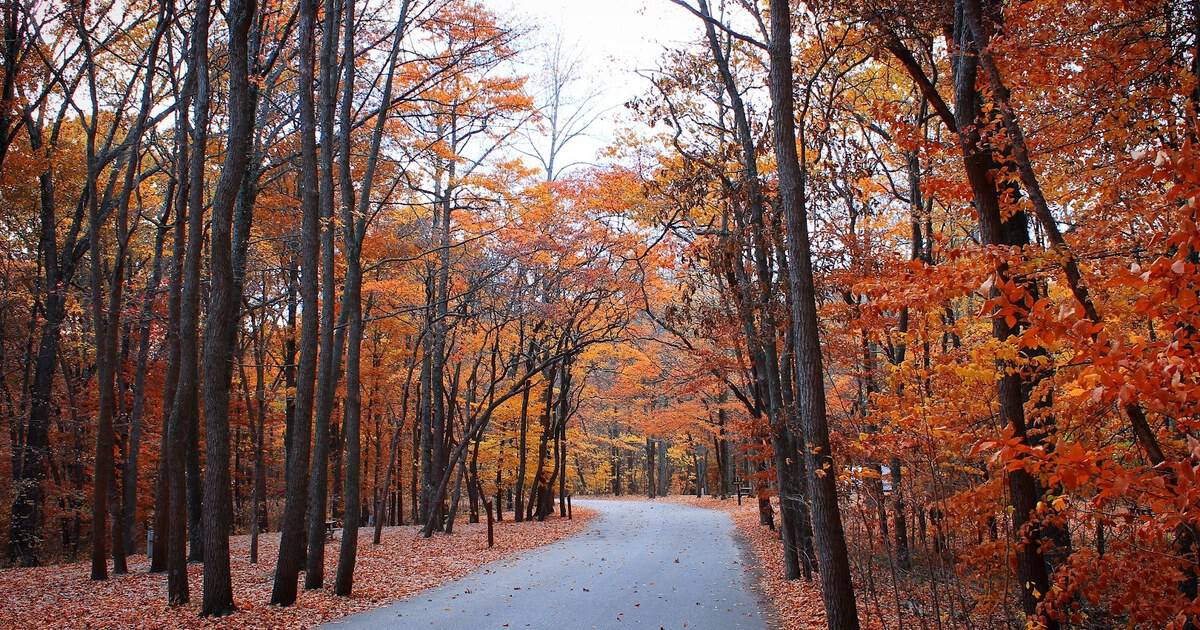
I will let you in on something the coasts never want to admit. Some of the best fall color in the country hides right here in the middle of the map, between the Great Lakes and the prairie.
The Midwest does autumn with a kind of quiet confidence. Sugar maples go scarlet, oaks turn rust, and river bluffs light up like someone flipped a switch. This is slow-burning gold, and it rewards anyone willing to point the car down a two-lane road.
What makes this part of the country so good at fall is the mix. You get Great Lakes shoreline, driftless river valleys, and rugged wooded hills, all turning color within a few weeks of each other.
And the crowds here are gentler than the famous New England routes. You can pull over on a quiet county road, stand in the leaf-drop with nobody around, and have a whole overlook to yourself.
Below, I have gathered six places where the season really shows off, spread from the shore of Lake Superior all the way down to the bluffs of the Missouri and Mississippi. Grab a thermos, pick a weekend, and let’s chase some leaves.
1. Lake of the Clouds, Michigan
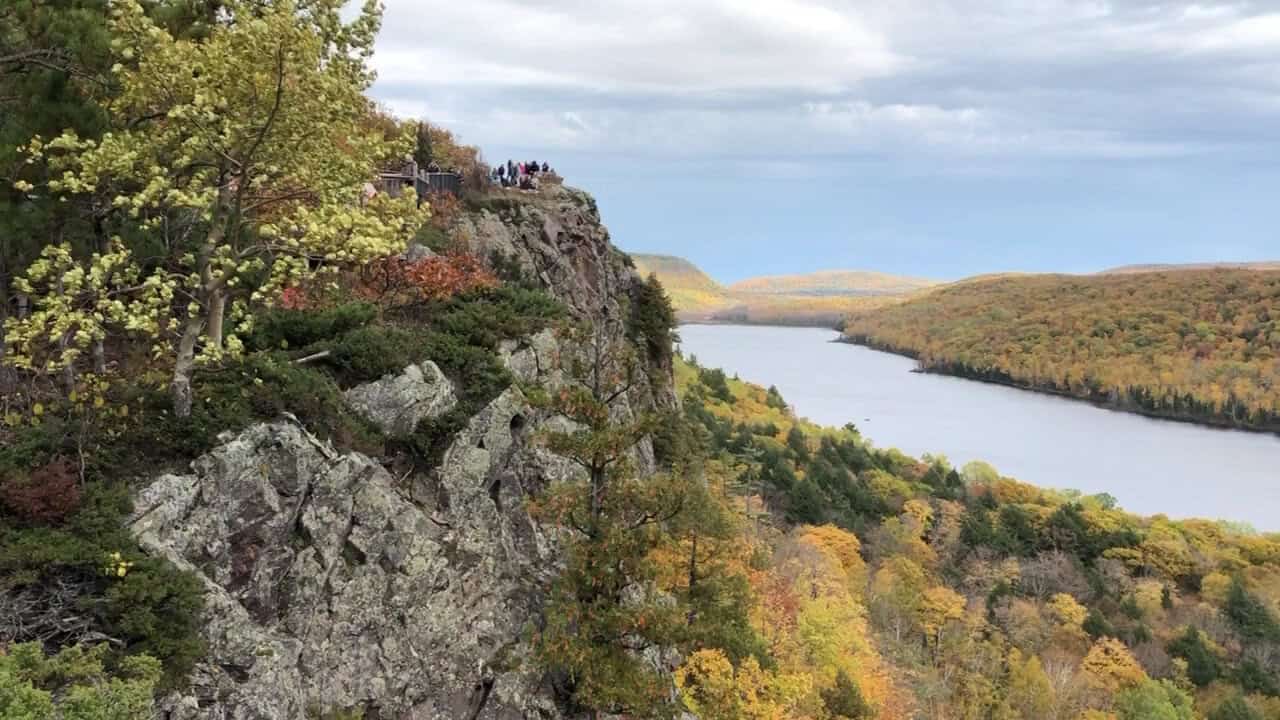
Way up in Michigan’s Upper Peninsula sits one of the most photographed views in the whole region. From the Lake of the Clouds overlook, you look down on a long, slender lake cradled in miles of untouched forest.
In late September and early October the ridgelines burst into orange, yellow, and red, and the still water below mirrors all of it. A short paved trail leads from the parking lot right to the railing, so anyone can reach the view.
This is the heart of the Porcupine Mountains Wilderness State Park, the largest state park in Michigan. The “Porkies” protect one of the biggest old-growth hardwood forests left in the Midwest, which is exactly why the color runs so deep here.
If you have the legs for it, the Escarpment Trail runs along the cliff tops east of the overlook and serves up even wider views of the lake and the fiery ridges beyond. It is one of the finest fall hikes in the state.
It is a haul to get here, about 25 minutes past Ontonagon on M-107, and that remoteness is the point. Few crowds, endless color, and some of the darkest night skies east of the Rockies. Stay after sunset if you can.
Come dressed for it. This far north the mornings are crisp, the wind off Lake Superior has a bite, and the light through the maples in early October is the kind of thing you remember for years.
Where: Lake of the Clouds Overlook, M-107, Porcupine Mountains Wilderness State Park, Ontonagon, MI 49953.
2. Brown County State Park, Indiana
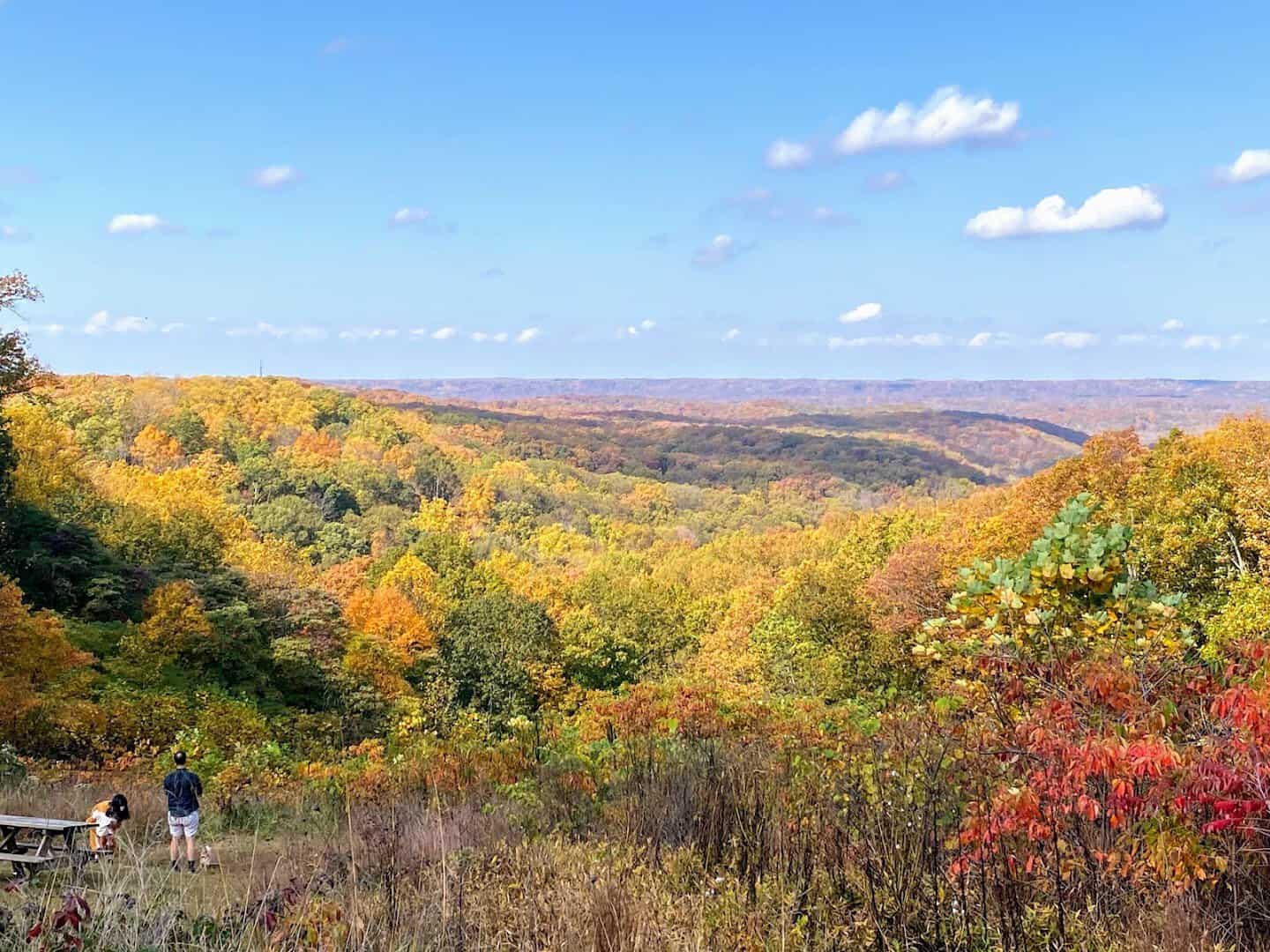
Locals call it the “Little Smokies,” and once the ridges turn, you understand why. This is Indiana’s largest state park, nearly 16,000 acres of steep slopes, deep ravines, and fog-shrouded hollows.
Climb the 90-foot fire tower and the color runs to the horizon in every direction, mile after mile of unbroken hardwood forest. Nearly twenty miles of tree-lined park roads make the driving as good as the hiking.
Glaciers stopped just short of these hills long ago, and their meltwaters carved the narrow ridges and gullies you see today. That rumpled terrain is what gives Brown County its layered, wave-after-wave look in October.
Trails like the Aynes Loop and Trail 9 wind through dense hardwoods and open onto overlooks of the colorful hillsides. If you would rather ride than walk, the park’s roads were practically built for a slow autumn cruise.
Peak color usually arrives from mid-October into early November. Weekends get busy, so come early and stay for the little town of Nashville just outside the gate, all art galleries, cider, and covered porches.
The park’s cabins and lodge book out months ahead for fall weekends, so plan early if you want to wake up inside all that color. A pro tip: weekday mornings give you the overlooks nearly to yourself.
Where: 1405 State Road 46 West, Nashville, IN 47448.
3. Starved Rock State Park, Illinois
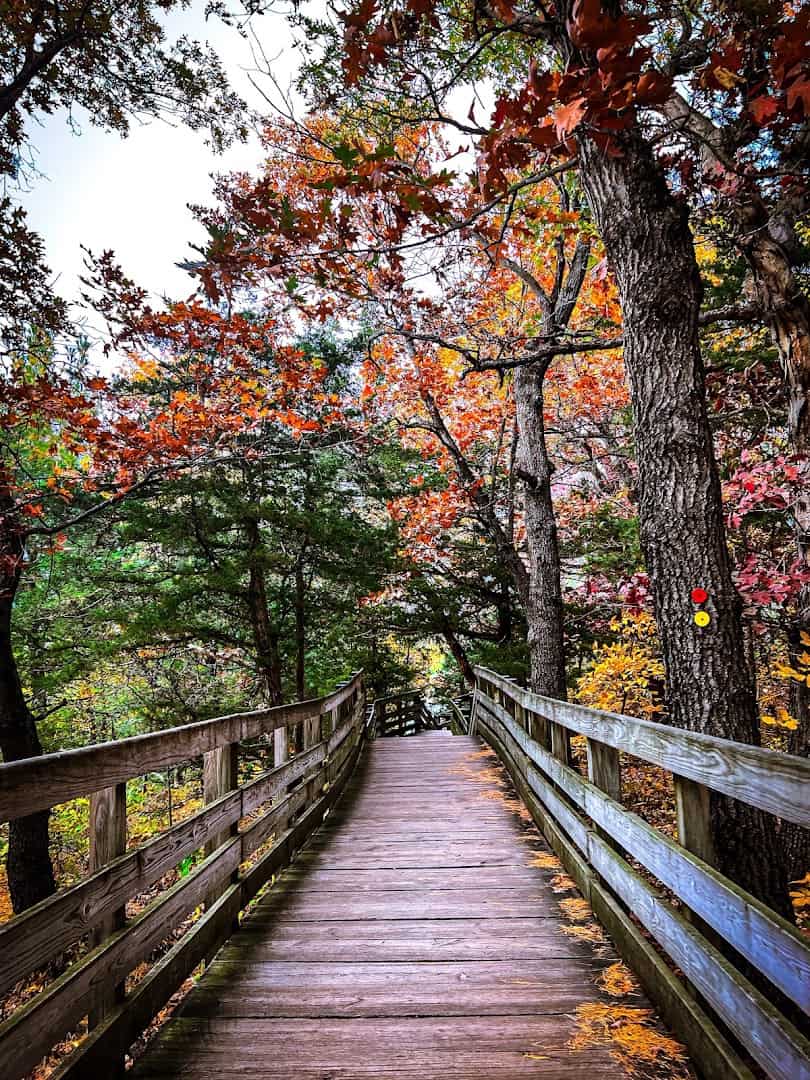
An hour and a half from Chicago, the Illinois River carved something special. Starved Rock packs eighteen canyons, a string of waterfalls, and dramatic sandstone bluffs into thirteen miles of trail.
Wooden boardwalks and stairs wind up through the oaks, maples, and hickories, and in fall the whole canopy glows red and orange overhead. It is the kind of place where every turn in the path frames a new photo.
Climb the namesake butte, a 125-foot sandstone tower above the river, and the valley opens up in color. Guided fall hikes lead to the most vivid overlooks, and French and St. Louis canyons are the easiest to reach from the visitor center.
The park draws its name from a Native American legend tied to the bluff, and it was one of Illinois’ very first state parks. Today it is one of the most beloved autumn escapes in the state.
Do not miss St. Louis Canyon, where a slender waterfall drops into a sandstone bowl, or the tucked-away French Canyon near the lodge. After a wet stretch the falls run hard and the canyon walls stay cool and green against the color above.
Did you know the bluffs here are also a winter eagle-watching hotspot? Come fall, though, it is all about the leaves. Start early, wear real shoes for the stairs, and let the canyons unfold one at a time.
Where: 2668 East 950th Road, Oglesby, IL 61348.
4. Ponca State Park, Nebraska
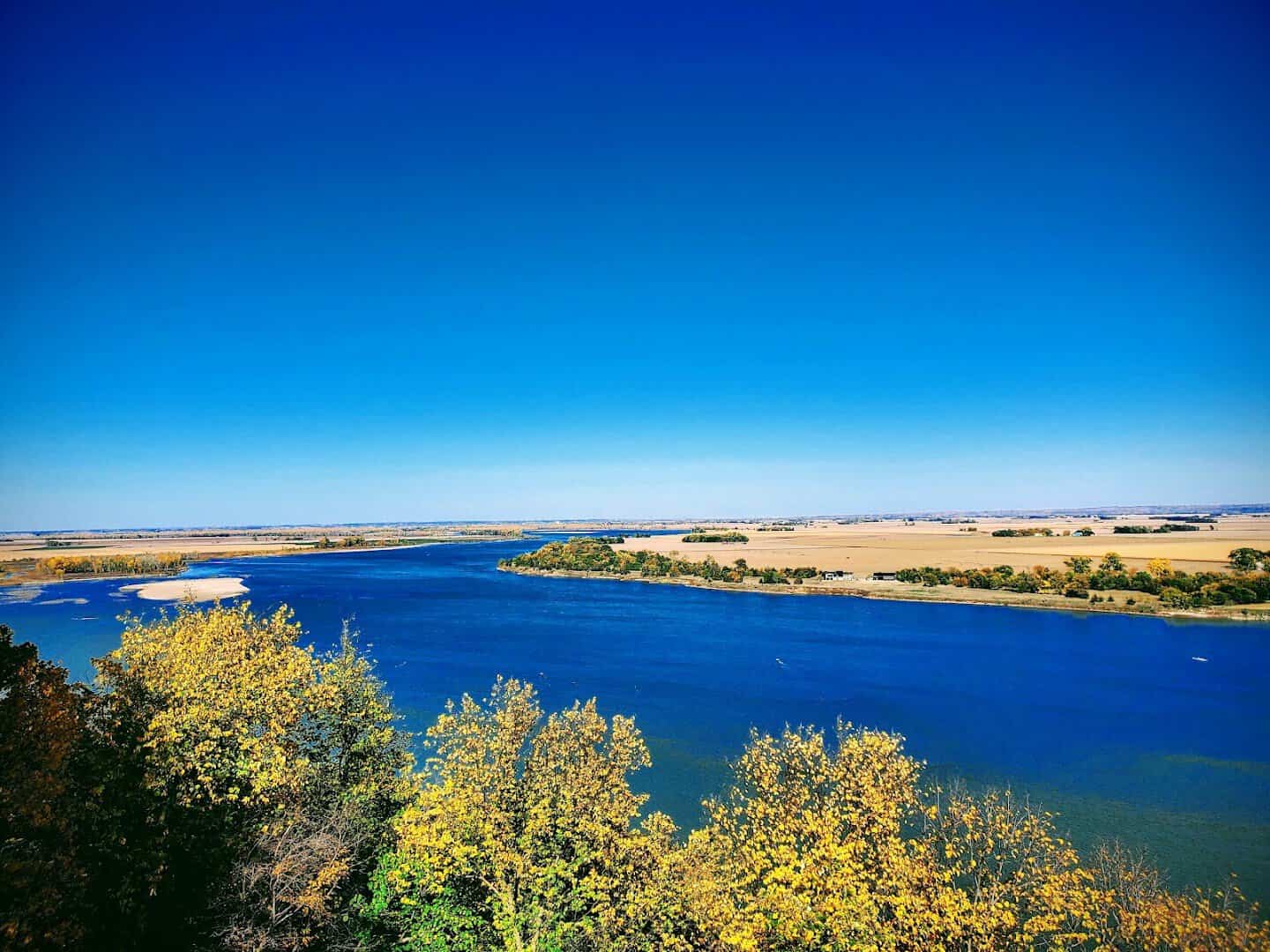
Nebraska’s northeastern corner keeps a secret in its bluffs. Ponca State Park spreads across 2,400 acres of high, forested hills above the Missouri River, right where the water still runs wild and unchanneled.
Autumn lights the hills in gold and rust, and the scenic drives and overlooks put the broad blue river into every frame. The old cottonwoods along the bank turn a warm butter-yellow that plays beautifully against the water.
This is the eastern gateway to a 59-mile stretch of the Missouri National Recreational River, one of the last free-flowing pieces of that great waterway. Lewis and Clark passed through this very country on their way west.
Hike the wooded ridge trails or just cruise the park road with the windows down. Wildlife watching here is some of the best in the state, with deer, turkey, and bald eagles working the river corridor.
Stop by the park’s famous Old Oak, a massive bur oak that was already a sapling back in 1644, long before Nebraska was a state. Standing under its spreading branches gives you a real sense of how long these bluffs have watched the river roll past.
The Three Rivers overlook is the spot to aim for at golden hour, where the light hits the water and the wooded hills all at once. Cabins here fill up fast in October, so book ahead if you want to linger.
Where: 88090 Spur 26E, Ponca, NE 68770.
5. Gooseberry Falls State Park, Minnesota
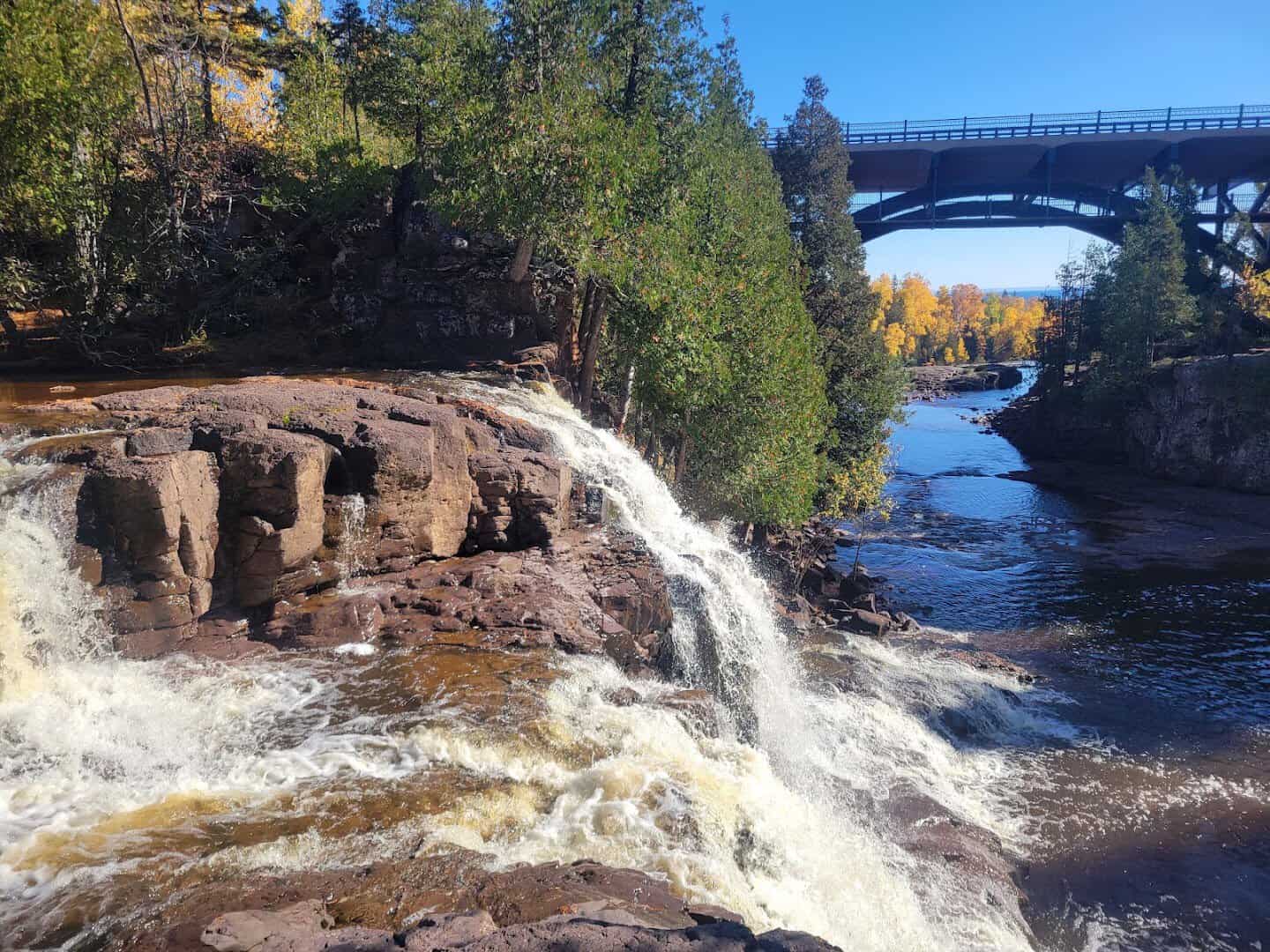
There is nothing quite like a waterfall framed by fire-red maples. On Minnesota’s North Shore, the Gooseberry River tumbles over Upper, Middle, and Lower Falls before it pours into Lake Superior.
In autumn the water crashes down against a backdrop of gold and orange, with the old stone highway bridge arching overhead. The contrast is the whole reason photographers keep coming back year after year.
The falls are an easy walk from the visitor center, and the stonework you see all around was built by the Civilian Conservation Corps back in the 1930s. It gives the park a handsome, timeless feel.
Walk down to the Lake Superior shoreline where the river meets the big lake, and you can hunt for agates on the cobble beach. The sound of the surf against the falls upstream makes this one of the most peaceful corners on the whole shore.
North Shore color usually peaks in the first two weeks of October. Pair it with a drive up Highway 61 and the season keeps unfolding, one lake overlook after another. Split Rock Lighthouse sits just up the road.
The paved Gitchi-Gami State Trail runs right through the park if you would rather see the color on two wheels. However you go, dress warm, because the wind off Superior does not care what the calendar says.
Where: 3206 Highway 61 East, Two Harbors, MN 55616.
6. Pikes Peak State Park, Iowa
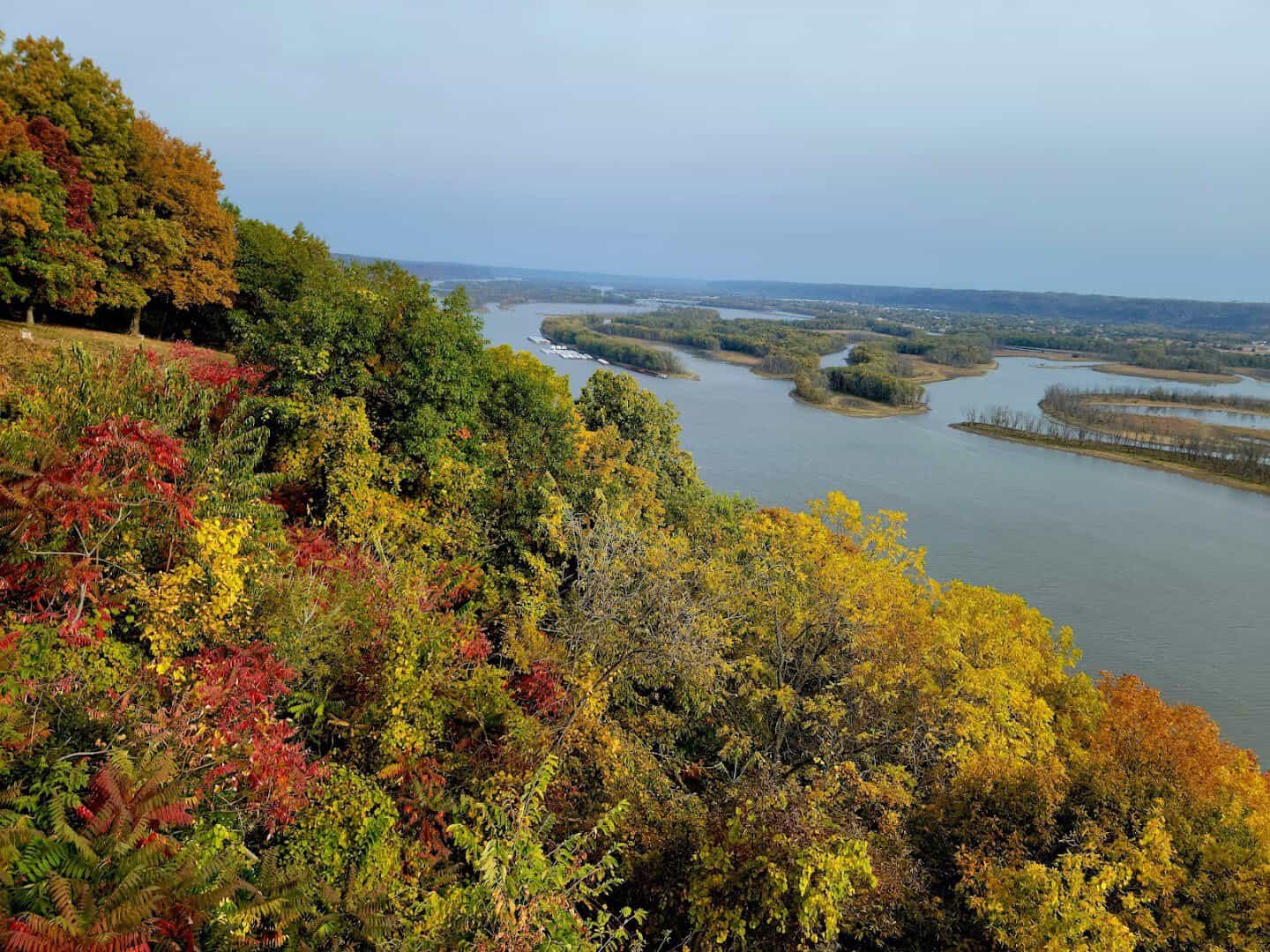
Yes, Iowa. And it is a stunner. This bluff-top park sits in the Driftless Area, where the glaciers never flattened the land, so you get high ridges and deep river valleys stacked with color.
Point Ann, the main overlook, may be the finest view in the state, looking out over the spot where the Wisconsin River pours into the mighty Mississippi. In October the layered bluffs turn red, orange, and gold.
The overlook is paved and accessible, and it even has a viewing scope fitted with special lenses to help color-blind visitors see the fall foliage. Far below, barges drift down the river while the bluffs blaze above them.
Follow the boardwalk trail south from the overlook and you reach Bridal Veil Falls, a delicate ribbon of water spilling over a mossy ledge. The wooden walkway keeps you level with the treetops, so the color is right at eye height the whole way.
The park is named for Zebulon Pike, the same explorer who gave his name to the more famous peak in Colorado. This bluff was his lookout over the river country, and centuries of Native peoples built effigy mounds on these heights long before him.
Peak color usually lands the second week of October, and the park is busiest then for good reason. Bring a picnic, take your time, and let one of the Midwest’s best-kept secrets do the rest.
Where: 32264 Pikes Peak Road, McGregor, IA 52157.
Plan Your Midwest Leaf-Peeping Road Trip
Here is the beautiful thing about Midwest fall. The color rolls south and east through October, so you can practically follow the season if you time it right.
Start up north around Lake Superior in late September, then drift down toward the river bluffs and wooded hills as the weeks go on. Any one of these six is worth a weekend on its own.
Stringing two or three together makes for the kind of road trip you talk about all winter. A thermos of cider, a good playlist, and no particular hurry is really all the plan you need.
Pack a jacket, gas up, and give yourself permission to pull over. The leaves will not wait, and neither should you. Pick a spot, point the car, and go catch the show before it falls. Trust me, the middle of the map has been holding out on you.
Featured image: Jack E. Harden via Brown County State Park

Stella Raines
Editor-in-Chief
Stella brings over a decade of storytelling experience to TX Headlines. With roots in West Texas and a love for road trips, she leads the editorial team with an eye for the hidden stories that make Texas unforgettable.