8 National Parks That Hide Waterfalls Worth the Hike to Reach
I have chased the sound of falling water my whole life. You usually hear a big waterfall before you ever see it, a low rumble through the trees, the air turning cool and damp, and something in you speeds up to find the source.
From roadside pullouts to trails that made my legs beg for mercy, I keep going back for that feeling. The best of it lives inside America’s national parks, where the falling water comes with wild, roaring wonder.
Below, eight park waterfalls worth planning a whole road trip around. Some ask for a hard climb and some barely a walk from the car, but every one earns the detour. Here is where to find them and how to reach each one.
1. Yosemite Falls, California
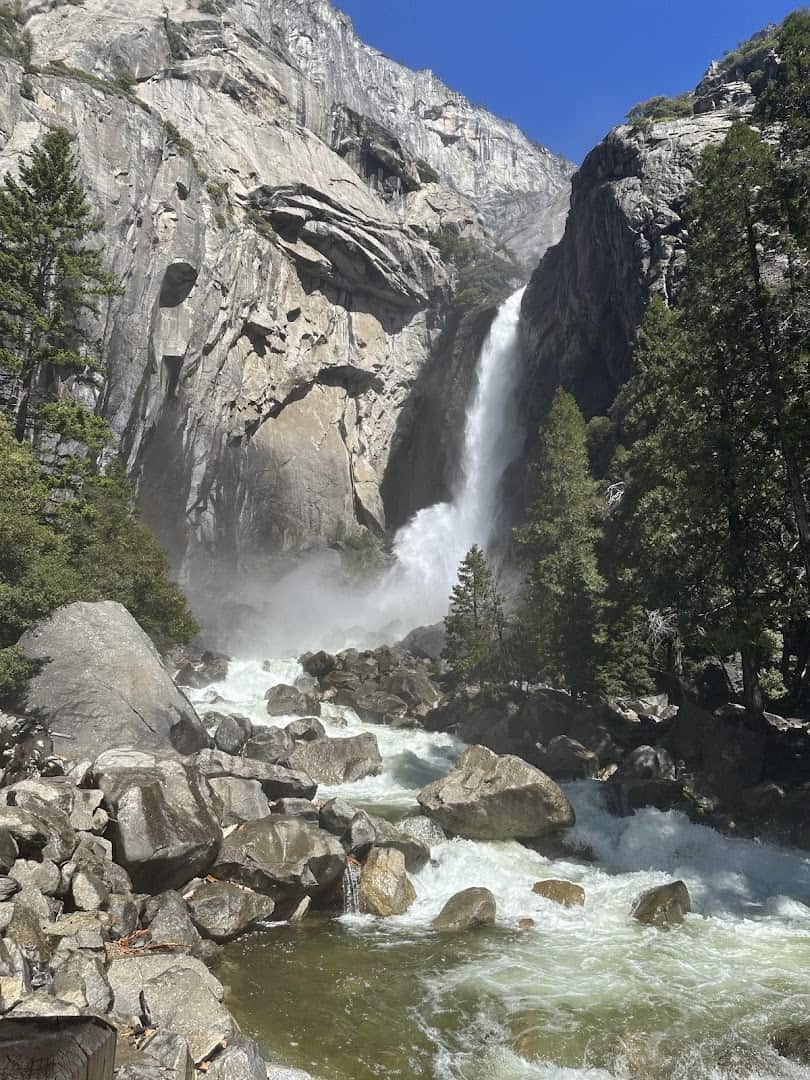
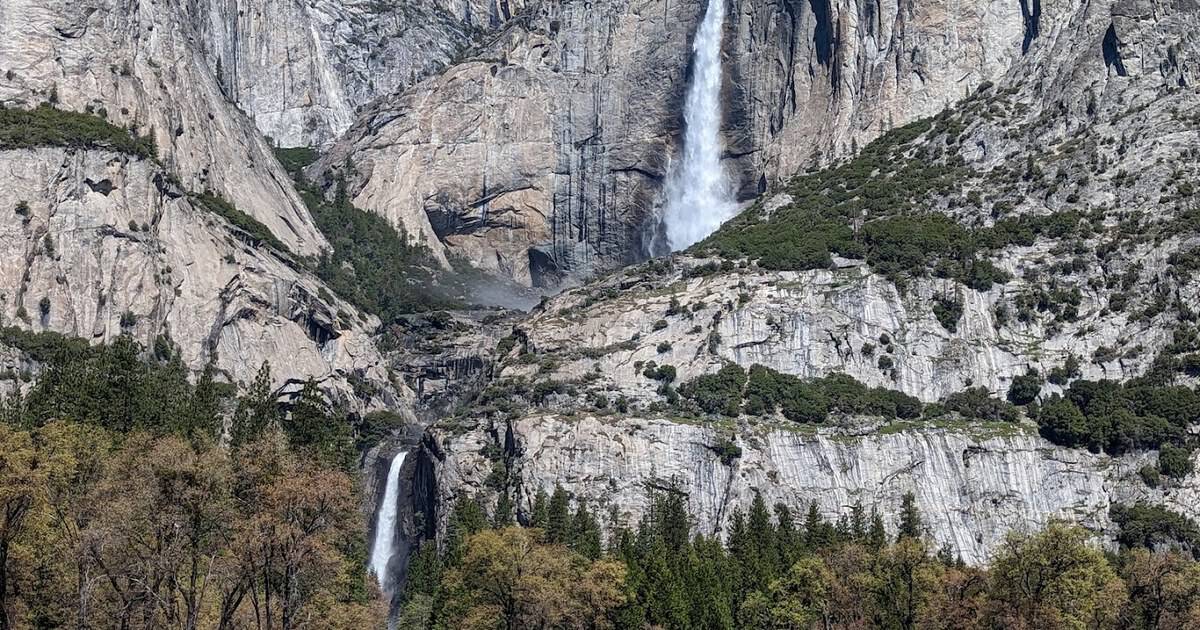
Yosemite Falls is the tallest waterfall in North America, plunging 2,425 feet down the granite wall of Yosemite Valley. It is really three falls in one: the Upper Fall drops 1,430 feet, a set of middle cascades tumbles 675 feet, and the Lower Fall finishes with a 320-foot plunge.
In spring the snowmelt turns it into a thundering ribbon you can feel in your chest from the valley floor. By August the creek above often slows to a trickle, so aim for a visit between May and June for the full roar.
The paved Lower Yosemite Fall loop is short and stroller-friendly, and on a sunny afternoon the spray throws rainbows across the rocks. The steep Upper Fall trail, cut into the cliff back in the 1870s, rewards the fit with a bird’s-eye look straight down.
The upper fall pours from Yosemite Creek, which winds through high meadows before leaping off a hanging valley. Stand near the base on a windy spring day and the mist drifts sideways, soaking anyone who lingers too long.
Pro tip: catch it under a full moon in spring and you might see a moonbow, a faint lunar rainbow that forms in the mist after dark. It is one of the park’s most magical little secrets, and photographers plan whole trips around it.
Where: Lower Yosemite Fall trailhead, off Northside Drive, Yosemite Valley, Yosemite National Park, CA 95389.
2. Narada Falls, Washington
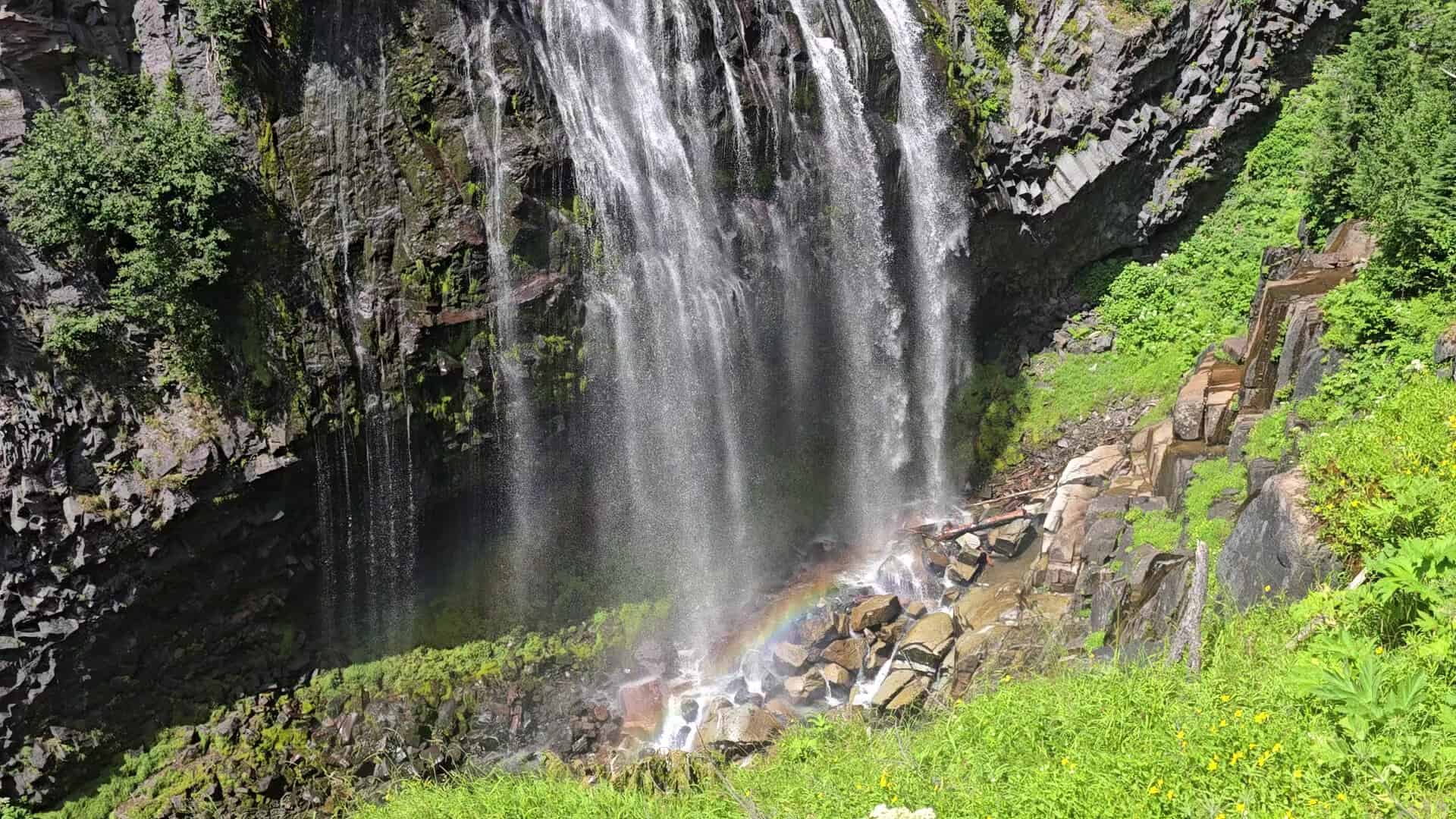
Narada Falls is the waterfall you can practically drive to. On Mount Rainier, the mountain highway crosses between its two tiers, so the horsetail rush of water spreads across a sheer cliff just steps from the parking area.
It falls about 176 feet in total, with the upper tier fanning out in silver strands before a shorter plunge below. Swirling mist hangs in the canyon on all but the driest days, and on clear mornings the sun lights it up like smoke.
A short, steep path drops to the lower viewpoint, where you get the full sweep of it framed by dark evergreens. On sunny afternoons a rainbow floats in the spray, right about where the water thunders into the rocks below.
A climber named the falls back in 1893, and the view has been stopping road-trippers ever since. Bring a jacket even in summer, because the mist keeps this pocket of the mountain cool and damp all day long.
Where: Narada Falls pullout, Paradise Road, about 2 miles below Paradise, Mount Rainier National Park, WA 98304.
3. Brandywine Falls, Ohio
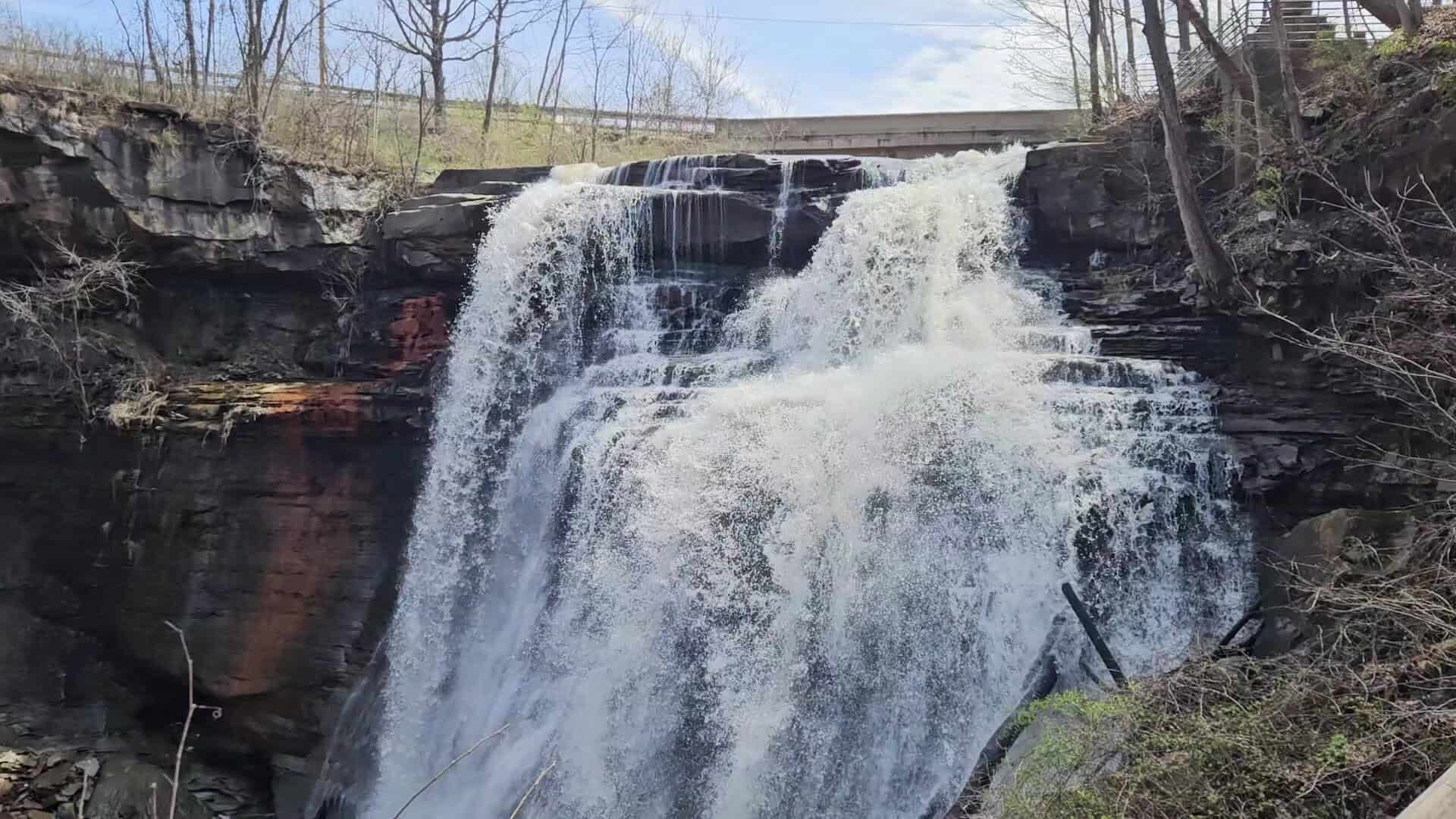
Proof that you do not need mountains for a beautiful waterfall, Brandywine Falls tumbles 60 feet in a lacy, bridal-veil pattern over layered sandstone and shale. It is the tallest, showiest cascade in Cuyahoga Valley, tucked into the green space between Cleveland and Akron.
A wide boardwalk with railings leads to the upper view and welcomes just about everyone, wheelchairs and strollers included. For a closer look, about 80 steps drop to a lower deck set right beside the falling water.
It is at its best in spring or after heavy rain, when the flow is full and the gorge stays cool and shady. In deep winter the edges freeze into ice curtains while the center keeps running strong.
Photographers love the golden hour here, when low light slants through the gorge and catches the falling water. Spring wildflowers and fall color both frame the overlook, so almost any season gives you something worth the short walk.
Did you know this water once ran a village? A grist mill and a sawmill turned on Brandywine Creek back in the 1800s, and a few old stone foundations still sit quietly near the trail today.
Where: Brandywine Falls, 8176 Brandywine Road, Sagamore Hills, OH 44067, Cuyahoga Valley National Park.
4. Lower Yellowstone Falls, Wyoming
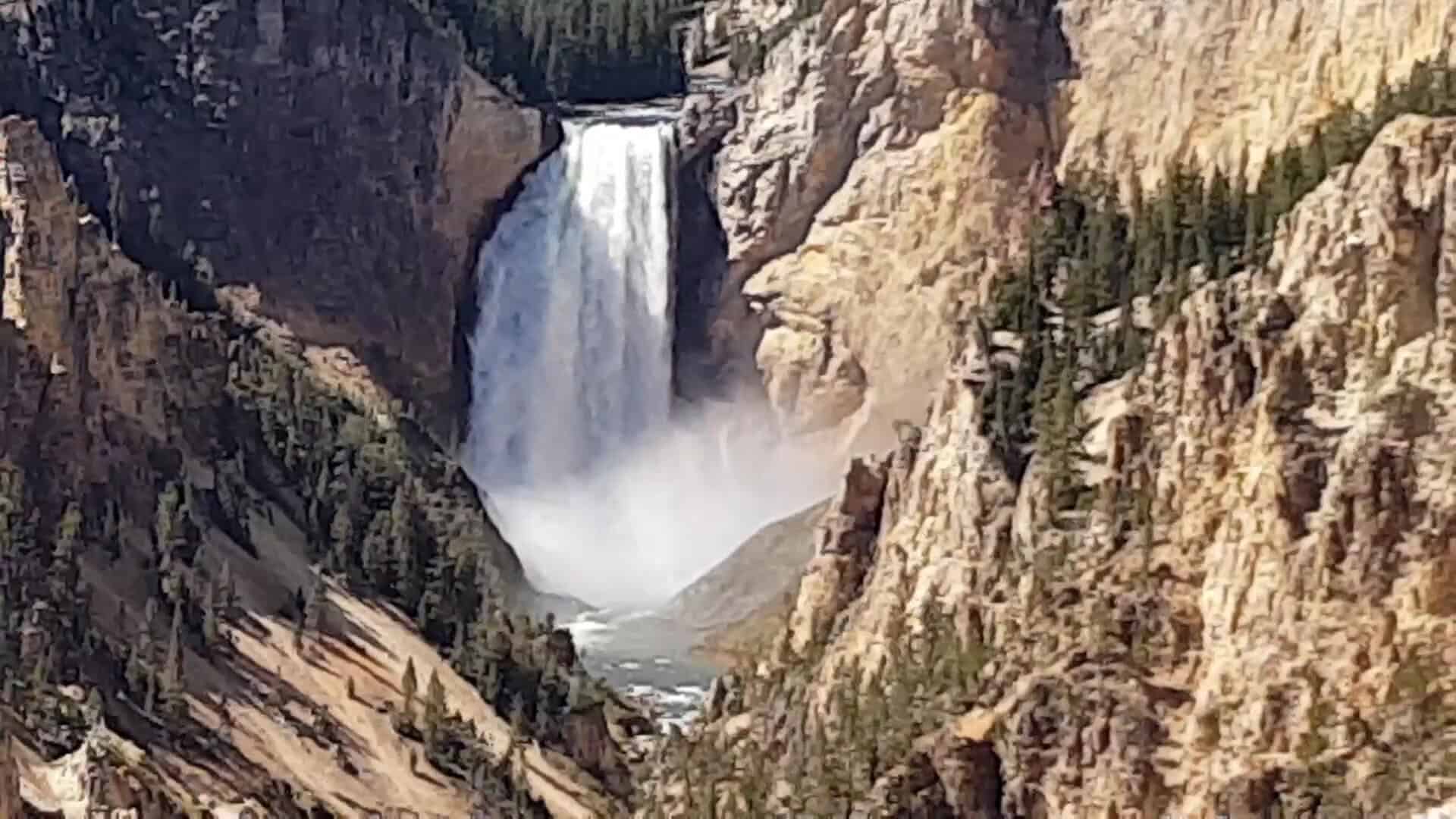
Yellowstone hides its own Grand Canyon, and Lower Yellowstone Falls is the star of it. The river drops 308 feet into a gorge streaked in yellow, pink, and orange rock, nearly twice the height of Niagara and impossibly loud up close.
The classic look comes from Artist Point, one of the most photographed spots in the whole park. It is a flat one-tenth-of-a-mile walk from the parking area on South Rim Drive, so the payoff costs almost no effort at all.
Come early or late in the day and the low sun sets the canyon walls glowing. If your legs are willing, the steep brink trails drop you right to the lip of the plunge, where the whole river bends and disappears.
Painter Thomas Moran made this canyon famous in the 1870s, and his sweeping views helped convince Congress to protect the park. Stand at Artist Point and you see almost exactly what stopped him in his tracks.
Bison often graze the meadows on the drive in, so keep a safe distance and your camera ready. It is Yellowstone at its most cinematic, the roar of the falls and the great shaggy herds in one single morning.
Where: Artist Point, South Rim Drive, Grand Canyon of the Yellowstone, Yellowstone National Park, WY 82190.
5. Waimoku Falls, Hawaii
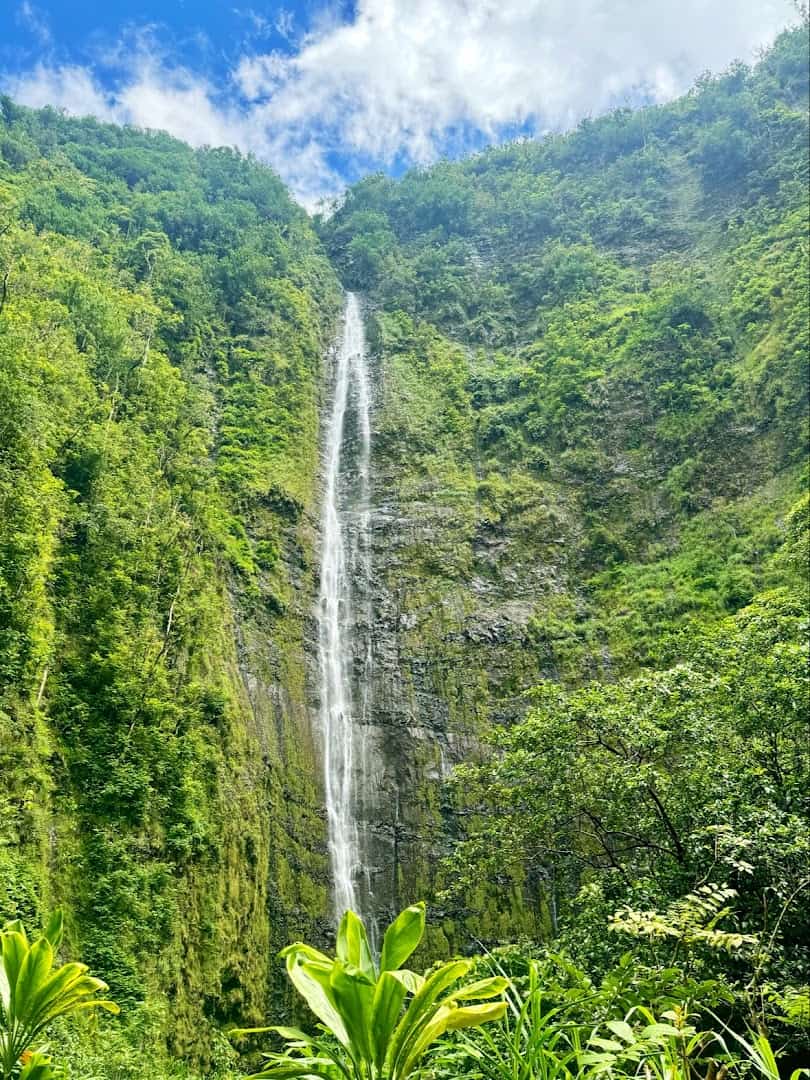
On Maui’s rainy, remote east side, Waimoku Falls pours a slender 400-foot thread down a mossy volcanic wall in Haleakalā’s Kīpahulu District. Getting there is half the magic, and the trail is a genuine jungle dream.
The Pipiwai Trail runs 4 miles round trip past a giant, sprawling banyan tree and straight through a towering bamboo forest that clatters and creaks in the wind. The path follows the Ohe’o Gulch stream, so the sound of water is with you the whole way.
Do not swim beneath the falls, since rocks tumble from that great height and the danger is real. Save the reward for the view, look up at that impossible ribbon, then turn back through the green tunnel of bamboo.
Go early in the day, because this corner of Maui catches passing rain and the trail can turn slick and muddy. A morning start also beats the crowds that trickle in off the winding Hāna Highway by midday.
Where: Pipiwai Trail, Kīpahulu Visitor Center off the Hāna Highway, Haleakalā National Park, Hāna, HI 96713.
6. Dark Hollow Falls, Virginia
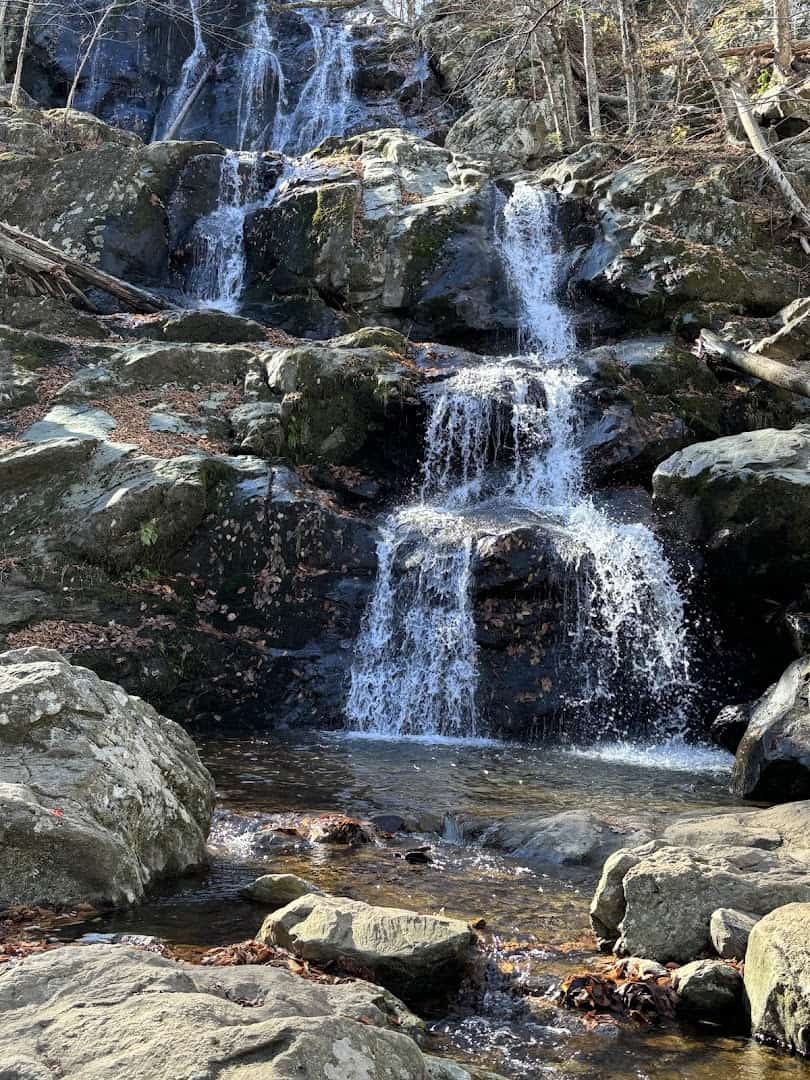
Dark Hollow Falls is the closest waterfall to Skyline Drive, which makes it the most-hiked trail in all of Shenandoah. The water steps 70 feet down a tumble of dark greenstone boulders, spilling in ribbons rather than one big drop.
The loop is only 1.4 miles with about 440 feet of climb, though it is steep enough that the walk back out will remind your legs it exists. Go early, before the Skyline Drive crowds find the small parking lot.
Autumn is the showstopper here, when the surrounding forest blazes gold and red above the falling water. Spring runs it fullest, and a light rain leaves the boulders slick and shining, so watch your footing on the wet rock.
The trail follows Hogcamp Branch the whole way down, so you hear the water long before the falls come into view. Little cascades and pools line the route, tempting you to stop at nearly every bend.
Wear real shoes with grip. The trail drops steadily to the base of the falls, and the return climb over loose, uneven rock is the part that quietly surprises first-timers who came expecting a stroll.
Where: Dark Hollow Falls Trailhead, milepost 50.7, Skyline Drive, Shenandoah National Park, VA 22743.
7. Alberta Falls, Colorado
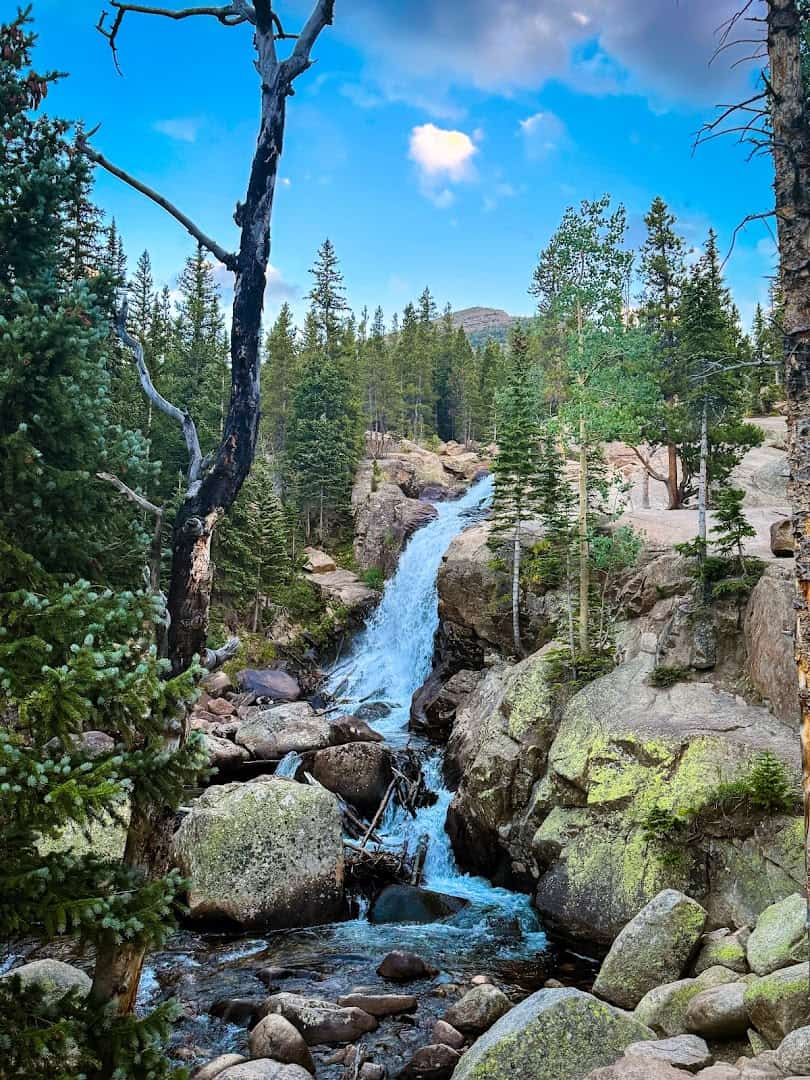
Alberta Falls is one of the friendliest waterfall hikes in Rocky Mountain National Park, a favorite for families and first-timers finding their footing at altitude. Glacier Creek roars about 30 feet down a narrow granite gorge, kicking up spray you can feel on a warm day.
The trail from Glacier Gorge is an easy 1.6 miles round trip through aspen and pine, sitting above 9,000 feet the whole way. Small cascades and creek crossings keep it interesting well before you reach the main falls.
Go slow if you came from sea level, and let the thin mountain air do its thing. Early summer brings the heaviest flow as the high country melts, and the creek runs clear and cold over the rocks.
Keep an eye out for bighorn sheep and marmots on the rocks nearby, and for the pikas that squeak from the talus. The falls make a fine turnaround, or a warm-up for the longer climb to Mills Lake beyond.
Bear Lake Road fills up fast in summer, so arrive before nine in the morning or ride the free park shuttle straight to the trailhead. Those golden aspens in late September make the fall walk one to remember.
Where: Glacier Gorge Trailhead, Bear Lake Road, Rocky Mountain National Park, Estes Park, CO 80517.
8. St. Mary Falls, Montana
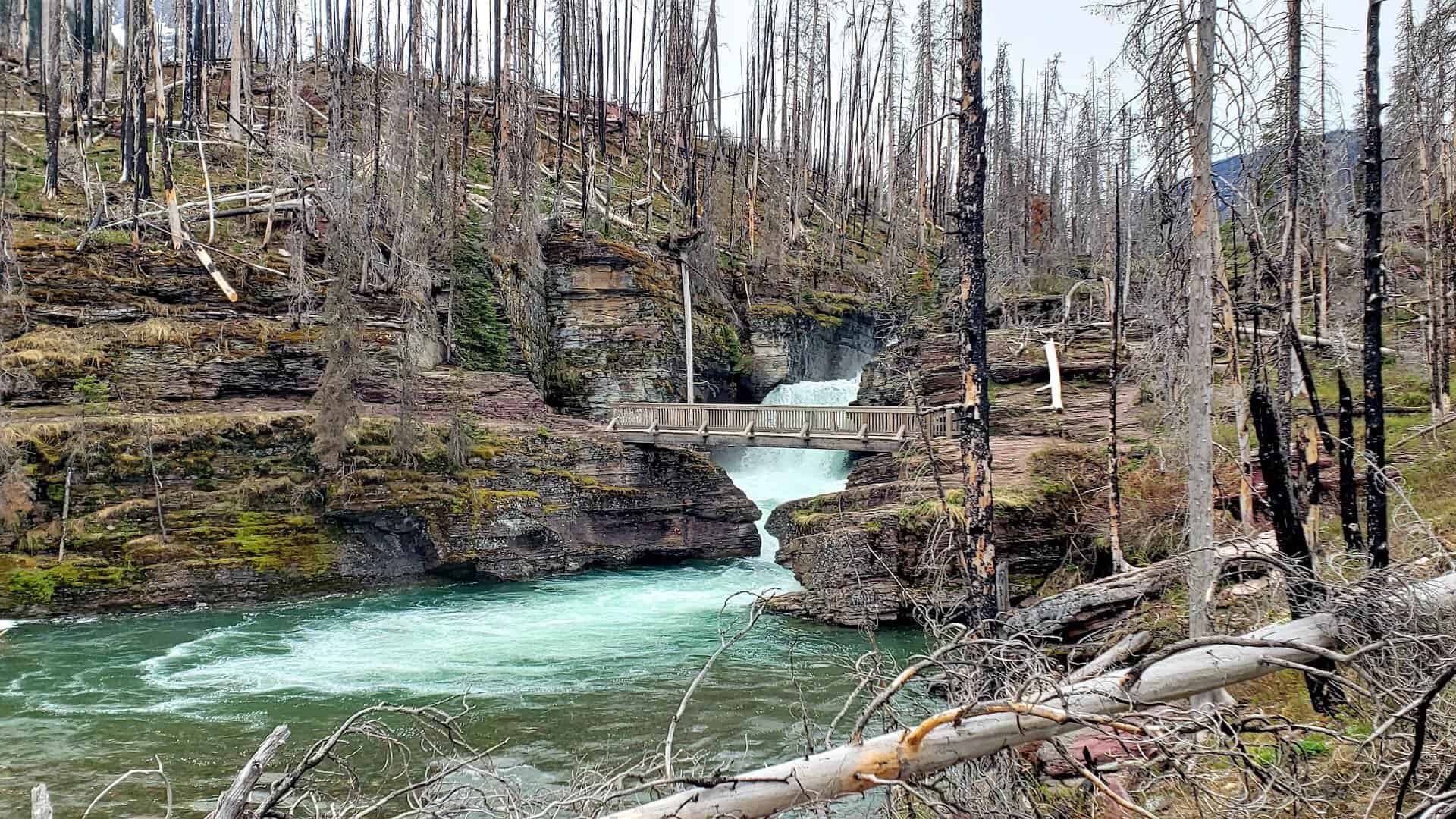
St. Mary Falls may be short at around 35 feet, but the color is what stops you cold. Glacial runoff carries fine rock flour that turns the plunge pool an unreal turquoise, glowing blue-green against the surrounding pines.
The two-tiered falls sit a gentle 1.7 miles round trip from the trailhead on the famous Going-to-the-Sun Road. It is one of the easiest big payoffs in a park full of hard climbs, which is part of why it stays so popular.
Push on another mile and you reach taller Virginia Falls, an easy bonus while you are already out there. Come in summer, when the Going-to-the-Sun Road is fully open and the glacial water runs its brightest blue.
Start early, because the small trailhead lots fill by mid-morning in July and August. A free park shuttle runs the corridor too, and hopping on it turns the parking hunt into somebody else’s problem.
Where: St. Mary Falls Trailhead, Going-to-the-Sun Road, Glacier National Park, MT 59417.
Start Planning Your Waterfall Road Trip
From a granite giant in California to a glacier-fed turquoise pool up in Montana, these eight falls prove that America’s parks hold water worth traveling for. Some ask for a hard climb, and others for barely a walk from the car.
Pick one that fits your season and your legs, pack a rain layer for the spray, and go stand where the water roars. The sound alone is worth the trip, and you will hear it long before you ever see it.
Featured image: Brooke Fawcett via Artist Point

Stella Raines
Editor-in-Chief
Stella brings over a decade of storytelling experience to TX Headlines. With roots in West Texas and a love for road trips, she leads the editorial team with an eye for the hidden stories that make Texas unforgettable.