This Underground Texas River Cavern Was Once a Secret Speakeasy and an Outlaw’s Hideout
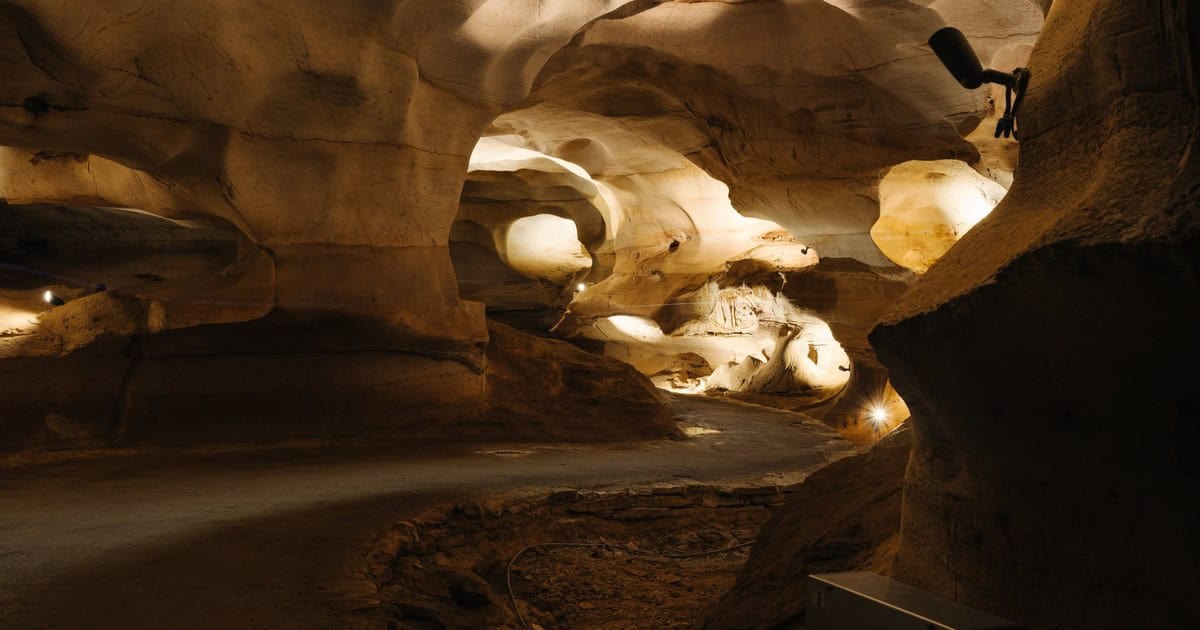
I have a theory that the best stories in Texas are the ones hiding under your feet. We spend so much time chasing the biggest sky and the widest ranch that I think we forget the state keeps some of its wildest secrets downstairs, where the sun never reaches.
Two hundred feet below the Hill Country sits a cavern with a resume most nightclubs would envy. It was a Prohibition dance hall, an outlaw’s bolt-hole, a Confederate gunpowder works, and a Cold War fallout shelter, all inside the same cool stone hush.
Below, we’ll walk you through its rooms, its rowdy past, and exactly how to see it for yourself.
Down the Steps Into Another Climate
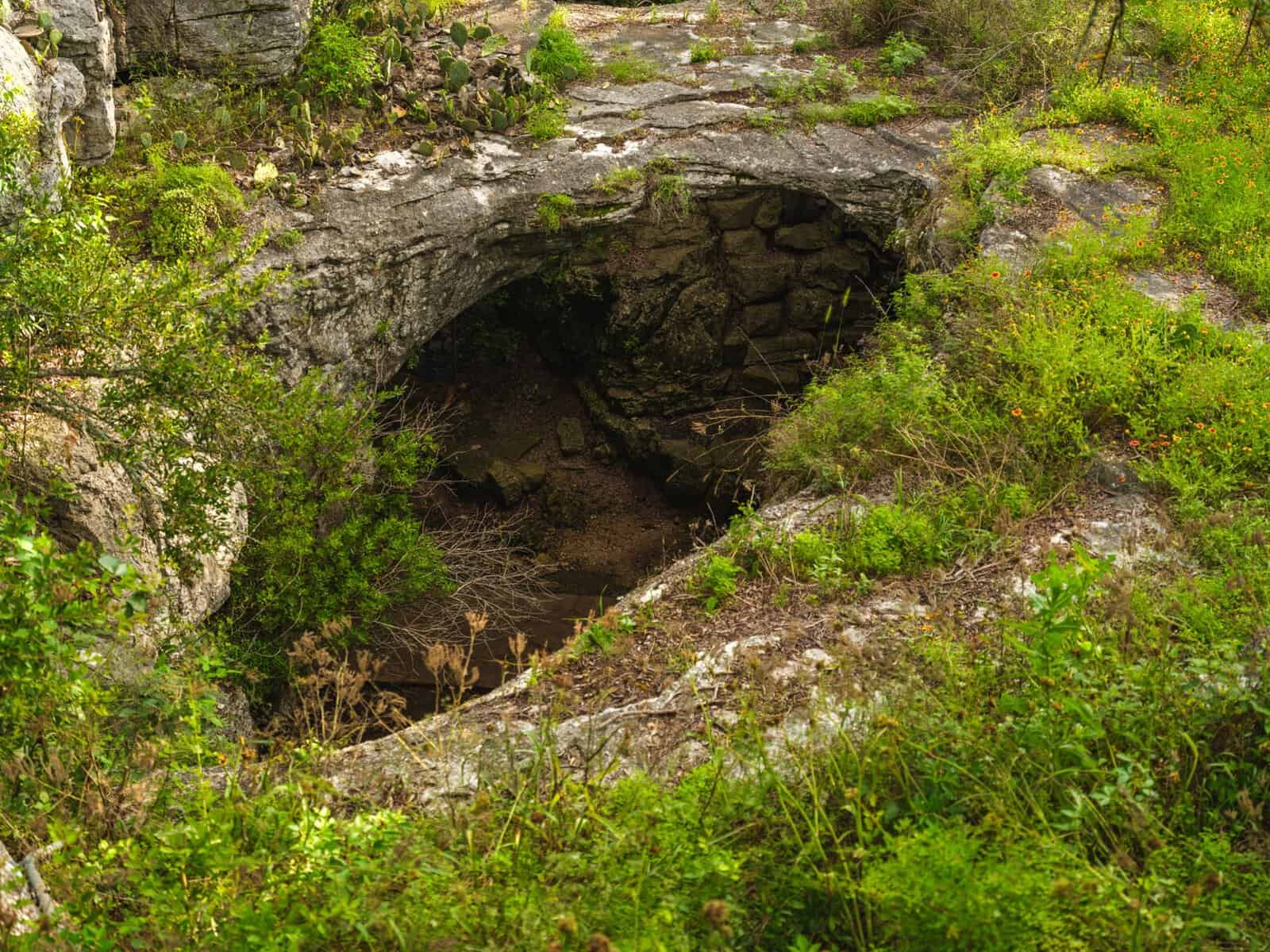
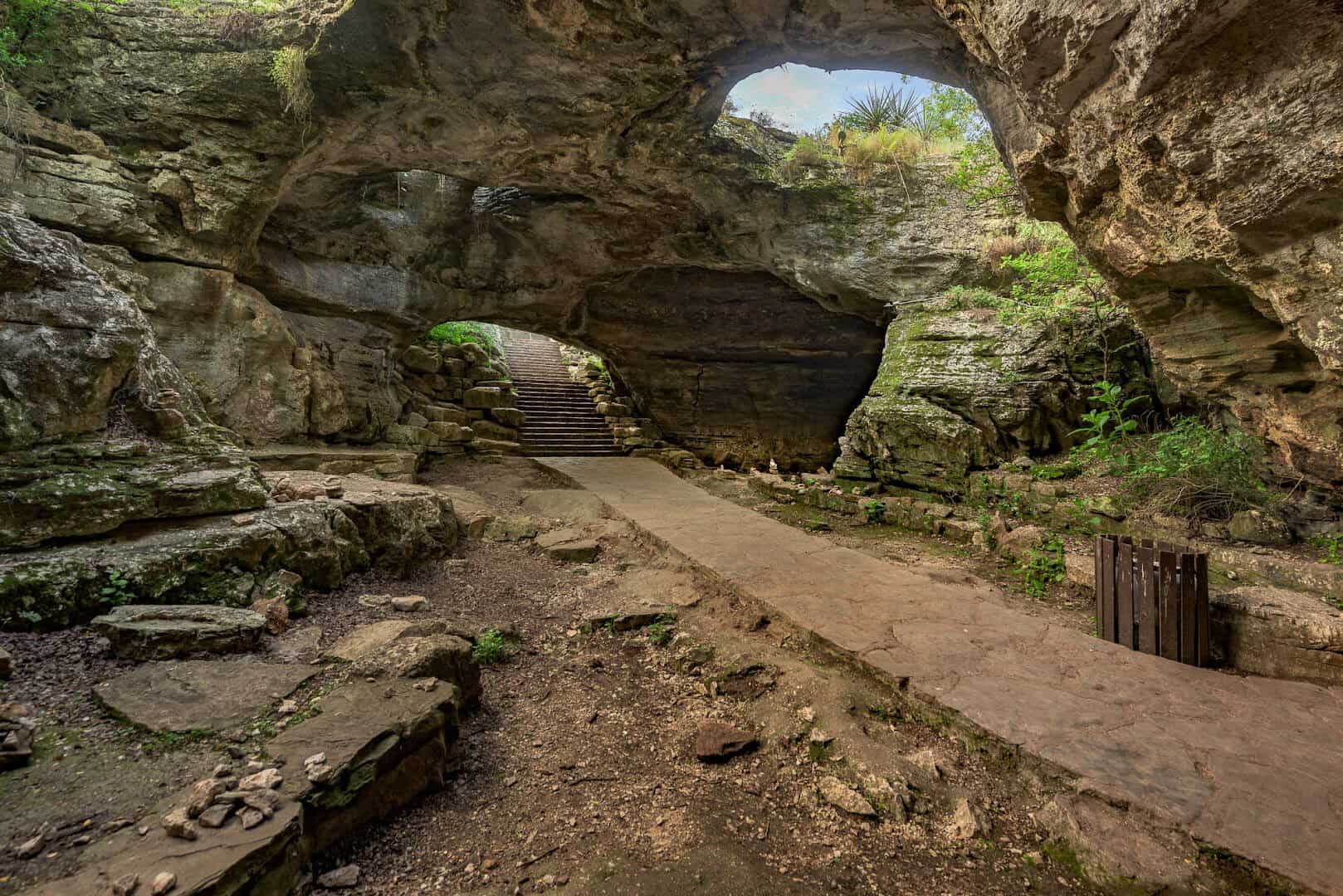
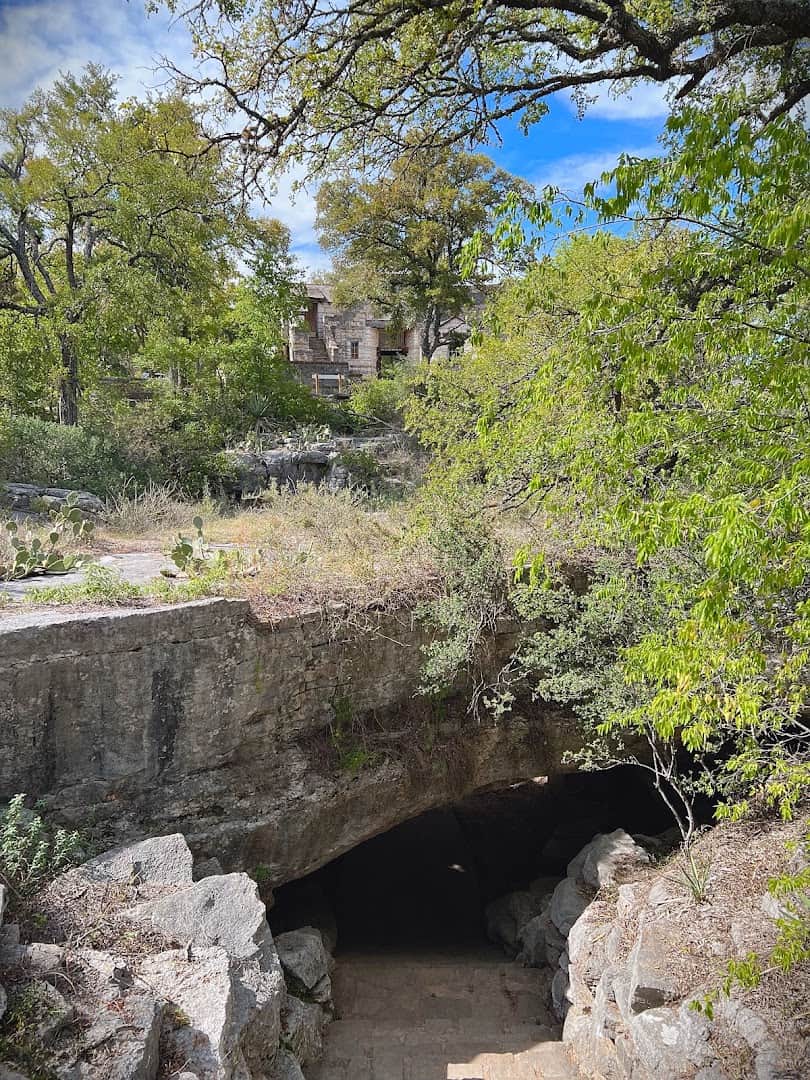
You reach it through a collapsed sinkhole, sometimes called the Sam Bass Entrance, down fifty-two stone steps and under a natural rock bridge. The temperature drops the moment you start down.
Outside it might be a hundred degrees in July. Inside it holds a steady 68 degrees, all day, every day of the year, whatever the calendar says.
That constant cool is the first thing your skin notices, and it explains a lot about the human history down here. People came underground to escape the Texas heat long before anyone thought to sell a ticket.
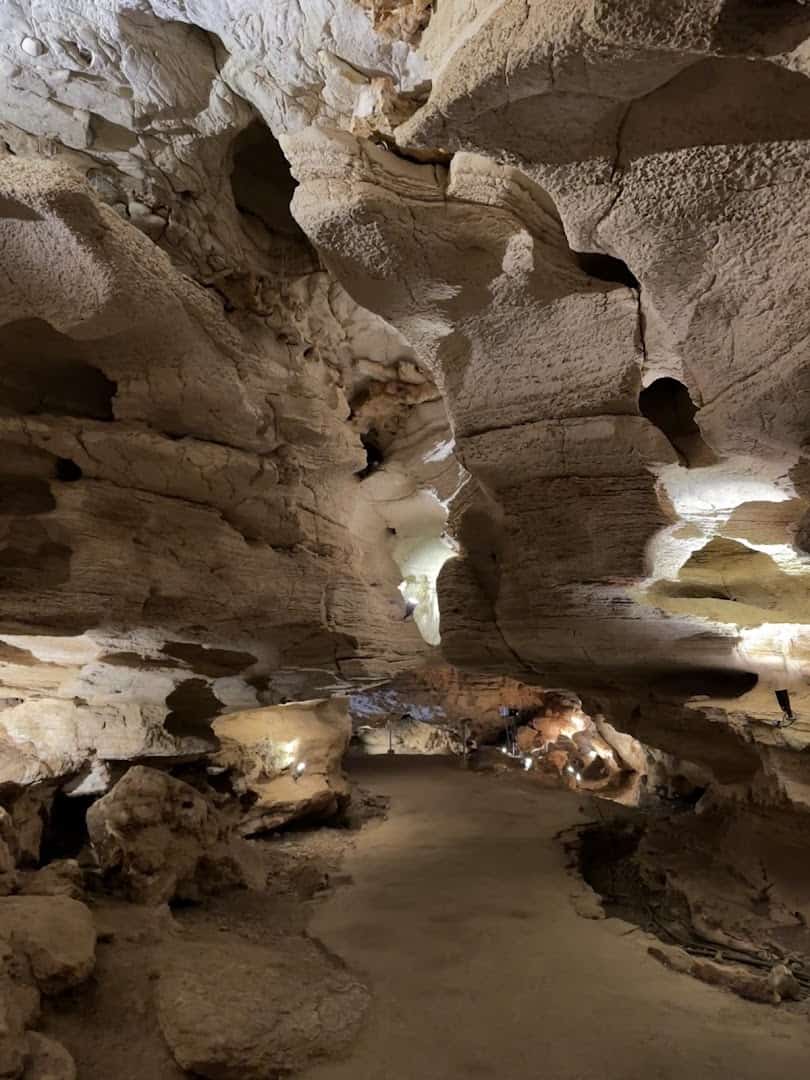
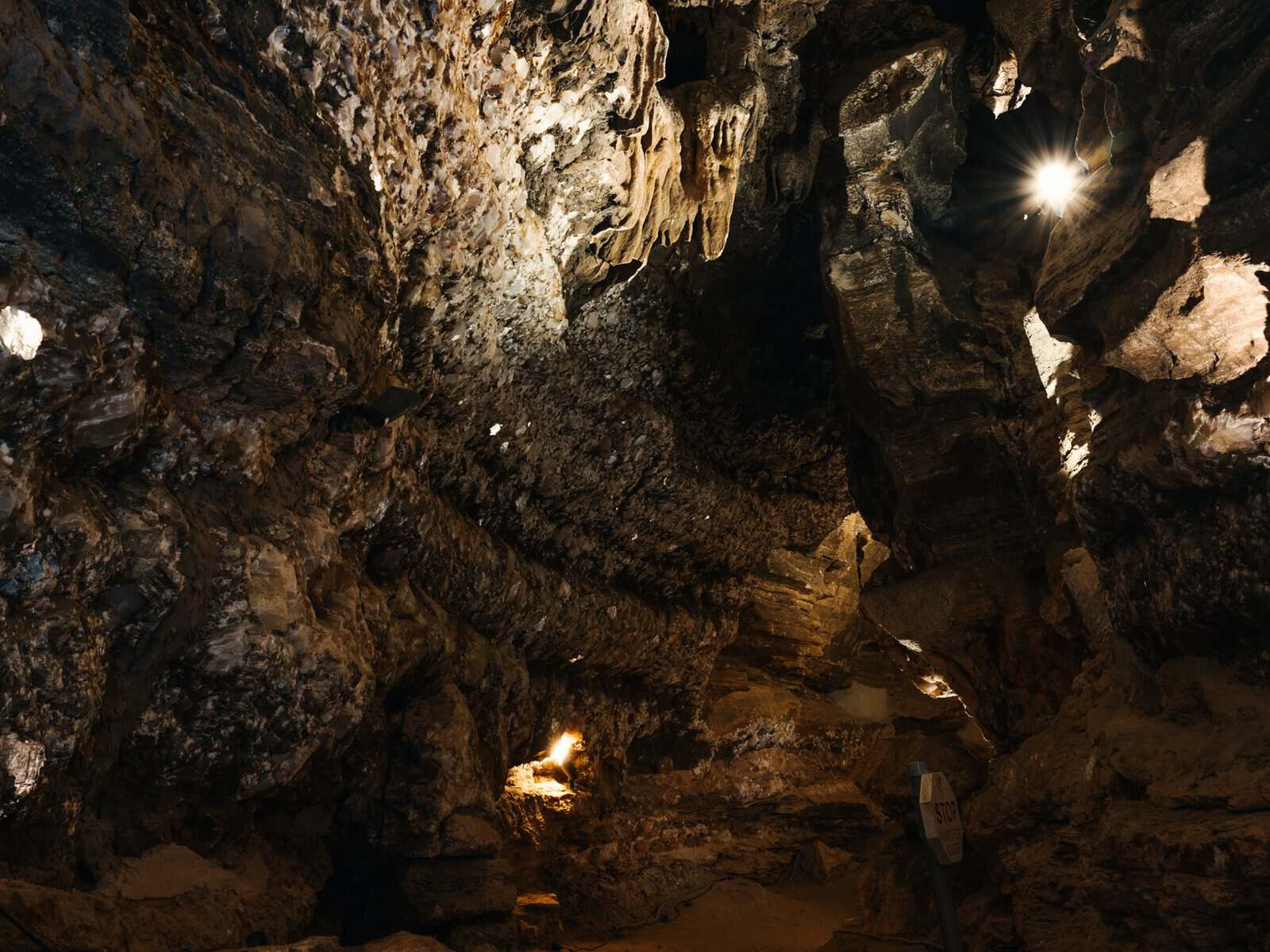
This is not the cave you picture from cartoons. There are almost no spiky stalactites hanging overhead. An ancient underground river carved these passages, so the walls are smooth, rounded, and sculpted, more like the inside of a seashell than a spooky dungeon.
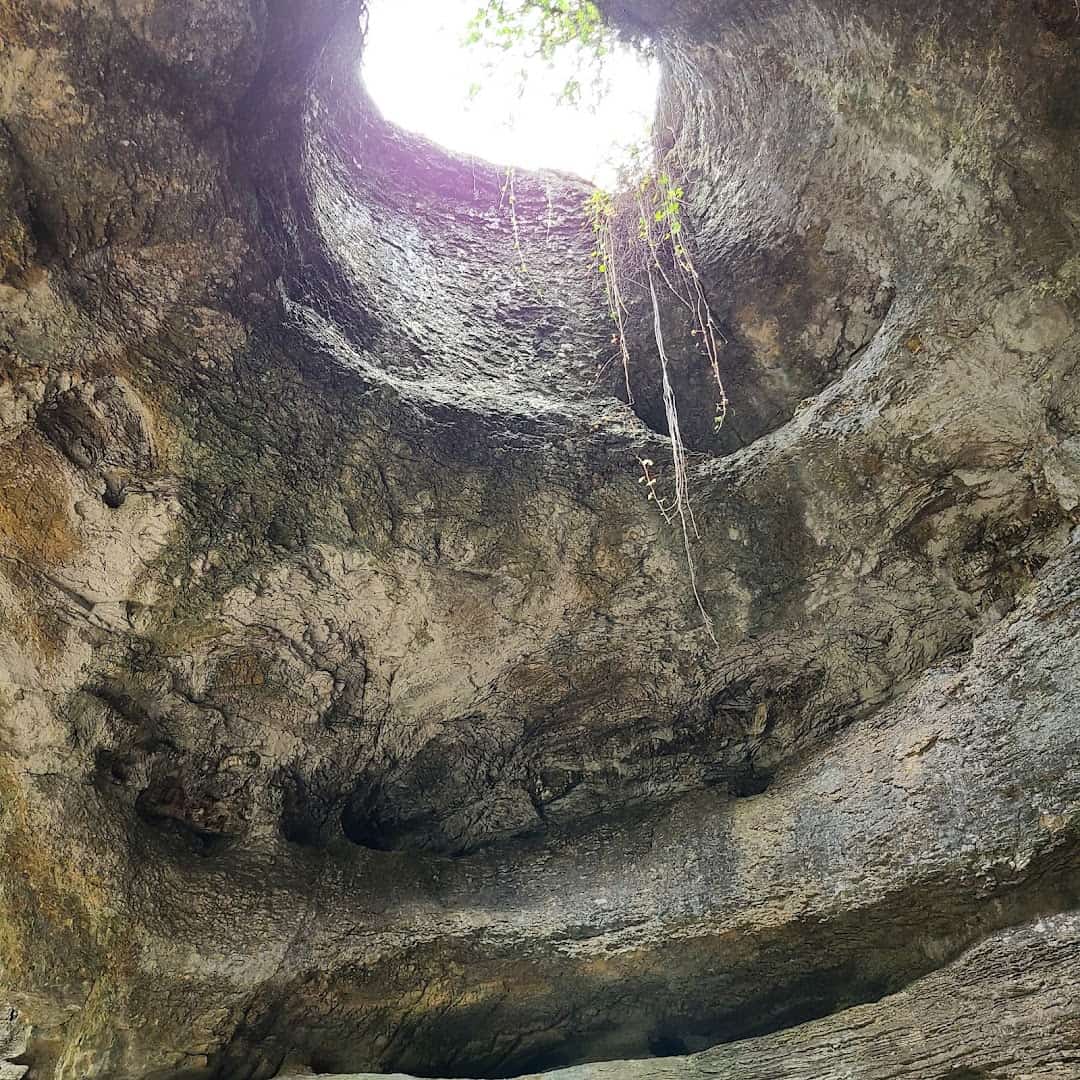
Water did all of it. Slightly acidic rainwater seeped down through the limestone over millions of years and slowly dissolved the rock into open rooms and winding halls. What you walk through is the ghost of a river that has long since moved on.
Caves like this are rarer than you might expect. Most Texas caverns are dripstone caves, built up drop by drop into stalactites and stalagmites over ages. This one was hollowed out instead, scooped from the inside by moving water, which is why it feels so smooth and open.
You cover a little over a mile of chambers on a paved path, ducking through a few low spots and climbing a few short flights of stairs along the way.
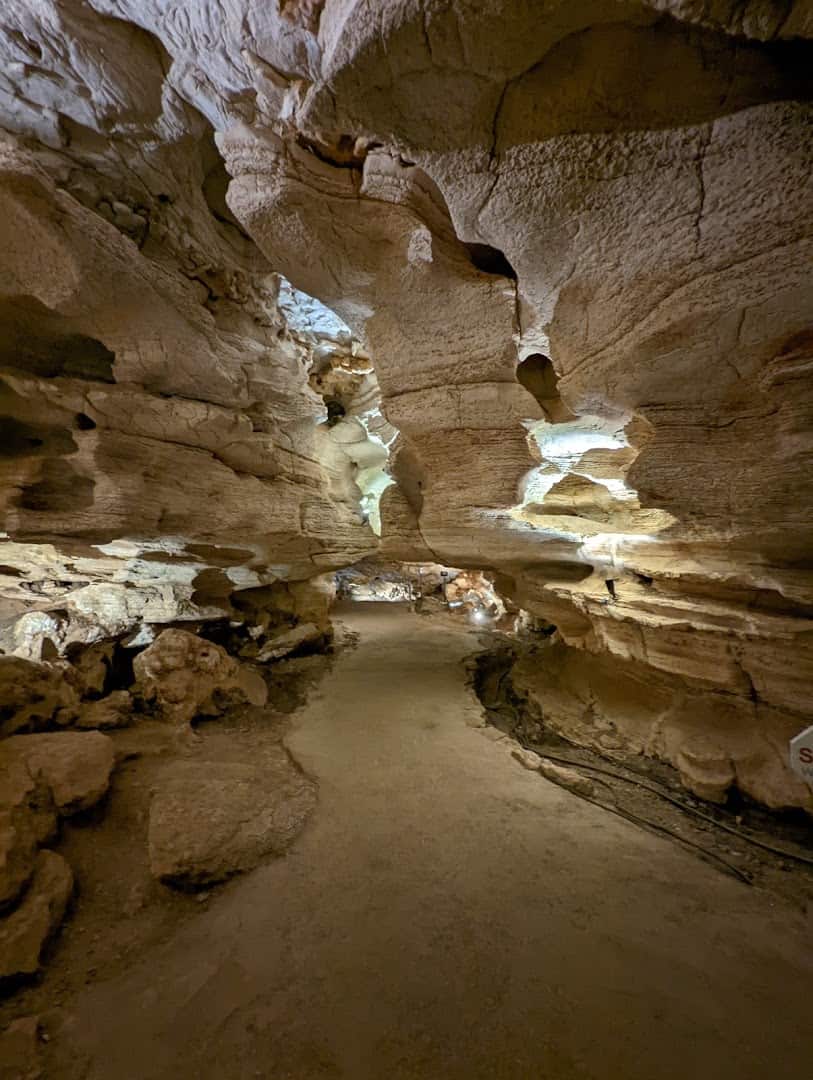
The whole loop takes about 90 minutes at a slow, easy pace, which leaves plenty of time to crane your neck and just look up at what the water left behind.
It is quiet down here in a way the surface never is. No traffic, no wind, no phone signal, just the guide’s voice and the sound of your own footsteps on damp stone.
The Ballroom That Threw the Best Parties in the County
Here is the part that surprises everyone. In the 1920s and into the 1930s, one of the largest chambers down here was a working nightclub.
There was a wooden dance floor, live music, and a restaurant serving guests underground. During Prohibition, a venue tucked away from the main road and hidden below the ranchland had obvious appeal.
Crowds drove in from surrounding counties for a night out that felt a good deal livelier than the church social back home. The cave stayed cool while the bands played, no matter how hot the summer night was up top.
Picture the notes bouncing off those water-smoothed walls while couples turned circles on the floor, a whole party humming along under a rocky ceiling. The dance floor was eventually pulled up during the Great Depression, but the room still holds the echo of it.
Weddings still happen underground today. Couples book the cavern’s Cathedral Room and trade a hotel ballroom for stone walls two million years in the making. One TripAdvisor visitor summed up her ceremony there in two words: “dream wedding.”
Outlaws, Rangers, and a Legend of Buried Loot
The nightclub was only the latest chapter. This cavern was collecting characters for centuries before anyone strung up the first string of lights.
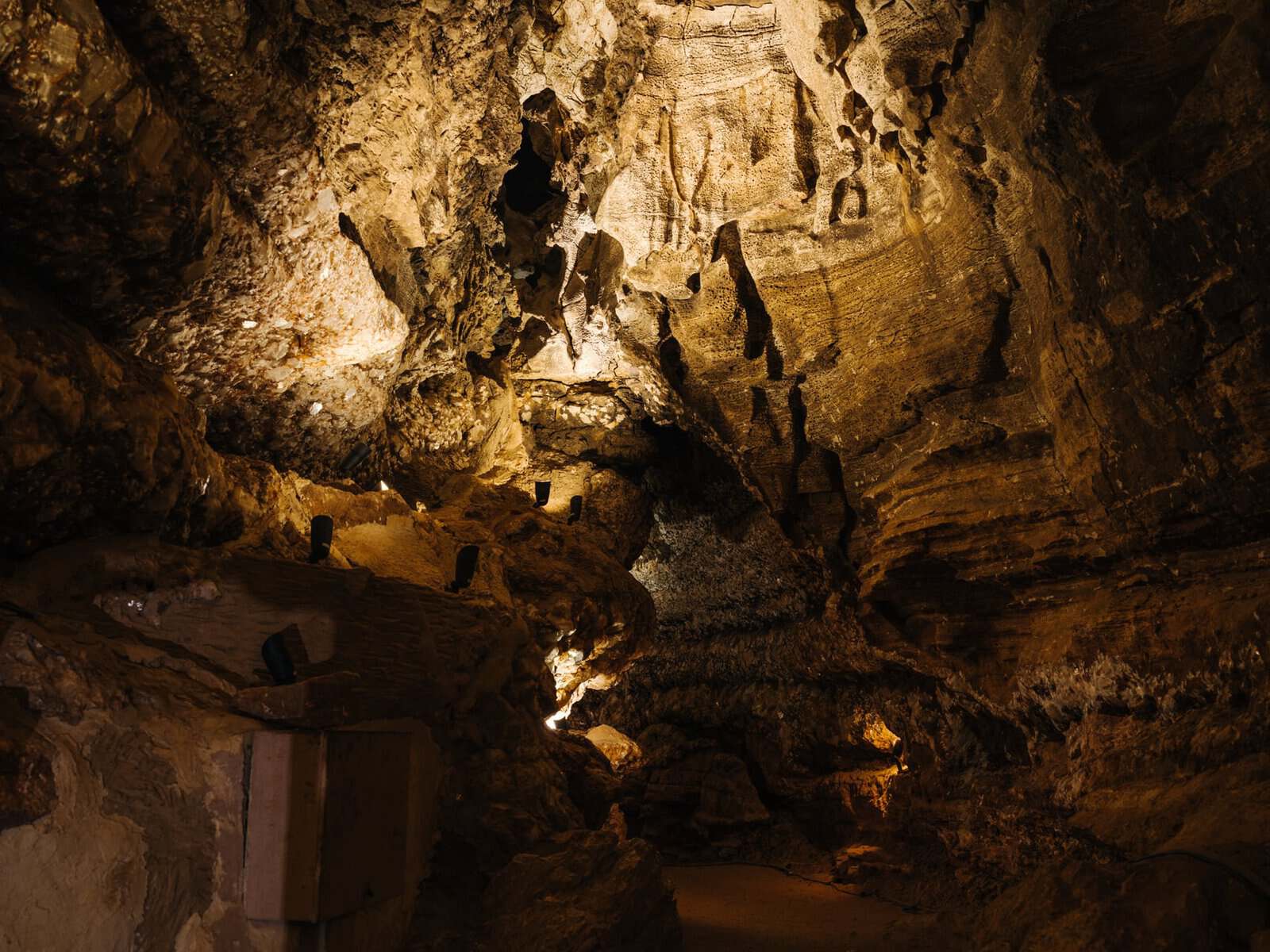
Comanche bands used a huge chamber now known as the Indian Council Room as a gathering place, and they penned horses inside the cave. It is one of the oldest human uses of the space, and the room still carries the name.
In the 1840s, Texas Rangers are said to have rescued a young girl held captive in the cavern, a story the Highland Lakes locals have handed down for generations. True or embroidered, it is the kind of tale that sticks to a place like this.
Then came the outlaw. Sam Bass, the notorious train robber of the 1870s, is said to have used the cavern as a hideout. With five separate entrances and a maze of dark passages, it was a nightmare for any lawman trying to corner a man inside.
Legend says Bass stashed stolen treasure somewhere in the dark. Nobody has ever found it. That missing loot is exactly the kind of detail that makes a flashlight beam feel a little more thrilling on the tour.
Those five entrances are a big part of why the cave drew hideouts and hangouts alike. A place with several ways in and out, and passages that fold back on each other, is hard to police and easy to slip away into.
That was a gift to an outlaw on the run, and later a gift to a party host who wanted the fun kept quiet. Today only the Sam Bass Entrance stays open to visitors, so you follow one clear path instead of guessing at five.
A Brief History Written in Stone
The cavern’s human story stacks up in layers, and the dates are worth knowing before you go.
Its most practical era came during the Civil War. In the 1860s, the Confederate Army mined the thick bat guano on the cavern floor for potassium nitrate, a key ingredient in gunpowder. A secret, sheltered production site suited them perfectly.
After the outlaws and the dancing came the state government. Texas bought the 637-acre tract in 1931 and dedicated it as a state park the following year. Then the real work began.
From 1934 to 1942, Company 854 of the Civilian Conservation Corps hauled out thousands of dump-truck loads of silt, debris, and guano, most of it by hand. They cleared the passages that centuries of use had choked with muck.
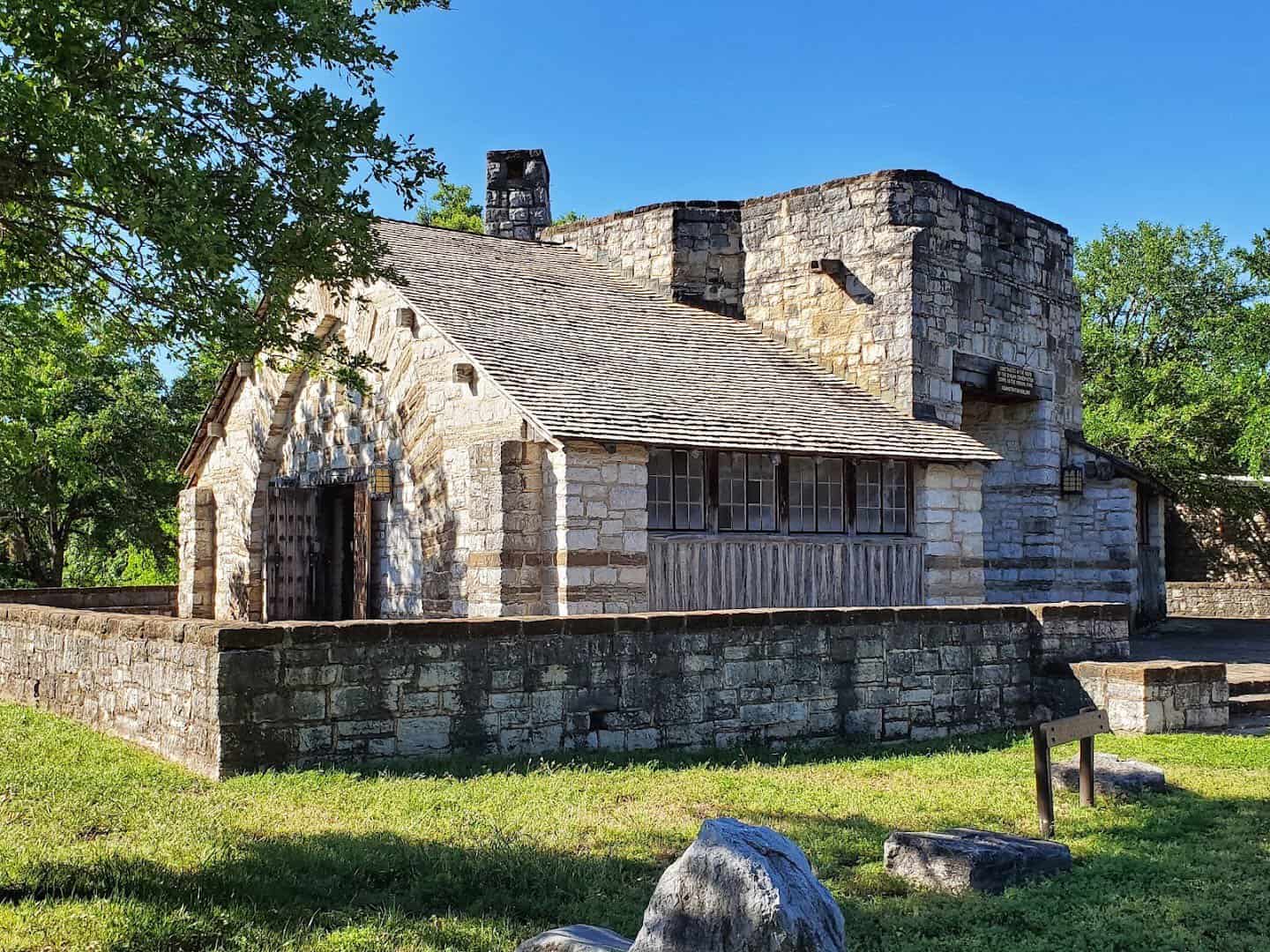
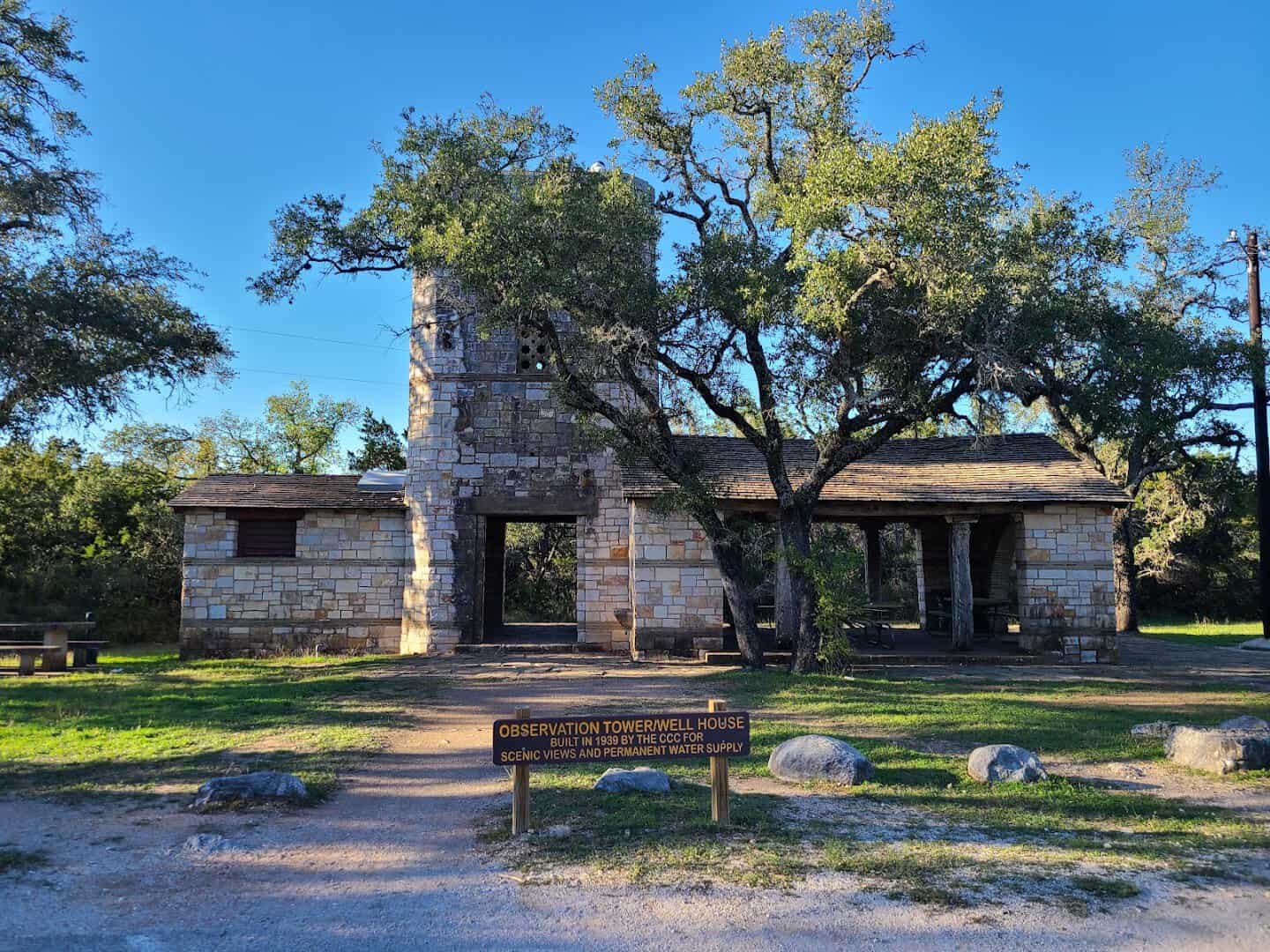
Those same crews built the stairs, the walkways, the winding Park Road 4, and a stone observation tower up on the surface, all in the rugged National Park Service style you still see today. The cavern opened to the public in 1938.
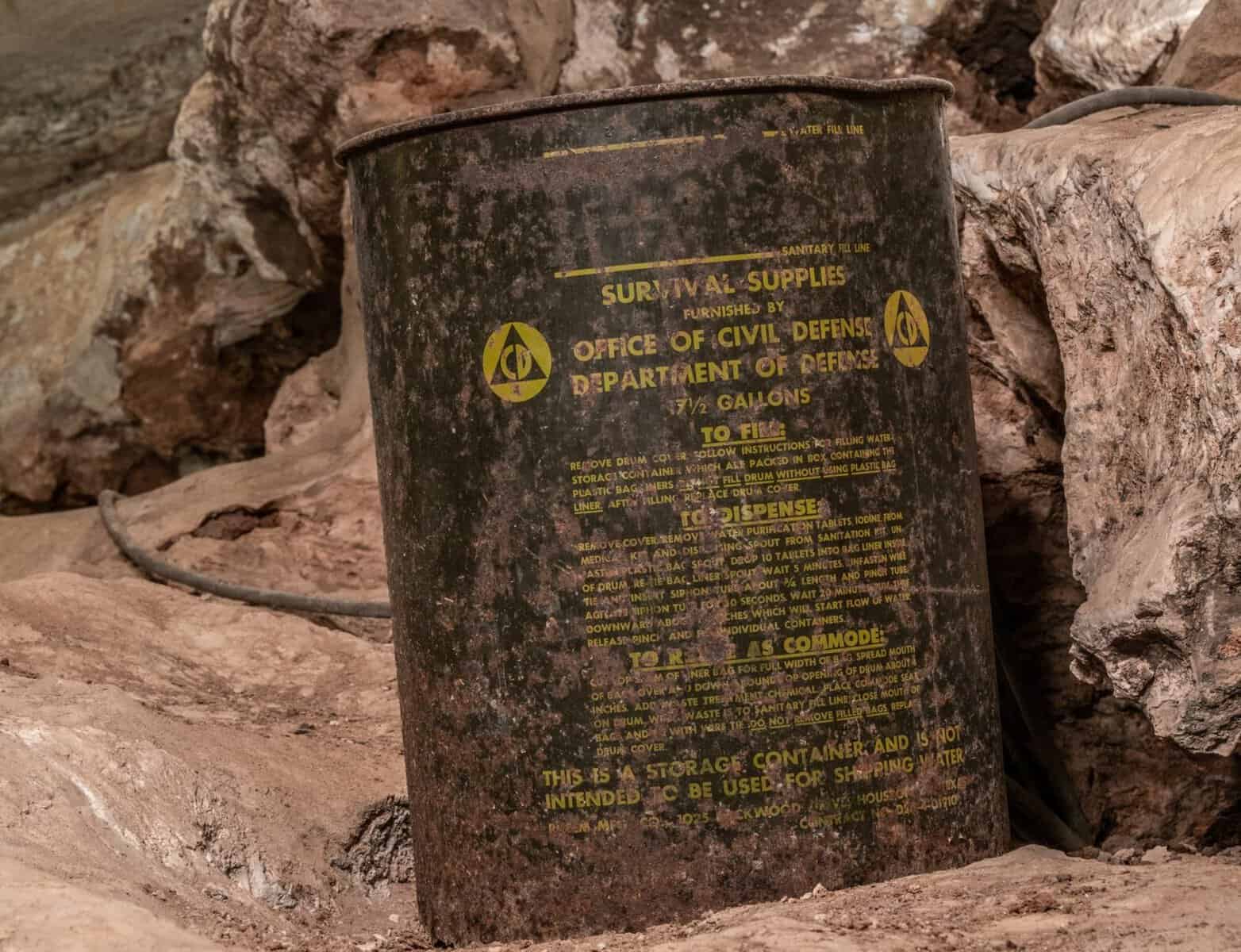
Did you know? During the 1960s, at the height of the Cold War, the cavern was licensed as a nuclear fallout shelter. A place that had already outlasted so much history felt like a safe bet against the future.
The Rooms That Do the Showing Off
Every chamber down here earned a name, and the guides make the most of them.
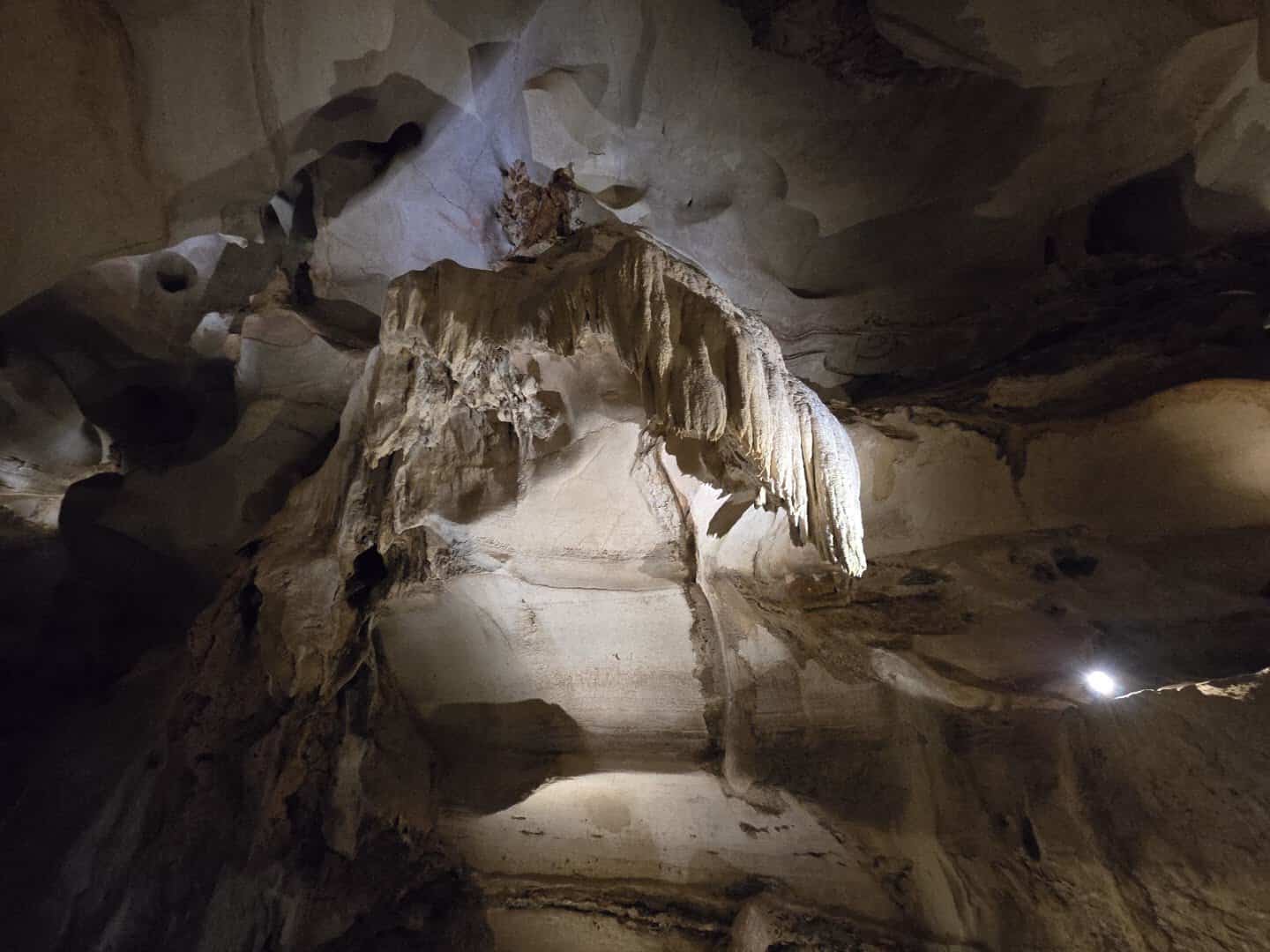
The Queen’s Watchdog is a chunk of dolomite, a denser cousin of limestone, that the CCC crew found deep in the cave and set out front like a loyal guard dog watching over the Queen’s Throne. Geologists put its age at around two million years.
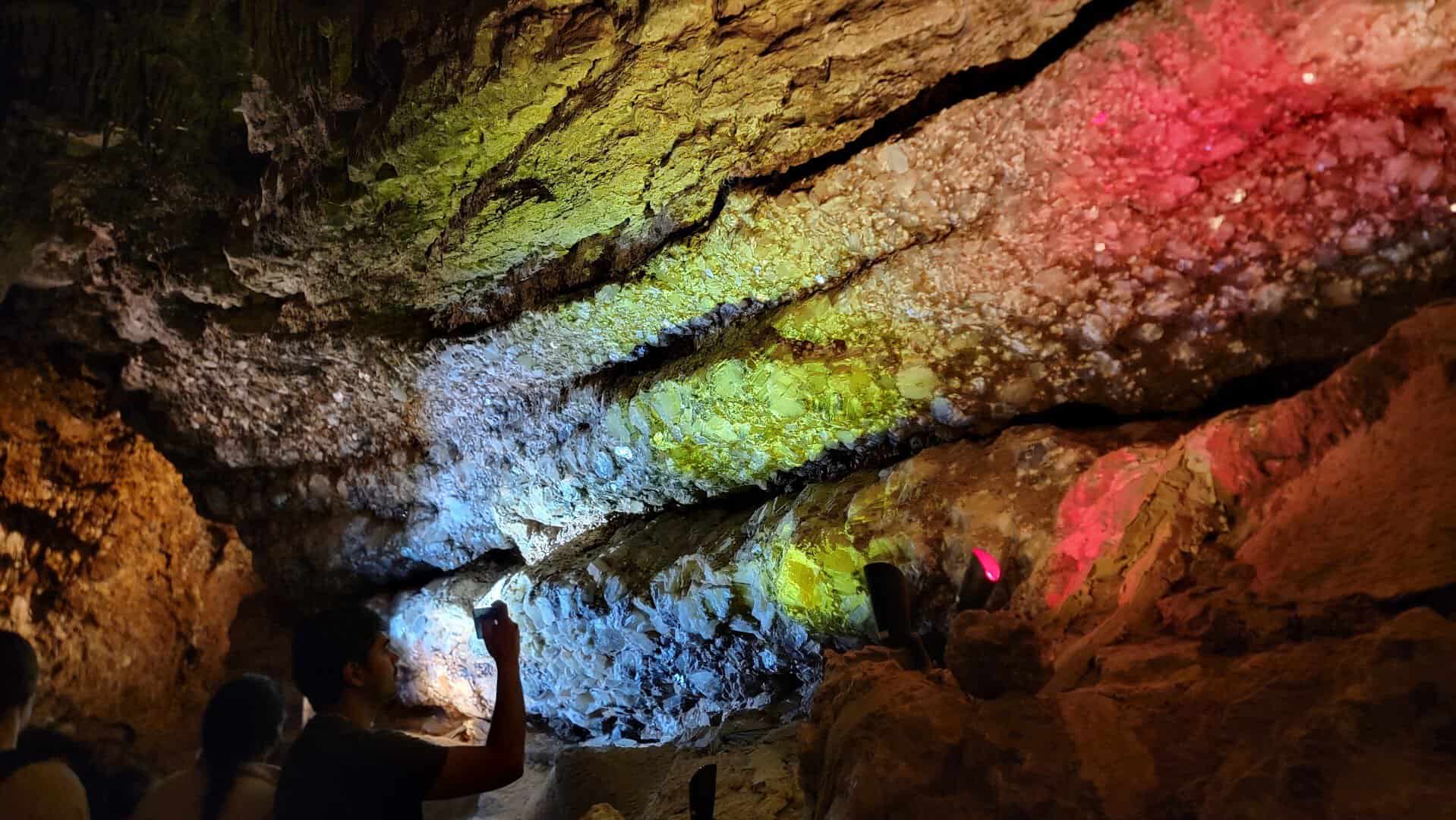
Farther along, the passage opens into the Hall of Gems, sometimes called the Hall of Diamonds or Crystal City. Calcite crystals catch the light and glitter like nature’s own faux diamond mine tucked into the rock.
Nearby, a Rainbow Room glows with faint red, white, and blue mineral highlights, and a smooth stretch known as the Hall of Marble shows off just how polished flowing water can leave solid stone.
It reads like a curated museum exhibit, yet every surface was shaped by water and time, not a chisel. That contrast, wild geology dressed up with a showman’s names, is a big part of the fun of the walk.
Blacklight, Ghosts, and the Wild Cave Route
The standard walking tour is the headliner, but it is not the only way to go under.
Blacklight tours light the formations in an otherworldly glow you cannot get on the regular loop. Paranormal and ghost tours lean into all that eerie history after dark, which is perfect if the outlaw legends have already got you curious.
The guides get glowing marks from visitors either way. One reviewer noted that a guide’s “sense of humor added to the tour,” and that easy storytelling is a big part of why people leave grinning.
For the truly adventurous, the Wild Cave Tour ditches the paved path entirely. You crawl, climb, and squeeze through the undeveloped parts of the cave, headlamp on, knees dirty, seeing corners most visitors never reach.
Pro tip: whatever tour you pick, bring a light jacket. Sixty-eight degrees feels wonderful on a summer afternoon and turns a touch chilly once you have been standing still in one chamber for a while.
What It Costs and When to Go
The classic walking tour runs about $24 for ages 12 and up and $17 for kids 4 to 11 on off-peak weekdays, with the littlest ones free. The Wild Cave Tour is a bigger commitment at around $110 per person.
Tours run hourly, roughly 11 a.m. to 3 p.m. on weekdays and 10 a.m. to 4 p.m. on weekends. Prices and times shift with the season, so it is smart to book ahead, especially on a weekend when tours fill up fast.
Because it stays cool underground no matter what the sky is doing, this is one of the rare Texas attractions that works just as well in a July scorcher as on a gray winter afternoon. There is no bad season to climb down here.
Do not rush off the moment you surface, either. The park up top has picnic spots, walking trails, and that stone observation tower the CCC built.
You can trade the cool dark for a wide Hill Country view and make a half day of it. Pack a lunch and you will be in no hurry to leave.
How to Get There
The cavern sits in the Hill Country just southwest of Burnet, an easy day trip from Austin, San Antonio, or the Highland Lakes. The winding drive in on Park Road 4, itself built by those same CCC crews, is half the pleasure of the outing.
Where: Longhorn Cavern State Park, 6211 Park Road 4 S, Burnet, TX 78611
Plan Your Trip Underground
Some places show you the Texas you already know. This one shows you a Texas that spent a century partying, hiding, and glittering right under the ranchland while the world above went about its business.
Pack a jacket, book your tour, and go stand in a ballroom that a river built. When you climb those fifty-two steps back into the sunshine, you’ll understand why folks have been sneaking down here for two hundred years.
Featured image: @ Longhorn Cavern State Park

Stella Raines
Editor-in-Chief
Stella brings over a decade of storytelling experience to TX Headlines. With roots in West Texas and a love for road trips, she leads the editorial team with an eye for the hidden stories that make Texas unforgettable.
More Stories
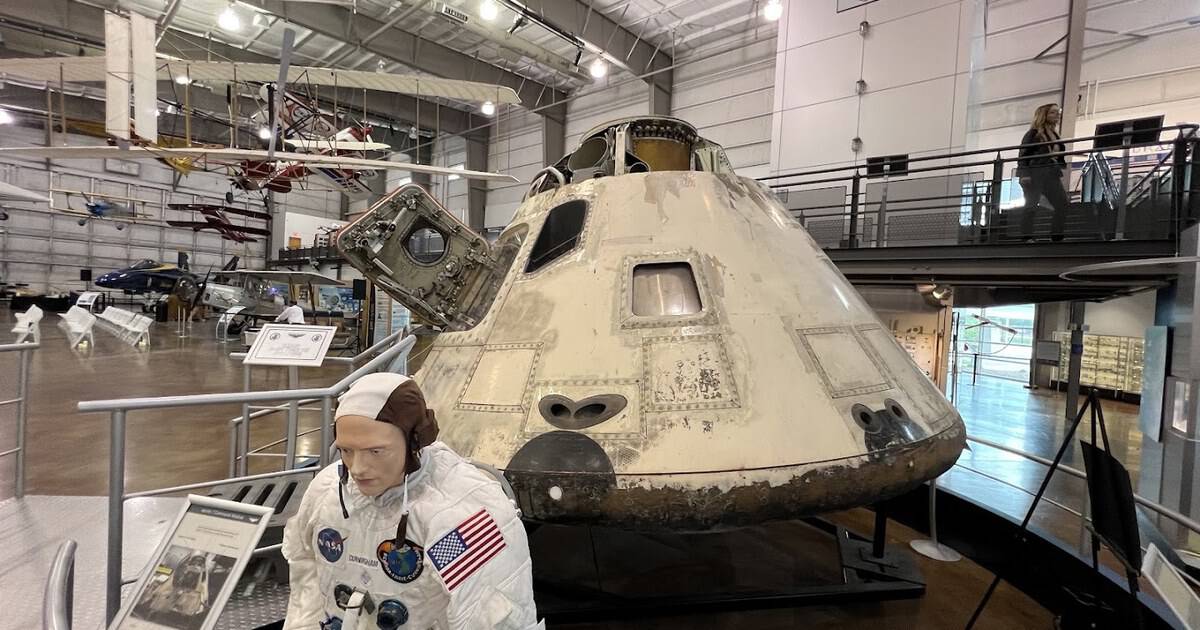
This Overlooked Texas Aviation Museum Is Home to a Real Spacecraft and the World’s Only Flying Pancake
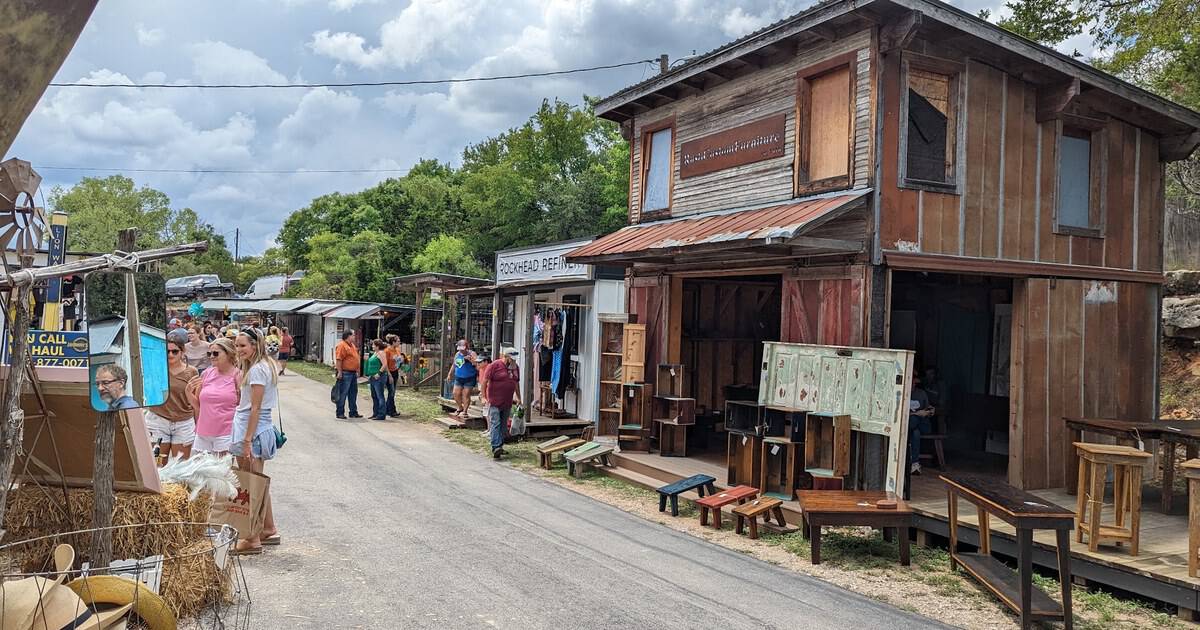
This Giant Texas Flea Market Has 490 Booths You’ll Want to Wander Again and Again
This Nostalgic Texas Open-Air Cinema Plays Two First-Run Movies for Less Than One Multiplex Ticket
This Scenic Texas Rail Ride Winds Through the Hill Country With Views of the South San Gabriel River
Tags