This Easy Texas Hike Ends at a Swinging Rainbow Bridge Tucked Deep in the Woods
I have a soft spot for a payoff you have to earn on foot. Not a scenic overlook you can pull the car up next to, and not a landmark with a gift shop out front.
I mean something small and a little bit magic, waiting at the far end of a quiet loop through the trees, that you only get to because you walked there.
That is exactly what you get on the Sweetleaf Nature Trail, tucked inside a 1,722-acre pocket of pineywoods near Conroe called W.G. Jones State Forest. Follow the loop to its farthest point and the reward is a swinging rainbow bridge, strung over a creek deep in the woods.
It is a real suspension footbridge, cables and all, with planks painted in a scatter of different colors. Here is why this short, shady hike has quietly become one of the most charming half-day trips in the greater Houston area, and everything you need to go find it yourself.
A Hike That Feels Like a Secret
The thing I love about a trail like this is that it asks so little of you and gives so much back. You do not need special gear, a permit, or a full day. You need a couple of hours and a willingness to wander.
The Sweetleaf Nature Trail runs a loop of roughly 2.3 miles, rated easy, with only about 55 feet of elevation change across the whole thing. Most people finish it in well under an hour if they hurry, though hurrying rather misses the point.
The trail takes its name from the sweetleaf, an understory tree that once grew a state champion specimen right here in the forest. That record tree stood until 2000, and the loop still carries its name for anyone curious enough to ask why.
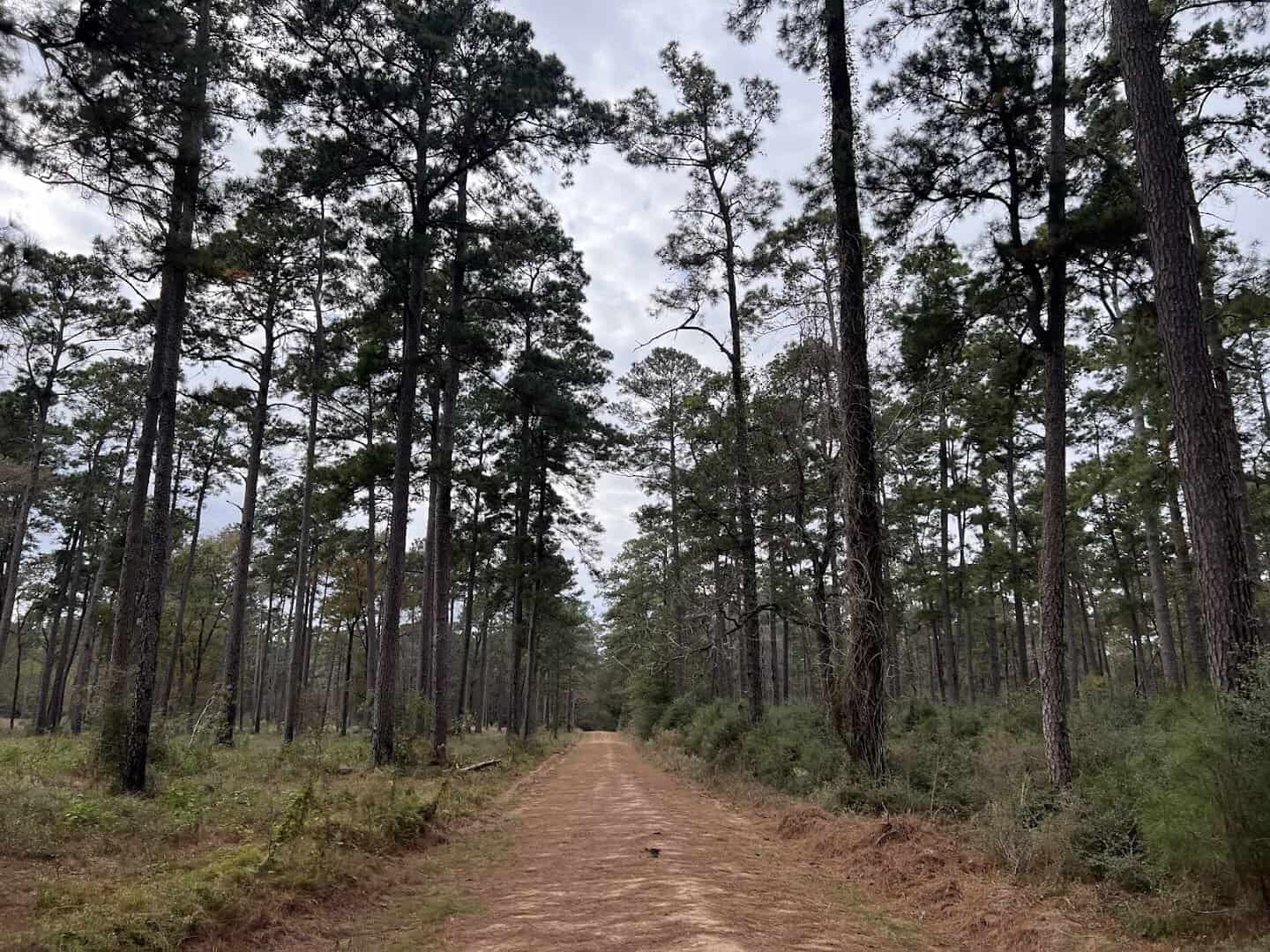
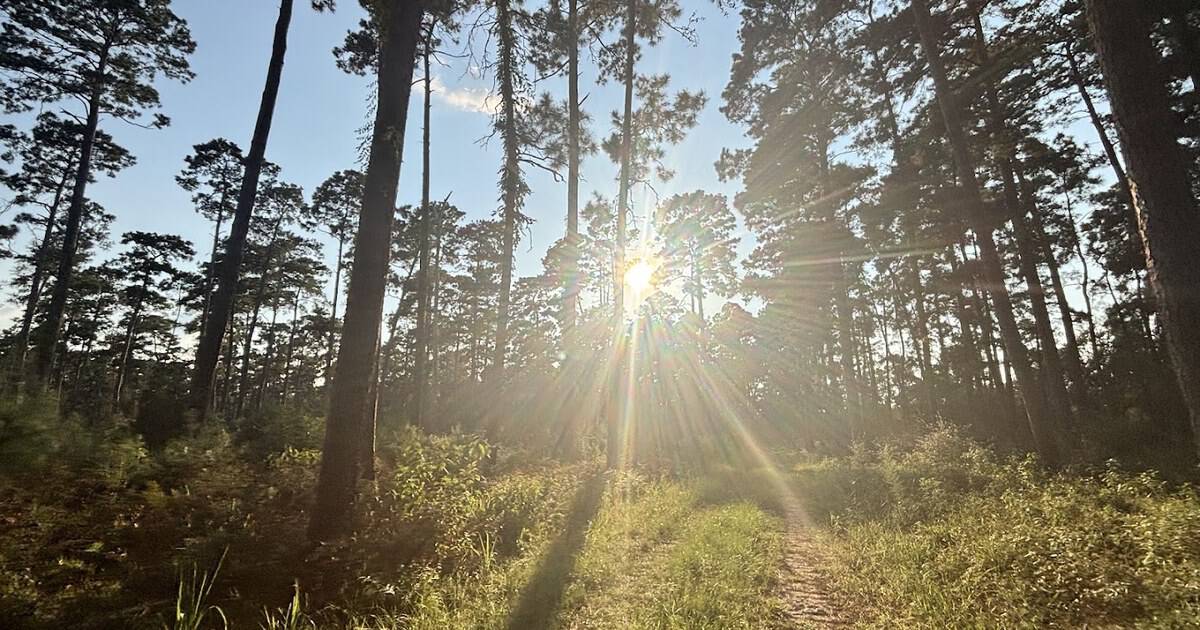
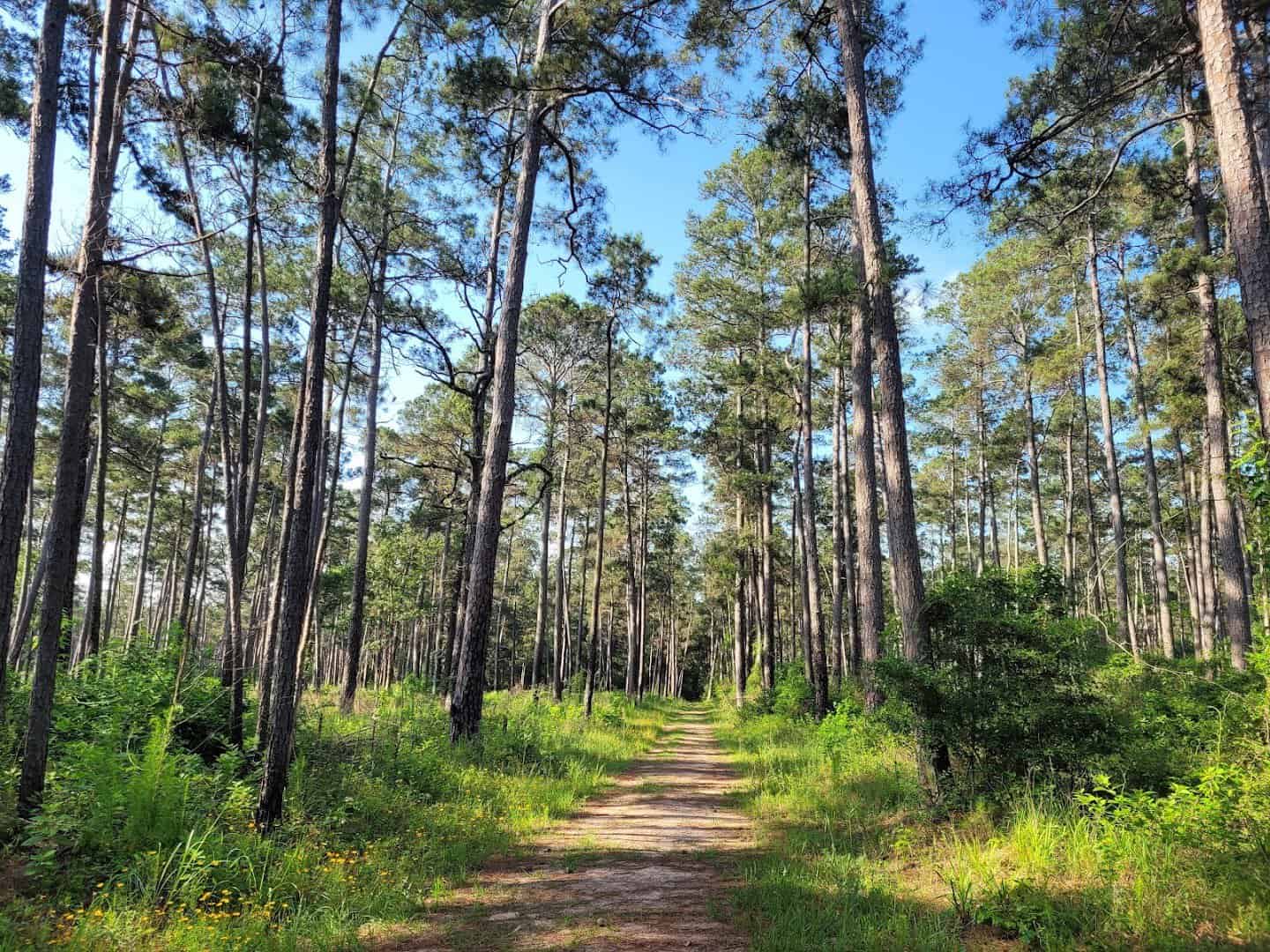
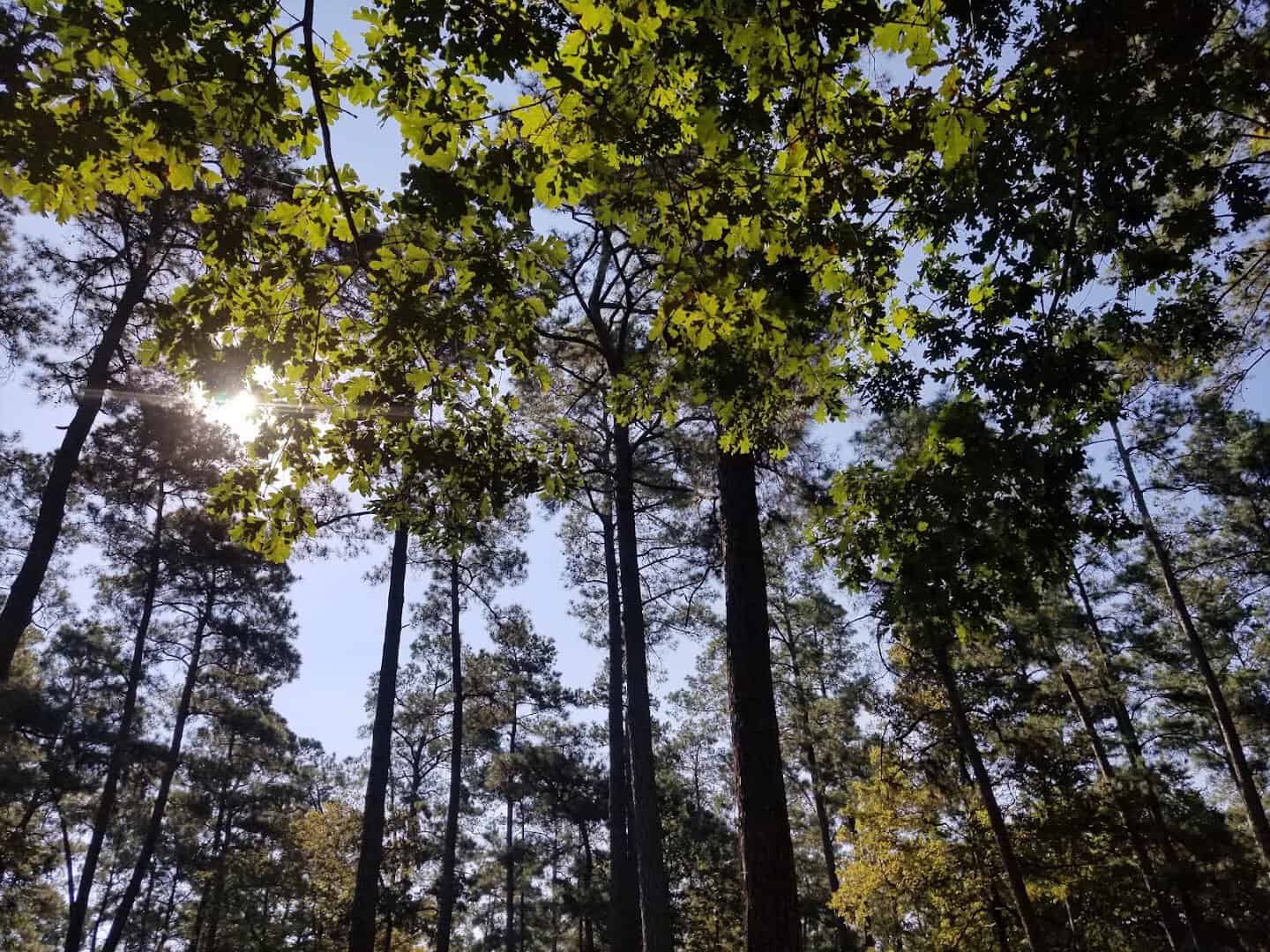
You step off the road and the world goes quiet fast. Tall pines close in overhead, the light turns soft and green, and the traffic on FM 1488 fades behind you within a few minutes of walking. It is the kind of shade that makes a Texas summer feel survivable.
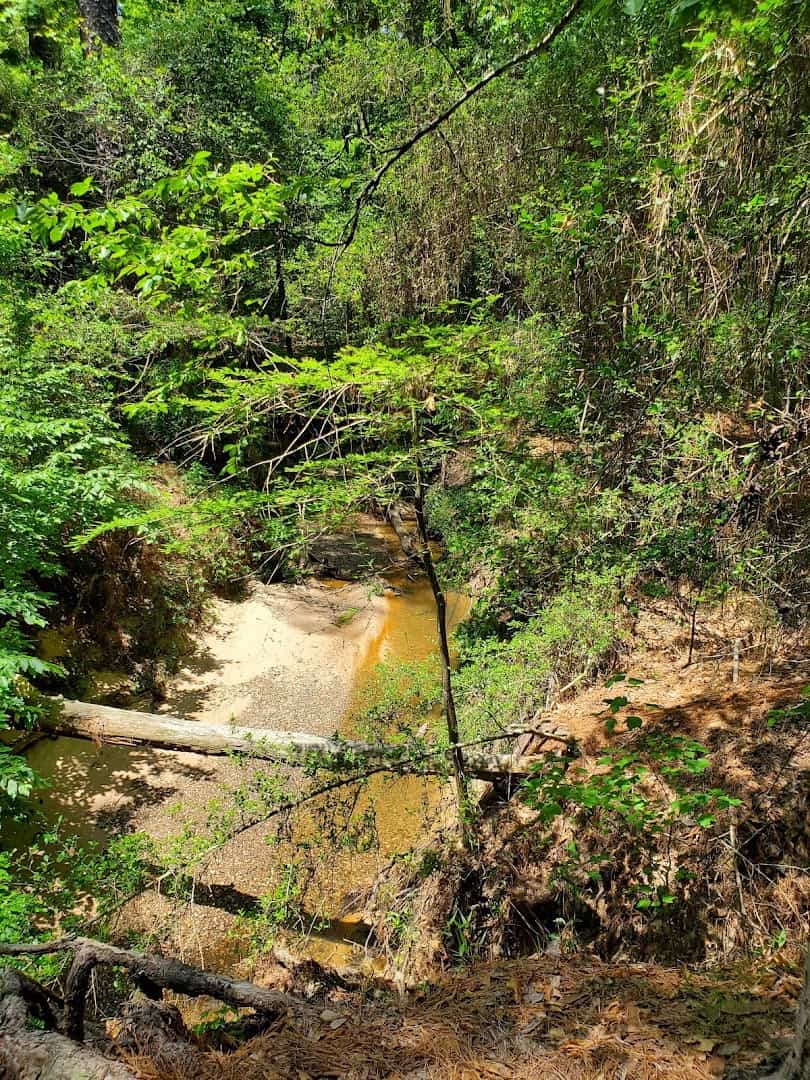
The creek is never far. Rice Branch threads through the loop, a modest ribbon of water that the trail crosses on low wooden walkways and, at its far corner, on the rainbow bridge itself. In a wet week it runs clear and quick under the boards.
The path is marked with blue and metal tags nailed to the trees at the spots where you might second-guess yourself. A little creek keeps you company, wooden walkways carry you over the low spots, and pine needles crunch underfoot the whole way.
On AllTrails the loop holds a 4.5-star rating across more than a thousand reviews, and the words that come up again and again are peaceful, shaded, and family-friendly. One hiker summed it up as “a peaceful walk with fun bridges.” That is the trail in five words.
The Rainbow Bridge in the Woods
Then you reach the reason you came. At the far end of the loop, the trail delivers you to a genuine suspension bridge slung across the creek. Its wooden planks are painted in a jumble of colors that give the whole span a cheerful, rainbow look.
It swings. That is the fun of it. Step onto the deck and you feel it flex and sway under your weight, a gentle bounce that makes grown adults grin and kids shriek with delight.
There is a soft creak as the boards take your step, then the give of the cables settling you back level. You reach for the handline out of instinct even though you do not really need it.
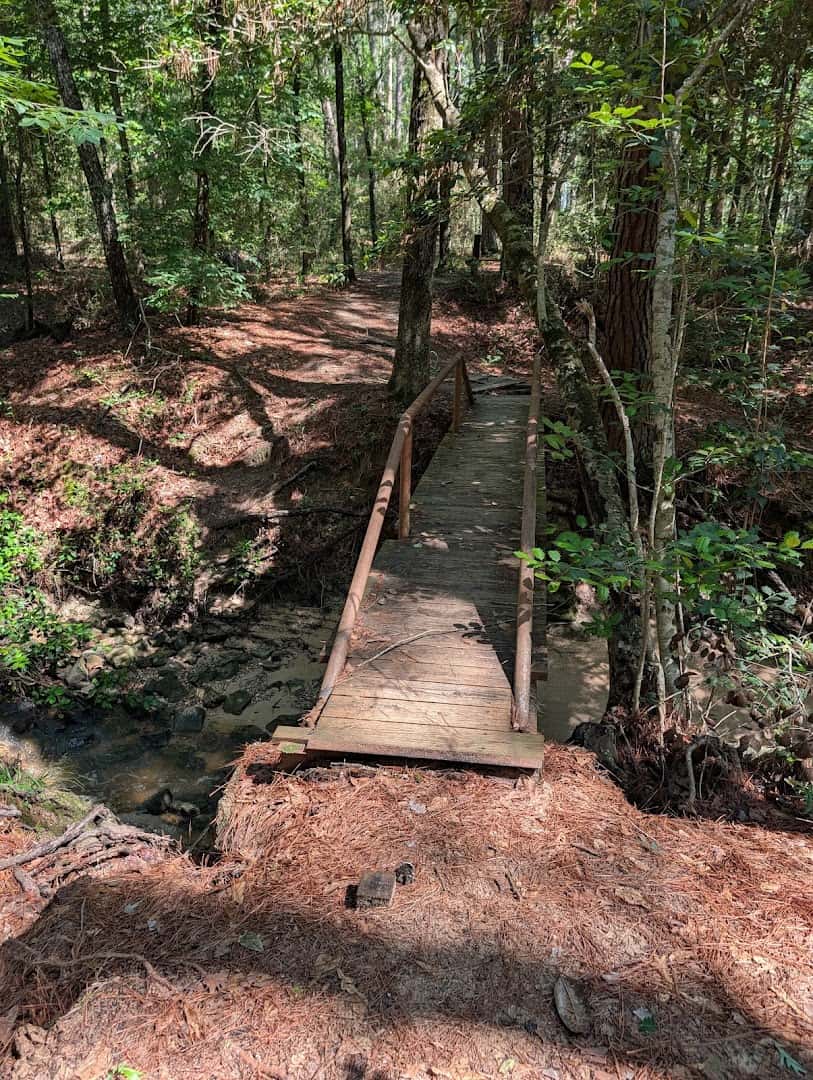
It is not a huge span, and it does not need to be. Half the charm is the surprise of it. You walk through a mile of ordinary Texas forest and then, without any fanfare, there it is.
A bright, swaying little bridge that looks like something out of a storybook, crossing a quiet branch of water most people driving past on the highway will never know is there.
The bridge is also a handy shortcut. Cross it and you can loop back toward the trailhead on the other side of the creek, which makes it a natural turnaround point and a great spot to stop and catch your breath.
Pro tip: go easy and cross one or two at a time. The swing is part of the experience, and it is a lot more fun when you are not fighting someone else’s bounce for your footing.
Trees Upon Trees, and a Rare Neighbor
The forest itself is the other star here, even if the bridge gets the headline. This is classic East Texas pineywoods: towering loblolly and shortleaf pines, hardwoods filling in below, and an understory that shifts with the seasons.
Jones is a working demonstration forest, which means the trees are not just scenery. Foresters actively manage this land, and every so often they set carefully controlled burns across sections of it to keep the woods healthy and open.
Those burns are for a very special resident. Jones is one of only two state forests in Texas with a significant population of the red-cockaded woodpecker, a small black-and-white bird that is federally endangered and famously picky about where it lives.
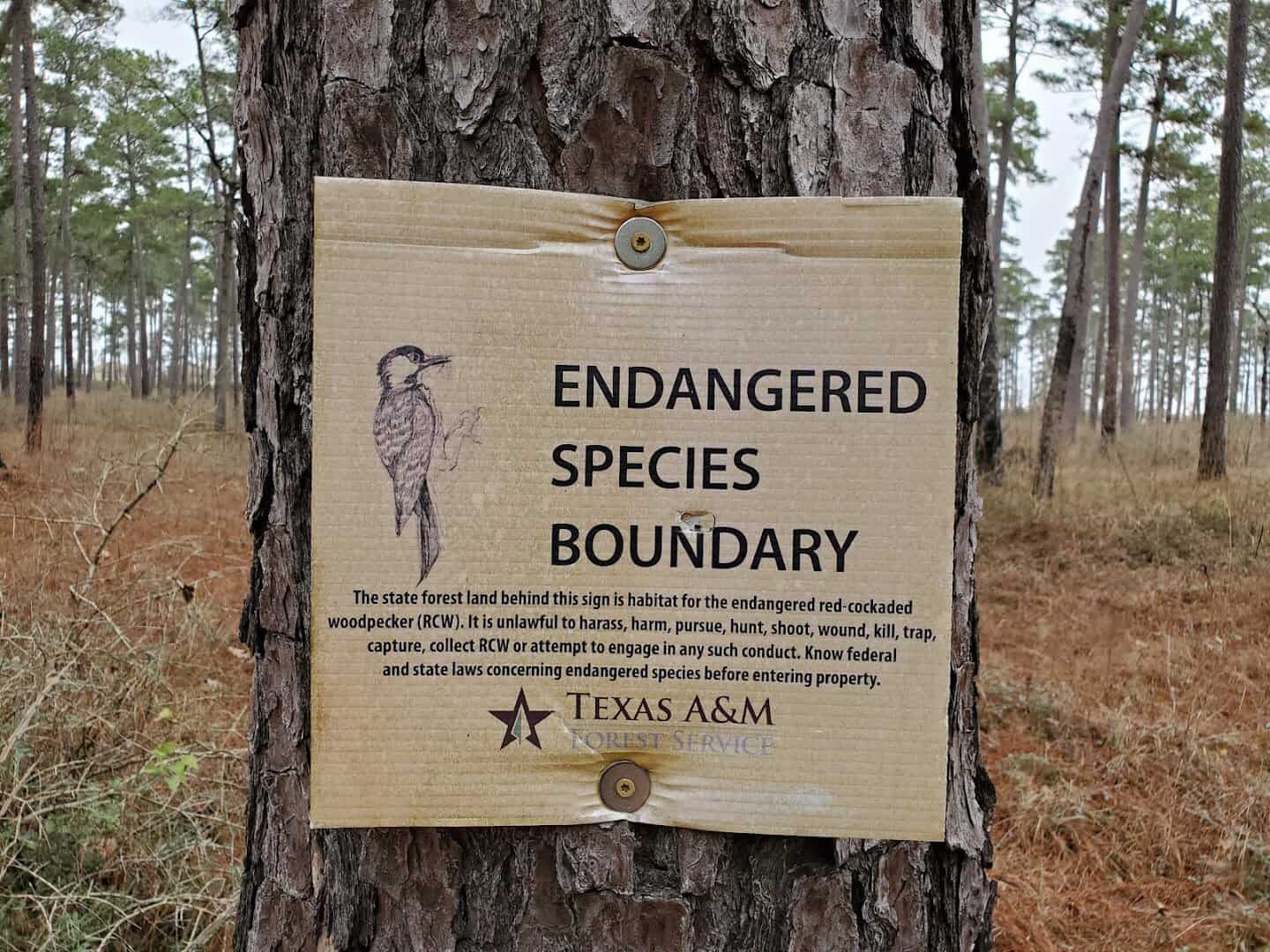
The woodpecker nests in living, mature pines, and the prescribed fire clears out the brushy hiding spots that predators use. It opens up flyways for the birds and lets light reach the forest floor. Keep your eyes and ears up and you just might spot one working a trunk.
Did you know? The whole forest is a game sanctuary, so hunting is off the table and the wildlife is used to being watched rather than chased. Birders come here specifically for that reason, and roughly 100,000 people visit across the year.
You will likely share the trail with squirrels, songbirds, and the occasional deer, plus the small creek life along Rice Branch. It is a gentle, alive kind of quiet, the sort that resets your brain after a week of screens.
If you are walking with kids, turn the loop into a hunt. The forest is a well-known geocaching spot, so a phone and a free account can send the whole family searching tree bases and trail junctions for hidden little containers along the way.
It keeps small legs moving between the parking lot and the bridge, and it gives everyone a reason to slow down and actually look at the woods instead of powering straight through them.
Come in spring and the understory greens up fast around you. Come in fall and the hardwoods throw a little color into all that evergreen. There is no bad season to walk it, which is one more reason it is so easy to love.
A Forest With Deep Roots
The land you are walking has been in the state’s care for a full century. Texas acquired this tract in 1926 and simply called it State Forest Number Two. The idea was to run it as a living laboratory in one of the richest timber regions the state had.
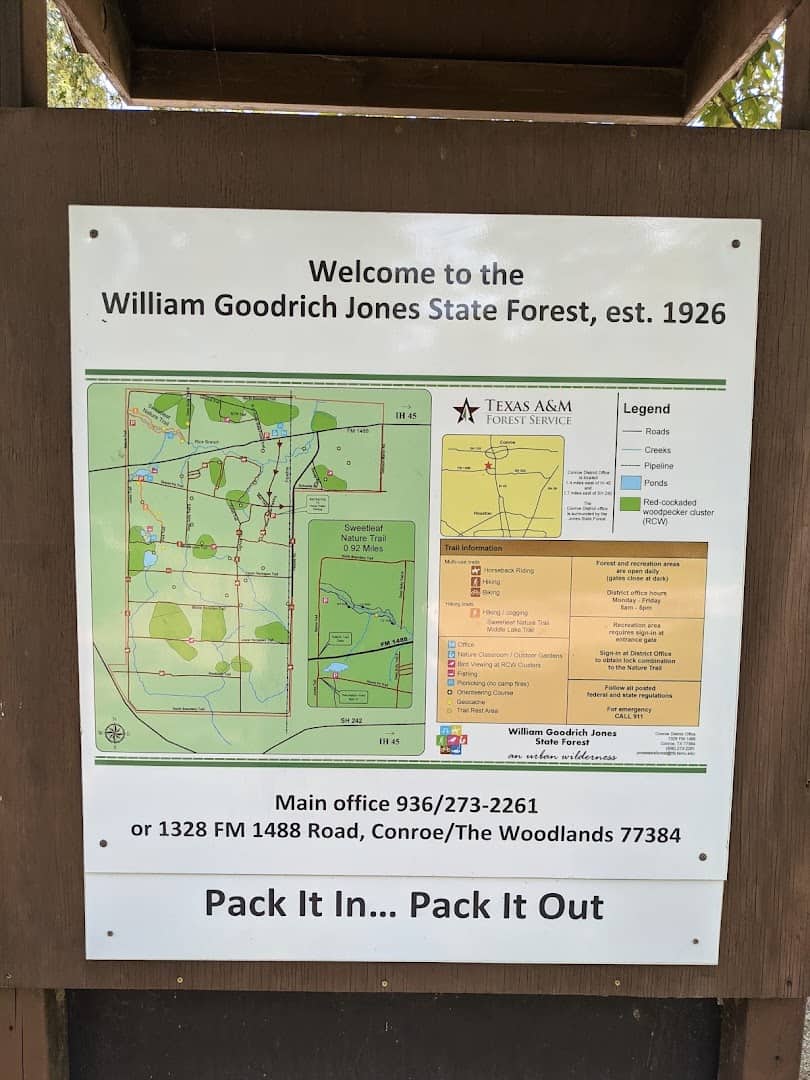
In 1927, foresters opened the second pine seedling nursery in Texas right here, capable of growing a million bare-root seedlings a year. Those seedlings went out to reforest land across the region that a brutal wildfire had scorched only a few years earlier. The nursery ran until 1940.
From 1933 to 1936, a Civilian Conservation Corps camp operated on the property. It was part of the Depression-era effort that planted trees and built infrastructure in public forests all over the country. A lot of Texas woodland owes its second life to crews like that one.
On May 19, 1949, the forest was formally dedicated and given the name it carries today. It honors William Goodrich Jones, the man widely called the father of Texas forestry.
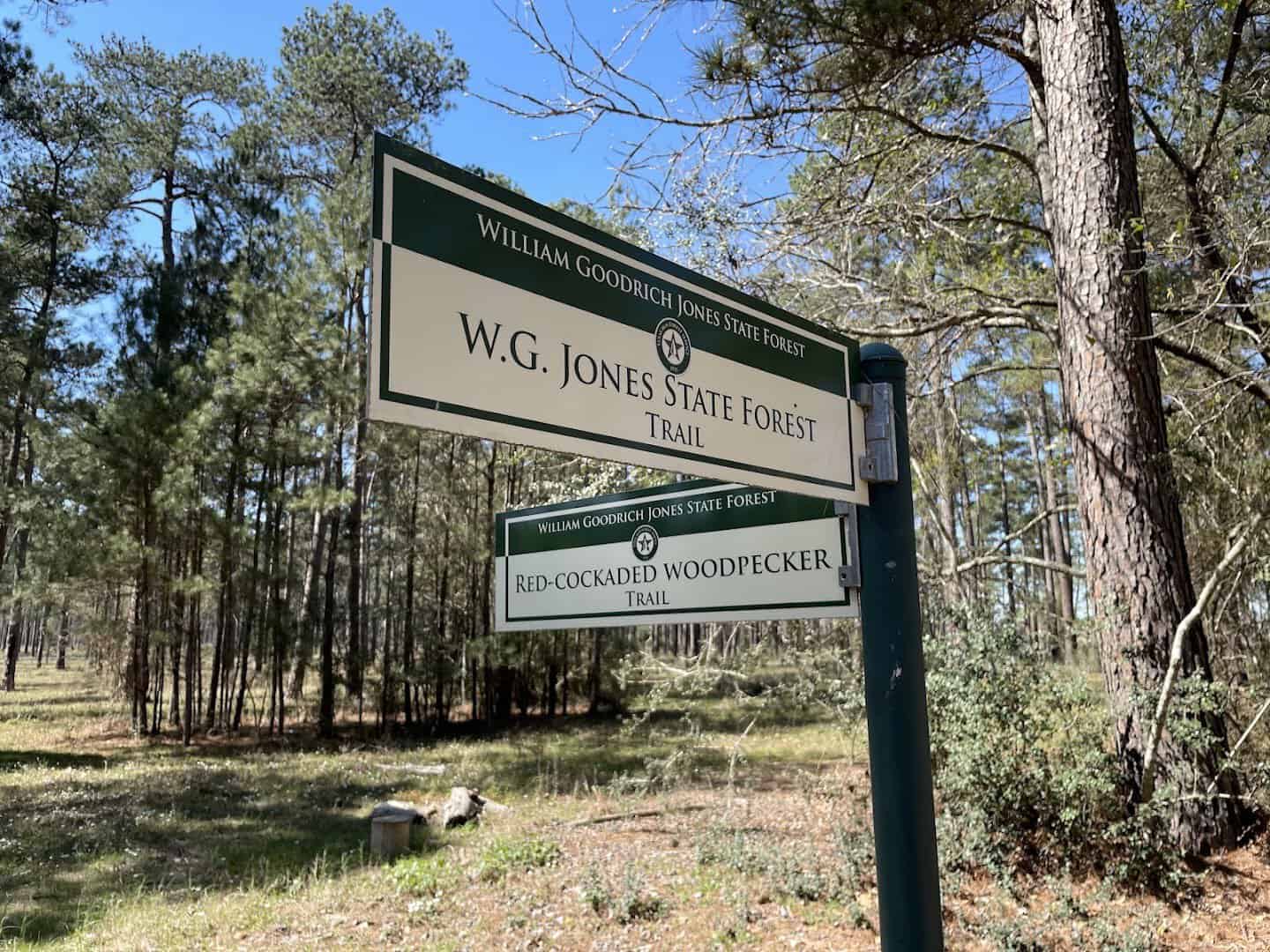
Jones earned the title. He founded the Texas Forestry Association in 1914 and pushed the state to create its forestry department in 1915. Decades before either, back in 1889, he established Texas Arbor Day.
Walking a shaded trail like this one is more or less his whole legacy in miniature. Every pine you pass traces back to the work he started.
In 2011 the forest picked up another honor when it was designated a Children’s Forest, only the 18th in the country. The title recognizes how much it does to get young people outside and into the woods.
What to Know Before You Go
The forest is free to enter and open year-round, but only during daylight hours, so plan to be out before dark. There is no entrance booth. You simply park and walk.
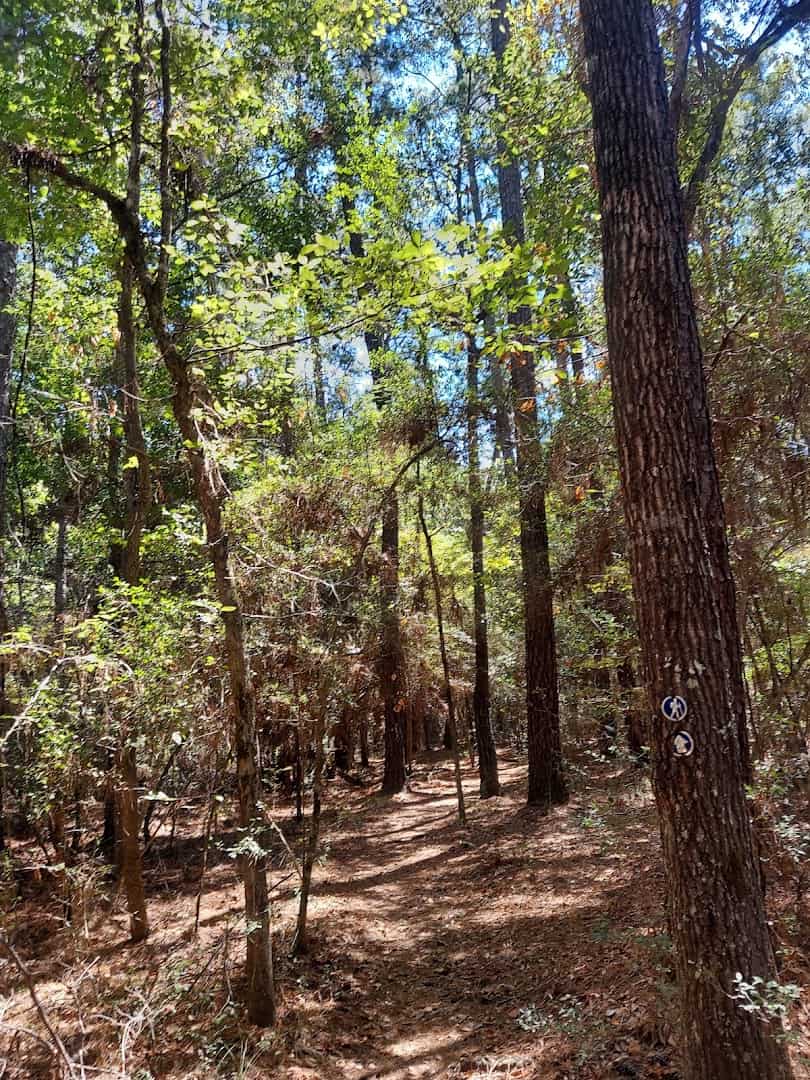
For the Sweetleaf Nature Trail specifically, aim for the Marcel Commons parking area off FM 1488 rather than trying to dart across the highway on foot. That lot puts you right at the trailhead for the loop and the bridge.
Wear real shoes. The path is easy underfoot but laced with pine and tree roots, so closed-toe shoes with a bit of grip beat sandals, especially if you are bringing kids who want to run ahead to the bridge.
Bring water and bug spray. This is the pineywoods, and the same shade that keeps you cool also keeps things humid and buggy in the warmer months. A hat and sunscreen round out the list even under a canopy.
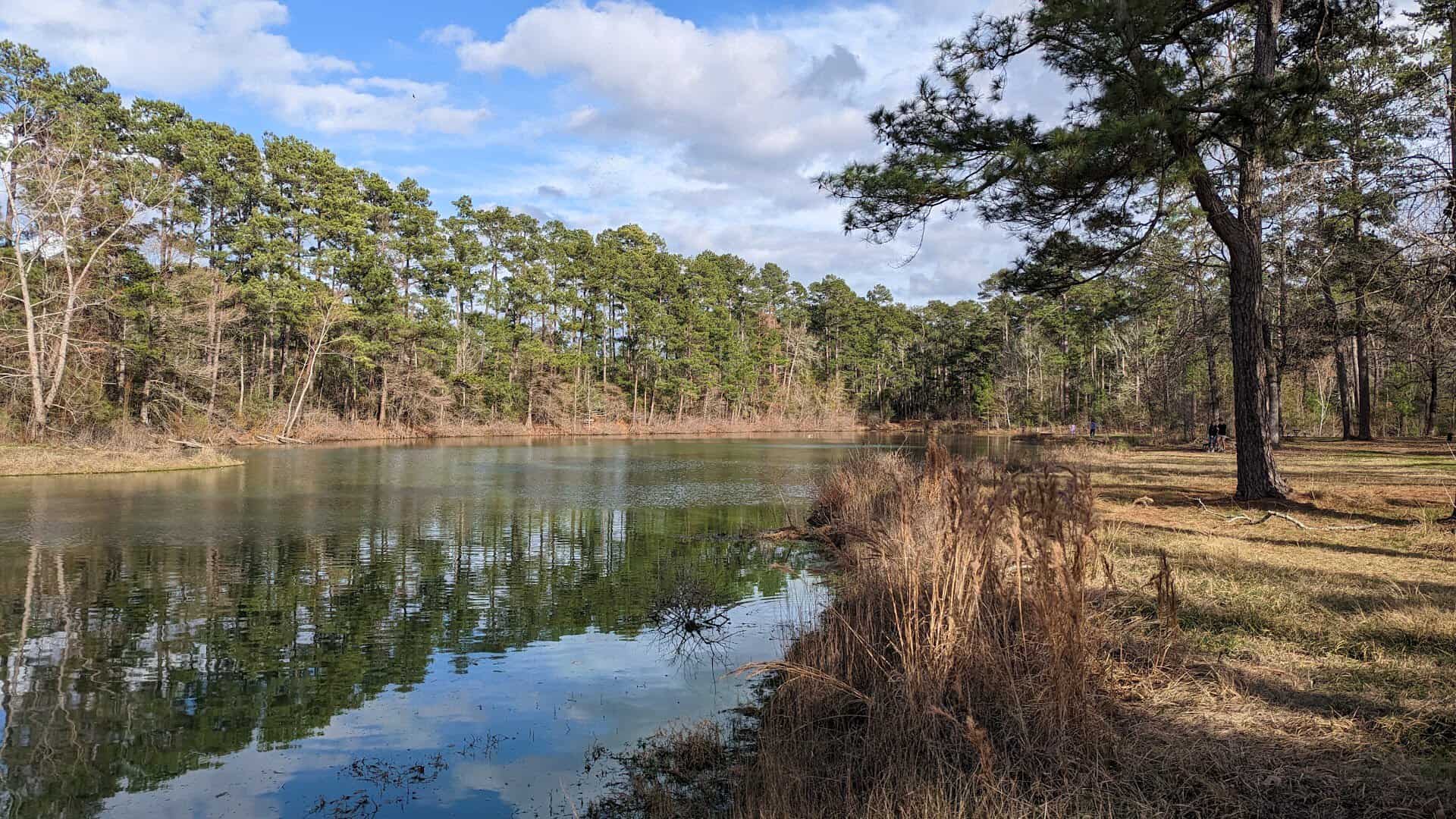
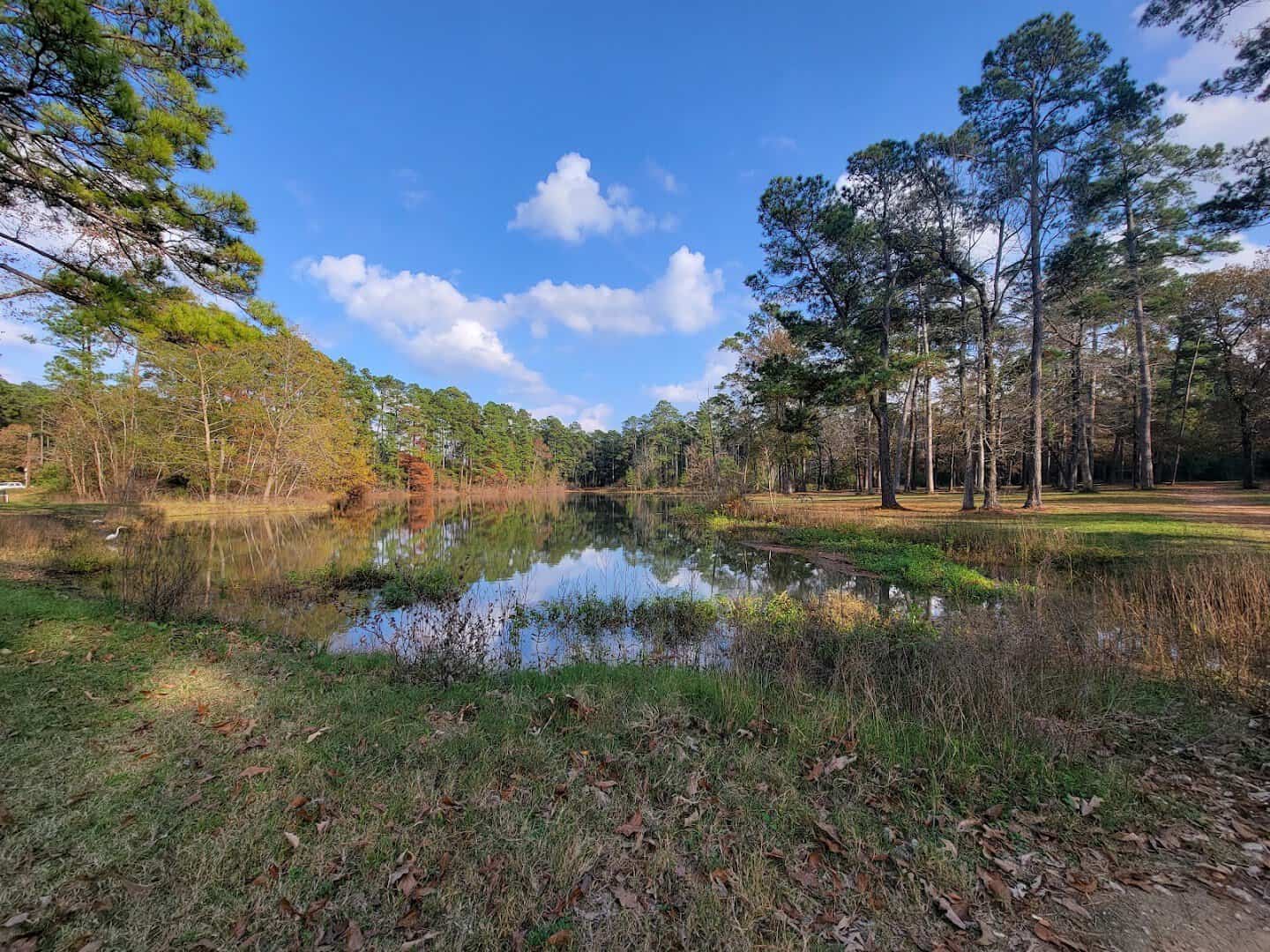
The forest is a popular spot for more than hiking. Nearly 17 miles of trails and pathways wind through it, open to biking, horseback riding, birding, geocaching, and orienteering. Two small lakes offer limited fishing if you want to make a longer day of it.
Tip: stop by the Conroe district office on a weekday if you want a printed trail map or a restroom before you set out. It is a genuinely helpful little visit that makes the loop easier to follow your first time.
How to Get There
W.G. Jones State Forest sits along FM 1488 between Conroe and The Woodlands in Montgomery County. It is an easy drive north of Houston and a short hop off Interstate 45.
Where: W.G. Jones State Forest, 1328 FM 1488, Conroe, TX 77384. Park at the Marcel Commons lot off FM 1488 for the Sweetleaf Nature Trail.
Go Find the Swinging Bridge
There is something worth chasing in a hike that hands you a small, silly, delightful reward at the end. A rainbow bridge swaying over a creek will never make any list of the biggest attractions in Texas, and that is precisely why it is worth the drive.
So pack the water, wrangle the kids, point the car toward Conroe, and go walk yourself into the pines. The bridge is out there waiting, and it swings for everyone who takes the time to find it.
Featured image: Regina Martin via W.G. Jones State Forest

Stella Raines
Editor-in-Chief
Stella brings over a decade of storytelling experience to TX Headlines. With roots in West Texas and a love for road trips, she leads the editorial team with an eye for the hidden stories that make Texas unforgettable.
More Stories
These 10 Peaceful Texas Walking Trails Are Made for an Easy, Scenic Stroll

This Scenic Texas Nature Preserve Hides a Secret Beach Where You Can Dig for Prehistoric Shark Teeth

This Riverside Texas State Park Hides a Beautifully Rebuilt 1700s Spanish Mission
This Lush Texas Wildlife Sanctuary Has an 18-Foot Boardwalk That Lets You Walk Among the Treetops
Tags