This Glowing Texas Museum Lets You Wander Through Hundreds of Antique Stained-Glass Windows
Here is a confession most Texans will understand. I can walk past a hundred paintings in a gallery and feel nothing, then stop dead in front of one stained-glass window and forget where I was going. Something about light coming through colored glass hits different.
It is art you look at, and art that looks back.
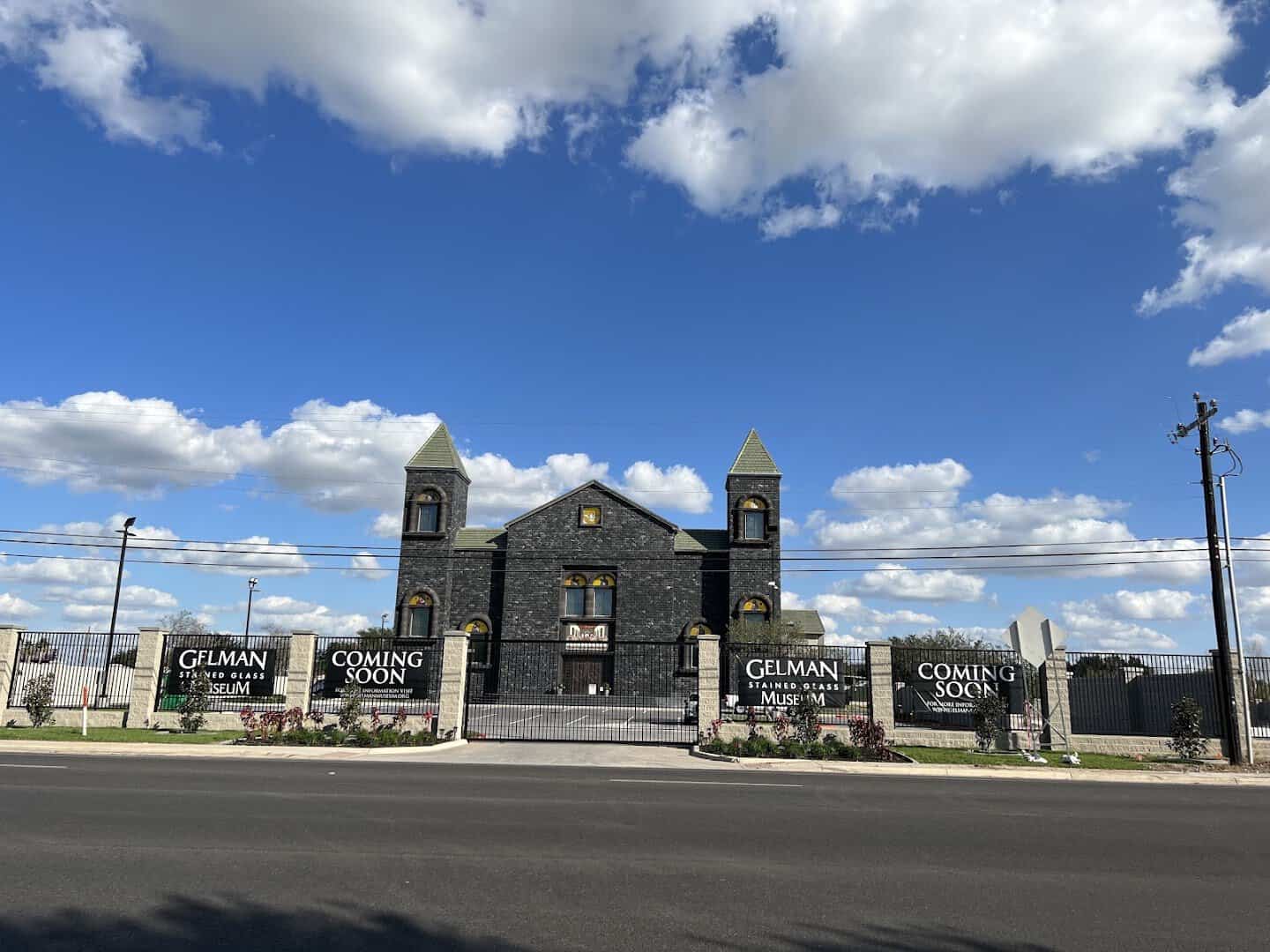
So when I learned there is a building in South Texas holding 174 antique windows under one roof, arranged like a medieval cathedral and glowing with living color, I wanted to point the car straight down I-69 and go. This is the Gelman Stained Glass Museum in San Juan.
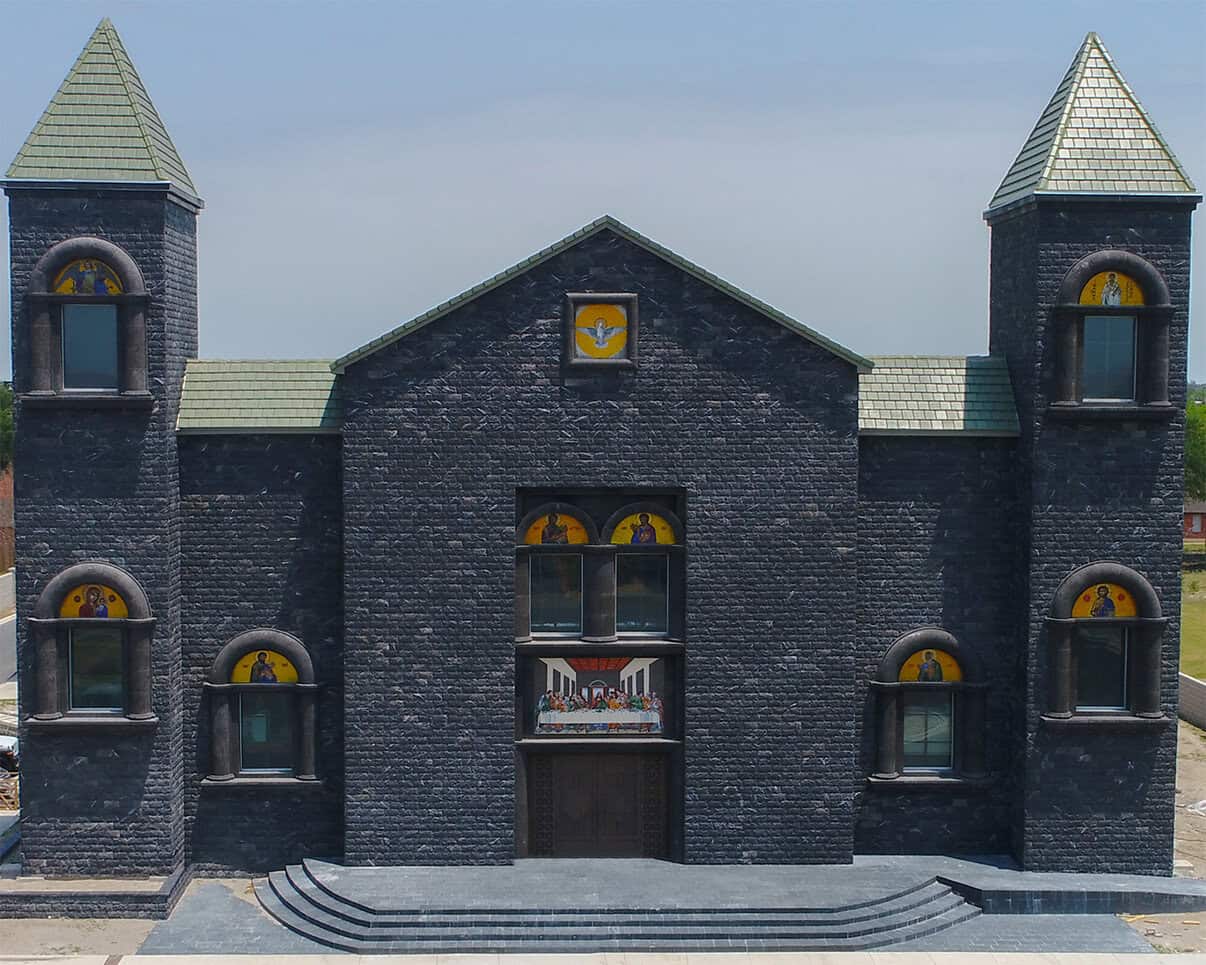
It is the largest collection of antique stained glass open to the public anywhere in the country. Below, here is what makes it worth the drive to the Rio Grande Valley: the windows, the doctor who spent decades rescuing them, and everything you need to plan a visit.
A Cathedral Built for One Thing
Most stained glass lives inside a church, where you crane your neck around the pews to see it. The Gelman flips that. Here the windows are the whole point, and the building was designed around them.
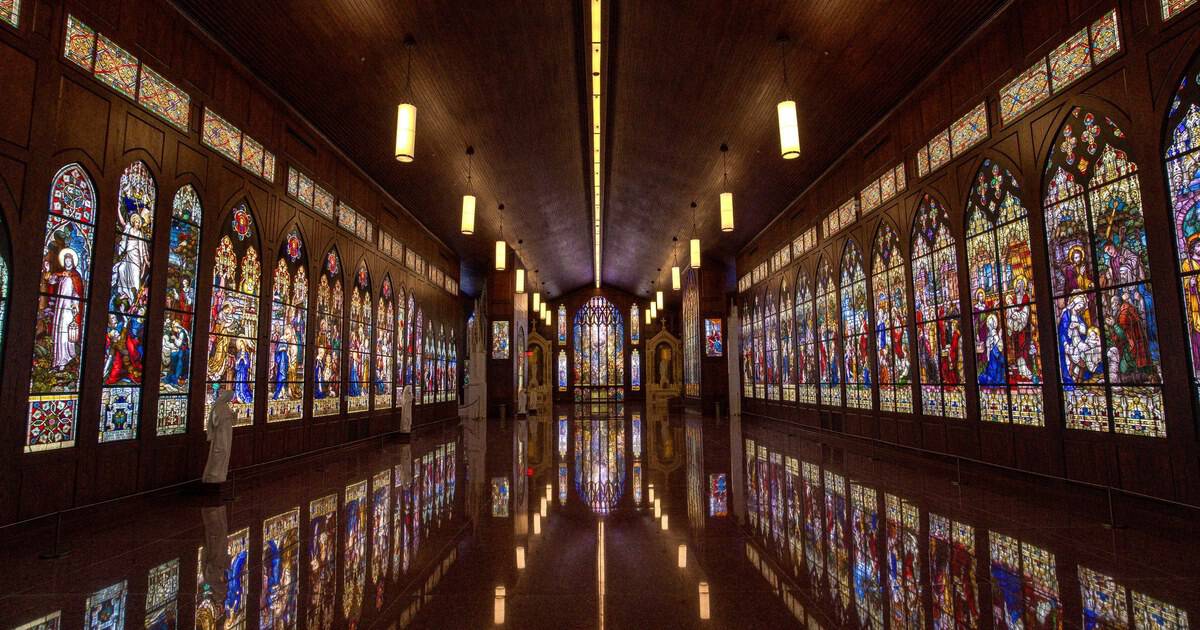
The museum runs 16,000 square feet in the shape of a Latin cross, the same cruciform floor plan the great European cathedrals used. The ceilings soar. The walls are tall gray stone. Step inside and you are meant to feel like you walked into a sanctuary, not a gallery.
The floor is polished red granite, and it does something clever. It catches the color pouring off the windows and throws it back up, so the whole room shimmers. Look down and you see the glass twice.
There are no ropes herding you along and no cases between you and the art. You wander. You circle back to your favorites. Benches sit scattered through the space so you can let a single window work on you for a while.
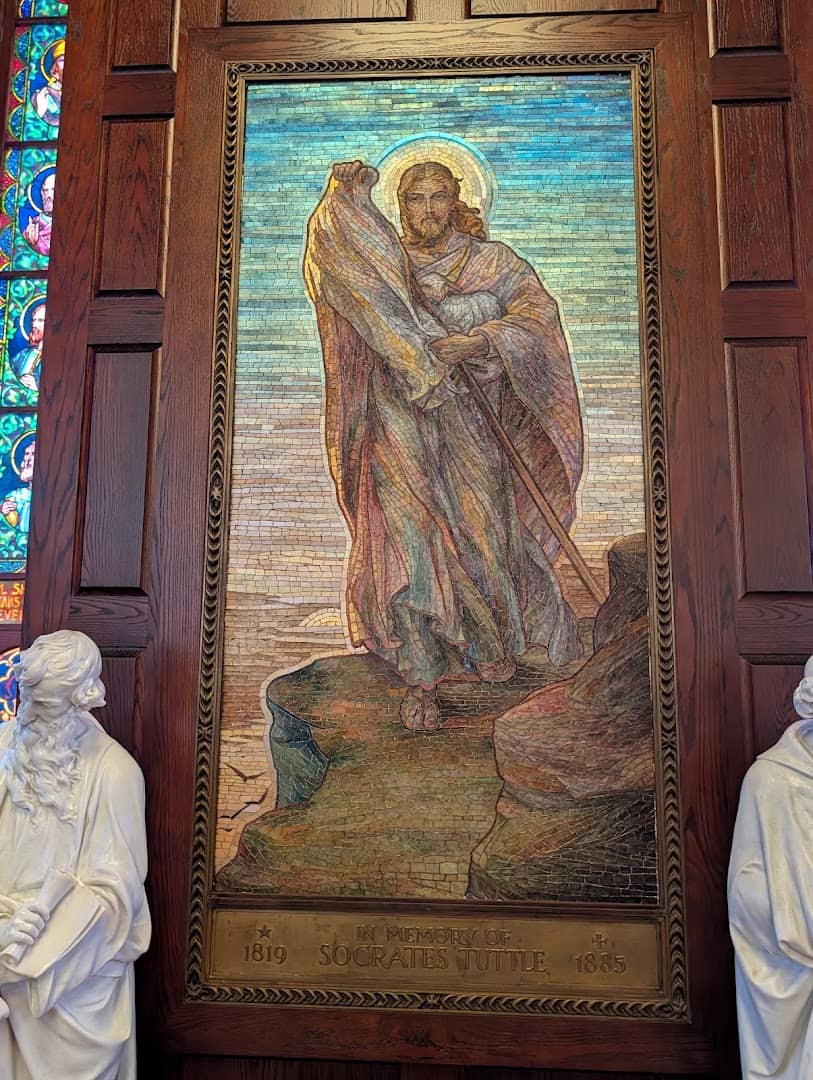
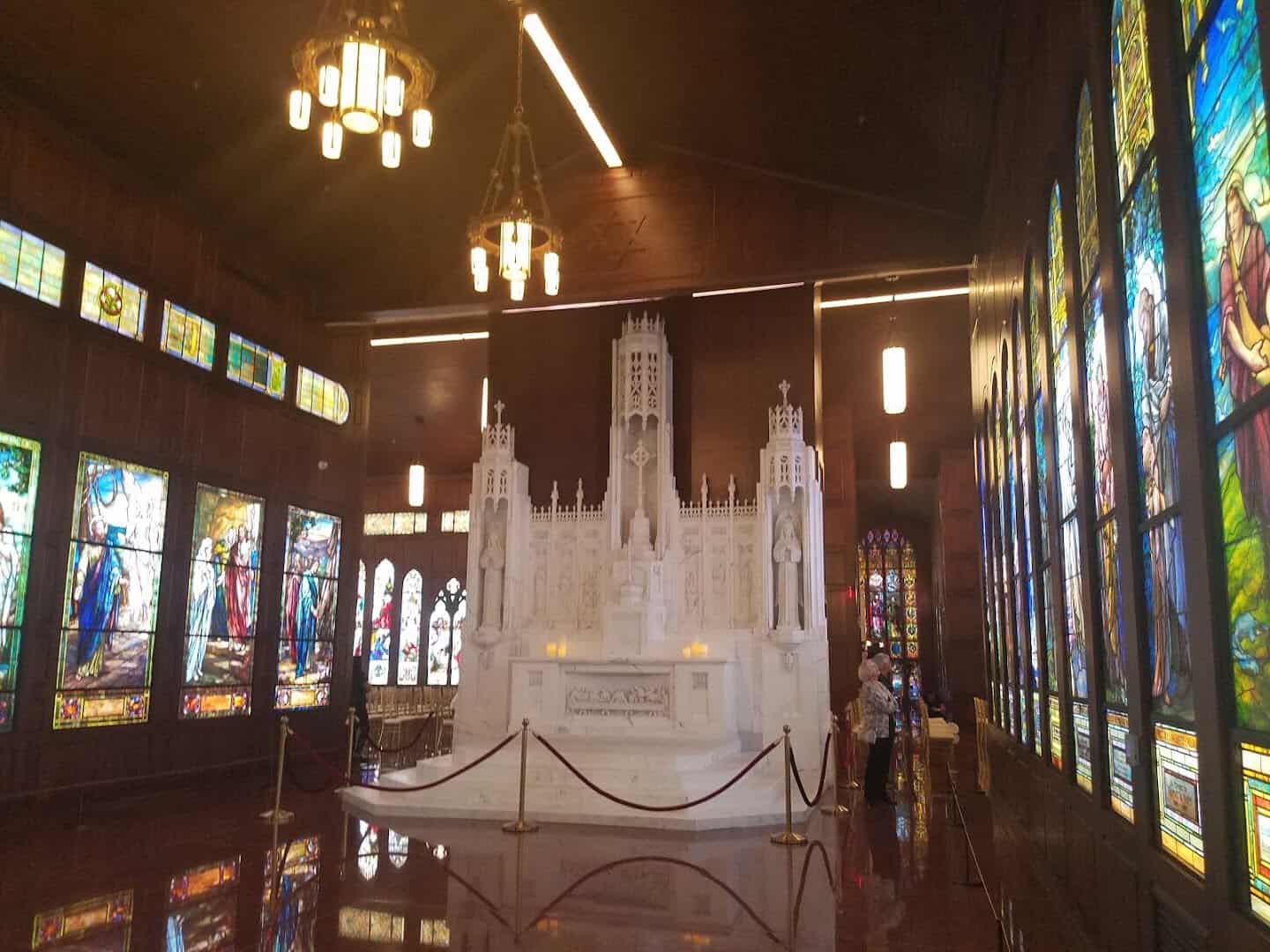
The windows are not the only antiques in the room. Old altars, baptismal fonts, and carved religious statues are set throughout, most of them rescued from the same shuttered churches, so the whole space feels furnished rather than curated.
One Hundred Seventy-Four Windows, All Rescued
Every window here was saved. As churches across America closed, merged, or fell into disrepair, their windows faced the wrecking ball or a storage crate no one would open again. The Gelman is where a lot of them landed instead.
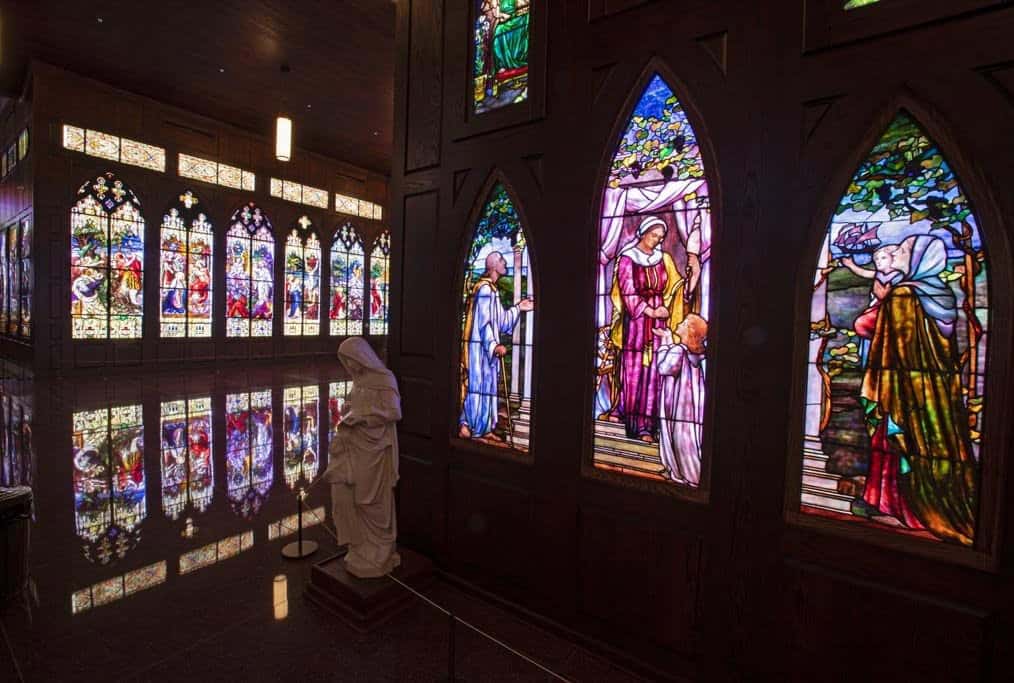
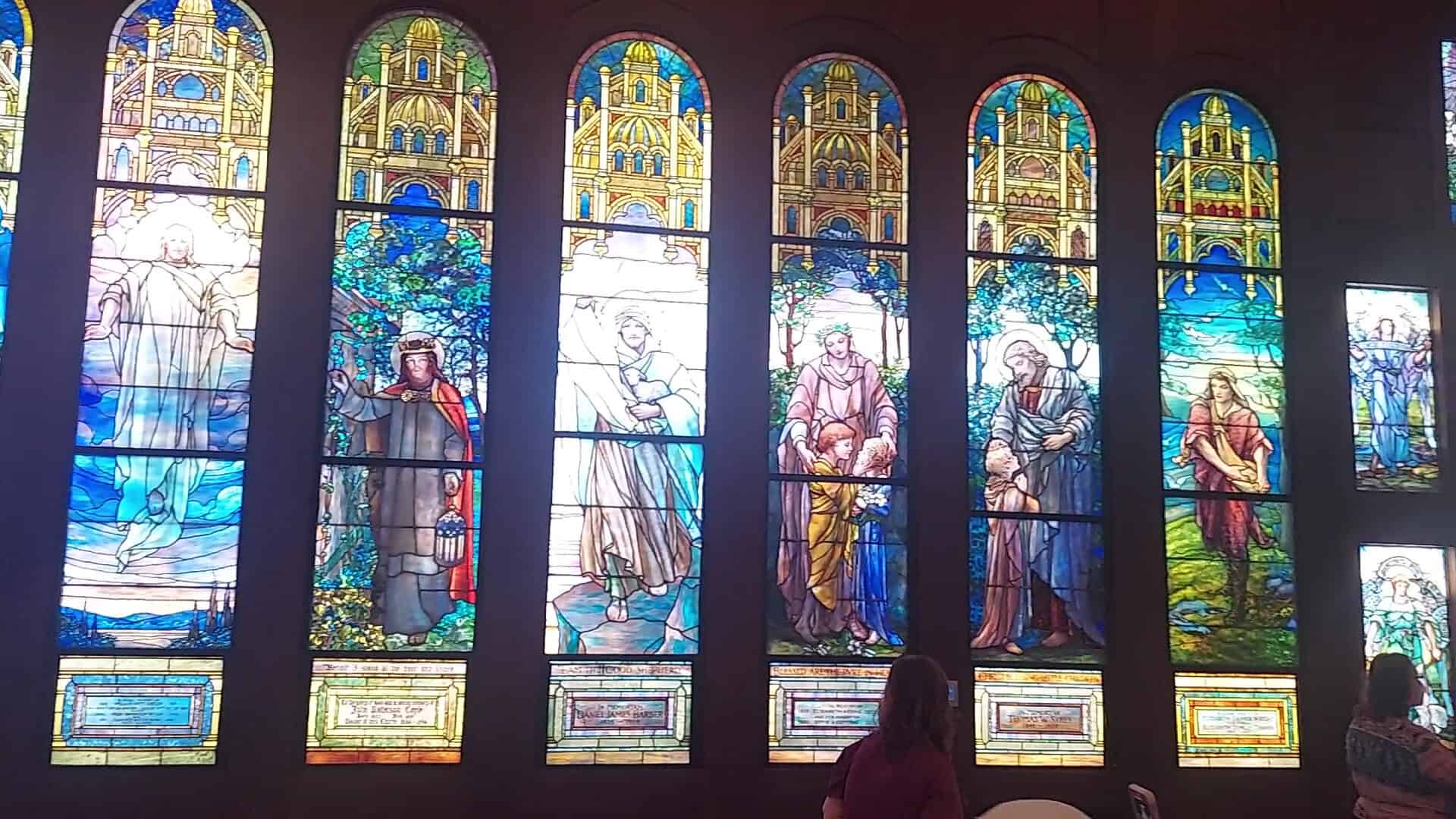
The collection spans the 19th and 20th centuries, and the roster of makers reads like a who’s who of the craft. Tiffany Studios. John La Farge. F.X. Zettler. Franz Mayer. J&R Lamb Studios, which opened in 1857 and is one of the oldest decorative-arts firms in the country.
The Tiffany count alone is staggering: 71 windows from Louis Comfort Tiffany, which the museum says is the largest Tiffany collection anywhere in the United States. If you only know Tiffany from lamps, his windows will reset what the name means to you.
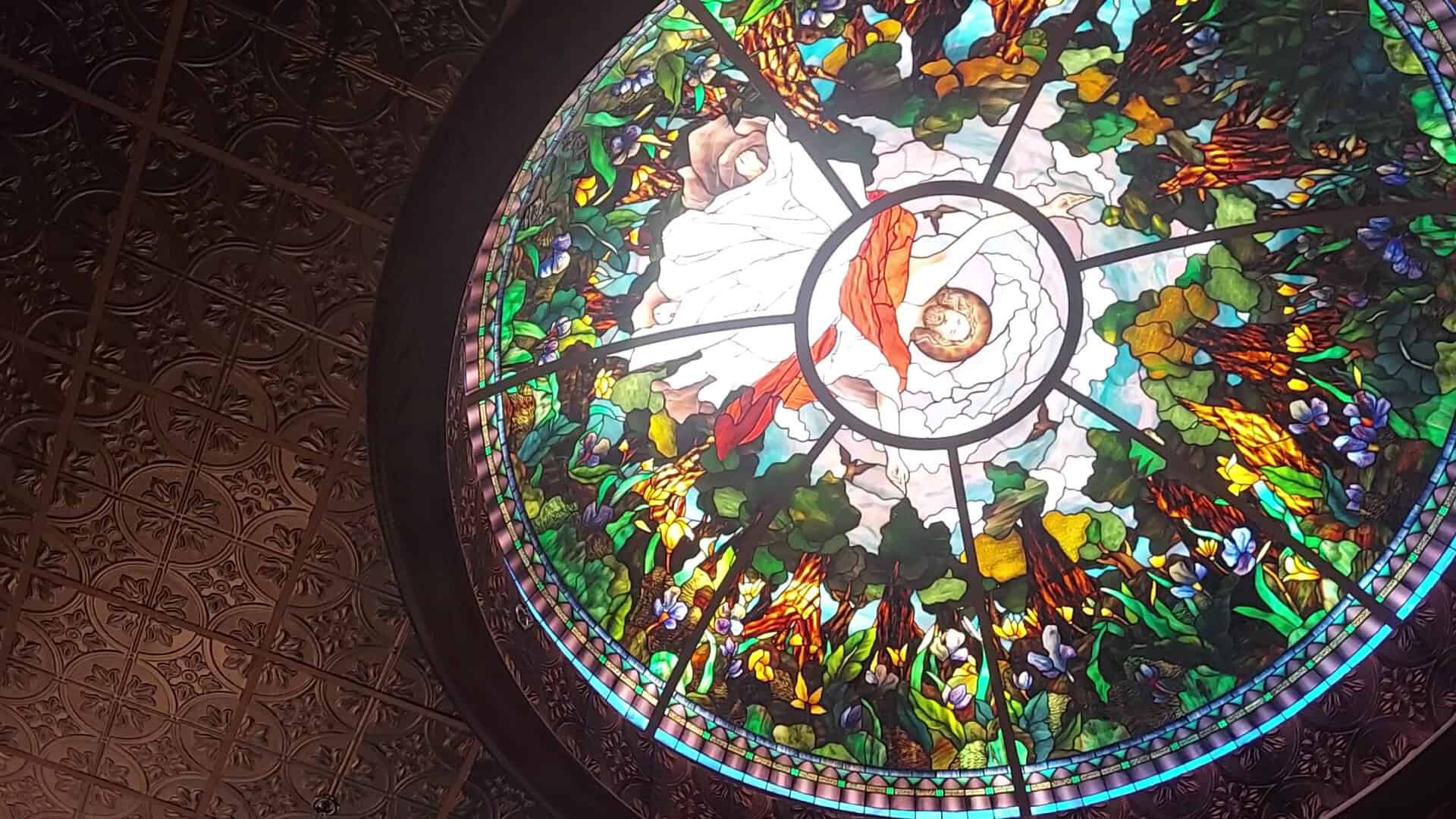
Tiffany’s trick was opalescent glass. Instead of painting scenery onto flat panes, he layered milky, color-shot glass so the folds of a robe were built from the glass itself. The light does the shading. Faces and hands were still hand-painted, then fired in.
The rest of the roster spans styles and continents. La Farge, Tiffany’s great rival, worked in deep medieval tones. Zettler and Mayer came out of Munich, where studios painted figures so fine they seem lit from inside.
Mary Tillinghast, one of the few women who made her name in the craft, has work here too. Half the fun is drifting from one signature to the next and watching the styles change under the same roof.
Did you know? The lead channels that hold the pieces together are called cames, and finer work uses thin copper foil instead. That foil technique is the same one Tiffany borrowed from his windows to build those famous lamps.
The Windows That Stop You Mid-Step
A collection this size has its headliners, and the staff will happily point you to them.
The largest work in the building is a window called Te Deum, a wall of luminous blues and greens named for an ancient hymn of praise. It is the kind of piece you sit down in front of rather than glance at.
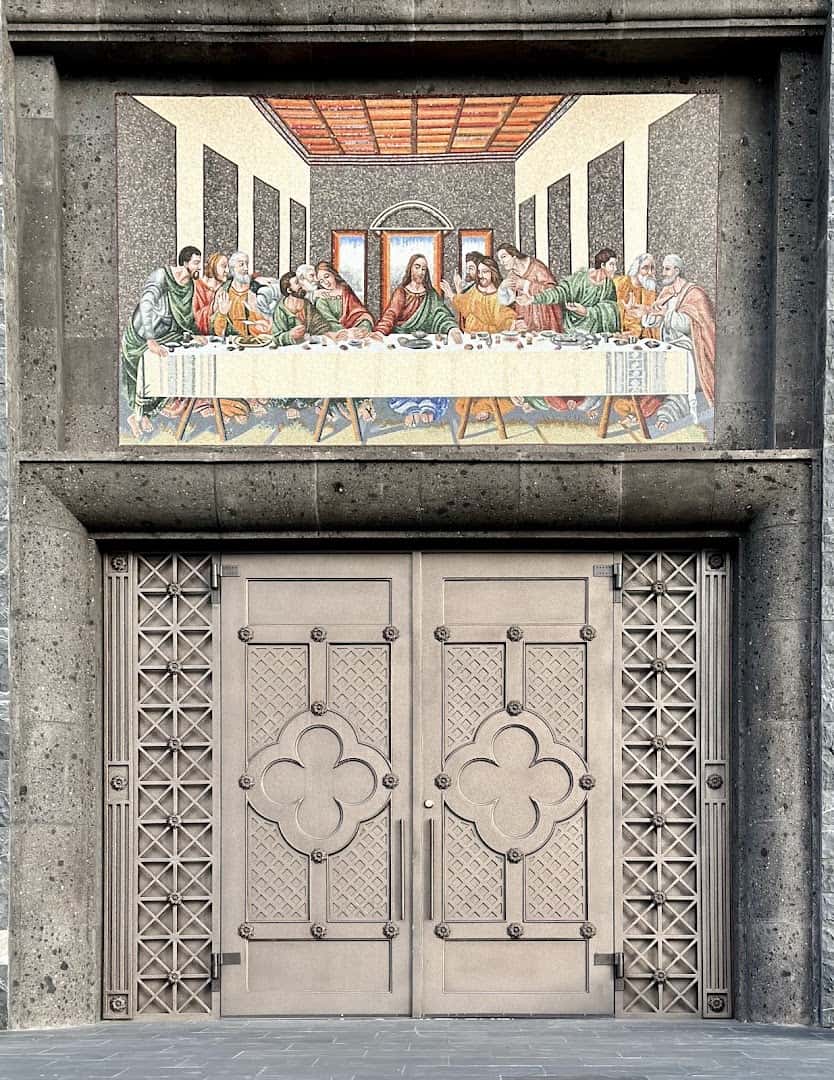
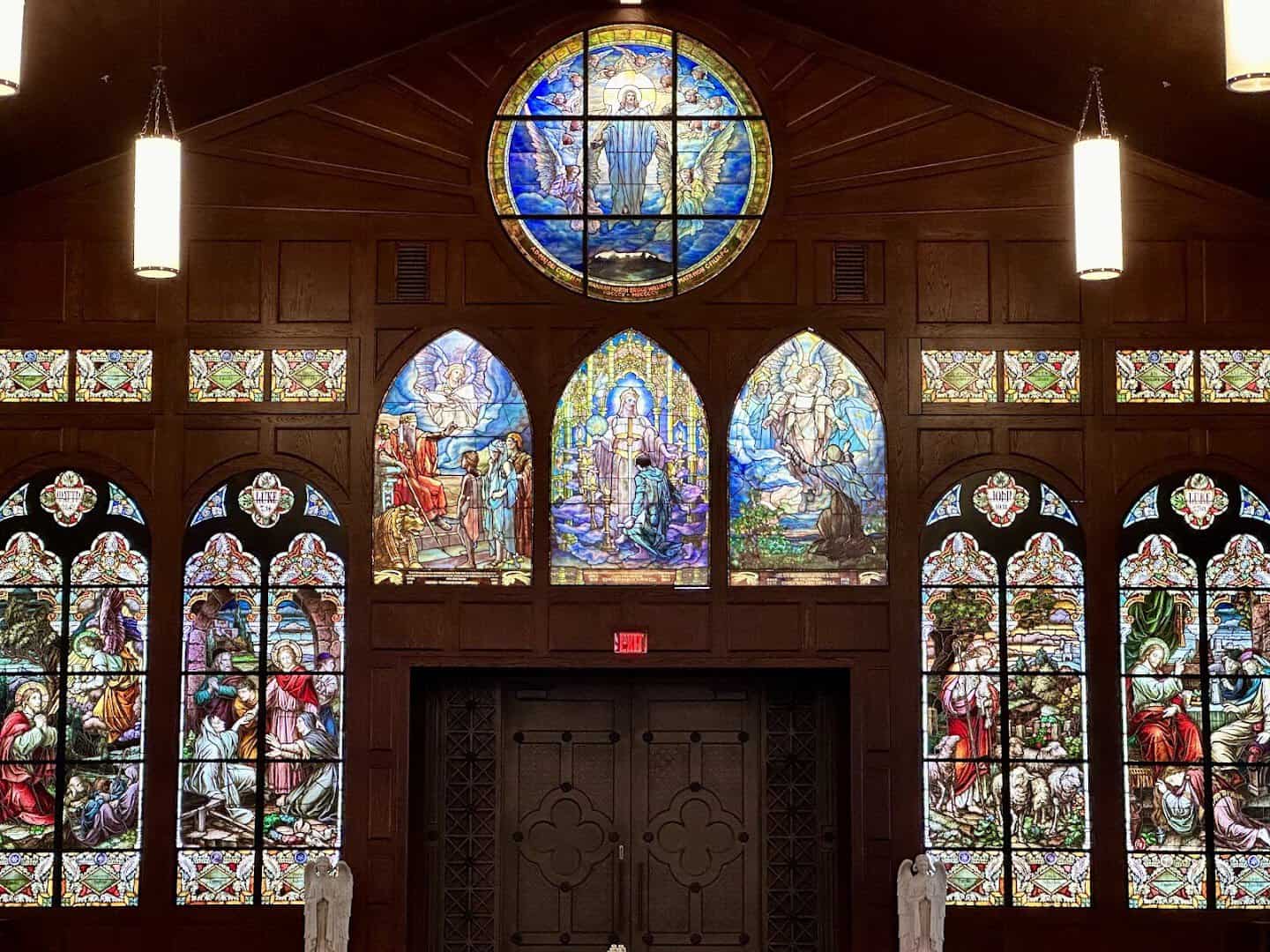
Then there is the Beatitudes series, eight Tiffany windows showing angels as both stern warriors and gentle guardians. Each carries one of the sayings from the Sermon on the Mount. They once hung in a private mausoleum, hidden from public eyes for 108 years before they came here.
Some windows carry real grief in the glass. One memorial honors three women who died in 1899 when the steamer Paul Jones went down in the Gulf of Mexico. You read the names, you do the math on the year, and the window stops being decoration.
Scattered among them are the great biblical scenes the medium was built for: the Nativity, the Flight into Egypt, the Good Shepherd, a Madonna and Child. You do not need to share the faith to feel the craftsmanship. You just need eyes.
A Second Life for Church Glass
A window does not survive a century and a cross-country move without scars. Many arrived with cracked lead, missing shards, or panels warped by decades of weather in a building nobody maintained anymore.
The repair fell to La Casa del Vitral, an art studio in Edinburg that cleaned each panel, replaced broken cames, and mounted all 174 windows into the museum’s walls. It is slow, exacting work, and it is why the glass reads as new rather than salvaged.
The museum tells each window’s backstory with a QR-code map instead of wall placards. You scan a code and learn which church a window came from, who made it, and what it took to bring it back. The walls stay clean and the stories stay a tap away.
The Doctor Who Couldn’t Stop
None of this exists without one man. The museum is named for Dr. Lawrence Gelman, an anesthesiologist from nearby Edinburg who quietly became one of the most serious stained-glass collectors in America.
The story goes that it started decades ago, when he watched a stained-glass window being repaired in Atlanta and got hooked. An auction catalog crossed his desk, and he bought a four-by-seven-foot landscape panel. He described the pull simply.
“There’s something about the vividness of colors when light passes through stained glass,” Gelman told Texas Co-op Power.
He kept buying, partly as a tribute to his Catholic wife, until he had far more windows than any house could hold. Over the years the collection grew into one of the largest in private hands anywhere. So he built the windows a home.
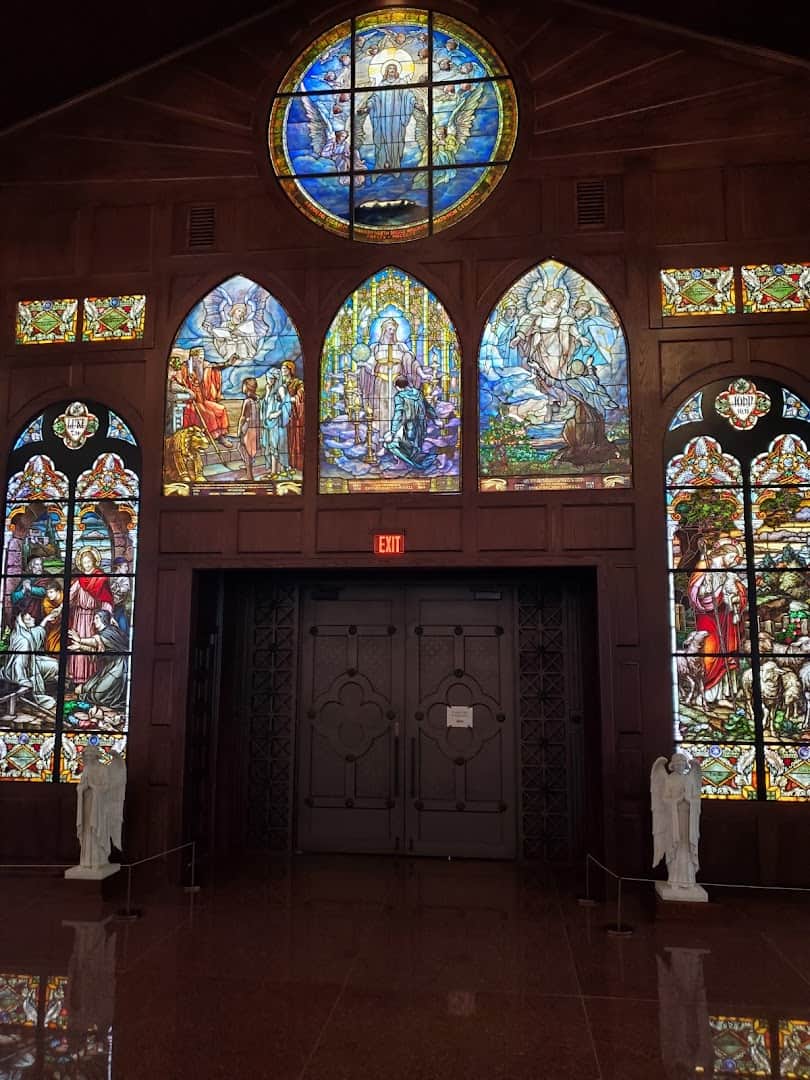
Construction began in 2015, and the doors opened in December 2021. The location was deliberate. The museum sits a short walk from the Basilica of Our Lady of San Juan del Valle, a shrine that draws more than a million visitors a year.
Gelman wanted his rescued windows near a place people already traveled to feel something. Pilgrims have been coming to that corner of the Valley for generations, and now a good number of them wander over to the glass while they are in town.
How the Glass Comes Alive After Dark
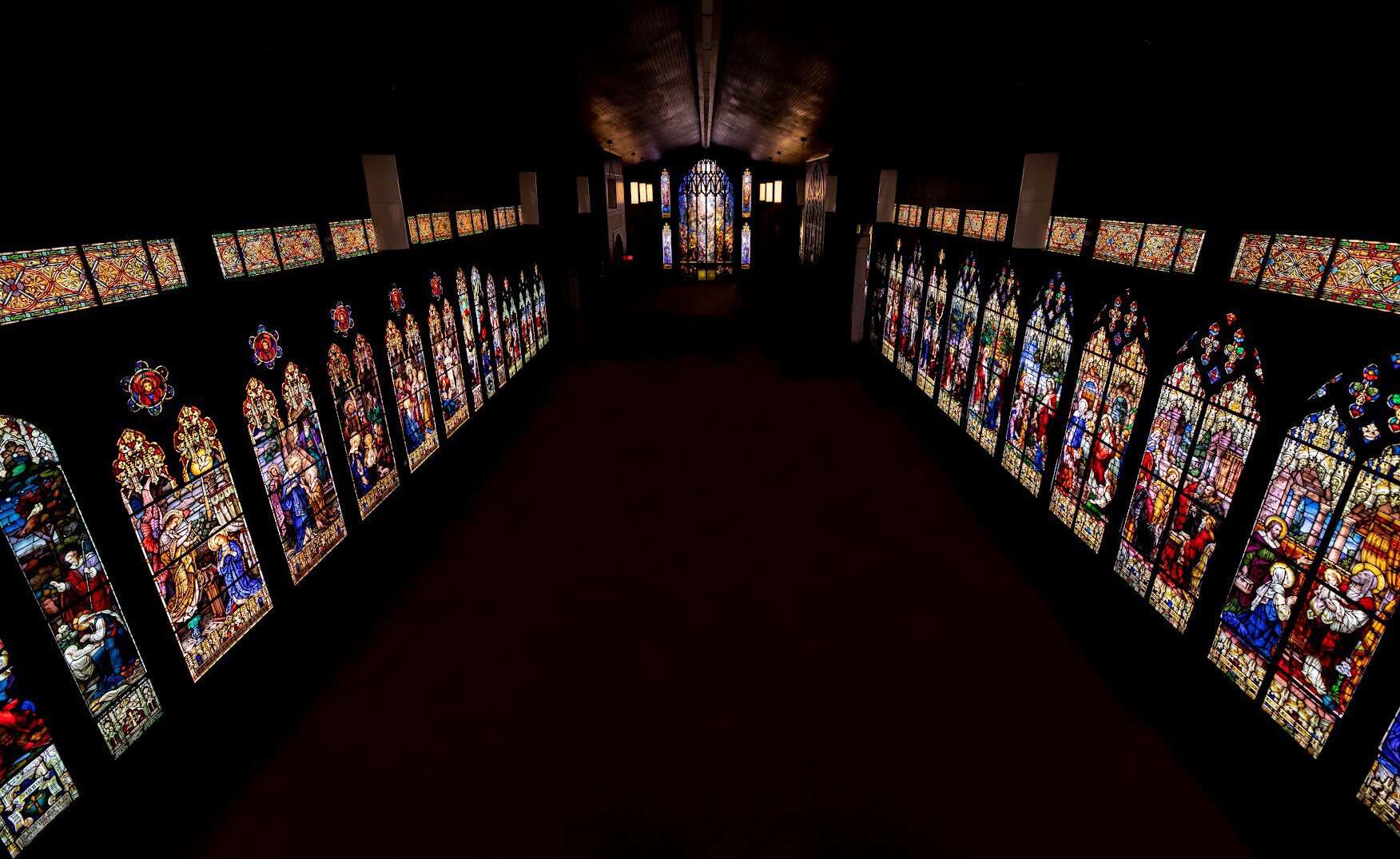
Here is the catch with a stained-glass museum. Real stained glass needs sunlight behind it, and the sun sets. Some of the Gelman’s most striking hours are in the evening.
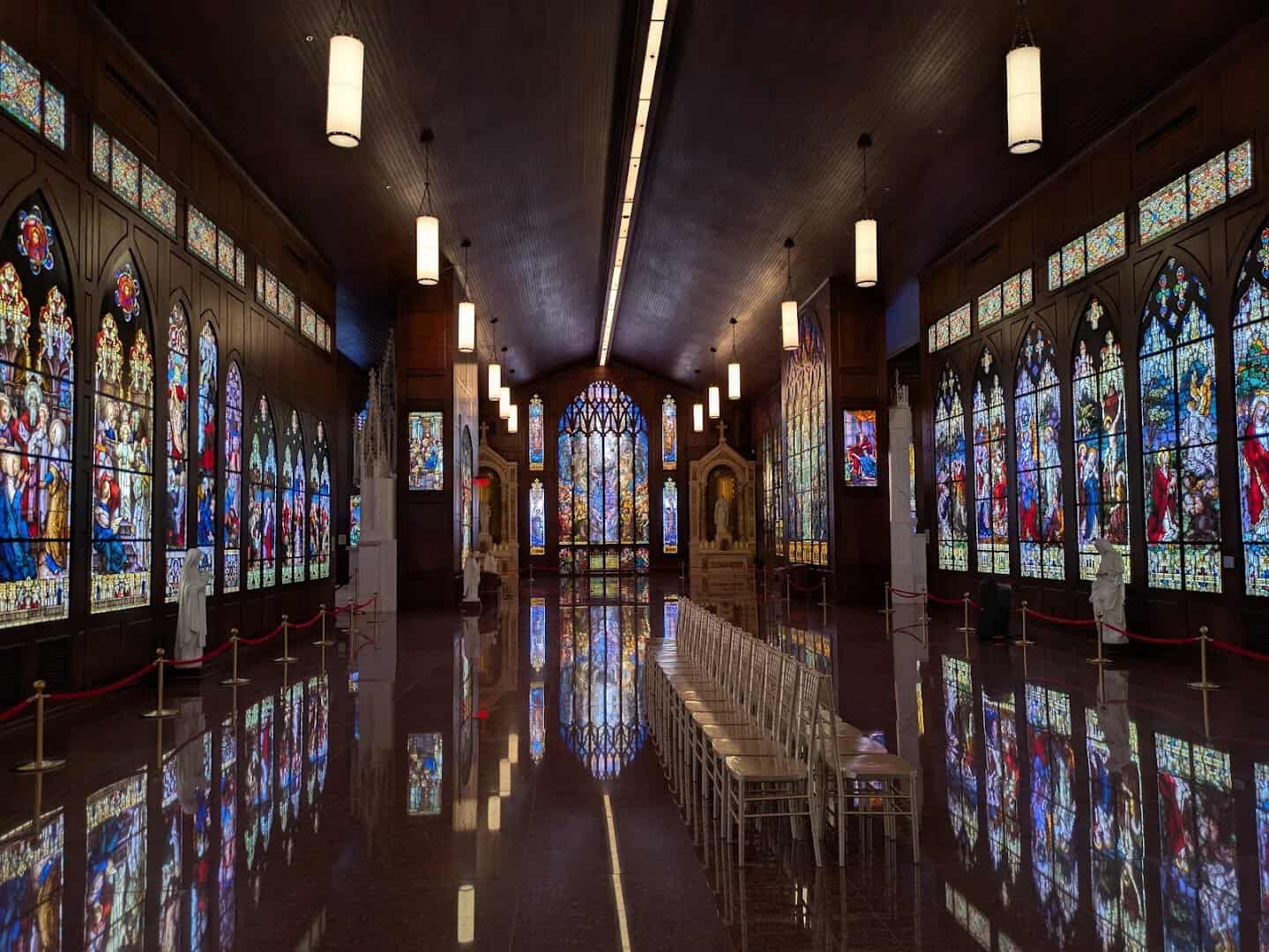
The fix is a custom LED system tucked behind every single window. It is tuned to mimic daylight, and it evens out the fact that antique glass varies in thickness. A whole panel lights cleanly instead of blotchy, and the windows glow just as richly after dark as at noon.
The atmosphere is dialed all the way up. Gregorian chant plays softly through the space. Two chapels at the north and south ends hold a pipe organ and an electronic organ, and the museum hosts concerts, weddings, and workshops under the glass.
The director has said the goal was to “replicate a sacred, transcendental experience.” Whether or not you arrive religious, the room is engineered to slow your pulse.
The red granite floor pulls double duty in the low light. It turns to a dark mirror, and the windows repeat downward into it, so you get the color overhead and again at your feet.
Planning Your Visit
The Gelman keeps its own rhythm, so check the calendar before you go. It is closed Mondays and Tuesdays, and the rest of the week splits into two very different windows.
Wednesday through Friday it opens in the late afternoon, from 4 to 7 p.m., which is the sweet spot for watching the LED glow take over. On weekends it runs the daytime shift, 10 a.m. to 4 p.m., when the front windows catch real sun.
Admission is $20 for anyone 12 and up. Students, teachers, military, veterans, and first responders get in for $15 with an ID, and children under 12 are $10. Guided tours are available by appointment for groups of ten or more, worth booking a couple of weeks ahead.
Pro tip: bring your phone. With no placards on the walls, that QR-code map is how you read each window’s story, so a charged phone is the difference between looking and understanding. Personal cameras and phones are welcome; only professional photography rigs are off the table.
The building is fully wheelchair accessible, with ramps at the entrance, though you will want to bring your own chair or scooter since the museum does not loan them. Give yourself more time than you think. People walk in expecting 30 minutes and leave two hours later.
How to Get There
San Juan sits in the heart of the Rio Grande Valley, tucked between McAllen and Pharr just off Interstate 69C. It makes an easy add-on to any trip down south, and the Basilica next door is worth a look while you are there.
Where: Gelman Stained Glass Museum, 411 Virgen de San Juan Blvd, San Juan, TX 78589. Call (956) 601-0838 or book through the museum’s website.
Chase the Light
Texas is full of big, loud attractions that announce themselves from the highway. This is not one of them. It is a quiet building in a small Valley town holding a collection that major cities would envy, built by one man who could not stop rescuing beautiful things.
Go on a weekday evening if you can, when the LEDs take the room and the chant is playing and you have the benches mostly to yourself.
Sit down in front of Te Deum, let the color settle over you, and see if you do not leave planning your next visit before you have finished the first one.
Featured image: @ Gelman Stained Glass Museum

Stella Raines
Editor-in-Chief
Stella brings over a decade of storytelling experience to TX Headlines. With roots in West Texas and a love for road trips, she leads the editorial team with an eye for the hidden stories that make Texas unforgettable.
More Stories

This Colorful Texas Fabric Shop Is a Creative Wonderland for Quilters
This Under-the-Radar Texas Craft Store Is Where Artists Hunt Down Supplies for Next to Nothing
This Tiny Texas Town Is Home to One of the Most Beautiful Painted Churches in America

This Depression-Era Texas Bridge Is the State’s Longest Stone Arch, Its 18 Limestone Spans Crossing the Brazos
Tags