6 Southern Fall Getaways That Rival New England for Leaf-Peeping
I have a habit that drives my family a little crazy every fall. The moment the first cold front slips through, I start checking foliage maps like other people check the weather before a wedding. Where is the color turning? How far would I drive to stand under it?
The South does not get enough credit for this. People picture New England, book a flight, and forget that some of the richest fall color in the country pours right down the Appalachians.
It settles into a handful of Southern hollows and hilltops every October. This is molten reds and golds, close enough for a long weekend.
Below are six Southern getaways worth pointing the car toward when the leaves turn. They run from overlooks you can drive right up to, to a cliff that takes a real hike to reach. Each earns its spot, and each comes with the address so you can go.
1. Shenandoah National Park, Virginia
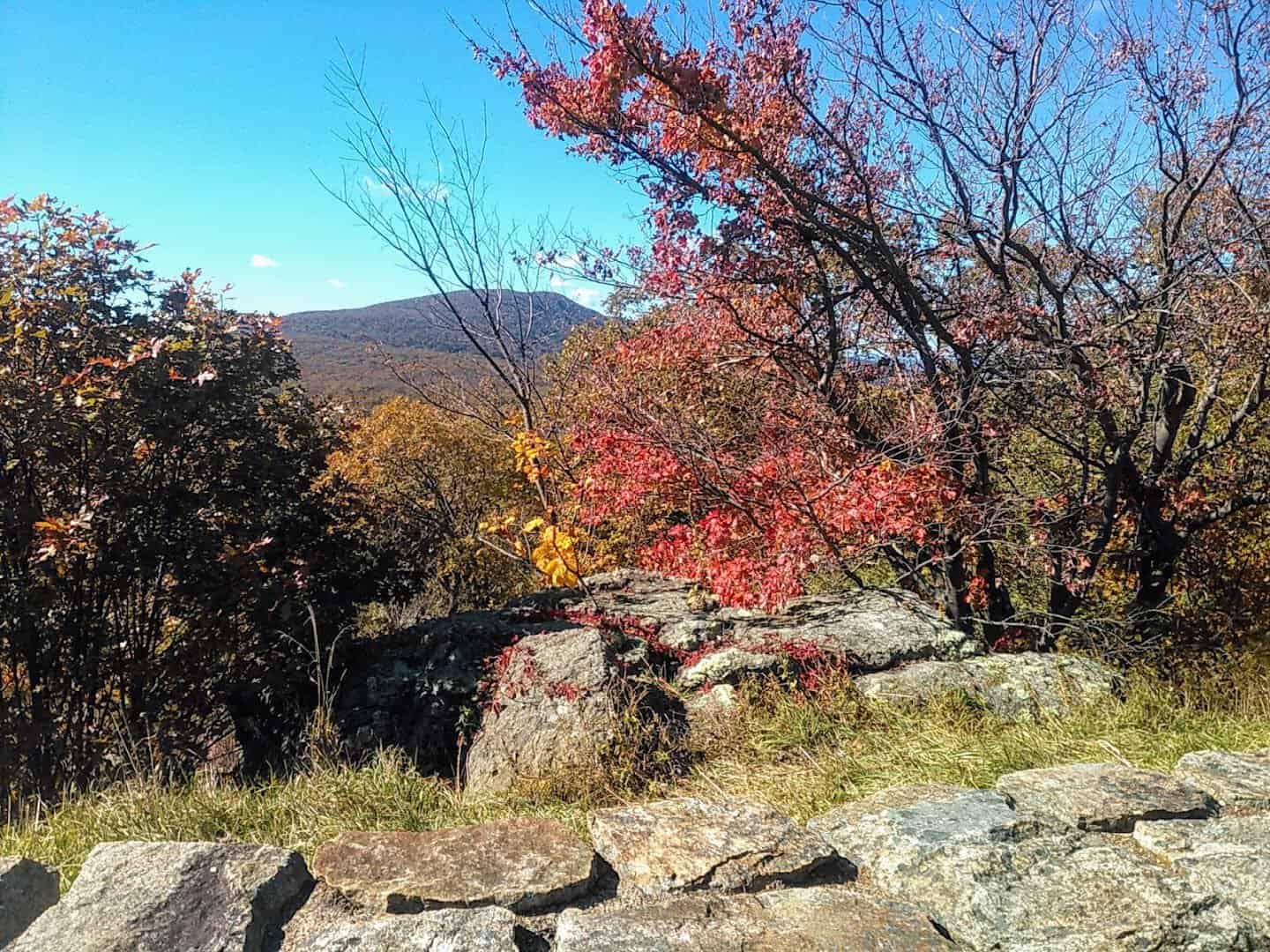
Skyline Drive runs 105 miles along the spine of the Blue Ridge, and it was practically built for leaf season. Seventy-five overlooks line the road, each one opening onto ridges that fade from gold to smoke-blue in the distance.
Range View Overlook near the northern end is one of the most photographed of them all. Come in mid to late October and the oaks, hickories and maples layer up the slopes in every warm shade at once. Drive slow. The whole point is to stop often.
The park was established in 1935, and more than 500 miles of trails lace these ridges, including a long stretch of the Appalachian Trail. A short walk down to Dark Hollow Falls drops off the road to water tumbling through the color.
Give yourself most of a day for the full route, which takes about three hours without stops and far longer with them. White-tailed deer graze the meadows at dusk, and black bears turn up often enough to keep you watching the tree line.
Fall weekends get busy, so start early, and enter at Thornton Gap or Swift Run Gap if the Front Royal station is backed up. Big Meadows near the middle of the drive has a lodge, a visitor center, and wide-open sky for stargazing.
Did you know? Skyline Drive keeps a strict 35-mile-per-hour limit, which sounds slow until you realize it is exactly the pace this drive rewards. Roll the windows down and let the cool mountain air do half the work.
Where: Range View Overlook, Skyline Drive Milepost 17, Shenandoah National Park; enter at the Front Royal north entrance off US-340, Virginia.
2. Hawksbill Crag, Arkansas
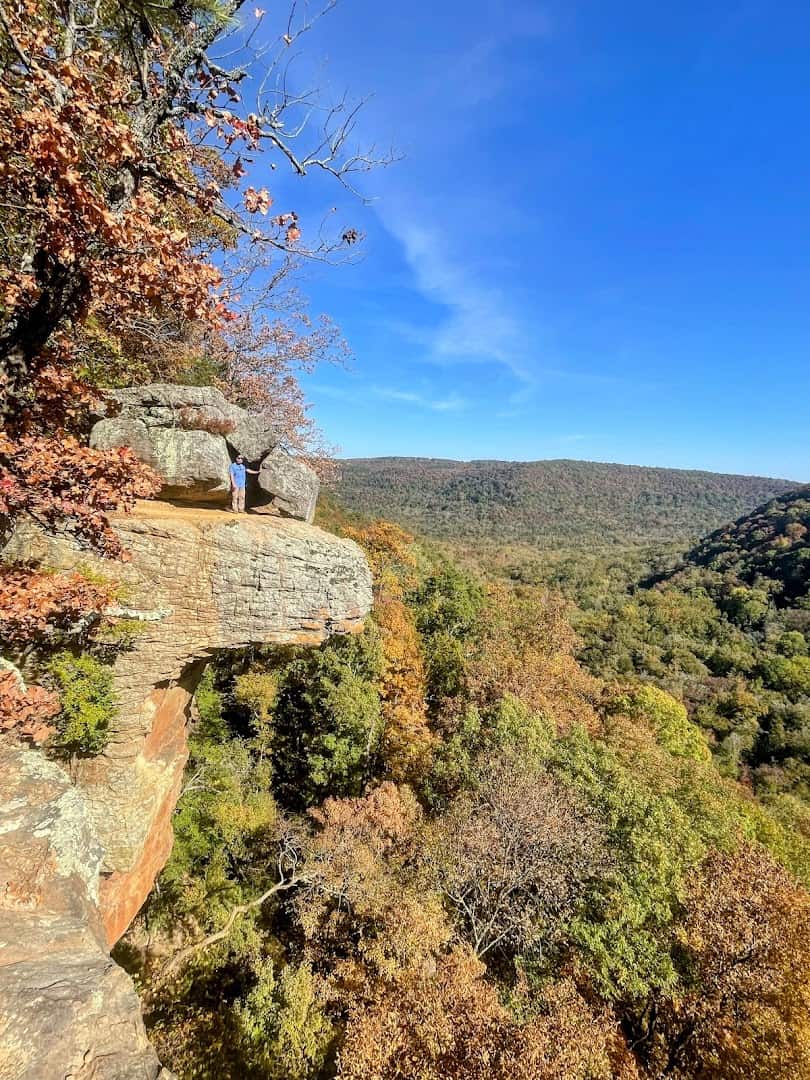
If you want the single most dramatic photo on this list, it is waiting in the Ozarks. Hawksbill Crag, also called Whitaker Point, is a lip of rock that juts out over the Buffalo River wilderness like the prow of a ship.
The hike runs about a mile and a half each way from Cave Mountain Road, through hardwood forest that turns gold and crimson below the overlook. Late October into early November is the sweet spot. Wear real shoes and give yourself the afternoon.
The crag has no railing and the drop is real, so hang back from the edge and mind your footing on wet leaves. Photographers love the low golden light of late afternoon, when the whole valley seems to glow from within.
Nearby Ponca sits on the Buffalo National River, the country’s first national river, where elk drift down into the bottomlands at dawn. Go early on a weekend, because this trail has grown popular and the crag is small enough that a crowd changes the feel.
The trail is free and open year-round, with no permit required, though the last stretch of Cave Mountain Road is gravel and slow going. Fill the tank in Jasper first, because gas and cell service both thin out once you climb into these hills.
Where: Whitaker Point (Hawksbill Crag) Trailhead, Cave Mountain Road, near Ponca, Arkansas, roughly six miles off Highway 43.
3. Blue Ridge Parkway, North Carolina
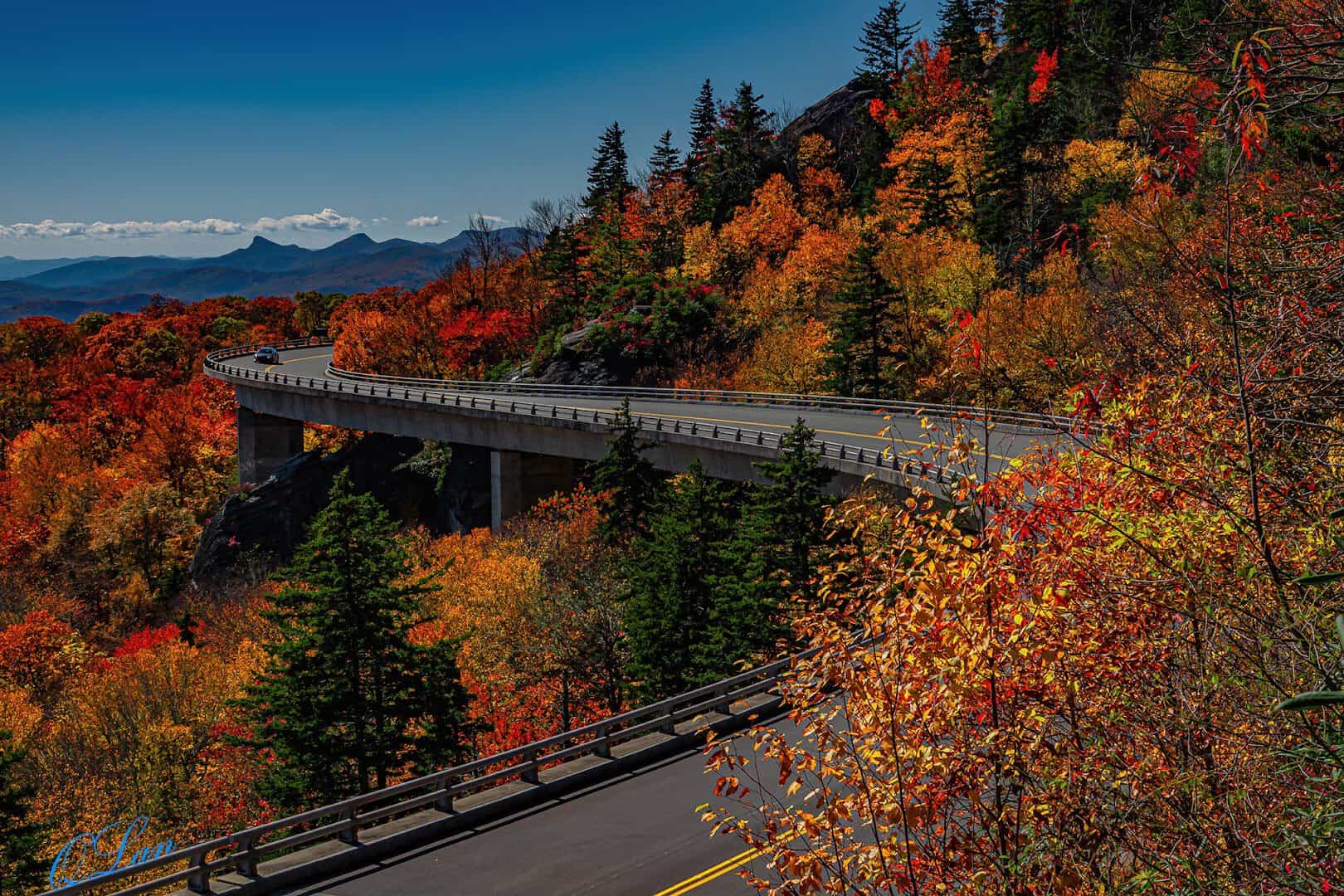
The Linn Cove Viaduct is one of those rare pieces of engineering that makes a mountain more beautiful instead of less. This 1,243-foot bridge curls around the shoulder of Grandfather Mountain, finished in 1987 as the last stretch of the Blue Ridge Parkway to open.
In mid October the forest around Milepost 304 turns into a bowl of fire, and the curving road gives you the shot everyone wants of pavement floating through color. Pull off at the visitor center and walk the short paved trail beneath the viaduct.
The bridge was engineered to hug the mountain instead of scarring it, an idea well ahead of its time. Just up the road, Grandfather Mountain hangs a mile-high swinging bridge over a gorge that is worth the small toll to cross.
Base yourself in Boone or Blowing Rock, two easygoing towns with coffee shops, bookstores, and plenty of leaf-season charm. Asheville sits about an hour south when you want a bigger night out and a soft bed to land in.
The Parkway itself is free and runs 469 miles in all, so you can string together a whole day of overlooks on either side of the viaduct. Watch the sky, though, because fog and early frost roll across these ridges fast in autumn.
Where: Linn Cove Viaduct, Blue Ridge Parkway Milepost 304, near Linville, North Carolina.
4. Lost Maples, Texas
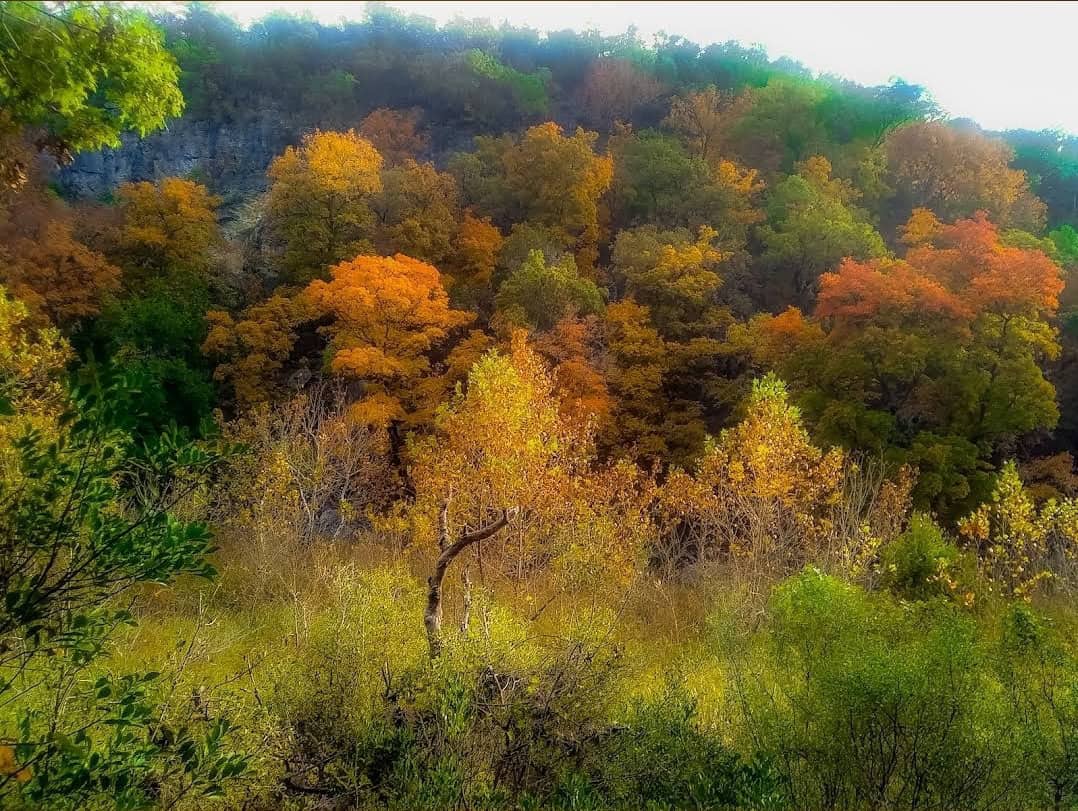
Here is the one that surprises people. Deep in the Hill Country, a stand of bigtooth maples turns brilliant crimson and orange along the Sabinal River, which almost never happens this far south. Lost Maples is Texas proving it can do fall too.
The color usually peaks from late October into mid November, later than the mountains back east. Rangers post a weekly foliage report, so you can time it. The trails wind through canyons where the red maples glow against pale limestone bluffs.
These maples are living relics, a pocket of trees that hung on since the last Ice Age, when the climate here was cooler and wetter. The park covers about 2,900 acres, with campsites along Can Creek for anyone who wants to stay the night.
The East Trail climbs to a small pond and an overlook that pays off the effort, and the park caps daily entry, so reserve ahead on peak fall weekends. Tiny Vanderpool has little more than a general store, which is honestly part of the charm.
Weekdays are far calmer than weekends once the color peaks, and the park can fill to capacity by mid-morning on a good Saturday. Pack water and a picnic, since the nearest real town for supplies is a fair drive back down the ranch roads.
Did you know? The bigtooth maple is the same species that colors canyons out in the Rockies, marooned here when the surrounding land dried out after the Ice Age. That is exactly why the display feels so unexpected in Texas.
Where: Lost Maples State Natural Area, 37221 Ranch Road 187, Vanderpool, Texas.
5. Cheaha State Park, Alabama
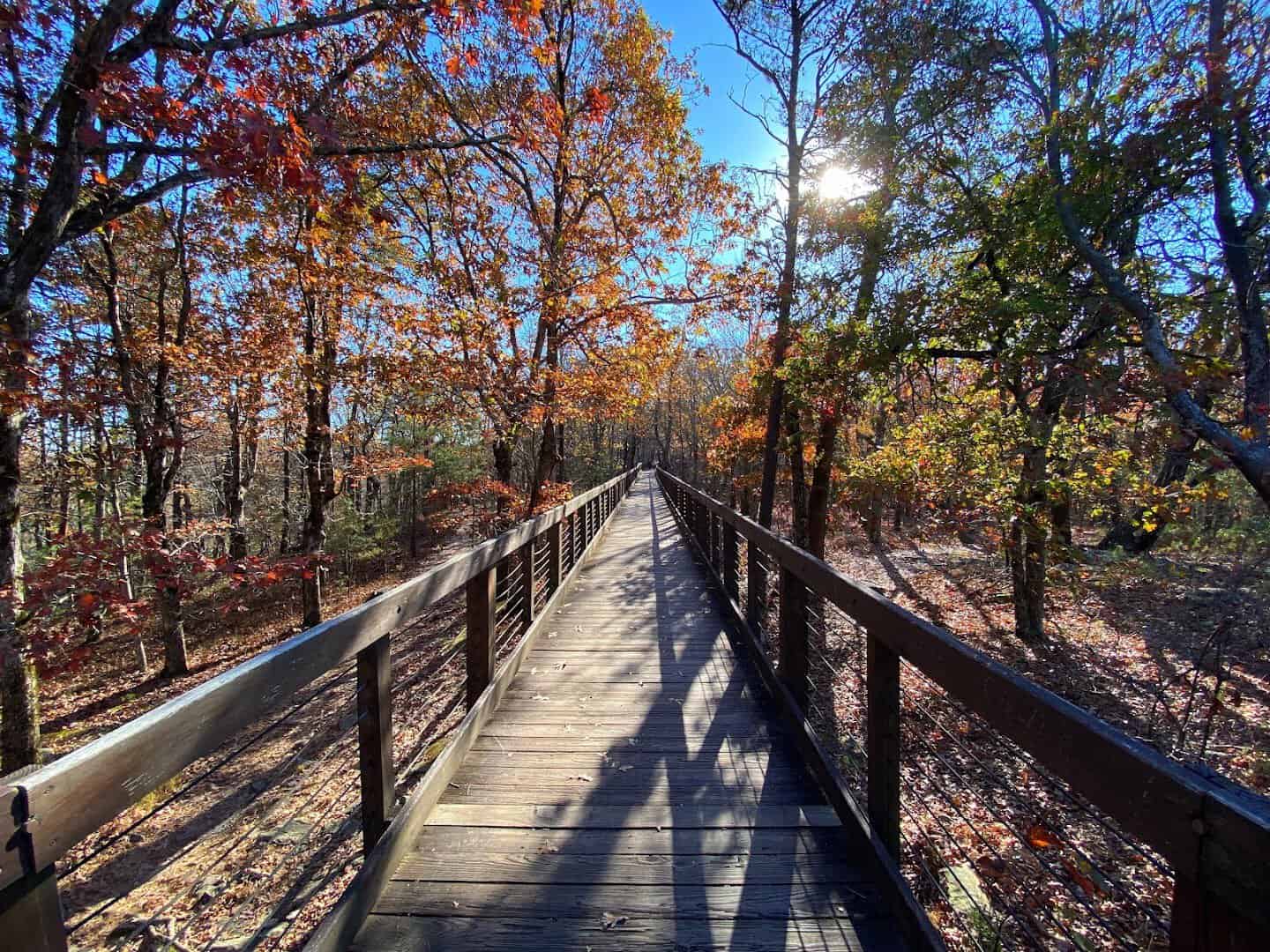
People forget Alabama has mountains until they stand on top of one. Cheaha is the highest point in the state at 2,407 feet, tucked inside the Talladega National Forest, and it makes a gorgeous cool-weather escape.
The Bald Rock boardwalk leads to an overlook where the forest rolls out below in waves of gold, and Pulpit Rock gives you a second sweeping vantage. Color usually peaks from late October into early November, right as the summer haze finally lifts.
Cheaha is the oldest state park in Alabama, built by the Civilian Conservation Corps and opened in 1933. The stone Bunker Tower at the summit is worth the short climb, and the Talladega Scenic Drive threads the ridges the whole way in.
The park has a lake for warmer-weather swimming, a restaurant with a long view, and the Pinhoti Trail running right through it. Stay the night at the lodge and you can catch both sunset and sunrise from the highest ground in Alabama.
Sunrise from Bald Rock is the quiet showstopper, with mist pooling in the valleys before the day warms up. The drive in on Highway 281 is a scenic route in its own right, winding up through forest that glows on both sides.
Where: Cheaha State Park, 19644 Highway 281, Delta, Alabama.
6. Table Rock State Park, South Carolina
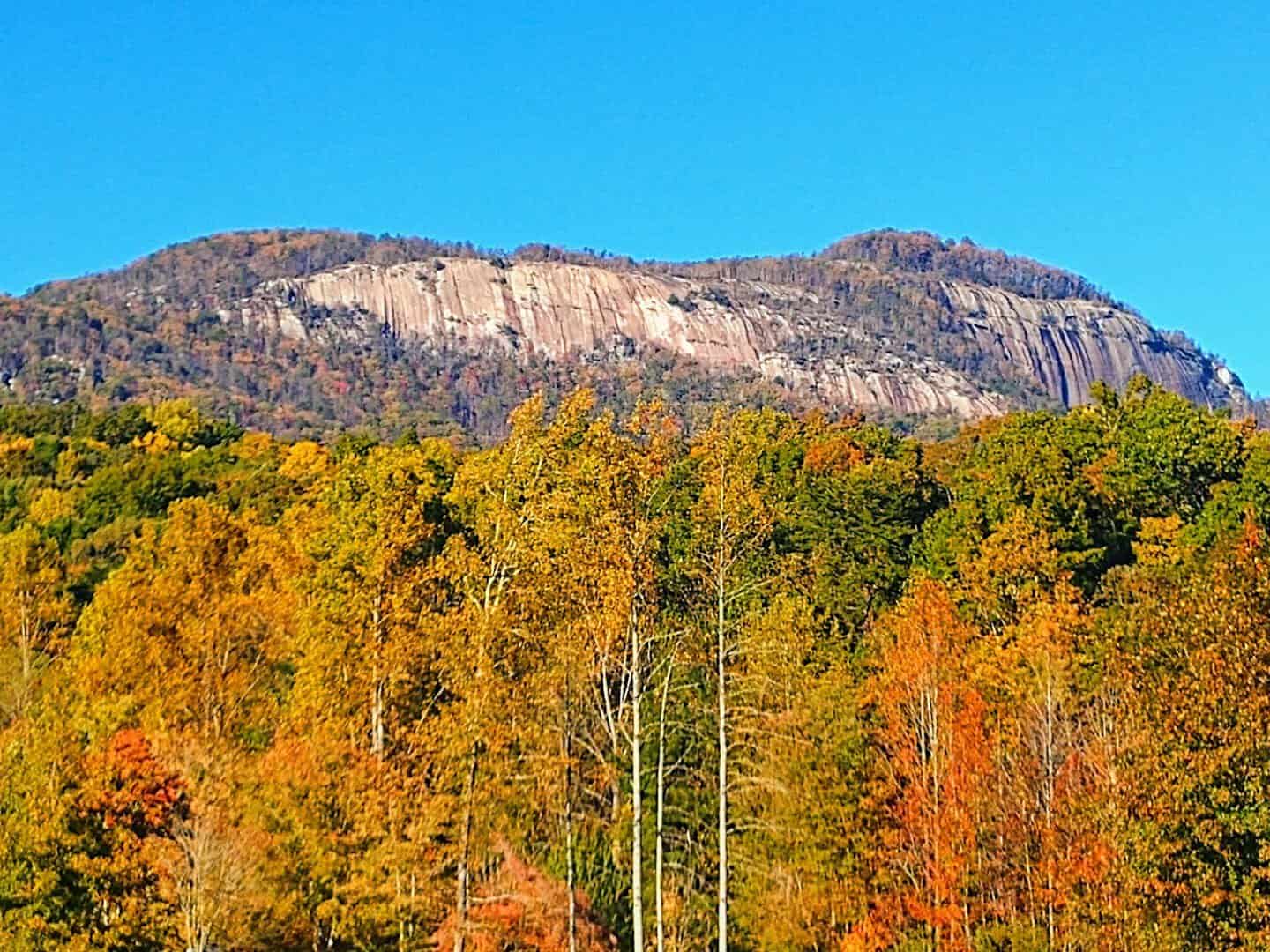
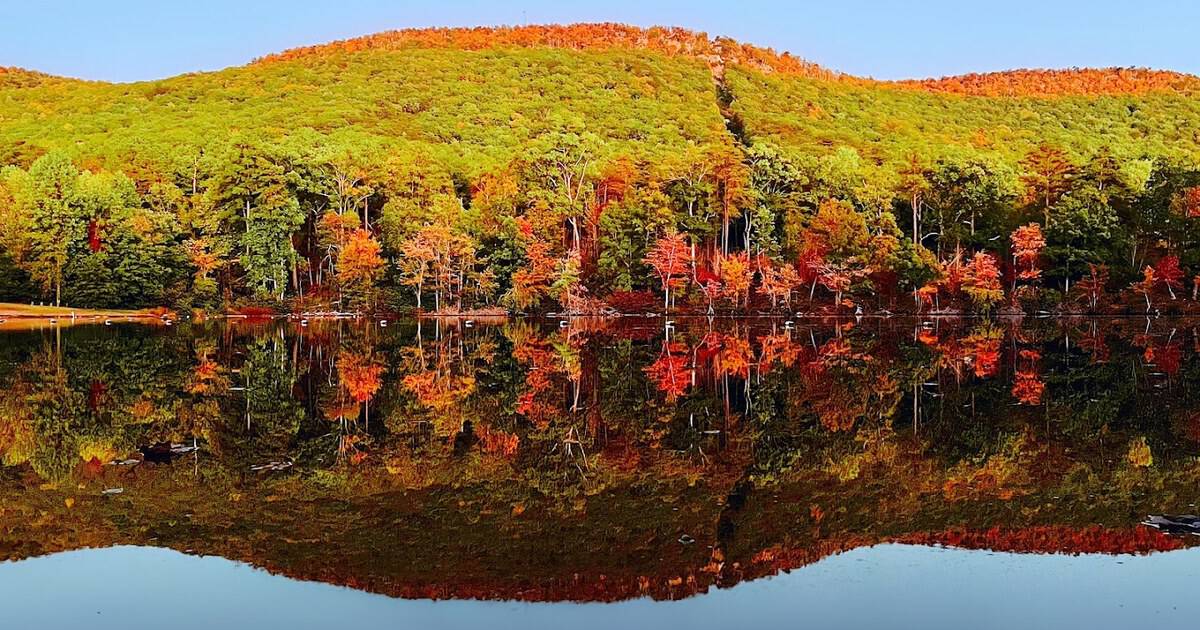
Table Rock Mountain rises like a granite forehead over the upstate, and when the surrounding forest turns, the whole thing reflects in Pinnacle Lake below. It is the kind of view that makes you stop the car without quite deciding to.
The park was built by the Civilian Conservation Corps in the 1930s, and its trails range from an easy lakeside stroll to a serious summit climb. Late October into early November is when the reds and golds arrive along the ridges.
The mountain climbs to 3,124 feet, and the Cherokee once told of a great chief who used it as a table. Rent one of the historic lakeside cabins and you can wake to the mountain doubled in the still morning water.
The Carrick Creek loop is a gentle walk past cascades and mossy boulders, while stronger legs can push all the way to the top for a wide valley view. Greenville sits about forty minutes away with a lively downtown for dinner afterward.
The park charges a small entry fee and can fill on peak weekends, so arrive early for a parking spot near the trailheads. Nearby Pinnacle Mountain, the tallest peak entirely within South Carolina, rounds out a landscape built for a slow autumn drive.
Bring a camera and a little patience for the reflection shot, which is best on a windless morning before the lake picks up a ripple. The lakeside path is short, flat, and friendly for kids or grandparents.
Where: Table Rock State Park, 158 Ellison Lane, Pickens, South Carolina.
Plan Your Southern Leaf Chase
The beauty of Southern fall is the range of it. You can chase color from Virginia’s ridgelines down to a Texas canyon and catch peak somewhere for nearly six weeks straight, no plane ticket required.
Pro tip: pack layers and leave early. Mountain mornings run cold in October, the best overlooks fill by mid-morning on weekends, and the light on the ridges is softest in the first hour after sunrise anyway.
Fall color tracks elevation and latitude, so peak creeps down the mountains and southward over about six weeks, and a hard cold snap can speed the turn overnight. Check a local foliage report the week before you leave.
So pick a weekend, keep your plans loose enough to chase the color if it turns early, and go stand under all that gold before the wind takes it. The leaves will not wait, and neither should you.
Featured image: KelBW via Cheaha State Park

Stella Raines
Editor-in-Chief
Stella brings over a decade of storytelling experience to TX Headlines. With roots in West Texas and a love for road trips, she leads the editorial team with an eye for the hidden stories that make Texas unforgettable.