10 Pacific Coast Road Trip Stops Worth the Detour
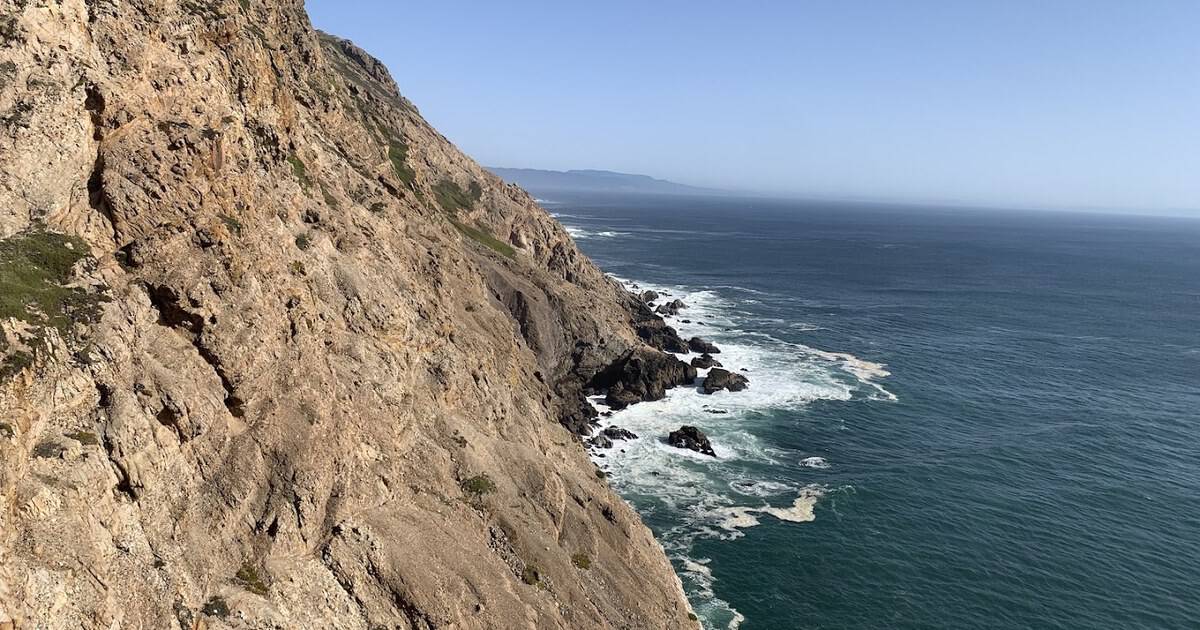
I will happily add two hours to any drive if it buys me one more ocean view. Show me a coastal pullout with a little trail leading off it, and I am parking the car, schedule be damned.
That stubborn habit is exactly what the Pacific Coast rewards. Anyone who has pointed a car north on Highway 1 or US-101 will tell you the road itself is the reason you came, and the best parts hide down the turnoffs most people blow right past.
That is where the salt-sprayed magic lives, in the pullouts and short trails just off the main ribbon of asphalt. Below, I have rounded up ten Pacific Coast stops, from Big Sur all the way to the edge of Washington, that are absolutely worth the detour.
Load a good playlist and keep your camera close. Here is where to pull over.
1. Bixby Creek Bridge, California
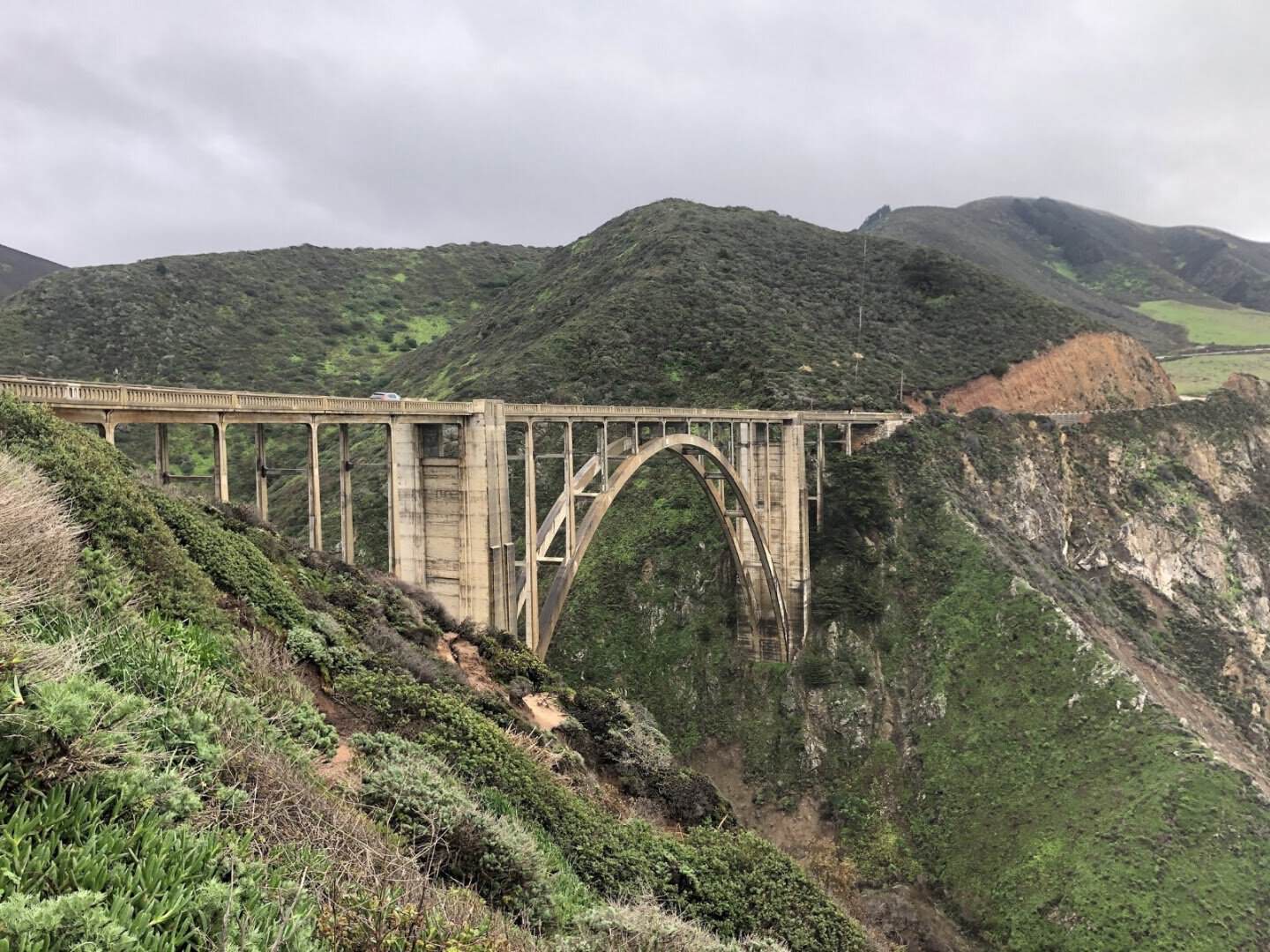
Roughly 13 miles south of Carmel, Highway 1 swings around a bend and there it is, arching 280 feet above a wild green canyon. Bixby Creek Bridge is the shot you have seen on a hundred postcards, and it earns every single one.
Finished in 1932, it was the highest single-span concrete arch bridge in the world the day it opened. The graceful open-spandrel design still stops traffic almost a century later.
There is a dirt pullout on the north end where you can park, step out, and take in the whole sweep of coast at once. Come at golden hour and the pale concrete glows warm against the deep blue Pacific.
It is the perfect first handshake with Big Sur, and a promise of the drama still to come. Give yourself a few minutes here before the twists ahead.
Where: Bixby Creek Bridge, Highway 1, about 13 miles south of Carmel-by-the-Sea, Big Sur, California.
2. McWay Falls, California
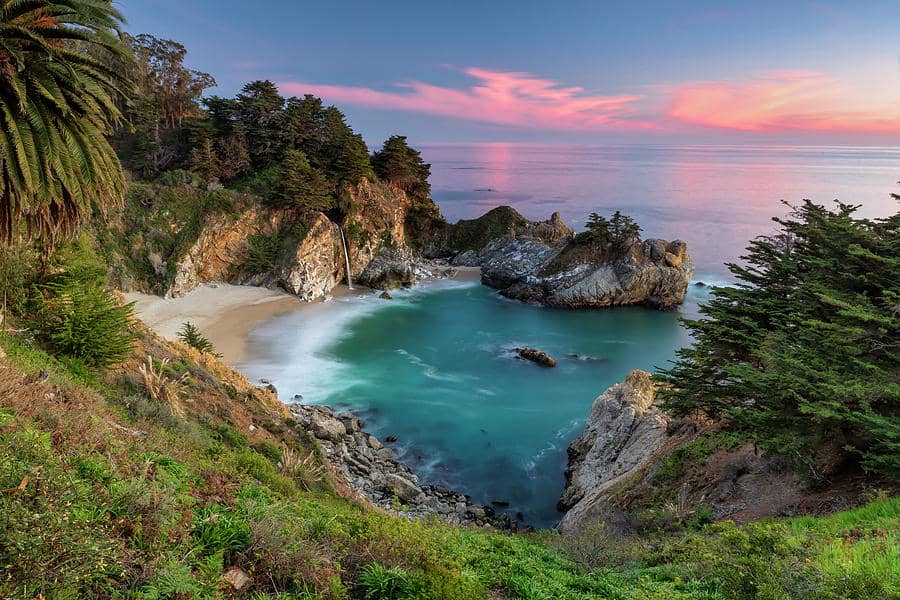
A little farther south, an easy half-mile path leads to one of only two coastal waterfalls in all of California. McWay Falls drops 80 feet straight onto a hidden cove of golden sand, framed by turquoise water and green cliffs.
At high tide the water almost reaches the surf, making it a rare tidefall. A 1983 landslide dropped the sand that formed the little beach you see today.
The beach itself stays off-limits to keep it pristine, which is exactly why it looks so untouched in every photo. The falls, creek and canyon carry the name of Christopher McWay, a pioneer who settled here back in 1874.
The overlook trail leaves right from the Julia Pfeiffer Burns State Park gate, so the payoff comes quick. Few short walks in America end with a view this good.
Where: McWay Falls Overlook, Julia Pfeiffer Burns State Park, Highway 1, about 37 miles south of Carmel, Big Sur, California.
3. Point Reyes Lighthouse, California
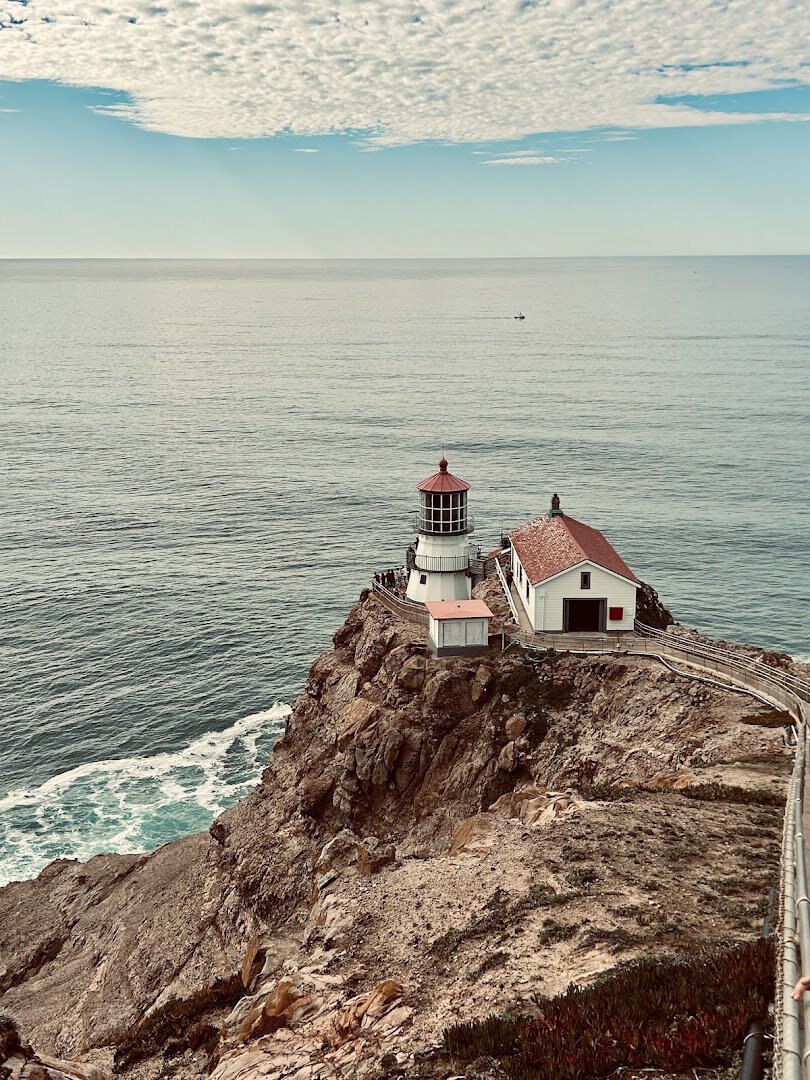
North of San Francisco, a long finger of land juts far into the sea, and at its very tip sits one of the windiest, foggiest spots on the whole West Coast. That, believe it or not, is the appeal.
Walk down 308 stairs, the equivalent of about 25 stories, and you reach the little 1870 lighthouse that guided ships through the murk for more than a century. On a clear day you might catch gray whales spouting offshore during their winter migration.
Before you leave the peninsula, swing by the Cypress Tree Tunnel, a corridor of Monterey cypress planted around 1930 that arches over the road like a green cathedral.
The whole seashore feels wonderfully removed from the city just an hour away. Pack a windbreaker and give it a full afternoon.
Where: Point Reyes Lighthouse, Point Reyes National Seashore, off Sir Francis Drake Boulevard near Point Reyes Station, California.
4. Redwood National and State Parks, California
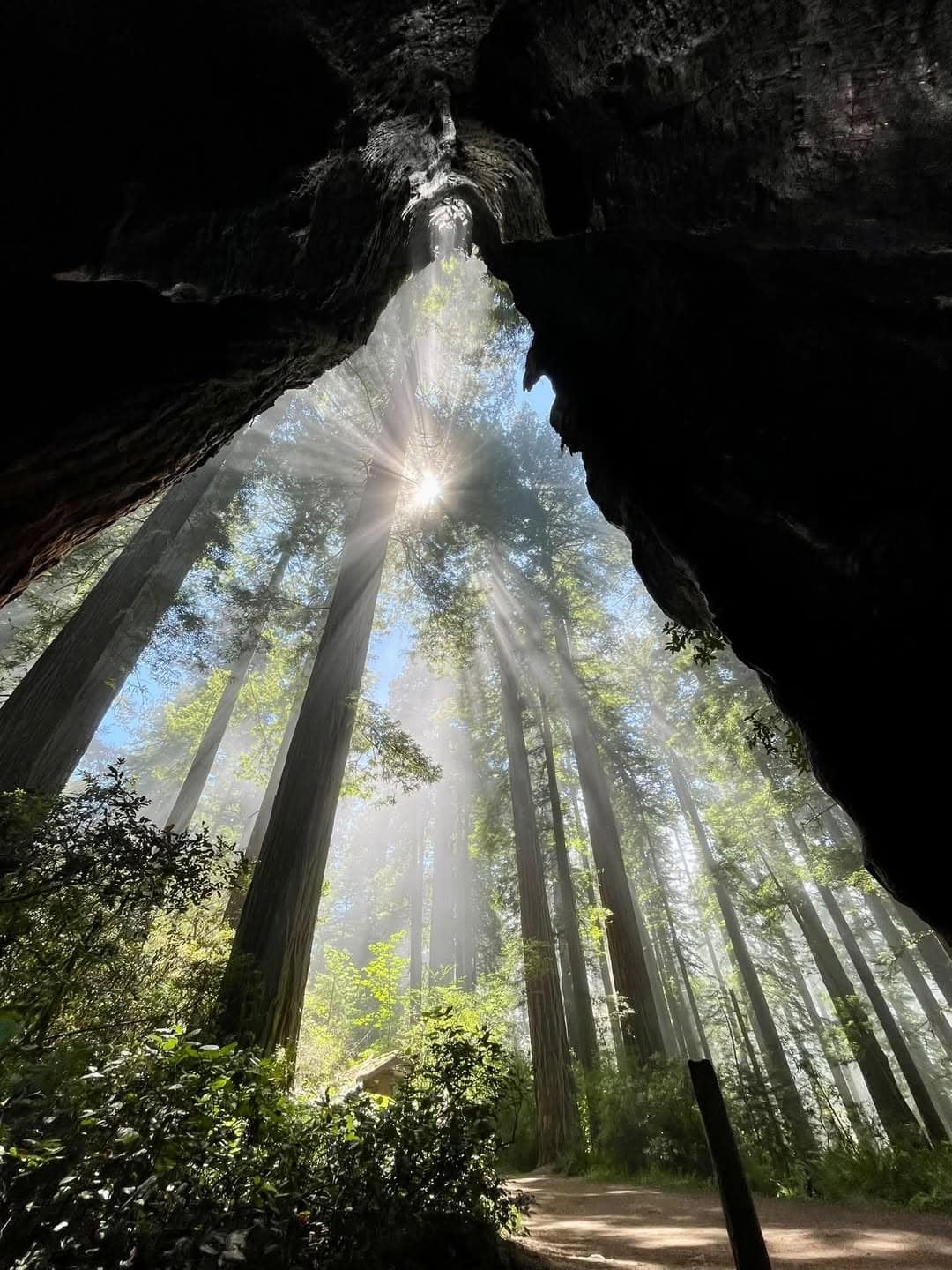
Where California’s coast runs up toward the Oregon line, the road slips into a forest of giants. These parks protect 65 miles of shoreline along with the tallest trees on Earth, coast redwoods that top 350 feet.
Take the Newton B. Drury Scenic Parkway, a hushed detour off US-101 that winds through old-growth groves where the light falls in soft green shafts. Stop the car, crane your neck, and feel appropriately tiny.
Do not skip Fern Canyon, its sheer walls draped floor to top in living ferns, so primeval that Steven Spielberg filmed Jurassic Park sequences right here. Ocean on one side, ancient forest on the other.
Thousand-year-old trees and a rugged coastline in a single stop make this one of the most humbling detours anywhere. Keep an eye out for Roosevelt elk grazing in the meadows near the road. Take your time under the canopy, then follow the parkway back out toward the sea.
Where: Redwood National and State Parks, Newton B. Drury Scenic Parkway off US-101 near Orick, California.
5. Samuel H. Boardman State Scenic Corridor, Oregon
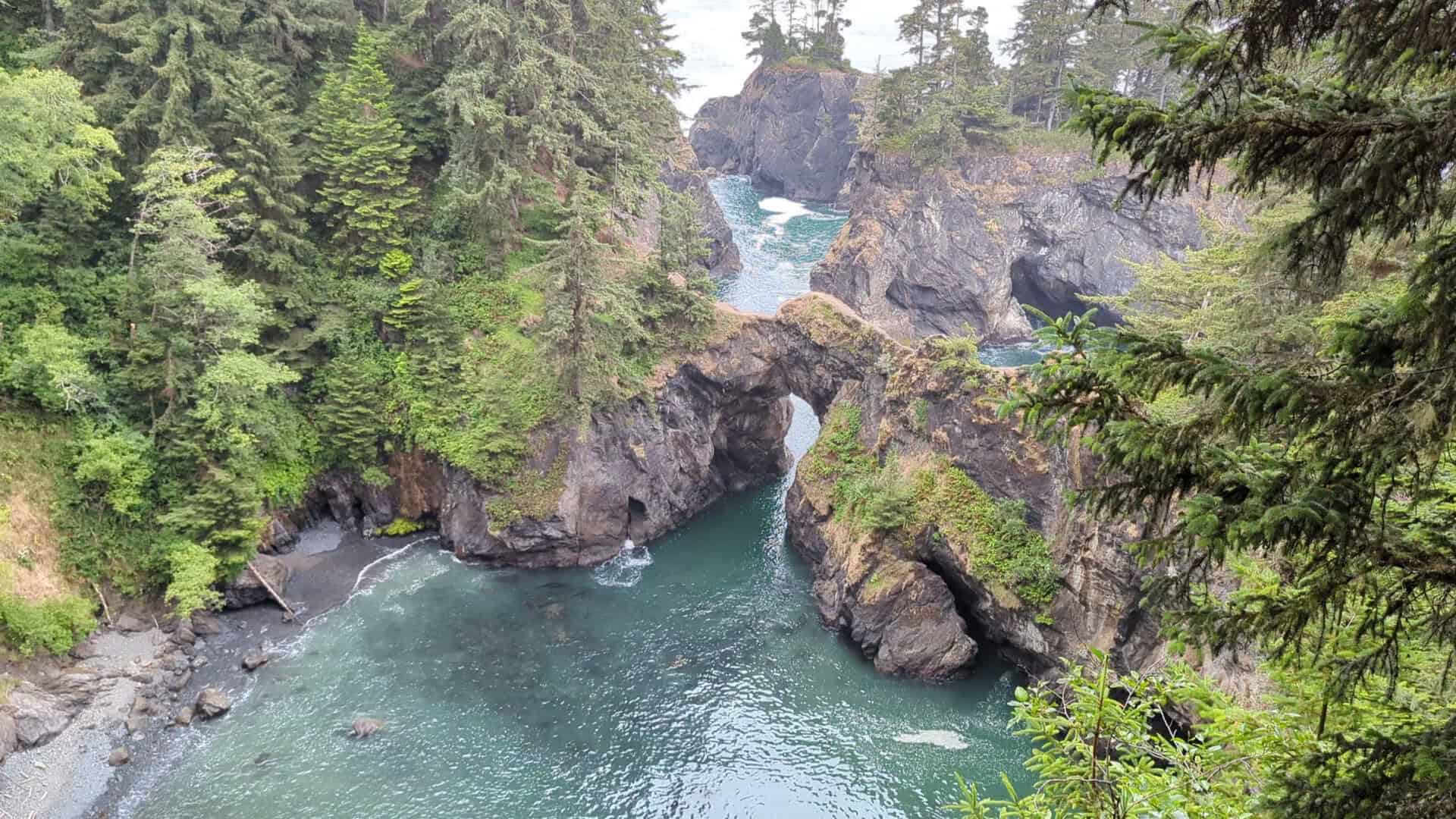
Cross into Oregon and the coast turns downright theatrical. This 12-mile stretch of US-101 just north of Brookings strings together arches, blowholes, sea stacks and hidden coves, most of them a short walk from the pullouts.
The Natural Bridges viewpoint is the showstopper, where wind and waves have carved a cluster of stone arches over the churning surf below. A little farther up the road, a steep path drops to Secret Beach and its glowing blue-green water.
Arch Rock offers an easy paved stroll to a lineup of offshore islands and stacks. Late summer into mid-October usually brings the clearest skies of the year.
Give yourself a whole afternoon here, because you will keep pulling over at every new viewpoint. This may be the most scenic dozen miles on the West Coast.
Where: Samuel H. Boardman State Scenic Corridor, US-101, about 11 miles north of Brookings, Oregon.
6. Thor’s Well, Oregon
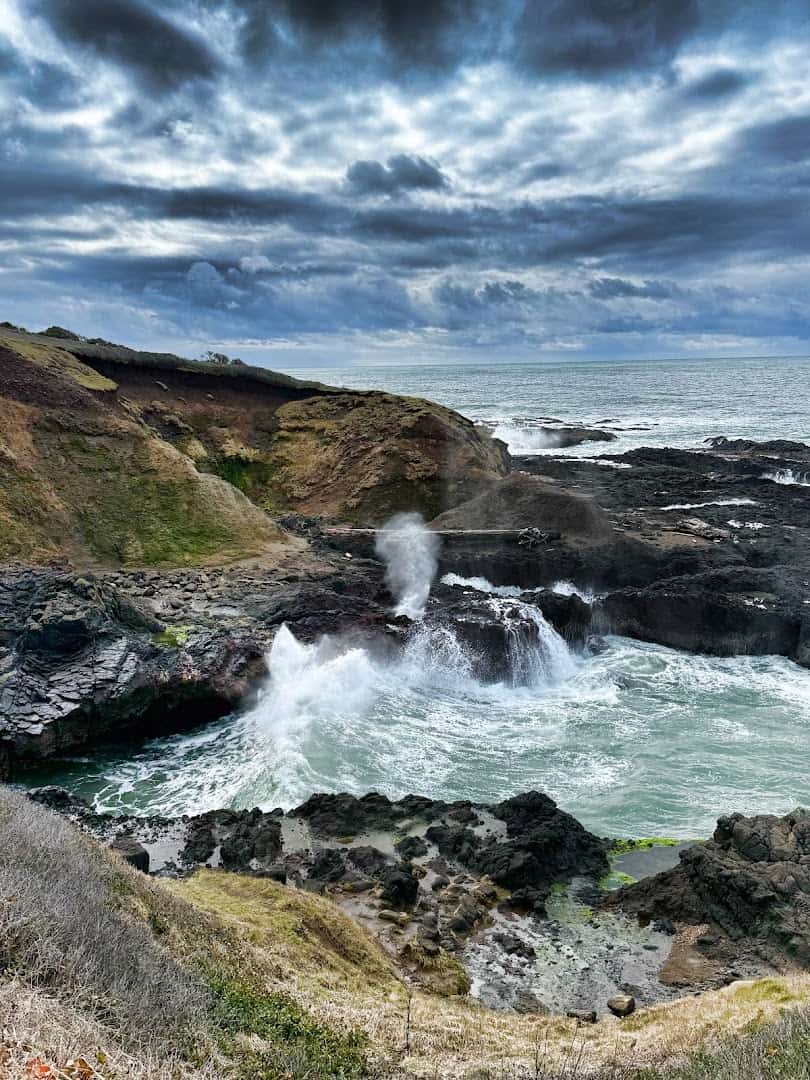
At Cape Perpetua, roughly three miles south of Yachats, the ocean appears to vanish straight down a hole in the rock. Locals call Thor’s Well the drainpipe of the Pacific, and watching it swallow the surf is pure hypnosis.
It is really a collapsed sea cave, maybe 20 feet deep, but at high tide the water surges up through it and then pours back down in a roar. The effect is at its most dramatic when high tide lines up with sunset.
Aim to be on the basalt shelf about 45 minutes before the day’s high tide so you can watch it build. Stay well back, keep your eyes on the water, and let the Pacific put on its show.
Nearby Devils Churn and the Spouting Horn add even more coastal fireworks to the same short detour.
Where: Thor’s Well, Cape Perpetua Scenic Area, US-101, about 3 miles south of Yachats, Oregon.
7. Haystack Rock, Oregon
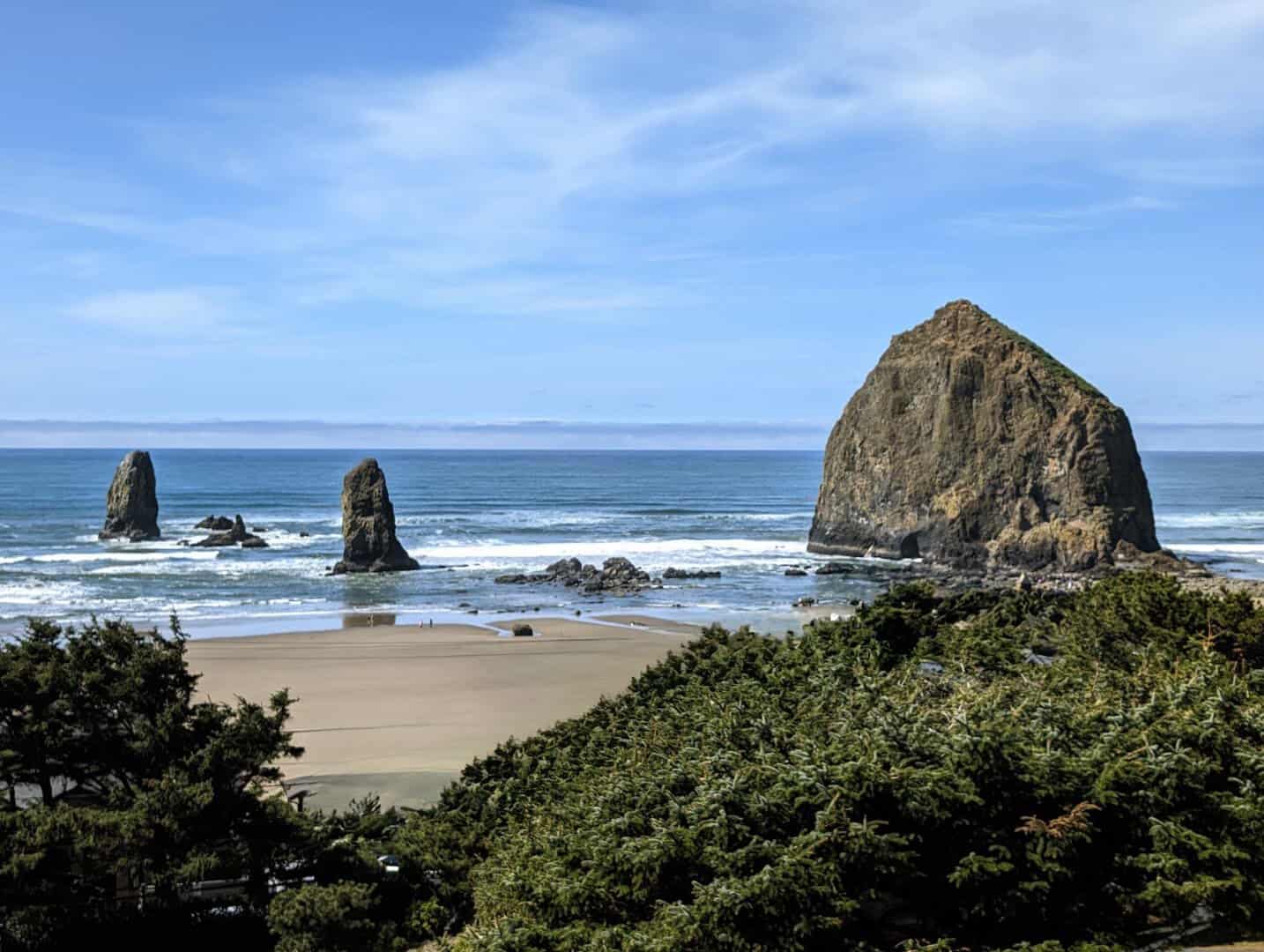
Up on Oregon’s north coast, a 235-foot basalt monolith rises straight out of the sand at Cannon Beach. Haystack Rock is one of the most recognizable sea stacks in the country, a Goonies-and-postcards icon known the world over.
At low tide you can walk right up to its base and peer into tide pools full of orange sea stars, anemones, crabs and limpets. The area is one of Oregon’s protected Marine Gardens, so look but leave everything where it lies.
From early spring into mid-summer, tufted puffins nest on the rock’s grassy slopes, the most accessible colony of them in the Northwest. Bring binoculars and you will spot far more than puffins.
Check the tide chart, then plan to linger for sunset when the rock glows and the crowds melt away. The wide, flat beach makes for an easy barefoot stroll in either direction. It is Cannon Beach at its finest.
Where: Haystack Rock, Cannon Beach, off US-101, Oregon.
8. Ruby Beach, Washington
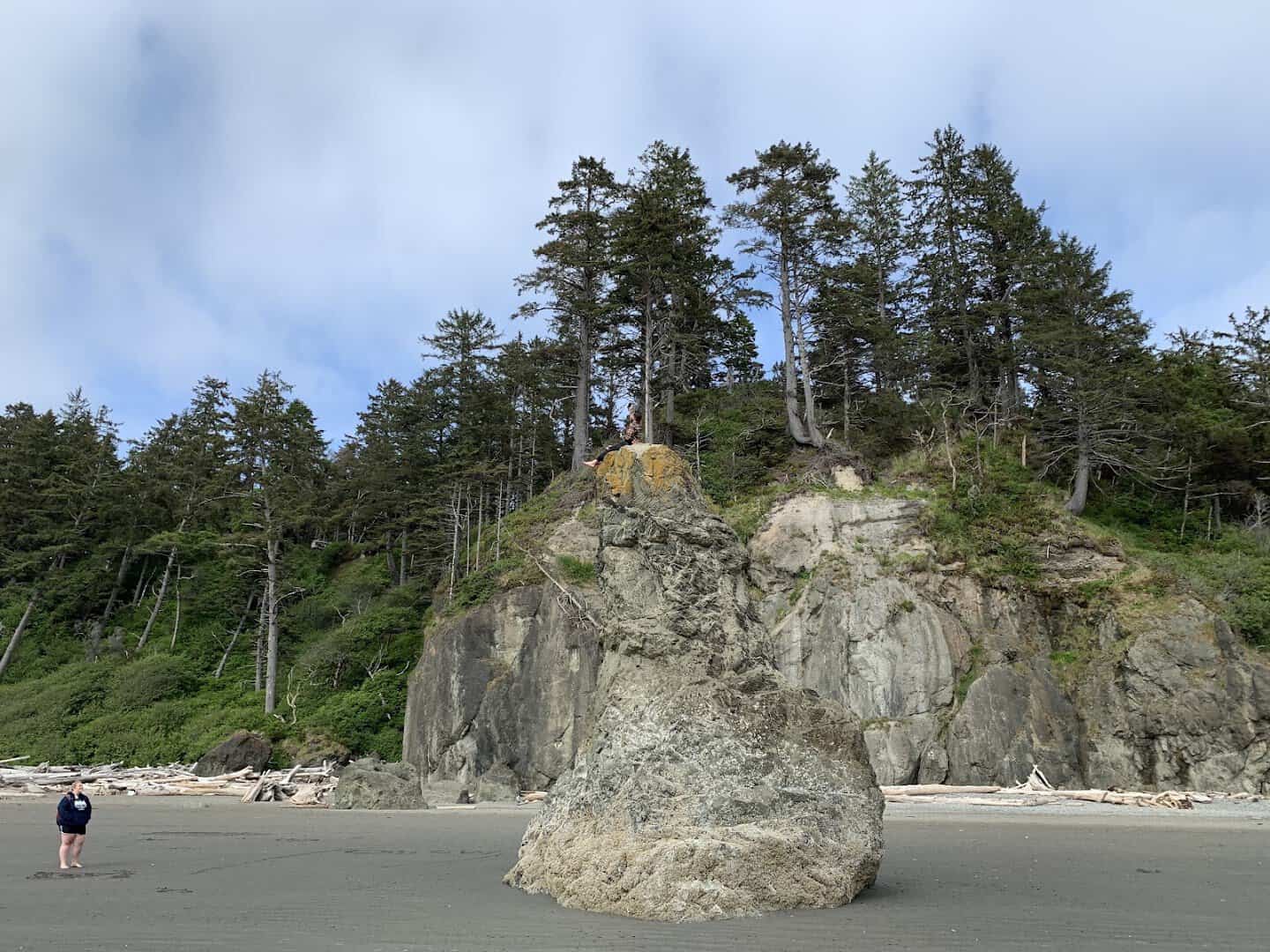
Now for the Olympic coast, wild and moody in the very best way. Ruby Beach greets you with reddish-tinged sand, towering sea stacks, and great tumbles of silvered driftwood piled along the shoreline.
A short trail from the US-101 pullout drops you onto the beach, where Cedar Creek carves a small swimming hole and the fog drifts between the rocks. Hunt for agates, watch for bald eagles overhead, and scan the swells for sea otters.
The sand gets its name from the tiny garnet crystals that give it a faint rosy tint in the right light. It is the kind of raw, elemental beach that makes you glad you pulled off the highway.
Time your stop for sunset if you can, when the stacks turn to silhouettes. This is Pacific coast wilderness at its most photogenic.
Where: Ruby Beach, Olympic National Park, off US-101 near Kalaloch, Washington.
9. Rialto Beach, Washington
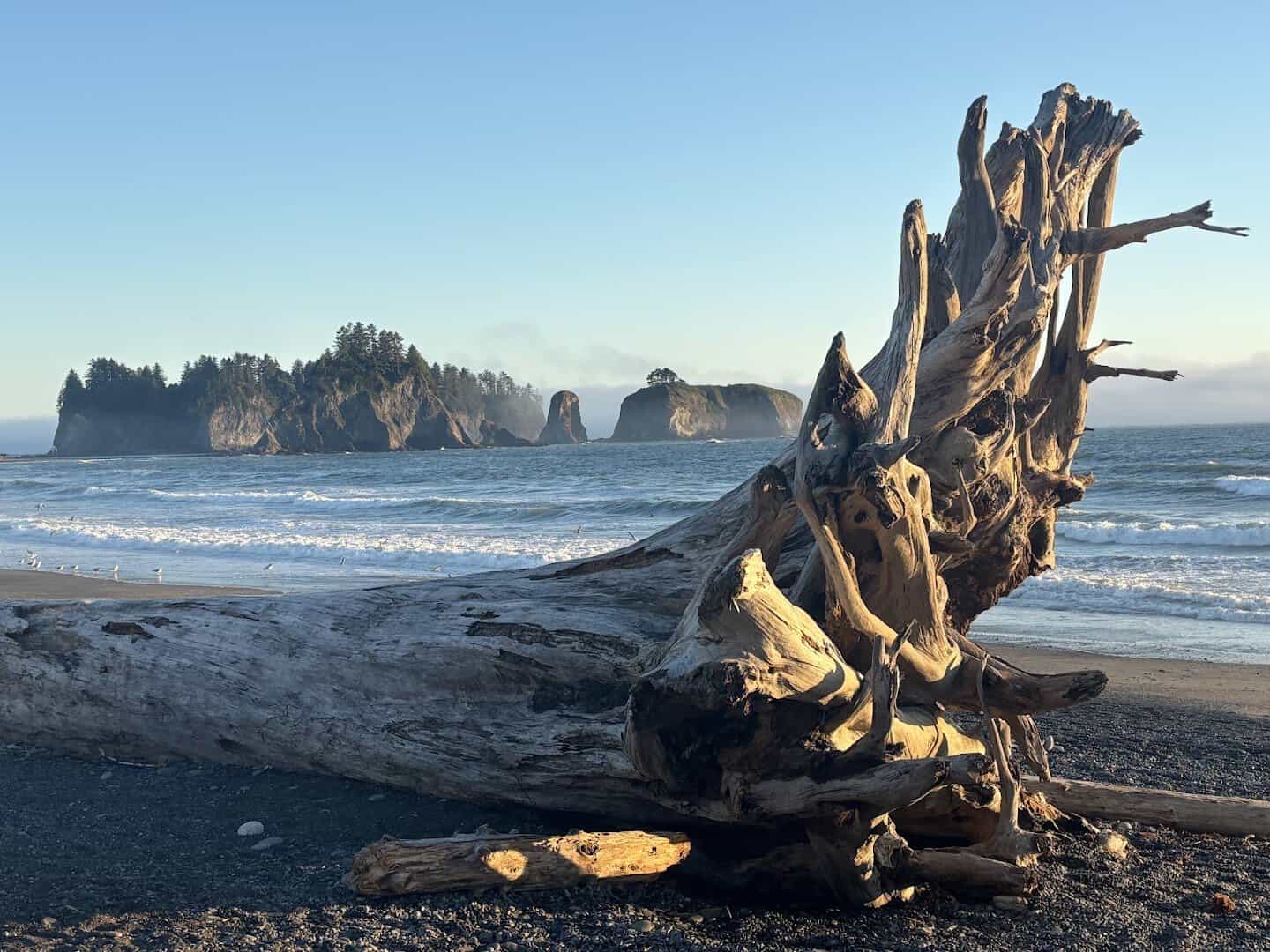
A little to the north, Rialto Beach doubles down on everything Ruby does so well. Picture bleached white driftwood stacked like giant bones, dark sea stacks marching offshore, and colorful tide pools tucked among the rocks.
The payoff is Hole-in-the-Wall, a natural sea arch about 1.5 miles up the beach that you can walk through only at low tide. Along the way, keep an eye out for whales, sea lions and the occasional bundled-up surfer.
The waves here roll in with real force, so the driftwood piles grow taller than a person in places. It feels like the edge of the map, in the best possible sense. The dense forest crowds right up to the sand, so you get ocean and old-growth in one glance.
Time it with a falling tide and pack a few layers. The Pacific this far north keeps its own cool, misty weather all year long.
Where: Rialto Beach, Olympic National Park, off Mora Road near La Push, Washington.
10. Cape Flattery, Washington
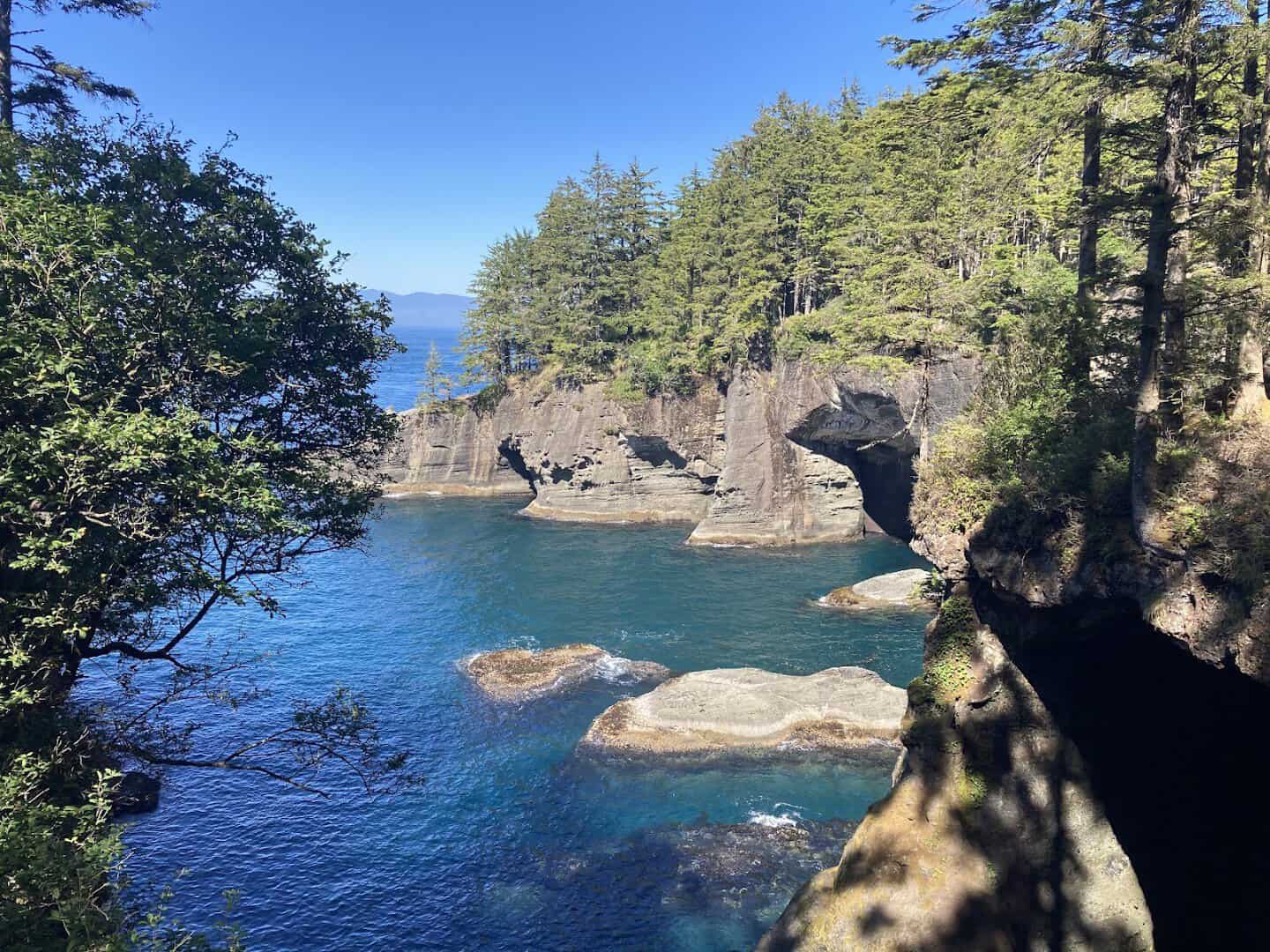
Save the northwesternmost point of the Lower 48 for last. Cape Flattery sits on Makah tribal land at the tip of the Olympic Peninsula, right where the Strait of Juan de Fuca meets the open Pacific.
A three-quarter-mile boardwalk winds through misty Sitka spruce forest to viewing platforms perched above sea caves, arches and rocky islands. Just offshore sits Tatoosh Island with its historic lighthouse standing watch.
Watch the water and the sky for eagles, cormorants, sea otters and even the occasional puffin. The whole cape has been home to the Makah people since time immemorial.
Pick up a Makah recreation permit in Neah Bay before you hike out. It is a fitting place to run out of continent.
Where: Cape Flattery Trail, Makah Reservation near Neah Bay, Washington.
Start Planning Your Pacific Coast Detours
The magic of this coast is that the best stops are rarely the obvious ones. They are the pullouts, the half-mile trails, and the viewpoints just past the next bend in the road.
So gas up, cue that playlist, and give yourself full permission to take every turnoff that looks even a little promising. Whether you start down in Big Sur or up in the wilds of Washington, the Pacific will reward every detour you make.
Featured image: Tania L via Point Reyes Lighthouse

Stella Raines
Editor-in-Chief
Stella brings over a decade of storytelling experience to TX Headlines. With roots in West Texas and a love for road trips, she leads the editorial team with an eye for the hidden stories that make Texas unforgettable.